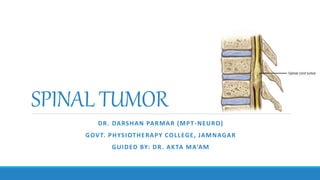
SPINAL TUMOR
DR. DARSHAN PARMAR (MPT-NEURO)
GOVT. PHYSIOTHERAPY COLLEGE, JAMNAGAR
GUIDED BY: DR. AKTA MA’AM
DEFINITION
Spinal tumor is a growth of tissue that develops within the spinal
canal or within the bones of spine.
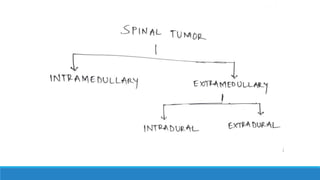
Tumors or neoplasm or space occupying lesions are classified
broadly into intramedullary and extramedullary tumors.
Majority of intraspinal tumors are benign & produce effects by compression of
spinal cord rather than by invasion.
Thus, a proportion of intraspinal tumors are amenable to surgical removal
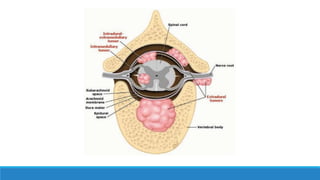
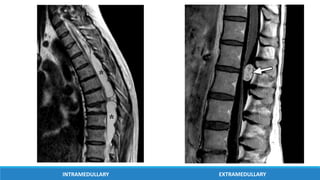
Intramedullary tumors are those present within the substance of
the spinal cord.
Extramedullary tumors are those present outside the substance of
the spinal cord. They can be further divided into intradural and
extradural.
The intradural ones are meningioma, ones that arise from the
nerve roots and the extradural ones arises from epidural substances
and vertebral bodies.
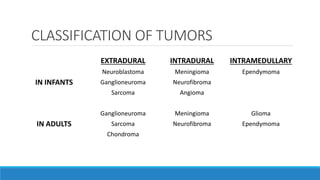
CLASSIFICATION OF TUMORS
EXTRADURAL INTRADURAL INTRAMEDULLARY
IN INFANTS
Neuroblastoma Meningioma Ependymoma
Ganglioneuroma Neurofibroma
Sarcoma Angioma
IN ADULTS
Ganglioneuroma Meningioma Glioma
Sarcoma Neurofibroma Ependymoma
Chondroma
INTRAMEDULLARY EXTRAMEDULLARY
SYMPTOMS
Tumors of the spinal cord can give rise to any one of the following
symptoms:
• Sensorimotor spinal tract syndrome
• Radicular spinal cord syndrome
• Intramedullary syringomyelia syndrome
SENSORIMOTOR SPINAL TRACT SYNDROME
• Starts with Pain and tenderness at affected spinus process
Sensory Signs and Symptoms :
•Spinal tracts affects first leading to impairment in sensation and dysesthesia
• If the Spinothalamic tract is totally compressed then their will be loss of pain
and temperature sensation.
Motor Signs and Symptoms :
• UMN type as their will be compression in corticospinal tract.
•Level of severity depends on amount of compression.
RADICULAR SPINAL CORD SYNDROME
• Starts with pain and usually it is radiating type from the affected spine  Intensified
by coughing, sneezing, prolonged recumbency.
• Tingling, Numbness and Paraesthesia
• Areflexia and LMN type of muscular palsy
• Along with the Radiating signs and symptoms, a person may have others symptoms
like spastic paraparesis, loss of pain and temperature sensation, loss of sensation by
posterior column and even bladder-bowel disturbances.
INTRAMEDULLARY SYNRIGOMYELIA SYNDROME
• Signs and symptoms are similar to syringomyelia
• Pain  Anterior horn cell gets involved  Involvement of Corticospinal fibers
and other sensory tracts.
• Tenderness on spine detects pain of spinal tumor (aggravated by coughing,
sneezing)
• Associated symptoms are tingling, numbness, paraesthesia or loss of sensation
on particular dermatome.
• Altered DTR
INVESTIGATION
• CT scan
• MRI
• Myelogram
• CSF examination
PROGNOSIS
Recovery generally depends on how quickly treatment begins and
how much damage was done.
Removal of meningiomas, neurofibromas, and some other primary
spinal cord tumors may be curative.
MANAGEMENT
• If symptoms suggest that tumor is compressing spinal cord,
corticosteroids are immediately given in high doses to reduce
swelling
• Surgical intervention  Prognosis is mostly good
• Extradural tumor can be excised
• Intramedullary tumor requires Decompression like laminectomy
followed by radiation.
PHYSIOTHERAPY
• Functional Mobility
• Pain management
• Bracing
• Improve Strength and Flexibility
• Bowel/Bladder management
FUNCTIONAL MOBILITY
• Patient and caregiver education
• Positioning  for skin and joint integrity
• Bed mobility
• Functional Transfer (Bed to wheelchair, wheelchair to bed,
wheelchair to toilet-seat, wheelchair to chair/stool etc..)
• Gait Training
PAIN MANAGEMENT
• Postural bracing
• Hot packs, Cold packs
• TENS
BRACING
• Indication :
• Postural correction
• Proprioceptive awareness
• Stabilization of fractures
• Cervical collars (Soft cervical collar, Hard cervical collar)
• TLSO
• AFO
• Abdominal binder
• Compression stockings
IMPROVE BALANCE
• Strengthen Lower limb and core muscle  Improve Sitting Balance
 Improve sit to stand  Improve standing balance  Improve
dynamic balance.
IMPROVE STRENGTH AND FLEXIBILITY
• Passive ROM  Active assisted ROM  Active ROM  Resisted
Exercise (weight, TheraBand, TheraTubes etc..)
• Stretching of tight muscle to improve flexibility.
BOWEL/BLADDER MANAGEMENT
• Pelvic floor exercise
• Kegels exercise
• Pillow squeezing
• Bridging
THANK YOU…..

SPINAL TUMOR

  • 1.
    SPINAL TUMOR DR. DARSHANPARMAR (MPT-NEURO) GOVT. PHYSIOTHERAPY COLLEGE, JAMNAGAR GUIDED BY: DR. AKTA MA’AM
  • 2.
    DEFINITION Spinal tumor isa growth of tissue that develops within the spinal canal or within the bones of spine. Tumors or neoplasm or space occupying lesions are classified broadly into intramedullary and extramedullary tumors.
  • 3.
    Majority of intraspinaltumors are benign & produce effects by compression of spinal cord rather than by invasion. Thus, a proportion of intraspinal tumors are amenable to surgical removal Intramedullary tumors are those present within the substance of the spinal cord.
  • 4.
    Extramedullary tumors arethose present outside the substance of the spinal cord. They can be further divided into intradural and extradural. The intradural ones are meningioma, ones that arise from the nerve roots and the extradural ones arises from epidural substances and vertebral bodies.
  • 6.
    CLASSIFICATION OF TUMORS EXTRADURALINTRADURAL INTRAMEDULLARY IN INFANTS Neuroblastoma Meningioma Ependymoma Ganglioneuroma Neurofibroma Sarcoma Angioma IN ADULTS Ganglioneuroma Meningioma Glioma Sarcoma Neurofibroma Ependymoma Chondroma
  • 8.
  • 9.
    SYMPTOMS Tumors of thespinal cord can give rise to any one of the following symptoms: • Sensorimotor spinal tract syndrome • Radicular spinal cord syndrome • Intramedullary syringomyelia syndrome
  • 10.
    SENSORIMOTOR SPINAL TRACTSYNDROME • Starts with Pain and tenderness at affected spinus process Sensory Signs and Symptoms : •Spinal tracts affects first leading to impairment in sensation and dysesthesia • If the Spinothalamic tract is totally compressed then their will be loss of pain and temperature sensation. Motor Signs and Symptoms : • UMN type as their will be compression in corticospinal tract. •Level of severity depends on amount of compression.
  • 11.
    RADICULAR SPINAL CORDSYNDROME • Starts with pain and usually it is radiating type from the affected spine  Intensified by coughing, sneezing, prolonged recumbency. • Tingling, Numbness and Paraesthesia • Areflexia and LMN type of muscular palsy • Along with the Radiating signs and symptoms, a person may have others symptoms like spastic paraparesis, loss of pain and temperature sensation, loss of sensation by posterior column and even bladder-bowel disturbances.
  • 12.
    INTRAMEDULLARY SYNRIGOMYELIA SYNDROME •Signs and symptoms are similar to syringomyelia • Pain  Anterior horn cell gets involved  Involvement of Corticospinal fibers and other sensory tracts. • Tenderness on spine detects pain of spinal tumor (aggravated by coughing, sneezing) • Associated symptoms are tingling, numbness, paraesthesia or loss of sensation on particular dermatome. • Altered DTR
  • 13.
    INVESTIGATION • CT scan •MRI • Myelogram • CSF examination
  • 14.
    PROGNOSIS Recovery generally dependson how quickly treatment begins and how much damage was done. Removal of meningiomas, neurofibromas, and some other primary spinal cord tumors may be curative.
  • 15.
    MANAGEMENT • If symptomssuggest that tumor is compressing spinal cord, corticosteroids are immediately given in high doses to reduce swelling • Surgical intervention  Prognosis is mostly good • Extradural tumor can be excised • Intramedullary tumor requires Decompression like laminectomy followed by radiation.
  • 16.
    PHYSIOTHERAPY • Functional Mobility •Pain management • Bracing • Improve Strength and Flexibility • Bowel/Bladder management
  • 17.
    FUNCTIONAL MOBILITY • Patientand caregiver education • Positioning  for skin and joint integrity • Bed mobility • Functional Transfer (Bed to wheelchair, wheelchair to bed, wheelchair to toilet-seat, wheelchair to chair/stool etc..) • Gait Training
  • 18.
    PAIN MANAGEMENT • Posturalbracing • Hot packs, Cold packs • TENS
  • 19.
    BRACING • Indication : •Postural correction • Proprioceptive awareness • Stabilization of fractures • Cervical collars (Soft cervical collar, Hard cervical collar) • TLSO • AFO • Abdominal binder • Compression stockings
  • 20.
    IMPROVE BALANCE • StrengthenLower limb and core muscle  Improve Sitting Balance  Improve sit to stand  Improve standing balance  Improve dynamic balance.
  • 21.
    IMPROVE STRENGTH ANDFLEXIBILITY • Passive ROM  Active assisted ROM  Active ROM  Resisted Exercise (weight, TheraBand, TheraTubes etc..) • Stretching of tight muscle to improve flexibility.
  • 22.
    BOWEL/BLADDER MANAGEMENT • Pelvicfloor exercise • Kegels exercise • Pillow squeezing • Bridging
  • 23.