/THUP[HYPHU
*OHY[LYHUK
4PUPTT:[HUKHYKZ
PU/THUP[HYPHU
9LZWVUZL
;OL:WOLYL7YVQLJ[
,+0;065
Humanitarian
Charter and
Minimum Standards
in Humanitarian
Response
The Sphere Project
ii
Published by:
The Sphere Project
Copyright@The Sphere Project 2011
Email: info@sphereproject.org
Website : www.sphereproject.org
The Sphere Project was initiated in 1997 by a group of NGOs and the Red Cross
and Red Crescent Movement to develop a set of universal minimum standards
in core areas of humanitarian response: the Sphere Handbook. The aim of
the Handbook is to improve the quality of humanitarian response in situations
of disaster and conflict, and to enhance the accountability of the humanitarian
system to disaster-affected people. The Humanitarian Charter and Minimum
Standards in Humanitarian Response are the product of the collective experience
of many people and agencies. They should therefore not be seen as representing
the views of any one agency.
First trial edition 1998
First final edition 2000
Second edition 2004
Third edition 2011
ISBN 978-1-908176-00-4
A catalogue record for this publication is available from The British Library and the
US Library of Congress.
All rights reserved. This material is copyright but may be reproduced by any
method without fee for educational purposes but not for resale. Formal permission
is required for all such uses but normally will be granted immediately. For copying
in other circumstances or for reuse in other publications, or for translation or
adaptation, prior written permission must be obtained from the copyright owner,
and a fee may be payable.
Distributed for the Sphere Project by Practical Action Publishing and its agents
and representatives throughout the world.
Practical Action Publishing, Schumacher Centre for Technology and Development,
Bourton on Dunsmore, Rugby, CV23 9QZ, United Kingdom
Tel +44 (0) 1926 634501; Fax +44 (0)1926 634502
email: sphere@practicalaction.org.uk
website: www.practicalactionpublishing.org/sphere
Practical Action Publishing (UK Company Reg. No. 1159018) is the wholly owned
publishing company of Practical Action and trades only in support of its parent
charity objectives.
Designed by: , Metz-Tessy, France
Printed by: Belmont Press Ltd, Northampton, United Kingdom
iii
Foreword
This latest edition of the Sphere Handbook, Humanitarian Charter and Minimum
Standards in Humanitarian Response, is the product of broad inter-agency
collaboration.
The Humanitarian Charter and minimum standards reflect the determina-
tion of agencies to improve both the effectiveness of their assistance and their
accountability to their stakeholders, contributing to a practical framework for
accountability.
The Humanitarian Charter and minimum standards will not of course stop human-
itarian crises from happening, nor can they prevent human suffering. What they
offer, however, is an opportunity for the enhancement of assistance with the aim
of making a difference to the lives of people affected by disaster.
From their origin in the late 1990s, as an initiative of a group of humanitarian
NGOs and the Red Cross and Red Crescent Movement, the Sphere standards
are now applied as the de facto standards in humanitarian response in the 21st
century.
A word of gratitude must, therefore, be given to all those who have made this
happen.
		
Ton van Zutphen John Damerell
Sphere Board Chair Project Manager
H u m a n i t a r i a n C h a r t e r a n d M i n i m u m S t a n d a r d s i n H u m a n i t a r i a n R e s p o n s e
iv
Acknowledgements
The revision of the Sphere Handbook has been an extensive, collaborative and
consultative process, engaging a considerable number of people around the
world – too many to mention individually by name. The Sphere Project acknowl-
edges the breadth of the contributions made and the willingness of organisations
and individuals to be involved.
The Handbook revision process was led by a group of focal points for the technical
chapters and cross-cutting themes, supported by resource persons for emerging
issues, all drawn from the sector, either seconded from humanitarian organisa-
tions or directly hired, depending on the level of work envisaged. Consultants
led the revision of elements relevant for the Handbook as a whole, and which
required substantial new work. Where not stated otherwise, the people listed
below were consultants.
Humanitarian Charter: James Darcy, Mary Picard, Jim Bishop (InterAction),
Clare Smith (CARE International) and Yvonne Klynman (IFRC)
Protection Principles: Ed Schenkenberg van Mierop (ICVA) and Claudine Haenni
Dale
Core Standards: Peta Sandison and Sara Davidson
Technical chapters

 Water supply, sanitation and hygiene promotion: Nega Bazezew Legesse
(Oxfam GB)

 Food security and nutrition:
-
- Nutrition: Susan Thurstans (Save the Children UK)
-
- Food security and livelihoods: Devrig Velly (Action contre la Faim)
-
- Food aid: Paul Turnbull (WFP) and Walter Middleton (World Vision
International)

 Shelter, settlement and non-food items: Graham Saunders (IFRC)

 Health action: Mesfin Teklu (World Vision International)
v
A c k n o w l e d g e m e n t s
Cross-cutting themes

 Children: Monica Blomström and Mari Mörth (both Save the Children
Sweden)

 Older people: Jo Wells (HelpAge International)

 Persons with disabilities: Maria Kett (Leonard Cheshire Disability and
Inclusive Development Centre)

 Gender: Siobhán Foran (IASC GenCap Project)

 Psychosocial issues: Mark van Ommeren (WHO) and Mike Wessells
(Columbia University)

 HIV and AIDS: Paul Spiegel (UNHCR)

 Environment, climate change and disaster risk reduction: Anita van
Breda (WWF) and Nigel Timmins (Christian Aid)
Sphere companion standards

 Education: Jennifer Hofmann and Tzvetomira Laub (both INEE)

 Livestock: Cathy Watson (LEGS)

 Economic recovery: Tracy Gerstle and Laura Meissner (both SEEP network)
Resource persons

 Early recovery: Maria Olga Gonzalez (UNDP-BCPR)

 Camp coordination and camp management: Gillian Dunn (IRC)

 Cash transfer programming: Nupur Kukrety (Cash Learning Partnership
network)
In addition, a number of people were consulted with regard to the civil–military
interface, conflict sensitivity and urban settings.
Working groups and reference groups were established to support the focal
points in their work; while The Sphere Project acknowledges the contribution of
all these persons, their individual names are not included herein. However, a full
listing of all working group and reference group members can be found on the
Sphere website: www.sphereproject.org.
Editors: Phil Greaney, Sue Pfiffner, David Wilson
Revision workshop facilitator: Raja Jarrah
Monitoring and evaluation specialist: Claudia Schneider, SKAT
H u m a n i t a r i a n C h a r t e r a n d M i n i m u m S t a n d a r d s i n H u m a n i t a r i a n R e s p o n s e
vi
Sphere Board (as at 31 December 2010)
Action by Churches Together (ACT) Alliance (John Nduna) * Agency Coordinating
Body for Afghan Relief (ACBAR) (Laurent Saillard) * Aktion Deutschland Hilft
(ADH) (Manuela Rossbach) * CARE International (Olivier Braunsteffer) * CARITAS
Internationalis (Jan Weuts) * The International Council of Voluntary Agencies
(ICVA) (Ed Schenkenberg van Mierop) * International Rescue Committee (IRC)
(Gillian Dunn) * InterAction (Linda Poteat) * Intermón Oxfam (Elena Sgorbati) *
International Federation of Red Cross and Red Crescent Societies (IFRC) (Simon
Eccleshall) * The Lutheran World Federation (LWF) (Rudelmar Bueno de Faria)
* Policy Action Group on Emergency Response (PAGER) (Mia Vukojevic) *
Plan International (Unni Krishnan) * Save the Children Alliance (Annie Foster) *
Sphere India (N.M. Prusty) * The Salvation Army (Raelton Gibbs) * World Vision
International (Ton van Zutphen)
Donors
In addition to contributions by the Board organisations listed above, funding for
the Handbook revision process was provided by:
Australian Agency for International Development (AusAID) * European Community
Humanitarian Office (ECHO) * German Ministry of Foreign Affairs * Spanish
Ministry of Foreign Affairs * Swiss Agency for Development and Cooperation
(SDC) * United Kingdom Department for International Development (DFID) *
United States Department of State Bureau of Refugees and Migration (US-PRM) *
United States Agency for International Development Office of Foreign Disaster
Assistance (US-OFDA)
Sphere Project staff team
Project Manager: John Damerell
Training and Learning Management: Verónica Foubert
Promotion and Materials Management: Aninia Nadig
Training and Promotion Support: Cécilia Furtade
Administration and Finance: Lydia Beauquis
At various stages during the Handbook revision process, additional team support
was provided by Alison Joyner, Hani Eskandar and Laura Lopez.
1
Contents
Foreword�������������������������������������������������������������������������������������������������������������������������������������������� iii
Acknowledgements������������������������������������������������������������������������������������������������������������������������ iv
What is Sphere? �����������������������������������������������������������������������������������������������������������������������������3
The Humanitarian Charter �������������������������������������������������������������������������������������������������������� 19
Protection Principles��������������������������������������������������������������������������������������������������������������������25
The Core Standards��������������������������������������������������������������������������������������������������������������������49
Minimum standards in Water Supply, Sanitation and Hygiene Promotion
��������������79
Minimum standards in food security and nutrition����������������������������������������������������� 139
Minimum Standards in Shelter, Settlement and Non-Food Items���������������������������239
Minimum standards in health action��������������������������������������������������������������������������������� 287
Annexes�����������������������������������������������������������������������������������������������������������������������������������������355
Annex 1. 
Key Documents that inform the Humanitarian Charter�����������������������356
Annex 2. 
The Code of Conduct for the International Red Cross and 
Red Crescent Movement and Non-Governmental Organisations
(NGOs) in Disaster Relief�������������������������������������������������������������������������������368
Annex 3. 
Abbreviations and Acronyms�����������������������������������������������������������������������377
Index�����������������������������������������������������������������������������������������������������������������������������������������������381
H u m a n i t a r i a n C h a r t e r a n d M i n i m u m S t a n d a r d s i n H u m a n i t a r i a n R e s p o n s e
2
Core standards
The Handbook
Water Supply, Sanitation
and Hygiene Promotion
Food Security and Nutrition
Shelter, Settlement
and Non-Food Items
Health Action
Humanitarian Charter
Protection principles
What is Sphere?
Key Documents that inform
the Humanitarian Charter
Code of Conduct
The Core
Standards
and minimum
standards:
Principles
put into
practice
Each chapter contains
a set of standards, as
well as appendices
and references/
further reading.
Standard structure:
Minimum standard
Key actions
Key indicators
Guidance notes
Principles and
Core Standards
3
What is Sphere?
H u m a n i t a r i a n C h a r t e r a n d M i n i m u m S t a n d a r d s i n H u m a n i t a r i a n R e s p o n s e
4
What is Sphere?
The Sphere Project and its Handbook are well known for introducing consid-
erations of quality and accountability to humanitarian response. But what are
the origins of the Sphere Project? What are its philosophy and approach? How
and why was this Handbook conceived? What is its place in the wider realm
of humanitarian action? And who should use it and when? This chapter strives
to provide some answers to these key questions. Furthermore, it details the
Handbook structure and explains how to use it and how you or your organisation
can conform to the Sphere minimum standards.
The Sphere Project philosophy: The right to life
with dignity
The Sphere Project – or ‘Sphere’ – was initiated in 1997 by a group of humani-
tarian non-governmental organisations (NGOs) and the International Red Cross
and Red Crescent Movement. Their aim was to improve the quality of their actions
during disaster response and to be held accountable for them. They based
Sphere’s philosophy on two core beliefs: first, that those affected by disaster
or conflict have a right to life with dignity and, therefore, a right to assistance;
and second, that all possible steps should be taken to alleviate human suffering
arising out of disaster or conflict.
Striving to support these two core beliefs, the Sphere Project framed a
Humanitarian Charter and identified a set of minimum standards in key life-
saving sectors which are now reflected in the Handbook’s four technical chapters:
water supply, sanitation and hygiene promotion; food security and nutrition;
shelter, settlement and non-food items; and health action. The Core Standards
are process standards and apply to all technical chapters.
The minimum standards are evidence-based and represent sector-wide
consensus on best practice in humanitarian response. Key actions, key
indicators and guidance notes (described in the ‘How to use the standards’
section below) accompany each standard, providing guidance on how to attain
the standard.
5
W h a t i s S p h e r e ?
The minimum standards describe conditions that must be achieved in any
humanitarian response in order for disaster-affected populations to survive and
recover in stable conditions and with dignity. The inclusion of affected popula-
tions in the consultative process lies at the heart of Sphere’s philosophy. The
Sphere Project, consequently, was one of the first of what are now known as the
quality and accountability (QA) initiatives.
The Humanitarian Charter and the minimum standards are published together
as a Handbook, the latest edition of which you are reading now. The Sphere
Handbook is designed for planning, implementation, monitoring and evaluation
during humanitarian response. It is also an effective advocacy tool when nego-
tiating for humanitarian space and for the provision of resources with authori-
ties. Furthermore, it is useful for disaster preparedness activities and contingency
planning, with donors increasingly including the standards in their reporting
requirements.
Because it is not owned by any one organisation, the Handbook enjoys broad
acceptance by the humanitarian sector as a whole. It has become one of the most
widely known and internationally recognised sets of standards for humanitarian
response and is used as an inter-agency communication and coordination tool.
First published in 2000, the Handbook was revised in 2003 and again in 2009–
2010. During each revision process, sector-wide consultations were conducted,
involving a wide range of agencies, organisations and individuals, including
governments and United Nations (UN) agencies.
The principal users of the Sphere Handbook are practitioners involved in
planning, managing or implementing a humanitarian response. This includes staff
and volunteers of local, national and international humanitarian agencies. In the
context of fund-raising and project proposals, the minimum standards are also
frequently referred to.
Other actors, such as government and local authorities, the military or the private
sector, are also encouraged to use the Sphere Handbook. It may be useful in
guiding their own actions, but also in helping them to understand the standards
used by the humanitarian agencies with whom they may interact.
The Handbook: A reflection of Sphere’s values
The Handbook structure reflects Sphere’s aim to firmly anchor humanitarian
response in a rights-based and participatory approach.
H u m a n i t a r i a n C h a r t e r a n d M i n i m u m S t a n d a r d s i n H u m a n i t a r i a n R e s p o n s e
6
Humanitarian Charter, Protection Principles and Core Standards
The Humanitarian Charter, the Protection Principles and the Core Standards
articulate Sphere’s rights-based and people-centred approach to humanitarian
response. They focus on the importance of including the affected population
and local and national authorities at all stages of the response. The Protection
Principles and Core Standards are grouped together at the beginning of the
Handbook so as to avoid repeating them in each technical chapter. Sphere users,
including specialists in one particular technical area, must consider them as an
integral part of these chapters.
The cornerstone of the Handbook is the Humanitarian Charter (accompanied
by a descriptive list of key legal and policy documents in Annex 1 on page 356).
It provides the ethical and legal backdrop to the Protection Principles, as well as
to the Core Standards and minimum standards, thereby setting the stage for
their correct interpretation and implementation. It is a statement of established
legal rights and obligations and of shared beliefs and commitments of humani-
tarian agencies, all collected in a set of common principles, rights and duties.
Founded on the principle of humanity and the humanitarian imperative, these
include the right to life with dignity, the right to receive humanitarian assistance and
the right to protection and security. The Charter also emphasises the importance
of agency accountability to affected communities. The Core Standards and
minimum standards are an articulation of what these principles and obligations
mean in practice.
The Humanitarian Charter explains why both assistance and protection are
critical pillars of humanitarian action. To further develop this protection aspect,
the Handbook includes a set of Protection Principles, which translates several
of the legal principles and rights outlined in the Charter into strategies and
actions that should inform humanitarian practice from a protection perspective.
Protection is a core part of humanitarian action and the Protection Principles
point to the responsibility of all humanitarian agencies to ensure that their activi-
ties are concerned with the more severe threats that affected people commonly
face in times of conflict or disaster.
All humanitarian agencies should ensure that their actions do not bring further
harm to affected people (Protection Principle 1), that their activities benefit in
particular those who are most affected and vulnerable (Protection Principle 2),
that they contribute to protecting affected people from violence and other human
rights abuses (Protection Principle 3) and that they help affected people recover
from abuses (Protection Principle 4). The roles and responsibilities of humani-
tarian agencies in protection are, generally, secondary to the legal responsibility
of the state or other relevant authorities. Protection often involves reminding these
authorities of their responsibilities.
7
W h a t i s S p h e r e ?
The Core Standards are the first set of minimum standards and inform all others.
They describe how the processes and approaches taken during a humanitarian
response are fundamental to an effective response. A focus on the capacity and
active participation of those affected by disaster or conflict, a comprehensive
analysis and understanding of needs and context, effective coordination among
agencies, a commitment to continually improving performance, and appropriately
skilled and supported aid workers are all essential in order to attain the technical
standards.
The Protection Principles and Core Standards are grouped together at the begin-
ning of the Handbook so as to avoid repeating them in each technical chapter.
They underpin all humanitarian activity and must be used in conjunction with
the technical chapters. They are critical to achieving the technical standards in
a spirit of quality and accountability to the affected populations.
The Core Standards and the minimum standards in four technical chapters
The Core Standards and minimum standards cover approaches to program-
ming and four sets of life-saving activities: water supply, sanitation and hygiene
promotion; food security and nutrition; shelter, settlement and non-food items;
and health action.
How to use the standards
The Core Standards and minimum standards follow a specific format. They begin
with a general and universal statement – the minimum standard – followed by a
series of key actions, key indicators and guidance notes.
First, the minimum standard is stated. Each standard is derived from the prin-
ciple that disaster-affected populations have the right to life with dignity. They are
qualitative in nature and specify the minimum levels to be attained in humanitarian
response. Their scope is universal and applicable in any disaster situation. They
are, therefore, formulated in general terms.
Next, practical key actions are suggested, to attain the minimum standard.
Some actions may not be applicable in all contexts, and it is up to the practitioner
to select the relevant actions and devise alternative actions that will result in the
standard being met.
Then, a set of key indicators serves as ‘signals’ that show whether a standard
has been attained. They provide a way of measuring and communicating the
processes and results of key actions. The key indicators relate to the minimum
standard, not to the key action.
H u m a n i t a r i a n C h a r t e r a n d M i n i m u m S t a n d a r d s i n H u m a n i t a r i a n R e s p o n s e
8
Finally, guidance notes include context-specific points to consider when aiming
at reaching the key actions and key indicators. They provide guidance on tackling
practical difficulties, benchmarks or advice on priority and cross-cutting themes.
They may also include critical issues relating to the standards, actions or indica-
tors and describe dilemmas, controversies or gaps in current knowledge. They
do not provide guidance as to how to implement a specific activity.
Brief introductions to each chapter set out the major relevant issues. The
technical minimum standards chapters further contain appendices including,
for example, assessment checklists, formulas, tables and examples of report
forms. Each chapter ends with references and suggestions for further reading. A
detailed glossary for each of the Handbook chapters is available on the Sphere
website (www.sphereproject.org).
All the chapters are interconnected. Frequently, standards described in one
sector need to be addressed in conjunction with standards described in others.
As a result, the Handbook contains numerous cross-references.
Conforming with the Sphere minimum standards
The Sphere Handbook is a voluntary code and a self-regulatory tool for quality
and accountability, and the Sphere Project does not operate any compliance
mechanism. There is no such thing as ‘signing up’ to Sphere, a Sphere member-
ship or any process of accreditation. The Sphere Project has consciously opted
for the Handbook not to be prescriptive or compliance-oriented, in order to
encourage the broadest possible ownership of the Handbook.
The Handbook does not offer practical guidance on how to provide certain
services (the key actions suggest activities to reach a standard without specifying
how to do that). Rather, it explains what needs to be in place in order to ensure a
life with dignity for the affected population. It is, therefore, up to each implementing
agency to choose a system to ensure conformance with the Sphere minimum
standards. Some agencies have used purely internal mechanisms, while others
have opted for peer review. Some agency networks have used Sphere to evaluate
their collective response in particular emergencies.
Conforming with Sphere does not mean meeting all the standards and indi-
cators. The degree to which agencies can meet standards will depend on a
range of factors, some of which are outside their control. Sometimes difficulties
of access to the affected population, lack of cooperation from the authorities or
severe insecurity make standards impossible to meet.
9
W h a t i s S p h e r e ?
If the general living conditions of an affected population were already significantly
below the minimum standards before the disaster, agencies may have insufficient
resources to meet the standards. In such situations, providing basic facilities for
the entire affected population may be more important than reaching the minimum
standards for only a proportion.
Sometimes the minimum standards may exceed everyday living conditions for
the surrounding population. Adhering to the standards for disaster-affected
populations remains essential. But such situations may also indicate the need for
action in support of the surrounding population and for dialogue with community
leaders. What is appropriate and feasible will depend on the context.
In cases where the standards cannot be met, humanitarian agencies should:
-
- describe in their reports (assessment, evaluation, etc.) the gap between
the relevant Sphere indicators and the ones reached in practice
-
- explain the reasons for this and what needs to be changed
-
- assess the negative implications for the affected population
-
- take appropriate mitigating actions to minimise the harm caused by these
implications.
By committing to the above steps, agencies demonstrate that they are conforming
with Sphere’s philosophy and its minimum standards even if they are unable to
meet them as set out in the Handbook.
The place of Sphere within humanitarian action
The Sphere Handbook is designed for use during humanitarian response in a
range of situations including natural disasters, conflict, slow- and rapid-onset
events, rural and urban environments, and complex political emergencies in all
countries. The term ‘disaster’ encompasses these situations, and where appro-
priate, the term ‘conflict’ is used. ‘Population’ refers to individuals, families,
communities and broader groups. Consequently, we commonly use ‘disaster-
affected population’ throughout the Handbook.
When to use this Handbook
Focusing on the period of humanitarian response, the Sphere minimum stan-
dards cover activities which meet the urgent survival needs of disaster-affected
populations. This phase can range from a few days or weeks to many months and
even years, particularly in contexts involving protracted insecurity and displace-
ment. It is, therefore, impossible to assign a particular timeframe to the usefulness
of the Sphere standards.
H u m a n i t a r i a n C h a r t e r a n d M i n i m u m S t a n d a r d s i n H u m a n i t a r i a n R e s p o n s e
10
The Handbook does, however, have a specific place within the broader realm of
humanitarian action, which goes beyond providing immediate relief and covers
a spectrum of activities that starts with disaster preparedness, then includes
humanitarian response, and finally extends into early recovery. As a reference
tool, the Handbook is useful in both the disaster preparedness and the early
recovery phases which conceptually ‘frame’ humanitarian response but in reality
need to be considered simultaneously.
Disaster preparedness requires that actors – governments, humanitarian
agencies, local civil society organisations, communities and individuals – have the
capacities, relationships and knowledge to prepare for and respond effectively to
disaster or conflict. Before and during a response, they should start taking actions
that will improve preparedness and reduce risk for the future. They should be
prepared, at least, to meet the Sphere minimum standards during a future disaster.
Early recovery is the process following relief and leading into long-term recovery
and is most effective if anticipated and facilitated from the very outset of a human-
itarian response. Recognising the importance of early recovery, the Handbook
makes reference to it throughout and as appropriate.
Developments in the humanitarian sector and their implications for Sphere
A number of developments in the humanitarian sector and other relevant areas
have arisen over the past few years, encompassing changes in the nature of
disasters and conflicts, as well as of humanitarian work. The developments
considered during the Handbook revision process include:
-
- a growing conceptual and operational focus on local and national
responses with the awareness that affected populations must be
consulted and the response capacities of the crisis-affected state and
national agencies and institutions must be reinforced
-
- more proactive accountability of humanitarian action, in particular account-
ability to affected populations, but also more proactive coordination,
including within the humanitarian reform process (cluster approach), under
the auspices of the Inter-Agency Standing Committee (IASC)
-
- an increased focus on protection issues and responses
-
- increasing awareness of potentially large-scale forced migration due to
climate change-induced disasters and an awareness that environmental
degradation increases vulnerability
-
- the recognition that poor urban populations are growing rapidly and
that they have specific vulnerabilities, in particular related to the money
economy, social cohesion and physical space
11
W h a t i s S p h e r e ?
-
- new approaches to aid, such as cash and voucher transfers and local
purchases replacing in-kind shipments of humanitarian assistance
-
- an increased recognition of disaster risk reduction as both a sector and
an approach
-
- an increased involvement of the military in humanitarian response, a set
of actors not primarily driven by the humanitarian imperative, requiring the
development of specific guidelines and coordination strategies for humani-
tarian civil–military dialogue
-
- an increased involvement of the private sector in humanitarian response
requiring similar guidelines and strategies as the civil–military dialogue.
The Sphere Project includes these developments in the Handbook as appro-
priate – in particular the emerging issues of cash transfers, early recovery and
civil–military relations.
Understanding the context during humanitarian response
Effective humanitarian response must be based on a comprehensive, contex-
tualised diagnosis (assessment, monitoring and evaluation), in order to analyse
people’s needs, vulnerabilities and capacities in each context.
The Handbook is essentially designed as a tool to recognise different contexts
and to adapt response programmes accordingly: it guides practitioners in their
reflections around reaching a universally applicable standard in a concrete situ-
ation or context, with particular focus on specific vulnerabilities and capacities.
Not all individuals within a disaster-affected population have equal control of
resources and power. People are, therefore, impacted differently on the basis of
their ethnic origin, religious or political affiliation. Displacement may make vulner-
able certain people who in normal situations would not have been at risk. Women,
children, older people, persons with disabilities or people living with HIV may be
denied vital assistance or the opportunity to be heard due to physical, cultural
and/or social barriers. Experience has shown that treating these people as a long
list of ‘vulnerable groups’ can lead to fragmented and ineffective interventions,
which ignore overlapping vulnerabilities and the changing nature of vulnerabilities
over time, even during one specific crisis.
Relief and recovery efforts must also consider future hazards and vulnerabilities
in order to build communities back safer and promote stronger resilience. In many
parts of the world, climate change is already beginning to have an impact on
patterns of risk; traditional knowledge of hazards, vulnerabilities and capacities
needs to be combined with assessments of future climate risks.
H u m a n i t a r i a n C h a r t e r a n d M i n i m u m S t a n d a r d s i n H u m a n i t a r i a n R e s p o n s e
12
In order to do justice to each unique disaster situation and the particular vulner-
abilities and capabilities of the affected population, the Handbook addresses
a number of cross-cutting themes. The themes relating to children, gender,
older people, HIV and AIDS, persons with disabilities, and psychosocial
support deal with individual and subgroup vulnerabilities. Disaster risk reduc-
tion (including climate change) and environment address vulnerability issues
affecting the entire affected population. At the end of this introduction, each
theme is described in more detail.
Links with other humanitarian standards
In order to maintain the Sphere Handbook as a single volume of manageable
size, the focus remains on the four primary sectors of humanitarian response.
Many related sectors which are part of an effective humanitarian response have
developed their own standards. A number of them are included in a series of
Sphere companion standards, published as separate volumes but devel-
oped with the same rigor and process of consultation as Sphere – the Inter-
Agency Network for Education in Emergencies (INEE) Minimum Standards for
Education: Preparedness, Response, Recovery; the Small Enterprise Education
and Promotion (SEEP) Network’s Minimum Standards for Economic Recovery
after Crisis; and the Livestock Emergency Guidelines and Standards (LEGS).
Education in emergencies can be both life-sustaining and life-saving. Provided in
safe spaces, it offers a sense of normalcy, psychosocial support and protection
against exploitation and harm. It can also be used to communicate messages
about safety, life skills and vital health and hygiene information. The INEE Minimum
Standards for Education: Preparedness, Response, Recovery were first published
in 2004 and updated in 2010, becoming companion standards to Sphere in
2008. They present a framework to ensure critical linkages between education
and health, water, sanitation and hygiene, nutrition, shelter and protection and to
enhance the safety, quality and accountability of educational preparedness and
response.
Small enterprise development and livestock are covered by the SEEP Network's
Minimum Standards for Economic Recovery after Crisis and the Livestock
Emergency Guidelines and Standards respectively. It is anticipated that these two
sets of minimum standards will become Sphere companion standards in 2011.
Used together with this Handbook, the companion standards will improve the
quality of assistance provided to people affected by disaster or conflict. Relevant
guidance from the INEE, SEEP and LEGS standards has been integrated and is
cross-referenced throughout this Handbook.
13
W h a t i s S p h e r e ?
Agencies, coalitions and networks have established other standards and codes
to meet particular operational needs, such as specific agencies’ mandates, tech-
nical expertise or a perceived gap in guidance. Where relevant, these other stan-
dards are referenced in the technical chapters of this Handbook.
The Sphere Project is part of a group of quality and accountability initia-
tives within the sector, having a close working relationship with the Emergency
Capacity Building (ECB) Project, which has developed the Good Enough Guide,
and the Humanitarian Accountability Partnership (HAP), which deals with compli-
ance issues through its Humanitarian Accountability and Quality Management
Standard. Other QA initiatives with which Sphere regularly engages are People
In Aid, Groupe URD (Urgence, Réhabilitation, Développement), Coordination
Sud and the Active Learning Network for Accountability and Performance in
Humanitarian Action (ALNAP).
Beyond the Handbook
The Sphere Project’s primary and most used tool is this Handbook. It is also avail-
able in electronic format on the Sphere website (www.sphereproject.org), where
you can get the latest news and updates about the available versions and other
resources.
The Handbook exists in numerous languages and is accompanied by various
training and promotional materials. These are often adapted to local contexts
on the basis of the experience of practitioners. This illustrates the vibrancy of
the Sphere community of practice, a sometimes informal, loosely connected
and ever-expanding network of practitioners that keep the spirit of Sphere alive.
The Sphere Project is founded on the need to help improve the humanitarian
response to meet the rights and needs of disaster- or conflict-affected people
and to be accountable to them. The Sphere Project has made great progress
since its inception, but no Handbook alone can achieve this – only you can.
H u m a n i t a r i a n C h a r t e r a n d M i n i m u m S t a n d a r d s i n H u m a n i t a r i a n R e s p o n s e
14
Outline of the cross-cutting themes
The cross-cutting themes in this Handbook focus on particular areas of
concern in disaster response and address individual, group or general vulner-
ability issues. In this section, each theme is described in some detail.
Children: Special measures must be taken to ensure all children are protected
from harm and given equitable access to basic services. As children often
form the larger part of an affected population, it is crucial that their views and
experiences are not only elicited during emergency assessments and planning
but that they also influence humanitarian service delivery and its monitoring
and evaluation. Children and young people are prone to the harmful impact of
vulnerability in certain situations, such as malnutrition, exploitation, abduction
and recruitment into armed groups and fighting forces, sexual violence and
lack of opportunity to participate in decision-making. The Convention on the
Rights of the Child states that a child is considered to be an individual below
the age of 18 years. This definition can differ depending on cultural and social
contexts. A thorough analysis of how an affected population defines children
must be undertaken, to ensure that no child or young person is excluded from
humanitarian assistance.
Disaster risk reduction: This is defined as the concept and practice of
reducing disaster risks through systematic efforts to analyse and manage the
causal factors of disasters, including through reduced exposure to hazards,
lessened vulnerability of people and property, wise management of land
and the environment, and improved preparedness for adverse events. Such
adverse events include natural disasters like storms, floods, droughts and
sea-level rise. As they appear to become increasingly variable and severe,
these phenomena are increasingly attributed to global climate change.
Environment: The environment is understood as the physical, chemical and
biological elements and processes that affect disaster-affected and local
populations’ lives and livelihoods. It provides the natural resources that sustain
individuals and contributes to quality of life. It needs protection and manage-
ment if essential functions are to be maintained. The minimum standards
address the need to prevent over-exploitation, pollution and degradation of
environmental conditions and aim to secure the life-supporting functions of
the environment, reduce risk and vulnerability and seek to introduce mecha-
nisms that foster adaptability of natural systems for self-recovery.
15
W h a t i s s p h e r e ?
Gender: Gender refers to the fact that people experience a situation differently
according to their gender. Sex refers to biological attributes of women and
men. It is natural, determined by birth and, therefore, generally unchanging
and universal.
The equal rights of women and men are explicit in the human rights docu-
ments that form the basis of the Humanitarian Charter. Women and men have
the same entitlement to humanitarian assistance and protection, to respect
for their human dignity, to acknowledgement of their equal human capacities
including the capacity to make choices, to the same opportunities to act on
those choices and to the same level of power to shape the outcome of their
actions. Humanitarian responses are more effective when they are based on
an understanding of the different needs, vulnerabilities, interests, capacities
and coping strategies of women and men, girls and boys of all ages and the
differing impacts of disaster or conflict upon them. The understanding of these
differences, as well as inequalities in women’s and men’s roles and workloads,
access to and control over resources, decision-making power and oppor-
tunities for skills development, is achieved through gender analysis. Gender
cuts across other cross-cutting themes. The humanitarian aims of proportion-
ality and impartiality mean that attention must be paid to achieving fairness
between women and men and ensuring equality of outcome. Historically,
attention to gender relations has been driven by the need to address women’s
and girls’ needs and circumstances, as women and girls are typically more
disadvantaged than men and boys. However, increasingly, the humanitarian
community recognises the need to understand what men and boys face in
crisis situations.
HIV and AIDS: Knowing the HIV prevalence in a specific humanitarian context
is important to understand vulnerabilities and risks and to plan an effective
response. In addition to the most at-risk populations (i.e. men who have sex
with men, intravenous drug users and sex workers), who often need to receive
specific measures to protect themselves against neglect, discrimination and
violence, some contexts may have other vulnerable groups such as refugees,
migrants, youth and single mothers. Mass displacement may lead to increased
HIV vulnerabilities and risks due to separation of family members and break-
down of community cohesion and of social and sexual norms regulating
behaviour. Women and children may be exploited by armed groups and be
particularly vulnerable to HIV due to sexual violence and exploitation. During
humanitarian emergencies, people may no longer have access to HIV inter-
ventions such as prevention programmes and the disruption of anti-retroviral
H u m a n i t a r i a n C h a r t e r a n d M i n i m u m S t a n d a r d s i n H u m a n i t a r i a n R e s p o n s e
16
therapy (ART), tuberculosis (TB) treatment and prevention and treatment for
other opportunistic infections may occur.
People living with HIV (PLHIV) often suffer from discrimination and stigma
and, therefore, confidentiality must be strictly adhered to and protection made
available when needed. The sector activities in this Handbook should provide
appropriate HIV interventions according to prevalence and context, and not
increase people’s vulnerabilities and risks to HIV.
Older people: Older men and women are those aged over 60 years, according
to the UN, but a definition of ‘older’ can vary in different contexts. Older people
are often among the poorest in developing countries and comprise a large
and growing proportion of the most vulnerable in disaster- or conflict-affected
populations (for example, the over-80s are the fastest-growing age group in
the world) and yet they are often neglected in disaster or conflict manage-
ment. Isolation and physical weakness are significant factors exacerbating
vulnerability in older people in disasters or conflict, along with disruption to
livelihood strategies and to family and community support structures, chronic
health and mobility problems, and declining mental health. Special efforts
must be made to identify and reach housebound older people and house-
holds headed by older people. Older people also have key contributions to
make in survival and rehabilitation. They play vital roles as carers of children,
resource managers and income generators, have knowledge and experi-
ence of community coping strategies and help to preserve cultural and social
identities.
Persons with disabilities: The World Health Organization (WHO) esti-
mates that between 7 and 10 per cent of the world’s population – including
children and older people – live with disabilities. Disasters and conflict can
cause increased incidence of impairment and subsequent disability. The UN
Convention on the Rights of Persons with Disabilities (CRPD) defines disability
as an evolving concept that results from the interaction between persons with
impairments (which may be physical, sensory, intellectual or psychosocial)
and the attitudinal and environmental barriers that hinder their full and effec-
tive participation in society on an equal basis with others. It is, therefore, the
presence of these barriers that prevent persons with disabilities from fully and
meaningfully participating in, or benefiting from, mainstream humanitarian
assistance programmes. The new CRPD makes specific reference to the
safety and protection of persons with disabilities in conflict and emergency
situations (Article 11).
17
W h a t i s s p h e r e ?
Persons with disabilities face disproportionate risks in disaster situations and
are often excluded from relief and rehabilitation processes. Such exclusion
makes it more difficult to effectively use and participate in standard disaster
support services. Importantly, persons with disabilities are a diverse popula-
tion including children and older people, whose needs cannot be addressed
in a ‘one size fits all’ approach. Humanitarian responses, therefore, must take
into consideration the particular abilities, skills, resources and knowledge of
individuals with different types and degrees of impairments. It is also impor-
tant to remember that persons with disabilities have the same basic needs as
everyone else in their communities. In addition, some may also have specific
needs, such as replacement of aids or appliances, and access to rehabilita-
tion services. Furthermore, any measures targeting persons with disabilities
must not lead to their separation from their family and community networks.
Finally, if the rights of persons with disabilities are not taken into consideration
in humanitarian responses, a huge opportunity is lost to rebuild communities
for all people. It is essential, therefore, to include persons with disabilities in all
aspects of relief and recovery. This requires both mainstreamed and targeted
responses.
Psychosocial support: Some of the greatest sources of vulnerability and
suffering in disasters arise from the complex emotional, social, physical and
spiritual effects of disasters. Many of these reactions are normal and can
be overcome with time. It is essential to organise locally appropriate mental
health and psychosocial supports that promote self-help, coping and resil-
ience among affected people. Humanitarian action is strengthened if at the
earliest appropriate moment, affected people are engaged in guiding and
implementing the disaster response. In each humanitarian sector, the manner
in which aid is administered has a psychosocial impact that may either support
or cause harm to affected people. Aid should be delivered in a compassionate
manner that promotes dignity, enables self-efficacy through meaningful
participation, respects the importance of religious and cultural practices and
strengthens the ability of affected people to support holistic well-being.
References
UN Convention on the Rights of the Child: www2.ohchr.org/english/law/crc.htm
UN Convention on the Rights of Persons with Disabilities: www.un.org/
disabilities/
WHO on disabilities: www.who.int/disabilities/en/
18
H u m a n i t a r i a n C h a r t e r a n d M i n i m u m S t a n d a r d s i n H u m a n i t a r i a n R e s p o n s e
18
The
Humanitarian
Charter
H u m a n i t a r i a n C h a r t e r a n d M i n i m u m S t a n d a r d s i n H u m a n i t a r i a n R e s p o n s e
20
The Humanitarian Charter provides the ethical and legal backdrop to the
Protection Principles and the Core Standards and minimum standards that
follow in the Handbook. It is in part a statement of established legal rights and
obligations; in part a statement of shared belief.
In terms of legal rights and obligations, it summarises the core legal principles
that have most bearing on the welfare of those affected by disaster or conflict.
With regard to shared belief, it attempts to capture a consensus among humani-
tarian agencies as to the principles which should govern the response to disaster
or conflict, including the roles and responsibilities of the various actors involved.
It forms the basis of a commitment by humanitarian agencies that endorse
Sphere and an invitation to all those who engage in humanitarian action to adopt
the same principles.
The Humanitarian Charter
Our beliefs
1. The Humanitarian Charter expresses our shared conviction as humanitarian
agencies that all people affected by disaster or conflict have a right to receive protec-
tion and assistance to ensure the basic conditions for life with dignity. We believe
that the principles described in this Humanitarian Charter are universal, applying
to all those affected by disaster or conflict wherever they may be, and to all those
who seek to assist them or provide for their security. These principles are reflected
in international law, but derive their force ultimately from the fundamental moral
principle of humanity: that all human beings are born free and equal in dignity and
rights. Based on this principle, we affirm the primacy of the humanitarian imper-
ative: that action should be taken to prevent or alleviate human suffering arising out
of disaster or conflict, and that nothing should override this principle.
As local, national and international humanitarian agencies, we commit to
promoting and adhering to the principles in this Charter and to meeting minimum
standards in our efforts to assist and protect those affected. We invite all those
who engage in humanitarian activities, including governmental and private sector
actors, to endorse the common principles, rights and duties set out below as a
statement of shared humanitarian belief.
Our role
2. We acknowledge that it is firstly through their own efforts, and through the
support of community and local institutions, that the basic needs of people
21
T h e H u m a n i t a r i a n C h a r t e r
affected by disaster or conflict are met. We recognise the primary role and respon-
sibility of the affected state to provide timely assistance to those affected, to
ensure people’s protection and security and to provide support for their recovery.
We believe that a combination of official and voluntary action is crucial to effective
prevention and response, and in this regard National Societies of the Red Cross
and Red Crescent Movement and other civil society actors have an essential role
to play in supporting public authorities. Where national capacity is insufficient,
we affirm the role of the wider international community, including governmental
donors and regional organisations, in assisting states to fulfil their responsibilities.
We recognise and support the special roles played by the mandated agencies of
the United Nations and the International Committee of the Red Cross.
3. As humanitarian agencies, we interpret our role in relation to the needs and
capacities of affected populations and the responsibilities of their governments or
controlling powers. Our role in providing assistance reflects the reality that those
with primary responsibility are not always fully able to perform this role them-
selves, or may be unwilling to do so. As far as possible, consistent with meeting
the humanitarian imperative and other principles set out in this Charter, we will
support the efforts of the relevant authorities to protect and assist those affected.
We call upon all state and non-state actors to respect the impartial, independent
and non-partisan role of humanitarian agencies and to facilitate their work by
removing unnecessary legal and practical barriers, providing for their safety and
allowing them timely and consistent access to affected populations.
Common principles, rights and duties
4. We offer our services as humanitarian agencies on the basis of the principle
of humanity and the humanitarian imperative, recognising the rights of all people
affected by disaster or conflict – women and men, boys and girls. These include
the rights to protection and assistance reflected in the provisions of international
humanitarian law, human rights and refugee law. For the purposes of this Charter,
we summarise these rights as follows:

 the right to life with dignity

 the right to receive humanitarian assistance

 the right to protection and security.
While these rights are not formulated in such terms in international law, they
encapsulate a range of established legal rights and give fuller substance to the
humanitarian imperative.
H u m a n i t a r i a n C h a r t e r a n d M i n i m u m S t a n d a r d s i n H u m a n i t a r i a n R e s p o n s e
22
5. The right to life with dignity is reflected in the provisions of international
law, and specifically the human rights measures concerning the right to life, to
an adequate standard of living and to freedom from torture or cruel, inhuman or
degrading treatment or punishment. The right to life entails the duty to preserve
life where it is threatened. Implicit in this is the duty not to withhold or frustrate the
provision of life-saving assistance. Dignity entails more than physical well-being;
it demands respect for the whole person, including the values and beliefs of indi-
viduals and affected communities, and respect for their human rights, including
liberty, freedom of conscience and religious observance.
6. The right to receive humanitarian assistance is a necessary element of
the right to life with dignity. This encompasses the right to an adequate standard
of living, including adequate food, water, clothing, shelter and the requirements
for good health, which are expressly guaranteed in international law. The Sphere
Core Standards and minimum standards reflect these rights and give prac-
tical expression to them, specifically in relation to the provision of assistance to
those affected by disaster or conflict. Where the state or non-state actors are
not providing such assistance themselves, we believe they must allow others to
help do so. Any such assistance must be provided according to the principle of
impartiality, which requires that it be provided solely on the basis of need and in
proportion to need. This reflects the wider principle of non-discrimination: that
no one should be discriminated against on any grounds of status, including age,
gender, race, colour, ethnicity, sexual orientation, language, religion, disability,
health status, political or other opinion, national or social origin.
7. The right to protection and security is rooted in the provisions of inter-
national law, in resolutions of the United Nations and other intergovernmental
organisations, and in the sovereign responsibility of states to protect all those
within their jurisdiction. The safety and security of people in situations of disaster
or conflict are of particular humanitarian concern, including the protection of
refugees and internally displaced persons. As the law recognises, some people
may be particularly vulnerable to abuse and adverse discrimination due to their
status such as age, gender or race, and may require special measures of protec-
tion and assistance. To the extent that a state lacks the capacity to protect people
in these circumstances, we believe it must seek international assistance to do so.
The law relating to the protection of civilians and displaced people demands
particular attention here:
(i) 
During armed conflict as defined in international humanitarian law, specific
legal provision is made for protection and assistance to be given to those
not engaged in the conflict. In particular, the 1949 Geneva Conventions
and the Additional Protocols of 1977 impose obligations on the parties
23
T h e H u m a n i t a r i a n C h a r t e r
to both international and non-international armed conflicts. We stress the
general immunity of the civilian population from attack and reprisals, and in
particular the importance of the principle of distinction between civilians
and combatants, and between civilian objects and military objectives; the
principles of proportionality in the use of force and precaution in attack;
the duty to refrain from the use of weapons which are indiscriminate or
which, by their nature, cause superfluous injury or unnecessary suffering;
and the duty to permit impartial relief to be provided. Much of the avoid-
able suffering caused to civilians in armed conflicts stems from a failure to
observe these basic principles.
(ii) 
The right to seek asylum or sanctuary remains vital to the protection of
those facing persecution or violence. Those affected by disaster or conflict
are often forced to flee their homes in search of security and the means of
subsistence. The provisions of the 1951 Convention Relating to the Status
of Refugees (as amended) and other international and regional treaties
provide fundamental safeguards for those unable to secure protection from
the state of their nationality or residence who are forced to seek safety in
another country. Chief among these is the principle of non-refoulement:
the principle that no one shall be sent back to a country where their life,
freedom or physical security would be threatened or where they are likely
to face torture or other cruel, inhuman or degrading treatment or punish-
ment. The same principle applies by extension to internally displaced
persons, as reflected in international human rights law and elaborated in
the 1998 Guiding Principles on Internal Displacement and related regional
and national law.
Our commitment
8. We offer our services in the belief that the affected population is at the centre
of humanitarian action, and recognise that their active participation is essential to
providing assistance in ways that best meet their needs, including those of vulner-
able and socially excluded people. We will endeavour to support local efforts to
prevent, prepare for and respond to disaster, and to the effects of conflict, and to
reinforce the capacities of local actors at all levels.
9. We are aware that attempts to provide humanitarian assistance may some-
times have unintended adverse effects. In collaboration with affected commu-
nities and authorities, we aim to minimise any negative effects of humanitarian
action on the local community or on the environment. With respect to armed
conflict, we recognise that the way in which humanitarian assistance is provided
may potentially render civilians more vulnerable to attack, or may on occasion
bring unintended advantage to one or more of the parties to the conflict. We are
H u m a n i t a r i a n C h a r t e r a n d M i n i m u m S t a n d a r d s i n H u m a n i t a r i a n R e s p o n s e
24
H u m a n i t a r i a n C h a r t e r a n d M i n i m u m S t a n d a r d s i n H u m a n i t a r i a n R e s p o n s e
24
committed to minimising any such adverse effects, in so far as this is consistent
with the principles outlined above.
10. We will act in accordance with the principles of humanitarian action set out
in this Charter and with the specific guidance in the Code of Conduct for the
International Red Cross and Red Crescent Movement and Non-Governmental
Organisations (NGOs) in Disaster Relief (1994).
11. The Sphere Core Standards and minimum standards give practical substance
to the common principles in this Charter, based on agencies’ understanding
of the basic minimum requirements for life with dignity and their experience of
providing humanitarian assistance. Though the achievement of the standards
depends on a range of factors, many of which may be beyond our control, we
commit ourselves to attempting consistently to achieve them and we expect to
be held to account accordingly. We invite all parties, including affected and donor
governments, international organisations, private and non-state actors, to adopt
the Sphere Core Standards and minimum standards as accepted norms.
12. By adhering to the Core Standards and minimum standards, we commit to
making every effort to ensure that people affected by disasters or conflict have
access to at least the minimum requirements for life with dignity and security,
including adequate water, sanitation, food, nutrition, shelter and healthcare.
To this end, we will continue to advocate that states and other parties meet
their moral and legal obligations towards affected populations. For our part, we
undertake to make our responses more effective, appropriate and accountable
through sound assessment and monitoring of the evolving local context;
through transparency of information and decision-making; and through more
effective coordination and collaboration with other relevant actors at all levels,
as detailed in the Core Standards and minimum standards. In particular, we
commit to working in partnership with affected populations, emphasising their
active participation in the response. We acknowledge that our fundamental
accountability must be to those we seek to assist.
Protection Principles
H u m a n i t a r i a n C h a r t e r a n d M i n i m u m S t a n d a r d s i n H u m a n i t a r i a n R e s p o n s e
26
How to use this chapter
Humanitarian action consists of two main pillars: protection and assistance. Much of this Handbook,
in particular the technical chapters, falls within the remit of assistance, while this chapter focuses on
protection. BuildingontheHumanitarianCharter,itaddressesthequestionofhowhumanitarianagencies
can contribute to the protection of those faced with the threat of violence or coercion. More generally,
it is concerned with the role of agencies in ensuring respect for and fulfilment of the rights articulated
in the Charter, including access to assistance. 
The chapter is divided into two sections:
ƒ
ƒ 
An introduction, which sets out the general responsibilities of all who are involved in humani-
tarian response to help protect the affected population and ensure respect for their rights.
ƒ
ƒ 
Four Protection Principles, which underpin all humanitarian action and encompass the
basic elements of protection in the context of humanitarian response. They are accompanied
by guidance notes, which further elaborate the role of humanitarian agencies in protection. 

A reference section includes other standards and materials relating to more specialised areas
of protection.
27
P r o t e c t i o n P r i n c i p l e s
Contents
Introduction��������������������������������������������������������������������������������������������������������������������������������������29
Protection Principles��������������������������������������������������������������������������������������������������������������������33
References and further reading����������������������������������������������������������������������������������������������44
H u m a n i t a r i a n C h a r t e r a n d M i n i m u m S t a n d a r d s i n H u m a n i t a r i a n R e s p o n s e
28
Protection Principles
Principle 1
Avoid exposing
people to further
harm as a result
of your actions
Principle 4
Assist with rights
claims, access
to remedies
and recovery
from abuse
Principle 2
Ensure people’s
access to impartial
assistance
Principle 3
Protect people
from physical and
psychological harm
due to violence
or coercion
References and further reading
Humanitarian
Charter
29
P r o t e c t i o n P r i n c i p l e s
Introduction
Protection and humanitarian response
Protection is concerned with the safety, dignity and rights of people affected
by disaster or armed conflict. The Humanitarian Charter summarises some of
the most fundamental rights involved in humanitarian response. This chapter is
concerned with the way these rights should inform humanitarian practice from
a protection perspective and, specifically, the way agencies can avoid exposing
the affected population to further harm and how they can help people to achieve
greater safety and security.
Core humanitarian protection concerns in this context are freedom from violence
and from coercion of various kinds and freedom from deliberate deprivation of the
means of survival with dignity.
These concerns give rise to four basic Protection Principles that inform all
humanitarian action:
1. Avoid exposing people to further harm as a result of your actions
2. Ensure people’s access to impartial assistance – in proportion to need
and without discrimination
3. Protect people from physical and psychological harm arising from
violence and coercion
4. Assist people to claim their rights, access available remedies and recover
from the effects of abuse.
In the context of humanitarian response, these four Principles reflect the more
severe threats that people commonly face in times of conflict or disaster. The
guidance notes address the related responsibilities and options for agencies, as
well as particular protection needs.
The four Protection Principles follow from the summary of rights set out in the
Humanitarian Charter: the right to life with dignity, the right to humanitarian assis-
tance and the right to protection and security.
H u m a n i t a r i a n C h a r t e r a n d M i n i m u m S t a n d a r d s i n H u m a n i t a r i a n R e s p o n s e
30
Understanding the Protection Principles
The following is a short guide to interpreting the Protection Principles:
Principle 1 (avoid causing harm) addresses those protection concerns that may
be caused or exacerbated by humanitarian response. As stated in the Charter,
those involved in humanitarian response must do all they reasonably can to
avoid exposing people affected by disaster or armed conflict to further harm, for
example by building settlements for displaced people in unsafe areas.
Principle 2 (ensure access to impartial assistance) sets out the responsibility to
ensure that humanitarian assistance is available to all those in need, particularly
those who are most vulnerable or who face exclusion on political or other grounds.
The denial of access to necessary assistance is a major protection concern.
This may include (but is not limited to) denial of secure access for humanitarian
agencies to provide assistance.
Principle 3 (protect people from violence) is concerned with protection from
violence and protection from being forced or induced to act against one’s will,
e.g. to take up arms, to be forcibly removed from a place or to be prevented from
moving, or to be subjected to degrading treatment or punishment. It is concerned
with preventing or mitigating physical and psychological harm, including the
spread of fear and deliberate creation of terror or panic.
Principle 4 (assist with rights claims, access to remedies and recovery from
abuse) refers to the role of humanitarian agencies in helping affected people claim
their entitlements and access remedies such as legal redress, compensation or
restitution of property. It is also concerned with helping people overcome the
effects of rape and, more generally, with helping people recover from the effects
of abuse – physical and psychological, social and economic.
Together with the guidance notes, the four Protection Principles describe what
humanitarian agencies can and should do to help protect the disaster-affected
population. But it is essential to note that the roles and responsibilities of agencies
in this context are generally secondary ones. As the Charter states, such roles
must be seen in relation to the primary duty of the state or other relevant authori-
ties, e.g. parties to a conflict who control or occupy territory. Such authorities hold
formal, legal responsibility for the welfare of people within their territory or control
and, more generally, for the safety of civilians in armed conflict.
Ultimately, it is these authorities that have the means to ensure the affected popu-
lation’s security through action or restraint. The key role of agencies may be to
31
P r o t e c t i o n P r i n c i p l e s
encourage and persuade them to do so, and to assist people in dealing with the
consequences when the authorities fail in their responsibility.
Putting the Protection Principles into practice
In order to meet the standards of this Handbook, all humanitarian agencies
should be guided by the Protection Principles, even if they do not have a distinct
protection mandate or specialist capacity in protection.
The Principles are not ‘absolute’: it is recognised that circumstances may limit
the extent to which agencies are able to fulfil them. In particular, aspects of
Principle 3 may not lie within an agency’s capacity. Nevertheless, the Principles
reflect universal humanitarian concerns which should guide action at all times.
A number of humanitarian agencies have protection mandates or specific roles
concerning vulnerable groups. Several of these agencies carry out protection
activities as stand-alone programmes or projects, or framed within ‘protection
cluster’ or ‘protection sector’ responses with dedicated resources and specialised
staff. In 2011, the Global Protection Cluster includes coordination structures with
focal points for the following particular areas of concern:

 child protection

 gender-based violence

 housing, land and property

 mine action

 rule of law and justice.
This list illustrates some of the specific areas of protection. It is not a comprehen-
sive list and it should be recognised that there are many other specific protection
concerns.
For a number of these and other protection topics, such as the protection of civil-
ians and internally displaced persons or protection in natural disasters, specific
standards and guidelines have been developed as part of initiatives other than
Sphere. These are listed in the References and further reading section at the end
of this chapter. This chapter is designed to complement such standards.
H u m a n i t a r i a n C h a r t e r a n d M i n i m u m S t a n d a r d s i n H u m a n i t a r i a n R e s p o n s e
32
Different modes of protection activity
The four Protection Principles apply as much to specialist protection activity
as to general humanitarian action, though the activities may be different. The
protection-related activities of all humanitarian agencies can be classified broadly
according to the following three modes of activity, which are inter-dependent and
may be carried out simultaneously:

 Preventive: Preventing physical threats or rights abuses from occurring
or reducing exposure or vulnerability to such threats and abuses. Preventing
protection threats also includes efforts to foster an environment conducive
to respect for the rights of women, men, girls and boys of all ages in accor-
dance with international law.

 Responsive: Stopping ongoing violations by responding to incidents of
violence and other rights abuses.

 Remedial: Providing remedies to ongoing or past abuses, through repara-
tion and rehabilitation, by offering healthcare, psychosocial support, legal
assistance or other services and supports, and helping the affected popula-
tion to access available remedies and claim their rights.
Advocacy, whether public or private, is a common element linking these three
modes of activity. The threats to the affected population arise from deliberate
decisions, actions or policies and many of the related protection responses are
about attempting to change such behaviours and policies. Advocacy by humani-
tarian agencies and others, such as human rights organisations, is central to
the attempt to influence such change. There may be tensions for humanitarian
agencies between ‘speaking out’ about abuses and the need to maintain an
operational presence, and these tensions may dictate whether and how they can
undertake advocacy on a given issue.
Where advocacy is pursued, its success generally depends on access to reliable
evidence, stakeholder analysis and thorough context analysis. It is thus linked
to the assessment standard in the Core Standards (see Core Standard 3 on
page 61). As the guidance notes below make clear, any use of evidence such
as witness statements that allows the source of information to be identified may
be highly sensitive as it may put people at risk, and should be treated with the
greatest care (see Protection Principle 1, guidance note 8 on page 35).
33
P r o t e c t i o n P r i n c i p l e s
Protection Principles
Protection Principle 1: Avoid exposing people to further harm
as a result of your actions
Those involved in humanitarian response take steps to avoid or
minimise any adverse effects of their intervention, in particular the
risk of exposing people to increased danger or abuse of their rights.
This Principle includes the following elements:

 The form of humanitarian assistance and the environment in which it is
provided do not further expose people to physical hazards, violence or other
rights abuse.

 Assistance and protection efforts do not undermine the affected population’s
capacity for self-protection.

 Humanitarian agencies manage sensitive information in a way that does not
jeopardise the security of the informants or those who may be identifiable
from the information.
Guidance notes
Assessing context and anticipating the consequences of humanitarian action
for the safety and well-being of the disaster-affected population
1. Avoid becoming complicit in abuse of rights. There may be difficult judge-
ments and choices, for example when faced with the decision whether to
provide assistance to people who are detained in camps against their will.
Such judgements must be made on a case-by-case basis, but they should
always be reviewed over time as circumstances change.
2. Checklist: When analysing activities, regularly reflect on the following non-
exhaustive list of questions, which could serve as a checklist, in terms of both
the overall humanitarian response and specific actions:
-
- What does the affected population gain by our activities?
H u m a n i t a r i a n C h a r t e r a n d M i n i m u m S t a n d a r d s i n H u m a n i t a r i a n R e s p o n s e
34
-
- What might be the unintended negative consequences of our activi-
ties for people’s security, and how can we avoid or minimise these
consequences?
-
- Do the activities take into consideration possible protection threats
facing the affected population? Might they undermine people’s own
efforts to protect themselves?
-
- Do the activities discriminate against any group or might they be
perceived as doing so? Do the activities protect the rights of people
who have historically been marginalised or discriminated against?
-
- In protecting and promoting the rights of such groups, what will be the
impact on the relationships within and beyond the community?
-
- Could the activities exacerbate existing divisions in the community or
between neighbouring communities?
-
- Could the activities inadvertently empower or strengthen the position
of armed groups or other actors?
-
- Could the activities be subject to criminal exploitation?
3. Consult different segments of the affected population – or organisations in
their trust – in assessing the positive and possible negative consequences of
the overall response and specific activities.
4. The form in which assistance is provided may render people more vulner-
able to attack. For example, valuable commodities like dry food rations may
be subject to looting and so can put the recipients at risk of harm and depri-
vation. Consider providing alternative forms of assistance (e.g. provision
of cooked food at kitchens or feeding centres) where this is a significant
risk. Affected communities should be consulted on their preferred form of
assistance.
5. The environment in which assistance is provided should, as far as
possible, be safe for the people concerned. People in need should not be
forced to travel to or through dangerous areas in order to access assistance.
Where camps or other settlements are established, these should be made as
safe as possible for the inhabitants and should be located away from areas
that are subject to attack or other hazards.
Self-protection of affected populations
6. Understand the means by which people try to protect themselves, their
families and communities. Support community self-help initiatives (see
Protection Principle 3, guidance notes 13–14 on page 40). The ways in which
humanitarian agencies intervene should not compromise people’s capacity
to protect themselves and others – including moving to safer areas and
avoiding contact with armed groups.
35
P r o t e c t i o n P r i n c i p l e s
7. Subsistence needs: Help people find safe options for meeting their subsis-
tence needs. This might include, for example, the provision of goods such
as water, firewood or other cooking fuel that helps people meet their daily
needs without having to undertake hazardous and arduous journeys. This is
likely to be a particular issue for older people, women, children and persons
with disabilities.
Managing sensitive information
8. Protection-related data may be sensitive. Humanitarian agencies should
have clear policies and procedures in place to guide their staff on how to
respond if they become aware of, or witness, abuses and on the confidenti-
ality of related information. Staff should be briefed on appropriate reporting
of witnessed incidents or allegations.
9. Referring sensitive information: Consider referring information concerning
abuses to appropriate actors with the relevant protection mandate. These
actors may be present in other areas than where the information is found.
10. A policy on referring sensitive information should be in place and should
include incident reports or trends analysis. It should specify how to manage
sensitive information and the circumstances under which information may be
referred. As far as possible, agencies should seek the consent of the indi-
viduals concerned for the use of such information. Any referral of information
should be done in a way that does not put the source of information or the
person(s) referred to in danger.
11. Information on specific abuses and violations of rights should only be
collected if its intended use is clear and the detail required is defined in
relation to the intended use. Such protection information should be collected
by agencies with a protection mandate or which have the necessary capacity,
skills, systems and protocols in place. Collecting this information is subject to
the condition of informed consent and, in all cases, the individual’s consent
is necessary for the information to be shared with third parties.
12. The possible reaction of the government or other relevant authorities to
the collection and use of information about abuses should be assessed.
The need for the continuation of operations may have to be weighed against
the need to use the information. Different humanitarian agencies may make
different choices in this regard.
H u m a n i t a r i a n C h a r t e r a n d M i n i m u m S t a n d a r d s i n H u m a n i t a r i a n R e s p o n s e
36
Protection Principle 2: Ensure people’s access to impartial
assistance – in proportion to need and without discrimination
People can access humanitarian assistance according to need and
without adverse discrimination. Assistance is not withheld from
people in need, and access for humanitarian agencies is provided
as necessary to meet the Sphere standards.
This Principle includes the following elements:

 Ensure access for all parts of the affected population to humanitarian
assistance.

 Any deliberate deprivation to parts of the population of the means of subsis-
tence should always be challenged on the basis of relevant law and general
humanitarian principles, as described in the Humanitarian Charter.

 Affected people receive support on the basis of need and are not discrimi-
nated against on other grounds.
Guidance notes
Maintaining access
1. Where the affected population is unable to meet their basic needs and
the relevant authorities are unable to provide the necessary assistance them-
selves, the latter should not deny access for impartial humanitarian organisa-
tions to do so. Such denial may be in violation of international law, particularly
in situations of armed conflict.
2. Monitor access: Carefully monitor the access of the affected population to
humanitarian assistance, especially of the most vulnerable people.
3. Access to humanitarian assistance and to freedom of movement are
closely linked (see Protection Principle 3, guidance notes 7–9 on page 39).
The monitoring of access should consider obstacles, such as checkpoints,
blockades or the presence of landmines. In situations of armed conflict, the
parties may establish checkpoints, but these barriers should not discrimi-
nate between categories of affected people or unduly hinder people’s access
to humanitarian assistance. Special measures should be taken to ensure
equality of access for affected people in remote or inaccessible regions.
37
P r o t e c t i o n P r i n c i p l e s
4. Special measures to facilitate the access of vulnerable groups should
be taken, while considering the context, social and cultural conditions and
behaviours of communities. Such measures might include the construction
of safe spaces for people who have been the victims of abuses, such as rape
or trafficking, or putting in place means that facilitate access for persons
with disabilities. Any such measures should avoid the stigmatisation of these
groups (see Core Standard 3, guidance notes 5–6 on page 63).
Addressing the denial of assistance or of access to subsistence needs
5. The right to receive humanitarian assistance: As elaborated in the Human-
itarian Charter, the affected population has the right to receive humanitarian
assistance. This right is derived from a number of legal norms and rules that
are part of international law. More specifically, international humanitarian law
contains a number of relevant provisions on access to assistance and on the
‘protection of objects indispensable to the survival of the civilian population’
(1977 Additional Protocols I and II to the 1949 Geneva Conventions). Humani-
tarian agencies may consider promoting respect for the relevant laws (see
also Protection Principle 3, guidance notes 3–4 on pages 38–39).
Ensuring non-discrimination
6. Impartiality: Humanitarian agencies should prioritise the affected people
they wish to assist on the basis of their need alone and provide assistance in
proportion to need. This is the principle of impartiality affirmed in the Code of
Conduct for the International Red Cross and Red Crescent Movement and
NGOs in Disaster Relief (see Annex 2 on page 368 and also the Humanitarian
Charter on page 19). Humanitarian agencies should not focus uniquely on a
particular group (e.g. displaced people in camps) if this focus is at the detri-
ment of another section of the affected population.
7. Affected people do not need to have a special legal status in order to
receive humanitarian assistance and to be protected.
H u m a n i t a r i a n C h a r t e r a n d M i n i m u m S t a n d a r d s i n H u m a n i t a r i a n R e s p o n s e
38
Protection Principle 3: Protect people from physical and
psychological harm arising from violence and coercion
People are protected from violence, from being forced or induced to
act against their will and from fear of such abuse.
This Principle includes the following elements:

 Take all reasonable steps to ensure that the affected population is not
subjected to violent attack, either by dealing with the source of the threat or
by helping people to avoid the threat.

 Take all reasonable steps to ensure that the affected population is not
subject to coercion, i.e. forced or induced to act against their will in ways
that may cause them harm or violate their rights (for example the freedom of
movement).

 Support the affected population’s own efforts to stay safe, find security and
restore dignity, including community self-help mechanisms.
Guidance notes
Protection from violence and coercion
1. The primary responsibility to protect people from threats to their lives
and safety rests with governments and other relevant authorities (see the
Humanitarian Charter on page 19). In times of armed conflict, the parties
engaged in conflict must protect the civilian population and those who have
laid down their arms. In analysing the context in terms of the risks and threats
for the population, humanitarian agencies should establish who has the legal
responsibility and/or the actual capacity to provide protection.
2. Help minimise other threats: This includes providing assistance in such
a way as to make people more secure, facilitating people’s own efforts to
stay safe or taking steps (though advocacy or otherwise) to reduce people’s
exposure to risk.
3. Monitoring and reporting: Humanitarian agencies should consider their
responsibility to monitor and report grave violations of rights. They should
also consider advocating for the rights of affected populations with relevant
authorities and actors by reminding them of their obligations. They may use
different modes of action including diplomacy, lobbying and public advocacy,
keeping in mind the guidance on managing sensitive information (see Protec-
tion Principle 1 on page 33).
39
P r o t e c t i o n P r i n c i p l e s
4. During armed conflict, humanitarian agencies should consider monitoring
the institutions that are specifically protected under international humani-
tarian law, such as schools and hospitals, and reporting any attacks on them.
Agencies should also make efforts to reduce the risks and threats of abduc-
tions or forced recruitment that may happen in these locations.
5. Where explosives pose a threat to the affected population, humani-
tarian agencies should coordinate with the relevant government authori-
ties and specialised agencies on the removal of landmines and unexploded
ordnance. This threat may be particularly present in situations where popula-
tions are returning to their home areas following an armed conflict.
6. Political, law enforcement and military actors play significant roles in
protecting people from abuses and violations. Ultimately, it is in the political
realm where solutions can be found to the underlying problems that are often
at the heart of protection concerns. Security and law enforcement agencies,
for example the police and military forces, including peacekeeping forces,
can and should play an important role in ensuring the physical security of
people at risk. Agencies can alert the relevant actors to ongoing violations.
Such interventions with military contingents, their commanding officers or
the authorities under whose control these forces operate, may be an essen-
tial step in stopping violations by military forces.
Freedom of movement
7. People should not be forced to stay in, or go to, a place that is not of
their choice (such as a camp) nor should any other unreasonable restric-
tions be placed on their movement. Restrictions to freedom of movement
and choice of residence should only be made if there are serious security
or health reasons and should be proportional to the aim. At all times, people
affected by conflict or disaster have the right to seek asylum.
8. Evacuations: Humanitarian agencies should only be involved in evacuations
as exceptional measures in extreme circumstances, where there is no other
way of providing urgent assistance or protection in the face of severe threats
to life, security and health.
9. Incentives to remain in a dangerous place should not be provided to
the affected population nor should their return or resettlement be promoted
when they do not have full access to all information on the conditions in those
areas.
Particular vulnerabilities to violence and coercion
10. Vulnerable people: Consideration should be given to individual, social and
contextual factors in order to identify those most susceptible to certain risks
H u m a n i t a r i a n C h a r t e r a n d M i n i m u m S t a n d a r d s i n H u m a n i t a r i a n R e s p o n s e
40
and threats. Special measures may be needed for those facing particular
risks, including women, children, people who have been forcibly displaced,
older people, persons with disabilities and religious or ethnic minority groups.
11. Safe environments for children: Agencies should provide children with
access to safe environments. Families and communities should receive
support in their efforts to keep children safe and secure.
12. Children, especially when separated from their families or not accompa-
nied by an adult, can be more easily abused or exploited during disasters or
conflict. Agencies should take all reasonable steps to prevent children from
being recruited into armed forces and, if they are associated with armed
forces, work on their immediate release and reintegration.
13. Women and girls can be at particular risk of gender-based violence.
When contributing to the protection of these groups, humanitarian agencies
should particularly consider measures that reduce possible risks, including
trafficking, forced prostitution, rape or domestic violence. They should
also implement standards and instruments that prevent and eradicate the
practice of sexual exploitation and abuse. This unacceptable practice may
involve affected people with specific vulnerabilities, such as isolated or
disabled women who are forced to trade sex for the provision of humani-
tarian assistance.
Community-based social support and self-help
14. Family and community mechanisms of protection and psychoso-
cial support should be promoted by keeping families together, teaching
people how to prevent children from becoming separated from their families,
promoting appropriate care for separated children and organising family
tracing and reunification processes for separated children and other family
members. Wherever possible, keep families together and enable people from
a particular village or support network to live in the same area.
15. Supporting community self-help activities: Such activities include, for
example, women’s groups addressing issues of gender-based violence, youth
groups collaborating on livelihood supports, parenting groups supporting
positive interactions with children and care for parents of young children and
of children with special needs, youth groups spreading protective informa-
tion on threats such as landmines and community groups reaching out to
women and men who have lost their partners, older people and persons
with disabilities.
41
P r o t e c t i o n P r i n c i p l e s
Protection Principle 4: Assist people to claim their rights, access
available remedies and recover from the effects of abuse
The affected population is helped to claim their rights through infor-
mation, documentation and assistance in seeking remedies. People
are supported appropriately in recovering from the physical, psycho-
logical and social effects of violence and other abuses.
This Principle includes the following elements:

 Support affected people to assert their rights and to access remedies from
government or other sources and provide them with information on their
entitlements and available remedies.

 Assist affected people in securing the documentation they need to demon-
strate their entitlements.

 Assist affected people to recover by providing community-based and other
psychosocial support.
Guidance notes
Supporting affected people in asserting their rights
1. The government and other relevant authorities are responsible for
ensuring that the rights of the affected population are respected and fulfilled.
Whether through legal systems or other channels, humanitarian agencies
should consider supporting affected populations to claim their rights.
2. Entitlements: Agencies should inform affected people of their entitlements
both within a given aid programme and under the laws and regulations of
the country in question. (Re)establishing people’s rights to housing, land and
property must be given particular attention.
3. Information and consultation: The affected population should be informed
by authorities and humanitarian agencies in a language and manner they can
understand. They should be engaged in a meaningful consultation process
regarding decisions that affect their lives, without creating additional risks
(see Core Standard 1 on page 55). This is one way of assisting them to assert
their rights.
H u m a n i t a r i a n C h a r t e r a n d M i n i m u m S t a n d a r d s i n H u m a n i t a r i a n R e s p o n s e
42
Documentation
4. Securing or replacing lost documents: Humanitarian agencies should
assist the affected population in securing documentation – or replacing lost
documents – in order to access their rights. People generally have rights
regardless of possessing particular documentation. But in order to access
the full range of entitlements, some form of documentation or identifica-
tion, such as a birth certificate, marriage certificate, passport or land title,
is usually required. Access to property documentation is often particularly
important following a disaster but in a number of countries, ownership is not
necessarily clearly documented through legal titles and can become a major
point of contention. Death certificates need to be organised to avoid unnec-
essary financial and legal problems for relatives. Death certificates are usually
not available when there is unceremonious disposal of corpses, a practice
that should be avoided.
5. Legal documentation recognised by the government or relevant authorities
must not be confused with documents issued by humanitarian agencies,
such as registration documents, ration cards or transportation vouchers.
Official documentation issued by authorities should not determine who is
eligible for assistance from humanitarian organisations.
Access to remedies
6. People are entitled to seek legal and other redress from the government
and relevant authorities for violations of their rights. This can include compen-
sation for loss or restitution of property. They are also entitled to expect that
the perpetrators of such violations will be brought to justice. This can play a
major role in restoring trust and confidence among the affected populations.
Humanitarian agencies may be able to assist people in accessing justice or
refer the issues to agencies that are able to provide such support.
7. Healthcare and rehabilitation support: People should be supported in
accessing appropriate healthcare and other rehabilitation support following
attacks, gender-based violence and related problems (see Essential health
services – control of communicable diseases standard 3 on page 316 and
Essential health services – child health standards 1–2 on pages 321–323).
8. Where remedial assistance is available from non-governmental sources,
people should be helped to identify and access such assistance, where
appropriate.
43
P r o t e c t i o n P r i n c i p l e s
Community-based and other psychosocial support
9. Positive communal coping mechanisms such as culturally appropriate
burials, religious ceremonies and practices, and non-harmful cultural and
social practices should be supported.
10. Activities for children: Where appropriate, communities should be encour-
aged to organise structured, supportive educational and protective activi-
ties for children through non-formal means such as child-friendly spaces.
Community protection mechanisms should include self-help activities that
promote psychosocial well-being.
11. Help organise appropriate psychosocial support for survivors of
violence. Ensure that survivors have access to community social networks
and self-help activities. Access to community-based social support should
be complemented by access to mental healthcare.
12. Integrated support system: Those agencies working on psychosocial
support and mental health in various sectors should collaborate to build
an integrated system of support for the population (see Essential health
services – mental health standard 1 on page 333).
13. Clinical support: Establish mechanisms for the referral of severely affected
people for available clinical support.
H u m a n i t a r i a n C h a r t e r a n d M i n i m u m S t a n d a r d s i n H u m a n i t a r i a n R e s p o n s e
44
References and
further reading
General protection: Background and tools
Caritas Australia, CARE Australia, Oxfam Australia and World Vision
Australia (2008), Minimum Agency Standards for Incorporating Protection
into Humanitarian Response – Field Testing Version.
www.icva.ch/doc00002448.pdf
Giossi Caverzasio, S (2001), Strengthening Protection in War – A Search for
Professional Standards. Ref 0783. International Committee of the Red Cross
(ICRC). Geneva.
Inter-Agency Standing Committee (IASC) (2002), Growing the Sheltering Tree –
Protecting Rights through Humanitarian Action – Programmes  practices
gathered from the field. Geneva. www.icva.ch/gstree.pdf
IASC (2010), Operational Guidelines and Manual for the Protection of Persons
Affected by Natural Disasters.
ICRC (2008), Enhancing protection for civilians in armed conflict and other
situations of violence. Geneva.
www.icrc.org/eng/resources/documents/publication/p0956.htm
ICRC (2009), Professional standards for protection work carried out by
humanitarian and human rights actors in armed conflict and other situations
of violence. Geneva. www.icrc.org/web/eng/siteeng0.nsf/htmlall/p0999 or
www.unhcr.org/refworld/type,THEMGUIDE,,,4b39cba52,0.html
O’Callaghan, S and Pantuliano, S (2007), Incorporating Civilian Protection into
Humanitarian Response. HPG Report 26. Overseas Development Insitute (ODI).
London.
Slim, H and Bonwick, A (2005), Protection – an ALNAP guide for humanitarian
agencies. ODI. London. www.alnap.org/initiatives/protection.aspx
United Nations Office for the Coordination of Humanitarian Affairs (OCHA) (2009),
Aide Mémoire: For the Consideration of Issues Pertaining for the Protection of
Civilians. New York.
www.humansecuritygateway.com/showRecord.php?RecordId=33206
45
P r o t e c t i o n P r i n c i p l e s
Specific standards for protection
Children
ICRC, International Rescue Committee, Save the Children, UNICEF, UNHCR and
World Vision (2004), Interagency Guiding Principles on Unaccompanied and Separated
Children. Geneva. www.icrc.org/eng/assets/files/other/icrc_002_1011.pdf
UNICEF (2007), Paris Principles and Commitments to Protect Children from
Unlawful recruitment or Use by Armed Forces or Groups. Paris.
www.un.org/children/conflict/english/parisprinciples.html
UN Disarmament, Demobilization and Reintegration (UN-DDR) (2006), Integrated
Disarmament, Demobilisation, and Reintegration Standards. New York.
www.unddr.org/iddrs/05/20.php and www.unddr.org/iddrs/05/30.php
Disabilities
Handicap International (2006), Protection – Issues for People with Disabilities and
Injuries.
Handicap International (2008), Toolkit on Protection of Persons with Disabilities.
Gender-based violence
IASC (2005), Guidelines for Gender-Based Violence Interventions in Humanitarian
Settings – Focusing on the Prevention of and Response to Sexual Violence
in Emergencies. Geneva. www.humanitarianinfo.org/iasc/pageloader.
aspx?page=content-products-productsproductcatid=3
World Health Organization (WHO) (2007), Ethical and safety recommendations for
researching, documenting and monitoring sexual violence in emergencies. Geneva.
www.who.int/gender/documents/violence/9789241595681/en/index.html
Housing, land and property rights
Principles on Housing and Property Restitution for Refugees and Displaced
Persons. E/CN.4/SUB.2/RES/2005/21. “Pinheiro Principles”.
http://ap.ohchr.org/documents/alldocs.aspx?doc_id=11644
Global Land Tool Network and Early Recovery Cluster (2010), Land and
natural disasters – Guidance for Practitioners. UN Human Settlements
Programme (UN-Habitat) and Food and Agriculture Organization (FAO). Nairobi.
www.unhabitat.org/pmss/listItemDetails.aspx?publicationID=2973
H u m a n i t a r i a n C h a r t e r a n d M i n i m u m S t a n d a r d s i n H u m a n i t a r i a n R e s p o n s e
46
Global Protection Cluster, Housing, Land And Property Area of Responsibility
(2009), Checklist of Housing, Land and Property Rights and Broader Land
Issues Throughout the Displacement Timeline from Emergency to Recovery.
www.internal-displacement.org/8025708F004BE3B1/(httpInfoFiles)/430298C
3C285133DC12576E7005D360D/$file/HC%20Checklist%20on%20HLP%20
and%20Land%20Issues_Final2.pdf
Internal Displacement Monitoring Centre, FAO, OCHA, Office of the UN High
Commissioner for Human Rights, UN-Habitat and UNHCR (2007), Handbook
on Housing and Property Restitution for Refugees and Displaced Persons.
Implementing the 'Pinheiro Principles', IASC. Geneva.
www.unhcr.org/refworld/docid/4693432c2.html
Internally displaced persons
Bagshaw, S and Paul, D (2004), Protect or Neglect? Towards a More Effective
United Nations Approach to the Protection of Internally Displaced Persons – An
Evaluation. Brookings-SAIS Project on Internal Displacement and UNOCHA,
Interagency Internal Displacement Division. Washington DC.
www.brookings.edu/papers/2004/1123humanrights_bagshaw.aspx
Brookings Institution – University of Bern Project of Internal Displacement (2005),
Addressing Internal Displacement: A Framework for National Responsibility.
Washington DC. www.brookings.edu/projects/idp/20050401_nrframework.aspx
Global Protection Cluster (2010), Handbook for the Protection of Internally
Displaced Persons. www.unhcr.org/refworld/docid/4790cbc02.html
IASC (2004), Implementing the Collaborative Approach to Situations
of Internal Displacement – Guidance for UN Humanitarian and/or
Resident Coordinators. www.humanitarianinfo.org/iasc/pageloader.
aspx?page=content-products-productsproductcatid=10
IASC (2010), Framework on Durable Solutions for Internally Displaced Persons.
www.brookings.edu/reports/2010/0305_internal_displacement.aspx
UN Economic and Social Council (1998), UN Guiding Principles on Internal
Displacement. E/CN.4/1998/53/Add.2. www.idpguidingprinciples.org/ or
www.unhchr.ch/Huridocda/Huridoca.nsf/TestFrame/d2e008c61b70263ec12566
1e0036f36e?Opendocument
Mental health and psychosocial support
IASC (2007), IASC Guidelines on Mental Health and Psychosocial Support.
www.humanitarianinfo.org/iasc/pageloaderaspx?page=content-products-
default
47
P r o t e c t i o n P r i n c i p l e s
IASC Reference Group on Mental Health and Psychosocial Support (2010), Mental
Health and Psychosocial Support (MHPSS) In Humanitarian Emergencies: What
Should Protection Programme Managers Know.
www.psychosocialnetwork.net/explore/tags/mhpss/
Mine action
The International Mine Action Standards:
www.mineactionstandards.org/imas.htm#english
Older people
IASC (2008), Humanitarian Action and Older Persons – An essential brief for
humanitarian actors. WHO–HelpAge International. www.humanitarianinfo.org/
iasc/pageloader.aspx?page=content-products-productsproductcatid=24
48
H u m a n i t a r i a n C h a r t e r a n d M i n i m u m S t a n d a r d s i n H u m a n i t a r i a n R e s p o n s e
48
The
Core Standards
H u m a n i t a r i a n C h a r t e r a n d M i n i m u m S t a n d a r d s i n H u m a n i t a r i a n R e s p o n s e
50
The Core Standards are essential process standards shared by all sectors.
They provide a single reference point for approaches that underpin all the
standardsintheHandbook.Eachchapter,therefore,requiresthecompanion
use of the Core Standards to help attain its own standards.
There are six Core Standards:
People-centred humanitarian response
Coordination and collaboration
Assessment
Design and response
Performance, transparency and learning
Aid worker performance
Each Core Standard is structured as follows:
ƒ
ƒ The Core Standard: It is qualitative in nature and specifies the level to be attained in humani-
tarian response.
ƒ
ƒ Key actions: These are suggested activities and inputs to help meet the standards.
ƒ
ƒ Key indicators: These are ‘signals’ that show whether a standard has been attained. They
provide a way of measuring and communicating the processes and results of key actions; they
relate to the minimum standard, not to the key action.
ƒ
ƒ Guidance notes: These include specific points to consider when applying the Core Standard,
key actions and key indicators in different situations. They provide guidance on tackling prac-
tical difficulties, benchmarks or advice on priority issues. They may also include critical issues
relating to the standards, actions or indicators, and describe dilemmas, controversies or gaps
in current knowledge.
The key indicators of the Core Standards accommodate wide variations in a user’s application and
context. Measurable and time-bound specifications for each indicator are highly context- and sector-
specific. Users should therefore adapt the key indicators to their particular situation, as appropriate.
A select list of references and further reading is included at the end of this chapter.
How to use this chapter
51
T h e C o r e S t a n d a r d s
Contents
Introduction��������������������������������������������������������������������������������������������������������������������������������������53
The Core Standards��������������������������������������������������������������������������������������������������������������������55
References and further reading���������������������������������������������������������������������������������������������� 74
H u m a n i t a r i a n C h a r t e r a n d M i n i m u m S t a n d a r d s i n H u m a n i t a r i a n R e s p o n s e
52
Core Standards
Standard 1
People-
centred
humanitarian
response
Standard 4
Design
and
response
Standard 2
Coordination
and
collaboration
Standard 5
Performance,
transparency
and learning
Standard 3
Assessment
Standard 6
Aid worker
performance
References and further reading
Humanitarian
Charter
Protection
Principles
53
T h e C o r e S t a n d a r d s
Introduction
The Core Standards describe processes that are essential to achieving all the
Sphere minimum standards. They are a practical expression of the principles of
the Sphere Humanitarian Charter and are fundamental to the rights of people
affected by conflict or disaster to assistance that supports life with dignity. The
Core Standards define the minimum level of response to be attained (as signalled
by the key indicators) by humanitarian agencies, be they community-based,
local, national or international.
The Core Standards are also linked to other key accountability initiatives,
promoting coherence and reinforcing a shared commitment to accountability.
For example, the Humanitarian Accountability Partnership (HAP) 2010 Standard
in Accountability and Quality Management benchmarks and the Core Standards
contain complementary requirements. The aid worker performance standard
is coherent with People In Aid’s Code of Good Practice. The Good Enough
Guide of the Emergency Capacity Building (ECB) Project, Groupe URD’s Quality
Compas and the Active Learning Network for Accountability and Performance
in Humanitarian Action (ALNAP) inform Core Standards 1 and 5 in particular.
The Core Standards are a companion to the Foundational Standards in the INEE
(Inter-Agency Network for Education in Emergencies) Minimum Standards for
Education: Preparedness, Response, Recovery.
The importance of the Core Standards for all sectors
The first Core Standard recognises that the participation of disaster-affected
people – women, men, girls and boys of all ages – and their capacity and strate-
gies to survive with dignity are integral to humanitarian response. Core Standard
2 addresses the need for an effective response to be coordinated and imple-
mented with other agencies and governmental authorities engaged in impartial
humanitarian action.
Core Standard 3 describes the need for assessments systematically to under-
stand the nature of the disaster, identify who has been affected and how, and
assess people’s vulnerability and capacities. It acknowledges the critical impor-
tance of understanding need in relation to the political, social, economic and envi-
ronmental context and the wider population. Agencies meeting Core Standard 4
H u m a n i t a r i a n C h a r t e r a n d M i n i m u m S t a n d a r d s i n H u m a n i t a r i a n R e s p o n s e
54
design their response based on an impartial assessment of needs, addressing
unmet needs in relation to the context and capacity of affected people and states
to meet their own needs.
Core Standard 5 is attained by agencies that continually examine the effective-
ness, quality and appropriateness of their response. Agencies adapt their strat-
egies in accordance with monitoring information and feedback from people
affected by disaster, and share information about their performance. They invest
in unbiased reviews and evaluations and use the findings to improve their policy
and practice.
Core Standard 6 recognises that humanitarian agencies have an obligation to
disaster-affected people to employ aid workers with the appropriate knowledge,
skills, behaviour and attitudes to deliver an effective humanitarian response.
Equally, agencies are responsible for enabling aid workers to perform satisfacto-
rily through effective management and support for their emotional and physical
well-being.
Vulnerability
Sphere’s focus is on meeting the urgent survival needs of people affected by
disaster or conflict. However, the Core Standards can also support disaster
preparedness and approaches that reduce future risk and vulnerability, enhance
capacity and promote early recovery. Such approaches take account of the
impact of the response on the natural environment and broader context and are
highly relevant to the needs of the host and wider population.
Throughout the Handbook, ‘vulnerable’ refers to people who are especially
susceptible to the effects of natural or man-made disasters or of conflict. People
are, or become, more vulnerable to disasters due to a combination of physical,
social, environmental and political factors. They may be marginalised by their
society due to their ethnicity, age, sex, disability, class or caste, political affilia-
tions or religion. A combination of vulnerabilities and the effect of an often volatile
context all contribute to people being vulnerable for different reasons and in
different ways. Vulnerable people, like all those affected by disaster, have various
capacities to manage and recover from disasters. A thorough understanding
of vulnerable people’s capacities and the barriers they may face in accessing
humanitarian support is essential for a response that meets the needs of those
who need it most.
55
T h e C o r e S t a n d a r d s
The Core Standards
Core Standard 1: People-centred humanitarian response
People’s capacity and strategies to survive with dignity are integral
to the design and approach of humanitarian response.
Key actions (to be read in conjunction with the guidance notes)

 Support local capacity by identifying community groups and social networks
at the earliest opportunity and build on community-based and self-help initia-
tives (see guidance note 1).

 Establish systematic and transparent mechanisms through which people
affected by disaster or conflict can provide regular feedback and influence
programmes (see guidance note 2).

 Ensure a balanced representation of vulnerable people in discussions with
the disaster-affected population (see guidance note 3).

 Provide information to the affected population about the humanitarian
agency, its project(s) and people’s entitlements in an accessible format and
language (see guidance note 4).

 Provide the affected population with access to safe and appropriate spaces
for community meetings and information-sharing at the earliest opportunity
(see guidance note 5).

 Enable people to lodge complaints about the programme easily and safely
and establish transparent, timely procedures for response and remedial
actions (see guidance note 6).

 Wherever feasible, use local labour, environmentally sustainable mate-
rials and socially responsible businesses to benefit the local economy and
promote recovery.

 Design projects, wherever possible, to accommodate and respect helpful
cultural, spiritual and traditional practices regarded as important by local
people (see guidance note 7).
H u m a n i t a r i a n C h a r t e r a n d M i n i m u m S t a n d a r d s i n H u m a n i t a r i a n R e s p o n s e
56

 Progressively increase disaster-affected people’s decision-making power
and ownership of programmes during the course of a response.
Key indicators (to be read in conjunction with the guidance notes)

 Project strategies are explicitly linked to community-based capacities and
initiatives.

 Disaster-affected people conduct or actively participate in regular meetings
on how to organise and implement the response (see guidance notes 1–2).

 The number of self-help initiatives led by the affected community and local
authorities increases during the response period (see guidance note 1).

 Agencies have investigated and, as appropriate, acted upon complaints
received about the assistance provided.
Guidance notes
1. Local capacity: Disaster-affected people possess and acquire skills, knowl-
edge and capacities to cope with, respond to and recover from disasters.
Active participation in humanitarian response is an essential foundation of
people’s right to life with dignity affirmed in Principles 6 and 7 of the Code
of Conduct for the International Red Cross and Red Crescent Movement
and Non-Governmental Organisations (NGOs) in Disaster Relief (see Annex 2
on page 368). Self-help and community-led initiatives contribute to psycho-
logical and social well-being through restoring dignity and a degree of control
to disaster-affected populations. Access to social, financial, cultural and
emotional support through extended family, religious networks and rituals,
friends, schools and community activities helps to re-establish individual and
community self-respect and identity, decrease vulnerability and enhance
resilience. Local people should be supported to identify and, if appro-
priate, reactivate or establish supportive networks and self-help groups.
The extent to which people participate, and how they do so, will be deter-
mined by how recently the disaster occurred and by the physical, social and
political circumstances. Indicators signalling participation should, there-
fore, be selected according to context and represent all those affected. The
local population is usually the first to react in a disaster and even early in a
response some degree of participation is always feasible. Explicit efforts to
listen to, consult and engage people at an early stage will increase quality
and community management later in the programme.
2. Feedback mechanisms provide a means for all those affected to influ-
ence programme planning and implementation (see HAP’s ‘participation’
benchmark). They include focus group discussions, surveys, interviews
and meetings on ‘lessons learnt’ with a representative sample of all the
57
T h e C o r e S t a n d a r d s
affected population (see ECB’s Good Enough Guide for tools and guidance
notes 3–4). The findings and the agency’s actions in response to feedback
should be systematically shared with the affected population.
3. Representative participation: Understanding and addressing the barriers
to participation faced by different people is critical to balanced participa-
tion. Measures should be taken to ensure the participation of members of all
groups of affected people – young and old, men and women. Special efforts
should be made to include people who are not well represented, are margin-
alised (e.g. by ethnicity or religion) or otherwise ‘invisible’ (e.g. housebound or
in an institution). The participation of youth and children should be promoted
so far as it is in their own best interest and measures taken to ensure that
they are not exposed to abuse or harm.
4. Sharing information: People have a right to accurate and updated informa-
tion about actions taken on their behalf. Information can reduce anxiety and
is an essential foundation of community responsibility and ownership. At a
minimum, agencies should provide a description of the agency’s mandate
and project(s), the population’s entitlements and rights, and when and where
to access assistance (see HAP’s ‘sharing information’ benchmark). Common
ways of sharing information include noticeboards, public meetings, schools,
newspapers and radio broadcasts. The information should demonstrate
considered understanding of people’s situations and be conveyed in local
language(s), using a variety of adapted media so that it is accessible to all
those concerned. For example, use spoken communications or pictures
for children and adults who cannot read, use uncomplicated language (i.e.
understandable to local 12-year-olds) and employ a large typeface when
printing information for people with visual impairments. Manage meetings so
that older people or those with hearing difficulties can hear.
5. Safe and accessible spaces: Locate public meeting places in secure areas
and ensure they are accessible to those with restricted mobility including
to women whose attendance at public events is limited by cultural norms.
Provide child-friendly spaces for children to play, learn, socialise and develop.
6. Complaints: People have the right to complain to an agency and seek a
corresponding response (see HAP’s ‘handling complaints’ benchmark).
Formal mechanisms for complaints and redress are an essential component
of an agency’s accountability to people and help populations to re-establish
control over their lives.
7. Culturally appropriate practices, such as burials and religious ceremo-
nies and practices, are often an essential element of people’s identity, dignity
and capacity to recover from disaster. Some culturally acceptable practices
H u m a n i t a r i a n C h a r t e r a n d M i n i m u m S t a n d a r d s i n H u m a n i t a r i a n R e s p o n s e
58
violate people’s human rights (e.g. denial of education to girls and female
genital mutilation) and should not be supported.
Core Standard 2: Coordination and collaboration
Humanitarian response is planned and implemented in coordination
with the relevant authorities, humanitarian agencies and civil society
organisations engaged in impartial humanitarian action, working
together for maximum efficiency, coverage and effectiveness.
Key actions (to be read in conjunction with the guidance notes)

 Participate in general and any applicable sectoral coordination mechanisms
from the outset (see guidance notes 1–2).

 Be informed of the responsibilities, objectives and coordination role of the
state and other coordination groups where present (see guidance note 3).

 Provide coordination groups with information about the agency’s mandate,
objectives and programme.

 Share assessment information with the relevant coordination groups in a
timely manner and in a format that can be readily used by other humanitarian
agencies (see Core Standard 3 on page 61).

 Use programme information from other humanitarian agencies to inform
analysis, selection of geographical area and response plans.

 Regularly update coordination groups on progress, reporting any major
delays, agency shortages or spare capacity (see guidance note 4).

 Collaborate with other humanitarian agencies to strengthen advocacy on
critical shared humanitarian concerns.

 Establish clear policies and practice regarding the agency’s engagement
with non-humanitarian actors, based on humanitarian principles and objec-
tives (see guidance note 5).
Key indicators (to be read in conjunction with the guidance notes)

 Assessment reports and information about programme plans and progress
are regularly submitted to the relevant coordinating groups (see guidance
note 4).

 The humanitarian activities of other agencies in the same geographical or
sectoral areas are not duplicated.
59
T h e C o r e S t a n d a r d s

 Commitments made at coordination meetings are acted upon and reported
in a timely manner.

 The agency’s response takes account of the capacity and strategies of other
humanitarian agencies, civil society organisations and relevant authorities.
Guidance notes
1. Coordinated responses: Adequate programme coverage, timeliness and
quality require collective action. Active participation in coordination efforts
enables coordination leaders to establish a timely, clear division of labour
and responsibility, gauge the extent to which needs are being collectively
met, reduce duplication and address gaps in coverage and quality. Coor-
dinated responses, timely inter-agency assessments and information-
sharing reduce the burden on affected people who may be subjected to
demands for the same information from a series of assessment teams.
Collaboration and, where possible, the sharing of resources and equipment
optimise the capacity of communities, their neighbours, host governments,
donors and humanitarian agencies with different mandates and expertise.
Participation in coordination mechanisms prior to a disaster establishes rela-
tionships and enhances coordination during a response. Local civil society
organisations and authorities may not participate if coordination mecha-
nisms appear to be relevant only to international agencies. Respect the use
of the local language(s) in meetings and in other shared communications.
Identify local civil society actors and networks involved in the response and
encourage them and other local and international humanitarian agencies to
participate. Staff representing agencies in coordination meetings should have
the appropriate information, skills and authority to contribute to planning and
decision-making.
2. Common coordination mechanisms include meetings – general (for
all programmes), sectoral (such as health) and cross-sectoral (such
as gender) – and information-sharing mechanisms (such as data-
bases of assessment and contextual information). Meetings which
bring together different sectors can further enable people’s needs to
be addressed as a whole, rather than in isolation (e.g. people’s shelter,
water, sanitation, hygiene and psychosocial needs are interrelated).
Relevant information should be shared between different coordination
mechanisms to ensure integrated coordination across all programmes.
In all coordination contexts, the commitment of agencies to participate will
be affected by the quality of the coordination mechanisms: coordination
leaders have a responsibility to ensure that meetings and information are
well managed, efficient and results-orientated. If not, participating agencies
should advocate for, and support, improved mechanisms.
H u m a n i t a r i a n C h a r t e r a n d M i n i m u m S t a n d a r d s i n H u m a n i t a r i a n R e s p o n s e
60
3. Coordination roles: It is the affected state’s role to coordinate the humani-
tarian response of assisting organisations. Humanitarian agencies have
an essential role to play by supporting the state’s coordination function.
However, in some contexts, alternative coordination mechanisms may be
appropriate if, for example, state authorities are themselves responsible for
abuse and violations or their assistance is not impartial or if the state is willing
to play a coordination role, but lacks capacity. In these situations coordina-
tion meetings may be separately or jointly led by the local authorities with the
United Nations or NGOs. Many large-scale humanitarian emergencies are
now typically coordinated through the ‘cluster approach’, with groupings of
agencies working in the same sector under a lead agency.
4. Efficient data-sharing will be enhanced if the information is easy to use
(clear, relevant, brief) and follows global humanitarian protocols which are
technically compatible with other agencies’ data (see Core Standard 3 on
page 61). The exact frequency of data-sharing is agency- and context-specific
but should be prompt to remain relevant. Sensitive information should remain
confidential (see Core Standards 3–4 on pages 61–65).
5. Military and private sector: The private sector and foreign and national
military are increasingly part of the relief effort and therefore affect coordina-
tion efforts. The military bring particular expertise and resources, including
security, logistics, transport and communication. However, their activities can
blur the important distinction between humanitarian objectives and military
or political agendas and create future security risks. Any association with
the military should be in the service of, and led by, humanitarian agencies
according to endorsed guidelines. Some agencies will maintain a minimum
dialogue to ensure operational efficiency (e.g. basic programme information-
sharing) while others may establish stronger links (e.g. use of military assets).
In all cases, humanitarian agencies must remain clearly distinct from the
military to avoid any real or perceived association with a political or military
agenda that could compromise the agencies’ independence, credibility,
security and access to affected populations. The private sector can bring
commercial efficiencies, complementary expertise and resources to humani-
tarian agencies. Information-sharing is required to avoid duplication and to
promote humanitarian good practice. Private–humanitarian partnerships
must strictly be for the benefit of humanitarian objectives.
61
T h e C o r e S t a n d a r d s
Core Standard 3: Assessment
The priority needs of the disaster-affected population are identified
through a systematic assessment of the context, risks to life with
dignity and the capacity of the affected people and relevant authori-
ties to respond.
Key actions (to be read in conjunction with the guidance notes)

 Find and use pre-disaster information about local humanitarian capacity, the
affected and wider population, context and other pre-existing factors that
may increase people’s susceptibility to the disaster (see guidance note 1).

 Carry out an initial assessment immediately, building on pre-disaster infor-
mation to assess changes in the context caused by the disaster, identifying
any new factors that create or increase vulnerability (see guidance note 2).

 Carry out a rapid assessment as soon as possible, following up with subse-
quent in-depth assessments as time and the situation allow (see guidance
note 3).

 Disaggregate population data by, at the very least, sex and age (see guidance
note 4).

 Listen to an inclusive range of people in the assessment – women and men
of all ages, girls, boys and other vulnerable people affected by the disaster as
well as the wider population (see Core Standard 1 on page 55 and guidance
notes 5–6).

 Participate in multisectoral, joint or inter-agency assessments wherever
possible.

 Gather information systematically, using a variety of methods, triangulate with
information gathered from a number of sources and agencies and document
the data as they are collected (see guidance note 7).

 Assess the coping capacity, skills, resources and recovery strategies of the
affected people (see guidance note 8).

 Assess the response plans and capacity of the state.

 Assess the impact of the disaster on the psychosocial well-being of indi-
viduals and communities.

 Assess current and potential safety concerns for the disaster-affected popu-
lation and aid workers, including the potential for the response to exacerbate
H u m a n i t a r i a n C h a r t e r a n d M i n i m u m S t a n d a r d s i n H u m a n i t a r i a n R e s p o n s e
62
a conflict or create tension between the affected and host populations (see
guidance note 9).

 Share assessment data in a timely manner and in a format that is acces-
sible to other humanitarian agencies (see Core Standard 2 on page 58 and
guidance note 10).
Key indicators (to be read in conjunction with the guidance notes)

 Assessed needs have been explicitly linked to the capacity of affected people
and the state to respond.

 Rapid and in-depth assessment reports contain views that are representa-
tive of all affected people, including members of vulnerable groups and those
of the surrounding population.

 Assessment reports contain data disaggregated by, at the very least, sex
and age.

 In-depth assessment reports contain information and analysis of vulnera-
bility, context and capacity.

 Where assessment formats have been agreed and widely supported, they
have been used.

 Rapid assessments have been followed by in-depth assessments of the
populations selected for intervention.
Guidance notes
1. Pre-disaster information: A collaborative pooling of existing information is
invaluable for initial and rapid assessments. A considerable amount of infor-
mation is almost always available about the context (e.g. political, social,
economic, security, conflict and natural environment) and the people (such
as their sex, age, health, culture, spirituality and education). Sources of this
information include the relevant state ministries (e.g. health and census data),
academic or research institutions, community-based organisations and local
and international humanitarian agencies present before the disaster. Disaster
preparedness and early warning initiatives, new developments in shared
web-based mapping, crowd-sourcing and mobile phone platforms (such as
Ushahidi) have also generated databases of relevant information.
2. Initial assessments, typically carried out in the first hours following a
disaster, may be based almost entirely on second-hand information and pre-
existing data. They are essential to inform immediate relief needs and should
be carried out and shared immediately.
63
T h e C o r e S t a n d a r d s
3. Phased assessments: Assessment is a process, not a single event. Initial
and rapid assessments provide the basis for subsequent in-depth assess-
ments that deepen (but do not repeat) earlier assessment findings. Care
should be taken as repeated assessments of sensitive protection concerns
such as gender-based violence can be more harmful than beneficial to
communities and individuals.
4. Data disaggregation: Detailed disaggregation is rarely possible initially but
is of critical importance to identify the different needs and rights of children
and adults of all ages. At the earliest opportunity, further disaggregate by sex
and age for children 0–5 male/female, 6–12 male/female and 13–17 male/
female, and then in 10-year age brackets, e.g. 50–59, male/female; 60–69,
male/female; 70–79, male/female; 80+, male/female. Unlike the physiologi-
cally-related age groupings in the health chapter, these groupings address
age-related differences linked to a range of rights, social and cultural issues.
5. Representative assessments: Needs-based assessments cover all
disaster-affected populations. Special efforts are needed to assess people
in hard-to-reach locations, e.g. people who are not in camps, are in less
accessible geographical areas or in host families. The same applies for
people less easily accessed but often at risk, such as persons with disabili-
ties, older people, housebound individuals, children and youths, who
may be targeted as child soldiers or subjected to gender-based violence.
Sources of primary information include direct observation, focus group
discussions, surveys and discussions with as wide a range of people
and groups as possible (e.g. local authorities, male and female commu-
nity leaders, older men and women, health staff, teachers and other
educational personnel, traders and other humanitarian agencies).
Speaking openly may be difficult or dangerous for some people. Talk with
children separately as they are unlikely to speak in front of adults and doing
so may put the children at risk. In most cases, women and girls should be
consulted in separate spaces. Aid workers engaged in the collection of
systematic information from people who have been abused or violated should
have the necessary skills and systems to do so safely and appropriately.
In conflict areas, information could be misused and place people at further
risk or compromise an agency’s ability to operate. Only with an individual’s
consent may information about them be shared with other humanitarian
agencies or relevant organisations (see Protection Principle 1 on page 33).
It will not be possible to immediately assess all those affected: excluded areas
or groups should be clearly noted in the assessment report and returned to
at the earliest opportunity.
6. Assessing vulnerability: The risks faced by people following a disaster will
vary for different groups and individuals. Some people may be vulnerable
H u m a n i t a r i a n C h a r t e r a n d M i n i m u m S t a n d a r d s i n H u m a n i t a r i a n R e s p o n s e
64
due to individual factors such as their age (particularly the very young and
the very old) and illness (especially people living with HIV and AIDS). But indi-
vidual factors alone do not automatically increase risk. Assess the social and
contextual factors that contribute to vulnerability, such as discrimination and
marginalisation (e.g. low status and power of women and girls); social isolation;
environmental degradation; climate variability; poverty; lack of land tenure;
poor governance; ethnicity; class or caste; and religious or political affiliations.
Subsequent in-depth assessments should identify potential future hazards,
such as changing risk patterns due to environmental degradation (e.g. soil
erosion or deforestation) and climate change and geology (e.g. cyclones,
floods, droughts, landslides and sea-level rise).
7. Data-gathering and checklists: Assessment information including
population movements and numbers should be cross-checked, vali-
dated and referenced to as many sources as possible. If multisectoral
assessments are not initially possible, pay extra attention to linkages
with other individual sector, protection and cross-cutting assessments.
Data sources and levels of disaggregation should be noted and mortality
and morbidity of children under 5 years old documented from the outset.
Many assessment checklists are available, based on agreed humanitarian
standards (see the checklists in the appendices of some technical chapters).
Checklists enhance the coherence and accessibility of data to other agencies,
ensure that all key areas have been examined and reduce organisational or
individual bias. A common inter-agency assessment format may have been
developed prior to a disaster or agreed during the response. In all cases,
assessments should clarify the objectives and methodology to be used
and generate impartial information about the impact of the crisis on those
affected. A mix of quantitative and qualitative methods appropriate to the
context should be used. Assessment teams should, as far as possible, be
composed of a mix of women and men, generalists and specialists, including
those with skills in collecting gender-sensitive data and communicating with
children. Teams should include people familiar with the language(s) and
location and able to communicate with people in culturally acceptable ways.
8. Assessing capacities: Communities have capacities for coping and recovery
(see Core Standard 1 on page 55). Many coping mechanisms are sustainable
and helpful, while others may be negative, with potentially long-term harmful
consequences, such as the sale of assets or heavy alcohol consumption.
Assessments should identify the positive strategies that increase resilience
as well as the reasons for negative strategies.
9. Assessing security: An assessment of the safety and security of disaster-
affected and host populations should be carried out in all initial and subse-
quent assessments, identifying threats of violence and any forms of coercion
65
T h e C o r e S t a n d a r d s
and denial of subsistence or basic human rights (see Protection Principle 3
on page 38).
10. Sharing assessments: Assessment reports provide invaluable information
to other humanitarian agencies, create baseline data and increase the trans-
parency of response decisions. Regardless of variations in individual agency
design, assessment reports should be clear and concise, enable users to
identify priorities for action and describe their methodology to demonstrate
the reliability of data and enable a comparative analysis if required.
Core Standard 4: Design and response
The humanitarian response meets the assessed needs of the
disaster-affected population in relation to context, the risks faced
and the capacity of the affected people and state to cope and
recover.
Key actions (to be read in conjunction with the guidance notes)

 Design the programme based on an impartial assessment of needs, context,
the risks faced and the capacity of the affected population (see Core
Standard 3 on page 61).

 Design the programme to meet needs that cannot or will not be met by the
state or the affected people (see guidance note 1).

 Prioritise life-saving actions that address basic, urgent survival needs in the
immediate aftermath of a disaster.

 Using disaggregated assessment data, analyse the ways in which the
disaster has affected different individuals and populations, and design the
programme to meet their particular needs.

 Design the response so that vulnerable people have full access to assistance
and protection services (see guidance note 2).

 Ensure that the programme design and approach supports all aspects of the
dignity of the affected individuals and populations (see Core Standard 1 on
page 55 and guidance note 3).

 Analyse all contextual factors that increase people’s vulnerability, designing
the programme to progressively reduce their vulnerability (see Core Standard
3 on page 61 and guidance note 4).

 Design the programme to minimise the risk of endangering people, worsen
the dynamics of a conflict or create insecurity or opportunities for exploita-
tion and abuse (see guidance note 5 and Protection Principle 1 on page 33).
H u m a n i t a r i a n C h a r t e r a n d M i n i m u m S t a n d a r d s i n H u m a n i t a r i a n R e s p o n s e
66

 Progressively close the gap between assessed conditions and the Sphere
minimum standards, meeting or exceeding Sphere indicators (see guidance
note 6).

 Design programmes that promote early recovery, reduce risk and enhance
the capacity of affected people to prevent, minimise or better cope with the
effects of future hazards (see guidance note 7).

 Continually adapt the programme to maintain relevance and appropriateness
(see Core Standard 5 on page 68).

 Enhance sustained recovery by planning for and communicating exit strat-
egies with the affected population during the early stages of programme
implementation.
Key indicators (to be read in conjunction with the guidance notes)

 Programme design is based on an analysis of the specific needs and risks
faced by different groups of people.

 Programme design addresses the gap between people’s needs and their
own, or the state’s, capacity to meet them.

 Programme designs are revised to reflect changes in the context, risks and
people’s needs and capacities.

 Programme design includes actions to reduce people’s vulnerability to future
hazards and increase their capacity to manage and cope with them.
Guidance notes
1. Supporting existing capacity: It is the primary role and responsibility of
the state to provide timely assistance and protection to those affected (see
Humanitarian Charter, paragraph 2 on page 20). Intervene if the affected
population and/or state does not have sufficient capacity to respond
(particularly early in the response) or if the state or controlling authorities
actively discriminate against certain groups of people and/or affected areas.
In all cases the capacity and intentions of the state towards all members of
the affected population inform the scale and type of humanitarian response.
2. Access: Assistance is provided to those in need without discrimination (see
Protection Principle 2 on page 36). People’s access to aid and their ability to
use and benefit from assistance is increased through the provision of timely
information and through design that corresponds with their particular needs
and cultural and safety considerations (for example, separate queues for older
people or women with children attending food distributions). It is enhanced
by the participation of women, men, girls and boys of all ages in the design.
67
T h e C o r e S t a n d a r d s
Access is increased through the use of carefully designed targeting criteria
and processes that are widely communicated, understood by the community
and systematically monitored. Actions described in the technical chapters
facilitate equal access through considered design, such as locating facilities
in areas that are safe, etc.
3. The foundation of life with dignity is the assurance of access to basic
services, security and respect for human rights (see Humanitarian Charter on
page 19). Equally, the way in which humanitarian response is implemented
strongly affects the dignity and well-being of the disaster-affected population.
Programme approaches that respect the intrinsic value of each individual,
support their religious and cultural identity, promote community-based
self-help and encourage positive social support networks all contribute to
psychosocial well-being and are an essential element of people’s right to life
with dignity.
4. Context and vulnerability: Social, political, cultural, economic, conflict and
natural environment factors can increase people’s susceptibility to disas-
ters; changes in the context can create newly vulnerable people (see Core
Standard 3 on page 61). Vulnerable people may face a number of factors
simultaneously (for example, older people who are members of marginalised
ethnic groups). The interplay of personal and contextual factors that heighten
risk should be analysed and programmes should be designed to address
and mitigate those risks and target the needs of vulnerable people.
5. Conflict sensitivity: Humanitarian assistance can have unintended negative
impacts. Valuable aid resources can increase exploitation and abuse and
lead to competition, misuse or misappropriation of aid. Famine can be a
weapon of war (e.g. deliberately depopulating an area or forcing asset trans-
fers). Aid can negatively affect the wider population and amplify unequal
power relations between different groups, including men and women.
Careful analysis and design can reduce the potential for assistance to
increase conflict and insecurity (including during natural disasters). Design
to ensure equitable distribution and the impartial targeting of assistance.
Protect people’s safety and dignity by respecting confidential personal infor-
mation. For example, people living with HIV and AIDS may be stigmatised;
survivors of human rights violations must be guaranteed safe and confiden-
tial assistance (see Core Standard 3 on page 61).
6. Meeting Sphere’s minimum standards: The time taken to reach the
minimum standards will depend on the context: it will be affected by
resources, access, insecurity and the living standards of the area prior to
a disaster. Tension may be created if the affected population attains stan-
dards that exceed those of the host and/or wider population, or even worsen
their conditions. Develop strategies to minimise the disparities and risks by,
H u m a n i t a r i a n C h a r t e r a n d M i n i m u m S t a n d a r d s i n H u m a n i t a r i a n R e s p o n s e
68
for example, mitigating any negative impacts of the response on the wider
natural environment and economy and advocating to increase the standards
of the host population. Where and when possible, increase the scope of the
response to include the host population.
7. Early recovery and risk reduction: Actions taken at the earliest oppor-
tunity to strengthen local capacity, work with local resources and restore
services, education, markets and livelihood opportunities will promote early
economic recovery and the ability of people to manage risk after external
assistance has ended (see Core Standard 1 on page 55). At the very least,
humanitarian response should not harm or compromise the quality of life for
future generations and inadvertently contribute to future hazards (through,
for example, deforestation and the unsustainable use of natural resources).
Once immediate threats to life have been stabilised, analyse present and
(multiple) potential future hazards (such as those created by climate change).
Design to reduce future risks. For example, take opportunities during the
response to invest in risk reduction and ‘build back safer’. Examples include
building earthquake- and hurricane-resistant houses, protecting wetlands
that absorb storm surges and supporting policy development and commu-
nity-driven initiatives in early warning and disaster preparedness.
Core Standard 5: Performance, transparency and learning
The performance of humanitarian agencies is continually examined
and communicated to stakeholders; projects are adapted in
response to performance.
Key actions (to be read in conjunction with the guidance notes)

 Establish systematic but simple, timely and participatory mechanisms to
monitor progress towards all relevant Sphere standards and the programme’s
stated principles, outputs and activities (see guidance note 1).

 Establish basic mechanisms for monitoring the agency’s overall performance
with respect to the agency’s management and quality control systems (see
guidance note 2).

 Monitor the outcomes and, where possible, the early impact of a humani-
tarian response on the affected and wider populations (see guidance note 3).

 Establish systematic mechanisms for adapting programme strategies in
response to monitoring data, changing needs and an evolving context (see
guidance note 4).
69
T h e C o r e S t a n d a r d s

 Conduct periodic reflection and learning exercises throughout the implemen-
tation of the response.

 Carry out a final evaluation or other form of objective learning review of the
programme, with reference to its stated objectives, principles and agreed
minimum standards (see guidance note 5).

 Participate in joint, inter-agency and other collaborative learning initiatives
wherever feasible.

 Share key monitoring findings and, where appropriate, the findings of evalu-
ation and other key learning processes with the affected population, relevant
authorities and coordination groups in a timely manner (see guidance
note 6).
Key indicators (to be read in conjunction with the guidance notes)

 Programmes are adapted in response to monitoring and learning information.

 Monitoring and evaluation sources include the views of a representative
number of people targeted by the response, as well as the host community
if different.

 Accurate, updated, non-confidential progress information is shared with the
people targeted by the response and relevant local authorities and other
humanitarian agencies on a regular basis.

 Performance is regularly monitored in relation to all Sphere Core and relevant
technical minimum standards (and related global or agency performance
standards), and the main results shared with key stakeholders (see guidance
note 6).

 Agencies consistently conduct an objective evaluation or learning review of
a major humanitarian response in accordance with recognised standards of
evaluation practice (see guidance note 6).
Guidance notes
1. Monitoring compares intentions with results. It measures progress
against project objectives and indicators and its impact on vulnerability
and the context. Monitoring information guides project revisions, verifies
targeting criteria and whether aid is reaching the people intended. It
enables decision-makers to respond to community feedback and identify
emerging problems and trends. It is also an opportunity for agencies
to provide, as well as gather, information. Effective monitoring selects
methods suited to the particular programme and context, combining
H u m a n i t a r i a n C h a r t e r a n d M i n i m u m S t a n d a r d s i n H u m a n i t a r i a n R e s p o n s e
70
qualitative and quantitative data as appropriate and maintaining
consistent records. Openness and communication (transparency)
about monitoring information increases accountability to the affected
population. Monitoring carried out by the population itself further enhances
transparency and the quality and people’s ownership of the information.
Clarity about the intended use and users of the data should determine what
is collected and how it is presented. Data should be presented in a brief
accessible format that facilitates sharing and decision-making.
2. Agency performance is not confined to measuring the extent of its
programme achievements. It covers the agency’s overall function – its
progress with respect to aspects such as its relationships with other organi-
sations, adherence to humanitarian good practice, codes and principles and
the effectiveness and efficiency of its management systems. Quality assur-
ance approaches such as Groupe URD’s Quality Compas can be used to
assess overall agency performance.
3. Impact monitoring: Increasingly, the assessment of impact (the wider
effects of interventions in the short to medium term, positive or negative,
intended or unintended) is viewed as both feasible and essential for humani-
tarian response. Impact assessment is an important emerging field, linking
particular humanitarian contributions to changes in populations and the
context that are complex and interrelated. The affected people are the best
judges of changes in their lives; hence outcome and impact assessment
must include people’s feedback, open-ended listening and other participa-
tory qualitative approaches, as well as quantitative approaches.
4. Maintaining relevance: Monitoring should periodically check whether the
programme continues to be relevant to the affected populations. Findings
should lead to revisions to the programme as appropriate.
5. Methods for examining performance: Different approaches suit
different performance, learning and accountability purposes. A variety
of methods may be used including monitoring and evaluation, partici-
patory impact assessments and listening exercises, quality assur-
ance tools, audits and internal learning and reflection exercises.
Programme evaluations are typically carried out at the end of a response,
recommending changes to organisational policies and future programmes.
Performance monitoring and ‘real-time evaluation’ can also be carried out
during a response, leading to immediate changes in policy and practice.
Evaluations are usually carried out by independent, external evaluators but
internal staff members can also evaluate a programme as long as they take
an objective approach. This would normally mean agency staff who were not
involved in the response themselves. Humanitarian evaluation uses a set of
eight dimensions known as the DAC (Development Assistance Committee)
71
T h e C o r e S t a n d a r d s
criteria: relevance; appropriateness; connectedness; coherence; coverage;
efficiency; effectiveness; and impact.
6. Sector-wide performance: Sharing information about each agency’s
progress towards the Sphere minimum standards with coordination groups
supports response-wide monitoring and creates an invaluable source of
sector-wide performance data.
Core Standard 6: Aid worker performance
Humanitarian agencies provide appropriate management, supervi-
sory and psychosocial support, enabling aid workers to have the
knowledge, skills, behaviour and attitudes to plan and implement an
effective humanitarian response with humanity and respect.
Key actions (to be read in conjunction with the guidance notes)

 Provide managers with adequate leadership training, familiarity with key
policies and the resources to manage effectively (see guidance note 1).

 Establish systematic, fair and transparent recruitment procedures to attract
the maximum number of appropriate candidates (see guidance note 2).

 Recruit teams with a balance of women and men, ethnicity, age and social
background so that the team’s diversity is appropriate to the local culture
and context.

 Provide aid workers (staff, volunteers and consultants, both national and inter-
national) with adequate and timely inductions, briefings, clear reporting lines
and updated job descriptions to enable them to understand their responsi-
bilities, work objectives, organisational values, key policies and local context.

 Establish security and evacuation guidelines, health and safety policies and
use them to brief aid workers before they start work with the agency.

 Ensure that aid workers have access to medical care and psychosocial
support.

 Establish codes of personal conduct for aid workers that protect disaster-
affected people from sexual abuse, corruption, exploitation and other viola-
tions of people’s human rights. Share the codes with disaster-affected people
(see guidance note 3).

 Promote a culture of respect towards the disaster-affected population (see
guidance note 4).
H u m a n i t a r i a n C h a r t e r a n d M i n i m u m S t a n d a r d s i n H u m a n i t a r i a n R e s p o n s e
72

 Establish grievance procedures and take appropriate disciplinary action
against aid workers following confirmed violation of the agency’s code of
conduct.

 Carry out regular appraisals of staff and volunteers and provide feedback on
performance in relation to work objectives, knowledge, skills, behaviour and
attitudes.

 Support aid workers to manage their workload and minimise stress (see
guidance note 5).

 Enable staff and managers to jointly identify opportunities for continual
learning and development (see guidance note 6).

 Provide appropriate support to aid workers who have experienced or
witnessed extremely distressing events (see guidance note 7).
Key indicators (to be read in conjunction with the guidance notes)

 Staff and volunteers’ performance reviews indicate adequate competency
levels in relation to their knowledge, skills, behaviour attitudes and the
responsibilities described in their job descriptions.

 Aid workers who breach codes of conduct prohibiting corrupt and abusive
behaviour are formally disciplined.

 The principles, or similar, of the People In Aid Code of Good Practice are
reflected in the agency’s policy and practice.

 The incidence of aid workers’ illness, injury and stress-related health issues
remains stable, or decreases over the course of the disaster response.
Guidance notes
1. Management good practice: People management systems depend on the
agency and context but managers and supervisors should be familiar with the
People In Aid Code of Good Practice which includes policies and guidelines
for planning, recruitment, management, learning and development, transition
at the end of a contract and, for international agencies, deployment.
2. Recruitment procedures should be open and understandable to all staff
and applicants. Such transparency includes the development and sharing
of updated and relevant job descriptions for each post and is essential to
establish diverse and competent teams. Existing teams can increase their
appropriateness and diversity through new recruitment as required. Rapid
staff expansion may lead to the recruitment of inexperienced team members
who should be supported by experienced staff.
73
T h e C o r e S t a n d a r d s
1. Aid workers’ control over the management and allocation of valuable aid
resources puts them in a position of power over the disaster-affected popula-
tion. Such power over people dependent on assistance and whose protective
social networks have been disturbed or destroyed can lead to corruption and
abuse. Women, children and persons with disabilities are frequently coerced
into sexually abusive situations. Sexual activity can never be demanded in
exchange for humanitarian assistance or protection. No individual associated
with humanitarian response (aid workers and military, state or private sector
personnel) should be party to abuse, corruption or sexual exploitation. The
forced labour of adults or children, illicit drug use and trading in humanitarian
goods and services by those connected with humanitarian distributions are
also prohibited.
1. Aid workers should respect the values and dignity of the disaster-affected
population and avoid behaviours (such as inappropriate dress) that are
culturally unacceptable to them.
1. Aid workers often work long hours in risky and stressful conditions. An
agency’s duty of care to its workers includes actions to promote well-being
and avoid long-term exhaustion, injury or illness. Managers must make aid
workers aware of the risks and protect them from exposure to unnecessary
threats to their physical and emotional health through, for example, effec-
tive security management, adequate rest and recuperation, active support
to work reasonable hours and access to psychological support. Managers
can promote a duty of care through modelling good practice and personally
complying with policy. Aid workers also need to take personal responsibility
for managing their well-being.
1. In the early phase of a disaster, staff capacity development may be
restricted. Over time, through performance reviews and feedback from staff,
managers should identify and support areas for learning and development.
Disaster preparedness also provides opportunities to identify and develop
humanitarian-related competencies.
2. Psychological first aid should be immediately available to workers who
have experienced or witnessed extremely distressing events (see Essential
health services – mental health standard 1 on page 333 and References
and further reading). Psychological debriefing is ineffective and should not
be provided.
H u m a n i t a r i a n C h a r t e r a n d M i n i m u m S t a n d a r d s i n H u m a n i t a r i a n R e s p o n s e
74
References and
further reading
Sources
People-centred humanitarian response
Emergency Capacity Building (ECB) Project (2007), Impact Measurement and
Accountability in Emergencies: The Good Enough Guide. Oxfam Publishing.
Oxford. www.oxfam.org.uk/publications
Human Accountability Partnership (HAP) International (forthcoming), Standard in
Accountability and Quality Management. Geneva.
www.hapinternational.org/projects/standard/hap_2010_standard.aspx
Inter-Agency Standing Committee (IASC) (2007), IASC Guidelines on Mental
Health and Psychosocial Support in Emergency Settings. Geneva.
Coordination and collaboration
Global Humanitarian Platform (2007), Global Humanitarian Principles of
Partnership. A Statement of Commitment Endorsed by the Global Humanitarian
Platform. Geneva. www.globalhumanitarianplatform.org/pop.html
IASC (2008), Guidance Note on using the Cluster Approach to Strengthen
Humanitarian Response. Geneva.
IASC, Global Cluster Approach:
http://oneresponse.info/GlobalClusters/Pages/default.aspx
IASC and United Nations Office for the Coordination of Humanitarian Affairs
(OCHA) (2008), Civil-Military Guidelines and Reference for Complex Emergencies.
New York. http://ochaonline.un.org/cmcs/guidelines
OCHA (2007), Guidelines on the Use of Foreign Military and Civil Defence Assets
In Disaster Relief – “Oslo Guidelines”. Rev. 1.1. Geneva.
http://ochaonline.un.org/cmcs
75
T h e C o r e S t a n d a r d s
Assessment
IASC (2003), Initial Rapid Assessment (IRA) Guidance Notes for Country
Level. Geneva. www.humanitarianreform.org/humanitarianreform/Portals/1/
cluster%20approach%20page ?/clusters%20page ?s ?/health%20cluster/RT/
IRA_Guidance_Country%20Level_field_test.doc
IASC (forthcoming), Needs Assessment Task Force (NATF) Operational Guidance
for Needs Assessments.
Ushahidi mobile phone-based information gathering and sharing:
www.ushahidi.com
Design and response
Conflict Sensitivity Consortium: www.conflictsensitivity.org/
Early Recovery Tools and Guidance: http://oneresponse.info/GlobalClusters/
Early%20Recovery/Pages/Tools%20and%20Guidance.aspx
IASC (2006), Women, Girls, Boys and Men: Different Needs – Equal Opportunities
(The Gender Handbook in Humanitarian Action). Geneva.
http://oneresponse.info/crosscutting/gender/Pages/Gender.aspx
Provention Consortium (2007), Vulnerability and Capacity Analysis Guidance
Note 9. Geneva. www.proventionconsortium.org/themes/default/pdfs/tools_for_
mainstreaming_GN9.pdf
United Nations International Strategy for Disaster Reduction (UNISDR) (2005),
Hyogo Framework for Action 2005–2015: Building the resilience of nations and
communities to disasters. Geneva.
www.unisdr.org/eng/hfa/docs/Hyogo-framework-for-action-english.pdf
Performance, transparency and learning
Active Learning Network for Accountability and Performance in Humanitarian
Action (ALNAP) (2009), 8th Review of Humanitarian Action. Overseas Development
Institute (ODI). London. www.alnap.org/initiatives/current/rha/8.aspx
Collaborative Learning Projects (2007), The Listening Project (LISTEN).
Cambridge, Mass.
www.cdainc.com/cdawww/pdf/other/cda_listening_project_description_Pdf.pdf
Groupe URD (2009), Quality Compas.
www.compasqualite.org/en/index/index.php
Organisation for Economic Co-operation and Development (OECD) (1999),
Guidance for Evaluation of Humanitarian Assistance in Complex Emergencies.
Paris. www.oecd.org/dac
H u m a n i t a r i a n C h a r t e r a n d M i n i m u m S t a n d a r d s i n H u m a n i t a r i a n R e s p o n s e
76
Aid worker performance
People In Aid (2003), The People In Aid Code of Good Practice in the Management
and Support of Aid Personnel. London. http://peopleinaid.org
World Health Organization, World Vision International and War Trauma Foundation
(forthcoming), Psychological First Aid Guide. Geneva.
www.who.int/mental_health/emergencies/en/
Further reading
Assessment and response
Office of the United Nations High Commissioner for Refugees (UNHCR) and
World Food Programme (WFP) (2008), Joint Assessment Mission Guidelines. 2nd
Edition. Rome. www.unhcr.org/45f81d2f2.html
Children
Action for the rights of children (ARC) (2009),
www.arc-online.org/using/index.html
Inter-Agency Network for Education in Emergencies (INEE) and The Sphere
Project (2009), Integrating Quality Education within Emergency Response for
Humanitarian Accountability: The Sphere–INEE Companionship. Geneva.
Disability
Handicap International, Disability Checklist for Emergency Response.
www.handicap-international.de/fileadmin/redaktion/pdf/disability_checklist_
booklet_01.pdf
Women’s Commission for Refugee Women and Children (2008), Disabilities among
Refugees and Conflict-affected Populations: A Resource Kit for Fieldworkers.
New York. www.womensrefugeecommission.org/docs/disab_res_kit.pdf
Environment
Joint United Nations Environment Programme and OCHA Environment Unit:
www.reliefweb.int/ochaunep
Kelly, C (2005), Guidelines for Rapid Environmental Impact Assessment in
Disasters. Benfield Hazard Research Centre, University College London and
CARE International. London.
77
T h e C o r e S t a n d a r d s
UNHCR and CARE International (2005), Framework for Assessing, Monitoring
and Evaluating the Environment in Refugee-related Operations: Toolkit for
practitioners and managers to help assess, monitor and evaluate environmental
circumstances, using mainly participatory approaches. Geneva.
www.unhcr.org/4a97d1039.html
UNHCR and International Union for the Conservation of Nature (2005), UNHCR
Environmental Guidelines. Geneva. www.unhcr.org/3b03b2a04.html
Gender
Gender and Disaster Network: http://gdnonline.org
WFP (2009), WFP Gender Policy. www.wfp.org/content/wfp-gender-policy
HIV/AIDS
IASC (2010), Guidelines for Addressing HIV in Humanitarian Settings. Geneva.
www.humanitarianinfo.org/iasc/page ?loader.aspx?page ?=content-products-
productssel=9
Older people
HelpAge International: www.helpage.org
IASC (2008), Humanitarian Action and Older Persons – an essential brief for
humanitarian actors. Geneva. www.humanitarianinfo.org/iasc/pageloader.
aspx?page=content-products-productssel=24
ODI (2005), Network paper 53: Assisting and protecting older
people in emergencies. London. www.odi.org.uk/resources/details.
asp?id=357title=protecting-assisting-older-people-emergencies
Performance, monitoring and evaluation
ALNAP Annual Review (2003), Humanitarian Action: Improving Monitoring to
Enhance Accountability and Learning. London. www.alnap.org
ALNAP (2009), Real Time Evaluations of Humanitarian Action (Pilot Version).
London. www.alnap.org
Catley, A et al (2008), Participatory Impact Assessment. Feinstein International
Center, Tufts University.
https://wikis.uit.tufts.edu/confluence/display/FIC/Participatory+Impact+Assessment
Groupe URD (2009), Quality COMPAS Companion Book.
www.compasqualite.org/en/index/index.php
H u m a n i t a r i a n C h a r t e r a n d M i n i m u m S t a n d a r d s i n H u m a n i t a r i a n R e s p o n s e
78
OECD (1999), Guidance for the Evaluation of Humanitarian Assistance in Complex
Emergencies. Paris. www.oecd.org/dac
Further information on evaluation (including training modules) and approaches to
learning can be found on ALNAP: www.alnap.org
Targeting
International Federation of Red Cross and Red Crescent Societies (2003), World
Disasters Report 2003 – Chapter 1: Humanitarian ethics in disaster and war.
www.ifrc.org/publicat/wdr2003/chapter1.asp
UNISDR (2001), Countering Disasters, Targeting Vulnerability. Geneva.
www.unisdr.org/eng/public_aware/world_camp/2001/pdf/Kit_1_Countering_
Disasters_Targeting_Vulnerability.pdf
Minimum standards
in Water Supply,
Sanitation and
Hygiene Promotion
H u m a n i t a r i a n C h a r t e r a n d M i n i m u m S t a n d a r d s i n H u m a n i t a r i a n R e s p o n s e
80
How to use this chapter
This chapter is divided into seven main sections:
Water supply, sanitation and hygiene promotion (WASH)
Hygiene promotion
Water supply
Excreta disposal
Vector control
Solid waste management
Drainage
The Protection Principles and Core Standards must be used consistently with this chapter. 
Although primarily intended to inform humanitarian response to a disaster, the minimum standards
may also be considered during disaster preparedness and the transition to recovery activities.
Each section contains the following:
ƒ
ƒ Minimum standards: These are qualitative in nature and specify the minimum levels to be
attained in humanitarian response regarding the provision of water, sanitation and hygiene
promotion.
ƒ
ƒ Key actions: These are suggested activities and inputs to help meet the standards.
ƒ
ƒ Key indicators: These are ‘signals’ that show whether a standard has been attained. They
provide a way of measuring and communicating the processes and results of key actions; they
relate to the minimum standard, not to the key action.
ƒ
ƒ Guidance notes: These include specific points to consider when applying the minimum stan-
dards, key actions and key indicators in different situations. They provide guidance on tackling
practical difficulties, benchmarks or advice on priority issues. They may also include critical
issues relating to the standards, actions or indicators, and describe dilemmas, controversies
or gaps in current knowledge.
If the required key indicators and actions cannot be met, the resulting adverse implications for the
affected population should be appraised and appropriate mitigating actions taken. 
A needs assessment checklist is included as Appendix 1; guideline notes are provided in
Appendices 2–6; and a select list of references and further reading, which points to sources of
information on both specific and general issues relating to this chapter, is also provided.
M i n i m u m S t a n d a r d s i n W a t e r s u p p l y , s a n i t a t i o n a n d h y g i e n e p r o m o t i o n
81
Contents
Introduction��������������������������������������������������������������������������������������������������������������������������������������83
1. Water supply, sanitation and hygiene promotion (wash)����������������������������������������88
2. Hygiene promotion������������������������������������������������������������������������������������������������������������������91
3. Water supply������������������������������������������������������������������������������������������������������������������������������97
4. Excreta disposal ������������������������������������������������������������������������������������������������������������������� 105
5. Vector control��������������������������������������������������������������������������������������������������������������������������111
6. Solid waste management��������������������������������������������������������������������������������������������������117
7. Drainage������������������������������������������������������������������������������������������������������������������������������������121
Appendix 1: 
Water supply, sanitation and hygiene promotion 
initial needs assessment checklist��������������������������������������������������������������124
Appendix 2: 
Minimum water quantities for institutions and other uses��������������� 129
Appendix 3: 
Minimum numbers of toilets at public places and institutions 
in disaster situations��������������������������������������������������������������������������������������� 130
Appendix 4: 
Water- and excreta-related diseases 
and transmission mechanisms��������������������������������������������������������������������131
Appendix 5: 
Minimum hygiene, sanitation and isolation activities for 
cholera treatment centres (CTCs)��������������������������������������������������������������132
Appendix 6: 
Household water treatment and storage decision tree��������������������� 133
References and further reading 
������������������������������������������������������������������������������������������� 134
H u m a n i t a r i a n C h a r t e r a n d M i n i m u m S t a n d a r d s i n H u m a n i t a r i a n R e s p o n s e
82
Water supply, sanitation and hygiene promotion (WASH)
Standard 3
Water
facilities
Standard 3
Chemical
control
safety
Standard 2
Physical,
environ-
mental and
chemical
protection
measures
Standard 2
Appropriate
and
adequate
toilet
facilitias
Standard 2
Water
quality
Standard 2
Identification
and use
of hygiene
items
Standard 1
WASH
programme
design and
implemen-
tation
Standard 1
Drainage
work
Standard1
Collection
and disposal
Standard 1
Individual
and family
protection
Standard 1
Environment
free from
human
faeces
Standard 1
Access
and water
quantity
Standard 1
Hygiene
promotion
implemen-
tation
WASH
Hygiene
promotion
Water
supply
Excreta
disposal
Vector
control
Solid waste
management
Drainage
Appendix 1: Water supply, sanitation and hygiene promotion initial needs assessment checklist
Appendix 2: Minimum water quantities for institutions and other uses
Appendix 3: Minimum numbers of toilets at public places and institutions in disaster situations
Appendix 4: Water- and excreta-related diseases and transmission mechanisms
Appendix 5: Minimum hygiene, sanitation and isolation activities for cholera treatment centres (CTCs)
Appendix 6: Household water treatment and storage decision tree
References and further reading
Humanitarian
Charter
Protection
Principles
Core
Standards
M i n i m u m S t a n d a r d s i n W a t e r s u p p l y , s a n i t a t i o n a n d h y g i e n e p r o m o t i o n
83
Introduction
Links to the Humanitarian Charter and international law
The minimum standards for water supply, sanitation and hygiene promotion
(WASH) are a practical expression of the shared beliefs and commitments of
humanitarian agencies and the common principles, rights and duties governing
humanitarian action that are set out in the Humanitarian Charter. Founded on the
principle of humanity, and reflected in international law, these principles include
the right to life and dignity, the right to protection and security and the right to
receive humanitarian assistance on the basis of need. A list of key legal and
policy documents that inform the Humanitarian Charter is available for reference
in Annex 1 (see page 356), with explanatory comments for humanitarian workers.
Although states are the main duty-bearers with respect to the rights set out above,
humanitarian agencies have a responsibility to work with disaster-affected popu-
lations in a way that is consistent with these rights. From these general rights flow
a number of more specific entitlements. These include the rights to participation,
information and non-discrimination that form the basis of the Core Standards, as
well the specific rights to water, sanitation, food, shelter and health that underpin
these and the minimum standards in this Handbook.
Everyone has the right to water and sanitation. This right is recognised in inter-
national legal instruments and provides for sufficient, safe, acceptable, physically
accessible and affordable water for personal and domestic uses and accessible
sanitation facilities. An adequate amount of safe water is necessary to prevent
death from dehydration, to reduce the risk of water-related disease and to provide
for consumption, cooking and personal and domestic hygienic requirements.
The right to water and sanitation is inextricably related to other human rights,
including the right to health, the right to housing and the right to adequate food.
As such, it is part of the guarantees essential for human survival. States and non-
state actors have responsibilities in fulfilling the right to water and sanitation. In
times of armed conflict, for example, it is prohibited to attack, destroy, remove or
render useless drinking water installations or irrigation works.
H u m a n i t a r i a n C h a r t e r a n d M i n i m u m S t a n d a r d s i n H u m a n i t a r i a n R e s p o n s e
84
The minimum standards in this chapter are not a full expression of the right to
water and sanitation. However, the Sphere standards reflect the core content of
the right to water and sanitation and contribute to the progressive realisation of
this right globally.
The importance of WASH in disasters
Water and sanitation are critical determinants for survival in the initial stages of
a disaster. People affected by disasters are generally much more susceptible to
illness and death from disease, which to a large extent are related to inadequate
sanitation, inadequate water supplies and inability to maintain good hygiene.
The most significant of these diseases are diarrhoeal and infectious diseases
transmitted by the faeco-oral route (see Appendix 4: Water- and excreta-related
diseases and transmission mechanisms). Other water- and sanitation-related
diseases include those carried by vectors associated with solid waste and
water. The term ‘sanitation’, throughout the Sphere Handbook, refers to excreta
disposal, vector control, solid waste disposal and drainage.
The main objective of WASH programmes in disasters is to reduce the transmis-
sion of faeco-oral diseases and exposure to disease-bearing vectors through the
promotion of:

 good hygiene practices

 the provision of safe drinking water

 the reduction of environmental health risks

 the conditions that allow people to live with good health, dignity, comfort and
security.
Simply providing sufficient water and sanitation facilities will not, on its own,
ensure their optimal use or impact on public health. In order to achieve the
maximum benefit from a response, it is imperative that disaster-affected people
have the necessary information, knowledge and understanding to prevent water-
and sanitation-related diseases and to mobilise their involvement in the design
and maintenance of those facilities.
The use of communal water and sanitation facilities, for example in refugee or
displaced situations, can increase women’s and girls’ vulnerability to sexual and
other forms of gender-based violence. In order to minimise these risks, and to
provide a better quality of response, it is important to ensure women’s participa-
tion in water supply and sanitation programmes. An equitable participation of
women and men in planning, decision-making and local management will help
M i n i m u m S t a n d a r d s i n W a t e r s u p p l y , s a n i t a t i o n a n d h y g i e n e p r o m o t i o n
85
to ensure that the entire affected population has safe and easy access to water
supply and sanitation services, and that services are appropriate.
Better disaster response in public health is achieved through better preparedness.
Such preparedness is the result of capacities, relationships and knowledge devel-
oped by governments, humanitarian agencies, local civil society organisations,
communities and individuals to anticipate and respond effectively to the impact
of likely, imminent hazards. It is based on an analysis of risks and is well linked to
early warning systems. Preparedness includes contingency planning, stockpiling
of equipment and supplies, emergency services and stand-by arrangements,
personnel training and community-level planning training and drills.
Links to other chapters
Many of the standards in the other chapters are relevant to this chapter.
Progress in achieving standards in one area often influences and even deter-
mines progress in other areas. For a response to be effective, close coordina-
tion and collaboration are required with other sectors. Coordination with local
authorities and other responding agencies is also necessary to ensure that
needs are met, that efforts are not duplicated and that the quality of water and
sanitation interventions is optimised.
For example, where nutritional standards have not been met, the urgency to
improve the standard of water and sanitation is greater as people’s vulnerability to
disease will have significantly increased. The same applies to populations where
HIV and AIDS prevalence is high or where there is a large proportion of older
people or persons with disabilities. Priorities should be decided on the basis of
sound information shared between sectors as the situation evolves. Reference is
also made, where relevant, to companion and complementary standards.
Links to the Protection Principles and Core Standards
In order to meet the standards of this Handbook, all humanitarian agencies should
be guided by the Protection Principles, even if they do not have a distinct protec­
tion mandate or specialist capacity in protection. The Principles are not ‘absolute’:
it is recognised that circumstances may limit the extent to which agencies are able
to fulfil them. Nevertheless, the Principles reflect universal humanitarian concerns
which should guide action at all times.
H u m a n i t a r i a n C h a r t e r a n d M i n i m u m S t a n d a r d s i n H u m a n i t a r i a n R e s p o n s e
86
The Core Standards are essential process and personnel standards shared by all
sectors. The six Core Standards cover participation, initial assessment, response,
targeting, monitoring, evaluation, aid worker performance, and supervision and
support to personnel. They provide a single reference point for approaches that
underpin all other standards in the Handbook. Each technical chapter, therefore,
requires the companion use of the Core Standards to help attain its own stan-
dards. In particular, to ensure the appropriateness and quality of any response,
the participation of disaster-affected people – including the groups and individuals
most frequently at risk in disasters – should be maximised.
Vulnerabilities and capacities of disaster-affected
populations
This section is designed to be read in conjunction with, and to reinforce,
the Core Standards.
It is important to understand that to be young or old, a woman or an individual with
a disability or HIV does not, of itself, make a person vulnerable or at increased risk.
Rather, it is the interplay of factors that does so: for example, someone who is over
70 years of age, lives alone and has poor health is likely to be more vulnerable than
someone of a similar age and health status living within an extended family and with
sufficient income. Similarly, a 3-year-old girl is much more vulnerable if she is unac-
companied than if she were living in the care of responsible parents.
As WASH standards and key actions are implemented, a vulnerability and
capacity analysis helps to ensure that a disaster response effort supports those
who have a right to assistance in a non-discriminatory manner and who need it
most. This requires a thorough understanding of the local context and of how
a particular crisis impacts on particular groups of people in different ways due
to their pre-existing vulnerabilities (e.g. being very poor or discriminated against),
their exposure to various protection threats (e.g. gender-based violence including
sexual exploitation), disease incidence or prevalence (e.g. HIV or tuberculosis)
and possibilities of epidemics (e.g. measles or cholera). Disasters can make pre-
existing inequalities worse. However, support for people’s coping strategies, resil-
ience and recovery capacities is essential. Their knowledge, skills and strategies
need to be supported and their access to social, legal, financial and psychoso-
cial support advocated for. The various physical, cultural, economic and social
barriers they may face in accessing these services in an equitable manner also
need to be addressed.
M i n i m u m S t a n d a r d s i n W a t e r s u p p l y , s a n i t a t i o n a n d h y g i e n e p r o m o t i o n
87
The following highlight some of the key areas that will ensure that the rights and
capacities of all vulnerable people are considered:

 Optimise people’s participation, ensuring that all representative groups are
included, especially those who are less visible (e.g. individuals who have
communication or mobility difficulties, those living in institutions, stigmatised
youth and other under- or unrepresented groups).

 Disaggregate data by sex and age (0–80+ years) during assessment – this is
an important element in ensuring that the WASH sector adequately considers
the diversity of populations.

 Ensure that the right to information on entitlements is communicated in a way
that is inclusive and accessible to all members of the community.
H u m a n i t a r i a n C h a r t e r a n d M i n i m u m S t a n d a r d s i n H u m a n i t a r i a n R e s p o n s e
88
The minimum standards
1.Water supply, sanitation
and hygiene promotion
(wash)
The aim of any WASH programme is to promote good personal and environmental
hygiene in order to protect health, as shown in the diagram below. An effective
WASH programme relies on an exchange of information between the agency and
the disaster-affected population in order to identify key hygiene problems and
culturally appropriate solutions. Ensuring the optimal use of all water supply and
sanitation facilities and practising safe hygiene will result in the greatest impact
on public health.
Hygiene promotion is vital to a successful WASH intervention. The focus on
hygiene promotion is general and specific. In general terms, hygiene promo-
tion is integral to all of the sections and is reflected in the indicators for water
supply, excreta disposal, vector control, solid waste management and drainage.
More specifically, the focus narrows on two hygiene promotion standards in this
chapter and relates to particular hygiene promotion activities.
WASH
Disease prevention
Hygiene improvement in emergencies
Enabling
environment
Hygiene
promotion
Access
to
hardware
M i n i m u m S t a n d a r d s i n W a t e r s u p p l y , s a n i t a t i o n a n d h y g i e n e p r o m o t i o n
89
WASH standard 1: WASH programme design and implementation
WASH needs of the affected population are met and users are
involved in the design, management and maintenance of the facilities
where appropriate.
Key actions (to be read in conjunction with the guidance note)

 Identify key risks of public health importance in consultation with the affected
population (see guidance note 1 and Core Standards 1, 3–4 on pages 55–65).

 Provide and address the public health needs of the affected population
according to their priority needs (see guidance note 1).

 Systematically seek feedback on the design and acceptability of both facili-
ties and promotional methods from all different user groups on all WASH
programme activities (see Core Standards 1, 3–4 on pages 55–65).
Key indicators (to be read in conjunction with the guidance note)

 All groups within the population have safe and equitable access to WASH
resources and facilities, use the facilities provided and take action to reduce
the public health risk (see Hygiene promotion standard 2 on page 94).

 All WASH staff communicate clearly and respectfully with those affected and
share project information openly with them, including knowing how to answer
questions from community members about the project.

 There is a system in place for the management and maintenance of facilities as
appropriate, and different groups contribute equitably (see guidance note 1).

 All users are satisfied that the design and implementation of the WASH
programme have led to increased security and restoration of dignity.
Guidance note
1. Assessing needs: an assessment is needed to identify risky practices that
might increase vulnerability and to predict the likely success of both the
provision of WASH facilities and hygiene promotion activities. The key risks
are likely to centre on physical safety in accessing facilities, discrimination
of marginalised groups that affects access, use and maintenance of toilets,
the lack of hand-washing with soap or an alternative, the unhygienic
collection and storage of water, and unhygienic food storage and preparation.
The assessment should look at resources available to the population, as well
as local knowledge and practices, so that promotional activities are effective,
H u m a n i t a r i a n C h a r t e r a n d M i n i m u m S t a n d a r d s i n H u m a n i t a r i a n R e s p o n s e
90
relevant and practical. Social and cultural norms that might facilitate and/
or compromise adherence to safe hygiene practices should be identified
as part of the initial and ongoing assessment. The assessment should pay
special attention to the needs of vulnerable people. If consultation with any
group of vulnerable people is not possible, this should be clearly stated in
the assessment report and addressed as quickly as possible (see Core
Standard 3 on page 61).
M i n i m u m S t a n d a r d s i n W a t e r s u p p l y , s a n i t a t i o n a n d h y g i e n e p r o m o t i o n
91
2.Hygiene promotion
Hygiene promotion is a planned, systematic approach to enable people to take
action to prevent and/or mitigate water, sanitation and hygiene-related diseases.
It can also provide a practical way to facilitate community participation, account-
ability and monitoring in WASH programmes. Hygiene promotion should aim to
draw on the affected population’s knowledge, practices and resources, as well
as on the current WASH evidence base to determine how public health can best
be protected.
Hygiene promotion involves ensuring that people make the best use of the water,
sanitation and hygiene-enabling facilities and services provided and includes the
effective operation and maintenance of the facilities. The three key factors are:
1. a mutual sharing of information and knowledge
2. the mobilisation of affected communities
3. the provision of essential materials and facilities.
Community mobilisation is especially appropriate during disasters as the
emphasis must be on encouraging people to take action to protect their health.
Promotional activities should include, where possible, interactive methods, rather
than focusing exclusively on the mass dissemination of messages.
Hygiene promotion standard 1: Hygiene promotion implementation
Affected men, women and children of all ages are aware of key
public health risks and are mobilised to adopt measures to prevent
the deterioration in hygienic conditions and to use and maintain the
facilities provided.
Key actions (to be read in conjunction with the guidance notes)

 Systematically provide information on hygiene-related risks and preventive
actions using appropriate channels of mass communication (see guidance
notes 1–2).
H u m a n i t a r i a n C h a r t e r a n d M i n i m u m S t a n d a r d s i n H u m a n i t a r i a n R e s p o n s e
92

 Identify specific social, cultural or religious factors that will motivate different
social groups in the community and use them as the basis for a hygiene
promotion communication strategy (see guidance note 2).

 Use interactive hygiene communication methods wherever feasible in order to
ensure ongoing dialogue and discussions with those affected (see guidance
note 3).

 In partnership with the affected community, regularly monitor key hygiene
practices and the use of facilities provided (see guidance note 3 and Core
Standard 5, guidance notes 1, 3–5 on pages 69–70).

 Negotiate with the population and key stakeholders to define the terms and
conditions for community mobilisers (see guidance note 5).
Key indicators (to be read in conjunction with the guidance notes)

 All user groups can describe and demonstrate what they have done to
prevent the deterioration of hygiene conditions (see guidance note 1).

 All facilities provided are appropriately used and regularly maintained.

 All people wash their hands after defecation, after cleaning a child’s bottom,
before eating and preparing food (see guidance note 6).

 All hygiene promotion activities and messages address key behaviours and
misconceptions and are targeted at all user groups (see guidance note 6).

 Representatives from all user groups are involved in planning, training,
implementation, monitoring and evaluation of the hygiene promotion
work (see guidance notes 1–6 and Core Standard 1, guidance notes 1–5,
on page 56–57).

 Care-takers of young children and infants are provided with the means
for safe disposal of children’s faeces (see Excreta disposal standard 1 on
page 105 and guidance note 6).
Guidance notes
1. Targeting priority hygiene risks and behaviours: The understanding
gained through assessing hygiene risks, tasks and responsibilities of different
groups should be used to plan and prioritise assistance, so that the informa-
tion flow between humanitarian actors and the affected population is appro-
priately targeted and misconceptions, where found, are addressed.
2. Reaching all sections of the population: In the early stages of a disaster, it
may be necessary to rely on the mass media to ensure that as many people
as possible receive important information about reducing health risks.
M i n i m u m S t a n d a r d s i n W a t e r s u p p l y , s a n i t a t i o n a n d h y g i e n e p r o m o t i o n
93
Different groups should be targeted with different information, education and
communication materials through relevant communication channels, so that
information reaches all members of the population. This is especially impor-
tant for those who are non-literate, have communication difficulties and/or do
not have access to radio or television. Popular media (drama, songs, street
theatre, dance, etc.) might also be effective in this instance. Coordination
with the education cluster will be important to determine the opportunities
for carrying out hygiene activities in schools.
3. Interactive methods: Participatory materials and methods that are culturally
appropriate offer useful opportunities for affected people to plan and monitor
their own hygiene improvements. It also gives them the opportunity to
make suggestions or complaints about the programme, where necessary.
The planning of hygiene promotion must be culturally appropriate. Hygiene
promotion activities need to be carried out by facilitators who have the
characteristics and skills to work with groups that might share beliefs and
practices different from their own (for example, in some cultures it is not
acceptable for women to speak to unknown men).
4. Overburdening: It is important to ensure that no one group (e.g. women)
within the affected population is overburdened with the responsibility for
hygiene promotion activities or the management of activities that promote
hygiene. Benefits, such as training and employment opportunities, should be
offered to women, men and marginalised groups.
5. Terms and conditions for community mobilisers: The use of outreach
workers or home visitors provides a potentially more interactive way to access
large numbers of people, but these workers will need support to develop
facilitation skills. As a rough guide in a camp scenario, there should be two
hygiene promoters/community mobilisers per 1,000 members of the affected
population. Community mobilisers may also be employed as daily workers,
on a contract or on a voluntary basis, and in accordance with national legisla-
tion. Whether workers have paid or volunteer status must be discussed with
the affected population, implementing organisations and across clusters to
avoid creating tension and disrupting the long-term sustainability of systems
already in place.
6. Motivating different groups to take action: It is important to realise that
health may not be the most important motivator for changes in behaviour.
The need for privacy, safety, convenience, observation of religious and
cultural norms, social status and esteem may be stronger driving forces
than the promise of better health. These triggering factors need to be taken
into account when designing promotional activities and must be effectively
incorporated into the design and siting of facilities in conjunction with the
H u m a n i t a r i a n C h a r t e r a n d M i n i m u m S t a n d a r d s i n H u m a n i t a r i a n R e s p o n s e
94
engineering team. The emphasis should not be solely on individual behav-
ioural change but also on social mobilisation and working with groups.
Hygiene promotion standard 2: Identification and use
of hygiene items
The disaster-affected population has access to and is involved
in identifying and promoting the use of hygiene items to ensure
personal hygiene, health, dignity and well-being.
Key actions (to be read in conjunction with the guidance notes)

 Consult all men, women and children of all ages on the priority hygiene items
they require (see guidance notes 1, 3–4).

 Undertake a timely distribution of hygiene items to meet the immediate needs
of the community (see guidance notes 2–3).

 Carry out post-distribution monitoring to assess use of and beneficiary satis-
faction with distributed hygiene items (see guidance notes 3 and 5).

 Investigate and assess the use of alternatives to the distribution of hygiene
items, e.g. provision of cash, vouchers and/or non-food items (NFIs) (see
Food security – cash and voucher transfers standard 1 on page 200).
Key indicators (to be read in conjunction with the guidance notes)

 Women, men and children have access to hygiene items and these are used
effectively to maintain health, dignity and well-being (see guidance notes 1,
7 and 9).

 All women and girls of menstruating age are provided with appropriate
materials for menstrual hygiene following consultation with the affected
population (see guidance notes 5 and 8).

 All women, men and children have access to information and training on the
safe use of hygiene items that are unfamiliar to them (see guidance note 5).

 Information on the timing, location, content and target groups for an NFI distri-
bution is made available to the affected population (see guidance notes 3–5).

 The safety of affected populations and staff is prioritised when organising an NFI
distribution (see Protection Principle 1, guidance notes 1–3 on pages 33–34).
M i n i m u m S t a n d a r d s i n W a t e r s u p p l y , s a n i t a t i o n a n d h y g i e n e p r o m o t i o n
95
Guidance notes
1. Basic hygiene items: A basic minimum hygiene items pack consists of
water containers (buckets), bathing and laundry soaps, and menstrual
hygiene materials.
List of basic hygiene items
10–20 litre capacity water container
for transportation
One per household
10–20 litre capacity water container
for storage
One per household
250g bathing soap One per person per month
200g laundry soap One per person per month
Acceptable material for menstrual
hygiene, e.g. washable cotton cloth
One per person
2. Coordination: Discuss with the shelter cluster and the affected population
whether additional non-food items, such as blankets, which are not included
in the basic hygiene items are required (see Non-food items standard 1 on
page 269).
3. Timeliness of hygiene items distribution: In order to ensure a timely distri-
bution of hygiene items, it may be necessary to distribute some key generic
items (soap, jerrycans, etc.) without the agreement of the affected popu-
lation and come to an agreement concerning future distributions following
consultation.
4. Priority needs: People may choose to sell the items provided if their priority
needs are not appropriately met and so people’s livelihoods need to be
considered when planning distributions.
5. Appropriateness: Care should be taken to avoid specifying products that
would not be used due to lack of familiarity or that could be misused (e.g.
items that might be mistaken for food). Where culturally appropriate or
preferred, washing powder can be specified instead of laundry soap.
6. Replacement: Consideration should be given for consumables to be
replaced where necessary.
7. Special needs: Some people with specific needs (e.g. incontinence or
severe diarrhoea) may require increased quantities of personal hygiene items
such as soap. Persons with disabilities or those who are confined to bed may
H u m a n i t a r i a n C h a r t e r a n d M i n i m u m S t a n d a r d s i n H u m a n i t a r i a n R e s p o n s e
96
need additional items, such as bed pans. Some items may require adaptation
for sanitary use (such as a stool with a hole or commode chair).
8. Menstrual hygiene: Provision must be made for discreet laundering or
disposal of menstrual hygiene materials.
9. Additional items: Existing social and cultural practices may require access
to additional personal hygiene items. Subject to availability, such items (per
person per month) could include:
-
- 75ml/100g toothpaste
-
- one toothbrush
-
- 250ml shampoo
-
- 250ml lotion for infants and children up to 2 years of age
-
- one disposable razor
-
- underwear for women and girls of menstrual age
-
- one hairbrush and/or comb
-
- nail clippers
-
- nappies (diapers) and potties (dependent on household need).
M i n i m u m S t a n d a r d s i n W a t e r s u p p l y , s a n i t a t i o n a n d h y g i e n e p r o m o t i o n
97
3.Water supply
Water is essential for life, health and human dignity. In extreme situations, there
may not be sufficient water available to meet basic needs and in these cases
supplying a survival level of safe drinking water is of critical importance. In most
cases, the main health problems are caused by poor hygiene due to insufficient
water and by the consumption of contaminated water.
Water supply standard 1: Access and water quantity
All people have safe and equitable access to a sufficient quantity
of water for drinking, cooking and personal and domestic hygiene.
Public water points are sufficiently close to households to enable
use of the minimum water requirement.
Key actions (to be read in conjunction with the guidance notes)

 Identify appropriate water sources for the situation, taking into consideration
the quantity and environmental impact on the sources (see guidance note 1).

 Prioritise and provide water to meet the requirements of the affected popula-
tion (see guidance notes 2 and 4).
Key indicators (to be read in conjunction with the guidance notes)

 Average water use for drinking, cooking and personal hygiene in any house-
hold is at least 15 litres per person per day (see guidance notes 1–8).

 The maximum distance from any household to the nearest water point is
500 metres (see guidance notes 1, 2, 5 and 8).

 Queueing time at a water source is no more than 30 minutes (see guidance
note 7).
Guidance notes
1. Water sources selection: The following factors should be considered in
water source selection: availability, proximity and sustainability of sufficient
H u m a n i t a r i a n C h a r t e r a n d M i n i m u m S t a n d a r d s i n H u m a n i t a r i a n R e s p o n s e
98
quantity of water; whether treatment is needed; and its feasibility, including
the existence of any social, political or legal factors concerning the source.
Generally, groundwater sources and/or gravity-flow supplies from springs
are preferable, as they require less treatment and no pumping. In disasters, a
combination of approaches and sources is often required in the initial phase.
All sources need to be regularly monitored to avoid over-exploitation.
2. Needs: The quantities of water needed for domestic use is context based,
and may vary according to the climate, the sanitation facilities available,
people’s habits, their religious and cultural practices, the food they cook,
the clothes they wear, and so on. Water consumption generally increases
the nearer the water source is to the dwelling. Where possible, 15 litres per
person per day (l/p/d) can be exceeded to conform to local standards where
that standard is higher.
Basic survival water needs
Survival needs: water
intake
(drinking and food)
2.5–3 litres per day Depends on the
climate and individual
physiology
Basic hygiene practices 2–6 litres per day Depends on social and
cultural norms
Basic cooking needs 3–6 litres per day Depends on food type
and social and cultural
norms
Total basic water needs 7.5–15 litres per day
For guidance on minimum water quantities needed for institutions and other
uses, see Appendix 2: Minimum water quantities for institutions and other
uses. For emergency livestock water needs, refer to Livestock Emergency
Guidelines and Standards (see References and further reading).
3. Measurement: Household surveys, observation and community discus-
sion groups are more effective methods of collecting data on water use
and consumption than the measurement of water pumped into the pipeline
network or the operation of hand pumps.
4. Quantity/coverage: In a disaster, and until minimum standards for both
water quantity and quality are met, the priority is to provide equitable access
to an adequate quantity of water even if it is of intermediate quality. Disaster-
affected people are significantly more vulnerable to disease; therefore, water
access and quantity indicators should be reached even if they are higher than
the norms of the affected or host population. Particular attention should be
M i n i m u m S t a n d a r d s i n W a t e r s u p p l y , s a n i t a t i o n a n d h y g i e n e p r o m o t i o n
99
paid to ensure the need for extra water for people with specific health condi-
tions, such as HIV and AIDS, and to meet the water requirement for livestock
and crops in drought situations. To avoid hostility, it is recommended that
water and sanitation coverage address the needs of both host and affected
populations equally (see Appendix 2: Minimum water quantities for institu-
tions and other uses).
5. Maximum numbers of people per water source: The number of people
per source depends on the yield and availability of water at each source. The
approximate guidelines are:
250 people per tap based on a flow of 7.5 litres/minute
500 people per hand pump based on a flow of 17 litres/minute
400 people per single-user open well based on a flow of 12.5 litres/minute
These guidelines assume that the water point is accessible for approxi-
mately eight hours a day only and water supply is constant during that time.
If access is greater than this, people can collect more than the 15 litres/day
minimum requirement. These targets must be used with caution, as reaching
them does not necessarily guarantee a minimum quantity of water or equi-
table access.
6. Queueing time: Excessive queueing times are indicators of insufficient water
availability due to either an inadequate number of water points or inadequate
yields at water sources. The potential negative results of excessive queueing
times are reduced per capita water consumption, increased consumption
from unprotected surface sources and reduced time for other essential
survival tasks for those who collect water.
7. Access and equity: Even if a sufficient quantity of water is available to meet
minimum needs, additional measures are needed to ensure equitable access
for all groups. Water points should be located in areas that are accessible to
all, regardless of, for example, gender or ethnicity. Some hand pumps and
water carrying containers may need to be designed or adapted for use by
people living with HIV and AIDS, older people, persons with disabilities and
children. In situations where water is rationed or pumped at given times,
this should be planned in consultation with the users including women
beneficiaries.
H u m a n i t a r i a n C h a r t e r a n d M i n i m u m S t a n d a r d s i n H u m a n i t a r i a n R e s p o n s e
100
Water supply standard 2: Water quality
Water is palatable and of sufficient quality to be drunk and used for
cooking and personal and domestic hygiene without causing risk
to health.
Key actions (to be read in conjunction with the guidance notes)

 Undertake a rapid sanitary survey and, where time and situation allow, imple-
ment a water safety plan for the source (see guidance notes 1–2).

 Implement all necessary steps to minimise post-delivery water contamination
(see guidance notes 3–4 and Hygiene promotion standard 1 on page 91).

 For piped water supplies, or all water supplies at times of risk of diarrhoeal
epidemics, undertake water treatment with disinfectant so that there is a
chlorine residual of 0.5mg/l and turbidity is below 5 NTU (nephelolometric
turbidity units) at the tap. In the case of specific diarrhoeal epidemics, ensure
that there is residual chlorine of above 1mg/l (see guidance notes 5–8).

 Where household-level water treatment is proposed, ensure that it is accom-
panied by appropriate promotion, training and monitoring (see guidance
notes 3 and 6).
Key indicators (to be read in conjunction with the guidance notes)

 There are no faecal coliforms per 100ml of water at the point of delivery and
use (see guidance notes 2, 4–7).

 Any household-level water treatment options used are effective in improving
microbiological water quality and are accompanied by appropriate training,
promotion and monitoring (see guidance notes 3–6).

 There is no negative effect on health due to short-term use of water
contaminated by chemicals (including carry-over of treatment chemicals)
or radiological sources, and assessment shows no significant probability of
such an effect (see guidance note 7).

 All affected people drink water from a protected or treated source in prefer-
ence to other readily available water sources (see guidance notes 3 and 6).

 There is no outbreak of water-borne or water-related diseases (see guidance
notes 1–9).
M i n i m u m S t a n d a r d s i n W a t e r s u p p l y , s a n i t a t i o n a n d h y g i e n e p r o m o t i o n
101
Guidance notes
1. A sanitary survey and water safety plan: A sanitary survey is an assess-
ment of conditions and practices that may constitute a public health risk. It
covers possible sources of contamination to water at the source in transport
and in the home, defecation practices, drainage and solid waste manage-
ment. Community mapping is a particularly effective way of identifying
where the public health risks are and thereby involving the community in
finding ways to reduce these risks. Note that while animal excreta is not as
harmful as human excreta, it can contain micro-organisms, such as cryp-
tosporidium, giardia, salmonella, campylobacter, caliciviruses and other
common causes of human diarrhoea, and therefore presents a significant
health risk. WHO recommends the use of its water safety plan (WSP), which
is a holistic approach covering hazard identification and risk assessment, an
improvement/upgrade plan, monitoring of control measures and manage-
ment procedures, including the development of supporting programmes
(see References and further reading).
2. Microbiological water quality: Faecal coliform bacteria (99 per cent of
which are E. coli) are an indicator of the level of human and/or animal waste
contamination in water and the possibility of the presence of harmful patho-
gens. If any faecal coliforms are present, the water should be treated.
3. Promotion of protected sources: Merely providing protected sources or
treated water will have little impact unless people understand the health
benefits of this water and therefore use it. People may prefer to use unpro-
tected sources, e.g. rivers, lakes and unprotected wells, for reasons such as
taste, proximity and social convenience. In such cases, technicians, hygiene
promoters and community mobilisers need to understand the rationale for
the preferences so that their consideration can be included in promotional
messages and discussions.
4. Post-delivery contamination: Water that is safe at the point of delivery can
nevertheless present a significant health risk due to recontamination during
collection, storage and drawing. Steps that can be taken to minimise such
risk include improved collection and storage practices and distribution of
clean and appropriate collection and storage containers (see Water supply
standard 3 on page 103). Water should be routinely sampled at the point of
use to monitor the extent of any post-delivery contamination.
5. Water disinfection: Water should be treated with a residual disinfec-
tant such as chlorine if there is a significant risk of source or post-delivery
contamination. This risk will be determined by conditions in the settlement,
such as population density, excreta disposal arrangements, hygiene prac-
tices and the prevalence of diarrhoeal disease. In the case of a threat or the
H u m a n i t a r i a n C h a r t e r a n d M i n i m u m S t a n d a r d s i n H u m a n i t a r i a n R e s p o n s e
102
existence of a diarrhoea epidemic, all drinking water supplies should be
treated, either before distribution or in the home. For water to be disinfected
properly, turbidity must be below 5 NTU, although for short-term emergency
use, water of higher turbidity can be adequately disinfected with double
chlorine dosage after filtration until turbidity reduction is achieved (see
Appendix 6: Household water treatment and storage decision tree).
6. Household-level water treatment: When use of a centrally operated water
treatment system is not possible, point-of-use water treatment (PoUWT) at
household level can be used as an option. The different types of PoUWT
options shown to reduce diarrhoea and improve the microbiological quality
of stored household water include boiling, chlorination, solar disinfection,
ceramic filtration, slow sand filtration and flocculation/disinfection. The most
appropriate PoUWT option for any given context depends on existing water
and sanitation conditions, water quality, cultural acceptability and the imple-
mentation feasibility of any of the options. Successful PoUWT should include
the provision of adequate materials and products and appropriate training for
the beneficiaries. Introducing an untested water treatment option in a disaster
situation should be avoided. In areas with anticipated risk, pre-placement of
PoUWT products should be considered to facilitate a quick response. The
use of locally available products should be prioritised if continued use in
the post-disaster phase is desired. Effective use of PoUWT requires regular
follow-up, support and monitoring and this should be a prerequisite to
adopting it as an alternative water treatment approach.
7. PoUWT using chlorine: Double-dose chlorination can be considered for
higher turbidity where there is no alternative water source. This should be
attempted only for short periods of time and after educating users to reduce
turbidity by filtering, settling and decanting before treatment (see Appendix
6: Household water treatment and storage decision tree).
8. Chemical and radiological contamination: Where hydrogeological
records or knowledge of industrial or military activity suggest that water
supplies may carry chemical or radiological health risks, the risks should
be rapidly assessed by carrying out a chemical analysis. A decision that
balances short-term public health risks and benefits should then be made.
Furthermore, a decision to use possibly contaminated water for longer-term
supplies should be made on the basis of a more thorough assessment and
analysis of the health implications.
9. Palatability: Taste is not in itself a direct health problem (e.g. slightly saline
water does not pose a health risk), but if the safe water supply does not taste
good, users may drink from unsafe sources and put their health at risk. To
avoid this, hygiene promotion activities are needed to ensure that only safe
supplies are used.
M i n i m u m S t a n d a r d s i n W a t e r s u p p l y , s a n i t a t i o n a n d h y g i e n e p r o m o t i o n
103
10. Water quality for health centres: All water for hospitals, health centres and
feeding centres should be treated with chlorine or another residual disinfec-
tant. In situations where water is likely to be rationed by an interruption of
supply, sufficient water storage should be available at the centre to ensure
an uninterrupted supply at normal usage levels (see Appendices 2: Minimum
water quantities for institutions and other uses and 5: Minimum hygiene, sani-
tation and isolation activities for cholera treatment centres).
Water supply standard 3: Water facilities
People have adequate facilities to collect, store and use sufficient
quantities of water for drinking, cooking and personal hygiene, and
to ensure that drinking water remains safe until it is consumed.
Key actions (to be read in conjunction with the guidance notes)

 Provide the affected population with appropriate water collection and
storage facilities (see guidance note 1 and Hygiene promotion standard 2
on page 94).

 Actively encourage the participation of all affected individuals and vulnerable
people in siting and design of water points and in the construction of laundry
and bathing facilities (see guidance note 2).

 Include, at water distribution points and community laundry facilities, private
washing basins and laundry areas for women to wash and dry undergar-
ments and sanitary cloths (see guidance note 2 and Hygiene promotion
standard 2 on page 94).
Key indicators (to be read in conjunction with the guidance notes)

 Each household has at least two clean water collecting containers of 10–20
litres, one for storage and one for transportation (see guidance note 1 and
Hygiene promotion standard 2, guidance note 1 on page 95).

 Water collection and storage containers have narrow necks and/or covers for
buckets or other safe means of storage, for safe drawing and handling, and
are demonstrably used (see guidance note 1).

 There is at least one washing basin per 100 people and private laundering
and bathing areas available for women. Enough water is made available for
bathing and laundry (see guidance note 2).

 Water at household level is free from contamination at all times (see guidance
note 1).
H u m a n i t a r i a n C h a r t e r a n d M i n i m u m S t a n d a r d s i n H u m a n i t a r i a n R e s p o n s e
104

 All people are satisfied with the adequate facilities they have for water collec-
tion, storage, bathing, hand washing and laundry (see guidance note 2).

 Regular maintenance of the installed systems and facilities is ensured and
users are involved in this where possible (see guidance note 3).
Guidance notes
1. Water collection and storage: People need vessels to collect water, to
store it and to use it for drinking, cooking, washing and bathing. The vessels
should be clean, hygienic, easy to carry and appropriate to local needs and
habits in terms of size, shape and design. Children, persons with disabili-
ties, older people and people living with HIV and AIDS may need smaller or
specially designed water carrying containers. The amount of storage capacity
required depends on the size of the household and the consistency of water
availability, e.g. approximately four litres per person would be appropriate for
situations where there is a constant daily supply. Promotion and monitoring
of safe collection, storage and drawing is an opportunity to discuss water
contamination issues with vulnerable people, especially women and children.
2. Communal washing and bathing facilities: People require spaces where
they can bathe in privacy and with dignity. If this is not possible at the house-
hold level, separate central facilities for men and women will be needed.
Where soap is not available, commonly used alternatives, such as ash, clean
sand, soda or various plants suitable for washing and/or scrubbing, can be
provided. Washing clothes, particularly children’s clothes, is an essential
hygiene activity; cooking and eating utensils also need washing. The number,
location, design, safety, appropriateness and convenience of facilities should
be decided in consultation with the users, particularly women, adoles-
cent girls and persons with disabilities. The location of facilities in central,
accessible and well-lit areas with good visibility of the surrounding area can
contribute to ensuring the safety of users.
3. Maintenance of water systems: It is important that the affected population
is made aware of and provided with all necessary means to maintain and
sustain the systems provided.
M i n i m u m S t a n d a r d s i n W a t e r s u p p l y , s a n i t a t i o n a n d h y g i e n e p r o m o t i o n
105
4.Excreta disposal
Safe disposal of human excreta creates the first barrier to excreta-related disease,
helping to reduce disease transmission through direct and indirect routes. Safe
excreta disposal is, therefore, a major priority and in most disaster situations
should be addressed with as much speed and effort as the provision of a safe
water supply. The provision of appropriate facilities for defecation is one of a
number of emergency responses essential for people’s dignity, safety, health and
well-being.
Excreta disposal standard 1: Environment free from human faeces
The living environment in general and specifically the habitat, food
production areas, public centres and surroundings of drinking water
sources are free from human faecal contamination.
Key actions (to be read in conjunction with the guidance notes)

 Implement appropriate excreta containment measures immediately (see
guidance note 1).

 Carry out rapid consultation with the affected population on safe excreta
disposal and hygienic practices (see Hygiene promotion standard 1, guidance
notes 1–6 on pages 92–93).

 Carry out concerted hygiene promotion campaign on safe excreta disposal
and use of appropriate facilities (see Hygiene promotion standard 1, guidance
notes 1–6 on pages 92–93).
Key indicators (to be read in conjunction with the guidance notes)

 The environment in which the affected population lives is free from human
faeces (see guidance notes 1–2).

 All excreta containment measures, i.e. trench latrines, pit latrines and soak-
away pits, are at least 30 metres away from any groundwater source. The
bottom of any latrine or soak-away pit is at least 1.5 metres above the water
table (see guidance note 3).
H u m a n i t a r i a n C h a r t e r a n d M i n i m u m S t a n d a r d s i n H u m a n i t a r i a n R e s p o n s e
106

 In flood or high water table situations, appropriate measures are taken to
tackle the problem of faecal contamination of groundwater sources (see
guidance note 3).

 Drainage or spillage from defecation systems does not contaminate surface
water or shallow groundwater sources (see guidance note 3).

 Toilets are used in the most hygienic way possible and children’s faeces are
disposed of immediately and hygienically (see guidance note 4).
Guidance notes
1. Safe excreta disposal: Safe excreta disposal aims to keep the environ-
ment free from uncontrolled and scattered human faeces. Immediately
after a disaster and while an excreta disposal management plan is put in
place, consider implementing an initial clean-up campaign, demarcating and
cordoning off defecation areas, and siting and building communal toilets.
Based on context, a phased approach to solving the sanitation problem at
hand is most effective. Involve all groups from the disaster-affected popu-
lation in the implementation of safe excreta disposal activities. Where the
affected population has not traditionally used toilets, it will be necessary
to conduct a concerted hygiene promotion campaign to encourage safe
excreta disposal and to create a demand for more toilets. In urban disasters
where there could be damage to existing sewerage systems, assess the situ-
ation and consider installing portable toilets or use septic and/or containment
tanks that can be regularly desludged. Due consideration should be given to
desludging, handling, transportation and final disposal of the sludge.
2. Defecation areas: In the initial phase and where land is available, mark
off a defecation field and/or construct trench latrines. This will only work if
the site is correctly managed and maintained and the affected population
understands the importance of using the facilities provided and where they
are located.
3. Distance of defecation systems from water sources: The distance of
soak pits, trench latrines and/or toilets from water sources should be at least
30 metres and the bottom of the pits should be at least 1.5 metres above
the groundwater table. These distances need to be increased for fissured
rocks and limestone, or decreased for fine soils. In some disaster response,
groundwater pollution may not be an immediate concern if it is not to be
directly used for drinking. Instead, household-level water treatment or other
options should be adopted (see Water supply standard 2, guidance note 6
on page 102). In flooded or high water table environments, it may be neces-
sary to build elevated toilets or septic tanks to contain excreta and prevent it
contaminating the environment. It is also imperative that drainage or spillage
M i n i m u m S t a n d a r d s i n W a t e r s u p p l y , s a n i t a t i o n a n d h y g i e n e p r o m o t i o n
107
from septic tanks does not contaminate surface water and/or groundwater
sources.
4. Containment of children’s faeces: Give particular attention to the disposal
of children’s faeces, as they are commonly more dangerous than those of
adults (excreta-related infection among children is frequently higher and
children may not have developed antibodies to infections). Parents and care-
givers should be provided with information about safe disposal of infants’
faeces, laundering practices and the use of nappies (diapers), potties or
scoops for effectively managing safe disposal.
Excreta disposal standard 2: Appropriate and adequate toilet
facilities
People have adequate, appropriate and acceptable toilet facilities,
sufficiently close to their dwellings, to allow rapid, safe and secure
access at all times, day and night.
Key actions (to be read in conjunction with the guidance notes)

 Consult and secure the approval of all users (especially women and people
with limited mobility) on the siting, design and appropriateness of sanitation
facilities (see guidance notes 1–4 and Protection Principles 1–2 on pages
33–36).

 Provide the affected people with the means, tools and materials to construct,
maintain and clean their toilet facilities (see guidance notes 6–7).

 Provide an adequate supply of water for hand washing and for toilets with
flush and/or hygienic seal mechanisms, and appropriate anal cleansing
material for use in conventional pit latrines (see guidance notes 7–8).
Key indicators (to be read in conjunction with the guidance notes)

 Toilets are appropriately designed, built and located to meet the following
requirements:
-
- they can be used safely by all sections of the population, including children,
older people, pregnant women and persons with disabilities (see guidance
note 1)
-
- they are sited in such a way as to minimise security threats to users, espe-
cially women and girls, throughout the day and the night (see guidance
note 3 and Protection Principle 1, guidance notes 1–6 on pages 33–34).
H u m a n i t a r i a n C h a r t e r a n d M i n i m u m S t a n d a r d s i n H u m a n i t a r i a n R e s p o n s e
108
-
- they provide a degree of privacy in line with the norms of the users (see
guidance note 3)
-
- they are sufficiently easy to use and keep clean and do not present a
health hazard to the environment. Depending on the context, the toilets
are appropriately provided with water for hand washing and/or for flushing
(see guidance notes 7–8)
-
- they allow for the disposal of women’s menstrual hygiene materials
and provide women with the necessary privacy for washing and drying
menstrual hygiene materials (see guidance note 9)
-
- they minimise fly and mosquito breeding (see guidance note 7)
-
- they are provided with mechanisms for desludging, transport and appro-
priate disposal in the event that the toilets are sealed or are for long-term
use and there is a need to empty them (see guidance note 11)
-
- in high water table or flood situations, the pits or containers for excreta are
made watertight in order to minimise contamination of groundwater and
the environment (see guidance note 11).

 A maximum of 20 people use each toilet (see guidance notes 1–4 and
Appendix 3: Minimum numbers of toilets at public places and institutions in
disaster situations).

 Separate, internally lockable toilets for women and men are available in public
places, such as markets, distribution centres, health centres, schools, etc.
(see guidance note 2 and Protection Principles 1–2 on pages 33–36).

 Toilets are no more than 50 metres from dwellings (see guidance note 5).

 Use of toilets is arranged by household(s) and/or segregated by sex (see
guidance notes 2–5).

 All the affected population is satisfied with the process of consultation and
with the toilet facilities provided and uses them appropriately (see guidance
notes 1–10).

 People wash their hands after using toilets and before eating and food prepa-
ration (see guidance note 8).
Guidance notes
1. Acceptable facilities: Successful excreta disposal programmes depend on
an understanding of people’s varied needs and their participation. It may not
be possible to make all toilets acceptable to all groups. Special toilets may
need to be constructed for children, older people and persons with disabili-
ties, e.g. toilets with seats or hand rails or provision of bed pans, potties or
commodes. The type of sanitation facility adopted depends on the time of
the intervention, the preferences and cultural habits of the intended users,
M i n i m u m S t a n d a r d s i n W a t e r s u p p l y , s a n i t a t i o n a n d h y g i e n e p r o m o t i o n
109
the existing infrastructure, the availability of water (for flushing and water
seals), the soil formation and the availability of construction materials.
Different excreta disposal types for different phases of a disaster response
are listed in the table below.
Possible alternatives for safe excreta disposal
Safe excreta disposal type Application remarks
1 Demarcated defecation area
(e.g. with sheeted-off segments)
First phase: the first two to three
days when a huge number of
people need immediate facilities
2 Trench latrines First phase: up to two months
3 Simple pit latrines Plan from the start through to
long-term use
4 Ventilated improved pit (VIP)
latrines
Context-based for middle- to
long-term response
5 Ecological sanitation (Ecosan)
with urine diversion
Context-based: in response
to high water table and flood
situations, right from the start or
middle to long term
6 Septic tanks Middle- to long-term phase
2. Public toilets: In public places, toilets are provided with established systems
for proper and regular cleaning and maintenance. Disaggregated population
data are used to plan the number of women’s cubicles to men’s using an
approximate ration of 3:1. Where possible, urinals should be provided (see
Appendix 3: Minimum numbers of toilets at public places and institutions in
disaster situations).
3. Family toilets: Family toilets are the preferred option where possible. One
toilet for a maximum of 20 people should be the target. Where there are no
existing toilets, it is possible to start with one for 50 people and lowering the
number of users to 20 as soon as possible. In some circumstances, space
limitations make it impossible to meet these figures. In such cases, advocate
strongly for extra space. However, it should be remembered that the primary
aim is to provide and maintain an environment free from human faeces.
4. Shared facilities: Households should be consulted on the siting and design,
and the responsible cleaning and maintenance of shared toilets. Generally,
clean latrines are more likely to be frequently used. Efforts should be made
to provide people living with chronic illnesses such as HIV and AIDS with
H u m a n i t a r i a n C h a r t e r a n d M i n i m u m S t a n d a r d s i n H u m a n i t a r i a n R e s p o n s e
110
easy access to a toilet as they frequently suffer from chronic diarrhoea and
reduced mobility.
5. Safe facilities: Inappropriate siting of toilets may make women and girls
more vulnerable to attack, especially during the night. Ensure that women
and girls feel and are safe when using the toilets provided. Where possible,
communal toilets should be provided with lighting, or households provided
with torches. The input of the community should be sought with regard to
ways of enhancing the safety of users (see Protection Principles 1–2 on
pages 33–36).
6. Use of local building material and tools: The use of locally available
material for construction of latrines is highly recommended. It enhances the
participation of the affected population to use and maintain the facilities.
Providing the population with construction tools will also support this aim.
7. Water and anal cleansing material: Water should be provided for toilets
with water flush and/or hygienic seal mechanisms. For a conventional pit
toilet, it may be necessary to provide toilet paper or other material for anal
cleansing. Users should be consulted on the most culturally appropriate
cleansing materials and their safe disposal.
8. Hand washing: Users should have the means to wash their hands with soap
or an alternative (such as ash) after using toilets, after cleaning the bottom
of a child who has been defecating, and before eating and preparing food.
There should be a constant source of water near the toilet for this purpose.
9. Menstruation: Women and girls of menstruating age, including schoolgirls,
should have access to suitable materials for the absorption and disposal of
menstrual blood. Women and girls should be consulted on what is cultur-
ally appropriate. Latrines should include provision for appropriate disposal
of menstrual material or private washing facilities (see Hygiene promotion
standard 2, guidance notes 2 and 8 on pages 95–96).
10. Desludging: When appropriate, and depending on the need, desludging of
toilets/septic tanks and excreta containers, including siting of final sewage
disposal point, needs to be considered right from the start.
11. Toilets in difficult environments: In flood or urban disasters, the provision
of appropriate excreta disposal facilities is usually difficult. In such situa-
tions, various human waste containment mechanisms, such as raised toilets,
urine diversion toilets, sewage containment tanks and the use of temporary
disposable plastic bags with appropriate collection and disposal systems,
should be considered. These different approaches need to be supported by
hygiene promotion activities.
M i n i m u m S t a n d a r d s i n W a t e r s u p p l y , s a n i t a t i o n a n d h y g i e n e p r o m o t i o n
111
5.Vector control
A vector is a disease-carrying agent and vector-borne diseases are a major
cause of sickness and death in many disaster situations. Mosquitoes are the
vector responsible for malaria transmission, which is one of the leading causes of
morbidity and mortality. Mosquitoes also transmit other diseases, such as yellow
fever, dengue and haemorrhagic fever. Non-biting or synanthropic flies, such as
the house fly, the blow fly and the flesh fly, play an important role in the transmis-
sion of diarrhoeal disease. Biting flies, bedbugs and fleas are a painful nuisance
and in some cases transmit significant diseases such as murine typhus, scabies
and plague. Ticks transmit relapsing fever, while human body lice transmit typhus
and relapsing fever. Rats and mice can transmit diseases, such as leptospirosis
and salmonellosis, and can be hosts for other vectors, e.g. fleas, which may
transmit Lassa fever, plague and other infections.
Vector-borne diseases can be controlled through a variety of initiatives, including
appropriate site selection and provision of shelter, water supply, excreta disposal,
solid waste management and drainage, provision of health services (including
community mobilisation and health promotion), use of chemical controls, family and
individual protection, and effective protection of food stores. The nature of vector-
borne disease is often complex and addressing vector-related problems may
demand specialist attention. However, there is often much that can be done to help
prevent the spread of such diseases with simple and effective measures, once the
disease, its vector and their interaction with the population have been identified.
Vector control standard 1: Individual and family protection
All disaster-affected people have the knowledge and the means to
protect themselves from disease and nuisance vectors that are likely
to cause a significant risk to health or well-being.
Key actions (to be read in conjunction with the guidance notes)

 Raise the awareness of all affected people who are at risk from vector-borne
diseases about possible causes of vector-related diseases, methods of
transmission and possible methods of prevention (see guidance notes 1–5).
H u m a n i t a r i a n C h a r t e r a n d M i n i m u m S t a n d a r d s i n H u m a n i t a r i a n R e s p o n s e
112

 Help the affected population to avoid exposure to mosquitoes during peak
biting times by using all non-harmful means (such as bed nets, repellant
lotions, etc.) that are made available to them (see guidance note 3).

 Pay special attention to the protection of high-risk groups such as pregnant
and feeding mothers, babies, infants, older people, those with restricted
mobility and the sick (see guidance note 3).

 Carry out control of human body lice where louse-borne typhus or relapsing
fever is a threat (see guidance note 4).

 Ensure that bedding and clothing are aired and washed regularly (see
guidance note 4).
Key indicators (to be read in conjunction with the guidance notes)

 All populations have access to shelters that do not harbour or encourage the
growth of vector populations and are protected by appropriate vector control
measures (see guidance notes 3–5).

 All populations at risk from vector-borne disease understand the modes of
transmission and take action to protect themselves (see guidance notes 1–5).

 All people supplied with insecticide-treated mosquito nets use them effec-
tively (see guidance note 3).

 All food stored at the household level is protected from contamination by
vectors such as flies, insects and rodents (see guidance note 4).
Guidance notes
1. Defining vector-borne disease risk: Decisions about vector control inter-
ventions should be based on an assessment of potential disease risk, as
well as on clinical evidence of a vector-borne disease problem. Factors influ-
encing this risk include:
-
- immunity status of the population, including previous exposure, nutritional
stress and other stresses. Movement of people (e.g. refugees, internally
displaced people (IDPs)) from a non-endemic to an endemic area is a
common cause of epidemics
-
- pathogen type and prevalence, in both vectors and humans
-
- vector species, behaviours and ecology
-
- vector numbers (season, breeding sites, etc.)
-
- increased exposure to vectors: proximity, settlement pattern, shelter type,
existing individual protection and avoidance measures.
M i n i m u m S t a n d a r d s i n W a t e r s u p p l y , s a n i t a t i o n a n d h y g i e n e p r o m o t i o n
113
2. Indicators for vector control programmes: Commonly used indicators for
measuring the impact of vector control activities are vector-borne disease
incidence rates (from epidemiological data, community-based data and
proxy indicators, depending on the response) and parasite counts (using
rapid diagnostic kits or microscopy).
3. Individual malaria protection measures: If there is a significant risk of
malaria, the systematic and timely provision of protection measures is
recommended, such as insecticide-treated materials, e.g. tents, curtains
and bed nets. Impregnated bed nets have the added advantage of giving
some protection against body and head lice, fleas, ticks, cockroaches and
bedbugs. Long-sleeved clothing, household fumigants, burning coils, aerosol
sprays and repellents are among other protection methods that can be used
against mosquitoes. It is vital to ensure that users understand the impor-
tance of protection and how to use the tools correctly so that the protection
measures are effective. Where resources are scarce, they should be directed
at individuals and groups most at risk, such as children under 5 years old,
non-immunes and pregnant women.
4. Individual protection measures for other vectors: Good personal hygiene
and regular washing of clothes and bedding are the most effective protec-
tion against body lice. Infestations can be controlled by personal treatment
(powdering), mass laundering or delousing campaigns and by treatment
protocols as newly displaced people arrive in a settlement. A clean house-
hold environment, together with good waste disposal and good food storage
(cooked and uncooked), will deter rats, other rodents and insects (such as
cockroaches) from entering houses or shelters.
5. Water-borne diseases: People should be informed of health risks and should
avoid entering bodies of water where there is a known risk of contracting
diseases such as schistosomiasis, Guinea worm or leptospirosis (transmitted
by exposure to mammalian urine, especially that of rats – see Appendix
4: Water- and excreta-related diseases and transmission mechanisms).
Agencies may need to work with the affected population to find alternative
sources of water or ensure that water for all uses is appropriately treated.
H u m a n i t a r i a n C h a r t e r a n d M i n i m u m S t a n d a r d s i n H u m a n i t a r i a n R e s p o n s e
114
Vector control standard 2: Physical, environmental
and chemical protection measures
The environment where the disaster-affected people are placed
does not expose them to disease-causing and nuisance vectors,
and those vectors are kept to a reduced level where possible.
Key actions (to be read in conjunction with the guidance notes)

 Settle the displaced populations in locations that minimise their exposure to
vectors, especially mosquitoes (see guidance note 1).

 Clear and/or modify vector breeding and resting sites where practicable (see
guidance notes 2–4).

 Undertake intensive fly control in high-density settlements when there is a
risk or the presence of a diarrhoea epidemic (see guidance note 2).

 Provide working referral mechanisms for people infected with malaria for
early diagnosis and treatment (see guidance note 5).
Key indicators

 The population density of mosquitoes is kept low to avoid the risk of exces-
sive transmission levels and infection (see guidance note 4).

 Fewer people are affected by vector-related health problems (see guidance
notes 1–5).
Guidance notes
1. Site selection is important in minimising the exposure of the affected popu-
lation to the risk of vector-borne disease. This should be one of the key factors
when considering possible sites. With regard to malaria control, for example,
camps should be located 1–2 kilometres upwind from large breeding sites,
such as swamps or lakes, whenever an additional clean water source can
be provided (see Shelter and settlement standard 2, guidance notes 5–9 on
pages 256–257).
2. Environmental and chemical vector control: There are a number of basic
environmental engineering measures that can be taken to reduce the oppor-
tunities for vector breeding. These include the proper disposal of human and
animal excreta (see Excreta disposal section on page 105), proper disposal
of refuse in order to control flies and rodents (see Solid waste management
section on page 117), drainage of standing water, and clearing unwanted
M i n i m u m S t a n d a r d s i n W a t e r s u p p l y , s a n i t a t i o n a n d h y g i e n e p r o m o t i o n
115
vegetation cover around open canals and ponds to control mosquitoes (see
Drainage section on page 121). Such priority environmental health measures
will have some impact on the population density of some vectors. It may
not be possible to have sufficient impact on all the breeding, feeding and
resting sites within a settlement or near it, even in the longer term, and
localised chemical control measures or individual protection measures may
be needed. For example, spraying infected spaces may reduce the number
of adult flies and prevent a diarrhoea epidemic, or may help to minimise the
disease burden if employed during an epidemic.
3. Designing a response: Vector control programmes may have no impact on
disease if they target the wrong vector, use ineffective methods or target the
right vector in the wrong place or at the wrong time. Control programmes
should initially aim to address the following objectives: reduce vector popula-
tion density; reduce human – vector contact; and reduce vector breeding
sites. Poorly executed programmes can be counterproductive. Detailed
study and, often, expert advice are needed and should be sought from
national and international health organisations. In addition, local advice
should be sought on local disease patterns, breeding sites, seasonal varia-
tions in vector numbers and incidence of diseases, etc.
4. Environmental mosquito control: Environmental control aims primarily at
eliminating mosquito breeding sites. The three main species of mosquitoes
responsible for transmitting disease are Culex (filariasis), Anopheles (malaria
and filariasis) and Aedes (yellow fever and dengue). Culex mosquitoes breed
in stagnant water loaded with organic matter such as latrines, Anopheles in
relatively unpolluted surface water such as puddles, slow-flowing streams
and wells, and Aedes in water receptacles such as bottles, buckets, tyres,
etc. Examples of environmental mosquito control include good drainage,
properly functioning VIP (ventilated improved pit) latrines, keeping lids on
the squatting hole of pit latrines and on water containers, and keeping wells
covered and/or treating them with a larvicide (e.g. for areas where dengue
fever is endemic).
5. Malaria treatment: Malaria control strategies that aim to reduce the mosquito
population density should be carried out simultaneously with early diagnosis
and treatment with effective anti-malarials. Such strategies will include elimi-
nating breeding sites, reducing the mosquito daily survival rate and restricting
the habit of biting humans. Campaigns to encourage early diagnosis and treat-
ment should be initiated and sustained. An integrated approach, combining
active case finding by trained outreach workers and treatment with effective
anti-malarials, is more likely to reduce the malaria burden than passive case
finding through centralised health services (see Essential health services –
control of communicable diseases standard 2, guidance note 3 on page 315).
H u m a n i t a r i a n C h a r t e r a n d M i n i m u m S t a n d a r d s i n H u m a n i t a r i a n R e s p o n s e
116
Vector control standard 3: Chemical control safety
Chemical vector control measures are carried out in a manner that
ensures that staff, the disaster-affected population and the local
environment are adequately protected and that avoids creating
chemical resistance to the substances used.
Key actions (to be read in conjunction with the guidance note)

 Protect chemical handling personnel by providing training, protective
clothing, bathing facilities and restricting the number of hours they spend
handling chemicals (see guidance note 1).

 Inform the disaster-affected population about the potential risks of the
substances used in chemical vector control and about the schedule for
application. Provide the population with protection during and after the appli-
cation of poisons or pesticides, according to internationally agreed proce-
dures (see guidance note 1).
Key indicators (to be read in conjunction with the guidance note)

 Accepted international standards and norms are followed in the choice of
quality, storage and transport of chemicals for vector control measures. No
adverse reactions are reported or observed due to vector control chemicals
(see guidance note 1).

 All vector control chemicals are accounted for at all times (see guidance
note 1).
Guidance note
1. National and international protocols: There are clear international proto-
cols and norms, published by WHO, which should be adhered to at all times.
These are protocols for both the choice and the application of chemicals in
vector control, including the protection of personnel and training requirements.
Vector control measures should address two principal concerns: efficacy and
safety. If national norms with regard to the choice of chemicals fall short of
international standards, resulting in little or no impact or endangering health
and safety, then the agency should consult and lobby the relevant national
authority for permission to adhere to the international standards.
M i n i m u m S t a n d a r d s i n W a t e r s u p p l y , s a n i t a t i o n a n d h y g i e n e p r o m o t i o n
117
6.Solid waste management
Solid waste management is the process of handling and disposal of organic
and hazardous solid waste which, if unattended appropriately, can pose public
health risks to the affected population and can have a negative impact on the
environment. Such risks can arise from the breeding of flies and rodents that
thrive on solid waste (see Vector control section on page 111) and the pollu-
tion of surface- and groundwater sources due to leachate from mixed household
and clinical or industrial waste. Uncollected and accumulating solid waste and
the debris left after a natural disaster may also create an ugly and depressing
environment, which might help discourage efforts to improve other aspects of
environmental health. Solid waste often blocks drainage channels and leads to
an increased risk of flooding, resulting in environmental health problems associ-
ated with stagnant and polluted surface water. Waste pickers, who gain a small
income from collecting recyclable materials from waste dumps, may also be at
risk of infectious disease from hospital waste mixed with household waste.
Solid waste management standard 1: Collection and disposal
The affected population has an environment not littered by solid
waste, including medical waste, and has the means to dispose of
their domestic waste conveniently and effectively.
Key actions (to be read in conjunction with the guidance notes)

 Involve the affected population in the design and implementation of the solid
waste disposal programme (see guidance note 1).

 Organise periodic solid waste clean-up campaigns (see guidance note 1).

 Consider the potential for small-scale business opportunities or supplemen-
tary income from waste recycling (see guidance note 3).

 In conjunction with the affected population, organise a system to ensure that
household waste is put in containers for regular collection to be burned or
buried in specified refuse pits and that clinical and other hazardous wastes
are kept separate throughout the disposal chain (see guidance note 3).
H u m a n i t a r i a n C h a r t e r a n d M i n i m u m S t a n d a r d s i n H u m a n i t a r i a n R e s p o n s e
118

 Remove refuse from the settlement before it becomes a health risk or a
nuisance (see guidance notes 2–6).

 Provide additional waste storage and collection facilities for host families,
reflecting the additional waste accumulation in disaster situations.

 Provide clearly marked and appropriately fenced refuse pits, bins or specified
area pits at public places, such as markets and fish processing and slaugh-
tering areas (see guidance notes 3–6).

 Ensure there is a regular refuse collection system in place (see guidance
notes 3–6).

 Undertake final disposal of solid waste in such a manner and place as to
avoid creating health and environmental problems for the host and affected
populations (see guidance notes 6–7).

 Provide personnel who deal with the collection and disposal of solid waste
material and those involved in material collection for recycling with appro-
priate protective clothing and immunisation against tetanus and hepatitis B
(see guidance note 7).

 In the event that the appropriate and dignified disposal of dead bodies is a
priority need, coordinate with responsible agencies and authorities dealing
with it (see guidance note 8).
Key indicators (to be read in conjunction with the guidance notes)

 All households have access to refuse containers which are emptied twice a
week at minimum and are no more than 100 metres from a communal refuse
pit (see guidance note 3).

 All waste generated by populations living in settlements is removed from the
immediate living environment on a daily basis, and from the settlement envi-
ronment a minimum of twice a week (see guidance notes 1–3).

 At least one 100-litre refuse container is available per 10 households, where
domestic refuse is not buried on-site (see guidance note 3).

 There is timely and controlled safe disposal of solid waste with a conse-
quent minimum risk of solid waste pollution to the environment (see guidance
notes 4–6).

 All medical waste (including dangerous waste such as glasses, needles,
dressings and drugs) is isolated and disposed of separately in a correctly
designed, constructed and operated pit or incinerator with a deep ash pit,
within the boundaries of each health facility (see guidance notes 4–7).
M i n i m u m S t a n d a r d s i n W a t e r s u p p l y , s a n i t a t i o n a n d h y g i e n e p r o m o t i o n
119
Guidance notes
1. Planning and implementation: Solid waste disposal should be planned
and implemented in close consultation and coordination with the affected
population and relevant agencies and authorities. This should start in the
beginning of the intervention before a solid waste problem becomes a major
health risk to the affected population. Depending on the context, periodic
clean-up campaigns need to be organised in consultation with the popula-
tion and responsible local authorities.
2. Burial of waste: If waste is to be buried on-site in either household or
communal pits, it should be covered daily with a thin layer of earth to prevent
it attracting vectors such as flies and rodents where it might become their
breeding ground. If children’s faeces/nappies are being disposed of, they
should be covered with earth directly afterwards. Disposal sites should be
fenced off to prevent accidents and access by children and animals. Care
should be taken to prevent any leachate contaminating the groundwater.
3. Refuse type and quantity: Refuse in settlements varies widely in composi-
tion and quantity, according to the amount and type of economic activity,
the staple foods consumed and local practices of recycling and/or waste
disposal. The extent to which solid waste has an impact on people’s health
should be assessed and appropriate action taken if necessary. House-
hold waste should be collected in refuse containers for disposal in a pit for
burying or incineration. Where it is not possible to provide refuse containers
for each household, communal refuse containers should be provided. Recy-
cling of solid waste within the community should be encouraged, provided it
presents no significant health risk. Distribution of commodities that produce
a large amount of solid waste from packaging or processing on-site should
be avoided.
4. Medical waste: Poor management of healthcare waste exposes the popula-
tion, healthcare workers and waste handlers to infections, toxic effects and
injuries. In a disaster situation, the most hazardous types of waste are likely
to be infectious sharps and non-sharps (wound dressings, blood-stained
cloth and organic matter such as placentas, etc.). The different types of
waste should be separated at source. Non-infectious waste (paper, plastic
wrappings, food waste, etc.) can be disposed of as solid waste. Contami-
nated sharps, especially used needles and syringes, should be placed in a
safety box directly after use. Safety boxes and other infectious waste can be
disposed of on-site by burial, incineration or other safe methods (see Health
systems standard 1, guidance note 11 on page 300).
5. Market waste: Most market waste can be treated in the same way as
domestic refuse. Slaughterhouse and fish-market waste may need special
H u m a n i t a r i a n C h a r t e r a n d M i n i m u m S t a n d a r d s i n H u m a n i t a r i a n R e s p o n s e
120
treatment and facilities to deal with the liquid waste produced and to ensure
that slaughtering is carried out in hygienic conditions and in compliance with
local laws. Slaughter waste can often be disposed of in a large covered pit
next to the abattoir or fish processing plant. Blood, etc., can be run from the
abattoir or fish processing plant into the pit through a slab-covered channel
(which should help reduce fly access to the pit). Water should be made avail-
able for cleaning purposes.
6. Controlled tipping and/or sanitary landfill: Large-scale disposal of waste
should be carried out off-site through either controlled tipping or sanitary
landfill. This method is dependent upon sufficient space and access to
mechanical equipment. Ideally, waste that is tipped should be covered with
earth at the end of each day to prevent scavenging and vector breeding.
7. Staff welfare: All involved in the collection, transport, disposal and recy-
cling of solid waste should be provided with protective clothing, including
at minimum gloves but ideally overalls, boots and protective masks. When
necessary, immunisation against tetanus and hepatitis B should also be
provided. Water and soap should be available for hand and face washing.
Staff who come into contact with medical waste should be informed of the
correct methods of storage, transport and disposal and the risks associated
with improper management of the waste.
8. Management of dead bodies: The management and/or burial of dead
bodies from natural disasters should be dealt with in an appropriate and
dignified manner. It is usually handled by search and recovery teams, in
coordination with responsible government agencies and authorities. The
burial of people who have died due to communicable diseases also needs
to be managed appropriately and in consultation and coordination with
health authorities (see Health systems standard 1, guidance note 12 on
page 300). Further information on how to deal with appropriate burial of
dead bodies can be obtained from the materials in the References and
further reading section.
M i n i m u m S t a n d a r d s i n W a t e r s u p p l y , s a n i t a t i o n a n d h y g i e n e p r o m o t i o n
121
7. Drainage
Surface water in or near settlements may come from household and water point
wastewater, leaking toilets and sewers, rainwater or rising floodwater. The main
health risks associated with surface water are contamination of water supplies
and the living environment, damage to toilets and dwellings, vector breeding, and
drowning. Rainwater and rising floodwaters can worsen the drainage situation in a
settlement and further increase the risk of contamination. A proper drainage plan,
addressing stormwater drainage through site planning and wastewater disposal
using small-scale, on-site drainage, should be implemented to reduce potential
health risks to the disaster-affected population. This section addresses small-
scale drainage problems and activities. Large-scale drainage is generally deter-
mined by site selection and development (see Shelter and settlement standard 2,
guidance note 5 on page 256).
Drainage standard 1: Drainage work
People have an environment in which health risks and other risks
posed by water erosion and standing water, including stormwater,
floodwater, domestic wastewater and wastewater from medical
facilities, are minimised.
Key actions (to be read in conjunction with the guidance notes)

 Provide appropriate drainage facilities so that dwelling areas and water
distribution points are kept free of standing wastewater and that stormwater
drains are kept clear (see guidance notes 1–2, 4–5).

 Seek an agreement with the affected population on how to deal with the
drainage problem and provide sufficient numbers of appropriate tools for
small drainage works and maintenance where necessary (see guidance
note 4).

 Ensure that all water points and hand washing facilities have effective
drainage to prevent muddy conditions (see guidance note 2).
H u m a n i t a r i a n C h a r t e r a n d M i n i m u m S t a n d a r d s i n H u m a n i t a r i a n R e s p o n s e
122
Key indicators (to be read in conjunction with the guidance notes)

 Water point drainage is well planned, built and maintained. This includes
drainage from washing and bathing areas as well as water collection points
and hand washing facilities (see guidance notes 2 and 4).

 There is no pollution of surface water and/or groundwater sources from
drainage water (see guidance note 5).

 Shelters, paths and water and sanitation facilities are not flooded or eroded
by water (see guidance notes 2–4).

 There is no erosion caused by drainage water (see guidance note 5).
Guidance notes
1. Site selection and planning: The most effective way to control drainage
problems is in the choice of site and the layout of the settlement (see Shelter
and settlement standards 1–2 on pages 249–254).
2. Wastewater: Sullage or domestic wastewater is classified as sewage when
mixed with human excreta. Unless the settlement is sited where there is an
existing sewerage system, domestic wastewater should not be allowed to
mix with human excreta. Sewage is difficult and more expensive to treat than
domestic wastewater. At water points and washing and bathing areas, the
creation of small gardens to utilise wastewater should be encouraged where
possible. Special attention needs to be paid to prevent wastewater from
washing and bathing areas contaminating water sources.
3. Drainage and excreta disposal: Special care is needed to protect toilets
and sewers from flooding in order to avoid structural damage and leakage.
4. Promotion: It is essential to involve the affected population in providing small-
scale drainage works as they often have good knowledge of the natural flow
of drainage water and of where channels should be. Also, if they understand
the health and physical risks involved and have assisted in the construction
of the drainage system, they are more likely to maintain it (see Vector control
section on page 111). Technical support and tools may then be needed.
5. On-site disposal: Where possible, and if favourable soil conditions exist,
drainage from water points, washing areas and hand washing points should
be on-site rather than via open channels, which are difficult to maintain and
often clog. Simple and cheap techniques such as soak pits or the planting of
banana trees can be used for on-site disposal of wastewater. Where off-site
disposal is the only possibility, channels are preferable to pipes. Channels
should be designed both to provide flow velocity for dry-weather sullage and
to carry stormwater. Where the slope is more than 5 per cent, engineering
M i n i m u m S t a n d a r d s i n W a t e r s u p p l y , s a n i t a t i o n a n d h y g i e n e p r o m o t i o n
123
techniques must be applied to prevent excessive erosion. Drainage of resid-
uals from any water treatment processes should be carefully controlled so
that people cannot use such water and it does not contaminate surface or
groundwater sources.
H u m a n i t a r i a n C h a r t e r a n d M i n i m u m S t a n d a r d s i n H u m a n i t a r i a n R e s p o n s e
124
Appendix 1
Water supply, sanitation and hygiene promotion
initial needs assessment checklist
This list of questions is primarily for use to assess needs, identify indigenous
resources and describe local conditions. It does not include questions to deter-
mine external resources needed in addition to those immediately and locally
available.
1 General

 How many people are affected and where are they? Disaggregate the data
as far as possible by sex, age, disability, etc.

 What are people’s likely movements? What are the security factors for the
affected population and for potential relief responses?

 What are the current, prevalent or possible water- and sanitation-related
diseases? What is the likely extent and expected evolution of problems?

 Who are the key people to consult or contact?

 Who are the vulnerable people in the population and why?

 Is there equal access for all to existing facilities including at public places,
health centres and schools?

 What special security risks exist for women, girls and vulnerable people?

 What water and sanitation practices were the population accustomed to
before the disaster?

 What are the formal and informal power structures (e.g. community leaders,
elders, women’s groups)?

 How are decisions made in households and in the community?
M i n i m u m S t a n d a r d s i n W a t e r s u p p l y , s a n i t a t i o n a n d h y g i e n e p r o m o t i o n
125
2 Hygiene promotion

 What water and sanitation practices were the population accustomed to
before the disaster?

 What practices are harmful to health, who practises these and why?

 Who still practises positive hygiene behaviour and what enables and moti-
vates them to do this?

 What are the advantages and disadvantages of any proposed changes in
practice?

 What are the existing formal and informal channels of communication and
outreach (community health workers, traditional birth attendants, traditional
healers, clubs, cooperatives, churches, mosques, etc.)?

 What access to the mass media is there in the area (radio, television, video,
newspapers, etc.)?

 What local media organisations and/or non-governmental organisations
(NGOs) are there?

 What segments of the population need to be targeted (mothers, children,
community leaders, community kitchen workers, etc.)?

 What type of outreach system would work in this context (volunteers, health
clubs, committees, etc.) for both immediate and medium-term mobilisation?

 What are the learning needs of hygiene promotion staff and volunteers?

 What non-food items are available and what are the most urgent based on
preferences and needs?

 How effective are hygiene practices in health facilities (particularly important
in epidemic situations)?
3 Water supply

 What is the current water supply source and who are the present users?

 How much water is available per person per day?

 What is the daily/weekly frequency of the water supply availability?

 Is the water available at the source sufficient for short-term and longer-term
needs for all groups in the population?

 Are water collection points close enough to where people live? Are they safe?

 Is the current water supply reliable? How long will it last?
H u m a n i t a r i a n C h a r t e r a n d M i n i m u m S t a n d a r d s i n H u m a n i t a r i a n R e s p o n s e
126

 Do people have enough water containers of the appropriate size and type?

 Is the water source contaminated or at risk of contamination (microbiological
or chemical/radiological)?

 Is there a water treatment system in place? Is treatment necessary? Is treat-
ment possible? What treatment is necessary?

 Is disinfection necessary, even if the supply is not contaminated?

 Are there alternative sources of water nearby?

 What traditional beliefs and practices relate to the collection, storage and
use of water?

 Are there any obstacles to using available water supply sources?

 Is it possible to move the population if water sources are inadequate?

 Is it possible to tanker water if water sources are inadequate?

 What are the key hygiene issues related to water supply?

 Do people have the means to use water hygienically?

 In the event of rural displacement, what is the usual source of water for
livestock?

 Will there be any environmental effects due to possible water supply interven-
tion, abstraction and use of water sources?

 What other users are currently using the water sources? Is there a risk of
conflict if the sources are utilised for the new populations?
4 Excreta disposal

 What is the current defecation practice? If it is open defecation, is there a
designated area? Is the area secure?

 What are current beliefs and practices, including gender-specific practices,
concerning excreta disposal?

 Are there any existing facilities? If so, are they used, are they sufficient and
are they operating successfully? Can they be extended or adapted?

 Is the current defecation practice a threat to water supplies (surface- or
groundwater) or living areas and to the environment in general?

 Do people wash their hands after defecation and before food preparation
and eating? Are soaps or other cleansing materials available?

 Are people familiar with the construction and use of toilets?
M i n i m u m S t a n d a r d s i n W a t e r s u p p l y , s a n i t a t i o n a n d h y g i e n e p r o m o t i o n
127

 What local materials are available for constructing toilets?

 Are people prepared to use pit latrines, defecation fields, trenches, etc.?

 Is there sufficient space for defecation fields, pit latrines, toilets, etc.?

 What is the slope of the terrain?

 What is the level of the groundwater table?

 Are soil conditions suitable for on-site excreta disposal?

 Do current excreta disposal arrangements encourage vectors?

 Are there materials or water available for anal cleansing? How do people
normally dispose of these materials?

 How do women manage issues related to menstruation? Are there appro-
priate materials or facilities available for this?

 Are there any specific facilities or equipment available for making sanita-
tion accessible for persons with disabilities or people immobile in medical
facilities?

 What environmental consideration should be assessed?
5 Vector-borne diseases

 What are the vector-borne disease risks and how serious are they?

 Are there traditional beliefs and practices (for example, the belief that malaria
is caused by dirty water) that relate to vectors and vector-borne disease? Are
any of these beliefs or practices either useful or harmful?

 If vector-borne disease risks are high, do people at risk have access to indi-
vidual protection?

 Is it possible to make changes to the local environment (by drainage, scrub
clearance, excreta disposal, refuse disposal, etc.) to discourage vector
breeding?

 Is it necessary to control vectors by chemical means? What programmes,
regulations and resources exist for vector control and the use of chemicals?

 What information and safety precautions need to be provided to households?
6 Solid waste management

 Is accumulated solid waste a problem?
H u m a n i t a r i a n C h a r t e r a n d M i n i m u m S t a n d a r d s i n H u m a n i t a r i a n R e s p o n s e
128

 How do people dispose of their waste? What type and quantity of solid waste
is produced?

 Can solid waste be disposed of on-site or does it need to be collected and
disposed of off-site?

 What is the normal practice of solid waste disposal for the affected popula-
tion (compost and/or refuse pits, collection system, bins, etc.)?

 Are there medical facilities and activities producing waste? How is this
disposed of? Who is responsible?

 Where are menstrual pads disposed of and is their disposal discreet and
effective?

 What is the effect of the current solid waste disposal on the environment?
7 Drainage

 Is there a drainage problem, e.g. flooding of dwellings or toilets, vector
breeding sites, polluted water contaminating living areas or water supplies?

 Is the soil prone to water logging?

 Do people have the means to protect their dwellings and toilets from local
flooding?

 Are water points and bathing areas well drained?
M i n i m u m S t a n d a r d s i n W a t e r s u p p l y , s a n i t a t i o n a n d h y g i e n e p r o m o t i o n
129
Appendix 2
Minimum water quantities for institutions
and other uses
Health centres and
hospitals
5 litres per outpatient
40–60 litres per inpatient per day
Additional quantities may be needed for laundry
equipment, flushing toilets, etc.
Cholera centres 60 litres per patient per day
15 litres per carer per day
Therapeutic feeding
centres
30 litres per inpatient per day
15 litres per carer per day
Reception/transit
centres
15 litres per person per day if stay is more than
one day
3 litres per person per day if stay is limited to
day-time
Schools 3 litres per pupil per day for drinking and hand
washing
(Use for toilets not included: see Public toilets
below)
Mosques 2–5 litres per person per day for washing and
drinking
Public toilets 1–2 litres per user per day for hand washing
2–8 litres per cubicle per day for toilet cleaning
All flushing toilets 20–40 litres per user per day for conventional
flushing toilets connected to a sewer
3–5 litres per user per day for pour-flush toilets
Anal washing 1–2 litres per person per day
Livestock 20–30 litres per large or medium animal per day
5 litres per small animal per day
H u m a n i t a r i a n C h a r t e r a n d M i n i m u m S t a n d a r d s i n H u m a n i t a r i a n R e s p o n s e
130
Appendix 3
Minimum numbers of toilets at public places and
institutions in disaster situations
Institution Short term Long term
Market areas 1 toilet to 50 stalls 1 toilet to 20 stalls
Hospitals/medical
centres
1 toilet to 20 beds or
50 outpatients
1 toilet to 10 beds or
20 outpatients
Feeding centres 1 toilet to 50 adults
1 toilet to 20 children
1 toilet to 20 adults
1 toilet to 10 children
Reception/transit
centres
1 toilet to 50 individuals;
3:1 female to male
Schools 1 toilet to 30 girls
1 toilet to 60 boys
1 toilet to 30 girls
1 toilet to 60 boys
Offices 1 toilet to 20 staff
Source: Adapted from Harvey, Baghri and Reed (2002)
M i n i m u m S t a n d a r d s i n W a t e r s u p p l y , s a n i t a t i o n a n d h y g i e n e p r o m o t i o n
131
Appendix 4
Water- and excreta-related diseases and transmission
mechanisms
Water-borne or
water-washed
Cholera, shigellosis,
diarrhoea, salmonellosis, etc.
Typhoid, paratyphoid, etc.
Amoebic dysentery,
giardiasis
Hepatitis A, poliomyelitis,
rotavirus, diarrhoea
Faecal-oral
bacterial
Faecal-oral
non-bacterial
Water contamination
Poor sanitation
Poor personal hygiene
Crop contamination
Water-washed
or water-scarce
Skin and eye infections
Louse-borne typhus and
louse-borne relapsing fever
Inadequate water
Poor personal hygiene
Excreta-related
helminths
Roundworm, hookworm,
whipworm etc.
Soil-transmitted
helminths
Open defecation
Ground contamination
Beef and pork
tapeworms Taeniasis Man–animal
Half-cooked meat
Ground contamination
Water-based
Schistosomiasis,
Guinea worm,
clonorchiasis, etc.
Long stay in
infected water Water contamination
Water-related
insect vector
Malaria, dengue, sleeping
sickness, filariasis, etc.
Biting by
mosquitoes,
flies
Bite near water
Breed near water
Excreta-related
insect vectors Diarrhoea, dysentery
Transmitted
by flies and
cockroaches
Dirty environment
H u m a n i t a r i a n C h a r t e r a n d M i n i m u m S t a n d a r d s i n H u m a n i t a r i a n R e s p o n s e
132
Appendix 5
Minimum hygiene, sanitation and isolation activities
for cholera treatment centres (CTCs)
Essential principles that all health facilities and CTCs must follow:
1. Isolate severe cases
2. Contain all excreta (faeces and vomit)
3. Have only one carer per patient
4. Wash hands with chlorinated water
5. All floors must be washable
6. Disinfect feet when leaving the centre
7. Disinfect clothes of infected people before leaving the centre (by boiling
or disinfection)
8. Provide regular cleaning of floors and all areas of the centre
9. Provide separate toilets and bathing areas for patients and carers
10. Prepare food in the centre. If brought from outside, food should be trans-
ferred from container at the gate to prevent the container taking cholera-
causing micro-organisms (vibrio) out of the centre after use
11. Follow up on the families and relatives of the patient, ensure there are no
other cases. Disinfect the house and give hygiene information
12. If people arrive by public transport, disinfect the vehicles
13. Contain and treat run-off from rain and wastewater within the isolation
camp area
14. Treat waste within the isolation camp area.
Chlorine solutions for CTCs
Chlorine % for
different uses
2% solution 0.2% solution 0.05% solution
Waste and
excreta
Dead bodies
Floor
Objects / beds
Footbaths
Clothes
Hands
Skin
NB: The solutions should be freshly prepared every day, since light and heat weaken the solution
M i n i m u m S t a n d a r d s i n W a t e r s u p p l y , s a n i t a t i o n a n d h y g i e n e p r o m o t i o n
133
Appendix 6
Household water treatment and storage decision tree
Is the source contaminated?
Are you using commercial water treatment
products in the humanitarian response?
Pre-treatment: Is the water
muddy or cloudy?
Is the water muddy?
Provide safe water
storage and handling
Promote straining,
settling and
decanting,
three-pot method,
or simple filters with
frequent cleaning
Promote flocculation
/disinfection; or
promote simple
filtration, settling
and decanting or
three-pot method,
followed by double
dose of chlorine. Also
promote safe water
storage and handling
Disinfection: Is wood or another
heat source readily available? Is the water cloudy?
Promote solar
disinfection. Also
promote safe water
storage and handling
Promote boiling and
safe water storage
and handling. Also
promote responsible
wood collection
and reforestation
Promote filtration
(biosand, colloidal
silver ceramic filters,
etc.) or use a double
dose of chemical
disinfection. Also
promote safe water
storage and
handling
Promote filtration
(biosand, colloidal
silver ceramic filters,
etc.) or use a normal
dose of chemical
disinfection.
Also promote
safe water
storage and handling
YES NO
YES
YES NO
NO
YES
YES NO
NO
YES
NO
Source: Adapted from IFRC (2008), Household water treatment and safe storage in emergencies manual.
H u m a n i t a r i a n C h a r t e r a n d M i n i m u m S t a n d a r d s i n H u m a n i t a r i a n R e s p o n s e
134
References and
further reading
Sources
International legal instruments
The Right to Water (articles 11 and 12 of the International Covenant on Economic,
Social and Cultural Rights), CESCR, General Comment 15, 26 November 2002.
UN Doc. E/C.12/2002/11. Committee on Economic, Social and Cultural Rights.
General
Davis, J and Lambert, R (2002), Engineering in Emergencies: A Practical Guide
for Relief Workers. Second Edition. RedR/IT Publications. London.
Inter-Agency Network for Education in Emergencies (INEE) (2010), Minimum
StandardsforEducationinEmergencies,ChronicCrisesandEarlyReconstruction.
New York. www.ineesite.org
Médecins sans Frontières (1994), Public Health Engineering in Emergency
Situations. First Edition. Paris.
Walden, VM, O’Reilly, M and Yetter, M (2007), Humanitarian Programmes and HIV
and AIDS; A practical approach to mainstreaming. Oxfam GB. Oxford.
www.oxfam.org.uk/what_we_do/emergencies/how_we_work/resources/health.htm
Sanitary surveys
British Geological Survey (2001), ARGOSS manual. London. www.bgs.ac.uk
Gender
Inter-Agency Standing Committee (IASC) (no date), Gender and Water, Sanitation
and Hygiene in Emergencies. IASC Gender Handbook. Geneva.
www.humanitarianreform.org/humanitarianreform/Portals/1/cluster%20
approach%20page/clusters%20pages/WASH/Gender%20Handbook_Wash.pdf
M i n i m u m S t a n d a r d s i n W a t e r s u p p l y , s a n i t a t i o n a n d h y g i e n e p r o m o t i o n
135
Hygiene promotion
Almedom, A, Blumenthal, U and Manderson, L (1997), Hygiene Evaluation
Procedures: Approaches and Methods for Assessing Water- and Sanitation-
Related Hygiene Practices. The International Foundation for Developing Countries.
Practical Action Publishing. UK.
Ferron, S, Morgan, J and O’Reilly, M (2007), Hygiene Promotion: A Practical
Manual for Relief and Development. Practical Action Publishing. UK.
Humanitarian Reform Support Unit. WASH Cluster Hygiene Promotion Project.
www.humanitarianreform.org/humanitarianreform/Default.aspx?tabid=160
Water supply
Action against Hunger (2006), Water, Sanitation and Hygiene for Populations at
Risk. Paris. www.actioncontrelafaim.org/english/
House, S and Reed, R (1997), Emergency Water Sources: Guidelines for
Selection and Treatment. Water, Engineering and Development Centre (WEDC),
Loughborough University. UK.
Water needs for food security
Food and Agriculture Organization of the United Nations. FAO Water:
www.fao.org/nr/water/index.html
Livestock water needs
LEGS (2009), Livestock Emergency Guidelines and Standards (LEGS). Practical
Action Publishing. UK. www.livestock-emergency.net/userfiles/file/legs.pdf
Water quality
World Health Organization (WHO) (2003), Guidelines for Drinking-Water Quality.
Third Edition. Geneva.
www.who.int/water_sanitation_health/dwq/guidelines2/en/
Water safety plan
WHO (2005), Water safety plans: managing drinking-water quality from catchment
to consumer.
www.who.int/water_sanitation_health/dwq/wsp0506/en/
H u m a n i t a r i a n C h a r t e r a n d M i n i m u m S t a n d a r d s i n H u m a n i t a r i a n R e s p o n s e
136
Excreta disposal
Harvey, P (2007), Excreta Disposal in Emergency, An inter-agency manual.
WEDC, Loughborough University, UK. http://wedc.lboro.ac.uk/
Vector control
Hunter, P (1997), Waterborne Disease: Epidemiology and Ecology. John Wiley 
Sons Ltd. Chichester, UK.
Lacarin, CJ and Reed, RA (1999), Emergency Vector Control Using Chemicals.
WEDC, Loughborough University, UK.
Thomson, M (1995), Disease Prevention Through Vector Control: Guidelines for
Relief Organisations. Oxfam GB.
Solid waste
Centre for appropriate technology (2003), Design of landfill sites. www.lifewater.org
International Solid Waste Association: www.iswa.org
Management of dead bodies
WHO (2009), Disposal of dead bodies in emergency conditions. Technical
Note for Emergencies No. 8. Geneva. http://wedc.lboro.ac.uk/resources/who_
notes/WHO_TN_08_Disposal_of_dead_bodies.pdf
Medical waste
Prüss, A, Giroult, E and Rushbrook, P (eds) (1999), Safe Management of Health-
Care Wastes. (Currently under review.) WHO. Geneva.
Drainage
Environmental Protection Agency (EPA) (1980), Design Manual: On-Site
Wastewater Treatment and Disposal Systems, Report EPA-600/2-78-173.
Cincinnati, USA.
Further reading
General
WHO and Pan American Health Organization (PAHO), Health Library for
Disasters: www.helid.desastres.net/en
M i n i m u m S t a n d a r d s i n W a t e r s u p p l y , s a n i t a t i o n a n d h y g i e n e p r o m o t i o n
137
WHO (2002), Environmental health in emergencies and disasters. Geneva.
Excreta disposal
Harvey, PA, Baghri, S and Reed, RA (2002), Emergency Sanitation, Assessment
and Programme Design. WEDC, Loughborough University, UK.
Vector control
UNHCR (1997), Vector and Pest Control in Refugee Situations. Geneva.
Warrell, D and Gilles, H (eds) (2002), Essential Malariology. Fourth Edition. Arnold.
London.
WHO, Chemical methods for the control of vectors and pests of public health
importance. www.who.int.
Management of dead bodies
PAHO and WHO (2004), Management of Dead Bodies in Disaster Situations.
Disaster Manuals and Guidelines Series, No 5. Washington DC.
www.paho.org/English/DD/PED/ManejoCadaveres.htm
Medical waste
WHO (2000), Aide-Memoire: Safe Health-Care Waste Management. Geneva.
WHO, Healthcare waste management: www.healthcarewaste.org
WHO, Injection safety: www.injectionsafety.org
Disability and general vulnerability
Jones, H and Reed, R (2005), Water and sanitation for disabled people and
other vulnerable groups: designing services to improve accessibility. WEDC,
Loughborough University, UK. http://wedc.lboro.ac.uk/wsdp
OxfamGB(2007),Excretadisposalforphysicallyvulnerablepeopleinemergencies.
Technical Briefing Note 1. Oxfam, UK. www.oxfam.org.uk/resources/learning/
humanitarian/downloads/TBN1_disability.pdf
Oxfam GB (2007), Vulnerability and socio-cultural considerations for PHE
in emergencies Technical Briefing Note 2. Oxfam, UK. www.oxfam.org.uk/
resources/learning/humanitarian/downloads/TBN2_watsan_sociocultural.pdf
138
H u m a n i t a r i a n C h a r t e r a n d M i n i m u m S t a n d a r d s i n H u m a n i t a r i a n R e s p o n s e
138
Minimum standards
in food security
and nutrition
H u m a n i t a r i a n C h a r t e r a n d M i n i m u m S t a n d a r d s i n H u m a n i t a r i a n R e s p o n s e
140
How to use this chapter
This chapter is divided into four main sections:
Food security and nutrition assessment
Infant and young child feeding
Management of acute malnutrition and micronutrient deficiencies
Food security
The fourth section, food security, is subdivided into three sections: food security – food transfers;
food security – cash and voucher transfers; and food security – livelihoods.
The Protection Principles and Core Standards must be used consistently with this chapter. 
Although primarily intended to inform humanitarian response to a disaster, the minimum standards
may also be considered during disaster preparedness and the transition to recovery activities.
Each section contains the following:
ƒ
ƒ Minimum standards: These are qualitative in nature and specify the minimum levels to be
attained in humanitarian response regarding the provision of food and nutrition.
ƒ
ƒ Key actions: These are suggested activities and inputs to help meet the standards.
ƒ
ƒ Key indicators: These are ‘signals’ that show whether a standard has been attained. They
provide a way of measuring and communicating the processes and results of key actions; they
relate to the minimum standard, not to the key action.
ƒ
ƒ Guidance notes: These include specific points to consider when applying the minimum stan-
dards, key actions and key indicators in different situations. They provide guidance on tackling
practical difficulties, benchmarks or advice on priority issues. They may also include critical
issues relating to the standards, actions or indicators, and describe dilemmas, controversies
or gaps in current knowledge.
If the required key indicators and actions cannot be met, the resulting adverse implications for the
affected population should be appraised and appropriate mitigating actions taken.
Appendices include checklists for assessments, guidance on measuring acute malnutrition and
determining the public health significance of micronutrient deficiencies and nutritional requirements.
A select list of references, which points to sources of information on both general issues and
specific technical issues and is divided into source material and further reading, is also provided.
M i n i m u m s t a n d a r d s i n f o o d s e c u r i t y a n d n u t r i t i o n
141
Contents
Introduction����������������������������������������������������������������������������������������������������������������������������������� 143
1. Food security and nutrition assessment��������������������������������������������������������������������� 150
2. Infant and young child feeding����������������������������������������������������������������������������������������� 158
3. Management of acute malnutrition and micronutrient deficiencies����������������� 164
4. Food security��������������������������������������������������������������������������������������������������������������������������175
4.1. Food security – food transfers��������������������������������������������������������������������������������179
4.2. Food security – cash and voucher transfers��������������������������������������������������� 199
4.3. Food security – livelihoods�������������������������������������������������������������������������������������203
Appendix 1: 
Food security and livelihoods assessment checklists
��������������������������214
Appendix 2: 
Seed security assessment checklist��������������������������������������������������������� 216
Appendix 3: Nutrition assessment checklist��������������������������������������������������������������������218
Appendix 4: 
Measuring acute malnutrition���������������������������������������������������������������������220
Appendix 5: 
Measures of the public health significance of micronutrient
deficiencies��������������������������������������������������������������������������������������������������������� 224
Appendix 6: Nutritional requirements
���������������������������������������������������������������������������������227
References and further reading������������������������������������������������������������������������������������������� 231
H u m a n i t a r i a n C h a r t e r a n d M i n i m u m S t a n d a r d s i n H u m a n i t a r i a n R e s p o n s e
142
Appendix 1: Food security and livelihoods assessment checklists
Appendix 2: Seed security assessment checklist
Appendix 3: Nutrition assessment checklist
Appendix 4: Measuring acute malnutrition
Appendix 5: Measures of the public health significance of micronutrient deficiencies
Appendix 6: Nutritional requirements
Food security and nutrition
Standard 2
Basic and
skilled support
Standard 2
Nutrition
Standard 1
Food security
Standard 1
General food
security
Standard 1
Policy guidance
and coordination
Food security
and nutrition
assessment
Infant and young
child feeding
Standard 3
Micronutrient
deficiencies
Standard 2
Severe acute
malnutrition
Standard 1
Moderate acute
malnutrition
Management of
acute malnutrition
and micronutrient
deficiencies
Standard 5
Targeting and
distribution
Standard 6
Food use
Standard 2
Appropriateness
and acceptability
Standard 3
Food quality
and safety
Standard 4
Supply chain
management (SCM)
Standard 1
General nutrition
requirements
Food security –
food transfers
Standard 1
Access to available
goods and services
Food security –
cash and
voucher transfers
Standard 2
Income and
employment
Standard 3
Access to markets
Standard 1
Primary
production
Food security –
livelihoods
Food security
References and further reading
Humanitarian
Charter
Protection
Principles
Core
Standards
M i n i m u m s t a n d a r d s i n f o o d s e c u r i t y a n d n u t r i t i o n
143
Introduction
Links to the Humanitarian Charter and international law
The minimum standards for food security and nutrition are a practical expres-
sion of the shared beliefs and commitments of humanitarian agencies and the
common prinsiples, rights and duties governing humanitarian action set out in
the Humanitarian Charter. Founded on the principle of humanity, and reflected
in international law, these principles include the right to life and dignity, the right
to protection and security, and the right to receive humanitarian assistance
on the basis of need. A list of key legal and policy documents that inform the
Humanitarian Charter is available for reference in Annex 1 (see page 356), with
explanatory comments for humanitarian workers.
Although states are the main duty-bearers with respect to the rights set out above,
humanitarian agencies have a responsibility to work with the disaster-affected
population in a way that is consistent with these rights. From these general rights
flow a number of more specific entitlements, including the rights to participation,
information and non-discrimination that form the basis of the Core Standards as
well as the specific rights to water, food, shelter and health that underpin these
and the minimum standards in this Handbook.
Everyone has the right to adequate food. This right is recognised in international
legal instruments and includes the right to be free from hunger. When individ-
uals or groups are unable, for reasons beyond their control, to enjoy the right to
adequate food by the means at their disposal, states have the obligation to ensure
that right directly. The right to food implies the following obligations for states:

 ‘To respect existing access to adequate food’ requires states parties not to
take any measure that results in the prevention of such access.

 ‘To protect’ requires measures by the state to ensure that enterprises or indi-
viduals do not deprive individuals of access to adequate food.

 ‘To fulfil’ (facilitate) means that states must proactively engage in activities
intended to strengthen people’s access to and utilisation of resources and
means to ensure their livelihoods, including food security.
H u m a n i t a r i a n C h a r t e r a n d M i n i m u m S t a n d a r d s i n H u m a n i t a r i a n R e s p o n s e
144
In the case of disasters, states should provide food to those in need or may
request international assistance if their own resources do not suffice. They should
also facilitate safe and unimpeded access for international assistance.
The Geneva Conventions and additional protocols include the right to access
to food in situations of armed conflict and occupation. It is prohibited to starve
civilians as a method of warfare and to attack, destroy, remove or render useless
foodstuffs, agricultural areas for the production of foodstuffs, crops, livestock,
drinking water installations and supplies, and irrigation works. When one state
occupies another by force, international humanitarian law obliges the occupying
power to ensure adequate food for the population and to bring in necessary
supplies if the resources of the occupied territory are inadequate. States should
make every effort to ensure that refugees and internally displaced persons have
access at all times to adequate food.
The minimum standards in this chapter reflect the core content of the right to food
and contribute to the progressive realisation of this right globally.
The importance of food security and nutrition
in disasters
Access to food and the maintenance of an adequate nutritional status are
critical determinants of people’s survival in a disaster (see The place of Sphere
within humanitarian action on page 9). The people affected are often already
chronically undernourished when the disaster hits. Undernutrition is a serious
public health problem and among the lead causes of death, whether directly
or indirectly.
The causes of undernutrition are complex. The conceptual framework (see
page 146) is an analytical tool that shows the interaction between contributing
factors to undernutrition. The immediate causes of undernutrition are disease
and/or inadequate food intake, which result from underlying poverty, household
food insecurity, inadequate care practices at household or community levels,
poor water, hygiene and sanitation, and insufficient access to healthcare.
Disasters such as cyclones, earthquakes, floods, conflict and drought all directly
affect the underlying causes of undernutrition. The vulnerability of a household
or community determines its ability to cope with exposure to these shocks. The
ability to manage the associated risks is determined largely by the characteristics
of a household or community, particularly its assets and the coping and livelihood
strategies it pursues.
M i n i m u m s t a n d a r d s i n f o o d s e c u r i t y a n d n u t r i t i o n
145
For this chapter the following definitions are used:

 Food security exists when all people, at all times, have physical, social and
economic access to sufficient, safe and nutritious food to meet their dietary
needs and food preferences for an active and healthy life. Within this defini-
tion of food security, there are three components:
-
- Availability refers to the quantity, quality and seasonality of the food supply
in the disaster-affected area. It includes local sources of production (agri-
culture, livestock, fisheries, wild foods) and foods imported by traders
(government and agencies’ interventions can affect availability). Local
markets able to deliver food to people are major determinants of availability.
-
- Access refers to the capacity of a household to safely procure sufficient
food to satisfy the nutritional needs of all its members. It measures the
household’s ability to acquire available food through a combination of
home production and stocks, purchases, barter, gifts, borrowing or food,
cash and/or voucher transfers.
-
- Utilisation refers to a household’s use of the food to which it has access,
including storage, processing and preparation, and distribution within the
household. It is also an individual’s ability to absorb and metabolise nutri-
ents, which can be affected by disease and malnutrition.

 Livelihoods comprise the capabilities, assets (including natural, material and
social resources) and activities used by a household for survival and future
well-being. Livelihood strategies are the practical means or activities through
which people use their assets to earn income and achieve other livelihood
goals. Coping strategies are defined as temporary responses forced by food
insecurity. A household’s livelihood is secure when it can cope with and
recover from shocks, and maintain or enhance its capabilities and productive
assets.

 Nutrition is a broad term referring to processes involved in eating, digestion
and utilisation of food by the body for growth and development, reproduction,
physical activity and maintenance of health. The term ‘malnutrition’ technically
includes undernutrition and over-nutrition. Undernutrition encompasses a
range of conditions, including acute malnutrition, chronic malnutrition and
micronutrient deficiencies. Acute malnutrition refers to wasting (thinness) and/
or nutritional oedema, while chronic malnutrition refers to stunting (shortness).
Stunting and wasting are two forms of growth failure. In this chapter, we refer
to undernutrition and revert to malnutrition specifically for acute malnutrition.
H u m a n i t a r i a n C h a r t e r a n d M i n i m u m S t a n d a r d s i n H u m a n i t a r i a n R e s p o n s e
146
Conceptual framework of the causes of undernutrition
Short-term
consequences
Morbidity, mortality,
disability
Long-term
consequences
Adult size,
intellectual
ability, economic
productivity,
reproductive
performance,
metabolic and
cardiovascular
disease
Maternal
and child
undernutrition
Poor livelihood
strategies
Income poverty:
employment,
self-employment,
dwelling, assets,
remittances,
pensions, transfers
Insufficient livelihood
assets: financial,
human, physical,
social, natural and
political
Disease
Inadequate
dietary intake
Basic
causes
Underlying
causes
Immediate
causes
Inadequate
maternal intake,
poor infant and
young child feeding,
and impaired care
practices, growth
Unhealthy
household
environment and
inadequate health
services
Household food
insecurity
Access, availability,
consumption
Shocks,
trends,
seasonality
Social,
economic,
cultural
and
political
environment
M i n i m u m s t a n d a r d s i n f o o d s e c u r i t y a n d n u t r i t i o n
147
The framework shows that exposure to risk is determined by the frequency and
severity of natural and man-made shocks and by their socio-economic and
geographical scope. The determinants of coping capacity include the levels of
a household’s financial, human, physical, social, natural and political assets;
the levels of its production, income and consumption; and its ability to diver-
sify its income sources and consumption to mitigate the effects of the risks.
The vulnerability of infants and young children means that addressing their nutri-
tion should be a priority. Prevention of undernutrition is as important as treatment
of acute malnutrition. Food security interventions may determine nutrition and
health in the short term and their survival and well-being in the long term.
Women often play a greater role in planning and preparation of food for their
households. Following a disaster, household livelihood strategies may change.
Recognising distinct roles in family nutrition is key to improving food security at
the household level. Understanding the unique nutritional needs of pregnant and
lactating women, young children, older people and persons with disabilities is
also important in developing appropriate food responses.
Better food security and nutrition disaster response is achieved through better
preparedness. Such preparedness is the result of the capacities, relationships and
knowledge developed by governments, humanitarian agencies, local civil society
organisations, communities and individuals to anticipate and respond effectively
to the impact of likely, imminent or current hazards. Preparedness is based on
an analysis of risks and is well linked to early warning systems. It includes contin-
gency planning, stockpiling of equipment and supplies, emergency services and
stand-by arrangements, communications, information management and coordi-
nation arrangements, personnel training and community-level planning, drills and
exercises.
The main areas of intervention for food security and nutrition in disasters covered
in this Handbook are infant and young child feeding; the management of acute
malnutrition and micronutrient deficiencies; food transfers; cash and voucher
transfers; and livelihoods.
Links to other chapters
Many of the standards in the other chapters are relevant to this chapter. Progress
in achieving standards in one sector often influences progress in other sectors.
For an intervention to be effective, close coordination and collaboration are
required with other sectors. Coordination with local authorities, other responding
agencies and community-based organisations is also necessary to ensure that
H u m a n i t a r i a n C h a r t e r a n d M i n i m u m S t a n d a r d s i n H u m a n i t a r i a n R e s p o n s e
148
needs are met, that efforts are not duplicated and that the quality of food security
and nutrition interventions is optimised.
The conceptual framework for undernutrition (see page 146) identifies poor
household environment and inadequate health services among the underlying
causes of malnutrition. Responses to prevent and correct malnutrition require the
achievement of minimum standards both in this chapter and in the WASH, Shelter
and Health chapters. They also require that the Core Standards be achieved and
the Protection Principles addressed. In order to ensure food security and nutrition
of all groups in a manner that ensures their survival and upholds their dignity, it
is not sufficient to achieve only the standards in this chapter of the Handbook.
Reference is made, where relevant, to specific standards or guidance notes in
other chapters and to companion and complementary standards.
Links to the Protection Principles and Core Standards
In order to meet the standards of this Handbook, all humanitarian agencies
should be guided by the Protection Principles, even if they do not have a distinct
protection mandate or specialist capacity in protection. The Principles are not
‘absolute’: it is recognised that circumstances may limit the extent to which
agencies are able to fulfil them. Nevertheless, the Principles reflect universal
humanitarian concerns which should guide action at all times.
The Core Standards are essential process and personnel standards shared by all
sectors. The six Core Standards cover participation, initial assessment, response,
targeting, monitoring, evaluation, aid worker performance, and supervision and
support to personnel. They provide a single reference point for approaches that
underpin all other standards in the Handbook. Each technical chapter, therefore,
requires the companion use of the Core Standards to help attain its own stan-
dards. In particular, to ensure the appropriateness and quality of any response,
the participation of disaster-affected people – including the groups and individ-
uals most frequently at risk in disasters – should be maximised.
Vulnerabilities and capacities of disaster-affected
populations
This section is designed to be read in conjunction with, and to reinforce,
the Core Standards.
M i n i m u m s t a n d a r d s i n f o o d s e c u r i t y a n d n u t r i t i o n
149
It is important to understand that to be young or old, a woman or an individual with
a disability or HIV, does not, of itself, make a person vulnerable or at increased
risk. Rather, it is the interplay of factors that does so: for example, someone who
is over 70 years of age, lives alone and has poor health is likely to be more vulner-
able than someone of a similar age and health status living within an extended
family and with sufficient income. Similarly, a 3-year-old girl is much more vulner-
able if she is unaccompanied than if she were living in the care of responsible
parents.
As food security and nutrition standards and key actions are implemented, a
vulnerability and capacity analysis helps to ensure that the disaster response
effort supports those who have a right to assistance in a non-discriminatory
manner and who need it most. This requires a thorough understanding of the
local context and of how a particular crisis impacts on particular groups of
people in different ways due to their pre-existing vulnerabilities (e.g. being very
poor or discriminated against), their exposure to various protection threats (e.g.
gender-based violence including sexual exploitation), disease incidence or preva-
lence (e.g. HIV or tuberculosis) and possibilities of epidemics (e.g. measles or
cholera). Disasters can make pre-existing inequalities worse. However, support
for people’s coping strategies, resilience and recovery capacities is essential.
Their knowledge, skills and strategies need to be supported and their access
to social, legal, financial and psychosocial support advocated for. The various
physical, cultural, economic and social barriers they may face in accessing these
services in an equitable manner also need to be addressed.
The following highlight some of the key areas that will ensure that the rights and
capacities of all vulnerable people are considered:

 Optimise people’s participation, ensuring that all representative groups are
included, especially those who are less visible (e.g. individuals who have
communication difficulties, mobility difficulties, those living in institutions,
stigmatised youth and other under- or unrepresented groups).

 Disaggregate data by sex and age (0–80+ years) during assessment – this is
an important element in ensuring that the food security and nutrition sector
adequately considers the diversity of populations.

 Ensure that the right to information on entitlements is communicated in a way
that is inclusive and accessible to all members of the community.
H u m a n i t a r i a n C h a r t e r a n d M i n i m u m S t a n d a r d s i n H u m a n i t a r i a n R e s p o n s e
150
The minimum standards
1.Food security and nutrition
assessment
In an acute crisis and for immediate response, multisector initial rapid assess-
ments may be sufficient to decide whether or not immediate assistance is
required. Initial rapid assessments are designed to obtain a fast and clear vision
of a specific context in time. There will likely be a need to carry out further, more
in-depth food security and nutrition assessments which require considerable
time and resources to undertake properly. Assessment is a continuous process,
particularly in protracted crises, and should inform targeting and decision-making
as part of response management.
Ideally, food security and nutrition assessments should overlap and strive to
identify the barriers to adequate nutrition, as well as interventions to improve avail-
ability, access and optimal utilisation of food intake. Assessment checklists are
provided in Appendices 1: Food security and livelihoods assessment checklists,
2: Seed security assessment checklist and 3: Nutrition assessment checklist.
The two food security and nutrition assessment standards follow on from Core
Standard 3 (see page 61) and both apply wherever food security and nutrition
interventions are planned or are advocated.
Food security and nutrition assessment standard 1:
Food security
Where people are at increased risk of food insecurity, assessments
are conducted using accepted methods to understand the type,
degree and extent of food insecurity, to identify those most affected
and to define the most appropriate response.
Key actions (to be read in conjunction with the guidance notes)

 Use a methodology which adheres to widely accepted principles and
describe it comprehensively in the assessment report (see guidance note 1).
M i n i m u m s t a n d a r d s i n f o o d s e c u r i t y a n d n u t r i t i o n
151

 Collect and analyse information at the initial stage of the assessment (see
guidance note 2).

 Analyse the impact of food insecurity on the population’s nutritional status
(see guidance note 4).

 Build the assessment upon local capacities, including formal and informal
institutions, wherever possible (see guidance note 9).
Key indicators (to be read in conjunction with the guidance notes)

 Food security and livelihoods of individuals, households and communities
are investigated to guide interventions (see guidance notes 3–9).

 Assessment findings are synthesised in an analytical report including clear
recommendations of actions targeting the most vulnerable individuals and
groups (see guidance notes 1–10).

 The response is based on people’s immediate food needs but will also
consider the protection and promotion of livelihood strategies (see guidance
note 10).
Guidance notes
1. Methodology: The scope of assessments and sampling procedures are
important, even if informal. Food security assessments should have clear
objectives and use internationally accepted methods. Confirmation via
different sources of information (e.g. crop assessments, satellite images
and household assessments) is vital to have a consistent conclusion (see
Core Standard 3 on page 61 and References and further reading).
2. Sources of information: Secondary information may exist about the pre-
disaster situation. As women and men have different and complementary
roles in securing the nutritional well-being of the household, this information
should be disaggregated by sex as much as possible (see Core Standard
3 on page 61 and Appendix 1: Food security and livelihoods assessment
checklists).
3. Food availability, access, consumption and utilisation: (See definitions
for food availability, access and utilisation on page 145.) Food consumption
reflects the energy and nutrient intake of individuals in households. It is
not practical to measure actual energy content and nutrient details during
these assessments. Changes in the number of meals consumed before
and after a disaster can be a simple yet revealing indicator of changes in
food security. The number of food groups consumed by an individual or
household and frequency of consumption over a given reference period
reflect dietary diversity. This is a good proxy indicator, especially when
H u m a n i t a r i a n C h a r t e r a n d M i n i m u m S t a n d a r d s i n H u m a n i t a r i a n R e s p o n s e
152
correlated with a household’s socio-economic status and also with total
food energy intake and diet quality. Tools that can give robust measures
on food consumption patterns and problems include seasonal calendars,
the Household Dietary Diversity Score, Household Food Insecurity Access
Scale or Food Consumption Score.
4. Food insecurity and nutritional status: Food insecurity is one of three
underlying causes of undernutrition. However, it should not be assumed
that this is the sole cause of undernutrition.
5. Context: Food insecurity may be the result of wider macro-economic
and structural socio-political factors, including national and international
policies, processes or institutions that have an impact on the disaster-
affected population’s access to nutritionally adequate food and on the
degradation of the local environment. This is usually defined as chronic
food insecurity, a long-term condition resulting from structural vulnerabili-
ties that may be aggravated by the impact of disaster. Local and regional
food security information systems, including famine early warning systems
and the Integrated Food Security Phase Classification, are important mech-
anisms to analyse information.
6. Response analysis: Food security varies according to people’s livelihoods,
their location, the market systems, their access to area markets, their social
status (including sex and age), the time of year, the nature of the disaster and
the associated responses. The focus of the assessment should address
how the affected population acquired food and income before the disaster
and how they cope now. Where people have been displaced, the food
security of the host population must be taken into account. The assess-
ment should also analyse markets, banks, financial institutions or other
local transfer mechanisms in the case of cash transfers, and food supply
chains, including the risks associated with them (see Protection Principle
1 on page 33). This will help assess the feasibility of cash or food transfer
interventions and the design of safe and efficient delivery mechanisms.
7. Market analysis should be part of the initial and subsequent assessments.
An analysis of markets should include price trends, availability of basic
goods and services, the impact of the disaster on market structures and
the expected recovery period. Understanding the capacity of markets to
provide employment, food, essential items and services after a disaster can
help the design of timely, cost-effective and appropriate responses that can
improve local economies. Market systems can go beyond short-term needs
after a disaster to protect livelihoods by supplying productive items (seeds,
tools, etc.) and maintaining demand for employment. Programmes should
be designed to support local purchase where possible (see Food security
M i n i m u m s t a n d a r d s i n f o o d s e c u r i t y a n d n u t r i t i o n
153
– food transfers standard 4, guidance notes 2–3 on page 189, Food security
– livelihoods standard 1, guidance note 7 on page 207 and Food security –
livelihoods standard 3, guidance note 2 on page 212).
8. Coping strategies: Assessment and analysis should consider the different
types of coping strategy, who is applying them and when, how well they
work and the nature of adverse impact (if any). Tools such as the Coping
Strategies Index are recommended. While strategies vary, there are distinct
stages of coping. Some coping strategies are normal, positive and could
be supported. Other strategies, sometimes called crisis strategies, may
permanently undermine future food security (sale of land, distress migra-
tion of whole families or deforestation). Some coping strategies employed
by or forced on women and girls may significantly and adversely impact
upon their health, psychological well-being and social integration. Coping
strategies may also affect the environment, such as over-exploitation of
commonly owned natural resources. Analysis should determine a liveli-
hood threshold to identify the most appropriate combination of responses
which ensure that food security is protected and supported before all
non-damaging options are exhausted (see Protection Principles 1–2 on
pages 33–36).
9. Participatory analysis of vulnerability: Meaningful participation of
different groups of women and men and appropriate local organisations
and institutions at all stages of the assessment is vital. Programmes
should build on local knowledge, be based on need and tailored to the
local context. Areas subject to recurrent natural disasters or long-running
conflicts may have local early warning and emergency response systems
or networks and contingency plans which should be incorporated into any
assessment. It is critical to engage women in project design and implemen-
tation (see Protection Principles 2–4 on pages 36–41).
10. Immediate needs and long-term planning: Interventions which aim
to meet immediate food needs can include food transfers and cash and
voucher transfers. These can be either stand-alone or in combination
with other livelihoods interventions. While meeting immediate needs and
preserving productive assets will be the priority at the onset of a crisis,
responses must always be planned with the longer term in mind, including
an awareness of the impact of climate change on the environmental resto-
ration of a degraded environment.
H u m a n i t a r i a n C h a r t e r a n d M i n i m u m S t a n d a r d s i n H u m a n i t a r i a n R e s p o n s e
154
Food security and nutrition assessment standard 2: Nutrition
Where people are at increased risk of undernutrition, assessments
are conducted using internationally accepted methods to under-
stand the type, degree and extent of undernutrition and identify those
most affected, those most at risk and the appropriate response.
Key actions (to be read in conjunction with the guidance notes)

 Compile existing information from pre-disaster and initial assessments
to highlight the nature and severity of the nutrition situation (see guidance
notes 1–6).

 Identify groups with the greatest nutritional support needs and the underlying
factors that potentially affect nutritional status (see guidance notes 1–2).

 Determine if population-level qualitative or quantitative assessments are
needed to better measure and understand anthropometric status, micro-
nutrient status, infant and young child feeding, maternal care practices and
associated potential determinants of undernutrition (see guidance notes 1–2).

 Consider the opinions of the local community and other local stakeholders
on the potential determinants of undernutrition (see guidance note 7).

 Include an assessment of national and local capacity to lead and/or support
response (see guidance notes 1 and 8).

 Use nutrition assessment information to determine if the situation is stable or
declining (see guidance notes 7–8).
Key indicators (to be read in conjunction with the guidance notes)

 Assessment and analysis methodologies including standardised indicators
adhering to widely accepted principles are adopted for both anthropometric
and non-anthropometric assessments (see guidance notes 3–6).

 Assessment findings are presented in an analytical report including clear
recommendations of actions targeting the most vulnerable individuals and
groups (see guidance notes 3–6).
Guidance notes
1. Contextual information: Information on the causes of undernutrition can be
gathered from primary or secondary sources, including existing health and
nutrition profiles, research reports, early warning information, health centre
M i n i m u m s t a n d a r d s i n f o o d s e c u r i t y a n d n u t r i t i o n
155
records, food security reports and community groups. Where information is
not available for specific areas of assessment or potential intervention, other
sources should be consulted such as Demographic Health Surveys, Multi
Indicator Cluster Surveys, other national health and nutrition surveys, WHO
Nutrition Landscape Information System, WHO Vitamin and Mineral Nutri-
tion Information System, Complex Emergency Database (CE-DAT), Nutrition
in Crisis Information System (NICS), national nutrition surveillance systems,
and admission rates and coverage in existing programmes for the manage-
ment of malnutrition. Where representative data are available, it is preferable
to look at trends in nutritional status over time rather than the prevalence
of malnutrition at a single point in time (see Appendix 3: Nutrition assess-
ment checklist). Nutrition assessment should be considered within broader
assessments, especially those focusing on public health and food security.
Information on existing nutrition initiatives, their operational capacity and
local and national response capacity should be gathered in order to identify
gaps and guide response.
2. Scope of analysis: In-depth assessment should be conducted following
the initial assessment (see Core Standard 3 on page 61) only where informa-
tion gaps have been identified and where further information is needed to
inform programme decision-making, to measure programme outcomes or
for advocacy purposes. In-depth nutrition assessment refers to a number of
possible assessment approaches including anthropometric surveys, infant
and young child feeding assessments, micronutrient surveys and causal
analyses. Nutrition surveillance and monitoring systems may also be used.
3. Methodology: Nutrition assessments of any type should have clear objec-
tives, use internationally accepted methods, identify nutritionally vulnerable
individuals and create an understanding of factors that may contribute to
undernutrition. The assessment and analysis process should be docu-
mented and presented in a timely report in a logical and transparent manner.
Assessment approaches need to be impartial, representative and well coor-
dinated among agencies and governments so information is complementary,
consistent and comparable. Multi-agency assessments may be beneficial in
assessing large-scale multi-technical and wide geographical areas.
4. Anthropometric surveys are representative cross-sectional surveys based
on random sampling or exhaustive screening. Anthropometric surveys
provide an estimate of the prevalence of malnutrition (chronic and acute).
They should report primarily Weight for Height in Z score according to WHO
standards (see Appendix 4: Measuring acute malnutrition). Weight for Height
in Z score according to the National Center for Health Statistics (NCHS) refer-
ence may also be reported to allow comparison with past surveys. Wasting
and severe wasting measured by mid upper arm conference (MUAC) should
H u m a n i t a r i a n C h a r t e r a n d M i n i m u m S t a n d a r d s i n H u m a n i t a r i a n R e s p o n s e
156
be included in anthropometric surveys. Nutrition oedema should be assessed
and recorded separately. Confidence intervals for the prevalence of malnutri-
tion should be reported and survey quality assurance demonstrated. This
can be done through the use of existing tools (e.g. Standardised Monitoring
and Assessment of Relief and Transitions (SMART) methodology manual
and tools, or ENA (Emergency Nutrition Assessment) software and EpiInfo
software). The most widely accepted practice is to assess malnutrition levels
in children aged 6–59 months as a proxy for the population as a whole.
However, where other groups may be affected to a greater extent or face
greater nutritional risk, assessment should be considered (see Appendix
4: Measuring acute malnutrition).
5. Non-anthropometric indicators: Additional information to anthropometry
is essential, though should be carefully considered and remain limited when
attached to anthropometric surveys so as not to undermine the quality of the
survey. Such indicators include immunisation coverage rates (especially for
measles), Vitamin A supplementation, micronutrient deficiencies and WHO
infant and young child feeding (IYCF) indicators. Crude, infant and under-5
death rates may be measured, where appropriate.
6. Micronutrient deficiencies: If the population is known to have been defi-
cient in Vitamin A, iodine or zinc or suffering from iron deficiency anaemia
prior to a disaster, this will likely be exacerbated by the disaster. There may
be outbreaks of pellagra, beriberi, scurvy or other micronutrient deficiencies
which should be considered when planning and analysing assessments. If
individuals with any of these deficiencies are present at health centres, it is
likely to indicate lack of access to an adequate diet and is probably indica-
tive of a population-wide problem. Assessment of micronutrient deficiencies
may be direct or indirect. Indirect assessment involves estimating nutrient
intakes at the population level and extrapolating deficiency risk by reviewing
available data on food access, availability and utilisation (see Food security
and nutrition assessment standard 1 on page 150), and by assessing food
ration adequacy (see Food security – food transfers standard 1 on page 180).
Direct assessment, where feasible, involves measuring clinical or sub-clinical
deficiency in individual patients or a population sample, e.g. the measure-
ment of haemoglobin during surveys whereby the prevalence of anaemia
may be used as a proxy measure of iron deficiency.
7. Interpreting levels of undernutrition: Determining whether levels of
undernutrition require intervention requires detailed analysis of the situation
in the light of the reference population size and density, and morbidity and
mortality rates (see Essential health services standard 1, guidance note 3
on page 310). It also requires reference to health indicators, seasonal fluc-
tuations, IYCF indicators, pre-disaster levels of undernutrition, levels of
M i n i m u m s t a n d a r d s i n f o o d s e c u r i t y a n d n u t r i t i o n
157
micronutrient deficiencies (see Appendix 5: Measures of the public health
significance of micronutrient deficiencies), the proportion of severe acute
malnutrition in relation to global acute malnutrition and other factors affecting
the underlying causes of undernutrition. A combination of complementary
information systems may be the most cost-effective way to monitor trends.
Wherever possible, local institutions and populations should participate in
monitoring activities, interpreting findings and planning any responses. The
application of decision-making models and approaches which consider
a number of variables including food security, livelihoods, and health and
nutrition may be appropriate (see Food security and nutrition assessment
standard 1, guidance note 5 on page 152).
8. Decision-making: Assessment findings should inform decisions on
responses aimed at managing malnutrition. The decisions to implement
general food distribution or other preventative or immediate treatment inter-
ventions in the acute phase of a disaster need not await the results of in-depth
assessments. Where assessments are conducted, results must inform
actions. Decision-making should rely on an understanding of undernutrition
as laid out in the conceptual framework, results from nutrition assessments
and the existing capacity to respond.
H u m a n i t a r i a n C h a r t e r a n d M i n i m u m S t a n d a r d s i n H u m a n i t a r i a n R e s p o n s e
158
2.Infant and young child
feeding
Suboptimal infant and young child feeding practices increase vulnerability to
undernutrition, disease and death. The risks are heightened in disasters and the
youngest are most vulnerable. Optimal feeding practices that maximise survival
and reduce morbidity in children under 24 months are early initiation of exclusive
breastfeeding, exclusive breastfeeding for 6 months, continued breastfeeding
to 24 months or beyond, and introduction of adequate, appropriate and safe
complementary foods at 6 months.
IYCF (infant and young child feeding) is concerned with interventions to protect
and support the nutritional needs of both breastfed and non-breastfed infants
and young children. Priority interventions include breastfeeding protection and
support, minimising the risks of artificial feeding and enabling appropriate and
safe complementary feeding. Infants and young children in exceptionally diffi-
cult circumstances, such as HIV-prevalent populations, orphans, low birth weight
(LBW) infants and those severely malnourished, warrant particular attention.
Protection and support of the nutritional, physical and mental health of both
pregnant and breastfeeding women are central to the well-being of the mother
and child. The particular needs of caregivers who are grandparents, single fathers
or siblings must be considered. Cross-sector engagement is essential to protect
and meet adequately and in time the broader nutritional needs of infants and
young children and their mothers. IYCF is integral to many of the standards in this
chapter and overlaps in other chapters.
M i n i m u m s t a n d a r d s i n f o o d s e c u r i t y a n d n u t r i t i o n
159
Infant and young child feeding standard 1: Policy guidance
and coordination
Safe and appropriate infant and young child feeding for the popula-
tion is protected through implementation of key policy guidance and
strong coordination.
Key actions (to be read in conjunction with the guidance notes)

 Uphold the provisions of the Operational Guidance on infant feeding in
emergencies (IFE) and the International Code of Marketing of Breastmilk
Substitutes and subsequent relevant World Health Assembly (WHA) resolu-
tions (collectively known as the Code) (see guidance notes 1–2).

 Avoid soliciting or accepting donations of breastmilk substitutes (BMS), other
milk products, bottles and teats (see guidance note 2).
Key indicators (to be read in conjunction with the guidance notes)

 A national and/or agency policy is in place that addresses IYCF and reflects
the Operational Guidance on IFE (see guidance note 1).

 A lead coordinating body on IYCF is designated in every emergency (see
guidance note 1).

 A body to deal with any donations of BMS, milk products, bottles and teats
is designated (see guidance note 2).

 Code violations are monitored and reported (see guidance notes 1–2).
Guidance notes
1. Policy guidance, coordination and communication: Key policy guidance
documents to inform emergency programmes include the Operational
Guidance on IFE and the Code. Additional guidance can be found in the
References and further reading section. WHA Resolution 63.23 (2010) urges
member states to ensure that national and international preparedness plans
and emergency responses follow the Operational Guidance on IFE. Disaster
preparedness includes policy development, orientation and training on IFE,
identifying sources of Code-compliant BMS and of complementary food. A
lead coordinating body on IYCF should be assigned in every emergency.
Monitoring and reporting on Code violations is an important contribution to
aid accountability. Clear, consistent communication to the affected popula-
tion and in press releases has a critical influence on the response.
H u m a n i t a r i a n C h a r t e r a n d M i n i m u m S t a n d a r d s i n H u m a n i t a r i a n R e s p o n s e
160
2. Handling milk and milk products: Milk and milk products should not be
included in untargeted distributions (see Food security – food transfers
standard 2, guidance note 5 on page 186). Indications for and management
of artificial feeding should be in accordance with the Operational Guidance
on IFE and the Code, ideally under the guidance of the designated IFE coor-
dinating body. Donations of BMS, milk products, bottles and teats should not
be sought or accepted in emergencies. Any donations that do arrive should
be placed under the control of a designated agency and their management
determined by the IFE coordinating body.
Infant and young child feeding standard 2: Basic and
skilled support
Mothers and caregivers of infants and young children have access
to timely and appropriate feeding support that minimises risks and
optimises nutrition, health and survival outcomes.
Key actions (to be read in conjunction with the guidance notes)

 Undertake integrated multisector interventions to protect and support safe
and appropriate IYCF (see guidance note 1).

 Give priority to pregnant and breastfeeding women to access food, cash
and/or voucher transfers and other supportive interventions (see guidance
note 1).

 Integrate skilled breastfeeding counselling in interventions that target
pregnant and breastfeeding women and children aged 0–24 months (see
guidance notes 2–7).

 Target mothers of all newborns with support for early initiation of exclusive
breastfeeding (see guidance note 3).

 Support timely, safe, adequate and appropriate complementary feeding (see
guidance note 5).

 Enable access for mothers and caregivers whose infants require artificial
feeding to an adequate amount of an appropriate BMS and associated
support (see guidance note 6).

 Give special consideration to feeding support of infants and young children
in exceptionally difficult circumstances (orphans, acutely malnourished
children, LBW infants and those affected by HIV) (see guidance notes 4–7).
M i n i m u m s t a n d a r d s i n f o o d s e c u r i t y a n d n u t r i t i o n
161
Key indicators (to be read in conjunction with the guidance notes)

 Measurement of standard WHO indicators for early initiation of breast-
feeding, exclusive breastfeeding rate in children 6 months, and continued
breastfeeding rate at 1 and 2 years (see guidance notes 2–3, 5–6).

 Caregivers have access to timely, appropriate, nutritionally adequate and
safe complementary foods for children 6 to 24 months (see guidance
notes 5–6).

 Breastfeeding mothers have access to skilled breastfeeding support (see
guidance notes 1–3).

 There is access to Code-compliant supplies of appropriate BMS and associ-
ated support for infants who require artificial feeding (see guidance note 5).
Guidance notes
1. Simple measures and basic interventions are needed to create a protec-
tive and supportive environment for IYCF. Be alert to and investigate reports
of difficulties in breastfeeding, complementary feeding and/or practice of
artificial feeding in children aged 0–24 months. Non-breastfed infants need
urgent support. Support should be prioritised for mothers, caregivers and
pregnant and breastfeeding women to meet immediate essential needs.
Households with children under 24 months and breastfeeding mothers of
all newborns should be registered and linked to food security programmes
to ensure access to adequate food. Designated shelters for mothers and
caregivers enables access to peer-to-peer and basic IYCF support. Breast-
feeding support should be integrated within key services such as reproduc-
tive health, primary healthcare, psychosocial services and selective feeding
programmes from the outset.
2. Pregnant and breastfeeding women: Inadequate nutrient intakes for
pregnant and breastfeeding women risk pregnancy complications, maternal
mortality, LBW infants and decline in maternal nutritional status associated
with lower concentrations of certain nutrients in breastmilk. Low maternal
body weight at conception is strongly associated with infant LBW and is
a feature of adolescent pregnancy. Pregnant and breastfeeding women
should receive daily supplements providing one daily requirement of multiple
micronutrients to protect maternal stores and breastmilk content, whether
they receive fortified rations or not. Iron and folic acid supplements when
already provided should be continued. Women should also receive Vitamin
A within six to eight weeks of delivery. Micronutrient supplementation should
be in accordance with international recommendations on doses and timing.
Referral to psychosocial services may be needed, especially in traumatised
populations. Although nutrition support of the adolescent mother is impor-
H u m a n i t a r i a n C h a r t e r a n d M i n i m u m S t a n d a r d s i n H u m a n i t a r i a n R e s p o n s e
162
tant, programmes to prevent adolescent pregnancy are likely to have the
most impact on LBW incidence.
3. Early initiation of exclusive breastfeeding (within one hour of birth) is a
priority intervention to safeguard the health of both the mother and the infant.
LBW infants and their mothers will benefit especially from continued skin-to-
skin contact at birth and early initiation of exclusive breastfeeding (see Essen-
tial health services – child health standard 2, guidance note 1 on page 324).
4. Breastfeeding: Exclusive breastfeeding requires an infant to receive only
breastmilk and no water, other liquids or solids, with the exception of neces-
sary micronutrient supplements or medicines. It guarantees food and fluid
security in infants for the first six months and provides active immune protec-
tion. Breastfeeding also protects older infants and children, especially in
contexts where water, sanitation and hygiene conditions are lacking, so is
important to sustain to 24 months or beyond. Mothers, families, communities
and health workers should be reassured of the resilience of breastfeeding;
confidence can be undermined by acute emergency situations. Planning
and resource allocation should allow for skilled breastfeeding support in
managing more difficult situations including stressed populations and acutely
malnourished infants under 6 months (see Management of acute malnutri-
tion and micronutrient deficiencies standard 2 on page 169), populations
where mixed feeding is common, and infant feeding in the context of HIV (see
guidance note 7).
5. Complementary feeding is the process of giving other food in addition to
breastmilk from the age of 6 months (or to an appropriate breastmilk substi-
tute in non-breastfed infants). During the complementary feeding period
(6–24 months), breastfeeding continues to significantly contribute to food
and fluid security. Non-breastfed infants need support to make up the nutri-
tional shortfall. Links with food security programmes are essential to support
complementary feeding. Where a population is dependent on food aid, a
suitable micronutrient-fortified food should be included in the general ration;
blanket provision of complementary food may be needed. Clear criteria for
the inclusion, use and duration of lipid-based nutrient supplements during
the complementary feeding period are needed for different emergency
contexts. Ready-to-use therapeutic foods are not a complementary food.
Distribution of complementary food should be accompanied with practical
guidance and demonstration on their preparation. The use of micronutrient
supplementation, including Vitamin A, should be in accordance with the
latest recommendations. LBW infants and young children may benefit from
iron supplementation. If the population is in a malaria-endemic area, iron
supplementation should be targeted to children who are anaemic and iron
deficient with appropriate malaria control measures.
M i n i m u m s t a n d a r d s i n f o o d s e c u r i t y a n d n u t r i t i o n
163
6. Artificial feeding: Infants who are not breastfed require early identifica-
tion and assessment by skilled personnel to explore feeding options. Where
maternal breastfeeding is not available, donor breastmilk, particularly as wet
nursing, has a valuable role, especially in feeding young and LBW infants.
Where artificial feeding is indicated, mothers and caregivers need assured
access to adequate amounts of an appropriate BMS for as long as is neces-
sary (until infants are at least 6 months old) as well as to the associated
essential supports (water, fuel, storage facilities, growth monitoring, medical
care, time). Infants under 6 months who are mixed fed should be supported
to move to exclusive breastfeeding. Feeding bottles should not be used
due to difficulties in cleaning. Programmes that support artificial feeding
should monitor the community’s IYCF practices using standard indicators to
ensure that breastfeeding is not undermined. Morbidity surveillance should
be conducted at individual and population levels, with a particular focus on
diarrhoea. Low-dose supplemental Vitamin A should be considered for non-
breastfed infants under 6 months.
7. HIV and infant feeding: Maximising the survival of HIV-free children is a
primary consideration in determining the best feeding option for infants born
to HIV-infected mothers. Mothers of unknown or negative HIV status should
be supported to breastfeed as per general IYCF recommendations for popu-
lations (see guidance notes 3–5). For HIV-infected mothers, combining anti-
retroviral (ARV) interventions with breastfeeding can significantly reduce post-
natal HIV transmission. Accelerated access to ARVs should be prioritised
(see Essential health services – sexual and reproductive health standard 2 on
page 328). The risks to infants associated with replacement feeding are even
greater under emergency conditions. This means that breastfeeding offers
the greater likelihood of survival for infants born to HIV-infected mothers and
for survival of HIV-infected infants, including where ARVs are not yet avail-
able. Urgent artificial feeding assistance is needed for infants already estab-
lished on replacement feeding (see guidance note 6).
H u m a n i t a r i a n C h a r t e r a n d M i n i m u m S t a n d a r d s i n H u m a n i t a r i a n R e s p o n s e
164
3.Management of acute
malnutrition and
micronutrient deficiencies
Acute malnutrition and micronutrient deficiencies are associated with an
increased risk of morbidity and mortality for affected individuals. Therefore, when
such prevalence or risk is high, it is necessary to ensure access to services
which both correct and prevent undernutrition. The impact of these services
will be considerably reduced if the underlying causes of undernutrition are not
addressed simultaneously through other interventions to support health, WASH,
food transfers and food security.
Moderate acute malnutrition can be addressed in a number of ways. In disas-
ters, supplementary feeding is often the primary strategy for prevention and treat-
ment of moderate acute malnutrition and prevention of severe acute malnutrition.
This may be blanket or targeted depending on the levels of acute malnutrition,
vulnerable population groups and risk of an increase in acute malnutrition. The
indicators in Management of acute malnutrition and micronutrient deficiencies
standard 1 refer primarily to targeted supplementary feeding. While there are
no defined impact indicators for blanket supplementary feeding, monitoring of
coverage, acceptability and rations provided are important.
Severe acute malnutrition is addressed through therapeutic care which can be
delivered through a variety of approaches. Community-based management of
acute malnutrition should be the preferred approach where conditions permit.
Programmes addressing severe acute malnutrition should encompass commu-
nity mobilisation (including effective communication, active case-finding, referral
and follow-up), outpatient treatment for severe acute malnutrition without medical
complications and inpatient management for those with medical complications
or young infants.
Micronutrient deficiencies are difficult to identify in many contexts. While clinical
signs of severe deficiencies may be easiest to diagnose, the greater burden on
the health and survival of populations may be sub-clinical deficiencies. Where
micronutrient deficiencies are known to have been prevalent in the population,
M i n i m u m s t a n d a r d s i n f o o d s e c u r i t y a n d n u t r i t i o n
165
it may be assumed that this could be exacerbated by the disaster. These defi-
ciencies should be tackled using population-wide interventions and individual
treatment.
Management of acute malnutrition and micronutrient
deficiencies standard 1: Moderate acute malnutrition
Moderate acute malnutrition is addressed.
Key actions (to be read in conjunction with the guidance notes)

 Establish from the outset clearly defined and agreed strategies, objectives
and criteria for set-up and closure of interventions (see guidance note 1).

 Maximise access and coverage through involvement of the population from
the outset (see guidance note 2 and Core Standard 1 on page 55).

 Base admission and discharge of individuals on assessment against nation-
ally and internationally accepted anthropometric criteria (see guidance
notes 3–4 and Appendices 4: Measuring acute malnutrition and 5: Measures
of the public health significance of micronutrient deficiencies).

 Link the management of moderate acute malnutrition to the management of
severe acute malnutrition and existing health services where possible (see
guidance notes 5–6).

 Provide dry or suitable ready-to-use supplementary food rations unless there
is a clear rationale for on-site feeding (see guidance note 8).

 Investigate and act on the causes of default and poor response (see guidance
notes 5–6).

 Address IYCF with particular emphasis on protecting, supporting and
promoting breastfeeding (see guidance note 7).
Key indicators (to be read in conjunction with the guidance notes)
These indicators are primarily applicable to the 6–59 month age group, although
others may be part of the programme.

 More than 90 per cent of the target population is within less than one day’s
return walk (including time for treatment) of the programme site for dry ration
supplementary feeding programmes and no more than one hour’s walk for
on-site supplementary feeding programmes (see guidance note 2).
H u m a n i t a r i a n C h a r t e r a n d M i n i m u m S t a n d a r d s i n H u m a n i t a r i a n R e s p o n s e
166

 Coverage is 50 per cent in rural areas, 70 per cent in urban areas and 90
per cent in a camp situation (see guidance note 2).

 The proportion of discharges from targeted supplementary feeding
programmes who have died is 3 per cent, recovered is 75 per cent and
defaulted is 15 per cent (see guidance note 4).
Guidance notes
1. Programme design must be based on an understanding of the complexity
and dynamics of the nutrition situation. Supplementary feeding can take a
targeted or a blanket approach. The decision regarding which approach
to take should depend on levels of acute malnutrition and caseload, risk of
an increase in acute malnutrition, the capacity to screen and monitor that
caseload using anthropometric criteria, available resources and access to
the disaster-affected population. Targeted supplementary feeding generally
requires more time and effort to screen and monitor individuals with acute
malnutrition but requires fewer food resources, whereas a blanket approach
generally requires less staff expertise but more food resources. Effective
community mobilisation will support the population’s understanding and
effectiveness of the programme. Links to therapeutic care, health systems,
HIV and AIDS and tuberculosis (TB) networks and food security programmes
including food, cash or voucher transfers are important. The disaster-affected
population should be involved in deciding where to locate programme sites.
Consideration should be given to vulnerable people who may face difficulties
in accessing sites. Exit strategies or plans for longer-term support should be
considered from the outset.
2. Coverage refers to individuals who need treatment against those actually
receiving treatment. Coverage can be affected by the acceptability of the
programme, location and accessibility of programme sites, security situ-
ation, frequency of distributions, waiting time, service quality, extent of
mobilisation, extent of home visiting and screening, and admission criteria
alignment. Programme sites should be close to the targeted population in
order to reduce the risks and costs associated with travelling long distances
with young children and the risk of people being displaced to them. Method-
ologies to measure coverage vary in the level of reliability and type of infor-
mation generated. The method used must be stated when reporting. Current
guidance should be consulted when deciding which method is appropriate in
the given context. Coverage assessment should be seen as a management
tool so should not be left to the end of an emergency support phase.
3. Admission criteria: Individuals other than those who meet anthropometric
criteria defining acute malnutrition may also benefit from supplementary
feeding, e.g. people living with HIV (PLHIV) or TB, discharges from thera-
M i n i m u m s t a n d a r d s i n f o o d s e c u r i t y a n d n u t r i t i o n
167
peutic care to avoid relapse, individuals with other chronic diseases or
persons with disabilities. Monitoring and reporting systems will need to be
adjusted if individuals falling outside of anthropometric criteria are included.
4. Discharge criteria should be according to national guidelines, or interna-
tional guidelines where no national guidelines are available, and should be
specified when reporting performance indicators (see guidance note 5).
5. Performance indicators relate to discharged individuals ending treatment.
The total number of discharged individuals is made up of all who have recov-
ered, died, defaulted or are non-recovered. Individuals who are referred for
complementary services (such as health services) have not ended the treat-
ment and will either continue treatment or return to continue the treatment
later. Individuals transferred out to other sites have not ended the treatment
and should not be included in performance indicators. Performance-related
indicators are as follows:
Proportion of discharges recovered =
Number of individuals recovered
x 100 per cent
Total number of discharged
Proportion of discharges died =
Number of deaths
x 100 per cent
Total number of discharged
Proportion of discharges defaulted =
Number of defaulters
x 100 per cent
Total number of discharged
Proportion of discharges non-recovered =
Number of individuals non-recovered
x 100 per cent
Total number of discharged
Individuals admitted after being discharged from therapeutic care should be
reported as a separate category in order to avoid biasing results towards
better recovery. Children with acute malnutrition secondary to disability, cleft
palate or surgical problems, etc., should not be excluded from programme
reporting. When reporting, the core group is children aged 6–59 months.
In addition to the indicators outlined above when analysing performance,
systems should monitor the population’s participation, acceptability of the
programme (a good measure of this is the default and coverage rate), the
quantity and quality of food being provided, coverage, reasons for transfers
H u m a n i t a r i a n C h a r t e r a n d M i n i m u m S t a n d a r d s i n H u m a n i t a r i a n R e s p o n s e
168
to other programmes (particularly children whose nutrition status deterio-
rates to severe acute malnutrition) and number of individuals admitted and
in treatment. External factors should also be considered, such as morbidity
patterns, levels of undernutrition in the population, level of food insecurity
in households and in the population, complementary interventions avail-
able to the population (including general food distributions or equivalent
programmes) and the capacity of existing systems for service delivery.
Causes of defaulting and failure to adequately respond to treatment should
be investigated on an ongoing basis.
6. Health inputs and considerations: Targeted supplementary feeding
programmes are an important contact point for screening and referring for
illness. Programmes should take into account the capacity of existing health
services and ensure effective provision of antihelminthics, Vitamin A supple-
mentation, iron and folic acid combined with malaria screening and treat-
ment, zinc for treatment of diarrhoea and immunisations (see Essential health
services – control of communicable disease standard 2 on page 314 and
Essential health services – child health standards 1–2 on pages 321–323). In
areas of high HIV prevalence, HIV testing and prophylactic treatment should
be available and the quality and quantity of the supplementary food ration
should be given special consideration.
7. Breastfeeding mothers of acutely malnourished infants under 6 months
should be admitted to supplementary feeding, independent of maternal
nutrition status. Moderately malnourished mothers can successfully breast-
feed and need adequate nutrition support to protect their own nutritional
status. Mothers should receive supplementary feeding rations, skilled
breastfeeding support on exclusive breastfeeding and advice on safe, nutri-
tious and responsive complementary feeding. Infants under 6 months who
are acutely malnourished should be referred appropriately for skilled breast-
feeding support and inpatient care as necessary.
8. Rations: Dry rations or ready-to-use foods provided on a weekly or bi-weekly
basis are preferred to on-site feeding but their composition and size should
take into account household food security and the likelihood of sharing.Clear
information should be given on how to prepare and store supplementary
food in a hygienic manner, how and when it should be consumed (see Food
security – food transfers standard 6, guidance note 1 on page 198) and
the importance of continued breastfeeding for children under 24 months of
age. Vulnerable people, such as those with mobility challenges, may require
programme adaptations to meet their specific needs.
M i n i m u m s t a n d a r d s i n f o o d s e c u r i t y a n d n u t r i t i o n
169
Management of acute malnutrition and micronutrient
deficiencies standard 2: Severe acute malnutrition
Severe acute malnutrition is addressed.
Key actions (to be read in conjunction with the guidance notes)

 Establish from the outset clearly defined and agreed criteria for set-up or
increased support to existing services and for scale-down or closure (see
guidance note 1).

 Include interventions with inpatient care, outpatient care, referral and popula-
tion mobilisation components for the management of severe acute malnutri-
tion (see guidance note 2).

 Maximise access and coverage through involvement of the population from
the outset (see guidance notes 1–3 and Core Standard 1 on page 55).

 Provide nutritional and medical care according to nationally and internation-
ally recognised guidelines for the management of severe acute malnutrition
(see guidance notes 4–8).

 Ensure discharge criteria include both anthropometric and non-anthropo-
metric indices (see guidance note 6).

 Investigate and act on causes of default and non-response or an increase in
deaths (see guidance notes 6–7).

 Address IYCF with particular emphasis on protecting, supporting and
promoting breastfeeding (see guidance notes 9–10).
Key indicators (to be read in conjunction with the guidance notes)
These indicators are primarily applicable to the 6–59 month age group, although
others may be part of the programme.

 More than 90 per cent of the target population is within less than one day’s
return walk (including time for treatment) of the programme site.

 Coverage is 50 per cent in rural areas, 70 per cent in urban areas and 90
per cent in camp situations (see guidance note 3).

 The proportion of discharges from therapeutic care who have died is 10 per
cent, recovered is 75 per cent and defaulted is 15 per cent (see guidance
note 6).
H u m a n i t a r i a n C h a r t e r a n d M i n i m u m S t a n d a r d s i n H u m a n i t a r i a n R e s p o n s e
170
Guidance notes
1. Programme design: Programmes should be designed to build on and
support existing health system capacity wherever possible. The level of
additional support required to ensure effective management of severe acute
malnutrition should be determined based on existing capacity at health facility
and community levels, the numbers and geographical spread of disaster-
affected individuals and the security situation. From the start, programmes
should consider exit strategies or plans for longer-term support beyond the
emergency. Criteria for closure or transition of programmes should consider
existing capacity and opportunities to integrate into existing systems.
2. Programme components: Programmes addressing the management of
severe acute malnutrition should comprise inpatient care for individuals with
medical complications and all infants 6 months of age with acute malnutri-
tion and decentralised outpatient care for children with no medical compli-
cations. Inpatient care may be through direct implementation or referral.
Programmes should also be linked with other services addressing the
immediate and underlying causes of undernutrition such as supplementary
feeding, HIV and AIDS and TB networks, primary health services and food
security programmes including food, cash or voucher transfers. Effective
community mobilisation will help to achieve programme acceptance, acces-
sibility and coverage. Outpatient programme sites should be close to the
targeted population to reduce the risks and costs associated with travelling
long distances with young children and the risk of people being displaced to
them.
3. Coverage: As with moderate acute malnutrition, coverage can be affected by
the acceptability of the programme, location and accessibility of programme
sites, general security situation, frequency of distributions, waiting time,
service quality, extent of mobilisation, extent of home visiting and screening,
and screening and admission criteria alignment. Methodologies to measure
coverage vary in the level of reliability and type of information generated. The
method used must be stated when reporting. Current guidance should be
consulted when deciding which method is appropriate in the given context
(see Management of acute malnutrition and micronutrient deficiencies
standard 1, guidance note 2 on page 166).
4. Guidelines: Where national guidelines exist, they should be adhered to. In the
absence of national guidelines or where they do not reach international stan-
dards, international guidelines should be adopted. Internationally accepted
guidelines can be found in the References and further reading section.
5. Admission criteria should be consistent with national and international
guidance (see Appendix 4: Measuring acute malnutrition, and References
and further reading). Admission criteria for infants 6 months and groups
M i n i m u m s t a n d a r d s i n f o o d s e c u r i t y a n d n u t r i t i o n
171
whose anthropometric status is difficult to determine should include consid-
eration of clinical and breastfeeding status. Individuals who are tested or
suspected to be HIV-positive and those who have TB or are chronically ill
should have equal access to care if they meet the criteria for admission. PLHIV
who do not meet admission criteria often require nutritional support, but this
is not best offered in the context of treatment for severe acute malnutrition in
disasters. These individuals and their families should be supported through
a range of services including community home-based care, TB treatment
centres and prevention programmes aimed at mother-to-child transmission.
6. Discharge criteria and recovery: Discharged individuals must be free from
medical complications, have regained their appetite and have achieved and
maintained appropriate weight gain without nutrition-related oedema (e.g.
for two consecutive weighings). Breastfeeding status is especially impor-
tant for infants under 6 months as well as for children to 24 months. Non-
breastfed infants will need close follow-up. Discharge criteria should be
adhered to in order to avoid the risks associated with premature discharge.
Guidelines define limits for the mean length of stay for treatment and are
aimed at avoiding prolonged recovery periods. Mean length of stay will differ
depending on the guidelines in use and so should be adjusted to national
context and guidelines in use. Mean weight gain should be calculated sepa-
rately for individuals with and without nutritional oedema. HIV, AIDS and TB
may result in some malnourished individuals failing to respond to treatment.
Options for longer-term treatment or care should be considered in conjunc-
tion with health services and other social and community support services
(see Essential health services – sexual and reproductive health standard 2
on page 328).
7. Performance indicators for the management of severe acute malnutrition
should combine inpatient and outpatient care outcomes without double
counting (i.e. removing transfers between the two components). Where this
is not possible, interpretation of outcome rates should be adjusted accord-
ingly, for example, programmes should expect better indicators where imple-
menting outpatient care alone and should strive for the indicators as outlined
for combined care when implementing inpatient care alone. The population
of discharged individuals for severe acute malnutrition is made up of those
who have recovered, died, defaulted, or not recovered (see Management
of acute malnutrition and micronutrient deficiencies standard 1, guidance
note 4 on page 167). Individuals who are referred to other services (e.g.
medical services) have not ended treatment. Where programmes report for
outpatient treatment only, transfers to inpatient care must be reported when
assessing performance. Factors such as HIV clinical complexity will affect
mortality rates where a proportion of admissions are HIV positive. Though
performance indicators have not been adjusted for these situations, their
H u m a n i t a r i a n C h a r t e r a n d M i n i m u m S t a n d a r d s i n H u m a n i t a r i a n R e s p o n s e
172
consideration is essential during interpretation. In addition to discharge indi-
cators, new admissions, number of children in treatment and coverage rates
should be assessed when monitoring performance. Causes of re-admission,
deterioration of clinical status, defaulting and failure to respond should be
investigated and documented on an ongoing basis. The definition of these
should be adapted to guidelines in use.
8. Health inputs: All programmes for the management of severe acute malnu-
trition should include systematic treatments according to national or interna-
tional guidance and established referral for the management of underlying
illness such as TB and HIV. In areas of high HIV prevalence, strategies to treat
malnutrition should consider both interventions that seek to avoid HIV trans-
mission and those that support maternal and child survival. Effective referral
systems for TB and HIV testing and care are essential.
9. Breastfeeding support: Infants who are admitted for inpatient care tend
to be among the most unwell. Mothers need skilled breastfeeding support
as part of nutritional rehabilitation and recovery, particularly for children 6
months. Sufficient time and resources should be provided for this – a desig-
nated area (breastfeeding corner) to target skilled support and enable peer
support may help. Breastfeeding mothers of severely malnourished infants
under 6 months should receive a supplementary ration regardless of their
nutritional status unless they meet the anthropometric criteria for severe
acute malnutrition in which case they should also be admitted for treatment.
10. Social and psychosocial support: Emotional and physical stimulation
through play is important for children with severe acute malnutrition during
the rehabilitation period. Caregivers of such children often require social
and psychosocial support to bring their children for treatment. This may be
achieved through mobilisation programmes which should emphasise stimu-
lation and interaction as both treatment and prevention of future disability and
cognitive impairment (see Protection Principle 4 on page 41). All caregivers of
severely malnourished children should be enabled to feed and care for their
children during treatment through the provision of advice, demonstrations
and health and nutrition information.
M i n i m u m s t a n d a r d s i n f o o d s e c u r i t y a n d n u t r i t i o n
173
Management of acute malnutrition and micronutrient
deficiencies standard 3: Micronutrient deficiencies
Micronutrient interventions accompany public health and other
nutrition interventions to reduce common diseases associated with
emergencies and address micronutrient deficiencies.
Key actions (to be read in conjunction with the guidance notes)

 Train health staff in how to identify and treat micronutrient deficiencies (see
guidance notes 1–2).

 Establish procedures to respond effectively to the types of micronutrient defi-
ciencies from which the population may be at risk (see guidance note 2).
Key indicators (to be read in conjunction with the guidance notes)

 Cases of micronutrient deficiencies are treated according to current best
clinical practice (see guidance notes 1–2).

 Micronutrient interventions accompany public health interventions to reduce
common diseases associated with emergencies such as measles (Vitamin A)
and diarrhoea (zinc) (see guidance notes 3–4).
Guidance notes
1. Diagnosis and treatment of clinical micronutrient deficiencies: Diag-
nosis of some clinical micronutrient deficiencies is possible through simple
examination. Clinical indicators of these deficiencies can be incorporated
into health or nutritional surveillance systems, although careful training of
staff is required to ensure that assessment is accurate. Case definitions are
problematic and in emergencies can often only be determined through the
response to supplementation by individuals who present themselves to health
staff. Treatment of micronutrient deficiencies should involve active case-
finding and the use of agreed case definitions and guidelines for treatment.
Case-finding and treatment should take place both within the health system
and within feeding programmes (see Food security and nutrition assess-
ment standard 2, guidance note 6 on page 156). Where the prevalence of
micronutrient deficiencies exceeds public health thresholds (see Appendix 5:
Measures of the public health significance of micronutrient deficiencies),
blanket treatment of the population with supplements may be appropriate.
Scurvy (Vitamin C), pellagra (niacin), beriberi (thiamine) and ariboflavinosis
(riboflavin) are the most commonly observed epidemics to result from inad-
H u m a n i t a r i a n C h a r t e r a n d M i n i m u m S t a n d a r d s i n H u m a n i t a r i a n R e s p o n s e
174
equate access to micronutrients in food aid-dependent populations. With
this is mind, deficiencies should be tackled by population-wide interventions
as well as individual treatment.
2. Diagnosis and treatment of sub-clinical micronutrient deficiencies: Sub-
clinical micronutrient deficiencies can have adverse health outcomes but
cannot be directly identified without biochemical examination. An exception
is anaemia, for which a biochemical test is available which can be under-
taken relatively easily in the field (see Food security and nutrition assessment
standard 2, guidance note 6 on page 156 and Appendix 5: Measures of the
public health significance of micronutrient deficiencies). Indirect indicators
can be used to assess the risk of deficiencies in the affected population and
determine when an improvement in dietary intake or the use of supplements
may be required (see Food security and nutrition assessment standard 2,
guidance note 6 on page 156 and Appendix 5: Measures of the public health
significance of micronutrient deficiencies).
3. Prevention: Strategies for the prevention of micronutrient deficiencies
are briefly described in the food security – food transfers section (see Food
security – food transfers standard 1 on page 180). Prevention also requires
the control of diseases such as acute respiratory infection, measles and
parasitic infections such as malaria and diarrhoea that deplete micronu-
trient stores (see Essential health services – child health standards 1–2 on
pages 321–323). Preparedness for treatment will involve the development
of case definitions and guidelines for treatment, and systems for active
case-finding.
4. Useofmicronutrientsinthetreatmentofcommondiseases:Micronutrient
supplementation should be integrated in the prevention and treatment of
certain diseases. This includes the provision of Vitamin A supplementation
alongside measles vaccination and inclusion of zinc with oral rehydration
salts (ORS) in guidelines to treat diarrhoea (see Essential health services –
child health standards 1–2 on pages 321–323 and Infant and young child
feeding standard 2 on page 160).
M i n i m u m s t a n d a r d s i n f o o d s e c u r i t y a n d n u t r i t i o n
175
4.Food security
Food security responses should aim to meet short-term needs, ‘do no harm’,
reduce the need for the affected population to adopt potentially damaging
coping strategies and contribute to restoring longer-term food security.
An accurate assessment examines the appropriateness and feasibility of the
potential response options (see Food security and nutrition assessment standard
1 on page 150). The food security responses in this section are grouped into
standards for general food security, food transfers, cash and voucher transfers,
and livelihoods responses.
If food is required, the appropriate form of transfer should be considered and the
food basket carefully chosen for both in-kind and voucher transfers. Livelihood
responses include primary production, income and employment, and access to
market goods and services.
Cash and voucher transfers may be used for a range of goods or services in
food security, as well as for other sectors. Understanding the market capacity
and the appropriate modality for delivery is critical to designing food security
interventions.
Food security standards consider the resources to meet the food needs of both
the general population and specific vulnerable people at increased nutritional
risk. Until these needs are met, any response aimed at the treatment of malnu-
trition will have a limited impact since those who recover from malnutrition will
return to a context of inadequate food intake and their nutritional status is likely
to deteriorate again.
Targeting, delivery and distribution methods should reduce the risk of inclusion
and exclusion errors. This includes the risk that food, cash or other assistance
is misappropriated by combatants. It is important that food security interven-
tions are not diverted to worsen conflicts.
H u m a n i t a r i a n C h a r t e r a n d M i n i m u m S t a n d a r d s i n H u m a n i t a r i a n R e s p o n s e
176
Food security standard 1: General food security
People have a right to humanitarian food assistance that ensures
their survival and upholds their dignity, and as far as possible
prevents the erosion of their assets and builds resilience.
Key actions (to be read in conjunction with the guidance notes)

 Design initial responses to meet immediate needs (see guidance note 1).

 Consider taking measures to support, protect and promote food security
(see guidance note 2).

 Base responses on sound analysis, their benefits, associated risks and
costs, and people’s coping strategies (see guidance note 3).

 Develop transition and exit strategies for all responses to disaster, increase
awareness of them and apply them as appropriate (see guidance note 4).

 Ensure that beneficiaries have access to appropriate support, including
providing necessary knowledge, skills and services (see guidance note 5).

 Protect and preserve the natural environment from further degradation in all
responses (see guidance note 6).

 Monitor to determine the level of acceptance and access to interventions by
different groups and individuals and ensure overall coverage of the disaster-
affected population without discrimination (see guidance note 7).

 Evaluate to measure the effects of responses on the local economy, social
networks, livelihoods and the natural environment and ensure the findings
are effectively shared and utilised to influence any further interventions (see
guidance note 8).
Key indicators (to be read in conjunction with the guidance notes)

 All the disaster-affected people in need of food security responses receive
assistance that meets their primary needs, prevents erosion of their assets,
gives them choice and promotes their dignity.

 Households do not use negative coping strategies (see guidance note 3).

 The choice of cash, vouchers or a combination of these is based on thorough
assessment and analysis (see Food security – cash and voucher transfers
standard 1 on page 200).
M i n i m u m s t a n d a r d s i n f o o d s e c u r i t y a n d n u t r i t i o n
177
Guidance notes
1. Prioritising life-saving responses: Distribution of food, cash or vouchers
or a combination of these is the most common initial response to acute food
insecurity. Other types of response should also be considered, including
food subsidies, temporary fee waivers, employment programmes, productive
support to livelihoods, destocking, fodder provision and support to markets.
When markets are functioning and accessible and there are no serious risks
of inflation, the priority may be to re-establish normal market arrangements
and revitalise economic activities that provide employment (see markets
and food security interventions sections in References and further reading).
Such strategies could be more appropriate than food distribution if they
offer advantages in supporting livelihoods, reducing future vulnerability and
upholding dignity. Agencies should take into account what others are doing
to ensure that the combined response provides inputs and services that are
complementary.
2. Support, protect and promote food security: This includes a wide range
of responses and advocacy. While meeting immediate needs and preserving
productive assets will be the priority during the initial stages of a disaster,
responses should be planned with a longer-term perspective and integrated
with responses from other sectors. In the short term, it may not be feasible
to achieve food security from people’s own livelihood strategies. However,
existing strategies that contribute to food security and preserve dignity should
be supported. Food security responses should prevent further erosion of
assets, lead towards recovery of assets lost through disaster and increase
resilience to future hazards.
3. Risks associated with coping strategies: Coping strategies contributing
to food security and dignity should be supported. However, coping strat-
egies may carry costs or incur risks that increase vulnerability (see Food
security and nutrition assessment standard 1 on page 150). The risks must
be recognised as soon as possible and early interventions undertaken to
help people avoid resorting to such strategies. For example, wood distribu-
tion and/or fuel-efficient stoves can avoid overuse of natural resources and
travel to insecure areas; cash grants can avoid distress sales of assets and
land (see Protection Principle 1 on page 33).
4. Exit and transition strategies must be considered from the outset, particu-
larly where the response may have long-term implications, e.g. the provision
of free services which would normally be paid for, such as veterinary services,
may make it difficult to resume paid services. Before closing a programme or
making the transition to a new phase, there should be evidence of improve-
ment or that other better-placed actors can take responsibility. In the case of
H u m a n i t a r i a n C h a r t e r a n d M i n i m u m S t a n d a r d s i n H u m a n i t a r i a n R e s p o n s e
178
food, cash and/or voucher transfers, it may mean linking with existing social
protection or long-term safety-net systems or advocating with governments
and donors to establish systems that address chronic food insecurity.
5. Access to knowledge, skills and services: Organisational structures
should be designed and planned together with users, so that they are appro-
priate and adequately maintained, where possible beyond the life of the inter-
vention. Some individuals have very specific needs, e.g. children orphaned
as a result of AIDS may miss out on the information and skills transfer that
takes place within families, which can be provided by appropriate services.
6. Environmental impact: The natural resource base for production and liveli-
hoods of the disaster-affected population (and host population) should be
preserved. Impact on the environment should be considered during assess-
ment and planning of any response. For example, people living in camps
require cooking fuel, which may accelerate local deforestation; distribution
of food with long cooking times will require more cooking fuel, potentially
affecting the environment (see Food security – food transfers standard 2 on
page 184). Responses can also help the environment recover from degrada-
tion. For example, destocking reduces pressure on pasture during a drought,
making more grazing available for surviving livestock. Where possible,
responses should build the capacity of people to manage natural resources,
particularly when supplying inputs. The risk of a response causing or exac-
erbating tensions over natural resources, and so fuelling conflict, should be
appraised and mitigated (see Protection Principle 1 on page 33).
7. Coverage, access and acceptability: Beneficiaries and their characteris-
tics should be assessed and their numbers, disaggregated by sex and age,
estimated before determining the level of participation of different groups
(paying particular attention to vulnerable people). Participation is partly deter-
mined by ease of access and the acceptability of activities to participants.
Even though some food security responses are targeted at the economi-
cally active, they should not discriminate unfairly and should be accessible
to vulnerable people and protect dependents, including children. Constraints
may limit participation, including reduced capacity to work, heavy workload
at home, pregnancy, feeding and caring for children, and illness and disability.
Overcoming constraints involves identifying activities within the capacity of
the groups or setting-up appropriate support structures. Targeting mecha-
nisms based on self-selection should be established after full consultation
with all groups in the population (see Protection Principle 2 on page 36).
8. Monitoring and evaluation: It is necessary to monitor the wider food
security situation in order to assess the continued relevance of an interven-
tion, determine when to phase out specific activities, introduce modifications
M i n i m u m s t a n d a r d s i n f o o d s e c u r i t y a n d n u t r i t i o n
179
or new projects and identify any need for advocacy. The evaluation should be
based on established Development Assistance Committee criteria recorded
by the OECD, which measure the following: appropriateness, connected-
ness, coherence, coverage, efficiency, effectiveness and impact.
4.1. Food security – food transfers
The aim of food transfers is to ensure that people have safe access to food of
adequate quality and quantity, and have the means to prepare and consume
it safely.
General (free) distributions of food are introduced when assessed to be neces-
sary, targeted to those who need the food most, and discontinued when benefi-
ciaries have recovered the ability to produce or access their food through other
means. Beneficiaries may require a transition to other forms of assistance, such
as conditional transfers or livelihood responses. Supplementary feeding may be
needed in addition to any general ration for individuals at risk (e.g. children aged
6–59 months and pregnant or breastfeeding women). This may be blanket or
targeted depending on the context (see Management of acute malnutrition and
micronutrient deficiencies standard 1 on page 165).
For both general food distributions and supplementary feeding, take-home
rations are provided wherever possible. On-site feeding is undertaken only
when people do not have the means to cook for themselves (immediately after a
disaster or during population movements), where insecurity would put recipients
of take-home rations at risk or for emergency school feeding (though take-home
rations may be distributed though schools).
Supply chain management (SCM) must be particularly robust and accountable –
lives can be immediately at stake and food transfers are often a major propor-
tion of disaster response. Delivery and distribution systems should be monitored
at all stages, including at community level, and transparency though effective
communication can play a key role. Periodic evaluations should disseminate
findings and be discussed with stakeholders, including the affected population
and local institutions.
H u m a n i t a r i a n C h a r t e r a n d M i n i m u m S t a n d a r d s i n H u m a n i t a r i a n R e s p o n s e
180
Food security – food transfers standard 1:
General nutrition requirements
Ensure the nutritional needs of the disaster-affected population,
including those most at risk, are met.
Key actions (to be read in conjunction with the guidance notes)

 Use levels of access to adequate quantity and quality of food to determine if
the situation is stable or is likely to decline (see guidance notes 1, 4–5).

 Design food transfers on the basis of the standard initial planning requirements
for energy, protein, fat and micronutrients, adjusted as necessary to the local
situation (see key indicators, guidance note 2 and Appendix 6: Nutritional
requirements).

 Ensure the population’s access to appropriate nutritious foods and nutritional
support is protected, promoted and supported (see guidance notes 3–8).

 Ensure children aged 6–24 months have access to nutritious, energy-dense
complementary foods and pregnant and breastfeeding women have access
to additional nutritional support (see guidance note 2).

 Ensure households with chronically ill members, including PLHIV, and
members with specific impairments or vulnerabilities have access to appro-
priate nutritious food and adequate nutritional support (see guidance
notes 6–8).
Key indicators (to be read in conjunction with the guidance notes)

 There is adequate access to a range of foods, including a staple (cereal or
tuber), pulses (or animal products) and fat sources, that together meet nutri-
tional requirements (see guidance notes 2–3, 5).

 There is adequate access to iodised salt for the majority (90 per cent)
of households (see guidance notes 2–4 and Appendix 6: Nutritional
requirements).

 There is adequate access to additional sources of niacin (e.g. pulses, nuts,
dried fish) if the staple is maize or sorghum (see guidance notes 2–3 and
Appendices 5: Measures of the public health significance of micronutrient
deficiencies and 6: Nutritional requirements).

 There is adequate access to additional sources of thiamine (e.g. pulses, nuts,
eggs) if the staple is polished rice (see guidance notes 2–3).
M i n i m u m s t a n d a r d s i n f o o d s e c u r i t y a n d n u t r i t i o n
181

 There is adequate access to adequate sources of riboflavin where people are
dependent on a very limited diet (see guidance notes 2–3).

 There are no cases of scurvy, pellagra, beriberi or riboflavin deficiency (see
guidance note 5 and Appendix 5: Measures of the public health significance
of micronutrient deficiencies).

 The prevalence of Vitamin A deficiency, iron deficiency anaemia and iodine
deficiency disorders are not of public health significance (see guidance
note 5 and Appendix 5: Measures of the public health significance of micro-
nutrient deficiencies).
Guidance notes
1. Interpreting access to food: Access to food can be measured by analyt-
ical tools such as the food consumption score or dietary diversity tools.
Approaches that consider a number of variables including food security,
access to markets, livelihoods, health and nutrition may be appropriate
to determine if the situation is stable or declining and if food interventions
are necessary (see Food security and nutrition assessment standard 1 on
page 150).
2. Nutritional requirements and ration planning: The following estimates
for a population’s minimum requirements should be used for planning
general rations, with the figures adjusted for each population as described in
Appendix 6: Nutritional requirements:
-
- 2,100 kcals/person/day
-
- 10 per cent of total energy provided by protein
-
- 17 per cent of total energy provided by fat
-
- adequate micronutrient intake.
General food rations can be designed using ration planning tools (e.g. NutVal).
Where people have no access to any food at all, the distributed ration should
meet their total nutritional requirements. Agreed estimates must be estab-
lished for the average quantities of food accessible to the affected popula-
tion (see Food security and nutrition assessment standard 1 on page 150).
Rations should then be planned to make up the difference between the
nutritional requirement and what people can provide for themselves. Thus,
if the standard requirement is 2,100 kcals/person/day and the assessment
determines that people within the target population can, on average, acquire
500 kcals/person/day from their own efforts or resources, the ration should
be designed to provide 2,100 – 500 = 1,600 kcals/person/day. Aside from
the energy content of the diet, consideration of protein, fat and vitamins and
minerals in food planning is essential.
H u m a n i t a r i a n C h a r t e r a n d M i n i m u m S t a n d a r d s i n H u m a n i t a r i a n R e s p o n s e
182
If a ration is designed to provide all the energy content of the diet, then it must
contain adequate amounts of all nutrients. If a ration is intended to provide
only part of the energy requirement of the diet, then it can be designed using
one of two approaches. If the nutrient content of the other foods available
to the population is unknown, the ration should be designed to provide a
balanced nutrient content that is proportional to the energy content of the
ration. If the nutrient content of the other foods available to the popula-
tion is known, the ration may be designed to complement these foods by
filling nutrient gaps. The average planning figures for general rations take
into account the additional needs of pregnant and breastfeeding women.
Adequate and acceptable food for young children should be included in the
general ration, such as fortified blended food (see Infant and young child
feeding standard 2 on page 160). Equity should be ensured so that similar
food rations are provided to similarly affected populations and population
sub-groups. Planners should be aware that different ration scales in adjacent
communities may cause tension. Ingestion of excessive amounts of micronu-
trients can be harmful and ration planning needs to consider this especially if
several different fortified food products are to be included.
3. Preventing acute malnutrition and micronutrient deficiencies: If the
key food indicators are met, then deterioration of the nutrition status of the
general population should be prevented, provided adequate public health
measures are also in place to prevent diseases such as measles, malaria and
parasitic infection (see Essential health services – control of communicable
diseases standards 1–2 on pages 312–314). Ensuring the adequate nutrient
content of food aid rations may be challenging in situations where there are
limited food types available. Options for improving the nutritional quality
of the ration include fortification of staple commodities, inclusion of forti-
fied blended foods, inclusion of locally purchased commodities to provide
missing nutrients and/or use of food supplementation products such as lipid-
based, nutrient-dense, ready-to-use foods or multiple micronutrient tablets or
powders. These products may be targeted at vulnerable individuals such as
children aged 6–24 or 6–59 months or pregnant and breastfeeding women.
Exceptionally, where nutrient-rich foods are available locally, increasing the
quantity of food in a general ration to allow more food exchanges may be
considered, but cost-effectiveness and impact on markets must be taken
into account. Other options that may also be considered for the prevention of
micronutrient deficiencies include food security measures to promote access
to nutritious foods (see Food security and nutrition assessment standard 1 on
page 150 and Food security – livelihoods standards 1–2 on pages 204–208).
Micronutrient losses, which can occur during transport, storage, processing
and cooking, and the bioavailability of the different chemical forms of the
vitamins and minerals should be taken into account.
M i n i m u m s t a n d a r d s i n f o o d s e c u r i t y a n d n u t r i t i o n
183
4. Monitoring utilisation of food rations: The key indicators address access
to food but do not quantify food utilisation or nutrient bioavailability. Direct
measurement of nutrient intake would impose unrealistic requirements for
information collection. However, utilisation may be estimated indirectly using
information from various sources. These sources might include monitoring
food availability and use at the household level, assessing food prices and
food availability in local markets, examining food aid distribution plans and
records, assessing any contribution of wild foods and conducting food
security assessments. Food allocation within households may not always
be equitable and vulnerable people may be particularly affected, but it is not
usually feasible to measure these aspects. Appropriate distribution mecha-
nisms (see Food security – food transfers standard 5 on page 192), the choice
of food and discussion with the affected population may help contribute
to improved food allocation within households (see Core Standard 1 on
page 55).
5. Older people can be particularly affected by disasters. Risk factors which
reduce access to food and can increase nutrient requirements include
disease and disability, isolation, psychosocial stress, large family size, cold
and poverty. Older people should be able to access food sources (including
food transfers) easily. Foods should be easy to prepare and consume and
should meet the additional protein and micronutrient requirements of older
people.
6. People living with HIV may face greater risk of malnutrition as a result of a
number of factors. These include reduced food intake due to appetite loss or
difficulties in eating, poor absorption of nutrients due to diarrhoea, parasites
or damage to intestinal cells, changes in metabolism, and chronic infections
and illness. The energy requirements of PLHIV increase according to the stage
of the infection. PLHIV need to ensure that they keep as well nourished and
healthy as possible to delay the onset of AIDS. Milling and fortification of food
or provision of fortified, blended or specialist food supplements are possible
strategies for improving access to an adequate diet. In some situations it
may be appropriate to increase the overall size of any food ration. Consider-
ation should be given to the provision of anti-retroviral therapy (ART) and the
supportive role nutrition may play in tolerance and adherence to this treatment.
7. Persons with disabilities: Disabled individuals may be at particular risk of
being separated from immediate family members and usual caregivers in a
disaster. They also may face discrimination affecting food access. Efforts
should be made to determine and reduce these risks by ensuring physical
access to food, developing mechanisms for feeding support (e.g. provision
of spoons and straws, developing systems for home visiting or outreach) and
ensuring access to energy-dense and nutrient-dense foods. Specific nutri-
H u m a n i t a r i a n C h a r t e r a n d M i n i m u m S t a n d a r d s i n H u m a n i t a r i a n R e s p o n s e
184
tional risks include difficulties in chewing and swallowing (leading to reduced
food intake and choking), inappropriate position or posture when feeding,
reduced mobility affecting access to food and sunlight (affecting Vitamin
D status), and constipation, which may for example affect individuals with
cerebral palsy.
8. Caregivers and those they are caring for may face specific nutritional
barriers, e.g. they may have less time to access food because they are ill
or caring for the ill, they may have a greater need to maintain hygienic prac-
tices which may be compromised, they may have fewer assets to exchange
for food due to the costs of treatment or funerals and they may face social
stigma and reduced access to community support mechanisms. It is impor-
tant that caregivers be supported and not undermined in the care of vulner-
able individuals; support offered should address feeding, hygiene, health and
psychosocial support and protection. Existing social networks can be used
to provide training to selected members of the population to take on respon-
sibilities in these areas (see Protection Principle 4 on page 41).
Food security – food transfers standard 2: Appropriateness
and acceptability
The food items provided are appropriate and acceptable to recipi-
ents so that they can be used efficiently and effectively at the
household level.
Key actions (to be read in conjunction with the guidance notes)

 Consult disaster-affected people during assessment and programme design
on the acceptability, familiarity and appropriateness of food items, and
ensure the results inform decisions on food choices (see guidance note 1).

 Assess people’s ability to store food, their access to water and fuel, and
cooking times and requirements for soaking when selecting food types (see
guidance note 2).

 When unfamiliar food is distributed, provide instructions on appropriate prep-
aration to people who prepare food, preferably in the local language (see
guidance note 1).

 If wholegrain cereal is distributed, ensure recipients have either the means
to mill/process it at home or access to adequate milling/processing facilities
(see guidance note 3).

 Ensure disaster-affected people have access to culturally important items,
including condiments (see guidance note 4).
M i n i m u m s t a n d a r d s i n f o o d s e c u r i t y a n d n u t r i t i o n
185
Key indicators (to be read in conjunction with the guidance notes)

 Programme decisions are based on full participation of all targeted people in
the selection of food items (see guidance notes 1 and 4).

 Programme design takes into account access to water, cooking fuel and
food processing equipment (see guidance notes 2–3).

 There is no general distribution of powdered or liquid milk or milk products as
single commodities (see guidance note 5).
Guidance notes
1. Familiarity and acceptability: While nutritional value is the primary consid-
eration when choosing a food basket, the commodities should be familiar to
the recipients and consistent with religious and cultural traditions, including
any food taboos for pregnant or breastfeeding women. Vulnerable people
should participate in consultations on food choice. If unfamiliar food is used,
it should have the potential to be palatable locally. In assessment reports
and requests to donors, choices of foods (inclusion and exclusion) should
be explained. When disasters prevent access to cooking facilities, ready-
to-use foods must be provided (see also Infant and young child feeding
standard 2 on page 160). Without cooking facilities, there may be no alterna-
tive to providing unfamiliar food and special ‘emergency rations’ may also be
considered.
2. Food storage and preparation: People’s ability to store food should
inform the choice of commodity. For water requirements, see Water supply
standard 1 on page 97. A fuel assessment is needed to inform food selec-
tion, ensure beneficiaries can cook food sufficiently to avoid health risks and
prevent environmental degradation and possibly security risks through exces-
sive wood-fuel collection (see Protection Principle 1 on page 33). Gener-
ally, food provided should not require long cooking time or large quantities
of water. Milled grain normally reduces cooking time and fuel. For cooking
equipment, see Food security – food transfers standard 6 on page 197 and
Non-food items standards 3–4 on pages 273–274.
3. Food processing: Wholegrain cereal has the advantage of a longer shelf life
and may have a higher value to recipients. Where household-level grinding
is traditional or where there is access to local mills, wholegrain cereal can
be distributed. Facilities can be provided for low-extraction commercial
milling: this removes germ, oil and enzymes (which cause rancidity) and
greatly increases shelf life, although it also reduces protein content. Milling is
a particular concern for maize: milled whole maize has a shelf life of only six
to eight weeks so milling should occur shortly before consumption. National
laws on import and distribution of wholegrain cereals should be respected.
H u m a n i t a r i a n C h a r t e r a n d M i n i m u m S t a n d a r d s i n H u m a n i t a r i a n R e s p o n s e
186
Milling costs to recipients may be met by cash or vouchers, the less-preferred
approach of additional grain, or provision of milling equipment.
4. Culturally important items: The assessment should identify culturally
important condiments and other food items that are an essential part of daily
food habits (e.g. spices, tea) and determine the access people have to these
items. The food basket should be designed accordingly, especially where
people will depend on food rations for an extended period.
5. Milk: There should be no untargeted distribution of free or subsidised infant
formula, milk powder, liquid milk or milk products as a single commodity (this
includes milk intended for mixing with tea) in a general food distribution or
a take-home supplementary feeding programme as their indiscriminate use
may cause serious health hazards. Any interventions involving milk should be
in accordance with the Operational Guidance on IFE, the International Code
of Marketing of BMS and subsequent relevant WHA resolutions (see Infant
and young child feeding standards 1–2 on pages 159–160).
Food security – food transfers standard 3: Food quality and safety
Food distributed is fit for human consumption and of appropriate quality.
Key actions (to be read in conjunction with the guidance notes)

 Select foods that conform to the national standards of the recipient country
and other internationally accepted standards (see guidance notes 1–2).

 Distribute food before the expiry date or well within the ‘best before’ date (see
guidance note 1).

 Consult recipients about the quality of food distributed and act promptly on
the issues that arise (see guidance note 3).

 Choose appropriate food packaging that is sturdy, convenient for handling,
storage and distribution, and is not a hazard for the environment (see
guidance note 4).

 Label food packages in an appropriate language; for packaged foods,
indicate the date of production, origin, expiry dates for potentially dangerous
foods and details of the nutrient content (see guidance note 4).

 Transport and store food in appropriate conditions, using best practices in
storage management, with systematic checks on food quality (see guidance
note 5).
M i n i m u m s t a n d a r d s i n f o o d s e c u r i t y a n d n u t r i t i o n
187
Key indicators (to be read in conjunction with the guidance notes)

 All recipients receive food that is ‘fit for purpose’: for safety, food should not
pose a risk to health; for quality, food should match quality specifications and
be nutritious (see guidance notes 1–2, 4).

 Accountability monitoring tracks all the beneficiaries’ complaints received
and resolved (see guidance note 3).
Guidance notes
1. Food quality: Foods must conform to the food standards of the recipient
government and/or the Codex Alimentarius standards with regard to quality,
packaging, labelling and ‘fitness for purpose’. Food should always be ‘fit for
human consumption’ but should also be ‘fit for purpose’. When food does
not have the quality to be used in the intended manner, it is unfit for purpose
even if it is fit for human consumption (e.g. the quality of flour may not enable
baking at household level even if it is safe to consume). For quality testing,
samples should be drawn according to the sampling plan and systematically
checked by purchasing agencies to ensure quality is appropriate. Whenever
required, foods either purchased locally or imported should be accompanied
by phytosanitary certificates or other inspection certificates. Random sample
testing should be carried out on stocks. Fumigation should use appropriate
products and follow strict procedures. When large quantities are involved or
there are doubts or disputes about quality, independent quality surveyors
should inspect the consignment. Information on age and quality of food
consignments may be obtained from supplier certificates, quality control
inspection reports, package labels and warehouse reports. Food unfit for
purpose should be carefully disposed of (see Food security – food transfers
standard 4, guidance note 10 on page 190).
2. Genetically modified foods: National regulations concerning the receipt
and use of genetically modified foods must be understood and respected.
Such regulations should be taken into account when planning food transfers
that are expected to use imports.
3. Complaints and response mechanism: Agencies should ensure adequate
complaints and response mechanisms are in place on food quality and safety for
accountability to recipients (see Core Standard 1, guidance note 2 on page 56).
4. Packaging: If possible, packaging should allow direct distribution without
re-measuring (e.g. scooping) or repacking: appropriate package sizes can
help ensure ration standards are met. Food packaging should not carry any
messages that are politically or religiously motivated or divisive in nature. Envi-
ronmental risks can be minimised by the choice of packaging and manage-
H u m a n i t a r i a n C h a r t e r a n d M i n i m u m S t a n d a r d s i n H u m a n i t a r i a n R e s p o n s e
188
ment of empty packages (such as sacks and tins). Ready-to-use foods pack-
aging (such as foil wrappers) may require specific controls for safe disposal.
5. Storage areas should be dry and hygienic, adequately protected from
weather conditions and uncontaminated by chemical or other residues.
They should also be secured against pests such as insects and rodents (see
also Food security – food transfers standard 4 on page 188 and Solid waste
management standard 1 on page 117).
Food security – food transfers standard 4: Supply
chain management (SCM)
Commodities and associated costs are well managed using impar-
tial, transparent and responsive systems.
Key actions (to be read in conjunction with the guidance notes)

 Establish a coordinated, efficient SCM system using local capacity where
feasible (see guidance notes 1–3).

 Ensure a transparent, fair and open procedure for awarding contracts (see
guidance notes 1–2, 4).

 Build sound relationships with suppliers and service providers and enforce
ethical practices (see guidance notes 1–2, 4–5).

 Train and supervise staff at all levels of the SCM system to observe food
quality and safety procedures (see guidance note 5).

 Establish appropriate accountability procedures including inventory, reporting
and financial systems (see guidance notes 6–8).

 Minimise losses, including theft, and account for all losses (see guidance
notes 9–11).

 Monitor and manage the food pipeline so that all possible actions are taken
to avoid illegal diversions and interruption to distributions and all stakeholders
are regularly informed on the performance of the supply chain (see guidance
notes 12–13).
Key indicators (to be read in conjunction with the guidance notes)

 Food reaches intended distribution points (see guidance notes 1 and 7).

 Commodity tracking systems, inventory accounting and reporting systems are
in place from the beginning of the intervention (see guidance notes 7–8, 11–13).
M i n i m u m s t a n d a r d s i n f o o d s e c u r i t y a n d n u t r i t i o n
189

 SCM assessment reports show evidence of assessment and inventory of
local SCM capacities, local food availability and local logistics infrastructure
(see guidance notes 2–3).

 SCM reporting shows:
-
- evidence of transparent, fair and open systems for awarding contracts
-
- evidence of supplier/service provider performance management and
reporting
-
- number and proportion of SCM staff trained
-
- completeness and accuracy of documentation
-
- losses are minimised and maintained at less than 2 per cent and all food
is accounted for
-
- regular pipeline analysis and relevant stakeholders informed of food
pipeline and supply chain.
Guidance notes
1. Supply chain management is an integrated approach to logistics. Starting
with the choice of commodity, it includes sourcing, procurement, quality
assurance, packaging, shipping, transportation, warehousing, inventory
management and insurance. SCM involves many different partners, and it is
important that activities are coordinated (see Core Standard 2 on page 58).
Management and monitoring practices should ensure commodities are
safeguarded to distribution points. However, humanitarian agencies are
also responsible for the food reaching the targeted beneficiaries (see Food
security – food transfers standards 5–6 on pages 192–197).
2. Using local services: An assessment should be made of the availability
and reliability of local capability before sourcing from outside the area. Care
must be taken to ensure that sourcing locally does not cause or exacerbate
hostilities and do more harm in the community. Reputable local or regional
transporters and freight forwarders have valuable knowledge of local regula-
tions, procedures and facilities, and can help to ensure compliance with the
laws of the host country and to expedite deliveries. In a conflict environment,
the vetting of service providers should be especially rigorous.
3. Local sourcing versus importation: The local availability of goods, and
the implications for local production and market systems of food either
being sourced locally or imported, should be assessed, including envi-
ronmental sustainability (see Food security and nutrition assessment
standard 1 on page 150 and Food security – livelihoods standards 1 and 3
on pages 204–211). Markets are stimulated and supported through buying
food locally or regionally; this may give farmers an incentive to produce more
and help boost the local economy. Where several organisations are involved,
H u m a n i t a r i a n C h a r t e r a n d M i n i m u m S t a n d a r d s i n H u m a n i t a r i a n R e s p o n s e
190
local sourcing should be coordinated as far as possible. Other in-country
sources of commodities may include loans or reallocations from existing
food programmes (donor agreement may be necessary) or national grain
reserves, or loans from, or swaps with, commercial suppliers.
4. Impartiality: Fair and transparent contracting procedures are essential to
avoid suspicion of favouritism or corruption. Service provider performance
should be evaluated and shortlists updated.
5. Skills and training: Experienced SCM practitioners and programme
managers should be mobilised to set up the SCM system and train staff.
Particular types of relevant expertise include contracts management, trans-
portation and warehouse management, inventory management, pipeline
analysis and information management, shipment tracking and import
management. When training is carried out, it should include staff of partner
organisations and service providers and be in the local language.
6. Food is not used for payment: The use of food to pay for logistics opera-
tions, such as unloading at warehouses and distribution points, should be
avoided. If cash payments are not possible and food is used, adjustments
should be made on the food amounts sent to distribution points so that origi-
nally planned amounts still reach targeted recipients.
7. Reporting (including logistics cluster and inter-agency): Most food
donors have specific reporting requirements and supply chain managers
should be aware of these requirements and establish systems that meet
them. Day-to-day management needs include reporting promptly any delays
or deviations in the supply chain. Pipeline information and other SCM reports
should be shared in a transparent manner.
8. Documentation: Sufficient documentation and forms (waybills, stock
ledgers, reporting forms, etc.) should be available in the local language at all
locations where goods are received, stored and/or dispatched, in order to
maintain a documented audit trail of transactions.
9. Warehousing: Dedicated warehouses for food are preferable to shared facil-
ities but good management can minimise risks in the latter. When selecting
a warehouse, it should be established that no hazardous goods have previ-
ously been stored there and there is no danger of contamination. Factors to
consider include security, capacity, ease of access, structural solidity (of roof,
walls, doors and floor) and absence of any threat of flooding.
10. Disposal of commodities unfit for human consumption: Damaged
commodities should be inspected by qualified inspectors (such as food safety
experts and public health laboratories) to certify them as fit or unfit for human
consumption. Disposal should be executed quickly before food becomes
M i n i m u m s t a n d a r d s i n f o o d s e c u r i t y a n d n u t r i t i o n
191
a health hazard. Methods of disposal of unfit commodities include sale for
animal feed and burial/incineration authorised and witnessed by relevant
authorities. For disposal as animal feed, certification must be obtained for
fitness for this purpose. In all cases, unfit commodities must not re-enter the
human or animal food supply chain and disposal must not harm the environ-
ment or contaminate water sources.
11. Threats to the supply chain: In situations of armed conflict or general inse-
curity, there is a danger of food being looted or requisitioned by warring
parties, and the risks to security of transport routes and warehouses must be
managed. There is potential for theft at all stages of the supply chain: control
systems must be established and supervised at all storage, hand-over and
distribution points to minimise this risk. Internal control systems should
ensure division of responsibilities to reduce the risk of collusion. Stocks
should be regularly checked to detect illegal diversion of food. Measures
should be taken not only to ensure the integrity of the supply chain but also
to analyse and address broader political and security implications, such as
the possibility of diverted stocks fuelling an armed conflict (see Protection
Principle 1 on page 33).
12. Pipeline analysis should be regularly performed and relevant information on
stock levels, expected arrivals and distributions shared among stakeholders
involved in the supply chain. Tracking and forecasting of stock levels should
highlight anticipated shortfalls and problems in time for solutions to be found.
Information-sharing among partners may facilitate loans to prevent pipeline
breaks. Pipeline breaks may be unavoidable if resources are inadequate. In
such cases, prioritisation of items in the food basket may be necessary when
programming resources (i.e. choosing what to buy) with available funds.
Stakeholders must be consulted and solutions may include reducing overall
ration size or reducing or excluding the food types which beneficiaries have
more access to (physically and economically).
13. Providing information: Relevant information should be provided to appro-
priate stakeholders rather than to all stakeholders to avoid misunderstand-
ings. The use of local media, traditional methods of news dissemination and
current technologies (mobile phone text messages, email) should be consid-
ered as a way of keeping local officials and recipients informed about deliv-
eries and reinforcing transparency.
H u m a n i t a r i a n C h a r t e r a n d M i n i m u m S t a n d a r d s i n H u m a n i t a r i a n R e s p o n s e
192
Food security – food transfers standard 5: Targeting and
distribution
The method of targeted food distribution is responsive, timely,
transparent and safe, supports dignity and is appropriate to local
conditions.
Key actions (to be read in conjunction with the guidance notes)

 Identify and target recipients of food on the basis of need, consulting appro-
priate stakeholders (see guidance notes 1–2).

 Design efficient and equitable food distribution methods that support dignity
in consultation with partner organisations, local groups and recipients. The
design process should have the active participation of women and represen-
tatives of persons with disabilities, older people and individuals with reduced
mobility (see guidance notes 1-4).

 Consult local stakeholders on appropriate points for distribution that will
ensure easy access and safety for recipients (see guidance notes 5–6).

 Inform recipients in advance on the distribution plan and quality and quantity
of the food ration (see guidance notes 7–8).

 Monitor and evaluate the performance of targeted food distribution (see
guidance note 9).
Key indicators (to be read in conjunction with the guidance notes)

 Targeting criteria must be based on thorough analysis of vulnerability (see
guidance note 1).

 Targeting mechanisms are agreed among the disaster-affected population
(see guidance notes 1–2).

 Existence of relevant alternative distribution models for people with reduced
mobility (see guidance notes 3–4).

 Recipients should not have to walk more than 10 kilometres to the distribu-
tion site, i.e. no more than a four-hour walk (see guidance note 5).

 Presence of ration cards, banners and/or signposts specifying the food
rations during distributions (see guidance notes 7–8).

 Monitoring and/or beneficiary accountability mechanisms (see guidance
note 9) track:
M i n i m u m s t a n d a r d s i n f o o d s e c u r i t y a n d n u t r i t i o n
193
-
- stakeholders’ preferences on distribution methods
-
- information provided to beneficiaries on distribution
-
- beneficiaries/food receipt: actual versus planned (timeliness, quantity,
quality).
Guidance notes
1. Targeting: Food should be targeted to the people assessed to be most in
need: the most acutely food insecure households and malnourished indi-
viduals (see Vulnerabilities and capacities of disaster-affected populations
on page 148 and Food security and nutrition assessment standards 1–2 on
pages 150–154). Targeting spans throughout the intervention, not just the
initial phase. Finding the right balance between exclusion errors (which can
be life-threatening) and inclusion errors (which are potentially disruptive or
wasteful) is complex; moreover, reducing errors normally increases costs.
In acute emergencies, inclusion errors may be more acceptable than exclu-
sion errors: blanket distributions may be appropriate in sudden-onset disas-
ters where all households have suffered similar losses, or where a detailed
targeting assessment is not possible due to lack of access. The selection of
agents involved in targeting should be based on their impartiality, capacity
and accountability. Targeting agents may include local elders, locally elected
relief committees, civil society organisations, local NGOs, local govern-
mental institutions, or international NGOs. The selection of women targeting
agents is strongly encouraged. Targeting approaches need to be clear and
accepted by both recipient and non-recipient populations to avoid creating
tensions and doing harm (see Core Standard 1, guidance note 3 on page 57
and Protection Principle 2 on page 36).
2. Registration: Formal registration of households to receive food should be
carried out as soon as is feasible, and updated as necessary. Information
on beneficiaries is essential to design an effective distribution system (the
size and demographic profile of a population influences the organisation of
distribution), to draw up beneficiary lists, tally sheets and rations cards (if
issued) and to identify people with specific needs. In camps, registration is
often challenging, especially where displaced people do not have identifica-
tion documents (see Protection Principle 4, guidance notes 4–5 on page 42).
Lists from local authorities and community-generated household lists may
be useful, provided an independent assessment proves them accurate and
impartial. Women from the disaster-affected population should be encour-
aged to help in the registration process. Agencies should ensure that vulner-
able individuals are not omitted from distribution lists, especially housebound
people. While heads of household are normally registered, women should
have the right to be registered in their own names: women may utilise trans-
H u m a n i t a r i a n C h a r t e r a n d M i n i m u m S t a n d a r d s i n H u m a n i t a r i a n R e s p o n s e
194
fers more appropriately at household level. If registration is not possible in
the initial stages of a disaster, it should be completed as soon as the situ-
ation has stabilised; this is especially important when food transfers are
required for lengthy periods. A complaints and response mechanism should
be established for the registration process (see Core Standard 1, guidance
notes 2 and 6 on pages 56–57).
3. Distribution methods for ‘dry’ rations: Most distribution methods evolve
over time. A general food distribution is normally in the form of dry rations
to be cooked by beneficiaries in their homes. Recipients could be an indi-
vidual or household ration-card holder, a representative of a group of house-
holds, traditional leaders or leaders of a community-based targeted distribu-
tion. Conditions on the ground determine the best recipient to select, and
changing conditions may change the recipient. The risks inherent in distribu-
tions via representatives or leaders should be carefully assessed. The selec-
tion of the recipients should consider the impact on workloads and possible
risks of violence, including domestic abuse (see Protection Principles 1–2 on
pages 33–36). The frequency of distributions should consider the weight of
the food ration and the beneficiaries’ means to carry it home. Specific action
may be necessary to ensure that older people and persons with disabili-
ties can collect their entitlements: other community members may assist but
providing weekly or two-week rations may be easier to collect than monthly
rations. Attempts to target vulnerable people should not add to any stigma
that they already experience: this may be a particular issue in populations
with a large number of people living with HIV and AIDS (see Protection Prin-
ciple 4, guidance notes 1, 9–11 on pages 41–43).
4. Distribution methods for ‘wet’ rations: Exceptionally, a general food distri-
bution can be a cooked meal or ready-to-eat food for an initial period during
an acute emergency. These rations may be appropriate when, for example,
people are on the move, extreme insecurity and carrying food home would
put beneficiaries at risk of theft or violence, high levels of abuse or taxation
excludes vulnerable people, major displacement results in people losing
their assets (cooking equipment and/or fuel) or leaves them too weak to
cook for themselves, local leaders are diverting rations or there are envi-
ronmental considerations (e.g. to protect a fragile ecological environment by
avoiding firewood collection). School meals and food incentives for education
personnel may be used as a distribution mechanism in an emergency (see
INEE Minimum Standards for Education).
5. Distribution points and travel: Distribution points should be established
where they are safe and most convenient for the recipients, not based on
logistic convenience for the agency (see Protection Principle 3, guidance
notes 6–9 on page 39). These should take into consideration terrain and
M i n i m u m s t a n d a r d s i n f o o d s e c u r i t y a n d n u t r i t i o n
195
proximity to other sources of support (potable water, toilets, medical services,
shade, shelter, safe spaces for women). Distribution points should avoid areas
where people would have to cross military or armed checkpoints or negotiate
safe passage. The frequency of distributions and the number of distribution
points should take into account the time it takes recipients to travel to distri-
bution points and the practicalities and costs of transporting commodities.
Recipients should be able to travel to and from a distribution point within one
day; alternative means of distribution should be developed to reach those
who cannot and may be isolated (e.g. individuals with mobility difficulties).
Walking speeds average 5 km/hour but are slower on poor terrain and on
slopes; times vary with age and level of mobility. Access to distribution is a
common source of anxiety for marginalised and excluded populations in a
disaster situation. Distributions should be scheduled to minimise disruption
to everyday activities, at times that allow travel to distribution points during
daylight hours for the protection of recipients and to avoid beneficiaries
staying overnight, as this carries additional risks (see Protection Principle 1
on page 33).
6. Minimising security risks: Food distributions can create security risks,
including diversion and violence. Tensions can run high during distributions.
Women, children, older people and persons with disabilities are at particular
risk of losing their entitlements. The risks must be assessed in advance and
steps taken to minimise them. These include supervision of the distributions
by trained staff and guarding of distribution points by the affected popula-
tions themselves. If necessary, the local police may be involved, but they
should be sensitised to the objectives of the food transfers. Careful planning
of the site layout at distribution points can facilitate crowd control and lower
security risks. Specific measures to prevent, monitor and respond to gender-
based violence, including sexual exploitation associated with food distribu-
tion, should be enforced. These include segregating men and women, for
example through a physical barrier or by offering separate distribution times,
informing all food distribution teams about appropriate conduct and penal-
ties for sexual abuse, and including female ‘guardians’ to oversee off-loading,
registration, distribution and post-distribution of food (see also guidance
note 5 and Protection Principle 2 on page 36).
7. Dissemination of information: Recipients should be informed about:
-
- the quantity and type of ration to be distributed and the reasons for any
differences from the plan; ration information should be displayed promi-
nently at distribution sites in formats accessible to people who cannot read
or who have communication difficulties (e.g. written in the local language
and/or drawn pictorially and/or as oral information) so that people are
aware of their entitlements
H u m a n i t a r i a n C h a r t e r a n d M i n i m u m S t a n d a r d s i n H u m a n i t a r i a n R e s p o n s e
196
-
- the distribution plan (day, time, location, frequency) and any changes
-
- the nutritional quality of the food and, if needed, special attention required
by recipients to protect its nutritional value
-
- the requirements for the safe handling and use of the foods
-
- specific information for optimum use of food for children (see Infant and
young child feeding standards 1–2 on pages 159–160)
-
- the appropriate ways for recipients to obtain more information on the
programme and the process for complaints.
(See Core Standard 1, guidance notes 4–6 on page 57.)
8. Changes to the programme: Changes in the food basket or ration levels
caused by insufficient availability of food must be discussed with the recipi-
ents, through distribution committees, community leaders and represen-
tative organisations. A course of action should be jointly developed before
distributions are made. The distribution committee should inform people of
changes, the reasons behind them and when normal rations will be resumed.
The following options may be considered:
-
- reduce the rations to all recipients (an equal share of available commodities
or a reduced food basket)
-
- give a ‘full’ ration to vulnerable individuals and a ‘reduced’ ration to the
general population
-
- as a last resort, postpone the distribution.
If distribution of the planned ration is not possible, the shortfall is not neces-
sarily corrected in the following distribution (i.e. retroactive provision may not
be appropriate).
9. Monitoring and evaluation should be carried out at all levels of the supply
chain and to the point of consumption (see Core Standard 5 on page 68).
At distribution points, check that arrangements for distributions are in place
before they take place (e.g. for registration, security, dissemination of informa-
tion). Random weighing should be carried out on rations collected by house-
holds to measure the accuracy and equity of distribution management, with
recipients interviewed. Random visits to households can help ascertain the
acceptability and usefulness of the ration, and also identify people who meet
the selection criteria but are not receiving food. Such visits can also discover
if extra food is being received, where it is coming from, what it is being used
for and by whom (e.g. as a result of commandeering, recruitment or exploi-
tation, sexual or otherwise). Monitoring should analyse the impact of food
transfers on the safety of the beneficiaries. The wider effects of food distribu-
tions should also be evaluated, such as implications of the agricultural cycle,
agricultural activities, market conditions and availability of agricultural inputs.
M i n i m u m s t a n d a r d s i n f o o d s e c u r i t y a n d n u t r i t i o n
197
Food security – food transfers standard 6: Food use
Food is stored, prepared and consumed in a safe and appropriate
manner at both household and community levels.
Key actions (to be read in conjunction with the guidance notes)

 Protect beneficiaries from inappropriate food handling or preparation (see
guidance note 1).

 Disseminate relevant information on the importance of food hygiene to food
recipients and promote a good understanding of hygienic practices in food
handling (see guidance notes 1–2).

 Where cooked food is distributed, train staff in safe storage and handling
of food, preparation of food and the potential health hazards caused by
improper practices (see guidance note 1).

 Consult (and advise where necessary) beneficiaries on storage, prepara-
tion, cooking and consumption of food distributed and the implications of
targeted provision for vulnerable people and respond to issues that arise (see
guidance notes 1–2).

 Ensure households have access to appropriate cooking utensils, fuel, potable
water and hygiene materials (see guidance notes 1–4).

 For individuals who cannot prepare food or cannot feed themselves, ensure
access to carers to prepare appropriate food and administer feeding where
necessary (see guidance note 5).
Key indicators (to be read in conjunction with the guidance notes)

 No cases of health hazards from food distributed.

 Raise beneficiaries’ awareness of good food hygiene (see guidance
notes 1–2).

 All relevant staff must be trained on food handling and hazards from improper
practices (see guidance note 1).

 Full household access to adequate and safe food preparation materials and
equipment (see guidance notes 3–4).

 Full presence of carers for all individuals with special assistance needs (see
guidance note 5).
H u m a n i t a r i a n C h a r t e r a n d M i n i m u m S t a n d a r d s i n H u m a n i t a r i a n R e s p o n s e
198
Guidance notes
1. Food hygiene: Disasters may disrupt people’s normal hygiene practices. It
may be necessary to promote food hygiene and actively support measures
compatible with local conditions and disease patterns, e.g. stressing the
importance of washing hands before handling food, avoiding contamination of
water and taking pest-control measures. Food recipients should be informed
about how to store food safely at the household level. Caregivers should
be provided with information on the optimal use of household resources for
feeding children and safe methods for food preparation (see Hygiene promo-
tion standards 1–2 on pages 91–94). Where community kitchens have been
set up to provide hot meals to a disaster-affected population, special atten-
tion is needed in selecting the kitchen site, taking into account accessibility,
safety and hygiene conditions of the site, cooking and drinking water avail-
ability, and eating space.
2. Sources of information: Mechanisms are needed for sharing information
and collecting feedback from beneficiaries, particularly women (see Core
Standard 1, guidance notes 2 and 6 on pages 56–57). For dissemination of
instructions about food, schools and safe learning spaces should be consid-
ered as suitable locations. Accessible formats or diagrams may be needed
for people with different communication requirements (see Core Standard 1,
guidance note 4 on page 57).
3. Fuel, potable water and household items: When necessary, appropriate
fuel should be provided or a wood planting or harvesting programme estab-
lished, with supervision for the safety of women and children, the main gath-
erers of firewood (for stoves and fuel, see Non-food items standard 4 on
page 274). For water access, quantity, quality and facilities, see Water supply
standards 1–3 on pages 97–103. For cooking and eating utensils and water
containers, see Non-food items standard 3 on page 273.
4. Access to food processing facilities such as cereal grinding mills enable
people to prepare food in the form of their choice and also save time for other
productive activities. Household-level food processing such as milling can
reduce the time and the quantities of water and fuel required for cooking (see
Food security – food transfers standard 2, guidance note 2 on page 185).
5. Specific needs: Individuals who require assistance with feeding may
include young children, older people, persons with disabilities and people
living with HIV (see Infant and young child feeding standard 2 on page 160
and Food security – food transfers standard 1, guidance notes 5–7 on page
183). Outreach programmes or additional support and follow-up may be
necessary to support some people with reduced capacity to provide food to
dependents (e.g. parents with mental illness).
M i n i m u m s t a n d a r d s i n f o o d s e c u r i t y a n d n u t r i t i o n
199
4.2. Food security – cash and voucher transfers
Cash and voucher transfers represent two forms of assistance: cash transfers
provide people with money, while voucher transfers provide people with coupons
to purchase a fixed quantity of a specified product such as food (commodity-
based vouchers) or a fixed monetary value (value-based vouchers). While their
objectives and design may differ, cash and voucher transfers share a market-
based approach where beneficiaries are provided with purchasing power.
Cash and voucher transfers are used to meet basic food and non-food needs or
to purchase assets enabling people to resume economic activity. Unconditional
(or non-targeted or ‘universal’) cash grants have no conditions on how the money
should be used, but if basic needs have been identified in the assessment, it
is expected that the money will be used to cover these needs. If support to
livelihoods or productive activities has been identified as a need, then the cash
distributed would be expected to be used for this. Unconditional cash grants may
be appropriate at the start of an emergency. Conditional cash grants have the
condition that the recipient uses the cash for specific purposes (e.g. to rebuild
houses, provide labour, establish or re-establish a livelihood and/or attend health
services). Vouchers give access to a range of predetermined commodities (e.g.
food, livestock, seeds, tools) or services (e.g. grinding mills, transport, market
or stand access, bank loans). Vouchers may have either a cash value or a
commodity value, to be used in pre-selected shops, with specified traders or
service providers or at fairs. Voucher programmes should refer to the standards
for the sector concerned; for example, food voucher programmes should refer to
Food security – food transfers standards 1–3 and 6 on pages 180–197.
The choice of appropriate transfers (food, cash or vouchers) requires a context-
specific analysis including cost efficiency, secondary market impacts, the flexibility
of the transfer, targeting and risks of insecurity and corruption.
H u m a n i t a r i a n C h a r t e r a n d M i n i m u m S t a n d a r d s i n H u m a n i t a r i a n R e s p o n s e
200
Food security – cash and voucher transfers
standard 1: Access to available goods and services
Cash and vouchers are considered as ways to address basic needs
and to protect and re-establish livelihoods.
Key actions (to be read in conjunction with the guidance notes)

 Consult and involve beneficiaries, community representatives and other key
stakeholders in assessment, design, implementation, monitoring and evalua-
tion (see guidance notes 1, 3, 6–7 and Core Standards 1–3 on pages 55–61).

 Assess and analyse if people could buy what they need in local markets at
prices that are cost-efficient compared with alternative transfers, and analyse
the market chain (see guidance note 2).

 Choose cash or vouchers or a combination of these based on the most
appropriate delivery mechanism and the likely benefits to the disaster-
affected population and the local economy (see guidance notes 1–3, 5–6).

 Implement measures to reduce risks of illegal diversion, insecurity, inflation,
harmful use and negative impacts on disadvantaged groups. Particular care
is needed for targeting systems (see guidance notes 4 and 7).

 Monitor to assess if cash and/or vouchers remain the most appropriate
transfer and if adjustments are needed (see guidance note 8).
Key indicators (to be read in conjunction with guidance notes)

 All targeted populations meet some or all their basic food needs and other
livelihood needs (e.g. productive assets, health, education, transportation,
shelter, transport) through purchase from the local markets (see guidance
notes 1–2, 8).

 Cash and/or vouchers are the preferred form of transfer for all targeted popu-
lations, particularly for women and other vulnerable people (see guidance
notes 3–8).

 The transfer does not result in anti-social expenditures (see guidance notes 4
and 8).

 The transfer does not generate insecurity (see guidance notes 3–4, 8).

 The local economy is supported to recover from the disaster (see guidance
notes 1–2, 8).
M i n i m u m s t a n d a r d s i n f o o d s e c u r i t y a n d n u t r i t i o n
201
Guidance notes
1. Cash and voucher transfers are a tool: Cash and vouchers are mecha-
nisms to achieve desired goals, not interventions in themselves. A careful
comparative assessment should indicate whether cash and/or vouchers
are appropriate or not, and whether they should be used on their own or
combined with other responses, such as in-kind support. Cash and voucher
transfers can be used at different stages of a disaster. The response should
be determined not only by the expected efficiency and effectiveness in
meeting beneficiaries’ basic needs or re-establishing livelihoods, but also
by an expected lower level of associated risks. Cash and vouchers can offer
greater choice and flexibility than in-kind responses and this may give recipi-
ents a sense of greater dignity. Cash and vouchers may also create positive
multiplier effects in local economies, which should be considered during
assessments. Cash and vouchers can be used as follows:
-
- cash grants – conditional or unconditional transfer of cash in either one or
several instalments to meet a range of needs
-
- commodity or value-based voucher – transfer of paper or electronic
vouchers to be exchanged for specific goods or a range of goods according
to the value of the voucher
-
- cash for work – transfer of cash as income earned by participating in speci-
fied activities (usually activities requiring physical labour).
Planning, implementation and monitoring should involve local stakeholders
such as governments, local authorities, community structures and represen-
tatives, cooperatives, associations, local groups and beneficiaries. This will
help ensure relevance and sustainability. An exit strategy should be planned
with key stakeholders from design onwards.
2. Impact on local economies and market systems: Market assessment
should analyse the situation before and after the disaster, and the competi-
tiveness and integration of the market to respond to current needs. Analysis
should also show the roles of different market actors, availability and price
of commodities (livelihoods assets, shelter materials, food and others
depending on objectives), seasonality and physical, social and economic
access by different groups of vulnerable people. Cash and vouchers can be
appropriate when markets are functioning and accessible, and when food
and other basic items are available in the required amounts and at reason-
able prices. Such transfers may stimulate the local economy to a quicker and
more sustainable recovery. Market responses can promote local procure-
ment and better use of the capabilities of existing market actors. Cash and
vouchers used when the context is inappropriate can distort markets and
may have negative effects such as inflation. Market monitoring is essential
H u m a n i t a r i a n C h a r t e r a n d M i n i m u m S t a n d a r d s i n H u m a n i t a r i a n R e s p o n s e
202
to understand the impact of cash and vouchers on local economies and
people.
3. Cash and voucher delivery mechanisms: Cash and vouchers can be deliv-
ered through local banks, shops, traders, local money transfer companies,
remittance companies and post offices. They can be delivered physically or
through technologies such as mobile banking and mobile phone networks.
Banks are usually efficient and effective but may be less accessible to vulner-
able people; if banks are accessible, perhaps through mobile banking, they
can be a more secure option. The choice of delivery mechanism requires an
assessment of options and consultation with recipients. Issues to consider
are costs for recipients (bank charges, travel time and costs, time at collec-
tion points), costs for the organisation (charges and set-up costs of provider,
staff time to set up and administer, and transport, security, education and
training of recipients), efficiency and effectiveness (reliability, resilience,
accountability, transparency, monitoring, flexibility, financial control, financial
security and access by vulnerable people). An approach that may appear
costly may still be the most appropriate transfer mechanism.
4. Considering risks: Common concerns on the risks of cash and voucher
transfers include fears that cash and vouchers could contribute to price
inflation (leaving disaster-affected people, and others, with less purchasing
power), the use of cash and vouchers for anti-social purposes (e.g. alcohol
and/or tobacco abuse) and differential access of women and men to cash
compared with in-kind resources. Other concerns are that transporting cash
may create security risks for implementing staff and for the affected popula-
tion (see Protection Principle 1 on page 33) and that the attractiveness of
cash may make it more difficult to target recipients and may increase the
risks of corrupt diversion or seizure by armed groups. However, in-kind distri-
butions also have risks (see Food security – food transfers standards 4–5 on
pages 188–192). The risks for cash and vouchers can be minimised through
good design, thorough risk analysis and good management. Decision-
making should be through evidence-based consultation: unfounded fears
should not influence programme planning.
5. Setting the value of the cash or voucher transfer: The value set for trans-
fers is context-specific. Calculations should be in coordination with other
agencies and based on the disaster-affected population’s priorities and
needs, prices for key goods expected to be purchased in local markets,
other assistance that has been and/or will be given, additional related costs
(e.g. travel assistance for people with restricted mobility), method, size and
frequency of payments and timing of payment in relation to seasonality, and
objectives of the programme and transfer (e.g. covering food needs based
on the food basket or providing employment based on the daily labour rate).
M i n i m u m s t a n d a r d s i n f o o d s e c u r i t y a n d n u t r i t i o n
203
Price fluctuations can reduce the success of cash and voucher transfers.
Budget flexibility is essential to adjust the value of the transfer or add a
commodity component, based on market monitoring.
6. Choosing which type of cash or voucher transfer: The appropriate type
of transfer depends upon the programme objectives and local context. A
combination of approaches may be appropriate, including with in-kind
assistance and seasonal variations. Agencies should find out what disaster-
affected populations consider the most appropriate form(s) of transfer
through informed consultations (see Food security – livelihoods standard 2
on page 208).
7. Targeting in cash and voucher transfer programmes: The challenges
can be as significant for in-kind commodities and services, but due to
the attractiveness of cash and vouchers, particular attention is needed to
minimise exclusion and inclusion errors. People can be reached either by
direct targeting (to the disaster-affected households or population) or by
indirect targeting (e.g. local traders or service providers). Insecure conditions
may require an indirect targeting approach (see Protection Principle 1 on
page 33). Gender affects decisions on the household member registered to
receive cash or vouchers, as with in-kind transfers (see Food security – food
transfers standard 5 on page 192). Coordination with stakeholders, including
government welfare and social protection programmes providing cash trans-
fers, is essential for targeting (as for in-kind transfers).
8. Monitoring of cash and voucher transfers: Baseline information is
required, with monitoring before, during and after transfer programmes,
taking into account the direct and indirect impacts of cash and vouchers
in the market. Changes in the intervention should respond to the changes
of the context and market situation. Monitoring should include prices of key
goods, multiplier effects in local economies and price fluctuations. Key ques-
tions are: What are people buying with the cash and vouchers provided?
Can people receive and spend cash safely? Are cash and vouchers being
diverted? Do women influence how the cash or voucher is spent (see Core
Standard 5 on page 68).
4.3. Food security – livelihoods
The resilience of people’s livelihoods and their vulnerability to food insecurity
are largely determined by the resources (or assets) available to them and how
these have been affected by a disaster. These resources include financial capital
(such as cash, credit, savings) and also include physical (houses, machinery),
natural (land, water), human (labour, skills), social (networks, norms) and political
H u m a n i t a r i a n C h a r t e r a n d M i n i m u m S t a n d a r d s i n H u m a n i t a r i a n R e s p o n s e
204
(influence, policy) capital. Key to those who produce food is whether they have
access to land that can support production and whether they have the means to
continue to farm. Key to those who need income to get their food is whether they
have access to employment, markets and services. For people affected by disas-
ters, the preservation, recovery and development of the resources necessary for
their food security and future livelihoods should be a priority.
Prolonged political instability, insecurity and the threat of conflict may seriously
restrict livelihood activities and access to markets. Households may have to
abandon their plots and may lose assets, whether left behind, destroyed or taken
by warring parties.
The three standards relate to primary production, income generation and employ-
ment, and access to markets, including goods and services.
Food security – livelihoods standard 1: Primary production
Primary production mechanisms are protected and supported.
Key actions (to be read in conjunction with the guidance notes)

 Base the interventions to support primary production on livelihoods assess-
ment, context analysis and a demonstrated understanding of the viability of
production systems, including access to and availability of necessary inputs,
services and market demand (see guidance note 1).

 Introduce new technologies only where their implications for local production
systems, cultural practices and the natural environment are understood and
accepted by food producers and local consumers (see guidance note 2).

 Provide production inputs or cash to purchase a range of inputs in order to
give producers flexibility in devising strategies and managing their production
and reducing risks (see guidance note 3).

 Deliver inputs on time, ensure they are locally acceptable and conform to
appropriate quality norms (see guidance notes 4–5).

 Introduce inputs and services with care, not to exacerbate vulnerability or
increase risk, e.g. by increasing competition for scarce natural resources or
by damaging existing social networks (see guidance note 6).

 Train food producers in better management practices where possible and
appropriate (see guidance notes 1–2, 5–6).
M i n i m u m s t a n d a r d s i n f o o d s e c u r i t y a n d n u t r i t i o n
205

 Purchase inputs and services locally whenever possible, unless this would
adversely affect local producers, markets or consumers (see guidance
note 7).

 Carry out regular monitoring to assess whether production inputs are used
appropriately by beneficiaries (see guidance note 8).
Key indicators (to be read in conjunction with the guidance notes)

 All households with assessed needs have access to the necessary inputs to
protect and restart primary production to the level pre-disaster, when justified,
and in accordance with the agricultural calendar (see guidance notes 1–6).

 All targeted households are given cash or vouchers, where it is considered
(or assessed) to be operationally viable, at market value of required inputs,
giving households choices on livelihoods options (see guidance notes 3, 5
and 7).
Guidance notes
1. Viability of primary production: To be viable, food production strategies
must have a reasonable chance of developing adequately and succeeding
(see Livestock Emergency Guidelines and Standards (LEGS) in References
and further reading). This may be influenced by a wide range of factors
including:
-
- access to sufficient natural resources (farmland, pasture, fodder, water,
rivers, lakes, coastal waters, etc.). The ecological balance should not be
endangered, e.g. by over-exploitation of marginal lands, over-fishing or
pollution of water, especially in peri-urban areas
-
- levels of skills and capacities, which may be limited where populations
are seriously affected by disease or where education and training may be
barred to some groups
-
- labour availability in relation to existing patterns of production and the
timing of key agricultural and aquaculture activities
-
- availability and access to the inputs needed for agricultural and aquacul-
ture production.
The pre-disaster level of production may not have been a good one and
attempting to return to it could contradict the ‘do no harm’ principle (see
Protection Principle 1 on page 33).
2. Technological development: ‘New’ technologies may include improved
crop varieties, livestock or fish-stock species, new tools, fertilisers or inno-
vative management practices. As far as possible, food production activi-
ties should build on or strengthen existing patterns and/or be linked with
H u m a n i t a r i a n C h a r t e r a n d M i n i m u m S t a n d a r d s i n H u m a n i t a r i a n R e s p o n s e
206
national development plans. New technologies should only be introduced
after a disaster if they have previously been tested in the local area and are
known to be adapted and acceptable to beneficiaries. When introduced, new
technologies should be accompanied by appropriate community consulta-
tions, provision of information, training and other relevant support. Wherever
possible this should be done in coordination with private and public exten-
sion providers and input suppliers to ensure ongoing support and accessi-
bility to the technology in the future and, critically, commercial viability.
3. Improving choice: Interventions that offer producers greater choice include
cash or credit in lieu of (or to complement) productive inputs, and seed and
livestock fairs using vouchers that provide farmers with the opportunity to
select seed or livestock of the varieties and species of their choice. Support
to production should assess potential implications for nutrition, including
access to nutritient-rich food through own production or through cash gener-
ated by this production. The provision of animal fodder during drought can
provide a more direct human nutrition benefit to pastoralists than the provi-
sion of food transfers to people. The feasibility of transferring cash to house-
holds in order to provide access to production inputs should be based on
availability of goods locally, access to markets and availability of a safe and
affordable transfer mechanism.
4. Timeliness and acceptability: Examples of production inputs include
seeds, tools, fertiliser, livestock, fishing equipment, hunting implements,
loans and credit facilities, market information and transport facilities. An
alternative to in-kind inputs is to provide cash or vouchers to enable people
to purchase inputs of their choice. The provision of agricultural inputs and
veterinary services must be timed to coincide with the relevant agricultural
and animal husbandry seasons. For example, provision of seeds and tools
must precede the planting season and emergency destocking of livestock
during drought should take place before excess livestock mortality occurs,
while restocking should start when recovery is well assured, e.g. following
the next rains.
5. Seeds: Priority should be given to seed of crops and varieties that are
already in local use, so that farmers can use their own criteria to establish
quality. Crops on offer should be those of highest priority for the upcoming
season. Specific varieties should be approved by farmers and local agricul-
tural experts. Minimally, seeds should be adapted to the local agro-ecology
and to farmers’ own management conditions, be disease resistant and be
chosen with consideration of future climate change scenarios such as floods
or droughts and sea-level rise. Seeds originating from outside the region
need to be adequately tested for quality and checked for appropriateness
to local conditions. Farmers should be given access to a range of crops and
M i n i m u m s t a n d a r d s i n f o o d s e c u r i t y a n d n u t r i t i o n
207
varieties in any seed-related intervention so that they themselves can strat-
egise about what is best for their particular farming system. Hybrid seeds
may be appropriate where farmers are familiar with them and have experi-
ence in growing them. This can only be determined through consultation with
the population. When seeds are provided free of charge and farmers grow
maize, farmers may prefer hybrid seeds to local varieties because these are
otherwise costly to purchase. Government policies regarding hybrid seeds
should also be complied with before distribution. Genetically modified (GMO)
seeds should not be distributed unless they have been approved by the local
authorities. In such cases, farmers should also be aware that the aid contains
GMO seed.
6. Impact on rural livelihoods: Primary food production may not be viable if
there is a shortage of vital natural resources (and may not be viable for the
long term if they were on the decline before the disaster) or lack of access
for certain populations (e.g. landless people). Promoting production that
requires increased (or changed) access to locally available natural resources
may heighten tensions within the local population, which in turn can restrict
access to water and other essential needs. Care should be taken when
providing resources, whether in-kind or cash, that these do not increase
security risks for recipients or create conflict (see Food security – livelihoods
standard 2 on page 208 and Food security – cash and voucher transfers
standard 1 on page 200). Also, the free provision of inputs may disturb tradi-
tional mechanisms for social support and redistribution while pushing the
private sector out of business and jeopardising future access to inputs.
7. Local purchase of inputs: Inputs and services for food production, such as
veterinary services and seed, should be obtained through existing local legal
and verifiable supply systems where possible. To support the local private
sector, mechanisms such as cash or vouchers should be used, linking
primary producers directly to suppliers. In designing such systems to enable
local purchase, availability of appropriate inputs and suppliers’ ability to
increase supply should be considered, given the risk of inflation (e.g. raising
prices of scarce items) and quality of inputs. Direct provision of imported
inputs should only be undertaken when local alternatives are not feasible.
8. Monitoring usage: Indicators of the process and outputs from food produc-
tion, processing and distribution may be estimated, e.g. area planted,
quantity of seed planted per hectare, yield and number of livestock offspring.
It is important to determine how producers use the inputs (i.e. verifying that
seeds are indeed planted and that tools, fertilisers, nets and fishing gear are
used as intended) or how cash is spent on inputs. The quality of the inputs
should also be reviewed in terms of their performance, their acceptability and
the preferences of producers. Important for evaluation is consideration of
how the project has affected food available to the household, e.g. household
H u m a n i t a r i a n C h a r t e r a n d M i n i m u m S t a n d a r d s i n H u m a n i t a r i a n R e s p o n s e
208
food stocks, the quantity and quality of food consumed or the amount of
food traded or given away. Where the project aims to increase production of
a specific food type, such as animal or fish products or protein-rich legumes,
the households’ use of these products should be investigated.
Food security – livelihoods standard 2: Income and employment
Where income generation and employment are feasible livelihood
strategies, women and men have equal access to appropriate
income-earning opportunities.
Key actions (to be read in conjunction with the guidance notes)

 Base the decisions on income-generation activities on a market assessment
and on an adequate participatory analysis of the capabilities of households
to engage in the activities (see guidance notes 1–2).

 Base the type of remuneration (cash, voucher, food or a combination of these)
on sound analysis of local capacities, immediate needs, market systems and
the disaster-affected population’s preferences (see guidance note 3).

 Base the level of remuneration on needs, objectives for livelihoods restoration
and local labour rates (see guidance note 4).

 Ensure procedures to provide a safe, secure working environment are in
place (see guidance note 5).

 Take measures to avoid diversion and/or insecurity when involving large
sums of cash (see guidance note 6).
Key indicators (to be read in conjunction with the guidance notes)

 All the targeted people generate incomes through their activities and
contribute to meeting their basic and other livelihoods needs.

 Responses providing employment opportunities are equally available to
women and men and do not negatively affect the local market or negatively
impact on normal livelihood activities (see guidance note 7).

 Populations are kept aware of and understand remuneration as a contribution
towards the food security of all household members equally (see guidance
note 8).
Guidance notes
1. Appropriateness of initiatives: A market analysis is fundamental to justify
and define activities. Existing tools to understand markets and economic
M i n i m u m s t a n d a r d s i n f o o d s e c u r i t y a n d n u t r i t i o n
209
systems should be used (see markets section in References and further
reading). There should be maximum use of local human resources in project
design and the identification of appropriate activities. Alternatives for certain
groups (such as pregnant women, persons with disabilities or older people)
should be discussed within the targeted group. Where there are large
numbers of displaced people (refugees or internally displaced persons), there
should be consideration of opportunities to provide employment and skills
to both displaced people and hosts. Locations for activities should consider
the threat of attacks, risks to safety (such as mined areas) and environmen-
tally unsuitable areas (e.g. land that is contaminated or polluted, prone to
subsidence or flooding, or excessively steep) (see Protection principles 1–3
on pages 33–38).
2. Income transfers to households with limited capacities to partici-
pate: While many households may be able to make use of employment and
income-generation activities, the effect of disaster on some households may
not allow them to take advantage of these opportunities or the period for
receiving adequate returns may be too long for some. Safety-net measures
such as unconditional cash and/or food transfers should be considered for
such households, with a plan to either link up with existing social protection
systems or advocate for new safety nets where needed.
3. Type of remuneration: Remuneration may be in cash or in food or a combi-
nation of these and should enable food insecure households to meet their
needs. Rather than payment for community works, remuneration may take
the form of an incentive to help people to undertake tasks of direct benefit to
themselves. People’s purchasing needs and the impact of giving either cash
or food for other basic needs (such as school, access to health services and
social obligations) should be considered. The type and level of remuneration
should be decided case-by-case, taking account of the factors above, the
availability of cash and food and possible impact on local labour markets.
4. Payments: There are no universally accepted guidelines for setting levels of
remuneration, but where remuneration is in-kind and provided as an income
transfer, the resale value (e.g. of food) on local markets must be considered.
The net gain in income to individuals through participation in programme
activities should be greater than if they had spent their time on other activities.
This applies to food and cash for work activities and also credit, business
start-ups, etc. Income-earning opportunities should enhance the range of
income sources and not replace existing sources. Remuneration should not
have a negative impact on local labour markets, e.g. by causing wage rate
inflation, diverting labour from other activities or undermining essential public
services.
5. Risk in the work environment: A high-risk working environment should be
avoided by practical procedures for minimising risk or treating injuries, e.g.
H u m a n i t a r i a n C h a r t e r a n d M i n i m u m S t a n d a r d s i n H u m a n i t a r i a n R e s p o n s e
210
briefings, protective clothing and first-aid kits, where necessary. This should
include minimising the risk of HIV exposure. Practices for increasing safety in
transit include securing safe access routes to work, ensuring routes are well
lit, providing torches, using early warning systems (which may utilise bells,
whistles, radios and other devices) and security norms, such as travelling
in groups or avoiding travel after dark. Particular attention must be paid to
women, girls and others at risk of sexual assault. Ensure that all participants
are aware of emergency procedures and can access early warning systems
(see Protection Principles 1 and 3 on pages 33–38).
6. Risk of insecurity and diversion: Handing out resources in the form of food
or cash for work (e.g. loans or payments for work done) introduces security
concerns for both programme staff and the recipients (see Food security –
food transfers standard 5, guidance note 6 on page 195 and Food security
– cash and voucher transfers standard 1, guidance note 4 on page 202).
7. Caring responsibilities and livelihoods: Participation in income-earning
opportunities should not undermine childcare or other caring responsibili-
ties as this could increase the risk of undernutrition and other health risks.
Programmes may need to consider employing care-providers or providing
care facilities. It may not be appropriate to introduce increased workloads
into people’s lives, especially women’s. Programmes should not adversely
affect access to other opportunities, such as other employment or educa-
tion, or divert household resources from productive activities already in
place. Participation in income generation should respect national laws for the
minimum age for admission to employment, usually not less than the age of
completion of compulsory schooling.
8. Use of remuneration: Fair remuneration means that the income gener-
ated contributes a significant proportion of the resources necessary for
food security. Household management of cash or food transfers (including
intra-household distribution and end uses) must be understood, because the
way they are distributed can either exacerbate or diffuse existing tensions,
affecting the food security of household members differently. Responses
that generate income and employment often have multiple food security
objectives, including community-level resources that affect food security.
For example, repairing roads may improve access to markets and access
to healthcare, while repairing or constructing water-harvesting and irrigation
systems may improve productivity.
M i n i m u m s t a n d a r d s i n f o o d s e c u r i t y a n d n u t r i t i o n
211
Food security – livelihoods standard 3: Access to markets
The disaster-affected population’s safe access to market goods and
services as producers, consumers and traders is protected and
promoted.
Key actions (to be read in conjunction with the guidance notes)

 Protect and reinforce access to affordable operating markets for producers,
consumers and traders (see guidance note 1).

 Base food security and livelihoods responses on a demonstrated under-
standing of whether local markets are functioning or are disrupted, as well as
their potential for strengthening (see guidance note 2).

 Base advocacy for improvements and policy changes on the market analysis
conducted before each intervention (see guidance note 3).

 Take steps to promote and support market access for vulnerable people (see
guidance note 4).

 Control the adverse effects of responses, including food purchases and
distribution, on local markets (see guidance note 5).

 Minimise the negative consequences of extreme seasonal or other abnormal
price fluctuations on markets (see guidance note 6).
Key indicators (to be read in conjunction with the guidance notes)

 Interventions are designed to support the recovery of markets, either through
direct intervention or through the promotion of local traders via cash and/or
voucher programmes.

 All targeted populations have safe and full access to market goods, services
and systems throughout the duration of the programme.
Guidance notes
1. Market demand and supply: Economic access to markets is influenced by
purchasing power, market prices and availability. Affordability depends on
the terms of trade between basic needs (food, essential agricultural inputs
such as seeds, tools, healthcare, etc.) and income sources (cash crops,
livestock, wages, etc.). Erosion of assets occurs when deterioration of trade
forces people to sell assets (often at low prices) in order to buy basic needs
(at inflated prices). Access to markets may also be influenced by the political
H u m a n i t a r i a n C h a r t e r a n d M i n i m u m S t a n d a r d s i n H u m a n i t a r i a n R e s p o n s e
212
and security environment and by cultural or religious considerations, which
restrict access by certain groups such as minorities.
2. Market analysis: Consideration should be given to access to functioning
markets for all affected people, including vulnerable individuals. Responses
that remunerate in cash, vouchers or food or provide inputs should be
preceded by an appropriate level of market analysis for the commodity
supplied. Local purchase of surpluses will support local producers but
adverse risks also need to be identified. Imports are likely to reduce local
prices (see Food security and nutrition assessment standard 1, guidance
note 7 on page 152).
3. Advocacy: Markets operate in the wider national and global economies,
which influence local market conditions. For example, governmental policies,
including pricing and trade policies, influence access and availability.
Although actions at this level are beyond the scope of disaster response,
these factors should be analysed as there may be opportunities for a joint
agency approach or to advocate for improvements with government and
other organisations (see Protection Principle 3 on page 38).
4. Vulnerable people: Vulnerability analysis to identify the people who have
restricted access to markets and livelihood opportunities should be carried
out. Persons with disabilities, PLHIV, older people and women with caring
responsibilities must be supported to access markets.
5. Impact of interventions: Local procurement of food, seeds or other
commodities may cause local inflation to the disadvantage of consumers
but to the benefit of local producers. Conversely, imported food may drive
prices down and act as a disincentive to local food production, potentially
increasing food insecurity. Provision of cash may have positive multiplier
effects in local economies but could also cause local inflation for key goods.
Those responsible for procurement should monitor these effects and take
them into account. Food distribution could also affect the purchasing power
of beneficiaries, as it is a form of income transfer. Some commodities are
easier to sell for a good price than others, e.g. oil versus blended food. The
‘purchasing power’ associated with a given food or food basket will influence
whether it is eaten or sold by the beneficiary household. An understanding of
household sales and purchases is important in determining the wider impact
of food distribution programmes.
6. Abnormally extreme seasonal price fluctuations may adversely affect
poor agricultural producers, who have to sell their produce when prices are
at their lowest (usually just after harvest) or livestock owners who are forced
to sell during drought. Conversely, consumers who have little disposable
income cannot afford to invest in food stocks, depending instead on small
M i n i m u m s t a n d a r d s i n f o o d s e c u r i t y a n d n u t r i t i o n
213
but frequent purchases. Therefore, they are forced to buy even when prices
are high (e.g. during drought). Examples of interventions which can minimise
these effects include improved transport and storage systems, diversified
food production and cash or food transfers at critical times.
H u m a n i t a r i a n C h a r t e r a n d M i n i m u m S t a n d a r d s i n H u m a n i t a r i a n R e s p o n s e
214
Appendix 1
Food security and livelihoods assessment checklists
Food security assessments often broadly categorise the affected population into
livelihood groupings, according to their sources of, and strategies for, obtaining
income or food. This may also include a breakdown of the population according
to wealth groups or strata. It is important to compare the prevailing situation with
the history of food security pre-disaster. So-called ‘average normal years’ may
be considered as a baseline. The specific roles and vulnerabilities of women and
men, and the implications for household food security should be considered.
The following checklist questions cover the broad areas that are usually consid-
ered in a food security assessment.
1 Food security of livelihood groups

 Are there groups in the population who share the same livelihood strategies?
How can these be categorised according to their main sources of food or
income?
2 Food security pre-disaster (baseline)

 How did the different livelihood groups acquire food or income before the
disaster? For an average year in the recent past, what were their sources of
food and income?

 How did these different sources of food and income vary between seasons in
a normal year? (Constructing a seasonal calendar may be useful.)

 Looking back over the past five or ten years, how has food security varied
from year to year? (Constructing a timeline or history of good and bad years
may be useful.)

 What kind of assets, savings or other reserves are owned by the different
livelihood groups (e.g. food stocks, cash savings, livestock holdings, invest-
ments, credit, unclaimed debt, etc.)?

 Over a period of a week or a month, what do household expenditures include
and what proportion is spent on each item?
M i n i m u m s t a n d a r d s i n f o o d s e c u r i t y a n d n u t r i t i o n
215

 Who is responsible for management of cash in the household and on what
is cash spent?

 How accessible is the nearest market for obtaining basic goods? (Consider
distance, security, ease of mobility, availability of market information, trans-
port, etc.)

 What is the availability and price of essential goods, including food?

 Prior to the disaster, what were the average terms of trade between essential
sources of income and food, e.g. wages to food, livestock to food, etc.?
3 Food security during disaster

 How has the disaster affected the different sources of food and income for
each of the livelihood groups identified?

 How has it affected the usual seasonal patterns of food security for the
different groups?

 How has it affected access to markets, market availability and prices of
essential goods?

 For different livelihood groups, what are the different coping strategies and
what proportion of people are engaged in them?

 How has this changed as compared with the pre-disaster situation?

 Which group or population is most affected?

 What are the short- and medium-term effects of coping strategies on people’s
financial and other assets?

 For all livelihood groups, and all vulnerable people, what are the effects of
coping strategies on their health, general well-being and dignity? Are there
risks associated with coping strategies?
H u m a n i t a r i a n C h a r t e r a n d M i n i m u m S t a n d a r d s i n H u m a n i t a r i a n R e s p o n s e
216
Appendix 2
Seed security assessment checklist
Below are sample questions for seed security assessments:
1. Pre-disaster (baseline)

 What are farmers’ most important crops? What do they use them for –
consumption, income or both? Are these crops grown each season? What
lesser crops might become important in times of stress?

 How do farmers usually get seed or other planting material for these crops?
(Consider all the channels.)

 What are the sowing parameters for each major crop? What is the average
area planted? What are the seeding rates? What are the multiplication rates
(ratios of seed or grain harvested to seed planted)?

 Are there important or preferred varieties of specific crops?

 Which production inputs are essential for particular crops or varieties?

 Who in the household is responsible for decision-making, managing crops
and disposing of crop products at different stages of production and
post-production?
2. After disaster

 Is a farming-related intervention feasible from the beneficiaries’ point of view?

 Are farmers confident the situation is now stable and secure enough that
they can successfully cultivate, harvest and sell or consume a crop?

 Do they have sufficient access to fields and other means of production
(manure, implements, draught animals)?

 Are they prepared to re-engage in agriculture?
M i n i m u m s t a n d a r d s i n f o o d s e c u r i t y a n d n u t r i t i o n
217
3. Assessing seed supply and demand: home stocks

 Are adequate amounts of home-produced seed available for sowing? This
includes both seed from a farmer’s own harvest and seed potentially avail-
able through social networks (e.g. neighbours).

 Is this a crop that farmers still want to plant? Is it adapted to local conditions?
Is there still a demand for it?

 Are the varieties available through a farmer’s own production still suitable for
planting next season? Does the quality of the seed meet the farmer’s normal
standards?
4. Assessing seed supply and demand: local markets

 Are markets generally functioning despite the disaster (are market days being
held, are farmers able to move, sell and buy freely)?

 Are current volumes of available seed or grain comparable to those under
normal conditions at the same time during previous seasons?

 Are crops and varieties that farmers find suitable for growing found in the
markets?

 Are current market prices of seed or grain comparable to the prices at the
same time in previous seasons? If there is a price differential, is the magni-
tude likely to be a problem for farmers?
5. Assessing seed supply and demand: formal sector seed

 Are the crops and varieties on offer from the formal sector adapted to
particular stress zones? Is there evidence farmers like them?

 Can the amounts of formal sector seed available meet any need for aid? If
not, what proportion of farmers’ needs could be covered?
H u m a n i t a r i a n C h a r t e r a n d M i n i m u m S t a n d a r d s i n H u m a n i t a r i a n R e s p o n s e
218
Appendix 3
Nutrition assessment checklist
Below are sample questions for assessments examining the underlying causes of
undernutrition, the level of nutrition risk and possibilities for response. The ques-
tions are based on the conceptual framework of the causes of undernutrition
(see page 146). The information is likely to be available from a variety of sources
and gathering it will require various assessment tools, including key informant
interviews, observation and review of secondary data (see also Core Standards
1, 3–4 on pages 55–65).
Pre-emergency situation
What information already exists on the nature, scale and causes of undernutri-
tion among the affected population (see Food security and nutrition assessment
standard 2 on page 154)?
The current risk of undernutrition
1. 
The risk of undernutrition related to reduced food access – see Appendix 1:
Food security and livelihoods assessment checklists.
2. 
The risk of undernutrition related to infant and young child feeding and care
practices:
-
- Is there a change in work and social patterns (e.g. due to migration,
displacement or armed conflict) which means that roles and responsibili-
ties in the household have changed?
-
- Is there a change in the normal composition of households? Are there large
numbers of separated children?
-
- Has the normal care environment been disrupted (e.g. through displace-
ment), affecting access to secondary caregivers, access to foods for
children, access to water, etc.?
-
- Are any infants not breastfed? Are there infants who are artificially fed?
-
- Has there been any evidence or suspicion of a decline in infant feeding
practices in the emergency, especially any fall in breastfeeding initiation or
exclusive breastfeeding rates, any increase in artificial feeding rate and/or
any increase in proportion of infants not breastfed?
M i n i m u m s t a n d a r d s i n f o o d s e c u r i t y a n d n u t r i t i o n
219
-
- Are age-appropriate, nutritionally adequate, safe complementary foods
and the means to prepare them hygienically accessible?
-
- Is there any evidence or suspicion of general distribution of breastmilk
substitutes such as infant formula, other milk products, bottles and teats,
either donated or purchased?
-
- In pastoral communities, have the herds been away from young children for
long? Has access to milk changed from normal?
-
- Has HIV and AIDS affected caring practices at household level?
3. 
The risk of undernutrition related to poor public health (see Health chapter
on page 287):
-
- Are there any reports of disease outbreaks which may affect nutritional
status, such as measles or acute diarrhoeal disease? Is there risk that
these outbreaks will occur? (See Essential health services – control of
communicable diseases standards 1–3 on pages 312–316.)
-
- What is the estimated measles vaccination coverage of the affected
population? (See Essential health services – child health standard 1 on
page 321.)
-
- Is Vitamin A routinely given with measles vaccination? What is the esti-
mated Vitamin A supplementation coverage?
-
- Are there any estimates of mortality rates (either crude or under-5)? What
are they and what method has been used? (See Essential health services
standard 1 on page 309.)
-
- Is there, or will there be, a significant decline in ambient temperature which
is likely to affect the prevalence of acute respiratory infection or the energy
requirements of the affected population?
-
- Is there a high prevalence of HIV?
-
- Are people already vulnerable to undernutrition due to poverty or ill health?
-
- Is there overcrowding or a risk of or high prevalence of TB?
-
- Is there a high incidence of malaria?
-
- Have people been in water or wet clothes or exposed to other harsh envi-
ronmental conditions for long periods of time?
4. 
What formal and informal local structures are currently in place through
which potential interventions could be channelled?
-
- What is the capacity of the Ministry of Health, religious organisations,
community support groups, breastfeeding support groups or NGOs with a
long- or short-term presence in the area?
-
- What nutrition interventions or community-based support were already in
place and organised by local communities, individuals, NGOs, government
organisations, UN agencies, religious organisations, etc.? What are the
nutrition policies (past, ongoing and lapsed), the planned long-term nutri-
tion responses and programmes that are being implemented or planned in
response to the current situation?
H u m a n i t a r i a n C h a r t e r a n d M i n i m u m S t a n d a r d s i n H u m a n i t a r i a n R e s p o n s e
220
Appendix 4
Measuring acute malnutrition
In major nutritional emergencies, it may be necessary to include infants aged less
than 6 months, pregnant and breastfeeding women, older children, adolescents,
adults or older people in nutrition assessments or nutritional programmes.
Surveys of age groups other than children aged 6–59 months should only be
undertaken if:

 a thorough contextual analysis of the situation is undertaken, including an
analysis of the causes of malnutrition. Only if the results of this analysis
suggest that the nutritional status of young children does not reflect the nutri-
tional status of the general population should a nutrition survey for another
age group be considered

 technical expertise is available to ensure a high quality of data collection,
adequate analysis and correct presentation and interpretation of results

 the resource and/or opportunity costs of including other age groups in a
survey have been considered

 clear and well-documented objectives for the survey are formulated.
Infants under 6 months
While research is ongoing for this age group, the evidence base for assess-
ment and management is currently limited. Most guidelines recommend the
same anthropometric case definitions of acute infant malnutrition as for older
children aged 6–59 months (except for mid upper arm circumference (MUAC)
which is not presently recommended for infants 6 months). Admission criteria
focus on current size rather than an assessment of growth. The switch from
NCHS growth references to WHO 2006 growth standards results in more cases
of infant 6 month wasting. The implications of this change should be consid-
ered and addressed. Potential issues include more infants presenting to feeding
programmes or caregivers becoming concerned about the adequacy of exclu-
sive breastfeeding. It is important to assess and consider:
M i n i m u m s t a n d a r d s i n f o o d s e c u r i t y a n d n u t r i t i o n
221
-
- the infants longitudinal growth – is the rate of growth good despite body
size being small (some infants may for example be ‘catching up’ following
low birth weight)?
-
- infant feeding practices – is the infant exclusively breastfeeding?
-
- clinical status – does the infant have any medical complications or condi-
tions which are treatable or which make him/her high risk?
-
- maternal factors – e.g. does the mother lack family support or is she
depressed? Inpatient admission to therapeutic feeding programmes
should be a priority for high risk infants.
Children 6–59 months
The table below shows the commonly used indicators of different grades of
malnutrition among children aged 6–59 months. Weight for height (WFH) indices
should be calculated using the WHO 2006 child growth standards. The WFH Z
score (according to WHO standards) is the preferred indicator for reporting
anthropometric survey results. MUAC is an independent criterion for acute malnu-
trition and is one of the best predictors of mortality. The prevalence of low MUAC
is also investigated in surveys to predict case loads for supplementary feeding
and therapeutic care programmes. The cut-offs commonly used are 11.5cm for
severe acute malnutrition, and 11.5–12.5cm for moderate acute malnutrition. It is
also often used, with a higher cut-off, as part of a two-stage screening process.
It should not be used alone in anthropometric surveys but can be used as sole
admission criteria for feeding programmes.
Global acute
malnutrition
Moderate acute
malnutrition
Severe acute
malnutrition
Children
6.0–59.9
months
WFH -2 Z score
and/or
MUAC 12.5cm
and/or
nutritional oedema
WFH -3 - -2 Z
score
and/or
MUAC
11.5-12.5cm
WFH -3 Z score
and/or
MUAC 11.5cm
and/or
nutritional oedema
Children aged 5–19 years
Use of the WHO 2007 growth standards is recommended to determine nutri-
tion status in children aged 5–19 years. These growth reference data curves
are a reconstruction of the 1977 NCHS/WHO reference and are closely aligned
with the WHO child growth standards for children 6–59 months and the recom-
mended cut-offs for adults. The use of MUAC in older children and adolescents,
particularly in the context of HIV, may be considered. As this is a developing
technical area, it is important to refer to latest guidance and technical updates.
H u m a n i t a r i a n C h a r t e r a n d M i n i m u m S t a n d a r d s i n H u m a n i t a r i a n R e s p o n s e
222
Adults (20–59.9 years)
There is no agreed definition of acute malnutrition in adults, but evidence suggests
that cut-offs for severe acute malnutrition could be lower than a body mass index
(BMI) of 16 and lower than 18.5 for mild and moderate acute malnutrition. Surveys
of adult malnutrition should aim to gather data on weight, height, sitting height
and MUAC measurements. These data can be used to calculate BMI. BMI should
be adjusted for Cormic index (the ratio of sitting height to standing height) only
to make comparisons between populations. Such adjustment can substantially
change the apparent prevalence of undernutrition in adults and may have impor-
tant programmatic ramifications. MUAC measurements should always be taken.
If immediate results are needed or resources are severely limited, surveys may be
based on MUAC measurements alone.
Because the interpretation of anthropometric results is complicated by the lack of
validated functional outcome data and benchmarks for determining the meaning
of the result, such results must be interpreted along with detailed contextual
information. Guidance on assessment can be found under References and
further reading.
For screening individuals for nutritional care admission and discharge, criteria
should include a combination of anthropometric indices, clinical signs (particu-
larly weakness, recent weight loss) and social factors (access to food, presence
of caregivers, shelter, etc.). Note that oedema in adults can be caused by a variety
of reasons other than malnutrition, and clinicians should assess adult oedema
to exclude other causes. Individual agencies should decide on the indicator to
determine eligibility for care, taking into account the known shortcomings of
BMI and the lack of information on MUAC and the programme implications of
their use. As this is a developing technical area, it is important to refer to latest
guidance and technical updates.
MUAC may be used as a screening tool for pregnant women, e.g. as a criterion for
entry into a feeding programme. Given their additional nutritional needs, pregnant
women may be at greater risk than other groups in the population. MUAC does
not change significantly through pregnancy. MUAC 20.7cm (severe risk) and
23cm (moderate risk) have been shown to carry a risk of growth retardation of
the foetus. Suggested cut-off points for risk vary by country and range from 21cm
to 23cm. Less than 21cm has been suggested as an appropriate cut-off for selec-
tion of women at risk during emergencies.
M i n i m u m s t a n d a r d s i n f o o d s e c u r i t y a n d n u t r i t i o n
223
Older people
There is currently no agreed definition of malnutrition in older people and yet
this group may be at risk of malnutrition in emergencies. WHO suggests that the
BMI thresholds for adults may be appropriate for older people aged 60–69 years
and above. However, accuracy of measurement is problematic because of spinal
curvature (stooping) and compression of the vertebrae. Arm span or demi-span
can be used instead of height, but the multiplication factor to calculate height
varies according to the population. Visual assessment is necessary. MUAC may
be a useful tool for measuring malnutrition in older people but research on appro-
priate cut-offs is currently still in progress.
Persons with disabilities
No guidelines currently exist for the measurement of individuals with physical
disabilities and therefore they are often excluded from anthropometric surveys.
Visual assessment is necessary. MUAC measurements may be misleading in
cases where upper arm muscle might build up to aid mobility. There are alter-
natives to standard measures of height, including length, arm span, demi-span
or lower leg length. It is necessary to consult the latest research to determine
the most appropriate way of measuring disabled individuals for whom standard
weight, height and MUAC measurement is not appropriate.
H u m a n i t a r i a n C h a r t e r a n d M i n i m u m S t a n d a r d s i n H u m a n i t a r i a n R e s p o n s e
224
Appendix 5
Measures of the public health significance of
micronutrient deficiencies
Where clinical micronutrient deficiencies are detected, they should be urgently
treated on an individual basis. Individual cases of clinical micronutrient deficien-
cies are also usually indicative of an underlying problem of micronutrient defi-
ciency at the population level. Measurement and classification of micronutrient
deficiencies at the population level is important for planning and monitoring
interventions.
Biochemical tests have the advantage of providing objective measures of micro-
nutrient status. However, the collection of biological samples for testing often
presents logistical, staff training, cold chain and sometimes acceptability chal-
lenges. Biochemical measurements are also not always as clearly useful, i.e.
as sensitive and specific, as might be imagined. There may also be variations
according to the time of day the sample is collected and according to the season
of the year, as with acute malnutrition. Good quality control is essential and should
always be considered when selecting a laboratory for sample testing.
When assessing micronutrient status the possibility of excessive intakes as well
as deficiency should be kept in mind. This is of particular concern when multiple,
highly fortified products or supplements are used to deliver micronutrients to the
affected population.
M i n i m u m s t a n d a r d s i n f o o d s e c u r i t y a n d n u t r i t i o n
225
The table below shows classifications of the public health significance of selected
micronutrient deficiencies using different indicators.
Micronutrient
deficiency indicator
Recommended
age group for
prevalence
surveys
Definition of a public health
problem
Severity Prevalence (%)
Vitamin A deficiency
Night blindness (XN) 24–71 months Mild  0 –  1
Moderate ≥1 –  5
Severe ≥ 5
Bitots spots (X1B) 6–71 months Not specified  0.5
Corneal Xerosis/ulceration/
keratomalacia (X2, X3A,
X3B)
6–71 months Not specified  0.01
Corneal scars (XS) 6–71 months Not specified  0.05
Serum retinol
(≤ 0.7 mmol/L)
6–71 months Mild ≥ 2 –  10
Moderate ≥10 –  20
Severe ≥ 20
Iodine deficiency
Goitre (visible + palpable) School-age
children
Mild 5.0 – 19.9
Moderate 20.0 – 29.9
Severe ≥ 30.0
Median urinary iodine
concentration (mg/l)
School-age
children
Excessive
intake
 3001
Adequate
intake
100 – 1991
Mild
deficiency
50 – 991
Moderate
deficiency
20 – 491
Severe
deficiency
 201
H u m a n i t a r i a n C h a r t e r a n d M i n i m u m S t a n d a r d s i n H u m a n i t a r i a n R e s p o n s e
226
Micronutrient
deficiency indicator
Recommended
age group for
prevalence
surveys
Definition of a public health
problem
Severity Prevalence (%)
Iron deficiency
Anaemia
(Non-pregnant women
haemoglobin 12.0 g/dl;
children 6–59 months
11.0 g/dl)
Women, children
6–59 months
Low 5 – 20
Medium 20 – 40
High ≥ 40
Beriberi1
Clinical signs Whole population Mild ≥ 1 case  1%
Moderate 1 – 4
Severe ≥ 5
Dietary intake
( 0.33 mg/1000 kcal)
Whole population Mild ≥ 5
Moderate 5 – 19
Severe 20 – 49
Infant mortality Infants 2–5 months Mild No increase in rates
Moderate Slight peak in rates
Severe
Marked peak in
rates
Pellagra1
Clinical signs (dermatitis) in
surveyed age group
Whole population
or women 15
years
Mild ≥ 1 case  1%
Moderate 1 – 4
Severe ≥ 5
Dietary intake of niacin
equivalents
5 mg/day
Whole population
or women 15
years
Mild 5 – 19
Moderate 20 – 49
Severe ≥ 50
Scurvy1
Clinical signs Whole population Mild ≥ 1 case  1%
Moderate 1 – 4
Severe ≥ 5
1 For information about biochemical tests and public health thresholds consult the latest literature or seek specialist
advice.
M i n i m u m s t a n d a r d s i n f o o d s e c u r i t y a n d n u t r i t i o n
227
Appendix 6
Nutritional requirements
The following figures can be used for planning purposes in the initial stage of a
disaster. The minimum nutrient requirements given in the table overleaf should
be used to assess the adequacy of general rations targeting the population.
Requirements are calculated based on an assumed demographic profile, assump-
tions about the ambient temperature and people’s activity levels. They also take
into account the additional needs of pregnant and breastfeeding women. The
requirements are not intended for assessing the adequacy of supplementary or
therapeutic care rations or for assessing rations targeted at particular groups of
people, such as individuals suffering from TB or people living with HIV.
There are two important points to consider before using the requirements listed
overleaf. Firstly, these average population minimum requirements for population
groups incorporate the requirements of all age groups and both sexes. They are
therefore not specific to any single age or sex group and should not be used as
requirements for an individual. Secondly, nutritional requirements are based on a
population profile.
H u m a n i t a r i a n C h a r t e r a n d M i n i m u m S t a n d a r d s i n H u m a n i t a r i a n R e s p o n s e
228
Nutrient Minimum population
requirements1
Energy 2,100 kcals
Protein 53 g (10% of total energy)
Fat 40 g (17% of total energy)
Vitamin A 550 μg RAE*
Vitamin D 6.1 μg
Vitamin E 8.0 mg alpha-TE*
Vitamin K 48.2 μg
Vitamin B1 (Thiamin) 1.1 mg
Vitamin B2 (Riboflavin) 1.1 mg
Vitamin B3 (Niacin) 13.8 mg NE
Vitamin B6 (Pyidoxine) 1.2 mg
Vitamin B12 (Cobalamin) 2.2 μg
Folate 363 μg DFE*
Pantothenate 4.6 mg
Vitamin C 41.6 mg
Iron 32 mg
Iodine 138 μg
Zinc 12.4 mg
Copper 1.1 mg
Selenium 27.6 μg
Calcium 989 mg
Magnesium 201 mg
*

Alpha-TE - alpha-tocopherol equivalents
RAE - retinol activity equivalents
DFE - dietary folate equivalents
1 Expressed as reference nutrient intakes (RNI) for all nutrients except energy and copper.
Reference: RNI from FAO/WHO (2004), Vitamin and Mineral Requirements in Human Nutrition. Second edition,
were used for all vitamin and mineral requirement calculations except copper, as requirements for this mineral were
not included in FAO/WHO (2004). Requirements for copper are taken from WHO (1996), Trace Elements in Human
Nutrition and Health.
M i n i m u m s t a n d a r d s i n f o o d s e c u r i t y a n d n u t r i t i o n
229
The following table gives an indicator of the average global population structure
broken down by age. However, it is important to note that this is context-specific
and can vary significantly. For example, in some rural communities, out-migration
of middle generations has resulted in disproportionately high numbers of older
people caring for children.
Group % of population
0–6 months 1.32
7–11 months 0.95
1–3 years 6.58
4–6 years 6.41
7–9 years 6.37
10–18 years females 9.01
10–18 years males 9.52
19–50 females 17.42
51–65 females 4.72
19–65 males 27.90
65+ females 2.62
65+ males 2.18
Pregnant 2.40
Breastfeeding 2.60
Reference: United Nations (2003), World Population Prospects: The 2002 Revision, Interpolated Population by Sex,
Single Years of Age and Single Calendar Years, 1950 to 2050.
The population energy requirements should be adjusted for the following factors:
-
- the demographic structure of the population, in particular the percentage
of those under 5 years of age and the percentage of females
-
- mean adult weights and actual, usual or desirable body weights
-
- activity levels to maintain productive life – requirements will increase if
activity levels exceed light (i.e. 1.6 x Basal Metabolic Rate)
-
- average ambient temperature and shelter and clothing capacities – require-
ments will increase if the mean ambient temperature is less than 20°C
H u m a n i t a r i a n C h a r t e r a n d M i n i m u m S t a n d a r d s i n H u m a n i t a r i a n R e s p o n s e
230
-
- the nutritional and health status of the population – requirements will
increase if the population is malnourished and has extra requirements for
catch-up growth. HIV and AIDS prevalence may affect average popula-
tion requirements (see Food security – food transfers standard 1 on page
180). Whether general rations should be adjusted to meet these needs will
depend on contextual analysis and current international recommendations.
If it is not possible to gain this kind of information from assessments, the figures
in the table above should be used as the minimum requirements.
M i n i m u m s t a n d a r d s i n f o o d s e c u r i t y a n d n u t r i t i o n
231
References and
further reading
Sources
Black et al (2008), Maternal and child undernutrition 1. Maternal and child
undernutrition: global and regional exposures and health consequences. www.
thelancet.com, series, 17 January.
CARE (2008), Coping Strategies Index: CSI Field Methods Manual.
Castleman, T, Seumo-Fasso, E and Cogill, B (2004 rev.), Food and Nutrition
Implications of Antiretroviral Therapy in Resource Limited Settings. FANTA (Food
and Nutrition Technical Assistance) technical note no. 7. Washington DC.
Coates, J, Swindale, A and Bilinsky, P (2007), Household Food Insecurity Access
Scale (HFIAS) for Measurement of Food Access. Indicator Guide. Version 3.
FANTA. Washington DC.
Committee on World Food Security (2004), Voluntary guidelines to support the
progressive realization of the right to adequate food in the context of national food
security. Rome.
IFE Core Group (2007), Operational Guidance on Infant and Young Child Feeding
in Emergencies. www.ennonline.net/ife
Inter-Agency Network for Education in Emergencies (INEE) (2004), Minimum
Standards for Education in Emergencies, Chronic Crises and Early Reconstruction
(includes School Feeding in Emergencies). Geneva.
International Labour Office (ILO) (1973), Minimum Age Convention No. 138.
www.ilo.org/ilolex/english/convdisp1.htm
LEGS (2009), Livestock Emergency Guidelines and Standards (LEGS). Practical
Action Publishing, UK. www.livestock-emergency.net/userfiles/file/legs.pdf
Pejic, J (2001), The Right to Food in Situations of Armed Conflict: The Legal
Framework. International Review of the Red Cross, vol. 83, no. 844, p. 1097.
Geneva. www.icrc.org.
SMART (Standardised Monitoring and Assessments of Relief and Transition)
Guidelines: SMART methodology version.
H u m a n i t a r i a n C h a r t e r a n d M i n i m u m S t a n d a r d s i n H u m a n i t a r i a n R e s p o n s e
232
Swindale, A and Bilinsky, P (2006), Household Dietary Diversity Score (HDDS)
for Measurement of Household Food Access: Indicator Guide. Version 2. FANTA.
Washington DC.
The Right to Adequate Food (Article 11: 12/05/99. E/C 12/1999/5, CESCR General
Comment 12. United National Economic and Social Council (1999). www.unhchr.
ch
UNHCR, World Food Programme (WFP), University College London and IASC
Nutrition Cluster (2006), NutVal 2006 version 2.2.
www.nutval.net/2008/05/download-page.html
WFP (2006), Food Distribution Guidelines. Rome.
WHO (2009), Child Growth Standards and the identification of severe acute
malnutrition in infants and children.
WHO (2007), Growth reference for school-aged children and adolescents.
www.who.int/growthref/en/
WHO (1981), The International Code of Marketing of Breast-Milk Substitutes.
The full code and subsequent relevant World Health Assembly resolutions:
www.ibfan.org
Further reading
Assessment references
Initial assessment
IASC (2009), Multi-sectoral Initial Rapid Assessment (IRA) Tool. Global Health,
Nutrition and WASH Clusters.
Food security assessment
CARE (2002), Household Livelihood Security Assessments: A Toolkit for
Practitioners. USA.
FANTA-2 (2009), Alternative Sampling Designs for Emergency Settings: A Guide
for Survey Planning, Data Collection and Analysis. Washington DC.
www.fantaproject.org/publications/asg2009.shtml
FAO and WFP (2009), Crop and Food Security Assessment Missions (CFSAM)
Guidelines. Rome.
Save the Children (2008), The Household Economy Approach: A guide for
programme planners and policy-makers. London.
M i n i m u m s t a n d a r d s i n f o o d s e c u r i t y a n d n u t r i t i o n
233
WFP (2009), Emergency Food Security Assessment Handbook (EFSA) – second
edition. Rome.
WFP (2009), Comprehensive Food Security and Vulnerability Analysis (CFSVA)
Guidelines. Rome.
Seed security assessment
Longley, C et al (2002), Do Farmers Need Relief Seed? A Methodology for
Assessing Seed Systems. Disasters, 26, 343–355.
Sperling, L (2008), When disaster strikes: a guide to assessing seed system
security. International Center for Tropical Agriculture. Cali, Colombia.
Livelihood assessment
Jaspers, S and Shoham, J (2002), A Critical Review of Approaches to Assessing and
Monitoring Livelihoods in Situations of Chronic Conflict and Political Instability. ODI.
London.
IASC (2009), Matrix on Agency Roles and Responsibilities for Ensuring a
Coordinated, Multi-Sectoral Fuel Strategy in Humanitarian Settings. Version 1.1.
Task Force on Safe Access to Firewood and Alternative Energy in Humanitarian
Settings.
Markets
CARE (2008), Cash, Local Purchase, and/or Imported Food Aid?: Market
Information and Food Insecurity Response Analysis.
Mike, A (2010), Emergency Market Mapping and Analysis (EMMA) toolkit.
Practical action, Oxfam GB.
Food consumption
Food and Nutrition Technical Assistance Project (2006), Household Dietary
Diversity Score (HDDS).
WFP (2008), Food Consumption Analysis: Calculation and Use of the Food
Consumption Score in Food Security Analysis. Technical Guidance Sheet.Rome.
Participatory methodologies
ActionAid (2004), Participatory Vulnerability Analysis. London.
CARE (2009), Climate Vulnerability and Capacity Analysis handbook.
H u m a n i t a r i a n C h a r t e r a n d M i n i m u m S t a n d a r d s i n H u m a n i t a r i a n R e s p o n s e
234
IFRC (2007), How to do a Vulnerability and Capacity Assessment (VCA), a step-
by-step guide for Red Cross and Red Crescent Staff and Volunteers. Geneva.
Tearfund (2009), Climate change and Environmental Degradation Risk and
Adaptation assessment CEDRA.
Nutrition and food security information systems
Famine Early Warning Systems Network (FEWS NET): www.fews.net
Food Insecurity and Vulnerability Information and Mapping Systems (FIVIMS):
www.fivims.net/index.jsp
Integrated Food Security Phase Classification (2008), Technical Manual.
Version 1.1.
Global Information and Early Warning System on Food and Agriculture, FAO:
www.fao.org
Shoham, J, Watson, F and Dolan, C, The use of nutrition indicators in surveillance
systems, Technical paper 2. ODI. London.
Anthropometric assessment
Centers for Disease Control and Prevention (CDC) and WFP (2005), A Manual:
Measuring and Interpreting Malnutrition and Mortality. Rome.
Collins, S, Duffield, A and Myatt, M (2000), Adults: Assessment of Nutritional
Status in Emergency-Affected Populations. Geneva.
UN ACC Sub Committee on Nutrition (2001), Assessment of Adult Undernutrition
in Emergencies. Report of an SCN working group on emergencies special
meeting in SCN News, 22, pp49–51. Geneva.
Save the Children UK (2004), Emergency nutrition assessment, and guidance for
field workers. London
Young, H and Jaspars, S (2006), The meaning and measurement of acute
malnutrition in emergencies. A primer for decision makers. London.
Micronutrient assessment
Gorstein, J et al (2007), Indicators and methods for cross sectional surveys of
vitamin and mineral status of populations.
Seal, A and Prudhon, C (2007), Assessing micronutrient deficiencies in
emergencies: Current practice and future directions. Geneva
M i n i m u m s t a n d a r d s i n f o o d s e c u r i t y a n d n u t r i t i o n
235
IYCF assessment
CARE (2010), Infant and young child feeding practices. Collecting and Using
Data: A Step-by-Step Guide. www.ennonline.net/resources
Infant and young child feeding
IFE Core Group (2009), Protecting infants in emergencies, Information for the
media. www.ennonline.net/ife
IFE Core Group and collaborators (2009), IFE Module 1: Orientation package on
IFE. www.ennonline.net/ife
IFE Core Group and collaborators (2007), Module 2 on Infant Feeding in
Emergencies for health and nutrition workers in emergency situations.
www.ennonline.net/ife
UNICEF and WHO (2003), Global Strategy for infant and young child feeding.
Geneva.
UNHCR (2009), Guidance on Infant Feeding and HIV in the Context of Refugees
and Displaced Populations. www.ennonline.net/ife
USAID, AED, FANTA, University of California DAVIS, International Food Policy
Research Institute (IFPRI), UNICEF and WHO (2007), Indicators for assessing
infant and young child feeding practices. Washington DC.
WHO (2010), HIV and infant feeding. Principles and recommendationsfor infant
feeding inthe context of HIV and a summary of evidence. Geneva.
WHO (2004), Guiding Principles for feeding infants and young children during
emergencies. Geneva.
Food security interventions
General
Barrett, C and Maxwell, D (2005), Food Aid After Fifty Years: Recasting Its Role.
London.
IASC (2005), Guidelines for Gender-based Violence Interventions in Humanitarian
Settings – Focusing on Prevention of and Response to Sexual Violence in
Emergencies, Chapters 1–4, Action Sheet 6.1 Food Security and Nutrition.
Maxwell, D et al (2008), Emergency food security interventions. ODI, Good
Practice Review #10. Relief and Rehabilitation Network, ODI. London.
UNHCR, UNICEF, WFP and WHO (2002), Food and Nutrition Needs in
Emergencies. Geneva.
H u m a n i t a r i a n C h a r t e r a n d M i n i m u m S t a n d a r d s i n H u m a n i t a r i a n R e s p o n s e
236
Targeting and food distribution
Jaspars, S and Young, H (1995), General Food Distribution in Emergencies:
from Nutritional Needs to Political Priorities. Good Practice Review 3. Relief and
Rehabilitation Network, ODI. London.
UNHCR (2003), UNHCR Handbook for Registration. Geneva.
WFP (2009), School Feeding Quality Standards. Rome.
WFP (2008), Food Assistance in the context of HIV: Ration Design Guide. Rome.
WFP (2006), Targeting in Emergencies. Rome.
Supply chain management and food quality and safety
CARE, Food Resource Management handbook.
Logistics Cluster (2010), Logistics Operational Guide. WFP. Rome.
United Nations Humanitarian Response Depot (2010), Catalogue and Standard
Operating Procedures. www.unhrd.org
WFP (2010), Food Quality Control: http://foodquality.wfp.org
WFP (2003), Food Storage Manual. Natural Resources Institute and WFP.
Chatham, UK and Rome.
World Vision International, World Vision Food Resource Manual. Second edition.
World Vision International, Food Monitors Manual.
Cash and vouchers interventions
Action contre la faim (2007), Implementing Cash-Based Interventions. A guide for
aid workers. Paris.
Adams, L (2007), Learnings from cash responses to the tsunami: Final report,
HPG background paper.
Cash Learning Partnership (2010), Delivering Money: Cash Transfer Mechanisms
in Emergencies. Save the Children UK, Oxfam GB and British Red Cross, with
support from ECHO. London.
Creti, P and Jaspars, S (2006), Cash Transfer Programming in Emergencies,
Oxfam GB. London.
Harvey, P (2005), Cash and Vouchers in Emergencies, HPG background paper.
ODI. London.
M i n i m u m s t a n d a r d s i n f o o d s e c u r i t y a n d n u t r i t i o n
237
Seed interventions
Catholic Relief Services (CRS) (2002), Seed Vouchers and Fairs: A Manual for
Seed-Based Agricultural Recovery in Africa. CRS, incollaboration with ODI and
the International Crops Research Institute for the Semi-Arid Tropics.
Sperling, L and Remington, T, with Haugen JM (2006), Seed Aid for Seed
Security: Advice for Practitioners, Practice Briefs 1-10. International Centre for
Tropical Agriculture and CRS. Rome.
General emergency nutrition manuals
IASC (2008), A toolkit for addressing nutrition in emergency situations.
IASC Nutrition Cluster’s Capacity Development Working Group (2006),
Harmonised Training Package (HTP).
Prudhon, C (2002), Assessment and Treatment of Malnutrition in Emergency
Situations. Paris.
UNHCR and WFP (2009), Guidelines for Selective Feeding the Management of
Malnutrition in Emergencies.
UNHCR, UNICEF, WFP and WHO (2002), Food and Nutrition Needs in
Emergencies. Geneva.
WFP (2001), Food and Nutrition Handbook. Rome.
WHO (2000), The Management of Nutrition in Major Emergencies. Geneva.
Vulnerable people
FANTA and WFP (2007), Food Assistance Programming in the Context of HIV.
FAO and WHO (2002), Living Well with HIV and AIDS. A Manual on Nutritional
Care and Support for People Living with HIV and AIDS.
HelpAge International (2001), Addressing the Nutritional Needs of Older People in
Emergency Situations in Africa: Ideas for Action. Nairobi.
www.helpage.org/publications
HelpAge and UNHCR (2007), Older people in disasters and humanitarian crisis.
IASC (2006), Women, Girls, Boys and Men: Different Needs – Equal Opportunities.
Winstock, A (1994), The Practical Management of Eating and Drinking Difficulties
in Children. Winslow Press. Bicester, UK.
H u m a n i t a r i a n C h a r t e r a n d M i n i m u m S t a n d a r d s i n H u m a n i t a r i a n R e s p o n s e
238
H u m a n i t a r i a n C h a r t e r a n d M i n i m u m S t a n d a r d s i n H u m a n i t a r i a n R e s p o n s e
Management of acute malnutrition
ENN, CIHD and ACF (2010), MAMI Report. Technical Review: Current evidence,
policies, practices  programme outcomes.
ENN, IFE Core Group and collaborators (2009), Integration of IYCF support into
CMAM. www.ennonline.net/resources
FANTA-2 (2008), Training guide for community based management of acute
malnutrition.
Navarro-Colorado, C, Mason, F and Shoham, J (2008), Measuring the
effectiveness of SFP in emergencies.
Navarro-Colorado, C and Shoham, J (forthcoming), Supplementary feeding
minimum reporting package.
VALID International (2006), Community Based Therapeutic Care (CTC): A Field
Manual.
WHO (1999), Management of Severe Malnutrition: A Manual for Physicians and
Other Senior Health Workers. Geneva.
WHO, WFP, UNSCN and UNICEF (2007), Community-Based Management
of Severe Acute Malnutrition. A Joint Statement by the WHO, WFP, the United
Nations System Standing Committee on Nutrition and UNICEF.
Micronutrient deficiencies
Seal, A and Prudhon, C (2007), Assessing micronutrient deficiencies in
emergencies: Current practice and future directions.
UNICEF, UNU and WHO (2001), Iron Deficiency Anaemia: Assessment, Prevention
and Control. A Guide for Programme Managers. Geneva.
WHO (2000), Pellagra and Its Prevention and Control in Major Emergencies.
Geneva.
WHO (1999), Scurvy and Its Prevention and Control in Major Emergencies.
Geneva.
WHO (1999),Thiamine Deficiency And Its Prevention And Control In Major
Emergencies. Geneva.
WHO (1997), Vitamin A Supplements: A Guide to Their Use in the Treatment and
Prevention of Vitamin A Deficiency and Xeropthalmia. Second Edition. Geneva.
WHO and UNICEF (2007), Guiding principles for the use of multiple vitamin and
mineral preparations in emergencies.
Minimum Standards
in Shelter,
Settlement and
Non-Food Items
H u m a n i t a r i a n C h a r t e r a n d M i n i m u m S t a n d a r d s i n H u m a n i t a r i a n R e s p o n s e
240
How to use this chapter
This chapter is divided into two main sections:
Shelter and settlement
Non-food items: clothing, bedding and household items
Both sections provide general standards for use in any of several response scenarios for displaced
and non-displaced populations, including temporary or transitional individual household shelter on
original sites, or the return to repaired dwellings; temporary accommodation with host families;
and/or temporary communal settlement comprising planned or self-settled camps, collective
centres, transit or return centres.
The Protection Principles and Core Standards must be used consistently with this chapter. 
Although primarily intended to inform humanitarian response to a disaster, the minimum standards
may also be considered during disaster preparedness and the transition to recovery and recon-
struction activities.
Each section contains the following:
ƒ
ƒ Minimum standards: These are qualitative in nature and specify the minimum levels to be
attained in humanitarian response regarding the provision of shelter.
ƒ
ƒ Key actions: These are suggested activities and inputs to help meet the standards.
ƒ
ƒ Key indicators: These are ‘signals’ that show whether a standard has been attained. They
provide a way of measuring and communicating the processes and results of key actions; they
relate to the minimum standard, not to the key action.
ƒ
ƒ Guidance notes: These include specific points to consider when applying the minimum stan-
dards, key actions and key indicators in different situations. They provide guidance on tackling
practical difficulties, benchmarks or advice on priority issues. They may also include critical
issues relating to the standards, actions or indicators, and describe dilemmas, controversies
or gaps in current knowledge.
If required key actions and indicators cannot be met, the resulting adverse implications on the
affected population should be appraised and appropriate mitigating actions taken.
A needs assessment checklist is provided to inform the application of the minimum standards in
both defining and monitoring response activities, and a list of references and further reading,
including a selection of practical ‘how to’ guidance resources, is also included.
M i n i m u m S t a n d a r d s i n S h e l t e r , S e t t l e m e n t a n d N o n - F o o d I t e m s
241
Contents
Introduction����������������������������������������������������������������������������������������������������������������������������������� 243
1. Shelter and settlement������������������������������������������������������������������������������������������������������� 249
2. Non-food items: clothing, bedding and household items�������������������������������������268
Appendix 1: Shelter, settlement and non-food items assessment checklist
������� 278
References and further reading�������������������������������������������������������������������������������������������284
H u m a n i t a r i a n C h a r t e r a n d M i n i m u m S t a n d a r d s i n H u m a n i t a r i a n R e s p o n s e
242
Protection
Principles
Standard 5
Environmental impact
Standard 4
Construction
Standard 3
Covered living space
Standard 2
Settlement planning
Standard 1
Strategic planning
Shelter and settlement
Humanitarian
Charter
Standard 5
Tools and fixings
Standard 4
Stoves, fuel and lighting
Standard 3
Cooking and
eating utensils
Standard 2
Clothing and bedding
Standard 1
Individual, general
household and shelter
support items
Non-food items
Core
Standards
Shelter, settlement and non-food items
Appendix 1: Shelter, settlement and non-food items assessment checklist
References and further reading
M i n i m u m S t a n d a r d s i n S h e l t e r , S e t t l e m e n t a n d N o n - F o o d I t e m s
243
Introduction
Links to the Humanitarian Charter and international law
The minimum standards for shelter, settlement and non-food items are a practical
expression of the shared beliefs and commitments of humanitarian agencies and
the common principles, rights and duties governing humanitarian action that are
set out in the Humanitarian Charter. Founded on the principle of humanity, and
reflected in international law, these principles include the right to life and dignity,
the right to protection and security and the right to receive humanitarian assis-
tance on the basis of need. A list of key legal and policy docu­
ments that inform
the Humanitarian Charter is available for reference in Annex 1 (see page 356), with
explanatory comments for humanitarian workers. In humanitarian action, shelter,
settlement and associated non-food items are familiar terms that fall within the
scope of the right to adequate housing, which is enshrined in human rights law.
Everyone has the right to adequate housing. This right is recognised in key inter-
national legal instruments (see References and further reading: International legal
instruments). This includes the right to live in security, peace and dignity, with
security of tenure, as well as protection from forced eviction and the right to resti-
tution. These instruments define adequate housing as ensuring:

 sufficient space and protection from cold, damp, heat, rain, wind or other
threats to health, including structural hazards and disease vectors

 the availability of services, facilities, materials and infrastructure

 affordability, habitability, accessibility, location and cultural appropriateness

 sustainable access to natural and common resources; safe drinking water;
energy for cooking, heating and lighting; sanitation and washing facilities;
means of food storage; refuse disposal; site drainage; and emergency services

 the appropriate siting of settlements and housing to provide safe access to
healthcare services, schools, childcare centres and other social facilities and
to livelihood opportunities

 that building materials and policies relating to housing construction appropri-
ately enable the expression of cultural identity and diversity of housing.
H u m a n i t a r i a n C h a r t e r a n d M i n i m u m S t a n d a r d s i n H u m a n i t a r i a n R e s p o n s e
244
The minimum standards in this chapter are not a complete expression of the right
to adequate housing as defined by the relevant international legal instruments.
Rather, the minimum standards reflect the core content of the right to adequate
housing and contribute to the progressive realisation of this right.
The importance of shelter, settlement and
non-food items in disasters
Shelter is a critical determinant for survival in the initial stages of a disaster. Beyond
survival, shelter is necessary to provide security, personal safety and protection
from the climate and to promote resistance to ill health and disease. It is also
important for human dignity, to sustain family and community life and to enable
affected populations to recover from the impact of disaster. Shelter and associ-
ated settlement and non-food item responses should support existing coping
strategies and promote self-sufficiency and self-management by those affected
by the disaster. Local skills and resources should be maximised where this does
not result in adverse effects on the affected population or local economy. Any
response should take into account known disaster risks and minimise the long-
term adverse impact on the natural environment, while maximising opportunities
for the affected population to maintain or establish livelihood support activities.
Thermal comfort, protection from the effects of the climate and personal safety
and dignity are achieved by meeting a combination of needs at the level of the
individuals themselves, the covered space they inhabit and the location in which
their covered area is situated. Similarly, meeting these needs requires an appro-
priate combination of the means to prepare, cook and eat food; clothing and
bedding; an adequate covered area or shelter; a means of space heating and
ventilation as required; and access to essential services.
The shelter, settlement and non-food item needs of populations affected by a
disaster are determined by the type and scale of the disaster and the extent to
which the population is displaced. The response will also be informed by the
ability and desire of displaced populations to return to the site of their original
dwelling and to start the recovery process: where they are unable or unwilling
to return, they will require temporary or transitional shelter and settlement solu-
tions (see the diagram opposite). The local context of the disaster will inform the
response, including whether the affected area is rural or urban; the local climatic
and environmental conditions; the political and security situation; and the ability of
the affected population to contribute to meeting their shelter needs.
M i n i m u m S t a n d a r d s i n S h e l t e r , S e t t l e m e n t a n d N o n - F o o d I t e m s
245
Shelter and settlement options and response scenarios
Pre-disaster
settled population
Temporary or permanent shelter
Settlement typologies
House
owner–occupier
Apartment
owner–occupier
House tenant Apartment tenant
Land tenant Occupancy with
no legal status
Disaster
Settlement typologies Settlement typologies
Durable solutions
Reconstruction
Resettlement
Reintegration
Post-disaster non-
displaced population
temporary or transitional shelter;
repair or reconstruction
Post-disaster displaced
population
temporary or transitional shelter
House
owner–occupier
Apartment
owner–occupier
Dispersed self-
settlement with
no legal status
Short-term
land, house or
apartment tenant
House
tenant
Apartment tenant Hosting by
families
Collective
centres
Land
tenant
Occupancy with
no legal status
Self-settled,
unplanned
camps
Planned and
managed
camps
H u m a n i t a r i a n C h a r t e r a n d M i n i m u m S t a n d a r d s i n H u m a n i t a r i a n R e s p o n s e
246
In extreme weather conditions, where shelter may be critical to survival or, as
a result of displacement, the affected population may be unable to construct
appropriate shelter, rapidly deployable shelter solutions, such as tents or similar,
will be required or temporary accommodation provided in existing public build-
ings. Displaced populations may arrange shelter with host families, settle as
individual households or in groups of households within existing settlements or
may need to be temporarily accommodated in planned and managed camps or
collective centres.
Affected populations should be supported where possible to repair or adapt
existing dwellings or build new structures. Assistance can include the provision of
appropriate construction materials, tools and fixings, cash or vouchers, technical
guidance and training or a combination of these. Support or technical assis-
tance should be provided to affected populations who do not have the capacity
or expertise to undertake construction activities. The rights and needs of those
who are secondarily affected by the disaster, such as neighbouring populations
hosting those displaced by the disaster, must also be considered. Where public
buildings, particularly schools, have been used as temporary communal accom-
modation, the planned and managed safe relocation of the sheltered population
should be undertaken as soon as possible to allow for normal activities to resume.
Any response should be informed by the steps taken by the affected popula-
tion to provide temporary or permanent shelter using their own capacities and
resources. Shelter responses should enable affected populations to incremen-
tally upgrade and/or make the transition from emergency to durable housing
solutions.
The repair of damaged public buildings or the provision of temporary structures
to serve as schools, healthcare centres and other communal facilities may also be
required. The sheltering of livelihood assets such as livestock may be an essential
complement to the provision of household shelter for some affected populations.
The response should be informed by existing shelter and settlement risks and
vulnerabilities regarding location, planning, design and construction, including
those made worse by the disaster or due to the impact of climate change.
Consideration of the environmental impact of settlement solutions and shelter
construction is also critical to minimising the long-term impact of a disaster.
Better shelter, settlement and non-food items disaster response is achieved
through better preparedness. Such preparedness is the result of the capaci-
ties, relationships and knowledge developed by governments, humanitarian
agencies, local civil society organisations, communities and individuals to
anticipate and respond effectively to the impact of likely, imminent or current
hazards. Preparedness is informed by an analysis of risks and the use of early
warning systems.
M i n i m u m S t a n d a r d s i n S h e l t e r , S e t t l e m e n t a n d N o n - F o o d I t e m s
247
Links to other chapters
Many of the standards in the other chapters are relevant to this chapter. Progress in
achieving standards in one area often influences and sometimes even determines
progress in other areas. For an intervention to be effective, close coordination
and collaboration is required with other sectors. For example, the complemen-
tary provision of an adequate water supply and sanitation facilities in areas where
shelter assistance is being provided is necessary to ensure the health and dignity
of the affected population. Similarly, the provision of adequate shelter contributes
to the health and well-being of displaced populations, while essential cooking
and eating utensils and fuel for cooking are required to enable food assistance
to be utilised and nutritional needs met. Coordination with local authorities, other
responding agencies and community-based and representative organisations is
also necessary to ensure that needs are met, that efforts are not duplicated and
that the quality of shelter, settlement and non-food item interventions is optimised.
Links to the Protection Principles and Core Standards
In order to meet the standards of this Handbook, all humanitarian agencies
should be guided by the Protection Principles, even if they do not have a distinct
protection mandate. The Principles are not ‘absolute’: circumstances may limit
the extent to which agencies are able to fulfil them. Nevertheless, the Principles
reflect universal humanitarian concerns which should guide action at all times.
The process by which an intervention is developed and implemented is critical
to its effectiveness. The six Core Standards are essential process and personnel
standards covering participation, initial assessment, response, targeting, moni-
toring, evaluation, aid worker performance, and supervision and support to
personnel. They provide a single reference point for approaches that support all
other standards in the Handbook. Each technical chapter, therefore, requires the
companion use of the Core Standards to help attain its own standards. In partic-
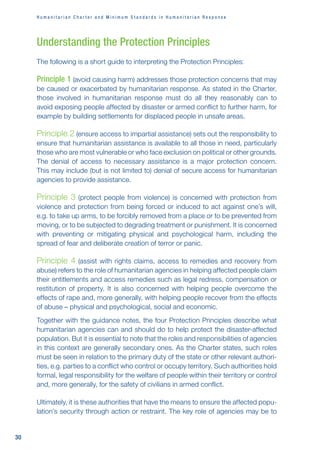
ular, to ensure the appropriateness and quality of any response, the participation
of disaster-affected people – including the groups and individuals most frequently
at risk in disasters – should be maximised.
Vulnerabilities and capacities of disaster-affected
populations
This section is designed to be read in conjunction with, and to reinforce,
the Core Standards.
H u m a n i t a r i a n C h a r t e r a n d M i n i m u m S t a n d a r d s i n H u m a n i t a r i a n R e s p o n s e
248
It is important to understand that to be young or old, a woman or a person with a
disability or HIV does not, of itself, make a person vulnerable or at increased risk.
Rather, it is the interplay of factors that does so: for example, someone who is
over 70 years of age, lives alone and has poor health is likely to be more vulnerable
than someone of a similar age and health status living within an extended family
and with sufficient income. Similarly, a 3-year-old girl is much more vulnerable if
she is unaccompanied than if she were living in the care of responsible parents.
As the shelter, settlement and non-food item standards and Key actions are
implemented, a vulnerability and capacity analysis helps to ensure that a disaster
response effort supports those who have a right to assistance in a non-discrim-
inatory manner and who need it most. This requires a thorough understanding
of the local context and of how a particular crisis impacts on particular groups
of people in different ways due to their pre-existing vulnerabilities (e.g. being very
poor or discriminated against), their exposure to various protection threats (e.g.
gender-based violence including sexual exploitation), disease incidence or preva-
lence (e.g. HIV or tuberculosis) and possibilities of epidemics (e.g. measles or
cholera). Disasters can make pre-existing inequalities worse. However, support
for people’s coping strategies, resilience and recovery capacities is essential.
Their knowledge, skills and strategies need to be supported and their access
to social, legal, financial and psychosocial support advocated for. The various
physical, cultural, economic and social barriers they may face in accessing these
services in an equitable manner also need to be addressed.
The following points highlight some of the key areas that will ensure that the rights
and capacities of all vulnerable people are considered:

 Optimise people’s participation, ensuring that all representative groups are
included, especially those who are less visible (e.g. individuals who have
communication or mobility difficulties, those living in institutions, stigmatised
youth and other under- or unrepresented groups).

 Disaggregate data by sex and age (0–80+ years) during assessment – this is
an important element in ensuring that the sector or area adequately considers
the diversity of populations.

 Ensure that the right to information on entitlements is communicated in a way
that is inclusive and accessible to all members of the community.
M i n i m u m S t a n d a r d s i n S h e l t e r , S e t t l e m e n t a n d N o n - F o o d I t e m s
249
The minimum standards
1.Shelter and settlement
Non-displaced disaster-affected populations should be assisted on the site of
their original homes with temporary or transitional household shelter, or with
resources for the repair or construction of appropriate shelter. Individual house-
hold shelter for such populations can be temporary or permanent, subject to
factors including the extent of the assistance provided, land-use rights or owner-
ship, the availability of essential services and the opportunities for upgrading
and expanding the shelter. Displaced populations who are unable to return to
their original homes often prefer to stay with other family members or people
with whom they share historical, religious or other ties, and should be assisted
to do so. When such dispersed settlement is not possible, temporary communal
settlement can be provided in planned or self-settled camps, along with tempo-
rary or transitional household shelter, or in suitable large public buildings used as
collective centres.
Shelter and settlement standard 1: Strategic planning
Shelter and settlement strategies contribute to the security, safety,
health and well-being of both displaced and non-displaced affected
populations and promote recovery and reconstruction where possible.
Key actions (to be read in conjunction with the guidance notes)

 Assess and analyse the shelter and settlement needs of the affected popu-
lation in consultation with the relevant authorities and the population them-
selves (see guidance note 1).

 Develop a shelter and settlement response plan (including early recovery
where possible) in coordination with the relevant authorities, responding
agencies and the affected population (see guidance note 1).

 Prioritise and support the return of affected households to their original
dwellings or the site of their dwelling where possible (see guidance note 2).

 Assist those who are unable or unwilling to return to their original dwellings
to be hosted by other households or to be accommodated within temporary
communal settlements (see guidance notes 3–4).
H u m a n i t a r i a n C h a r t e r a n d M i n i m u m S t a n d a r d s i n H u m a n i t a r i a n R e s p o n s e
250

 Ensure access to non-food items, shelter solutions (such as tents or shelter
kits), construction materials, cash, technical assistance or information or a
combination of these, as required (see guidance notes 5–6).

 Ensure dwellings or settlements are located at a safe distance from any
actual or potential threats and that risks from existing hazards are minimised
(see guidance note 7).

 Ensure that debris resulting from the disaster is removed from key locations
including the sites of damaged or destroyed homes, temporary communal
settlements, essential public buildings and access routes (see guidance
note 8).

 Plan safe access to water and sanitation services, health facilities, schools
and places for recreation and worship, and to land, markets or services
used for the continuation or development of livelihood support activities (see
guidance notes 9–10).
Key indicators (to be read in conjunction with the guidance notes)

 Shelter and settlement solutions to meet the essential needs of all the disaster-
affected population are agreed with the population themselves and relevant
authorities in coordination with all responding agencies (see guidance note 1).

 All temporary shelter and settlement solutions are safe and adequate and
will remain so until more durable solutions are achieved (see guidance
notes 2–10).
Guidance notes
1. Assessment, consultation and coordination: An initial needs assess-
ment is essential to identify the shelter and settlement needs of the affected
population, post-disaster risks, vulnerabilities and capacities, opportunities
to address recovery from the outset and the need for more detailed assess-
ment including environmental impact. The disaster-affected population
(especially vulnerable people with specific needs), along with the relevant
authorities, should be involved in any such assessment. Existing contingency
plans should be used to inform response activities, in coordination with the
relevant authorities, humanitarian and other agencies and the affected popu-
lation using agreed coordination mechanisms. The availability of resources,
the local context (including seasonal weather patterns), security and access
to existing or new sites and land will inform response planning (see Core
Standards 1–5 on pages 55–68, Non-food items standards 1–5 on pages
269–276 and Appendix 1: Shelter, settlement and non-food items assess-
ment checklist).
M i n i m u m S t a n d a r d s i n S h e l t e r , S e t t l e m e n t a n d N o n - F o o d I t e m s
251
2. Return: The opportunity to return to their own land and dwellings is a
major goal for most disaster-affected populations. The repair of dwellings
or the upgrading of shelter solutions determined by the population them-
selves supports communal coping strategies, retains established settlement
patterns and enables the use of existing infrastructure (see Core Standard 1
on page 55). Return may be delayed or prevented and so require a period of
temporary settlement elsewhere. Issues affecting return include the contin-
uation of the disaster, such as ongoing flooding, landslides or earthquake
aftershocks, and security concerns, such as occupation of property or land
and the need for restitution, continuing violent conflict, ethnic or religious
tension, fear of persecution or landmines and unexploded ordnance. The
reconstruction of schools is also important to enable displaced populations
to return. Return by female-headed households, those widowed or orphaned
by the disaster or persons with disabilities may be inhibited by inadequate
or discriminatory land and property legislation or customary procedures.
Displaced populations who may not have the ability to undertake reconstruc-
tion activities may also be discouraged or prevented from returning.
3. Hosting by families and communities: Displaced populations who are
unable to return to their original homes often prefer to stay with other family
members or people with whom they share historical, religious or other ties
(see Core Standard 1 on page 55). Assistance for such hosting may include
support to expand or adapt an existing host family shelter and facilities to
accommodate the displaced household, or the provision of an additional
separate shelter adjacent to the host family. The resulting increase in popula-
tion density should be assessed and the demand on social facilities, infra-
structure provision and natural resources should be evaluated and mitigated.
4. Temporary communal settlement: Although they should not become a
default response, temporary planned camps can be used to accommodate
affected populations who are unable or unwilling to return to the site of their
original dwelling and for whom hosting by other families is not an option.
Such settlement solutions may be required in areas where security threats
increase the risk to isolated populations or where access to essential services
and resources such as water, food and locally sourced building materials
is limited. Existing buildings used as collective centres can provide rapid
temporary protection from the climate. Buildings used for such purposes
may require adaptation or upgrading, for example the provision of internal
subdivisions and ramps for those with mobility difficulties. In many coun-
tries, the use of pre-identified buildings for collective centres is the estab-
lished response to known types of disaster, with associated management
and service provision responsibilities. Although school buildings are often
used to accommodate disaster-affected populations, alternative structures
H u m a n i t a r i a n C h a r t e r a n d M i n i m u m S t a n d a r d s i n H u m a n i t a r i a n R e s p o n s e
252
should be identified to enable schooling to continue. The planning of tempo-
rary communal settlements should consider the implications on the personal
safety, privacy and dignity of occupants and access to essential facilities. It
is necessary to ensure that temporary communal settlements do not them-
selves become targets for attack, pose a security risk to the surrounding
population or result in unsustainable demands on the surrounding natural
environment.
5. Types of shelter assistance: Combinations of different types of assistance
may be required to meet the shelter needs of affected populations. Basic
assistance can include personal items, such as clothing and bedding, or
general household items, such as stoves and fuel. Shelter support items can
include tents, plastic sheeting and toolkits, building materials and temporary
or transitional shelters using materials that can be reused as part of perma-
nent shelters. Manual or specialist labour, either voluntary or contracted,
may also be required, as well as technical guidance on appropriate building
techniques. The use of cash or vouchers to promote the use of local supply
chains and resources should be considered, subject to the functioning of
the local economy. Cash can also be used to pay for rental accommodation.
Information or advice distributed through public campaigns or local centres
on how to access grants, materials or other forms of shelter support can
complement commodity-based assistance.
6. Transitional shelter: An approach rather than a phase of response, the
provision of transitional shelter responds to the fact that post-disaster shelter
is often undertaken by the affected population themselves, and this self-
management should be supported (see Core Standard 1 on page 55). Post-
disaster shelter solutions that can be reused in part or in whole in more
permanent structures, or relocated from temporary to permanent locations,
can promote the transition by affected populations to more durable shelter.
For non-displaced populations on the site of their original homes, transi-
tional shelter can provide a basic starter home, to be upgraded, expanded
or replaced over time as resources permit. For displaced populations, tran-
sitional shelter can provide appropriate shelter which can be disassembled
and reused when the affected populations are able to return to the sites of
their original homes or are resettled in new locations. Transitional shelter can
also be provided to affected populations hosted by other households who
can accommodate the erection of an adjacent or adjoining shelter. Any such
structures can be removed and reused when the affected populations are
able to return to their original sites or elsewhere.
7. Risk, vulnerability and hazard assessments: Undertake and regu-
larly review a comprehensive risk and vulnerability assessment (see Core
Standard 3 on page 61). Actual or potential security threats and the unique
M i n i m u m S t a n d a r d s i n S h e l t e r , S e t t l e m e n t a n d N o n - F o o d I t e m s
253
risks and vulnerabilities due to age, gender, disability, social or economic
status, the dependence of affected populations on natural environmental
resources, and the relationships between affected populations and any host
communities should be included in any such assessments (see Protection
Principle 3 on page 38). Risks posed by natural hazards such as earth-
quakes, volcanic activity, landslides, flooding or high winds should inform
the planning of shelter and settlement solutions. Settlement locations should
not be prone to diseases or contamination or have significant vector risks.
Potentially hazardous materials and goods can be deposited or exposed
following natural disasters such as earthquakes, floods and typhoons.
Mines and unexploded ordnance can be present due to previous or current
conflicts. The stability of building structures in inhabited areas affected by
the disaster should be assessed by technical specialists. For collective
centres, the ability of existing building structures to accommodate any addi-
tional loading and the increased risk of the failure of building components
such as floors, internal dividing walls, roofs, etc., should be assessed.
8. Debris removal: The removal of debris following a natural disaster or
conflict is a priority to enable the provision of shelter and the establishment
of appropriate settlement solutions. Debris management planning should
be initiated immediately after the disaster to ensure debris can be recycled
or identified for separation, collection and/or treatment (see Shelter and
settlement standard 5 on page 265). Key issues include the presence of
corpses requiring identification and appropriate handling, the retrieval of
personal possessions, structurally dangerous locations and hazardous
materials and ownership of salvageable materials for reuse or sale. The
removal of debris may provide opportunities for cash for work programmes
and/or require the use of major equipment and expertise to undertake. The
use, management, ownership and environmental impact of disposal sites
should be considered.
9. Schools, health facilities and community infrastructure: Access to
essential services should be ensured, including schools, health facilities,
safe play areas and communal meeting areas. Existing or repaired service
infrastructure should be used, with additional temporary services or facilities
as required. Where the repair or construction of public buildings is subject
to the development of new settlement plans or other regulatory processes,
temporary structures may be required to provide immediate, short-term
facilities. Any such service provision using temporary or permanent struc-
tures should meet agreed standards (see WASH standard 1 on page 89,
Health systems standard 1 on page 296 and INEE Minimum Standards for
Education: Preparedness, Response, Recovery).
H u m a n i t a r i a n C h a r t e r a n d M i n i m u m S t a n d a r d s i n H u m a n i t a r i a n R e s p o n s e
254
10. Livelihood support: The settling of disaster-affected populations should
be informed by their pre-disaster economic activities and the opportunities
within the post-disaster context (see Food security and nutrition assessment
standards 1–2 on pages 150–154 and Core Standard 1 on page 55). Land
availability and access for cultivation and grazing, and access to market areas
and local services for particular economic activities should be considered.
Shelter and settlement standard 2: Settlement planning
The planning of return, host or temporary communal settlements
enables the safe and secure use of accommodation and essential
services by the affected population.
Key actions (to be read in conjunction with the guidance notes)

 Identify and use existing planning processes where possible, informed by
agreed best practice, minimising settlement risk and vulnerabilities (see
guidance note 1).

 Identify housing, land and property ownership and/or use rights for buildings
or locations (see guidance note 2).

 Ensure safe access to all shelters and settlement locations and to essential
services (see guidance notes 3–4).

 Use existing settlement patterns and topographical features to minimise
adverse impact on the natural environment (see guidance note 5).

 Involve the affected population in the planning of temporary communal
settlements by family, neighbourhood or village groups as appropriate (see
guidance note 6).

 Ensure sufficient surface area and adequate fire separation in temporary
planned and self-settled camps (see guidance notes 7–8).

 Minimise vector risks (see guidance note 9).
Key indicators (to be read in conjunction with the guidance notes)

 Through agreed planning processes, all shelter-assisted populations are
consulted on and agree to the location of their shelter or covered area and
access to essential services (see guidance note 1).

 All settlement plans demonstrate that risks and vulnerabilities in the use of
shelters, covered areas and essential services have been identified and miti-
gated (see guidance notes 2–9).
M i n i m u m S t a n d a r d s i n S h e l t e r , S e t t l e m e n t a n d N o n - F o o d I t e m s
255
Guidance notes
1. Planning processes: Local planning practices should be used and informed
by the type of disaster or crisis, identified hazards and the impact on the
affected population. Appropriate measures to minimise settlement risks
and vulnerabilities should be used. Existing planning regulations should be
complied with where required by the relevant authorities and where this does
not impede the humanitarian imperative of meeting urgent shelter and settle-
ment needs. The longer-term implications of planning decisions, particularly
regarding sites for temporary communal settlement, should be identified.
2. Housing, land and property ownership, rights and usage: For both non-
displaced and displaced populations, identify ownership of relevant land,
housing or other buildings and the holders of formal or customary use rights.
Such issues are often controversial, especially where records may not have
been kept or where conflict may have affected possession. Multi-occupancy
dwellings or buildings with mixed usage will involve common or shared
ownership or occupancy rights. The identification of the land or property
rights of vulnerable people should be sought and such people supported, in
particular women, those widowed or orphaned by the disaster, persons with
disabilities, tenants, social occupancy rights-holders and informal settlers.
Clarify formal, informal or understood rights of ownership or inheritance,
particularly following a disaster in which the holder of the rights or title may
have died or been displaced. The provision of group tenure or similar to a
number of households where no formal rights existed before the disaster
can assist in the incremental establishment of such rights. The provision of
shelter assistance may also be perceived or used as legitimising land title
claims which could inhibit or prevent humanitarian action. The use of land for
temporary communal settlements should consider existing use rights of the
land or natural environmental resources by the host or neighbouring commu-
nities (see Shelter and settlement standard 5 on page 265).
3. Essential services and facilities: Disaster-affected populations returning
to the site of their original homes, being hosted or accommodated in
temporary communal settlements all require safe, secure and equitable
access to essential services. These include, as appropriate, water, sanitary
facilities, fuel for cooking or communal cooking facilities, healthcare,
solid waste disposal, schools, social facilities, places of worship, meeting
points, recreational areas, including child-friendly spaces and space for
livestock accommodation (ensuring adequate separation of any such
livestock from residential spaces). Sufficient space should be provided for
culturally appropriate burials and associated rituals. The use of existing or
repaired facilities should be maximised where this does not adversely affect
neighbouring or host communities. Additional facilities or access points to
H u m a n i t a r i a n C h a r t e r a n d M i n i m u m S t a n d a r d s i n H u m a n i t a r i a n R e s p o n s e
256
meet the needs of the target population, and in particular vulnerable people,
should be provided. The social structure and gender roles of the affected
population and the requirements of vulnerable people should be reflected in
the service provision, for example ensuring services are within reasonable
walking distance for individuals with mobility difficulties and the provision of
safe breastfeeding areas in temporary communal settlements. Appropriate
access to facilities for older people, those with physical disabilities and
those who need frequent access should be ensured. Administrative offices,
warehousing and staff accommodation and quarantine areas in temporary
communal settlements should be provided as required (see WASH standard 1
on page 89 and Health systems standard 1 on page 296).
4. Access: Access to the settlement, the condition of local road infrastruc-
ture and proximity to transport hubs for the supply of relief assistance
should be assessed, taking into account seasonal constraints, hazards and
security risks. For temporary communal settlements, the site itself and any
primary storage and food distribution points should be accessible by heavy
trucks from an all-weather road. Other facilities should be accessible by
light vehicles. Roads and pathways within settlements should provide safe,
secure and all-weather access to individual dwellings and communal facili-
ties including schools and healthcare facilities. Artificial lighting should be
provided as required. Within temporary communal settlements or collec-
tive centres, access and escape routes should avoid creating isolated or
screened areas that could pose a threat to the personal safety of users. Steps
or changes of level close to exits in collective centres should be avoided and
handrails for any stairways and ramps should be provided. For occupants
with mobility difficulties, space on the ground floor should be provided, close
to exits or along access routes without changes of level. The occupants of
buildings used as collective centres should be within an agreed reasonable
distance of a minimum of two exits, providing alternative escape routes, and
these exits should be clearly visible.
5. Site selection and drainage: Surface water drainage and the risks of
ponding or flooding should be assessed when selecting sites and planning
temporary communal settlements. The site gradient should not exceed 5 per
cent, unless extensive drainage and erosion control measures are taken, or
be less than 1 per cent to provide for adequate drainage. Drainage channels
may still be required to minimise flooding or ponding. The lowest point of the
site should be not less than three metres above the estimated maximum level
of the water table. The ground conditions should be suitable for excavating
toilet pits and should inform the locations of toilets and other facilities (see
Excreta disposal standards 1–2 on pages 105–107 and Drainage standard 1
on page 121).
M i n i m u m S t a n d a r d s i n S h e l t e r , S e t t l e m e n t a n d N o n - F o o d I t e m s
257
6. Site planning for temporary communal settlements: Space allocation
within collective centres and household plots within temporary planned
camps should be informed by existing social practices and use of shared
resources, including water and sanitation facilities, communal cooking, food
distribution, etc. Neighbourhood planning should support existing social
networks, contribute to security and enable self-management by the affected
population. The plot layout in temporary planned camps should maintain the
privacy and dignity of separate households by ensuring that each household
shelter opens onto common space or a screened area for the use of the
household instead of being opposite the entrance to another shelter. Safe,
integrated living areas for displaced populations that include a significant
number of single adults or unaccompanied children should be provided. For
dispersed settlements, the principles of neighbourhood planning should also
apply, e.g. groups of households return to a defined geographical area or
identify host families in close proximity to one another (see Protection Prin-
ciple 1 on page 33).
7. Surface area of temporary planned or self-settled camps: For camp-
type settlements, a minimum usable surface area of 45 square metres for
each person including household plots should be provided. The area should
have the necessary space for roads and footpaths, external household
cooking areas or communal cooking areas, educational facilities and recre-
ational areas, sanitation, firebreaks, administration, water storage, distribu-
tion areas, markets, storage and limited kitchen gardens for individual house-
holds. Where communal services can be provided by existing or additional
facilities outside of the planned area of the settlement, the minimum usable
surface area should be 30m2
for each person. Area planning should also
consider changes in the population. If the minimum surface area cannot
be provided, the consequences of higher-density occupation should be
mitigated, for example through ensuring adequate separation and privacy
between individual households, space for the required facilities, etc.
8. Fire safety: Assess fire risks to inform the site planning of temporary
communal settlements and the grouping of individual household shelters.
Mitigating actions should include the provision of a 30-metre firebreak
between every 300 metres of built-up area, and a minimum of 2 metres (but
preferably twice the overall height of any structure) between individual build-
ings or shelters to prevent collapsing structures from touching adjacent build-
ings. Preferred cooking practices and the use of stoves or heaters should
also inform the overall site planning and the safe separation of household
shelters (see Non-food items standard 4 on page 274).
9. Vector risks: Low-lying areas, debris resulting from the disaster, vacant
buildings and excavations, such as those resulting from the use of local
H u m a n i t a r i a n C h a r t e r a n d M i n i m u m S t a n d a r d s i n H u m a n i t a r i a n R e s p o n s e
258
earth for construction, can provide breeding grounds for pests which could
pose health risks to nearby populations. For temporary communal settle-
ments, appropriate site selection and the mitigation of vector risks are key to
reducing the impact of vector-borne diseases on affected populations (see
Vector control standards 1–3 on page 111–116).
Shelter and settlement standard 3: Covered living space
People have sufficient covered living space providing thermal
comfort, fresh air and protection from the climate ensuring their
privacy, safety and health and enabling essential household and
livelihood activities to be undertaken.
Key actions (to be read in conjunction with the guidance notes)

 Ensure that each affected household has adequate covered living space (see
guidance notes 1–2).

 Enable safe separation and privacy as required between the sexes, between
different age groups and between separate families within a given household
as required (see guidance note 3).

 Ensure that essential household and livelihood activities can be carried out
within the covered living space or adjacent area (see guidance note 4).

 Promote the use of shelter solutions and materials that are familiar to the
disaster-affected population and, where possible, culturally and socially
acceptable and environmentally sustainable (see guidance notes 5–6).

 Assess the specific climatic conditions for all seasons to provide optimal
thermal comfort, ventilation and protection (see guidance notes 7–10).
Key indicators (to be read in conjunction with the guidance notes)

 All affected individuals have an initial minimum covered floor area of 3.5m2
per
person (see guidance notes 1–2).

 All shelter solutions and materials meet agreed technical and performance
standards and are culturally acceptable (see guidance notes 3–10).
Guidance notes
1. Climate and context: In cold climates, household activities typically take
place within the covered area and affected populations may spend substan-
tial time inside to ensure adequate thermal comfort. In urban settings,
M i n i m u m S t a n d a r d s i n S h e l t e r , S e t t l e m e n t a n d N o n - F o o d I t e m s
259
household activities typically occur within the covered area as there is
usually less adjacent external space that can be used. A covered floor
area in excess of 3.5m2
per person will often be required to meet these
considerations. The floor-to-ceiling height is also a key factor, with greater
height being preferable in hot and humid climates to aid air circulation,
while a lower height is preferable in cold climates to minimise the internal
volume that requires heating. The internal floor-to-ceiling height should be
a minimum of two metres at the highest point. In warmer climates, adjacent
shaded external space can be used for food preparation and cooking.
Shelter solutions may have to accommodate a range of climatic extremes
from cold nights and winters to hot days and summers. Where materials
for a complete shelter cannot be provided, roofing materials to provide the
minimum covered area should be prioritised. The resulting enclosure may
not provide the necessary protection from the climate nor security, privacy
and dignity, so steps should be taken to meet these needs as soon as
possible (see guidance note 2).
2. Duration: In the immediate aftermath of a disaster, particularly in extreme
climatic conditions where shelter materials are not readily available, a
covered area of less than 3.5m2
per person may be appropriate to save life
and to provide adequate short-term shelter. In such instances, the covered
area should reach 3.5m2
per person as soon as possible to minimise
adverse impact on the health and well-being of the people accommodated.
If 3.5m2
per person cannot be achieved, or is in excess of the typical space
used by the affected or neighbouring population, the impact on dignity,
health and privacy of a reduced covered area should be considered. Any
decision to provide less than 3.5m2
per person should be highlighted, along
with actions to mitigate adverse effects on the affected population. Tempo-
rary or transitional shelter solutions may be required to provide adequate
shelter for an extended duration, through different seasonal climates and
potentially for several years. Response plans agreed with local authori-
ties or others should ensure that temporary or transitional shelters are not
allowed to become default permanent housing.
3. Cultural practices, safety and privacy: Existing local practices in the
use of covered living space, for example sleeping arrangements and the
accommodation of extended family members, should inform the covered
area required. Consultation should include members of vulnerable groups
and those caring for such individuals. Opportunities for internal subdivi-
sion within individual household shelters should be provided. In collective
accommodation, the grouping of related families, well-planned access
routes through the covered area and materials to screen personal and
household space can aid the provision of adequate personal privacy and
H u m a n i t a r i a n C h a r t e r a n d M i n i m u m S t a n d a r d s i n H u m a n i t a r i a n R e s p o n s e
260
safety. The psychosocial benefits of ensuring adequate space provision
and privacy while minimising overcrowding should be maximised in both
individual household shelters and temporary collective accommodation
(see Protection Principle 1 on page 33).
4. Household and livelihood activities: The covered area should provide
space for the following activities: sleeping, washing and dressing; care
of infants, children and the ill or infirm; storage of food, water, house-
hold possessions and other key assets; cooking and eating indoors
when required; and the common gathering of the household members.
The planning of the covered area, in particular the location of openings
and subdivisions, should maximise the use of the internal space and any
adjacent external area.
5. Shelter solutions, materials and construction: Defined shelter solutions
such as family tents, shelter kits, packages of materials or prefabricated
buildings should be provided where local post-disaster shelter options are
not readily available, are inadequate or cannot be sustainably supported
by the local natural environment. Where reinforced plastic sheeting is
provided as a relief item for emergency shelter, it should be complemented
with rope, tools, fixings and supporting materials such as timber poles or
locally procured framing elements. Any such materials or defined shelter
solutions should meet agreed national and international specifications and
standards and be acceptable to the affected population. When only part of
the materials for a basic shelter are provided (e.g. plastic sheeting), assess
and mitigate any potential adverse impact on the local economy or natural
environment of the sourcing of other materials needed (e.g. timber poles
for framing). The technical and financial ability of the affected population
to maintain and repair their shelter should also inform the specification of
materials and technologies (see Non-food items standard 5 on page 276).
Regular monitoring should be undertaken to ensure that the performance
of shelter solutions remains adequate over time.
6. Participatory design: All members of each affected household should be
involved to the maximum extent possible in determining the type of shelter
assistance to be provided. The opinions of those groups or individuals
who typically have to spend more time within the covered living space and
those with specific accessibility needs should be prioritised. This should
be informed by assessments of existing typical housing. Make households
aware of the disadvantages as well as advantages of unfamiliar ‘modern’
forms of construction and materials which may be seen as improving the
social status of such households (see Core Standard 1 on page 55).
7. In warm, humid climates: Shelters should be oriented and designed to
maximise ventilation and minimise entry of direct sunlight. The roof should
have a reasonable slope for rainwater drainage with large overhangs except
M i n i m u m S t a n d a r d s i n S h e l t e r , S e t t l e m e n t a n d N o n - F o o d I t e m s
261
in locations vulnerable to high winds. The construction of the shelter should
be lightweight, as low thermal capacity is required. Adequate surface water
drainage should be ensured around the shelter together with the use of
raised floors to minimise the risk of water entering the covered area.
8. In hot, dry climates: Construction should be heavyweight to ensure high
thermal capacity, allowing changes in night and day temperatures to alter-
nately cool and heat the interior, or lightweight with adequate insulation.
Care should be taken in the structural design of heavyweight construction
in areas with seismic risks. If only plastic sheeting or tents are available, a
double-skinned roof should be provided with ventilation between the layers
to reduce radiant heat gain. Door and window openings positioned away
from the direction of the prevailing wind will minimise heating by hot winds
and heat radiation from the surrounding ground. Flooring that meets the
external walling without gaps should be provided to minimise dust and vector
penetration.
9. In cold climates: Heavyweight construction with high thermal capacity
is required for shelters that are occupied throughout the day. Lightweight
construction with low thermal capacity and substantial insulation is more
appropriate for shelters that are occupied only at night. Minimise air flow,
particularly around door and window openings, to ensure personal comfort
while also providing adequate ventilation for space heaters or cooking stoves.
Stoves or other forms of space heaters are essential and must be appropriate
to the shelter. Assess and mitigate potential fire risks from the use of stoves
and heaters (see Non-food items standard 4 on page 274). Surface-water
drainage should be provided around the shelter and raised floors should
be used to minimise the risk of water due to rain or snow melt from entering
the covered area. The loss of body heat through the floor should be mini-
mised by ensuring that the floor is insulated and through the use of insulated
sleeping mats, mattresses or raised beds (see Non-food items standard 2
on page 271).
10. Ventilation and vector control: Adequate ventilation should be provided
within individual household shelters and public buildings such as schools
and healthcare facilities to maintain a healthy internal environment, minimise
the effect of smoke from indoor household stoves and resulting respiratory
infections and eye problems and limit the risk of transmission of diseases
such as TB spread by droplet infection. Local building practices, the patterns
of shelter use by displaced people and material selection should inform
vector control measures (see Essential health services – control of commu-
nicable diseases standard 1 on page 312 and Vector control standards 1–3
on pages 111–116).
H u m a n i t a r i a n C h a r t e r a n d M i n i m u m S t a n d a r d s i n H u m a n i t a r i a n R e s p o n s e
262
Shelter and settlement standard 4: Construction
Local safe building practices, materials, expertise and capacities are
used where appropriate, maximising the involvement of the affected
population and local livelihood opportunities.
Key actions (to be read in conjunction with the guidance notes)

 Involve the affected population, local building professionals and the relevant
authorities in agreeing appropriate safe building practices, materials and
expertise which maximise local livelihood opportunities (see guidance
notes 1–3).

 Ensure access to additional support or resources to disaster-affected people
who do not have the capacity, ability or opportunity to undertake construc-
tion-related activities (see guidance notes 1–3).

 Minimise structural risks and vulnerabilities through appropriate construction
and material specifications (see guidance notes 4–5).

 Meet agreed standards for materials and the quality of work (see guidance
notes 5–6).

 Manage the provision of materials, labour, technical assistance and regula-
tory approval through appropriate bidding, procurement and construction
administration practices (see guidance note 7).

 Enable the maintenance and upgrading of individual household shelters
using locally available tools and resources (see guidance note 8).
Key indicators (to be read in conjunction with the guidance notes)

 All construction is in accordance with agreed safe building practices and
standards (see guidance notes 2–7).

 Construction activities demonstrate the involvement of the affected popu-
lation and the maximising of local livelihood opportunities (see guidance
notes 1–2, 8).
Guidance notes
1. Participation of affected populations: Participation by the affected
population in shelter and settlement activities should be informed by existing
practices through which housing and settlements are planned, constructed
and maintained. Skills training programmes and apprenticeship schemes
M i n i m u m S t a n d a r d s i n S h e l t e r , S e t t l e m e n t a n d N o n - F o o d I t e m s
263
can maximise opportunities for participation during construction, particularly
for individuals lacking the required building skills or experience. Women of all
ages should be encouraged to participate in shelter and construction-related
activities and training. Contributions from those less able to undertake
physical tasks or those requiring specialist technical expertise can include
site monitoring and inventory control, the provision of childcare, temporary
accommodation or the preparation of food for those engaged in construction
works and administrative support. The other demands on the time and labour
resources of the affected population should be considered. The provision
of assistance from volunteer community labour teams or contracted
labour can complement the involvement of individual households. Such
assistance is essential to support female-headed households, as women
may be at particular risk from sexual exploitation in seeking assistance for
the construction of their shelter (see Core Standard 1 on page 55, Protection
Principle 2 on page 36 and Non-food items standard 5 on page 276). Persons
with mobility difficulties, older people and others unable to undertake
construction activities may also need assistance.
2. Technical expertise and experience: Appropriate technical design,
construction and management expertise should complement the skills and
understanding of the affected population and provide experience of estab-
lished technical and regulatory processes (see Core Standard 6 on page 71).
In locations vulnerable to seasonal or cyclical disasters, the involvement of
technical specialists who have previous experiences of appropriate, local
solutions or agreed best practices can inform the design and construction
process.
3. Sourcing of materials and labour: The rapid provision of shelter solutions
or materials and tools, either separately or in the form of a predefined kit, can
enable the affected population to erect or construct shelters themselves.
Where possible, local livelihoods should be supported through the local
procurement of building materials, specialist building skills and manual labour
informed by rapid market assessments and analyses. If the local sourcing of
materials is likely to have a significant adverse impact on the local economy
or the natural environment, the following may be required: the use of multiple
sources; alternative materials or production processes; materials sourced
regionally or internationally; or proprietary shelter systems (see Shelter and
settlement standard 5 on page 265). The reuse of materials salvaged from
damaged buildings, having identified the rights to such material, should be
promoted.
4. Disaster prevention and risk reduction: Construction resilience should
be consistent with known climatic conditions and natural hazards and
should consider adaptations to address the local impact of climate change.
H u m a n i t a r i a n C h a r t e r a n d M i n i m u m S t a n d a r d s i n H u m a n i t a r i a n R e s p o n s e
264
Changes to building standards or building practices as a result of the disaster
should be applied in consultation with the disaster-affected population and
the relevant authorities.
5. Safe public building design and construction: Temporary and perma-
nent public buildings such as schools and healthcare facilities should be
constructed or repaired to be disaster-resilient and to ensure safety and
access for all. Such facilities should comply with sector-specific construction
standards and approval procedures, including accessibility requirements
for those with mobility, visual or communication difficulties. The repair or
construction of such buildings should be undertaken in consultation with the
appropriate authorities and informed by an agreed service infrastructure and
affordable maintenance strategy (see INEE Minimum Standards in Educa-
tion: Preparedness, Response, Recovery).
6. Construction standards: Standards and guidelines on construction should
be agreed with the relevant authorities to ensure that key safety and perfor-
mance requirements are met. Where applicable local or national building
codes have not been customarily adhered to or enforced, incremental
compliance should be agreed, reflecting local housing culture, climatic
conditions, resources, building and maintenance capacities, accessibility
and affordability.
7. Procurement and construction management: A construction schedule
should be developed to plan activities. The schedule should include key mile-
stones such as target completion dates, the relocation of displaced popula-
tions to specific shelter and settlement solutions and the onset of seasonal
weather patterns. A responsive, efficient and accountable supply chain and
construction management system for materials, labour and site supervi-
sion should also be established. This should include sourcing, procurement,
transportation, handling and administration, from point of origin through to
the respective sites as required (see Food security – food transfers standard 4
on page 188).
8. Upgrading and maintenance: As initial shelter responses typically provide
only a minimum level of enclosed space and material assistance, affected
populations will need to seek alternative means of increasing the extent or
quality of the enclosed space provided. The form of construction and the
materials used should enable individual households to maintain and incremen-
tally adapt or upgrade the shelter to meet their longer-term needs using locally
available tools and materials (see Non-food items standard 5 on page 276).
M i n i m u m S t a n d a r d s i n S h e l t e r , S e t t l e m e n t a n d N o n - F o o d I t e m s
265
Shelter and settlement standard 5: Environmental impact
Shelter and settlement solutions and the material sourcing and
construction techniques used minimise adverse impact on the local
natural environment.
Key actions (to be read in conjunction with the guidance notes)

 Assess and analyse the adverse impact of the disaster on the local natural
environment and environmental risks and vulnerabilities (see guidance
note 1).

 Consider the extent of available local natural resources when planning the
temporary or permanent settling of the affected population (see guidance
notes 1–3).

 Manage local natural environmental resources to meet the ongoing and
future needs of disaster-affected populations (see guidance notes 1–3).

 Minimise the adverse impact on local natural environmental resources which
can result from the production and supply of construction materials and the
building process (see guidance notes 3–4).

 Retain trees and other vegetation where possible to increase water retention,
minimise soil erosion and provide shade (see guidance note 5).

 Restore the location of temporary communal settlements to their original
condition once they are no longer needed, unless agreed otherwise (see
guidance note 6).
Key indicators (to be read in conjunction with the guidance notes)

 The planning of all return, host or temporary communal settlements demon-
strate that adverse impact on the natural environment has been minimised
and/or mitigated (see guidance notes 1–6).

 The construction processes and sourcing of materials for all shelter solutions
demonstrate that adverse impact on the local natural environment has been
minimised and/or mitigated (see guidance note 4).
Guidance notes
1. Environmental assessment: The impact of a disaster on the natural envi-
ronment should be assessed to inform the response and mitigating activities
required. Many natural disasters, for example landslides, are often a direct
H u m a n i t a r i a n C h a r t e r a n d M i n i m u m S t a n d a r d s i n H u m a n i t a r i a n R e s p o n s e
266
result of the mismanagement of natural environmental resources. Alterna-
tively, they may be due to existing environmental risks or vulnerabilities, such
as seasonal flooding in low-lying areas or the lack of natural environmental
resources that can be safely harvested. An understanding of these risks is
essential to inform settlement planning and to ensure that known vulner-
abilities including the impact of climate change are addressed as part of the
response.
2. Sustainability and the management of environmental resources: Where
the environmental resources required to support a substantial increase in
human habitation are limited, any such unsustainable demand on the natural
environment should be mitigated. Where such natural resources are avail-
able, temporary communal settlements should be managed to minimise
environmental damage. Sustainable external supplies of fuel and options for
livestock grazing, agricultural production and other natural resource-depen-
dent livelihood support activities should be provided and managed. Fewer
but larger managed settlements may be more environmentally sustainable
than a larger number of smaller, dispersed settlements that are not as easily
managed or monitored. The impact on the natural environmental resource
needs of populations hosting those affected by the disaster or settled close
to the affected area should be considered.
3. Mitigating long-term environmental impact: The management of natural
environmental resources should be considered at all planning levels. Where
the need to provide shelter for affected populations has a significant adverse
impact on the natural environment through the depletion of local environ-
mental resources, the long-term effects should be minimised through
complementary environmental management and rehabilitation activities.
Consultation with appropriate environmental agencies is recommended.
4. Sourcing of construction materials: The environmental impact of sourcing
natural environmental resources should be assessed, such as water,
construction timber, sand, soil and grasses, as well as fuel for the firing of
bricks and roof tiles. Identify customary users, extraction and regeneration
rates and the ownership or control of these resources. Alternative or comple-
mentary sources of supply may support the local economy and reduce
any long-term adverse impact on the local natural environment. The use of
multiple sources and the reuse of salvaged materials, alternative materials
and production processes (such as the use of stabilised earth blocks) should
be promoted. This should be combined with mitigation practices, such as
complementary replanting.
5. Erosion: Shelter and settlement solutions should be planned to retain trees
and other vegetation to stabilise the soil and to maximise the opportunities
for shade and protection from the climate. Natural contours should be used
M i n i m u m S t a n d a r d s i n S h e l t e r , S e t t l e m e n t a n d N o n - F o o d I t e m s
267
for such elements as roads, pathways and drainage networks in order to
minimise erosion and flooding. Where this cannot be achieved, any likely
erosion should be contained through the provision of excavated drainage
channels, piped drainage runs under roadways or planted earth banks to
minimise water run-off (see Drainage standard 1 on page 121).
6. Handover: The natural regeneration of the environment should be enhanced
in and around temporary communal settlements through appropriate envi-
ronmental rehabilitation measures. The eventual discontinuation of any such
settlements should be managed to ensure the satisfactory removal of all
material or waste that cannot be reused or that could have an adverse effect
on the natural environment.
H u m a n i t a r i a n C h a r t e r a n d M i n i m u m S t a n d a r d s i n H u m a n i t a r i a n R e s p o n s e
268
2.	Non-food items:
clothing, bedding
and household items
Clothing, blankets and bedding materials meet the most personal human needs
for shelter from the climate and for the maintenance of health, privacy and dignity.
Access to basic goods and supplies is required to enable affected populations
to prepare and consume food, provide thermal comfort, meet personal hygiene
needs and build, maintain or repair shelters (see Hygiene promotion standard 2
on page 94 and Water supply standard 1 on page 97).
All affected populations – whether they are able to return to the site of their
orginial homes, are hosted by other families or are accommodated in temporary
communal settlements – will have individual and household non-food item needs
that must be assessed and met as appropriate. Populations secondarily affected
by disasters, in particular host families, may also require non-food item assis-
tance to meet the additional burden of hosting or the impact of the disaster on
the local economy and access to such items.
Although the distribution of non-food items is a common response activity, the
provision of cash or vouchers to access such non-food items where local markets
are still functioning should be considered (see Food security – cash and voucher
transfers standard 1 on page 200).
Items for individual or household use typically do not require additional infor-
mation or instruction on how they are to be used. However, items to support
shelter repair or construction, for example building materials, fixings and tools, will
usually require additional technical guidance in the safe and effective use of such
items. Similarly, items to meet personal hygiene needs should be supported by
appropriate hygiene promotion activities (see Hygiene promotion standards 1–2
on pages 91–94).
M i n i m u m S t a n d a r d s i n S h e l t e r , S e t t l e m e n t a n d N o n - F o o d I t e m s
269
Non-food items standard 1: Individual, general household and
shelter support items
The affected population has sufficient individual, general household
and shelter support items to ensure their health, dignity, safety and
well-being.
Key actions (to be read in conjunction with the guidance notes)

 Assess the separate needs of the affected population for non-food items (see
guidance notes 1–2 and Water supply standard 3 on page 103).

 Identify which non-food items can be sourced locally or obtained by the
affected population themselves through the provision of cash or voucher
assistance (see guidance note 3).

 Consider the appropriateness of all non-food items within a given package
(see guidance note 4).

 Plan for orderly, transparent and equitable distributions of all non-food items
(see guidance note 5).

 Provide instruction, technical guidance or promotion in the use of shelter
support items as required (see guidance note 6).

 Plan to replenish non-food items for populations displaced for an extended
period of time (see guidance note 7).
Key indicator (to be read in conjunction with the guidance notes)

 The assessed non-food item needs of the entire disaster-affected population
have been met (see guidance notes 1–7).
Guidance notes
1. Needs assessment: The separate needs for personal items, such as clothing
and personal hygiene, general household items, such as food storage and
preparation, and items to support the meeting of shelter needs, such as
plastic sheeting, rope, tools or basic building materials, should be assessed.
A distinction should be made between individual and communal needs, in
particular for cooking and fuel. Non-food item needs that can be met using
familiar, locally sourced products should be identified. The need for boxes,
bags or similar containers for the storage and transportation of personal and
household goods for displaced populations and those in transit should be
considered for inclusion as part of any non-food item assistance. The provi-
sion of non-food items should be part of an overall disaster response plan (see
H u m a n i t a r i a n C h a r t e r a n d M i n i m u m S t a n d a r d s i n H u m a n i t a r i a n R e s p o n s e
270
Core Standards 1–3 on pages 55–61 and Shelter and settlement standard 1
on page 249).
2. Communal facilities: Non-food items should be provided to support
personal hygiene, health, food preparation and cooking, etc., as appropriate
for schools and other communal facilities. Access should be made available
to recreation and learning materials. Links should be established between the
health and education sectors to ensure public health and hygiene messages
support the appropriate use of non-food items (see Hygiene promotion
standards 1–2 on pages 91–94 and INEE Minimum Standards in Educa-
tion: Preparedness, Response, Recovery).
3. Sourcing non-food items: Disasters affect the local economy and supply
chains, often necessitating the external sourcing of non-food items and
the direct distribution to individuals, households or communities. A rapid
market analysis as part of the initial needs assessment can determine
whether familiar non-food items can be sourced locally or in neighbouring,
non-affected areas. Where the local economy is still functioning, or can be
supported through specific assistance in sourcing or supply chain manage-
ment, the provision of cash and/or vouchers can enable affected popula-
tions to manage their own relief item needs (see Food security – cash and
vouchers standard 1 on page 200). Any such assistance should be planned
to ensure that vulnerable people are not disadvantaged and that relief needs
are met.
4. Relief packages: Non-food items are often packaged and pre-positioned
in warehouses based on standard specifications and contents. The quantity
and specification of non-food items in a household package should be
considered with reference to the number of people in a typical household,
their age, sex and the presence of people with specific needs, as well as the
items’ cultural acceptability.
5. Distribution: Efficient and equitable distribution methods should be
planned in consultation with the affected population. The population should
be informed of any such distributions and any registration or assessment
process required to participate. Formal registration or the allocation of tokens
should be undertaken. Ensure that vulnerable individuals or households are
not omitted from distribution lists and can access both the information and
the distribution itself. A grievance process should be established to address
any concerns arising during registration or distribution. Relevant local author-
ities should be consulted on which distribution locations are most suitable for
safe access and receipt of the non-food items, as well as for safe return of
recipients. The walking distances involved, the terrain and the practicalities
and cost implications of transporting larger goods such as shelter support
items should be considered. The monitoring of distributions and the use of
the provided non-food items should be undertaken to assess the adequacy
M i n i m u m S t a n d a r d s i n S h e l t e r , S e t t l e m e n t a n d N o n - F o o d I t e m s
271
and appropriateness of both the distribution process and the non-food items
themselves (see Food security – food transfers standard 5 on page 192).
6. Promotion, instruction and technical guidance: Individual and general
household items should be familiar to the disaster-affected population for use
without additional guidance. However, technical guidance and instruction
should be provided as appropriate to complement the provision of shelter
support items such as construction materials, tools and fixings (see Non-food
items standard 5 on page 276). Packaging can carry simple diagrams illus-
trating how the items can be used safely to repair or construct safe and
adequate shelter. The disaster-affected population and local construc-
tion specialists should be involved in on-site awareness-raising activities
(for example, the repair or erection of demonstration shelters) in order to
better understand the construction techniques required. Any weaknesses in
pre-disaster shelter and settlement design and construction that may have
contributed to the damage or destruction of homes, and local examples of
good practice that withstood the disaster, should be highlighted to those
involved in construction activities.
7. Replenishment: The planning of relief distributions should consider the rate
of consumption, the resulting duration of use and the ability of the affected
population to replenish such items.
Non-food items standard 2: Clothing and bedding
The disaster-affected population has sufficient clothing, blankets
and bedding to ensure their personal comfort, dignity, health and
well-being.
Key actions (to be read in conjunction with the guidance notes)

 Identify the separate clothing needs of women, girls, men and boys of all
ages including infants and vulnerable or marginalised individuals and ensure
access to required items in the correct sizes and appropriate to the culture,
season and climate (see guidance notes 1–5).

 Identify the blanket and bedding needs of the affected population and ensure
access to blankets and bedding as required to provide sufficient thermal
comfort and to enable appropriate sleeping arrangements (see guidance
notes 2–5).

 Assess the need for insecticide-treated bed nets and provide as required
(see Vector control standards 1–3 on pages 111–116).
H u m a n i t a r i a n C h a r t e r a n d M i n i m u m S t a n d a r d s i n H u m a n i t a r i a n R e s p o n s e
272
Key indicators (to be read in conjunction with the guidance notes)

 All women, girls, men and boys have at least two full sets of clothing in the
correct size that are appropriate to the culture, season and climate (see
guidance notes 1–5).

 All affected people have a combination of blankets, bedding, sleeping mats or
mattresses and insecticide-treated bed nets where required to ensure suffi-
cient thermal comfort and enable appropriate sleeping arrangements (see
guidance notes 2–5 and Vector control standards 1–3 on pages 111–116).
Guidance notes
1. Changes of clothing: All affected people should have access to sufficient
changes of clothing to ensure their thermal comfort, dignity, health and well-
being. This will require at least two sets of essential items, particularly under-
clothes, to enable laundering.
2. Appropriateness: Clothing (including footwear as required) should be
appropriate to climatic conditions and cultural practices and sized according
to need. Infants and children up to 2 years of age should also have a blanket
in addition to appropriate clothing. Bedding materials should reflect cultural
practices and be sufficient in quantity to enable separate sleeping arrange-
ments as required.
3. Thermal performance: The insulating properties of clothing and bedding
should be considered, as well as the effect of wet or damp climatic condi-
tions on the thermal performance of such items. A combination of clothing
and bedding items should be considered to ensure the required level of
thermal comfort is met. Using insulated sleeping mats or mattresses to
combat heat loss through the ground may be more effective than providing
additional blankets.
4. Durability: Clothing and bedding should be sufficiently durable to accom-
modate typical wear and prolonged usage.
5. Specific needs: Those individuals most at risk should have additional
clothing and bedding to meet their needs. This includes people with inconti-
nence problems, people with chronic illness, pregnant and lactating women,
older people and individuals with impaired mobility. Infants, children, those
with restricted mobility and older people are more prone to heat loss and
hence may require additional clothing, blankets, etc., to maintain appropriate
levels of thermal comfort. Given their lack of mobility, older people and the ill
or infirm will require particular attention, such as the provision of mattresses
or raised beds.
M i n i m u m S t a n d a r d s i n S h e l t e r , S e t t l e m e n t a n d N o n - F o o d I t e m s
273
Non-food items standard 3: Cooking and eating utensils
The disaster-affected population has access to culturally appro-
priate items for preparing and storing food, and for cooking, eating
and drinking.
Key action (to be read in conjunction with the guidance notes)

 Identify the needs of the affected population for preparing and storing food,
and for cooking, eating and drinking, and enable access to culturally appro-
priate items as required (see guidance notes 1–2).
Key indicators (to be read in conjunction with the guidance notes)

 Each household or group of four to five individuals has access to two family-
sized cooking pots with handles and lids, a basin for food preparation or
serving, a kitchen knife and two serving spoons (see guidance notes 1–2).

 All disaster-affected people have access to a dished plate, a spoon or other
eating utensils and a mug or drinking vessel (see guidance notes 1–2).
Guidance notes
1. Appropriateness: The choice of cooking items and eating utensils should
be culturally appropriate and should enable safe practices to be followed.
Women or those typically overseeing the preparation of food should be
consulted when specifying items. The quantities of cooking items should
be informed by cultural practices such as those requiring separate cooking
arrangements for different family groups within a household or the separa-
tion of particular foods during preparation. The type and size of cooking and
eating utensils should be suitable for older people, persons with disabilities
and children.
2. Materials: All plastic items (buckets, bowls, jerrycans, water storage
containers, etc.) should be made of food-grade plastic. All metallic goods
(cutlery, bowls, plates and mugs, etc.), should be stainless steel or enamelled.
H u m a n i t a r i a n C h a r t e r a n d M i n i m u m S t a n d a r d s i n H u m a n i t a r i a n R e s p o n s e
274
Non-food items standard 4: Stoves, fuel and lighting
The disaster-affected population has access to a safe, fuel-efficient
stove and an accessible supply of fuel or domestic energy, or to
communal cooking facilities. Each household also has access to
appropriate means of providing sustainable artificial lighting to
ensure personal safety.
Key actions (to be read in conjunction with the guidance notes)

 Identify and meet household cooking and space heating needs by ensuring
access to safe, fuel-efficient stoves, an accessible supply of fuel or domestic
energy or communal cooking facilities (see guidance note 1).

 Ensure that stoves can be safely used and fire risks are minimised (see
guidance notes 2–3).

 Identify and prioritise environmentally and economically sustainable sources
of fuel or domestic energy (see guidance note 4).

 Ensure that fuel is sourced and stored in a safe and secure manner (see
guidance note 5).

 Identify and meet household needs for sustainable means of providing artifi-
cial lighting and access to matches or a suitable alternative means of igniting
fuel or candles, etc. (see guidance note 6).
Key indicators (to be read in conjunction with the guidance notes)

 Fuel-efficient stoves with the required supply of fuel or domestic energy are
used by the affected population (see guidance notes 1–3).

 No incidents are reported of harm to people in the routine use of stoves and
the sourcing and storage of fuel (see guidance notes 4–5).

 The disaster-affected population has access to a safe and sustainable means
of providing artificial lighting and access to matches or a suitable alternative
means of igniting fuel or candles, etc. (see guidance note 6).
Guidance notes
1. Stoves: The specification of stoves is informed by existing local practices.
Energy-efficient cooking practices should be promoted, including the
use of fuel-efficient stoves, firewood preparation, fire management, food
preparation, shared cooking, etc. In communal accommodation, common
M i n i m u m S t a n d a r d s i n S h e l t e r , S e t t l e m e n t a n d N o n - F o o d I t e m s
275
or centralised cooking facilities are preferable to the provision of individual
household stoves, to minimise fire risks and indoor smoke pollution (see
Food security – food transfers standard 2 on page 184).
2. Ventilation: Flues should be fitted to stoves in enclosed areas to vent
exhaust gases or smoke to the exterior in a safe manner. Weather-protected
openings should be used to ensure adequate ventilation and to minimise the
risk of respiratory problems.
3. Fire safety: Safe separation should be ensured between the stove and the
elements of the shelter. Internal stoves should be placed on a non-flammable
base with a non-flammable sleeve around the flue where it passes through
the structure of the shelter to the exterior. Stoves should be located away
from entrances and placed to enable safe access during use.
4. Sustainable sources of fuel: Sources of fuel should be managed, particu-
larly where host or neighbouring communities also rely upon them. Resources
should be replenished to ensure sustainability of supply, e.g. establishing
firewood tree plantations to reduce or eliminate firewood extraction from
existing forests. The use of non-traditional fuel sources should be supported,
for example briquettes produced from sawdust and other organic matter,
where this is acceptable to the affected populations.
5. Collecting and storing fuel: The disaster-affected population, in particular
women and girls, should be consulted about the location and means of
collecting fuel for cooking and heating to address issues of personal safety.
The demands of collecting fuel on particularly vulnerable people, such as
female-headed households, those caring for chronically ill individuals or
persons with mobility or access difficulties, should be addressed. The use of
less labour-intensive fuels should be promoted, including fuel-efficient stoves
and accessible fuel sources. Fuel should be stored at a safe distance from
the stove itself, and any liquid fuel such as kerosene should be kept out of the
reach of children and infants.
6. Artificial lighting: Lanterns or candles can provide familiar and readily
sourced lighting, although the fire risk of using such items should be assesed.
Provide other types of artificial lighting to contribute to personal safety in and
around settlements where general illumination is not available. The use of
energy-efficient artificial lighting should be considered, such as light-emitting
diodes (LEDs), and the provision of solar panels to generate localised elec-
trical energy.
H u m a n i t a r i a n C h a r t e r a n d M i n i m u m S t a n d a r d s i n H u m a n i t a r i a n R e s p o n s e
276
Non-food items standard 5: Tools and fixings
The affected population, when responsible for the construction or
maintenance of their shelter or for debris removal, has access to the
necessary tools, fixings and complementary training.
Key actions (to be read in conjunction with the guidance notes)

 Identify and meet the tools and fixings needs of populations responsible
for the safe construction of part or all of their shelters or communal facili-
ties, for the carrying-out of essential maintenance or for debris removal (see
guidance notes 1–2).

 Ensure that adequate mechanisms for the use, maintenance and safekeeping
of tools and fixings, where they are provided for communal or shared use, are
agreed and commonly understood (see guidance notes 1–2).

 Provide training or guidance where necessary in the use of the tools and in
construction, maintenance or debris removal (see guidance note 3).
Key indicators (to be read in conjunction with the guidance notes)

 All households or community groups have access to tools and equipment to
safely undertake construction, maintenance or debris removal tasks where
required (see guidance notes 1–2).

 All households or community groups have access to training and awareness-
raising in the safe use of tools and fixings provided (see guidance note 3).
Guidance notes
1. Typical tool sets: Tools and fixings provided should be familiar and appro-
priate to the context. Fixings, such as nails of different sizes, galvanised wire
and rope, and items to help setting-out and measuring, should be consid-
ered. Communal tools should be provided where such tools are for use on
public buildings and are only required for a limited period of time, or where
such resources are limited. Any such shared use, maintenance and safe-
keeping should be agreed before distribution.
2. Livelihood activities: Where possible, the tools provided should also be
appropriate for livelihood support activities. Tool use should be monitored
to avoid negative impacts on the environment (such as unauthorised
M i n i m u m S t a n d a r d s i n S h e l t e r , S e t t l e m e n t a n d N o n - F o o d I t e m s
277
or unsustainable harvesting of natural resources, etc.) and any shared or
communal use of such tools.
3. Training and technical assistance: Training or awareness-raising should
be available in the safe use and simple maintenance of tools and in planned
activities. Assistance from extended family members, neighbours or
contracted labour to undertake the designated construction or maintenance
tasks should be provided to female-headed households and other identified
vulnerable people (see Shelter and settlements standard 4, guidance note 1
on page 262).
H u m a n i t a r i a n C h a r t e r a n d M i n i m u m S t a n d a r d s i n H u m a n i t a r i a n R e s p o n s e
278
Appendix 1
Shelter, settlement and non-food items assessment
checklist
This list of questions serves as a guide and checklist to ensure that appropriate
information is obtained to inform post-disaster shelter and settlement response.
The list of questions is not mandatory, and should be used and adapted as appro-
priate. It is assumed that information on the underlying causes of the disaster, the
security situation, the basic demographics of the displaced and any host popula-
tion and the key people to consult and contact, is separately obtained (see Core
Standard 3 on page 61).
1 Shelter and settlement
Assessment and coordination

 Has an agreed coordination mechanism been established by the relevant
authorities and agencies?

 What baseline data are available on the affected population and what are the
known hazards and shelter and settlement risks and vulnerabilities?

 Is there a contingency plan to inform the response?

 What initial assessment information is already available?

 Is an inter-agency and/or multisectoral assessment planned and does this
include shelter, settlement and non-food items?
Demographics

 How many people comprise a typical household?

 How many people, disaggregated by sex and age, within the disaster-affected
population comprise individuals who do not form typical households (such
as unaccompanied children) or particular minority groups with household
sizes that are not typical?
M i n i m u m S t a n d a r d s i n S h e l t e r , S e t t l e m e n t a n d N o n - F o o d I t e m s
279

 How many affected households lack adequate shelter and where are these
households?

 How many people, disaggregated by sex and age, who are not members of
individual households are without any or with inadequate shelter and where
are these households?

 How many affected households who lack adequate shelter have not been
displaced and can be assisted at the site of their original homes?

 How many affected households who lack adequate shelter have been
displaced and will require shelter assistance with host families or within
temporary communal settlements?

 How many people, disaggregated by sex and age, lack access to communal
facilities such as schools, health clinics and community centres?
Risks

 What is the immediate risk to life of the lack of adequate shelter, and how
many people are at risk?

 What are the potential further risks to lives, health and security of the affected
population as a result of the ongoing effects of the disaster or other known
hazards on the provision of shelter?

 What are the particular risks for vulnerable people, including women, children,
unaccompanied minors, persons with disabilities or chronic illnesses, due to
the lack of adequate shelter and why?

 What is the impact on any host populations of the presence of displaced
populations?

 What are the potential risks for conflict or discrimination among or between
groups within the affected population?
Resources and constraints

 What are the material, financial and human resources of the affected popula-
tions to meet some or all of their urgent shelter needs?

 What are the issues regarding land availability, ownership and usage to meet
urgent shelter needs, including temporary communal settlements where
required?

 What are the issues facing potential host populations in accommodating
displaced populations within their own dwellings or on adjacent land?
H u m a n i t a r i a n C h a r t e r a n d M i n i m u m S t a n d a r d s i n H u m a n i t a r i a n R e s p o n s e
280

 What are the opportunities and constraints of utilising existing, available and
unaffected buildings or structures to accommodate displaced populations
temporarily?

 What is the topographical and local environmental suitability of using acces-
sible vacant land to accommodate temporary settlements?

 What are the requirements and constraints of local authority regulations in
developing shelter solutions?
Materials, design and construction

 What initial shelter solutions or materials have been provided to date by the
affected populations or other actors?

 What existing materials can be salvaged from the damaged site for use in the
reconstruction of shelters?

 What are the typical building practices of the affected population and what
are the different materials that are used to provide the structural frame and
roof, and external wall enclosures?

 What alternative design or materials solutions are potentially available and
familiar or acceptable to the affected population?

 What design features are required to ensure safe and ready access to
and use of shelter solutions by all members of the affected population, in
particular those with mobility difficulties?

 How can the potential shelter solutions identified minimise future risks and
vulnerabilities?

 How are shelters typically built and by whom?

 How are construction materials typically obtained and by whom?

 How can women, youths, persons with disabilities and older people be
trained or assisted to participate in the building of their own shelters and
what are the constraints?

 Will additional assistance, through the provision of voluntary or contracted
labour or technical assistance, be required to support individuals or house-
holds lacking the capacity or opportunity to build?
Household and livelihood activities

 What household and livelihood support activities typically take place in or
adjacent to the shelters of the affected population and how does the resulting
space provision and design reflect these activities?
M i n i m u m S t a n d a r d s i n S h e l t e r , S e t t l e m e n t a n d N o n - F o o d I t e m s
281

 What legal and environmentally sustainable livelihood support opportunities
can be provided through the sourcing of materials and the construction of
shelter and settlement solutions?
Essential services and communal facilities

 What is the current availability of water for drinking and personal hygiene and
what are the possibilities and constraints in meeting the anticipated sanita-
tion needs?

 What is the current provision of social facilities (health clinics, schools, places
of worship, etc.) and what are the constraints and opportunities of accessing
these facilities?

 If communal buildings, particularly schools, are being used for shelter by
displaced populations, what are the process and timeline for returning them
to the intended use?
Host community and environmental impact

 What are the issues of concern for the host community?

 What are the organisational and physical planning issues of accommodating
the displaced populations within the host community or within temporary
settlements?

 What are the local environmental concerns regarding the local sourcing of
construction materials?

 What are the local environmental concerns regarding the needs of the
displaced population for fuel, sanitation, waste disposal, grazing for animals,
if appropriate, etc.?
2 Non-food items
Non-food item needs

 What are the critical non-food items required by the affected population?

 Can any of the required non-food items be obtained locally?

 Is the use of cash or vouchers possible?

 Will technical assistance be required to complement the provision of shelter
support items?
H u m a n i t a r i a n C h a r t e r a n d M i n i m u m S t a n d a r d s i n H u m a n i t a r i a n R e s p o n s e
282
Clothing and bedding

 What type of clothing, blankets and bedding are typically used by women,
men, children and infants, pregnant and lactating women and older people,
and what are the particular social and cultural considerations?

 How many women and men of all ages, children and infants have inadequate or
insufficient clothing, blankets or bedding to provide protection from the adverse
effects of the climate and to maintain their health, dignity and well-being?

 What are the potential risks to the lives, health and personal safety of the
affected population through the need for adequate clothing, blankets or
bedding?

 What vector-control measures, particularly the provision of mosquito nets,
are required to ensure the health and well-being of households?
Cooking and eating, stoves and fuel

 What cooking and eating utensils did a typical household have access to
before the disaster?

 How many households do not have access to sufficient cooking and eating
utensils?

 How did affected populations typically cook and heat their dwellings before
the disaster and where did the cooking take place?

 What fuel was typically used for cooking and heating before the disaster and
where was this obtained?

 How many households do not have access to a stove for cooking and
heating, and why?

 How many households do not have access to adequate supplies of fuel for
cooking and heating?

 What are the opportunities and constraints, in particular the natural envi-
ronmental concerns, of sourcing adequate supplies of fuel for the disaster-
affected and neighbouring populations?

 What is the impact on the disaster-affected population, and in particular
women of all ages, of sourcing adequate supplies of fuel?

 What cultural issues regarding cooking and eating should be taken into
account?
M i n i m u m S t a n d a r d s i n S h e l t e r , S e t t l e m e n t a n d N o n - F o o d I t e m s
283
Tools and equipment

 What basic tools to repair, construct or maintain a shelter do the households
have access to?

 What livelihood support activities can also utilise the basic tools for construc-
tion, maintenance and debris removal?

 What training or awareness-raising activities are required to enable the safe
use of tools?
H u m a n i t a r i a n C h a r t e r a n d M i n i m u m S t a n d a r d s i n H u m a n i t a r i a n R e s p o n s e
284
References and
further reading
International legal instruments
The Right to Adequate Housing (Article 11 (1) Covenant on Economic, Social and
Cultural Rights), CECSR General Comment 4, 12 December 1991. Committee on
Economic, Social and Cultural Rights.
Convention on the Elimination of All Forms of Discrimination Against Women
(1981); Article 14(2)(h).
Convention on the Rights of the Child (1990); Article 27(3).
International Convention on the Elimination of All Forms of Racial Discrimination
(1969); Article 5(e)(iii).
International Convention Relating to the Status of Refugees (1954); Article 21.
Universal Declaration of Human Rights (1948); Article 25.
General
Corsellis, T and Vitale, A (2005), Transitional Settlement: Displaced Populations.
Oxfam. Oxford.
Davis, J and Lambert, R (2002), Engineering in Emergencies: A Practical Guide
for Relief Workers. RedR/IT Publications. London.
Inter-Agency Network for Education in Emergencies (INEE) (2010), Minimum
Standards for Education: Preparedness, Response, Recovery. New York. www.
ineesite.org
Inter-Agency Standing Committee (IASC) (2008), Shelter Projects 2008. IASC
Emergency Shelter Cluster. Geneva.
International Federation of Red Cross and Red Crescent Societies (IFRC) (2010),
Owner-Driven Housing Reconstruction Guidelines. Geneva.
IFRC and United Nations Human Settlements Programme (UN-Habitat) (2010),
Shelter Projects 2009. IFRC. Geneva.
OCHA (2010), Shelter after disaster: strategies for transitional settlement and
reconstruction. Geneva.
M i n i m u m S t a n d a r d s i n S h e l t e r , S e t t l e m e n t a n d N o n - F o o d I t e m s
285
ProVention Consortium (2007), Tools for Mainstreaming Disaster Risk
Reduction: Construction Design, Building Standards and Site Selection,
Guidance Note 12. Geneva.
United Nations Disaster Relief Organization (UNDRO) (1982), Shelter After
Disaster: Guidelines for Assistance. Geneva.
UNHCR (2007), Handbook for Emergencies. Third Edition. Geneva.
United Nations Office for the Coordination of Humanitarian Affairs (OCHA), UN
Refugee Agency (UNHCR), Office of the UN High Commissioner for Human Rights
(OHCHR), Food and Agriculture Organization of the UN (FAO), Norwegian Refugee
Council (NRC) (2006), Handbook on the Implementation of the UN Principles on
Housing and Property Restitution Rights for Refugees and Displaced Persons
(The ‘Pinheiro Principles’).
World Bank (2010), Handbook for Post-Disaster Housing and Community
Reconstruction. Washington DC.
Temporary communal settlement
CCCM Cluster (2010), Collective Centre Guidelines. UNHCR and International
Organization for Migration. Geneva.
NRC (2008), Camp Management Toolkit. Oslo.
Environment
Kelly, C (2005), Guidelines for Rapid Environmental Impact Assessment in
Disasters. Benfield Hazard Research Center, University College London and
CARE International. London.
Kelly, C (2005), Checklist-Based Guide to Identifying Critical Environmental
Considerations in Emergency Shelter Site Selection, Construction, Management
and Decommissioning. ProAct Network and CARE International.
UNHCR (2002), Environmental Considerations in the Life Cycle of Refugee
Camps. Geneva.
WWF and American Red Cross (2010), Green Recovery and Reconstruction
Toolkit for Humanitarian Aid. Washington DC. www.worldwildlife.org/what/
partners/humanitarian/green-recovery-and-reconstruction-toolkit.html
Cash, vouchers and market assessments
Albu, M (2010), The Emergency Market Mapping and Analysis Toolkit. Practical
Action Publishing. Rugby, UK.
H u m a n i t a r i a n C h a r t e r a n d M i n i m u m S t a n d a r d s i n H u m a n i t a r i a n R e s p o n s e
286
Creti, P and Jaspars, S (2006), Cash Transfer Programming in Emergencies.
Oxfam. Oxford
International Committee of the Red Cross (ICRC) and IFRC (2007), Guidelines for
cash transfer programming. Geneva.
Disabilities
Handicap International, Disability Checklist for Emergency Response.
www.handicap-international.de/fileadmin/redaktion/pdf/disability_checklist_
booklet_01.pdf
Gender
IASC (2006), Women, Girls, Boys and Men: Different Needs – Equal
Opportunities: The Gender Handbook in Humanitarian Action. Geneva.
Psychosocial support
IASC (2007), Guidelines on Mental Health and Psychosocial Support in Emergency
Settings. Geneva.
Schools and public buildings
UN International Strategy for Disaster Reduction, INEE, World Bank (2009),
Guidance Notes on Safer School Construction.
Non-food items and emergency items
IASC Emergency Shelter Cluster (2007), Selecting NFIs for Shelter. Geneva.
IASC Task Force on Safe Access to Firewood and Alternative Energy in
humanitarian settings (2009), Decision Tree Diagrams on Factors Affecting
Choice of Fuel Strategy in Humanitarian Settings. Geneva.
ICRC and IFRC (2009), Emergency Items Catalogue. Third Edition. Geneva.
IFRC and Oxfam International (2007), Plastic Sheeting: a guide to the specification
and use of plastic sheeting in humanitarian relief. Oxford.
Inter-Agency Procurement Services Offices (2000), Emergency Relief
Items: Compendium of Generic Specifications. Vols 1 and 2. United Nations
Development Programme. New York.
OCHA (2004), Tents: A Guide to the Use and Logistics of Family Tents in
Humanitarian Relief. Geneva.
Minimum standards
in health action
H u m a n i t a r i a n C h a r t e r a n d M i n i m u m S t a n d a r d s i n H u m a n i t a r i a n R e s p o n s e
288
This chapter is divided into two main sections:
Health systems
Essential health services
A health systems approach to the design, implementation, monitoring and evaluation of health
services is adopted as a framework for organising health services during disaster response. This
is the best approach to ensure that priority health needs are identified and met in an efficient and
effective manner. Principles such as supporting national and local health systems, coordination and
standardisation of tools and approaches are stressed throughout.
The Protection Principles and Core Standards must be used consistently with this chapter. 
Although primarily intended to inform humanitarian response to a disaster, the minimum standards
may also be considered during disaster preparedness.
Each section contains the following:
ƒ
ƒ Minimum standards: These are qualitative in nature and specify the minimum levels to be
attained in disaster response regarding the provision of health services.
ƒ
ƒ Key actions: These are suggested activities and inputs to help meet the standards.
ƒ
ƒ Key indicators: These are ‘signals’ that show whether a standard has been attained. They
provide a way of measuring and communicating the processes and results of key actions; they
relate to the minimum standard, not to the key action.
ƒ
ƒ Guidance notes: These include specific points to consider when applying the minimum stan-
dards, key actions and key indicators in different situations. They provide guidance on tackling
practical difficulties, benchmarks or advice on priority issues. They may also include critical
issues relating to the standards, actions or indicators, and describe dilemmas, controversies
or gaps in current knowledge.
If the required key actions and indicators cannot be met, the resulting adverse implications on the
affected population should be appraised and appropriate mitigating actions taken.
Appendices at the end of the chapter include a checklist for health service assessments, sample
surveillance reporting forms and formulas for calculating key health indicators. A references and
further reading section is also provided.
How to use this chapter
M i n i m u m S t a n d a r d s i n H e a l t h A c t i o n
289
Contents
Introduction�����������������������������������������������������������������������������������������������������������������������������������291
1. Health systems�����������������������������������������������������������������������������������������������������������������������296
2. Essential health services���������������������������������������������������������������������������������������������������309
2.1. Essential health services – control of communicable diseases�����������311
2.2. Essential health services – child health
���������������������������������������������320
2.3. Essential health services – sexual and reproductive health
�����������������325
2.4. Essential health services – injury�����������������������������������������������������331
2.5. Essential health services – mental health�����������������������������������������333
2.6. Essential health services – non-communicable diseases�������������������336
Appendix 1: 
Health assessment checklist�����������������������������������������������������������������������338
Appendix 2: 
Sample weekly surveillance reporting forms����������������������������������������� 341
Appendix 3: 
Formulas for calculating key health indicators�������������������������������������346
References and further reading�������������������������������������������������������������������������������������������348
H u m a n i t a r i a n C h a r t e r a n d M i n i m u m S t a n d a r d s i n H u m a n i t a r i a n R e s p o n s e
290
Appendix 1: Health assessment checklist
Appendix 2: Sample weekly surveillance reporting forms
Appendix 3: Formulas for calculating key health indicators
Health action
Essential
health
services
Health
systems
Standard 1
Prioritising
health
services
Standard 1
Health service
delivery
Control of
communicable
diseases
Child health
Sexual and
reproductive
health
Injury
Mental
health
Non-
communicable
diseases
Standard 2
Human
resources
Standard 1
Communicable
disease
prevention
Standard 1
Prevention of
vaccine-
preventable
diseases
Standard 1
Reproductive
health
Standard 1
Injury care
Standard 1
Mental health
Standard 1
Non-
communicable
diseases
Standard 3
Drugs and
medical
supplies
Standard 2
Communicable
diseases
diagnosis
and case
management
Standard 2
Management
of newborn
and childhood
illness
Standard 2
HIV and AIDS
Standard 4
Health
financing
Standard 3
Outbreak
detection and
response
Standard 5
Health
information
management
Standard 6
Leadership
and
coordination
References and further reading
Humanitarian
Charter
Protection
Principles
Core
Standards
M i n i m u m S t a n d a r d s i n H e a l t h A c t i o n
291
Introduction
Links to the Humanitarian Charter and international law
The minimum standards in health action are a practical expression of the shared
beliefs and commitments of humanitarian agencies and the common principles,
rights and duties governing humanitarian action that are set out in the Humanitarian
Charter. Founded on the principle of humanity, and reflected in international law,
these principles include the right to life with dignity, the right to protection and
security, and the right to receive humanitarian assistance on the basis of need.
A list of key legal and policy docu­
ments that inform the Humanitarian Charter is
available for reference in Annex 1 (see page 356), with explanatory comments for
humanitarian workers.
Although states are the main duty-bearers with respect to the rights set out
above, humanitarian agencies have a responsibility to work with disaster-affected
populations in a way that is consistent with these rights. From these general
rights flow a number of more specific entitlements. These include the rights to
participation, information and non-discrimination, as well the specific rights to
water, food, shelter and health that underpin these and the minimum standards
in this Handbook.
Everyone has the right to health, as enshrined in a number of international
legal instruments. The right to health can be assured only if the population is
protected, if the professionals responsible for the health system are well trained
and committed to universal ethical principles and professional standards, if the
system in which they work is designed to meet minimum standards of need, and
if the state is willing and able to establish and secure these conditions of safety
and stability. In times of armed conflict, civilian hospitals and medical facilities
may in no circumstances be the object of attack, and health and medical staff
have the right to be protected. The carrying-out of acts or activities that jeop-
ardise the neutrality of health facilities, such as carrying arms, is prohibited.
The minimum standards in this chapter are not a full expression of the right to
health. However, the Sphere standards reflect the core content of the right to
health, especially during emergencies, and contribute to the progressive realisa-
tion of this right globally.
H u m a n i t a r i a n C h a r t e r a n d M i n i m u m S t a n d a r d s i n H u m a n i t a r i a n R e s p o n s e
292
The importance of health action in disasters
Access to healthcare is a critical determinant for survival in the initial stages of
disaster. Disasters almost always have significant impacts on the public health and
well-being of affected populations. The public health impacts may be described
as direct (e.g. death from violence and injury) or indirect (e.g. increased rates of
infectious diseases and/or malnutrition). These indirect health impacts are usually
related to factors such as inadequate quantity and quality of water, breakdowns in
sanitation, disruption of or reduced access to health services and deterioration of
food security. Lack of security, movement constraints, population displacement
and worsened living conditions (overcrowding and inadequate shelter) can also
pose public health threats. Climate change is potentially increasing vulnerability
and risk.
The primary goals of humanitarian response to humanitarian crises are to prevent
and reduce excess mortality and morbidity. The main aim is to maintain the crude
mortality rate (CMR) and under-5 mortality rate (U5MR) at, or reduce to, less
than double the baseline rate documented for the population prior to the disaster
(see table on baseline reference mortality data by region on page 311). Different
types of disaster are associated with differing scales and patterns of mortality
and morbidity (see table on public health impact of selected disasters opposite),
and the health needs of an affected population will therefore vary according to the
type and extent of the disaster.
The contribution from the health sector is to provide essential health services,
including preventive and promotive interventions that are effective in reducing
health risks. Essential health services are priority health interventions that are
effective in addressing the major causes of excess mortality and morbidity. The
implementation of essential health services must be supported by actions to
strengthen the health system. The way health interventions are planned, organ-
ised and delivered in response to a disaster can either enhance or undermine the
existing health systems and their future recovery and development.
An analysis of the existing health system is needed to determine the system’s
level of performance and to identify the major constraints to the delivery of, and
access to, health services. In the early stages of a disaster, information may be
incomplete and important public health decisions may have to be made without
all of the relevant data being available. A multi-sectoral assessment should be
conducted as soon as possible (see Core Standard 3 on page 61).
Better response is achieved through better preparedness. Preparedness is based
on an analysis of risks and is well linked to early warning systems. Preparedness
M i n i m u m S t a n d a r d s i n H e a l t h A c t i o n
293
includes contingency planning, stockpiling of equipment and supplies, establish-
ment and/or maintenance of emergency services and stand-by arrangements,
communications, information management and coordination arrangements,
personnel training, community-level planning, drills and exercises. The enforce-
ment of building codes can dramatically reduce the number of deaths and serious
injuries associated with earthquakes and/or ensure that health facilities remain
functional after disasters.
Public health impact of selected disasters
NB: Even for specific types of disaster, the patterns of morbidity and mortality
vary significantly from context to context.
Effect Complex
emergencies
Earthquakes High
winds
(without
flooding)
Floods Flash
floods/
tsunamis
Deaths Many Many Few Few Many
Severe injuries Varies Many Moderate Few Few
Increased
risk of
communicable
diseases
High Varies* Small Varies* Varies*
Food scarcity Common Rare Rare Varies Common
Major
population
displacements
Common Rare
(may occur
in heavily
damaged
urban areas)
Rare
(may occur
in heavily
damaged
urban
areas)
Common Varies
* Depends on post-disaster displacement and living conditions of the population
Source: Adapted from Pan American Health Organization, 2000
Links to other chapters
Because of the impacts of the different determinants of health on health status,
many of the standards in the other chapters are relevant to this chapter. Progress
in achieving standards in one area often influences and even determines progress
in other areas. For a disaster response to be effective, close coordination and
collaboration are required with other sectors. Coordination with local authorities,
other responding agencies and community-based organisations is also neces-
sary to ensure that needs are met, that efforts are not duplicated and that the use
H u m a n i t a r i a n C h a r t e r a n d M i n i m u m S t a n d a r d s i n H u m a n i t a r i a n R e s p o n s e
294
of resources is optimised and the quality of health services is adequate. Reference
to specific standards or guidance notes in other technical chapters is made where
relevant. Reference is also made to companion and complementary standards.
Links to the Protection Principles and Core Standards
In order to meet the standards of this Handbook, all humanitarian agencies
should be guided by the Protection Principles, even if they do not have a distinct
protec­
tion mandate or specialist capacity in protection. The Principles are not
‘absolute’: it is recognised that circumstances may limit the extent to which
agencies are able to fulfil them. Nevertheless, the Principles reflect universal
humanitarian concerns which should guide action at all times.
The Core Standards are essential process and personnel standards shared by all
sectors. The six Core Standards cover participation, initial assessment, response,
targeting, monitoring, evaluation, aid worker performance, and supervision and
support to personnel. They provide a single reference point for approaches that
underpin all other standards in the Handbook. Each technical chapter, therefore,
requires the companion use of the Core Standards to help attain its own stan-
dards. In particular, to ensure the appropriateness and quality of any response,
the participation of disaster-affected people – including the groups and individ-
uals most frequently at risk in disasters – should be maximised.
Vulnerabilities and capacities of disaster-affected
populations
This section is designed to be read in conjunction with, and to reinforce, the Core
Standards.
It is important to understand that to be young or old, a woman, or a person with a
disability or HIV, does not, of itself, make a person vulnerable or at increased risk.
Rather it is the interplay of factors that does so: for example, someone who is over
70 years of age, lives alone and has poor health is likely to be more vulnerable
than someone of a similar age and health status living within an extended family
and with sufficient income. Similarly, a 3-year-old girl is much more vulnerable if
she is unaccompanied than if she were living in the care of responsible parents.
As the health action standards and key actions are implemented, a vulnerability
and capacity analysis helps to ensure that a disaster response effort supports
those who have a right to assistance in a non-discriminatory manner and who
M i n i m u m S t a n d a r d s i n H e a l t h A c t i o n
295
need it most. This requires a thorough understanding of the local context and
of how a particular disaster impacts on particular groups of people in different
ways due to their pre-existing vulnerabilities (e.g. being very poor or discrimi-
nated against), their exposure to various protection threats (e.g. gender-based
violence including sexual exploitation), disease incidence or prevalence (e.g. HIV
or tuberculosis) and possibilities of epidemics (e.g. measles or cholera). Disasters
can make pre-existing inequalities worse. However, support for people’s coping
strategies, resilience and recovery capacities is essential. Their knowledge, skills
and strategies need to be supported and their access to social, legal, financial
and psychosocial support advocated for. The various physical, cultural, economic
and social barriers they may face in accessing these services in an equitable
manner also need to be addressed.
The following highlight some of the key areas that will ensure that the rights and
capacities of all vulnerable people are considered:

 Optimise people’s participation, ensuring that all representative groups
are included, especially those who are less visible (e.g. persons who have
communication or mobility difficulties, those living in institutions, stigmatised
youth and other under- or unrepresented groups).

 Disaggregate data by sex and age (0–80+ years) during assessment as an
important element in ensuring that the health sector adequately considers
the diversity of populations.

 Ensure that the right to information on entitlements is communicated in a way
that is inclusive and accessible to all members of the population.
H u m a n i t a r i a n C h a r t e r a n d M i n i m u m S t a n d a r d s i n H u m a n i t a r i a n R e s p o n s e
296
The minimum standards
1.Health systems
The World Health Organization (WHO) defines health systems as: “all the organi-
zations, institutions and resources that are devoted to producing health actions”.
It includes the full range of players engaged in the provision, financing and
management of health services, efforts to influence determinants of health as well
as providing direct health services, and encompassing all levels: central, regional,
district, community and household.
The health system standards of Sphere are organised according to the WHO
health system framework, consisting of six building blocks: leadership, human
resources, drugs and medical supplies, health financing, health information
management and service delivery. There are many interconnections and inter-
actions between each of these functions and an action affecting one compo-
nent can affect the others. These health system building blocks are the functions
that are required to deliver essential health services. Health interventions during
disaster response should be designed and implemented in a way that contributes
to strengthening health systems.
Health systems standard 1: Health service delivery
People have equal access to effective, safe and quality health
services that are standardised and follow accepted protocols and
guidelines.
Key actions (to be read in conjunction with the guidance notes)

 Provide health services at the appropriate level of the health system. Levels
include household and community, clinic or health post, health centre and
hospital (see guidance note 1).

 Adapt or establish standardised case management protocols for the most
common diseases, taking account of national standards and guidelines (see
guidance note 2).

 Establish or strengthen a standardised referral system and ensure it is utilised
by all agencies (see guidance note 1).
M i n i m u m S t a n d a r d s i n H e a l t h A c t i o n
297

 Establish or strengthen a standardised system of triage at all health facilities
to ensure those with emergency signs receive immediate treatment.

 Initiate health education and promotion at community and health facility
levels (see guidance note 3).

 Establish and follow safe and rational use of blood supply and blood products
(see guidance note 5).

 Ensure that laboratory services are available and used when indicated (see
guidance note 6).

 Avoid the establishment of alternative or parallel health services, including
mobile clinics and field hospitals (see guidance notes 7–8).

 Design health services in a manner that ensures patients’ rights to privacy,
confidentiality and informed consent (see guidance note 9).

 Implement appropriate waste management procedures, safety measures
and infection control methods in health facilities (see guidance notes 10–11
and Solid waste management standard 1 on page 117).

 Dispose of dead bodies in a manner that is dignified, culturally appropriate
and based on good public health practice (see guidance note 12 and Solid
waste management standard 1, guidance note 8 on page 120).
Key indicators (to be read in conjunction with the guidance notes)

 There are an adequate number of health facilities to meet the essential health
needs of all the disaster-affected population:
-
- one basic health unit/10,000 population (basic health units are primary
healthcare facilities where general health services are offered)
-
- one health centre/50,000 people
-
- one district or rural hospital/250,000 people
-
- 10 inpatient and maternity beds/10,000 people
(see guidance note 1).

 Utilisation rates at health facilities are 2–4 new consultations/person/year
among the disaster-affected population and 1 new consultations/person/
year among rural and dispersed populations (see guidance note 4 and
Appendix 3: Formulas for calculating key health indicators).
Guidance notes
1. Level of care: Health facilities are categorised by level of care according to
their size and the services provided. The number and location of health facili-
ties required can vary from context to context.
H u m a n i t a r i a n C h a r t e r a n d M i n i m u m S t a n d a r d s i n H u m a n i t a r i a n R e s p o n s e
298
Health systems must also develop a process for continuity of care. This is best
achieved by establishing an effective referral system, especially for life-saving
interventions. The referral system should function 24 hours a day, seven days
a week.
2. National standards and guidelines: In general, agencies should adhere to
the health standards and guidelines of the country where the disaster response
is being implemented, including treatment protocols and essential medicines
lists. When they are outdated or do not reflect evidence-based practice, inter-
national standards should be used as reference and the lead agency for the
health sector should support the Ministry of Health (MOH) to update them.
3. Health promotion: An active programme of community health promotion
should be initiated in consultation with local health authorities and community
representatives, ensuring a balanced representation of women and men. The
programme should provide information on the major health problems, health
risks, the availability and location of health services and behaviours that protect
and promote good health, and address and discourage harmful practices.
Public health messages and materials should utilise appropriate language
and media, be culturally sensitive and easy to understand. Schools and child-
friendly spaces are important venues for spreading information and reaching
out to children and parents (see INEE Minimum Standards for Education –
access and learning environment standard 3).
4. Utilisation rate of health services: There is no minimum threshold figure for
the use of health services, as this will vary from context to context. Among
stable rural and dispersed populations, utilisation rates should be at least 1 new
consultation/person/year. Among disaster-affected populations, an average of
2–4 new consultations/person/year may be expected. If the rate is lower than
expected, it may indicate inadequate access to health services. If the rate is
higher, it may suggest over-utilisation due to a specific public health problem or
under-estimation of the target population. In analysing utilisation rates, consid-
eration should ideally also be given to utilisation by sex, age, ethnic origin and
disability (see Appendix 3: Formulas for calculating key health indicators).
5. Safe blood transfusion: Efforts should be coordinated with the national blood
transfusion service (BTS), if one exists. Collection of blood should only be from
voluntary non-remunerated blood donors. Good laboratory practice should
be established, including screening for transfusion-transmissible infections,
blood grouping, compatibility testing, blood component production and the
storage and transportation of blood products. Unnecessary transfusions can
be reduced through the effective clinical use of blood, including the use of
alternatives to transfusion (crystalloids and colloids), wherever possible. Appro-
priate clinical staff should be trained to ensure the provision of safe blood and
its effective clinical use.
M i n i m u m S t a n d a r d s i n H e a l t h A c t i o n
299
6. Laboratory services: The most common communicable diseases can be
diagnosed clinically (e.g. diarrhoea, acute respiratory infections) or with the
assistance of rapid diagnostic tests or microscopy (e.g. malaria). Laboratory
testing is most useful for confirming the cause of a suspected outbreak, testing
for culture and antibiotic sensitivity to assist case management decisions (e.g.
dysentery) and selecting vaccines where mass immunisation may be indicated
(e.g. meningococcal meningitis). For certain non-communicable diseases,
such as diabetes, laboratory testing is essential for diagnosis and treatment.
7. Mobile clinics: During some disasters, it may be necessary to operate
mobile clinics in order to meet the needs of isolated or mobile populations
who have limited access to healthcare. Mobile clinics have also been proven
crucial in increasing access to treatment in outbreaks where a large number
of cases are expected, such as malaria outbreaks. Mobile clinics should be
introduced only after consultation with the lead agency for the health sector
and with local authorities (see Health systems standard 6 on page 307).
8. Field hospitals: Occasionally, field hospitals may be the only way to provide
healthcare when existing hospitals are severely damaged or destroyed.
However, it is usually more effective to provide resources to existing hospi-
tals so that they can start working again or cope with the extra load. It may
be appropriate to deploy a field hospital for the immediate care of traumatic
injuries (first 48 hours), secondary care of traumatic injuries and routine
surgical and obstetrical emergencies (days 3–15) or as a temporary facility
to substitute for a damaged local hospital until it is reconstructed. Because
field hospitals are highly visible, there is often substantial political pressure
from donor governments to deploy them. However, it is important to make
the decision to deploy field hospitals based solely on need and value added.
9. Patients’ rights: Health facilities and services should be designed in a
manner that ensures privacy and confidentiality. Informed consent should be
sought from patients (or their guardians if they are not competent to do so),
prior to medical or surgical procedures. Health staff should understand that
patients have a right to know what each procedure involves, as well as its
expected benefits, potential risks, costs and duration.
10. Infection control in healthcare settings and patient safety: For an effective
response during disasters, continuing infection prevention and control (IPC)
programmes should be enforced at both national and peripheral levels, and
at the various healthcare facility levels. Such an IPC programme at a health-
care facility should include:
-
- defined IPC policies (e.g. routine and additional infection control measures
to address potential threats)
H u m a n i t a r i a n C h a r t e r a n d M i n i m u m S t a n d a r d s i n H u m a n i t a r i a n R e s p o n s e
300
-
- qualified, dedicated technical staff (IPC team) to run infection control
programme with a defined scope, function and responsibility
-
- early warning surveillance system for detection of communicable disease
outbreaks
-
- defined budget for activities (e.g. training of staff) and supplies in response
to an emergency
-
- reinforced standard precautions and additional specific precautions
defined for an epidemic disease
-
- administrative controls (e.g. isolation policies) and environmental and engi-
neering controls (e.g. improving environmental ventilation)
-
- personal protective equipment used
-
- IPC practices monitored and recommendations reviewed regularly.
11. Healthcare waste: Hazardous waste generated in healthcare facilities can
be segregated into infectious non-sharp waste, sharps and non-infectious
common wastes. Poor management of healthcare waste potentially exposes
health staff, cleaners, waste handlers, patients and others in the community
to infections such as HIV and hepatitis B and C. Proper separation at the point
of origin of the waste through to final category specific disposal procedures
must be implemented in order to minimise the risk of infection. The personnel
assigned to handle healthcare waste should be properly trained and should
wear protective equipment (gloves and boots are minimum requirements).
Treatment should be done according to the type of waste: for example, infec-
tious non-sharp waste as well as sharps should be either disposed of in
protected pits or incinerated.
12. Handling the remains of the dead: When disasters result in high mortality,
the management of a large number of dead bodies will be required. Burial of
large numbers of human remains in mass graves is often based on the false
belief that they represent a health risk if not buried or burned immediately. In
only a few special cases (e.g. deaths resulting from cholera or haemorrhagic
fevers) do human remains pose health risks and require specific precau-
tions.Bodies should not be disposed of unceremoniously in mass graves.
People should have the opportunity to identify their family members and
to conduct culturally appropriate funerals. Mass burial may be a barrier to
obtaining death certificates necessary for making legal claims. When those
being buried are victims of violence, forensic issues should be considered
(see Shelter and settlement standard 2, guidance note 3 on page 255).
M i n i m u m S t a n d a r d s i n H e a l t h A c t i o n
301
Health systems standard 2: Human resources
Health services are provided by trained and competent health work-
forces who have an adequate mix of knowledge and skills to meet
the health needs of the population.
Key actions (to be read in conjunction with the guidance notes)

 Review staffing levels and capacity as a key component of the baseline
health assessment.

 Address imbalances in the number of staff, their mix of skills and gender and/
or ethnic ratios where possible (see guidance note 1).

 Support local health workers and integrate them fully into health services,
taking account of their competence (see guidance note 1).

 Ensure adequate ancillary workers for support functions in each health
facility.

 Train clinical staff in the use of clinical protocols and guidelines (see guidance
note 2).

 Provide supportive supervision to staff on a regular basis to ensure their
compliance with standards and guidelines, including provision of feedback.

 Standardise training programmes and prioritise them according to key health
needs and competence gaps.

 Ensure fair and reliable remuneration for all health workers, agreed between
all agencies and in collaboration with the national health authorities.

 Ensure a safe working environment, including basic hygiene and protection
for all health workers.
Key indicators (to be read in conjunction with the guidance notes)

 There are at least 22 qualified health workers (medical doctors, nurses and
midwifes)/10,000 population (see guidance note 1):
-
- at least one medical doctor/50,000 population
-
- at least one qualified nurse/10,000 population
-
- at least one midwife/10,000 population.

 There is at least one Community Health Worker (CHW)/1,000 population,
one supervisor/10 home visitors and one senior supervisor.
H u m a n i t a r i a n C h a r t e r a n d M i n i m u m S t a n d a r d s i n H u m a n i t a r i a n R e s p o n s e
302

 Clinicians are not required to consult more than 50 patients a day consis-
tently. If this threshold is regularly exceeded, additional clinical staff are
recruited (see guidance note 1 and Appendix 3: Formulas for calculating key
health indicators).
Guidance notes
1. Staffing levels: The health workforce includes a wide range of health workers
including medical doctors, nurses, midwives, clinical officers or physician
assistants, lab technicians, pharmacists, CHWs, etc., as well as management
and support staff. There is no consensus about an optimal level of health
workers for a population and this can vary from context to context. However,
there is correlation between the availability of health workers and coverage
of health interventions. For example, the presence of just one female health
worker or one representative of a marginalised ethnic group on a staff may
significantly increase the access of women or people from minority groups
to health services. Imbalance in staffing must be addressed through the
redeployment and/or recruitment of health workers to areas where there are
critical gaps in relation to health needs (see Core Standard 6 on page 71).
2. Training and supervision of staff: Health workers should have the proper
training, skills and supervisory support for their level of responsibility.
Agencies have an obligation to train and supervise staff to ensure that their
knowledge is up-to-date. Training and supervision will be high priorities
especially where staff have not received continuing education or where new
protocols are introduced. As far as possible, training programmes should
be standardised and prioritised according to key health needs and compe-
tence gaps identified through supervision. Records should be maintained of
who has been trained in what by whom, when and where. These should be
shared with the human resources section of the local health authorities (see
Core Standard 6 on page 71).
Health systems standard 3: Drugs and medical supplies
People have access to a consistent supply of essential medicines
and consumables.
Key actions (to be read in conjunction with the guidance notes)

 Review the existing lists of essential medicines of the disaster-affected
country early in the response to determine their appropriateness (see
guidance note 1).
M i n i m u m S t a n d a r d s i n H e a l t h A c t i o n
303

 Establish and endorse a standardised essential medicines and medical
equipment list that contains items appropriate for the health needs and the
competence level of health workers (see guidance notes 1–2).

 Establish or adapt an effective medicines management system (see guidance
note 3).

 Ensure essential medicines for the treatment of common illnesses are
available.

 Accept donations of medicine only if they follow internationally recognised
guidelines. Do not use donations that do not follow these guidelines and
dispose of them safely.
Key indicator (to be read in conjunction with the guidance notes)

 No health facility is out of stock of selected essential medicines and tracer
products for more than one week (see guidance note 4).
Guidance notes
1. Essential medicines list: Most countries have an established essential
medicines list. This document should be reviewed, when necessary, in
consultation with the lead health authority early in the disaster response to
determine its appropriateness. Occasionally, alterations to essential medi-
cines lists may be necessary, e.g. if there is evidence of resistance to recom-
mended antimicrobials. If an updated list does not already exist, guidelines
established by WHO should be followed, e.g. the WHO Model Lists of Essen-
tial Medicines. The use of standard pre-packaged kits should be limited to
the early phases of a disaster.
2. Medical equipment: Care should be taken in defining a list of the necessary
equipment available at different healthcare levels. This should also be linked
to the required competency of the staff.
3. Drug management: Health agencies need to establish an effective system
of drug management. The goal of such a system is to ensure the efficient,
cost-effective and rational use of quality medicines, storage and correct
disposal of expired medicines. This system should be based on the four
key elements of the medicines management cycle: selection, procurement,
distribution and use.
4. Tracer products: These include a list of essential or key medicines that
are selected to regularly evaluate the functioning of the drug management
system. The items to be selected as tracer products should be relevant to
local public health priorities and should be available at all times at the health
facilities. Examples include amoxicillin and paracetamol.
H u m a n i t a r i a n C h a r t e r a n d M i n i m u m S t a n d a r d s i n H u m a n i t a r i a n R e s p o n s e
304
Health systems standard 4: Health financing
People have access to free primary healthcare services for the
duration of the disaster.
Key actions (to be read in conjunction with the guidance notes)

 Identify and mobilise financial resources for providing free health services at
the point of delivery to the affected population for the duration of the disaster
(see guidance note 1).

 Where user fees are charged through the government system, make
arrangements for their abolition or temporary suspension for the duration of
the disaster response (see guidance note 2).

 Provide financial and technical support to the health system to cover any
financial gaps created by the abolition and/or suspension of user fees and to
cope with the increased demand for health services (see guidance note 1).
Key indicator (to be read in conjunction with the guidance notes)

 Primary healthcare services are provided to the disaster-affected population
free of charge at all government and non-governmental organisation facilities
for the duration of the disaster response.
Guidance notes
1. Health financing: The cost of providing essential health services varies
according to the context. Such a context includes the existing health system,
the population affected by the disaster and the specific health needs deter-
mined by the disaster. According to the WHO Commission on Macro-
economics and Health, providing a minimum package of essential health
services would require expenditure of at least US$ 40/person/year in low-
income countries (2008 figures). Providing health services in disaster settings
is likely to incur higher costs than in stable settings.
2. User fees refer to direct payments by beneficiaries at the point of service
delivery. User fees impede access to healthcare and result in poor and vulner-
able people not always seeking appropriate healthcare when it is needed.
A basic humanitarian principle is that services and goods provided by aid
agencies should be free of charge to recipients. In contexts where this is
not possible, providing members of the affected population with cash and/or
vouchers can be considered to enable access to health services (see Food
security – cash and voucher transfers standard 1 on page 200). Removal of
M i n i m u m S t a n d a r d s i n H e a l t h A c t i o n
305
user fees must be accompanied by other measures to support the health
system to compensate for the revenue forgone and increase use (e.g. paying
incentives to health staff, providing additional supplies of medicine). The
accessibility and quality of services must be monitored after the removal of
user fees.
Health systems standard 5: Health information management
The design and delivery of health services are guided by the collection,
analysis, interpretation and utilisation of relevant public health data.
Key actions (to be read in conjunction with the guidance notes)

 Decide on the use of the existing health information system (HIS), its adapta-
tion or the use of alternative HIS (see guidance note 1).

 When relevant, conduct assessments and surveys to collect information that
is not available from the HIS and is critical for deciding on priority health
services (see guidance note 2).

 Develop and/or utilise standardised case definitions for all reportable diseases
and health conditions and ensure they are used by all agencies.

 Design surveillance and early warning (EWARN) systems for detection of
outbreaks as a component of the HIS and build upon existing HIS whenever
possible (see Essential health services – control of communicable diseases
standard 3 on page 316 and Appendix 2: Sample weekly surveillance
reporting forms).

 Identify and report priority diseases and health conditions through the HIS.

 All responding agencies agree upon and use a common figure, such as
population (see guidance note 3).

 Health facilities and agencies submit surveillance and other HIS data to the
lead agency on a regular basis. The frequency of these reports will vary
according to the context and to the type of data, e.g. daily, weekly, monthly.

 Use supplementary data consistently from other relevant sources, such as
surveys, to interpret surveillance data and to guide decision-making (see
guidance note 2).

 Take adequate precautions for the protection of data to guarantee the rights
and safety of individuals and/or populations (see guidance note 4).
H u m a n i t a r i a n C h a r t e r a n d M i n i m u m S t a n d a r d s i n H u m a n i t a r i a n R e s p o n s e
306
Key indicators (to be read in conjunction with the guidance notes)

 All health facilities and agencies regularly provide a HIS report within 48
hours of the end of the reporting period to the lead agency.

 All health facilities and agencies report cases of epidemic-prone diseases
within 24 hours of onset of illness (see Essential health services – control of
communicable diseases standard 3 on page 316).

 The lead agency produces a regular overall health information report,
including analysis and interpretation of epidemiological data, as well as a
report on the coverage and utilisation of the health services.
Guidance notes
1. Health information system: A surveillance system should build upon the
existing HIS whenever possible. In some disasters, a new or parallel HIS
may be required. This is determined by an assessment of the performance
and adequacy of the existing HIS and the information needs for the current
disaster. During the disaster response, health data should include, but not be
limited to, the following:
-
- deaths recorded by health facilities including under-5 deaths
-
- proportional mortality
-
- cause-specific mortality
-
- incidence rates for most common morbidities
-
- proportional morbidity
-
- health facility utilisation rate
-
- number of consultations/clinician/day.
2. Sources of data: The interpretation and use of health facility data need to
take into account the source of the information and its limitations. The use of
supplemental data for decision-making is essential in a comprehensive HIS,
for example estimates of prevalence of diseases or information on health-
seeking behaviour. Other sources of data that may improve the analysis
include population-based surveys, laboratory reports and quality of service
measurements. Surveys and assessment must follow internationally recog-
nised quality criteria and use standardised tools and protocols and, where
possible, be submitted to a peer-review process.
3. Disaggregation of data: Data should be disaggregated by sex, age, vulner-
ability of particular individuals, affected and host populations, and context
(e.g. camp versus non-camp situation) as far as is practical to guide decision-
making. Detailed disaggregation may be difficult during the early stages of an
emergency. However, mortality and morbidity data should at least be disag-
gregated for children under 5 years old. As time and conditions allow, more
M i n i m u m S t a n d a r d s i n H e a l t h A c t i o n
307
detailed disaggregation should be sought to help detect potential inequalities
and vulnerable people (see Core Standard 3 on page 61).
4. Confidentiality: Adequate precautions should be taken to protect the safety
of the individual, as well as the data itself. Staff members should never share
patient information with anyone not directly involved in the patient’s care
without the patient’s permission. Special consideration should be given to
persons with intellectual, mental or sensory impairment, which may compro-
mise their ability to give informed consent. Data that relate to injury caused
by torture or other human rights violations including sexual assault must be
treated with the utmost care. Consideration may be given to passing on this
information to appropriate actors or institutions if the individual gives their
informed consent (see Health systems standard 1 on page 296 and Protec-
tion Principle 1, guidance notes 7–12 on page 35).
See Appendix 2 for sample mortality, EWARN and morbidity monitoring
forms. See Appendix 3 for formulas for calculating key health indicators.
Health systems standard 6: Leadership and coordination
People have access to health services that are coordinated across
agencies and sectors to achieve maximum impact.
Key actions (to be read in conjunction with the guidance notes)

 Ensure that representatives of the Ministry of Health lead or at the very least
are closely involved in the health sector coordination, whenever possible.

 When the MOH lacks the necessary capacity or willingness to provide lead-
ership in the response, an alternate agency with the requisite capacity must
be identified to take the lead in health sector coordination (see guidance
notes 1–2).

 Hold regular health coordination meetings for local and external partners at
central, sub-national and field levels within the health sector, and between
health and other sectors and appropriate cross-cutting theme groups (see
guidance note 3 and Core Standard 2 on page 58).

 Clarify and document the specific responsibilities and capacities of each
health agency to ensure optimal coverage of the population (see guidance
note 1).

 Establish working groups within the health coordination mechanism
whenever a particular situation may require it (e.g. outbreak preparedness
and response, reproductive health).
H u m a n i t a r i a n C h a r t e r a n d M i n i m u m S t a n d a r d s i n H u m a n i t a r i a n R e s p o n s e
308

 Regularly produce and disseminate updates and health sector bulletins.
Key indicator (to be read in conjunction with the guidance notes)

 The lead agency has developed a health sector response strategy document
to prioritise interventions and define the role of the lead and partner agencies
at the onset of emergency response (see guidance note 2).
Guidance notes
1. Lead health agency: The Ministry of Health should be the lead health
agency and be responsible for leading the health sector response. In some
situations, the MOH may lack capacity or willingness to assume the leader-
ship role in an effective and impartial manner. In this situation, WHO, as a lead
agency for the global health cluster, will generally take on this responsibility.
On occasion, when both the MOH and WHO lack capacity, another agency
may be required to coordinate activities. The lead health agency should
ensure that responding health agencies coordinate with local health authori-
ties and that they support the capacities of local health systems (see Core
Standard 2 on page 58).
2. Health sector strategy: An important responsibility of the lead health agency
is to develop an overall strategy for the emergency response within the health
sector. Ideally, a document should be produced that specifies health sector
priorities and objectives and outlines the strategies for achieving them. This
document should be developed after consultation with relevant agencies
and community representatives ensuring as inclusive a process as possible.
3. Coordination meetings should be action-oriented and provide a forum in
which information is shared, priorities are identified and monitored, common
health strategies are developed and adapted, specific tasks are allocated
and standardised protocols and interventions are agreed upon. They should
be used to ensure that all health partners use common denominators and
other relevant figures, tools, guidelines and standards, whenever possible.
Meetings should be held more frequently at the beginning of the disaster.
M i n i m u m S t a n d a r d s i n H e a l t h A c t i o n
309
2.Essential health services
Essential health services are preventive and curative health services that are
appropriate to address the health needs of populations affected by disasters. They
include interventions that are most effective in preventing and reducing excess
morbidity and mortality from communicable and non-communicable diseases,
the consequences of conflict and mass casualty events. During disasters, death
rates can be extremely high and identification of the major causes of morbidity and
mortality is important for the design of appropriate essential health services. This
part of the health chapter outlines the essential health service standards catego-
rised under six sections: control of communicable diseases; child health; sexual
and reproductive health; injury; mental health; and non-communicable diseases.
Essential health services standard 1: Prioritising
health services
People have access to health services that are prioritised to address
the main causes of excess mortality and morbidity.
Key actions (to be read in conjunction with the guidance notes)

 Collect and analyse data on health problems and risks with the aim of
targeting the major causes of excess mortality and morbidity, in coordination
with local health authorities (see Core Standard 3 on page 61).

 Identify vulnerable people (e.g. women, children, older people, persons with
disabilities, etc.) who may be at particular risk (see Protection Principle 2 on
page 36).

 Prioritise and implement health services that are appropriate, feasible and
effective to reduce excess morbidity and mortality, in coordination with local
health authorities (see guidance note 1).

 Identify barriers that impede access to prioritised health services and estab-
lish practical solutions to address them (see guidance note 2).

 Implement priority health services in coordination with all other sectors and/
or clusters and cross-cutting themes (see Core Standard 2 on page 58).
H u m a n i t a r i a n C h a r t e r a n d M i n i m u m S t a n d a r d s i n H u m a n i t a r i a n R e s p o n s e
310
Key indicators (to be read in conjunction with the guidance notes)

 The crude mortality rate (CMR) is maintained at, or reduced to, less than
double the baseline rate documented for the population prior to the disaster
(see guidance note 3).

 The under-5 mortality rate (U5MR) is maintained at, or reduced to, less than
double the baseline rate documented for the population prior to the disaster
(see guidance note 3).
Guidance notes
1. Priority health services are essential health services that are effective in
addressing the major causes of excess mortality and morbidity. They vary
according to the context, including the type of disaster and its impact. As
far as possible, priority health services should be based on the principle
of evidence-based practice and have a demonstrated public health benefit.
Once mortality rates have declined to near-baseline levels, a more compre-
hensive range of health services can be introduced over time (see Core
Standard 4 on page 65).
2. Access to health services should be based on the principles of equity and
impartiality, ensuring equal access according to need without any discrimi-
nation. In practice, the location and staffing of health services should be
organised to ensure optimal access and coverage. The particular needs of
vulnerable people should be addressed when designing health services.
Barriers to access may be physical, financial, behavioural and/or cultural, as
well as communication barriers. Identifying and overcoming such barriers to
the access of prioritised health services are essential (see Core Standard 3
on page 61 and Protection Principle 2 on page 36).
3. Crude mortality rate and under-5 mortality rate: The CMR is the most
useful health indicator to monitor and evaluate the severity of an emergency
situation. A doubling or more of the baseline CMR indicates a significant
public health emergency, requiring immediate response. When the baseline
rate is unknown or of doubtful validity, agencies should aim to maintain the
CMR at least below 1.0/10,000/day.
The U5MR is a more sensitive indicator than CMR. When the baseline rate is
unknown or of doubtful validity, agencies should aim to maintain the U5MR
at least below 2.0/10,000/day (see Appendix 3: Formulas for calculating key
health indicators).
M i n i m u m S t a n d a r d s i n H e a l t h A c t i o n
311
Baseline reference mortality data by region
Region CMR
(deaths/
10,000/
day)
CMR
emergency
threshold
U5MR
(deaths/
10,000/
day)
U5MR
emergency
threshold
Sub-Saharan Africa 0.41 0.8 1.07 2.1
Middle East and
North Africa
0.16 0.3 0.27 0.5
South Asia 0.22 0.4 0.46 0.9
East Asia and Pacific 0.19 0.4 0.15 0.3
Latin America and
Caribbean
0.16 0.3 0.15 0.3
Central and Eastern
European region/CIS*
and Baltic States
0.33 0.7 0.14 0.3
Industrialised countries 0.25 0.5 0.03 0.1
Developing countries 0.22 0.4 0.44 0.9
Least developed countries 0.33 0.7 0.82 1.7
World 0.25 0.5 0.40 0.8
* Commonwealth of Independent States
Source: UNICEF, State of the World’s Children 2009 (data from 2007)
2.1. Essential health services –
control of communicable diseases
Morbidity and mortality due to communicable diseases tend to increase with
disasters. In many conflict-affected settings, between 60 per cent and 90 per
cent of deaths have been attributed to four major infectious causes: acute respi-
ratory infections, diarrhoea, measles and malaria where endemic. Acute malnu-
trition exacerbates these diseases, especially in children under 5 years of age.
Outbreaks of communicable diseases are far less commonly associated with
acute-onset natural disasters. When outbreaks occur, they are generally asso-
ciated with risk factors such as population displacement, overcrowding, inad-
equate shelter, insufficient and unsafe water and inadequate sanitation.
H u m a n i t a r i a n C h a r t e r a n d M i n i m u m S t a n d a r d s i n H u m a n i t a r i a n R e s p o n s e
312
Essential health services – control of communicable diseases
standard 1: Communicable disease prevention
People have access to information and services that are designed
to prevent the communicable diseases that contribute most signifi-
cantly to excess morbidity and mortality.
Key actions (to be read in conjunction with the guidance notes)

 Develop and implement general prevention measures in coordination with
relevant sectors (see guidance note 1).

 Implement appropriate vector control methods for malaria, dengue and
other vector-borne diseases depending on local epidemiology (see guidance
notes 2–3).

 Implement disease-specific prevention measures, e.g. mass vaccination
against measles as indicated (see Essential health services – child health
standard 1 on page 321).
Key indicator (to be read in conjunction with the guidance notes)

 Incidence of major communicable diseases relevant to the context are stable
(not increasing).
Guidance notes
1. General prevention measures: This includes good site planning, provision
of clean water and proper sanitation, access to hygiene facilities, vaccination
against specific diseases, sufficient and safe food supply, personal protec-
tion and vector control, and community health education and social mobili-
sation. Most of these intervention should be developed in coordination with
other sectors, including:
-
- shelter – adequate numbers of shelters and sufficient space between them,
adequately ventilated, insect-proofed and sited away from standing water,
close enough to water and sanitation facilities (see Shelter and settlement
standards 1–3 on pages 249–258 and Non-food items standard 2 on
page 271)
-
- water, sanitation, hygiene – sufficient quantities of safe water and adequate
sanitation facilities and hygiene promotion (see Hygiene promotion stan-
dards 1–2 on pages 91–94, Water supply standards 1–3 on pages 97–103
and Excreta disposal standards 1–2 on pages 105–107)
M i n i m u m S t a n d a r d s i n H e a l t h A c t i o n
313
-
- environmental sanitation and safe waste management and vector control
(see guidance notes 2–3, Shelter and settlement standard 4 on page 262,
Vector control standards 1–3 on pages 111–116, Solid waste management
standard 1 on page 117 and Drainage standard 1 on page 121)
-
- food security, nutrition and food assistance – access to adequate food and
management of malnutrition (see Infant and young child feeding standards
1–2 on pages 159–160, Management of acute malnutrition and micronu-
trient deficiencies standards 1–3 on pages 165–173 and Food security
standard 1 on page 176)
-
- health education and social mobilisation – develop messages to ensure
the effective implementation of the above preventive measures.
2. Malaria prevention: Implement malaria prevention methods according to the
risk of infection, the phase of the emergency and mobility of the population,
the type of shelters and behaviour of the local vector in a malaria-endemic
region. Vector control measures such as indoor residual spraying (IRS) with
an effective insecticide and the distribution of long-lasting insecticide-treated
nets (LLINs) should be guided by entomological assessments and expertise.
To be effective as a community control measure, IRS requires coverage of
at least 80 per cent of dwellings. LLINs provide long-term personal protec-
tion and are the standard net of choice. Distributions of untreated nets are
not recommended (see Non-food items standard 2 on page 271 and Vector
control standards 1–3 on pages 111–116).
Prioritisation for LLIN distribution to risk groups depends on the phase of the
disaster and level of malaria transmission. In the early phase of disasters in
areas of high to moderate malaria transmission, hospital patients, severely
malnourished people and members of their households, pregnant women
and children under 2 years of age should be prioritised. The next priority
is those enrolled in supplementary feeding programmes, children under
5 years of age and households of pregnant women and children under 2
years of age. Eventually, the entire population at risk would require protec-
tion with LLINs. In the early phase of disasters in low transmission areas,
LLINs should be used in clinical settings (for example, residential therapeutic
feeding centres and hospitals).
3. Dengue prevention: Vector (larval and adult) control is the main method of
dengue prevention. Dengue vector control should be guided by surveillance
data on the distribution of human cases and vector density. The most produc-
tive breeding sites, which vary from place to place, need to be targeted. In
urban areas, Aedes mosquitoes breed in water storage containers and other
artificial water accumulation sites (plastic cups, used tyres, broken bottles,
flower pots, etc.). Periodic draining and removal of containers is the most
effective way of reducing the number of breeding grounds. Water stored
H u m a n i t a r i a n C h a r t e r a n d M i n i m u m S t a n d a r d s i n H u m a n i t a r i a n R e s p o n s e
314
in houses should be covered at all times and the containers cleaned and
scrubbed weekly. The disaster-affected population should be provided with
proper water storage containers with lids. Treatment of containers with an
approved larvicide is also effective in eliminating larvae. Spraying with insecti-
cide is effective in reducing the number of adult mosquitoes. Personal protec-
tion measures should also be promoted (see Non-food items standard 2 on
page 271 and Vector control standards 1–3 on pages 111–116).
Essential health services – control of communicable
diseases standard 2: Communicable disease diagnosis and
case management
People have access to effective diagnosis and treatment for those
infectious diseases that contribute most significantly to preventable
excess morbidity and mortality.
Key actions (to be read in conjunction with the guidance notes)

 Develop public health education messages to encourage people to seek
care early for fever, cough, diarrhoea, etc.

 Provide healthcare at all first-level health facilities based upon standard case
management protocol, or the Integrated Management of Childhood Illnesses
(IMCI) and Integrated Management of Adult Illness (IMAI) where implemented
and referral care for management of severe illness (see guidance note 1).

 Implement triage, diagnostic and case management protocols for early treat-
ment of conditions such as pneumonia, malaria, diarrhoea, measles, menin-
gitis, malnutrition and dengue and train staff on treatment protocols (see
guidance notes 2–3 and Essential health services – child health standard 2
on page 323).

 Introduce tuberculosis control programmes only after recognised criteria are
met (see guidance note 4).
Key indicator (to be read in conjunction with the guidance notes)

 Standardised case management protocols for the diagnosis and treatment
of common infectious diseases are readily available and consistently used
(see guidance notes 1–3 and Health systems standard 1 on page 296).
M i n i m u m S t a n d a r d s i n H e a l t h A c t i o n
315
Guidance notes
1. Integrated Management of Childhood Illnesses and Integrated
Management of Adult Illness: Mortality from communicable diseases can
be reduced by early and accurate diagnosis and appropriate treatment. Use
of IMCI and IMAI where implemented, or other national diagnostic algorithms,
are important to triage and classify disease according to type and severity
and to aid the administering of appropriate treatments. Danger signs are indi-
cations for referral to an inpatient facility. Standard case management proto-
cols allow for appropriate diagnosis and rational drug use (see also Essential
health services – child health standard 2 on page 323).
2. Pneumonia: The key to reducing mortality from pneumonia is prompt admin-
istration of oral antibiotics, such as amoxicillin, according to national proto-
cols. Severe pneumonia will require hospitalisation and parenteral therapy.
3. Malaria: Access to prompt and effective treatment is key for successful
malaria control. In malaria-endemic regions, establish a protocol for early
(less than 24 hours) diagnosis of fever and treatment with highly effective
first-line drugs. Artemisinin-based combination therapies (ACTs) are the norm
for treatment of falciparum malaria. Drug choice should be determined in
consultation with the lead health agency and the national malaria control
programme. Consider drug quality when sourcing supplies. Malaria should
preferably be diagnosed by laboratory test (rapid diagnostic test, microscopy)
before treatment is started. However, treatment of clinical malaria should not
be delayed if laboratory diagnosis is unavailable.
4. Tuberculosis (TB) control: Poorly implemented TB control programmes can
potentially do more harm than good, by prolonging infectivity and by contrib-
uting to the spread of multidrug-resistant bacilli. While the management of
individual patients with TB may be possible during disasters, a comprehen-
sive programme of TB control should only be implemented if recognised
criteria are met. These criteria include commitment and resources of agency,
an assured stability of the population for at least 12–15 months and that a
good quality programme can be delivered. When implemented, TB control
programmes should be integrated with the national country programme and
follow the Directly-Observed Therapy, Short-course strategy.
In the acute phase of an emergency, the potential interruption of all treat-
ments for all chronic diseases including TB and loss of patient follow-up are
likely to be a significant problem. Strong collaboration must be established
between the emergency health workers and the established national TB
programme services. This will help ensure that people who were already on
treatment prior to the disaster continue with their treatment (see Essential
health services – non-communicable diseases standard 1 on page 336).
H u m a n i t a r i a n C h a r t e r a n d M i n i m u m S t a n d a r d s i n H u m a n i t a r i a n R e s p o n s e
316
Essential health services – control of communicable diseases
standard 3: Outbreak detection and response
Outbreaks are prepared for, detected, investigated and controlled in
a timely and effective manner.
Key actions (to be read in conjunction with the guidance notes)
Detection

 Establish a disease EWARN (early warning) surveillance and response system
based on a comprehensive risk assessment of communicable diseases,
as part of the broader health information system (see guidance note 1 and
Health systems standard 5 on page 305).

 Train healthcare staff and Community Health Workers to detect and report
potential outbreaks.

 Provide populations with simple information on symptoms of epidemic-prone
diseases and where to go for help.
Preparedness

 Prepare an outbreak investigation and response plan (see guidance note 2).

 Ensure that protocols for the investigation and control of common outbreaks,
including relevant treatment protocols, are available and distributed to
relevant staff.

 Ensure that reserve stocks of essential material are available for priority
diseases or can be procured rapidly from a pre-identified source (see
guidance note 3).

 Identify sites for isolation and treatment of infectious patients in advance, e.g.
cholera treatment centres.

 Identify a laboratory, whether locally, regionally, nationally or in another
country, that can provide confirmation of outbreaks (see guidance note 4).

 Ensure that sampling materials and transport media are available on-site for
the infectious agents most likely to cause a sudden outbreak (see guidance
note 5).
M i n i m u m S t a n d a r d s i n H e a l t h A c t i o n
317
Control

 Describe the outbreak according to time, place and person, leading to the
identification of high-risk individuals and adapted control measures (see
guidance notes 6–8).

 Implement appropriate control measures that are specific to the disease and
context (see guidance note 9).
Key indicators (to be read in conjunction with the guidance notes)

 A written outbreak investigation and response plan is available or developed
at the beginning of disaster response.

 Health agencies report suspected outbreaks to the next appropriate level
within the health system within 24 hours of detection.

 The lead health agency initiates investigation of reported cases of epidemic-
prone diseases within 48 hours of notification.

 Case fatality rates (CFRs) are maintained below acceptable levels:
-
- cholera – 1 per cent or lower
-
- Shigella dysentery – 1 per cent or lower
-
- typhoid – 1 per cent or lower
-
- meningococcal meningitis – varies, 5–15 per cent
-
- malaria – varies, aim for 5 per cent in severely ill malaria patients
-
- measles – varies, 2–21 per cent reported in conflict-affected settings, aim
for 5 per cent (see guidance note 10).
Guidance notes
1. Early warning system for outbreak detection: The key elements of such
a system will include:
-
- a network of implementing partners
-
- implementation at all health facilities and at community level if possible
-
- a comprehensive risk assessment of all potential epidemic-prone diseases
-
- identification, based on risk assessment, of a small number of priority
conditions (10–12) for weekly surveillance and a select number of diseases
for immediate ‘alert’ reporting (see Appendix 2: Sample weekly surveil-
lance reporting forms)
-
- clear case definitions for each disease or condition on the standard surveil-
lance form
-
- alert thresholds defined for each priority disease or condition to initiate
investigation
H u m a n i t a r i a n C h a r t e r a n d M i n i m u m S t a n d a r d s i n H u m a n i t a r i a n R e s p o n s e
318
-
- communications to ensure rapid notification of formal or informal alerts
(rumours, media reports, etc.) to relevant health authorities
-
- a system for recording and responding to immediate alerts
-
- data reporting, entry into standard database and analysis on a weekly
basis
-
- feedback of weekly surveillance and immediate alert information to all
partners
-
- regular supervision to ensure data quality as well as timeliness and
completeness of reporting
-
- standard case investigation protocols and forms
-
- standard procedures for information-sharing and initiation of outbreak
response.
2. Outbreak investigation and control plan: This must be prepared with full
participation of all stakeholders. The following issues should be addressed:
-
- the criteria under which an outbreak control team is to be convened
-
- the composition of the outbreak control team
-
- the specific roles and responsibilities of organisations and positions in the
team
-
- the arrangements for consulting and information-sharing at local and
national levels
-
- the resources and facilities available to investigate and respond to
outbreaks
-
- the list of essential medicines, supplies and diagnostics needed.
3. Reserve stocks: On-site reserves should include material to use in response
to likely outbreaks. A pre-packaged diarrhoeal disease or cholera kit may
be needed in some circumstances. It may not be practical to keep some
stocks on-site, such as meningococcal vaccine. For these items, procedures
for prompt procurement, shipment and storage should be determined in
advance so that they can be rapidly obtained.
4. Reference laboratories: Laboratory testing is useful for confirming the
diagnosis during a suspected outbreak for which mass immunisation may
be indicated (e.g. meningococcal meningitis) or where culture and antibiotic
sensitivity testing may influence case management decisions (e.g. shigellosis).
A reference laboratory should also be identified either regionally or
internationally that can assist with more sophisticated testing, e.g. serological
diagnosis of measles, yellow fever, dengue fever and viral haemorrhagic
fevers.
5. Transport media and rapid tests: Sampling materials (e.g. rectal swabs)
and transport media (e.g. Cary-Blair media for cholera, Shigella, E. coli and
Salmonella) and cold chain material for transport should be available on-site
or readily accessible. In addition, several rapid tests are available that can be
M i n i m u m S t a n d a r d s i n H e a l t h A c t i o n
319
useful in screening for communicable diseases in the field, including malaria
and meningitis.
6. Outbreak investigation: The ten key steps in outbreak investigation are:
1. establish the existence of an outbreak
2. confirm the diagnosis
3. define a case
4. count cases
5. perform descriptive epidemiology (time, person, place)
6. determine who is at risk
7. develop hypotheses explaining exposure and disease
8. evaluate hypotheses
9. communicate findings
10. implement control measures.
These steps do not need to be implemented in any strict order and control
measures should be implemented as soon as possible.
7. Confirmation of the existence of an outbreak: It is not always straightfor-
ward to determine whether an outbreak is present, and clear definitions of
outbreak thresholds do not exist for all diseases. Nevertheless, thresholds
exist for the diseases listed below:
-
- diseases for which a single case may indicate an outbreak: cholera,
measles, yellow fever, viral haemorrhagic fevers
-
- diseases for which an outbreak should be suspected when cases of, or
deaths due to, the disease exceed the number expected for the location
or are double the previous weekly averages; shigellosis – in non-endemic
regions and in refugee camps, a single case of shigellosis should raise
concern about a potential outbreak
-
- malaria – definitions are situation-specific; an increase in the number
of cases above what is expected for the time of year among a defined
population in a defined area may indicate an outbreak. Without historic
data, warning signals include a considerable increase in the proportion of
fever cases that are confirmed as malaria in the past two weeks and an
increasing trend of case fatality rates over past weeks
-
- meningococcal meningitis – in the meningitis belt, for populations above
30,000, 15 cases/100,000 persons/week; however, with high outbreak risk
(i.e. no outbreak for 3+ years and vaccination coverage 80 per cent), this
threshold is reduced to 10 cases/100,000 persons/week. In populations
of less than 30,000, five cases in one week or a doubling of cases over a
three-week period confirms an outbreak. In a camp, two confirmed cases
in one week indicate an outbreak
H u m a n i t a r i a n C h a r t e r a n d M i n i m u m S t a n d a r d s i n H u m a n i t a r i a n R e s p o n s e
320
-
- dengue – increase in fever cases in the past two weeks that show increased
IgG levels (based on paired testing of consecutive sera-samples) of a febrile
patient with 3–5 days illness and decreasing platelet count (20,000).
8. Outbreak response: Key components of outbreak response are coordina-
tion, case management, surveillance and epidemiology, laboratory, specific
preventive measures such as water and sanitation improvement depending
on disease, risk communication, social mobilisation, media relations and
information management, logistics and security.
9. Control measures: Control measures must be specifically developed to
halt transmission of the agent causing the outbreak. Often, existing knowl-
edge about the agent can guide the design of appropriate control measures
in specific situations. In general, response activities include controlling the
source and/or preventing exposure (e.g. through improved water source to
prevent cholera), interrupting transmission and/or preventing infection (e.g.
through mass vaccination to prevent measles or use of LLINs to prevent
malaria) and modifying host defences (e.g. through prompt diagnosis and
treatment or through chemoprophylaxis) (see Health systems standard 5 on
page 305, Water supply standards 1–2 on pages 97–100, Hygiene promotion
standards 1–2 on pages 91–94 and Vector control standards 1–3 on pages
111–116).
10. Case fatality rates: The acceptable CFRs for communicable diseases vary
according to the general context, accessibility to health services and the
quality and rapidity of case management. In general, aim to reduce CFRs to
as low as possible. If CFRs exceed the minimum expected levels, an imme-
diate evaluation of control measures should be undertaken and corrective
steps followed to ensure CFRs are maintained at acceptable levels.
2.2. Essential health services – child health
During emergencies, children are especially vulnerable to increased rates of
morbidity and mortality. Addressing their specific health needs requires child-
focused interventions. Child health interventions must include those that address
the major causes of excess morbidity and mortality, including acute respiratory
infections, diarrhoea, measles, malnutrition and neonatal causes.
M i n i m u m S t a n d a r d s i n H e a l t h A c t i o n
321
Essential health services – child health standard 1: Prevention
of vaccine-preventable diseases
Children aged 6 months to 15 years have immunity against measles
and access to routine Expanded Programme on Immunization (EPI)
services once the situation is stabilised.
Key actions (to be read in conjunction with the guidance notes)

 Make an estimation of measles vaccination coverage of children aged 9
months to 15 years at the outset of the disaster response, to determine the
risk of outbreaks (see guidance note 1).

 When measles vaccination coverage is 90 per cent or unknown, conduct a
mass measles vaccination campaign for children aged 6 months to 15 years,
including the administration of Vitamin A to children aged 6–59 months (see
guidance notes 1–2).

 Ensure that all infants vaccinated between 6–9 months of age receive another
dose of measles vaccine upon reaching 9 months (see guidance note 3).

 For mobile or displaced populations, establish an ongoing system to ensure
that at least 95 per cent of newcomers to a camp or community aged
between 6 months and 15 years receive vaccination against measles.

 Re-establish the EPI as soon as conditions permit to routinely immunise
children against measles and other vaccine-preventable diseases included
in the national schedule (see guidance note 4).
Key indicators (to be read in conjunction with the guidance notes)

 Upon completion of measles vaccination campaign:
-
- at least 95 per cent of children aged 6 months to 15 years have received
measles vaccination
-
- at least 95 per cent of children aged 6–59 months have received an appro-
priate dose of Vitamin A.

 Once routine EPI services have been re-established, at least 90 per cent of
children aged 12 months have had three doses of DPT (diphtheria, pertussis
and tetanus), which is the proxy indicator for fully immunised children.
H u m a n i t a r i a n C h a r t e r a n d M i n i m u m S t a n d a r d s i n H u m a n i t a r i a n R e s p o n s e
322
Guidance notes
1. Measles vaccination coverage: Determine measles vaccination coverage
in the affected population through review of immunisation coverage data.
Based on this review, determine if routine measles immunisation coverage
has been ≥90 per cent for the preceding five years and/or if a measles
vaccination campaign conducted in the preceding 12 months has reached
≥90 per cent of children aged 9 months to 5 years. If measles vaccination
coverage is 90 per cent, unknown or doubts remain regarding the coverage
estimates, the campaign should be carried out on the assumption that the
coverage is inadequate to prevent outbreaks.
2. Age ranges for measles vaccination: Some older children may have
escaped both previous measles vaccination campaigns and measles
disease. These children remain at risk of measles and can serve as a source
of infection for infants and young children who are at higher risk of dying
from the disease. This is the reason for the recommendation to vaccinate up
to the age of 15 years. In resource-poor settings, it may not be possible to
vaccinate all children aged 6 months to 15 years. In these settings, priority
should be given to children aged 6–59 months. All children in the target age
group should be immunised against measles regardless of their previous
immunisation status.
3. Repeat measles vaccination for children aged 6–9 months: All children
aged 6–9 months who received the measles vaccine should receive an addi-
tional dose of measles vaccine upon reaching 9 months of age, with at least
one month between the two doses.
4. Re-establishment of the national EPI programme: At the same time as
the preparation of the mass vaccination campaign against measles, plans
should begin to re-establish the EPI programme in coordination with national
authorities. The prompt re-establishment of EPI vaccination not only protects
children directly against diseases such as measles, diphtheria and pertussis,
but has the added value of reducing the risk of respiratory infections.
M i n i m u m S t a n d a r d s i n H e a l t h A c t i o n
323
Essential health services – child health standard 2:
Management of newborn and childhood illness
Children have access to priority health services that are designed
to address the major causes of newborn and childhood morbidity
and mortality.
Key actions (to be read in conjunction with the guidance notes)

 Design health education messages to encourage the affected population to
seek early care for any illness (fever, cough, diarrhea, etc.) in the newborn. In
the design of health education messages, consider children who do not have
an adult caring for them (see Health systems standard 1, guidance note 3 on
page 298).

 Provide essential newborn care to all newborns according to Integrated
Management of Pregnancy and Childbirth (IMPAC) guidelines where possible
(see guidance note 1).

 Provide healthcare to children at first-level health facilities using national
protocol, or the IMCI guidelines where implemented, and hospital care for
severely ill children (see guidance note 2).

 Establish a standardised system of emergency assessment and triage at all
health facilities providing care to sick children to ensure those with emer-
gency signs receive immediate treatment (see guidance note 3).

 Ensure that children attending health services are screened for their nutritional
status and referred to nutritional services (see Management of acute malnu-
trition and micronutrient deficiencies standards 1–3 on pages 165–173).

 Establish an appropriate case management protocol for the treatment of
diphtheria and pertussis in situations where the risk of outbreaks of these
diseases is high (see guidance note 6).

 Make available essential medicines for treatment of common childhood
illnesses in the appropriate dosages and formulations.
Key indicators (to be read in conjunction with the guidance notes)

 All children under 5 years old presenting with malaria have received effective anti-
malarial treatment within 24 hours of onset of their symptoms (see Essential health
services – control of communicable diseases standard 2 on page 314).

 All children under 5 years of age presenting with diarrhoea have received both
oral rehydration salts (ORS) and zinc supplementation (see guidance note 3).
H u m a n i t a r i a n C h a r t e r a n d M i n i m u m S t a n d a r d s i n H u m a n i t a r i a n R e s p o n s e
324

 All children under 5 years of age presenting with pneumonia have received
appropriate antibiotics (see guidance note 5).
Guidance notes
1. Care of the newborn: All newborns should ideally receive skilled care at birth
(preferably in a health facility), be kept warm and receive early and exclusive
breastfeeding. All newborns should be assessed for any problems, particu-
larly feeding difficulties. All sick newborns should be assessed for possible
sepsis and local infections.
2. Integrated Management of Childhood Illness (IMCI): IMCI is an integrated
approach to child health that focuses on the care of children under 5 at
primary-care level. Where IMCI has been developed in a country, and clinical
guidelines adapted, these guidelines should preferably be incorporated into
the standardised protocols, and health professionals trained appropriately.
3. Triage: IMCI and referral care guidelines can be enhanced when used in
combination with rapid triage and treatment. Triage is the sorting of patients
into priority groups according to their medical need, the resources avail-
able and their chances of survival. Clinical staff involved in the care of sick
children should be trained using Emergency Triage, Assessment and Treat-
ment (ETAT) guidelines to conduct rapid assessments.
4. Management of diarrhoea: Children with diarrhoea must be treated with
low osmolality ORS and receive zinc supplementation. Low osmolality ORS
shortens the duration of the diarrhoeal episode and reduces the need for
intravenous fluid.
5. Management of pneumonia: Children with a cough should be assessed
for fast and/or difficult breathing and chest indrawing. Those with fast and/
or difficult breathing should receive an appropriate oral antibiotic; those with
chest indrawing should be referred to hospital.
6. Pertussis or diphtheria outbreaks: Pertussis outbreaks are common in
settings of population displacement. A vaccination campaign in response to a
pertussis outbreak is usually avoided due to concerns about adverse events
among older recipients of whole-cell DPT vaccine. However an outbreak can
be used to address routine immunisation gaps. Case management includes
antibiotic treatment of cases and early prophylactic treatment of contacts
in households where there is an infant or a pregnant woman. Diphtheria
outbreaks are less common but always a threat in populations with low
diphtheria immunity in crowded settings. Mass vaccination campaigns with
three separate doses of vaccine have been conducted in camp settings in
response to diphtheria outbreaks. Case management includes the adminis-
tration of both antitoxin and antibiotics.
M i n i m u m S t a n d a r d s i n H e a l t h A c t i o n
325
2.3. Essential health services – sexual and
reproductive health
All individuals, including those living in disaster-affected areas, have the right to
reproductive health (RH). To exercise this right, affected populations must have
access to comprehensive RH information and services to make free and informed
choices. Quality RH services must be based on the needs of the affected
population. They must respect the religious beliefs, ethical values and cultural
backgrounds of the community, while conforming to universally recognised
international human rights standards.
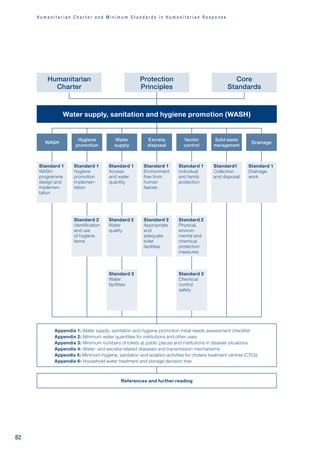
Essential health services – sexual and reproductive health
standard 1: Reproductive health
People have access to the priority reproductive health services of
the Minimum Initial Service Package (MISP) at the onset of an emer-
gency and comprehensive RH as the situation stabilises.
Key actions (to be read in conjunction with the guidance notes)

 Identify a lead RH agency within the health sector or cluster to facilitate the
coordination and implementation of the MISP and ensure that an RH officer
(nominated by lead RH agency) is in place and functioning within the health
sector or cluster (see guidance note 1).

 Implement measures to reduce the risk of sexual violence, in coordination
with other relevant sectors or clusters (see guidance note 3).

 Ensure services for clinical management of sexual violence, including
access to mental health and psychosocial support and legal assistance (see
guidance note 3 and Protection Principle 2, guidance note 7 on page 37).

 Establish the minimum set of HIV prevention, treatment, care and support
services to reduce the transmission of HIV (see Essential health services –
sexual and reproductive health standard 2 on page 328).

 Ensure that emergency obstetric and newborn care services are made avail-
able and accessible including:
-
- at health centres – skilled birth attendants and supplies for normal births
and basic management of emergency obstetric and newborn complica-
tions; basic emergency obstetric care (BEmOC) and newborn care
H u m a n i t a r i a n C h a r t e r a n d M i n i m u m S t a n d a r d s i n H u m a n i t a r i a n R e s p o n s e
326
-
- at referral hospitals – skilled medical staff and supplies for comprehen-
sive management of obstetric and newborn complications; comprehensive
emergency obstetric care (CEmOC) and newborn care
-
- a communication and transportation system to manage obstetric and
newborn emergencies is established and functioning 24 hours a day,
seven days a week from the community to the health centre and between
the health centre and referral hospital
(see guidance note 4).

 Provide clean delivery kits to visibly pregnant women and birth attendants
for clean home deliveries when access to a skilled health provider and health
facility is not possible (see guidance note 4).

 Inform populations about the benefits and availability of clinical services for
survivors of sexual violence and the emergency referral system for complica-
tions of pregnancy and childbirth (see guidance notes 3–4).

 Ensure that common contraceptive methods are available to meet demand
(see guidance note 2).

 Plan to implement comprehensive RH services, integrated into primary
healthcare, as soon as possible (see guidance note 1).
Key indicators (to be read in conjunction with the guidance notes)

 All health facilities have trained staff, sufficient supplies and equipment for
clinical management of rape survivor services based on national or WHO
protocols.

 All pregnant women in their third trimester have received clean delivery kits.

 There are at least four health facilities with BEmOC and newborn care/
500,000 population.

 There is at least one health facility with CEmOC and newborn care/
500,000 population.

 The proportion of deliveries by caesarean section is not less than 5 per cent
or more than 15 per cent (see guidance note 4).
Guidance notes
1. Minimum Initial Service Package: The MISP defines those services that
are most important for preventing RH-related morbidity and mortality among
women, men and adolescents in disaster settings. It comprises a coordi-
nated set of priority RH services that must be implemented simultaneously to
prevent and manage the consequences of sexual violence, reduce the trans-
mission of HIV, prevent excess maternal and newborn morbidity and mortality,
M i n i m u m S t a n d a r d s i n H e a l t h A c t i o n
327
and begin planning for comprehensive RH services as soon as the situa-
tion stabilises. Planning for the integration of good-quality comprehensive RH
activities into primary healthcare at the onset of an emergency is essential to
ensuring a continuum of care. Comprehensive RH care involves upgrading
existing services, adding missing services and enhancing service quality.
2. RH supplies: Supplies for the MISP must be ordered, distributed and stored
to avoid delay in getting these essential products to the population. The Inter-
agency Emergency Health Kit includes a limited quantity of medicines for
patient post-exposure prophylaxis, magnesium sulphate and instruments
and medicines for midwifery care, but not all supplies required for the MISP.
The Interagency Reproductive Health Kits, developed by the Interagency
Working Group on RH in crises, contain medicines and supplies for a three-
month period.
3. Sexual violence: All actors in disaster response must be aware of the risk of
sexual violence including sexual exploitation and abuse by humanitarians, and
must work to prevent and respond to it. Aggregate information on reported
incidents must be safely and ethically compiled and shared to inform preven-
tion and response efforts. Incidence of sexual violence should be monitored.
Measures for assisting survivors must be in place in all primary-level health
facilities and include skilled staff to provide clinical management that encom-
passes emergency contraception, post-exposure prophylaxis to prevent
HIV, presumptive treatment of sexually transmitted infections (STIs), wound
care, tetanus prevention and hepatitis B prevention. The use of emergency
contraception is a personal choice that can only be made by the women
themselves. Women should be offered unbiased counselling so as to reach
an informed decision. Survivors of sexual violence should be supported to
seek and be referred for clinical care and have access to mental health and
psychosocial support.
At the survivor’s request, protection staff should provide protection and legal
support. All examination and treatment should be done only with informed
consent of the survivor. Confidentiality is essential at all stages (see Health
systems standard 5, guidance note 4 on page 307 and Protection Principle
1, guidance notes 7–12 on page 35).
4. Emergency obstetric and newborn care: Approximately 4 per cent of
the disaster-affected population will be pregnant women. Approximately 15
per cent of all pregnant women will experience an unpredictable obstetric
complication during pregnancy or at the time of delivery that will require
emergency obstetric care and 5–15 per cent of all deliveries will require
surgery, such as caesarean section. In order to prevent maternal and
newborn mortality and morbidity resulting from complications, skilled birth
attendance at all births, BEmOC and neonatal resuscitation should be avail-
H u m a n i t a r i a n C h a r t e r a n d M i n i m u m S t a n d a r d s i n H u m a n i t a r i a n R e s p o n s e
328
able at all primary healthcare facilities. BEmOC functions include parenteral
antibiotics, parenteral uterotonic drugs (oxytocin), parenteral anticonvulsant
drugs (magnesium sulfate), manual removal of retained products of concep-
tion using appropriate technology, manual removal of placenta, assisted
vaginal delivery (vacuum or forceps delivery) and maternal and newborn
resuscitation. CEmOC functions include all of the interventions in BEmOC
as well as surgery under general anaesthesia (caesarean delivery, lapa-
rotomy) and rational and safe blood transfusion.
The referral system should ensure that women or newborns are referred
and have the means to travel to and from a primary healthcare facility with
BEmOC and newborn care, and to a hospital with CEmOC and newborn
care services.
Essential health services – sexual and reproductive health
standard 2: HIV and AIDS
People have access to the minimum set of HIV prevention, treat-
ment, care and support services during disasters.
Key actions (to be read in conjunction with the guidance notes)

 Establish standard precautions and safe procedures for waste disposal within
all healthcare settings (see guidance note 2 and Health systems standard 1,
guidance notes 10–11 on pages 299–300).

 Establish and follow safe blood supply and rational use of blood transfusion
(see guidance note 2 and Health systems standard 1, guidance note 5 on
page 298).

 Establish access to good-quality free male and female condoms, including
information on proper condom use.

 Ensure that health facilities provide syndromic management to all patients
presenting with symptoms of a sexually transmitted infection.

 Ensure that post-exposure prophylaxis (PEP) services are provided to indi-
viduals within 72 hours of the incident of potential exposure to HIV (see
guidance note 3).

 Provide information in accessible formats and education on HIV prevention to
both the general public and high-risk groups (e.g. sex workers).

 Ensure prevention of mother-to-child transmission (PMTCT) of HIV by
ensuring access to contraceptives, clean and safe child deliveries (including
M i n i m u m S t a n d a r d s i n H e a l t h A c t i o n
329
emergency obstetric care) and provision of anti-retroviral (ARV) drugs (see
guidance note 4).

 Provide treatment, care and support for infants born from mothers known
to be HIV positive, including guidance and counselling on infant feeding (see
Infant and young child feeding standard 2 on page 160).

 Ensure that people living with HIV (PLHIV) receive healthcare including
co-trimoxazole prophylaxis for HIV-related infections.

 Ensure that people who were previously on anti-retroviral therapy (ART)
continue to receive treatment (see guidance note 4).

 Establish links between HIV and tuberculosis programmes where they exist.

 Ensure that people at higher risk of exposure to HIV have access to HIV
prevention interventions for sexual transmission of HIV and access to clean
injecting equipment for known injecting drug users where these services
already exist.

 Initiate plans to broaden the range of HIV control services in the post-disaster
phase (see guidance note 1).
Key indicators (to be read in conjunction with the guidance notes)

 People most at risk of exposure to HIV are targeted with a HIV prevention
programme.

 Pregnant women known to be HIV positive have received ARV drugs for
PMTCT.

 100 per cent of transfused blood is screened for transfusion-transmissible
infections including HIV.

 Individuals potentially exposed to HIV (occupational exposure in healthcare
settings and non-occupational exposure) have received PEP within 72 hours
of an incident.

 All primary healthcare facilities have antimicrobials to provide syndromic
management to patients presenting with symptoms of an STI.
Guidance notes
1. HIV control: The minimum set of HIV prevention, treatment, care and support
described in the key actions for this standard is comprised of actions that the
health sector must take to prevent HIV transmission and to provide care and
support to PLHIV. They should be implemented during the early stages of
any disaster response.
H u m a n i t a r i a n C h a r t e r a n d M i n i m u m S t a n d a r d s i n H u m a n i t a r i a n R e s p o n s e
330
2. Prevention of HIV transmission in healthcare settings: The preven-
tion of transmission of HIV in healthcare settings (e.g. hospitals, health-
care clinics, vaccination campaigns) is a priority during the early stages of
disaster response. Essential actions are ensuring the application of standard
precautions, establishing safe and rational blood transfusion practices and
the correct disposal of healthcare waste (see Health systems standard 1,
guidance notes 5, 10–11 on pages 298–300).
3. Post-exposure prophylaxis: PEP to prevent HIV infection includes coun-
selling, HIV exposure risk assessment, informed consent, assessment of
the source and provision of ARV medicines. However, PEP should not be
provided to a person who is known to be HIV positive; counselling and testing
should never be mandatory nor should the provision of PEP be delayed while
waiting for the test results.
4. Anti-retroviral drugs: The provision of ARV for PMTCT, PEP and long-term
ART in disaster situations is feasible. Continuation of ART for those already on
treatment prior to the disaster must be considered a priority during disaster
response. Pregnant women already taking ART should continue taking ARV
without interruption. Pregnant women known to be HIV positive should
receive ARV for PMTCT according to the national protocol where possible.
Note
Caritas Internationalis and its Members do not promote the use of, or distribute
any form of, artificial birth control.
M i n i m u m S t a n d a r d s i n H e a l t h A c t i o n
331
2.4. Essential health services – injury
Injury is usually the major cause of excess mortality and morbidity following acute-
onset natural disasters such as earthquakes. Many acute-onset natural disasters
are mass casualty events, meaning more people are made patients than the
locally available resources can manage using routine procedures. Injury due to
physical violence is also associated with complex emergencies. During armed
conflict for example, most trauma-related deaths occur in insecure regions away
from health facilities and therefore cannot usually be prevented by medical care.
Interventions that aim to protect the civilian population are required to prevent
these deaths (see Protection Principle 3, guidance notes 1–5 on pages 38–39).
Essential health services – injury standard 1: Injury care
People have access to effective injury care during disasters to
prevent avoidable morbidity, mortality and disability.
Key actions (to be read in conjunction with the guidance notes)

 Ensure that local health workers and those coordinating the health-sector
response are familiar with mass casualty management (see guidance note 1).

 In mass casualty events, establish a standardised system of triage with clear
guidance on assessment, prioritisation, basic resuscitation and referral (see
guidance note 1).

 Ensure essential principles and skills for provision of first aid and basic resus-
citation are widely understood by health workers (see guidance note 2).

 Ensure that local health workers are familiar with core principles of wound
management (see guidance note 3).

 Provide a tetanus vaccine that contains toxoid to those with dirty wounds
and to those involved in rescue or clean-up operations (see guidance note 4).

 Establish standardised protocols for the referral of injured patients for
advanced care, including surgery and post-operative care (see guidance
note 5).

 Ensure that definitive trauma and surgical services and post-trauma and
post-surgical rehabilitation are established only by agencies with appropriate
expertise and resources (see guidance note 5).
H u m a n i t a r i a n C h a r t e r a n d M i n i m u m S t a n d a r d s i n H u m a n i t a r i a n R e s p o n s e
332

 Ensure standard assistive devices and mobility aids (e.g. wheelchairs,
crutches) are available for injured patients and persons with disabilities as
soon as practical and that these aids can be repaired locally (see guidance
note 6).
Key indicator (to be read in conjunction with the guidance notes)

 All health facilities have trained staff and systems for the management of
multiple casualties.
Guidance notes
1. Triage: Triage is the process of categorising patients according to the severity
of their injuries or illness, and prioritising treatment according to the availability
of resources and the patients’ chances of survival. In mass casualty events,
those with severe, life-threatening injuries may receive a lower priority than
those with more survivable injuries. There is no standardised system of triage
and several are in use throughout the world. The most common classification
uses the four-colour code system: red signals high priority, yellow for medium
priority, green is used for ambulatory patients and black for deceased.
2. First aid and basic medical care: Critical procedures include restoring and
maintaining breathing which may require clearing and protecting the airway,
along with controlling bleeding and administering intravenous fluids when
required. These procedures may help to stabilise individuals with life-threat-
ening injuries before transfer to a referral centre and greatly increase their
chances of survival, even for severe injuries. Other non-operative procedures
are equally vital, such as cleaning and dressing wounds and administering
antibiotics and tetanus prophylaxis.
3. Wound management: In most disasters, many patients will present for care
more than six hours after injury. Delayed presentation greatly increases the
risk of wound infection and preventable excess mortality. It is, therefore,
critical that local healthcare workers are familiarised with appropriate prin-
ciples and protocols to prevent and manage wound infection, which include
delayed primary closure and wound toilet and surgical removal of foreign
material and dead tissue.
4. Tetanus: In sudden-onset natural disasters where there are usually a large
number of injuries and trauma cases, risk of tetanus can be relatively high.
While mass tetanus immunisation is not recommended, tetanus toxoid-
containing vaccine (DT or Td – diphtheria and tetanus vaccines – or DPT,
depending on age and vaccination history) is recommended for those with
dirty wounds and for those involved in rescue or clean-up operations that
put them at risk. Individuals with dirty wounds who have not previously been
M i n i m u m S t a n d a r d s i n H e a l t h A c t i o n
333
vaccinated against tetanus should receive a dose of tetanus immune globulin
(TIG), if available.
5. Trauma and surgical care: Trauma surgical care and war surgery save lives
and long-term disability and require specific training and resources that few
agencies possess. Inappropriate or inadequate surgery may do more harm
than doing nothing. Moreover, surgery provided without any immediate reha-
bilitation can result in a complete failure in restoring functional capacities of
the patient. Only organisations and professionals with the relevant exper-
tise should, therefore, establish these services that save lives and prevent
disability.
6. Post-operative rehabilitation for trauma-related injury: Early rehabilita-
tion can greatly increase survival and enhance the quality of life for injured
survivors. Patients requiring assistive devices (such as prostheses and
mobility devices) will also need physical rehabilitation. Where available, part-
nership with community-based rehabilitation programmes can optimise the
post-operative care and rehabilitation for injured survivors.
2.5. Essential health services – mental health
Mental health and psychosocial problems occur in all humanitarian settings.
The horrors, losses, uncertainties and numerous other stressors associated
with conflict and other disasters place people at increased risk of diverse social,
behavioural, psychological and psychiatric problems. Mental health and psycho-
social support involves multi-sectoral supports (see the ‘intervention pyramid’
diagram below). These supports require coordinated implementation e.g. through
a cross-cluster or cross-sectoral working group. The mental health standard
below focuses on actions by health actors. Readers should also consult Core
Standard 1 on page 55 and Protection Principle 3 on page 38.
Essential health services – mental health standard 1:
Mental health
People have access to health services that prevent or reduce mental
health problems and associated impaired functioning.
Key actions (to be read in conjunction with the guidance notes)

 Ensure interventions are developed on the basis of identified needs and
resources.
H u m a n i t a r i a n C h a r t e r a n d M i n i m u m S t a n d a r d s i n H u m a n i t a r i a n R e s p o n s e
334

 Enable community members including marginalised people to strengthen
community self-help and social support (see guidance note 1).

 Ensure that community workers including volunteers and staff at health
services offer psychological first aid to people in acute distress after exposure
to extreme stressors (see guidance note 2)

 Ensure that there is at least one staff member at every health facility who
manages diverse, severe mental health problems in adults and children (see
guidance note 3).

 Address the safety, basic needs and rights of people with mental health
problems in institutions (see guidance note 4).

 Minimise harm related to alcohol and drugs.

 As part of early recovery, initiate plans to develop a sustainable community
mental health system (see guidance note 5).
Key indicator (to be read in conjunction with the guidance notes)

 All health facilities have trained staff and systems for the management of
mental health problems.
Guidance notes
1. Community self-help and social support: Community self-help and social
support form a key element of overall mental health and psychosocial multi-
sectoral supports (see diagram below) (see Core Standard 1 on page 55 and
Protection Principle 4, guidance notes 9-13 on page 43 and Protection Prin-
ciple 3, guidance note 15 on page 40). Health agencies often employ or engage
community workers and volunteers who can enable community members,
including marginalised people, to increase self-help and social support.
M i n i m u m S t a n d a r d s i n H e a l t h A c t i o n
335
Intervention pyramid
Social considerations
in basic services and security
Strengthening community
and family supports
Focused
non-specialised supports
Specialised
services
Examples
Mental healthcare by mental
health specialists (psychiatric
nurses, psychologists,
psychiatrists, etc.)
Basic mental healthcare by
practical primacy healthcare
doctors
Basic emotional and pratical
support by community workers
Activating social networks
Communal traditional supports
Supportive age friendly spaces
Advocacy for basic services
that are safe, socially
appropriate and protect dignity
Source: Interagency Steering Committee Reference Group on Mental Health and Psychosocial Support, 2010
2. Psychological first aid: Acute anxiety after exposure to extreme stressors
(e.g. traumatic events) is best managed following the principles of psycholog-
ical first aid, which is often mistakenly seen as a clinical intervention. Rather,
it is a description of a humane, supportive response to a fellow human being
who is suffering and who may need support. It entails basic, non-intrusive
pragmatic care with a focus on listening but not forcing talk, assessing needs
and concerns, ensuring that basic needs are met, encouraging social support
from significant others and protecting from further harm. Psychological
debriefing (i.e. the promotion of ventilation by encouraging the person to briefly
but systematically recount perceptions, thoughts and emotional reactions
experienced during a recent, stressful event) is at best ineffective and should
not be applied. Similarly, benzodiazepines should be avoided in the manage-
ment of acute distress because they may interfere with natural recovery.
3. Basic mental healthcare: People’s mental health problems may be emer-
gency-induced, pre-existing or both. People with severe mental health
problems should have access to a network of community-based social
supports as well as clinical care through available health services (e.g.
general hospitals, primary care clinics, etc.). Organising basic clinical mental
healthcare usually involves either organising rapid training and supervision of
general health staff or adding a mental health professional to the health clinic.
Essential psychotropics and anti-epileptics need to be available. Individuals
H u m a n i t a r i a n C h a r t e r a n d M i n i m u m S t a n d a r d s i n H u m a n i t a r i a n R e s p o n s e
336
who have been receiving mental health treatment before the crisis need to
have access to continued treatment.
4. People in institutions: Mental hospitals and residential homes for people
with severe mental problems need to be visited regularly, especially early in
the crisis, because the risk of severe neglect or abuse of people in institutions
is extremely high. Safety, basic physical needs (water, food, shelter, sanita-
tion and medical care), human rights surveillance and basic psychiatric and
psychosocial care must be provided throughout the crisis.
5. Early recovery: Because humanitarian crises increase the rates of a broad
range of mental disorders, plans need to be initiated to develop the mental
health system to scale up effective mental health treatment coverage across
the affected area (see Core Standard 4 on page 65).
2.6. Essential health services – non-communicable
diseases
Population ageing and increase in life expectancy have shifted disease profiles
from infectious to non-communicable diseases (NCDs) in many countries
including low- and middle-income countries. As a result, NCDs are growing in
importance as a major public health issue in disaster settings. Increases in health
problems due to the exacerbation of existing chronic health conditions have
become a common feature of many disasters.
Essential health services – non-communicable diseases
standard 1: Non-communicable diseases
People have access to essential therapies to reduce morbidity and
mortality due to acute complications or exacerbation of their chronic
health condition.
Key actions (to be read in conjunction with the guidance note)

 Assess and document the prevalence of NCDs and share the data with
agencies responding to the disaster (see guidance note 1).

 Ensure identification of individuals with NCDs who were receiving treatment
before the emergency and ensure that they continue to do so. Avoid sudden
discontinuation of treatment.
M i n i m u m S t a n d a r d s i n H e a l t h A c t i o n
337

 Ensure that people with acute complications and exacerbations of NCDs
that pose a threat to their life (e.g. heart diseases, severe hypertension) and
individuals in pain (e.g. pain due to advanced cancer) receive treatment.

 In situations where treatments for NCDs are unavailable, establish clear
standard operating procedures for referral.

 Ensure that essential diagnostic equipment, core laboratory tests and medi-
cation for the routine, ongoing management of NCDs are available through
the primary healthcare system. This medication must be specified on the
essential medicines list.

 Ensure that assistive devices (e.g. walking aids) are available for people with
mobility or communication difficulties.
Key indicators (to be read in conjunction with the guidance note)

 All primary healthcare facilities have clear standard operating procedures for
referrals of patients with NCDs to secondary and tertiary care facilities.

 All primary healthcare facilities have adequate medication for continuation of
treatment to individuals with NCDs who were receiving treatment before the
emergency.
Guidance note
1. Non-communicable diseases include heart disease, stroke, hypertension,
chronic renal failure, bronchial asthma, dialysis-dependent chronic renal
failure, insulin-dependent diabetes and epilepsy. During emergencies, indi-
viduals with chronic medical conditions are particularly vulnerable to exacer-
bations of their condition or to complications such as secondary infections
and are at risk when treatment is interrupted. Clinical stabilisation and main-
tenance of therapy should be the mainstay of the health-sector response in
humanitarian settings.
People with NCDs need long-term medication and follow-up. The routine,
ongoing management of NCDs should be available through the primary
healthcare system, using medications from the essential medicines list. But
it is generally not recommended to introduce new therapeutic regimens or
programmes for the management of chronic health conditions during the
relief effort especially if the regimen or programme is unlikely to be continued
after the emergency phase.
H u m a n i t a r i a n C h a r t e r a n d M i n i m u m S t a n d a r d s i n H u m a n i t a r i a n R e s p o n s e
338
Appendix 1
Health assessment checklist
Preparation

 Obtain available information on the disaster-affected population.

 Obtain available maps and aerial photographs.

 Obtain demographic and health data.
Security and access

 Determine the existence of the ongoing natural or human-generated hazards.

 Determine the overall security situation, including the presence of armed
forces.

 Determine the access that humanitarian agencies have to the disaster-
affected population.
Demographics and social structure

 Determine the total size of the disaster-affected population; age and sex
breakdown of the population.

 Identify groups at increased risk, e.g. women, children, older people, persons
with disabilities.

 Determine the average household size and estimates of the number of
female- and child-headed households.

 Determine the existing social structure, including positions of authority and/
or influence.
Background health information

 Identify pre-existing health problems in the disaster-affected area prior to the
disaster.
M i n i m u m S t a n d a r d s i n H e a l t h A c t i o n
339

 Identify pre-existing health problems in the country of origin in refugees (area
of origin for internally displaced persons).

 Identify existing risks to health, e.g. potential epidemic diseases.

 Identify previous sources of healthcare.

 Analyse the performance of health system functions.
Mortality rates

 Calculate the crude mortality rate.

 Calculate the age-specific mortality rates (e.g. under-5 mortality rate).

 Calculate cause-specific mortality rates.

 Calculate proportional mortality rate.
Morbidity rates

 Determine incidence rates of major diseases that have public health
importance.

 Determine age- and sex-specific incidence rates of major diseases where
possible.
Available resources

 Determine the capacity of the Ministry of Health of the country affected by
the disaster.

 Determine the status of national health facilities, including total number by
type of care provided, physical status and access.

 Determine the numbers and skills of available health staff.

 Determine the available health budgets and financing mechanism.

 Determine the capacity and functional status of existing public health
programmes, e.g. Extended Programme on Immunization.

 Determine the availability of standardised protocols, essential medicines,
supplies and logistics systems.

 Determine the status of existing referral systems.

 Determine the level of environmental health in healthcare facilities.

 Determine the status of the existing health information system.
H u m a n i t a r i a n C h a r t e r a n d M i n i m u m S t a n d a r d s i n H u m a n i t a r i a n R e s p o n s e
340
Data from other relevant sectors

 Nutritional status

 Food and food security

 Environmental conditions

 Shelter – quality of shelter

 Education – health and hygiene education
M i n i m u m S t a n d a r d s i n H e a l t h A c t i o n
341
Appendix 2
Sample weekly surveillance reporting forms
Mortality surveillance form 1*
Site:������������������������������������������������������������������������������������������������������������������������������������������������������
Date from Monday:.  .  .  .  .  .  .  .  .  .  .  .  .  .  .  .  .  .  . To Sunday: ���������������������������������������������������
Total population at beginning of this week:������������������������������������������������������������������������������������������
Births this week: .  .  .  .  .  .  .  .  .  .  .  .  .  .  .  .  .  .  .  . Deaths this week:�����������������������������������������
Arrivals this week (if applicable):.  .  .  .  .  .  .  .  .  .  .  .  . Departures this week:�����������������������������������
Total population at end of week:.  .  .  .  .  .  .  .  .  .  .  .  . Total under 5 years population:��������������������
0-4 yrs 5+ yrs Total
male female male female
Immediate cause
Acute lower respiratory infection
Cholera (suspected)
Diarrhoea – bloody
Diarrhoea – watery
Injury – non-accidental
Malaria
Maternal death – direct
Measles
Meningitis (suspected)
Neonatal (0–28 days)
Other
Unknown
Total by age and sex
Underlying cause
AIDS (suspected)
Malnutrition
Maternal death – indirect
Non-communicable diseases (specifiy)
Other
Total by age and sex
* 
This form is used when there are many deaths and therefore more detailed information on individual deaths cannot
be collected due to time limitations.
- 
Other causes of mortality can be added according to context and epidemiological pattern.
- 
Age can be further disaggregated (0–11 mths, 1–4 yrs, 5–14 yrs, 15–49 yrs, 50–59 yrs, 60–69 yrs, 70–79 yrs,
80+ yrs) as feasible.
- 
Deaths should not be reported solely from health facilities, but should include reports from site and religious
leaders, community workers, women’s groups and referral hospitals.
- 
Whenever possible, case definitions should be put on back of form.
H u m a n i t a r i a n C h a r t e r a n d M i n i m u m S t a n d a r d s i n H u m a n i t a r i a n R e s p o n s e
342
Mortality surveillance form 2*
Site:�������������������������������������������������������������������������������������������������������������������������������������������������������
Date from Monday:.  .  .  .  .  .  .  .  .  .  .  .  .  .  .  .  .  .  . To Sunday: ����������������������������������������������������
Total population at beginning of this week:�������������������������������������������������������������������������������������������
Births this week: .  .  .  .  .  .  .  .  .  .  .  .  .  .  .  .  .  .  .  . Deaths this week:������������������������������������������
Arrivals this week (if applicable):.  .  .  .  .  .  .  .  .  .  .  .  . Departures this week:������������������������������������
Total population at end of week:.  .  .  .  .  .  .  .  .  .  .  .  . Total under 5 years population:���������������������
No
Sex
(m,
f)
Age
(days=d,
mths=m,
yrs=y)
Direct cause of death Underlying
causes
Acute
lower
respiratory
infection
Cholera
(suspected)
Diarrhoea
–
bloody
Diarrhoea
–
watery
Injury
–
non-accidental
Malaria
Maternal
death
–
direct
Measles
Meningitis
(suspected)
Neonatal
(0–28
days)
Non-communicable
dis.
(specify)
Other
(specify)
Unknown
AIDS
(suspected)
Malnutrition
Maternal
death
–
indirect
Other
(specify)
Date
(dd/mm/yy)
Location
in
site
(e.g.
block
no.)
Died
in
hospital
or
at
home
1
2
3
4
5
6
7
8
* 
This form is used when there is enough time to record data on individual deaths; it allows analysis by age, outbreak
investigation by location and facility utilisation rates.
- 
Frequency of reporting (i.e. daily or weekly) depends upon the number of deaths.
- 
Other causes of death can be added as fits the situation.
- 
Deaths should not be reported solely from site health facilities, but should include reports from site and religious
leaders, community workers, women’s groups and referral hospitals.
- 
Whenever possible, case definitions should be put on back of form.
M i n i m u m S t a n d a r d s i n H e a l t h A c t i o n
343
Sample weekly EWARN reporting form*
* 
This form is used in the acute phase of the emergency when the risk of epidemic-prone diseases
is high
Date from Monday:.  .  .  . To Sunday:������������������������������������������������������������������������������������������������
Town/Village/Settlement/Camp:������������������������������������������������������������������������������������������������������������
Province:.  .  .  .  .  .  .  .  .  .  District:.  .  .  .  .  .  .  .  .  .  . Subdistrict:����������������������������������������������������
Site name:.  .  .  • Inpatient • Outpatient • Health centre • Mobile clinic
Supporting agency(ies): .  .  .  .  .  .  .  .  .  .  .  .  .  .  .  .  . Reporting officer  contact number:�������������
Total population:.  .  .  .  .  .  .  .  .  .  .  .  .  .  .  .  .  .  .  .  . Total under 5 years population:���������������������
A. WEEKLY AGGREGATE DATA
New cases of: MORBIDITY MORTALITY Total
 5 years 5 years  over  5 years 5 years  over
TOTAL ADMISSIONS
TOTAL DEATHS
Acute respiratory infection
Acute watery diarrhoea
Acute bloody diarrhoea
Malaria – suspected/confirmed
Measles
Meningitis – suspected
Acute haemorrhagic fever syndrome
Acute jaundice syndrome
Acute flaccid paralysis (AFP)
Tetanus
Other fever  38.5°C
Injuries/wounds
Others
Total
- 
More than one diagnosis is possible; the most important should be recorded. Each case should be counted only once.
- 
Include only those cases that were seen (or deaths that occurred) during the surveillance week.
- 
Write “0” (zero) if you had no case or death during the week for one of the syndrome listed in the form.
- 
Deaths should be reported only in the mortality section, NOT in the morbidity section.
- 
Case definitions for each condition under surveillance should be written on the back on this form.
- 
Causes of morbidity can be added or subtracted according to the epidemiology and risk assessment of disease.
- 
The purpose of EWARN surveillance is the early detection of epidemic-prone diseases.
- 
Data on conditions such as malnutrition should be obtained through surveys (prevalence) rather than surveillance
(incidence).
B. OUTBREAK ALERT
At any time you suspect any of the following diseases, please SMS or phone ………………..
or email ……………... with maximum information on time, place and number of cases and deaths:
cholera, shigellosis, measles, polio, typhoid, tetanus, hepatitis A or E, dengue, meningitis,
diphtheria, pertussis, haemorrhagic fever
(this list of diseases will vary depending on the disease epidemiology of the country).
H u m a n i t a r i a n C h a r t e r a n d M i n i m u m S t a n d a r d s i n H u m a n i t a r i a n R e s p o n s e
344
Sample routine morbidity surveillance reporting form*
* 
Morbidity surveillance can be expanded from EWARN after the acute phase to include other
diseases and monitoring of other indicators as appropriate
Site:�������������������������������������������������������������������������������������������������������������������������������������������������������
Date from Monday:.  .  .  .  .  .  .  .  .  .  .  .  .  .  .  .  .  .  . To Sunday: ����������������������������������������������������
Total population at beginning of this week/month: �������������������������������������������������������������������������������
Births this week/month:.  .  .  .  .  .  .  .  .  .  .  .  .  .  .  .  . Deaths this week/month: ������������������������������
Arrivals this week/month (if applicable):������������������������������������������������������������������������������������������������
Departures this week/month: ���������������������������������������������������������������������������������������������������������������
Total population at end of week/month:.  .  .  .  .  .  .  .  . Total under 5 years population:���������������������
Morbidity Under 5 years
(new cases)#
5 years and over
(new cases)
Total Repeat
cases
Diagnosis* Male Female Total Male Female Total new cases Total
Acute respiratory
infection**
Acute watery
diarrhoea
Acute bloody
diarrhoea
Malaria – suspected/
confirmed
Measles
Meningitis
– suspected
Acute haemorrhagic
fever syndrome
Acute jaundice
syndrome
Acute flaccid
paralysis (AFP)
Tetanus
Other fever  38.5°C
AIDS – suspected ***
Eye diseases
Malnutrition ****
Injuries – accidental
Injuries
– non-accidental
Sexually transmitted
infections
Genital ulcer disease
Male urethral
discharge
Vaginal discharge
Lower abdominal
pain
Skin diseases
Non-communicable
diseases (e.g.
diabetes)
Worms
Others
Unknown
Total
* More than one diagnosis is possible; causes of morbidity can be added or subtracted according to context and
epidemiological pattern.
** Acute respiratory tract infections: in some countries, this category may be divided into upper and lower tract
infections.
*** HIV and AIDS prevalence is best assessed through surveys.
**** Malnutrition prevalence is best assessed through rapid surveys (MUAC or weight/height screening) as
surveillance only reveals those who come to seek care.
# Ages can be further disaggregated as feasible.
M i n i m u m S t a n d a r d s i n H e a l t h A c t i o n
345
OUTBREAK ALERT
At any time you suspect any of the following diseases, please SMS or phone ………………..
or email……………...with maximum information on time, place and number of cases and deaths:
cholera, dysentery/shigellosis, measles, AFP, typhoid, tetanus, hepatitis, dengue, meningitis,
diphtheria, pertussis, haemorrhagic fever.
Visits to
health facility
Under 5 years 5 years and over Total
Male Female Total Male Female Total Male Female
Total visits
Utilisation rate: Number of visits per person per year to health facility = total number of visits
in 1 week / total population x 52 weeks
- 
Ages can be further disaggregated (0–11 mths, 1–4 yrs, 5–14 yrs, 15–49 yrs, 50–59 yrs, 60+ yrs)
as feasible.
Number of consulations per clinician: Number of total visits (new and repeat) / FTE clinician in health
facility/number of days health facility functioning per week.
H u m a n i t a r i a n C h a r t e r a n d M i n i m u m S t a n d a r d s i n H u m a n i t a r i a n R e s p o n s e
346
Appendix 3
Formulas for calculating key health indicators
Crude mortality rate (CMR)
Definition: The rate of death in the entire population, including both women
and men, and all ages.
Formula:
Total number of deaths
during time period
x10,000 persons =
 
Deaths/
10,000 persons/
day
Mid-period population at risk x
Number of days in time period
Under-5 mortality rate (U5MR)
Definition: The rate of death among children below 5 years of age in the
population.
Formula:
Total number of deaths
in children
5 years during time period
x10,000 persons =
 
Deaths/
10,000 children
under 5 years/
day
Total number of children 5
years x Number of days in time
period
Incidence rate
Definition: The number of new cases of a disease that occur during a speci-
fied period of time in a population at risk of developing the disease.
Formula:
Number of new cases due to
specific disease in time period
x1,000 persons =

New cases due to
specific disease/
1,000 persons/
month
Population at risk of
developing disease x Number
of months in time period
M i n i m u m S t a n d a r d s i n H e a l t h A c t i o n
347
Case fatality rate (CFR)
Definition: The number of people who die of a disease divided by the number
of people who have the disease.
Formula:
Number of people dying from
disease during time period
x 100 = x%
People who have the disease
during time period
Health facility utilisation rate
Definition: The number of outpatient visits per person per year. Whenever
possible, a distinction should be drawn between new and old visits, and
new visits should be used to calculate this rate. However, it is often difficult
to differentiate between new and old visits, so they are frequently combined
as total visits during a disaster.
Formula:
Total number of visits
in one week
x 52 weeks =

Visits/
person/
year
Total population
Number of consultations per clinician per day
Definition: Average number of total consultations (new and repeat cases)
seen by each clinician per day.
Formula:
Total number of consultations in one week
÷

Number of days
health facility open
per week
Number FTE* clinicians in health facility
* FTE (full-time equivalent) refers to the equivalent number of clinicians working in a health facility. For example,
if there are six clinicians working in the outpatient department but two of them work half-time, then the number
of FTE clinicians = 4 full-time staff + 2 half-time staff = 5 FTE clinicians.
H u m a n i t a r i a n C h a r t e r a n d M i n i m u m S t a n d a r d s i n H u m a n i t a r i a n R e s p o n s e
348
References and
further reading
Sources
International legal instruments
The Right to the Highest Attainable Standard of Health (Article 12 of the
International Covenant on Economic, Social and Cultural Rights), CESCR General
Comment 14, 11 August 2000. UN Doc. E/C.12/2000/4. Committee on Economic,
Social and Cultural Rights.
World Health Organization (WHO) (2002), 25 Questions  Answers on Health 
Human Rights. Health  Human Rights Publication Issue No. 1. Geneva.
http://whqlibdoc.who.int/hq/2002/9241545690.pdf
Health systems
Inter-Agency Network for Education in Emergencies (INEE) (2004), Minimum
StandardsforEducationinEmergencies,ChronicCrisesandEarlyReconstruction.
Geneva. www.exacteditions.com/exact/browse/436/494/2635/2/47?dps=on
Inter-Agency Steering Committee (IASC) Global Health Cluster (2009), Health
Cluster Guide: A practical guide for country-level implementation of the Health
Cluster. WHO. Geneva.
Management Sciences for Health (1997), Managing Drug Supply, 2nd
edition.
Kumarian Press. Bloomfield, CT, USA.
Office of the United Nations High Commissioner for Refugees (UNHCR) (2009),
Emergency Health Information System. www.unhcr.org/pages/49c3646ce0.html
Pan American Health Organization (PAHO) (2000), Natural Disasters: protecting
the public’s health. Scientific Publication No. 575. Washington DC.
WHO (1994), Health Laboratory Facilities in Emergencies and Disaster Situations.
Geneva.
WHO (1999), Guidelines for Drug Donations, 2nd
edition. Geneva.
WHO (2000), World health report 2000 – Health systems: improving performance.
Geneva. www.who.int/whr/2000/en/index.html
M i n i m u m S t a n d a r d s i n H e a l t h A c t i o n
349
WHO (2001), Macroeconomics and health: Investing in health for economic
development. Geneva.
WHO (2009), Model Lists of Essential Medicines. Geneva.
www.who.int/medicines/publications/essentialmedicines/en/index.html
WHO (2008), The Interagency Emergency Health Kit: Medicines and Medical
Devices for 10,000 People for Approximately 3 Months, 4th
edition. Geneva.
WHO and PAHO (2001), Health Library for Disasters. Geneva.
http://helid.desastres.net/
Control of communicable diseases
Heymann, David L (2008), Control of Communicable Diseases Manual, 19th
edition. American Public Health Association. Washington DC.
WHO (2002), Guidelines for the Collection of Clinical Specimens During Field
Investigation of Outbreaks. Geneva.
WHO (2005), Communicable disease control in emergencies. Geneva.
WHO (2005), Malaria Control in Complex Emergencies: An Interagency Field
Handbook. Geneva.
WHO (2007), Tuberculosis Care and Control in Refugee and Displaced
Populations: An Interagency Field Manual, 2nd
edition.Geneva.
Child health
WHO (1997), Immunisation in Practice. A Guide for Health Workers Who Give
Vaccines. Macmillan. London.
WHO (2005), IMCI Handbook (Integrated Management of Childhood Illness).
Geneva.
WHO (2005), Pocket book of hospital care for children: Guidelines for the
management of common illnesses with limited resources. Geneva.
WHO (2008), Manual for the health care of children in humanitarian emergencies.
Geneva.
United Nations Children’s Fund (UNICEF) (2009), The State of the World’s Children
2009. New York. www.unicef.org/sowc09/docs/SOWC09-FullReport-EN.pdf
Sexual and reproductive health
IASC (2009), Guidelines for Addressing HIV in Humanitarian Settings.
www.aidsandemergencies.org/cms/documents/IASC_HIV_Guidelines_
2009_En.pdf
H u m a n i t a r i a n C h a r t e r a n d M i n i m u m S t a n d a r d s i n H u m a n i t a r i a n R e s p o n s e
350
Inter-Agency Working Group on Reproductive Health in Crises (2010 revision for
field review), Inter-agency Field Manual on Reproductive Health in Humanitarian
Settings.
Women’s Commission for Refugee Women and Children (2006), Minimum Initial
Service Package (MISP) for Reproductive Health: A Distance Learning Module.
http://misp.rhrc.org/
WHO (2006), Pregnancy, Childbirth, Postpartum and Newborn Care: A guide for
essential practice, 2nd
edition. Geneva.
http://whqlibdoc.who.int/publications/2006/924159084X_eng.pdf
WHO and UNHCR (2004), Clinical Management of Rape Survivors: Developing
Protocols for use with Refugees and Internally Displaced Persons. Geneva.
WHO, United Nations Population Fund (UNFPA) and Andalucia School of Public
Health (2009), Granada Consensus on Sexual and Reproductive Health in
Protracted Crises and Recovery. Granada, Spain.
Injury
Hayward-Karlsson, J et al (1998), Hospitals for War-Wounded: A Practical Guide
for Setting Up and Running a Surgical Hospital in an Area of Armed Conflict.
International Committee of the Red Cross (ICRC). Geneva.
PAHO (1995, reprint 2001), Establishing a Mass Casualty Management
System. Washington DC. www.disasterpublications.info/english/viewtopic.
php?topic=victimasmasa
WHO (2005), Integrated Management for Emergency and Essential Surgical
Care tool kit: Disaster Management Guidelines. Geneva. www.who.int/surgery/
publications/Disastermanagguide.pdf
Mental health
IASC (2007), IASC Guidelines on Mental Health and Psychosocial Support in
Emergency Settings. Geneva. www.humanitarianinfo.org/iasc
IASC Reference Group on Mental Health and Psychosocial Support (2010), Mental
Health and Psychosocial Support (MHPSS) In Humanitarian Emergencies: What
Should Humanitarian Health Actors Know? Geneva.
www.who.int/mental_health/emergencies/en/
WHO (2010), mhGAP Intervention Guide for Mental, Neurological and Substance
Use Disorders in Non-specialized Health Settings. Geneva.
www.who.int/mental_health/
WHO, World Vision International and War Trauma Foundation (forthcoming),
Psychological First Aid Guide. Geneva.
M i n i m u m S t a n d a r d s i n H e a l t h A c t i o n
351
Non-communicable diseases
Spiegel et al (2010), Health-care needs of people affected by conflict: future
trends and changing frameworks. Lancet, Vol. 375, 23 January 2010.
WHO (2008), The Management of Cardiovascular Disease, Diabetes, Asthma
and Chronic Obstructive Pulmonary Disease in Emergency and Humanitarian
Settings. Draft, 28 February 2008. Geneva.
WHO (2009), WHO Package of Essential Non-communicable Disease
Interventions (WHO PEN). Geneva.
Further reading
International legal instruments
Mann, J et al (eds) (1999), Health and Human Rights: A Reader. Routledge. New
York.
Baccino-Astrada, A (1982), Manual on the Rights and Duties of Medical Personnel
in Armed Conflicts. ICRC. Geneva.
Health systems
Beaglehole, R, Bonita, R and Kjellstrom, T (2006), Basic Epidemiology, 2nd
edition. WHO. Geneva.
IASC Global Health Cluster (2010), GHC position paper: removing user fees for
primary health care services during humanitarian crises. Geneva.
Johns Hopkins Bloomberg School of Public Health and International Federation
of Red Cross and Red Crescent Societies (2008), Public health guide in
emergencies. Geneva. www.ifrc.org/what/health/relief/guide.asp
Médecins sans Frontières (MSF) (1997), Refugee Health. An Approach to
Emergency Situations. Macmillan. London.
Noji, E (ed) (1997), The Public Health Consequences of Disasters. Oxford
University Press. New York.
Perrin, P (1996), Handbook on War and Public Health. ICRC. Geneva.
WHO (2006), The Interagency Emergency Health Kit 2006. Geneva.
Essential health services
Checchi, F and Roberts, L (2005), Interpreting and using mortality data
in humanitarian emergencies. Humanitarian Practice Network. Overseas
Development Institute. London. www.odihpn.org
H u m a n i t a r i a n C h a r t e r a n d M i n i m u m S t a n d a r d s i n H u m a n i t a r i a n R e s p o n s e
352
MSF (2006), Rapid health assessment of refugee or displaced populations. Paris.
SMART (2006), Measuring Mortality, Nutritional Status and Food Security in Crisis
Situations: Standardized Monitoring and Assessment of Relief and Transition.
www.smartindicators.org
UNHCR (2009), UNHCR’s Priniciples and Guidance for Referral Health Care for
Refugees and Other Persons of Concern. Geneva. www.unhcr.org/cgi-bin/texis/
vtx/search?page=searchdocid=4b4c4fca9query=referral%20guidelines
WHO (1999), Rapid Health Assessment Protocols for Emergencies. Geneva.
Control of communicable diseases
Cook, GC, Manson, P and Zumla, AI (2008), Manson’s Tropical Diseases, 22nd
edition. WB Saunders.
Connolly, MA et al (2004), Communicable diseases in complex emergencies:
impact and challenges. The Lancet. London.
WHO (2004), Cholera outbreak, assessing the outbreak response and improving
preparedness. Geneva.
WHO (2005), Guidelines for the control of shigellosis, including epidemics due to
shigella dysenteriae type 1. Geneva.
Child health
WHO (2005), Guidelines for the management of common illnesses with limited
resources. Geneva.
WHO, UNFPA, UNICEF and The World Bank Group (2003), Managing Newborn
Problems: A guide for doctors, nurses, and midwives. Geneva.
http://whqlibdoc.who.int/publications/2003/9241546220.pdf
Sexual and reproductive health
Inter-agency Standing Committee (2006), Guidelines for Gender-based Violence
Interventions in Humanitarian Emergencies. Geneva.
International Rescue Committee (2003), Protecting the Future: HIV Prevention,
Care and Support Among Displaced and War-Affected Populations. Kumarian
Press. Bloomfield, CT, USA.
UNFPA and Inter-agency Working Group on Reproductive Health in Refugee
Situations (2008), The Reproductive Health Kit for Emergency Situations.
UNHCR (2006), Note on HIV/AIDS and the Protection of Refugees, IDPs and
Other Persons of Concern. Geneva. www.unhcr.org/444e20892.html
UNHCR (2007), Antiretroviral Medication Policy for Refugees. Geneva.
www.unhcr.org/45b479642.html
M i n i m u m S t a n d a r d s i n H e a l t h A c t i o n
353
UNHCR and Southern African Clinicians Society (2007), Clinical guidelines on
antiretroviral therapy management for displaced populations.
www.unhcr.org/cgi-bin/texis/vtx/search?page=searchdocid=46238d5f2quer
y=art%20guidelines
UNHCR, WHO and the Joint United Nations Programme on HIV/AIDS (UNAIDS)
(2009), Policy Statement on HIV Testing and Counselling in Health Facilities for
Refugees, Internally Displaced Persons and other Persons of Concern to UNHCR.
Geneva. www.unhcr.org/4b508b9c9.html
WHO, UNFPA, UNICEF and The World Bank Group (2000, reprint 2007), Managing
Complications in Pregnancy and Childbirth: A guide for midwives and doctors.
Geneva. http://whqlibdoc.who.int/publications/2007/9241545879_eng.pdf
Injury
International Society for Prosthetics and Orthotics (ISPO) (2001), ISPO consensus
conference on appropriate orthopaedic technology for low-income countries:
conclusions and recommendations. Prosthetics Orthotics International. Vol. 25,
pp 168–170.
ISPO Code of Conduct for International Non-Governmental Prosthetics, Orthotics,
and Mobility Assistance: www.usispo.org/code.asp
Landmines Survivors Network (2007), Prosthetics and Orthotics Programme
Guide: implementing PO services in poor settings: guide for planners and
providers of services for persons in need of orthopaedic devices. Geneva.
Landmine Survivors Network (2007), Prosthetics and Orthotics Project Guide:
supporting PO services in low-income settings a common approach for
organizations implementing aid projects. Geneva.
MSF (1989), Minor Surgical Procedures in Remote Areas. Paris.
WHO (1991), Surgery at the District Hospital: Obstetrics, Gynaecology,
Orthopaedics and Traumatology. Geneva.
Mental health
UNHCR and WHO (2008), Rapid Assessment of Alcohol and Other Substance
Use in Conflict-affected and Displaced Populations: A Field Guide. Geneva.
www.who.int/mental_health/emergencies/en/
WHO (2009), Pharmacological treatment of mental disorders in primary health
care. Geneva. www.who.int/mental_health/
H u m a n i t a r i a n C h a r t e r a n d M i n i m u m S t a n d a r d s i n H u m a n i t a r i a n R e s p o n s e
354
Non-communicable diseases
Fauci, AS et al (eds) (2008), Harrison’s Principles of Internal Medicine, 15th edition.
McGraw Hill Professional. New York.
Foster, C et al (eds), The Washington Manual of Medical Therapeutics, 33rd
edition. Lippincott Williams  Wilkins Publishers. Philadelphia.
Tierny, LM, McPhee, SJ, Papadakis, MA (eds) (2003), Current Medical Diagnosis
and Treatment, 42nd edition. McGraw-Hill/Appleton  Lange. New York.
355
Annexes
H u m a n i t a r i a n C h a r t e r a n d M i n i m u m S t a n d a r d s i n H u m a n i t a r i a n R e s p o n s e
356
Annex 1
Key Documents that inform
the Humanitarian Charter
The Humanitarian Charter sets out shared beliefs and common principles
concerning humanitarian action and responsibilities in situations of disaster or
conflict, and notes that these are reflected in international law. The following
annotated list of key documents includes the most relevant international legal
instruments relating to international human rights, international humanitarian
law (IHL), refugee law and humanitarian action. It does not attempt to represent
regional law and developments. The list also includes a number of other guide-
lines, principles, standards and frameworks that inform the Humanitarian Charter.
As this is necessarily very selective, further resources and web links to these
documents are available on the Sphere Project website (www.sphereproject.org).
Owing to the limitations of space, notes are provided only for the documents
which seemed to require introduction or special explanation, because they are
newer or have specific sections concerning disaster or conflict.
The documents are listed thematically, under the headings of:
1. Human rights, protection and vulnerability
2. Armed conflict and humanitarian assistance
3. Refugees and internally displaced persons (IDPs)
4. Disasters and humanitarian assistance
To ensure clarity about the status of each document, they are each classified
under sub-headings as:
1. Treaties and customary law (where applicable)
2. UN and other formally adopted intergovernmental guidelines and
principles
3. Humanitarian policy frameworks, guidelines and principles
357
A n n e x 1 : K e y D o c u m e n t s t h a t i n f o r m t h e H u m a n i t a r i a n C h a r t e r
1. 
Human rights, protection and vulnerability
The following documents relate primarily to the human rights recognised in
universal treaties and declarations. A number of key documents relating to age
(children and older people), gender and disability are also included because these
are some of the most common bases of vulnerability in disaster or conflict.
1.1. 
Treaties and customary law on human rights, protection
and vulnerability
Human rights treaty law applies to states that are parties to the relevant treaty, but
customary law (e.g. the prohibition on torture) applies to all states. Human rights
law applies at all times, with two possible exceptions:
-
- Some limited civil and political rights may be suspended during declared
national emergencies, consistent with Article 4 of the International
Covenant on Civil and Political Rights (‘derogation’)
-
- During recognised armed conflicts, IHL applies first if there is any inconsis-
tency with human rights law.
1.1.1. Universal human rights
The Universal Declaration of Human Rights 1948 (UDHR), adopted by UN
General Assembly resolution 217 A(III) of 10 December 1948.
www.un.org/en/documents/udhr/index.shtml
Proclaimed by the UN General Assembly in 1948, the UDHR set out, for the
first time, fundamental human rights to be universally protected. It is not a treaty
but is generally agreed to have become part of customary international law. The
first sentence of the preamble introduces the concept of the ‘inherent dignity’
of human beings as a fundamental basis for human rights, and the first Article
states, ‘All human beings are born free and equal in dignity and rights.’
International Covenant on Civil and Political Rights 1966 (ICCPR), adopted
by UN General Assembly resolution 2200A (XXI) of 16 December 1966, entry into
force 23 March 1976, United Nations, Treaty Series, vol. 999, p. 171 and vol. 1057,
p. 407. www2.ohchr.org/english/law/ccpr.htm
Second Optional Protocol to ICCPR 1989 (aiming at the abolition of the
death penalty), adopted by UN General Assembly resolution 44/128 of 15
December 1989, entry into force 11 July 1991, United Nations, Treaty Series, vol.
1642, p. 414. www2.ohchr.org/english/law/ccpr-death.htm
H u m a n i t a r i a n C h a r t e r a n d M i n i m u m S t a n d a r d s i n H u m a n i t a r i a n R e s p o n s e
358
States parties to the ICCPR must respect and ensure the rights for all individ-
uals within their territory or under their jurisdiction, while recognising the right of
‘peoples’ to self-determination and the equal rights of men and women. Some
rights (marked with asterisk*) may never be suspended, even in the most dire
national emergency.
Rights: right to life;* no torture or other cruel, inhuman or degrading treatment;*
no slavery;* no arbitrary arrest or detention; humanity and dignity in detention;
no imprisonment for breach of contract;* freedom of movement and residence;
only lawful expulsion of aliens; equality before the law, fair trial and presump-
tion of innocence in criminal trials; no retrospectivity in criminal offences;* equal
recognition before the law;* private life; free thought, religion and conscience;*
free opinion, expression and peaceful assembly; freedom of association; right
to marriage and family life; protection of children; right to vote and participate in
public affairs; minorities’ right to enjoy their own culture, religion and language.*
International Covenant on Economic, Social and Cultural Rights 1966
(ICESCR), adopted by UN General Assembly resolution 2200A (XXI) of 16
December 1966, entry into force 3 January 1976, United Nations, Treaty Series,
vol. 993, p. 3 www2.ohchr.org/english/law/cescr.htm
States parties agree to commit the maximum of their available resources to
‘achieving progressively’ the covenant rights, which are to be enjoyed equally by
men and women.
Rights: to work; to receive just remuneration; to join trade unions; to have social
security/insurance; to family life, including protection of mothers after childbirth and
protection of children from exploitation; to an adequate standard of living, including
food, clothing and housing; to physical and mental health; to education; and to
participate in cultural life and enjoy the benefits of scientific and cultural progress.
International Convention on the Elimination of All Forms of Racial
Discrimination 1969 (ICERD), adopted by UN General Assembly resolution
2106 (XX) of 21 December 1965, entry into force 4 January 1969, United Nations,
Treaty Series, vol. 660, p. 195. www2.ohchr.org/english/law/cerd.htm
Convention on the Elimination of All Forms of Discrimination Against
Women 1979 (CEDAW), adopted by UN General Assembly resolution 34/180
of 18 December 1979, entry into force 3 September 1981, United Nations, Treaty
Series, vol. 1249, p. 13. www2.ohchr.org/english/law/cedaw.htm
Convention on the Rights of the Child 1989 (CRC), adopted by UN General
Assembly resolution 44/25 of 20 November 1989, entry into force 2 September
359
A n n e x 1 : K e y D o c u m e n t s t h a t i n f o r m t h e H u m a n i t a r i a n C h a r t e r
1990, United Nations, Treaty Series, vol. 1577, p. 3.
www2.ohchr.org/english/law/crc.htm
Optional Protocol on the involvement of children in armed conflict 2000,
adopted by UN General Assembly resolution A/RES/54/263 of 25 May 2000,
entry into force 12 February 2002, United Nations, Treaty Series, vol. 2173, p. 222.
www2.ohchr.org/english/law/crc-conflict.htm
Optional Protocol on the sale of children, child prostitution and child
pornography 2000, adopted by UN General Assembly resolution A/RES/54/263
of 25 May 2000, entry into force 18 January 2002, United Nations, Treaty Series,
vol. 2171, p. 227. www2.ohchr.org/english/law/crc-sale.htm
The CRC has almost universal state accession. It restates the basic human rights
of children and identifies when they need special protection (e.g. when separated
from their families). The protocols require positive action on specific child protec-
tion issues for states that are parties to them.
Convention on the Rights of Persons with Disabilities 2006 (CRPD), adopted
by UN General Assembly resolution A/RES/61/106 of 13 December 2006, entry
into force 3 May 2008, United Nations Treaty Collection, Chapter IV, 15. www2.
ohchr.org/english/law/disabilities-convention.htm
The CRPD supports the rights of people with disabilities under all other human
rights treaties, as well as dealing specifically with awareness-raising regarding
persons with disabilities, non-discrimination and accessibility of services and
facilities. There is also special mention of ‘situations of risk and humanitarian
emergencies’ (Article 11).
1.1.2. Genocide, torture and other criminal abuse of rights
Convention on the Prevention and Punishment of the Crime of Genocide
1948, adopted by UN General Assembly Resolution 260 (III) of 9 December 1948,
entry into force 12 January 1951, United Nations, Treaty Series, vol. 78, p. 277
www2.ohchr.org/english/law/genocide.htm
Convention against Torture and Other Cruel, Inhuman or Degrading
Treatment or Punishment 1984, adopted by UN General Assembly resolution
39/46 of 10 December 1984, entry into force 26 June 1987, United Nations, Treaty
Series, vol. 1465, p. 85. www2.ohchr.org/english/law/cat.htm
This convention has a very high number of states parties. The prohibition on
torture is also now generally recognised as part of customary international law.
No kind of public emergency or war may be invoked to justify torture. States
H u m a n i t a r i a n C h a r t e r a n d M i n i m u m S t a n d a r d s i n H u m a n i t a r i a n R e s p o n s e
360
must not return (refouler) anyone to a territory where the person has reasonable
grounds to believe he or she would be in danger of torture.
Rome Statute of the International Criminal Court, adopted by the Diplomatic
Conference in Rome, 17 July 1998, entry into force 1 July 2002, United Nations,
Treaty Series, vol. 2187, p. 3. www.icrc.org/ihl.nsf/INTRO/585?OpenDocument
Article 9 of the Statue (Elements of Crimes), adopted by the International Criminal
Court (ICC) in 2002, describes in detail war crimes, crimes against humanity
and genocide, thus codifying much of customary international criminal law. The
ICC can investigate and prosecute matters referred to it by the UN Security
Council (even if the accused person’s state is not a party to the treaty), as well
as crimes allegedly committed by nationals of states parties to the treaty, or in
their territory.
1.2. 
United Nations and other formally adopted intergovernmental
principles and guidelines on human rights, protection and
vulnerability
Madrid International Plan of Action on Ageing 2002, UN Second World
Assembly on Ageing, Madrid, 2002, endorsed by UN General Assembly resolu-
tion 37/51 of 3 December 1982.
www.globalaging.org/agingwatch/events/CSD/mipaa+5.htm
United Nations Principles for Older Persons 1991, UN General Assembly
Resolution 46/91 of 16 December 1991.
www2.ohchr.org/english/law/olderpersons.htm
1.3. 
Humanitarian policy frameworks, guidelines and principles
on human rights, protection and vulnerability
Protecting Persons Affected by Natural Disasters: IASC Operational
Guidelines on Human Rights and Natural Disasters 2006, Inter-Agency
Standing Committee. www.humanitarianinfo.org/iasc/pageloader.aspx
International Law and Standards Applicable in Natural Disaster Situations
(IDLO Legal Manual) 2009, International Development Law Organization (IDLO).
www.idlo.int/DOCNews/352doc.pdf
361
A n n e x 1 : K e y D o c u m e n t s t h a t i n f o r m t h e H u m a n i t a r i a n C h a r t e r
Inter-agency guiding principles on unaccompanied and separated children
2002, developed by the ICRC, the Office of the UN High Commissioner for
Refugees (UNHCR), the UN Children’s Fund (UNICEF), World Vision International,
Save the Children UK and the International Rescue Committee, 2009. www.icrc.
org
Gender Handbook in Humanitarian Action 2006, Inter-Agency
Standing Committee. www.humanitarianinfo.org/iasc/pageloader.
aspx?page=content-subsidi-tf_gender-genderh
IASC Guidelines on Mental Health and Psychosocial Support in Emergency
Settings 2007, Inter-Agency Standing Committee. www.humanitarianinfo.org/
iasc/pageloader.aspx?page=content-subsidi-tf_mhps-default
INEE Minimum Standards for Education in Emergencies, Chronic Crises
and Early Reconstruction 2007, as updated 2010, Inter-Agency Network for
Education in Emergencies (INEE) (formally recognised as companion standards
with Sphere since 2008).
www.ineesite.org/index.php/post/inee_minimum_standards_overview/
2. 
Armed conflict, international humanitarian law and
humanitarian assistance
2.1. 
Treaties and customary law on armed conflict, international
humanitarian law and humanitarian assistance
International humanitarian law (IHL) specifies the thresholds of when violent
conflict becomes ‘armed conflict’ and thus makes this special legal regime
applicable. The International Committee of the Red Cross (ICRC) is the official
repository of the IHL treaties, and provides extensive information and resources
on its website (www.icrc.org), including the official commentary on the Geneva
Conventions and their Protocols, and the rules of the Customary International
Humanitarian Law Study.
2.1.1. 
Core IHL treaties
The Four Geneva Conventions of 1949
Protocol Additional to the Geneva Conventions, Protection of Victims of
International Armed Conflicts 1977 (Protocol I)
Protocol Additional to the Geneva Conventions, Protection of Victims of
Non-International Armed Conflicts 1977 (Protocol II)
www.icrc.org/ihl.nsf/CONVPRES?OpenView
H u m a n i t a r i a n C h a r t e r a n d M i n i m u m S t a n d a r d s i n H u m a n i t a r i a n R e s p o n s e
362
The four Geneva Conventions – to which all states are parties and which are also
generally accepted as part of customary law – concern protection and treatment
of the wounded and sick in land warfare (I) and at sea (II), treatment of prisoners of
war (III) and protection of civilians during armed conflict (IV). They apply primarily
to international armed conflicts, except for Article 3 common to the conven-
tions which concerns non-international conflicts, and some other elements now
accepted as customary law in non-international conflicts. The two 1977 protocols
updated the conventions at that time, especially the definitions of combatants
and codifying of non-international conflicts. A number of states have not acceded
to the protocols.
2.1.2.	
Treaties on restricted or prohibited weapons and cultural
property
In addition to the ‘Geneva law’ outlined above, there is also the body of law often
described as the ‘Hague law’ on armed conflict. This includes the convention
on protection of cultural property and a number of conventions on the types of
weapons that are restricted or prohibited, including gases and other chemical
and biological weapons, conventional weapons that are indiscriminate or cause
unnecessary suffering, as well as anti-personnel landmines and cluster muni-
tions. www.icrc.org/ihl.nsf
2.1.3. 
Customary IHL
Customary IHL refers to the law of armed conflict that is accepted by states,
through their statements, policies and practices, as representing customary rules
that apply to all states, regardless of their accession to the IHL treaties. There is
no agreed list of customary rules, but the most authoritative interpretation is the
study below.
Customary International Humanitarian Law (CIHL) Study, ICRC, Henckaerts,
J-M and Doswald-Beck, L, Cambridge University Press, Cambridge  New York,
2005. www.icrc.org/ihl.nsf/INTRO/612?OpenDocument
The study covers almost the full ambit of the law of armed conflict. It lists 161
specific rules and whether each applies in international armed conflict and/or
non-international armed conflict. While some legal commentators criticise its
methodology, the CIHL study emerged from a broadly consultative and rigorous
research process over ten years, and its authority as an interpretation of the
customary rules is widely recognised.
363
A n n e x 1 : K e y D o c u m e n t s t h a t i n f o r m t h e H u m a n i t a r i a n C h a r t e r
2.2. 
UN and other formally adopted intergovernmental
principles and guidelines on armed conflict, international
humanitarian law and humanitarian assistance
UN Security Council ‘Aide Memoire’ on Protection 2002, as updated 2003
(S/PRST/2003/27). www.un.org/Docs/journal/asp/ws.asp?m=S/PRST/2003/27
This is not a resolution binding on states, but a guidance document for the
UN Security Council relating to peacekeeping and urgent situations of conflict,
resulting from consultations with a range of UN agencies and IASC.
UN Security Council resolutions on sexual violence and women in armed
conflict, especially resolution numbers 1820 (2008), 1888 (2009) and 1889
(2009)
All UN Security Council resolutions by year and number:
www.un.org/documents/scres.htm
2.3. 
Humanitarian policy frameworks, guidelines and
principles on armed conflict, international humanitarian
law and humanitarian assistance
Professional standards for protection work carried out by humanitarian and
human rights actors in armed conflict and other situations of violence 2009,
ICRC. www.icrc.org
3. 
Refugees and internally displaced persons (IDPs)
UNHCR – the UN Refugee Agency – has a special legal mandate for the protec-
tion of refugees under the Refugee Convention and Protocol. It has also been
mandated by the UN General Assembly to liaise with states for the protection of
IDPs. UNHCR has extensive resources on its website.
3.1. 
Treaties on refugees and IDPs
In addition to the international treaty, this section includes two African Union
(formerly Organization of African Unity, or OAU) treaties, because they both set
historic precedents.
Convention relating to the Status of Refugees 1951 (as amended), adopted
by United Nations Conference of Plenipotentiaries on the Status of Refugees and
Stateless Persons, Geneva, 2 to 25 July 1951, entry into force 22 April 1954,
United Nations, Treaty Series, vol. 189, p. 137.
H u m a n i t a r i a n C h a r t e r a n d M i n i m u m S t a n d a r d s i n H u m a n i t a r i a n R e s p o n s e
364
Protocol relating to the Status of Refugees 1967, noted by the UN General
Assembly, in resolution 2198 (XXI) 2 of 16 December 1966, United Nations, Treaty
Series, vol. 606, p. 267. www.unhcr.org/protect/PROTECTION/3b66c2aa10.pdf
The first international agreement on refugees, the Convention defines a refugee
as a person who, ‘owing to a well-founded fear of being persecuted for reasons
of race, religion, nationality, membership of a particular social group or political
opinion, is outside the country of his nationality, and is unable to or, owing to such
fear, is unwilling to avail himself of the protection of that country or return there
because there is a fear of persecution...’
OAU Convention Governing the Specific Aspects of Refugee Problems in
Africa 1969, adopted by the Assembly of Heads of State and Government at its
Sixth Ordinary Session, Addis Ababa, 10 September 1969.
www.unhcr.org/45dc1a682.html
This accepts and expands the 1951 Convention definition to include people who
have been compelled to leave their country not only as a result of persecution but
also owing to external aggression, occupation, foreign domination or events seri-
ously disturbing public order. It also recognises non-state groups as perpetrators
of persecution and it does not require that refugees show a direct link between
themselves and the future danger.
African Union Convention for the Protection and Assistance of Internally
Displaced Persons in Africa (Kampala Convention) 2009, adopted by a
Special Summit of the African Union, held in Kampala, Uganda, on 22 October
2009, not yet in force as at October 2010. www.unhcr.org/4ae9bede9.html
This is the first multilateral convention concerning IDPs. It was initially signed by
17 African Union states in October 2009 but requires 15 formal accessions/ratifi-
cations to enter into force.
3.2. 
UN and other formally adopted intergovernmental
principles and guidelines on refugees and IDPs
Guiding Principles on Internal Displacement 1998, recognised in September
2005 by heads of state and governments assembled at the World Summit in
New York in UN General Assembly resolution 60/L.1 (132, UN Doc. A/60/L.1) as
‘an important international framework for the protection of internally displaced
persons’. www.idpguidingprinciples.org/
These principles are based on international humanitarian and human rights law
and analogous refugee law, and are intended to serve as an international standard
to guide governments, international organisations and all other relevant actors in
providing assistance and protection to IDPs.
365
A n n e x 1 : K e y D o c u m e n t s t h a t i n f o r m t h e H u m a n i t a r i a n C h a r t e r
4. 
Disasters and humanitarian assistance
4.1. 
Treaties on disasters and humanitarian assistance
Convention on the Safety of United Nations and Associated Personnel
1994, adopted by UN General Assembly resolution 49/59 of 9 December 1994,
entry into force 15 January 1999, United Nations, Treaty Series, vol. 2051, p. 363.
www.un.org/law/cod/safety.htm
Optional Protocol to the Convention on the Safety of United Nations and
Associated Personnel 2005, adopted by UN General Assembly resolution
A/60/42 of 8 December 2005, entry into force 19 August 2010.
www.ocha.unog.ch/drptoolkit/PNormativeGuidanceInternationalConventions.
html#UNSpecificConventions
In the convention, protection is limited to UN peacekeeping, unless the UN has
declared ‘exceptional risk’ – an impractical requirement. The protocol corrects
this major flaw in the convention and expands the legal protection to all UN opera-
tions, from emergency humanitarian assistance to peacebuilding and the delivery
of humanitarian, political and development assistance.
Food Aid Convention 1999, a separate legal instrument under the Grains
Trade Convention 1995, administered by the Food Aid Committee through the
Secretariat of the International Grains Council (IGC).
Tampere Convention on the Provision of Telecommunication Resources
for Disaster Mitigation and Relief Operations 1998, approved by the
Intergovernmental Conference on Emergency Telecommunications 1998, entry
into force 8 January 2005, United Nations, Treaty Series, vol. 2296, p. 5.
www.unhcr.org/refworld/publisher,ICET98,,,41dec59d4,0.html
UN Framework Convention on Climate Change 1992 (UNFCCC), adopted
by the United Nations Conference on Environment and Development, Rio de
Janeiro, 4 to 14 June 1992, welcomed by the UN General Assembly in resolution
47/195 of 22 December 1992, entry into force 21 March 1994, United Nations,
Treaty Series, vol. 1771, p. 107.
http://unfccc.int/essential_background/convention/items/2627.php
Kyoto Protocol to the UNFCC 1997, adopted at the third session of the
Conference of the Parties to the Framework Convention, Kyoto, Japan on 11
December 1997, entry into force 16 February 2005, United Nations, Treaty
Series, vol. 2303, p. 148. http://unfccc.int/essential_background/kyoto_protocol/
items/1678.php
H u m a n i t a r i a n C h a r t e r a n d M i n i m u m S t a n d a r d s i n H u m a n i t a r i a n R e s p o n s e
366
The UNFCCC and Kyoto Protocol address the urgent need for implementing
climate change adaptation and risk reduction strategies, and building local
capacity and resilience, especially in countries that are prone to natural disasters.
It emphasises disaster reduction strategies and risk management, especially with
regard to climate change.
4.2. 
UN and other formally adopted intergovernmental
principles and guidelines on disasters and humanitarian
assistance
Strengthening of the coordination of humanitarian emergency assistance
of the United Nations, with Annex, Guiding Principles, General Assembly
Resolution 46/182 of 19 December 1991.
www.reliefweb.int/ocha_ol/about/resol/resol_e.html
This led to the creation of the UN Department of Humanitarian Affairs, which
became the UN Office for the Coordination of Humanitarian Affairs (OCHA) in 1998.
Hyogo Framework for Action 2005–2015: Building the resilience of nations
and communities to disasters, adopted by the World Conference on Disaster
Reduction 2005. www.unisdr.org/eng/hfa/hfa.htm
This sets out strategies for states and humanitarian agencies to incorporate
disaster risk reduction in the implementation of emergency response, recovery
and preparedness programmes, integrate it in sustainable development and build
capacity for resilience.
Guidelines for the domestic facilitation and regulation of international
disaster relief and initial recovery assistance, (IDRL Guidelines) 2007,
adopted by the 30th
International Conference of the Red Cross and Red Crescent
(which includes states parties to the Geneva Conventions).
www.ifrc.org/what/disasters/idrl/index.asp
4.3. 
Humanitarian policy frameworks, guidelines and
principles on disasters and humanitarian assistance
Code of Conduct for The International Red Cross and Red Crescent
Movement and Non-Governmental Organisations (NGOs) in Disaster Relief
(see Annex 2: Code of Conduct on page 368).
Fundamental Principles of the International Red Cross and Red Crescent
Movement 1965, adopted by the 20th International Conference of the Red Cross.
www.ifrc.org/what/values/principles/index.asp
367
A n n e x 1 : K e y D o c u m e n t s t h a t i n f o r m t h e H u m a n i t a r i a n C h a r t e r
HAP Standards in Humanitarian Accountability 2007, Humanitarian
Accountability Partnership (an international self-regulatory body for the humani-
tarian sector, including certification). www.hapinternational.org
Principles and Good Practice of Humanitarian Donorship 2003, endorsed
by the Stockholm conference of donor countries, UN agencies, NGOs and
the International Red Cross and Red Crescent Movement, and signed by the
European Commission and 16 states. www.goodhumanitariandonorship.org
Principles of Partnership: A Statement of Commitment 2007, endorsed at
the July 2007 Global Humanitarian Platform meeting (a dialogue mechanism
between UN and non-UN humanitarian organisations).
www.globalhumanitarianplatform.org/ghp.html
H u m a n i t a r i a n C h a r t e r a n d M i n i m u m S t a n d a r d s i n H u m a n i t a r i a n R e s p o n s e
368
Annex 2
The Code of Conduct
for the International Red Cross and Red
Crescent Movement and Non-Governmental
Organisations (NGOs) in Disaster Relief
Prepared jointly by the International Federation of Red Cross and
Red Crescent Societies and the International Committee of the Red Cross1
1 Sponsored by: Caritas Internationalis,* Catholic Relief Services,* International Federation of Red Cross
and Red Crescent Societies,* International Save the Children Alliance,* Lutheran World Federation,*
Oxfam,* World Council of Churches,* International Committee of the Red Cross (* members of the Steering
Committee for Humanitarian Response).
369
A n n e x 2 : C o d e o f C o n d u c t
Purpose
This Code of Conduct seeks to guard our standards of behaviour. It is not about
operational details, such as how one should calculate food rations or set up a
refugee camp. Rather, it seeks to maintain the high standards of independence,
effectiveness and impact to which disaster response NGOs and the International
Red Cross and Red Crescent Movement aspires. It is a voluntary code, enforced
by the will of the organisation accepting it to maintain the standards laid down in
the Code.
In the event of armed conflict, the present Code of Conduct will be interpreted
and applied in conformity with international humanitarian law.
The Code of Conduct is presented first. Attached to it are three annexes,
describing the working environment that we would like to see created by Host
Governments, Donor Governments and Inter-governmental Organisations in
order to facilitate the effective delivery of humanitarian assistance.
Definitions
NGOs: NGOs (Non-Governmental Organisations) refers here to organisations,
both national and international, which are constituted separately from the govern-
ment of the country in which they are founded.
NGHAs: For the purposes of this text, the term Non-Governmental Humanitarian
Agencies (NGHAs) has been coined to encompass the components of the
International Red Cross and Red Crescent Movement – The International
Committee of the Red Cross, The International Federation of Red Cross and Red
Crescent Societies and its member National Societies – and the NGOs as defined
above. This code refers specifically to those NGHAs who are involved in disaster
response.
IGOs: IGOs (Inter-Governmental Organisations) refers to organisations consti-
tuted by two or more governments. It thus includes all United Nations Agencies
and regional organisations.
Disasters: A disaster is a calamitous event resulting in loss of life, great human
suffering and distress, and large scale material damage.
H u m a n i t a r i a n C h a r t e r a n d M i n i m u m S t a n d a r d s i n H u m a n i t a r i a n R e s p o n s e
370
The Code of Conduct
Principles of Conduct for The International Red Cross
and Red Crescent Movement and NGOs in Disaster
Response Programmes
1 The humanitarian imperative comes first
The right to receive humanitarian assistance, and to offer it, is a fundamental
humanitarian principle which should be enjoyed by all citizens of all countries. As
members of the international community, we recognise our obligation to provide
humanitarian assistance wherever it is needed. Hence the need for unimpeded
access to affected populations is of fundamental importance in exercising that
responsibility. The prime motivation of our response to disaster is to alleviate
human suffering amongst those least able to withstand the stress caused by
disaster. When we give humanitarian aid it is not a partisan or political act and
should not be viewed as such.
2 Aid is given regardless of the race, creed or nationality of the recipients
and without adverse distinction of any kind. Aid priorities are calculated on
the basis of need alone
Wherever possible, we will base the provision of relief aid upon a thorough
assessment of the needs of the disaster victims and the local capacities already in
place to meet those needs. Within the entirety of our programmes, we will reflect
considerations of proportionality. Human suffering must be alleviated whenever
it is found; life is as precious in one part of a country as another. Thus, our provi-
sion of aid will reflect the degree of suffering it seeks to alleviate. In implementing
this approach, we recognise the crucial role played by women in disaster-prone
communities and will ensure that this role is supported, not diminished, by our aid
programmes. The implementation of such a universal, impartial and independent
policy, can only be effective if we and our partners have access to the neces-
sary resources to provide for such equitable relief, and have equal access to all
disaster victims.
3 Aid will not be used to further a particular political or religious standpoint
Humanitarian aid will be given according to the need of individuals, families and
communities. Not withstanding the right of NGHAs to espouse particular polit-
ical or religious opinions, we affirm that assistance will not be dependent on the
adherence of the recipients to those opinions. We will not tie the promise, delivery
or distribution of assistance to the embracing or acceptance of a particular polit-
ical or religious creed.
371
A n n e x 2 : C o d e o f C o n d u c t
4 We shall endeavour not to act as instruments of government foreign policy
NGHAs are agencies which act independently from governments. We therefore
formulate our own policies and implementation strategies and do not seek to
implement the policy of any government, except in so far as it coincides with
our own independent policy. We will never knowingly – or through negligence –
allow ourselves, or our employees, to be used to gather information of a political,
military or economically sensitive nature for governments or other bodies that
may serve purposes other than those which are strictly humanitarian, nor will
we act as instruments of foreign policy of donor governments. We will use the
assistance we receive to respond to needs and this assistance should not be
driven by the need to dispose of donor commodity surpluses, nor by the political
interest of any particular donor. We value and promote the voluntary giving of
labour and finances by concerned individuals to support our work and recog-
nise the independence of action promoted by such voluntary motivation. In order
to protect our independence we will seek to avoid dependence upon a single
funding source.
5 We shall respect culture and custom
We will endeavour to respect the culture, structures and customs of the commu-
nities and countries we are working in.
6 We shall attempt to build disaster response on local capacities
All people and communities – even in disaster – possess capacities as well as
vulnerabilities. Where possible, we will strengthen these capacities by employing
local staff, purchasing local materials and trading with local companies. Where
possible, we will work through local NGHAs as partners in planning and imple-
mentation, and co-operate with local government structures where appropriate.
We will place a high priority on the proper co-ordination of our emergency
responses. This is best done within the countries concerned by those most
directly involved in the relief operations, and should include representatives of the
relevant UN bodies.
7 Ways shall be found to involve programme beneficiaries in the manage-
ment of relief aid
Disaster response assistance should never be imposed upon the beneficiaries.
Effective relief and lasting rehabilitation can best be achieved where the intended
beneficiaries are involved in the design, management and implementation of the
assistance programme. We will strive to achieve full community participation in
our relief and rehabilitation programmes.
H u m a n i t a r i a n C h a r t e r a n d M i n i m u m S t a n d a r d s i n H u m a n i t a r i a n R e s p o n s e
372
8 Relief aid must strive to reduce future vulnerabilities to disaster as well as
meeting basic needs
All relief actions affect the prospects for long-term development, either in a
positive or a negative fashion. Recognising this, we will strive to implement relief
programmes which actively reduce the beneficiaries’ vulnerability to future disas-
ters and help create sustainable lifestyles. We will pay particular attention to envi-
ronmental concerns in the design and management of relief programmes. We
will also endeavour to minimise the negative impact of humanitarian assistance,
seeking to avoid long-term beneficiary dependence upon external aid.
9 We hold ourselves accountable to both those we seek to assist and those
from whom we accept resources
We often act as an institutional link in the partnership between those who wish
to assist and those who need assistance during disasters. We therefore hold
ourselves accountable to both constituencies. All our dealings with donors and
beneficiaries shall reflect an attitude of openness and transparency. We recog-
nise the need to report on our activities, both from a financial perspective and the
perspective of effectiveness. We recognise the obligation to ensure appropriate
monitoring of aid distributions and to carry out regular assessments of the impact
of disaster assistance. We will also seek to report, in an open fashion, upon
the impact of our work, and the factors limiting or enhancing that impact. Our
programmes will be based upon high standards of professionalism and expertise
in order to minimise the wasting of valuable resources.
10 In our information, publicity and advertising activities, we shall recog-
nise disaster victims as dignified humans, not hopeless objects
Respect for the disaster victim as an equal partner in action should never be lost.
In our public information we shall portray an objective image of the disaster situa-
tion where the capacities and aspirations of disaster victims are highlighted, and
not just their vulnerabilities and fears. While we will cooperate with the media in
order to enhance public response, we will not allow external or internal demands
for publicity to take precedence over the principle of maximising overall relief
assistance. We will avoid competing with other disaster response agencies for
media coverage in situations where such coverage may be to the detriment of
the service provided to the beneficiaries or to the security of our staff or the
beneficiaries.
373
A n n e x 2 : C o d e o f C o n d u c t
The Working Environment
Having agreed unilaterally to strive to abide by the Code laid out above, we present
below some indicative guidelines which describe the working environment we
would like to see created by donor governments, host governments and the inter-
governmental organisations – principally the agencies of the United Nations – in
order to facilitate the effective participation of NGHAs in disaster response.
These guidelines are presented for guidance. They are not legally binding, nor do
we expect governments and IGOs to indicate their acceptance of the guidelines
through the signature of any document, although this may be a goal to work to in
the future. They are presented in a spirit of openness and cooperation so that our
partners will become aware of the ideal relationship we would seek with them.
Annex I: Recommendations to the governments of
disaster affected countries
1 Governments should recognise and respect the independent, humani-
tarian and impartial actions of NGHAs
NGHAs are independent bodies. This independence and impartiality should be
respected by host governments.
2 Host governments should facilitate rapid access to disaster victims for
NGHAs
If NGHAs are to act in full compliance with their humanitarian principles, they
should be granted rapid and impartial access to disaster victims, for the purpose
of delivering humanitarian assistance. It is the duty of the host government, as
part of the exercising of sovereign responsibility, not to block such assistance,
and to accept the impartial and apolitical action of NGHAs. Host governments
should facilitate the rapid entry of relief staff, particularly by waiving require-
ments for transit, entry and exit visas, or arranging that these are rapidly granted.
Governments should grant over-flight permission and landing rights for aircraft
transporting international relief supplies and personnel, for the duration of the
emergency relief phase.
3 Governments should facilitate the timely flow of relief goods and informa-
tion during disasters
Relief supplies and equipment are brought into a country solely for the purpose
of alleviating human suffering, not for commercial benefit or gain. Such supplies
H u m a n i t a r i a n C h a r t e r a n d M i n i m u m S t a n d a r d s i n H u m a n i t a r i a n R e s p o n s e
374
should normally be allowed free and unrestricted passage and should not be
subject to requirements for consular certificates of origin or invoices, import and/
or export licences or other restrictions, or to importation taxation, landing fees or
port charges.
The temporary importation of necessary relief equipment, including vehicles, light
aircraft and telecommunications equipment, should be facilitated by the receiving
host government through the temporary waving of licence or registration restric-
tions. Equally, governments should not restrict the re-exportation of relief equip-
ment at the end of a relief operation.
To facilitate disaster communications, host governments are encouraged to
designate certain radio frequencies, which relief organisations may use in-country
and for international communications for the purpose of disaster communica-
tions, and to make such frequencies known to the disaster response community
prior to the disaster. They should authorise relief personnel to utilise all means of
communication required for their relief operations.
4 Governments should seek to provide a coordinated disaster information
and planning service
The overall planning and coordination of relief efforts is ultimately the responsi-
bility of the host government. Planning and coordination can be greatly enhanced
if NGHAs are provided with information on relief needs and government systems
for planning and implementing relief efforts as well as information on potential
security risks they may encounter. Governments are urged to provide such infor-
mation to NGHAs.
To facilitate effective coordination and the efficient utilisation of relief efforts, host
governments are urged to designate, prior to disaster, a single point-of-contact
for incoming NGHAs to liaise with the national authorities.
5 Disaster relief in the event of armed conflict
In the event of armed conflict, relief actions are governed by the relevant provi-
sions of international humanitarian law.
Annex II: Recommendations to donor governments
1 Donor governments should recognise and respect the independent,
humanitarian and impartial actions of NGHAs
375
A n n e x 2 : C o d e o f C o n d u c t
NGHAs are independent bodies whose independence and impartiality should be
respected by donor governments. Donor governments should not use NGHAs to
further any political or ideological aim.
2 Donor governments should provide funding with a guarantee of opera-
tional independence
NGHAs accept funding and material assistance from donor governments in the
same spirit as they render it to disaster victims; one of humanity and indepen-
dence of action. The implementation of relief actions is ultimately the responsi-
bility of the NGHA and will be carried out according to the policies of that NGHA.
3 Donor governments should use their good offices to assist NGHAs in
obtaining access to disaster victims
Donor governments should recognise the importance of accepting a level of
responsibility for the security and freedom of access of NGHA staff to disaster
sites. They should be prepared to exercise diplomacy with host governments on
such issues if necessary.
Annex III: Recommendations to inter-governmental
organisations
1 IGOs should recognise NGHAs, local and foreign, as valuable partners
NGHAs are willing to work with UN and other inter-governmental agencies
to effect better disaster response. They do so in a spirit of partnership which
respects the integrity and independence of all partners. Inter-governmental
agencies must respect the independence and impartiality of the NGHAs. NGHAs
should be consulted by UN agencies in the preparation of relief plans.
2 IGOs should assist host governments in providing an overall coordinating
framework for international and local disaster relief
NGHAs do not usually have the mandate to provide the overall coordinating
framework for disasters which require an international response. This respon-
sibility falls to the host government and the relevant United Nations authorities.
They are urged to provide this service in a timely and effective manner to serve
the affected state and the national and international disaster response commu-
nity. In any case, NGHAs should make all efforts to ensure the effective co-ordi-
nation of their own services.
H u m a n i t a r i a n C h a r t e r a n d M i n i m u m S t a n d a r d s i n H u m a n i t a r i a n R e s p o n s e
376
In the event of armed conflict, relief actions are governed by the relevant provi-
sions of international humanitarian law.
3 IGOs should extend security protection provided for UN organisations,
to NGHAs
Where security services are provided for inter-governmental organisations, this
service should be extended to their operational NGHA partners where it is so
requested.
4 IGOs should provide NGHAs with the same access to relevant information
as is granted to UN organisations
IGOs are urged to share all information, pertinent to the implementation of effec-
tive disaster response, with their operational NGHA partners.
377
A n n e x 3 : A b b r e v i a t i o n s a n d A c r o n y m s
Annex 3
Abbreviations
and Acronyms
ACT artemisinin-based combination therapy
ALNAP Active Learning Network for Accountability and Performance in
Humanitarian Action
ART anti-retroviral therapy
ARV anti-retroviral
BCPR Bureau for Crisis Prevention and Recovery (UNDP)
BEmOC basic emergency obstetric care
BMI body mass index
BMS breastmilk substitutes
BTS blood transfusion service
CDC Centers for Disease Control and Prevention
CE-DAT Complex Emergency Database
CEDAW Convention on the Elimination of All Forms of Discrimination
Against Women
CEmOC comprehensive emergency obstetric care
CFR case fatality rate
CHW Community Health Worker
CIHL Customary International Humanitarian Law
cm centimetre
CMR crude mortality rate
CRC Convention on the Rights of the Child
CRPD Convention on the Rights of Persons with Disabilities
CRS Catholic Relief Services
H u m a n i t a r i a n C h a r t e r a n d M i n i m u m S t a n d a r d s i n H u m a n i t a r i a n R e s p o n s e
378
CTC cholera treatment centre
DAC Development Assistance Committee
DPT diphtheria, pertussis and tetanus
ECB Emergency Capacity Building (Project)
ENA Emergency Nutrition Assessment
EPI Expanded Programme on Immunization
ETAT Emergency Triage, Assessment and Treatment
EWARN early warning
FANTA Food and Nutrition Technical Assistance
FAO Food and Agriculture Organization of the United Nations
FTE full-time equivalent
GMO genetically modified organism
HAP Humanitarian Accountability Partnership
HIS health information system
IASC Inter-Agency Standing Committee
ICC International Criminal Court
ICCPR International Covenant on Civil and Political Rights
ICERD International Convention on the Elimination of All Forms of Racial
Discrimination
ICESCR International Covenant on Economic, Social and Cultural Rights
ICRC International Committee of the Red Cross
ICVA International Council of Voluntary Agencies
IDLO International Development Law Organization
IDP internally displaced person
IFE infant feeding in emergencies
IFPRI International Food Policy Research Institute
IFRC International Federation of Red Cross and Red Crescent Societies
IGC International Grains Council
IHL international humanitarian law
IMAI Integrated Management of Adult Illness
IMCI Integrated Management of Childhood Illnesses
IMPAC Integrated Management of Pregnancy and Childbirth
INEE Inter-Agency Network for Education in Emergencies
IPC infection prevention and control
IRC International Rescue Committee
IRS indoor residual spraying
ISPO International Society for Prosthetics and Orthotics
379
A n n e x 3 : A b b r e v i a t i o n s a n d A c r o n y m s
IYCF infant and young child feeding
km kilometre
LBW low birth weight
LEDS light-emitting diodes
LEGS Livestock Emergency Guidelines and Standards
LLIN long-lasting insecticide-treated net
MISP Minimum Initial Service Package
MOH Ministry of Health
MSF Médecins sans Frontières
MUAC mid upper arm conference
NCDs non-communicable diseases
NCHS National Center for Health Statistics
NFI non-food item
NGO non-governmental organisation
NICS Nutrition in Crisis Information System
NRC Norwegian Refugee Council
NTU nephelolometric turbidity units
OAU Organization of African Unity (now African Union)
OCHA United Nations Office for the Coordination of Humanitarian Affairs
OECD Organisation for Economic Co-operation and Development
OHCHR Office of the United Nations High Commissioner for Human
Rights
ORS oral rehydration salts
PAHO Pan American Health Organization
PEP post-exposure prophylaxis
PLHIV people living with HIV
PLWHA people living with HIV and AIDS
PMTCT prevention of mother-to-child transmission (of HIV)
PoUWT point-of-use water treatment
QA quality and accountability
RH reproductive health
RNI reference nutrient intakes
SCM supply chain management
SEEP Small Enterprise Education and Promotion (Network)
SKAT Swiss Centre for Appropriate Technology
SMART Standardised Monitoring and Assessment of Relief and
Transitions
H u m a n i t a r i a n C h a r t e r a n d M i n i m u m S t a n d a r d s i n H u m a n i t a r i a n R e s p o n s e
380
STIs sexually transmitted infections
TB tuberculosis
TIG tetanus immune globulin
U5MR under-5 mortality rate
UDHR Universal Declaration of Human Rights
UN United Nations
UNAIDS Joint United Nations Programme on HIV/AIDS
UN-DDR United Nations Disarmament, Demobilization and Reintegration
UNDP United Nations Development Programme
UNFCCC United Nations Framework Convention on Climate Change
UNFPA United Nations Population Fund
UN-Habitat United Nations Human Settlements Programme
UNHCR Office of the United Nations High Commissioner for Refugees (UN
Refugee Agency)
UNICEF United Nations Children’s Fund
UNISDR United Nations International Strategy for Disaster Reduction
USAID United States Agency for International Development
VCA vulnerability and capacity analysis
VIP ventilated improved pit (latrine)
WASH water supply, sanitation and hygiene promotion
WEDC Water, Engineering and Development Centre
WFH weight for height
WFP World Food Programme
WHA World Health Assembly
WHO World Health Organization
WSP water safety plan
381
Index
H u m a n i t a r i a n C h a r t e r a n d M i n i m u m S t a n d a r d s i n H u m a n i t a r i a n R e s p o n s e
382
A
acute malnutrition see malnutrition
accommodation 240, 246, 252, 254, 255,
256, 259, 260, 263, 274
accountability ii, iii, 4, 5, 6, 7, 8, 10, 12,
13, 24, 53, 57, 70, 74, 75, 76, 77, 91, 159,
187, 188, 192, 193, 202, 367, 377, 378, 379
administrative offices 256
aid agencies see humanitarian agencies
AIDS see HIV and AIDS
aid worker 7, 50, 52, 53, 54, 61, 63, 71,
72, 73, 76, 86, 148, 236, 247, 294
anthropometric survey 155, 156, 221, 223
artificial feeding see feeding
assistance iii, vi, 4, 6, 11, 12, 14, 15, 16,
20, 21, 22, 23, 24, 26, 28, 29, 30, 32, 33,
34, 36, 37, 38, 39, 40, 41, 42, 53, 56, 57,
60, 65, 66, 67, 68, 70, 73, 75, 78, 83, 86,
92, 143, 144, 149, 150, 163, 175, 176, 179,
197, 198, 199, 202, 203, 231, 233, 236,
237, 243, 246, 247, 248, 249, 250, 251,
252, 255, 256, 260, 262, 263, 264, 268,
269, 270, 277, 279, 280, 281, 285, 291,
294, 299, 313, 325, 353, 356, 361, 363,
364, 365, 366, 369, 370, 371, 372, 373,
375, 378
assessment see initial assessment, needs
assessment, risk assessment
B
bathing see washing
bedding 112, 113, 240, 241, 242, 244,
252, 268, 271, 272, 282
 
see also non-food items (NFIs)

see also thermal comfort
beriberi 156, 173, 181
best practice 4, 173, 186, 254, 263
biological weapons 362
birth attendants 125, 325, 326

see also women
boys 15, 21, 32, 53, 61, 66, 75, 130, 237,
271, 272, 286

see also children
breastfeeding 158, 160, 161, 162, 163,
165, 168, 169, 171, 172, 179, 180, 182, 185,
218, 219, 220, 221, 227, 229, 256, 324
breastmilk 159, 161, 162, 163, 219, 377

see also milk

see also supplementary feeding
burial 43, 57, 119, 120, 191, 255, 300

culturally appropriate burials 43, 255
C
camps 33, 34, 37, 63, 114, 178, 193, 240,
245, 246, 249, 251, 254, 257, 285, 319

see also settlement

see also shelter
caregivers 107, 158, 160, 161, 163, 172,
183, 184, 198, 218, 220, 222
case fatality rates 317, 319, 320, 347, 377
cash and voucher transfers 11, 94, 140,
141, 142, 145, 147, 152, 153, 160, 166, 170,
175, 176, 178, 199, 200, 201, 202, 203,
207, 210, 268, 304

see also food transfers
cash for work 201, 209, 210, 253
children iv, v, vi, 11, 12, 14, 15, 16, 17, 31,
35, 40, 42, 43, 45, 57, 63, 64, 66, 73, 76,
91, 92, 94, 96, 99, 104, 106, 107, 108, 110,
113, 119, 125, 130, 140, 141, 142, 146, 147,
154, 155, 156, 158, 159, 160, 161, 162,
163, 166, 167, 168, 170, 171, 172, 174, 178,
179, 180, 182, 185, 186, 195, 196, 198,
218, 219, 220, 221, 225, 226, 229, 231,
232, 234, 235, 236, 237, 255, 257, 260,
272, 273, 275, 278, 279, 282, 284, 289,
290, 298, 306, 309, 311, 312, 313, 314,
315, 320, 321, 322, 323, 324, 328, 329,
334, 338, 346, 349, 350, 352, 357, 358,
359, 361, 368, 377, 379, 380

see also infants

see also vulnerable people
cholera 81, 82, 86, 103, 129, 131, 132,
149, 248, 295, 300, 316, 317, 318, 319,
320, 341, 342, 343, 345, 352, 378
chronic diseases 166, 315
chronic malnutrition see malnutrition
civil society organisations 10, 58, 59, 85,
147, 193, 246
climate change v, 10, 11, 12, 14, 64, 68,
153, 206, 234, 246, 263, 266, 292, 365,
366, 380
clinicians 222, 302, 306, 345, 347, 353
383
I n d e x
clothing 22, 98, 104, 112, 113, 116, 118,
120, 132, 210, 219, 229, 240, 241, 242,
244, 252, 268, 269, 271, 272, 282, 358

see also non-food items (NFIs)

see also thermal comfort
 
protective clothing 116, 118, 120, 210
CMR see crude mortality rate
Code of Conduct 1, 2, 24, 37, 56, 72,
353, 366, 368, 369, 370
communicable disease 42, 115, 120, 168,
182, 219, 261, 289, 290, 293, 299, 300,
305, 306, 309, 311, 312, 314, 315, 316,
319, 320, 323, 349, 352

see also disease

see also non-communicable disease
community mapping 101
community mobilisation 91, 92, 93, 101,
111, 164, 166, 170
Community Health Workers 125, 301,
316, 377
conflict ii, v, 4, 6, 7, 9, 10, 12, 13, 15, 16,
20, 21, 22, 23, 24, 29, 30, 36, 38, 39, 40,
44, 45, 53, 54, 55, 62, 63, 65, 67, 75, 76,
83, 126, 144, 153, 175, 178, 189, 191, 204,
207, 218, 231, 233, 251, 253, 255, 279,
291, 309, 311, 317, 331, 333, 350, 351,
353, 356, 357, 359, 361, 362, 363, 369,
374, 376
construction materials 109, 246, 250,
260, 265, 266, 271, 280, 281
cooking 34, 35, 83, 97, 98, 100, 103, 104,
113, 131, 178, 179, 182, 184, 185, 194, 197,
198, 242, 243, 244, 247, 255, 257, 259,
260, 261, 269, 270, 273, 274, 275, 282, 352

see also fuel

see also stoves

see also utensils
coordination v, vi, 5, 7, 10, 11, 13, 24, 31,
39, 44, 50, 52, 53, 58, 59, 60, 69, 71, 74,
85, 93, 95, 118, 119, 120, 142, 147, 155,
159, 160, 188, 189, 190, 202, 203, 206,
233, 247, 249, 250, 278, 285, 288, 290,
293, 298, 307, 308, 309, 312, 320, 322,
325, 326, 331, 333, 366, 374, 375, 379
coping strategies 15, 16, 86, 145, 149,
153, 175, 176, 177, 215, 231, 244, 248,
251, 295
Core Standards ii, iv, 1, 2, 4, 6, 7, 20, 22,
24, 32, 49, 50, 51, 52, 53, 54, 55, 60, 80,
82, 83, 85, 86, 89, 140, 142, 143, 148, 200,
218, 240, 242, 247, 250, 270, 288, 290, 294

see also Humanitarian Charter

see also minimum standards

see also Protection Principles
crude mortality rate (CMR) 292, 310, 311,
339, 346, 377

see also under-5 mortality rate (U5MR)
cultural practices 17, 96, 98, 204, 259,
272, 273
D
data 35, 59, 60, 61, 62, 63, 64, 65, 68,
70, 71, 87, 98, 109, 113, 124, 149, 155, 156,
218, 220, 221, 222, 232, 235, 248, 278,
292, 295, 305, 306, 307, 309, 311, 313,
318, 319, 322, 336, 338, 340, 342, 343,
351, 377

see also evaluation

see also monitoring
 
confidentiality of data 35, 307
 
disaggregated 61, 62, 63, 64, 65, 87,
109, 124, 149, 248, 278, 295, 306, 307
decision-making 14, 15, 24, 56, 59, 70,
84, 150, 155, 157, 202, 216, 305, 306
dengue 111, 115, 131, 312, 313, 314, 318,
320, 343, 345
diagnosis 11, 113, 114, 115, 164, 173, 174,
290, 299, 314, 315, 318, 319, 320, 337,
343, 344, 354

see also disease
diarrhoea 84, 95, 100, 101, 102, 110, 111,
114, 115, 131, 163, 168, 173, 174, 183, 219,
299, 311, 314, 318, 320, 323, 324, 341,
342, 343, 344
diphtheria 321, 322, 323, 324, 332, 343,
345, 378

see also DPT
disabled people see persons with
disabilities
disaster-affected people ii, 53, 54, 56, 71,
84, 86, 98, 111, 114, 148, 176, 184, 202,
247, 262, 273, 294
disaster-affected population 5, 7, 9, 11,
30, 33, 55, 56, 61, 63, 65, 67, 71, 73, 83,
86, 88, 94, 106, 116, 121, 143, 148, 152,
H u m a n i t a r i a n C h a r t e r a n d M i n i m u m S t a n d a r d s i n H u m a n i t a r i a n R e s p o n s e
384
166, 176, 178, 180, 192, 193, 198, 200,
202, 203, 208, 211, 247, 249, 250, 251,
254, 255, 258, 264, 265, 269, 271, 273,
274, 275, 278, 282, 291, 294, 297, 298,
304, 314, 327, 338
disaster preparedness 5, 10, 54, 62, 68,
73, 80, 140, 159, 240, 288
disaster response 4, 14, 17, 20, 72, 85,
86, 106, 109, 147, 149, 179, 201, 212, 246,
248, 270, 288, 293, 294, 296, 298, 303,
304, 306, 317, 321, 327, 329, 330, 369,
370, 371, 372, 373, 374, 375, 376
disasters ii, iii, v, vi, 1, 4, 5, 6, 7, 9, 10, 11,
12, 14, 15, 16, 17, 20, 21, 22, 23, 24, 29,
30, 31, 37, 39, 40, 42, 44, 45, 53, 54, 55,
56, 57, 59, 61, 62, 63, 64, 65, 67, 68, 72,
73, 74, 75, 76, 77, 78, 80, 81, 82, 84, 85,
86, 91, 92, 98, 102, 105, 106, 108, 109,
110, 111, 117, 118, 119, 120, 124, 125, 130,
136, 137, 140, 144, 147, 148, 149, 151, 152,
153, 154, 156, 157, 158, 159, 164, 165,
171, 176, 177, 179, 183, 185, 193, 194, 195,
198, 200, 201, 203, 204, 205, 206, 207,
209, 212, 214, 215, 216, 217, 227, 233, 237,
240, 244, 245, 246, 247, 248, 250, 251,
252, 253, 254, 255, 257, 259, 260, 263,
264, 265, 266, 268, 270, 271, 278, 279,
282, 284, 285, 286, 288, 292, 293, 294,
295, 296, 298, 299, 300, 303, 304, 306,
308, 309, 310, 311, 313, 315, 317, 321, 326,
327, 328, 329, 330, 331, 332, 333, 336,
338, 339, 347, 348, 349, 350, 351, 356,
357, 360, 365, 366, 368, 369, 370, 371,
372, 373, 374, 375, 376, 380

see also initial assessment

see also urban disasters
disease 42, 81, 82, 83, 84, 85, 86, 88, 91,
98, 100, 101, 105, 111, 112, 113, 114, 115,
117, 120, 124, 127, 131, 136, 144, 145, 146,
149, 158, 166, 168, 173, 174, 182, 183,
198, 205, 206, 219, 234, 243, 244, 248,
253, 258, 261, 289, 290, 292, 293, 295,
296, 299, 300, 305, 306, 309, 311, 312,
314, 315, 316, 317, 318, 319, 320, 321, 322,
323, 336, 337, 339, 341, 343, 344, 345,
346, 347, 349, 351, 352, 354, 377, 379

see also communicable disease

see also chronic disease

see also excreta-related disease

see also micronutrient deficiencies

see also vector-borne disease

see also water-borne disease
displaced populations 114, 235, 244,
245, 246, 247, 249, 251, 252, 255, 257,
264, 269, 279, 280, 281, 284, 321, 349,
352, 353
disposal of dead bodies 118, 136
distribution systems 179, 193
‘do no harm’ (principle) 175, 205
DPT (diphtheria, pertussis and
tetanus) 321, 324, 332, 378

see also diphtheria

see also pertussis

see also tetanus
drainage 80, 81, 82, 84, 88, 101, 106,
111, 114, 115, 117, 121, 122, 123, 127, 128,
136, 243, 256, 260, 261, 267, 313

see also groundwater

see also pollution

see also stormwater

see also surface water
drought 99, 144, 178, 206, 212, 213
drugs 15, 73, 118, 290, 296, 302, 303,
315, 328, 329, 330, 334, 348

see also essential medicines

see also medical supplies
 
drug management 303
E
early warning systems 85, 147, 152, 210,
234, 246, 292, 317
earthquakes 144, 251, 253, 293, 331
eating utensils see cooking; utensils
employment 93, 142, 146, 152, 175, 177,
202, 204, 208, 209, 210
environmental impact 76, 97, 178, 242,
246, 250, 253, 265, 266, 281, 285
EPI see Expanded Programme on
Immunization
erosion 64, 121, 122, 123, 176, 177, 211,
256, 265, 266, 267

erosion of assets 177, 211
essential health services see health
services
essential medicines 298, 302, 303, 318,
323, 337, 339, 349

see also drugs

see also medical supplies
385
I n d e x
evaluation v, 5, 8, 9, 11, 14, 46, 54, 69,
70, 75, 77, 78, 86, 92, 135, 148, 176, 178,
179, 190, 192, 196, 200, 207, 247, 251, 288,
294, 303, 310, 319, 320

see also data

see also monitoring
excreta 80, 81, 82, 84, 88, 92, 101, 105,
106, 107, 108, 109, 110, 111, 114, 122, 126,
127, 132, 136, 137, 256, 312

see also toilets

see also waste management
 
excreta disposal 80, 81, 82, 84, 88, 92,
101, 105, 106, 107, 108, 109, 110, 111,
114, 122, 126, 127, 136, 137, 256, 312
excreta-related disease 81, 82, 84, 105,
107, 113, 131

see also disease
Expanded Programme on Immunization
(EPI) 321, 322, 378
F
faeco-oral diseases see diseases
faecal contamination 105, 106
feeding 34, 103, 112, 115, 129, 130, 140,
141, 142, 146, 147, 154, 155, 156, 158, 159,
160, 161, 162, 163, 164, 165, 166, 168,
170, 173, 174, 178, 179, 182, 183, 184, 185,
186, 196, 197, 198, 218, 220, 221, 222,
231, 235, 236, 237, 238, 313, 324, 329,
378, 379

see also supplementary feeding

see also undernutrition
field hospitals 297, 299

see also health centre

see also hospitals

see also mobile clinics
first aid 73, 76, 331, 332, 334, 335, 350
fixings see tools
flies 111, 112, 114, 115, 117, 119, 131
flooding 117, 122, 128, 190, 209, 251,
253, 256, 266, 267, 293
floods 14, 64, 106, 108, 109, 110, 121,
122, 144, 206, 253, 293
food iv, 1, 2, 4, 7, 22, 24, 34, 45, 66, 76,
83, 89, 92, 94, 95, 98, 105, 108, 110, 111,
112, 113, 119, 126, 132, 135, 139, 140, 141,
142, 143, 144, 145, 146, 147, 148, 149, 150,
151, 152, 153, 154, 155, 156, 157, 158, 159,
160, 161, 162, 164, 165, 166, 167, 168,
170, 173, 174, 175, 176, 177, 178, 179, 180,
181, 182, 183, 184, 185, 186, 187, 188,
189, 190, 191, 192, 193, 194, 195, 196,
197, 198, 199, 200, 201, 202, 203, 204,
205, 206, 207, 208, 209, 210, 211, 212,
213, 214, 215, 218, 219, 222, 230, 231,
232, 233, 234, 235, 236, 237, 243, 244,
247, 251, 254, 256, 257, 259, 260, 263,
264, 268, 269, 270, 271, 273, 274, 275,
285, 291, 292, 293, 304, 312, 313, 336,
340, 352, 358, 365, 369, 378, 380

see also cooking

see also food transfers

see also malnutrition

see also micronutrient deficiencies

see also nutrition

see also undernutrition
 
access to food 144, 160, 179, 181, 183,
184, 198, 222
 
food preparation 108, 126, 147, 197,
198, 259, 263, 270, 273, 274
 
food rations 34, 165, 181, 182, 183,
186, 192, 369
 
food storage 89, 113, 185, 236, 243,
256, 260, 269
 
genetically modified foods 187
food aid iv, 162, 182, 183, 233, 235, 365
food insecurity 144, 145, 146, 150, 151,
152, 168, 177, 178, 203, 212, 231, 233, 234
food security iv, 1, 2, 4, 7, 94, 135, 139,
140, 141, 142, 143, 144, 145, 147, 148, 149,
150, 151, 152, 153, 154, 155, 156, 157, 160,
161, 162, 164, 166, 168, 170, 173, 174, 175,
176, 177, 178, 179, 180, 181, 182, 183, 184,
185, 186, 187, 188, 189, 192, 193, 195, 197,
198, 199, 200, 202, 203, 204, 207, 208,
210, 211, 212, 214, 215, 218, 230, 231, 232,
233, 234, 235, 254, 264, 268, 270, 271,
275, 292, 304, 313, 340, 352
food security assessments 151, 183, 214,
232, 233
food transfers 140, 141, 142, 147, 152,
153, 156, 160, 164, 168, 174, 175, 178,
179, 180, 183, 184, 185, 186, 187, 188,
189, 192, 194, 195, 196, 197, 198, 199,
202, 203, 206, 209, 210, 213, 230, 264,
271, 275

see also cash and voucher transfers
freedom of movement 36, 38, 39, 358
H u m a n i t a r i a n C h a r t e r a n d M i n i m u m S t a n d a r d s i n H u m a n i t a r i a n R e s p o n s e
386
fuel 35, 163, 178, 184, 185, 194, 197, 198,
233, 242, 247, 252, 255, 266, 269, 274,
275, 281, 282, 286

see also cooking

see also stoves
G
gender-based violence 31, 40, 42, 45, 63,
84, 86, 149, 195, 235, 248, 295, 352
Geneva Conventions 22, 37, 144, 361,
362, 366
girls 15, 21, 32, 40, 53, 58, 61, 63, 64, 66,
75, 84, 86, 94, 96, 104, 107, 110, 124, 130,
149, 153, 210, 237, 248, 271, 272, 275,
286, 294

see also children

see also gender-based violence

see also women
groundwater 98, 105, 106, 107, 108, 117,
119, 122, 123, 126, 127

see also drainage

see also pollution

see also stormwater

see also surface water

see also water sources
H
hand washing 104, 107, 108, 110, 121,
122, 129

see also soap

see also washing
healthcare 24, 32, 42, 43, 119, 137, 144,
161, 210, 211, 243, 246, 255, 256, 261,
264, 292, 297, 299, 300, 303, 304, 314,
316, 323, 326, 327, 328, 329, 330, 332,
335, 337, 339
health centre 103, 108, 124, 129, 154,
156, 296, 297, 325, 326, 343

see also field hospitals

see also health workers

see also hospitals

see also mobile clinics
health education 12, 200, 270, 297, 312,
313, 314, 323, 340, 358
health facilities 118, 125, 132, 170, 250,
253, 281, 291, 293, 297, 299, 301, 303,
305, 306, 314, 317, 323, 324, 326, 327,
328, 331, 332, 334, 339, 341, 342, 345,
347, 348, 353
health impact 292, 293
health information system (HIS) 305, 306,
316, 339, 348, 364, 378
health services 42, 43, 73, 111, 115, 146,
148, 156, 162, 163, 165, 167, 168, 170, 171,
174, 182, 199, 209, 219, 250, 261, 288,
289, 290, 292, 294, 296, 297, 298, 301,
302, 304, 305, 306, 307, 309, 310, 311,
312, 314, 315, 316, 320, 321, 323, 325,
328, 331, 333, 334, 335, 336, 351
 
access to health services 209, 292,
298, 304, 307, 309, 310, 333
 
essential health services 42, 43, 73,
115, 156, 162, 163, 168, 171, 174, 182,
219, 261, 288, 289, 290, 292, 296, 304,
305, 306, 309, 310, 311, 312, 314, 315,
316, 320, 321, 323, 325, 328, 331, 333,
336, 351
health workers 125, 162, 238, 301, 302,
303, 315, 316, 331, 349
hepatitis (A, B, C) 118, 120, 131, 300, 327,
343, 345
HIS see health information system
HIV and AIDS v, 11, 12, 15, 16, 17, 64, 67,
77, 85, 86, 99, 104, 109, 134, 149, 160,
162, 163, 166, 168, 170, 171, 172, 178, 183,
194, 198, 210, 219, 221, 227, 230, 235,
236, 237, 248, 290, 294, 295, 300, 325,
326, 327, 328, 329, 330, 332, 337, 341,
342, 344, 349, 352, 353, 379, 380

see also people living with HIV (PLHIV)
hospitals 39, 103, 117, 129, 130, 291,
296, 297, 299, 313, 323, 324, 326, 328,
330, 335, 336, 341, 342, 349, 350, 353

see also field hospitals

see also health centres

see also health workers

see also mobile clinics
host communities 69, 253, 255, 281
host families 63, 118, 240, 246, 251, 257,
268, 279
household waste 117, 119

see also waste management
housing see shelter
housing ownership see ownership
human rights 6, 15, 21, 22, 23, 32, 44, 46,
387
I n d e x
58, 65, 67, 71, 83, 243, 284, 285, 307, 325,
336, 348, 351, 356, 357, 359, 360, 363,
364, 379, 380

see also rights
humanitarian agencies 5, 6, 9, 10, 20, 21,
26, 30, 31, 32, 33, 34, 35, 36, 37, 38, 39,
40, 41, 42, 44, 53, 54, 55, 58, 59, 60, 62,
63, 65, 68, 69, 71, 83, 85, 143, 147, 148,
189, 243, 246, 247, 291, 294, 338, 366,
369
humanitarian assistance 6, 11, 14, 15, 16,
21, 22, 23, 24, 29, 30, 33, 36, 37, 40, 42,
67, 73, 75, 78, 83, 143, 176, 243, 291, 356,
361, 363, 365, 366, 369, 370, 372, 373
Humanitarian Charter ii, iii, iv, 1, 2, 4, 5,
6, 15, 19, 20, 24, 26, 28, 29, 36, 37, 38, 52,
53, 66, 67, 78, 82, 83, 142, 143, 238, 242,
243, 286, 290, 291, 356

see also Core Standards

see also minimum standards

see also Protection Principles
humanitarian crises iii, 292, 336, 351
hygiene promotion iv, 1, 2, 4, 7, 79, 80,
81, 82, 83, 88, 89, 91, 92, 93, 94, 100, 102,
103, 105, 106, 110, 124, 125, 135, 198,
268, 270, 312, 320, 380

see also water supply, sanitation and
hygiene promotion
I
IDP see internally displaced persons
IMAI see Integrated Management of Adult
Illness
IMCI see Integrated Management of
Childhood Illnesses
immunisation 118, 120, 156, 168, 299,
318, 322, 324, 332, 349

see also vaccination
infants 92, 96, 107, 112, 140, 141, 142,
146, 147, 154, 155, 156, 158, 159, 160, 161,
162, 163, 164, 168, 170, 171, 172, 174, 182,
185, 186, 196, 198, 218, 219, 220, 221,
226, 231, 232, 235, 260, 271, 272, 275,
282, 313, 321, 322, 324, 329, 378, 379

see also breastfeeding

see also children

see also vulnerable people
infectious diseases see communicable
diseases
initial assessment 61, 62, 75, 81, 82, 86,
124, 148, 150, 154, 155, 232, 247, 250,
270, 278, 294

see also needs assessment

see also risk assessment
injury 23, 45, 72, 73, 119, 209, 289, 290,
292, 293, 299, 307, 309, 331, 332, 333,
341, 342, 343, 344, 350, 353
inpatient 129, 164, 168, 169, 170, 171,
172, 221, 297, 315, 343

see also outpatient
insects 112, 113, 131, 188, 312
Integrated Management of Adult Illness
(IMAI) 314, 315, 378
Integrated Management of Childhood
Illnesses (IMCI) 314, 315, 323, 324, 349,
378
integration 153, 201, 238, 327
internally displaced persons (IDP) 22, 23,
31, 46, 144, 209, 339, 350, 353, 356, 363,
364, 378

see also host families

see also vulnerable people
international law 20, 21, 22, 32, 36, 37,
39, 83, 143, 144, 243, 291, 356, 357, 359,
360, 361, 362, 363, 369, 374, 376, 377,
378
L
laboratory services 297, 299
laboratory testing 299, 318
land ownership see ownership
latrines see toilets
laundry 95, 103, 104, 129

see also soap

see also washing
livelihoods iv, 14, 16, 40, 68, 95, 140,
141, 142, 143, 144, 145, 146, 147, 150, 151,
152, 153, 157, 175, 176, 177, 178, 179, 181,
182, 189, 199, 200, 201, 203, 204, 205,
207, 208, 210, 211, 212, 214, 215, 218, 232,
233, 243, 244, 246, 250, 254, 258, 260,
262, 263, 266, 276, 280, 281, 283
livestock v, 12, 98, 99, 126, 129, 135,
144, 145, 178, 199, 205, 206, 207, 211,
212, 214, 215, 231, 246, 255, 266, 379
local authorities 5, 56, 60, 63, 69, 85,
119, 147, 193, 201, 207, 247, 259, 270, 293,
H u m a n i t a r i a n C h a r t e r a n d M i n i m u m S t a n d a r d s i n H u m a n i t a r i a n R e s p o n s e
388
298, 299, 302, 308, 309
long-lasting insecticide-treated nets
(LLINs) 313, 320

see also malaria

see also mosquito control
M
malaria 111, 113, 114, 115, 127, 131, 162,
168, 174, 182, 219, 299, 311, 312, 313, 314,
315, 317, 319, 320, 323, 341, 342, 343,
344, 349

see also long-lasting insecticide-treated
nets (LLINs)

see also mosquito control
 
malaria prevention 313
malnutrition 14, 140, 141, 142, 145, 147,
148, 155, 156, 157, 162, 164, 165, 166, 167,
169, 170, 171, 172, 173, 175, 179, 182, 183,
220, 221, 222, 223, 224, 232, 234, 237,
238, 292, 311, 313, 314, 320, 323, 341,
342, 343, 344

see also feeding

see also micronutrient deficiencies

see also nutrition

see also supplementary feeding

see also undernutrition
markets 68, 108, 118, 119, 130, 142, 145,
152, 175, 177, 181, 182, 183, 189, 196, 199,
200, 201, 202, 203, 204, 205, 206, 208,
209, 210, 211, 212, 215, 217, 233, 250, 254,
257, 263, 268, 270, 285
measles 86, 149, 156, 173, 174, 182, 219,
248, 295, 311, 312, 314, 317, 318, 319, 320,
321, 322, 341, 342, 343, 344, 345

see also vaccination

see also Vitamin A
medical supplies 290, 296, 302

see also drugs

see also essential medicines
medical waste 117, 118, 119, 120, 136,
137

see also waste management
meningitis 299, 314, 317, 318, 319, 341,
342, 343, 344, 345

see also immunisation

see also vaccination
menstruation 94, 95, 96, 108, 110, 127,
128

see also women
mental health 16, 17, 43, 46, 47, 73, 74,
76, 158, 286, 289, 290, 309, 325, 327, 333,
334, 335, 336, 350, 353, 358, 361
micronutrient deficiencies 140, 141, 142,
145, 147, 156, 157, 162, 164, 165, 169, 170,
171, 173, 174, 179, 180, 181, 182, 224, 225,
234, 238, 313, 323

see also malnutrition

see also supplementary feeding
milk 159, 160, 185, 186, 219

see also breastmilk

see also supplementary feeding
minerals 155, 181, 182, 228, 234, 238
Minimum Initial Service Package
(MISP) 325, 326, 327, 350, 379
minimum standards ii, iii, 1, 2, 4, 5, 6,
7, 8, 9, 10, 12, 14, 20, 22, 24, 44, 53, 66,
67, 69, 71, 78, 79, 80, 83, 84, 88, 98, 134,
139, 140, 143, 144, 148, 150, 194, 231,
238, 239, 240, 243, 244, 249, 253, 264,
270, 284, 286, 287, 288, 291, 296, 298,
348, 361

see also Core Standards

see also Humanitarian Charter

see also Protection Principles
mobile clinics 297, 299

see also field hospitals

see also health centres

see also hospitals
monitoring v, 5, 11, 14, 24, 36, 38, 39, 45,
46, 54, 67, 68, 69, 70, 71, 77, 86, 91, 92,
93, 94, 98, 100, 101, 102, 104, 148, 155,
156, 157, 159, 163, 164, 166, 167, 172, 176,
178, 179, 183, 187, 188, 189, 192, 195,
196, 200, 201, 202, 203, 205, 207, 212,
224, 231, 233, 240, 247, 260, 263, 266,
270, 276, 288, 294, 300, 305, 307, 308,
310, 327, 344, 352, 372, 379

see also data

see also evaluation
morbidity data 306

see also crude mortality rate

see also under-5 mortality rate (U5MR)
mortality data 292, 311, 351
389
I n d e x

see also crude mortality rate

see also under-5 mortality rate (U5MR)
mosquito control 115

see also long-lasting insecticide-treated
nets (LLINs)

see also malaria
N
national authorities 6, 21, 116, 301, 322,
374
natural hazards 253, 263
needs assessment 54, 65, 75, 80, 81, 82,
89, 124, 240, 250, 269, 270

see also initial assessment

see also risk assessment
niacin 173, 180, 226, 228
non-communicable disease 289, 290,
299, 309, 315, 336, 337, 341, 344, 351,
354, 379

see also communicable disease

see also disease
non-discrimination 22, 37, 83, 143, 291,
359
non-food items (NFIs) 1, 2, 4, 7, 94, 95,
125, 185, 198, 239, 240, 241, 242, 243,
244, 246, 247, 248, 250, 257, 260, 261,
263, 264, 268, 269, 270, 271, 273, 274,
276, 278, 281, 286, 312, 313, 314, 379

see also bedding

see also clothing
non-refoulement 23
nutrition iv, 1, 2, 4, 7, 12, 24, 85, 112, 139,
140, 141, 142, 143, 144, 145, 147, 148, 149,
150, 151, 152, 154, 155, 156, 157, 158, 160,
161, 162, 166, 167, 168, 169, 171, 172, 173,
174, 175, 177, 180, 181, 182, 183, 184, 185,
189, 193, 196, 206, 212, 218, 219, 220,
221, 222, 227, 228, 230, 231, 232, 233,
234, 235, 236, 237, 238, 247, 254, 313,
323, 340, 352, 378, 379

see also food

see also malnutrition

see also micronutrient deficiencies

see also undernutrition
O
oedema 145, 156, 171, 221, 222
older people v, 11, 12, 16, 17, 35, 40, 47,
57, 63, 66, 67, 77, 85, 99, 104, 107, 108,
112, 147, 183, 192, 194, 195, 198, 209, 212,
220, 223, 229, 237, 256, 263, 272, 273,
280, 282, 309, 338, 357

see also vulnerable people
oral rehydration salts (ORS) 174, 323,
324, 379
outpatient 129, 130, 164, 169, 170, 171,
343, 347

see also inpatient
ownership 8, 42, 56, 57, 70, 249, 253,
254, 255, 266, 279
P
parents 40, 86, 107, 149, 198, 248, 294,
298

see also caregivers
pellagra 156, 173, 181, 238
people living with HIV (PLHIV) 11, 16, 64,
67, 99, 104, 166, 171, 180, 183, 194, 198,
212, 227, 237, 329, 379

see also HIV and AIDS
personal hygiene 94, 95, 96, 97, 103, 113,
131, 268, 269, 270, 281
persons with disabilities v, 11, 12, 16, 17,
35, 37, 40, 45, 63, 73, 85, 95, 99, 104, 107,
108, 127, 147, 166, 183, 192, 194, 195, 198,
209, 212, 223, 251, 255, 273, 279, 280,
309, 332, 338, 359, 377

see also vulnerable people
pertussis 321, 322, 323, 324, 343, 345,
378

see also DPT
planning 5, 14, 56, 59, 66, 72, 84, 85, 92,
93, 95, 119, 121, 122, 147, 153, 156, 157,
162, 178, 180, 181, 182, 187, 195, 201, 202,
224, 227, 232, 242, 246, 249, 250, 252,
253, 254, 255, 256, 257, 260, 265, 266,
271, 281, 293, 312, 327, 371, 374
play areas 253
pneumonia 314, 315, 324
point-of-use water treatment
(PoUWT) 102, 379

see also water supply
pollution 14, 106, 117, 118, 122, 205, 275

see also groundwater

see also stormwater
H u m a n i t a r i a n C h a r t e r a n d M i n i m u m S t a n d a r d s i n H u m a n i t a r i a n R e s p o n s e
390

see also surface water

see also toilets

see also water sources
pregnant women 107, 113, 209, 222, 313,
324, 326, 327, 329, 330

see also vulnerable people

see also women
 
delivery kits 326
principle of humanity 6, 20, 21, 83, 143,
243, 291
privacy 93, 104, 108, 252, 257, 258, 259,
260, 268, 297, 299

see also shelter

see also women
programme design 65, 66, 82, 89, 137,
166, 170, 184, 185
property ownership see ownership
Protection Principles iv, 1, 2, 6, 7, 20, 25,
26, 27, 28, 29, 30, 31, 32, 33, 52, 80, 82,
85, 107, 108, 110, 140, 142, 148, 153, 194,
209, 210, 240, 242, 247, 288, 290, 294

see also Core Standards

see also Humanitarian Charter

see also minimum standards
psychosocial support 12, 17, 32, 40, 41,
43, 46, 47, 71, 74, 86, 149, 172, 184, 248,
286, 295, 325, 327, 333, 335, 350, 361
public health 84, 85, 88, 89, 91, 101, 102,
117, 124, 134, 137, 140, 141, 142, 144, 155,
157, 165, 173, 174, 180, 181, 182, 190, 219,
224, 225, 226, 270, 292, 293, 297, 298,
303, 305, 310, 314, 336, 339, 348, 349,
350, 351
Q
quality and accountability 4, 5, 7, 8, 12,
13, 53, 74, 379
quarantine areas 256
R
rations see food, food rations
reconstruction 134, 221, 231, 240, 245,
249, 251, 280, 284, 285, 348, 361
recovery period 152, 171
refugees vi, 15, 21, 22, 23, 45, 46, 76,
84, 112, 137, 144, 209, 235, 284, 285, 319,
339, 348, 349, 350, 351, 352, 353, 356,
361, 363, 364, 369, 379, 380
remuneration 208, 209, 210, 212, 301,
358
reproductive health 161, 163, 171, 289,
290, 307, 309, 325, 327, 328, 349, 350,
352, 379
riboflavin deficiency 181
rights ii, 4, 6, 7, 13, 14, 15, 16, 17, 20, 21,
22, 23, 26, 28, 29, 30, 32, 33, 34, 35, 37,
38, 39, 41, 42, 44, 45, 46, 53, 56, 57, 58,
63, 65, 67, 71, 76, 83, 84, 86, 87, 109, 110,
115, 134, 143, 144, 149, 176, 193, 231,
232, 243, 244, 246, 248, 249, 254, 255,
263, 284, 285, 291, 294, 295, 297, 299,
305, 307, 325, 334, 336, 348, 351, 356,
357, 358, 359, 360, 363, 364, 370, 373,
377, 378, 379, 380

see also human rights

see also non-discrimination
abuse of rights 33, 359
violations of rights 35, 38
risk assessment 101, 156, 316, 317, 330,
343

see also initial assessment

see also needs assessment
rodents 112, 113, 114, 117, 119, 188
S
safe drinking water 84, 97, 243

see also pollution

see also water supply
sanitation iv, 1, 2, 4, 7, 12, 24, 59, 79, 80,
81, 82, 83, 84, 85, 88, 91, 98, 99, 102, 103,
106, 107, 108, 109, 122, 124, 125, 127, 131,
132, 134, 135, 137, 144, 162, 243, 247, 250,
257, 281, 292, 311, 312, 313, 320, 336, 380

see also water supply

see also water supply, sanitation and
hygiene promotion
schools 39, 56, 57, 93, 108, 124, 129,
130, 179, 194, 198, 209, 210, 231, 236,
243, 246, 250, 251, 252, 253, 255, 256,
261, 264, 270, 279, 281, 286, 298, 350,
351
SCM see supply chain management
scurvy 156, 173, 181, 238
security iv, 1, 2, 4, 6, 7, 20, 21, 22, 23, 24,
29, 30, 33, 34, 38, 39, 60, 62, 64, 67, 71,
391
I n d e x
73, 83, 84, 89, 94, 107, 124, 135, 139, 140,
141, 142, 143, 144, 145, 147, 148, 149, 150,
151, 152, 153, 154, 155, 156, 157, 160, 161,
162, 164, 166, 168, 170, 173, 174, 175, 176,
177, 178, 179, 180, 181, 182, 183, 184, 185,
186, 187, 188, 189, 190, 191, 192, 193,
195, 196, 197, 198, 199, 200, 202, 203,
204, 207, 208, 210, 211, 212, 214, 215, 216,
218, 230, 231, 232, 233, 234, 235, 237,
243, 244, 249, 250, 251, 252, 254, 256,
257, 259, 264, 268, 270, 271, 275, 278,
279, 291, 292, 304, 313, 320, 338, 340,
352, 358, 360, 363, 372, 374, 375, 376
seeds 141, 142, 150, 152, 199, 206, 207,
211, 212, 216, 217, 233, 237

see also food, genetically modified food
settlement 1, 2, 4, 7, 30, 34, 45, 101, 112,
113, 114, 115, 118, 119, 121, 122, 239, 240,
241, 242, 243, 244, 245, 246, 247, 248,
249, 250, 251, 252, 253, 254, 255, 256,
257, 258, 262, 263, 264, 265, 266, 267,
268, 270, 271, 275, 277, 278, 279, 280,
281, 284, 285, 300, 312, 313, 343, 380

see also shelter
 
communal settlement 240, 249, 251,
255, 285
 
temporary settlement 240, 249, 251,
255, 285
severe malnutrition see malnutrition
sexual abuse 71, 195
sexual exploitation 40, 73, 86, 149, 195,
196, 248, 263, 295, 327
shelter 1, 2, 4, 7, 12, 22, 24, 59, 83, 95,
111, 112, 113, 114, 121, 122, 143, 148, 161,
195, 200, 201, 222, 229, 239, 240, 241,
242, 243, 244, 245, 246, 247, 248, 249,
250, 251, 252, 253, 254, 255, 257, 258,
259, 260, 261, 262, 263, 264, 265, 266,
268, 269, 270, 271, 275, 276, 277, 278,
279, 280, 281, 283, 284, 285, 286, 291,
292, 300, 311, 312, 313, 336, 340

see also camps

see also environmental impact

see also ownership

see also privacy

see also risk assessment

see also settlement

see also thermal comfort

shelter materials 201, 259, 260, 280
 
transitional shelter 244, 245, 249, 252,
259
 
ventilation 244, 258, 260, 261, 275, 300
soap 89, 95, 104, 110, 120

see also hand washing

see also laundry

see also washing
social networks 43, 55, 67, 73, 176, 184,
203, 204, 217, 257, 335
solid waste management see waste
management
special needs see vulnerable people
stormwater 121, 122

see also drainage

see also groundwater

see also pollution

see also surface water
stoves 177, 198, 242, 252, 257, 261, 274,
275, 282

see also cooking

see also fuel

see also utensils
subsistence needs 35, 37
supplementary feeding 164, 165, 166,
168, 170, 179, 186, 221, 238, 313

see also breastfeeding

see also feeding

see also malnutrition

see also micronutrient deficiencies
supply chain management (SCM) 142,
179, 188, 189, 190, 236, 270, 379
surface water 106, 107, 115, 117, 121,
122, 256, 261

see also drainage

see also groundwater

see also pollution

see also stormwater
T
targeting 17, 67, 69, 78, 86, 92, 142, 148,
150, 151, 154, 175, 178, 192, 193, 199,
200, 203, 227, 236, 247, 294, 309
tetanus 118, 120, 321, 327, 331, 332, 333,
343, 344, 345, 378, 380

see also DPT
H u m a n i t a r i a n C h a r t e r a n d M i n i m u m S t a n d a r d s i n H u m a n i t a r i a n R e s p o n s e
392
thermal comfort 244, 258, 268, 271, 272

see also bedding

see also clothing
thiamine 173, 180, 238
toilets 81, 82, 89, 105, 106, 107, 108, 109,
110, 115, 121, 122, 126, 127, 128, 129, 130,
132, 194, 256, 332

see also pollution

see also water supply
tools 5, 8, 10, 11, 13, 44, 45, 57, 70, 75,
107, 110, 113, 121, 122, 144, 152, 153, 156,
166, 181, 199, 201, 205, 206, 207, 208,
211, 218, 222, 223, 232, 242, 246, 260,
262, 263, 264, 268, 269, 271, 276, 277,
283, 285, 288, 306, 308, 350

see also non-food items (NFIs)
training vi, 13, 71, 78, 85, 92, 93, 94, 100,
102, 116, 147, 159, 173, 184, 190, 202, 205,
206, 224, 237, 238, 246, 262, 263, 276,
277, 283, 293, 300, 301, 302, 333, 335

transfers see cash and voucher transfers;
food transfers
triage 297, 314, 315, 323, 324, 331, 332,
378
tuberculosis 16, 86, 149, 166, 248, 295,
314, 315, 329, 349, 380
typhoid 131, 317, 343, 345
U
under-5 mortality rate (U5MR) 292, 310,
311, 339, 346, 380

see also crude mortality rate (CMR)
undernutrition 144, 145, 146, 147, 148,
152, 154, 155, 156, 157, 158, 164, 168,
170, 210, 218, 219, 222, 231, 234

see also feeding

see also malnutrition

see also micronutrient deficiencies

see also nutrition

see also supplementary feeding
urban disasters 106, 110

see also disasters
utensils 104, 197, 198, 242, 247, 273, 282

see also cooking

see also stoves
V
vaccination 174, 219, 312, 319, 320, 321,
322, 324, 330, 332

see also immunisation
vector-borne disease 111, 112, 113, 114,
127, 258, 312

see also disease

see also water-borne disease
Vitamin A 156, 161, 162, 163, 168, 173,
174, 181, 219, 225, 228, 238, 321
Vitamin C 173, 228
Vitamin D 184, 228
vouchers see cash and voucher transfers
vulnerable people 11, 34, 36, 39, 54, 55,
61, 65, 67, 87, 90, 103, 104, 124, 137, 149,
166, 168, 175, 178, 183, 185, 194, 197,
200, 201, 202, 211, 212, 215, 219, 237, 248,
250, 255, 256, 270, 275, 277, 279, 295,
304, 307, 309, 310

see also children

see also older people

see also people living with HIV (PLHIV)

see also persons with disabilities

see also women
vulnerability and capacity analysis 75, 86,
149, 233, 248, 294, 380
W
WASH see water supply, sanitation and
hygiene promotion
wars see conflict
washing 95, 103, 104, 107, 108, 110, 113,
120, 121, 122, 129, 198, 243, 260

see also hand washing

see also laundry

see also soap
waste management 80, 81, 82, 88, 101,
111, 114, 117, 119, 120, 127, 137, 188, 297,
313
water-borne diseases 113

see also disease

see also vector-borne disease
393
I n d e x
water collection points 122, 125

see also pollution

see also safe drinking water

see also water supply
water safety plan (WSP) 100, 101, 135,
380
water sources 97, 98, 99, 100, 102, 105,
106, 110, 113, 114, 122, 125, 126, 135, 191,
320

see also pollution

see also water supply
water supply iv, 1, 2, 4, 7, 79, 80, 81, 82,
83, 84, 85, 88, 97, 99, 100, 101, 102, 103,
105, 106, 107, 111, 121, 124, 125, 126, 128,
135, 185, 198, 247, 268, 269, 312, 320,
380, 387, 390, 391, 392, 393, 394

see also point-of-use water treatment
(PoUWT)

see also safe drinking water

see also water collection points

see also water supply, sanitation and
hygiene promotion
water supply, sanitation and hygiene
promotion (WASH) iv, 1, 2, 4, 7, 79, 80,
81, 82, 83, 84, 86, 87, 88, 89, 91, 92, 103,
108, 110, 124, 126, 132, 134, 135, 148,
164, 232, 253, 256, 380
women 11, 15, 16, 21, 32, 35, 40, 53, 57,
61, 63, 64, 66, 67, 71, 73, 75, 76, 84, 91,
93, 94, 96, 99, 103, 104, 107, 108, 109,
110, 113, 124, 127, 147, 151, 153, 158, 160,
161, 179, 180, 182, 185, 192, 193, 195,
198, 200, 202, 203, 208, 209, 210, 212,
214, 220, 222, 226, 227, 237, 255, 263,
271, 272, 273, 275, 279, 280, 282, 284,
286, 298, 302, 309, 313, 326, 327, 328,
329, 330, 338, 341, 342, 346, 350, 358,
363, 370, 377

see also gender-based violence

see also pregnant women

see also privacy

see also vulnerable people
 
participation of women 66, 84, 192
Y
young children see children
Visit the Sphere Project website
www.sphereproject.org
To order the Sphere Handbook please go to
www.practicalactionpublishing.org/sphere
+XPDQLWDULDQKDUWHUDQG0LQLPXP
6WDQGDUGVLQ+XPDQLWDULDQ5HVSRQVH
7KHULJKWWROLIHZLWKGLJQLW
;OL:WOLYL7YVQLJ[PZHUPUP[PH[P]L[VKL[LYTPULHUK
WYVTV[LZ[HUKHYKZI`^OPJO[OLNSVIHSJVTTUP[`
YLZWVUKZ[V[OLWSPNO[VMWLVWSLHMMLJ[LKI`KPZHZ[LYZ
P[O[OPZ/HUKIVVR:WOLYLPZ^VYRPUNMVYH^VYSKPU^OPJO
[OLYPNO[VMHSSWLVWSLHMMLJ[LKI`KPZHZ[LYZ[VYLLZ[HISPZO[OLPY
SP]LZHUKSP]LSPOVVKZPZYLJVNUPZLKHUKHJ[LKWVUPU^H`Z[OH[
YLZWLJ[[OLPY]VPJLHUKWYVTV[L[OLPYKPNUP[`HUKZLJYP[`
This Handbook contains:

(/THUP[HYPHU*OHY[LY!SLNHSHUKTVYHSWYPUJPWSLZ^OPJO
YLÅLJ[[OLYPNO[ZVMKPZHZ[LYHMMLJ[LKWVWSH[PVUZ

7YV[LJ[PVU7YPUJPWSLZ

*VYL:[HUKHYKZHUKTPUPTTZ[HUKHYKZPUMVYRL`SPMLZH]PUN
OTHUP[HYPHUZLJ[VYZ!H[LYZWWS`ZHUP[H[PVUHUKO`NPLUL
WYVTV[PVU-VVKZLJYP[`HUKU[YP[PVU:OLS[LYZL[[SLTLU[HUK
UVUMVVKP[LTZ/LHS[OHJ[PVU;OL`KLZJYPILwhat needs to be
achieved in a humanitarian response in order for disaster-
affected populations to survive and recover in stable
conditions and with dignity.
;OL:WOLYL/HUKIVVRLUQV`ZIYVHKV^ULYZOPWI`HNLUJPLZHUK
PUKP]PKHSZVMMLYPUN[OLOTHUP[HYPHUZLJ[VYH common language
for working together towards quality and accountability in
disaster and conflict situations
;OL:WOLYL/HUKIVVROHZHUTILYVMºJVTWHUPVU
Z[HUKHYKZ»L_[LUKPUNP[ZZJVWLPUYLZWVUZL[VULLKZ[OH[
OH]LLTLYNLK^P[OPU[OLOTHUP[HYPHUZLJ[VY
;OL:WOLYL7YVQLJ[^HZPUP[PH[LKPU I`HUTILY
VMOTHUP[HYPHU5.6ZHUK[OL9LK*YVZZHUK
9LK*YLZJLU[4V]LTLU[

sphere project.pdf

  • 1.
  • 2.
    Humanitarian Charter and Minimum Standards inHumanitarian Response The Sphere Project
  • 3.
    ii Published by: The SphereProject Copyright@The Sphere Project 2011 Email: info@sphereproject.org Website : www.sphereproject.org The Sphere Project was initiated in 1997 by a group of NGOs and the Red Cross and Red Crescent Movement to develop a set of universal minimum standards in core areas of humanitarian response: the Sphere Handbook. The aim of the Handbook is to improve the quality of humanitarian response in situations of disaster and conflict, and to enhance the accountability of the humanitarian system to disaster-affected people. The Humanitarian Charter and Minimum Standards in Humanitarian Response are the product of the collective experience of many people and agencies. They should therefore not be seen as representing the views of any one agency. First trial edition 1998 First final edition 2000 Second edition 2004 Third edition 2011 ISBN 978-1-908176-00-4 A catalogue record for this publication is available from The British Library and the US Library of Congress. All rights reserved. This material is copyright but may be reproduced by any method without fee for educational purposes but not for resale. Formal permission is required for all such uses but normally will be granted immediately. For copying in other circumstances or for reuse in other publications, or for translation or adaptation, prior written permission must be obtained from the copyright owner, and a fee may be payable. Distributed for the Sphere Project by Practical Action Publishing and its agents and representatives throughout the world. Practical Action Publishing, Schumacher Centre for Technology and Development, Bourton on Dunsmore, Rugby, CV23 9QZ, United Kingdom Tel +44 (0) 1926 634501; Fax +44 (0)1926 634502 email: sphere@practicalaction.org.uk website: www.practicalactionpublishing.org/sphere Practical Action Publishing (UK Company Reg. No. 1159018) is the wholly owned publishing company of Practical Action and trades only in support of its parent charity objectives. Designed by: , Metz-Tessy, France Printed by: Belmont Press Ltd, Northampton, United Kingdom
  • 4.
    iii Foreword This latest editionof the Sphere Handbook, Humanitarian Charter and Minimum Standards in Humanitarian Response, is the product of broad inter-agency collaboration. The Humanitarian Charter and minimum standards reflect the determina- tion of agencies to improve both the effectiveness of their assistance and their accountability to their stakeholders, contributing to a practical framework for accountability. The Humanitarian Charter and minimum standards will not of course stop human- itarian crises from happening, nor can they prevent human suffering. What they offer, however, is an opportunity for the enhancement of assistance with the aim of making a difference to the lives of people affected by disaster. From their origin in the late 1990s, as an initiative of a group of humanitarian NGOs and the Red Cross and Red Crescent Movement, the Sphere standards are now applied as the de facto standards in humanitarian response in the 21st century. A word of gratitude must, therefore, be given to all those who have made this happen. Ton van Zutphen John Damerell Sphere Board Chair Project Manager
  • 5.
    H u ma n i t a r i a n C h a r t e r a n d M i n i m u m S t a n d a r d s i n H u m a n i t a r i a n R e s p o n s e iv Acknowledgements The revision of the Sphere Handbook has been an extensive, collaborative and consultative process, engaging a considerable number of people around the world – too many to mention individually by name. The Sphere Project acknowl- edges the breadth of the contributions made and the willingness of organisations and individuals to be involved. The Handbook revision process was led by a group of focal points for the technical chapters and cross-cutting themes, supported by resource persons for emerging issues, all drawn from the sector, either seconded from humanitarian organisa- tions or directly hired, depending on the level of work envisaged. Consultants led the revision of elements relevant for the Handbook as a whole, and which required substantial new work. Where not stated otherwise, the people listed below were consultants. Humanitarian Charter: James Darcy, Mary Picard, Jim Bishop (InterAction), Clare Smith (CARE International) and Yvonne Klynman (IFRC) Protection Principles: Ed Schenkenberg van Mierop (ICVA) and Claudine Haenni Dale Core Standards: Peta Sandison and Sara Davidson Technical chapters   Water supply, sanitation and hygiene promotion: Nega Bazezew Legesse (Oxfam GB)   Food security and nutrition: - - Nutrition: Susan Thurstans (Save the Children UK) - - Food security and livelihoods: Devrig Velly (Action contre la Faim) - - Food aid: Paul Turnbull (WFP) and Walter Middleton (World Vision International)   Shelter, settlement and non-food items: Graham Saunders (IFRC)   Health action: Mesfin Teklu (World Vision International)
  • 6.
    v A c kn o w l e d g e m e n t s Cross-cutting themes   Children: Monica Blomström and Mari Mörth (both Save the Children Sweden)   Older people: Jo Wells (HelpAge International)   Persons with disabilities: Maria Kett (Leonard Cheshire Disability and Inclusive Development Centre)   Gender: Siobhán Foran (IASC GenCap Project)   Psychosocial issues: Mark van Ommeren (WHO) and Mike Wessells (Columbia University)   HIV and AIDS: Paul Spiegel (UNHCR)   Environment, climate change and disaster risk reduction: Anita van Breda (WWF) and Nigel Timmins (Christian Aid) Sphere companion standards   Education: Jennifer Hofmann and Tzvetomira Laub (both INEE)   Livestock: Cathy Watson (LEGS)   Economic recovery: Tracy Gerstle and Laura Meissner (both SEEP network) Resource persons   Early recovery: Maria Olga Gonzalez (UNDP-BCPR)   Camp coordination and camp management: Gillian Dunn (IRC)   Cash transfer programming: Nupur Kukrety (Cash Learning Partnership network) In addition, a number of people were consulted with regard to the civil–military interface, conflict sensitivity and urban settings. Working groups and reference groups were established to support the focal points in their work; while The Sphere Project acknowledges the contribution of all these persons, their individual names are not included herein. However, a full listing of all working group and reference group members can be found on the Sphere website: www.sphereproject.org. Editors: Phil Greaney, Sue Pfiffner, David Wilson Revision workshop facilitator: Raja Jarrah Monitoring and evaluation specialist: Claudia Schneider, SKAT
  • 7.
    H u ma n i t a r i a n C h a r t e r a n d M i n i m u m S t a n d a r d s i n H u m a n i t a r i a n R e s p o n s e vi Sphere Board (as at 31 December 2010) Action by Churches Together (ACT) Alliance (John Nduna) * Agency Coordinating Body for Afghan Relief (ACBAR) (Laurent Saillard) * Aktion Deutschland Hilft (ADH) (Manuela Rossbach) * CARE International (Olivier Braunsteffer) * CARITAS Internationalis (Jan Weuts) * The International Council of Voluntary Agencies (ICVA) (Ed Schenkenberg van Mierop) * International Rescue Committee (IRC) (Gillian Dunn) * InterAction (Linda Poteat) * Intermón Oxfam (Elena Sgorbati) * International Federation of Red Cross and Red Crescent Societies (IFRC) (Simon Eccleshall) * The Lutheran World Federation (LWF) (Rudelmar Bueno de Faria) * Policy Action Group on Emergency Response (PAGER) (Mia Vukojevic) * Plan International (Unni Krishnan) * Save the Children Alliance (Annie Foster) * Sphere India (N.M. Prusty) * The Salvation Army (Raelton Gibbs) * World Vision International (Ton van Zutphen) Donors In addition to contributions by the Board organisations listed above, funding for the Handbook revision process was provided by: Australian Agency for International Development (AusAID) * European Community Humanitarian Office (ECHO) * German Ministry of Foreign Affairs * Spanish Ministry of Foreign Affairs * Swiss Agency for Development and Cooperation (SDC) * United Kingdom Department for International Development (DFID) * United States Department of State Bureau of Refugees and Migration (US-PRM) * United States Agency for International Development Office of Foreign Disaster Assistance (US-OFDA) Sphere Project staff team Project Manager: John Damerell Training and Learning Management: Verónica Foubert Promotion and Materials Management: Aninia Nadig Training and Promotion Support: Cécilia Furtade Administration and Finance: Lydia Beauquis At various stages during the Handbook revision process, additional team support was provided by Alison Joyner, Hani Eskandar and Laura Lopez.
  • 8.
    1 Contents Foreword�������������������������������������������������������������������������������������������������������������������������������������������� iii Acknowledgements������������������������������������������������������������������������������������������������������������������������ iv Whatis Sphere? �����������������������������������������������������������������������������������������������������������������������������3 The Humanitarian Charter �������������������������������������������������������������������������������������������������������� 19 Protection Principles��������������������������������������������������������������������������������������������������������������������25 The Core Standards��������������������������������������������������������������������������������������������������������������������49 Minimum standards in Water Supply, Sanitation and Hygiene Promotion ��������������79 Minimum standards in food security and nutrition����������������������������������������������������� 139 Minimum Standards in Shelter, Settlement and Non-Food Items���������������������������239 Minimum standards in health action��������������������������������������������������������������������������������� 287 Annexes�����������������������������������������������������������������������������������������������������������������������������������������355 Annex 1. Key Documents that inform the Humanitarian Charter�����������������������356 Annex 2. The Code of Conduct for the International Red Cross and Red Crescent Movement and Non-Governmental Organisations (NGOs) in Disaster Relief�������������������������������������������������������������������������������368 Annex 3. Abbreviations and Acronyms�����������������������������������������������������������������������377 Index�����������������������������������������������������������������������������������������������������������������������������������������������381
  • 9.
    H u ma n i t a r i a n C h a r t e r a n d M i n i m u m S t a n d a r d s i n H u m a n i t a r i a n R e s p o n s e 2 Core standards The Handbook Water Supply, Sanitation and Hygiene Promotion Food Security and Nutrition Shelter, Settlement and Non-Food Items Health Action Humanitarian Charter Protection principles What is Sphere? Key Documents that inform the Humanitarian Charter Code of Conduct The Core Standards and minimum standards: Principles put into practice Each chapter contains a set of standards, as well as appendices and references/ further reading. Standard structure: Minimum standard Key actions Key indicators Guidance notes Principles and Core Standards
  • 10.
  • 11.
    H u ma n i t a r i a n C h a r t e r a n d M i n i m u m S t a n d a r d s i n H u m a n i t a r i a n R e s p o n s e 4 What is Sphere? The Sphere Project and its Handbook are well known for introducing consid- erations of quality and accountability to humanitarian response. But what are the origins of the Sphere Project? What are its philosophy and approach? How and why was this Handbook conceived? What is its place in the wider realm of humanitarian action? And who should use it and when? This chapter strives to provide some answers to these key questions. Furthermore, it details the Handbook structure and explains how to use it and how you or your organisation can conform to the Sphere minimum standards. The Sphere Project philosophy: The right to life with dignity The Sphere Project – or ‘Sphere’ – was initiated in 1997 by a group of humani- tarian non-governmental organisations (NGOs) and the International Red Cross and Red Crescent Movement. Their aim was to improve the quality of their actions during disaster response and to be held accountable for them. They based Sphere’s philosophy on two core beliefs: first, that those affected by disaster or conflict have a right to life with dignity and, therefore, a right to assistance; and second, that all possible steps should be taken to alleviate human suffering arising out of disaster or conflict. Striving to support these two core beliefs, the Sphere Project framed a Humanitarian Charter and identified a set of minimum standards in key life- saving sectors which are now reflected in the Handbook’s four technical chapters: water supply, sanitation and hygiene promotion; food security and nutrition; shelter, settlement and non-food items; and health action. The Core Standards are process standards and apply to all technical chapters. The minimum standards are evidence-based and represent sector-wide consensus on best practice in humanitarian response. Key actions, key indicators and guidance notes (described in the ‘How to use the standards’ section below) accompany each standard, providing guidance on how to attain the standard.
  • 12.
    5 W h at i s S p h e r e ? The minimum standards describe conditions that must be achieved in any humanitarian response in order for disaster-affected populations to survive and recover in stable conditions and with dignity. The inclusion of affected popula- tions in the consultative process lies at the heart of Sphere’s philosophy. The Sphere Project, consequently, was one of the first of what are now known as the quality and accountability (QA) initiatives. The Humanitarian Charter and the minimum standards are published together as a Handbook, the latest edition of which you are reading now. The Sphere Handbook is designed for planning, implementation, monitoring and evaluation during humanitarian response. It is also an effective advocacy tool when nego- tiating for humanitarian space and for the provision of resources with authori- ties. Furthermore, it is useful for disaster preparedness activities and contingency planning, with donors increasingly including the standards in their reporting requirements. Because it is not owned by any one organisation, the Handbook enjoys broad acceptance by the humanitarian sector as a whole. It has become one of the most widely known and internationally recognised sets of standards for humanitarian response and is used as an inter-agency communication and coordination tool. First published in 2000, the Handbook was revised in 2003 and again in 2009– 2010. During each revision process, sector-wide consultations were conducted, involving a wide range of agencies, organisations and individuals, including governments and United Nations (UN) agencies. The principal users of the Sphere Handbook are practitioners involved in planning, managing or implementing a humanitarian response. This includes staff and volunteers of local, national and international humanitarian agencies. In the context of fund-raising and project proposals, the minimum standards are also frequently referred to. Other actors, such as government and local authorities, the military or the private sector, are also encouraged to use the Sphere Handbook. It may be useful in guiding their own actions, but also in helping them to understand the standards used by the humanitarian agencies with whom they may interact. The Handbook: A reflection of Sphere’s values The Handbook structure reflects Sphere’s aim to firmly anchor humanitarian response in a rights-based and participatory approach.
  • 13.
    H u ma n i t a r i a n C h a r t e r a n d M i n i m u m S t a n d a r d s i n H u m a n i t a r i a n R e s p o n s e 6 Humanitarian Charter, Protection Principles and Core Standards The Humanitarian Charter, the Protection Principles and the Core Standards articulate Sphere’s rights-based and people-centred approach to humanitarian response. They focus on the importance of including the affected population and local and national authorities at all stages of the response. The Protection Principles and Core Standards are grouped together at the beginning of the Handbook so as to avoid repeating them in each technical chapter. Sphere users, including specialists in one particular technical area, must consider them as an integral part of these chapters. The cornerstone of the Handbook is the Humanitarian Charter (accompanied by a descriptive list of key legal and policy documents in Annex 1 on page 356). It provides the ethical and legal backdrop to the Protection Principles, as well as to the Core Standards and minimum standards, thereby setting the stage for their correct interpretation and implementation. It is a statement of established legal rights and obligations and of shared beliefs and commitments of humani- tarian agencies, all collected in a set of common principles, rights and duties. Founded on the principle of humanity and the humanitarian imperative, these include the right to life with dignity, the right to receive humanitarian assistance and the right to protection and security. The Charter also emphasises the importance of agency accountability to affected communities. The Core Standards and minimum standards are an articulation of what these principles and obligations mean in practice. The Humanitarian Charter explains why both assistance and protection are critical pillars of humanitarian action. To further develop this protection aspect, the Handbook includes a set of Protection Principles, which translates several of the legal principles and rights outlined in the Charter into strategies and actions that should inform humanitarian practice from a protection perspective. Protection is a core part of humanitarian action and the Protection Principles point to the responsibility of all humanitarian agencies to ensure that their activi- ties are concerned with the more severe threats that affected people commonly face in times of conflict or disaster. All humanitarian agencies should ensure that their actions do not bring further harm to affected people (Protection Principle 1), that their activities benefit in particular those who are most affected and vulnerable (Protection Principle 2), that they contribute to protecting affected people from violence and other human rights abuses (Protection Principle 3) and that they help affected people recover from abuses (Protection Principle 4). The roles and responsibilities of humani- tarian agencies in protection are, generally, secondary to the legal responsibility of the state or other relevant authorities. Protection often involves reminding these authorities of their responsibilities.
  • 14.
    7 W h at i s S p h e r e ? The Core Standards are the first set of minimum standards and inform all others. They describe how the processes and approaches taken during a humanitarian response are fundamental to an effective response. A focus on the capacity and active participation of those affected by disaster or conflict, a comprehensive analysis and understanding of needs and context, effective coordination among agencies, a commitment to continually improving performance, and appropriately skilled and supported aid workers are all essential in order to attain the technical standards. The Protection Principles and Core Standards are grouped together at the begin- ning of the Handbook so as to avoid repeating them in each technical chapter. They underpin all humanitarian activity and must be used in conjunction with the technical chapters. They are critical to achieving the technical standards in a spirit of quality and accountability to the affected populations. The Core Standards and the minimum standards in four technical chapters The Core Standards and minimum standards cover approaches to program- ming and four sets of life-saving activities: water supply, sanitation and hygiene promotion; food security and nutrition; shelter, settlement and non-food items; and health action. How to use the standards The Core Standards and minimum standards follow a specific format. They begin with a general and universal statement – the minimum standard – followed by a series of key actions, key indicators and guidance notes. First, the minimum standard is stated. Each standard is derived from the prin- ciple that disaster-affected populations have the right to life with dignity. They are qualitative in nature and specify the minimum levels to be attained in humanitarian response. Their scope is universal and applicable in any disaster situation. They are, therefore, formulated in general terms. Next, practical key actions are suggested, to attain the minimum standard. Some actions may not be applicable in all contexts, and it is up to the practitioner to select the relevant actions and devise alternative actions that will result in the standard being met. Then, a set of key indicators serves as ‘signals’ that show whether a standard has been attained. They provide a way of measuring and communicating the processes and results of key actions. The key indicators relate to the minimum standard, not to the key action.
  • 15.
    H u ma n i t a r i a n C h a r t e r a n d M i n i m u m S t a n d a r d s i n H u m a n i t a r i a n R e s p o n s e 8 Finally, guidance notes include context-specific points to consider when aiming at reaching the key actions and key indicators. They provide guidance on tackling practical difficulties, benchmarks or advice on priority and cross-cutting themes. They may also include critical issues relating to the standards, actions or indica- tors and describe dilemmas, controversies or gaps in current knowledge. They do not provide guidance as to how to implement a specific activity. Brief introductions to each chapter set out the major relevant issues. The technical minimum standards chapters further contain appendices including, for example, assessment checklists, formulas, tables and examples of report forms. Each chapter ends with references and suggestions for further reading. A detailed glossary for each of the Handbook chapters is available on the Sphere website (www.sphereproject.org). All the chapters are interconnected. Frequently, standards described in one sector need to be addressed in conjunction with standards described in others. As a result, the Handbook contains numerous cross-references. Conforming with the Sphere minimum standards The Sphere Handbook is a voluntary code and a self-regulatory tool for quality and accountability, and the Sphere Project does not operate any compliance mechanism. There is no such thing as ‘signing up’ to Sphere, a Sphere member- ship or any process of accreditation. The Sphere Project has consciously opted for the Handbook not to be prescriptive or compliance-oriented, in order to encourage the broadest possible ownership of the Handbook. The Handbook does not offer practical guidance on how to provide certain services (the key actions suggest activities to reach a standard without specifying how to do that). Rather, it explains what needs to be in place in order to ensure a life with dignity for the affected population. It is, therefore, up to each implementing agency to choose a system to ensure conformance with the Sphere minimum standards. Some agencies have used purely internal mechanisms, while others have opted for peer review. Some agency networks have used Sphere to evaluate their collective response in particular emergencies. Conforming with Sphere does not mean meeting all the standards and indi- cators. The degree to which agencies can meet standards will depend on a range of factors, some of which are outside their control. Sometimes difficulties of access to the affected population, lack of cooperation from the authorities or severe insecurity make standards impossible to meet.
  • 16.
    9 W h at i s S p h e r e ? If the general living conditions of an affected population were already significantly below the minimum standards before the disaster, agencies may have insufficient resources to meet the standards. In such situations, providing basic facilities for the entire affected population may be more important than reaching the minimum standards for only a proportion. Sometimes the minimum standards may exceed everyday living conditions for the surrounding population. Adhering to the standards for disaster-affected populations remains essential. But such situations may also indicate the need for action in support of the surrounding population and for dialogue with community leaders. What is appropriate and feasible will depend on the context. In cases where the standards cannot be met, humanitarian agencies should: - - describe in their reports (assessment, evaluation, etc.) the gap between the relevant Sphere indicators and the ones reached in practice - - explain the reasons for this and what needs to be changed - - assess the negative implications for the affected population - - take appropriate mitigating actions to minimise the harm caused by these implications. By committing to the above steps, agencies demonstrate that they are conforming with Sphere’s philosophy and its minimum standards even if they are unable to meet them as set out in the Handbook. The place of Sphere within humanitarian action The Sphere Handbook is designed for use during humanitarian response in a range of situations including natural disasters, conflict, slow- and rapid-onset events, rural and urban environments, and complex political emergencies in all countries. The term ‘disaster’ encompasses these situations, and where appro- priate, the term ‘conflict’ is used. ‘Population’ refers to individuals, families, communities and broader groups. Consequently, we commonly use ‘disaster- affected population’ throughout the Handbook. When to use this Handbook Focusing on the period of humanitarian response, the Sphere minimum stan- dards cover activities which meet the urgent survival needs of disaster-affected populations. This phase can range from a few days or weeks to many months and even years, particularly in contexts involving protracted insecurity and displace- ment. It is, therefore, impossible to assign a particular timeframe to the usefulness of the Sphere standards.
  • 17.
    H u ma n i t a r i a n C h a r t e r a n d M i n i m u m S t a n d a r d s i n H u m a n i t a r i a n R e s p o n s e 10 The Handbook does, however, have a specific place within the broader realm of humanitarian action, which goes beyond providing immediate relief and covers a spectrum of activities that starts with disaster preparedness, then includes humanitarian response, and finally extends into early recovery. As a reference tool, the Handbook is useful in both the disaster preparedness and the early recovery phases which conceptually ‘frame’ humanitarian response but in reality need to be considered simultaneously. Disaster preparedness requires that actors – governments, humanitarian agencies, local civil society organisations, communities and individuals – have the capacities, relationships and knowledge to prepare for and respond effectively to disaster or conflict. Before and during a response, they should start taking actions that will improve preparedness and reduce risk for the future. They should be prepared, at least, to meet the Sphere minimum standards during a future disaster. Early recovery is the process following relief and leading into long-term recovery and is most effective if anticipated and facilitated from the very outset of a human- itarian response. Recognising the importance of early recovery, the Handbook makes reference to it throughout and as appropriate. Developments in the humanitarian sector and their implications for Sphere A number of developments in the humanitarian sector and other relevant areas have arisen over the past few years, encompassing changes in the nature of disasters and conflicts, as well as of humanitarian work. The developments considered during the Handbook revision process include: - - a growing conceptual and operational focus on local and national responses with the awareness that affected populations must be consulted and the response capacities of the crisis-affected state and national agencies and institutions must be reinforced - - more proactive accountability of humanitarian action, in particular account- ability to affected populations, but also more proactive coordination, including within the humanitarian reform process (cluster approach), under the auspices of the Inter-Agency Standing Committee (IASC) - - an increased focus on protection issues and responses - - increasing awareness of potentially large-scale forced migration due to climate change-induced disasters and an awareness that environmental degradation increases vulnerability - - the recognition that poor urban populations are growing rapidly and that they have specific vulnerabilities, in particular related to the money economy, social cohesion and physical space
  • 18.
    11 W h at i s S p h e r e ? - - new approaches to aid, such as cash and voucher transfers and local purchases replacing in-kind shipments of humanitarian assistance - - an increased recognition of disaster risk reduction as both a sector and an approach - - an increased involvement of the military in humanitarian response, a set of actors not primarily driven by the humanitarian imperative, requiring the development of specific guidelines and coordination strategies for humani- tarian civil–military dialogue - - an increased involvement of the private sector in humanitarian response requiring similar guidelines and strategies as the civil–military dialogue. The Sphere Project includes these developments in the Handbook as appro- priate – in particular the emerging issues of cash transfers, early recovery and civil–military relations. Understanding the context during humanitarian response Effective humanitarian response must be based on a comprehensive, contex- tualised diagnosis (assessment, monitoring and evaluation), in order to analyse people’s needs, vulnerabilities and capacities in each context. The Handbook is essentially designed as a tool to recognise different contexts and to adapt response programmes accordingly: it guides practitioners in their reflections around reaching a universally applicable standard in a concrete situ- ation or context, with particular focus on specific vulnerabilities and capacities. Not all individuals within a disaster-affected population have equal control of resources and power. People are, therefore, impacted differently on the basis of their ethnic origin, religious or political affiliation. Displacement may make vulner- able certain people who in normal situations would not have been at risk. Women, children, older people, persons with disabilities or people living with HIV may be denied vital assistance or the opportunity to be heard due to physical, cultural and/or social barriers. Experience has shown that treating these people as a long list of ‘vulnerable groups’ can lead to fragmented and ineffective interventions, which ignore overlapping vulnerabilities and the changing nature of vulnerabilities over time, even during one specific crisis. Relief and recovery efforts must also consider future hazards and vulnerabilities in order to build communities back safer and promote stronger resilience. In many parts of the world, climate change is already beginning to have an impact on patterns of risk; traditional knowledge of hazards, vulnerabilities and capacities needs to be combined with assessments of future climate risks.
  • 19.
    H u ma n i t a r i a n C h a r t e r a n d M i n i m u m S t a n d a r d s i n H u m a n i t a r i a n R e s p o n s e 12 In order to do justice to each unique disaster situation and the particular vulner- abilities and capabilities of the affected population, the Handbook addresses a number of cross-cutting themes. The themes relating to children, gender, older people, HIV and AIDS, persons with disabilities, and psychosocial support deal with individual and subgroup vulnerabilities. Disaster risk reduc- tion (including climate change) and environment address vulnerability issues affecting the entire affected population. At the end of this introduction, each theme is described in more detail. Links with other humanitarian standards In order to maintain the Sphere Handbook as a single volume of manageable size, the focus remains on the four primary sectors of humanitarian response. Many related sectors which are part of an effective humanitarian response have developed their own standards. A number of them are included in a series of Sphere companion standards, published as separate volumes but devel- oped with the same rigor and process of consultation as Sphere – the Inter- Agency Network for Education in Emergencies (INEE) Minimum Standards for Education: Preparedness, Response, Recovery; the Small Enterprise Education and Promotion (SEEP) Network’s Minimum Standards for Economic Recovery after Crisis; and the Livestock Emergency Guidelines and Standards (LEGS). Education in emergencies can be both life-sustaining and life-saving. Provided in safe spaces, it offers a sense of normalcy, psychosocial support and protection against exploitation and harm. It can also be used to communicate messages about safety, life skills and vital health and hygiene information. The INEE Minimum Standards for Education: Preparedness, Response, Recovery were first published in 2004 and updated in 2010, becoming companion standards to Sphere in 2008. They present a framework to ensure critical linkages between education and health, water, sanitation and hygiene, nutrition, shelter and protection and to enhance the safety, quality and accountability of educational preparedness and response. Small enterprise development and livestock are covered by the SEEP Network's Minimum Standards for Economic Recovery after Crisis and the Livestock Emergency Guidelines and Standards respectively. It is anticipated that these two sets of minimum standards will become Sphere companion standards in 2011. Used together with this Handbook, the companion standards will improve the quality of assistance provided to people affected by disaster or conflict. Relevant guidance from the INEE, SEEP and LEGS standards has been integrated and is cross-referenced throughout this Handbook.
  • 20.
    13 W h at i s S p h e r e ? Agencies, coalitions and networks have established other standards and codes to meet particular operational needs, such as specific agencies’ mandates, tech- nical expertise or a perceived gap in guidance. Where relevant, these other stan- dards are referenced in the technical chapters of this Handbook. The Sphere Project is part of a group of quality and accountability initia- tives within the sector, having a close working relationship with the Emergency Capacity Building (ECB) Project, which has developed the Good Enough Guide, and the Humanitarian Accountability Partnership (HAP), which deals with compli- ance issues through its Humanitarian Accountability and Quality Management Standard. Other QA initiatives with which Sphere regularly engages are People In Aid, Groupe URD (Urgence, Réhabilitation, Développement), Coordination Sud and the Active Learning Network for Accountability and Performance in Humanitarian Action (ALNAP). Beyond the Handbook The Sphere Project’s primary and most used tool is this Handbook. It is also avail- able in electronic format on the Sphere website (www.sphereproject.org), where you can get the latest news and updates about the available versions and other resources. The Handbook exists in numerous languages and is accompanied by various training and promotional materials. These are often adapted to local contexts on the basis of the experience of practitioners. This illustrates the vibrancy of the Sphere community of practice, a sometimes informal, loosely connected and ever-expanding network of practitioners that keep the spirit of Sphere alive. The Sphere Project is founded on the need to help improve the humanitarian response to meet the rights and needs of disaster- or conflict-affected people and to be accountable to them. The Sphere Project has made great progress since its inception, but no Handbook alone can achieve this – only you can.
  • 21.
    H u ma n i t a r i a n C h a r t e r a n d M i n i m u m S t a n d a r d s i n H u m a n i t a r i a n R e s p o n s e 14 Outline of the cross-cutting themes The cross-cutting themes in this Handbook focus on particular areas of concern in disaster response and address individual, group or general vulner- ability issues. In this section, each theme is described in some detail. Children: Special measures must be taken to ensure all children are protected from harm and given equitable access to basic services. As children often form the larger part of an affected population, it is crucial that their views and experiences are not only elicited during emergency assessments and planning but that they also influence humanitarian service delivery and its monitoring and evaluation. Children and young people are prone to the harmful impact of vulnerability in certain situations, such as malnutrition, exploitation, abduction and recruitment into armed groups and fighting forces, sexual violence and lack of opportunity to participate in decision-making. The Convention on the Rights of the Child states that a child is considered to be an individual below the age of 18 years. This definition can differ depending on cultural and social contexts. A thorough analysis of how an affected population defines children must be undertaken, to ensure that no child or young person is excluded from humanitarian assistance. Disaster risk reduction: This is defined as the concept and practice of reducing disaster risks through systematic efforts to analyse and manage the causal factors of disasters, including through reduced exposure to hazards, lessened vulnerability of people and property, wise management of land and the environment, and improved preparedness for adverse events. Such adverse events include natural disasters like storms, floods, droughts and sea-level rise. As they appear to become increasingly variable and severe, these phenomena are increasingly attributed to global climate change. Environment: The environment is understood as the physical, chemical and biological elements and processes that affect disaster-affected and local populations’ lives and livelihoods. It provides the natural resources that sustain individuals and contributes to quality of life. It needs protection and manage- ment if essential functions are to be maintained. The minimum standards address the need to prevent over-exploitation, pollution and degradation of environmental conditions and aim to secure the life-supporting functions of the environment, reduce risk and vulnerability and seek to introduce mecha- nisms that foster adaptability of natural systems for self-recovery.
  • 22.
    15 W h at i s s p h e r e ? Gender: Gender refers to the fact that people experience a situation differently according to their gender. Sex refers to biological attributes of women and men. It is natural, determined by birth and, therefore, generally unchanging and universal. The equal rights of women and men are explicit in the human rights docu- ments that form the basis of the Humanitarian Charter. Women and men have the same entitlement to humanitarian assistance and protection, to respect for their human dignity, to acknowledgement of their equal human capacities including the capacity to make choices, to the same opportunities to act on those choices and to the same level of power to shape the outcome of their actions. Humanitarian responses are more effective when they are based on an understanding of the different needs, vulnerabilities, interests, capacities and coping strategies of women and men, girls and boys of all ages and the differing impacts of disaster or conflict upon them. The understanding of these differences, as well as inequalities in women’s and men’s roles and workloads, access to and control over resources, decision-making power and oppor- tunities for skills development, is achieved through gender analysis. Gender cuts across other cross-cutting themes. The humanitarian aims of proportion- ality and impartiality mean that attention must be paid to achieving fairness between women and men and ensuring equality of outcome. Historically, attention to gender relations has been driven by the need to address women’s and girls’ needs and circumstances, as women and girls are typically more disadvantaged than men and boys. However, increasingly, the humanitarian community recognises the need to understand what men and boys face in crisis situations. HIV and AIDS: Knowing the HIV prevalence in a specific humanitarian context is important to understand vulnerabilities and risks and to plan an effective response. In addition to the most at-risk populations (i.e. men who have sex with men, intravenous drug users and sex workers), who often need to receive specific measures to protect themselves against neglect, discrimination and violence, some contexts may have other vulnerable groups such as refugees, migrants, youth and single mothers. Mass displacement may lead to increased HIV vulnerabilities and risks due to separation of family members and break- down of community cohesion and of social and sexual norms regulating behaviour. Women and children may be exploited by armed groups and be particularly vulnerable to HIV due to sexual violence and exploitation. During humanitarian emergencies, people may no longer have access to HIV inter- ventions such as prevention programmes and the disruption of anti-retroviral
  • 23.
    H u ma n i t a r i a n C h a r t e r a n d M i n i m u m S t a n d a r d s i n H u m a n i t a r i a n R e s p o n s e 16 therapy (ART), tuberculosis (TB) treatment and prevention and treatment for other opportunistic infections may occur. People living with HIV (PLHIV) often suffer from discrimination and stigma and, therefore, confidentiality must be strictly adhered to and protection made available when needed. The sector activities in this Handbook should provide appropriate HIV interventions according to prevalence and context, and not increase people’s vulnerabilities and risks to HIV. Older people: Older men and women are those aged over 60 years, according to the UN, but a definition of ‘older’ can vary in different contexts. Older people are often among the poorest in developing countries and comprise a large and growing proportion of the most vulnerable in disaster- or conflict-affected populations (for example, the over-80s are the fastest-growing age group in the world) and yet they are often neglected in disaster or conflict manage- ment. Isolation and physical weakness are significant factors exacerbating vulnerability in older people in disasters or conflict, along with disruption to livelihood strategies and to family and community support structures, chronic health and mobility problems, and declining mental health. Special efforts must be made to identify and reach housebound older people and house- holds headed by older people. Older people also have key contributions to make in survival and rehabilitation. They play vital roles as carers of children, resource managers and income generators, have knowledge and experi- ence of community coping strategies and help to preserve cultural and social identities. Persons with disabilities: The World Health Organization (WHO) esti- mates that between 7 and 10 per cent of the world’s population – including children and older people – live with disabilities. Disasters and conflict can cause increased incidence of impairment and subsequent disability. The UN Convention on the Rights of Persons with Disabilities (CRPD) defines disability as an evolving concept that results from the interaction between persons with impairments (which may be physical, sensory, intellectual or psychosocial) and the attitudinal and environmental barriers that hinder their full and effec- tive participation in society on an equal basis with others. It is, therefore, the presence of these barriers that prevent persons with disabilities from fully and meaningfully participating in, or benefiting from, mainstream humanitarian assistance programmes. The new CRPD makes specific reference to the safety and protection of persons with disabilities in conflict and emergency situations (Article 11).
  • 24.
    17 W h at i s s p h e r e ? Persons with disabilities face disproportionate risks in disaster situations and are often excluded from relief and rehabilitation processes. Such exclusion makes it more difficult to effectively use and participate in standard disaster support services. Importantly, persons with disabilities are a diverse popula- tion including children and older people, whose needs cannot be addressed in a ‘one size fits all’ approach. Humanitarian responses, therefore, must take into consideration the particular abilities, skills, resources and knowledge of individuals with different types and degrees of impairments. It is also impor- tant to remember that persons with disabilities have the same basic needs as everyone else in their communities. In addition, some may also have specific needs, such as replacement of aids or appliances, and access to rehabilita- tion services. Furthermore, any measures targeting persons with disabilities must not lead to their separation from their family and community networks. Finally, if the rights of persons with disabilities are not taken into consideration in humanitarian responses, a huge opportunity is lost to rebuild communities for all people. It is essential, therefore, to include persons with disabilities in all aspects of relief and recovery. This requires both mainstreamed and targeted responses. Psychosocial support: Some of the greatest sources of vulnerability and suffering in disasters arise from the complex emotional, social, physical and spiritual effects of disasters. Many of these reactions are normal and can be overcome with time. It is essential to organise locally appropriate mental health and psychosocial supports that promote self-help, coping and resil- ience among affected people. Humanitarian action is strengthened if at the earliest appropriate moment, affected people are engaged in guiding and implementing the disaster response. In each humanitarian sector, the manner in which aid is administered has a psychosocial impact that may either support or cause harm to affected people. Aid should be delivered in a compassionate manner that promotes dignity, enables self-efficacy through meaningful participation, respects the importance of religious and cultural practices and strengthens the ability of affected people to support holistic well-being. References UN Convention on the Rights of the Child: www2.ohchr.org/english/law/crc.htm UN Convention on the Rights of Persons with Disabilities: www.un.org/ disabilities/ WHO on disabilities: www.who.int/disabilities/en/
  • 25.
    18 H u ma n i t a r i a n C h a r t e r a n d M i n i m u m S t a n d a r d s i n H u m a n i t a r i a n R e s p o n s e 18
  • 26.
  • 27.
    H u ma n i t a r i a n C h a r t e r a n d M i n i m u m S t a n d a r d s i n H u m a n i t a r i a n R e s p o n s e 20 The Humanitarian Charter provides the ethical and legal backdrop to the Protection Principles and the Core Standards and minimum standards that follow in the Handbook. It is in part a statement of established legal rights and obligations; in part a statement of shared belief. In terms of legal rights and obligations, it summarises the core legal principles that have most bearing on the welfare of those affected by disaster or conflict. With regard to shared belief, it attempts to capture a consensus among humani- tarian agencies as to the principles which should govern the response to disaster or conflict, including the roles and responsibilities of the various actors involved. It forms the basis of a commitment by humanitarian agencies that endorse Sphere and an invitation to all those who engage in humanitarian action to adopt the same principles. The Humanitarian Charter Our beliefs 1. The Humanitarian Charter expresses our shared conviction as humanitarian agencies that all people affected by disaster or conflict have a right to receive protec- tion and assistance to ensure the basic conditions for life with dignity. We believe that the principles described in this Humanitarian Charter are universal, applying to all those affected by disaster or conflict wherever they may be, and to all those who seek to assist them or provide for their security. These principles are reflected in international law, but derive their force ultimately from the fundamental moral principle of humanity: that all human beings are born free and equal in dignity and rights. Based on this principle, we affirm the primacy of the humanitarian imper- ative: that action should be taken to prevent or alleviate human suffering arising out of disaster or conflict, and that nothing should override this principle. As local, national and international humanitarian agencies, we commit to promoting and adhering to the principles in this Charter and to meeting minimum standards in our efforts to assist and protect those affected. We invite all those who engage in humanitarian activities, including governmental and private sector actors, to endorse the common principles, rights and duties set out below as a statement of shared humanitarian belief. Our role 2. We acknowledge that it is firstly through their own efforts, and through the support of community and local institutions, that the basic needs of people
  • 28.
    21 T h eH u m a n i t a r i a n C h a r t e r affected by disaster or conflict are met. We recognise the primary role and respon- sibility of the affected state to provide timely assistance to those affected, to ensure people’s protection and security and to provide support for their recovery. We believe that a combination of official and voluntary action is crucial to effective prevention and response, and in this regard National Societies of the Red Cross and Red Crescent Movement and other civil society actors have an essential role to play in supporting public authorities. Where national capacity is insufficient, we affirm the role of the wider international community, including governmental donors and regional organisations, in assisting states to fulfil their responsibilities. We recognise and support the special roles played by the mandated agencies of the United Nations and the International Committee of the Red Cross. 3. As humanitarian agencies, we interpret our role in relation to the needs and capacities of affected populations and the responsibilities of their governments or controlling powers. Our role in providing assistance reflects the reality that those with primary responsibility are not always fully able to perform this role them- selves, or may be unwilling to do so. As far as possible, consistent with meeting the humanitarian imperative and other principles set out in this Charter, we will support the efforts of the relevant authorities to protect and assist those affected. We call upon all state and non-state actors to respect the impartial, independent and non-partisan role of humanitarian agencies and to facilitate their work by removing unnecessary legal and practical barriers, providing for their safety and allowing them timely and consistent access to affected populations. Common principles, rights and duties 4. We offer our services as humanitarian agencies on the basis of the principle of humanity and the humanitarian imperative, recognising the rights of all people affected by disaster or conflict – women and men, boys and girls. These include the rights to protection and assistance reflected in the provisions of international humanitarian law, human rights and refugee law. For the purposes of this Charter, we summarise these rights as follows:   the right to life with dignity   the right to receive humanitarian assistance   the right to protection and security. While these rights are not formulated in such terms in international law, they encapsulate a range of established legal rights and give fuller substance to the humanitarian imperative.
  • 29.
    H u ma n i t a r i a n C h a r t e r a n d M i n i m u m S t a n d a r d s i n H u m a n i t a r i a n R e s p o n s e 22 5. The right to life with dignity is reflected in the provisions of international law, and specifically the human rights measures concerning the right to life, to an adequate standard of living and to freedom from torture or cruel, inhuman or degrading treatment or punishment. The right to life entails the duty to preserve life where it is threatened. Implicit in this is the duty not to withhold or frustrate the provision of life-saving assistance. Dignity entails more than physical well-being; it demands respect for the whole person, including the values and beliefs of indi- viduals and affected communities, and respect for their human rights, including liberty, freedom of conscience and religious observance. 6. The right to receive humanitarian assistance is a necessary element of the right to life with dignity. This encompasses the right to an adequate standard of living, including adequate food, water, clothing, shelter and the requirements for good health, which are expressly guaranteed in international law. The Sphere Core Standards and minimum standards reflect these rights and give prac- tical expression to them, specifically in relation to the provision of assistance to those affected by disaster or conflict. Where the state or non-state actors are not providing such assistance themselves, we believe they must allow others to help do so. Any such assistance must be provided according to the principle of impartiality, which requires that it be provided solely on the basis of need and in proportion to need. This reflects the wider principle of non-discrimination: that no one should be discriminated against on any grounds of status, including age, gender, race, colour, ethnicity, sexual orientation, language, religion, disability, health status, political or other opinion, national or social origin. 7. The right to protection and security is rooted in the provisions of inter- national law, in resolutions of the United Nations and other intergovernmental organisations, and in the sovereign responsibility of states to protect all those within their jurisdiction. The safety and security of people in situations of disaster or conflict are of particular humanitarian concern, including the protection of refugees and internally displaced persons. As the law recognises, some people may be particularly vulnerable to abuse and adverse discrimination due to their status such as age, gender or race, and may require special measures of protec- tion and assistance. To the extent that a state lacks the capacity to protect people in these circumstances, we believe it must seek international assistance to do so. The law relating to the protection of civilians and displaced people demands particular attention here: (i) During armed conflict as defined in international humanitarian law, specific legal provision is made for protection and assistance to be given to those not engaged in the conflict. In particular, the 1949 Geneva Conventions and the Additional Protocols of 1977 impose obligations on the parties
  • 30.
    23 T h eH u m a n i t a r i a n C h a r t e r to both international and non-international armed conflicts. We stress the general immunity of the civilian population from attack and reprisals, and in particular the importance of the principle of distinction between civilians and combatants, and between civilian objects and military objectives; the principles of proportionality in the use of force and precaution in attack; the duty to refrain from the use of weapons which are indiscriminate or which, by their nature, cause superfluous injury or unnecessary suffering; and the duty to permit impartial relief to be provided. Much of the avoid- able suffering caused to civilians in armed conflicts stems from a failure to observe these basic principles. (ii) The right to seek asylum or sanctuary remains vital to the protection of those facing persecution or violence. Those affected by disaster or conflict are often forced to flee their homes in search of security and the means of subsistence. The provisions of the 1951 Convention Relating to the Status of Refugees (as amended) and other international and regional treaties provide fundamental safeguards for those unable to secure protection from the state of their nationality or residence who are forced to seek safety in another country. Chief among these is the principle of non-refoulement: the principle that no one shall be sent back to a country where their life, freedom or physical security would be threatened or where they are likely to face torture or other cruel, inhuman or degrading treatment or punish- ment. The same principle applies by extension to internally displaced persons, as reflected in international human rights law and elaborated in the 1998 Guiding Principles on Internal Displacement and related regional and national law. Our commitment 8. We offer our services in the belief that the affected population is at the centre of humanitarian action, and recognise that their active participation is essential to providing assistance in ways that best meet their needs, including those of vulner- able and socially excluded people. We will endeavour to support local efforts to prevent, prepare for and respond to disaster, and to the effects of conflict, and to reinforce the capacities of local actors at all levels. 9. We are aware that attempts to provide humanitarian assistance may some- times have unintended adverse effects. In collaboration with affected commu- nities and authorities, we aim to minimise any negative effects of humanitarian action on the local community or on the environment. With respect to armed conflict, we recognise that the way in which humanitarian assistance is provided may potentially render civilians more vulnerable to attack, or may on occasion bring unintended advantage to one or more of the parties to the conflict. We are
  • 31.
    H u ma n i t a r i a n C h a r t e r a n d M i n i m u m S t a n d a r d s i n H u m a n i t a r i a n R e s p o n s e 24 H u m a n i t a r i a n C h a r t e r a n d M i n i m u m S t a n d a r d s i n H u m a n i t a r i a n R e s p o n s e 24 committed to minimising any such adverse effects, in so far as this is consistent with the principles outlined above. 10. We will act in accordance with the principles of humanitarian action set out in this Charter and with the specific guidance in the Code of Conduct for the International Red Cross and Red Crescent Movement and Non-Governmental Organisations (NGOs) in Disaster Relief (1994). 11. The Sphere Core Standards and minimum standards give practical substance to the common principles in this Charter, based on agencies’ understanding of the basic minimum requirements for life with dignity and their experience of providing humanitarian assistance. Though the achievement of the standards depends on a range of factors, many of which may be beyond our control, we commit ourselves to attempting consistently to achieve them and we expect to be held to account accordingly. We invite all parties, including affected and donor governments, international organisations, private and non-state actors, to adopt the Sphere Core Standards and minimum standards as accepted norms. 12. By adhering to the Core Standards and minimum standards, we commit to making every effort to ensure that people affected by disasters or conflict have access to at least the minimum requirements for life with dignity and security, including adequate water, sanitation, food, nutrition, shelter and healthcare. To this end, we will continue to advocate that states and other parties meet their moral and legal obligations towards affected populations. For our part, we undertake to make our responses more effective, appropriate and accountable through sound assessment and monitoring of the evolving local context; through transparency of information and decision-making; and through more effective coordination and collaboration with other relevant actors at all levels, as detailed in the Core Standards and minimum standards. In particular, we commit to working in partnership with affected populations, emphasising their active participation in the response. We acknowledge that our fundamental accountability must be to those we seek to assist.
  • 32.
  • 33.
    H u ma n i t a r i a n C h a r t e r a n d M i n i m u m S t a n d a r d s i n H u m a n i t a r i a n R e s p o n s e 26 How to use this chapter Humanitarian action consists of two main pillars: protection and assistance. Much of this Handbook, in particular the technical chapters, falls within the remit of assistance, while this chapter focuses on protection. BuildingontheHumanitarianCharter,itaddressesthequestionofhowhumanitarianagencies can contribute to the protection of those faced with the threat of violence or coercion. More generally, it is concerned with the role of agencies in ensuring respect for and fulfilment of the rights articulated in the Charter, including access to assistance. The chapter is divided into two sections: ƒ ƒ An introduction, which sets out the general responsibilities of all who are involved in humani- tarian response to help protect the affected population and ensure respect for their rights. ƒ ƒ Four Protection Principles, which underpin all humanitarian action and encompass the basic elements of protection in the context of humanitarian response. They are accompanied by guidance notes, which further elaborate the role of humanitarian agencies in protection. A reference section includes other standards and materials relating to more specialised areas of protection.
  • 34.
    27 P r ot e c t i o n P r i n c i p l e s Contents Introduction��������������������������������������������������������������������������������������������������������������������������������������29 Protection Principles��������������������������������������������������������������������������������������������������������������������33 References and further reading����������������������������������������������������������������������������������������������44
  • 35.
    H u ma n i t a r i a n C h a r t e r a n d M i n i m u m S t a n d a r d s i n H u m a n i t a r i a n R e s p o n s e 28 Protection Principles Principle 1 Avoid exposing people to further harm as a result of your actions Principle 4 Assist with rights claims, access to remedies and recovery from abuse Principle 2 Ensure people’s access to impartial assistance Principle 3 Protect people from physical and psychological harm due to violence or coercion References and further reading Humanitarian Charter
  • 36.
    29 P r ot e c t i o n P r i n c i p l e s Introduction Protection and humanitarian response Protection is concerned with the safety, dignity and rights of people affected by disaster or armed conflict. The Humanitarian Charter summarises some of the most fundamental rights involved in humanitarian response. This chapter is concerned with the way these rights should inform humanitarian practice from a protection perspective and, specifically, the way agencies can avoid exposing the affected population to further harm and how they can help people to achieve greater safety and security. Core humanitarian protection concerns in this context are freedom from violence and from coercion of various kinds and freedom from deliberate deprivation of the means of survival with dignity. These concerns give rise to four basic Protection Principles that inform all humanitarian action: 1. Avoid exposing people to further harm as a result of your actions 2. Ensure people’s access to impartial assistance – in proportion to need and without discrimination 3. Protect people from physical and psychological harm arising from violence and coercion 4. Assist people to claim their rights, access available remedies and recover from the effects of abuse. In the context of humanitarian response, these four Principles reflect the more severe threats that people commonly face in times of conflict or disaster. The guidance notes address the related responsibilities and options for agencies, as well as particular protection needs. The four Protection Principles follow from the summary of rights set out in the Humanitarian Charter: the right to life with dignity, the right to humanitarian assis- tance and the right to protection and security.
  • 37.
    H u ma n i t a r i a n C h a r t e r a n d M i n i m u m S t a n d a r d s i n H u m a n i t a r i a n R e s p o n s e 30 Understanding the Protection Principles The following is a short guide to interpreting the Protection Principles: Principle 1 (avoid causing harm) addresses those protection concerns that may be caused or exacerbated by humanitarian response. As stated in the Charter, those involved in humanitarian response must do all they reasonably can to avoid exposing people affected by disaster or armed conflict to further harm, for example by building settlements for displaced people in unsafe areas. Principle 2 (ensure access to impartial assistance) sets out the responsibility to ensure that humanitarian assistance is available to all those in need, particularly those who are most vulnerable or who face exclusion on political or other grounds. The denial of access to necessary assistance is a major protection concern. This may include (but is not limited to) denial of secure access for humanitarian agencies to provide assistance. Principle 3 (protect people from violence) is concerned with protection from violence and protection from being forced or induced to act against one’s will, e.g. to take up arms, to be forcibly removed from a place or to be prevented from moving, or to be subjected to degrading treatment or punishment. It is concerned with preventing or mitigating physical and psychological harm, including the spread of fear and deliberate creation of terror or panic. Principle 4 (assist with rights claims, access to remedies and recovery from abuse) refers to the role of humanitarian agencies in helping affected people claim their entitlements and access remedies such as legal redress, compensation or restitution of property. It is also concerned with helping people overcome the effects of rape and, more generally, with helping people recover from the effects of abuse – physical and psychological, social and economic. Together with the guidance notes, the four Protection Principles describe what humanitarian agencies can and should do to help protect the disaster-affected population. But it is essential to note that the roles and responsibilities of agencies in this context are generally secondary ones. As the Charter states, such roles must be seen in relation to the primary duty of the state or other relevant authori- ties, e.g. parties to a conflict who control or occupy territory. Such authorities hold formal, legal responsibility for the welfare of people within their territory or control and, more generally, for the safety of civilians in armed conflict. Ultimately, it is these authorities that have the means to ensure the affected popu- lation’s security through action or restraint. The key role of agencies may be to
  • 38.
    31 P r ot e c t i o n P r i n c i p l e s encourage and persuade them to do so, and to assist people in dealing with the consequences when the authorities fail in their responsibility. Putting the Protection Principles into practice In order to meet the standards of this Handbook, all humanitarian agencies should be guided by the Protection Principles, even if they do not have a distinct protection mandate or specialist capacity in protection. The Principles are not ‘absolute’: it is recognised that circumstances may limit the extent to which agencies are able to fulfil them. In particular, aspects of Principle 3 may not lie within an agency’s capacity. Nevertheless, the Principles reflect universal humanitarian concerns which should guide action at all times. A number of humanitarian agencies have protection mandates or specific roles concerning vulnerable groups. Several of these agencies carry out protection activities as stand-alone programmes or projects, or framed within ‘protection cluster’ or ‘protection sector’ responses with dedicated resources and specialised staff. In 2011, the Global Protection Cluster includes coordination structures with focal points for the following particular areas of concern:   child protection   gender-based violence   housing, land and property   mine action   rule of law and justice. This list illustrates some of the specific areas of protection. It is not a comprehen- sive list and it should be recognised that there are many other specific protection concerns. For a number of these and other protection topics, such as the protection of civil- ians and internally displaced persons or protection in natural disasters, specific standards and guidelines have been developed as part of initiatives other than Sphere. These are listed in the References and further reading section at the end of this chapter. This chapter is designed to complement such standards.
  • 39.
    H u ma n i t a r i a n C h a r t e r a n d M i n i m u m S t a n d a r d s i n H u m a n i t a r i a n R e s p o n s e 32 Different modes of protection activity The four Protection Principles apply as much to specialist protection activity as to general humanitarian action, though the activities may be different. The protection-related activities of all humanitarian agencies can be classified broadly according to the following three modes of activity, which are inter-dependent and may be carried out simultaneously:   Preventive: Preventing physical threats or rights abuses from occurring or reducing exposure or vulnerability to such threats and abuses. Preventing protection threats also includes efforts to foster an environment conducive to respect for the rights of women, men, girls and boys of all ages in accor- dance with international law.   Responsive: Stopping ongoing violations by responding to incidents of violence and other rights abuses.   Remedial: Providing remedies to ongoing or past abuses, through repara- tion and rehabilitation, by offering healthcare, psychosocial support, legal assistance or other services and supports, and helping the affected popula- tion to access available remedies and claim their rights. Advocacy, whether public or private, is a common element linking these three modes of activity. The threats to the affected population arise from deliberate decisions, actions or policies and many of the related protection responses are about attempting to change such behaviours and policies. Advocacy by humani- tarian agencies and others, such as human rights organisations, is central to the attempt to influence such change. There may be tensions for humanitarian agencies between ‘speaking out’ about abuses and the need to maintain an operational presence, and these tensions may dictate whether and how they can undertake advocacy on a given issue. Where advocacy is pursued, its success generally depends on access to reliable evidence, stakeholder analysis and thorough context analysis. It is thus linked to the assessment standard in the Core Standards (see Core Standard 3 on page 61). As the guidance notes below make clear, any use of evidence such as witness statements that allows the source of information to be identified may be highly sensitive as it may put people at risk, and should be treated with the greatest care (see Protection Principle 1, guidance note 8 on page 35).
  • 40.
    33 P r ot e c t i o n P r i n c i p l e s Protection Principles Protection Principle 1: Avoid exposing people to further harm as a result of your actions Those involved in humanitarian response take steps to avoid or minimise any adverse effects of their intervention, in particular the risk of exposing people to increased danger or abuse of their rights. This Principle includes the following elements:   The form of humanitarian assistance and the environment in which it is provided do not further expose people to physical hazards, violence or other rights abuse.   Assistance and protection efforts do not undermine the affected population’s capacity for self-protection.   Humanitarian agencies manage sensitive information in a way that does not jeopardise the security of the informants or those who may be identifiable from the information. Guidance notes Assessing context and anticipating the consequences of humanitarian action for the safety and well-being of the disaster-affected population 1. Avoid becoming complicit in abuse of rights. There may be difficult judge- ments and choices, for example when faced with the decision whether to provide assistance to people who are detained in camps against their will. Such judgements must be made on a case-by-case basis, but they should always be reviewed over time as circumstances change. 2. Checklist: When analysing activities, regularly reflect on the following non- exhaustive list of questions, which could serve as a checklist, in terms of both the overall humanitarian response and specific actions: - - What does the affected population gain by our activities?
  • 41.
    H u ma n i t a r i a n C h a r t e r a n d M i n i m u m S t a n d a r d s i n H u m a n i t a r i a n R e s p o n s e 34 - - What might be the unintended negative consequences of our activi- ties for people’s security, and how can we avoid or minimise these consequences? - - Do the activities take into consideration possible protection threats facing the affected population? Might they undermine people’s own efforts to protect themselves? - - Do the activities discriminate against any group or might they be perceived as doing so? Do the activities protect the rights of people who have historically been marginalised or discriminated against? - - In protecting and promoting the rights of such groups, what will be the impact on the relationships within and beyond the community? - - Could the activities exacerbate existing divisions in the community or between neighbouring communities? - - Could the activities inadvertently empower or strengthen the position of armed groups or other actors? - - Could the activities be subject to criminal exploitation? 3. Consult different segments of the affected population – or organisations in their trust – in assessing the positive and possible negative consequences of the overall response and specific activities. 4. The form in which assistance is provided may render people more vulner- able to attack. For example, valuable commodities like dry food rations may be subject to looting and so can put the recipients at risk of harm and depri- vation. Consider providing alternative forms of assistance (e.g. provision of cooked food at kitchens or feeding centres) where this is a significant risk. Affected communities should be consulted on their preferred form of assistance. 5. The environment in which assistance is provided should, as far as possible, be safe for the people concerned. People in need should not be forced to travel to or through dangerous areas in order to access assistance. Where camps or other settlements are established, these should be made as safe as possible for the inhabitants and should be located away from areas that are subject to attack or other hazards. Self-protection of affected populations 6. Understand the means by which people try to protect themselves, their families and communities. Support community self-help initiatives (see Protection Principle 3, guidance notes 13–14 on page 40). The ways in which humanitarian agencies intervene should not compromise people’s capacity to protect themselves and others – including moving to safer areas and avoiding contact with armed groups.
  • 42.
    35 P r ot e c t i o n P r i n c i p l e s 7. Subsistence needs: Help people find safe options for meeting their subsis- tence needs. This might include, for example, the provision of goods such as water, firewood or other cooking fuel that helps people meet their daily needs without having to undertake hazardous and arduous journeys. This is likely to be a particular issue for older people, women, children and persons with disabilities. Managing sensitive information 8. Protection-related data may be sensitive. Humanitarian agencies should have clear policies and procedures in place to guide their staff on how to respond if they become aware of, or witness, abuses and on the confidenti- ality of related information. Staff should be briefed on appropriate reporting of witnessed incidents or allegations. 9. Referring sensitive information: Consider referring information concerning abuses to appropriate actors with the relevant protection mandate. These actors may be present in other areas than where the information is found. 10. A policy on referring sensitive information should be in place and should include incident reports or trends analysis. It should specify how to manage sensitive information and the circumstances under which information may be referred. As far as possible, agencies should seek the consent of the indi- viduals concerned for the use of such information. Any referral of information should be done in a way that does not put the source of information or the person(s) referred to in danger. 11. Information on specific abuses and violations of rights should only be collected if its intended use is clear and the detail required is defined in relation to the intended use. Such protection information should be collected by agencies with a protection mandate or which have the necessary capacity, skills, systems and protocols in place. Collecting this information is subject to the condition of informed consent and, in all cases, the individual’s consent is necessary for the information to be shared with third parties. 12. The possible reaction of the government or other relevant authorities to the collection and use of information about abuses should be assessed. The need for the continuation of operations may have to be weighed against the need to use the information. Different humanitarian agencies may make different choices in this regard.
  • 43.
    H u ma n i t a r i a n C h a r t e r a n d M i n i m u m S t a n d a r d s i n H u m a n i t a r i a n R e s p o n s e 36 Protection Principle 2: Ensure people’s access to impartial assistance – in proportion to need and without discrimination People can access humanitarian assistance according to need and without adverse discrimination. Assistance is not withheld from people in need, and access for humanitarian agencies is provided as necessary to meet the Sphere standards. This Principle includes the following elements:   Ensure access for all parts of the affected population to humanitarian assistance.   Any deliberate deprivation to parts of the population of the means of subsis- tence should always be challenged on the basis of relevant law and general humanitarian principles, as described in the Humanitarian Charter.   Affected people receive support on the basis of need and are not discrimi- nated against on other grounds. Guidance notes Maintaining access 1. Where the affected population is unable to meet their basic needs and the relevant authorities are unable to provide the necessary assistance them- selves, the latter should not deny access for impartial humanitarian organisa- tions to do so. Such denial may be in violation of international law, particularly in situations of armed conflict. 2. Monitor access: Carefully monitor the access of the affected population to humanitarian assistance, especially of the most vulnerable people. 3. Access to humanitarian assistance and to freedom of movement are closely linked (see Protection Principle 3, guidance notes 7–9 on page 39). The monitoring of access should consider obstacles, such as checkpoints, blockades or the presence of landmines. In situations of armed conflict, the parties may establish checkpoints, but these barriers should not discrimi- nate between categories of affected people or unduly hinder people’s access to humanitarian assistance. Special measures should be taken to ensure equality of access for affected people in remote or inaccessible regions.
  • 44.
    37 P r ot e c t i o n P r i n c i p l e s 4. Special measures to facilitate the access of vulnerable groups should be taken, while considering the context, social and cultural conditions and behaviours of communities. Such measures might include the construction of safe spaces for people who have been the victims of abuses, such as rape or trafficking, or putting in place means that facilitate access for persons with disabilities. Any such measures should avoid the stigmatisation of these groups (see Core Standard 3, guidance notes 5–6 on page 63). Addressing the denial of assistance or of access to subsistence needs 5. The right to receive humanitarian assistance: As elaborated in the Human- itarian Charter, the affected population has the right to receive humanitarian assistance. This right is derived from a number of legal norms and rules that are part of international law. More specifically, international humanitarian law contains a number of relevant provisions on access to assistance and on the ‘protection of objects indispensable to the survival of the civilian population’ (1977 Additional Protocols I and II to the 1949 Geneva Conventions). Humani- tarian agencies may consider promoting respect for the relevant laws (see also Protection Principle 3, guidance notes 3–4 on pages 38–39). Ensuring non-discrimination 6. Impartiality: Humanitarian agencies should prioritise the affected people they wish to assist on the basis of their need alone and provide assistance in proportion to need. This is the principle of impartiality affirmed in the Code of Conduct for the International Red Cross and Red Crescent Movement and NGOs in Disaster Relief (see Annex 2 on page 368 and also the Humanitarian Charter on page 19). Humanitarian agencies should not focus uniquely on a particular group (e.g. displaced people in camps) if this focus is at the detri- ment of another section of the affected population. 7. Affected people do not need to have a special legal status in order to receive humanitarian assistance and to be protected.
  • 45.
    H u ma n i t a r i a n C h a r t e r a n d M i n i m u m S t a n d a r d s i n H u m a n i t a r i a n R e s p o n s e 38 Protection Principle 3: Protect people from physical and psychological harm arising from violence and coercion People are protected from violence, from being forced or induced to act against their will and from fear of such abuse. This Principle includes the following elements:   Take all reasonable steps to ensure that the affected population is not subjected to violent attack, either by dealing with the source of the threat or by helping people to avoid the threat.   Take all reasonable steps to ensure that the affected population is not subject to coercion, i.e. forced or induced to act against their will in ways that may cause them harm or violate their rights (for example the freedom of movement).   Support the affected population’s own efforts to stay safe, find security and restore dignity, including community self-help mechanisms. Guidance notes Protection from violence and coercion 1. The primary responsibility to protect people from threats to their lives and safety rests with governments and other relevant authorities (see the Humanitarian Charter on page 19). In times of armed conflict, the parties engaged in conflict must protect the civilian population and those who have laid down their arms. In analysing the context in terms of the risks and threats for the population, humanitarian agencies should establish who has the legal responsibility and/or the actual capacity to provide protection. 2. Help minimise other threats: This includes providing assistance in such a way as to make people more secure, facilitating people’s own efforts to stay safe or taking steps (though advocacy or otherwise) to reduce people’s exposure to risk. 3. Monitoring and reporting: Humanitarian agencies should consider their responsibility to monitor and report grave violations of rights. They should also consider advocating for the rights of affected populations with relevant authorities and actors by reminding them of their obligations. They may use different modes of action including diplomacy, lobbying and public advocacy, keeping in mind the guidance on managing sensitive information (see Protec- tion Principle 1 on page 33).
  • 46.
    39 P r ot e c t i o n P r i n c i p l e s 4. During armed conflict, humanitarian agencies should consider monitoring the institutions that are specifically protected under international humani- tarian law, such as schools and hospitals, and reporting any attacks on them. Agencies should also make efforts to reduce the risks and threats of abduc- tions or forced recruitment that may happen in these locations. 5. Where explosives pose a threat to the affected population, humani- tarian agencies should coordinate with the relevant government authori- ties and specialised agencies on the removal of landmines and unexploded ordnance. This threat may be particularly present in situations where popula- tions are returning to their home areas following an armed conflict. 6. Political, law enforcement and military actors play significant roles in protecting people from abuses and violations. Ultimately, it is in the political realm where solutions can be found to the underlying problems that are often at the heart of protection concerns. Security and law enforcement agencies, for example the police and military forces, including peacekeeping forces, can and should play an important role in ensuring the physical security of people at risk. Agencies can alert the relevant actors to ongoing violations. Such interventions with military contingents, their commanding officers or the authorities under whose control these forces operate, may be an essen- tial step in stopping violations by military forces. Freedom of movement 7. People should not be forced to stay in, or go to, a place that is not of their choice (such as a camp) nor should any other unreasonable restric- tions be placed on their movement. Restrictions to freedom of movement and choice of residence should only be made if there are serious security or health reasons and should be proportional to the aim. At all times, people affected by conflict or disaster have the right to seek asylum. 8. Evacuations: Humanitarian agencies should only be involved in evacuations as exceptional measures in extreme circumstances, where there is no other way of providing urgent assistance or protection in the face of severe threats to life, security and health. 9. Incentives to remain in a dangerous place should not be provided to the affected population nor should their return or resettlement be promoted when they do not have full access to all information on the conditions in those areas. Particular vulnerabilities to violence and coercion 10. Vulnerable people: Consideration should be given to individual, social and contextual factors in order to identify those most susceptible to certain risks
  • 47.
    H u ma n i t a r i a n C h a r t e r a n d M i n i m u m S t a n d a r d s i n H u m a n i t a r i a n R e s p o n s e 40 and threats. Special measures may be needed for those facing particular risks, including women, children, people who have been forcibly displaced, older people, persons with disabilities and religious or ethnic minority groups. 11. Safe environments for children: Agencies should provide children with access to safe environments. Families and communities should receive support in their efforts to keep children safe and secure. 12. Children, especially when separated from their families or not accompa- nied by an adult, can be more easily abused or exploited during disasters or conflict. Agencies should take all reasonable steps to prevent children from being recruited into armed forces and, if they are associated with armed forces, work on their immediate release and reintegration. 13. Women and girls can be at particular risk of gender-based violence. When contributing to the protection of these groups, humanitarian agencies should particularly consider measures that reduce possible risks, including trafficking, forced prostitution, rape or domestic violence. They should also implement standards and instruments that prevent and eradicate the practice of sexual exploitation and abuse. This unacceptable practice may involve affected people with specific vulnerabilities, such as isolated or disabled women who are forced to trade sex for the provision of humani- tarian assistance. Community-based social support and self-help 14. Family and community mechanisms of protection and psychoso- cial support should be promoted by keeping families together, teaching people how to prevent children from becoming separated from their families, promoting appropriate care for separated children and organising family tracing and reunification processes for separated children and other family members. Wherever possible, keep families together and enable people from a particular village or support network to live in the same area. 15. Supporting community self-help activities: Such activities include, for example, women’s groups addressing issues of gender-based violence, youth groups collaborating on livelihood supports, parenting groups supporting positive interactions with children and care for parents of young children and of children with special needs, youth groups spreading protective informa- tion on threats such as landmines and community groups reaching out to women and men who have lost their partners, older people and persons with disabilities.
  • 48.
    41 P r ot e c t i o n P r i n c i p l e s Protection Principle 4: Assist people to claim their rights, access available remedies and recover from the effects of abuse The affected population is helped to claim their rights through infor- mation, documentation and assistance in seeking remedies. People are supported appropriately in recovering from the physical, psycho- logical and social effects of violence and other abuses. This Principle includes the following elements:   Support affected people to assert their rights and to access remedies from government or other sources and provide them with information on their entitlements and available remedies.   Assist affected people in securing the documentation they need to demon- strate their entitlements.   Assist affected people to recover by providing community-based and other psychosocial support. Guidance notes Supporting affected people in asserting their rights 1. The government and other relevant authorities are responsible for ensuring that the rights of the affected population are respected and fulfilled. Whether through legal systems or other channels, humanitarian agencies should consider supporting affected populations to claim their rights. 2. Entitlements: Agencies should inform affected people of their entitlements both within a given aid programme and under the laws and regulations of the country in question. (Re)establishing people’s rights to housing, land and property must be given particular attention. 3. Information and consultation: The affected population should be informed by authorities and humanitarian agencies in a language and manner they can understand. They should be engaged in a meaningful consultation process regarding decisions that affect their lives, without creating additional risks (see Core Standard 1 on page 55). This is one way of assisting them to assert their rights.
  • 49.
    H u ma n i t a r i a n C h a r t e r a n d M i n i m u m S t a n d a r d s i n H u m a n i t a r i a n R e s p o n s e 42 Documentation 4. Securing or replacing lost documents: Humanitarian agencies should assist the affected population in securing documentation – or replacing lost documents – in order to access their rights. People generally have rights regardless of possessing particular documentation. But in order to access the full range of entitlements, some form of documentation or identifica- tion, such as a birth certificate, marriage certificate, passport or land title, is usually required. Access to property documentation is often particularly important following a disaster but in a number of countries, ownership is not necessarily clearly documented through legal titles and can become a major point of contention. Death certificates need to be organised to avoid unnec- essary financial and legal problems for relatives. Death certificates are usually not available when there is unceremonious disposal of corpses, a practice that should be avoided. 5. Legal documentation recognised by the government or relevant authorities must not be confused with documents issued by humanitarian agencies, such as registration documents, ration cards or transportation vouchers. Official documentation issued by authorities should not determine who is eligible for assistance from humanitarian organisations. Access to remedies 6. People are entitled to seek legal and other redress from the government and relevant authorities for violations of their rights. This can include compen- sation for loss or restitution of property. They are also entitled to expect that the perpetrators of such violations will be brought to justice. This can play a major role in restoring trust and confidence among the affected populations. Humanitarian agencies may be able to assist people in accessing justice or refer the issues to agencies that are able to provide such support. 7. Healthcare and rehabilitation support: People should be supported in accessing appropriate healthcare and other rehabilitation support following attacks, gender-based violence and related problems (see Essential health services – control of communicable diseases standard 3 on page 316 and Essential health services – child health standards 1–2 on pages 321–323). 8. Where remedial assistance is available from non-governmental sources, people should be helped to identify and access such assistance, where appropriate.
  • 50.
    43 P r ot e c t i o n P r i n c i p l e s Community-based and other psychosocial support 9. Positive communal coping mechanisms such as culturally appropriate burials, religious ceremonies and practices, and non-harmful cultural and social practices should be supported. 10. Activities for children: Where appropriate, communities should be encour- aged to organise structured, supportive educational and protective activi- ties for children through non-formal means such as child-friendly spaces. Community protection mechanisms should include self-help activities that promote psychosocial well-being. 11. Help organise appropriate psychosocial support for survivors of violence. Ensure that survivors have access to community social networks and self-help activities. Access to community-based social support should be complemented by access to mental healthcare. 12. Integrated support system: Those agencies working on psychosocial support and mental health in various sectors should collaborate to build an integrated system of support for the population (see Essential health services – mental health standard 1 on page 333). 13. Clinical support: Establish mechanisms for the referral of severely affected people for available clinical support.
  • 51.
    H u ma n i t a r i a n C h a r t e r a n d M i n i m u m S t a n d a r d s i n H u m a n i t a r i a n R e s p o n s e 44 References and further reading General protection: Background and tools Caritas Australia, CARE Australia, Oxfam Australia and World Vision Australia (2008), Minimum Agency Standards for Incorporating Protection into Humanitarian Response – Field Testing Version. www.icva.ch/doc00002448.pdf Giossi Caverzasio, S (2001), Strengthening Protection in War – A Search for Professional Standards. Ref 0783. International Committee of the Red Cross (ICRC). Geneva. Inter-Agency Standing Committee (IASC) (2002), Growing the Sheltering Tree – Protecting Rights through Humanitarian Action – Programmes practices gathered from the field. Geneva. www.icva.ch/gstree.pdf IASC (2010), Operational Guidelines and Manual for the Protection of Persons Affected by Natural Disasters. ICRC (2008), Enhancing protection for civilians in armed conflict and other situations of violence. Geneva. www.icrc.org/eng/resources/documents/publication/p0956.htm ICRC (2009), Professional standards for protection work carried out by humanitarian and human rights actors in armed conflict and other situations of violence. Geneva. www.icrc.org/web/eng/siteeng0.nsf/htmlall/p0999 or www.unhcr.org/refworld/type,THEMGUIDE,,,4b39cba52,0.html O’Callaghan, S and Pantuliano, S (2007), Incorporating Civilian Protection into Humanitarian Response. HPG Report 26. Overseas Development Insitute (ODI). London. Slim, H and Bonwick, A (2005), Protection – an ALNAP guide for humanitarian agencies. ODI. London. www.alnap.org/initiatives/protection.aspx United Nations Office for the Coordination of Humanitarian Affairs (OCHA) (2009), Aide Mémoire: For the Consideration of Issues Pertaining for the Protection of Civilians. New York. www.humansecuritygateway.com/showRecord.php?RecordId=33206
  • 52.
    45 P r ot e c t i o n P r i n c i p l e s Specific standards for protection Children ICRC, International Rescue Committee, Save the Children, UNICEF, UNHCR and World Vision (2004), Interagency Guiding Principles on Unaccompanied and Separated Children. Geneva. www.icrc.org/eng/assets/files/other/icrc_002_1011.pdf UNICEF (2007), Paris Principles and Commitments to Protect Children from Unlawful recruitment or Use by Armed Forces or Groups. Paris. www.un.org/children/conflict/english/parisprinciples.html UN Disarmament, Demobilization and Reintegration (UN-DDR) (2006), Integrated Disarmament, Demobilisation, and Reintegration Standards. New York. www.unddr.org/iddrs/05/20.php and www.unddr.org/iddrs/05/30.php Disabilities Handicap International (2006), Protection – Issues for People with Disabilities and Injuries. Handicap International (2008), Toolkit on Protection of Persons with Disabilities. Gender-based violence IASC (2005), Guidelines for Gender-Based Violence Interventions in Humanitarian Settings – Focusing on the Prevention of and Response to Sexual Violence in Emergencies. Geneva. www.humanitarianinfo.org/iasc/pageloader. aspx?page=content-products-productsproductcatid=3 World Health Organization (WHO) (2007), Ethical and safety recommendations for researching, documenting and monitoring sexual violence in emergencies. Geneva. www.who.int/gender/documents/violence/9789241595681/en/index.html Housing, land and property rights Principles on Housing and Property Restitution for Refugees and Displaced Persons. E/CN.4/SUB.2/RES/2005/21. “Pinheiro Principles”. http://ap.ohchr.org/documents/alldocs.aspx?doc_id=11644 Global Land Tool Network and Early Recovery Cluster (2010), Land and natural disasters – Guidance for Practitioners. UN Human Settlements Programme (UN-Habitat) and Food and Agriculture Organization (FAO). Nairobi. www.unhabitat.org/pmss/listItemDetails.aspx?publicationID=2973
  • 53.
    H u ma n i t a r i a n C h a r t e r a n d M i n i m u m S t a n d a r d s i n H u m a n i t a r i a n R e s p o n s e 46 Global Protection Cluster, Housing, Land And Property Area of Responsibility (2009), Checklist of Housing, Land and Property Rights and Broader Land Issues Throughout the Displacement Timeline from Emergency to Recovery. www.internal-displacement.org/8025708F004BE3B1/(httpInfoFiles)/430298C 3C285133DC12576E7005D360D/$file/HC%20Checklist%20on%20HLP%20 and%20Land%20Issues_Final2.pdf Internal Displacement Monitoring Centre, FAO, OCHA, Office of the UN High Commissioner for Human Rights, UN-Habitat and UNHCR (2007), Handbook on Housing and Property Restitution for Refugees and Displaced Persons. Implementing the 'Pinheiro Principles', IASC. Geneva. www.unhcr.org/refworld/docid/4693432c2.html Internally displaced persons Bagshaw, S and Paul, D (2004), Protect or Neglect? Towards a More Effective United Nations Approach to the Protection of Internally Displaced Persons – An Evaluation. Brookings-SAIS Project on Internal Displacement and UNOCHA, Interagency Internal Displacement Division. Washington DC. www.brookings.edu/papers/2004/1123humanrights_bagshaw.aspx Brookings Institution – University of Bern Project of Internal Displacement (2005), Addressing Internal Displacement: A Framework for National Responsibility. Washington DC. www.brookings.edu/projects/idp/20050401_nrframework.aspx Global Protection Cluster (2010), Handbook for the Protection of Internally Displaced Persons. www.unhcr.org/refworld/docid/4790cbc02.html IASC (2004), Implementing the Collaborative Approach to Situations of Internal Displacement – Guidance for UN Humanitarian and/or Resident Coordinators. www.humanitarianinfo.org/iasc/pageloader. aspx?page=content-products-productsproductcatid=10 IASC (2010), Framework on Durable Solutions for Internally Displaced Persons. www.brookings.edu/reports/2010/0305_internal_displacement.aspx UN Economic and Social Council (1998), UN Guiding Principles on Internal Displacement. E/CN.4/1998/53/Add.2. www.idpguidingprinciples.org/ or www.unhchr.ch/Huridocda/Huridoca.nsf/TestFrame/d2e008c61b70263ec12566 1e0036f36e?Opendocument Mental health and psychosocial support IASC (2007), IASC Guidelines on Mental Health and Psychosocial Support. www.humanitarianinfo.org/iasc/pageloaderaspx?page=content-products- default
  • 54.
    47 P r ot e c t i o n P r i n c i p l e s IASC Reference Group on Mental Health and Psychosocial Support (2010), Mental Health and Psychosocial Support (MHPSS) In Humanitarian Emergencies: What Should Protection Programme Managers Know. www.psychosocialnetwork.net/explore/tags/mhpss/ Mine action The International Mine Action Standards: www.mineactionstandards.org/imas.htm#english Older people IASC (2008), Humanitarian Action and Older Persons – An essential brief for humanitarian actors. WHO–HelpAge International. www.humanitarianinfo.org/ iasc/pageloader.aspx?page=content-products-productsproductcatid=24
  • 55.
    48 H u ma n i t a r i a n C h a r t e r a n d M i n i m u m S t a n d a r d s i n H u m a n i t a r i a n R e s p o n s e 48
  • 56.
  • 57.
    H u ma n i t a r i a n C h a r t e r a n d M i n i m u m S t a n d a r d s i n H u m a n i t a r i a n R e s p o n s e 50 The Core Standards are essential process standards shared by all sectors. They provide a single reference point for approaches that underpin all the standardsintheHandbook.Eachchapter,therefore,requiresthecompanion use of the Core Standards to help attain its own standards. There are six Core Standards: People-centred humanitarian response Coordination and collaboration Assessment Design and response Performance, transparency and learning Aid worker performance Each Core Standard is structured as follows: ƒ ƒ The Core Standard: It is qualitative in nature and specifies the level to be attained in humani- tarian response. ƒ ƒ Key actions: These are suggested activities and inputs to help meet the standards. ƒ ƒ Key indicators: These are ‘signals’ that show whether a standard has been attained. They provide a way of measuring and communicating the processes and results of key actions; they relate to the minimum standard, not to the key action. ƒ ƒ Guidance notes: These include specific points to consider when applying the Core Standard, key actions and key indicators in different situations. They provide guidance on tackling prac- tical difficulties, benchmarks or advice on priority issues. They may also include critical issues relating to the standards, actions or indicators, and describe dilemmas, controversies or gaps in current knowledge. The key indicators of the Core Standards accommodate wide variations in a user’s application and context. Measurable and time-bound specifications for each indicator are highly context- and sector- specific. Users should therefore adapt the key indicators to their particular situation, as appropriate. A select list of references and further reading is included at the end of this chapter. How to use this chapter
  • 58.
    51 T h eC o r e S t a n d a r d s Contents Introduction��������������������������������������������������������������������������������������������������������������������������������������53 The Core Standards��������������������������������������������������������������������������������������������������������������������55 References and further reading���������������������������������������������������������������������������������������������� 74
  • 59.
    H u ma n i t a r i a n C h a r t e r a n d M i n i m u m S t a n d a r d s i n H u m a n i t a r i a n R e s p o n s e 52 Core Standards Standard 1 People- centred humanitarian response Standard 4 Design and response Standard 2 Coordination and collaboration Standard 5 Performance, transparency and learning Standard 3 Assessment Standard 6 Aid worker performance References and further reading Humanitarian Charter Protection Principles
  • 60.
    53 T h eC o r e S t a n d a r d s Introduction The Core Standards describe processes that are essential to achieving all the Sphere minimum standards. They are a practical expression of the principles of the Sphere Humanitarian Charter and are fundamental to the rights of people affected by conflict or disaster to assistance that supports life with dignity. The Core Standards define the minimum level of response to be attained (as signalled by the key indicators) by humanitarian agencies, be they community-based, local, national or international. The Core Standards are also linked to other key accountability initiatives, promoting coherence and reinforcing a shared commitment to accountability. For example, the Humanitarian Accountability Partnership (HAP) 2010 Standard in Accountability and Quality Management benchmarks and the Core Standards contain complementary requirements. The aid worker performance standard is coherent with People In Aid’s Code of Good Practice. The Good Enough Guide of the Emergency Capacity Building (ECB) Project, Groupe URD’s Quality Compas and the Active Learning Network for Accountability and Performance in Humanitarian Action (ALNAP) inform Core Standards 1 and 5 in particular. The Core Standards are a companion to the Foundational Standards in the INEE (Inter-Agency Network for Education in Emergencies) Minimum Standards for Education: Preparedness, Response, Recovery. The importance of the Core Standards for all sectors The first Core Standard recognises that the participation of disaster-affected people – women, men, girls and boys of all ages – and their capacity and strate- gies to survive with dignity are integral to humanitarian response. Core Standard 2 addresses the need for an effective response to be coordinated and imple- mented with other agencies and governmental authorities engaged in impartial humanitarian action. Core Standard 3 describes the need for assessments systematically to under- stand the nature of the disaster, identify who has been affected and how, and assess people’s vulnerability and capacities. It acknowledges the critical impor- tance of understanding need in relation to the political, social, economic and envi- ronmental context and the wider population. Agencies meeting Core Standard 4
  • 61.
    H u ma n i t a r i a n C h a r t e r a n d M i n i m u m S t a n d a r d s i n H u m a n i t a r i a n R e s p o n s e 54 design their response based on an impartial assessment of needs, addressing unmet needs in relation to the context and capacity of affected people and states to meet their own needs. Core Standard 5 is attained by agencies that continually examine the effective- ness, quality and appropriateness of their response. Agencies adapt their strat- egies in accordance with monitoring information and feedback from people affected by disaster, and share information about their performance. They invest in unbiased reviews and evaluations and use the findings to improve their policy and practice. Core Standard 6 recognises that humanitarian agencies have an obligation to disaster-affected people to employ aid workers with the appropriate knowledge, skills, behaviour and attitudes to deliver an effective humanitarian response. Equally, agencies are responsible for enabling aid workers to perform satisfacto- rily through effective management and support for their emotional and physical well-being. Vulnerability Sphere’s focus is on meeting the urgent survival needs of people affected by disaster or conflict. However, the Core Standards can also support disaster preparedness and approaches that reduce future risk and vulnerability, enhance capacity and promote early recovery. Such approaches take account of the impact of the response on the natural environment and broader context and are highly relevant to the needs of the host and wider population. Throughout the Handbook, ‘vulnerable’ refers to people who are especially susceptible to the effects of natural or man-made disasters or of conflict. People are, or become, more vulnerable to disasters due to a combination of physical, social, environmental and political factors. They may be marginalised by their society due to their ethnicity, age, sex, disability, class or caste, political affilia- tions or religion. A combination of vulnerabilities and the effect of an often volatile context all contribute to people being vulnerable for different reasons and in different ways. Vulnerable people, like all those affected by disaster, have various capacities to manage and recover from disasters. A thorough understanding of vulnerable people’s capacities and the barriers they may face in accessing humanitarian support is essential for a response that meets the needs of those who need it most.
  • 62.
    55 T h eC o r e S t a n d a r d s The Core Standards Core Standard 1: People-centred humanitarian response People’s capacity and strategies to survive with dignity are integral to the design and approach of humanitarian response. Key actions (to be read in conjunction with the guidance notes)   Support local capacity by identifying community groups and social networks at the earliest opportunity and build on community-based and self-help initia- tives (see guidance note 1).   Establish systematic and transparent mechanisms through which people affected by disaster or conflict can provide regular feedback and influence programmes (see guidance note 2).   Ensure a balanced representation of vulnerable people in discussions with the disaster-affected population (see guidance note 3).   Provide information to the affected population about the humanitarian agency, its project(s) and people’s entitlements in an accessible format and language (see guidance note 4).   Provide the affected population with access to safe and appropriate spaces for community meetings and information-sharing at the earliest opportunity (see guidance note 5).   Enable people to lodge complaints about the programme easily and safely and establish transparent, timely procedures for response and remedial actions (see guidance note 6).   Wherever feasible, use local labour, environmentally sustainable mate- rials and socially responsible businesses to benefit the local economy and promote recovery.   Design projects, wherever possible, to accommodate and respect helpful cultural, spiritual and traditional practices regarded as important by local people (see guidance note 7).
  • 63.
    H u ma n i t a r i a n C h a r t e r a n d M i n i m u m S t a n d a r d s i n H u m a n i t a r i a n R e s p o n s e 56   Progressively increase disaster-affected people’s decision-making power and ownership of programmes during the course of a response. Key indicators (to be read in conjunction with the guidance notes)   Project strategies are explicitly linked to community-based capacities and initiatives.   Disaster-affected people conduct or actively participate in regular meetings on how to organise and implement the response (see guidance notes 1–2).   The number of self-help initiatives led by the affected community and local authorities increases during the response period (see guidance note 1).   Agencies have investigated and, as appropriate, acted upon complaints received about the assistance provided. Guidance notes 1. Local capacity: Disaster-affected people possess and acquire skills, knowl- edge and capacities to cope with, respond to and recover from disasters. Active participation in humanitarian response is an essential foundation of people’s right to life with dignity affirmed in Principles 6 and 7 of the Code of Conduct for the International Red Cross and Red Crescent Movement and Non-Governmental Organisations (NGOs) in Disaster Relief (see Annex 2 on page 368). Self-help and community-led initiatives contribute to psycho- logical and social well-being through restoring dignity and a degree of control to disaster-affected populations. Access to social, financial, cultural and emotional support through extended family, religious networks and rituals, friends, schools and community activities helps to re-establish individual and community self-respect and identity, decrease vulnerability and enhance resilience. Local people should be supported to identify and, if appro- priate, reactivate or establish supportive networks and self-help groups. The extent to which people participate, and how they do so, will be deter- mined by how recently the disaster occurred and by the physical, social and political circumstances. Indicators signalling participation should, there- fore, be selected according to context and represent all those affected. The local population is usually the first to react in a disaster and even early in a response some degree of participation is always feasible. Explicit efforts to listen to, consult and engage people at an early stage will increase quality and community management later in the programme. 2. Feedback mechanisms provide a means for all those affected to influ- ence programme planning and implementation (see HAP’s ‘participation’ benchmark). They include focus group discussions, surveys, interviews and meetings on ‘lessons learnt’ with a representative sample of all the
  • 64.
    57 T h eC o r e S t a n d a r d s affected population (see ECB’s Good Enough Guide for tools and guidance notes 3–4). The findings and the agency’s actions in response to feedback should be systematically shared with the affected population. 3. Representative participation: Understanding and addressing the barriers to participation faced by different people is critical to balanced participa- tion. Measures should be taken to ensure the participation of members of all groups of affected people – young and old, men and women. Special efforts should be made to include people who are not well represented, are margin- alised (e.g. by ethnicity or religion) or otherwise ‘invisible’ (e.g. housebound or in an institution). The participation of youth and children should be promoted so far as it is in their own best interest and measures taken to ensure that they are not exposed to abuse or harm. 4. Sharing information: People have a right to accurate and updated informa- tion about actions taken on their behalf. Information can reduce anxiety and is an essential foundation of community responsibility and ownership. At a minimum, agencies should provide a description of the agency’s mandate and project(s), the population’s entitlements and rights, and when and where to access assistance (see HAP’s ‘sharing information’ benchmark). Common ways of sharing information include noticeboards, public meetings, schools, newspapers and radio broadcasts. The information should demonstrate considered understanding of people’s situations and be conveyed in local language(s), using a variety of adapted media so that it is accessible to all those concerned. For example, use spoken communications or pictures for children and adults who cannot read, use uncomplicated language (i.e. understandable to local 12-year-olds) and employ a large typeface when printing information for people with visual impairments. Manage meetings so that older people or those with hearing difficulties can hear. 5. Safe and accessible spaces: Locate public meeting places in secure areas and ensure they are accessible to those with restricted mobility including to women whose attendance at public events is limited by cultural norms. Provide child-friendly spaces for children to play, learn, socialise and develop. 6. Complaints: People have the right to complain to an agency and seek a corresponding response (see HAP’s ‘handling complaints’ benchmark). Formal mechanisms for complaints and redress are an essential component of an agency’s accountability to people and help populations to re-establish control over their lives. 7. Culturally appropriate practices, such as burials and religious ceremo- nies and practices, are often an essential element of people’s identity, dignity and capacity to recover from disaster. Some culturally acceptable practices
  • 65.
    H u ma n i t a r i a n C h a r t e r a n d M i n i m u m S t a n d a r d s i n H u m a n i t a r i a n R e s p o n s e 58 violate people’s human rights (e.g. denial of education to girls and female genital mutilation) and should not be supported. Core Standard 2: Coordination and collaboration Humanitarian response is planned and implemented in coordination with the relevant authorities, humanitarian agencies and civil society organisations engaged in impartial humanitarian action, working together for maximum efficiency, coverage and effectiveness. Key actions (to be read in conjunction with the guidance notes)   Participate in general and any applicable sectoral coordination mechanisms from the outset (see guidance notes 1–2).   Be informed of the responsibilities, objectives and coordination role of the state and other coordination groups where present (see guidance note 3).   Provide coordination groups with information about the agency’s mandate, objectives and programme.   Share assessment information with the relevant coordination groups in a timely manner and in a format that can be readily used by other humanitarian agencies (see Core Standard 3 on page 61).   Use programme information from other humanitarian agencies to inform analysis, selection of geographical area and response plans.   Regularly update coordination groups on progress, reporting any major delays, agency shortages or spare capacity (see guidance note 4).   Collaborate with other humanitarian agencies to strengthen advocacy on critical shared humanitarian concerns.   Establish clear policies and practice regarding the agency’s engagement with non-humanitarian actors, based on humanitarian principles and objec- tives (see guidance note 5). Key indicators (to be read in conjunction with the guidance notes)   Assessment reports and information about programme plans and progress are regularly submitted to the relevant coordinating groups (see guidance note 4).   The humanitarian activities of other agencies in the same geographical or sectoral areas are not duplicated.
  • 66.
    59 T h eC o r e S t a n d a r d s   Commitments made at coordination meetings are acted upon and reported in a timely manner.   The agency’s response takes account of the capacity and strategies of other humanitarian agencies, civil society organisations and relevant authorities. Guidance notes 1. Coordinated responses: Adequate programme coverage, timeliness and quality require collective action. Active participation in coordination efforts enables coordination leaders to establish a timely, clear division of labour and responsibility, gauge the extent to which needs are being collectively met, reduce duplication and address gaps in coverage and quality. Coor- dinated responses, timely inter-agency assessments and information- sharing reduce the burden on affected people who may be subjected to demands for the same information from a series of assessment teams. Collaboration and, where possible, the sharing of resources and equipment optimise the capacity of communities, their neighbours, host governments, donors and humanitarian agencies with different mandates and expertise. Participation in coordination mechanisms prior to a disaster establishes rela- tionships and enhances coordination during a response. Local civil society organisations and authorities may not participate if coordination mecha- nisms appear to be relevant only to international agencies. Respect the use of the local language(s) in meetings and in other shared communications. Identify local civil society actors and networks involved in the response and encourage them and other local and international humanitarian agencies to participate. Staff representing agencies in coordination meetings should have the appropriate information, skills and authority to contribute to planning and decision-making. 2. Common coordination mechanisms include meetings – general (for all programmes), sectoral (such as health) and cross-sectoral (such as gender) – and information-sharing mechanisms (such as data- bases of assessment and contextual information). Meetings which bring together different sectors can further enable people’s needs to be addressed as a whole, rather than in isolation (e.g. people’s shelter, water, sanitation, hygiene and psychosocial needs are interrelated). Relevant information should be shared between different coordination mechanisms to ensure integrated coordination across all programmes. In all coordination contexts, the commitment of agencies to participate will be affected by the quality of the coordination mechanisms: coordination leaders have a responsibility to ensure that meetings and information are well managed, efficient and results-orientated. If not, participating agencies should advocate for, and support, improved mechanisms.
  • 67.
    H u ma n i t a r i a n C h a r t e r a n d M i n i m u m S t a n d a r d s i n H u m a n i t a r i a n R e s p o n s e 60 3. Coordination roles: It is the affected state’s role to coordinate the humani- tarian response of assisting organisations. Humanitarian agencies have an essential role to play by supporting the state’s coordination function. However, in some contexts, alternative coordination mechanisms may be appropriate if, for example, state authorities are themselves responsible for abuse and violations or their assistance is not impartial or if the state is willing to play a coordination role, but lacks capacity. In these situations coordina- tion meetings may be separately or jointly led by the local authorities with the United Nations or NGOs. Many large-scale humanitarian emergencies are now typically coordinated through the ‘cluster approach’, with groupings of agencies working in the same sector under a lead agency. 4. Efficient data-sharing will be enhanced if the information is easy to use (clear, relevant, brief) and follows global humanitarian protocols which are technically compatible with other agencies’ data (see Core Standard 3 on page 61). The exact frequency of data-sharing is agency- and context-specific but should be prompt to remain relevant. Sensitive information should remain confidential (see Core Standards 3–4 on pages 61–65). 5. Military and private sector: The private sector and foreign and national military are increasingly part of the relief effort and therefore affect coordina- tion efforts. The military bring particular expertise and resources, including security, logistics, transport and communication. However, their activities can blur the important distinction between humanitarian objectives and military or political agendas and create future security risks. Any association with the military should be in the service of, and led by, humanitarian agencies according to endorsed guidelines. Some agencies will maintain a minimum dialogue to ensure operational efficiency (e.g. basic programme information- sharing) while others may establish stronger links (e.g. use of military assets). In all cases, humanitarian agencies must remain clearly distinct from the military to avoid any real or perceived association with a political or military agenda that could compromise the agencies’ independence, credibility, security and access to affected populations. The private sector can bring commercial efficiencies, complementary expertise and resources to humani- tarian agencies. Information-sharing is required to avoid duplication and to promote humanitarian good practice. Private–humanitarian partnerships must strictly be for the benefit of humanitarian objectives.
  • 68.
    61 T h eC o r e S t a n d a r d s Core Standard 3: Assessment The priority needs of the disaster-affected population are identified through a systematic assessment of the context, risks to life with dignity and the capacity of the affected people and relevant authori- ties to respond. Key actions (to be read in conjunction with the guidance notes)   Find and use pre-disaster information about local humanitarian capacity, the affected and wider population, context and other pre-existing factors that may increase people’s susceptibility to the disaster (see guidance note 1).   Carry out an initial assessment immediately, building on pre-disaster infor- mation to assess changes in the context caused by the disaster, identifying any new factors that create or increase vulnerability (see guidance note 2).   Carry out a rapid assessment as soon as possible, following up with subse- quent in-depth assessments as time and the situation allow (see guidance note 3).   Disaggregate population data by, at the very least, sex and age (see guidance note 4).   Listen to an inclusive range of people in the assessment – women and men of all ages, girls, boys and other vulnerable people affected by the disaster as well as the wider population (see Core Standard 1 on page 55 and guidance notes 5–6).   Participate in multisectoral, joint or inter-agency assessments wherever possible.   Gather information systematically, using a variety of methods, triangulate with information gathered from a number of sources and agencies and document the data as they are collected (see guidance note 7).   Assess the coping capacity, skills, resources and recovery strategies of the affected people (see guidance note 8).   Assess the response plans and capacity of the state.   Assess the impact of the disaster on the psychosocial well-being of indi- viduals and communities.   Assess current and potential safety concerns for the disaster-affected popu- lation and aid workers, including the potential for the response to exacerbate
  • 69.
    H u ma n i t a r i a n C h a r t e r a n d M i n i m u m S t a n d a r d s i n H u m a n i t a r i a n R e s p o n s e 62 a conflict or create tension between the affected and host populations (see guidance note 9).   Share assessment data in a timely manner and in a format that is acces- sible to other humanitarian agencies (see Core Standard 2 on page 58 and guidance note 10). Key indicators (to be read in conjunction with the guidance notes)   Assessed needs have been explicitly linked to the capacity of affected people and the state to respond.   Rapid and in-depth assessment reports contain views that are representa- tive of all affected people, including members of vulnerable groups and those of the surrounding population.   Assessment reports contain data disaggregated by, at the very least, sex and age.   In-depth assessment reports contain information and analysis of vulnera- bility, context and capacity.   Where assessment formats have been agreed and widely supported, they have been used.   Rapid assessments have been followed by in-depth assessments of the populations selected for intervention. Guidance notes 1. Pre-disaster information: A collaborative pooling of existing information is invaluable for initial and rapid assessments. A considerable amount of infor- mation is almost always available about the context (e.g. political, social, economic, security, conflict and natural environment) and the people (such as their sex, age, health, culture, spirituality and education). Sources of this information include the relevant state ministries (e.g. health and census data), academic or research institutions, community-based organisations and local and international humanitarian agencies present before the disaster. Disaster preparedness and early warning initiatives, new developments in shared web-based mapping, crowd-sourcing and mobile phone platforms (such as Ushahidi) have also generated databases of relevant information. 2. Initial assessments, typically carried out in the first hours following a disaster, may be based almost entirely on second-hand information and pre- existing data. They are essential to inform immediate relief needs and should be carried out and shared immediately.
  • 70.
    63 T h eC o r e S t a n d a r d s 3. Phased assessments: Assessment is a process, not a single event. Initial and rapid assessments provide the basis for subsequent in-depth assess- ments that deepen (but do not repeat) earlier assessment findings. Care should be taken as repeated assessments of sensitive protection concerns such as gender-based violence can be more harmful than beneficial to communities and individuals. 4. Data disaggregation: Detailed disaggregation is rarely possible initially but is of critical importance to identify the different needs and rights of children and adults of all ages. At the earliest opportunity, further disaggregate by sex and age for children 0–5 male/female, 6–12 male/female and 13–17 male/ female, and then in 10-year age brackets, e.g. 50–59, male/female; 60–69, male/female; 70–79, male/female; 80+, male/female. Unlike the physiologi- cally-related age groupings in the health chapter, these groupings address age-related differences linked to a range of rights, social and cultural issues. 5. Representative assessments: Needs-based assessments cover all disaster-affected populations. Special efforts are needed to assess people in hard-to-reach locations, e.g. people who are not in camps, are in less accessible geographical areas or in host families. The same applies for people less easily accessed but often at risk, such as persons with disabili- ties, older people, housebound individuals, children and youths, who may be targeted as child soldiers or subjected to gender-based violence. Sources of primary information include direct observation, focus group discussions, surveys and discussions with as wide a range of people and groups as possible (e.g. local authorities, male and female commu- nity leaders, older men and women, health staff, teachers and other educational personnel, traders and other humanitarian agencies). Speaking openly may be difficult or dangerous for some people. Talk with children separately as they are unlikely to speak in front of adults and doing so may put the children at risk. In most cases, women and girls should be consulted in separate spaces. Aid workers engaged in the collection of systematic information from people who have been abused or violated should have the necessary skills and systems to do so safely and appropriately. In conflict areas, information could be misused and place people at further risk or compromise an agency’s ability to operate. Only with an individual’s consent may information about them be shared with other humanitarian agencies or relevant organisations (see Protection Principle 1 on page 33). It will not be possible to immediately assess all those affected: excluded areas or groups should be clearly noted in the assessment report and returned to at the earliest opportunity. 6. Assessing vulnerability: The risks faced by people following a disaster will vary for different groups and individuals. Some people may be vulnerable
  • 71.
    H u ma n i t a r i a n C h a r t e r a n d M i n i m u m S t a n d a r d s i n H u m a n i t a r i a n R e s p o n s e 64 due to individual factors such as their age (particularly the very young and the very old) and illness (especially people living with HIV and AIDS). But indi- vidual factors alone do not automatically increase risk. Assess the social and contextual factors that contribute to vulnerability, such as discrimination and marginalisation (e.g. low status and power of women and girls); social isolation; environmental degradation; climate variability; poverty; lack of land tenure; poor governance; ethnicity; class or caste; and religious or political affiliations. Subsequent in-depth assessments should identify potential future hazards, such as changing risk patterns due to environmental degradation (e.g. soil erosion or deforestation) and climate change and geology (e.g. cyclones, floods, droughts, landslides and sea-level rise). 7. Data-gathering and checklists: Assessment information including population movements and numbers should be cross-checked, vali- dated and referenced to as many sources as possible. If multisectoral assessments are not initially possible, pay extra attention to linkages with other individual sector, protection and cross-cutting assessments. Data sources and levels of disaggregation should be noted and mortality and morbidity of children under 5 years old documented from the outset. Many assessment checklists are available, based on agreed humanitarian standards (see the checklists in the appendices of some technical chapters). Checklists enhance the coherence and accessibility of data to other agencies, ensure that all key areas have been examined and reduce organisational or individual bias. A common inter-agency assessment format may have been developed prior to a disaster or agreed during the response. In all cases, assessments should clarify the objectives and methodology to be used and generate impartial information about the impact of the crisis on those affected. A mix of quantitative and qualitative methods appropriate to the context should be used. Assessment teams should, as far as possible, be composed of a mix of women and men, generalists and specialists, including those with skills in collecting gender-sensitive data and communicating with children. Teams should include people familiar with the language(s) and location and able to communicate with people in culturally acceptable ways. 8. Assessing capacities: Communities have capacities for coping and recovery (see Core Standard 1 on page 55). Many coping mechanisms are sustainable and helpful, while others may be negative, with potentially long-term harmful consequences, such as the sale of assets or heavy alcohol consumption. Assessments should identify the positive strategies that increase resilience as well as the reasons for negative strategies. 9. Assessing security: An assessment of the safety and security of disaster- affected and host populations should be carried out in all initial and subse- quent assessments, identifying threats of violence and any forms of coercion
  • 72.
    65 T h eC o r e S t a n d a r d s and denial of subsistence or basic human rights (see Protection Principle 3 on page 38). 10. Sharing assessments: Assessment reports provide invaluable information to other humanitarian agencies, create baseline data and increase the trans- parency of response decisions. Regardless of variations in individual agency design, assessment reports should be clear and concise, enable users to identify priorities for action and describe their methodology to demonstrate the reliability of data and enable a comparative analysis if required. Core Standard 4: Design and response The humanitarian response meets the assessed needs of the disaster-affected population in relation to context, the risks faced and the capacity of the affected people and state to cope and recover. Key actions (to be read in conjunction with the guidance notes)   Design the programme based on an impartial assessment of needs, context, the risks faced and the capacity of the affected population (see Core Standard 3 on page 61).   Design the programme to meet needs that cannot or will not be met by the state or the affected people (see guidance note 1).   Prioritise life-saving actions that address basic, urgent survival needs in the immediate aftermath of a disaster.   Using disaggregated assessment data, analyse the ways in which the disaster has affected different individuals and populations, and design the programme to meet their particular needs.   Design the response so that vulnerable people have full access to assistance and protection services (see guidance note 2).   Ensure that the programme design and approach supports all aspects of the dignity of the affected individuals and populations (see Core Standard 1 on page 55 and guidance note 3).   Analyse all contextual factors that increase people’s vulnerability, designing the programme to progressively reduce their vulnerability (see Core Standard 3 on page 61 and guidance note 4).   Design the programme to minimise the risk of endangering people, worsen the dynamics of a conflict or create insecurity or opportunities for exploita- tion and abuse (see guidance note 5 and Protection Principle 1 on page 33).
  • 73.
    H u ma n i t a r i a n C h a r t e r a n d M i n i m u m S t a n d a r d s i n H u m a n i t a r i a n R e s p o n s e 66   Progressively close the gap between assessed conditions and the Sphere minimum standards, meeting or exceeding Sphere indicators (see guidance note 6).   Design programmes that promote early recovery, reduce risk and enhance the capacity of affected people to prevent, minimise or better cope with the effects of future hazards (see guidance note 7).   Continually adapt the programme to maintain relevance and appropriateness (see Core Standard 5 on page 68).   Enhance sustained recovery by planning for and communicating exit strat- egies with the affected population during the early stages of programme implementation. Key indicators (to be read in conjunction with the guidance notes)   Programme design is based on an analysis of the specific needs and risks faced by different groups of people.   Programme design addresses the gap between people’s needs and their own, or the state’s, capacity to meet them.   Programme designs are revised to reflect changes in the context, risks and people’s needs and capacities.   Programme design includes actions to reduce people’s vulnerability to future hazards and increase their capacity to manage and cope with them. Guidance notes 1. Supporting existing capacity: It is the primary role and responsibility of the state to provide timely assistance and protection to those affected (see Humanitarian Charter, paragraph 2 on page 20). Intervene if the affected population and/or state does not have sufficient capacity to respond (particularly early in the response) or if the state or controlling authorities actively discriminate against certain groups of people and/or affected areas. In all cases the capacity and intentions of the state towards all members of the affected population inform the scale and type of humanitarian response. 2. Access: Assistance is provided to those in need without discrimination (see Protection Principle 2 on page 36). People’s access to aid and their ability to use and benefit from assistance is increased through the provision of timely information and through design that corresponds with their particular needs and cultural and safety considerations (for example, separate queues for older people or women with children attending food distributions). It is enhanced by the participation of women, men, girls and boys of all ages in the design.
  • 74.
    67 T h eC o r e S t a n d a r d s Access is increased through the use of carefully designed targeting criteria and processes that are widely communicated, understood by the community and systematically monitored. Actions described in the technical chapters facilitate equal access through considered design, such as locating facilities in areas that are safe, etc. 3. The foundation of life with dignity is the assurance of access to basic services, security and respect for human rights (see Humanitarian Charter on page 19). Equally, the way in which humanitarian response is implemented strongly affects the dignity and well-being of the disaster-affected population. Programme approaches that respect the intrinsic value of each individual, support their religious and cultural identity, promote community-based self-help and encourage positive social support networks all contribute to psychosocial well-being and are an essential element of people’s right to life with dignity. 4. Context and vulnerability: Social, political, cultural, economic, conflict and natural environment factors can increase people’s susceptibility to disas- ters; changes in the context can create newly vulnerable people (see Core Standard 3 on page 61). Vulnerable people may face a number of factors simultaneously (for example, older people who are members of marginalised ethnic groups). The interplay of personal and contextual factors that heighten risk should be analysed and programmes should be designed to address and mitigate those risks and target the needs of vulnerable people. 5. Conflict sensitivity: Humanitarian assistance can have unintended negative impacts. Valuable aid resources can increase exploitation and abuse and lead to competition, misuse or misappropriation of aid. Famine can be a weapon of war (e.g. deliberately depopulating an area or forcing asset trans- fers). Aid can negatively affect the wider population and amplify unequal power relations between different groups, including men and women. Careful analysis and design can reduce the potential for assistance to increase conflict and insecurity (including during natural disasters). Design to ensure equitable distribution and the impartial targeting of assistance. Protect people’s safety and dignity by respecting confidential personal infor- mation. For example, people living with HIV and AIDS may be stigmatised; survivors of human rights violations must be guaranteed safe and confiden- tial assistance (see Core Standard 3 on page 61). 6. Meeting Sphere’s minimum standards: The time taken to reach the minimum standards will depend on the context: it will be affected by resources, access, insecurity and the living standards of the area prior to a disaster. Tension may be created if the affected population attains stan- dards that exceed those of the host and/or wider population, or even worsen their conditions. Develop strategies to minimise the disparities and risks by,
  • 75.
    H u ma n i t a r i a n C h a r t e r a n d M i n i m u m S t a n d a r d s i n H u m a n i t a r i a n R e s p o n s e 68 for example, mitigating any negative impacts of the response on the wider natural environment and economy and advocating to increase the standards of the host population. Where and when possible, increase the scope of the response to include the host population. 7. Early recovery and risk reduction: Actions taken at the earliest oppor- tunity to strengthen local capacity, work with local resources and restore services, education, markets and livelihood opportunities will promote early economic recovery and the ability of people to manage risk after external assistance has ended (see Core Standard 1 on page 55). At the very least, humanitarian response should not harm or compromise the quality of life for future generations and inadvertently contribute to future hazards (through, for example, deforestation and the unsustainable use of natural resources). Once immediate threats to life have been stabilised, analyse present and (multiple) potential future hazards (such as those created by climate change). Design to reduce future risks. For example, take opportunities during the response to invest in risk reduction and ‘build back safer’. Examples include building earthquake- and hurricane-resistant houses, protecting wetlands that absorb storm surges and supporting policy development and commu- nity-driven initiatives in early warning and disaster preparedness. Core Standard 5: Performance, transparency and learning The performance of humanitarian agencies is continually examined and communicated to stakeholders; projects are adapted in response to performance. Key actions (to be read in conjunction with the guidance notes)   Establish systematic but simple, timely and participatory mechanisms to monitor progress towards all relevant Sphere standards and the programme’s stated principles, outputs and activities (see guidance note 1).   Establish basic mechanisms for monitoring the agency’s overall performance with respect to the agency’s management and quality control systems (see guidance note 2).   Monitor the outcomes and, where possible, the early impact of a humani- tarian response on the affected and wider populations (see guidance note 3).   Establish systematic mechanisms for adapting programme strategies in response to monitoring data, changing needs and an evolving context (see guidance note 4).
  • 76.
    69 T h eC o r e S t a n d a r d s   Conduct periodic reflection and learning exercises throughout the implemen- tation of the response.   Carry out a final evaluation or other form of objective learning review of the programme, with reference to its stated objectives, principles and agreed minimum standards (see guidance note 5).   Participate in joint, inter-agency and other collaborative learning initiatives wherever feasible.   Share key monitoring findings and, where appropriate, the findings of evalu- ation and other key learning processes with the affected population, relevant authorities and coordination groups in a timely manner (see guidance note 6). Key indicators (to be read in conjunction with the guidance notes)   Programmes are adapted in response to monitoring and learning information.   Monitoring and evaluation sources include the views of a representative number of people targeted by the response, as well as the host community if different.   Accurate, updated, non-confidential progress information is shared with the people targeted by the response and relevant local authorities and other humanitarian agencies on a regular basis.   Performance is regularly monitored in relation to all Sphere Core and relevant technical minimum standards (and related global or agency performance standards), and the main results shared with key stakeholders (see guidance note 6).   Agencies consistently conduct an objective evaluation or learning review of a major humanitarian response in accordance with recognised standards of evaluation practice (see guidance note 6). Guidance notes 1. Monitoring compares intentions with results. It measures progress against project objectives and indicators and its impact on vulnerability and the context. Monitoring information guides project revisions, verifies targeting criteria and whether aid is reaching the people intended. It enables decision-makers to respond to community feedback and identify emerging problems and trends. It is also an opportunity for agencies to provide, as well as gather, information. Effective monitoring selects methods suited to the particular programme and context, combining
  • 77.
    H u ma n i t a r i a n C h a r t e r a n d M i n i m u m S t a n d a r d s i n H u m a n i t a r i a n R e s p o n s e 70 qualitative and quantitative data as appropriate and maintaining consistent records. Openness and communication (transparency) about monitoring information increases accountability to the affected population. Monitoring carried out by the population itself further enhances transparency and the quality and people’s ownership of the information. Clarity about the intended use and users of the data should determine what is collected and how it is presented. Data should be presented in a brief accessible format that facilitates sharing and decision-making. 2. Agency performance is not confined to measuring the extent of its programme achievements. It covers the agency’s overall function – its progress with respect to aspects such as its relationships with other organi- sations, adherence to humanitarian good practice, codes and principles and the effectiveness and efficiency of its management systems. Quality assur- ance approaches such as Groupe URD’s Quality Compas can be used to assess overall agency performance. 3. Impact monitoring: Increasingly, the assessment of impact (the wider effects of interventions in the short to medium term, positive or negative, intended or unintended) is viewed as both feasible and essential for humani- tarian response. Impact assessment is an important emerging field, linking particular humanitarian contributions to changes in populations and the context that are complex and interrelated. The affected people are the best judges of changes in their lives; hence outcome and impact assessment must include people’s feedback, open-ended listening and other participa- tory qualitative approaches, as well as quantitative approaches. 4. Maintaining relevance: Monitoring should periodically check whether the programme continues to be relevant to the affected populations. Findings should lead to revisions to the programme as appropriate. 5. Methods for examining performance: Different approaches suit different performance, learning and accountability purposes. A variety of methods may be used including monitoring and evaluation, partici- patory impact assessments and listening exercises, quality assur- ance tools, audits and internal learning and reflection exercises. Programme evaluations are typically carried out at the end of a response, recommending changes to organisational policies and future programmes. Performance monitoring and ‘real-time evaluation’ can also be carried out during a response, leading to immediate changes in policy and practice. Evaluations are usually carried out by independent, external evaluators but internal staff members can also evaluate a programme as long as they take an objective approach. This would normally mean agency staff who were not involved in the response themselves. Humanitarian evaluation uses a set of eight dimensions known as the DAC (Development Assistance Committee)
  • 78.
    71 T h eC o r e S t a n d a r d s criteria: relevance; appropriateness; connectedness; coherence; coverage; efficiency; effectiveness; and impact. 6. Sector-wide performance: Sharing information about each agency’s progress towards the Sphere minimum standards with coordination groups supports response-wide monitoring and creates an invaluable source of sector-wide performance data. Core Standard 6: Aid worker performance Humanitarian agencies provide appropriate management, supervi- sory and psychosocial support, enabling aid workers to have the knowledge, skills, behaviour and attitudes to plan and implement an effective humanitarian response with humanity and respect. Key actions (to be read in conjunction with the guidance notes)   Provide managers with adequate leadership training, familiarity with key policies and the resources to manage effectively (see guidance note 1).   Establish systematic, fair and transparent recruitment procedures to attract the maximum number of appropriate candidates (see guidance note 2).   Recruit teams with a balance of women and men, ethnicity, age and social background so that the team’s diversity is appropriate to the local culture and context.   Provide aid workers (staff, volunteers and consultants, both national and inter- national) with adequate and timely inductions, briefings, clear reporting lines and updated job descriptions to enable them to understand their responsi- bilities, work objectives, organisational values, key policies and local context.   Establish security and evacuation guidelines, health and safety policies and use them to brief aid workers before they start work with the agency.   Ensure that aid workers have access to medical care and psychosocial support.   Establish codes of personal conduct for aid workers that protect disaster- affected people from sexual abuse, corruption, exploitation and other viola- tions of people’s human rights. Share the codes with disaster-affected people (see guidance note 3).   Promote a culture of respect towards the disaster-affected population (see guidance note 4).
  • 79.
    H u ma n i t a r i a n C h a r t e r a n d M i n i m u m S t a n d a r d s i n H u m a n i t a r i a n R e s p o n s e 72   Establish grievance procedures and take appropriate disciplinary action against aid workers following confirmed violation of the agency’s code of conduct.   Carry out regular appraisals of staff and volunteers and provide feedback on performance in relation to work objectives, knowledge, skills, behaviour and attitudes.   Support aid workers to manage their workload and minimise stress (see guidance note 5).   Enable staff and managers to jointly identify opportunities for continual learning and development (see guidance note 6).   Provide appropriate support to aid workers who have experienced or witnessed extremely distressing events (see guidance note 7). Key indicators (to be read in conjunction with the guidance notes)   Staff and volunteers’ performance reviews indicate adequate competency levels in relation to their knowledge, skills, behaviour attitudes and the responsibilities described in their job descriptions.   Aid workers who breach codes of conduct prohibiting corrupt and abusive behaviour are formally disciplined.   The principles, or similar, of the People In Aid Code of Good Practice are reflected in the agency’s policy and practice.   The incidence of aid workers’ illness, injury and stress-related health issues remains stable, or decreases over the course of the disaster response. Guidance notes 1. Management good practice: People management systems depend on the agency and context but managers and supervisors should be familiar with the People In Aid Code of Good Practice which includes policies and guidelines for planning, recruitment, management, learning and development, transition at the end of a contract and, for international agencies, deployment. 2. Recruitment procedures should be open and understandable to all staff and applicants. Such transparency includes the development and sharing of updated and relevant job descriptions for each post and is essential to establish diverse and competent teams. Existing teams can increase their appropriateness and diversity through new recruitment as required. Rapid staff expansion may lead to the recruitment of inexperienced team members who should be supported by experienced staff.
  • 80.
    73 T h eC o r e S t a n d a r d s 1. Aid workers’ control over the management and allocation of valuable aid resources puts them in a position of power over the disaster-affected popula- tion. Such power over people dependent on assistance and whose protective social networks have been disturbed or destroyed can lead to corruption and abuse. Women, children and persons with disabilities are frequently coerced into sexually abusive situations. Sexual activity can never be demanded in exchange for humanitarian assistance or protection. No individual associated with humanitarian response (aid workers and military, state or private sector personnel) should be party to abuse, corruption or sexual exploitation. The forced labour of adults or children, illicit drug use and trading in humanitarian goods and services by those connected with humanitarian distributions are also prohibited. 1. Aid workers should respect the values and dignity of the disaster-affected population and avoid behaviours (such as inappropriate dress) that are culturally unacceptable to them. 1. Aid workers often work long hours in risky and stressful conditions. An agency’s duty of care to its workers includes actions to promote well-being and avoid long-term exhaustion, injury or illness. Managers must make aid workers aware of the risks and protect them from exposure to unnecessary threats to their physical and emotional health through, for example, effec- tive security management, adequate rest and recuperation, active support to work reasonable hours and access to psychological support. Managers can promote a duty of care through modelling good practice and personally complying with policy. Aid workers also need to take personal responsibility for managing their well-being. 1. In the early phase of a disaster, staff capacity development may be restricted. Over time, through performance reviews and feedback from staff, managers should identify and support areas for learning and development. Disaster preparedness also provides opportunities to identify and develop humanitarian-related competencies. 2. Psychological first aid should be immediately available to workers who have experienced or witnessed extremely distressing events (see Essential health services – mental health standard 1 on page 333 and References and further reading). Psychological debriefing is ineffective and should not be provided.
  • 81.
    H u ma n i t a r i a n C h a r t e r a n d M i n i m u m S t a n d a r d s i n H u m a n i t a r i a n R e s p o n s e 74 References and further reading Sources People-centred humanitarian response Emergency Capacity Building (ECB) Project (2007), Impact Measurement and Accountability in Emergencies: The Good Enough Guide. Oxfam Publishing. Oxford. www.oxfam.org.uk/publications Human Accountability Partnership (HAP) International (forthcoming), Standard in Accountability and Quality Management. Geneva. www.hapinternational.org/projects/standard/hap_2010_standard.aspx Inter-Agency Standing Committee (IASC) (2007), IASC Guidelines on Mental Health and Psychosocial Support in Emergency Settings. Geneva. Coordination and collaboration Global Humanitarian Platform (2007), Global Humanitarian Principles of Partnership. A Statement of Commitment Endorsed by the Global Humanitarian Platform. Geneva. www.globalhumanitarianplatform.org/pop.html IASC (2008), Guidance Note on using the Cluster Approach to Strengthen Humanitarian Response. Geneva. IASC, Global Cluster Approach: http://oneresponse.info/GlobalClusters/Pages/default.aspx IASC and United Nations Office for the Coordination of Humanitarian Affairs (OCHA) (2008), Civil-Military Guidelines and Reference for Complex Emergencies. New York. http://ochaonline.un.org/cmcs/guidelines OCHA (2007), Guidelines on the Use of Foreign Military and Civil Defence Assets In Disaster Relief – “Oslo Guidelines”. Rev. 1.1. Geneva. http://ochaonline.un.org/cmcs
  • 82.
    75 T h eC o r e S t a n d a r d s Assessment IASC (2003), Initial Rapid Assessment (IRA) Guidance Notes for Country Level. Geneva. www.humanitarianreform.org/humanitarianreform/Portals/1/ cluster%20approach%20page ?/clusters%20page ?s ?/health%20cluster/RT/ IRA_Guidance_Country%20Level_field_test.doc IASC (forthcoming), Needs Assessment Task Force (NATF) Operational Guidance for Needs Assessments. Ushahidi mobile phone-based information gathering and sharing: www.ushahidi.com Design and response Conflict Sensitivity Consortium: www.conflictsensitivity.org/ Early Recovery Tools and Guidance: http://oneresponse.info/GlobalClusters/ Early%20Recovery/Pages/Tools%20and%20Guidance.aspx IASC (2006), Women, Girls, Boys and Men: Different Needs – Equal Opportunities (The Gender Handbook in Humanitarian Action). Geneva. http://oneresponse.info/crosscutting/gender/Pages/Gender.aspx Provention Consortium (2007), Vulnerability and Capacity Analysis Guidance Note 9. Geneva. www.proventionconsortium.org/themes/default/pdfs/tools_for_ mainstreaming_GN9.pdf United Nations International Strategy for Disaster Reduction (UNISDR) (2005), Hyogo Framework for Action 2005–2015: Building the resilience of nations and communities to disasters. Geneva. www.unisdr.org/eng/hfa/docs/Hyogo-framework-for-action-english.pdf Performance, transparency and learning Active Learning Network for Accountability and Performance in Humanitarian Action (ALNAP) (2009), 8th Review of Humanitarian Action. Overseas Development Institute (ODI). London. www.alnap.org/initiatives/current/rha/8.aspx Collaborative Learning Projects (2007), The Listening Project (LISTEN). Cambridge, Mass. www.cdainc.com/cdawww/pdf/other/cda_listening_project_description_Pdf.pdf Groupe URD (2009), Quality Compas. www.compasqualite.org/en/index/index.php Organisation for Economic Co-operation and Development (OECD) (1999), Guidance for Evaluation of Humanitarian Assistance in Complex Emergencies. Paris. www.oecd.org/dac
  • 83.
    H u ma n i t a r i a n C h a r t e r a n d M i n i m u m S t a n d a r d s i n H u m a n i t a r i a n R e s p o n s e 76 Aid worker performance People In Aid (2003), The People In Aid Code of Good Practice in the Management and Support of Aid Personnel. London. http://peopleinaid.org World Health Organization, World Vision International and War Trauma Foundation (forthcoming), Psychological First Aid Guide. Geneva. www.who.int/mental_health/emergencies/en/ Further reading Assessment and response Office of the United Nations High Commissioner for Refugees (UNHCR) and World Food Programme (WFP) (2008), Joint Assessment Mission Guidelines. 2nd Edition. Rome. www.unhcr.org/45f81d2f2.html Children Action for the rights of children (ARC) (2009), www.arc-online.org/using/index.html Inter-Agency Network for Education in Emergencies (INEE) and The Sphere Project (2009), Integrating Quality Education within Emergency Response for Humanitarian Accountability: The Sphere–INEE Companionship. Geneva. Disability Handicap International, Disability Checklist for Emergency Response. www.handicap-international.de/fileadmin/redaktion/pdf/disability_checklist_ booklet_01.pdf Women’s Commission for Refugee Women and Children (2008), Disabilities among Refugees and Conflict-affected Populations: A Resource Kit for Fieldworkers. New York. www.womensrefugeecommission.org/docs/disab_res_kit.pdf Environment Joint United Nations Environment Programme and OCHA Environment Unit: www.reliefweb.int/ochaunep Kelly, C (2005), Guidelines for Rapid Environmental Impact Assessment in Disasters. Benfield Hazard Research Centre, University College London and CARE International. London.
  • 84.
    77 T h eC o r e S t a n d a r d s UNHCR and CARE International (2005), Framework for Assessing, Monitoring and Evaluating the Environment in Refugee-related Operations: Toolkit for practitioners and managers to help assess, monitor and evaluate environmental circumstances, using mainly participatory approaches. Geneva. www.unhcr.org/4a97d1039.html UNHCR and International Union for the Conservation of Nature (2005), UNHCR Environmental Guidelines. Geneva. www.unhcr.org/3b03b2a04.html Gender Gender and Disaster Network: http://gdnonline.org WFP (2009), WFP Gender Policy. www.wfp.org/content/wfp-gender-policy HIV/AIDS IASC (2010), Guidelines for Addressing HIV in Humanitarian Settings. Geneva. www.humanitarianinfo.org/iasc/page ?loader.aspx?page ?=content-products- productssel=9 Older people HelpAge International: www.helpage.org IASC (2008), Humanitarian Action and Older Persons – an essential brief for humanitarian actors. Geneva. www.humanitarianinfo.org/iasc/pageloader. aspx?page=content-products-productssel=24 ODI (2005), Network paper 53: Assisting and protecting older people in emergencies. London. www.odi.org.uk/resources/details. asp?id=357title=protecting-assisting-older-people-emergencies Performance, monitoring and evaluation ALNAP Annual Review (2003), Humanitarian Action: Improving Monitoring to Enhance Accountability and Learning. London. www.alnap.org ALNAP (2009), Real Time Evaluations of Humanitarian Action (Pilot Version). London. www.alnap.org Catley, A et al (2008), Participatory Impact Assessment. Feinstein International Center, Tufts University. https://wikis.uit.tufts.edu/confluence/display/FIC/Participatory+Impact+Assessment Groupe URD (2009), Quality COMPAS Companion Book. www.compasqualite.org/en/index/index.php
  • 85.
    H u ma n i t a r i a n C h a r t e r a n d M i n i m u m S t a n d a r d s i n H u m a n i t a r i a n R e s p o n s e 78 OECD (1999), Guidance for the Evaluation of Humanitarian Assistance in Complex Emergencies. Paris. www.oecd.org/dac Further information on evaluation (including training modules) and approaches to learning can be found on ALNAP: www.alnap.org Targeting International Federation of Red Cross and Red Crescent Societies (2003), World Disasters Report 2003 – Chapter 1: Humanitarian ethics in disaster and war. www.ifrc.org/publicat/wdr2003/chapter1.asp UNISDR (2001), Countering Disasters, Targeting Vulnerability. Geneva. www.unisdr.org/eng/public_aware/world_camp/2001/pdf/Kit_1_Countering_ Disasters_Targeting_Vulnerability.pdf
  • 86.
    Minimum standards in WaterSupply, Sanitation and Hygiene Promotion
  • 87.
    H u ma n i t a r i a n C h a r t e r a n d M i n i m u m S t a n d a r d s i n H u m a n i t a r i a n R e s p o n s e 80 How to use this chapter This chapter is divided into seven main sections: Water supply, sanitation and hygiene promotion (WASH) Hygiene promotion Water supply Excreta disposal Vector control Solid waste management Drainage The Protection Principles and Core Standards must be used consistently with this chapter. Although primarily intended to inform humanitarian response to a disaster, the minimum standards may also be considered during disaster preparedness and the transition to recovery activities. Each section contains the following: ƒ ƒ Minimum standards: These are qualitative in nature and specify the minimum levels to be attained in humanitarian response regarding the provision of water, sanitation and hygiene promotion. ƒ ƒ Key actions: These are suggested activities and inputs to help meet the standards. ƒ ƒ Key indicators: These are ‘signals’ that show whether a standard has been attained. They provide a way of measuring and communicating the processes and results of key actions; they relate to the minimum standard, not to the key action. ƒ ƒ Guidance notes: These include specific points to consider when applying the minimum stan- dards, key actions and key indicators in different situations. They provide guidance on tackling practical difficulties, benchmarks or advice on priority issues. They may also include critical issues relating to the standards, actions or indicators, and describe dilemmas, controversies or gaps in current knowledge. If the required key indicators and actions cannot be met, the resulting adverse implications for the affected population should be appraised and appropriate mitigating actions taken. A needs assessment checklist is included as Appendix 1; guideline notes are provided in Appendices 2–6; and a select list of references and further reading, which points to sources of information on both specific and general issues relating to this chapter, is also provided.
  • 88.
    M i ni m u m S t a n d a r d s i n W a t e r s u p p l y , s a n i t a t i o n a n d h y g i e n e p r o m o t i o n 81 Contents Introduction��������������������������������������������������������������������������������������������������������������������������������������83 1. Water supply, sanitation and hygiene promotion (wash)����������������������������������������88 2. Hygiene promotion������������������������������������������������������������������������������������������������������������������91 3. Water supply������������������������������������������������������������������������������������������������������������������������������97 4. Excreta disposal ������������������������������������������������������������������������������������������������������������������� 105 5. Vector control��������������������������������������������������������������������������������������������������������������������������111 6. Solid waste management��������������������������������������������������������������������������������������������������117 7. Drainage������������������������������������������������������������������������������������������������������������������������������������121 Appendix 1: Water supply, sanitation and hygiene promotion initial needs assessment checklist��������������������������������������������������������������124 Appendix 2: Minimum water quantities for institutions and other uses��������������� 129 Appendix 3: Minimum numbers of toilets at public places and institutions in disaster situations��������������������������������������������������������������������������������������� 130 Appendix 4: Water- and excreta-related diseases and transmission mechanisms��������������������������������������������������������������������131 Appendix 5: Minimum hygiene, sanitation and isolation activities for cholera treatment centres (CTCs)��������������������������������������������������������������132 Appendix 6: Household water treatment and storage decision tree��������������������� 133 References and further reading ������������������������������������������������������������������������������������������� 134
  • 89.
    H u ma n i t a r i a n C h a r t e r a n d M i n i m u m S t a n d a r d s i n H u m a n i t a r i a n R e s p o n s e 82 Water supply, sanitation and hygiene promotion (WASH) Standard 3 Water facilities Standard 3 Chemical control safety Standard 2 Physical, environ- mental and chemical protection measures Standard 2 Appropriate and adequate toilet facilitias Standard 2 Water quality Standard 2 Identification and use of hygiene items Standard 1 WASH programme design and implemen- tation Standard 1 Drainage work Standard1 Collection and disposal Standard 1 Individual and family protection Standard 1 Environment free from human faeces Standard 1 Access and water quantity Standard 1 Hygiene promotion implemen- tation WASH Hygiene promotion Water supply Excreta disposal Vector control Solid waste management Drainage Appendix 1: Water supply, sanitation and hygiene promotion initial needs assessment checklist Appendix 2: Minimum water quantities for institutions and other uses Appendix 3: Minimum numbers of toilets at public places and institutions in disaster situations Appendix 4: Water- and excreta-related diseases and transmission mechanisms Appendix 5: Minimum hygiene, sanitation and isolation activities for cholera treatment centres (CTCs) Appendix 6: Household water treatment and storage decision tree References and further reading Humanitarian Charter Protection Principles Core Standards
  • 90.
    M i ni m u m S t a n d a r d s i n W a t e r s u p p l y , s a n i t a t i o n a n d h y g i e n e p r o m o t i o n 83 Introduction Links to the Humanitarian Charter and international law The minimum standards for water supply, sanitation and hygiene promotion (WASH) are a practical expression of the shared beliefs and commitments of humanitarian agencies and the common principles, rights and duties governing humanitarian action that are set out in the Humanitarian Charter. Founded on the principle of humanity, and reflected in international law, these principles include the right to life and dignity, the right to protection and security and the right to receive humanitarian assistance on the basis of need. A list of key legal and policy documents that inform the Humanitarian Charter is available for reference in Annex 1 (see page 356), with explanatory comments for humanitarian workers. Although states are the main duty-bearers with respect to the rights set out above, humanitarian agencies have a responsibility to work with disaster-affected popu- lations in a way that is consistent with these rights. From these general rights flow a number of more specific entitlements. These include the rights to participation, information and non-discrimination that form the basis of the Core Standards, as well the specific rights to water, sanitation, food, shelter and health that underpin these and the minimum standards in this Handbook. Everyone has the right to water and sanitation. This right is recognised in inter- national legal instruments and provides for sufficient, safe, acceptable, physically accessible and affordable water for personal and domestic uses and accessible sanitation facilities. An adequate amount of safe water is necessary to prevent death from dehydration, to reduce the risk of water-related disease and to provide for consumption, cooking and personal and domestic hygienic requirements. The right to water and sanitation is inextricably related to other human rights, including the right to health, the right to housing and the right to adequate food. As such, it is part of the guarantees essential for human survival. States and non- state actors have responsibilities in fulfilling the right to water and sanitation. In times of armed conflict, for example, it is prohibited to attack, destroy, remove or render useless drinking water installations or irrigation works.
  • 91.
    H u ma n i t a r i a n C h a r t e r a n d M i n i m u m S t a n d a r d s i n H u m a n i t a r i a n R e s p o n s e 84 The minimum standards in this chapter are not a full expression of the right to water and sanitation. However, the Sphere standards reflect the core content of the right to water and sanitation and contribute to the progressive realisation of this right globally. The importance of WASH in disasters Water and sanitation are critical determinants for survival in the initial stages of a disaster. People affected by disasters are generally much more susceptible to illness and death from disease, which to a large extent are related to inadequate sanitation, inadequate water supplies and inability to maintain good hygiene. The most significant of these diseases are diarrhoeal and infectious diseases transmitted by the faeco-oral route (see Appendix 4: Water- and excreta-related diseases and transmission mechanisms). Other water- and sanitation-related diseases include those carried by vectors associated with solid waste and water. The term ‘sanitation’, throughout the Sphere Handbook, refers to excreta disposal, vector control, solid waste disposal and drainage. The main objective of WASH programmes in disasters is to reduce the transmis- sion of faeco-oral diseases and exposure to disease-bearing vectors through the promotion of:   good hygiene practices   the provision of safe drinking water   the reduction of environmental health risks   the conditions that allow people to live with good health, dignity, comfort and security. Simply providing sufficient water and sanitation facilities will not, on its own, ensure their optimal use or impact on public health. In order to achieve the maximum benefit from a response, it is imperative that disaster-affected people have the necessary information, knowledge and understanding to prevent water- and sanitation-related diseases and to mobilise their involvement in the design and maintenance of those facilities. The use of communal water and sanitation facilities, for example in refugee or displaced situations, can increase women’s and girls’ vulnerability to sexual and other forms of gender-based violence. In order to minimise these risks, and to provide a better quality of response, it is important to ensure women’s participa- tion in water supply and sanitation programmes. An equitable participation of women and men in planning, decision-making and local management will help
  • 92.
    M i ni m u m S t a n d a r d s i n W a t e r s u p p l y , s a n i t a t i o n a n d h y g i e n e p r o m o t i o n 85 to ensure that the entire affected population has safe and easy access to water supply and sanitation services, and that services are appropriate. Better disaster response in public health is achieved through better preparedness. Such preparedness is the result of capacities, relationships and knowledge devel- oped by governments, humanitarian agencies, local civil society organisations, communities and individuals to anticipate and respond effectively to the impact of likely, imminent hazards. It is based on an analysis of risks and is well linked to early warning systems. Preparedness includes contingency planning, stockpiling of equipment and supplies, emergency services and stand-by arrangements, personnel training and community-level planning training and drills. Links to other chapters Many of the standards in the other chapters are relevant to this chapter. Progress in achieving standards in one area often influences and even deter- mines progress in other areas. For a response to be effective, close coordina- tion and collaboration are required with other sectors. Coordination with local authorities and other responding agencies is also necessary to ensure that needs are met, that efforts are not duplicated and that the quality of water and sanitation interventions is optimised. For example, where nutritional standards have not been met, the urgency to improve the standard of water and sanitation is greater as people’s vulnerability to disease will have significantly increased. The same applies to populations where HIV and AIDS prevalence is high or where there is a large proportion of older people or persons with disabilities. Priorities should be decided on the basis of sound information shared between sectors as the situation evolves. Reference is also made, where relevant, to companion and complementary standards. Links to the Protection Principles and Core Standards In order to meet the standards of this Handbook, all humanitarian agencies should be guided by the Protection Principles, even if they do not have a distinct protec­ tion mandate or specialist capacity in protection. The Principles are not ‘absolute’: it is recognised that circumstances may limit the extent to which agencies are able to fulfil them. Nevertheless, the Principles reflect universal humanitarian concerns which should guide action at all times.
  • 93.
    H u ma n i t a r i a n C h a r t e r a n d M i n i m u m S t a n d a r d s i n H u m a n i t a r i a n R e s p o n s e 86 The Core Standards are essential process and personnel standards shared by all sectors. The six Core Standards cover participation, initial assessment, response, targeting, monitoring, evaluation, aid worker performance, and supervision and support to personnel. They provide a single reference point for approaches that underpin all other standards in the Handbook. Each technical chapter, therefore, requires the companion use of the Core Standards to help attain its own stan- dards. In particular, to ensure the appropriateness and quality of any response, the participation of disaster-affected people – including the groups and individuals most frequently at risk in disasters – should be maximised. Vulnerabilities and capacities of disaster-affected populations This section is designed to be read in conjunction with, and to reinforce, the Core Standards. It is important to understand that to be young or old, a woman or an individual with a disability or HIV does not, of itself, make a person vulnerable or at increased risk. Rather, it is the interplay of factors that does so: for example, someone who is over 70 years of age, lives alone and has poor health is likely to be more vulnerable than someone of a similar age and health status living within an extended family and with sufficient income. Similarly, a 3-year-old girl is much more vulnerable if she is unac- companied than if she were living in the care of responsible parents. As WASH standards and key actions are implemented, a vulnerability and capacity analysis helps to ensure that a disaster response effort supports those who have a right to assistance in a non-discriminatory manner and who need it most. This requires a thorough understanding of the local context and of how a particular crisis impacts on particular groups of people in different ways due to their pre-existing vulnerabilities (e.g. being very poor or discriminated against), their exposure to various protection threats (e.g. gender-based violence including sexual exploitation), disease incidence or prevalence (e.g. HIV or tuberculosis) and possibilities of epidemics (e.g. measles or cholera). Disasters can make pre- existing inequalities worse. However, support for people’s coping strategies, resil- ience and recovery capacities is essential. Their knowledge, skills and strategies need to be supported and their access to social, legal, financial and psychoso- cial support advocated for. The various physical, cultural, economic and social barriers they may face in accessing these services in an equitable manner also need to be addressed.
  • 94.
    M i ni m u m S t a n d a r d s i n W a t e r s u p p l y , s a n i t a t i o n a n d h y g i e n e p r o m o t i o n 87 The following highlight some of the key areas that will ensure that the rights and capacities of all vulnerable people are considered:   Optimise people’s participation, ensuring that all representative groups are included, especially those who are less visible (e.g. individuals who have communication or mobility difficulties, those living in institutions, stigmatised youth and other under- or unrepresented groups).   Disaggregate data by sex and age (0–80+ years) during assessment – this is an important element in ensuring that the WASH sector adequately considers the diversity of populations.   Ensure that the right to information on entitlements is communicated in a way that is inclusive and accessible to all members of the community.
  • 95.
    H u ma n i t a r i a n C h a r t e r a n d M i n i m u m S t a n d a r d s i n H u m a n i t a r i a n R e s p o n s e 88 The minimum standards 1.Water supply, sanitation and hygiene promotion (wash) The aim of any WASH programme is to promote good personal and environmental hygiene in order to protect health, as shown in the diagram below. An effective WASH programme relies on an exchange of information between the agency and the disaster-affected population in order to identify key hygiene problems and culturally appropriate solutions. Ensuring the optimal use of all water supply and sanitation facilities and practising safe hygiene will result in the greatest impact on public health. Hygiene promotion is vital to a successful WASH intervention. The focus on hygiene promotion is general and specific. In general terms, hygiene promo- tion is integral to all of the sections and is reflected in the indicators for water supply, excreta disposal, vector control, solid waste management and drainage. More specifically, the focus narrows on two hygiene promotion standards in this chapter and relates to particular hygiene promotion activities. WASH Disease prevention Hygiene improvement in emergencies Enabling environment Hygiene promotion Access to hardware
  • 96.
    M i ni m u m S t a n d a r d s i n W a t e r s u p p l y , s a n i t a t i o n a n d h y g i e n e p r o m o t i o n 89 WASH standard 1: WASH programme design and implementation WASH needs of the affected population are met and users are involved in the design, management and maintenance of the facilities where appropriate. Key actions (to be read in conjunction with the guidance note)   Identify key risks of public health importance in consultation with the affected population (see guidance note 1 and Core Standards 1, 3–4 on pages 55–65).   Provide and address the public health needs of the affected population according to their priority needs (see guidance note 1).   Systematically seek feedback on the design and acceptability of both facili- ties and promotional methods from all different user groups on all WASH programme activities (see Core Standards 1, 3–4 on pages 55–65). Key indicators (to be read in conjunction with the guidance note)   All groups within the population have safe and equitable access to WASH resources and facilities, use the facilities provided and take action to reduce the public health risk (see Hygiene promotion standard 2 on page 94).   All WASH staff communicate clearly and respectfully with those affected and share project information openly with them, including knowing how to answer questions from community members about the project.   There is a system in place for the management and maintenance of facilities as appropriate, and different groups contribute equitably (see guidance note 1).   All users are satisfied that the design and implementation of the WASH programme have led to increased security and restoration of dignity. Guidance note 1. Assessing needs: an assessment is needed to identify risky practices that might increase vulnerability and to predict the likely success of both the provision of WASH facilities and hygiene promotion activities. The key risks are likely to centre on physical safety in accessing facilities, discrimination of marginalised groups that affects access, use and maintenance of toilets, the lack of hand-washing with soap or an alternative, the unhygienic collection and storage of water, and unhygienic food storage and preparation. The assessment should look at resources available to the population, as well as local knowledge and practices, so that promotional activities are effective,
  • 97.
    H u ma n i t a r i a n C h a r t e r a n d M i n i m u m S t a n d a r d s i n H u m a n i t a r i a n R e s p o n s e 90 relevant and practical. Social and cultural norms that might facilitate and/ or compromise adherence to safe hygiene practices should be identified as part of the initial and ongoing assessment. The assessment should pay special attention to the needs of vulnerable people. If consultation with any group of vulnerable people is not possible, this should be clearly stated in the assessment report and addressed as quickly as possible (see Core Standard 3 on page 61).
  • 98.
    M i ni m u m S t a n d a r d s i n W a t e r s u p p l y , s a n i t a t i o n a n d h y g i e n e p r o m o t i o n 91 2.Hygiene promotion Hygiene promotion is a planned, systematic approach to enable people to take action to prevent and/or mitigate water, sanitation and hygiene-related diseases. It can also provide a practical way to facilitate community participation, account- ability and monitoring in WASH programmes. Hygiene promotion should aim to draw on the affected population’s knowledge, practices and resources, as well as on the current WASH evidence base to determine how public health can best be protected. Hygiene promotion involves ensuring that people make the best use of the water, sanitation and hygiene-enabling facilities and services provided and includes the effective operation and maintenance of the facilities. The three key factors are: 1. a mutual sharing of information and knowledge 2. the mobilisation of affected communities 3. the provision of essential materials and facilities. Community mobilisation is especially appropriate during disasters as the emphasis must be on encouraging people to take action to protect their health. Promotional activities should include, where possible, interactive methods, rather than focusing exclusively on the mass dissemination of messages. Hygiene promotion standard 1: Hygiene promotion implementation Affected men, women and children of all ages are aware of key public health risks and are mobilised to adopt measures to prevent the deterioration in hygienic conditions and to use and maintain the facilities provided. Key actions (to be read in conjunction with the guidance notes)   Systematically provide information on hygiene-related risks and preventive actions using appropriate channels of mass communication (see guidance notes 1–2).
  • 99.
    H u ma n i t a r i a n C h a r t e r a n d M i n i m u m S t a n d a r d s i n H u m a n i t a r i a n R e s p o n s e 92   Identify specific social, cultural or religious factors that will motivate different social groups in the community and use them as the basis for a hygiene promotion communication strategy (see guidance note 2).   Use interactive hygiene communication methods wherever feasible in order to ensure ongoing dialogue and discussions with those affected (see guidance note 3).   In partnership with the affected community, regularly monitor key hygiene practices and the use of facilities provided (see guidance note 3 and Core Standard 5, guidance notes 1, 3–5 on pages 69–70).   Negotiate with the population and key stakeholders to define the terms and conditions for community mobilisers (see guidance note 5). Key indicators (to be read in conjunction with the guidance notes)   All user groups can describe and demonstrate what they have done to prevent the deterioration of hygiene conditions (see guidance note 1).   All facilities provided are appropriately used and regularly maintained.   All people wash their hands after defecation, after cleaning a child’s bottom, before eating and preparing food (see guidance note 6).   All hygiene promotion activities and messages address key behaviours and misconceptions and are targeted at all user groups (see guidance note 6).   Representatives from all user groups are involved in planning, training, implementation, monitoring and evaluation of the hygiene promotion work (see guidance notes 1–6 and Core Standard 1, guidance notes 1–5, on page 56–57).   Care-takers of young children and infants are provided with the means for safe disposal of children’s faeces (see Excreta disposal standard 1 on page 105 and guidance note 6). Guidance notes 1. Targeting priority hygiene risks and behaviours: The understanding gained through assessing hygiene risks, tasks and responsibilities of different groups should be used to plan and prioritise assistance, so that the informa- tion flow between humanitarian actors and the affected population is appro- priately targeted and misconceptions, where found, are addressed. 2. Reaching all sections of the population: In the early stages of a disaster, it may be necessary to rely on the mass media to ensure that as many people as possible receive important information about reducing health risks.
  • 100.
    M i ni m u m S t a n d a r d s i n W a t e r s u p p l y , s a n i t a t i o n a n d h y g i e n e p r o m o t i o n 93 Different groups should be targeted with different information, education and communication materials through relevant communication channels, so that information reaches all members of the population. This is especially impor- tant for those who are non-literate, have communication difficulties and/or do not have access to radio or television. Popular media (drama, songs, street theatre, dance, etc.) might also be effective in this instance. Coordination with the education cluster will be important to determine the opportunities for carrying out hygiene activities in schools. 3. Interactive methods: Participatory materials and methods that are culturally appropriate offer useful opportunities for affected people to plan and monitor their own hygiene improvements. It also gives them the opportunity to make suggestions or complaints about the programme, where necessary. The planning of hygiene promotion must be culturally appropriate. Hygiene promotion activities need to be carried out by facilitators who have the characteristics and skills to work with groups that might share beliefs and practices different from their own (for example, in some cultures it is not acceptable for women to speak to unknown men). 4. Overburdening: It is important to ensure that no one group (e.g. women) within the affected population is overburdened with the responsibility for hygiene promotion activities or the management of activities that promote hygiene. Benefits, such as training and employment opportunities, should be offered to women, men and marginalised groups. 5. Terms and conditions for community mobilisers: The use of outreach workers or home visitors provides a potentially more interactive way to access large numbers of people, but these workers will need support to develop facilitation skills. As a rough guide in a camp scenario, there should be two hygiene promoters/community mobilisers per 1,000 members of the affected population. Community mobilisers may also be employed as daily workers, on a contract or on a voluntary basis, and in accordance with national legisla- tion. Whether workers have paid or volunteer status must be discussed with the affected population, implementing organisations and across clusters to avoid creating tension and disrupting the long-term sustainability of systems already in place. 6. Motivating different groups to take action: It is important to realise that health may not be the most important motivator for changes in behaviour. The need for privacy, safety, convenience, observation of religious and cultural norms, social status and esteem may be stronger driving forces than the promise of better health. These triggering factors need to be taken into account when designing promotional activities and must be effectively incorporated into the design and siting of facilities in conjunction with the
  • 101.
    H u ma n i t a r i a n C h a r t e r a n d M i n i m u m S t a n d a r d s i n H u m a n i t a r i a n R e s p o n s e 94 engineering team. The emphasis should not be solely on individual behav- ioural change but also on social mobilisation and working with groups. Hygiene promotion standard 2: Identification and use of hygiene items The disaster-affected population has access to and is involved in identifying and promoting the use of hygiene items to ensure personal hygiene, health, dignity and well-being. Key actions (to be read in conjunction with the guidance notes)   Consult all men, women and children of all ages on the priority hygiene items they require (see guidance notes 1, 3–4).   Undertake a timely distribution of hygiene items to meet the immediate needs of the community (see guidance notes 2–3).   Carry out post-distribution monitoring to assess use of and beneficiary satis- faction with distributed hygiene items (see guidance notes 3 and 5).   Investigate and assess the use of alternatives to the distribution of hygiene items, e.g. provision of cash, vouchers and/or non-food items (NFIs) (see Food security – cash and voucher transfers standard 1 on page 200). Key indicators (to be read in conjunction with the guidance notes)   Women, men and children have access to hygiene items and these are used effectively to maintain health, dignity and well-being (see guidance notes 1, 7 and 9).   All women and girls of menstruating age are provided with appropriate materials for menstrual hygiene following consultation with the affected population (see guidance notes 5 and 8).   All women, men and children have access to information and training on the safe use of hygiene items that are unfamiliar to them (see guidance note 5).   Information on the timing, location, content and target groups for an NFI distri- bution is made available to the affected population (see guidance notes 3–5).   The safety of affected populations and staff is prioritised when organising an NFI distribution (see Protection Principle 1, guidance notes 1–3 on pages 33–34).
  • 102.
    M i ni m u m S t a n d a r d s i n W a t e r s u p p l y , s a n i t a t i o n a n d h y g i e n e p r o m o t i o n 95 Guidance notes 1. Basic hygiene items: A basic minimum hygiene items pack consists of water containers (buckets), bathing and laundry soaps, and menstrual hygiene materials. List of basic hygiene items 10–20 litre capacity water container for transportation One per household 10–20 litre capacity water container for storage One per household 250g bathing soap One per person per month 200g laundry soap One per person per month Acceptable material for menstrual hygiene, e.g. washable cotton cloth One per person 2. Coordination: Discuss with the shelter cluster and the affected population whether additional non-food items, such as blankets, which are not included in the basic hygiene items are required (see Non-food items standard 1 on page 269). 3. Timeliness of hygiene items distribution: In order to ensure a timely distri- bution of hygiene items, it may be necessary to distribute some key generic items (soap, jerrycans, etc.) without the agreement of the affected popu- lation and come to an agreement concerning future distributions following consultation. 4. Priority needs: People may choose to sell the items provided if their priority needs are not appropriately met and so people’s livelihoods need to be considered when planning distributions. 5. Appropriateness: Care should be taken to avoid specifying products that would not be used due to lack of familiarity or that could be misused (e.g. items that might be mistaken for food). Where culturally appropriate or preferred, washing powder can be specified instead of laundry soap. 6. Replacement: Consideration should be given for consumables to be replaced where necessary. 7. Special needs: Some people with specific needs (e.g. incontinence or severe diarrhoea) may require increased quantities of personal hygiene items such as soap. Persons with disabilities or those who are confined to bed may
  • 103.
    H u ma n i t a r i a n C h a r t e r a n d M i n i m u m S t a n d a r d s i n H u m a n i t a r i a n R e s p o n s e 96 need additional items, such as bed pans. Some items may require adaptation for sanitary use (such as a stool with a hole or commode chair). 8. Menstrual hygiene: Provision must be made for discreet laundering or disposal of menstrual hygiene materials. 9. Additional items: Existing social and cultural practices may require access to additional personal hygiene items. Subject to availability, such items (per person per month) could include: - - 75ml/100g toothpaste - - one toothbrush - - 250ml shampoo - - 250ml lotion for infants and children up to 2 years of age - - one disposable razor - - underwear for women and girls of menstrual age - - one hairbrush and/or comb - - nail clippers - - nappies (diapers) and potties (dependent on household need).
  • 104.
    M i ni m u m S t a n d a r d s i n W a t e r s u p p l y , s a n i t a t i o n a n d h y g i e n e p r o m o t i o n 97 3.Water supply Water is essential for life, health and human dignity. In extreme situations, there may not be sufficient water available to meet basic needs and in these cases supplying a survival level of safe drinking water is of critical importance. In most cases, the main health problems are caused by poor hygiene due to insufficient water and by the consumption of contaminated water. Water supply standard 1: Access and water quantity All people have safe and equitable access to a sufficient quantity of water for drinking, cooking and personal and domestic hygiene. Public water points are sufficiently close to households to enable use of the minimum water requirement. Key actions (to be read in conjunction with the guidance notes)   Identify appropriate water sources for the situation, taking into consideration the quantity and environmental impact on the sources (see guidance note 1).   Prioritise and provide water to meet the requirements of the affected popula- tion (see guidance notes 2 and 4). Key indicators (to be read in conjunction with the guidance notes)   Average water use for drinking, cooking and personal hygiene in any house- hold is at least 15 litres per person per day (see guidance notes 1–8).   The maximum distance from any household to the nearest water point is 500 metres (see guidance notes 1, 2, 5 and 8).   Queueing time at a water source is no more than 30 minutes (see guidance note 7). Guidance notes 1. Water sources selection: The following factors should be considered in water source selection: availability, proximity and sustainability of sufficient
  • 105.
    H u ma n i t a r i a n C h a r t e r a n d M i n i m u m S t a n d a r d s i n H u m a n i t a r i a n R e s p o n s e 98 quantity of water; whether treatment is needed; and its feasibility, including the existence of any social, political or legal factors concerning the source. Generally, groundwater sources and/or gravity-flow supplies from springs are preferable, as they require less treatment and no pumping. In disasters, a combination of approaches and sources is often required in the initial phase. All sources need to be regularly monitored to avoid over-exploitation. 2. Needs: The quantities of water needed for domestic use is context based, and may vary according to the climate, the sanitation facilities available, people’s habits, their religious and cultural practices, the food they cook, the clothes they wear, and so on. Water consumption generally increases the nearer the water source is to the dwelling. Where possible, 15 litres per person per day (l/p/d) can be exceeded to conform to local standards where that standard is higher. Basic survival water needs Survival needs: water intake (drinking and food) 2.5–3 litres per day Depends on the climate and individual physiology Basic hygiene practices 2–6 litres per day Depends on social and cultural norms Basic cooking needs 3–6 litres per day Depends on food type and social and cultural norms Total basic water needs 7.5–15 litres per day For guidance on minimum water quantities needed for institutions and other uses, see Appendix 2: Minimum water quantities for institutions and other uses. For emergency livestock water needs, refer to Livestock Emergency Guidelines and Standards (see References and further reading). 3. Measurement: Household surveys, observation and community discus- sion groups are more effective methods of collecting data on water use and consumption than the measurement of water pumped into the pipeline network or the operation of hand pumps. 4. Quantity/coverage: In a disaster, and until minimum standards for both water quantity and quality are met, the priority is to provide equitable access to an adequate quantity of water even if it is of intermediate quality. Disaster- affected people are significantly more vulnerable to disease; therefore, water access and quantity indicators should be reached even if they are higher than the norms of the affected or host population. Particular attention should be
  • 106.
    M i ni m u m S t a n d a r d s i n W a t e r s u p p l y , s a n i t a t i o n a n d h y g i e n e p r o m o t i o n 99 paid to ensure the need for extra water for people with specific health condi- tions, such as HIV and AIDS, and to meet the water requirement for livestock and crops in drought situations. To avoid hostility, it is recommended that water and sanitation coverage address the needs of both host and affected populations equally (see Appendix 2: Minimum water quantities for institu- tions and other uses). 5. Maximum numbers of people per water source: The number of people per source depends on the yield and availability of water at each source. The approximate guidelines are: 250 people per tap based on a flow of 7.5 litres/minute 500 people per hand pump based on a flow of 17 litres/minute 400 people per single-user open well based on a flow of 12.5 litres/minute These guidelines assume that the water point is accessible for approxi- mately eight hours a day only and water supply is constant during that time. If access is greater than this, people can collect more than the 15 litres/day minimum requirement. These targets must be used with caution, as reaching them does not necessarily guarantee a minimum quantity of water or equi- table access. 6. Queueing time: Excessive queueing times are indicators of insufficient water availability due to either an inadequate number of water points or inadequate yields at water sources. The potential negative results of excessive queueing times are reduced per capita water consumption, increased consumption from unprotected surface sources and reduced time for other essential survival tasks for those who collect water. 7. Access and equity: Even if a sufficient quantity of water is available to meet minimum needs, additional measures are needed to ensure equitable access for all groups. Water points should be located in areas that are accessible to all, regardless of, for example, gender or ethnicity. Some hand pumps and water carrying containers may need to be designed or adapted for use by people living with HIV and AIDS, older people, persons with disabilities and children. In situations where water is rationed or pumped at given times, this should be planned in consultation with the users including women beneficiaries.
  • 107.
    H u ma n i t a r i a n C h a r t e r a n d M i n i m u m S t a n d a r d s i n H u m a n i t a r i a n R e s p o n s e 100 Water supply standard 2: Water quality Water is palatable and of sufficient quality to be drunk and used for cooking and personal and domestic hygiene without causing risk to health. Key actions (to be read in conjunction with the guidance notes)   Undertake a rapid sanitary survey and, where time and situation allow, imple- ment a water safety plan for the source (see guidance notes 1–2).   Implement all necessary steps to minimise post-delivery water contamination (see guidance notes 3–4 and Hygiene promotion standard 1 on page 91).   For piped water supplies, or all water supplies at times of risk of diarrhoeal epidemics, undertake water treatment with disinfectant so that there is a chlorine residual of 0.5mg/l and turbidity is below 5 NTU (nephelolometric turbidity units) at the tap. In the case of specific diarrhoeal epidemics, ensure that there is residual chlorine of above 1mg/l (see guidance notes 5–8).   Where household-level water treatment is proposed, ensure that it is accom- panied by appropriate promotion, training and monitoring (see guidance notes 3 and 6). Key indicators (to be read in conjunction with the guidance notes)   There are no faecal coliforms per 100ml of water at the point of delivery and use (see guidance notes 2, 4–7).   Any household-level water treatment options used are effective in improving microbiological water quality and are accompanied by appropriate training, promotion and monitoring (see guidance notes 3–6).   There is no negative effect on health due to short-term use of water contaminated by chemicals (including carry-over of treatment chemicals) or radiological sources, and assessment shows no significant probability of such an effect (see guidance note 7).   All affected people drink water from a protected or treated source in prefer- ence to other readily available water sources (see guidance notes 3 and 6).   There is no outbreak of water-borne or water-related diseases (see guidance notes 1–9).
  • 108.
    M i ni m u m S t a n d a r d s i n W a t e r s u p p l y , s a n i t a t i o n a n d h y g i e n e p r o m o t i o n 101 Guidance notes 1. A sanitary survey and water safety plan: A sanitary survey is an assess- ment of conditions and practices that may constitute a public health risk. It covers possible sources of contamination to water at the source in transport and in the home, defecation practices, drainage and solid waste manage- ment. Community mapping is a particularly effective way of identifying where the public health risks are and thereby involving the community in finding ways to reduce these risks. Note that while animal excreta is not as harmful as human excreta, it can contain micro-organisms, such as cryp- tosporidium, giardia, salmonella, campylobacter, caliciviruses and other common causes of human diarrhoea, and therefore presents a significant health risk. WHO recommends the use of its water safety plan (WSP), which is a holistic approach covering hazard identification and risk assessment, an improvement/upgrade plan, monitoring of control measures and manage- ment procedures, including the development of supporting programmes (see References and further reading). 2. Microbiological water quality: Faecal coliform bacteria (99 per cent of which are E. coli) are an indicator of the level of human and/or animal waste contamination in water and the possibility of the presence of harmful patho- gens. If any faecal coliforms are present, the water should be treated. 3. Promotion of protected sources: Merely providing protected sources or treated water will have little impact unless people understand the health benefits of this water and therefore use it. People may prefer to use unpro- tected sources, e.g. rivers, lakes and unprotected wells, for reasons such as taste, proximity and social convenience. In such cases, technicians, hygiene promoters and community mobilisers need to understand the rationale for the preferences so that their consideration can be included in promotional messages and discussions. 4. Post-delivery contamination: Water that is safe at the point of delivery can nevertheless present a significant health risk due to recontamination during collection, storage and drawing. Steps that can be taken to minimise such risk include improved collection and storage practices and distribution of clean and appropriate collection and storage containers (see Water supply standard 3 on page 103). Water should be routinely sampled at the point of use to monitor the extent of any post-delivery contamination. 5. Water disinfection: Water should be treated with a residual disinfec- tant such as chlorine if there is a significant risk of source or post-delivery contamination. This risk will be determined by conditions in the settlement, such as population density, excreta disposal arrangements, hygiene prac- tices and the prevalence of diarrhoeal disease. In the case of a threat or the
  • 109.
    H u ma n i t a r i a n C h a r t e r a n d M i n i m u m S t a n d a r d s i n H u m a n i t a r i a n R e s p o n s e 102 existence of a diarrhoea epidemic, all drinking water supplies should be treated, either before distribution or in the home. For water to be disinfected properly, turbidity must be below 5 NTU, although for short-term emergency use, water of higher turbidity can be adequately disinfected with double chlorine dosage after filtration until turbidity reduction is achieved (see Appendix 6: Household water treatment and storage decision tree). 6. Household-level water treatment: When use of a centrally operated water treatment system is not possible, point-of-use water treatment (PoUWT) at household level can be used as an option. The different types of PoUWT options shown to reduce diarrhoea and improve the microbiological quality of stored household water include boiling, chlorination, solar disinfection, ceramic filtration, slow sand filtration and flocculation/disinfection. The most appropriate PoUWT option for any given context depends on existing water and sanitation conditions, water quality, cultural acceptability and the imple- mentation feasibility of any of the options. Successful PoUWT should include the provision of adequate materials and products and appropriate training for the beneficiaries. Introducing an untested water treatment option in a disaster situation should be avoided. In areas with anticipated risk, pre-placement of PoUWT products should be considered to facilitate a quick response. The use of locally available products should be prioritised if continued use in the post-disaster phase is desired. Effective use of PoUWT requires regular follow-up, support and monitoring and this should be a prerequisite to adopting it as an alternative water treatment approach. 7. PoUWT using chlorine: Double-dose chlorination can be considered for higher turbidity where there is no alternative water source. This should be attempted only for short periods of time and after educating users to reduce turbidity by filtering, settling and decanting before treatment (see Appendix 6: Household water treatment and storage decision tree). 8. Chemical and radiological contamination: Where hydrogeological records or knowledge of industrial or military activity suggest that water supplies may carry chemical or radiological health risks, the risks should be rapidly assessed by carrying out a chemical analysis. A decision that balances short-term public health risks and benefits should then be made. Furthermore, a decision to use possibly contaminated water for longer-term supplies should be made on the basis of a more thorough assessment and analysis of the health implications. 9. Palatability: Taste is not in itself a direct health problem (e.g. slightly saline water does not pose a health risk), but if the safe water supply does not taste good, users may drink from unsafe sources and put their health at risk. To avoid this, hygiene promotion activities are needed to ensure that only safe supplies are used.
  • 110.
    M i ni m u m S t a n d a r d s i n W a t e r s u p p l y , s a n i t a t i o n a n d h y g i e n e p r o m o t i o n 103 10. Water quality for health centres: All water for hospitals, health centres and feeding centres should be treated with chlorine or another residual disinfec- tant. In situations where water is likely to be rationed by an interruption of supply, sufficient water storage should be available at the centre to ensure an uninterrupted supply at normal usage levels (see Appendices 2: Minimum water quantities for institutions and other uses and 5: Minimum hygiene, sani- tation and isolation activities for cholera treatment centres). Water supply standard 3: Water facilities People have adequate facilities to collect, store and use sufficient quantities of water for drinking, cooking and personal hygiene, and to ensure that drinking water remains safe until it is consumed. Key actions (to be read in conjunction with the guidance notes)   Provide the affected population with appropriate water collection and storage facilities (see guidance note 1 and Hygiene promotion standard 2 on page 94).   Actively encourage the participation of all affected individuals and vulnerable people in siting and design of water points and in the construction of laundry and bathing facilities (see guidance note 2).   Include, at water distribution points and community laundry facilities, private washing basins and laundry areas for women to wash and dry undergar- ments and sanitary cloths (see guidance note 2 and Hygiene promotion standard 2 on page 94). Key indicators (to be read in conjunction with the guidance notes)   Each household has at least two clean water collecting containers of 10–20 litres, one for storage and one for transportation (see guidance note 1 and Hygiene promotion standard 2, guidance note 1 on page 95).   Water collection and storage containers have narrow necks and/or covers for buckets or other safe means of storage, for safe drawing and handling, and are demonstrably used (see guidance note 1).   There is at least one washing basin per 100 people and private laundering and bathing areas available for women. Enough water is made available for bathing and laundry (see guidance note 2).   Water at household level is free from contamination at all times (see guidance note 1).
  • 111.
    H u ma n i t a r i a n C h a r t e r a n d M i n i m u m S t a n d a r d s i n H u m a n i t a r i a n R e s p o n s e 104   All people are satisfied with the adequate facilities they have for water collec- tion, storage, bathing, hand washing and laundry (see guidance note 2).   Regular maintenance of the installed systems and facilities is ensured and users are involved in this where possible (see guidance note 3). Guidance notes 1. Water collection and storage: People need vessels to collect water, to store it and to use it for drinking, cooking, washing and bathing. The vessels should be clean, hygienic, easy to carry and appropriate to local needs and habits in terms of size, shape and design. Children, persons with disabili- ties, older people and people living with HIV and AIDS may need smaller or specially designed water carrying containers. The amount of storage capacity required depends on the size of the household and the consistency of water availability, e.g. approximately four litres per person would be appropriate for situations where there is a constant daily supply. Promotion and monitoring of safe collection, storage and drawing is an opportunity to discuss water contamination issues with vulnerable people, especially women and children. 2. Communal washing and bathing facilities: People require spaces where they can bathe in privacy and with dignity. If this is not possible at the house- hold level, separate central facilities for men and women will be needed. Where soap is not available, commonly used alternatives, such as ash, clean sand, soda or various plants suitable for washing and/or scrubbing, can be provided. Washing clothes, particularly children’s clothes, is an essential hygiene activity; cooking and eating utensils also need washing. The number, location, design, safety, appropriateness and convenience of facilities should be decided in consultation with the users, particularly women, adoles- cent girls and persons with disabilities. The location of facilities in central, accessible and well-lit areas with good visibility of the surrounding area can contribute to ensuring the safety of users. 3. Maintenance of water systems: It is important that the affected population is made aware of and provided with all necessary means to maintain and sustain the systems provided.
  • 112.
    M i ni m u m S t a n d a r d s i n W a t e r s u p p l y , s a n i t a t i o n a n d h y g i e n e p r o m o t i o n 105 4.Excreta disposal Safe disposal of human excreta creates the first barrier to excreta-related disease, helping to reduce disease transmission through direct and indirect routes. Safe excreta disposal is, therefore, a major priority and in most disaster situations should be addressed with as much speed and effort as the provision of a safe water supply. The provision of appropriate facilities for defecation is one of a number of emergency responses essential for people’s dignity, safety, health and well-being. Excreta disposal standard 1: Environment free from human faeces The living environment in general and specifically the habitat, food production areas, public centres and surroundings of drinking water sources are free from human faecal contamination. Key actions (to be read in conjunction with the guidance notes)   Implement appropriate excreta containment measures immediately (see guidance note 1).   Carry out rapid consultation with the affected population on safe excreta disposal and hygienic practices (see Hygiene promotion standard 1, guidance notes 1–6 on pages 92–93).   Carry out concerted hygiene promotion campaign on safe excreta disposal and use of appropriate facilities (see Hygiene promotion standard 1, guidance notes 1–6 on pages 92–93). Key indicators (to be read in conjunction with the guidance notes)   The environment in which the affected population lives is free from human faeces (see guidance notes 1–2).   All excreta containment measures, i.e. trench latrines, pit latrines and soak- away pits, are at least 30 metres away from any groundwater source. The bottom of any latrine or soak-away pit is at least 1.5 metres above the water table (see guidance note 3).
  • 113.
    H u ma n i t a r i a n C h a r t e r a n d M i n i m u m S t a n d a r d s i n H u m a n i t a r i a n R e s p o n s e 106   In flood or high water table situations, appropriate measures are taken to tackle the problem of faecal contamination of groundwater sources (see guidance note 3).   Drainage or spillage from defecation systems does not contaminate surface water or shallow groundwater sources (see guidance note 3).   Toilets are used in the most hygienic way possible and children’s faeces are disposed of immediately and hygienically (see guidance note 4). Guidance notes 1. Safe excreta disposal: Safe excreta disposal aims to keep the environ- ment free from uncontrolled and scattered human faeces. Immediately after a disaster and while an excreta disposal management plan is put in place, consider implementing an initial clean-up campaign, demarcating and cordoning off defecation areas, and siting and building communal toilets. Based on context, a phased approach to solving the sanitation problem at hand is most effective. Involve all groups from the disaster-affected popu- lation in the implementation of safe excreta disposal activities. Where the affected population has not traditionally used toilets, it will be necessary to conduct a concerted hygiene promotion campaign to encourage safe excreta disposal and to create a demand for more toilets. In urban disasters where there could be damage to existing sewerage systems, assess the situ- ation and consider installing portable toilets or use septic and/or containment tanks that can be regularly desludged. Due consideration should be given to desludging, handling, transportation and final disposal of the sludge. 2. Defecation areas: In the initial phase and where land is available, mark off a defecation field and/or construct trench latrines. This will only work if the site is correctly managed and maintained and the affected population understands the importance of using the facilities provided and where they are located. 3. Distance of defecation systems from water sources: The distance of soak pits, trench latrines and/or toilets from water sources should be at least 30 metres and the bottom of the pits should be at least 1.5 metres above the groundwater table. These distances need to be increased for fissured rocks and limestone, or decreased for fine soils. In some disaster response, groundwater pollution may not be an immediate concern if it is not to be directly used for drinking. Instead, household-level water treatment or other options should be adopted (see Water supply standard 2, guidance note 6 on page 102). In flooded or high water table environments, it may be neces- sary to build elevated toilets or septic tanks to contain excreta and prevent it contaminating the environment. It is also imperative that drainage or spillage
  • 114.
    M i ni m u m S t a n d a r d s i n W a t e r s u p p l y , s a n i t a t i o n a n d h y g i e n e p r o m o t i o n 107 from septic tanks does not contaminate surface water and/or groundwater sources. 4. Containment of children’s faeces: Give particular attention to the disposal of children’s faeces, as they are commonly more dangerous than those of adults (excreta-related infection among children is frequently higher and children may not have developed antibodies to infections). Parents and care- givers should be provided with information about safe disposal of infants’ faeces, laundering practices and the use of nappies (diapers), potties or scoops for effectively managing safe disposal. Excreta disposal standard 2: Appropriate and adequate toilet facilities People have adequate, appropriate and acceptable toilet facilities, sufficiently close to their dwellings, to allow rapid, safe and secure access at all times, day and night. Key actions (to be read in conjunction with the guidance notes)   Consult and secure the approval of all users (especially women and people with limited mobility) on the siting, design and appropriateness of sanitation facilities (see guidance notes 1–4 and Protection Principles 1–2 on pages 33–36).   Provide the affected people with the means, tools and materials to construct, maintain and clean their toilet facilities (see guidance notes 6–7).   Provide an adequate supply of water for hand washing and for toilets with flush and/or hygienic seal mechanisms, and appropriate anal cleansing material for use in conventional pit latrines (see guidance notes 7–8). Key indicators (to be read in conjunction with the guidance notes)   Toilets are appropriately designed, built and located to meet the following requirements: - - they can be used safely by all sections of the population, including children, older people, pregnant women and persons with disabilities (see guidance note 1) - - they are sited in such a way as to minimise security threats to users, espe- cially women and girls, throughout the day and the night (see guidance note 3 and Protection Principle 1, guidance notes 1–6 on pages 33–34).
  • 115.
    H u ma n i t a r i a n C h a r t e r a n d M i n i m u m S t a n d a r d s i n H u m a n i t a r i a n R e s p o n s e 108 - - they provide a degree of privacy in line with the norms of the users (see guidance note 3) - - they are sufficiently easy to use and keep clean and do not present a health hazard to the environment. Depending on the context, the toilets are appropriately provided with water for hand washing and/or for flushing (see guidance notes 7–8) - - they allow for the disposal of women’s menstrual hygiene materials and provide women with the necessary privacy for washing and drying menstrual hygiene materials (see guidance note 9) - - they minimise fly and mosquito breeding (see guidance note 7) - - they are provided with mechanisms for desludging, transport and appro- priate disposal in the event that the toilets are sealed or are for long-term use and there is a need to empty them (see guidance note 11) - - in high water table or flood situations, the pits or containers for excreta are made watertight in order to minimise contamination of groundwater and the environment (see guidance note 11).   A maximum of 20 people use each toilet (see guidance notes 1–4 and Appendix 3: Minimum numbers of toilets at public places and institutions in disaster situations).   Separate, internally lockable toilets for women and men are available in public places, such as markets, distribution centres, health centres, schools, etc. (see guidance note 2 and Protection Principles 1–2 on pages 33–36).   Toilets are no more than 50 metres from dwellings (see guidance note 5).   Use of toilets is arranged by household(s) and/or segregated by sex (see guidance notes 2–5).   All the affected population is satisfied with the process of consultation and with the toilet facilities provided and uses them appropriately (see guidance notes 1–10).   People wash their hands after using toilets and before eating and food prepa- ration (see guidance note 8). Guidance notes 1. Acceptable facilities: Successful excreta disposal programmes depend on an understanding of people’s varied needs and their participation. It may not be possible to make all toilets acceptable to all groups. Special toilets may need to be constructed for children, older people and persons with disabili- ties, e.g. toilets with seats or hand rails or provision of bed pans, potties or commodes. The type of sanitation facility adopted depends on the time of the intervention, the preferences and cultural habits of the intended users,
  • 116.
    M i ni m u m S t a n d a r d s i n W a t e r s u p p l y , s a n i t a t i o n a n d h y g i e n e p r o m o t i o n 109 the existing infrastructure, the availability of water (for flushing and water seals), the soil formation and the availability of construction materials. Different excreta disposal types for different phases of a disaster response are listed in the table below. Possible alternatives for safe excreta disposal Safe excreta disposal type Application remarks 1 Demarcated defecation area (e.g. with sheeted-off segments) First phase: the first two to three days when a huge number of people need immediate facilities 2 Trench latrines First phase: up to two months 3 Simple pit latrines Plan from the start through to long-term use 4 Ventilated improved pit (VIP) latrines Context-based for middle- to long-term response 5 Ecological sanitation (Ecosan) with urine diversion Context-based: in response to high water table and flood situations, right from the start or middle to long term 6 Septic tanks Middle- to long-term phase 2. Public toilets: In public places, toilets are provided with established systems for proper and regular cleaning and maintenance. Disaggregated population data are used to plan the number of women’s cubicles to men’s using an approximate ration of 3:1. Where possible, urinals should be provided (see Appendix 3: Minimum numbers of toilets at public places and institutions in disaster situations). 3. Family toilets: Family toilets are the preferred option where possible. One toilet for a maximum of 20 people should be the target. Where there are no existing toilets, it is possible to start with one for 50 people and lowering the number of users to 20 as soon as possible. In some circumstances, space limitations make it impossible to meet these figures. In such cases, advocate strongly for extra space. However, it should be remembered that the primary aim is to provide and maintain an environment free from human faeces. 4. Shared facilities: Households should be consulted on the siting and design, and the responsible cleaning and maintenance of shared toilets. Generally, clean latrines are more likely to be frequently used. Efforts should be made to provide people living with chronic illnesses such as HIV and AIDS with
  • 117.
    H u ma n i t a r i a n C h a r t e r a n d M i n i m u m S t a n d a r d s i n H u m a n i t a r i a n R e s p o n s e 110 easy access to a toilet as they frequently suffer from chronic diarrhoea and reduced mobility. 5. Safe facilities: Inappropriate siting of toilets may make women and girls more vulnerable to attack, especially during the night. Ensure that women and girls feel and are safe when using the toilets provided. Where possible, communal toilets should be provided with lighting, or households provided with torches. The input of the community should be sought with regard to ways of enhancing the safety of users (see Protection Principles 1–2 on pages 33–36). 6. Use of local building material and tools: The use of locally available material for construction of latrines is highly recommended. It enhances the participation of the affected population to use and maintain the facilities. Providing the population with construction tools will also support this aim. 7. Water and anal cleansing material: Water should be provided for toilets with water flush and/or hygienic seal mechanisms. For a conventional pit toilet, it may be necessary to provide toilet paper or other material for anal cleansing. Users should be consulted on the most culturally appropriate cleansing materials and their safe disposal. 8. Hand washing: Users should have the means to wash their hands with soap or an alternative (such as ash) after using toilets, after cleaning the bottom of a child who has been defecating, and before eating and preparing food. There should be a constant source of water near the toilet for this purpose. 9. Menstruation: Women and girls of menstruating age, including schoolgirls, should have access to suitable materials for the absorption and disposal of menstrual blood. Women and girls should be consulted on what is cultur- ally appropriate. Latrines should include provision for appropriate disposal of menstrual material or private washing facilities (see Hygiene promotion standard 2, guidance notes 2 and 8 on pages 95–96). 10. Desludging: When appropriate, and depending on the need, desludging of toilets/septic tanks and excreta containers, including siting of final sewage disposal point, needs to be considered right from the start. 11. Toilets in difficult environments: In flood or urban disasters, the provision of appropriate excreta disposal facilities is usually difficult. In such situa- tions, various human waste containment mechanisms, such as raised toilets, urine diversion toilets, sewage containment tanks and the use of temporary disposable plastic bags with appropriate collection and disposal systems, should be considered. These different approaches need to be supported by hygiene promotion activities.
  • 118.
    M i ni m u m S t a n d a r d s i n W a t e r s u p p l y , s a n i t a t i o n a n d h y g i e n e p r o m o t i o n 111 5.Vector control A vector is a disease-carrying agent and vector-borne diseases are a major cause of sickness and death in many disaster situations. Mosquitoes are the vector responsible for malaria transmission, which is one of the leading causes of morbidity and mortality. Mosquitoes also transmit other diseases, such as yellow fever, dengue and haemorrhagic fever. Non-biting or synanthropic flies, such as the house fly, the blow fly and the flesh fly, play an important role in the transmis- sion of diarrhoeal disease. Biting flies, bedbugs and fleas are a painful nuisance and in some cases transmit significant diseases such as murine typhus, scabies and plague. Ticks transmit relapsing fever, while human body lice transmit typhus and relapsing fever. Rats and mice can transmit diseases, such as leptospirosis and salmonellosis, and can be hosts for other vectors, e.g. fleas, which may transmit Lassa fever, plague and other infections. Vector-borne diseases can be controlled through a variety of initiatives, including appropriate site selection and provision of shelter, water supply, excreta disposal, solid waste management and drainage, provision of health services (including community mobilisation and health promotion), use of chemical controls, family and individual protection, and effective protection of food stores. The nature of vector- borne disease is often complex and addressing vector-related problems may demand specialist attention. However, there is often much that can be done to help prevent the spread of such diseases with simple and effective measures, once the disease, its vector and their interaction with the population have been identified. Vector control standard 1: Individual and family protection All disaster-affected people have the knowledge and the means to protect themselves from disease and nuisance vectors that are likely to cause a significant risk to health or well-being. Key actions (to be read in conjunction with the guidance notes)   Raise the awareness of all affected people who are at risk from vector-borne diseases about possible causes of vector-related diseases, methods of transmission and possible methods of prevention (see guidance notes 1–5).
  • 119.
    H u ma n i t a r i a n C h a r t e r a n d M i n i m u m S t a n d a r d s i n H u m a n i t a r i a n R e s p o n s e 112   Help the affected population to avoid exposure to mosquitoes during peak biting times by using all non-harmful means (such as bed nets, repellant lotions, etc.) that are made available to them (see guidance note 3).   Pay special attention to the protection of high-risk groups such as pregnant and feeding mothers, babies, infants, older people, those with restricted mobility and the sick (see guidance note 3).   Carry out control of human body lice where louse-borne typhus or relapsing fever is a threat (see guidance note 4).   Ensure that bedding and clothing are aired and washed regularly (see guidance note 4). Key indicators (to be read in conjunction with the guidance notes)   All populations have access to shelters that do not harbour or encourage the growth of vector populations and are protected by appropriate vector control measures (see guidance notes 3–5).   All populations at risk from vector-borne disease understand the modes of transmission and take action to protect themselves (see guidance notes 1–5).   All people supplied with insecticide-treated mosquito nets use them effec- tively (see guidance note 3).   All food stored at the household level is protected from contamination by vectors such as flies, insects and rodents (see guidance note 4). Guidance notes 1. Defining vector-borne disease risk: Decisions about vector control inter- ventions should be based on an assessment of potential disease risk, as well as on clinical evidence of a vector-borne disease problem. Factors influ- encing this risk include: - - immunity status of the population, including previous exposure, nutritional stress and other stresses. Movement of people (e.g. refugees, internally displaced people (IDPs)) from a non-endemic to an endemic area is a common cause of epidemics - - pathogen type and prevalence, in both vectors and humans - - vector species, behaviours and ecology - - vector numbers (season, breeding sites, etc.) - - increased exposure to vectors: proximity, settlement pattern, shelter type, existing individual protection and avoidance measures.
  • 120.
    M i ni m u m S t a n d a r d s i n W a t e r s u p p l y , s a n i t a t i o n a n d h y g i e n e p r o m o t i o n 113 2. Indicators for vector control programmes: Commonly used indicators for measuring the impact of vector control activities are vector-borne disease incidence rates (from epidemiological data, community-based data and proxy indicators, depending on the response) and parasite counts (using rapid diagnostic kits or microscopy). 3. Individual malaria protection measures: If there is a significant risk of malaria, the systematic and timely provision of protection measures is recommended, such as insecticide-treated materials, e.g. tents, curtains and bed nets. Impregnated bed nets have the added advantage of giving some protection against body and head lice, fleas, ticks, cockroaches and bedbugs. Long-sleeved clothing, household fumigants, burning coils, aerosol sprays and repellents are among other protection methods that can be used against mosquitoes. It is vital to ensure that users understand the impor- tance of protection and how to use the tools correctly so that the protection measures are effective. Where resources are scarce, they should be directed at individuals and groups most at risk, such as children under 5 years old, non-immunes and pregnant women. 4. Individual protection measures for other vectors: Good personal hygiene and regular washing of clothes and bedding are the most effective protec- tion against body lice. Infestations can be controlled by personal treatment (powdering), mass laundering or delousing campaigns and by treatment protocols as newly displaced people arrive in a settlement. A clean house- hold environment, together with good waste disposal and good food storage (cooked and uncooked), will deter rats, other rodents and insects (such as cockroaches) from entering houses or shelters. 5. Water-borne diseases: People should be informed of health risks and should avoid entering bodies of water where there is a known risk of contracting diseases such as schistosomiasis, Guinea worm or leptospirosis (transmitted by exposure to mammalian urine, especially that of rats – see Appendix 4: Water- and excreta-related diseases and transmission mechanisms). Agencies may need to work with the affected population to find alternative sources of water or ensure that water for all uses is appropriately treated.
  • 121.
    H u ma n i t a r i a n C h a r t e r a n d M i n i m u m S t a n d a r d s i n H u m a n i t a r i a n R e s p o n s e 114 Vector control standard 2: Physical, environmental and chemical protection measures The environment where the disaster-affected people are placed does not expose them to disease-causing and nuisance vectors, and those vectors are kept to a reduced level where possible. Key actions (to be read in conjunction with the guidance notes)   Settle the displaced populations in locations that minimise their exposure to vectors, especially mosquitoes (see guidance note 1).   Clear and/or modify vector breeding and resting sites where practicable (see guidance notes 2–4).   Undertake intensive fly control in high-density settlements when there is a risk or the presence of a diarrhoea epidemic (see guidance note 2).   Provide working referral mechanisms for people infected with malaria for early diagnosis and treatment (see guidance note 5). Key indicators   The population density of mosquitoes is kept low to avoid the risk of exces- sive transmission levels and infection (see guidance note 4).   Fewer people are affected by vector-related health problems (see guidance notes 1–5). Guidance notes 1. Site selection is important in minimising the exposure of the affected popu- lation to the risk of vector-borne disease. This should be one of the key factors when considering possible sites. With regard to malaria control, for example, camps should be located 1–2 kilometres upwind from large breeding sites, such as swamps or lakes, whenever an additional clean water source can be provided (see Shelter and settlement standard 2, guidance notes 5–9 on pages 256–257). 2. Environmental and chemical vector control: There are a number of basic environmental engineering measures that can be taken to reduce the oppor- tunities for vector breeding. These include the proper disposal of human and animal excreta (see Excreta disposal section on page 105), proper disposal of refuse in order to control flies and rodents (see Solid waste management section on page 117), drainage of standing water, and clearing unwanted
  • 122.
    M i ni m u m S t a n d a r d s i n W a t e r s u p p l y , s a n i t a t i o n a n d h y g i e n e p r o m o t i o n 115 vegetation cover around open canals and ponds to control mosquitoes (see Drainage section on page 121). Such priority environmental health measures will have some impact on the population density of some vectors. It may not be possible to have sufficient impact on all the breeding, feeding and resting sites within a settlement or near it, even in the longer term, and localised chemical control measures or individual protection measures may be needed. For example, spraying infected spaces may reduce the number of adult flies and prevent a diarrhoea epidemic, or may help to minimise the disease burden if employed during an epidemic. 3. Designing a response: Vector control programmes may have no impact on disease if they target the wrong vector, use ineffective methods or target the right vector in the wrong place or at the wrong time. Control programmes should initially aim to address the following objectives: reduce vector popula- tion density; reduce human – vector contact; and reduce vector breeding sites. Poorly executed programmes can be counterproductive. Detailed study and, often, expert advice are needed and should be sought from national and international health organisations. In addition, local advice should be sought on local disease patterns, breeding sites, seasonal varia- tions in vector numbers and incidence of diseases, etc. 4. Environmental mosquito control: Environmental control aims primarily at eliminating mosquito breeding sites. The three main species of mosquitoes responsible for transmitting disease are Culex (filariasis), Anopheles (malaria and filariasis) and Aedes (yellow fever and dengue). Culex mosquitoes breed in stagnant water loaded with organic matter such as latrines, Anopheles in relatively unpolluted surface water such as puddles, slow-flowing streams and wells, and Aedes in water receptacles such as bottles, buckets, tyres, etc. Examples of environmental mosquito control include good drainage, properly functioning VIP (ventilated improved pit) latrines, keeping lids on the squatting hole of pit latrines and on water containers, and keeping wells covered and/or treating them with a larvicide (e.g. for areas where dengue fever is endemic). 5. Malaria treatment: Malaria control strategies that aim to reduce the mosquito population density should be carried out simultaneously with early diagnosis and treatment with effective anti-malarials. Such strategies will include elimi- nating breeding sites, reducing the mosquito daily survival rate and restricting the habit of biting humans. Campaigns to encourage early diagnosis and treat- ment should be initiated and sustained. An integrated approach, combining active case finding by trained outreach workers and treatment with effective anti-malarials, is more likely to reduce the malaria burden than passive case finding through centralised health services (see Essential health services – control of communicable diseases standard 2, guidance note 3 on page 315).
  • 123.
    H u ma n i t a r i a n C h a r t e r a n d M i n i m u m S t a n d a r d s i n H u m a n i t a r i a n R e s p o n s e 116 Vector control standard 3: Chemical control safety Chemical vector control measures are carried out in a manner that ensures that staff, the disaster-affected population and the local environment are adequately protected and that avoids creating chemical resistance to the substances used. Key actions (to be read in conjunction with the guidance note)   Protect chemical handling personnel by providing training, protective clothing, bathing facilities and restricting the number of hours they spend handling chemicals (see guidance note 1).   Inform the disaster-affected population about the potential risks of the substances used in chemical vector control and about the schedule for application. Provide the population with protection during and after the appli- cation of poisons or pesticides, according to internationally agreed proce- dures (see guidance note 1). Key indicators (to be read in conjunction with the guidance note)   Accepted international standards and norms are followed in the choice of quality, storage and transport of chemicals for vector control measures. No adverse reactions are reported or observed due to vector control chemicals (see guidance note 1).   All vector control chemicals are accounted for at all times (see guidance note 1). Guidance note 1. National and international protocols: There are clear international proto- cols and norms, published by WHO, which should be adhered to at all times. These are protocols for both the choice and the application of chemicals in vector control, including the protection of personnel and training requirements. Vector control measures should address two principal concerns: efficacy and safety. If national norms with regard to the choice of chemicals fall short of international standards, resulting in little or no impact or endangering health and safety, then the agency should consult and lobby the relevant national authority for permission to adhere to the international standards.
  • 124.
    M i ni m u m S t a n d a r d s i n W a t e r s u p p l y , s a n i t a t i o n a n d h y g i e n e p r o m o t i o n 117 6.Solid waste management Solid waste management is the process of handling and disposal of organic and hazardous solid waste which, if unattended appropriately, can pose public health risks to the affected population and can have a negative impact on the environment. Such risks can arise from the breeding of flies and rodents that thrive on solid waste (see Vector control section on page 111) and the pollu- tion of surface- and groundwater sources due to leachate from mixed household and clinical or industrial waste. Uncollected and accumulating solid waste and the debris left after a natural disaster may also create an ugly and depressing environment, which might help discourage efforts to improve other aspects of environmental health. Solid waste often blocks drainage channels and leads to an increased risk of flooding, resulting in environmental health problems associ- ated with stagnant and polluted surface water. Waste pickers, who gain a small income from collecting recyclable materials from waste dumps, may also be at risk of infectious disease from hospital waste mixed with household waste. Solid waste management standard 1: Collection and disposal The affected population has an environment not littered by solid waste, including medical waste, and has the means to dispose of their domestic waste conveniently and effectively. Key actions (to be read in conjunction with the guidance notes)   Involve the affected population in the design and implementation of the solid waste disposal programme (see guidance note 1).   Organise periodic solid waste clean-up campaigns (see guidance note 1).   Consider the potential for small-scale business opportunities or supplemen- tary income from waste recycling (see guidance note 3).   In conjunction with the affected population, organise a system to ensure that household waste is put in containers for regular collection to be burned or buried in specified refuse pits and that clinical and other hazardous wastes are kept separate throughout the disposal chain (see guidance note 3).
  • 125.
    H u ma n i t a r i a n C h a r t e r a n d M i n i m u m S t a n d a r d s i n H u m a n i t a r i a n R e s p o n s e 118   Remove refuse from the settlement before it becomes a health risk or a nuisance (see guidance notes 2–6).   Provide additional waste storage and collection facilities for host families, reflecting the additional waste accumulation in disaster situations.   Provide clearly marked and appropriately fenced refuse pits, bins or specified area pits at public places, such as markets and fish processing and slaugh- tering areas (see guidance notes 3–6).   Ensure there is a regular refuse collection system in place (see guidance notes 3–6).   Undertake final disposal of solid waste in such a manner and place as to avoid creating health and environmental problems for the host and affected populations (see guidance notes 6–7).   Provide personnel who deal with the collection and disposal of solid waste material and those involved in material collection for recycling with appro- priate protective clothing and immunisation against tetanus and hepatitis B (see guidance note 7).   In the event that the appropriate and dignified disposal of dead bodies is a priority need, coordinate with responsible agencies and authorities dealing with it (see guidance note 8). Key indicators (to be read in conjunction with the guidance notes)   All households have access to refuse containers which are emptied twice a week at minimum and are no more than 100 metres from a communal refuse pit (see guidance note 3).   All waste generated by populations living in settlements is removed from the immediate living environment on a daily basis, and from the settlement envi- ronment a minimum of twice a week (see guidance notes 1–3).   At least one 100-litre refuse container is available per 10 households, where domestic refuse is not buried on-site (see guidance note 3).   There is timely and controlled safe disposal of solid waste with a conse- quent minimum risk of solid waste pollution to the environment (see guidance notes 4–6).   All medical waste (including dangerous waste such as glasses, needles, dressings and drugs) is isolated and disposed of separately in a correctly designed, constructed and operated pit or incinerator with a deep ash pit, within the boundaries of each health facility (see guidance notes 4–7).
  • 126.
    M i ni m u m S t a n d a r d s i n W a t e r s u p p l y , s a n i t a t i o n a n d h y g i e n e p r o m o t i o n 119 Guidance notes 1. Planning and implementation: Solid waste disposal should be planned and implemented in close consultation and coordination with the affected population and relevant agencies and authorities. This should start in the beginning of the intervention before a solid waste problem becomes a major health risk to the affected population. Depending on the context, periodic clean-up campaigns need to be organised in consultation with the popula- tion and responsible local authorities. 2. Burial of waste: If waste is to be buried on-site in either household or communal pits, it should be covered daily with a thin layer of earth to prevent it attracting vectors such as flies and rodents where it might become their breeding ground. If children’s faeces/nappies are being disposed of, they should be covered with earth directly afterwards. Disposal sites should be fenced off to prevent accidents and access by children and animals. Care should be taken to prevent any leachate contaminating the groundwater. 3. Refuse type and quantity: Refuse in settlements varies widely in composi- tion and quantity, according to the amount and type of economic activity, the staple foods consumed and local practices of recycling and/or waste disposal. The extent to which solid waste has an impact on people’s health should be assessed and appropriate action taken if necessary. House- hold waste should be collected in refuse containers for disposal in a pit for burying or incineration. Where it is not possible to provide refuse containers for each household, communal refuse containers should be provided. Recy- cling of solid waste within the community should be encouraged, provided it presents no significant health risk. Distribution of commodities that produce a large amount of solid waste from packaging or processing on-site should be avoided. 4. Medical waste: Poor management of healthcare waste exposes the popula- tion, healthcare workers and waste handlers to infections, toxic effects and injuries. In a disaster situation, the most hazardous types of waste are likely to be infectious sharps and non-sharps (wound dressings, blood-stained cloth and organic matter such as placentas, etc.). The different types of waste should be separated at source. Non-infectious waste (paper, plastic wrappings, food waste, etc.) can be disposed of as solid waste. Contami- nated sharps, especially used needles and syringes, should be placed in a safety box directly after use. Safety boxes and other infectious waste can be disposed of on-site by burial, incineration or other safe methods (see Health systems standard 1, guidance note 11 on page 300). 5. Market waste: Most market waste can be treated in the same way as domestic refuse. Slaughterhouse and fish-market waste may need special
  • 127.
    H u ma n i t a r i a n C h a r t e r a n d M i n i m u m S t a n d a r d s i n H u m a n i t a r i a n R e s p o n s e 120 treatment and facilities to deal with the liquid waste produced and to ensure that slaughtering is carried out in hygienic conditions and in compliance with local laws. Slaughter waste can often be disposed of in a large covered pit next to the abattoir or fish processing plant. Blood, etc., can be run from the abattoir or fish processing plant into the pit through a slab-covered channel (which should help reduce fly access to the pit). Water should be made avail- able for cleaning purposes. 6. Controlled tipping and/or sanitary landfill: Large-scale disposal of waste should be carried out off-site through either controlled tipping or sanitary landfill. This method is dependent upon sufficient space and access to mechanical equipment. Ideally, waste that is tipped should be covered with earth at the end of each day to prevent scavenging and vector breeding. 7. Staff welfare: All involved in the collection, transport, disposal and recy- cling of solid waste should be provided with protective clothing, including at minimum gloves but ideally overalls, boots and protective masks. When necessary, immunisation against tetanus and hepatitis B should also be provided. Water and soap should be available for hand and face washing. Staff who come into contact with medical waste should be informed of the correct methods of storage, transport and disposal and the risks associated with improper management of the waste. 8. Management of dead bodies: The management and/or burial of dead bodies from natural disasters should be dealt with in an appropriate and dignified manner. It is usually handled by search and recovery teams, in coordination with responsible government agencies and authorities. The burial of people who have died due to communicable diseases also needs to be managed appropriately and in consultation and coordination with health authorities (see Health systems standard 1, guidance note 12 on page 300). Further information on how to deal with appropriate burial of dead bodies can be obtained from the materials in the References and further reading section.
  • 128.
    M i ni m u m S t a n d a r d s i n W a t e r s u p p l y , s a n i t a t i o n a n d h y g i e n e p r o m o t i o n 121 7. Drainage Surface water in or near settlements may come from household and water point wastewater, leaking toilets and sewers, rainwater or rising floodwater. The main health risks associated with surface water are contamination of water supplies and the living environment, damage to toilets and dwellings, vector breeding, and drowning. Rainwater and rising floodwaters can worsen the drainage situation in a settlement and further increase the risk of contamination. A proper drainage plan, addressing stormwater drainage through site planning and wastewater disposal using small-scale, on-site drainage, should be implemented to reduce potential health risks to the disaster-affected population. This section addresses small- scale drainage problems and activities. Large-scale drainage is generally deter- mined by site selection and development (see Shelter and settlement standard 2, guidance note 5 on page 256). Drainage standard 1: Drainage work People have an environment in which health risks and other risks posed by water erosion and standing water, including stormwater, floodwater, domestic wastewater and wastewater from medical facilities, are minimised. Key actions (to be read in conjunction with the guidance notes)   Provide appropriate drainage facilities so that dwelling areas and water distribution points are kept free of standing wastewater and that stormwater drains are kept clear (see guidance notes 1–2, 4–5).   Seek an agreement with the affected population on how to deal with the drainage problem and provide sufficient numbers of appropriate tools for small drainage works and maintenance where necessary (see guidance note 4).   Ensure that all water points and hand washing facilities have effective drainage to prevent muddy conditions (see guidance note 2).
  • 129.
    H u ma n i t a r i a n C h a r t e r a n d M i n i m u m S t a n d a r d s i n H u m a n i t a r i a n R e s p o n s e 122 Key indicators (to be read in conjunction with the guidance notes)   Water point drainage is well planned, built and maintained. This includes drainage from washing and bathing areas as well as water collection points and hand washing facilities (see guidance notes 2 and 4).   There is no pollution of surface water and/or groundwater sources from drainage water (see guidance note 5).   Shelters, paths and water and sanitation facilities are not flooded or eroded by water (see guidance notes 2–4).   There is no erosion caused by drainage water (see guidance note 5). Guidance notes 1. Site selection and planning: The most effective way to control drainage problems is in the choice of site and the layout of the settlement (see Shelter and settlement standards 1–2 on pages 249–254). 2. Wastewater: Sullage or domestic wastewater is classified as sewage when mixed with human excreta. Unless the settlement is sited where there is an existing sewerage system, domestic wastewater should not be allowed to mix with human excreta. Sewage is difficult and more expensive to treat than domestic wastewater. At water points and washing and bathing areas, the creation of small gardens to utilise wastewater should be encouraged where possible. Special attention needs to be paid to prevent wastewater from washing and bathing areas contaminating water sources. 3. Drainage and excreta disposal: Special care is needed to protect toilets and sewers from flooding in order to avoid structural damage and leakage. 4. Promotion: It is essential to involve the affected population in providing small- scale drainage works as they often have good knowledge of the natural flow of drainage water and of where channels should be. Also, if they understand the health and physical risks involved and have assisted in the construction of the drainage system, they are more likely to maintain it (see Vector control section on page 111). Technical support and tools may then be needed. 5. On-site disposal: Where possible, and if favourable soil conditions exist, drainage from water points, washing areas and hand washing points should be on-site rather than via open channels, which are difficult to maintain and often clog. Simple and cheap techniques such as soak pits or the planting of banana trees can be used for on-site disposal of wastewater. Where off-site disposal is the only possibility, channels are preferable to pipes. Channels should be designed both to provide flow velocity for dry-weather sullage and to carry stormwater. Where the slope is more than 5 per cent, engineering
  • 130.
    M i ni m u m S t a n d a r d s i n W a t e r s u p p l y , s a n i t a t i o n a n d h y g i e n e p r o m o t i o n 123 techniques must be applied to prevent excessive erosion. Drainage of resid- uals from any water treatment processes should be carefully controlled so that people cannot use such water and it does not contaminate surface or groundwater sources.
  • 131.
    H u ma n i t a r i a n C h a r t e r a n d M i n i m u m S t a n d a r d s i n H u m a n i t a r i a n R e s p o n s e 124 Appendix 1 Water supply, sanitation and hygiene promotion initial needs assessment checklist This list of questions is primarily for use to assess needs, identify indigenous resources and describe local conditions. It does not include questions to deter- mine external resources needed in addition to those immediately and locally available. 1 General   How many people are affected and where are they? Disaggregate the data as far as possible by sex, age, disability, etc.   What are people’s likely movements? What are the security factors for the affected population and for potential relief responses?   What are the current, prevalent or possible water- and sanitation-related diseases? What is the likely extent and expected evolution of problems?   Who are the key people to consult or contact?   Who are the vulnerable people in the population and why?   Is there equal access for all to existing facilities including at public places, health centres and schools?   What special security risks exist for women, girls and vulnerable people?   What water and sanitation practices were the population accustomed to before the disaster?   What are the formal and informal power structures (e.g. community leaders, elders, women’s groups)?   How are decisions made in households and in the community?
  • 132.
    M i ni m u m S t a n d a r d s i n W a t e r s u p p l y , s a n i t a t i o n a n d h y g i e n e p r o m o t i o n 125 2 Hygiene promotion   What water and sanitation practices were the population accustomed to before the disaster?   What practices are harmful to health, who practises these and why?   Who still practises positive hygiene behaviour and what enables and moti- vates them to do this?   What are the advantages and disadvantages of any proposed changes in practice?   What are the existing formal and informal channels of communication and outreach (community health workers, traditional birth attendants, traditional healers, clubs, cooperatives, churches, mosques, etc.)?   What access to the mass media is there in the area (radio, television, video, newspapers, etc.)?   What local media organisations and/or non-governmental organisations (NGOs) are there?   What segments of the population need to be targeted (mothers, children, community leaders, community kitchen workers, etc.)?   What type of outreach system would work in this context (volunteers, health clubs, committees, etc.) for both immediate and medium-term mobilisation?   What are the learning needs of hygiene promotion staff and volunteers?   What non-food items are available and what are the most urgent based on preferences and needs?   How effective are hygiene practices in health facilities (particularly important in epidemic situations)? 3 Water supply   What is the current water supply source and who are the present users?   How much water is available per person per day?   What is the daily/weekly frequency of the water supply availability?   Is the water available at the source sufficient for short-term and longer-term needs for all groups in the population?   Are water collection points close enough to where people live? Are they safe?   Is the current water supply reliable? How long will it last?
  • 133.
    H u ma n i t a r i a n C h a r t e r a n d M i n i m u m S t a n d a r d s i n H u m a n i t a r i a n R e s p o n s e 126   Do people have enough water containers of the appropriate size and type?   Is the water source contaminated or at risk of contamination (microbiological or chemical/radiological)?   Is there a water treatment system in place? Is treatment necessary? Is treat- ment possible? What treatment is necessary?   Is disinfection necessary, even if the supply is not contaminated?   Are there alternative sources of water nearby?   What traditional beliefs and practices relate to the collection, storage and use of water?   Are there any obstacles to using available water supply sources?   Is it possible to move the population if water sources are inadequate?   Is it possible to tanker water if water sources are inadequate?   What are the key hygiene issues related to water supply?   Do people have the means to use water hygienically?   In the event of rural displacement, what is the usual source of water for livestock?   Will there be any environmental effects due to possible water supply interven- tion, abstraction and use of water sources?   What other users are currently using the water sources? Is there a risk of conflict if the sources are utilised for the new populations? 4 Excreta disposal   What is the current defecation practice? If it is open defecation, is there a designated area? Is the area secure?   What are current beliefs and practices, including gender-specific practices, concerning excreta disposal?   Are there any existing facilities? If so, are they used, are they sufficient and are they operating successfully? Can they be extended or adapted?   Is the current defecation practice a threat to water supplies (surface- or groundwater) or living areas and to the environment in general?   Do people wash their hands after defecation and before food preparation and eating? Are soaps or other cleansing materials available?   Are people familiar with the construction and use of toilets?
  • 134.
    M i ni m u m S t a n d a r d s i n W a t e r s u p p l y , s a n i t a t i o n a n d h y g i e n e p r o m o t i o n 127   What local materials are available for constructing toilets?   Are people prepared to use pit latrines, defecation fields, trenches, etc.?   Is there sufficient space for defecation fields, pit latrines, toilets, etc.?   What is the slope of the terrain?   What is the level of the groundwater table?   Are soil conditions suitable for on-site excreta disposal?   Do current excreta disposal arrangements encourage vectors?   Are there materials or water available for anal cleansing? How do people normally dispose of these materials?   How do women manage issues related to menstruation? Are there appro- priate materials or facilities available for this?   Are there any specific facilities or equipment available for making sanita- tion accessible for persons with disabilities or people immobile in medical facilities?   What environmental consideration should be assessed? 5 Vector-borne diseases   What are the vector-borne disease risks and how serious are they?   Are there traditional beliefs and practices (for example, the belief that malaria is caused by dirty water) that relate to vectors and vector-borne disease? Are any of these beliefs or practices either useful or harmful?   If vector-borne disease risks are high, do people at risk have access to indi- vidual protection?   Is it possible to make changes to the local environment (by drainage, scrub clearance, excreta disposal, refuse disposal, etc.) to discourage vector breeding?   Is it necessary to control vectors by chemical means? What programmes, regulations and resources exist for vector control and the use of chemicals?   What information and safety precautions need to be provided to households? 6 Solid waste management   Is accumulated solid waste a problem?
  • 135.
    H u ma n i t a r i a n C h a r t e r a n d M i n i m u m S t a n d a r d s i n H u m a n i t a r i a n R e s p o n s e 128   How do people dispose of their waste? What type and quantity of solid waste is produced?   Can solid waste be disposed of on-site or does it need to be collected and disposed of off-site?   What is the normal practice of solid waste disposal for the affected popula- tion (compost and/or refuse pits, collection system, bins, etc.)?   Are there medical facilities and activities producing waste? How is this disposed of? Who is responsible?   Where are menstrual pads disposed of and is their disposal discreet and effective?   What is the effect of the current solid waste disposal on the environment? 7 Drainage   Is there a drainage problem, e.g. flooding of dwellings or toilets, vector breeding sites, polluted water contaminating living areas or water supplies?   Is the soil prone to water logging?   Do people have the means to protect their dwellings and toilets from local flooding?   Are water points and bathing areas well drained?
  • 136.
    M i ni m u m S t a n d a r d s i n W a t e r s u p p l y , s a n i t a t i o n a n d h y g i e n e p r o m o t i o n 129 Appendix 2 Minimum water quantities for institutions and other uses Health centres and hospitals 5 litres per outpatient 40–60 litres per inpatient per day Additional quantities may be needed for laundry equipment, flushing toilets, etc. Cholera centres 60 litres per patient per day 15 litres per carer per day Therapeutic feeding centres 30 litres per inpatient per day 15 litres per carer per day Reception/transit centres 15 litres per person per day if stay is more than one day 3 litres per person per day if stay is limited to day-time Schools 3 litres per pupil per day for drinking and hand washing (Use for toilets not included: see Public toilets below) Mosques 2–5 litres per person per day for washing and drinking Public toilets 1–2 litres per user per day for hand washing 2–8 litres per cubicle per day for toilet cleaning All flushing toilets 20–40 litres per user per day for conventional flushing toilets connected to a sewer 3–5 litres per user per day for pour-flush toilets Anal washing 1–2 litres per person per day Livestock 20–30 litres per large or medium animal per day 5 litres per small animal per day
  • 137.
    H u ma n i t a r i a n C h a r t e r a n d M i n i m u m S t a n d a r d s i n H u m a n i t a r i a n R e s p o n s e 130 Appendix 3 Minimum numbers of toilets at public places and institutions in disaster situations Institution Short term Long term Market areas 1 toilet to 50 stalls 1 toilet to 20 stalls Hospitals/medical centres 1 toilet to 20 beds or 50 outpatients 1 toilet to 10 beds or 20 outpatients Feeding centres 1 toilet to 50 adults 1 toilet to 20 children 1 toilet to 20 adults 1 toilet to 10 children Reception/transit centres 1 toilet to 50 individuals; 3:1 female to male Schools 1 toilet to 30 girls 1 toilet to 60 boys 1 toilet to 30 girls 1 toilet to 60 boys Offices 1 toilet to 20 staff Source: Adapted from Harvey, Baghri and Reed (2002)
  • 138.
    M i ni m u m S t a n d a r d s i n W a t e r s u p p l y , s a n i t a t i o n a n d h y g i e n e p r o m o t i o n 131 Appendix 4 Water- and excreta-related diseases and transmission mechanisms Water-borne or water-washed Cholera, shigellosis, diarrhoea, salmonellosis, etc. Typhoid, paratyphoid, etc. Amoebic dysentery, giardiasis Hepatitis A, poliomyelitis, rotavirus, diarrhoea Faecal-oral bacterial Faecal-oral non-bacterial Water contamination Poor sanitation Poor personal hygiene Crop contamination Water-washed or water-scarce Skin and eye infections Louse-borne typhus and louse-borne relapsing fever Inadequate water Poor personal hygiene Excreta-related helminths Roundworm, hookworm, whipworm etc. Soil-transmitted helminths Open defecation Ground contamination Beef and pork tapeworms Taeniasis Man–animal Half-cooked meat Ground contamination Water-based Schistosomiasis, Guinea worm, clonorchiasis, etc. Long stay in infected water Water contamination Water-related insect vector Malaria, dengue, sleeping sickness, filariasis, etc. Biting by mosquitoes, flies Bite near water Breed near water Excreta-related insect vectors Diarrhoea, dysentery Transmitted by flies and cockroaches Dirty environment
  • 139.
    H u ma n i t a r i a n C h a r t e r a n d M i n i m u m S t a n d a r d s i n H u m a n i t a r i a n R e s p o n s e 132 Appendix 5 Minimum hygiene, sanitation and isolation activities for cholera treatment centres (CTCs) Essential principles that all health facilities and CTCs must follow: 1. Isolate severe cases 2. Contain all excreta (faeces and vomit) 3. Have only one carer per patient 4. Wash hands with chlorinated water 5. All floors must be washable 6. Disinfect feet when leaving the centre 7. Disinfect clothes of infected people before leaving the centre (by boiling or disinfection) 8. Provide regular cleaning of floors and all areas of the centre 9. Provide separate toilets and bathing areas for patients and carers 10. Prepare food in the centre. If brought from outside, food should be trans- ferred from container at the gate to prevent the container taking cholera- causing micro-organisms (vibrio) out of the centre after use 11. Follow up on the families and relatives of the patient, ensure there are no other cases. Disinfect the house and give hygiene information 12. If people arrive by public transport, disinfect the vehicles 13. Contain and treat run-off from rain and wastewater within the isolation camp area 14. Treat waste within the isolation camp area. Chlorine solutions for CTCs Chlorine % for different uses 2% solution 0.2% solution 0.05% solution Waste and excreta Dead bodies Floor Objects / beds Footbaths Clothes Hands Skin NB: The solutions should be freshly prepared every day, since light and heat weaken the solution
  • 140.
    M i ni m u m S t a n d a r d s i n W a t e r s u p p l y , s a n i t a t i o n a n d h y g i e n e p r o m o t i o n 133 Appendix 6 Household water treatment and storage decision tree Is the source contaminated? Are you using commercial water treatment products in the humanitarian response? Pre-treatment: Is the water muddy or cloudy? Is the water muddy? Provide safe water storage and handling Promote straining, settling and decanting, three-pot method, or simple filters with frequent cleaning Promote flocculation /disinfection; or promote simple filtration, settling and decanting or three-pot method, followed by double dose of chlorine. Also promote safe water storage and handling Disinfection: Is wood or another heat source readily available? Is the water cloudy? Promote solar disinfection. Also promote safe water storage and handling Promote boiling and safe water storage and handling. Also promote responsible wood collection and reforestation Promote filtration (biosand, colloidal silver ceramic filters, etc.) or use a double dose of chemical disinfection. Also promote safe water storage and handling Promote filtration (biosand, colloidal silver ceramic filters, etc.) or use a normal dose of chemical disinfection. Also promote safe water storage and handling YES NO YES YES NO NO YES YES NO NO YES NO Source: Adapted from IFRC (2008), Household water treatment and safe storage in emergencies manual.
  • 141.
    H u ma n i t a r i a n C h a r t e r a n d M i n i m u m S t a n d a r d s i n H u m a n i t a r i a n R e s p o n s e 134 References and further reading Sources International legal instruments The Right to Water (articles 11 and 12 of the International Covenant on Economic, Social and Cultural Rights), CESCR, General Comment 15, 26 November 2002. UN Doc. E/C.12/2002/11. Committee on Economic, Social and Cultural Rights. General Davis, J and Lambert, R (2002), Engineering in Emergencies: A Practical Guide for Relief Workers. Second Edition. RedR/IT Publications. London. Inter-Agency Network for Education in Emergencies (INEE) (2010), Minimum StandardsforEducationinEmergencies,ChronicCrisesandEarlyReconstruction. New York. www.ineesite.org Médecins sans Frontières (1994), Public Health Engineering in Emergency Situations. First Edition. Paris. Walden, VM, O’Reilly, M and Yetter, M (2007), Humanitarian Programmes and HIV and AIDS; A practical approach to mainstreaming. Oxfam GB. Oxford. www.oxfam.org.uk/what_we_do/emergencies/how_we_work/resources/health.htm Sanitary surveys British Geological Survey (2001), ARGOSS manual. London. www.bgs.ac.uk Gender Inter-Agency Standing Committee (IASC) (no date), Gender and Water, Sanitation and Hygiene in Emergencies. IASC Gender Handbook. Geneva. www.humanitarianreform.org/humanitarianreform/Portals/1/cluster%20 approach%20page/clusters%20pages/WASH/Gender%20Handbook_Wash.pdf
  • 142.
    M i ni m u m S t a n d a r d s i n W a t e r s u p p l y , s a n i t a t i o n a n d h y g i e n e p r o m o t i o n 135 Hygiene promotion Almedom, A, Blumenthal, U and Manderson, L (1997), Hygiene Evaluation Procedures: Approaches and Methods for Assessing Water- and Sanitation- Related Hygiene Practices. The International Foundation for Developing Countries. Practical Action Publishing. UK. Ferron, S, Morgan, J and O’Reilly, M (2007), Hygiene Promotion: A Practical Manual for Relief and Development. Practical Action Publishing. UK. Humanitarian Reform Support Unit. WASH Cluster Hygiene Promotion Project. www.humanitarianreform.org/humanitarianreform/Default.aspx?tabid=160 Water supply Action against Hunger (2006), Water, Sanitation and Hygiene for Populations at Risk. Paris. www.actioncontrelafaim.org/english/ House, S and Reed, R (1997), Emergency Water Sources: Guidelines for Selection and Treatment. Water, Engineering and Development Centre (WEDC), Loughborough University. UK. Water needs for food security Food and Agriculture Organization of the United Nations. FAO Water: www.fao.org/nr/water/index.html Livestock water needs LEGS (2009), Livestock Emergency Guidelines and Standards (LEGS). Practical Action Publishing. UK. www.livestock-emergency.net/userfiles/file/legs.pdf Water quality World Health Organization (WHO) (2003), Guidelines for Drinking-Water Quality. Third Edition. Geneva. www.who.int/water_sanitation_health/dwq/guidelines2/en/ Water safety plan WHO (2005), Water safety plans: managing drinking-water quality from catchment to consumer. www.who.int/water_sanitation_health/dwq/wsp0506/en/
  • 143.
    H u ma n i t a r i a n C h a r t e r a n d M i n i m u m S t a n d a r d s i n H u m a n i t a r i a n R e s p o n s e 136 Excreta disposal Harvey, P (2007), Excreta Disposal in Emergency, An inter-agency manual. WEDC, Loughborough University, UK. http://wedc.lboro.ac.uk/ Vector control Hunter, P (1997), Waterborne Disease: Epidemiology and Ecology. John Wiley Sons Ltd. Chichester, UK. Lacarin, CJ and Reed, RA (1999), Emergency Vector Control Using Chemicals. WEDC, Loughborough University, UK. Thomson, M (1995), Disease Prevention Through Vector Control: Guidelines for Relief Organisations. Oxfam GB. Solid waste Centre for appropriate technology (2003), Design of landfill sites. www.lifewater.org International Solid Waste Association: www.iswa.org Management of dead bodies WHO (2009), Disposal of dead bodies in emergency conditions. Technical Note for Emergencies No. 8. Geneva. http://wedc.lboro.ac.uk/resources/who_ notes/WHO_TN_08_Disposal_of_dead_bodies.pdf Medical waste Prüss, A, Giroult, E and Rushbrook, P (eds) (1999), Safe Management of Health- Care Wastes. (Currently under review.) WHO. Geneva. Drainage Environmental Protection Agency (EPA) (1980), Design Manual: On-Site Wastewater Treatment and Disposal Systems, Report EPA-600/2-78-173. Cincinnati, USA. Further reading General WHO and Pan American Health Organization (PAHO), Health Library for Disasters: www.helid.desastres.net/en
  • 144.
    M i ni m u m S t a n d a r d s i n W a t e r s u p p l y , s a n i t a t i o n a n d h y g i e n e p r o m o t i o n 137 WHO (2002), Environmental health in emergencies and disasters. Geneva. Excreta disposal Harvey, PA, Baghri, S and Reed, RA (2002), Emergency Sanitation, Assessment and Programme Design. WEDC, Loughborough University, UK. Vector control UNHCR (1997), Vector and Pest Control in Refugee Situations. Geneva. Warrell, D and Gilles, H (eds) (2002), Essential Malariology. Fourth Edition. Arnold. London. WHO, Chemical methods for the control of vectors and pests of public health importance. www.who.int. Management of dead bodies PAHO and WHO (2004), Management of Dead Bodies in Disaster Situations. Disaster Manuals and Guidelines Series, No 5. Washington DC. www.paho.org/English/DD/PED/ManejoCadaveres.htm Medical waste WHO (2000), Aide-Memoire: Safe Health-Care Waste Management. Geneva. WHO, Healthcare waste management: www.healthcarewaste.org WHO, Injection safety: www.injectionsafety.org Disability and general vulnerability Jones, H and Reed, R (2005), Water and sanitation for disabled people and other vulnerable groups: designing services to improve accessibility. WEDC, Loughborough University, UK. http://wedc.lboro.ac.uk/wsdp OxfamGB(2007),Excretadisposalforphysicallyvulnerablepeopleinemergencies. Technical Briefing Note 1. Oxfam, UK. www.oxfam.org.uk/resources/learning/ humanitarian/downloads/TBN1_disability.pdf Oxfam GB (2007), Vulnerability and socio-cultural considerations for PHE in emergencies Technical Briefing Note 2. Oxfam, UK. www.oxfam.org.uk/ resources/learning/humanitarian/downloads/TBN2_watsan_sociocultural.pdf
  • 145.
    138 H u ma n i t a r i a n C h a r t e r a n d M i n i m u m S t a n d a r d s i n H u m a n i t a r i a n R e s p o n s e 138
  • 146.
    Minimum standards in foodsecurity and nutrition
  • 147.
    H u ma n i t a r i a n C h a r t e r a n d M i n i m u m S t a n d a r d s i n H u m a n i t a r i a n R e s p o n s e 140 How to use this chapter This chapter is divided into four main sections: Food security and nutrition assessment Infant and young child feeding Management of acute malnutrition and micronutrient deficiencies Food security The fourth section, food security, is subdivided into three sections: food security – food transfers; food security – cash and voucher transfers; and food security – livelihoods. The Protection Principles and Core Standards must be used consistently with this chapter. Although primarily intended to inform humanitarian response to a disaster, the minimum standards may also be considered during disaster preparedness and the transition to recovery activities. Each section contains the following: ƒ ƒ Minimum standards: These are qualitative in nature and specify the minimum levels to be attained in humanitarian response regarding the provision of food and nutrition. ƒ ƒ Key actions: These are suggested activities and inputs to help meet the standards. ƒ ƒ Key indicators: These are ‘signals’ that show whether a standard has been attained. They provide a way of measuring and communicating the processes and results of key actions; they relate to the minimum standard, not to the key action. ƒ ƒ Guidance notes: These include specific points to consider when applying the minimum stan- dards, key actions and key indicators in different situations. They provide guidance on tackling practical difficulties, benchmarks or advice on priority issues. They may also include critical issues relating to the standards, actions or indicators, and describe dilemmas, controversies or gaps in current knowledge. If the required key indicators and actions cannot be met, the resulting adverse implications for the affected population should be appraised and appropriate mitigating actions taken. Appendices include checklists for assessments, guidance on measuring acute malnutrition and determining the public health significance of micronutrient deficiencies and nutritional requirements. A select list of references, which points to sources of information on both general issues and specific technical issues and is divided into source material and further reading, is also provided.
  • 148.
    M i ni m u m s t a n d a r d s i n f o o d s e c u r i t y a n d n u t r i t i o n 141 Contents Introduction����������������������������������������������������������������������������������������������������������������������������������� 143 1. Food security and nutrition assessment��������������������������������������������������������������������� 150 2. Infant and young child feeding����������������������������������������������������������������������������������������� 158 3. Management of acute malnutrition and micronutrient deficiencies����������������� 164 4. Food security��������������������������������������������������������������������������������������������������������������������������175 4.1. Food security – food transfers��������������������������������������������������������������������������������179 4.2. Food security – cash and voucher transfers��������������������������������������������������� 199 4.3. Food security – livelihoods�������������������������������������������������������������������������������������203 Appendix 1: Food security and livelihoods assessment checklists ��������������������������214 Appendix 2: Seed security assessment checklist��������������������������������������������������������� 216 Appendix 3: Nutrition assessment checklist��������������������������������������������������������������������218 Appendix 4: Measuring acute malnutrition���������������������������������������������������������������������220 Appendix 5: Measures of the public health significance of micronutrient deficiencies��������������������������������������������������������������������������������������������������������� 224 Appendix 6: Nutritional requirements ���������������������������������������������������������������������������������227 References and further reading������������������������������������������������������������������������������������������� 231
  • 149.
    H u ma n i t a r i a n C h a r t e r a n d M i n i m u m S t a n d a r d s i n H u m a n i t a r i a n R e s p o n s e 142 Appendix 1: Food security and livelihoods assessment checklists Appendix 2: Seed security assessment checklist Appendix 3: Nutrition assessment checklist Appendix 4: Measuring acute malnutrition Appendix 5: Measures of the public health significance of micronutrient deficiencies Appendix 6: Nutritional requirements Food security and nutrition Standard 2 Basic and skilled support Standard 2 Nutrition Standard 1 Food security Standard 1 General food security Standard 1 Policy guidance and coordination Food security and nutrition assessment Infant and young child feeding Standard 3 Micronutrient deficiencies Standard 2 Severe acute malnutrition Standard 1 Moderate acute malnutrition Management of acute malnutrition and micronutrient deficiencies Standard 5 Targeting and distribution Standard 6 Food use Standard 2 Appropriateness and acceptability Standard 3 Food quality and safety Standard 4 Supply chain management (SCM) Standard 1 General nutrition requirements Food security – food transfers Standard 1 Access to available goods and services Food security – cash and voucher transfers Standard 2 Income and employment Standard 3 Access to markets Standard 1 Primary production Food security – livelihoods Food security References and further reading Humanitarian Charter Protection Principles Core Standards
  • 150.
    M i ni m u m s t a n d a r d s i n f o o d s e c u r i t y a n d n u t r i t i o n 143 Introduction Links to the Humanitarian Charter and international law The minimum standards for food security and nutrition are a practical expres- sion of the shared beliefs and commitments of humanitarian agencies and the common prinsiples, rights and duties governing humanitarian action set out in the Humanitarian Charter. Founded on the principle of humanity, and reflected in international law, these principles include the right to life and dignity, the right to protection and security, and the right to receive humanitarian assistance on the basis of need. A list of key legal and policy documents that inform the Humanitarian Charter is available for reference in Annex 1 (see page 356), with explanatory comments for humanitarian workers. Although states are the main duty-bearers with respect to the rights set out above, humanitarian agencies have a responsibility to work with the disaster-affected population in a way that is consistent with these rights. From these general rights flow a number of more specific entitlements, including the rights to participation, information and non-discrimination that form the basis of the Core Standards as well as the specific rights to water, food, shelter and health that underpin these and the minimum standards in this Handbook. Everyone has the right to adequate food. This right is recognised in international legal instruments and includes the right to be free from hunger. When individ- uals or groups are unable, for reasons beyond their control, to enjoy the right to adequate food by the means at their disposal, states have the obligation to ensure that right directly. The right to food implies the following obligations for states:   ‘To respect existing access to adequate food’ requires states parties not to take any measure that results in the prevention of such access.   ‘To protect’ requires measures by the state to ensure that enterprises or indi- viduals do not deprive individuals of access to adequate food.   ‘To fulfil’ (facilitate) means that states must proactively engage in activities intended to strengthen people’s access to and utilisation of resources and means to ensure their livelihoods, including food security.
  • 151.
    H u ma n i t a r i a n C h a r t e r a n d M i n i m u m S t a n d a r d s i n H u m a n i t a r i a n R e s p o n s e 144 In the case of disasters, states should provide food to those in need or may request international assistance if their own resources do not suffice. They should also facilitate safe and unimpeded access for international assistance. The Geneva Conventions and additional protocols include the right to access to food in situations of armed conflict and occupation. It is prohibited to starve civilians as a method of warfare and to attack, destroy, remove or render useless foodstuffs, agricultural areas for the production of foodstuffs, crops, livestock, drinking water installations and supplies, and irrigation works. When one state occupies another by force, international humanitarian law obliges the occupying power to ensure adequate food for the population and to bring in necessary supplies if the resources of the occupied territory are inadequate. States should make every effort to ensure that refugees and internally displaced persons have access at all times to adequate food. The minimum standards in this chapter reflect the core content of the right to food and contribute to the progressive realisation of this right globally. The importance of food security and nutrition in disasters Access to food and the maintenance of an adequate nutritional status are critical determinants of people’s survival in a disaster (see The place of Sphere within humanitarian action on page 9). The people affected are often already chronically undernourished when the disaster hits. Undernutrition is a serious public health problem and among the lead causes of death, whether directly or indirectly. The causes of undernutrition are complex. The conceptual framework (see page 146) is an analytical tool that shows the interaction between contributing factors to undernutrition. The immediate causes of undernutrition are disease and/or inadequate food intake, which result from underlying poverty, household food insecurity, inadequate care practices at household or community levels, poor water, hygiene and sanitation, and insufficient access to healthcare. Disasters such as cyclones, earthquakes, floods, conflict and drought all directly affect the underlying causes of undernutrition. The vulnerability of a household or community determines its ability to cope with exposure to these shocks. The ability to manage the associated risks is determined largely by the characteristics of a household or community, particularly its assets and the coping and livelihood strategies it pursues.
  • 152.
    M i ni m u m s t a n d a r d s i n f o o d s e c u r i t y a n d n u t r i t i o n 145 For this chapter the following definitions are used:   Food security exists when all people, at all times, have physical, social and economic access to sufficient, safe and nutritious food to meet their dietary needs and food preferences for an active and healthy life. Within this defini- tion of food security, there are three components: - - Availability refers to the quantity, quality and seasonality of the food supply in the disaster-affected area. It includes local sources of production (agri- culture, livestock, fisheries, wild foods) and foods imported by traders (government and agencies’ interventions can affect availability). Local markets able to deliver food to people are major determinants of availability. - - Access refers to the capacity of a household to safely procure sufficient food to satisfy the nutritional needs of all its members. It measures the household’s ability to acquire available food through a combination of home production and stocks, purchases, barter, gifts, borrowing or food, cash and/or voucher transfers. - - Utilisation refers to a household’s use of the food to which it has access, including storage, processing and preparation, and distribution within the household. It is also an individual’s ability to absorb and metabolise nutri- ents, which can be affected by disease and malnutrition.   Livelihoods comprise the capabilities, assets (including natural, material and social resources) and activities used by a household for survival and future well-being. Livelihood strategies are the practical means or activities through which people use their assets to earn income and achieve other livelihood goals. Coping strategies are defined as temporary responses forced by food insecurity. A household’s livelihood is secure when it can cope with and recover from shocks, and maintain or enhance its capabilities and productive assets.   Nutrition is a broad term referring to processes involved in eating, digestion and utilisation of food by the body for growth and development, reproduction, physical activity and maintenance of health. The term ‘malnutrition’ technically includes undernutrition and over-nutrition. Undernutrition encompasses a range of conditions, including acute malnutrition, chronic malnutrition and micronutrient deficiencies. Acute malnutrition refers to wasting (thinness) and/ or nutritional oedema, while chronic malnutrition refers to stunting (shortness). Stunting and wasting are two forms of growth failure. In this chapter, we refer to undernutrition and revert to malnutrition specifically for acute malnutrition.
  • 153.
    H u ma n i t a r i a n C h a r t e r a n d M i n i m u m S t a n d a r d s i n H u m a n i t a r i a n R e s p o n s e 146 Conceptual framework of the causes of undernutrition Short-term consequences Morbidity, mortality, disability Long-term consequences Adult size, intellectual ability, economic productivity, reproductive performance, metabolic and cardiovascular disease Maternal and child undernutrition Poor livelihood strategies Income poverty: employment, self-employment, dwelling, assets, remittances, pensions, transfers Insufficient livelihood assets: financial, human, physical, social, natural and political Disease Inadequate dietary intake Basic causes Underlying causes Immediate causes Inadequate maternal intake, poor infant and young child feeding, and impaired care practices, growth Unhealthy household environment and inadequate health services Household food insecurity Access, availability, consumption Shocks, trends, seasonality Social, economic, cultural and political environment
  • 154.
    M i ni m u m s t a n d a r d s i n f o o d s e c u r i t y a n d n u t r i t i o n 147 The framework shows that exposure to risk is determined by the frequency and severity of natural and man-made shocks and by their socio-economic and geographical scope. The determinants of coping capacity include the levels of a household’s financial, human, physical, social, natural and political assets; the levels of its production, income and consumption; and its ability to diver- sify its income sources and consumption to mitigate the effects of the risks. The vulnerability of infants and young children means that addressing their nutri- tion should be a priority. Prevention of undernutrition is as important as treatment of acute malnutrition. Food security interventions may determine nutrition and health in the short term and their survival and well-being in the long term. Women often play a greater role in planning and preparation of food for their households. Following a disaster, household livelihood strategies may change. Recognising distinct roles in family nutrition is key to improving food security at the household level. Understanding the unique nutritional needs of pregnant and lactating women, young children, older people and persons with disabilities is also important in developing appropriate food responses. Better food security and nutrition disaster response is achieved through better preparedness. Such preparedness is the result of the capacities, relationships and knowledge developed by governments, humanitarian agencies, local civil society organisations, communities and individuals to anticipate and respond effectively to the impact of likely, imminent or current hazards. Preparedness is based on an analysis of risks and is well linked to early warning systems. It includes contin- gency planning, stockpiling of equipment and supplies, emergency services and stand-by arrangements, communications, information management and coordi- nation arrangements, personnel training and community-level planning, drills and exercises. The main areas of intervention for food security and nutrition in disasters covered in this Handbook are infant and young child feeding; the management of acute malnutrition and micronutrient deficiencies; food transfers; cash and voucher transfers; and livelihoods. Links to other chapters Many of the standards in the other chapters are relevant to this chapter. Progress in achieving standards in one sector often influences progress in other sectors. For an intervention to be effective, close coordination and collaboration are required with other sectors. Coordination with local authorities, other responding agencies and community-based organisations is also necessary to ensure that
  • 155.
    H u ma n i t a r i a n C h a r t e r a n d M i n i m u m S t a n d a r d s i n H u m a n i t a r i a n R e s p o n s e 148 needs are met, that efforts are not duplicated and that the quality of food security and nutrition interventions is optimised. The conceptual framework for undernutrition (see page 146) identifies poor household environment and inadequate health services among the underlying causes of malnutrition. Responses to prevent and correct malnutrition require the achievement of minimum standards both in this chapter and in the WASH, Shelter and Health chapters. They also require that the Core Standards be achieved and the Protection Principles addressed. In order to ensure food security and nutrition of all groups in a manner that ensures their survival and upholds their dignity, it is not sufficient to achieve only the standards in this chapter of the Handbook. Reference is made, where relevant, to specific standards or guidance notes in other chapters and to companion and complementary standards. Links to the Protection Principles and Core Standards In order to meet the standards of this Handbook, all humanitarian agencies should be guided by the Protection Principles, even if they do not have a distinct protection mandate or specialist capacity in protection. The Principles are not ‘absolute’: it is recognised that circumstances may limit the extent to which agencies are able to fulfil them. Nevertheless, the Principles reflect universal humanitarian concerns which should guide action at all times. The Core Standards are essential process and personnel standards shared by all sectors. The six Core Standards cover participation, initial assessment, response, targeting, monitoring, evaluation, aid worker performance, and supervision and support to personnel. They provide a single reference point for approaches that underpin all other standards in the Handbook. Each technical chapter, therefore, requires the companion use of the Core Standards to help attain its own stan- dards. In particular, to ensure the appropriateness and quality of any response, the participation of disaster-affected people – including the groups and individ- uals most frequently at risk in disasters – should be maximised. Vulnerabilities and capacities of disaster-affected populations This section is designed to be read in conjunction with, and to reinforce, the Core Standards.
  • 156.
    M i ni m u m s t a n d a r d s i n f o o d s e c u r i t y a n d n u t r i t i o n 149 It is important to understand that to be young or old, a woman or an individual with a disability or HIV, does not, of itself, make a person vulnerable or at increased risk. Rather, it is the interplay of factors that does so: for example, someone who is over 70 years of age, lives alone and has poor health is likely to be more vulner- able than someone of a similar age and health status living within an extended family and with sufficient income. Similarly, a 3-year-old girl is much more vulner- able if she is unaccompanied than if she were living in the care of responsible parents. As food security and nutrition standards and key actions are implemented, a vulnerability and capacity analysis helps to ensure that the disaster response effort supports those who have a right to assistance in a non-discriminatory manner and who need it most. This requires a thorough understanding of the local context and of how a particular crisis impacts on particular groups of people in different ways due to their pre-existing vulnerabilities (e.g. being very poor or discriminated against), their exposure to various protection threats (e.g. gender-based violence including sexual exploitation), disease incidence or preva- lence (e.g. HIV or tuberculosis) and possibilities of epidemics (e.g. measles or cholera). Disasters can make pre-existing inequalities worse. However, support for people’s coping strategies, resilience and recovery capacities is essential. Their knowledge, skills and strategies need to be supported and their access to social, legal, financial and psychosocial support advocated for. The various physical, cultural, economic and social barriers they may face in accessing these services in an equitable manner also need to be addressed. The following highlight some of the key areas that will ensure that the rights and capacities of all vulnerable people are considered:   Optimise people’s participation, ensuring that all representative groups are included, especially those who are less visible (e.g. individuals who have communication difficulties, mobility difficulties, those living in institutions, stigmatised youth and other under- or unrepresented groups).   Disaggregate data by sex and age (0–80+ years) during assessment – this is an important element in ensuring that the food security and nutrition sector adequately considers the diversity of populations.   Ensure that the right to information on entitlements is communicated in a way that is inclusive and accessible to all members of the community.
  • 157.
    H u ma n i t a r i a n C h a r t e r a n d M i n i m u m S t a n d a r d s i n H u m a n i t a r i a n R e s p o n s e 150 The minimum standards 1.Food security and nutrition assessment In an acute crisis and for immediate response, multisector initial rapid assess- ments may be sufficient to decide whether or not immediate assistance is required. Initial rapid assessments are designed to obtain a fast and clear vision of a specific context in time. There will likely be a need to carry out further, more in-depth food security and nutrition assessments which require considerable time and resources to undertake properly. Assessment is a continuous process, particularly in protracted crises, and should inform targeting and decision-making as part of response management. Ideally, food security and nutrition assessments should overlap and strive to identify the barriers to adequate nutrition, as well as interventions to improve avail- ability, access and optimal utilisation of food intake. Assessment checklists are provided in Appendices 1: Food security and livelihoods assessment checklists, 2: Seed security assessment checklist and 3: Nutrition assessment checklist. The two food security and nutrition assessment standards follow on from Core Standard 3 (see page 61) and both apply wherever food security and nutrition interventions are planned or are advocated. Food security and nutrition assessment standard 1: Food security Where people are at increased risk of food insecurity, assessments are conducted using accepted methods to understand the type, degree and extent of food insecurity, to identify those most affected and to define the most appropriate response. Key actions (to be read in conjunction with the guidance notes)   Use a methodology which adheres to widely accepted principles and describe it comprehensively in the assessment report (see guidance note 1).
  • 158.
    M i ni m u m s t a n d a r d s i n f o o d s e c u r i t y a n d n u t r i t i o n 151   Collect and analyse information at the initial stage of the assessment (see guidance note 2).   Analyse the impact of food insecurity on the population’s nutritional status (see guidance note 4).   Build the assessment upon local capacities, including formal and informal institutions, wherever possible (see guidance note 9). Key indicators (to be read in conjunction with the guidance notes)   Food security and livelihoods of individuals, households and communities are investigated to guide interventions (see guidance notes 3–9).   Assessment findings are synthesised in an analytical report including clear recommendations of actions targeting the most vulnerable individuals and groups (see guidance notes 1–10).   The response is based on people’s immediate food needs but will also consider the protection and promotion of livelihood strategies (see guidance note 10). Guidance notes 1. Methodology: The scope of assessments and sampling procedures are important, even if informal. Food security assessments should have clear objectives and use internationally accepted methods. Confirmation via different sources of information (e.g. crop assessments, satellite images and household assessments) is vital to have a consistent conclusion (see Core Standard 3 on page 61 and References and further reading). 2. Sources of information: Secondary information may exist about the pre- disaster situation. As women and men have different and complementary roles in securing the nutritional well-being of the household, this information should be disaggregated by sex as much as possible (see Core Standard 3 on page 61 and Appendix 1: Food security and livelihoods assessment checklists). 3. Food availability, access, consumption and utilisation: (See definitions for food availability, access and utilisation on page 145.) Food consumption reflects the energy and nutrient intake of individuals in households. It is not practical to measure actual energy content and nutrient details during these assessments. Changes in the number of meals consumed before and after a disaster can be a simple yet revealing indicator of changes in food security. The number of food groups consumed by an individual or household and frequency of consumption over a given reference period reflect dietary diversity. This is a good proxy indicator, especially when
  • 159.
    H u ma n i t a r i a n C h a r t e r a n d M i n i m u m S t a n d a r d s i n H u m a n i t a r i a n R e s p o n s e 152 correlated with a household’s socio-economic status and also with total food energy intake and diet quality. Tools that can give robust measures on food consumption patterns and problems include seasonal calendars, the Household Dietary Diversity Score, Household Food Insecurity Access Scale or Food Consumption Score. 4. Food insecurity and nutritional status: Food insecurity is one of three underlying causes of undernutrition. However, it should not be assumed that this is the sole cause of undernutrition. 5. Context: Food insecurity may be the result of wider macro-economic and structural socio-political factors, including national and international policies, processes or institutions that have an impact on the disaster- affected population’s access to nutritionally adequate food and on the degradation of the local environment. This is usually defined as chronic food insecurity, a long-term condition resulting from structural vulnerabili- ties that may be aggravated by the impact of disaster. Local and regional food security information systems, including famine early warning systems and the Integrated Food Security Phase Classification, are important mech- anisms to analyse information. 6. Response analysis: Food security varies according to people’s livelihoods, their location, the market systems, their access to area markets, their social status (including sex and age), the time of year, the nature of the disaster and the associated responses. The focus of the assessment should address how the affected population acquired food and income before the disaster and how they cope now. Where people have been displaced, the food security of the host population must be taken into account. The assess- ment should also analyse markets, banks, financial institutions or other local transfer mechanisms in the case of cash transfers, and food supply chains, including the risks associated with them (see Protection Principle 1 on page 33). This will help assess the feasibility of cash or food transfer interventions and the design of safe and efficient delivery mechanisms. 7. Market analysis should be part of the initial and subsequent assessments. An analysis of markets should include price trends, availability of basic goods and services, the impact of the disaster on market structures and the expected recovery period. Understanding the capacity of markets to provide employment, food, essential items and services after a disaster can help the design of timely, cost-effective and appropriate responses that can improve local economies. Market systems can go beyond short-term needs after a disaster to protect livelihoods by supplying productive items (seeds, tools, etc.) and maintaining demand for employment. Programmes should be designed to support local purchase where possible (see Food security
  • 160.
    M i ni m u m s t a n d a r d s i n f o o d s e c u r i t y a n d n u t r i t i o n 153 – food transfers standard 4, guidance notes 2–3 on page 189, Food security – livelihoods standard 1, guidance note 7 on page 207 and Food security – livelihoods standard 3, guidance note 2 on page 212). 8. Coping strategies: Assessment and analysis should consider the different types of coping strategy, who is applying them and when, how well they work and the nature of adverse impact (if any). Tools such as the Coping Strategies Index are recommended. While strategies vary, there are distinct stages of coping. Some coping strategies are normal, positive and could be supported. Other strategies, sometimes called crisis strategies, may permanently undermine future food security (sale of land, distress migra- tion of whole families or deforestation). Some coping strategies employed by or forced on women and girls may significantly and adversely impact upon their health, psychological well-being and social integration. Coping strategies may also affect the environment, such as over-exploitation of commonly owned natural resources. Analysis should determine a liveli- hood threshold to identify the most appropriate combination of responses which ensure that food security is protected and supported before all non-damaging options are exhausted (see Protection Principles 1–2 on pages 33–36). 9. Participatory analysis of vulnerability: Meaningful participation of different groups of women and men and appropriate local organisations and institutions at all stages of the assessment is vital. Programmes should build on local knowledge, be based on need and tailored to the local context. Areas subject to recurrent natural disasters or long-running conflicts may have local early warning and emergency response systems or networks and contingency plans which should be incorporated into any assessment. It is critical to engage women in project design and implemen- tation (see Protection Principles 2–4 on pages 36–41). 10. Immediate needs and long-term planning: Interventions which aim to meet immediate food needs can include food transfers and cash and voucher transfers. These can be either stand-alone or in combination with other livelihoods interventions. While meeting immediate needs and preserving productive assets will be the priority at the onset of a crisis, responses must always be planned with the longer term in mind, including an awareness of the impact of climate change on the environmental resto- ration of a degraded environment.
  • 161.
    H u ma n i t a r i a n C h a r t e r a n d M i n i m u m S t a n d a r d s i n H u m a n i t a r i a n R e s p o n s e 154 Food security and nutrition assessment standard 2: Nutrition Where people are at increased risk of undernutrition, assessments are conducted using internationally accepted methods to under- stand the type, degree and extent of undernutrition and identify those most affected, those most at risk and the appropriate response. Key actions (to be read in conjunction with the guidance notes)   Compile existing information from pre-disaster and initial assessments to highlight the nature and severity of the nutrition situation (see guidance notes 1–6).   Identify groups with the greatest nutritional support needs and the underlying factors that potentially affect nutritional status (see guidance notes 1–2).   Determine if population-level qualitative or quantitative assessments are needed to better measure and understand anthropometric status, micro- nutrient status, infant and young child feeding, maternal care practices and associated potential determinants of undernutrition (see guidance notes 1–2).   Consider the opinions of the local community and other local stakeholders on the potential determinants of undernutrition (see guidance note 7).   Include an assessment of national and local capacity to lead and/or support response (see guidance notes 1 and 8).   Use nutrition assessment information to determine if the situation is stable or declining (see guidance notes 7–8). Key indicators (to be read in conjunction with the guidance notes)   Assessment and analysis methodologies including standardised indicators adhering to widely accepted principles are adopted for both anthropometric and non-anthropometric assessments (see guidance notes 3–6).   Assessment findings are presented in an analytical report including clear recommendations of actions targeting the most vulnerable individuals and groups (see guidance notes 3–6). Guidance notes 1. Contextual information: Information on the causes of undernutrition can be gathered from primary or secondary sources, including existing health and nutrition profiles, research reports, early warning information, health centre
  • 162.
    M i ni m u m s t a n d a r d s i n f o o d s e c u r i t y a n d n u t r i t i o n 155 records, food security reports and community groups. Where information is not available for specific areas of assessment or potential intervention, other sources should be consulted such as Demographic Health Surveys, Multi Indicator Cluster Surveys, other national health and nutrition surveys, WHO Nutrition Landscape Information System, WHO Vitamin and Mineral Nutri- tion Information System, Complex Emergency Database (CE-DAT), Nutrition in Crisis Information System (NICS), national nutrition surveillance systems, and admission rates and coverage in existing programmes for the manage- ment of malnutrition. Where representative data are available, it is preferable to look at trends in nutritional status over time rather than the prevalence of malnutrition at a single point in time (see Appendix 3: Nutrition assess- ment checklist). Nutrition assessment should be considered within broader assessments, especially those focusing on public health and food security. Information on existing nutrition initiatives, their operational capacity and local and national response capacity should be gathered in order to identify gaps and guide response. 2. Scope of analysis: In-depth assessment should be conducted following the initial assessment (see Core Standard 3 on page 61) only where informa- tion gaps have been identified and where further information is needed to inform programme decision-making, to measure programme outcomes or for advocacy purposes. In-depth nutrition assessment refers to a number of possible assessment approaches including anthropometric surveys, infant and young child feeding assessments, micronutrient surveys and causal analyses. Nutrition surveillance and monitoring systems may also be used. 3. Methodology: Nutrition assessments of any type should have clear objec- tives, use internationally accepted methods, identify nutritionally vulnerable individuals and create an understanding of factors that may contribute to undernutrition. The assessment and analysis process should be docu- mented and presented in a timely report in a logical and transparent manner. Assessment approaches need to be impartial, representative and well coor- dinated among agencies and governments so information is complementary, consistent and comparable. Multi-agency assessments may be beneficial in assessing large-scale multi-technical and wide geographical areas. 4. Anthropometric surveys are representative cross-sectional surveys based on random sampling or exhaustive screening. Anthropometric surveys provide an estimate of the prevalence of malnutrition (chronic and acute). They should report primarily Weight for Height in Z score according to WHO standards (see Appendix 4: Measuring acute malnutrition). Weight for Height in Z score according to the National Center for Health Statistics (NCHS) refer- ence may also be reported to allow comparison with past surveys. Wasting and severe wasting measured by mid upper arm conference (MUAC) should
  • 163.
    H u ma n i t a r i a n C h a r t e r a n d M i n i m u m S t a n d a r d s i n H u m a n i t a r i a n R e s p o n s e 156 be included in anthropometric surveys. Nutrition oedema should be assessed and recorded separately. Confidence intervals for the prevalence of malnutri- tion should be reported and survey quality assurance demonstrated. This can be done through the use of existing tools (e.g. Standardised Monitoring and Assessment of Relief and Transitions (SMART) methodology manual and tools, or ENA (Emergency Nutrition Assessment) software and EpiInfo software). The most widely accepted practice is to assess malnutrition levels in children aged 6–59 months as a proxy for the population as a whole. However, where other groups may be affected to a greater extent or face greater nutritional risk, assessment should be considered (see Appendix 4: Measuring acute malnutrition). 5. Non-anthropometric indicators: Additional information to anthropometry is essential, though should be carefully considered and remain limited when attached to anthropometric surveys so as not to undermine the quality of the survey. Such indicators include immunisation coverage rates (especially for measles), Vitamin A supplementation, micronutrient deficiencies and WHO infant and young child feeding (IYCF) indicators. Crude, infant and under-5 death rates may be measured, where appropriate. 6. Micronutrient deficiencies: If the population is known to have been defi- cient in Vitamin A, iodine or zinc or suffering from iron deficiency anaemia prior to a disaster, this will likely be exacerbated by the disaster. There may be outbreaks of pellagra, beriberi, scurvy or other micronutrient deficiencies which should be considered when planning and analysing assessments. If individuals with any of these deficiencies are present at health centres, it is likely to indicate lack of access to an adequate diet and is probably indica- tive of a population-wide problem. Assessment of micronutrient deficiencies may be direct or indirect. Indirect assessment involves estimating nutrient intakes at the population level and extrapolating deficiency risk by reviewing available data on food access, availability and utilisation (see Food security and nutrition assessment standard 1 on page 150), and by assessing food ration adequacy (see Food security – food transfers standard 1 on page 180). Direct assessment, where feasible, involves measuring clinical or sub-clinical deficiency in individual patients or a population sample, e.g. the measure- ment of haemoglobin during surveys whereby the prevalence of anaemia may be used as a proxy measure of iron deficiency. 7. Interpreting levels of undernutrition: Determining whether levels of undernutrition require intervention requires detailed analysis of the situation in the light of the reference population size and density, and morbidity and mortality rates (see Essential health services standard 1, guidance note 3 on page 310). It also requires reference to health indicators, seasonal fluc- tuations, IYCF indicators, pre-disaster levels of undernutrition, levels of
  • 164.
    M i ni m u m s t a n d a r d s i n f o o d s e c u r i t y a n d n u t r i t i o n 157 micronutrient deficiencies (see Appendix 5: Measures of the public health significance of micronutrient deficiencies), the proportion of severe acute malnutrition in relation to global acute malnutrition and other factors affecting the underlying causes of undernutrition. A combination of complementary information systems may be the most cost-effective way to monitor trends. Wherever possible, local institutions and populations should participate in monitoring activities, interpreting findings and planning any responses. The application of decision-making models and approaches which consider a number of variables including food security, livelihoods, and health and nutrition may be appropriate (see Food security and nutrition assessment standard 1, guidance note 5 on page 152). 8. Decision-making: Assessment findings should inform decisions on responses aimed at managing malnutrition. The decisions to implement general food distribution or other preventative or immediate treatment inter- ventions in the acute phase of a disaster need not await the results of in-depth assessments. Where assessments are conducted, results must inform actions. Decision-making should rely on an understanding of undernutrition as laid out in the conceptual framework, results from nutrition assessments and the existing capacity to respond.
  • 165.
    H u ma n i t a r i a n C h a r t e r a n d M i n i m u m S t a n d a r d s i n H u m a n i t a r i a n R e s p o n s e 158 2.Infant and young child feeding Suboptimal infant and young child feeding practices increase vulnerability to undernutrition, disease and death. The risks are heightened in disasters and the youngest are most vulnerable. Optimal feeding practices that maximise survival and reduce morbidity in children under 24 months are early initiation of exclusive breastfeeding, exclusive breastfeeding for 6 months, continued breastfeeding to 24 months or beyond, and introduction of adequate, appropriate and safe complementary foods at 6 months. IYCF (infant and young child feeding) is concerned with interventions to protect and support the nutritional needs of both breastfed and non-breastfed infants and young children. Priority interventions include breastfeeding protection and support, minimising the risks of artificial feeding and enabling appropriate and safe complementary feeding. Infants and young children in exceptionally diffi- cult circumstances, such as HIV-prevalent populations, orphans, low birth weight (LBW) infants and those severely malnourished, warrant particular attention. Protection and support of the nutritional, physical and mental health of both pregnant and breastfeeding women are central to the well-being of the mother and child. The particular needs of caregivers who are grandparents, single fathers or siblings must be considered. Cross-sector engagement is essential to protect and meet adequately and in time the broader nutritional needs of infants and young children and their mothers. IYCF is integral to many of the standards in this chapter and overlaps in other chapters.
  • 166.
    M i ni m u m s t a n d a r d s i n f o o d s e c u r i t y a n d n u t r i t i o n 159 Infant and young child feeding standard 1: Policy guidance and coordination Safe and appropriate infant and young child feeding for the popula- tion is protected through implementation of key policy guidance and strong coordination. Key actions (to be read in conjunction with the guidance notes)   Uphold the provisions of the Operational Guidance on infant feeding in emergencies (IFE) and the International Code of Marketing of Breastmilk Substitutes and subsequent relevant World Health Assembly (WHA) resolu- tions (collectively known as the Code) (see guidance notes 1–2).   Avoid soliciting or accepting donations of breastmilk substitutes (BMS), other milk products, bottles and teats (see guidance note 2). Key indicators (to be read in conjunction with the guidance notes)   A national and/or agency policy is in place that addresses IYCF and reflects the Operational Guidance on IFE (see guidance note 1).   A lead coordinating body on IYCF is designated in every emergency (see guidance note 1).   A body to deal with any donations of BMS, milk products, bottles and teats is designated (see guidance note 2).   Code violations are monitored and reported (see guidance notes 1–2). Guidance notes 1. Policy guidance, coordination and communication: Key policy guidance documents to inform emergency programmes include the Operational Guidance on IFE and the Code. Additional guidance can be found in the References and further reading section. WHA Resolution 63.23 (2010) urges member states to ensure that national and international preparedness plans and emergency responses follow the Operational Guidance on IFE. Disaster preparedness includes policy development, orientation and training on IFE, identifying sources of Code-compliant BMS and of complementary food. A lead coordinating body on IYCF should be assigned in every emergency. Monitoring and reporting on Code violations is an important contribution to aid accountability. Clear, consistent communication to the affected popula- tion and in press releases has a critical influence on the response.
  • 167.
    H u ma n i t a r i a n C h a r t e r a n d M i n i m u m S t a n d a r d s i n H u m a n i t a r i a n R e s p o n s e 160 2. Handling milk and milk products: Milk and milk products should not be included in untargeted distributions (see Food security – food transfers standard 2, guidance note 5 on page 186). Indications for and management of artificial feeding should be in accordance with the Operational Guidance on IFE and the Code, ideally under the guidance of the designated IFE coor- dinating body. Donations of BMS, milk products, bottles and teats should not be sought or accepted in emergencies. Any donations that do arrive should be placed under the control of a designated agency and their management determined by the IFE coordinating body. Infant and young child feeding standard 2: Basic and skilled support Mothers and caregivers of infants and young children have access to timely and appropriate feeding support that minimises risks and optimises nutrition, health and survival outcomes. Key actions (to be read in conjunction with the guidance notes)   Undertake integrated multisector interventions to protect and support safe and appropriate IYCF (see guidance note 1).   Give priority to pregnant and breastfeeding women to access food, cash and/or voucher transfers and other supportive interventions (see guidance note 1).   Integrate skilled breastfeeding counselling in interventions that target pregnant and breastfeeding women and children aged 0–24 months (see guidance notes 2–7).   Target mothers of all newborns with support for early initiation of exclusive breastfeeding (see guidance note 3).   Support timely, safe, adequate and appropriate complementary feeding (see guidance note 5).   Enable access for mothers and caregivers whose infants require artificial feeding to an adequate amount of an appropriate BMS and associated support (see guidance note 6).   Give special consideration to feeding support of infants and young children in exceptionally difficult circumstances (orphans, acutely malnourished children, LBW infants and those affected by HIV) (see guidance notes 4–7).
  • 168.
    M i ni m u m s t a n d a r d s i n f o o d s e c u r i t y a n d n u t r i t i o n 161 Key indicators (to be read in conjunction with the guidance notes)   Measurement of standard WHO indicators for early initiation of breast- feeding, exclusive breastfeeding rate in children 6 months, and continued breastfeeding rate at 1 and 2 years (see guidance notes 2–3, 5–6).   Caregivers have access to timely, appropriate, nutritionally adequate and safe complementary foods for children 6 to 24 months (see guidance notes 5–6).   Breastfeeding mothers have access to skilled breastfeeding support (see guidance notes 1–3).   There is access to Code-compliant supplies of appropriate BMS and associ- ated support for infants who require artificial feeding (see guidance note 5). Guidance notes 1. Simple measures and basic interventions are needed to create a protec- tive and supportive environment for IYCF. Be alert to and investigate reports of difficulties in breastfeeding, complementary feeding and/or practice of artificial feeding in children aged 0–24 months. Non-breastfed infants need urgent support. Support should be prioritised for mothers, caregivers and pregnant and breastfeeding women to meet immediate essential needs. Households with children under 24 months and breastfeeding mothers of all newborns should be registered and linked to food security programmes to ensure access to adequate food. Designated shelters for mothers and caregivers enables access to peer-to-peer and basic IYCF support. Breast- feeding support should be integrated within key services such as reproduc- tive health, primary healthcare, psychosocial services and selective feeding programmes from the outset. 2. Pregnant and breastfeeding women: Inadequate nutrient intakes for pregnant and breastfeeding women risk pregnancy complications, maternal mortality, LBW infants and decline in maternal nutritional status associated with lower concentrations of certain nutrients in breastmilk. Low maternal body weight at conception is strongly associated with infant LBW and is a feature of adolescent pregnancy. Pregnant and breastfeeding women should receive daily supplements providing one daily requirement of multiple micronutrients to protect maternal stores and breastmilk content, whether they receive fortified rations or not. Iron and folic acid supplements when already provided should be continued. Women should also receive Vitamin A within six to eight weeks of delivery. Micronutrient supplementation should be in accordance with international recommendations on doses and timing. Referral to psychosocial services may be needed, especially in traumatised populations. Although nutrition support of the adolescent mother is impor-
  • 169.
    H u ma n i t a r i a n C h a r t e r a n d M i n i m u m S t a n d a r d s i n H u m a n i t a r i a n R e s p o n s e 162 tant, programmes to prevent adolescent pregnancy are likely to have the most impact on LBW incidence. 3. Early initiation of exclusive breastfeeding (within one hour of birth) is a priority intervention to safeguard the health of both the mother and the infant. LBW infants and their mothers will benefit especially from continued skin-to- skin contact at birth and early initiation of exclusive breastfeeding (see Essen- tial health services – child health standard 2, guidance note 1 on page 324). 4. Breastfeeding: Exclusive breastfeeding requires an infant to receive only breastmilk and no water, other liquids or solids, with the exception of neces- sary micronutrient supplements or medicines. It guarantees food and fluid security in infants for the first six months and provides active immune protec- tion. Breastfeeding also protects older infants and children, especially in contexts where water, sanitation and hygiene conditions are lacking, so is important to sustain to 24 months or beyond. Mothers, families, communities and health workers should be reassured of the resilience of breastfeeding; confidence can be undermined by acute emergency situations. Planning and resource allocation should allow for skilled breastfeeding support in managing more difficult situations including stressed populations and acutely malnourished infants under 6 months (see Management of acute malnutri- tion and micronutrient deficiencies standard 2 on page 169), populations where mixed feeding is common, and infant feeding in the context of HIV (see guidance note 7). 5. Complementary feeding is the process of giving other food in addition to breastmilk from the age of 6 months (or to an appropriate breastmilk substi- tute in non-breastfed infants). During the complementary feeding period (6–24 months), breastfeeding continues to significantly contribute to food and fluid security. Non-breastfed infants need support to make up the nutri- tional shortfall. Links with food security programmes are essential to support complementary feeding. Where a population is dependent on food aid, a suitable micronutrient-fortified food should be included in the general ration; blanket provision of complementary food may be needed. Clear criteria for the inclusion, use and duration of lipid-based nutrient supplements during the complementary feeding period are needed for different emergency contexts. Ready-to-use therapeutic foods are not a complementary food. Distribution of complementary food should be accompanied with practical guidance and demonstration on their preparation. The use of micronutrient supplementation, including Vitamin A, should be in accordance with the latest recommendations. LBW infants and young children may benefit from iron supplementation. If the population is in a malaria-endemic area, iron supplementation should be targeted to children who are anaemic and iron deficient with appropriate malaria control measures.
  • 170.
    M i ni m u m s t a n d a r d s i n f o o d s e c u r i t y a n d n u t r i t i o n 163 6. Artificial feeding: Infants who are not breastfed require early identifica- tion and assessment by skilled personnel to explore feeding options. Where maternal breastfeeding is not available, donor breastmilk, particularly as wet nursing, has a valuable role, especially in feeding young and LBW infants. Where artificial feeding is indicated, mothers and caregivers need assured access to adequate amounts of an appropriate BMS for as long as is neces- sary (until infants are at least 6 months old) as well as to the associated essential supports (water, fuel, storage facilities, growth monitoring, medical care, time). Infants under 6 months who are mixed fed should be supported to move to exclusive breastfeeding. Feeding bottles should not be used due to difficulties in cleaning. Programmes that support artificial feeding should monitor the community’s IYCF practices using standard indicators to ensure that breastfeeding is not undermined. Morbidity surveillance should be conducted at individual and population levels, with a particular focus on diarrhoea. Low-dose supplemental Vitamin A should be considered for non- breastfed infants under 6 months. 7. HIV and infant feeding: Maximising the survival of HIV-free children is a primary consideration in determining the best feeding option for infants born to HIV-infected mothers. Mothers of unknown or negative HIV status should be supported to breastfeed as per general IYCF recommendations for popu- lations (see guidance notes 3–5). For HIV-infected mothers, combining anti- retroviral (ARV) interventions with breastfeeding can significantly reduce post- natal HIV transmission. Accelerated access to ARVs should be prioritised (see Essential health services – sexual and reproductive health standard 2 on page 328). The risks to infants associated with replacement feeding are even greater under emergency conditions. This means that breastfeeding offers the greater likelihood of survival for infants born to HIV-infected mothers and for survival of HIV-infected infants, including where ARVs are not yet avail- able. Urgent artificial feeding assistance is needed for infants already estab- lished on replacement feeding (see guidance note 6).
  • 171.
    H u ma n i t a r i a n C h a r t e r a n d M i n i m u m S t a n d a r d s i n H u m a n i t a r i a n R e s p o n s e 164 3.Management of acute malnutrition and micronutrient deficiencies Acute malnutrition and micronutrient deficiencies are associated with an increased risk of morbidity and mortality for affected individuals. Therefore, when such prevalence or risk is high, it is necessary to ensure access to services which both correct and prevent undernutrition. The impact of these services will be considerably reduced if the underlying causes of undernutrition are not addressed simultaneously through other interventions to support health, WASH, food transfers and food security. Moderate acute malnutrition can be addressed in a number of ways. In disas- ters, supplementary feeding is often the primary strategy for prevention and treat- ment of moderate acute malnutrition and prevention of severe acute malnutrition. This may be blanket or targeted depending on the levels of acute malnutrition, vulnerable population groups and risk of an increase in acute malnutrition. The indicators in Management of acute malnutrition and micronutrient deficiencies standard 1 refer primarily to targeted supplementary feeding. While there are no defined impact indicators for blanket supplementary feeding, monitoring of coverage, acceptability and rations provided are important. Severe acute malnutrition is addressed through therapeutic care which can be delivered through a variety of approaches. Community-based management of acute malnutrition should be the preferred approach where conditions permit. Programmes addressing severe acute malnutrition should encompass commu- nity mobilisation (including effective communication, active case-finding, referral and follow-up), outpatient treatment for severe acute malnutrition without medical complications and inpatient management for those with medical complications or young infants. Micronutrient deficiencies are difficult to identify in many contexts. While clinical signs of severe deficiencies may be easiest to diagnose, the greater burden on the health and survival of populations may be sub-clinical deficiencies. Where micronutrient deficiencies are known to have been prevalent in the population,
  • 172.
    M i ni m u m s t a n d a r d s i n f o o d s e c u r i t y a n d n u t r i t i o n 165 it may be assumed that this could be exacerbated by the disaster. These defi- ciencies should be tackled using population-wide interventions and individual treatment. Management of acute malnutrition and micronutrient deficiencies standard 1: Moderate acute malnutrition Moderate acute malnutrition is addressed. Key actions (to be read in conjunction with the guidance notes)   Establish from the outset clearly defined and agreed strategies, objectives and criteria for set-up and closure of interventions (see guidance note 1).   Maximise access and coverage through involvement of the population from the outset (see guidance note 2 and Core Standard 1 on page 55).   Base admission and discharge of individuals on assessment against nation- ally and internationally accepted anthropometric criteria (see guidance notes 3–4 and Appendices 4: Measuring acute malnutrition and 5: Measures of the public health significance of micronutrient deficiencies).   Link the management of moderate acute malnutrition to the management of severe acute malnutrition and existing health services where possible (see guidance notes 5–6).   Provide dry or suitable ready-to-use supplementary food rations unless there is a clear rationale for on-site feeding (see guidance note 8).   Investigate and act on the causes of default and poor response (see guidance notes 5–6).   Address IYCF with particular emphasis on protecting, supporting and promoting breastfeeding (see guidance note 7). Key indicators (to be read in conjunction with the guidance notes) These indicators are primarily applicable to the 6–59 month age group, although others may be part of the programme.   More than 90 per cent of the target population is within less than one day’s return walk (including time for treatment) of the programme site for dry ration supplementary feeding programmes and no more than one hour’s walk for on-site supplementary feeding programmes (see guidance note 2).
  • 173.
    H u ma n i t a r i a n C h a r t e r a n d M i n i m u m S t a n d a r d s i n H u m a n i t a r i a n R e s p o n s e 166   Coverage is 50 per cent in rural areas, 70 per cent in urban areas and 90 per cent in a camp situation (see guidance note 2).   The proportion of discharges from targeted supplementary feeding programmes who have died is 3 per cent, recovered is 75 per cent and defaulted is 15 per cent (see guidance note 4). Guidance notes 1. Programme design must be based on an understanding of the complexity and dynamics of the nutrition situation. Supplementary feeding can take a targeted or a blanket approach. The decision regarding which approach to take should depend on levels of acute malnutrition and caseload, risk of an increase in acute malnutrition, the capacity to screen and monitor that caseload using anthropometric criteria, available resources and access to the disaster-affected population. Targeted supplementary feeding generally requires more time and effort to screen and monitor individuals with acute malnutrition but requires fewer food resources, whereas a blanket approach generally requires less staff expertise but more food resources. Effective community mobilisation will support the population’s understanding and effectiveness of the programme. Links to therapeutic care, health systems, HIV and AIDS and tuberculosis (TB) networks and food security programmes including food, cash or voucher transfers are important. The disaster-affected population should be involved in deciding where to locate programme sites. Consideration should be given to vulnerable people who may face difficulties in accessing sites. Exit strategies or plans for longer-term support should be considered from the outset. 2. Coverage refers to individuals who need treatment against those actually receiving treatment. Coverage can be affected by the acceptability of the programme, location and accessibility of programme sites, security situ- ation, frequency of distributions, waiting time, service quality, extent of mobilisation, extent of home visiting and screening, and admission criteria alignment. Programme sites should be close to the targeted population in order to reduce the risks and costs associated with travelling long distances with young children and the risk of people being displaced to them. Method- ologies to measure coverage vary in the level of reliability and type of infor- mation generated. The method used must be stated when reporting. Current guidance should be consulted when deciding which method is appropriate in the given context. Coverage assessment should be seen as a management tool so should not be left to the end of an emergency support phase. 3. Admission criteria: Individuals other than those who meet anthropometric criteria defining acute malnutrition may also benefit from supplementary feeding, e.g. people living with HIV (PLHIV) or TB, discharges from thera-
  • 174.
    M i ni m u m s t a n d a r d s i n f o o d s e c u r i t y a n d n u t r i t i o n 167 peutic care to avoid relapse, individuals with other chronic diseases or persons with disabilities. Monitoring and reporting systems will need to be adjusted if individuals falling outside of anthropometric criteria are included. 4. Discharge criteria should be according to national guidelines, or interna- tional guidelines where no national guidelines are available, and should be specified when reporting performance indicators (see guidance note 5). 5. Performance indicators relate to discharged individuals ending treatment. The total number of discharged individuals is made up of all who have recov- ered, died, defaulted or are non-recovered. Individuals who are referred for complementary services (such as health services) have not ended the treat- ment and will either continue treatment or return to continue the treatment later. Individuals transferred out to other sites have not ended the treatment and should not be included in performance indicators. Performance-related indicators are as follows: Proportion of discharges recovered = Number of individuals recovered x 100 per cent Total number of discharged Proportion of discharges died = Number of deaths x 100 per cent Total number of discharged Proportion of discharges defaulted = Number of defaulters x 100 per cent Total number of discharged Proportion of discharges non-recovered = Number of individuals non-recovered x 100 per cent Total number of discharged Individuals admitted after being discharged from therapeutic care should be reported as a separate category in order to avoid biasing results towards better recovery. Children with acute malnutrition secondary to disability, cleft palate or surgical problems, etc., should not be excluded from programme reporting. When reporting, the core group is children aged 6–59 months. In addition to the indicators outlined above when analysing performance, systems should monitor the population’s participation, acceptability of the programme (a good measure of this is the default and coverage rate), the quantity and quality of food being provided, coverage, reasons for transfers
  • 175.
    H u ma n i t a r i a n C h a r t e r a n d M i n i m u m S t a n d a r d s i n H u m a n i t a r i a n R e s p o n s e 168 to other programmes (particularly children whose nutrition status deterio- rates to severe acute malnutrition) and number of individuals admitted and in treatment. External factors should also be considered, such as morbidity patterns, levels of undernutrition in the population, level of food insecurity in households and in the population, complementary interventions avail- able to the population (including general food distributions or equivalent programmes) and the capacity of existing systems for service delivery. Causes of defaulting and failure to adequately respond to treatment should be investigated on an ongoing basis. 6. Health inputs and considerations: Targeted supplementary feeding programmes are an important contact point for screening and referring for illness. Programmes should take into account the capacity of existing health services and ensure effective provision of antihelminthics, Vitamin A supple- mentation, iron and folic acid combined with malaria screening and treat- ment, zinc for treatment of diarrhoea and immunisations (see Essential health services – control of communicable disease standard 2 on page 314 and Essential health services – child health standards 1–2 on pages 321–323). In areas of high HIV prevalence, HIV testing and prophylactic treatment should be available and the quality and quantity of the supplementary food ration should be given special consideration. 7. Breastfeeding mothers of acutely malnourished infants under 6 months should be admitted to supplementary feeding, independent of maternal nutrition status. Moderately malnourished mothers can successfully breast- feed and need adequate nutrition support to protect their own nutritional status. Mothers should receive supplementary feeding rations, skilled breastfeeding support on exclusive breastfeeding and advice on safe, nutri- tious and responsive complementary feeding. Infants under 6 months who are acutely malnourished should be referred appropriately for skilled breast- feeding support and inpatient care as necessary. 8. Rations: Dry rations or ready-to-use foods provided on a weekly or bi-weekly basis are preferred to on-site feeding but their composition and size should take into account household food security and the likelihood of sharing.Clear information should be given on how to prepare and store supplementary food in a hygienic manner, how and when it should be consumed (see Food security – food transfers standard 6, guidance note 1 on page 198) and the importance of continued breastfeeding for children under 24 months of age. Vulnerable people, such as those with mobility challenges, may require programme adaptations to meet their specific needs.
  • 176.
    M i ni m u m s t a n d a r d s i n f o o d s e c u r i t y a n d n u t r i t i o n 169 Management of acute malnutrition and micronutrient deficiencies standard 2: Severe acute malnutrition Severe acute malnutrition is addressed. Key actions (to be read in conjunction with the guidance notes)   Establish from the outset clearly defined and agreed criteria for set-up or increased support to existing services and for scale-down or closure (see guidance note 1).   Include interventions with inpatient care, outpatient care, referral and popula- tion mobilisation components for the management of severe acute malnutri- tion (see guidance note 2).   Maximise access and coverage through involvement of the population from the outset (see guidance notes 1–3 and Core Standard 1 on page 55).   Provide nutritional and medical care according to nationally and internation- ally recognised guidelines for the management of severe acute malnutrition (see guidance notes 4–8).   Ensure discharge criteria include both anthropometric and non-anthropo- metric indices (see guidance note 6).   Investigate and act on causes of default and non-response or an increase in deaths (see guidance notes 6–7).   Address IYCF with particular emphasis on protecting, supporting and promoting breastfeeding (see guidance notes 9–10). Key indicators (to be read in conjunction with the guidance notes) These indicators are primarily applicable to the 6–59 month age group, although others may be part of the programme.   More than 90 per cent of the target population is within less than one day’s return walk (including time for treatment) of the programme site.   Coverage is 50 per cent in rural areas, 70 per cent in urban areas and 90 per cent in camp situations (see guidance note 3).   The proportion of discharges from therapeutic care who have died is 10 per cent, recovered is 75 per cent and defaulted is 15 per cent (see guidance note 6).
  • 177.
    H u ma n i t a r i a n C h a r t e r a n d M i n i m u m S t a n d a r d s i n H u m a n i t a r i a n R e s p o n s e 170 Guidance notes 1. Programme design: Programmes should be designed to build on and support existing health system capacity wherever possible. The level of additional support required to ensure effective management of severe acute malnutrition should be determined based on existing capacity at health facility and community levels, the numbers and geographical spread of disaster- affected individuals and the security situation. From the start, programmes should consider exit strategies or plans for longer-term support beyond the emergency. Criteria for closure or transition of programmes should consider existing capacity and opportunities to integrate into existing systems. 2. Programme components: Programmes addressing the management of severe acute malnutrition should comprise inpatient care for individuals with medical complications and all infants 6 months of age with acute malnutri- tion and decentralised outpatient care for children with no medical compli- cations. Inpatient care may be through direct implementation or referral. Programmes should also be linked with other services addressing the immediate and underlying causes of undernutrition such as supplementary feeding, HIV and AIDS and TB networks, primary health services and food security programmes including food, cash or voucher transfers. Effective community mobilisation will help to achieve programme acceptance, acces- sibility and coverage. Outpatient programme sites should be close to the targeted population to reduce the risks and costs associated with travelling long distances with young children and the risk of people being displaced to them. 3. Coverage: As with moderate acute malnutrition, coverage can be affected by the acceptability of the programme, location and accessibility of programme sites, general security situation, frequency of distributions, waiting time, service quality, extent of mobilisation, extent of home visiting and screening, and screening and admission criteria alignment. Methodologies to measure coverage vary in the level of reliability and type of information generated. The method used must be stated when reporting. Current guidance should be consulted when deciding which method is appropriate in the given context (see Management of acute malnutrition and micronutrient deficiencies standard 1, guidance note 2 on page 166). 4. Guidelines: Where national guidelines exist, they should be adhered to. In the absence of national guidelines or where they do not reach international stan- dards, international guidelines should be adopted. Internationally accepted guidelines can be found in the References and further reading section. 5. Admission criteria should be consistent with national and international guidance (see Appendix 4: Measuring acute malnutrition, and References and further reading). Admission criteria for infants 6 months and groups
  • 178.
    M i ni m u m s t a n d a r d s i n f o o d s e c u r i t y a n d n u t r i t i o n 171 whose anthropometric status is difficult to determine should include consid- eration of clinical and breastfeeding status. Individuals who are tested or suspected to be HIV-positive and those who have TB or are chronically ill should have equal access to care if they meet the criteria for admission. PLHIV who do not meet admission criteria often require nutritional support, but this is not best offered in the context of treatment for severe acute malnutrition in disasters. These individuals and their families should be supported through a range of services including community home-based care, TB treatment centres and prevention programmes aimed at mother-to-child transmission. 6. Discharge criteria and recovery: Discharged individuals must be free from medical complications, have regained their appetite and have achieved and maintained appropriate weight gain without nutrition-related oedema (e.g. for two consecutive weighings). Breastfeeding status is especially impor- tant for infants under 6 months as well as for children to 24 months. Non- breastfed infants will need close follow-up. Discharge criteria should be adhered to in order to avoid the risks associated with premature discharge. Guidelines define limits for the mean length of stay for treatment and are aimed at avoiding prolonged recovery periods. Mean length of stay will differ depending on the guidelines in use and so should be adjusted to national context and guidelines in use. Mean weight gain should be calculated sepa- rately for individuals with and without nutritional oedema. HIV, AIDS and TB may result in some malnourished individuals failing to respond to treatment. Options for longer-term treatment or care should be considered in conjunc- tion with health services and other social and community support services (see Essential health services – sexual and reproductive health standard 2 on page 328). 7. Performance indicators for the management of severe acute malnutrition should combine inpatient and outpatient care outcomes without double counting (i.e. removing transfers between the two components). Where this is not possible, interpretation of outcome rates should be adjusted accord- ingly, for example, programmes should expect better indicators where imple- menting outpatient care alone and should strive for the indicators as outlined for combined care when implementing inpatient care alone. The population of discharged individuals for severe acute malnutrition is made up of those who have recovered, died, defaulted, or not recovered (see Management of acute malnutrition and micronutrient deficiencies standard 1, guidance note 4 on page 167). Individuals who are referred to other services (e.g. medical services) have not ended treatment. Where programmes report for outpatient treatment only, transfers to inpatient care must be reported when assessing performance. Factors such as HIV clinical complexity will affect mortality rates where a proportion of admissions are HIV positive. Though performance indicators have not been adjusted for these situations, their
  • 179.
    H u ma n i t a r i a n C h a r t e r a n d M i n i m u m S t a n d a r d s i n H u m a n i t a r i a n R e s p o n s e 172 consideration is essential during interpretation. In addition to discharge indi- cators, new admissions, number of children in treatment and coverage rates should be assessed when monitoring performance. Causes of re-admission, deterioration of clinical status, defaulting and failure to respond should be investigated and documented on an ongoing basis. The definition of these should be adapted to guidelines in use. 8. Health inputs: All programmes for the management of severe acute malnu- trition should include systematic treatments according to national or interna- tional guidance and established referral for the management of underlying illness such as TB and HIV. In areas of high HIV prevalence, strategies to treat malnutrition should consider both interventions that seek to avoid HIV trans- mission and those that support maternal and child survival. Effective referral systems for TB and HIV testing and care are essential. 9. Breastfeeding support: Infants who are admitted for inpatient care tend to be among the most unwell. Mothers need skilled breastfeeding support as part of nutritional rehabilitation and recovery, particularly for children 6 months. Sufficient time and resources should be provided for this – a desig- nated area (breastfeeding corner) to target skilled support and enable peer support may help. Breastfeeding mothers of severely malnourished infants under 6 months should receive a supplementary ration regardless of their nutritional status unless they meet the anthropometric criteria for severe acute malnutrition in which case they should also be admitted for treatment. 10. Social and psychosocial support: Emotional and physical stimulation through play is important for children with severe acute malnutrition during the rehabilitation period. Caregivers of such children often require social and psychosocial support to bring their children for treatment. This may be achieved through mobilisation programmes which should emphasise stimu- lation and interaction as both treatment and prevention of future disability and cognitive impairment (see Protection Principle 4 on page 41). All caregivers of severely malnourished children should be enabled to feed and care for their children during treatment through the provision of advice, demonstrations and health and nutrition information.
  • 180.
    M i ni m u m s t a n d a r d s i n f o o d s e c u r i t y a n d n u t r i t i o n 173 Management of acute malnutrition and micronutrient deficiencies standard 3: Micronutrient deficiencies Micronutrient interventions accompany public health and other nutrition interventions to reduce common diseases associated with emergencies and address micronutrient deficiencies. Key actions (to be read in conjunction with the guidance notes)   Train health staff in how to identify and treat micronutrient deficiencies (see guidance notes 1–2).   Establish procedures to respond effectively to the types of micronutrient defi- ciencies from which the population may be at risk (see guidance note 2). Key indicators (to be read in conjunction with the guidance notes)   Cases of micronutrient deficiencies are treated according to current best clinical practice (see guidance notes 1–2).   Micronutrient interventions accompany public health interventions to reduce common diseases associated with emergencies such as measles (Vitamin A) and diarrhoea (zinc) (see guidance notes 3–4). Guidance notes 1. Diagnosis and treatment of clinical micronutrient deficiencies: Diag- nosis of some clinical micronutrient deficiencies is possible through simple examination. Clinical indicators of these deficiencies can be incorporated into health or nutritional surveillance systems, although careful training of staff is required to ensure that assessment is accurate. Case definitions are problematic and in emergencies can often only be determined through the response to supplementation by individuals who present themselves to health staff. Treatment of micronutrient deficiencies should involve active case- finding and the use of agreed case definitions and guidelines for treatment. Case-finding and treatment should take place both within the health system and within feeding programmes (see Food security and nutrition assess- ment standard 2, guidance note 6 on page 156). Where the prevalence of micronutrient deficiencies exceeds public health thresholds (see Appendix 5: Measures of the public health significance of micronutrient deficiencies), blanket treatment of the population with supplements may be appropriate. Scurvy (Vitamin C), pellagra (niacin), beriberi (thiamine) and ariboflavinosis (riboflavin) are the most commonly observed epidemics to result from inad-
  • 181.
    H u ma n i t a r i a n C h a r t e r a n d M i n i m u m S t a n d a r d s i n H u m a n i t a r i a n R e s p o n s e 174 equate access to micronutrients in food aid-dependent populations. With this is mind, deficiencies should be tackled by population-wide interventions as well as individual treatment. 2. Diagnosis and treatment of sub-clinical micronutrient deficiencies: Sub- clinical micronutrient deficiencies can have adverse health outcomes but cannot be directly identified without biochemical examination. An exception is anaemia, for which a biochemical test is available which can be under- taken relatively easily in the field (see Food security and nutrition assessment standard 2, guidance note 6 on page 156 and Appendix 5: Measures of the public health significance of micronutrient deficiencies). Indirect indicators can be used to assess the risk of deficiencies in the affected population and determine when an improvement in dietary intake or the use of supplements may be required (see Food security and nutrition assessment standard 2, guidance note 6 on page 156 and Appendix 5: Measures of the public health significance of micronutrient deficiencies). 3. Prevention: Strategies for the prevention of micronutrient deficiencies are briefly described in the food security – food transfers section (see Food security – food transfers standard 1 on page 180). Prevention also requires the control of diseases such as acute respiratory infection, measles and parasitic infections such as malaria and diarrhoea that deplete micronu- trient stores (see Essential health services – child health standards 1–2 on pages 321–323). Preparedness for treatment will involve the development of case definitions and guidelines for treatment, and systems for active case-finding. 4. Useofmicronutrientsinthetreatmentofcommondiseases:Micronutrient supplementation should be integrated in the prevention and treatment of certain diseases. This includes the provision of Vitamin A supplementation alongside measles vaccination and inclusion of zinc with oral rehydration salts (ORS) in guidelines to treat diarrhoea (see Essential health services – child health standards 1–2 on pages 321–323 and Infant and young child feeding standard 2 on page 160).
  • 182.
    M i ni m u m s t a n d a r d s i n f o o d s e c u r i t y a n d n u t r i t i o n 175 4.Food security Food security responses should aim to meet short-term needs, ‘do no harm’, reduce the need for the affected population to adopt potentially damaging coping strategies and contribute to restoring longer-term food security. An accurate assessment examines the appropriateness and feasibility of the potential response options (see Food security and nutrition assessment standard 1 on page 150). The food security responses in this section are grouped into standards for general food security, food transfers, cash and voucher transfers, and livelihoods responses. If food is required, the appropriate form of transfer should be considered and the food basket carefully chosen for both in-kind and voucher transfers. Livelihood responses include primary production, income and employment, and access to market goods and services. Cash and voucher transfers may be used for a range of goods or services in food security, as well as for other sectors. Understanding the market capacity and the appropriate modality for delivery is critical to designing food security interventions. Food security standards consider the resources to meet the food needs of both the general population and specific vulnerable people at increased nutritional risk. Until these needs are met, any response aimed at the treatment of malnu- trition will have a limited impact since those who recover from malnutrition will return to a context of inadequate food intake and their nutritional status is likely to deteriorate again. Targeting, delivery and distribution methods should reduce the risk of inclusion and exclusion errors. This includes the risk that food, cash or other assistance is misappropriated by combatants. It is important that food security interven- tions are not diverted to worsen conflicts.
  • 183.
    H u ma n i t a r i a n C h a r t e r a n d M i n i m u m S t a n d a r d s i n H u m a n i t a r i a n R e s p o n s e 176 Food security standard 1: General food security People have a right to humanitarian food assistance that ensures their survival and upholds their dignity, and as far as possible prevents the erosion of their assets and builds resilience. Key actions (to be read in conjunction with the guidance notes)   Design initial responses to meet immediate needs (see guidance note 1).   Consider taking measures to support, protect and promote food security (see guidance note 2).   Base responses on sound analysis, their benefits, associated risks and costs, and people’s coping strategies (see guidance note 3).   Develop transition and exit strategies for all responses to disaster, increase awareness of them and apply them as appropriate (see guidance note 4).   Ensure that beneficiaries have access to appropriate support, including providing necessary knowledge, skills and services (see guidance note 5).   Protect and preserve the natural environment from further degradation in all responses (see guidance note 6).   Monitor to determine the level of acceptance and access to interventions by different groups and individuals and ensure overall coverage of the disaster- affected population without discrimination (see guidance note 7).   Evaluate to measure the effects of responses on the local economy, social networks, livelihoods and the natural environment and ensure the findings are effectively shared and utilised to influence any further interventions (see guidance note 8). Key indicators (to be read in conjunction with the guidance notes)   All the disaster-affected people in need of food security responses receive assistance that meets their primary needs, prevents erosion of their assets, gives them choice and promotes their dignity.   Households do not use negative coping strategies (see guidance note 3).   The choice of cash, vouchers or a combination of these is based on thorough assessment and analysis (see Food security – cash and voucher transfers standard 1 on page 200).
  • 184.
    M i ni m u m s t a n d a r d s i n f o o d s e c u r i t y a n d n u t r i t i o n 177 Guidance notes 1. Prioritising life-saving responses: Distribution of food, cash or vouchers or a combination of these is the most common initial response to acute food insecurity. Other types of response should also be considered, including food subsidies, temporary fee waivers, employment programmes, productive support to livelihoods, destocking, fodder provision and support to markets. When markets are functioning and accessible and there are no serious risks of inflation, the priority may be to re-establish normal market arrangements and revitalise economic activities that provide employment (see markets and food security interventions sections in References and further reading). Such strategies could be more appropriate than food distribution if they offer advantages in supporting livelihoods, reducing future vulnerability and upholding dignity. Agencies should take into account what others are doing to ensure that the combined response provides inputs and services that are complementary. 2. Support, protect and promote food security: This includes a wide range of responses and advocacy. While meeting immediate needs and preserving productive assets will be the priority during the initial stages of a disaster, responses should be planned with a longer-term perspective and integrated with responses from other sectors. In the short term, it may not be feasible to achieve food security from people’s own livelihood strategies. However, existing strategies that contribute to food security and preserve dignity should be supported. Food security responses should prevent further erosion of assets, lead towards recovery of assets lost through disaster and increase resilience to future hazards. 3. Risks associated with coping strategies: Coping strategies contributing to food security and dignity should be supported. However, coping strat- egies may carry costs or incur risks that increase vulnerability (see Food security and nutrition assessment standard 1 on page 150). The risks must be recognised as soon as possible and early interventions undertaken to help people avoid resorting to such strategies. For example, wood distribu- tion and/or fuel-efficient stoves can avoid overuse of natural resources and travel to insecure areas; cash grants can avoid distress sales of assets and land (see Protection Principle 1 on page 33). 4. Exit and transition strategies must be considered from the outset, particu- larly where the response may have long-term implications, e.g. the provision of free services which would normally be paid for, such as veterinary services, may make it difficult to resume paid services. Before closing a programme or making the transition to a new phase, there should be evidence of improve- ment or that other better-placed actors can take responsibility. In the case of
  • 185.
    H u ma n i t a r i a n C h a r t e r a n d M i n i m u m S t a n d a r d s i n H u m a n i t a r i a n R e s p o n s e 178 food, cash and/or voucher transfers, it may mean linking with existing social protection or long-term safety-net systems or advocating with governments and donors to establish systems that address chronic food insecurity. 5. Access to knowledge, skills and services: Organisational structures should be designed and planned together with users, so that they are appro- priate and adequately maintained, where possible beyond the life of the inter- vention. Some individuals have very specific needs, e.g. children orphaned as a result of AIDS may miss out on the information and skills transfer that takes place within families, which can be provided by appropriate services. 6. Environmental impact: The natural resource base for production and liveli- hoods of the disaster-affected population (and host population) should be preserved. Impact on the environment should be considered during assess- ment and planning of any response. For example, people living in camps require cooking fuel, which may accelerate local deforestation; distribution of food with long cooking times will require more cooking fuel, potentially affecting the environment (see Food security – food transfers standard 2 on page 184). Responses can also help the environment recover from degrada- tion. For example, destocking reduces pressure on pasture during a drought, making more grazing available for surviving livestock. Where possible, responses should build the capacity of people to manage natural resources, particularly when supplying inputs. The risk of a response causing or exac- erbating tensions over natural resources, and so fuelling conflict, should be appraised and mitigated (see Protection Principle 1 on page 33). 7. Coverage, access and acceptability: Beneficiaries and their characteris- tics should be assessed and their numbers, disaggregated by sex and age, estimated before determining the level of participation of different groups (paying particular attention to vulnerable people). Participation is partly deter- mined by ease of access and the acceptability of activities to participants. Even though some food security responses are targeted at the economi- cally active, they should not discriminate unfairly and should be accessible to vulnerable people and protect dependents, including children. Constraints may limit participation, including reduced capacity to work, heavy workload at home, pregnancy, feeding and caring for children, and illness and disability. Overcoming constraints involves identifying activities within the capacity of the groups or setting-up appropriate support structures. Targeting mecha- nisms based on self-selection should be established after full consultation with all groups in the population (see Protection Principle 2 on page 36). 8. Monitoring and evaluation: It is necessary to monitor the wider food security situation in order to assess the continued relevance of an interven- tion, determine when to phase out specific activities, introduce modifications
  • 186.
    M i ni m u m s t a n d a r d s i n f o o d s e c u r i t y a n d n u t r i t i o n 179 or new projects and identify any need for advocacy. The evaluation should be based on established Development Assistance Committee criteria recorded by the OECD, which measure the following: appropriateness, connected- ness, coherence, coverage, efficiency, effectiveness and impact. 4.1. Food security – food transfers The aim of food transfers is to ensure that people have safe access to food of adequate quality and quantity, and have the means to prepare and consume it safely. General (free) distributions of food are introduced when assessed to be neces- sary, targeted to those who need the food most, and discontinued when benefi- ciaries have recovered the ability to produce or access their food through other means. Beneficiaries may require a transition to other forms of assistance, such as conditional transfers or livelihood responses. Supplementary feeding may be needed in addition to any general ration for individuals at risk (e.g. children aged 6–59 months and pregnant or breastfeeding women). This may be blanket or targeted depending on the context (see Management of acute malnutrition and micronutrient deficiencies standard 1 on page 165). For both general food distributions and supplementary feeding, take-home rations are provided wherever possible. On-site feeding is undertaken only when people do not have the means to cook for themselves (immediately after a disaster or during population movements), where insecurity would put recipients of take-home rations at risk or for emergency school feeding (though take-home rations may be distributed though schools). Supply chain management (SCM) must be particularly robust and accountable – lives can be immediately at stake and food transfers are often a major propor- tion of disaster response. Delivery and distribution systems should be monitored at all stages, including at community level, and transparency though effective communication can play a key role. Periodic evaluations should disseminate findings and be discussed with stakeholders, including the affected population and local institutions.
  • 187.
    H u ma n i t a r i a n C h a r t e r a n d M i n i m u m S t a n d a r d s i n H u m a n i t a r i a n R e s p o n s e 180 Food security – food transfers standard 1: General nutrition requirements Ensure the nutritional needs of the disaster-affected population, including those most at risk, are met. Key actions (to be read in conjunction with the guidance notes)   Use levels of access to adequate quantity and quality of food to determine if the situation is stable or is likely to decline (see guidance notes 1, 4–5).   Design food transfers on the basis of the standard initial planning requirements for energy, protein, fat and micronutrients, adjusted as necessary to the local situation (see key indicators, guidance note 2 and Appendix 6: Nutritional requirements).   Ensure the population’s access to appropriate nutritious foods and nutritional support is protected, promoted and supported (see guidance notes 3–8).   Ensure children aged 6–24 months have access to nutritious, energy-dense complementary foods and pregnant and breastfeeding women have access to additional nutritional support (see guidance note 2).   Ensure households with chronically ill members, including PLHIV, and members with specific impairments or vulnerabilities have access to appro- priate nutritious food and adequate nutritional support (see guidance notes 6–8). Key indicators (to be read in conjunction with the guidance notes)   There is adequate access to a range of foods, including a staple (cereal or tuber), pulses (or animal products) and fat sources, that together meet nutri- tional requirements (see guidance notes 2–3, 5).   There is adequate access to iodised salt for the majority (90 per cent) of households (see guidance notes 2–4 and Appendix 6: Nutritional requirements).   There is adequate access to additional sources of niacin (e.g. pulses, nuts, dried fish) if the staple is maize or sorghum (see guidance notes 2–3 and Appendices 5: Measures of the public health significance of micronutrient deficiencies and 6: Nutritional requirements).   There is adequate access to additional sources of thiamine (e.g. pulses, nuts, eggs) if the staple is polished rice (see guidance notes 2–3).
  • 188.
    M i ni m u m s t a n d a r d s i n f o o d s e c u r i t y a n d n u t r i t i o n 181   There is adequate access to adequate sources of riboflavin where people are dependent on a very limited diet (see guidance notes 2–3).   There are no cases of scurvy, pellagra, beriberi or riboflavin deficiency (see guidance note 5 and Appendix 5: Measures of the public health significance of micronutrient deficiencies).   The prevalence of Vitamin A deficiency, iron deficiency anaemia and iodine deficiency disorders are not of public health significance (see guidance note 5 and Appendix 5: Measures of the public health significance of micro- nutrient deficiencies). Guidance notes 1. Interpreting access to food: Access to food can be measured by analyt- ical tools such as the food consumption score or dietary diversity tools. Approaches that consider a number of variables including food security, access to markets, livelihoods, health and nutrition may be appropriate to determine if the situation is stable or declining and if food interventions are necessary (see Food security and nutrition assessment standard 1 on page 150). 2. Nutritional requirements and ration planning: The following estimates for a population’s minimum requirements should be used for planning general rations, with the figures adjusted for each population as described in Appendix 6: Nutritional requirements: - - 2,100 kcals/person/day - - 10 per cent of total energy provided by protein - - 17 per cent of total energy provided by fat - - adequate micronutrient intake. General food rations can be designed using ration planning tools (e.g. NutVal). Where people have no access to any food at all, the distributed ration should meet their total nutritional requirements. Agreed estimates must be estab- lished for the average quantities of food accessible to the affected popula- tion (see Food security and nutrition assessment standard 1 on page 150). Rations should then be planned to make up the difference between the nutritional requirement and what people can provide for themselves. Thus, if the standard requirement is 2,100 kcals/person/day and the assessment determines that people within the target population can, on average, acquire 500 kcals/person/day from their own efforts or resources, the ration should be designed to provide 2,100 – 500 = 1,600 kcals/person/day. Aside from the energy content of the diet, consideration of protein, fat and vitamins and minerals in food planning is essential.
  • 189.
    H u ma n i t a r i a n C h a r t e r a n d M i n i m u m S t a n d a r d s i n H u m a n i t a r i a n R e s p o n s e 182 If a ration is designed to provide all the energy content of the diet, then it must contain adequate amounts of all nutrients. If a ration is intended to provide only part of the energy requirement of the diet, then it can be designed using one of two approaches. If the nutrient content of the other foods available to the population is unknown, the ration should be designed to provide a balanced nutrient content that is proportional to the energy content of the ration. If the nutrient content of the other foods available to the popula- tion is known, the ration may be designed to complement these foods by filling nutrient gaps. The average planning figures for general rations take into account the additional needs of pregnant and breastfeeding women. Adequate and acceptable food for young children should be included in the general ration, such as fortified blended food (see Infant and young child feeding standard 2 on page 160). Equity should be ensured so that similar food rations are provided to similarly affected populations and population sub-groups. Planners should be aware that different ration scales in adjacent communities may cause tension. Ingestion of excessive amounts of micronu- trients can be harmful and ration planning needs to consider this especially if several different fortified food products are to be included. 3. Preventing acute malnutrition and micronutrient deficiencies: If the key food indicators are met, then deterioration of the nutrition status of the general population should be prevented, provided adequate public health measures are also in place to prevent diseases such as measles, malaria and parasitic infection (see Essential health services – control of communicable diseases standards 1–2 on pages 312–314). Ensuring the adequate nutrient content of food aid rations may be challenging in situations where there are limited food types available. Options for improving the nutritional quality of the ration include fortification of staple commodities, inclusion of forti- fied blended foods, inclusion of locally purchased commodities to provide missing nutrients and/or use of food supplementation products such as lipid- based, nutrient-dense, ready-to-use foods or multiple micronutrient tablets or powders. These products may be targeted at vulnerable individuals such as children aged 6–24 or 6–59 months or pregnant and breastfeeding women. Exceptionally, where nutrient-rich foods are available locally, increasing the quantity of food in a general ration to allow more food exchanges may be considered, but cost-effectiveness and impact on markets must be taken into account. Other options that may also be considered for the prevention of micronutrient deficiencies include food security measures to promote access to nutritious foods (see Food security and nutrition assessment standard 1 on page 150 and Food security – livelihoods standards 1–2 on pages 204–208). Micronutrient losses, which can occur during transport, storage, processing and cooking, and the bioavailability of the different chemical forms of the vitamins and minerals should be taken into account.
  • 190.
    M i ni m u m s t a n d a r d s i n f o o d s e c u r i t y a n d n u t r i t i o n 183 4. Monitoring utilisation of food rations: The key indicators address access to food but do not quantify food utilisation or nutrient bioavailability. Direct measurement of nutrient intake would impose unrealistic requirements for information collection. However, utilisation may be estimated indirectly using information from various sources. These sources might include monitoring food availability and use at the household level, assessing food prices and food availability in local markets, examining food aid distribution plans and records, assessing any contribution of wild foods and conducting food security assessments. Food allocation within households may not always be equitable and vulnerable people may be particularly affected, but it is not usually feasible to measure these aspects. Appropriate distribution mecha- nisms (see Food security – food transfers standard 5 on page 192), the choice of food and discussion with the affected population may help contribute to improved food allocation within households (see Core Standard 1 on page 55). 5. Older people can be particularly affected by disasters. Risk factors which reduce access to food and can increase nutrient requirements include disease and disability, isolation, psychosocial stress, large family size, cold and poverty. Older people should be able to access food sources (including food transfers) easily. Foods should be easy to prepare and consume and should meet the additional protein and micronutrient requirements of older people. 6. People living with HIV may face greater risk of malnutrition as a result of a number of factors. These include reduced food intake due to appetite loss or difficulties in eating, poor absorption of nutrients due to diarrhoea, parasites or damage to intestinal cells, changes in metabolism, and chronic infections and illness. The energy requirements of PLHIV increase according to the stage of the infection. PLHIV need to ensure that they keep as well nourished and healthy as possible to delay the onset of AIDS. Milling and fortification of food or provision of fortified, blended or specialist food supplements are possible strategies for improving access to an adequate diet. In some situations it may be appropriate to increase the overall size of any food ration. Consider- ation should be given to the provision of anti-retroviral therapy (ART) and the supportive role nutrition may play in tolerance and adherence to this treatment. 7. Persons with disabilities: Disabled individuals may be at particular risk of being separated from immediate family members and usual caregivers in a disaster. They also may face discrimination affecting food access. Efforts should be made to determine and reduce these risks by ensuring physical access to food, developing mechanisms for feeding support (e.g. provision of spoons and straws, developing systems for home visiting or outreach) and ensuring access to energy-dense and nutrient-dense foods. Specific nutri-
  • 191.
    H u ma n i t a r i a n C h a r t e r a n d M i n i m u m S t a n d a r d s i n H u m a n i t a r i a n R e s p o n s e 184 tional risks include difficulties in chewing and swallowing (leading to reduced food intake and choking), inappropriate position or posture when feeding, reduced mobility affecting access to food and sunlight (affecting Vitamin D status), and constipation, which may for example affect individuals with cerebral palsy. 8. Caregivers and those they are caring for may face specific nutritional barriers, e.g. they may have less time to access food because they are ill or caring for the ill, they may have a greater need to maintain hygienic prac- tices which may be compromised, they may have fewer assets to exchange for food due to the costs of treatment or funerals and they may face social stigma and reduced access to community support mechanisms. It is impor- tant that caregivers be supported and not undermined in the care of vulner- able individuals; support offered should address feeding, hygiene, health and psychosocial support and protection. Existing social networks can be used to provide training to selected members of the population to take on respon- sibilities in these areas (see Protection Principle 4 on page 41). Food security – food transfers standard 2: Appropriateness and acceptability The food items provided are appropriate and acceptable to recipi- ents so that they can be used efficiently and effectively at the household level. Key actions (to be read in conjunction with the guidance notes)   Consult disaster-affected people during assessment and programme design on the acceptability, familiarity and appropriateness of food items, and ensure the results inform decisions on food choices (see guidance note 1).   Assess people’s ability to store food, their access to water and fuel, and cooking times and requirements for soaking when selecting food types (see guidance note 2).   When unfamiliar food is distributed, provide instructions on appropriate prep- aration to people who prepare food, preferably in the local language (see guidance note 1).   If wholegrain cereal is distributed, ensure recipients have either the means to mill/process it at home or access to adequate milling/processing facilities (see guidance note 3).   Ensure disaster-affected people have access to culturally important items, including condiments (see guidance note 4).
  • 192.
    M i ni m u m s t a n d a r d s i n f o o d s e c u r i t y a n d n u t r i t i o n 185 Key indicators (to be read in conjunction with the guidance notes)   Programme decisions are based on full participation of all targeted people in the selection of food items (see guidance notes 1 and 4).   Programme design takes into account access to water, cooking fuel and food processing equipment (see guidance notes 2–3).   There is no general distribution of powdered or liquid milk or milk products as single commodities (see guidance note 5). Guidance notes 1. Familiarity and acceptability: While nutritional value is the primary consid- eration when choosing a food basket, the commodities should be familiar to the recipients and consistent with religious and cultural traditions, including any food taboos for pregnant or breastfeeding women. Vulnerable people should participate in consultations on food choice. If unfamiliar food is used, it should have the potential to be palatable locally. In assessment reports and requests to donors, choices of foods (inclusion and exclusion) should be explained. When disasters prevent access to cooking facilities, ready- to-use foods must be provided (see also Infant and young child feeding standard 2 on page 160). Without cooking facilities, there may be no alterna- tive to providing unfamiliar food and special ‘emergency rations’ may also be considered. 2. Food storage and preparation: People’s ability to store food should inform the choice of commodity. For water requirements, see Water supply standard 1 on page 97. A fuel assessment is needed to inform food selec- tion, ensure beneficiaries can cook food sufficiently to avoid health risks and prevent environmental degradation and possibly security risks through exces- sive wood-fuel collection (see Protection Principle 1 on page 33). Gener- ally, food provided should not require long cooking time or large quantities of water. Milled grain normally reduces cooking time and fuel. For cooking equipment, see Food security – food transfers standard 6 on page 197 and Non-food items standards 3–4 on pages 273–274. 3. Food processing: Wholegrain cereal has the advantage of a longer shelf life and may have a higher value to recipients. Where household-level grinding is traditional or where there is access to local mills, wholegrain cereal can be distributed. Facilities can be provided for low-extraction commercial milling: this removes germ, oil and enzymes (which cause rancidity) and greatly increases shelf life, although it also reduces protein content. Milling is a particular concern for maize: milled whole maize has a shelf life of only six to eight weeks so milling should occur shortly before consumption. National laws on import and distribution of wholegrain cereals should be respected.
  • 193.
    H u ma n i t a r i a n C h a r t e r a n d M i n i m u m S t a n d a r d s i n H u m a n i t a r i a n R e s p o n s e 186 Milling costs to recipients may be met by cash or vouchers, the less-preferred approach of additional grain, or provision of milling equipment. 4. Culturally important items: The assessment should identify culturally important condiments and other food items that are an essential part of daily food habits (e.g. spices, tea) and determine the access people have to these items. The food basket should be designed accordingly, especially where people will depend on food rations for an extended period. 5. Milk: There should be no untargeted distribution of free or subsidised infant formula, milk powder, liquid milk or milk products as a single commodity (this includes milk intended for mixing with tea) in a general food distribution or a take-home supplementary feeding programme as their indiscriminate use may cause serious health hazards. Any interventions involving milk should be in accordance with the Operational Guidance on IFE, the International Code of Marketing of BMS and subsequent relevant WHA resolutions (see Infant and young child feeding standards 1–2 on pages 159–160). Food security – food transfers standard 3: Food quality and safety Food distributed is fit for human consumption and of appropriate quality. Key actions (to be read in conjunction with the guidance notes)   Select foods that conform to the national standards of the recipient country and other internationally accepted standards (see guidance notes 1–2).   Distribute food before the expiry date or well within the ‘best before’ date (see guidance note 1).   Consult recipients about the quality of food distributed and act promptly on the issues that arise (see guidance note 3).   Choose appropriate food packaging that is sturdy, convenient for handling, storage and distribution, and is not a hazard for the environment (see guidance note 4).   Label food packages in an appropriate language; for packaged foods, indicate the date of production, origin, expiry dates for potentially dangerous foods and details of the nutrient content (see guidance note 4).   Transport and store food in appropriate conditions, using best practices in storage management, with systematic checks on food quality (see guidance note 5).
  • 194.
    M i ni m u m s t a n d a r d s i n f o o d s e c u r i t y a n d n u t r i t i o n 187 Key indicators (to be read in conjunction with the guidance notes)   All recipients receive food that is ‘fit for purpose’: for safety, food should not pose a risk to health; for quality, food should match quality specifications and be nutritious (see guidance notes 1–2, 4).   Accountability monitoring tracks all the beneficiaries’ complaints received and resolved (see guidance note 3). Guidance notes 1. Food quality: Foods must conform to the food standards of the recipient government and/or the Codex Alimentarius standards with regard to quality, packaging, labelling and ‘fitness for purpose’. Food should always be ‘fit for human consumption’ but should also be ‘fit for purpose’. When food does not have the quality to be used in the intended manner, it is unfit for purpose even if it is fit for human consumption (e.g. the quality of flour may not enable baking at household level even if it is safe to consume). For quality testing, samples should be drawn according to the sampling plan and systematically checked by purchasing agencies to ensure quality is appropriate. Whenever required, foods either purchased locally or imported should be accompanied by phytosanitary certificates or other inspection certificates. Random sample testing should be carried out on stocks. Fumigation should use appropriate products and follow strict procedures. When large quantities are involved or there are doubts or disputes about quality, independent quality surveyors should inspect the consignment. Information on age and quality of food consignments may be obtained from supplier certificates, quality control inspection reports, package labels and warehouse reports. Food unfit for purpose should be carefully disposed of (see Food security – food transfers standard 4, guidance note 10 on page 190). 2. Genetically modified foods: National regulations concerning the receipt and use of genetically modified foods must be understood and respected. Such regulations should be taken into account when planning food transfers that are expected to use imports. 3. Complaints and response mechanism: Agencies should ensure adequate complaints and response mechanisms are in place on food quality and safety for accountability to recipients (see Core Standard 1, guidance note 2 on page 56). 4. Packaging: If possible, packaging should allow direct distribution without re-measuring (e.g. scooping) or repacking: appropriate package sizes can help ensure ration standards are met. Food packaging should not carry any messages that are politically or religiously motivated or divisive in nature. Envi- ronmental risks can be minimised by the choice of packaging and manage-
  • 195.
    H u ma n i t a r i a n C h a r t e r a n d M i n i m u m S t a n d a r d s i n H u m a n i t a r i a n R e s p o n s e 188 ment of empty packages (such as sacks and tins). Ready-to-use foods pack- aging (such as foil wrappers) may require specific controls for safe disposal. 5. Storage areas should be dry and hygienic, adequately protected from weather conditions and uncontaminated by chemical or other residues. They should also be secured against pests such as insects and rodents (see also Food security – food transfers standard 4 on page 188 and Solid waste management standard 1 on page 117). Food security – food transfers standard 4: Supply chain management (SCM) Commodities and associated costs are well managed using impar- tial, transparent and responsive systems. Key actions (to be read in conjunction with the guidance notes)   Establish a coordinated, efficient SCM system using local capacity where feasible (see guidance notes 1–3).   Ensure a transparent, fair and open procedure for awarding contracts (see guidance notes 1–2, 4).   Build sound relationships with suppliers and service providers and enforce ethical practices (see guidance notes 1–2, 4–5).   Train and supervise staff at all levels of the SCM system to observe food quality and safety procedures (see guidance note 5).   Establish appropriate accountability procedures including inventory, reporting and financial systems (see guidance notes 6–8).   Minimise losses, including theft, and account for all losses (see guidance notes 9–11).   Monitor and manage the food pipeline so that all possible actions are taken to avoid illegal diversions and interruption to distributions and all stakeholders are regularly informed on the performance of the supply chain (see guidance notes 12–13). Key indicators (to be read in conjunction with the guidance notes)   Food reaches intended distribution points (see guidance notes 1 and 7).   Commodity tracking systems, inventory accounting and reporting systems are in place from the beginning of the intervention (see guidance notes 7–8, 11–13).
  • 196.
    M i ni m u m s t a n d a r d s i n f o o d s e c u r i t y a n d n u t r i t i o n 189   SCM assessment reports show evidence of assessment and inventory of local SCM capacities, local food availability and local logistics infrastructure (see guidance notes 2–3).   SCM reporting shows: - - evidence of transparent, fair and open systems for awarding contracts - - evidence of supplier/service provider performance management and reporting - - number and proportion of SCM staff trained - - completeness and accuracy of documentation - - losses are minimised and maintained at less than 2 per cent and all food is accounted for - - regular pipeline analysis and relevant stakeholders informed of food pipeline and supply chain. Guidance notes 1. Supply chain management is an integrated approach to logistics. Starting with the choice of commodity, it includes sourcing, procurement, quality assurance, packaging, shipping, transportation, warehousing, inventory management and insurance. SCM involves many different partners, and it is important that activities are coordinated (see Core Standard 2 on page 58). Management and monitoring practices should ensure commodities are safeguarded to distribution points. However, humanitarian agencies are also responsible for the food reaching the targeted beneficiaries (see Food security – food transfers standards 5–6 on pages 192–197). 2. Using local services: An assessment should be made of the availability and reliability of local capability before sourcing from outside the area. Care must be taken to ensure that sourcing locally does not cause or exacerbate hostilities and do more harm in the community. Reputable local or regional transporters and freight forwarders have valuable knowledge of local regula- tions, procedures and facilities, and can help to ensure compliance with the laws of the host country and to expedite deliveries. In a conflict environment, the vetting of service providers should be especially rigorous. 3. Local sourcing versus importation: The local availability of goods, and the implications for local production and market systems of food either being sourced locally or imported, should be assessed, including envi- ronmental sustainability (see Food security and nutrition assessment standard 1 on page 150 and Food security – livelihoods standards 1 and 3 on pages 204–211). Markets are stimulated and supported through buying food locally or regionally; this may give farmers an incentive to produce more and help boost the local economy. Where several organisations are involved,
  • 197.
    H u ma n i t a r i a n C h a r t e r a n d M i n i m u m S t a n d a r d s i n H u m a n i t a r i a n R e s p o n s e 190 local sourcing should be coordinated as far as possible. Other in-country sources of commodities may include loans or reallocations from existing food programmes (donor agreement may be necessary) or national grain reserves, or loans from, or swaps with, commercial suppliers. 4. Impartiality: Fair and transparent contracting procedures are essential to avoid suspicion of favouritism or corruption. Service provider performance should be evaluated and shortlists updated. 5. Skills and training: Experienced SCM practitioners and programme managers should be mobilised to set up the SCM system and train staff. Particular types of relevant expertise include contracts management, trans- portation and warehouse management, inventory management, pipeline analysis and information management, shipment tracking and import management. When training is carried out, it should include staff of partner organisations and service providers and be in the local language. 6. Food is not used for payment: The use of food to pay for logistics opera- tions, such as unloading at warehouses and distribution points, should be avoided. If cash payments are not possible and food is used, adjustments should be made on the food amounts sent to distribution points so that origi- nally planned amounts still reach targeted recipients. 7. Reporting (including logistics cluster and inter-agency): Most food donors have specific reporting requirements and supply chain managers should be aware of these requirements and establish systems that meet them. Day-to-day management needs include reporting promptly any delays or deviations in the supply chain. Pipeline information and other SCM reports should be shared in a transparent manner. 8. Documentation: Sufficient documentation and forms (waybills, stock ledgers, reporting forms, etc.) should be available in the local language at all locations where goods are received, stored and/or dispatched, in order to maintain a documented audit trail of transactions. 9. Warehousing: Dedicated warehouses for food are preferable to shared facil- ities but good management can minimise risks in the latter. When selecting a warehouse, it should be established that no hazardous goods have previ- ously been stored there and there is no danger of contamination. Factors to consider include security, capacity, ease of access, structural solidity (of roof, walls, doors and floor) and absence of any threat of flooding. 10. Disposal of commodities unfit for human consumption: Damaged commodities should be inspected by qualified inspectors (such as food safety experts and public health laboratories) to certify them as fit or unfit for human consumption. Disposal should be executed quickly before food becomes
  • 198.
    M i ni m u m s t a n d a r d s i n f o o d s e c u r i t y a n d n u t r i t i o n 191 a health hazard. Methods of disposal of unfit commodities include sale for animal feed and burial/incineration authorised and witnessed by relevant authorities. For disposal as animal feed, certification must be obtained for fitness for this purpose. In all cases, unfit commodities must not re-enter the human or animal food supply chain and disposal must not harm the environ- ment or contaminate water sources. 11. Threats to the supply chain: In situations of armed conflict or general inse- curity, there is a danger of food being looted or requisitioned by warring parties, and the risks to security of transport routes and warehouses must be managed. There is potential for theft at all stages of the supply chain: control systems must be established and supervised at all storage, hand-over and distribution points to minimise this risk. Internal control systems should ensure division of responsibilities to reduce the risk of collusion. Stocks should be regularly checked to detect illegal diversion of food. Measures should be taken not only to ensure the integrity of the supply chain but also to analyse and address broader political and security implications, such as the possibility of diverted stocks fuelling an armed conflict (see Protection Principle 1 on page 33). 12. Pipeline analysis should be regularly performed and relevant information on stock levels, expected arrivals and distributions shared among stakeholders involved in the supply chain. Tracking and forecasting of stock levels should highlight anticipated shortfalls and problems in time for solutions to be found. Information-sharing among partners may facilitate loans to prevent pipeline breaks. Pipeline breaks may be unavoidable if resources are inadequate. In such cases, prioritisation of items in the food basket may be necessary when programming resources (i.e. choosing what to buy) with available funds. Stakeholders must be consulted and solutions may include reducing overall ration size or reducing or excluding the food types which beneficiaries have more access to (physically and economically). 13. Providing information: Relevant information should be provided to appro- priate stakeholders rather than to all stakeholders to avoid misunderstand- ings. The use of local media, traditional methods of news dissemination and current technologies (mobile phone text messages, email) should be consid- ered as a way of keeping local officials and recipients informed about deliv- eries and reinforcing transparency.
  • 199.
    H u ma n i t a r i a n C h a r t e r a n d M i n i m u m S t a n d a r d s i n H u m a n i t a r i a n R e s p o n s e 192 Food security – food transfers standard 5: Targeting and distribution The method of targeted food distribution is responsive, timely, transparent and safe, supports dignity and is appropriate to local conditions. Key actions (to be read in conjunction with the guidance notes)   Identify and target recipients of food on the basis of need, consulting appro- priate stakeholders (see guidance notes 1–2).   Design efficient and equitable food distribution methods that support dignity in consultation with partner organisations, local groups and recipients. The design process should have the active participation of women and represen- tatives of persons with disabilities, older people and individuals with reduced mobility (see guidance notes 1-4).   Consult local stakeholders on appropriate points for distribution that will ensure easy access and safety for recipients (see guidance notes 5–6).   Inform recipients in advance on the distribution plan and quality and quantity of the food ration (see guidance notes 7–8).   Monitor and evaluate the performance of targeted food distribution (see guidance note 9). Key indicators (to be read in conjunction with the guidance notes)   Targeting criteria must be based on thorough analysis of vulnerability (see guidance note 1).   Targeting mechanisms are agreed among the disaster-affected population (see guidance notes 1–2).   Existence of relevant alternative distribution models for people with reduced mobility (see guidance notes 3–4).   Recipients should not have to walk more than 10 kilometres to the distribu- tion site, i.e. no more than a four-hour walk (see guidance note 5).   Presence of ration cards, banners and/or signposts specifying the food rations during distributions (see guidance notes 7–8).   Monitoring and/or beneficiary accountability mechanisms (see guidance note 9) track:
  • 200.
    M i ni m u m s t a n d a r d s i n f o o d s e c u r i t y a n d n u t r i t i o n 193 - - stakeholders’ preferences on distribution methods - - information provided to beneficiaries on distribution - - beneficiaries/food receipt: actual versus planned (timeliness, quantity, quality). Guidance notes 1. Targeting: Food should be targeted to the people assessed to be most in need: the most acutely food insecure households and malnourished indi- viduals (see Vulnerabilities and capacities of disaster-affected populations on page 148 and Food security and nutrition assessment standards 1–2 on pages 150–154). Targeting spans throughout the intervention, not just the initial phase. Finding the right balance between exclusion errors (which can be life-threatening) and inclusion errors (which are potentially disruptive or wasteful) is complex; moreover, reducing errors normally increases costs. In acute emergencies, inclusion errors may be more acceptable than exclu- sion errors: blanket distributions may be appropriate in sudden-onset disas- ters where all households have suffered similar losses, or where a detailed targeting assessment is not possible due to lack of access. The selection of agents involved in targeting should be based on their impartiality, capacity and accountability. Targeting agents may include local elders, locally elected relief committees, civil society organisations, local NGOs, local govern- mental institutions, or international NGOs. The selection of women targeting agents is strongly encouraged. Targeting approaches need to be clear and accepted by both recipient and non-recipient populations to avoid creating tensions and doing harm (see Core Standard 1, guidance note 3 on page 57 and Protection Principle 2 on page 36). 2. Registration: Formal registration of households to receive food should be carried out as soon as is feasible, and updated as necessary. Information on beneficiaries is essential to design an effective distribution system (the size and demographic profile of a population influences the organisation of distribution), to draw up beneficiary lists, tally sheets and rations cards (if issued) and to identify people with specific needs. In camps, registration is often challenging, especially where displaced people do not have identifica- tion documents (see Protection Principle 4, guidance notes 4–5 on page 42). Lists from local authorities and community-generated household lists may be useful, provided an independent assessment proves them accurate and impartial. Women from the disaster-affected population should be encour- aged to help in the registration process. Agencies should ensure that vulner- able individuals are not omitted from distribution lists, especially housebound people. While heads of household are normally registered, women should have the right to be registered in their own names: women may utilise trans-
  • 201.
    H u ma n i t a r i a n C h a r t e r a n d M i n i m u m S t a n d a r d s i n H u m a n i t a r i a n R e s p o n s e 194 fers more appropriately at household level. If registration is not possible in the initial stages of a disaster, it should be completed as soon as the situ- ation has stabilised; this is especially important when food transfers are required for lengthy periods. A complaints and response mechanism should be established for the registration process (see Core Standard 1, guidance notes 2 and 6 on pages 56–57). 3. Distribution methods for ‘dry’ rations: Most distribution methods evolve over time. A general food distribution is normally in the form of dry rations to be cooked by beneficiaries in their homes. Recipients could be an indi- vidual or household ration-card holder, a representative of a group of house- holds, traditional leaders or leaders of a community-based targeted distribu- tion. Conditions on the ground determine the best recipient to select, and changing conditions may change the recipient. The risks inherent in distribu- tions via representatives or leaders should be carefully assessed. The selec- tion of the recipients should consider the impact on workloads and possible risks of violence, including domestic abuse (see Protection Principles 1–2 on pages 33–36). The frequency of distributions should consider the weight of the food ration and the beneficiaries’ means to carry it home. Specific action may be necessary to ensure that older people and persons with disabili- ties can collect their entitlements: other community members may assist but providing weekly or two-week rations may be easier to collect than monthly rations. Attempts to target vulnerable people should not add to any stigma that they already experience: this may be a particular issue in populations with a large number of people living with HIV and AIDS (see Protection Prin- ciple 4, guidance notes 1, 9–11 on pages 41–43). 4. Distribution methods for ‘wet’ rations: Exceptionally, a general food distri- bution can be a cooked meal or ready-to-eat food for an initial period during an acute emergency. These rations may be appropriate when, for example, people are on the move, extreme insecurity and carrying food home would put beneficiaries at risk of theft or violence, high levels of abuse or taxation excludes vulnerable people, major displacement results in people losing their assets (cooking equipment and/or fuel) or leaves them too weak to cook for themselves, local leaders are diverting rations or there are envi- ronmental considerations (e.g. to protect a fragile ecological environment by avoiding firewood collection). School meals and food incentives for education personnel may be used as a distribution mechanism in an emergency (see INEE Minimum Standards for Education). 5. Distribution points and travel: Distribution points should be established where they are safe and most convenient for the recipients, not based on logistic convenience for the agency (see Protection Principle 3, guidance notes 6–9 on page 39). These should take into consideration terrain and
  • 202.
    M i ni m u m s t a n d a r d s i n f o o d s e c u r i t y a n d n u t r i t i o n 195 proximity to other sources of support (potable water, toilets, medical services, shade, shelter, safe spaces for women). Distribution points should avoid areas where people would have to cross military or armed checkpoints or negotiate safe passage. The frequency of distributions and the number of distribution points should take into account the time it takes recipients to travel to distri- bution points and the practicalities and costs of transporting commodities. Recipients should be able to travel to and from a distribution point within one day; alternative means of distribution should be developed to reach those who cannot and may be isolated (e.g. individuals with mobility difficulties). Walking speeds average 5 km/hour but are slower on poor terrain and on slopes; times vary with age and level of mobility. Access to distribution is a common source of anxiety for marginalised and excluded populations in a disaster situation. Distributions should be scheduled to minimise disruption to everyday activities, at times that allow travel to distribution points during daylight hours for the protection of recipients and to avoid beneficiaries staying overnight, as this carries additional risks (see Protection Principle 1 on page 33). 6. Minimising security risks: Food distributions can create security risks, including diversion and violence. Tensions can run high during distributions. Women, children, older people and persons with disabilities are at particular risk of losing their entitlements. The risks must be assessed in advance and steps taken to minimise them. These include supervision of the distributions by trained staff and guarding of distribution points by the affected popula- tions themselves. If necessary, the local police may be involved, but they should be sensitised to the objectives of the food transfers. Careful planning of the site layout at distribution points can facilitate crowd control and lower security risks. Specific measures to prevent, monitor and respond to gender- based violence, including sexual exploitation associated with food distribu- tion, should be enforced. These include segregating men and women, for example through a physical barrier or by offering separate distribution times, informing all food distribution teams about appropriate conduct and penal- ties for sexual abuse, and including female ‘guardians’ to oversee off-loading, registration, distribution and post-distribution of food (see also guidance note 5 and Protection Principle 2 on page 36). 7. Dissemination of information: Recipients should be informed about: - - the quantity and type of ration to be distributed and the reasons for any differences from the plan; ration information should be displayed promi- nently at distribution sites in formats accessible to people who cannot read or who have communication difficulties (e.g. written in the local language and/or drawn pictorially and/or as oral information) so that people are aware of their entitlements
  • 203.
    H u ma n i t a r i a n C h a r t e r a n d M i n i m u m S t a n d a r d s i n H u m a n i t a r i a n R e s p o n s e 196 - - the distribution plan (day, time, location, frequency) and any changes - - the nutritional quality of the food and, if needed, special attention required by recipients to protect its nutritional value - - the requirements for the safe handling and use of the foods - - specific information for optimum use of food for children (see Infant and young child feeding standards 1–2 on pages 159–160) - - the appropriate ways for recipients to obtain more information on the programme and the process for complaints. (See Core Standard 1, guidance notes 4–6 on page 57.) 8. Changes to the programme: Changes in the food basket or ration levels caused by insufficient availability of food must be discussed with the recipi- ents, through distribution committees, community leaders and represen- tative organisations. A course of action should be jointly developed before distributions are made. The distribution committee should inform people of changes, the reasons behind them and when normal rations will be resumed. The following options may be considered: - - reduce the rations to all recipients (an equal share of available commodities or a reduced food basket) - - give a ‘full’ ration to vulnerable individuals and a ‘reduced’ ration to the general population - - as a last resort, postpone the distribution. If distribution of the planned ration is not possible, the shortfall is not neces- sarily corrected in the following distribution (i.e. retroactive provision may not be appropriate). 9. Monitoring and evaluation should be carried out at all levels of the supply chain and to the point of consumption (see Core Standard 5 on page 68). At distribution points, check that arrangements for distributions are in place before they take place (e.g. for registration, security, dissemination of informa- tion). Random weighing should be carried out on rations collected by house- holds to measure the accuracy and equity of distribution management, with recipients interviewed. Random visits to households can help ascertain the acceptability and usefulness of the ration, and also identify people who meet the selection criteria but are not receiving food. Such visits can also discover if extra food is being received, where it is coming from, what it is being used for and by whom (e.g. as a result of commandeering, recruitment or exploi- tation, sexual or otherwise). Monitoring should analyse the impact of food transfers on the safety of the beneficiaries. The wider effects of food distribu- tions should also be evaluated, such as implications of the agricultural cycle, agricultural activities, market conditions and availability of agricultural inputs.
  • 204.
    M i ni m u m s t a n d a r d s i n f o o d s e c u r i t y a n d n u t r i t i o n 197 Food security – food transfers standard 6: Food use Food is stored, prepared and consumed in a safe and appropriate manner at both household and community levels. Key actions (to be read in conjunction with the guidance notes)   Protect beneficiaries from inappropriate food handling or preparation (see guidance note 1).   Disseminate relevant information on the importance of food hygiene to food recipients and promote a good understanding of hygienic practices in food handling (see guidance notes 1–2).   Where cooked food is distributed, train staff in safe storage and handling of food, preparation of food and the potential health hazards caused by improper practices (see guidance note 1).   Consult (and advise where necessary) beneficiaries on storage, prepara- tion, cooking and consumption of food distributed and the implications of targeted provision for vulnerable people and respond to issues that arise (see guidance notes 1–2).   Ensure households have access to appropriate cooking utensils, fuel, potable water and hygiene materials (see guidance notes 1–4).   For individuals who cannot prepare food or cannot feed themselves, ensure access to carers to prepare appropriate food and administer feeding where necessary (see guidance note 5). Key indicators (to be read in conjunction with the guidance notes)   No cases of health hazards from food distributed.   Raise beneficiaries’ awareness of good food hygiene (see guidance notes 1–2).   All relevant staff must be trained on food handling and hazards from improper practices (see guidance note 1).   Full household access to adequate and safe food preparation materials and equipment (see guidance notes 3–4).   Full presence of carers for all individuals with special assistance needs (see guidance note 5).
  • 205.
    H u ma n i t a r i a n C h a r t e r a n d M i n i m u m S t a n d a r d s i n H u m a n i t a r i a n R e s p o n s e 198 Guidance notes 1. Food hygiene: Disasters may disrupt people’s normal hygiene practices. It may be necessary to promote food hygiene and actively support measures compatible with local conditions and disease patterns, e.g. stressing the importance of washing hands before handling food, avoiding contamination of water and taking pest-control measures. Food recipients should be informed about how to store food safely at the household level. Caregivers should be provided with information on the optimal use of household resources for feeding children and safe methods for food preparation (see Hygiene promo- tion standards 1–2 on pages 91–94). Where community kitchens have been set up to provide hot meals to a disaster-affected population, special atten- tion is needed in selecting the kitchen site, taking into account accessibility, safety and hygiene conditions of the site, cooking and drinking water avail- ability, and eating space. 2. Sources of information: Mechanisms are needed for sharing information and collecting feedback from beneficiaries, particularly women (see Core Standard 1, guidance notes 2 and 6 on pages 56–57). For dissemination of instructions about food, schools and safe learning spaces should be consid- ered as suitable locations. Accessible formats or diagrams may be needed for people with different communication requirements (see Core Standard 1, guidance note 4 on page 57). 3. Fuel, potable water and household items: When necessary, appropriate fuel should be provided or a wood planting or harvesting programme estab- lished, with supervision for the safety of women and children, the main gath- erers of firewood (for stoves and fuel, see Non-food items standard 4 on page 274). For water access, quantity, quality and facilities, see Water supply standards 1–3 on pages 97–103. For cooking and eating utensils and water containers, see Non-food items standard 3 on page 273. 4. Access to food processing facilities such as cereal grinding mills enable people to prepare food in the form of their choice and also save time for other productive activities. Household-level food processing such as milling can reduce the time and the quantities of water and fuel required for cooking (see Food security – food transfers standard 2, guidance note 2 on page 185). 5. Specific needs: Individuals who require assistance with feeding may include young children, older people, persons with disabilities and people living with HIV (see Infant and young child feeding standard 2 on page 160 and Food security – food transfers standard 1, guidance notes 5–7 on page 183). Outreach programmes or additional support and follow-up may be necessary to support some people with reduced capacity to provide food to dependents (e.g. parents with mental illness).
  • 206.
    M i ni m u m s t a n d a r d s i n f o o d s e c u r i t y a n d n u t r i t i o n 199 4.2. Food security – cash and voucher transfers Cash and voucher transfers represent two forms of assistance: cash transfers provide people with money, while voucher transfers provide people with coupons to purchase a fixed quantity of a specified product such as food (commodity- based vouchers) or a fixed monetary value (value-based vouchers). While their objectives and design may differ, cash and voucher transfers share a market- based approach where beneficiaries are provided with purchasing power. Cash and voucher transfers are used to meet basic food and non-food needs or to purchase assets enabling people to resume economic activity. Unconditional (or non-targeted or ‘universal’) cash grants have no conditions on how the money should be used, but if basic needs have been identified in the assessment, it is expected that the money will be used to cover these needs. If support to livelihoods or productive activities has been identified as a need, then the cash distributed would be expected to be used for this. Unconditional cash grants may be appropriate at the start of an emergency. Conditional cash grants have the condition that the recipient uses the cash for specific purposes (e.g. to rebuild houses, provide labour, establish or re-establish a livelihood and/or attend health services). Vouchers give access to a range of predetermined commodities (e.g. food, livestock, seeds, tools) or services (e.g. grinding mills, transport, market or stand access, bank loans). Vouchers may have either a cash value or a commodity value, to be used in pre-selected shops, with specified traders or service providers or at fairs. Voucher programmes should refer to the standards for the sector concerned; for example, food voucher programmes should refer to Food security – food transfers standards 1–3 and 6 on pages 180–197. The choice of appropriate transfers (food, cash or vouchers) requires a context- specific analysis including cost efficiency, secondary market impacts, the flexibility of the transfer, targeting and risks of insecurity and corruption.
  • 207.
    H u ma n i t a r i a n C h a r t e r a n d M i n i m u m S t a n d a r d s i n H u m a n i t a r i a n R e s p o n s e 200 Food security – cash and voucher transfers standard 1: Access to available goods and services Cash and vouchers are considered as ways to address basic needs and to protect and re-establish livelihoods. Key actions (to be read in conjunction with the guidance notes)   Consult and involve beneficiaries, community representatives and other key stakeholders in assessment, design, implementation, monitoring and evalua- tion (see guidance notes 1, 3, 6–7 and Core Standards 1–3 on pages 55–61).   Assess and analyse if people could buy what they need in local markets at prices that are cost-efficient compared with alternative transfers, and analyse the market chain (see guidance note 2).   Choose cash or vouchers or a combination of these based on the most appropriate delivery mechanism and the likely benefits to the disaster- affected population and the local economy (see guidance notes 1–3, 5–6).   Implement measures to reduce risks of illegal diversion, insecurity, inflation, harmful use and negative impacts on disadvantaged groups. Particular care is needed for targeting systems (see guidance notes 4 and 7).   Monitor to assess if cash and/or vouchers remain the most appropriate transfer and if adjustments are needed (see guidance note 8). Key indicators (to be read in conjunction with guidance notes)   All targeted populations meet some or all their basic food needs and other livelihood needs (e.g. productive assets, health, education, transportation, shelter, transport) through purchase from the local markets (see guidance notes 1–2, 8).   Cash and/or vouchers are the preferred form of transfer for all targeted popu- lations, particularly for women and other vulnerable people (see guidance notes 3–8).   The transfer does not result in anti-social expenditures (see guidance notes 4 and 8).   The transfer does not generate insecurity (see guidance notes 3–4, 8).   The local economy is supported to recover from the disaster (see guidance notes 1–2, 8).
  • 208.
    M i ni m u m s t a n d a r d s i n f o o d s e c u r i t y a n d n u t r i t i o n 201 Guidance notes 1. Cash and voucher transfers are a tool: Cash and vouchers are mecha- nisms to achieve desired goals, not interventions in themselves. A careful comparative assessment should indicate whether cash and/or vouchers are appropriate or not, and whether they should be used on their own or combined with other responses, such as in-kind support. Cash and voucher transfers can be used at different stages of a disaster. The response should be determined not only by the expected efficiency and effectiveness in meeting beneficiaries’ basic needs or re-establishing livelihoods, but also by an expected lower level of associated risks. Cash and vouchers can offer greater choice and flexibility than in-kind responses and this may give recipi- ents a sense of greater dignity. Cash and vouchers may also create positive multiplier effects in local economies, which should be considered during assessments. Cash and vouchers can be used as follows: - - cash grants – conditional or unconditional transfer of cash in either one or several instalments to meet a range of needs - - commodity or value-based voucher – transfer of paper or electronic vouchers to be exchanged for specific goods or a range of goods according to the value of the voucher - - cash for work – transfer of cash as income earned by participating in speci- fied activities (usually activities requiring physical labour). Planning, implementation and monitoring should involve local stakeholders such as governments, local authorities, community structures and represen- tatives, cooperatives, associations, local groups and beneficiaries. This will help ensure relevance and sustainability. An exit strategy should be planned with key stakeholders from design onwards. 2. Impact on local economies and market systems: Market assessment should analyse the situation before and after the disaster, and the competi- tiveness and integration of the market to respond to current needs. Analysis should also show the roles of different market actors, availability and price of commodities (livelihoods assets, shelter materials, food and others depending on objectives), seasonality and physical, social and economic access by different groups of vulnerable people. Cash and vouchers can be appropriate when markets are functioning and accessible, and when food and other basic items are available in the required amounts and at reason- able prices. Such transfers may stimulate the local economy to a quicker and more sustainable recovery. Market responses can promote local procure- ment and better use of the capabilities of existing market actors. Cash and vouchers used when the context is inappropriate can distort markets and may have negative effects such as inflation. Market monitoring is essential
  • 209.
    H u ma n i t a r i a n C h a r t e r a n d M i n i m u m S t a n d a r d s i n H u m a n i t a r i a n R e s p o n s e 202 to understand the impact of cash and vouchers on local economies and people. 3. Cash and voucher delivery mechanisms: Cash and vouchers can be deliv- ered through local banks, shops, traders, local money transfer companies, remittance companies and post offices. They can be delivered physically or through technologies such as mobile banking and mobile phone networks. Banks are usually efficient and effective but may be less accessible to vulner- able people; if banks are accessible, perhaps through mobile banking, they can be a more secure option. The choice of delivery mechanism requires an assessment of options and consultation with recipients. Issues to consider are costs for recipients (bank charges, travel time and costs, time at collec- tion points), costs for the organisation (charges and set-up costs of provider, staff time to set up and administer, and transport, security, education and training of recipients), efficiency and effectiveness (reliability, resilience, accountability, transparency, monitoring, flexibility, financial control, financial security and access by vulnerable people). An approach that may appear costly may still be the most appropriate transfer mechanism. 4. Considering risks: Common concerns on the risks of cash and voucher transfers include fears that cash and vouchers could contribute to price inflation (leaving disaster-affected people, and others, with less purchasing power), the use of cash and vouchers for anti-social purposes (e.g. alcohol and/or tobacco abuse) and differential access of women and men to cash compared with in-kind resources. Other concerns are that transporting cash may create security risks for implementing staff and for the affected popula- tion (see Protection Principle 1 on page 33) and that the attractiveness of cash may make it more difficult to target recipients and may increase the risks of corrupt diversion or seizure by armed groups. However, in-kind distri- butions also have risks (see Food security – food transfers standards 4–5 on pages 188–192). The risks for cash and vouchers can be minimised through good design, thorough risk analysis and good management. Decision- making should be through evidence-based consultation: unfounded fears should not influence programme planning. 5. Setting the value of the cash or voucher transfer: The value set for trans- fers is context-specific. Calculations should be in coordination with other agencies and based on the disaster-affected population’s priorities and needs, prices for key goods expected to be purchased in local markets, other assistance that has been and/or will be given, additional related costs (e.g. travel assistance for people with restricted mobility), method, size and frequency of payments and timing of payment in relation to seasonality, and objectives of the programme and transfer (e.g. covering food needs based on the food basket or providing employment based on the daily labour rate).
  • 210.
    M i ni m u m s t a n d a r d s i n f o o d s e c u r i t y a n d n u t r i t i o n 203 Price fluctuations can reduce the success of cash and voucher transfers. Budget flexibility is essential to adjust the value of the transfer or add a commodity component, based on market monitoring. 6. Choosing which type of cash or voucher transfer: The appropriate type of transfer depends upon the programme objectives and local context. A combination of approaches may be appropriate, including with in-kind assistance and seasonal variations. Agencies should find out what disaster- affected populations consider the most appropriate form(s) of transfer through informed consultations (see Food security – livelihoods standard 2 on page 208). 7. Targeting in cash and voucher transfer programmes: The challenges can be as significant for in-kind commodities and services, but due to the attractiveness of cash and vouchers, particular attention is needed to minimise exclusion and inclusion errors. People can be reached either by direct targeting (to the disaster-affected households or population) or by indirect targeting (e.g. local traders or service providers). Insecure conditions may require an indirect targeting approach (see Protection Principle 1 on page 33). Gender affects decisions on the household member registered to receive cash or vouchers, as with in-kind transfers (see Food security – food transfers standard 5 on page 192). Coordination with stakeholders, including government welfare and social protection programmes providing cash trans- fers, is essential for targeting (as for in-kind transfers). 8. Monitoring of cash and voucher transfers: Baseline information is required, with monitoring before, during and after transfer programmes, taking into account the direct and indirect impacts of cash and vouchers in the market. Changes in the intervention should respond to the changes of the context and market situation. Monitoring should include prices of key goods, multiplier effects in local economies and price fluctuations. Key ques- tions are: What are people buying with the cash and vouchers provided? Can people receive and spend cash safely? Are cash and vouchers being diverted? Do women influence how the cash or voucher is spent (see Core Standard 5 on page 68). 4.3. Food security – livelihoods The resilience of people’s livelihoods and their vulnerability to food insecurity are largely determined by the resources (or assets) available to them and how these have been affected by a disaster. These resources include financial capital (such as cash, credit, savings) and also include physical (houses, machinery), natural (land, water), human (labour, skills), social (networks, norms) and political
  • 211.
    H u ma n i t a r i a n C h a r t e r a n d M i n i m u m S t a n d a r d s i n H u m a n i t a r i a n R e s p o n s e 204 (influence, policy) capital. Key to those who produce food is whether they have access to land that can support production and whether they have the means to continue to farm. Key to those who need income to get their food is whether they have access to employment, markets and services. For people affected by disas- ters, the preservation, recovery and development of the resources necessary for their food security and future livelihoods should be a priority. Prolonged political instability, insecurity and the threat of conflict may seriously restrict livelihood activities and access to markets. Households may have to abandon their plots and may lose assets, whether left behind, destroyed or taken by warring parties. The three standards relate to primary production, income generation and employ- ment, and access to markets, including goods and services. Food security – livelihoods standard 1: Primary production Primary production mechanisms are protected and supported. Key actions (to be read in conjunction with the guidance notes)   Base the interventions to support primary production on livelihoods assess- ment, context analysis and a demonstrated understanding of the viability of production systems, including access to and availability of necessary inputs, services and market demand (see guidance note 1).   Introduce new technologies only where their implications for local production systems, cultural practices and the natural environment are understood and accepted by food producers and local consumers (see guidance note 2).   Provide production inputs or cash to purchase a range of inputs in order to give producers flexibility in devising strategies and managing their production and reducing risks (see guidance note 3).   Deliver inputs on time, ensure they are locally acceptable and conform to appropriate quality norms (see guidance notes 4–5).   Introduce inputs and services with care, not to exacerbate vulnerability or increase risk, e.g. by increasing competition for scarce natural resources or by damaging existing social networks (see guidance note 6).   Train food producers in better management practices where possible and appropriate (see guidance notes 1–2, 5–6).
  • 212.
    M i ni m u m s t a n d a r d s i n f o o d s e c u r i t y a n d n u t r i t i o n 205   Purchase inputs and services locally whenever possible, unless this would adversely affect local producers, markets or consumers (see guidance note 7).   Carry out regular monitoring to assess whether production inputs are used appropriately by beneficiaries (see guidance note 8). Key indicators (to be read in conjunction with the guidance notes)   All households with assessed needs have access to the necessary inputs to protect and restart primary production to the level pre-disaster, when justified, and in accordance with the agricultural calendar (see guidance notes 1–6).   All targeted households are given cash or vouchers, where it is considered (or assessed) to be operationally viable, at market value of required inputs, giving households choices on livelihoods options (see guidance notes 3, 5 and 7). Guidance notes 1. Viability of primary production: To be viable, food production strategies must have a reasonable chance of developing adequately and succeeding (see Livestock Emergency Guidelines and Standards (LEGS) in References and further reading). This may be influenced by a wide range of factors including: - - access to sufficient natural resources (farmland, pasture, fodder, water, rivers, lakes, coastal waters, etc.). The ecological balance should not be endangered, e.g. by over-exploitation of marginal lands, over-fishing or pollution of water, especially in peri-urban areas - - levels of skills and capacities, which may be limited where populations are seriously affected by disease or where education and training may be barred to some groups - - labour availability in relation to existing patterns of production and the timing of key agricultural and aquaculture activities - - availability and access to the inputs needed for agricultural and aquacul- ture production. The pre-disaster level of production may not have been a good one and attempting to return to it could contradict the ‘do no harm’ principle (see Protection Principle 1 on page 33). 2. Technological development: ‘New’ technologies may include improved crop varieties, livestock or fish-stock species, new tools, fertilisers or inno- vative management practices. As far as possible, food production activi- ties should build on or strengthen existing patterns and/or be linked with
  • 213.
    H u ma n i t a r i a n C h a r t e r a n d M i n i m u m S t a n d a r d s i n H u m a n i t a r i a n R e s p o n s e 206 national development plans. New technologies should only be introduced after a disaster if they have previously been tested in the local area and are known to be adapted and acceptable to beneficiaries. When introduced, new technologies should be accompanied by appropriate community consulta- tions, provision of information, training and other relevant support. Wherever possible this should be done in coordination with private and public exten- sion providers and input suppliers to ensure ongoing support and accessi- bility to the technology in the future and, critically, commercial viability. 3. Improving choice: Interventions that offer producers greater choice include cash or credit in lieu of (or to complement) productive inputs, and seed and livestock fairs using vouchers that provide farmers with the opportunity to select seed or livestock of the varieties and species of their choice. Support to production should assess potential implications for nutrition, including access to nutritient-rich food through own production or through cash gener- ated by this production. The provision of animal fodder during drought can provide a more direct human nutrition benefit to pastoralists than the provi- sion of food transfers to people. The feasibility of transferring cash to house- holds in order to provide access to production inputs should be based on availability of goods locally, access to markets and availability of a safe and affordable transfer mechanism. 4. Timeliness and acceptability: Examples of production inputs include seeds, tools, fertiliser, livestock, fishing equipment, hunting implements, loans and credit facilities, market information and transport facilities. An alternative to in-kind inputs is to provide cash or vouchers to enable people to purchase inputs of their choice. The provision of agricultural inputs and veterinary services must be timed to coincide with the relevant agricultural and animal husbandry seasons. For example, provision of seeds and tools must precede the planting season and emergency destocking of livestock during drought should take place before excess livestock mortality occurs, while restocking should start when recovery is well assured, e.g. following the next rains. 5. Seeds: Priority should be given to seed of crops and varieties that are already in local use, so that farmers can use their own criteria to establish quality. Crops on offer should be those of highest priority for the upcoming season. Specific varieties should be approved by farmers and local agricul- tural experts. Minimally, seeds should be adapted to the local agro-ecology and to farmers’ own management conditions, be disease resistant and be chosen with consideration of future climate change scenarios such as floods or droughts and sea-level rise. Seeds originating from outside the region need to be adequately tested for quality and checked for appropriateness to local conditions. Farmers should be given access to a range of crops and
  • 214.
    M i ni m u m s t a n d a r d s i n f o o d s e c u r i t y a n d n u t r i t i o n 207 varieties in any seed-related intervention so that they themselves can strat- egise about what is best for their particular farming system. Hybrid seeds may be appropriate where farmers are familiar with them and have experi- ence in growing them. This can only be determined through consultation with the population. When seeds are provided free of charge and farmers grow maize, farmers may prefer hybrid seeds to local varieties because these are otherwise costly to purchase. Government policies regarding hybrid seeds should also be complied with before distribution. Genetically modified (GMO) seeds should not be distributed unless they have been approved by the local authorities. In such cases, farmers should also be aware that the aid contains GMO seed. 6. Impact on rural livelihoods: Primary food production may not be viable if there is a shortage of vital natural resources (and may not be viable for the long term if they were on the decline before the disaster) or lack of access for certain populations (e.g. landless people). Promoting production that requires increased (or changed) access to locally available natural resources may heighten tensions within the local population, which in turn can restrict access to water and other essential needs. Care should be taken when providing resources, whether in-kind or cash, that these do not increase security risks for recipients or create conflict (see Food security – livelihoods standard 2 on page 208 and Food security – cash and voucher transfers standard 1 on page 200). Also, the free provision of inputs may disturb tradi- tional mechanisms for social support and redistribution while pushing the private sector out of business and jeopardising future access to inputs. 7. Local purchase of inputs: Inputs and services for food production, such as veterinary services and seed, should be obtained through existing local legal and verifiable supply systems where possible. To support the local private sector, mechanisms such as cash or vouchers should be used, linking primary producers directly to suppliers. In designing such systems to enable local purchase, availability of appropriate inputs and suppliers’ ability to increase supply should be considered, given the risk of inflation (e.g. raising prices of scarce items) and quality of inputs. Direct provision of imported inputs should only be undertaken when local alternatives are not feasible. 8. Monitoring usage: Indicators of the process and outputs from food produc- tion, processing and distribution may be estimated, e.g. area planted, quantity of seed planted per hectare, yield and number of livestock offspring. It is important to determine how producers use the inputs (i.e. verifying that seeds are indeed planted and that tools, fertilisers, nets and fishing gear are used as intended) or how cash is spent on inputs. The quality of the inputs should also be reviewed in terms of their performance, their acceptability and the preferences of producers. Important for evaluation is consideration of how the project has affected food available to the household, e.g. household
  • 215.
    H u ma n i t a r i a n C h a r t e r a n d M i n i m u m S t a n d a r d s i n H u m a n i t a r i a n R e s p o n s e 208 food stocks, the quantity and quality of food consumed or the amount of food traded or given away. Where the project aims to increase production of a specific food type, such as animal or fish products or protein-rich legumes, the households’ use of these products should be investigated. Food security – livelihoods standard 2: Income and employment Where income generation and employment are feasible livelihood strategies, women and men have equal access to appropriate income-earning opportunities. Key actions (to be read in conjunction with the guidance notes)   Base the decisions on income-generation activities on a market assessment and on an adequate participatory analysis of the capabilities of households to engage in the activities (see guidance notes 1–2).   Base the type of remuneration (cash, voucher, food or a combination of these) on sound analysis of local capacities, immediate needs, market systems and the disaster-affected population’s preferences (see guidance note 3).   Base the level of remuneration on needs, objectives for livelihoods restoration and local labour rates (see guidance note 4).   Ensure procedures to provide a safe, secure working environment are in place (see guidance note 5).   Take measures to avoid diversion and/or insecurity when involving large sums of cash (see guidance note 6). Key indicators (to be read in conjunction with the guidance notes)   All the targeted people generate incomes through their activities and contribute to meeting their basic and other livelihoods needs.   Responses providing employment opportunities are equally available to women and men and do not negatively affect the local market or negatively impact on normal livelihood activities (see guidance note 7).   Populations are kept aware of and understand remuneration as a contribution towards the food security of all household members equally (see guidance note 8). Guidance notes 1. Appropriateness of initiatives: A market analysis is fundamental to justify and define activities. Existing tools to understand markets and economic
  • 216.
    M i ni m u m s t a n d a r d s i n f o o d s e c u r i t y a n d n u t r i t i o n 209 systems should be used (see markets section in References and further reading). There should be maximum use of local human resources in project design and the identification of appropriate activities. Alternatives for certain groups (such as pregnant women, persons with disabilities or older people) should be discussed within the targeted group. Where there are large numbers of displaced people (refugees or internally displaced persons), there should be consideration of opportunities to provide employment and skills to both displaced people and hosts. Locations for activities should consider the threat of attacks, risks to safety (such as mined areas) and environmen- tally unsuitable areas (e.g. land that is contaminated or polluted, prone to subsidence or flooding, or excessively steep) (see Protection principles 1–3 on pages 33–38). 2. Income transfers to households with limited capacities to partici- pate: While many households may be able to make use of employment and income-generation activities, the effect of disaster on some households may not allow them to take advantage of these opportunities or the period for receiving adequate returns may be too long for some. Safety-net measures such as unconditional cash and/or food transfers should be considered for such households, with a plan to either link up with existing social protection systems or advocate for new safety nets where needed. 3. Type of remuneration: Remuneration may be in cash or in food or a combi- nation of these and should enable food insecure households to meet their needs. Rather than payment for community works, remuneration may take the form of an incentive to help people to undertake tasks of direct benefit to themselves. People’s purchasing needs and the impact of giving either cash or food for other basic needs (such as school, access to health services and social obligations) should be considered. The type and level of remuneration should be decided case-by-case, taking account of the factors above, the availability of cash and food and possible impact on local labour markets. 4. Payments: There are no universally accepted guidelines for setting levels of remuneration, but where remuneration is in-kind and provided as an income transfer, the resale value (e.g. of food) on local markets must be considered. The net gain in income to individuals through participation in programme activities should be greater than if they had spent their time on other activities. This applies to food and cash for work activities and also credit, business start-ups, etc. Income-earning opportunities should enhance the range of income sources and not replace existing sources. Remuneration should not have a negative impact on local labour markets, e.g. by causing wage rate inflation, diverting labour from other activities or undermining essential public services. 5. Risk in the work environment: A high-risk working environment should be avoided by practical procedures for minimising risk or treating injuries, e.g.
  • 217.
    H u ma n i t a r i a n C h a r t e r a n d M i n i m u m S t a n d a r d s i n H u m a n i t a r i a n R e s p o n s e 210 briefings, protective clothing and first-aid kits, where necessary. This should include minimising the risk of HIV exposure. Practices for increasing safety in transit include securing safe access routes to work, ensuring routes are well lit, providing torches, using early warning systems (which may utilise bells, whistles, radios and other devices) and security norms, such as travelling in groups or avoiding travel after dark. Particular attention must be paid to women, girls and others at risk of sexual assault. Ensure that all participants are aware of emergency procedures and can access early warning systems (see Protection Principles 1 and 3 on pages 33–38). 6. Risk of insecurity and diversion: Handing out resources in the form of food or cash for work (e.g. loans or payments for work done) introduces security concerns for both programme staff and the recipients (see Food security – food transfers standard 5, guidance note 6 on page 195 and Food security – cash and voucher transfers standard 1, guidance note 4 on page 202). 7. Caring responsibilities and livelihoods: Participation in income-earning opportunities should not undermine childcare or other caring responsibili- ties as this could increase the risk of undernutrition and other health risks. Programmes may need to consider employing care-providers or providing care facilities. It may not be appropriate to introduce increased workloads into people’s lives, especially women’s. Programmes should not adversely affect access to other opportunities, such as other employment or educa- tion, or divert household resources from productive activities already in place. Participation in income generation should respect national laws for the minimum age for admission to employment, usually not less than the age of completion of compulsory schooling. 8. Use of remuneration: Fair remuneration means that the income gener- ated contributes a significant proportion of the resources necessary for food security. Household management of cash or food transfers (including intra-household distribution and end uses) must be understood, because the way they are distributed can either exacerbate or diffuse existing tensions, affecting the food security of household members differently. Responses that generate income and employment often have multiple food security objectives, including community-level resources that affect food security. For example, repairing roads may improve access to markets and access to healthcare, while repairing or constructing water-harvesting and irrigation systems may improve productivity.
  • 218.
    M i ni m u m s t a n d a r d s i n f o o d s e c u r i t y a n d n u t r i t i o n 211 Food security – livelihoods standard 3: Access to markets The disaster-affected population’s safe access to market goods and services as producers, consumers and traders is protected and promoted. Key actions (to be read in conjunction with the guidance notes)   Protect and reinforce access to affordable operating markets for producers, consumers and traders (see guidance note 1).   Base food security and livelihoods responses on a demonstrated under- standing of whether local markets are functioning or are disrupted, as well as their potential for strengthening (see guidance note 2).   Base advocacy for improvements and policy changes on the market analysis conducted before each intervention (see guidance note 3).   Take steps to promote and support market access for vulnerable people (see guidance note 4).   Control the adverse effects of responses, including food purchases and distribution, on local markets (see guidance note 5).   Minimise the negative consequences of extreme seasonal or other abnormal price fluctuations on markets (see guidance note 6). Key indicators (to be read in conjunction with the guidance notes)   Interventions are designed to support the recovery of markets, either through direct intervention or through the promotion of local traders via cash and/or voucher programmes.   All targeted populations have safe and full access to market goods, services and systems throughout the duration of the programme. Guidance notes 1. Market demand and supply: Economic access to markets is influenced by purchasing power, market prices and availability. Affordability depends on the terms of trade between basic needs (food, essential agricultural inputs such as seeds, tools, healthcare, etc.) and income sources (cash crops, livestock, wages, etc.). Erosion of assets occurs when deterioration of trade forces people to sell assets (often at low prices) in order to buy basic needs (at inflated prices). Access to markets may also be influenced by the political
  • 219.
    H u ma n i t a r i a n C h a r t e r a n d M i n i m u m S t a n d a r d s i n H u m a n i t a r i a n R e s p o n s e 212 and security environment and by cultural or religious considerations, which restrict access by certain groups such as minorities. 2. Market analysis: Consideration should be given to access to functioning markets for all affected people, including vulnerable individuals. Responses that remunerate in cash, vouchers or food or provide inputs should be preceded by an appropriate level of market analysis for the commodity supplied. Local purchase of surpluses will support local producers but adverse risks also need to be identified. Imports are likely to reduce local prices (see Food security and nutrition assessment standard 1, guidance note 7 on page 152). 3. Advocacy: Markets operate in the wider national and global economies, which influence local market conditions. For example, governmental policies, including pricing and trade policies, influence access and availability. Although actions at this level are beyond the scope of disaster response, these factors should be analysed as there may be opportunities for a joint agency approach or to advocate for improvements with government and other organisations (see Protection Principle 3 on page 38). 4. Vulnerable people: Vulnerability analysis to identify the people who have restricted access to markets and livelihood opportunities should be carried out. Persons with disabilities, PLHIV, older people and women with caring responsibilities must be supported to access markets. 5. Impact of interventions: Local procurement of food, seeds or other commodities may cause local inflation to the disadvantage of consumers but to the benefit of local producers. Conversely, imported food may drive prices down and act as a disincentive to local food production, potentially increasing food insecurity. Provision of cash may have positive multiplier effects in local economies but could also cause local inflation for key goods. Those responsible for procurement should monitor these effects and take them into account. Food distribution could also affect the purchasing power of beneficiaries, as it is a form of income transfer. Some commodities are easier to sell for a good price than others, e.g. oil versus blended food. The ‘purchasing power’ associated with a given food or food basket will influence whether it is eaten or sold by the beneficiary household. An understanding of household sales and purchases is important in determining the wider impact of food distribution programmes. 6. Abnormally extreme seasonal price fluctuations may adversely affect poor agricultural producers, who have to sell their produce when prices are at their lowest (usually just after harvest) or livestock owners who are forced to sell during drought. Conversely, consumers who have little disposable income cannot afford to invest in food stocks, depending instead on small
  • 220.
    M i ni m u m s t a n d a r d s i n f o o d s e c u r i t y a n d n u t r i t i o n 213 but frequent purchases. Therefore, they are forced to buy even when prices are high (e.g. during drought). Examples of interventions which can minimise these effects include improved transport and storage systems, diversified food production and cash or food transfers at critical times.
  • 221.
    H u ma n i t a r i a n C h a r t e r a n d M i n i m u m S t a n d a r d s i n H u m a n i t a r i a n R e s p o n s e 214 Appendix 1 Food security and livelihoods assessment checklists Food security assessments often broadly categorise the affected population into livelihood groupings, according to their sources of, and strategies for, obtaining income or food. This may also include a breakdown of the population according to wealth groups or strata. It is important to compare the prevailing situation with the history of food security pre-disaster. So-called ‘average normal years’ may be considered as a baseline. The specific roles and vulnerabilities of women and men, and the implications for household food security should be considered. The following checklist questions cover the broad areas that are usually consid- ered in a food security assessment. 1 Food security of livelihood groups   Are there groups in the population who share the same livelihood strategies? How can these be categorised according to their main sources of food or income? 2 Food security pre-disaster (baseline)   How did the different livelihood groups acquire food or income before the disaster? For an average year in the recent past, what were their sources of food and income?   How did these different sources of food and income vary between seasons in a normal year? (Constructing a seasonal calendar may be useful.)   Looking back over the past five or ten years, how has food security varied from year to year? (Constructing a timeline or history of good and bad years may be useful.)   What kind of assets, savings or other reserves are owned by the different livelihood groups (e.g. food stocks, cash savings, livestock holdings, invest- ments, credit, unclaimed debt, etc.)?   Over a period of a week or a month, what do household expenditures include and what proportion is spent on each item?
  • 222.
    M i ni m u m s t a n d a r d s i n f o o d s e c u r i t y a n d n u t r i t i o n 215   Who is responsible for management of cash in the household and on what is cash spent?   How accessible is the nearest market for obtaining basic goods? (Consider distance, security, ease of mobility, availability of market information, trans- port, etc.)   What is the availability and price of essential goods, including food?   Prior to the disaster, what were the average terms of trade between essential sources of income and food, e.g. wages to food, livestock to food, etc.? 3 Food security during disaster   How has the disaster affected the different sources of food and income for each of the livelihood groups identified?   How has it affected the usual seasonal patterns of food security for the different groups?   How has it affected access to markets, market availability and prices of essential goods?   For different livelihood groups, what are the different coping strategies and what proportion of people are engaged in them?   How has this changed as compared with the pre-disaster situation?   Which group or population is most affected?   What are the short- and medium-term effects of coping strategies on people’s financial and other assets?   For all livelihood groups, and all vulnerable people, what are the effects of coping strategies on their health, general well-being and dignity? Are there risks associated with coping strategies?
  • 223.
    H u ma n i t a r i a n C h a r t e r a n d M i n i m u m S t a n d a r d s i n H u m a n i t a r i a n R e s p o n s e 216 Appendix 2 Seed security assessment checklist Below are sample questions for seed security assessments: 1. Pre-disaster (baseline)   What are farmers’ most important crops? What do they use them for – consumption, income or both? Are these crops grown each season? What lesser crops might become important in times of stress?   How do farmers usually get seed or other planting material for these crops? (Consider all the channels.)   What are the sowing parameters for each major crop? What is the average area planted? What are the seeding rates? What are the multiplication rates (ratios of seed or grain harvested to seed planted)?   Are there important or preferred varieties of specific crops?   Which production inputs are essential for particular crops or varieties?   Who in the household is responsible for decision-making, managing crops and disposing of crop products at different stages of production and post-production? 2. After disaster   Is a farming-related intervention feasible from the beneficiaries’ point of view?   Are farmers confident the situation is now stable and secure enough that they can successfully cultivate, harvest and sell or consume a crop?   Do they have sufficient access to fields and other means of production (manure, implements, draught animals)?   Are they prepared to re-engage in agriculture?
  • 224.
    M i ni m u m s t a n d a r d s i n f o o d s e c u r i t y a n d n u t r i t i o n 217 3. Assessing seed supply and demand: home stocks   Are adequate amounts of home-produced seed available for sowing? This includes both seed from a farmer’s own harvest and seed potentially avail- able through social networks (e.g. neighbours).   Is this a crop that farmers still want to plant? Is it adapted to local conditions? Is there still a demand for it?   Are the varieties available through a farmer’s own production still suitable for planting next season? Does the quality of the seed meet the farmer’s normal standards? 4. Assessing seed supply and demand: local markets   Are markets generally functioning despite the disaster (are market days being held, are farmers able to move, sell and buy freely)?   Are current volumes of available seed or grain comparable to those under normal conditions at the same time during previous seasons?   Are crops and varieties that farmers find suitable for growing found in the markets?   Are current market prices of seed or grain comparable to the prices at the same time in previous seasons? If there is a price differential, is the magni- tude likely to be a problem for farmers? 5. Assessing seed supply and demand: formal sector seed   Are the crops and varieties on offer from the formal sector adapted to particular stress zones? Is there evidence farmers like them?   Can the amounts of formal sector seed available meet any need for aid? If not, what proportion of farmers’ needs could be covered?
  • 225.
    H u ma n i t a r i a n C h a r t e r a n d M i n i m u m S t a n d a r d s i n H u m a n i t a r i a n R e s p o n s e 218 Appendix 3 Nutrition assessment checklist Below are sample questions for assessments examining the underlying causes of undernutrition, the level of nutrition risk and possibilities for response. The ques- tions are based on the conceptual framework of the causes of undernutrition (see page 146). The information is likely to be available from a variety of sources and gathering it will require various assessment tools, including key informant interviews, observation and review of secondary data (see also Core Standards 1, 3–4 on pages 55–65). Pre-emergency situation What information already exists on the nature, scale and causes of undernutri- tion among the affected population (see Food security and nutrition assessment standard 2 on page 154)? The current risk of undernutrition 1. The risk of undernutrition related to reduced food access – see Appendix 1: Food security and livelihoods assessment checklists. 2. The risk of undernutrition related to infant and young child feeding and care practices: - - Is there a change in work and social patterns (e.g. due to migration, displacement or armed conflict) which means that roles and responsibili- ties in the household have changed? - - Is there a change in the normal composition of households? Are there large numbers of separated children? - - Has the normal care environment been disrupted (e.g. through displace- ment), affecting access to secondary caregivers, access to foods for children, access to water, etc.? - - Are any infants not breastfed? Are there infants who are artificially fed? - - Has there been any evidence or suspicion of a decline in infant feeding practices in the emergency, especially any fall in breastfeeding initiation or exclusive breastfeeding rates, any increase in artificial feeding rate and/or any increase in proportion of infants not breastfed?
  • 226.
    M i ni m u m s t a n d a r d s i n f o o d s e c u r i t y a n d n u t r i t i o n 219 - - Are age-appropriate, nutritionally adequate, safe complementary foods and the means to prepare them hygienically accessible? - - Is there any evidence or suspicion of general distribution of breastmilk substitutes such as infant formula, other milk products, bottles and teats, either donated or purchased? - - In pastoral communities, have the herds been away from young children for long? Has access to milk changed from normal? - - Has HIV and AIDS affected caring practices at household level? 3. The risk of undernutrition related to poor public health (see Health chapter on page 287): - - Are there any reports of disease outbreaks which may affect nutritional status, such as measles or acute diarrhoeal disease? Is there risk that these outbreaks will occur? (See Essential health services – control of communicable diseases standards 1–3 on pages 312–316.) - - What is the estimated measles vaccination coverage of the affected population? (See Essential health services – child health standard 1 on page 321.) - - Is Vitamin A routinely given with measles vaccination? What is the esti- mated Vitamin A supplementation coverage? - - Are there any estimates of mortality rates (either crude or under-5)? What are they and what method has been used? (See Essential health services standard 1 on page 309.) - - Is there, or will there be, a significant decline in ambient temperature which is likely to affect the prevalence of acute respiratory infection or the energy requirements of the affected population? - - Is there a high prevalence of HIV? - - Are people already vulnerable to undernutrition due to poverty or ill health? - - Is there overcrowding or a risk of or high prevalence of TB? - - Is there a high incidence of malaria? - - Have people been in water or wet clothes or exposed to other harsh envi- ronmental conditions for long periods of time? 4. What formal and informal local structures are currently in place through which potential interventions could be channelled? - - What is the capacity of the Ministry of Health, religious organisations, community support groups, breastfeeding support groups or NGOs with a long- or short-term presence in the area? - - What nutrition interventions or community-based support were already in place and organised by local communities, individuals, NGOs, government organisations, UN agencies, religious organisations, etc.? What are the nutrition policies (past, ongoing and lapsed), the planned long-term nutri- tion responses and programmes that are being implemented or planned in response to the current situation?
  • 227.
    H u ma n i t a r i a n C h a r t e r a n d M i n i m u m S t a n d a r d s i n H u m a n i t a r i a n R e s p o n s e 220 Appendix 4 Measuring acute malnutrition In major nutritional emergencies, it may be necessary to include infants aged less than 6 months, pregnant and breastfeeding women, older children, adolescents, adults or older people in nutrition assessments or nutritional programmes. Surveys of age groups other than children aged 6–59 months should only be undertaken if:   a thorough contextual analysis of the situation is undertaken, including an analysis of the causes of malnutrition. Only if the results of this analysis suggest that the nutritional status of young children does not reflect the nutri- tional status of the general population should a nutrition survey for another age group be considered   technical expertise is available to ensure a high quality of data collection, adequate analysis and correct presentation and interpretation of results   the resource and/or opportunity costs of including other age groups in a survey have been considered   clear and well-documented objectives for the survey are formulated. Infants under 6 months While research is ongoing for this age group, the evidence base for assess- ment and management is currently limited. Most guidelines recommend the same anthropometric case definitions of acute infant malnutrition as for older children aged 6–59 months (except for mid upper arm circumference (MUAC) which is not presently recommended for infants 6 months). Admission criteria focus on current size rather than an assessment of growth. The switch from NCHS growth references to WHO 2006 growth standards results in more cases of infant 6 month wasting. The implications of this change should be consid- ered and addressed. Potential issues include more infants presenting to feeding programmes or caregivers becoming concerned about the adequacy of exclu- sive breastfeeding. It is important to assess and consider:
  • 228.
    M i ni m u m s t a n d a r d s i n f o o d s e c u r i t y a n d n u t r i t i o n 221 - - the infants longitudinal growth – is the rate of growth good despite body size being small (some infants may for example be ‘catching up’ following low birth weight)? - - infant feeding practices – is the infant exclusively breastfeeding? - - clinical status – does the infant have any medical complications or condi- tions which are treatable or which make him/her high risk? - - maternal factors – e.g. does the mother lack family support or is she depressed? Inpatient admission to therapeutic feeding programmes should be a priority for high risk infants. Children 6–59 months The table below shows the commonly used indicators of different grades of malnutrition among children aged 6–59 months. Weight for height (WFH) indices should be calculated using the WHO 2006 child growth standards. The WFH Z score (according to WHO standards) is the preferred indicator for reporting anthropometric survey results. MUAC is an independent criterion for acute malnu- trition and is one of the best predictors of mortality. The prevalence of low MUAC is also investigated in surveys to predict case loads for supplementary feeding and therapeutic care programmes. The cut-offs commonly used are 11.5cm for severe acute malnutrition, and 11.5–12.5cm for moderate acute malnutrition. It is also often used, with a higher cut-off, as part of a two-stage screening process. It should not be used alone in anthropometric surveys but can be used as sole admission criteria for feeding programmes. Global acute malnutrition Moderate acute malnutrition Severe acute malnutrition Children 6.0–59.9 months WFH -2 Z score and/or MUAC 12.5cm and/or nutritional oedema WFH -3 - -2 Z score and/or MUAC 11.5-12.5cm WFH -3 Z score and/or MUAC 11.5cm and/or nutritional oedema Children aged 5–19 years Use of the WHO 2007 growth standards is recommended to determine nutri- tion status in children aged 5–19 years. These growth reference data curves are a reconstruction of the 1977 NCHS/WHO reference and are closely aligned with the WHO child growth standards for children 6–59 months and the recom- mended cut-offs for adults. The use of MUAC in older children and adolescents, particularly in the context of HIV, may be considered. As this is a developing technical area, it is important to refer to latest guidance and technical updates.
  • 229.
    H u ma n i t a r i a n C h a r t e r a n d M i n i m u m S t a n d a r d s i n H u m a n i t a r i a n R e s p o n s e 222 Adults (20–59.9 years) There is no agreed definition of acute malnutrition in adults, but evidence suggests that cut-offs for severe acute malnutrition could be lower than a body mass index (BMI) of 16 and lower than 18.5 for mild and moderate acute malnutrition. Surveys of adult malnutrition should aim to gather data on weight, height, sitting height and MUAC measurements. These data can be used to calculate BMI. BMI should be adjusted for Cormic index (the ratio of sitting height to standing height) only to make comparisons between populations. Such adjustment can substantially change the apparent prevalence of undernutrition in adults and may have impor- tant programmatic ramifications. MUAC measurements should always be taken. If immediate results are needed or resources are severely limited, surveys may be based on MUAC measurements alone. Because the interpretation of anthropometric results is complicated by the lack of validated functional outcome data and benchmarks for determining the meaning of the result, such results must be interpreted along with detailed contextual information. Guidance on assessment can be found under References and further reading. For screening individuals for nutritional care admission and discharge, criteria should include a combination of anthropometric indices, clinical signs (particu- larly weakness, recent weight loss) and social factors (access to food, presence of caregivers, shelter, etc.). Note that oedema in adults can be caused by a variety of reasons other than malnutrition, and clinicians should assess adult oedema to exclude other causes. Individual agencies should decide on the indicator to determine eligibility for care, taking into account the known shortcomings of BMI and the lack of information on MUAC and the programme implications of their use. As this is a developing technical area, it is important to refer to latest guidance and technical updates. MUAC may be used as a screening tool for pregnant women, e.g. as a criterion for entry into a feeding programme. Given their additional nutritional needs, pregnant women may be at greater risk than other groups in the population. MUAC does not change significantly through pregnancy. MUAC 20.7cm (severe risk) and 23cm (moderate risk) have been shown to carry a risk of growth retardation of the foetus. Suggested cut-off points for risk vary by country and range from 21cm to 23cm. Less than 21cm has been suggested as an appropriate cut-off for selec- tion of women at risk during emergencies.
  • 230.
    M i ni m u m s t a n d a r d s i n f o o d s e c u r i t y a n d n u t r i t i o n 223 Older people There is currently no agreed definition of malnutrition in older people and yet this group may be at risk of malnutrition in emergencies. WHO suggests that the BMI thresholds for adults may be appropriate for older people aged 60–69 years and above. However, accuracy of measurement is problematic because of spinal curvature (stooping) and compression of the vertebrae. Arm span or demi-span can be used instead of height, but the multiplication factor to calculate height varies according to the population. Visual assessment is necessary. MUAC may be a useful tool for measuring malnutrition in older people but research on appro- priate cut-offs is currently still in progress. Persons with disabilities No guidelines currently exist for the measurement of individuals with physical disabilities and therefore they are often excluded from anthropometric surveys. Visual assessment is necessary. MUAC measurements may be misleading in cases where upper arm muscle might build up to aid mobility. There are alter- natives to standard measures of height, including length, arm span, demi-span or lower leg length. It is necessary to consult the latest research to determine the most appropriate way of measuring disabled individuals for whom standard weight, height and MUAC measurement is not appropriate.
  • 231.
    H u ma n i t a r i a n C h a r t e r a n d M i n i m u m S t a n d a r d s i n H u m a n i t a r i a n R e s p o n s e 224 Appendix 5 Measures of the public health significance of micronutrient deficiencies Where clinical micronutrient deficiencies are detected, they should be urgently treated on an individual basis. Individual cases of clinical micronutrient deficien- cies are also usually indicative of an underlying problem of micronutrient defi- ciency at the population level. Measurement and classification of micronutrient deficiencies at the population level is important for planning and monitoring interventions. Biochemical tests have the advantage of providing objective measures of micro- nutrient status. However, the collection of biological samples for testing often presents logistical, staff training, cold chain and sometimes acceptability chal- lenges. Biochemical measurements are also not always as clearly useful, i.e. as sensitive and specific, as might be imagined. There may also be variations according to the time of day the sample is collected and according to the season of the year, as with acute malnutrition. Good quality control is essential and should always be considered when selecting a laboratory for sample testing. When assessing micronutrient status the possibility of excessive intakes as well as deficiency should be kept in mind. This is of particular concern when multiple, highly fortified products or supplements are used to deliver micronutrients to the affected population.
  • 232.
    M i ni m u m s t a n d a r d s i n f o o d s e c u r i t y a n d n u t r i t i o n 225 The table below shows classifications of the public health significance of selected micronutrient deficiencies using different indicators. Micronutrient deficiency indicator Recommended age group for prevalence surveys Definition of a public health problem Severity Prevalence (%) Vitamin A deficiency Night blindness (XN) 24–71 months Mild 0 – 1 Moderate ≥1 – 5 Severe ≥ 5 Bitots spots (X1B) 6–71 months Not specified 0.5 Corneal Xerosis/ulceration/ keratomalacia (X2, X3A, X3B) 6–71 months Not specified 0.01 Corneal scars (XS) 6–71 months Not specified 0.05 Serum retinol (≤ 0.7 mmol/L) 6–71 months Mild ≥ 2 – 10 Moderate ≥10 – 20 Severe ≥ 20 Iodine deficiency Goitre (visible + palpable) School-age children Mild 5.0 – 19.9 Moderate 20.0 – 29.9 Severe ≥ 30.0 Median urinary iodine concentration (mg/l) School-age children Excessive intake 3001 Adequate intake 100 – 1991 Mild deficiency 50 – 991 Moderate deficiency 20 – 491 Severe deficiency 201
  • 233.
    H u ma n i t a r i a n C h a r t e r a n d M i n i m u m S t a n d a r d s i n H u m a n i t a r i a n R e s p o n s e 226 Micronutrient deficiency indicator Recommended age group for prevalence surveys Definition of a public health problem Severity Prevalence (%) Iron deficiency Anaemia (Non-pregnant women haemoglobin 12.0 g/dl; children 6–59 months 11.0 g/dl) Women, children 6–59 months Low 5 – 20 Medium 20 – 40 High ≥ 40 Beriberi1 Clinical signs Whole population Mild ≥ 1 case 1% Moderate 1 – 4 Severe ≥ 5 Dietary intake ( 0.33 mg/1000 kcal) Whole population Mild ≥ 5 Moderate 5 – 19 Severe 20 – 49 Infant mortality Infants 2–5 months Mild No increase in rates Moderate Slight peak in rates Severe Marked peak in rates Pellagra1 Clinical signs (dermatitis) in surveyed age group Whole population or women 15 years Mild ≥ 1 case 1% Moderate 1 – 4 Severe ≥ 5 Dietary intake of niacin equivalents 5 mg/day Whole population or women 15 years Mild 5 – 19 Moderate 20 – 49 Severe ≥ 50 Scurvy1 Clinical signs Whole population Mild ≥ 1 case 1% Moderate 1 – 4 Severe ≥ 5 1 For information about biochemical tests and public health thresholds consult the latest literature or seek specialist advice.
  • 234.
    M i ni m u m s t a n d a r d s i n f o o d s e c u r i t y a n d n u t r i t i o n 227 Appendix 6 Nutritional requirements The following figures can be used for planning purposes in the initial stage of a disaster. The minimum nutrient requirements given in the table overleaf should be used to assess the adequacy of general rations targeting the population. Requirements are calculated based on an assumed demographic profile, assump- tions about the ambient temperature and people’s activity levels. They also take into account the additional needs of pregnant and breastfeeding women. The requirements are not intended for assessing the adequacy of supplementary or therapeutic care rations or for assessing rations targeted at particular groups of people, such as individuals suffering from TB or people living with HIV. There are two important points to consider before using the requirements listed overleaf. Firstly, these average population minimum requirements for population groups incorporate the requirements of all age groups and both sexes. They are therefore not specific to any single age or sex group and should not be used as requirements for an individual. Secondly, nutritional requirements are based on a population profile.
  • 235.
    H u ma n i t a r i a n C h a r t e r a n d M i n i m u m S t a n d a r d s i n H u m a n i t a r i a n R e s p o n s e 228 Nutrient Minimum population requirements1 Energy 2,100 kcals Protein 53 g (10% of total energy) Fat 40 g (17% of total energy) Vitamin A 550 μg RAE* Vitamin D 6.1 μg Vitamin E 8.0 mg alpha-TE* Vitamin K 48.2 μg Vitamin B1 (Thiamin) 1.1 mg Vitamin B2 (Riboflavin) 1.1 mg Vitamin B3 (Niacin) 13.8 mg NE Vitamin B6 (Pyidoxine) 1.2 mg Vitamin B12 (Cobalamin) 2.2 μg Folate 363 μg DFE* Pantothenate 4.6 mg Vitamin C 41.6 mg Iron 32 mg Iodine 138 μg Zinc 12.4 mg Copper 1.1 mg Selenium 27.6 μg Calcium 989 mg Magnesium 201 mg * Alpha-TE - alpha-tocopherol equivalents RAE - retinol activity equivalents DFE - dietary folate equivalents 1 Expressed as reference nutrient intakes (RNI) for all nutrients except energy and copper. Reference: RNI from FAO/WHO (2004), Vitamin and Mineral Requirements in Human Nutrition. Second edition, were used for all vitamin and mineral requirement calculations except copper, as requirements for this mineral were not included in FAO/WHO (2004). Requirements for copper are taken from WHO (1996), Trace Elements in Human Nutrition and Health.
  • 236.
    M i ni m u m s t a n d a r d s i n f o o d s e c u r i t y a n d n u t r i t i o n 229 The following table gives an indicator of the average global population structure broken down by age. However, it is important to note that this is context-specific and can vary significantly. For example, in some rural communities, out-migration of middle generations has resulted in disproportionately high numbers of older people caring for children. Group % of population 0–6 months 1.32 7–11 months 0.95 1–3 years 6.58 4–6 years 6.41 7–9 years 6.37 10–18 years females 9.01 10–18 years males 9.52 19–50 females 17.42 51–65 females 4.72 19–65 males 27.90 65+ females 2.62 65+ males 2.18 Pregnant 2.40 Breastfeeding 2.60 Reference: United Nations (2003), World Population Prospects: The 2002 Revision, Interpolated Population by Sex, Single Years of Age and Single Calendar Years, 1950 to 2050. The population energy requirements should be adjusted for the following factors: - - the demographic structure of the population, in particular the percentage of those under 5 years of age and the percentage of females - - mean adult weights and actual, usual or desirable body weights - - activity levels to maintain productive life – requirements will increase if activity levels exceed light (i.e. 1.6 x Basal Metabolic Rate) - - average ambient temperature and shelter and clothing capacities – require- ments will increase if the mean ambient temperature is less than 20°C
  • 237.
    H u ma n i t a r i a n C h a r t e r a n d M i n i m u m S t a n d a r d s i n H u m a n i t a r i a n R e s p o n s e 230 - - the nutritional and health status of the population – requirements will increase if the population is malnourished and has extra requirements for catch-up growth. HIV and AIDS prevalence may affect average popula- tion requirements (see Food security – food transfers standard 1 on page 180). Whether general rations should be adjusted to meet these needs will depend on contextual analysis and current international recommendations. If it is not possible to gain this kind of information from assessments, the figures in the table above should be used as the minimum requirements.
  • 238.
    M i ni m u m s t a n d a r d s i n f o o d s e c u r i t y a n d n u t r i t i o n 231 References and further reading Sources Black et al (2008), Maternal and child undernutrition 1. Maternal and child undernutrition: global and regional exposures and health consequences. www. thelancet.com, series, 17 January. CARE (2008), Coping Strategies Index: CSI Field Methods Manual. Castleman, T, Seumo-Fasso, E and Cogill, B (2004 rev.), Food and Nutrition Implications of Antiretroviral Therapy in Resource Limited Settings. FANTA (Food and Nutrition Technical Assistance) technical note no. 7. Washington DC. Coates, J, Swindale, A and Bilinsky, P (2007), Household Food Insecurity Access Scale (HFIAS) for Measurement of Food Access. Indicator Guide. Version 3. FANTA. Washington DC. Committee on World Food Security (2004), Voluntary guidelines to support the progressive realization of the right to adequate food in the context of national food security. Rome. IFE Core Group (2007), Operational Guidance on Infant and Young Child Feeding in Emergencies. www.ennonline.net/ife Inter-Agency Network for Education in Emergencies (INEE) (2004), Minimum Standards for Education in Emergencies, Chronic Crises and Early Reconstruction (includes School Feeding in Emergencies). Geneva. International Labour Office (ILO) (1973), Minimum Age Convention No. 138. www.ilo.org/ilolex/english/convdisp1.htm LEGS (2009), Livestock Emergency Guidelines and Standards (LEGS). Practical Action Publishing, UK. www.livestock-emergency.net/userfiles/file/legs.pdf Pejic, J (2001), The Right to Food in Situations of Armed Conflict: The Legal Framework. International Review of the Red Cross, vol. 83, no. 844, p. 1097. Geneva. www.icrc.org. SMART (Standardised Monitoring and Assessments of Relief and Transition) Guidelines: SMART methodology version.
  • 239.
    H u ma n i t a r i a n C h a r t e r a n d M i n i m u m S t a n d a r d s i n H u m a n i t a r i a n R e s p o n s e 232 Swindale, A and Bilinsky, P (2006), Household Dietary Diversity Score (HDDS) for Measurement of Household Food Access: Indicator Guide. Version 2. FANTA. Washington DC. The Right to Adequate Food (Article 11: 12/05/99. E/C 12/1999/5, CESCR General Comment 12. United National Economic and Social Council (1999). www.unhchr. ch UNHCR, World Food Programme (WFP), University College London and IASC Nutrition Cluster (2006), NutVal 2006 version 2.2. www.nutval.net/2008/05/download-page.html WFP (2006), Food Distribution Guidelines. Rome. WHO (2009), Child Growth Standards and the identification of severe acute malnutrition in infants and children. WHO (2007), Growth reference for school-aged children and adolescents. www.who.int/growthref/en/ WHO (1981), The International Code of Marketing of Breast-Milk Substitutes. The full code and subsequent relevant World Health Assembly resolutions: www.ibfan.org Further reading Assessment references Initial assessment IASC (2009), Multi-sectoral Initial Rapid Assessment (IRA) Tool. Global Health, Nutrition and WASH Clusters. Food security assessment CARE (2002), Household Livelihood Security Assessments: A Toolkit for Practitioners. USA. FANTA-2 (2009), Alternative Sampling Designs for Emergency Settings: A Guide for Survey Planning, Data Collection and Analysis. Washington DC. www.fantaproject.org/publications/asg2009.shtml FAO and WFP (2009), Crop and Food Security Assessment Missions (CFSAM) Guidelines. Rome. Save the Children (2008), The Household Economy Approach: A guide for programme planners and policy-makers. London.
  • 240.
    M i ni m u m s t a n d a r d s i n f o o d s e c u r i t y a n d n u t r i t i o n 233 WFP (2009), Emergency Food Security Assessment Handbook (EFSA) – second edition. Rome. WFP (2009), Comprehensive Food Security and Vulnerability Analysis (CFSVA) Guidelines. Rome. Seed security assessment Longley, C et al (2002), Do Farmers Need Relief Seed? A Methodology for Assessing Seed Systems. Disasters, 26, 343–355. Sperling, L (2008), When disaster strikes: a guide to assessing seed system security. International Center for Tropical Agriculture. Cali, Colombia. Livelihood assessment Jaspers, S and Shoham, J (2002), A Critical Review of Approaches to Assessing and Monitoring Livelihoods in Situations of Chronic Conflict and Political Instability. ODI. London. IASC (2009), Matrix on Agency Roles and Responsibilities for Ensuring a Coordinated, Multi-Sectoral Fuel Strategy in Humanitarian Settings. Version 1.1. Task Force on Safe Access to Firewood and Alternative Energy in Humanitarian Settings. Markets CARE (2008), Cash, Local Purchase, and/or Imported Food Aid?: Market Information and Food Insecurity Response Analysis. Mike, A (2010), Emergency Market Mapping and Analysis (EMMA) toolkit. Practical action, Oxfam GB. Food consumption Food and Nutrition Technical Assistance Project (2006), Household Dietary Diversity Score (HDDS). WFP (2008), Food Consumption Analysis: Calculation and Use of the Food Consumption Score in Food Security Analysis. Technical Guidance Sheet.Rome. Participatory methodologies ActionAid (2004), Participatory Vulnerability Analysis. London. CARE (2009), Climate Vulnerability and Capacity Analysis handbook.
  • 241.
    H u ma n i t a r i a n C h a r t e r a n d M i n i m u m S t a n d a r d s i n H u m a n i t a r i a n R e s p o n s e 234 IFRC (2007), How to do a Vulnerability and Capacity Assessment (VCA), a step- by-step guide for Red Cross and Red Crescent Staff and Volunteers. Geneva. Tearfund (2009), Climate change and Environmental Degradation Risk and Adaptation assessment CEDRA. Nutrition and food security information systems Famine Early Warning Systems Network (FEWS NET): www.fews.net Food Insecurity and Vulnerability Information and Mapping Systems (FIVIMS): www.fivims.net/index.jsp Integrated Food Security Phase Classification (2008), Technical Manual. Version 1.1. Global Information and Early Warning System on Food and Agriculture, FAO: www.fao.org Shoham, J, Watson, F and Dolan, C, The use of nutrition indicators in surveillance systems, Technical paper 2. ODI. London. Anthropometric assessment Centers for Disease Control and Prevention (CDC) and WFP (2005), A Manual: Measuring and Interpreting Malnutrition and Mortality. Rome. Collins, S, Duffield, A and Myatt, M (2000), Adults: Assessment of Nutritional Status in Emergency-Affected Populations. Geneva. UN ACC Sub Committee on Nutrition (2001), Assessment of Adult Undernutrition in Emergencies. Report of an SCN working group on emergencies special meeting in SCN News, 22, pp49–51. Geneva. Save the Children UK (2004), Emergency nutrition assessment, and guidance for field workers. London Young, H and Jaspars, S (2006), The meaning and measurement of acute malnutrition in emergencies. A primer for decision makers. London. Micronutrient assessment Gorstein, J et al (2007), Indicators and methods for cross sectional surveys of vitamin and mineral status of populations. Seal, A and Prudhon, C (2007), Assessing micronutrient deficiencies in emergencies: Current practice and future directions. Geneva
  • 242.
    M i ni m u m s t a n d a r d s i n f o o d s e c u r i t y a n d n u t r i t i o n 235 IYCF assessment CARE (2010), Infant and young child feeding practices. Collecting and Using Data: A Step-by-Step Guide. www.ennonline.net/resources Infant and young child feeding IFE Core Group (2009), Protecting infants in emergencies, Information for the media. www.ennonline.net/ife IFE Core Group and collaborators (2009), IFE Module 1: Orientation package on IFE. www.ennonline.net/ife IFE Core Group and collaborators (2007), Module 2 on Infant Feeding in Emergencies for health and nutrition workers in emergency situations. www.ennonline.net/ife UNICEF and WHO (2003), Global Strategy for infant and young child feeding. Geneva. UNHCR (2009), Guidance on Infant Feeding and HIV in the Context of Refugees and Displaced Populations. www.ennonline.net/ife USAID, AED, FANTA, University of California DAVIS, International Food Policy Research Institute (IFPRI), UNICEF and WHO (2007), Indicators for assessing infant and young child feeding practices. Washington DC. WHO (2010), HIV and infant feeding. Principles and recommendationsfor infant feeding inthe context of HIV and a summary of evidence. Geneva. WHO (2004), Guiding Principles for feeding infants and young children during emergencies. Geneva. Food security interventions General Barrett, C and Maxwell, D (2005), Food Aid After Fifty Years: Recasting Its Role. London. IASC (2005), Guidelines for Gender-based Violence Interventions in Humanitarian Settings – Focusing on Prevention of and Response to Sexual Violence in Emergencies, Chapters 1–4, Action Sheet 6.1 Food Security and Nutrition. Maxwell, D et al (2008), Emergency food security interventions. ODI, Good Practice Review #10. Relief and Rehabilitation Network, ODI. London. UNHCR, UNICEF, WFP and WHO (2002), Food and Nutrition Needs in Emergencies. Geneva.
  • 243.
    H u ma n i t a r i a n C h a r t e r a n d M i n i m u m S t a n d a r d s i n H u m a n i t a r i a n R e s p o n s e 236 Targeting and food distribution Jaspars, S and Young, H (1995), General Food Distribution in Emergencies: from Nutritional Needs to Political Priorities. Good Practice Review 3. Relief and Rehabilitation Network, ODI. London. UNHCR (2003), UNHCR Handbook for Registration. Geneva. WFP (2009), School Feeding Quality Standards. Rome. WFP (2008), Food Assistance in the context of HIV: Ration Design Guide. Rome. WFP (2006), Targeting in Emergencies. Rome. Supply chain management and food quality and safety CARE, Food Resource Management handbook. Logistics Cluster (2010), Logistics Operational Guide. WFP. Rome. United Nations Humanitarian Response Depot (2010), Catalogue and Standard Operating Procedures. www.unhrd.org WFP (2010), Food Quality Control: http://foodquality.wfp.org WFP (2003), Food Storage Manual. Natural Resources Institute and WFP. Chatham, UK and Rome. World Vision International, World Vision Food Resource Manual. Second edition. World Vision International, Food Monitors Manual. Cash and vouchers interventions Action contre la faim (2007), Implementing Cash-Based Interventions. A guide for aid workers. Paris. Adams, L (2007), Learnings from cash responses to the tsunami: Final report, HPG background paper. Cash Learning Partnership (2010), Delivering Money: Cash Transfer Mechanisms in Emergencies. Save the Children UK, Oxfam GB and British Red Cross, with support from ECHO. London. Creti, P and Jaspars, S (2006), Cash Transfer Programming in Emergencies, Oxfam GB. London. Harvey, P (2005), Cash and Vouchers in Emergencies, HPG background paper. ODI. London.
  • 244.
    M i ni m u m s t a n d a r d s i n f o o d s e c u r i t y a n d n u t r i t i o n 237 Seed interventions Catholic Relief Services (CRS) (2002), Seed Vouchers and Fairs: A Manual for Seed-Based Agricultural Recovery in Africa. CRS, incollaboration with ODI and the International Crops Research Institute for the Semi-Arid Tropics. Sperling, L and Remington, T, with Haugen JM (2006), Seed Aid for Seed Security: Advice for Practitioners, Practice Briefs 1-10. International Centre for Tropical Agriculture and CRS. Rome. General emergency nutrition manuals IASC (2008), A toolkit for addressing nutrition in emergency situations. IASC Nutrition Cluster’s Capacity Development Working Group (2006), Harmonised Training Package (HTP). Prudhon, C (2002), Assessment and Treatment of Malnutrition in Emergency Situations. Paris. UNHCR and WFP (2009), Guidelines for Selective Feeding the Management of Malnutrition in Emergencies. UNHCR, UNICEF, WFP and WHO (2002), Food and Nutrition Needs in Emergencies. Geneva. WFP (2001), Food and Nutrition Handbook. Rome. WHO (2000), The Management of Nutrition in Major Emergencies. Geneva. Vulnerable people FANTA and WFP (2007), Food Assistance Programming in the Context of HIV. FAO and WHO (2002), Living Well with HIV and AIDS. A Manual on Nutritional Care and Support for People Living with HIV and AIDS. HelpAge International (2001), Addressing the Nutritional Needs of Older People in Emergency Situations in Africa: Ideas for Action. Nairobi. www.helpage.org/publications HelpAge and UNHCR (2007), Older people in disasters and humanitarian crisis. IASC (2006), Women, Girls, Boys and Men: Different Needs – Equal Opportunities. Winstock, A (1994), The Practical Management of Eating and Drinking Difficulties in Children. Winslow Press. Bicester, UK.
  • 245.
    H u ma n i t a r i a n C h a r t e r a n d M i n i m u m S t a n d a r d s i n H u m a n i t a r i a n R e s p o n s e 238 H u m a n i t a r i a n C h a r t e r a n d M i n i m u m S t a n d a r d s i n H u m a n i t a r i a n R e s p o n s e Management of acute malnutrition ENN, CIHD and ACF (2010), MAMI Report. Technical Review: Current evidence, policies, practices programme outcomes. ENN, IFE Core Group and collaborators (2009), Integration of IYCF support into CMAM. www.ennonline.net/resources FANTA-2 (2008), Training guide for community based management of acute malnutrition. Navarro-Colorado, C, Mason, F and Shoham, J (2008), Measuring the effectiveness of SFP in emergencies. Navarro-Colorado, C and Shoham, J (forthcoming), Supplementary feeding minimum reporting package. VALID International (2006), Community Based Therapeutic Care (CTC): A Field Manual. WHO (1999), Management of Severe Malnutrition: A Manual for Physicians and Other Senior Health Workers. Geneva. WHO, WFP, UNSCN and UNICEF (2007), Community-Based Management of Severe Acute Malnutrition. A Joint Statement by the WHO, WFP, the United Nations System Standing Committee on Nutrition and UNICEF. Micronutrient deficiencies Seal, A and Prudhon, C (2007), Assessing micronutrient deficiencies in emergencies: Current practice and future directions. UNICEF, UNU and WHO (2001), Iron Deficiency Anaemia: Assessment, Prevention and Control. A Guide for Programme Managers. Geneva. WHO (2000), Pellagra and Its Prevention and Control in Major Emergencies. Geneva. WHO (1999), Scurvy and Its Prevention and Control in Major Emergencies. Geneva. WHO (1999),Thiamine Deficiency And Its Prevention And Control In Major Emergencies. Geneva. WHO (1997), Vitamin A Supplements: A Guide to Their Use in the Treatment and Prevention of Vitamin A Deficiency and Xeropthalmia. Second Edition. Geneva. WHO and UNICEF (2007), Guiding principles for the use of multiple vitamin and mineral preparations in emergencies.
  • 246.
  • 247.
    H u ma n i t a r i a n C h a r t e r a n d M i n i m u m S t a n d a r d s i n H u m a n i t a r i a n R e s p o n s e 240 How to use this chapter This chapter is divided into two main sections: Shelter and settlement Non-food items: clothing, bedding and household items Both sections provide general standards for use in any of several response scenarios for displaced and non-displaced populations, including temporary or transitional individual household shelter on original sites, or the return to repaired dwellings; temporary accommodation with host families; and/or temporary communal settlement comprising planned or self-settled camps, collective centres, transit or return centres. The Protection Principles and Core Standards must be used consistently with this chapter. Although primarily intended to inform humanitarian response to a disaster, the minimum standards may also be considered during disaster preparedness and the transition to recovery and recon- struction activities. Each section contains the following: ƒ ƒ Minimum standards: These are qualitative in nature and specify the minimum levels to be attained in humanitarian response regarding the provision of shelter. ƒ ƒ Key actions: These are suggested activities and inputs to help meet the standards. ƒ ƒ Key indicators: These are ‘signals’ that show whether a standard has been attained. They provide a way of measuring and communicating the processes and results of key actions; they relate to the minimum standard, not to the key action. ƒ ƒ Guidance notes: These include specific points to consider when applying the minimum stan- dards, key actions and key indicators in different situations. They provide guidance on tackling practical difficulties, benchmarks or advice on priority issues. They may also include critical issues relating to the standards, actions or indicators, and describe dilemmas, controversies or gaps in current knowledge. If required key actions and indicators cannot be met, the resulting adverse implications on the affected population should be appraised and appropriate mitigating actions taken. A needs assessment checklist is provided to inform the application of the minimum standards in both defining and monitoring response activities, and a list of references and further reading, including a selection of practical ‘how to’ guidance resources, is also included.
  • 248.
    M i ni m u m S t a n d a r d s i n S h e l t e r , S e t t l e m e n t a n d N o n - F o o d I t e m s 241 Contents Introduction����������������������������������������������������������������������������������������������������������������������������������� 243 1. Shelter and settlement������������������������������������������������������������������������������������������������������� 249 2. Non-food items: clothing, bedding and household items�������������������������������������268 Appendix 1: Shelter, settlement and non-food items assessment checklist ������� 278 References and further reading�������������������������������������������������������������������������������������������284
  • 249.
    H u ma n i t a r i a n C h a r t e r a n d M i n i m u m S t a n d a r d s i n H u m a n i t a r i a n R e s p o n s e 242 Protection Principles Standard 5 Environmental impact Standard 4 Construction Standard 3 Covered living space Standard 2 Settlement planning Standard 1 Strategic planning Shelter and settlement Humanitarian Charter Standard 5 Tools and fixings Standard 4 Stoves, fuel and lighting Standard 3 Cooking and eating utensils Standard 2 Clothing and bedding Standard 1 Individual, general household and shelter support items Non-food items Core Standards Shelter, settlement and non-food items Appendix 1: Shelter, settlement and non-food items assessment checklist References and further reading
  • 250.
    M i ni m u m S t a n d a r d s i n S h e l t e r , S e t t l e m e n t a n d N o n - F o o d I t e m s 243 Introduction Links to the Humanitarian Charter and international law The minimum standards for shelter, settlement and non-food items are a practical expression of the shared beliefs and commitments of humanitarian agencies and the common principles, rights and duties governing humanitarian action that are set out in the Humanitarian Charter. Founded on the principle of humanity, and reflected in international law, these principles include the right to life and dignity, the right to protection and security and the right to receive humanitarian assis- tance on the basis of need. A list of key legal and policy docu­ ments that inform the Humanitarian Charter is available for reference in Annex 1 (see page 356), with explanatory comments for humanitarian workers. In humanitarian action, shelter, settlement and associated non-food items are familiar terms that fall within the scope of the right to adequate housing, which is enshrined in human rights law. Everyone has the right to adequate housing. This right is recognised in key inter- national legal instruments (see References and further reading: International legal instruments). This includes the right to live in security, peace and dignity, with security of tenure, as well as protection from forced eviction and the right to resti- tution. These instruments define adequate housing as ensuring:   sufficient space and protection from cold, damp, heat, rain, wind or other threats to health, including structural hazards and disease vectors   the availability of services, facilities, materials and infrastructure   affordability, habitability, accessibility, location and cultural appropriateness   sustainable access to natural and common resources; safe drinking water; energy for cooking, heating and lighting; sanitation and washing facilities; means of food storage; refuse disposal; site drainage; and emergency services   the appropriate siting of settlements and housing to provide safe access to healthcare services, schools, childcare centres and other social facilities and to livelihood opportunities   that building materials and policies relating to housing construction appropri- ately enable the expression of cultural identity and diversity of housing.
  • 251.
    H u ma n i t a r i a n C h a r t e r a n d M i n i m u m S t a n d a r d s i n H u m a n i t a r i a n R e s p o n s e 244 The minimum standards in this chapter are not a complete expression of the right to adequate housing as defined by the relevant international legal instruments. Rather, the minimum standards reflect the core content of the right to adequate housing and contribute to the progressive realisation of this right. The importance of shelter, settlement and non-food items in disasters Shelter is a critical determinant for survival in the initial stages of a disaster. Beyond survival, shelter is necessary to provide security, personal safety and protection from the climate and to promote resistance to ill health and disease. It is also important for human dignity, to sustain family and community life and to enable affected populations to recover from the impact of disaster. Shelter and associ- ated settlement and non-food item responses should support existing coping strategies and promote self-sufficiency and self-management by those affected by the disaster. Local skills and resources should be maximised where this does not result in adverse effects on the affected population or local economy. Any response should take into account known disaster risks and minimise the long- term adverse impact on the natural environment, while maximising opportunities for the affected population to maintain or establish livelihood support activities. Thermal comfort, protection from the effects of the climate and personal safety and dignity are achieved by meeting a combination of needs at the level of the individuals themselves, the covered space they inhabit and the location in which their covered area is situated. Similarly, meeting these needs requires an appro- priate combination of the means to prepare, cook and eat food; clothing and bedding; an adequate covered area or shelter; a means of space heating and ventilation as required; and access to essential services. The shelter, settlement and non-food item needs of populations affected by a disaster are determined by the type and scale of the disaster and the extent to which the population is displaced. The response will also be informed by the ability and desire of displaced populations to return to the site of their original dwelling and to start the recovery process: where they are unable or unwilling to return, they will require temporary or transitional shelter and settlement solu- tions (see the diagram opposite). The local context of the disaster will inform the response, including whether the affected area is rural or urban; the local climatic and environmental conditions; the political and security situation; and the ability of the affected population to contribute to meeting their shelter needs.
  • 252.
    M i ni m u m S t a n d a r d s i n S h e l t e r , S e t t l e m e n t a n d N o n - F o o d I t e m s 245 Shelter and settlement options and response scenarios Pre-disaster settled population Temporary or permanent shelter Settlement typologies House owner–occupier Apartment owner–occupier House tenant Apartment tenant Land tenant Occupancy with no legal status Disaster Settlement typologies Settlement typologies Durable solutions Reconstruction Resettlement Reintegration Post-disaster non- displaced population temporary or transitional shelter; repair or reconstruction Post-disaster displaced population temporary or transitional shelter House owner–occupier Apartment owner–occupier Dispersed self- settlement with no legal status Short-term land, house or apartment tenant House tenant Apartment tenant Hosting by families Collective centres Land tenant Occupancy with no legal status Self-settled, unplanned camps Planned and managed camps
  • 253.
    H u ma n i t a r i a n C h a r t e r a n d M i n i m u m S t a n d a r d s i n H u m a n i t a r i a n R e s p o n s e 246 In extreme weather conditions, where shelter may be critical to survival or, as a result of displacement, the affected population may be unable to construct appropriate shelter, rapidly deployable shelter solutions, such as tents or similar, will be required or temporary accommodation provided in existing public build- ings. Displaced populations may arrange shelter with host families, settle as individual households or in groups of households within existing settlements or may need to be temporarily accommodated in planned and managed camps or collective centres. Affected populations should be supported where possible to repair or adapt existing dwellings or build new structures. Assistance can include the provision of appropriate construction materials, tools and fixings, cash or vouchers, technical guidance and training or a combination of these. Support or technical assis- tance should be provided to affected populations who do not have the capacity or expertise to undertake construction activities. The rights and needs of those who are secondarily affected by the disaster, such as neighbouring populations hosting those displaced by the disaster, must also be considered. Where public buildings, particularly schools, have been used as temporary communal accom- modation, the planned and managed safe relocation of the sheltered population should be undertaken as soon as possible to allow for normal activities to resume. Any response should be informed by the steps taken by the affected popula- tion to provide temporary or permanent shelter using their own capacities and resources. Shelter responses should enable affected populations to incremen- tally upgrade and/or make the transition from emergency to durable housing solutions. The repair of damaged public buildings or the provision of temporary structures to serve as schools, healthcare centres and other communal facilities may also be required. The sheltering of livelihood assets such as livestock may be an essential complement to the provision of household shelter for some affected populations. The response should be informed by existing shelter and settlement risks and vulnerabilities regarding location, planning, design and construction, including those made worse by the disaster or due to the impact of climate change. Consideration of the environmental impact of settlement solutions and shelter construction is also critical to minimising the long-term impact of a disaster. Better shelter, settlement and non-food items disaster response is achieved through better preparedness. Such preparedness is the result of the capaci- ties, relationships and knowledge developed by governments, humanitarian agencies, local civil society organisations, communities and individuals to anticipate and respond effectively to the impact of likely, imminent or current hazards. Preparedness is informed by an analysis of risks and the use of early warning systems.
  • 254.
    M i ni m u m S t a n d a r d s i n S h e l t e r , S e t t l e m e n t a n d N o n - F o o d I t e m s 247 Links to other chapters Many of the standards in the other chapters are relevant to this chapter. Progress in achieving standards in one area often influences and sometimes even determines progress in other areas. For an intervention to be effective, close coordination and collaboration is required with other sectors. For example, the complemen- tary provision of an adequate water supply and sanitation facilities in areas where shelter assistance is being provided is necessary to ensure the health and dignity of the affected population. Similarly, the provision of adequate shelter contributes to the health and well-being of displaced populations, while essential cooking and eating utensils and fuel for cooking are required to enable food assistance to be utilised and nutritional needs met. Coordination with local authorities, other responding agencies and community-based and representative organisations is also necessary to ensure that needs are met, that efforts are not duplicated and that the quality of shelter, settlement and non-food item interventions is optimised. Links to the Protection Principles and Core Standards In order to meet the standards of this Handbook, all humanitarian agencies should be guided by the Protection Principles, even if they do not have a distinct protection mandate. The Principles are not ‘absolute’: circumstances may limit the extent to which agencies are able to fulfil them. Nevertheless, the Principles reflect universal humanitarian concerns which should guide action at all times. The process by which an intervention is developed and implemented is critical to its effectiveness. The six Core Standards are essential process and personnel standards covering participation, initial assessment, response, targeting, moni- toring, evaluation, aid worker performance, and supervision and support to personnel. They provide a single reference point for approaches that support all other standards in the Handbook. Each technical chapter, therefore, requires the companion use of the Core Standards to help attain its own standards. In partic- ular, to ensure the appropriateness and quality of any response, the participation of disaster-affected people – including the groups and individuals most frequently at risk in disasters – should be maximised. Vulnerabilities and capacities of disaster-affected populations This section is designed to be read in conjunction with, and to reinforce, the Core Standards.
  • 255.
    H u ma n i t a r i a n C h a r t e r a n d M i n i m u m S t a n d a r d s i n H u m a n i t a r i a n R e s p o n s e 248 It is important to understand that to be young or old, a woman or a person with a disability or HIV does not, of itself, make a person vulnerable or at increased risk. Rather, it is the interplay of factors that does so: for example, someone who is over 70 years of age, lives alone and has poor health is likely to be more vulnerable than someone of a similar age and health status living within an extended family and with sufficient income. Similarly, a 3-year-old girl is much more vulnerable if she is unaccompanied than if she were living in the care of responsible parents. As the shelter, settlement and non-food item standards and Key actions are implemented, a vulnerability and capacity analysis helps to ensure that a disaster response effort supports those who have a right to assistance in a non-discrim- inatory manner and who need it most. This requires a thorough understanding of the local context and of how a particular crisis impacts on particular groups of people in different ways due to their pre-existing vulnerabilities (e.g. being very poor or discriminated against), their exposure to various protection threats (e.g. gender-based violence including sexual exploitation), disease incidence or preva- lence (e.g. HIV or tuberculosis) and possibilities of epidemics (e.g. measles or cholera). Disasters can make pre-existing inequalities worse. However, support for people’s coping strategies, resilience and recovery capacities is essential. Their knowledge, skills and strategies need to be supported and their access to social, legal, financial and psychosocial support advocated for. The various physical, cultural, economic and social barriers they may face in accessing these services in an equitable manner also need to be addressed. The following points highlight some of the key areas that will ensure that the rights and capacities of all vulnerable people are considered:   Optimise people’s participation, ensuring that all representative groups are included, especially those who are less visible (e.g. individuals who have communication or mobility difficulties, those living in institutions, stigmatised youth and other under- or unrepresented groups).   Disaggregate data by sex and age (0–80+ years) during assessment – this is an important element in ensuring that the sector or area adequately considers the diversity of populations.   Ensure that the right to information on entitlements is communicated in a way that is inclusive and accessible to all members of the community.
  • 256.
    M i ni m u m S t a n d a r d s i n S h e l t e r , S e t t l e m e n t a n d N o n - F o o d I t e m s 249 The minimum standards 1.Shelter and settlement Non-displaced disaster-affected populations should be assisted on the site of their original homes with temporary or transitional household shelter, or with resources for the repair or construction of appropriate shelter. Individual house- hold shelter for such populations can be temporary or permanent, subject to factors including the extent of the assistance provided, land-use rights or owner- ship, the availability of essential services and the opportunities for upgrading and expanding the shelter. Displaced populations who are unable to return to their original homes often prefer to stay with other family members or people with whom they share historical, religious or other ties, and should be assisted to do so. When such dispersed settlement is not possible, temporary communal settlement can be provided in planned or self-settled camps, along with tempo- rary or transitional household shelter, or in suitable large public buildings used as collective centres. Shelter and settlement standard 1: Strategic planning Shelter and settlement strategies contribute to the security, safety, health and well-being of both displaced and non-displaced affected populations and promote recovery and reconstruction where possible. Key actions (to be read in conjunction with the guidance notes)   Assess and analyse the shelter and settlement needs of the affected popu- lation in consultation with the relevant authorities and the population them- selves (see guidance note 1).   Develop a shelter and settlement response plan (including early recovery where possible) in coordination with the relevant authorities, responding agencies and the affected population (see guidance note 1).   Prioritise and support the return of affected households to their original dwellings or the site of their dwelling where possible (see guidance note 2).   Assist those who are unable or unwilling to return to their original dwellings to be hosted by other households or to be accommodated within temporary communal settlements (see guidance notes 3–4).
  • 257.
    H u ma n i t a r i a n C h a r t e r a n d M i n i m u m S t a n d a r d s i n H u m a n i t a r i a n R e s p o n s e 250   Ensure access to non-food items, shelter solutions (such as tents or shelter kits), construction materials, cash, technical assistance or information or a combination of these, as required (see guidance notes 5–6).   Ensure dwellings or settlements are located at a safe distance from any actual or potential threats and that risks from existing hazards are minimised (see guidance note 7).   Ensure that debris resulting from the disaster is removed from key locations including the sites of damaged or destroyed homes, temporary communal settlements, essential public buildings and access routes (see guidance note 8).   Plan safe access to water and sanitation services, health facilities, schools and places for recreation and worship, and to land, markets or services used for the continuation or development of livelihood support activities (see guidance notes 9–10). Key indicators (to be read in conjunction with the guidance notes)   Shelter and settlement solutions to meet the essential needs of all the disaster- affected population are agreed with the population themselves and relevant authorities in coordination with all responding agencies (see guidance note 1).   All temporary shelter and settlement solutions are safe and adequate and will remain so until more durable solutions are achieved (see guidance notes 2–10). Guidance notes 1. Assessment, consultation and coordination: An initial needs assess- ment is essential to identify the shelter and settlement needs of the affected population, post-disaster risks, vulnerabilities and capacities, opportunities to address recovery from the outset and the need for more detailed assess- ment including environmental impact. The disaster-affected population (especially vulnerable people with specific needs), along with the relevant authorities, should be involved in any such assessment. Existing contingency plans should be used to inform response activities, in coordination with the relevant authorities, humanitarian and other agencies and the affected popu- lation using agreed coordination mechanisms. The availability of resources, the local context (including seasonal weather patterns), security and access to existing or new sites and land will inform response planning (see Core Standards 1–5 on pages 55–68, Non-food items standards 1–5 on pages 269–276 and Appendix 1: Shelter, settlement and non-food items assess- ment checklist).
  • 258.
    M i ni m u m S t a n d a r d s i n S h e l t e r , S e t t l e m e n t a n d N o n - F o o d I t e m s 251 2. Return: The opportunity to return to their own land and dwellings is a major goal for most disaster-affected populations. The repair of dwellings or the upgrading of shelter solutions determined by the population them- selves supports communal coping strategies, retains established settlement patterns and enables the use of existing infrastructure (see Core Standard 1 on page 55). Return may be delayed or prevented and so require a period of temporary settlement elsewhere. Issues affecting return include the contin- uation of the disaster, such as ongoing flooding, landslides or earthquake aftershocks, and security concerns, such as occupation of property or land and the need for restitution, continuing violent conflict, ethnic or religious tension, fear of persecution or landmines and unexploded ordnance. The reconstruction of schools is also important to enable displaced populations to return. Return by female-headed households, those widowed or orphaned by the disaster or persons with disabilities may be inhibited by inadequate or discriminatory land and property legislation or customary procedures. Displaced populations who may not have the ability to undertake reconstruc- tion activities may also be discouraged or prevented from returning. 3. Hosting by families and communities: Displaced populations who are unable to return to their original homes often prefer to stay with other family members or people with whom they share historical, religious or other ties (see Core Standard 1 on page 55). Assistance for such hosting may include support to expand or adapt an existing host family shelter and facilities to accommodate the displaced household, or the provision of an additional separate shelter adjacent to the host family. The resulting increase in popula- tion density should be assessed and the demand on social facilities, infra- structure provision and natural resources should be evaluated and mitigated. 4. Temporary communal settlement: Although they should not become a default response, temporary planned camps can be used to accommodate affected populations who are unable or unwilling to return to the site of their original dwelling and for whom hosting by other families is not an option. Such settlement solutions may be required in areas where security threats increase the risk to isolated populations or where access to essential services and resources such as water, food and locally sourced building materials is limited. Existing buildings used as collective centres can provide rapid temporary protection from the climate. Buildings used for such purposes may require adaptation or upgrading, for example the provision of internal subdivisions and ramps for those with mobility difficulties. In many coun- tries, the use of pre-identified buildings for collective centres is the estab- lished response to known types of disaster, with associated management and service provision responsibilities. Although school buildings are often used to accommodate disaster-affected populations, alternative structures
  • 259.
    H u ma n i t a r i a n C h a r t e r a n d M i n i m u m S t a n d a r d s i n H u m a n i t a r i a n R e s p o n s e 252 should be identified to enable schooling to continue. The planning of tempo- rary communal settlements should consider the implications on the personal safety, privacy and dignity of occupants and access to essential facilities. It is necessary to ensure that temporary communal settlements do not them- selves become targets for attack, pose a security risk to the surrounding population or result in unsustainable demands on the surrounding natural environment. 5. Types of shelter assistance: Combinations of different types of assistance may be required to meet the shelter needs of affected populations. Basic assistance can include personal items, such as clothing and bedding, or general household items, such as stoves and fuel. Shelter support items can include tents, plastic sheeting and toolkits, building materials and temporary or transitional shelters using materials that can be reused as part of perma- nent shelters. Manual or specialist labour, either voluntary or contracted, may also be required, as well as technical guidance on appropriate building techniques. The use of cash or vouchers to promote the use of local supply chains and resources should be considered, subject to the functioning of the local economy. Cash can also be used to pay for rental accommodation. Information or advice distributed through public campaigns or local centres on how to access grants, materials or other forms of shelter support can complement commodity-based assistance. 6. Transitional shelter: An approach rather than a phase of response, the provision of transitional shelter responds to the fact that post-disaster shelter is often undertaken by the affected population themselves, and this self- management should be supported (see Core Standard 1 on page 55). Post- disaster shelter solutions that can be reused in part or in whole in more permanent structures, or relocated from temporary to permanent locations, can promote the transition by affected populations to more durable shelter. For non-displaced populations on the site of their original homes, transi- tional shelter can provide a basic starter home, to be upgraded, expanded or replaced over time as resources permit. For displaced populations, tran- sitional shelter can provide appropriate shelter which can be disassembled and reused when the affected populations are able to return to the sites of their original homes or are resettled in new locations. Transitional shelter can also be provided to affected populations hosted by other households who can accommodate the erection of an adjacent or adjoining shelter. Any such structures can be removed and reused when the affected populations are able to return to their original sites or elsewhere. 7. Risk, vulnerability and hazard assessments: Undertake and regu- larly review a comprehensive risk and vulnerability assessment (see Core Standard 3 on page 61). Actual or potential security threats and the unique
  • 260.
    M i ni m u m S t a n d a r d s i n S h e l t e r , S e t t l e m e n t a n d N o n - F o o d I t e m s 253 risks and vulnerabilities due to age, gender, disability, social or economic status, the dependence of affected populations on natural environmental resources, and the relationships between affected populations and any host communities should be included in any such assessments (see Protection Principle 3 on page 38). Risks posed by natural hazards such as earth- quakes, volcanic activity, landslides, flooding or high winds should inform the planning of shelter and settlement solutions. Settlement locations should not be prone to diseases or contamination or have significant vector risks. Potentially hazardous materials and goods can be deposited or exposed following natural disasters such as earthquakes, floods and typhoons. Mines and unexploded ordnance can be present due to previous or current conflicts. The stability of building structures in inhabited areas affected by the disaster should be assessed by technical specialists. For collective centres, the ability of existing building structures to accommodate any addi- tional loading and the increased risk of the failure of building components such as floors, internal dividing walls, roofs, etc., should be assessed. 8. Debris removal: The removal of debris following a natural disaster or conflict is a priority to enable the provision of shelter and the establishment of appropriate settlement solutions. Debris management planning should be initiated immediately after the disaster to ensure debris can be recycled or identified for separation, collection and/or treatment (see Shelter and settlement standard 5 on page 265). Key issues include the presence of corpses requiring identification and appropriate handling, the retrieval of personal possessions, structurally dangerous locations and hazardous materials and ownership of salvageable materials for reuse or sale. The removal of debris may provide opportunities for cash for work programmes and/or require the use of major equipment and expertise to undertake. The use, management, ownership and environmental impact of disposal sites should be considered. 9. Schools, health facilities and community infrastructure: Access to essential services should be ensured, including schools, health facilities, safe play areas and communal meeting areas. Existing or repaired service infrastructure should be used, with additional temporary services or facilities as required. Where the repair or construction of public buildings is subject to the development of new settlement plans or other regulatory processes, temporary structures may be required to provide immediate, short-term facilities. Any such service provision using temporary or permanent struc- tures should meet agreed standards (see WASH standard 1 on page 89, Health systems standard 1 on page 296 and INEE Minimum Standards for Education: Preparedness, Response, Recovery).
  • 261.
    H u ma n i t a r i a n C h a r t e r a n d M i n i m u m S t a n d a r d s i n H u m a n i t a r i a n R e s p o n s e 254 10. Livelihood support: The settling of disaster-affected populations should be informed by their pre-disaster economic activities and the opportunities within the post-disaster context (see Food security and nutrition assessment standards 1–2 on pages 150–154 and Core Standard 1 on page 55). Land availability and access for cultivation and grazing, and access to market areas and local services for particular economic activities should be considered. Shelter and settlement standard 2: Settlement planning The planning of return, host or temporary communal settlements enables the safe and secure use of accommodation and essential services by the affected population. Key actions (to be read in conjunction with the guidance notes)   Identify and use existing planning processes where possible, informed by agreed best practice, minimising settlement risk and vulnerabilities (see guidance note 1).   Identify housing, land and property ownership and/or use rights for buildings or locations (see guidance note 2).   Ensure safe access to all shelters and settlement locations and to essential services (see guidance notes 3–4).   Use existing settlement patterns and topographical features to minimise adverse impact on the natural environment (see guidance note 5).   Involve the affected population in the planning of temporary communal settlements by family, neighbourhood or village groups as appropriate (see guidance note 6).   Ensure sufficient surface area and adequate fire separation in temporary planned and self-settled camps (see guidance notes 7–8).   Minimise vector risks (see guidance note 9). Key indicators (to be read in conjunction with the guidance notes)   Through agreed planning processes, all shelter-assisted populations are consulted on and agree to the location of their shelter or covered area and access to essential services (see guidance note 1).   All settlement plans demonstrate that risks and vulnerabilities in the use of shelters, covered areas and essential services have been identified and miti- gated (see guidance notes 2–9).
  • 262.
    M i ni m u m S t a n d a r d s i n S h e l t e r , S e t t l e m e n t a n d N o n - F o o d I t e m s 255 Guidance notes 1. Planning processes: Local planning practices should be used and informed by the type of disaster or crisis, identified hazards and the impact on the affected population. Appropriate measures to minimise settlement risks and vulnerabilities should be used. Existing planning regulations should be complied with where required by the relevant authorities and where this does not impede the humanitarian imperative of meeting urgent shelter and settle- ment needs. The longer-term implications of planning decisions, particularly regarding sites for temporary communal settlement, should be identified. 2. Housing, land and property ownership, rights and usage: For both non- displaced and displaced populations, identify ownership of relevant land, housing or other buildings and the holders of formal or customary use rights. Such issues are often controversial, especially where records may not have been kept or where conflict may have affected possession. Multi-occupancy dwellings or buildings with mixed usage will involve common or shared ownership or occupancy rights. The identification of the land or property rights of vulnerable people should be sought and such people supported, in particular women, those widowed or orphaned by the disaster, persons with disabilities, tenants, social occupancy rights-holders and informal settlers. Clarify formal, informal or understood rights of ownership or inheritance, particularly following a disaster in which the holder of the rights or title may have died or been displaced. The provision of group tenure or similar to a number of households where no formal rights existed before the disaster can assist in the incremental establishment of such rights. The provision of shelter assistance may also be perceived or used as legitimising land title claims which could inhibit or prevent humanitarian action. The use of land for temporary communal settlements should consider existing use rights of the land or natural environmental resources by the host or neighbouring commu- nities (see Shelter and settlement standard 5 on page 265). 3. Essential services and facilities: Disaster-affected populations returning to the site of their original homes, being hosted or accommodated in temporary communal settlements all require safe, secure and equitable access to essential services. These include, as appropriate, water, sanitary facilities, fuel for cooking or communal cooking facilities, healthcare, solid waste disposal, schools, social facilities, places of worship, meeting points, recreational areas, including child-friendly spaces and space for livestock accommodation (ensuring adequate separation of any such livestock from residential spaces). Sufficient space should be provided for culturally appropriate burials and associated rituals. The use of existing or repaired facilities should be maximised where this does not adversely affect neighbouring or host communities. Additional facilities or access points to
  • 263.
    H u ma n i t a r i a n C h a r t e r a n d M i n i m u m S t a n d a r d s i n H u m a n i t a r i a n R e s p o n s e 256 meet the needs of the target population, and in particular vulnerable people, should be provided. The social structure and gender roles of the affected population and the requirements of vulnerable people should be reflected in the service provision, for example ensuring services are within reasonable walking distance for individuals with mobility difficulties and the provision of safe breastfeeding areas in temporary communal settlements. Appropriate access to facilities for older people, those with physical disabilities and those who need frequent access should be ensured. Administrative offices, warehousing and staff accommodation and quarantine areas in temporary communal settlements should be provided as required (see WASH standard 1 on page 89 and Health systems standard 1 on page 296). 4. Access: Access to the settlement, the condition of local road infrastruc- ture and proximity to transport hubs for the supply of relief assistance should be assessed, taking into account seasonal constraints, hazards and security risks. For temporary communal settlements, the site itself and any primary storage and food distribution points should be accessible by heavy trucks from an all-weather road. Other facilities should be accessible by light vehicles. Roads and pathways within settlements should provide safe, secure and all-weather access to individual dwellings and communal facili- ties including schools and healthcare facilities. Artificial lighting should be provided as required. Within temporary communal settlements or collec- tive centres, access and escape routes should avoid creating isolated or screened areas that could pose a threat to the personal safety of users. Steps or changes of level close to exits in collective centres should be avoided and handrails for any stairways and ramps should be provided. For occupants with mobility difficulties, space on the ground floor should be provided, close to exits or along access routes without changes of level. The occupants of buildings used as collective centres should be within an agreed reasonable distance of a minimum of two exits, providing alternative escape routes, and these exits should be clearly visible. 5. Site selection and drainage: Surface water drainage and the risks of ponding or flooding should be assessed when selecting sites and planning temporary communal settlements. The site gradient should not exceed 5 per cent, unless extensive drainage and erosion control measures are taken, or be less than 1 per cent to provide for adequate drainage. Drainage channels may still be required to minimise flooding or ponding. The lowest point of the site should be not less than three metres above the estimated maximum level of the water table. The ground conditions should be suitable for excavating toilet pits and should inform the locations of toilets and other facilities (see Excreta disposal standards 1–2 on pages 105–107 and Drainage standard 1 on page 121).
  • 264.
    M i ni m u m S t a n d a r d s i n S h e l t e r , S e t t l e m e n t a n d N o n - F o o d I t e m s 257 6. Site planning for temporary communal settlements: Space allocation within collective centres and household plots within temporary planned camps should be informed by existing social practices and use of shared resources, including water and sanitation facilities, communal cooking, food distribution, etc. Neighbourhood planning should support existing social networks, contribute to security and enable self-management by the affected population. The plot layout in temporary planned camps should maintain the privacy and dignity of separate households by ensuring that each household shelter opens onto common space or a screened area for the use of the household instead of being opposite the entrance to another shelter. Safe, integrated living areas for displaced populations that include a significant number of single adults or unaccompanied children should be provided. For dispersed settlements, the principles of neighbourhood planning should also apply, e.g. groups of households return to a defined geographical area or identify host families in close proximity to one another (see Protection Prin- ciple 1 on page 33). 7. Surface area of temporary planned or self-settled camps: For camp- type settlements, a minimum usable surface area of 45 square metres for each person including household plots should be provided. The area should have the necessary space for roads and footpaths, external household cooking areas or communal cooking areas, educational facilities and recre- ational areas, sanitation, firebreaks, administration, water storage, distribu- tion areas, markets, storage and limited kitchen gardens for individual house- holds. Where communal services can be provided by existing or additional facilities outside of the planned area of the settlement, the minimum usable surface area should be 30m2 for each person. Area planning should also consider changes in the population. If the minimum surface area cannot be provided, the consequences of higher-density occupation should be mitigated, for example through ensuring adequate separation and privacy between individual households, space for the required facilities, etc. 8. Fire safety: Assess fire risks to inform the site planning of temporary communal settlements and the grouping of individual household shelters. Mitigating actions should include the provision of a 30-metre firebreak between every 300 metres of built-up area, and a minimum of 2 metres (but preferably twice the overall height of any structure) between individual build- ings or shelters to prevent collapsing structures from touching adjacent build- ings. Preferred cooking practices and the use of stoves or heaters should also inform the overall site planning and the safe separation of household shelters (see Non-food items standard 4 on page 274). 9. Vector risks: Low-lying areas, debris resulting from the disaster, vacant buildings and excavations, such as those resulting from the use of local
  • 265.
    H u ma n i t a r i a n C h a r t e r a n d M i n i m u m S t a n d a r d s i n H u m a n i t a r i a n R e s p o n s e 258 earth for construction, can provide breeding grounds for pests which could pose health risks to nearby populations. For temporary communal settle- ments, appropriate site selection and the mitigation of vector risks are key to reducing the impact of vector-borne diseases on affected populations (see Vector control standards 1–3 on page 111–116). Shelter and settlement standard 3: Covered living space People have sufficient covered living space providing thermal comfort, fresh air and protection from the climate ensuring their privacy, safety and health and enabling essential household and livelihood activities to be undertaken. Key actions (to be read in conjunction with the guidance notes)   Ensure that each affected household has adequate covered living space (see guidance notes 1–2).   Enable safe separation and privacy as required between the sexes, between different age groups and between separate families within a given household as required (see guidance note 3).   Ensure that essential household and livelihood activities can be carried out within the covered living space or adjacent area (see guidance note 4).   Promote the use of shelter solutions and materials that are familiar to the disaster-affected population and, where possible, culturally and socially acceptable and environmentally sustainable (see guidance notes 5–6).   Assess the specific climatic conditions for all seasons to provide optimal thermal comfort, ventilation and protection (see guidance notes 7–10). Key indicators (to be read in conjunction with the guidance notes)   All affected individuals have an initial minimum covered floor area of 3.5m2 per person (see guidance notes 1–2).   All shelter solutions and materials meet agreed technical and performance standards and are culturally acceptable (see guidance notes 3–10). Guidance notes 1. Climate and context: In cold climates, household activities typically take place within the covered area and affected populations may spend substan- tial time inside to ensure adequate thermal comfort. In urban settings,
  • 266.
    M i ni m u m S t a n d a r d s i n S h e l t e r , S e t t l e m e n t a n d N o n - F o o d I t e m s 259 household activities typically occur within the covered area as there is usually less adjacent external space that can be used. A covered floor area in excess of 3.5m2 per person will often be required to meet these considerations. The floor-to-ceiling height is also a key factor, with greater height being preferable in hot and humid climates to aid air circulation, while a lower height is preferable in cold climates to minimise the internal volume that requires heating. The internal floor-to-ceiling height should be a minimum of two metres at the highest point. In warmer climates, adjacent shaded external space can be used for food preparation and cooking. Shelter solutions may have to accommodate a range of climatic extremes from cold nights and winters to hot days and summers. Where materials for a complete shelter cannot be provided, roofing materials to provide the minimum covered area should be prioritised. The resulting enclosure may not provide the necessary protection from the climate nor security, privacy and dignity, so steps should be taken to meet these needs as soon as possible (see guidance note 2). 2. Duration: In the immediate aftermath of a disaster, particularly in extreme climatic conditions where shelter materials are not readily available, a covered area of less than 3.5m2 per person may be appropriate to save life and to provide adequate short-term shelter. In such instances, the covered area should reach 3.5m2 per person as soon as possible to minimise adverse impact on the health and well-being of the people accommodated. If 3.5m2 per person cannot be achieved, or is in excess of the typical space used by the affected or neighbouring population, the impact on dignity, health and privacy of a reduced covered area should be considered. Any decision to provide less than 3.5m2 per person should be highlighted, along with actions to mitigate adverse effects on the affected population. Tempo- rary or transitional shelter solutions may be required to provide adequate shelter for an extended duration, through different seasonal climates and potentially for several years. Response plans agreed with local authori- ties or others should ensure that temporary or transitional shelters are not allowed to become default permanent housing. 3. Cultural practices, safety and privacy: Existing local practices in the use of covered living space, for example sleeping arrangements and the accommodation of extended family members, should inform the covered area required. Consultation should include members of vulnerable groups and those caring for such individuals. Opportunities for internal subdivi- sion within individual household shelters should be provided. In collective accommodation, the grouping of related families, well-planned access routes through the covered area and materials to screen personal and household space can aid the provision of adequate personal privacy and
  • 267.
    H u ma n i t a r i a n C h a r t e r a n d M i n i m u m S t a n d a r d s i n H u m a n i t a r i a n R e s p o n s e 260 safety. The psychosocial benefits of ensuring adequate space provision and privacy while minimising overcrowding should be maximised in both individual household shelters and temporary collective accommodation (see Protection Principle 1 on page 33). 4. Household and livelihood activities: The covered area should provide space for the following activities: sleeping, washing and dressing; care of infants, children and the ill or infirm; storage of food, water, house- hold possessions and other key assets; cooking and eating indoors when required; and the common gathering of the household members. The planning of the covered area, in particular the location of openings and subdivisions, should maximise the use of the internal space and any adjacent external area. 5. Shelter solutions, materials and construction: Defined shelter solutions such as family tents, shelter kits, packages of materials or prefabricated buildings should be provided where local post-disaster shelter options are not readily available, are inadequate or cannot be sustainably supported by the local natural environment. Where reinforced plastic sheeting is provided as a relief item for emergency shelter, it should be complemented with rope, tools, fixings and supporting materials such as timber poles or locally procured framing elements. Any such materials or defined shelter solutions should meet agreed national and international specifications and standards and be acceptable to the affected population. When only part of the materials for a basic shelter are provided (e.g. plastic sheeting), assess and mitigate any potential adverse impact on the local economy or natural environment of the sourcing of other materials needed (e.g. timber poles for framing). The technical and financial ability of the affected population to maintain and repair their shelter should also inform the specification of materials and technologies (see Non-food items standard 5 on page 276). Regular monitoring should be undertaken to ensure that the performance of shelter solutions remains adequate over time. 6. Participatory design: All members of each affected household should be involved to the maximum extent possible in determining the type of shelter assistance to be provided. The opinions of those groups or individuals who typically have to spend more time within the covered living space and those with specific accessibility needs should be prioritised. This should be informed by assessments of existing typical housing. Make households aware of the disadvantages as well as advantages of unfamiliar ‘modern’ forms of construction and materials which may be seen as improving the social status of such households (see Core Standard 1 on page 55). 7. In warm, humid climates: Shelters should be oriented and designed to maximise ventilation and minimise entry of direct sunlight. The roof should have a reasonable slope for rainwater drainage with large overhangs except
  • 268.
    M i ni m u m S t a n d a r d s i n S h e l t e r , S e t t l e m e n t a n d N o n - F o o d I t e m s 261 in locations vulnerable to high winds. The construction of the shelter should be lightweight, as low thermal capacity is required. Adequate surface water drainage should be ensured around the shelter together with the use of raised floors to minimise the risk of water entering the covered area. 8. In hot, dry climates: Construction should be heavyweight to ensure high thermal capacity, allowing changes in night and day temperatures to alter- nately cool and heat the interior, or lightweight with adequate insulation. Care should be taken in the structural design of heavyweight construction in areas with seismic risks. If only plastic sheeting or tents are available, a double-skinned roof should be provided with ventilation between the layers to reduce radiant heat gain. Door and window openings positioned away from the direction of the prevailing wind will minimise heating by hot winds and heat radiation from the surrounding ground. Flooring that meets the external walling without gaps should be provided to minimise dust and vector penetration. 9. In cold climates: Heavyweight construction with high thermal capacity is required for shelters that are occupied throughout the day. Lightweight construction with low thermal capacity and substantial insulation is more appropriate for shelters that are occupied only at night. Minimise air flow, particularly around door and window openings, to ensure personal comfort while also providing adequate ventilation for space heaters or cooking stoves. Stoves or other forms of space heaters are essential and must be appropriate to the shelter. Assess and mitigate potential fire risks from the use of stoves and heaters (see Non-food items standard 4 on page 274). Surface-water drainage should be provided around the shelter and raised floors should be used to minimise the risk of water due to rain or snow melt from entering the covered area. The loss of body heat through the floor should be mini- mised by ensuring that the floor is insulated and through the use of insulated sleeping mats, mattresses or raised beds (see Non-food items standard 2 on page 271). 10. Ventilation and vector control: Adequate ventilation should be provided within individual household shelters and public buildings such as schools and healthcare facilities to maintain a healthy internal environment, minimise the effect of smoke from indoor household stoves and resulting respiratory infections and eye problems and limit the risk of transmission of diseases such as TB spread by droplet infection. Local building practices, the patterns of shelter use by displaced people and material selection should inform vector control measures (see Essential health services – control of commu- nicable diseases standard 1 on page 312 and Vector control standards 1–3 on pages 111–116).
  • 269.
    H u ma n i t a r i a n C h a r t e r a n d M i n i m u m S t a n d a r d s i n H u m a n i t a r i a n R e s p o n s e 262 Shelter and settlement standard 4: Construction Local safe building practices, materials, expertise and capacities are used where appropriate, maximising the involvement of the affected population and local livelihood opportunities. Key actions (to be read in conjunction with the guidance notes)   Involve the affected population, local building professionals and the relevant authorities in agreeing appropriate safe building practices, materials and expertise which maximise local livelihood opportunities (see guidance notes 1–3).   Ensure access to additional support or resources to disaster-affected people who do not have the capacity, ability or opportunity to undertake construc- tion-related activities (see guidance notes 1–3).   Minimise structural risks and vulnerabilities through appropriate construction and material specifications (see guidance notes 4–5).   Meet agreed standards for materials and the quality of work (see guidance notes 5–6).   Manage the provision of materials, labour, technical assistance and regula- tory approval through appropriate bidding, procurement and construction administration practices (see guidance note 7).   Enable the maintenance and upgrading of individual household shelters using locally available tools and resources (see guidance note 8). Key indicators (to be read in conjunction with the guidance notes)   All construction is in accordance with agreed safe building practices and standards (see guidance notes 2–7).   Construction activities demonstrate the involvement of the affected popu- lation and the maximising of local livelihood opportunities (see guidance notes 1–2, 8). Guidance notes 1. Participation of affected populations: Participation by the affected population in shelter and settlement activities should be informed by existing practices through which housing and settlements are planned, constructed and maintained. Skills training programmes and apprenticeship schemes
  • 270.
    M i ni m u m S t a n d a r d s i n S h e l t e r , S e t t l e m e n t a n d N o n - F o o d I t e m s 263 can maximise opportunities for participation during construction, particularly for individuals lacking the required building skills or experience. Women of all ages should be encouraged to participate in shelter and construction-related activities and training. Contributions from those less able to undertake physical tasks or those requiring specialist technical expertise can include site monitoring and inventory control, the provision of childcare, temporary accommodation or the preparation of food for those engaged in construction works and administrative support. The other demands on the time and labour resources of the affected population should be considered. The provision of assistance from volunteer community labour teams or contracted labour can complement the involvement of individual households. Such assistance is essential to support female-headed households, as women may be at particular risk from sexual exploitation in seeking assistance for the construction of their shelter (see Core Standard 1 on page 55, Protection Principle 2 on page 36 and Non-food items standard 5 on page 276). Persons with mobility difficulties, older people and others unable to undertake construction activities may also need assistance. 2. Technical expertise and experience: Appropriate technical design, construction and management expertise should complement the skills and understanding of the affected population and provide experience of estab- lished technical and regulatory processes (see Core Standard 6 on page 71). In locations vulnerable to seasonal or cyclical disasters, the involvement of technical specialists who have previous experiences of appropriate, local solutions or agreed best practices can inform the design and construction process. 3. Sourcing of materials and labour: The rapid provision of shelter solutions or materials and tools, either separately or in the form of a predefined kit, can enable the affected population to erect or construct shelters themselves. Where possible, local livelihoods should be supported through the local procurement of building materials, specialist building skills and manual labour informed by rapid market assessments and analyses. If the local sourcing of materials is likely to have a significant adverse impact on the local economy or the natural environment, the following may be required: the use of multiple sources; alternative materials or production processes; materials sourced regionally or internationally; or proprietary shelter systems (see Shelter and settlement standard 5 on page 265). The reuse of materials salvaged from damaged buildings, having identified the rights to such material, should be promoted. 4. Disaster prevention and risk reduction: Construction resilience should be consistent with known climatic conditions and natural hazards and should consider adaptations to address the local impact of climate change.
  • 271.
    H u ma n i t a r i a n C h a r t e r a n d M i n i m u m S t a n d a r d s i n H u m a n i t a r i a n R e s p o n s e 264 Changes to building standards or building practices as a result of the disaster should be applied in consultation with the disaster-affected population and the relevant authorities. 5. Safe public building design and construction: Temporary and perma- nent public buildings such as schools and healthcare facilities should be constructed or repaired to be disaster-resilient and to ensure safety and access for all. Such facilities should comply with sector-specific construction standards and approval procedures, including accessibility requirements for those with mobility, visual or communication difficulties. The repair or construction of such buildings should be undertaken in consultation with the appropriate authorities and informed by an agreed service infrastructure and affordable maintenance strategy (see INEE Minimum Standards in Educa- tion: Preparedness, Response, Recovery). 6. Construction standards: Standards and guidelines on construction should be agreed with the relevant authorities to ensure that key safety and perfor- mance requirements are met. Where applicable local or national building codes have not been customarily adhered to or enforced, incremental compliance should be agreed, reflecting local housing culture, climatic conditions, resources, building and maintenance capacities, accessibility and affordability. 7. Procurement and construction management: A construction schedule should be developed to plan activities. The schedule should include key mile- stones such as target completion dates, the relocation of displaced popula- tions to specific shelter and settlement solutions and the onset of seasonal weather patterns. A responsive, efficient and accountable supply chain and construction management system for materials, labour and site supervi- sion should also be established. This should include sourcing, procurement, transportation, handling and administration, from point of origin through to the respective sites as required (see Food security – food transfers standard 4 on page 188). 8. Upgrading and maintenance: As initial shelter responses typically provide only a minimum level of enclosed space and material assistance, affected populations will need to seek alternative means of increasing the extent or quality of the enclosed space provided. The form of construction and the materials used should enable individual households to maintain and incremen- tally adapt or upgrade the shelter to meet their longer-term needs using locally available tools and materials (see Non-food items standard 5 on page 276).
  • 272.
    M i ni m u m S t a n d a r d s i n S h e l t e r , S e t t l e m e n t a n d N o n - F o o d I t e m s 265 Shelter and settlement standard 5: Environmental impact Shelter and settlement solutions and the material sourcing and construction techniques used minimise adverse impact on the local natural environment. Key actions (to be read in conjunction with the guidance notes)   Assess and analyse the adverse impact of the disaster on the local natural environment and environmental risks and vulnerabilities (see guidance note 1).   Consider the extent of available local natural resources when planning the temporary or permanent settling of the affected population (see guidance notes 1–3).   Manage local natural environmental resources to meet the ongoing and future needs of disaster-affected populations (see guidance notes 1–3).   Minimise the adverse impact on local natural environmental resources which can result from the production and supply of construction materials and the building process (see guidance notes 3–4).   Retain trees and other vegetation where possible to increase water retention, minimise soil erosion and provide shade (see guidance note 5).   Restore the location of temporary communal settlements to their original condition once they are no longer needed, unless agreed otherwise (see guidance note 6). Key indicators (to be read in conjunction with the guidance notes)   The planning of all return, host or temporary communal settlements demon- strate that adverse impact on the natural environment has been minimised and/or mitigated (see guidance notes 1–6).   The construction processes and sourcing of materials for all shelter solutions demonstrate that adverse impact on the local natural environment has been minimised and/or mitigated (see guidance note 4). Guidance notes 1. Environmental assessment: The impact of a disaster on the natural envi- ronment should be assessed to inform the response and mitigating activities required. Many natural disasters, for example landslides, are often a direct
  • 273.
    H u ma n i t a r i a n C h a r t e r a n d M i n i m u m S t a n d a r d s i n H u m a n i t a r i a n R e s p o n s e 266 result of the mismanagement of natural environmental resources. Alterna- tively, they may be due to existing environmental risks or vulnerabilities, such as seasonal flooding in low-lying areas or the lack of natural environmental resources that can be safely harvested. An understanding of these risks is essential to inform settlement planning and to ensure that known vulner- abilities including the impact of climate change are addressed as part of the response. 2. Sustainability and the management of environmental resources: Where the environmental resources required to support a substantial increase in human habitation are limited, any such unsustainable demand on the natural environment should be mitigated. Where such natural resources are avail- able, temporary communal settlements should be managed to minimise environmental damage. Sustainable external supplies of fuel and options for livestock grazing, agricultural production and other natural resource-depen- dent livelihood support activities should be provided and managed. Fewer but larger managed settlements may be more environmentally sustainable than a larger number of smaller, dispersed settlements that are not as easily managed or monitored. The impact on the natural environmental resource needs of populations hosting those affected by the disaster or settled close to the affected area should be considered. 3. Mitigating long-term environmental impact: The management of natural environmental resources should be considered at all planning levels. Where the need to provide shelter for affected populations has a significant adverse impact on the natural environment through the depletion of local environ- mental resources, the long-term effects should be minimised through complementary environmental management and rehabilitation activities. Consultation with appropriate environmental agencies is recommended. 4. Sourcing of construction materials: The environmental impact of sourcing natural environmental resources should be assessed, such as water, construction timber, sand, soil and grasses, as well as fuel for the firing of bricks and roof tiles. Identify customary users, extraction and regeneration rates and the ownership or control of these resources. Alternative or comple- mentary sources of supply may support the local economy and reduce any long-term adverse impact on the local natural environment. The use of multiple sources and the reuse of salvaged materials, alternative materials and production processes (such as the use of stabilised earth blocks) should be promoted. This should be combined with mitigation practices, such as complementary replanting. 5. Erosion: Shelter and settlement solutions should be planned to retain trees and other vegetation to stabilise the soil and to maximise the opportunities for shade and protection from the climate. Natural contours should be used
  • 274.
    M i ni m u m S t a n d a r d s i n S h e l t e r , S e t t l e m e n t a n d N o n - F o o d I t e m s 267 for such elements as roads, pathways and drainage networks in order to minimise erosion and flooding. Where this cannot be achieved, any likely erosion should be contained through the provision of excavated drainage channels, piped drainage runs under roadways or planted earth banks to minimise water run-off (see Drainage standard 1 on page 121). 6. Handover: The natural regeneration of the environment should be enhanced in and around temporary communal settlements through appropriate envi- ronmental rehabilitation measures. The eventual discontinuation of any such settlements should be managed to ensure the satisfactory removal of all material or waste that cannot be reused or that could have an adverse effect on the natural environment.
  • 275.
    H u ma n i t a r i a n C h a r t e r a n d M i n i m u m S t a n d a r d s i n H u m a n i t a r i a n R e s p o n s e 268 2. Non-food items: clothing, bedding and household items Clothing, blankets and bedding materials meet the most personal human needs for shelter from the climate and for the maintenance of health, privacy and dignity. Access to basic goods and supplies is required to enable affected populations to prepare and consume food, provide thermal comfort, meet personal hygiene needs and build, maintain or repair shelters (see Hygiene promotion standard 2 on page 94 and Water supply standard 1 on page 97). All affected populations – whether they are able to return to the site of their orginial homes, are hosted by other families or are accommodated in temporary communal settlements – will have individual and household non-food item needs that must be assessed and met as appropriate. Populations secondarily affected by disasters, in particular host families, may also require non-food item assis- tance to meet the additional burden of hosting or the impact of the disaster on the local economy and access to such items. Although the distribution of non-food items is a common response activity, the provision of cash or vouchers to access such non-food items where local markets are still functioning should be considered (see Food security – cash and voucher transfers standard 1 on page 200). Items for individual or household use typically do not require additional infor- mation or instruction on how they are to be used. However, items to support shelter repair or construction, for example building materials, fixings and tools, will usually require additional technical guidance in the safe and effective use of such items. Similarly, items to meet personal hygiene needs should be supported by appropriate hygiene promotion activities (see Hygiene promotion standards 1–2 on pages 91–94).
  • 276.
    M i ni m u m S t a n d a r d s i n S h e l t e r , S e t t l e m e n t a n d N o n - F o o d I t e m s 269 Non-food items standard 1: Individual, general household and shelter support items The affected population has sufficient individual, general household and shelter support items to ensure their health, dignity, safety and well-being. Key actions (to be read in conjunction with the guidance notes)   Assess the separate needs of the affected population for non-food items (see guidance notes 1–2 and Water supply standard 3 on page 103).   Identify which non-food items can be sourced locally or obtained by the affected population themselves through the provision of cash or voucher assistance (see guidance note 3).   Consider the appropriateness of all non-food items within a given package (see guidance note 4).   Plan for orderly, transparent and equitable distributions of all non-food items (see guidance note 5).   Provide instruction, technical guidance or promotion in the use of shelter support items as required (see guidance note 6).   Plan to replenish non-food items for populations displaced for an extended period of time (see guidance note 7). Key indicator (to be read in conjunction with the guidance notes)   The assessed non-food item needs of the entire disaster-affected population have been met (see guidance notes 1–7). Guidance notes 1. Needs assessment: The separate needs for personal items, such as clothing and personal hygiene, general household items, such as food storage and preparation, and items to support the meeting of shelter needs, such as plastic sheeting, rope, tools or basic building materials, should be assessed. A distinction should be made between individual and communal needs, in particular for cooking and fuel. Non-food item needs that can be met using familiar, locally sourced products should be identified. The need for boxes, bags or similar containers for the storage and transportation of personal and household goods for displaced populations and those in transit should be considered for inclusion as part of any non-food item assistance. The provi- sion of non-food items should be part of an overall disaster response plan (see
  • 277.
    H u ma n i t a r i a n C h a r t e r a n d M i n i m u m S t a n d a r d s i n H u m a n i t a r i a n R e s p o n s e 270 Core Standards 1–3 on pages 55–61 and Shelter and settlement standard 1 on page 249). 2. Communal facilities: Non-food items should be provided to support personal hygiene, health, food preparation and cooking, etc., as appropriate for schools and other communal facilities. Access should be made available to recreation and learning materials. Links should be established between the health and education sectors to ensure public health and hygiene messages support the appropriate use of non-food items (see Hygiene promotion standards 1–2 on pages 91–94 and INEE Minimum Standards in Educa- tion: Preparedness, Response, Recovery). 3. Sourcing non-food items: Disasters affect the local economy and supply chains, often necessitating the external sourcing of non-food items and the direct distribution to individuals, households or communities. A rapid market analysis as part of the initial needs assessment can determine whether familiar non-food items can be sourced locally or in neighbouring, non-affected areas. Where the local economy is still functioning, or can be supported through specific assistance in sourcing or supply chain manage- ment, the provision of cash and/or vouchers can enable affected popula- tions to manage their own relief item needs (see Food security – cash and vouchers standard 1 on page 200). Any such assistance should be planned to ensure that vulnerable people are not disadvantaged and that relief needs are met. 4. Relief packages: Non-food items are often packaged and pre-positioned in warehouses based on standard specifications and contents. The quantity and specification of non-food items in a household package should be considered with reference to the number of people in a typical household, their age, sex and the presence of people with specific needs, as well as the items’ cultural acceptability. 5. Distribution: Efficient and equitable distribution methods should be planned in consultation with the affected population. The population should be informed of any such distributions and any registration or assessment process required to participate. Formal registration or the allocation of tokens should be undertaken. Ensure that vulnerable individuals or households are not omitted from distribution lists and can access both the information and the distribution itself. A grievance process should be established to address any concerns arising during registration or distribution. Relevant local author- ities should be consulted on which distribution locations are most suitable for safe access and receipt of the non-food items, as well as for safe return of recipients. The walking distances involved, the terrain and the practicalities and cost implications of transporting larger goods such as shelter support items should be considered. The monitoring of distributions and the use of the provided non-food items should be undertaken to assess the adequacy
  • 278.
    M i ni m u m S t a n d a r d s i n S h e l t e r , S e t t l e m e n t a n d N o n - F o o d I t e m s 271 and appropriateness of both the distribution process and the non-food items themselves (see Food security – food transfers standard 5 on page 192). 6. Promotion, instruction and technical guidance: Individual and general household items should be familiar to the disaster-affected population for use without additional guidance. However, technical guidance and instruction should be provided as appropriate to complement the provision of shelter support items such as construction materials, tools and fixings (see Non-food items standard 5 on page 276). Packaging can carry simple diagrams illus- trating how the items can be used safely to repair or construct safe and adequate shelter. The disaster-affected population and local construc- tion specialists should be involved in on-site awareness-raising activities (for example, the repair or erection of demonstration shelters) in order to better understand the construction techniques required. Any weaknesses in pre-disaster shelter and settlement design and construction that may have contributed to the damage or destruction of homes, and local examples of good practice that withstood the disaster, should be highlighted to those involved in construction activities. 7. Replenishment: The planning of relief distributions should consider the rate of consumption, the resulting duration of use and the ability of the affected population to replenish such items. Non-food items standard 2: Clothing and bedding The disaster-affected population has sufficient clothing, blankets and bedding to ensure their personal comfort, dignity, health and well-being. Key actions (to be read in conjunction with the guidance notes)   Identify the separate clothing needs of women, girls, men and boys of all ages including infants and vulnerable or marginalised individuals and ensure access to required items in the correct sizes and appropriate to the culture, season and climate (see guidance notes 1–5).   Identify the blanket and bedding needs of the affected population and ensure access to blankets and bedding as required to provide sufficient thermal comfort and to enable appropriate sleeping arrangements (see guidance notes 2–5).   Assess the need for insecticide-treated bed nets and provide as required (see Vector control standards 1–3 on pages 111–116).
  • 279.
    H u ma n i t a r i a n C h a r t e r a n d M i n i m u m S t a n d a r d s i n H u m a n i t a r i a n R e s p o n s e 272 Key indicators (to be read in conjunction with the guidance notes)   All women, girls, men and boys have at least two full sets of clothing in the correct size that are appropriate to the culture, season and climate (see guidance notes 1–5).   All affected people have a combination of blankets, bedding, sleeping mats or mattresses and insecticide-treated bed nets where required to ensure suffi- cient thermal comfort and enable appropriate sleeping arrangements (see guidance notes 2–5 and Vector control standards 1–3 on pages 111–116). Guidance notes 1. Changes of clothing: All affected people should have access to sufficient changes of clothing to ensure their thermal comfort, dignity, health and well- being. This will require at least two sets of essential items, particularly under- clothes, to enable laundering. 2. Appropriateness: Clothing (including footwear as required) should be appropriate to climatic conditions and cultural practices and sized according to need. Infants and children up to 2 years of age should also have a blanket in addition to appropriate clothing. Bedding materials should reflect cultural practices and be sufficient in quantity to enable separate sleeping arrange- ments as required. 3. Thermal performance: The insulating properties of clothing and bedding should be considered, as well as the effect of wet or damp climatic condi- tions on the thermal performance of such items. A combination of clothing and bedding items should be considered to ensure the required level of thermal comfort is met. Using insulated sleeping mats or mattresses to combat heat loss through the ground may be more effective than providing additional blankets. 4. Durability: Clothing and bedding should be sufficiently durable to accom- modate typical wear and prolonged usage. 5. Specific needs: Those individuals most at risk should have additional clothing and bedding to meet their needs. This includes people with inconti- nence problems, people with chronic illness, pregnant and lactating women, older people and individuals with impaired mobility. Infants, children, those with restricted mobility and older people are more prone to heat loss and hence may require additional clothing, blankets, etc., to maintain appropriate levels of thermal comfort. Given their lack of mobility, older people and the ill or infirm will require particular attention, such as the provision of mattresses or raised beds.
  • 280.
    M i ni m u m S t a n d a r d s i n S h e l t e r , S e t t l e m e n t a n d N o n - F o o d I t e m s 273 Non-food items standard 3: Cooking and eating utensils The disaster-affected population has access to culturally appro- priate items for preparing and storing food, and for cooking, eating and drinking. Key action (to be read in conjunction with the guidance notes)   Identify the needs of the affected population for preparing and storing food, and for cooking, eating and drinking, and enable access to culturally appro- priate items as required (see guidance notes 1–2). Key indicators (to be read in conjunction with the guidance notes)   Each household or group of four to five individuals has access to two family- sized cooking pots with handles and lids, a basin for food preparation or serving, a kitchen knife and two serving spoons (see guidance notes 1–2).   All disaster-affected people have access to a dished plate, a spoon or other eating utensils and a mug or drinking vessel (see guidance notes 1–2). Guidance notes 1. Appropriateness: The choice of cooking items and eating utensils should be culturally appropriate and should enable safe practices to be followed. Women or those typically overseeing the preparation of food should be consulted when specifying items. The quantities of cooking items should be informed by cultural practices such as those requiring separate cooking arrangements for different family groups within a household or the separa- tion of particular foods during preparation. The type and size of cooking and eating utensils should be suitable for older people, persons with disabilities and children. 2. Materials: All plastic items (buckets, bowls, jerrycans, water storage containers, etc.) should be made of food-grade plastic. All metallic goods (cutlery, bowls, plates and mugs, etc.), should be stainless steel or enamelled.
  • 281.
    H u ma n i t a r i a n C h a r t e r a n d M i n i m u m S t a n d a r d s i n H u m a n i t a r i a n R e s p o n s e 274 Non-food items standard 4: Stoves, fuel and lighting The disaster-affected population has access to a safe, fuel-efficient stove and an accessible supply of fuel or domestic energy, or to communal cooking facilities. Each household also has access to appropriate means of providing sustainable artificial lighting to ensure personal safety. Key actions (to be read in conjunction with the guidance notes)   Identify and meet household cooking and space heating needs by ensuring access to safe, fuel-efficient stoves, an accessible supply of fuel or domestic energy or communal cooking facilities (see guidance note 1).   Ensure that stoves can be safely used and fire risks are minimised (see guidance notes 2–3).   Identify and prioritise environmentally and economically sustainable sources of fuel or domestic energy (see guidance note 4).   Ensure that fuel is sourced and stored in a safe and secure manner (see guidance note 5).   Identify and meet household needs for sustainable means of providing artifi- cial lighting and access to matches or a suitable alternative means of igniting fuel or candles, etc. (see guidance note 6). Key indicators (to be read in conjunction with the guidance notes)   Fuel-efficient stoves with the required supply of fuel or domestic energy are used by the affected population (see guidance notes 1–3).   No incidents are reported of harm to people in the routine use of stoves and the sourcing and storage of fuel (see guidance notes 4–5).   The disaster-affected population has access to a safe and sustainable means of providing artificial lighting and access to matches or a suitable alternative means of igniting fuel or candles, etc. (see guidance note 6). Guidance notes 1. Stoves: The specification of stoves is informed by existing local practices. Energy-efficient cooking practices should be promoted, including the use of fuel-efficient stoves, firewood preparation, fire management, food preparation, shared cooking, etc. In communal accommodation, common
  • 282.
    M i ni m u m S t a n d a r d s i n S h e l t e r , S e t t l e m e n t a n d N o n - F o o d I t e m s 275 or centralised cooking facilities are preferable to the provision of individual household stoves, to minimise fire risks and indoor smoke pollution (see Food security – food transfers standard 2 on page 184). 2. Ventilation: Flues should be fitted to stoves in enclosed areas to vent exhaust gases or smoke to the exterior in a safe manner. Weather-protected openings should be used to ensure adequate ventilation and to minimise the risk of respiratory problems. 3. Fire safety: Safe separation should be ensured between the stove and the elements of the shelter. Internal stoves should be placed on a non-flammable base with a non-flammable sleeve around the flue where it passes through the structure of the shelter to the exterior. Stoves should be located away from entrances and placed to enable safe access during use. 4. Sustainable sources of fuel: Sources of fuel should be managed, particu- larly where host or neighbouring communities also rely upon them. Resources should be replenished to ensure sustainability of supply, e.g. establishing firewood tree plantations to reduce or eliminate firewood extraction from existing forests. The use of non-traditional fuel sources should be supported, for example briquettes produced from sawdust and other organic matter, where this is acceptable to the affected populations. 5. Collecting and storing fuel: The disaster-affected population, in particular women and girls, should be consulted about the location and means of collecting fuel for cooking and heating to address issues of personal safety. The demands of collecting fuel on particularly vulnerable people, such as female-headed households, those caring for chronically ill individuals or persons with mobility or access difficulties, should be addressed. The use of less labour-intensive fuels should be promoted, including fuel-efficient stoves and accessible fuel sources. Fuel should be stored at a safe distance from the stove itself, and any liquid fuel such as kerosene should be kept out of the reach of children and infants. 6. Artificial lighting: Lanterns or candles can provide familiar and readily sourced lighting, although the fire risk of using such items should be assesed. Provide other types of artificial lighting to contribute to personal safety in and around settlements where general illumination is not available. The use of energy-efficient artificial lighting should be considered, such as light-emitting diodes (LEDs), and the provision of solar panels to generate localised elec- trical energy.
  • 283.
    H u ma n i t a r i a n C h a r t e r a n d M i n i m u m S t a n d a r d s i n H u m a n i t a r i a n R e s p o n s e 276 Non-food items standard 5: Tools and fixings The affected population, when responsible for the construction or maintenance of their shelter or for debris removal, has access to the necessary tools, fixings and complementary training. Key actions (to be read in conjunction with the guidance notes)   Identify and meet the tools and fixings needs of populations responsible for the safe construction of part or all of their shelters or communal facili- ties, for the carrying-out of essential maintenance or for debris removal (see guidance notes 1–2).   Ensure that adequate mechanisms for the use, maintenance and safekeeping of tools and fixings, where they are provided for communal or shared use, are agreed and commonly understood (see guidance notes 1–2).   Provide training or guidance where necessary in the use of the tools and in construction, maintenance or debris removal (see guidance note 3). Key indicators (to be read in conjunction with the guidance notes)   All households or community groups have access to tools and equipment to safely undertake construction, maintenance or debris removal tasks where required (see guidance notes 1–2).   All households or community groups have access to training and awareness- raising in the safe use of tools and fixings provided (see guidance note 3). Guidance notes 1. Typical tool sets: Tools and fixings provided should be familiar and appro- priate to the context. Fixings, such as nails of different sizes, galvanised wire and rope, and items to help setting-out and measuring, should be consid- ered. Communal tools should be provided where such tools are for use on public buildings and are only required for a limited period of time, or where such resources are limited. Any such shared use, maintenance and safe- keeping should be agreed before distribution. 2. Livelihood activities: Where possible, the tools provided should also be appropriate for livelihood support activities. Tool use should be monitored to avoid negative impacts on the environment (such as unauthorised
  • 284.
    M i ni m u m S t a n d a r d s i n S h e l t e r , S e t t l e m e n t a n d N o n - F o o d I t e m s 277 or unsustainable harvesting of natural resources, etc.) and any shared or communal use of such tools. 3. Training and technical assistance: Training or awareness-raising should be available in the safe use and simple maintenance of tools and in planned activities. Assistance from extended family members, neighbours or contracted labour to undertake the designated construction or maintenance tasks should be provided to female-headed households and other identified vulnerable people (see Shelter and settlements standard 4, guidance note 1 on page 262).
  • 285.
    H u ma n i t a r i a n C h a r t e r a n d M i n i m u m S t a n d a r d s i n H u m a n i t a r i a n R e s p o n s e 278 Appendix 1 Shelter, settlement and non-food items assessment checklist This list of questions serves as a guide and checklist to ensure that appropriate information is obtained to inform post-disaster shelter and settlement response. The list of questions is not mandatory, and should be used and adapted as appro- priate. It is assumed that information on the underlying causes of the disaster, the security situation, the basic demographics of the displaced and any host popula- tion and the key people to consult and contact, is separately obtained (see Core Standard 3 on page 61). 1 Shelter and settlement Assessment and coordination   Has an agreed coordination mechanism been established by the relevant authorities and agencies?   What baseline data are available on the affected population and what are the known hazards and shelter and settlement risks and vulnerabilities?   Is there a contingency plan to inform the response?   What initial assessment information is already available?   Is an inter-agency and/or multisectoral assessment planned and does this include shelter, settlement and non-food items? Demographics   How many people comprise a typical household?   How many people, disaggregated by sex and age, within the disaster-affected population comprise individuals who do not form typical households (such as unaccompanied children) or particular minority groups with household sizes that are not typical?
  • 286.
    M i ni m u m S t a n d a r d s i n S h e l t e r , S e t t l e m e n t a n d N o n - F o o d I t e m s 279   How many affected households lack adequate shelter and where are these households?   How many people, disaggregated by sex and age, who are not members of individual households are without any or with inadequate shelter and where are these households?   How many affected households who lack adequate shelter have not been displaced and can be assisted at the site of their original homes?   How many affected households who lack adequate shelter have been displaced and will require shelter assistance with host families or within temporary communal settlements?   How many people, disaggregated by sex and age, lack access to communal facilities such as schools, health clinics and community centres? Risks   What is the immediate risk to life of the lack of adequate shelter, and how many people are at risk?   What are the potential further risks to lives, health and security of the affected population as a result of the ongoing effects of the disaster or other known hazards on the provision of shelter?   What are the particular risks for vulnerable people, including women, children, unaccompanied minors, persons with disabilities or chronic illnesses, due to the lack of adequate shelter and why?   What is the impact on any host populations of the presence of displaced populations?   What are the potential risks for conflict or discrimination among or between groups within the affected population? Resources and constraints   What are the material, financial and human resources of the affected popula- tions to meet some or all of their urgent shelter needs?   What are the issues regarding land availability, ownership and usage to meet urgent shelter needs, including temporary communal settlements where required?   What are the issues facing potential host populations in accommodating displaced populations within their own dwellings or on adjacent land?
  • 287.
    H u ma n i t a r i a n C h a r t e r a n d M i n i m u m S t a n d a r d s i n H u m a n i t a r i a n R e s p o n s e 280   What are the opportunities and constraints of utilising existing, available and unaffected buildings or structures to accommodate displaced populations temporarily?   What is the topographical and local environmental suitability of using acces- sible vacant land to accommodate temporary settlements?   What are the requirements and constraints of local authority regulations in developing shelter solutions? Materials, design and construction   What initial shelter solutions or materials have been provided to date by the affected populations or other actors?   What existing materials can be salvaged from the damaged site for use in the reconstruction of shelters?   What are the typical building practices of the affected population and what are the different materials that are used to provide the structural frame and roof, and external wall enclosures?   What alternative design or materials solutions are potentially available and familiar or acceptable to the affected population?   What design features are required to ensure safe and ready access to and use of shelter solutions by all members of the affected population, in particular those with mobility difficulties?   How can the potential shelter solutions identified minimise future risks and vulnerabilities?   How are shelters typically built and by whom?   How are construction materials typically obtained and by whom?   How can women, youths, persons with disabilities and older people be trained or assisted to participate in the building of their own shelters and what are the constraints?   Will additional assistance, through the provision of voluntary or contracted labour or technical assistance, be required to support individuals or house- holds lacking the capacity or opportunity to build? Household and livelihood activities   What household and livelihood support activities typically take place in or adjacent to the shelters of the affected population and how does the resulting space provision and design reflect these activities?
  • 288.
    M i ni m u m S t a n d a r d s i n S h e l t e r , S e t t l e m e n t a n d N o n - F o o d I t e m s 281   What legal and environmentally sustainable livelihood support opportunities can be provided through the sourcing of materials and the construction of shelter and settlement solutions? Essential services and communal facilities   What is the current availability of water for drinking and personal hygiene and what are the possibilities and constraints in meeting the anticipated sanita- tion needs?   What is the current provision of social facilities (health clinics, schools, places of worship, etc.) and what are the constraints and opportunities of accessing these facilities?   If communal buildings, particularly schools, are being used for shelter by displaced populations, what are the process and timeline for returning them to the intended use? Host community and environmental impact   What are the issues of concern for the host community?   What are the organisational and physical planning issues of accommodating the displaced populations within the host community or within temporary settlements?   What are the local environmental concerns regarding the local sourcing of construction materials?   What are the local environmental concerns regarding the needs of the displaced population for fuel, sanitation, waste disposal, grazing for animals, if appropriate, etc.? 2 Non-food items Non-food item needs   What are the critical non-food items required by the affected population?   Can any of the required non-food items be obtained locally?   Is the use of cash or vouchers possible?   Will technical assistance be required to complement the provision of shelter support items?
  • 289.
    H u ma n i t a r i a n C h a r t e r a n d M i n i m u m S t a n d a r d s i n H u m a n i t a r i a n R e s p o n s e 282 Clothing and bedding   What type of clothing, blankets and bedding are typically used by women, men, children and infants, pregnant and lactating women and older people, and what are the particular social and cultural considerations?   How many women and men of all ages, children and infants have inadequate or insufficient clothing, blankets or bedding to provide protection from the adverse effects of the climate and to maintain their health, dignity and well-being?   What are the potential risks to the lives, health and personal safety of the affected population through the need for adequate clothing, blankets or bedding?   What vector-control measures, particularly the provision of mosquito nets, are required to ensure the health and well-being of households? Cooking and eating, stoves and fuel   What cooking and eating utensils did a typical household have access to before the disaster?   How many households do not have access to sufficient cooking and eating utensils?   How did affected populations typically cook and heat their dwellings before the disaster and where did the cooking take place?   What fuel was typically used for cooking and heating before the disaster and where was this obtained?   How many households do not have access to a stove for cooking and heating, and why?   How many households do not have access to adequate supplies of fuel for cooking and heating?   What are the opportunities and constraints, in particular the natural envi- ronmental concerns, of sourcing adequate supplies of fuel for the disaster- affected and neighbouring populations?   What is the impact on the disaster-affected population, and in particular women of all ages, of sourcing adequate supplies of fuel?   What cultural issues regarding cooking and eating should be taken into account?
  • 290.
    M i ni m u m S t a n d a r d s i n S h e l t e r , S e t t l e m e n t a n d N o n - F o o d I t e m s 283 Tools and equipment   What basic tools to repair, construct or maintain a shelter do the households have access to?   What livelihood support activities can also utilise the basic tools for construc- tion, maintenance and debris removal?   What training or awareness-raising activities are required to enable the safe use of tools?
  • 291.
    H u ma n i t a r i a n C h a r t e r a n d M i n i m u m S t a n d a r d s i n H u m a n i t a r i a n R e s p o n s e 284 References and further reading International legal instruments The Right to Adequate Housing (Article 11 (1) Covenant on Economic, Social and Cultural Rights), CECSR General Comment 4, 12 December 1991. Committee on Economic, Social and Cultural Rights. Convention on the Elimination of All Forms of Discrimination Against Women (1981); Article 14(2)(h). Convention on the Rights of the Child (1990); Article 27(3). International Convention on the Elimination of All Forms of Racial Discrimination (1969); Article 5(e)(iii). International Convention Relating to the Status of Refugees (1954); Article 21. Universal Declaration of Human Rights (1948); Article 25. General Corsellis, T and Vitale, A (2005), Transitional Settlement: Displaced Populations. Oxfam. Oxford. Davis, J and Lambert, R (2002), Engineering in Emergencies: A Practical Guide for Relief Workers. RedR/IT Publications. London. Inter-Agency Network for Education in Emergencies (INEE) (2010), Minimum Standards for Education: Preparedness, Response, Recovery. New York. www. ineesite.org Inter-Agency Standing Committee (IASC) (2008), Shelter Projects 2008. IASC Emergency Shelter Cluster. Geneva. International Federation of Red Cross and Red Crescent Societies (IFRC) (2010), Owner-Driven Housing Reconstruction Guidelines. Geneva. IFRC and United Nations Human Settlements Programme (UN-Habitat) (2010), Shelter Projects 2009. IFRC. Geneva. OCHA (2010), Shelter after disaster: strategies for transitional settlement and reconstruction. Geneva.
  • 292.
    M i ni m u m S t a n d a r d s i n S h e l t e r , S e t t l e m e n t a n d N o n - F o o d I t e m s 285 ProVention Consortium (2007), Tools for Mainstreaming Disaster Risk Reduction: Construction Design, Building Standards and Site Selection, Guidance Note 12. Geneva. United Nations Disaster Relief Organization (UNDRO) (1982), Shelter After Disaster: Guidelines for Assistance. Geneva. UNHCR (2007), Handbook for Emergencies. Third Edition. Geneva. United Nations Office for the Coordination of Humanitarian Affairs (OCHA), UN Refugee Agency (UNHCR), Office of the UN High Commissioner for Human Rights (OHCHR), Food and Agriculture Organization of the UN (FAO), Norwegian Refugee Council (NRC) (2006), Handbook on the Implementation of the UN Principles on Housing and Property Restitution Rights for Refugees and Displaced Persons (The ‘Pinheiro Principles’). World Bank (2010), Handbook for Post-Disaster Housing and Community Reconstruction. Washington DC. Temporary communal settlement CCCM Cluster (2010), Collective Centre Guidelines. UNHCR and International Organization for Migration. Geneva. NRC (2008), Camp Management Toolkit. Oslo. Environment Kelly, C (2005), Guidelines for Rapid Environmental Impact Assessment in Disasters. Benfield Hazard Research Center, University College London and CARE International. London. Kelly, C (2005), Checklist-Based Guide to Identifying Critical Environmental Considerations in Emergency Shelter Site Selection, Construction, Management and Decommissioning. ProAct Network and CARE International. UNHCR (2002), Environmental Considerations in the Life Cycle of Refugee Camps. Geneva. WWF and American Red Cross (2010), Green Recovery and Reconstruction Toolkit for Humanitarian Aid. Washington DC. www.worldwildlife.org/what/ partners/humanitarian/green-recovery-and-reconstruction-toolkit.html Cash, vouchers and market assessments Albu, M (2010), The Emergency Market Mapping and Analysis Toolkit. Practical Action Publishing. Rugby, UK.
  • 293.
    H u ma n i t a r i a n C h a r t e r a n d M i n i m u m S t a n d a r d s i n H u m a n i t a r i a n R e s p o n s e 286 Creti, P and Jaspars, S (2006), Cash Transfer Programming in Emergencies. Oxfam. Oxford International Committee of the Red Cross (ICRC) and IFRC (2007), Guidelines for cash transfer programming. Geneva. Disabilities Handicap International, Disability Checklist for Emergency Response. www.handicap-international.de/fileadmin/redaktion/pdf/disability_checklist_ booklet_01.pdf Gender IASC (2006), Women, Girls, Boys and Men: Different Needs – Equal Opportunities: The Gender Handbook in Humanitarian Action. Geneva. Psychosocial support IASC (2007), Guidelines on Mental Health and Psychosocial Support in Emergency Settings. Geneva. Schools and public buildings UN International Strategy for Disaster Reduction, INEE, World Bank (2009), Guidance Notes on Safer School Construction. Non-food items and emergency items IASC Emergency Shelter Cluster (2007), Selecting NFIs for Shelter. Geneva. IASC Task Force on Safe Access to Firewood and Alternative Energy in humanitarian settings (2009), Decision Tree Diagrams on Factors Affecting Choice of Fuel Strategy in Humanitarian Settings. Geneva. ICRC and IFRC (2009), Emergency Items Catalogue. Third Edition. Geneva. IFRC and Oxfam International (2007), Plastic Sheeting: a guide to the specification and use of plastic sheeting in humanitarian relief. Oxford. Inter-Agency Procurement Services Offices (2000), Emergency Relief Items: Compendium of Generic Specifications. Vols 1 and 2. United Nations Development Programme. New York. OCHA (2004), Tents: A Guide to the Use and Logistics of Family Tents in Humanitarian Relief. Geneva.
  • 294.
  • 295.
    H u ma n i t a r i a n C h a r t e r a n d M i n i m u m S t a n d a r d s i n H u m a n i t a r i a n R e s p o n s e 288 This chapter is divided into two main sections: Health systems Essential health services A health systems approach to the design, implementation, monitoring and evaluation of health services is adopted as a framework for organising health services during disaster response. This is the best approach to ensure that priority health needs are identified and met in an efficient and effective manner. Principles such as supporting national and local health systems, coordination and standardisation of tools and approaches are stressed throughout. The Protection Principles and Core Standards must be used consistently with this chapter. Although primarily intended to inform humanitarian response to a disaster, the minimum standards may also be considered during disaster preparedness. Each section contains the following: ƒ ƒ Minimum standards: These are qualitative in nature and specify the minimum levels to be attained in disaster response regarding the provision of health services. ƒ ƒ Key actions: These are suggested activities and inputs to help meet the standards. ƒ ƒ Key indicators: These are ‘signals’ that show whether a standard has been attained. They provide a way of measuring and communicating the processes and results of key actions; they relate to the minimum standard, not to the key action. ƒ ƒ Guidance notes: These include specific points to consider when applying the minimum stan- dards, key actions and key indicators in different situations. They provide guidance on tackling practical difficulties, benchmarks or advice on priority issues. They may also include critical issues relating to the standards, actions or indicators, and describe dilemmas, controversies or gaps in current knowledge. If the required key actions and indicators cannot be met, the resulting adverse implications on the affected population should be appraised and appropriate mitigating actions taken. Appendices at the end of the chapter include a checklist for health service assessments, sample surveillance reporting forms and formulas for calculating key health indicators. A references and further reading section is also provided. How to use this chapter
  • 296.
    M i ni m u m S t a n d a r d s i n H e a l t h A c t i o n 289 Contents Introduction�����������������������������������������������������������������������������������������������������������������������������������291 1. Health systems�����������������������������������������������������������������������������������������������������������������������296 2. Essential health services���������������������������������������������������������������������������������������������������309 2.1. Essential health services – control of communicable diseases�����������311 2.2. Essential health services – child health ���������������������������������������������320 2.3. Essential health services – sexual and reproductive health �����������������325 2.4. Essential health services – injury�����������������������������������������������������331 2.5. Essential health services – mental health�����������������������������������������333 2.6. Essential health services – non-communicable diseases�������������������336 Appendix 1: Health assessment checklist�����������������������������������������������������������������������338 Appendix 2: Sample weekly surveillance reporting forms����������������������������������������� 341 Appendix 3: Formulas for calculating key health indicators�������������������������������������346 References and further reading�������������������������������������������������������������������������������������������348
  • 297.
    H u ma n i t a r i a n C h a r t e r a n d M i n i m u m S t a n d a r d s i n H u m a n i t a r i a n R e s p o n s e 290 Appendix 1: Health assessment checklist Appendix 2: Sample weekly surveillance reporting forms Appendix 3: Formulas for calculating key health indicators Health action Essential health services Health systems Standard 1 Prioritising health services Standard 1 Health service delivery Control of communicable diseases Child health Sexual and reproductive health Injury Mental health Non- communicable diseases Standard 2 Human resources Standard 1 Communicable disease prevention Standard 1 Prevention of vaccine- preventable diseases Standard 1 Reproductive health Standard 1 Injury care Standard 1 Mental health Standard 1 Non- communicable diseases Standard 3 Drugs and medical supplies Standard 2 Communicable diseases diagnosis and case management Standard 2 Management of newborn and childhood illness Standard 2 HIV and AIDS Standard 4 Health financing Standard 3 Outbreak detection and response Standard 5 Health information management Standard 6 Leadership and coordination References and further reading Humanitarian Charter Protection Principles Core Standards
  • 298.
    M i ni m u m S t a n d a r d s i n H e a l t h A c t i o n 291 Introduction Links to the Humanitarian Charter and international law The minimum standards in health action are a practical expression of the shared beliefs and commitments of humanitarian agencies and the common principles, rights and duties governing humanitarian action that are set out in the Humanitarian Charter. Founded on the principle of humanity, and reflected in international law, these principles include the right to life with dignity, the right to protection and security, and the right to receive humanitarian assistance on the basis of need. A list of key legal and policy docu­ ments that inform the Humanitarian Charter is available for reference in Annex 1 (see page 356), with explanatory comments for humanitarian workers. Although states are the main duty-bearers with respect to the rights set out above, humanitarian agencies have a responsibility to work with disaster-affected populations in a way that is consistent with these rights. From these general rights flow a number of more specific entitlements. These include the rights to participation, information and non-discrimination, as well the specific rights to water, food, shelter and health that underpin these and the minimum standards in this Handbook. Everyone has the right to health, as enshrined in a number of international legal instruments. The right to health can be assured only if the population is protected, if the professionals responsible for the health system are well trained and committed to universal ethical principles and professional standards, if the system in which they work is designed to meet minimum standards of need, and if the state is willing and able to establish and secure these conditions of safety and stability. In times of armed conflict, civilian hospitals and medical facilities may in no circumstances be the object of attack, and health and medical staff have the right to be protected. The carrying-out of acts or activities that jeop- ardise the neutrality of health facilities, such as carrying arms, is prohibited. The minimum standards in this chapter are not a full expression of the right to health. However, the Sphere standards reflect the core content of the right to health, especially during emergencies, and contribute to the progressive realisa- tion of this right globally.
  • 299.
    H u ma n i t a r i a n C h a r t e r a n d M i n i m u m S t a n d a r d s i n H u m a n i t a r i a n R e s p o n s e 292 The importance of health action in disasters Access to healthcare is a critical determinant for survival in the initial stages of disaster. Disasters almost always have significant impacts on the public health and well-being of affected populations. The public health impacts may be described as direct (e.g. death from violence and injury) or indirect (e.g. increased rates of infectious diseases and/or malnutrition). These indirect health impacts are usually related to factors such as inadequate quantity and quality of water, breakdowns in sanitation, disruption of or reduced access to health services and deterioration of food security. Lack of security, movement constraints, population displacement and worsened living conditions (overcrowding and inadequate shelter) can also pose public health threats. Climate change is potentially increasing vulnerability and risk. The primary goals of humanitarian response to humanitarian crises are to prevent and reduce excess mortality and morbidity. The main aim is to maintain the crude mortality rate (CMR) and under-5 mortality rate (U5MR) at, or reduce to, less than double the baseline rate documented for the population prior to the disaster (see table on baseline reference mortality data by region on page 311). Different types of disaster are associated with differing scales and patterns of mortality and morbidity (see table on public health impact of selected disasters opposite), and the health needs of an affected population will therefore vary according to the type and extent of the disaster. The contribution from the health sector is to provide essential health services, including preventive and promotive interventions that are effective in reducing health risks. Essential health services are priority health interventions that are effective in addressing the major causes of excess mortality and morbidity. The implementation of essential health services must be supported by actions to strengthen the health system. The way health interventions are planned, organ- ised and delivered in response to a disaster can either enhance or undermine the existing health systems and their future recovery and development. An analysis of the existing health system is needed to determine the system’s level of performance and to identify the major constraints to the delivery of, and access to, health services. In the early stages of a disaster, information may be incomplete and important public health decisions may have to be made without all of the relevant data being available. A multi-sectoral assessment should be conducted as soon as possible (see Core Standard 3 on page 61). Better response is achieved through better preparedness. Preparedness is based on an analysis of risks and is well linked to early warning systems. Preparedness
  • 300.
    M i ni m u m S t a n d a r d s i n H e a l t h A c t i o n 293 includes contingency planning, stockpiling of equipment and supplies, establish- ment and/or maintenance of emergency services and stand-by arrangements, communications, information management and coordination arrangements, personnel training, community-level planning, drills and exercises. The enforce- ment of building codes can dramatically reduce the number of deaths and serious injuries associated with earthquakes and/or ensure that health facilities remain functional after disasters. Public health impact of selected disasters NB: Even for specific types of disaster, the patterns of morbidity and mortality vary significantly from context to context. Effect Complex emergencies Earthquakes High winds (without flooding) Floods Flash floods/ tsunamis Deaths Many Many Few Few Many Severe injuries Varies Many Moderate Few Few Increased risk of communicable diseases High Varies* Small Varies* Varies* Food scarcity Common Rare Rare Varies Common Major population displacements Common Rare (may occur in heavily damaged urban areas) Rare (may occur in heavily damaged urban areas) Common Varies * Depends on post-disaster displacement and living conditions of the population Source: Adapted from Pan American Health Organization, 2000 Links to other chapters Because of the impacts of the different determinants of health on health status, many of the standards in the other chapters are relevant to this chapter. Progress in achieving standards in one area often influences and even determines progress in other areas. For a disaster response to be effective, close coordination and collaboration are required with other sectors. Coordination with local authorities, other responding agencies and community-based organisations is also neces- sary to ensure that needs are met, that efforts are not duplicated and that the use
  • 301.
    H u ma n i t a r i a n C h a r t e r a n d M i n i m u m S t a n d a r d s i n H u m a n i t a r i a n R e s p o n s e 294 of resources is optimised and the quality of health services is adequate. Reference to specific standards or guidance notes in other technical chapters is made where relevant. Reference is also made to companion and complementary standards. Links to the Protection Principles and Core Standards In order to meet the standards of this Handbook, all humanitarian agencies should be guided by the Protection Principles, even if they do not have a distinct protec­ tion mandate or specialist capacity in protection. The Principles are not ‘absolute’: it is recognised that circumstances may limit the extent to which agencies are able to fulfil them. Nevertheless, the Principles reflect universal humanitarian concerns which should guide action at all times. The Core Standards are essential process and personnel standards shared by all sectors. The six Core Standards cover participation, initial assessment, response, targeting, monitoring, evaluation, aid worker performance, and supervision and support to personnel. They provide a single reference point for approaches that underpin all other standards in the Handbook. Each technical chapter, therefore, requires the companion use of the Core Standards to help attain its own stan- dards. In particular, to ensure the appropriateness and quality of any response, the participation of disaster-affected people – including the groups and individ- uals most frequently at risk in disasters – should be maximised. Vulnerabilities and capacities of disaster-affected populations This section is designed to be read in conjunction with, and to reinforce, the Core Standards. It is important to understand that to be young or old, a woman, or a person with a disability or HIV, does not, of itself, make a person vulnerable or at increased risk. Rather it is the interplay of factors that does so: for example, someone who is over 70 years of age, lives alone and has poor health is likely to be more vulnerable than someone of a similar age and health status living within an extended family and with sufficient income. Similarly, a 3-year-old girl is much more vulnerable if she is unaccompanied than if she were living in the care of responsible parents. As the health action standards and key actions are implemented, a vulnerability and capacity analysis helps to ensure that a disaster response effort supports those who have a right to assistance in a non-discriminatory manner and who
  • 302.
    M i ni m u m S t a n d a r d s i n H e a l t h A c t i o n 295 need it most. This requires a thorough understanding of the local context and of how a particular disaster impacts on particular groups of people in different ways due to their pre-existing vulnerabilities (e.g. being very poor or discrimi- nated against), their exposure to various protection threats (e.g. gender-based violence including sexual exploitation), disease incidence or prevalence (e.g. HIV or tuberculosis) and possibilities of epidemics (e.g. measles or cholera). Disasters can make pre-existing inequalities worse. However, support for people’s coping strategies, resilience and recovery capacities is essential. Their knowledge, skills and strategies need to be supported and their access to social, legal, financial and psychosocial support advocated for. The various physical, cultural, economic and social barriers they may face in accessing these services in an equitable manner also need to be addressed. The following highlight some of the key areas that will ensure that the rights and capacities of all vulnerable people are considered:   Optimise people’s participation, ensuring that all representative groups are included, especially those who are less visible (e.g. persons who have communication or mobility difficulties, those living in institutions, stigmatised youth and other under- or unrepresented groups).   Disaggregate data by sex and age (0–80+ years) during assessment as an important element in ensuring that the health sector adequately considers the diversity of populations.   Ensure that the right to information on entitlements is communicated in a way that is inclusive and accessible to all members of the population.
  • 303.
    H u ma n i t a r i a n C h a r t e r a n d M i n i m u m S t a n d a r d s i n H u m a n i t a r i a n R e s p o n s e 296 The minimum standards 1.Health systems The World Health Organization (WHO) defines health systems as: “all the organi- zations, institutions and resources that are devoted to producing health actions”. It includes the full range of players engaged in the provision, financing and management of health services, efforts to influence determinants of health as well as providing direct health services, and encompassing all levels: central, regional, district, community and household. The health system standards of Sphere are organised according to the WHO health system framework, consisting of six building blocks: leadership, human resources, drugs and medical supplies, health financing, health information management and service delivery. There are many interconnections and inter- actions between each of these functions and an action affecting one compo- nent can affect the others. These health system building blocks are the functions that are required to deliver essential health services. Health interventions during disaster response should be designed and implemented in a way that contributes to strengthening health systems. Health systems standard 1: Health service delivery People have equal access to effective, safe and quality health services that are standardised and follow accepted protocols and guidelines. Key actions (to be read in conjunction with the guidance notes)   Provide health services at the appropriate level of the health system. Levels include household and community, clinic or health post, health centre and hospital (see guidance note 1).   Adapt or establish standardised case management protocols for the most common diseases, taking account of national standards and guidelines (see guidance note 2).   Establish or strengthen a standardised referral system and ensure it is utilised by all agencies (see guidance note 1).
  • 304.
    M i ni m u m S t a n d a r d s i n H e a l t h A c t i o n 297   Establish or strengthen a standardised system of triage at all health facilities to ensure those with emergency signs receive immediate treatment.   Initiate health education and promotion at community and health facility levels (see guidance note 3).   Establish and follow safe and rational use of blood supply and blood products (see guidance note 5).   Ensure that laboratory services are available and used when indicated (see guidance note 6).   Avoid the establishment of alternative or parallel health services, including mobile clinics and field hospitals (see guidance notes 7–8).   Design health services in a manner that ensures patients’ rights to privacy, confidentiality and informed consent (see guidance note 9).   Implement appropriate waste management procedures, safety measures and infection control methods in health facilities (see guidance notes 10–11 and Solid waste management standard 1 on page 117).   Dispose of dead bodies in a manner that is dignified, culturally appropriate and based on good public health practice (see guidance note 12 and Solid waste management standard 1, guidance note 8 on page 120). Key indicators (to be read in conjunction with the guidance notes)   There are an adequate number of health facilities to meet the essential health needs of all the disaster-affected population: - - one basic health unit/10,000 population (basic health units are primary healthcare facilities where general health services are offered) - - one health centre/50,000 people - - one district or rural hospital/250,000 people - - 10 inpatient and maternity beds/10,000 people (see guidance note 1).   Utilisation rates at health facilities are 2–4 new consultations/person/year among the disaster-affected population and 1 new consultations/person/ year among rural and dispersed populations (see guidance note 4 and Appendix 3: Formulas for calculating key health indicators). Guidance notes 1. Level of care: Health facilities are categorised by level of care according to their size and the services provided. The number and location of health facili- ties required can vary from context to context.
  • 305.
    H u ma n i t a r i a n C h a r t e r a n d M i n i m u m S t a n d a r d s i n H u m a n i t a r i a n R e s p o n s e 298 Health systems must also develop a process for continuity of care. This is best achieved by establishing an effective referral system, especially for life-saving interventions. The referral system should function 24 hours a day, seven days a week. 2. National standards and guidelines: In general, agencies should adhere to the health standards and guidelines of the country where the disaster response is being implemented, including treatment protocols and essential medicines lists. When they are outdated or do not reflect evidence-based practice, inter- national standards should be used as reference and the lead agency for the health sector should support the Ministry of Health (MOH) to update them. 3. Health promotion: An active programme of community health promotion should be initiated in consultation with local health authorities and community representatives, ensuring a balanced representation of women and men. The programme should provide information on the major health problems, health risks, the availability and location of health services and behaviours that protect and promote good health, and address and discourage harmful practices. Public health messages and materials should utilise appropriate language and media, be culturally sensitive and easy to understand. Schools and child- friendly spaces are important venues for spreading information and reaching out to children and parents (see INEE Minimum Standards for Education – access and learning environment standard 3). 4. Utilisation rate of health services: There is no minimum threshold figure for the use of health services, as this will vary from context to context. Among stable rural and dispersed populations, utilisation rates should be at least 1 new consultation/person/year. Among disaster-affected populations, an average of 2–4 new consultations/person/year may be expected. If the rate is lower than expected, it may indicate inadequate access to health services. If the rate is higher, it may suggest over-utilisation due to a specific public health problem or under-estimation of the target population. In analysing utilisation rates, consid- eration should ideally also be given to utilisation by sex, age, ethnic origin and disability (see Appendix 3: Formulas for calculating key health indicators). 5. Safe blood transfusion: Efforts should be coordinated with the national blood transfusion service (BTS), if one exists. Collection of blood should only be from voluntary non-remunerated blood donors. Good laboratory practice should be established, including screening for transfusion-transmissible infections, blood grouping, compatibility testing, blood component production and the storage and transportation of blood products. Unnecessary transfusions can be reduced through the effective clinical use of blood, including the use of alternatives to transfusion (crystalloids and colloids), wherever possible. Appro- priate clinical staff should be trained to ensure the provision of safe blood and its effective clinical use.
  • 306.
    M i ni m u m S t a n d a r d s i n H e a l t h A c t i o n 299 6. Laboratory services: The most common communicable diseases can be diagnosed clinically (e.g. diarrhoea, acute respiratory infections) or with the assistance of rapid diagnostic tests or microscopy (e.g. malaria). Laboratory testing is most useful for confirming the cause of a suspected outbreak, testing for culture and antibiotic sensitivity to assist case management decisions (e.g. dysentery) and selecting vaccines where mass immunisation may be indicated (e.g. meningococcal meningitis). For certain non-communicable diseases, such as diabetes, laboratory testing is essential for diagnosis and treatment. 7. Mobile clinics: During some disasters, it may be necessary to operate mobile clinics in order to meet the needs of isolated or mobile populations who have limited access to healthcare. Mobile clinics have also been proven crucial in increasing access to treatment in outbreaks where a large number of cases are expected, such as malaria outbreaks. Mobile clinics should be introduced only after consultation with the lead agency for the health sector and with local authorities (see Health systems standard 6 on page 307). 8. Field hospitals: Occasionally, field hospitals may be the only way to provide healthcare when existing hospitals are severely damaged or destroyed. However, it is usually more effective to provide resources to existing hospi- tals so that they can start working again or cope with the extra load. It may be appropriate to deploy a field hospital for the immediate care of traumatic injuries (first 48 hours), secondary care of traumatic injuries and routine surgical and obstetrical emergencies (days 3–15) or as a temporary facility to substitute for a damaged local hospital until it is reconstructed. Because field hospitals are highly visible, there is often substantial political pressure from donor governments to deploy them. However, it is important to make the decision to deploy field hospitals based solely on need and value added. 9. Patients’ rights: Health facilities and services should be designed in a manner that ensures privacy and confidentiality. Informed consent should be sought from patients (or their guardians if they are not competent to do so), prior to medical or surgical procedures. Health staff should understand that patients have a right to know what each procedure involves, as well as its expected benefits, potential risks, costs and duration. 10. Infection control in healthcare settings and patient safety: For an effective response during disasters, continuing infection prevention and control (IPC) programmes should be enforced at both national and peripheral levels, and at the various healthcare facility levels. Such an IPC programme at a health- care facility should include: - - defined IPC policies (e.g. routine and additional infection control measures to address potential threats)
  • 307.
    H u ma n i t a r i a n C h a r t e r a n d M i n i m u m S t a n d a r d s i n H u m a n i t a r i a n R e s p o n s e 300 - - qualified, dedicated technical staff (IPC team) to run infection control programme with a defined scope, function and responsibility - - early warning surveillance system for detection of communicable disease outbreaks - - defined budget for activities (e.g. training of staff) and supplies in response to an emergency - - reinforced standard precautions and additional specific precautions defined for an epidemic disease - - administrative controls (e.g. isolation policies) and environmental and engi- neering controls (e.g. improving environmental ventilation) - - personal protective equipment used - - IPC practices monitored and recommendations reviewed regularly. 11. Healthcare waste: Hazardous waste generated in healthcare facilities can be segregated into infectious non-sharp waste, sharps and non-infectious common wastes. Poor management of healthcare waste potentially exposes health staff, cleaners, waste handlers, patients and others in the community to infections such as HIV and hepatitis B and C. Proper separation at the point of origin of the waste through to final category specific disposal procedures must be implemented in order to minimise the risk of infection. The personnel assigned to handle healthcare waste should be properly trained and should wear protective equipment (gloves and boots are minimum requirements). Treatment should be done according to the type of waste: for example, infec- tious non-sharp waste as well as sharps should be either disposed of in protected pits or incinerated. 12. Handling the remains of the dead: When disasters result in high mortality, the management of a large number of dead bodies will be required. Burial of large numbers of human remains in mass graves is often based on the false belief that they represent a health risk if not buried or burned immediately. In only a few special cases (e.g. deaths resulting from cholera or haemorrhagic fevers) do human remains pose health risks and require specific precau- tions.Bodies should not be disposed of unceremoniously in mass graves. People should have the opportunity to identify their family members and to conduct culturally appropriate funerals. Mass burial may be a barrier to obtaining death certificates necessary for making legal claims. When those being buried are victims of violence, forensic issues should be considered (see Shelter and settlement standard 2, guidance note 3 on page 255).
  • 308.
    M i ni m u m S t a n d a r d s i n H e a l t h A c t i o n 301 Health systems standard 2: Human resources Health services are provided by trained and competent health work- forces who have an adequate mix of knowledge and skills to meet the health needs of the population. Key actions (to be read in conjunction with the guidance notes)   Review staffing levels and capacity as a key component of the baseline health assessment.   Address imbalances in the number of staff, their mix of skills and gender and/ or ethnic ratios where possible (see guidance note 1).   Support local health workers and integrate them fully into health services, taking account of their competence (see guidance note 1).   Ensure adequate ancillary workers for support functions in each health facility.   Train clinical staff in the use of clinical protocols and guidelines (see guidance note 2).   Provide supportive supervision to staff on a regular basis to ensure their compliance with standards and guidelines, including provision of feedback.   Standardise training programmes and prioritise them according to key health needs and competence gaps.   Ensure fair and reliable remuneration for all health workers, agreed between all agencies and in collaboration with the national health authorities.   Ensure a safe working environment, including basic hygiene and protection for all health workers. Key indicators (to be read in conjunction with the guidance notes)   There are at least 22 qualified health workers (medical doctors, nurses and midwifes)/10,000 population (see guidance note 1): - - at least one medical doctor/50,000 population - - at least one qualified nurse/10,000 population - - at least one midwife/10,000 population.   There is at least one Community Health Worker (CHW)/1,000 population, one supervisor/10 home visitors and one senior supervisor.
  • 309.
    H u ma n i t a r i a n C h a r t e r a n d M i n i m u m S t a n d a r d s i n H u m a n i t a r i a n R e s p o n s e 302   Clinicians are not required to consult more than 50 patients a day consis- tently. If this threshold is regularly exceeded, additional clinical staff are recruited (see guidance note 1 and Appendix 3: Formulas for calculating key health indicators). Guidance notes 1. Staffing levels: The health workforce includes a wide range of health workers including medical doctors, nurses, midwives, clinical officers or physician assistants, lab technicians, pharmacists, CHWs, etc., as well as management and support staff. There is no consensus about an optimal level of health workers for a population and this can vary from context to context. However, there is correlation between the availability of health workers and coverage of health interventions. For example, the presence of just one female health worker or one representative of a marginalised ethnic group on a staff may significantly increase the access of women or people from minority groups to health services. Imbalance in staffing must be addressed through the redeployment and/or recruitment of health workers to areas where there are critical gaps in relation to health needs (see Core Standard 6 on page 71). 2. Training and supervision of staff: Health workers should have the proper training, skills and supervisory support for their level of responsibility. Agencies have an obligation to train and supervise staff to ensure that their knowledge is up-to-date. Training and supervision will be high priorities especially where staff have not received continuing education or where new protocols are introduced. As far as possible, training programmes should be standardised and prioritised according to key health needs and compe- tence gaps identified through supervision. Records should be maintained of who has been trained in what by whom, when and where. These should be shared with the human resources section of the local health authorities (see Core Standard 6 on page 71). Health systems standard 3: Drugs and medical supplies People have access to a consistent supply of essential medicines and consumables. Key actions (to be read in conjunction with the guidance notes)   Review the existing lists of essential medicines of the disaster-affected country early in the response to determine their appropriateness (see guidance note 1).
  • 310.
    M i ni m u m S t a n d a r d s i n H e a l t h A c t i o n 303   Establish and endorse a standardised essential medicines and medical equipment list that contains items appropriate for the health needs and the competence level of health workers (see guidance notes 1–2).   Establish or adapt an effective medicines management system (see guidance note 3).   Ensure essential medicines for the treatment of common illnesses are available.   Accept donations of medicine only if they follow internationally recognised guidelines. Do not use donations that do not follow these guidelines and dispose of them safely. Key indicator (to be read in conjunction with the guidance notes)   No health facility is out of stock of selected essential medicines and tracer products for more than one week (see guidance note 4). Guidance notes 1. Essential medicines list: Most countries have an established essential medicines list. This document should be reviewed, when necessary, in consultation with the lead health authority early in the disaster response to determine its appropriateness. Occasionally, alterations to essential medi- cines lists may be necessary, e.g. if there is evidence of resistance to recom- mended antimicrobials. If an updated list does not already exist, guidelines established by WHO should be followed, e.g. the WHO Model Lists of Essen- tial Medicines. The use of standard pre-packaged kits should be limited to the early phases of a disaster. 2. Medical equipment: Care should be taken in defining a list of the necessary equipment available at different healthcare levels. This should also be linked to the required competency of the staff. 3. Drug management: Health agencies need to establish an effective system of drug management. The goal of such a system is to ensure the efficient, cost-effective and rational use of quality medicines, storage and correct disposal of expired medicines. This system should be based on the four key elements of the medicines management cycle: selection, procurement, distribution and use. 4. Tracer products: These include a list of essential or key medicines that are selected to regularly evaluate the functioning of the drug management system. The items to be selected as tracer products should be relevant to local public health priorities and should be available at all times at the health facilities. Examples include amoxicillin and paracetamol.
  • 311.
    H u ma n i t a r i a n C h a r t e r a n d M i n i m u m S t a n d a r d s i n H u m a n i t a r i a n R e s p o n s e 304 Health systems standard 4: Health financing People have access to free primary healthcare services for the duration of the disaster. Key actions (to be read in conjunction with the guidance notes)   Identify and mobilise financial resources for providing free health services at the point of delivery to the affected population for the duration of the disaster (see guidance note 1).   Where user fees are charged through the government system, make arrangements for their abolition or temporary suspension for the duration of the disaster response (see guidance note 2).   Provide financial and technical support to the health system to cover any financial gaps created by the abolition and/or suspension of user fees and to cope with the increased demand for health services (see guidance note 1). Key indicator (to be read in conjunction with the guidance notes)   Primary healthcare services are provided to the disaster-affected population free of charge at all government and non-governmental organisation facilities for the duration of the disaster response. Guidance notes 1. Health financing: The cost of providing essential health services varies according to the context. Such a context includes the existing health system, the population affected by the disaster and the specific health needs deter- mined by the disaster. According to the WHO Commission on Macro- economics and Health, providing a minimum package of essential health services would require expenditure of at least US$ 40/person/year in low- income countries (2008 figures). Providing health services in disaster settings is likely to incur higher costs than in stable settings. 2. User fees refer to direct payments by beneficiaries at the point of service delivery. User fees impede access to healthcare and result in poor and vulner- able people not always seeking appropriate healthcare when it is needed. A basic humanitarian principle is that services and goods provided by aid agencies should be free of charge to recipients. In contexts where this is not possible, providing members of the affected population with cash and/or vouchers can be considered to enable access to health services (see Food security – cash and voucher transfers standard 1 on page 200). Removal of
  • 312.
    M i ni m u m S t a n d a r d s i n H e a l t h A c t i o n 305 user fees must be accompanied by other measures to support the health system to compensate for the revenue forgone and increase use (e.g. paying incentives to health staff, providing additional supplies of medicine). The accessibility and quality of services must be monitored after the removal of user fees. Health systems standard 5: Health information management The design and delivery of health services are guided by the collection, analysis, interpretation and utilisation of relevant public health data. Key actions (to be read in conjunction with the guidance notes)   Decide on the use of the existing health information system (HIS), its adapta- tion or the use of alternative HIS (see guidance note 1).   When relevant, conduct assessments and surveys to collect information that is not available from the HIS and is critical for deciding on priority health services (see guidance note 2).   Develop and/or utilise standardised case definitions for all reportable diseases and health conditions and ensure they are used by all agencies.   Design surveillance and early warning (EWARN) systems for detection of outbreaks as a component of the HIS and build upon existing HIS whenever possible (see Essential health services – control of communicable diseases standard 3 on page 316 and Appendix 2: Sample weekly surveillance reporting forms).   Identify and report priority diseases and health conditions through the HIS.   All responding agencies agree upon and use a common figure, such as population (see guidance note 3).   Health facilities and agencies submit surveillance and other HIS data to the lead agency on a regular basis. The frequency of these reports will vary according to the context and to the type of data, e.g. daily, weekly, monthly.   Use supplementary data consistently from other relevant sources, such as surveys, to interpret surveillance data and to guide decision-making (see guidance note 2).   Take adequate precautions for the protection of data to guarantee the rights and safety of individuals and/or populations (see guidance note 4).
  • 313.
    H u ma n i t a r i a n C h a r t e r a n d M i n i m u m S t a n d a r d s i n H u m a n i t a r i a n R e s p o n s e 306 Key indicators (to be read in conjunction with the guidance notes)   All health facilities and agencies regularly provide a HIS report within 48 hours of the end of the reporting period to the lead agency.   All health facilities and agencies report cases of epidemic-prone diseases within 24 hours of onset of illness (see Essential health services – control of communicable diseases standard 3 on page 316).   The lead agency produces a regular overall health information report, including analysis and interpretation of epidemiological data, as well as a report on the coverage and utilisation of the health services. Guidance notes 1. Health information system: A surveillance system should build upon the existing HIS whenever possible. In some disasters, a new or parallel HIS may be required. This is determined by an assessment of the performance and adequacy of the existing HIS and the information needs for the current disaster. During the disaster response, health data should include, but not be limited to, the following: - - deaths recorded by health facilities including under-5 deaths - - proportional mortality - - cause-specific mortality - - incidence rates for most common morbidities - - proportional morbidity - - health facility utilisation rate - - number of consultations/clinician/day. 2. Sources of data: The interpretation and use of health facility data need to take into account the source of the information and its limitations. The use of supplemental data for decision-making is essential in a comprehensive HIS, for example estimates of prevalence of diseases or information on health- seeking behaviour. Other sources of data that may improve the analysis include population-based surveys, laboratory reports and quality of service measurements. Surveys and assessment must follow internationally recog- nised quality criteria and use standardised tools and protocols and, where possible, be submitted to a peer-review process. 3. Disaggregation of data: Data should be disaggregated by sex, age, vulner- ability of particular individuals, affected and host populations, and context (e.g. camp versus non-camp situation) as far as is practical to guide decision- making. Detailed disaggregation may be difficult during the early stages of an emergency. However, mortality and morbidity data should at least be disag- gregated for children under 5 years old. As time and conditions allow, more
  • 314.
    M i ni m u m S t a n d a r d s i n H e a l t h A c t i o n 307 detailed disaggregation should be sought to help detect potential inequalities and vulnerable people (see Core Standard 3 on page 61). 4. Confidentiality: Adequate precautions should be taken to protect the safety of the individual, as well as the data itself. Staff members should never share patient information with anyone not directly involved in the patient’s care without the patient’s permission. Special consideration should be given to persons with intellectual, mental or sensory impairment, which may compro- mise their ability to give informed consent. Data that relate to injury caused by torture or other human rights violations including sexual assault must be treated with the utmost care. Consideration may be given to passing on this information to appropriate actors or institutions if the individual gives their informed consent (see Health systems standard 1 on page 296 and Protec- tion Principle 1, guidance notes 7–12 on page 35). See Appendix 2 for sample mortality, EWARN and morbidity monitoring forms. See Appendix 3 for formulas for calculating key health indicators. Health systems standard 6: Leadership and coordination People have access to health services that are coordinated across agencies and sectors to achieve maximum impact. Key actions (to be read in conjunction with the guidance notes)   Ensure that representatives of the Ministry of Health lead or at the very least are closely involved in the health sector coordination, whenever possible.   When the MOH lacks the necessary capacity or willingness to provide lead- ership in the response, an alternate agency with the requisite capacity must be identified to take the lead in health sector coordination (see guidance notes 1–2).   Hold regular health coordination meetings for local and external partners at central, sub-national and field levels within the health sector, and between health and other sectors and appropriate cross-cutting theme groups (see guidance note 3 and Core Standard 2 on page 58).   Clarify and document the specific responsibilities and capacities of each health agency to ensure optimal coverage of the population (see guidance note 1).   Establish working groups within the health coordination mechanism whenever a particular situation may require it (e.g. outbreak preparedness and response, reproductive health).
  • 315.
    H u ma n i t a r i a n C h a r t e r a n d M i n i m u m S t a n d a r d s i n H u m a n i t a r i a n R e s p o n s e 308   Regularly produce and disseminate updates and health sector bulletins. Key indicator (to be read in conjunction with the guidance notes)   The lead agency has developed a health sector response strategy document to prioritise interventions and define the role of the lead and partner agencies at the onset of emergency response (see guidance note 2). Guidance notes 1. Lead health agency: The Ministry of Health should be the lead health agency and be responsible for leading the health sector response. In some situations, the MOH may lack capacity or willingness to assume the leader- ship role in an effective and impartial manner. In this situation, WHO, as a lead agency for the global health cluster, will generally take on this responsibility. On occasion, when both the MOH and WHO lack capacity, another agency may be required to coordinate activities. The lead health agency should ensure that responding health agencies coordinate with local health authori- ties and that they support the capacities of local health systems (see Core Standard 2 on page 58). 2. Health sector strategy: An important responsibility of the lead health agency is to develop an overall strategy for the emergency response within the health sector. Ideally, a document should be produced that specifies health sector priorities and objectives and outlines the strategies for achieving them. This document should be developed after consultation with relevant agencies and community representatives ensuring as inclusive a process as possible. 3. Coordination meetings should be action-oriented and provide a forum in which information is shared, priorities are identified and monitored, common health strategies are developed and adapted, specific tasks are allocated and standardised protocols and interventions are agreed upon. They should be used to ensure that all health partners use common denominators and other relevant figures, tools, guidelines and standards, whenever possible. Meetings should be held more frequently at the beginning of the disaster.
  • 316.
    M i ni m u m S t a n d a r d s i n H e a l t h A c t i o n 309 2.Essential health services Essential health services are preventive and curative health services that are appropriate to address the health needs of populations affected by disasters. They include interventions that are most effective in preventing and reducing excess morbidity and mortality from communicable and non-communicable diseases, the consequences of conflict and mass casualty events. During disasters, death rates can be extremely high and identification of the major causes of morbidity and mortality is important for the design of appropriate essential health services. This part of the health chapter outlines the essential health service standards catego- rised under six sections: control of communicable diseases; child health; sexual and reproductive health; injury; mental health; and non-communicable diseases. Essential health services standard 1: Prioritising health services People have access to health services that are prioritised to address the main causes of excess mortality and morbidity. Key actions (to be read in conjunction with the guidance notes)   Collect and analyse data on health problems and risks with the aim of targeting the major causes of excess mortality and morbidity, in coordination with local health authorities (see Core Standard 3 on page 61).   Identify vulnerable people (e.g. women, children, older people, persons with disabilities, etc.) who may be at particular risk (see Protection Principle 2 on page 36).   Prioritise and implement health services that are appropriate, feasible and effective to reduce excess morbidity and mortality, in coordination with local health authorities (see guidance note 1).   Identify barriers that impede access to prioritised health services and estab- lish practical solutions to address them (see guidance note 2).   Implement priority health services in coordination with all other sectors and/ or clusters and cross-cutting themes (see Core Standard 2 on page 58).
  • 317.
    H u ma n i t a r i a n C h a r t e r a n d M i n i m u m S t a n d a r d s i n H u m a n i t a r i a n R e s p o n s e 310 Key indicators (to be read in conjunction with the guidance notes)   The crude mortality rate (CMR) is maintained at, or reduced to, less than double the baseline rate documented for the population prior to the disaster (see guidance note 3).   The under-5 mortality rate (U5MR) is maintained at, or reduced to, less than double the baseline rate documented for the population prior to the disaster (see guidance note 3). Guidance notes 1. Priority health services are essential health services that are effective in addressing the major causes of excess mortality and morbidity. They vary according to the context, including the type of disaster and its impact. As far as possible, priority health services should be based on the principle of evidence-based practice and have a demonstrated public health benefit. Once mortality rates have declined to near-baseline levels, a more compre- hensive range of health services can be introduced over time (see Core Standard 4 on page 65). 2. Access to health services should be based on the principles of equity and impartiality, ensuring equal access according to need without any discrimi- nation. In practice, the location and staffing of health services should be organised to ensure optimal access and coverage. The particular needs of vulnerable people should be addressed when designing health services. Barriers to access may be physical, financial, behavioural and/or cultural, as well as communication barriers. Identifying and overcoming such barriers to the access of prioritised health services are essential (see Core Standard 3 on page 61 and Protection Principle 2 on page 36). 3. Crude mortality rate and under-5 mortality rate: The CMR is the most useful health indicator to monitor and evaluate the severity of an emergency situation. A doubling or more of the baseline CMR indicates a significant public health emergency, requiring immediate response. When the baseline rate is unknown or of doubtful validity, agencies should aim to maintain the CMR at least below 1.0/10,000/day. The U5MR is a more sensitive indicator than CMR. When the baseline rate is unknown or of doubtful validity, agencies should aim to maintain the U5MR at least below 2.0/10,000/day (see Appendix 3: Formulas for calculating key health indicators).
  • 318.
    M i ni m u m S t a n d a r d s i n H e a l t h A c t i o n 311 Baseline reference mortality data by region Region CMR (deaths/ 10,000/ day) CMR emergency threshold U5MR (deaths/ 10,000/ day) U5MR emergency threshold Sub-Saharan Africa 0.41 0.8 1.07 2.1 Middle East and North Africa 0.16 0.3 0.27 0.5 South Asia 0.22 0.4 0.46 0.9 East Asia and Pacific 0.19 0.4 0.15 0.3 Latin America and Caribbean 0.16 0.3 0.15 0.3 Central and Eastern European region/CIS* and Baltic States 0.33 0.7 0.14 0.3 Industrialised countries 0.25 0.5 0.03 0.1 Developing countries 0.22 0.4 0.44 0.9 Least developed countries 0.33 0.7 0.82 1.7 World 0.25 0.5 0.40 0.8 * Commonwealth of Independent States Source: UNICEF, State of the World’s Children 2009 (data from 2007) 2.1. Essential health services – control of communicable diseases Morbidity and mortality due to communicable diseases tend to increase with disasters. In many conflict-affected settings, between 60 per cent and 90 per cent of deaths have been attributed to four major infectious causes: acute respi- ratory infections, diarrhoea, measles and malaria where endemic. Acute malnu- trition exacerbates these diseases, especially in children under 5 years of age. Outbreaks of communicable diseases are far less commonly associated with acute-onset natural disasters. When outbreaks occur, they are generally asso- ciated with risk factors such as population displacement, overcrowding, inad- equate shelter, insufficient and unsafe water and inadequate sanitation.
  • 319.
    H u ma n i t a r i a n C h a r t e r a n d M i n i m u m S t a n d a r d s i n H u m a n i t a r i a n R e s p o n s e 312 Essential health services – control of communicable diseases standard 1: Communicable disease prevention People have access to information and services that are designed to prevent the communicable diseases that contribute most signifi- cantly to excess morbidity and mortality. Key actions (to be read in conjunction with the guidance notes)   Develop and implement general prevention measures in coordination with relevant sectors (see guidance note 1).   Implement appropriate vector control methods for malaria, dengue and other vector-borne diseases depending on local epidemiology (see guidance notes 2–3).   Implement disease-specific prevention measures, e.g. mass vaccination against measles as indicated (see Essential health services – child health standard 1 on page 321). Key indicator (to be read in conjunction with the guidance notes)   Incidence of major communicable diseases relevant to the context are stable (not increasing). Guidance notes 1. General prevention measures: This includes good site planning, provision of clean water and proper sanitation, access to hygiene facilities, vaccination against specific diseases, sufficient and safe food supply, personal protec- tion and vector control, and community health education and social mobili- sation. Most of these intervention should be developed in coordination with other sectors, including: - - shelter – adequate numbers of shelters and sufficient space between them, adequately ventilated, insect-proofed and sited away from standing water, close enough to water and sanitation facilities (see Shelter and settlement standards 1–3 on pages 249–258 and Non-food items standard 2 on page 271) - - water, sanitation, hygiene – sufficient quantities of safe water and adequate sanitation facilities and hygiene promotion (see Hygiene promotion stan- dards 1–2 on pages 91–94, Water supply standards 1–3 on pages 97–103 and Excreta disposal standards 1–2 on pages 105–107)
  • 320.
    M i ni m u m S t a n d a r d s i n H e a l t h A c t i o n 313 - - environmental sanitation and safe waste management and vector control (see guidance notes 2–3, Shelter and settlement standard 4 on page 262, Vector control standards 1–3 on pages 111–116, Solid waste management standard 1 on page 117 and Drainage standard 1 on page 121) - - food security, nutrition and food assistance – access to adequate food and management of malnutrition (see Infant and young child feeding standards 1–2 on pages 159–160, Management of acute malnutrition and micronu- trient deficiencies standards 1–3 on pages 165–173 and Food security standard 1 on page 176) - - health education and social mobilisation – develop messages to ensure the effective implementation of the above preventive measures. 2. Malaria prevention: Implement malaria prevention methods according to the risk of infection, the phase of the emergency and mobility of the population, the type of shelters and behaviour of the local vector in a malaria-endemic region. Vector control measures such as indoor residual spraying (IRS) with an effective insecticide and the distribution of long-lasting insecticide-treated nets (LLINs) should be guided by entomological assessments and expertise. To be effective as a community control measure, IRS requires coverage of at least 80 per cent of dwellings. LLINs provide long-term personal protec- tion and are the standard net of choice. Distributions of untreated nets are not recommended (see Non-food items standard 2 on page 271 and Vector control standards 1–3 on pages 111–116). Prioritisation for LLIN distribution to risk groups depends on the phase of the disaster and level of malaria transmission. In the early phase of disasters in areas of high to moderate malaria transmission, hospital patients, severely malnourished people and members of their households, pregnant women and children under 2 years of age should be prioritised. The next priority is those enrolled in supplementary feeding programmes, children under 5 years of age and households of pregnant women and children under 2 years of age. Eventually, the entire population at risk would require protec- tion with LLINs. In the early phase of disasters in low transmission areas, LLINs should be used in clinical settings (for example, residential therapeutic feeding centres and hospitals). 3. Dengue prevention: Vector (larval and adult) control is the main method of dengue prevention. Dengue vector control should be guided by surveillance data on the distribution of human cases and vector density. The most produc- tive breeding sites, which vary from place to place, need to be targeted. In urban areas, Aedes mosquitoes breed in water storage containers and other artificial water accumulation sites (plastic cups, used tyres, broken bottles, flower pots, etc.). Periodic draining and removal of containers is the most effective way of reducing the number of breeding grounds. Water stored
  • 321.
    H u ma n i t a r i a n C h a r t e r a n d M i n i m u m S t a n d a r d s i n H u m a n i t a r i a n R e s p o n s e 314 in houses should be covered at all times and the containers cleaned and scrubbed weekly. The disaster-affected population should be provided with proper water storage containers with lids. Treatment of containers with an approved larvicide is also effective in eliminating larvae. Spraying with insecti- cide is effective in reducing the number of adult mosquitoes. Personal protec- tion measures should also be promoted (see Non-food items standard 2 on page 271 and Vector control standards 1–3 on pages 111–116). Essential health services – control of communicable diseases standard 2: Communicable disease diagnosis and case management People have access to effective diagnosis and treatment for those infectious diseases that contribute most significantly to preventable excess morbidity and mortality. Key actions (to be read in conjunction with the guidance notes)   Develop public health education messages to encourage people to seek care early for fever, cough, diarrhoea, etc.   Provide healthcare at all first-level health facilities based upon standard case management protocol, or the Integrated Management of Childhood Illnesses (IMCI) and Integrated Management of Adult Illness (IMAI) where implemented and referral care for management of severe illness (see guidance note 1).   Implement triage, diagnostic and case management protocols for early treat- ment of conditions such as pneumonia, malaria, diarrhoea, measles, menin- gitis, malnutrition and dengue and train staff on treatment protocols (see guidance notes 2–3 and Essential health services – child health standard 2 on page 323).   Introduce tuberculosis control programmes only after recognised criteria are met (see guidance note 4). Key indicator (to be read in conjunction with the guidance notes)   Standardised case management protocols for the diagnosis and treatment of common infectious diseases are readily available and consistently used (see guidance notes 1–3 and Health systems standard 1 on page 296).
  • 322.
    M i ni m u m S t a n d a r d s i n H e a l t h A c t i o n 315 Guidance notes 1. Integrated Management of Childhood Illnesses and Integrated Management of Adult Illness: Mortality from communicable diseases can be reduced by early and accurate diagnosis and appropriate treatment. Use of IMCI and IMAI where implemented, or other national diagnostic algorithms, are important to triage and classify disease according to type and severity and to aid the administering of appropriate treatments. Danger signs are indi- cations for referral to an inpatient facility. Standard case management proto- cols allow for appropriate diagnosis and rational drug use (see also Essential health services – child health standard 2 on page 323). 2. Pneumonia: The key to reducing mortality from pneumonia is prompt admin- istration of oral antibiotics, such as amoxicillin, according to national proto- cols. Severe pneumonia will require hospitalisation and parenteral therapy. 3. Malaria: Access to prompt and effective treatment is key for successful malaria control. In malaria-endemic regions, establish a protocol for early (less than 24 hours) diagnosis of fever and treatment with highly effective first-line drugs. Artemisinin-based combination therapies (ACTs) are the norm for treatment of falciparum malaria. Drug choice should be determined in consultation with the lead health agency and the national malaria control programme. Consider drug quality when sourcing supplies. Malaria should preferably be diagnosed by laboratory test (rapid diagnostic test, microscopy) before treatment is started. However, treatment of clinical malaria should not be delayed if laboratory diagnosis is unavailable. 4. Tuberculosis (TB) control: Poorly implemented TB control programmes can potentially do more harm than good, by prolonging infectivity and by contrib- uting to the spread of multidrug-resistant bacilli. While the management of individual patients with TB may be possible during disasters, a comprehen- sive programme of TB control should only be implemented if recognised criteria are met. These criteria include commitment and resources of agency, an assured stability of the population for at least 12–15 months and that a good quality programme can be delivered. When implemented, TB control programmes should be integrated with the national country programme and follow the Directly-Observed Therapy, Short-course strategy. In the acute phase of an emergency, the potential interruption of all treat- ments for all chronic diseases including TB and loss of patient follow-up are likely to be a significant problem. Strong collaboration must be established between the emergency health workers and the established national TB programme services. This will help ensure that people who were already on treatment prior to the disaster continue with their treatment (see Essential health services – non-communicable diseases standard 1 on page 336).
  • 323.
    H u ma n i t a r i a n C h a r t e r a n d M i n i m u m S t a n d a r d s i n H u m a n i t a r i a n R e s p o n s e 316 Essential health services – control of communicable diseases standard 3: Outbreak detection and response Outbreaks are prepared for, detected, investigated and controlled in a timely and effective manner. Key actions (to be read in conjunction with the guidance notes) Detection   Establish a disease EWARN (early warning) surveillance and response system based on a comprehensive risk assessment of communicable diseases, as part of the broader health information system (see guidance note 1 and Health systems standard 5 on page 305).   Train healthcare staff and Community Health Workers to detect and report potential outbreaks.   Provide populations with simple information on symptoms of epidemic-prone diseases and where to go for help. Preparedness   Prepare an outbreak investigation and response plan (see guidance note 2).   Ensure that protocols for the investigation and control of common outbreaks, including relevant treatment protocols, are available and distributed to relevant staff.   Ensure that reserve stocks of essential material are available for priority diseases or can be procured rapidly from a pre-identified source (see guidance note 3).   Identify sites for isolation and treatment of infectious patients in advance, e.g. cholera treatment centres.   Identify a laboratory, whether locally, regionally, nationally or in another country, that can provide confirmation of outbreaks (see guidance note 4).   Ensure that sampling materials and transport media are available on-site for the infectious agents most likely to cause a sudden outbreak (see guidance note 5).
  • 324.
    M i ni m u m S t a n d a r d s i n H e a l t h A c t i o n 317 Control   Describe the outbreak according to time, place and person, leading to the identification of high-risk individuals and adapted control measures (see guidance notes 6–8).   Implement appropriate control measures that are specific to the disease and context (see guidance note 9). Key indicators (to be read in conjunction with the guidance notes)   A written outbreak investigation and response plan is available or developed at the beginning of disaster response.   Health agencies report suspected outbreaks to the next appropriate level within the health system within 24 hours of detection.   The lead health agency initiates investigation of reported cases of epidemic- prone diseases within 48 hours of notification.   Case fatality rates (CFRs) are maintained below acceptable levels: - - cholera – 1 per cent or lower - - Shigella dysentery – 1 per cent or lower - - typhoid – 1 per cent or lower - - meningococcal meningitis – varies, 5–15 per cent - - malaria – varies, aim for 5 per cent in severely ill malaria patients - - measles – varies, 2–21 per cent reported in conflict-affected settings, aim for 5 per cent (see guidance note 10). Guidance notes 1. Early warning system for outbreak detection: The key elements of such a system will include: - - a network of implementing partners - - implementation at all health facilities and at community level if possible - - a comprehensive risk assessment of all potential epidemic-prone diseases - - identification, based on risk assessment, of a small number of priority conditions (10–12) for weekly surveillance and a select number of diseases for immediate ‘alert’ reporting (see Appendix 2: Sample weekly surveil- lance reporting forms) - - clear case definitions for each disease or condition on the standard surveil- lance form - - alert thresholds defined for each priority disease or condition to initiate investigation
  • 325.
    H u ma n i t a r i a n C h a r t e r a n d M i n i m u m S t a n d a r d s i n H u m a n i t a r i a n R e s p o n s e 318 - - communications to ensure rapid notification of formal or informal alerts (rumours, media reports, etc.) to relevant health authorities - - a system for recording and responding to immediate alerts - - data reporting, entry into standard database and analysis on a weekly basis - - feedback of weekly surveillance and immediate alert information to all partners - - regular supervision to ensure data quality as well as timeliness and completeness of reporting - - standard case investigation protocols and forms - - standard procedures for information-sharing and initiation of outbreak response. 2. Outbreak investigation and control plan: This must be prepared with full participation of all stakeholders. The following issues should be addressed: - - the criteria under which an outbreak control team is to be convened - - the composition of the outbreak control team - - the specific roles and responsibilities of organisations and positions in the team - - the arrangements for consulting and information-sharing at local and national levels - - the resources and facilities available to investigate and respond to outbreaks - - the list of essential medicines, supplies and diagnostics needed. 3. Reserve stocks: On-site reserves should include material to use in response to likely outbreaks. A pre-packaged diarrhoeal disease or cholera kit may be needed in some circumstances. It may not be practical to keep some stocks on-site, such as meningococcal vaccine. For these items, procedures for prompt procurement, shipment and storage should be determined in advance so that they can be rapidly obtained. 4. Reference laboratories: Laboratory testing is useful for confirming the diagnosis during a suspected outbreak for which mass immunisation may be indicated (e.g. meningococcal meningitis) or where culture and antibiotic sensitivity testing may influence case management decisions (e.g. shigellosis). A reference laboratory should also be identified either regionally or internationally that can assist with more sophisticated testing, e.g. serological diagnosis of measles, yellow fever, dengue fever and viral haemorrhagic fevers. 5. Transport media and rapid tests: Sampling materials (e.g. rectal swabs) and transport media (e.g. Cary-Blair media for cholera, Shigella, E. coli and Salmonella) and cold chain material for transport should be available on-site or readily accessible. In addition, several rapid tests are available that can be
  • 326.
    M i ni m u m S t a n d a r d s i n H e a l t h A c t i o n 319 useful in screening for communicable diseases in the field, including malaria and meningitis. 6. Outbreak investigation: The ten key steps in outbreak investigation are: 1. establish the existence of an outbreak 2. confirm the diagnosis 3. define a case 4. count cases 5. perform descriptive epidemiology (time, person, place) 6. determine who is at risk 7. develop hypotheses explaining exposure and disease 8. evaluate hypotheses 9. communicate findings 10. implement control measures. These steps do not need to be implemented in any strict order and control measures should be implemented as soon as possible. 7. Confirmation of the existence of an outbreak: It is not always straightfor- ward to determine whether an outbreak is present, and clear definitions of outbreak thresholds do not exist for all diseases. Nevertheless, thresholds exist for the diseases listed below: - - diseases for which a single case may indicate an outbreak: cholera, measles, yellow fever, viral haemorrhagic fevers - - diseases for which an outbreak should be suspected when cases of, or deaths due to, the disease exceed the number expected for the location or are double the previous weekly averages; shigellosis – in non-endemic regions and in refugee camps, a single case of shigellosis should raise concern about a potential outbreak - - malaria – definitions are situation-specific; an increase in the number of cases above what is expected for the time of year among a defined population in a defined area may indicate an outbreak. Without historic data, warning signals include a considerable increase in the proportion of fever cases that are confirmed as malaria in the past two weeks and an increasing trend of case fatality rates over past weeks - - meningococcal meningitis – in the meningitis belt, for populations above 30,000, 15 cases/100,000 persons/week; however, with high outbreak risk (i.e. no outbreak for 3+ years and vaccination coverage 80 per cent), this threshold is reduced to 10 cases/100,000 persons/week. In populations of less than 30,000, five cases in one week or a doubling of cases over a three-week period confirms an outbreak. In a camp, two confirmed cases in one week indicate an outbreak
  • 327.
    H u ma n i t a r i a n C h a r t e r a n d M i n i m u m S t a n d a r d s i n H u m a n i t a r i a n R e s p o n s e 320 - - dengue – increase in fever cases in the past two weeks that show increased IgG levels (based on paired testing of consecutive sera-samples) of a febrile patient with 3–5 days illness and decreasing platelet count (20,000). 8. Outbreak response: Key components of outbreak response are coordina- tion, case management, surveillance and epidemiology, laboratory, specific preventive measures such as water and sanitation improvement depending on disease, risk communication, social mobilisation, media relations and information management, logistics and security. 9. Control measures: Control measures must be specifically developed to halt transmission of the agent causing the outbreak. Often, existing knowl- edge about the agent can guide the design of appropriate control measures in specific situations. In general, response activities include controlling the source and/or preventing exposure (e.g. through improved water source to prevent cholera), interrupting transmission and/or preventing infection (e.g. through mass vaccination to prevent measles or use of LLINs to prevent malaria) and modifying host defences (e.g. through prompt diagnosis and treatment or through chemoprophylaxis) (see Health systems standard 5 on page 305, Water supply standards 1–2 on pages 97–100, Hygiene promotion standards 1–2 on pages 91–94 and Vector control standards 1–3 on pages 111–116). 10. Case fatality rates: The acceptable CFRs for communicable diseases vary according to the general context, accessibility to health services and the quality and rapidity of case management. In general, aim to reduce CFRs to as low as possible. If CFRs exceed the minimum expected levels, an imme- diate evaluation of control measures should be undertaken and corrective steps followed to ensure CFRs are maintained at acceptable levels. 2.2. Essential health services – child health During emergencies, children are especially vulnerable to increased rates of morbidity and mortality. Addressing their specific health needs requires child- focused interventions. Child health interventions must include those that address the major causes of excess morbidity and mortality, including acute respiratory infections, diarrhoea, measles, malnutrition and neonatal causes.
  • 328.
    M i ni m u m S t a n d a r d s i n H e a l t h A c t i o n 321 Essential health services – child health standard 1: Prevention of vaccine-preventable diseases Children aged 6 months to 15 years have immunity against measles and access to routine Expanded Programme on Immunization (EPI) services once the situation is stabilised. Key actions (to be read in conjunction with the guidance notes)   Make an estimation of measles vaccination coverage of children aged 9 months to 15 years at the outset of the disaster response, to determine the risk of outbreaks (see guidance note 1).   When measles vaccination coverage is 90 per cent or unknown, conduct a mass measles vaccination campaign for children aged 6 months to 15 years, including the administration of Vitamin A to children aged 6–59 months (see guidance notes 1–2).   Ensure that all infants vaccinated between 6–9 months of age receive another dose of measles vaccine upon reaching 9 months (see guidance note 3).   For mobile or displaced populations, establish an ongoing system to ensure that at least 95 per cent of newcomers to a camp or community aged between 6 months and 15 years receive vaccination against measles.   Re-establish the EPI as soon as conditions permit to routinely immunise children against measles and other vaccine-preventable diseases included in the national schedule (see guidance note 4). Key indicators (to be read in conjunction with the guidance notes)   Upon completion of measles vaccination campaign: - - at least 95 per cent of children aged 6 months to 15 years have received measles vaccination - - at least 95 per cent of children aged 6–59 months have received an appro- priate dose of Vitamin A.   Once routine EPI services have been re-established, at least 90 per cent of children aged 12 months have had three doses of DPT (diphtheria, pertussis and tetanus), which is the proxy indicator for fully immunised children.
  • 329.
    H u ma n i t a r i a n C h a r t e r a n d M i n i m u m S t a n d a r d s i n H u m a n i t a r i a n R e s p o n s e 322 Guidance notes 1. Measles vaccination coverage: Determine measles vaccination coverage in the affected population through review of immunisation coverage data. Based on this review, determine if routine measles immunisation coverage has been ≥90 per cent for the preceding five years and/or if a measles vaccination campaign conducted in the preceding 12 months has reached ≥90 per cent of children aged 9 months to 5 years. If measles vaccination coverage is 90 per cent, unknown or doubts remain regarding the coverage estimates, the campaign should be carried out on the assumption that the coverage is inadequate to prevent outbreaks. 2. Age ranges for measles vaccination: Some older children may have escaped both previous measles vaccination campaigns and measles disease. These children remain at risk of measles and can serve as a source of infection for infants and young children who are at higher risk of dying from the disease. This is the reason for the recommendation to vaccinate up to the age of 15 years. In resource-poor settings, it may not be possible to vaccinate all children aged 6 months to 15 years. In these settings, priority should be given to children aged 6–59 months. All children in the target age group should be immunised against measles regardless of their previous immunisation status. 3. Repeat measles vaccination for children aged 6–9 months: All children aged 6–9 months who received the measles vaccine should receive an addi- tional dose of measles vaccine upon reaching 9 months of age, with at least one month between the two doses. 4. Re-establishment of the national EPI programme: At the same time as the preparation of the mass vaccination campaign against measles, plans should begin to re-establish the EPI programme in coordination with national authorities. The prompt re-establishment of EPI vaccination not only protects children directly against diseases such as measles, diphtheria and pertussis, but has the added value of reducing the risk of respiratory infections.
  • 330.
    M i ni m u m S t a n d a r d s i n H e a l t h A c t i o n 323 Essential health services – child health standard 2: Management of newborn and childhood illness Children have access to priority health services that are designed to address the major causes of newborn and childhood morbidity and mortality. Key actions (to be read in conjunction with the guidance notes)   Design health education messages to encourage the affected population to seek early care for any illness (fever, cough, diarrhea, etc.) in the newborn. In the design of health education messages, consider children who do not have an adult caring for them (see Health systems standard 1, guidance note 3 on page 298).   Provide essential newborn care to all newborns according to Integrated Management of Pregnancy and Childbirth (IMPAC) guidelines where possible (see guidance note 1).   Provide healthcare to children at first-level health facilities using national protocol, or the IMCI guidelines where implemented, and hospital care for severely ill children (see guidance note 2).   Establish a standardised system of emergency assessment and triage at all health facilities providing care to sick children to ensure those with emer- gency signs receive immediate treatment (see guidance note 3).   Ensure that children attending health services are screened for their nutritional status and referred to nutritional services (see Management of acute malnu- trition and micronutrient deficiencies standards 1–3 on pages 165–173).   Establish an appropriate case management protocol for the treatment of diphtheria and pertussis in situations where the risk of outbreaks of these diseases is high (see guidance note 6).   Make available essential medicines for treatment of common childhood illnesses in the appropriate dosages and formulations. Key indicators (to be read in conjunction with the guidance notes)   All children under 5 years old presenting with malaria have received effective anti- malarial treatment within 24 hours of onset of their symptoms (see Essential health services – control of communicable diseases standard 2 on page 314).   All children under 5 years of age presenting with diarrhoea have received both oral rehydration salts (ORS) and zinc supplementation (see guidance note 3).
  • 331.
    H u ma n i t a r i a n C h a r t e r a n d M i n i m u m S t a n d a r d s i n H u m a n i t a r i a n R e s p o n s e 324   All children under 5 years of age presenting with pneumonia have received appropriate antibiotics (see guidance note 5). Guidance notes 1. Care of the newborn: All newborns should ideally receive skilled care at birth (preferably in a health facility), be kept warm and receive early and exclusive breastfeeding. All newborns should be assessed for any problems, particu- larly feeding difficulties. All sick newborns should be assessed for possible sepsis and local infections. 2. Integrated Management of Childhood Illness (IMCI): IMCI is an integrated approach to child health that focuses on the care of children under 5 at primary-care level. Where IMCI has been developed in a country, and clinical guidelines adapted, these guidelines should preferably be incorporated into the standardised protocols, and health professionals trained appropriately. 3. Triage: IMCI and referral care guidelines can be enhanced when used in combination with rapid triage and treatment. Triage is the sorting of patients into priority groups according to their medical need, the resources avail- able and their chances of survival. Clinical staff involved in the care of sick children should be trained using Emergency Triage, Assessment and Treat- ment (ETAT) guidelines to conduct rapid assessments. 4. Management of diarrhoea: Children with diarrhoea must be treated with low osmolality ORS and receive zinc supplementation. Low osmolality ORS shortens the duration of the diarrhoeal episode and reduces the need for intravenous fluid. 5. Management of pneumonia: Children with a cough should be assessed for fast and/or difficult breathing and chest indrawing. Those with fast and/ or difficult breathing should receive an appropriate oral antibiotic; those with chest indrawing should be referred to hospital. 6. Pertussis or diphtheria outbreaks: Pertussis outbreaks are common in settings of population displacement. A vaccination campaign in response to a pertussis outbreak is usually avoided due to concerns about adverse events among older recipients of whole-cell DPT vaccine. However an outbreak can be used to address routine immunisation gaps. Case management includes antibiotic treatment of cases and early prophylactic treatment of contacts in households where there is an infant or a pregnant woman. Diphtheria outbreaks are less common but always a threat in populations with low diphtheria immunity in crowded settings. Mass vaccination campaigns with three separate doses of vaccine have been conducted in camp settings in response to diphtheria outbreaks. Case management includes the adminis- tration of both antitoxin and antibiotics.
  • 332.
    M i ni m u m S t a n d a r d s i n H e a l t h A c t i o n 325 2.3. Essential health services – sexual and reproductive health All individuals, including those living in disaster-affected areas, have the right to reproductive health (RH). To exercise this right, affected populations must have access to comprehensive RH information and services to make free and informed choices. Quality RH services must be based on the needs of the affected population. They must respect the religious beliefs, ethical values and cultural backgrounds of the community, while conforming to universally recognised international human rights standards. Essential health services – sexual and reproductive health standard 1: Reproductive health People have access to the priority reproductive health services of the Minimum Initial Service Package (MISP) at the onset of an emer- gency and comprehensive RH as the situation stabilises. Key actions (to be read in conjunction with the guidance notes)   Identify a lead RH agency within the health sector or cluster to facilitate the coordination and implementation of the MISP and ensure that an RH officer (nominated by lead RH agency) is in place and functioning within the health sector or cluster (see guidance note 1).   Implement measures to reduce the risk of sexual violence, in coordination with other relevant sectors or clusters (see guidance note 3).   Ensure services for clinical management of sexual violence, including access to mental health and psychosocial support and legal assistance (see guidance note 3 and Protection Principle 2, guidance note 7 on page 37).   Establish the minimum set of HIV prevention, treatment, care and support services to reduce the transmission of HIV (see Essential health services – sexual and reproductive health standard 2 on page 328).   Ensure that emergency obstetric and newborn care services are made avail- able and accessible including: - - at health centres – skilled birth attendants and supplies for normal births and basic management of emergency obstetric and newborn complica- tions; basic emergency obstetric care (BEmOC) and newborn care
  • 333.
    H u ma n i t a r i a n C h a r t e r a n d M i n i m u m S t a n d a r d s i n H u m a n i t a r i a n R e s p o n s e 326 - - at referral hospitals – skilled medical staff and supplies for comprehen- sive management of obstetric and newborn complications; comprehensive emergency obstetric care (CEmOC) and newborn care - - a communication and transportation system to manage obstetric and newborn emergencies is established and functioning 24 hours a day, seven days a week from the community to the health centre and between the health centre and referral hospital (see guidance note 4).   Provide clean delivery kits to visibly pregnant women and birth attendants for clean home deliveries when access to a skilled health provider and health facility is not possible (see guidance note 4).   Inform populations about the benefits and availability of clinical services for survivors of sexual violence and the emergency referral system for complica- tions of pregnancy and childbirth (see guidance notes 3–4).   Ensure that common contraceptive methods are available to meet demand (see guidance note 2).   Plan to implement comprehensive RH services, integrated into primary healthcare, as soon as possible (see guidance note 1). Key indicators (to be read in conjunction with the guidance notes)   All health facilities have trained staff, sufficient supplies and equipment for clinical management of rape survivor services based on national or WHO protocols.   All pregnant women in their third trimester have received clean delivery kits.   There are at least four health facilities with BEmOC and newborn care/ 500,000 population.   There is at least one health facility with CEmOC and newborn care/ 500,000 population.   The proportion of deliveries by caesarean section is not less than 5 per cent or more than 15 per cent (see guidance note 4). Guidance notes 1. Minimum Initial Service Package: The MISP defines those services that are most important for preventing RH-related morbidity and mortality among women, men and adolescents in disaster settings. It comprises a coordi- nated set of priority RH services that must be implemented simultaneously to prevent and manage the consequences of sexual violence, reduce the trans- mission of HIV, prevent excess maternal and newborn morbidity and mortality,
  • 334.
    M i ni m u m S t a n d a r d s i n H e a l t h A c t i o n 327 and begin planning for comprehensive RH services as soon as the situa- tion stabilises. Planning for the integration of good-quality comprehensive RH activities into primary healthcare at the onset of an emergency is essential to ensuring a continuum of care. Comprehensive RH care involves upgrading existing services, adding missing services and enhancing service quality. 2. RH supplies: Supplies for the MISP must be ordered, distributed and stored to avoid delay in getting these essential products to the population. The Inter- agency Emergency Health Kit includes a limited quantity of medicines for patient post-exposure prophylaxis, magnesium sulphate and instruments and medicines for midwifery care, but not all supplies required for the MISP. The Interagency Reproductive Health Kits, developed by the Interagency Working Group on RH in crises, contain medicines and supplies for a three- month period. 3. Sexual violence: All actors in disaster response must be aware of the risk of sexual violence including sexual exploitation and abuse by humanitarians, and must work to prevent and respond to it. Aggregate information on reported incidents must be safely and ethically compiled and shared to inform preven- tion and response efforts. Incidence of sexual violence should be monitored. Measures for assisting survivors must be in place in all primary-level health facilities and include skilled staff to provide clinical management that encom- passes emergency contraception, post-exposure prophylaxis to prevent HIV, presumptive treatment of sexually transmitted infections (STIs), wound care, tetanus prevention and hepatitis B prevention. The use of emergency contraception is a personal choice that can only be made by the women themselves. Women should be offered unbiased counselling so as to reach an informed decision. Survivors of sexual violence should be supported to seek and be referred for clinical care and have access to mental health and psychosocial support. At the survivor’s request, protection staff should provide protection and legal support. All examination and treatment should be done only with informed consent of the survivor. Confidentiality is essential at all stages (see Health systems standard 5, guidance note 4 on page 307 and Protection Principle 1, guidance notes 7–12 on page 35). 4. Emergency obstetric and newborn care: Approximately 4 per cent of the disaster-affected population will be pregnant women. Approximately 15 per cent of all pregnant women will experience an unpredictable obstetric complication during pregnancy or at the time of delivery that will require emergency obstetric care and 5–15 per cent of all deliveries will require surgery, such as caesarean section. In order to prevent maternal and newborn mortality and morbidity resulting from complications, skilled birth attendance at all births, BEmOC and neonatal resuscitation should be avail-
  • 335.
    H u ma n i t a r i a n C h a r t e r a n d M i n i m u m S t a n d a r d s i n H u m a n i t a r i a n R e s p o n s e 328 able at all primary healthcare facilities. BEmOC functions include parenteral antibiotics, parenteral uterotonic drugs (oxytocin), parenteral anticonvulsant drugs (magnesium sulfate), manual removal of retained products of concep- tion using appropriate technology, manual removal of placenta, assisted vaginal delivery (vacuum or forceps delivery) and maternal and newborn resuscitation. CEmOC functions include all of the interventions in BEmOC as well as surgery under general anaesthesia (caesarean delivery, lapa- rotomy) and rational and safe blood transfusion. The referral system should ensure that women or newborns are referred and have the means to travel to and from a primary healthcare facility with BEmOC and newborn care, and to a hospital with CEmOC and newborn care services. Essential health services – sexual and reproductive health standard 2: HIV and AIDS People have access to the minimum set of HIV prevention, treat- ment, care and support services during disasters. Key actions (to be read in conjunction with the guidance notes)   Establish standard precautions and safe procedures for waste disposal within all healthcare settings (see guidance note 2 and Health systems standard 1, guidance notes 10–11 on pages 299–300).   Establish and follow safe blood supply and rational use of blood transfusion (see guidance note 2 and Health systems standard 1, guidance note 5 on page 298).   Establish access to good-quality free male and female condoms, including information on proper condom use.   Ensure that health facilities provide syndromic management to all patients presenting with symptoms of a sexually transmitted infection.   Ensure that post-exposure prophylaxis (PEP) services are provided to indi- viduals within 72 hours of the incident of potential exposure to HIV (see guidance note 3).   Provide information in accessible formats and education on HIV prevention to both the general public and high-risk groups (e.g. sex workers).   Ensure prevention of mother-to-child transmission (PMTCT) of HIV by ensuring access to contraceptives, clean and safe child deliveries (including
  • 336.
    M i ni m u m S t a n d a r d s i n H e a l t h A c t i o n 329 emergency obstetric care) and provision of anti-retroviral (ARV) drugs (see guidance note 4).   Provide treatment, care and support for infants born from mothers known to be HIV positive, including guidance and counselling on infant feeding (see Infant and young child feeding standard 2 on page 160).   Ensure that people living with HIV (PLHIV) receive healthcare including co-trimoxazole prophylaxis for HIV-related infections.   Ensure that people who were previously on anti-retroviral therapy (ART) continue to receive treatment (see guidance note 4).   Establish links between HIV and tuberculosis programmes where they exist.   Ensure that people at higher risk of exposure to HIV have access to HIV prevention interventions for sexual transmission of HIV and access to clean injecting equipment for known injecting drug users where these services already exist.   Initiate plans to broaden the range of HIV control services in the post-disaster phase (see guidance note 1). Key indicators (to be read in conjunction with the guidance notes)   People most at risk of exposure to HIV are targeted with a HIV prevention programme.   Pregnant women known to be HIV positive have received ARV drugs for PMTCT.   100 per cent of transfused blood is screened for transfusion-transmissible infections including HIV.   Individuals potentially exposed to HIV (occupational exposure in healthcare settings and non-occupational exposure) have received PEP within 72 hours of an incident.   All primary healthcare facilities have antimicrobials to provide syndromic management to patients presenting with symptoms of an STI. Guidance notes 1. HIV control: The minimum set of HIV prevention, treatment, care and support described in the key actions for this standard is comprised of actions that the health sector must take to prevent HIV transmission and to provide care and support to PLHIV. They should be implemented during the early stages of any disaster response.
  • 337.
    H u ma n i t a r i a n C h a r t e r a n d M i n i m u m S t a n d a r d s i n H u m a n i t a r i a n R e s p o n s e 330 2. Prevention of HIV transmission in healthcare settings: The preven- tion of transmission of HIV in healthcare settings (e.g. hospitals, health- care clinics, vaccination campaigns) is a priority during the early stages of disaster response. Essential actions are ensuring the application of standard precautions, establishing safe and rational blood transfusion practices and the correct disposal of healthcare waste (see Health systems standard 1, guidance notes 5, 10–11 on pages 298–300). 3. Post-exposure prophylaxis: PEP to prevent HIV infection includes coun- selling, HIV exposure risk assessment, informed consent, assessment of the source and provision of ARV medicines. However, PEP should not be provided to a person who is known to be HIV positive; counselling and testing should never be mandatory nor should the provision of PEP be delayed while waiting for the test results. 4. Anti-retroviral drugs: The provision of ARV for PMTCT, PEP and long-term ART in disaster situations is feasible. Continuation of ART for those already on treatment prior to the disaster must be considered a priority during disaster response. Pregnant women already taking ART should continue taking ARV without interruption. Pregnant women known to be HIV positive should receive ARV for PMTCT according to the national protocol where possible. Note Caritas Internationalis and its Members do not promote the use of, or distribute any form of, artificial birth control.
  • 338.
    M i ni m u m S t a n d a r d s i n H e a l t h A c t i o n 331 2.4. Essential health services – injury Injury is usually the major cause of excess mortality and morbidity following acute- onset natural disasters such as earthquakes. Many acute-onset natural disasters are mass casualty events, meaning more people are made patients than the locally available resources can manage using routine procedures. Injury due to physical violence is also associated with complex emergencies. During armed conflict for example, most trauma-related deaths occur in insecure regions away from health facilities and therefore cannot usually be prevented by medical care. Interventions that aim to protect the civilian population are required to prevent these deaths (see Protection Principle 3, guidance notes 1–5 on pages 38–39). Essential health services – injury standard 1: Injury care People have access to effective injury care during disasters to prevent avoidable morbidity, mortality and disability. Key actions (to be read in conjunction with the guidance notes)   Ensure that local health workers and those coordinating the health-sector response are familiar with mass casualty management (see guidance note 1).   In mass casualty events, establish a standardised system of triage with clear guidance on assessment, prioritisation, basic resuscitation and referral (see guidance note 1).   Ensure essential principles and skills for provision of first aid and basic resus- citation are widely understood by health workers (see guidance note 2).   Ensure that local health workers are familiar with core principles of wound management (see guidance note 3).   Provide a tetanus vaccine that contains toxoid to those with dirty wounds and to those involved in rescue or clean-up operations (see guidance note 4).   Establish standardised protocols for the referral of injured patients for advanced care, including surgery and post-operative care (see guidance note 5).   Ensure that definitive trauma and surgical services and post-trauma and post-surgical rehabilitation are established only by agencies with appropriate expertise and resources (see guidance note 5).
  • 339.
    H u ma n i t a r i a n C h a r t e r a n d M i n i m u m S t a n d a r d s i n H u m a n i t a r i a n R e s p o n s e 332   Ensure standard assistive devices and mobility aids (e.g. wheelchairs, crutches) are available for injured patients and persons with disabilities as soon as practical and that these aids can be repaired locally (see guidance note 6). Key indicator (to be read in conjunction with the guidance notes)   All health facilities have trained staff and systems for the management of multiple casualties. Guidance notes 1. Triage: Triage is the process of categorising patients according to the severity of their injuries or illness, and prioritising treatment according to the availability of resources and the patients’ chances of survival. In mass casualty events, those with severe, life-threatening injuries may receive a lower priority than those with more survivable injuries. There is no standardised system of triage and several are in use throughout the world. The most common classification uses the four-colour code system: red signals high priority, yellow for medium priority, green is used for ambulatory patients and black for deceased. 2. First aid and basic medical care: Critical procedures include restoring and maintaining breathing which may require clearing and protecting the airway, along with controlling bleeding and administering intravenous fluids when required. These procedures may help to stabilise individuals with life-threat- ening injuries before transfer to a referral centre and greatly increase their chances of survival, even for severe injuries. Other non-operative procedures are equally vital, such as cleaning and dressing wounds and administering antibiotics and tetanus prophylaxis. 3. Wound management: In most disasters, many patients will present for care more than six hours after injury. Delayed presentation greatly increases the risk of wound infection and preventable excess mortality. It is, therefore, critical that local healthcare workers are familiarised with appropriate prin- ciples and protocols to prevent and manage wound infection, which include delayed primary closure and wound toilet and surgical removal of foreign material and dead tissue. 4. Tetanus: In sudden-onset natural disasters where there are usually a large number of injuries and trauma cases, risk of tetanus can be relatively high. While mass tetanus immunisation is not recommended, tetanus toxoid- containing vaccine (DT or Td – diphtheria and tetanus vaccines – or DPT, depending on age and vaccination history) is recommended for those with dirty wounds and for those involved in rescue or clean-up operations that put them at risk. Individuals with dirty wounds who have not previously been
  • 340.
    M i ni m u m S t a n d a r d s i n H e a l t h A c t i o n 333 vaccinated against tetanus should receive a dose of tetanus immune globulin (TIG), if available. 5. Trauma and surgical care: Trauma surgical care and war surgery save lives and long-term disability and require specific training and resources that few agencies possess. Inappropriate or inadequate surgery may do more harm than doing nothing. Moreover, surgery provided without any immediate reha- bilitation can result in a complete failure in restoring functional capacities of the patient. Only organisations and professionals with the relevant exper- tise should, therefore, establish these services that save lives and prevent disability. 6. Post-operative rehabilitation for trauma-related injury: Early rehabilita- tion can greatly increase survival and enhance the quality of life for injured survivors. Patients requiring assistive devices (such as prostheses and mobility devices) will also need physical rehabilitation. Where available, part- nership with community-based rehabilitation programmes can optimise the post-operative care and rehabilitation for injured survivors. 2.5. Essential health services – mental health Mental health and psychosocial problems occur in all humanitarian settings. The horrors, losses, uncertainties and numerous other stressors associated with conflict and other disasters place people at increased risk of diverse social, behavioural, psychological and psychiatric problems. Mental health and psycho- social support involves multi-sectoral supports (see the ‘intervention pyramid’ diagram below). These supports require coordinated implementation e.g. through a cross-cluster or cross-sectoral working group. The mental health standard below focuses on actions by health actors. Readers should also consult Core Standard 1 on page 55 and Protection Principle 3 on page 38. Essential health services – mental health standard 1: Mental health People have access to health services that prevent or reduce mental health problems and associated impaired functioning. Key actions (to be read in conjunction with the guidance notes)   Ensure interventions are developed on the basis of identified needs and resources.
  • 341.
    H u ma n i t a r i a n C h a r t e r a n d M i n i m u m S t a n d a r d s i n H u m a n i t a r i a n R e s p o n s e 334   Enable community members including marginalised people to strengthen community self-help and social support (see guidance note 1).   Ensure that community workers including volunteers and staff at health services offer psychological first aid to people in acute distress after exposure to extreme stressors (see guidance note 2)   Ensure that there is at least one staff member at every health facility who manages diverse, severe mental health problems in adults and children (see guidance note 3).   Address the safety, basic needs and rights of people with mental health problems in institutions (see guidance note 4).   Minimise harm related to alcohol and drugs.   As part of early recovery, initiate plans to develop a sustainable community mental health system (see guidance note 5). Key indicator (to be read in conjunction with the guidance notes)   All health facilities have trained staff and systems for the management of mental health problems. Guidance notes 1. Community self-help and social support: Community self-help and social support form a key element of overall mental health and psychosocial multi- sectoral supports (see diagram below) (see Core Standard 1 on page 55 and Protection Principle 4, guidance notes 9-13 on page 43 and Protection Prin- ciple 3, guidance note 15 on page 40). Health agencies often employ or engage community workers and volunteers who can enable community members, including marginalised people, to increase self-help and social support.
  • 342.
    M i ni m u m S t a n d a r d s i n H e a l t h A c t i o n 335 Intervention pyramid Social considerations in basic services and security Strengthening community and family supports Focused non-specialised supports Specialised services Examples Mental healthcare by mental health specialists (psychiatric nurses, psychologists, psychiatrists, etc.) Basic mental healthcare by practical primacy healthcare doctors Basic emotional and pratical support by community workers Activating social networks Communal traditional supports Supportive age friendly spaces Advocacy for basic services that are safe, socially appropriate and protect dignity Source: Interagency Steering Committee Reference Group on Mental Health and Psychosocial Support, 2010 2. Psychological first aid: Acute anxiety after exposure to extreme stressors (e.g. traumatic events) is best managed following the principles of psycholog- ical first aid, which is often mistakenly seen as a clinical intervention. Rather, it is a description of a humane, supportive response to a fellow human being who is suffering and who may need support. It entails basic, non-intrusive pragmatic care with a focus on listening but not forcing talk, assessing needs and concerns, ensuring that basic needs are met, encouraging social support from significant others and protecting from further harm. Psychological debriefing (i.e. the promotion of ventilation by encouraging the person to briefly but systematically recount perceptions, thoughts and emotional reactions experienced during a recent, stressful event) is at best ineffective and should not be applied. Similarly, benzodiazepines should be avoided in the manage- ment of acute distress because they may interfere with natural recovery. 3. Basic mental healthcare: People’s mental health problems may be emer- gency-induced, pre-existing or both. People with severe mental health problems should have access to a network of community-based social supports as well as clinical care through available health services (e.g. general hospitals, primary care clinics, etc.). Organising basic clinical mental healthcare usually involves either organising rapid training and supervision of general health staff or adding a mental health professional to the health clinic. Essential psychotropics and anti-epileptics need to be available. Individuals
  • 343.
    H u ma n i t a r i a n C h a r t e r a n d M i n i m u m S t a n d a r d s i n H u m a n i t a r i a n R e s p o n s e 336 who have been receiving mental health treatment before the crisis need to have access to continued treatment. 4. People in institutions: Mental hospitals and residential homes for people with severe mental problems need to be visited regularly, especially early in the crisis, because the risk of severe neglect or abuse of people in institutions is extremely high. Safety, basic physical needs (water, food, shelter, sanita- tion and medical care), human rights surveillance and basic psychiatric and psychosocial care must be provided throughout the crisis. 5. Early recovery: Because humanitarian crises increase the rates of a broad range of mental disorders, plans need to be initiated to develop the mental health system to scale up effective mental health treatment coverage across the affected area (see Core Standard 4 on page 65). 2.6. Essential health services – non-communicable diseases Population ageing and increase in life expectancy have shifted disease profiles from infectious to non-communicable diseases (NCDs) in many countries including low- and middle-income countries. As a result, NCDs are growing in importance as a major public health issue in disaster settings. Increases in health problems due to the exacerbation of existing chronic health conditions have become a common feature of many disasters. Essential health services – non-communicable diseases standard 1: Non-communicable diseases People have access to essential therapies to reduce morbidity and mortality due to acute complications or exacerbation of their chronic health condition. Key actions (to be read in conjunction with the guidance note)   Assess and document the prevalence of NCDs and share the data with agencies responding to the disaster (see guidance note 1).   Ensure identification of individuals with NCDs who were receiving treatment before the emergency and ensure that they continue to do so. Avoid sudden discontinuation of treatment.
  • 344.
    M i ni m u m S t a n d a r d s i n H e a l t h A c t i o n 337   Ensure that people with acute complications and exacerbations of NCDs that pose a threat to their life (e.g. heart diseases, severe hypertension) and individuals in pain (e.g. pain due to advanced cancer) receive treatment.   In situations where treatments for NCDs are unavailable, establish clear standard operating procedures for referral.   Ensure that essential diagnostic equipment, core laboratory tests and medi- cation for the routine, ongoing management of NCDs are available through the primary healthcare system. This medication must be specified on the essential medicines list.   Ensure that assistive devices (e.g. walking aids) are available for people with mobility or communication difficulties. Key indicators (to be read in conjunction with the guidance note)   All primary healthcare facilities have clear standard operating procedures for referrals of patients with NCDs to secondary and tertiary care facilities.   All primary healthcare facilities have adequate medication for continuation of treatment to individuals with NCDs who were receiving treatment before the emergency. Guidance note 1. Non-communicable diseases include heart disease, stroke, hypertension, chronic renal failure, bronchial asthma, dialysis-dependent chronic renal failure, insulin-dependent diabetes and epilepsy. During emergencies, indi- viduals with chronic medical conditions are particularly vulnerable to exacer- bations of their condition or to complications such as secondary infections and are at risk when treatment is interrupted. Clinical stabilisation and main- tenance of therapy should be the mainstay of the health-sector response in humanitarian settings. People with NCDs need long-term medication and follow-up. The routine, ongoing management of NCDs should be available through the primary healthcare system, using medications from the essential medicines list. But it is generally not recommended to introduce new therapeutic regimens or programmes for the management of chronic health conditions during the relief effort especially if the regimen or programme is unlikely to be continued after the emergency phase.
  • 345.
    H u ma n i t a r i a n C h a r t e r a n d M i n i m u m S t a n d a r d s i n H u m a n i t a r i a n R e s p o n s e 338 Appendix 1 Health assessment checklist Preparation   Obtain available information on the disaster-affected population.   Obtain available maps and aerial photographs.   Obtain demographic and health data. Security and access   Determine the existence of the ongoing natural or human-generated hazards.   Determine the overall security situation, including the presence of armed forces.   Determine the access that humanitarian agencies have to the disaster- affected population. Demographics and social structure   Determine the total size of the disaster-affected population; age and sex breakdown of the population.   Identify groups at increased risk, e.g. women, children, older people, persons with disabilities.   Determine the average household size and estimates of the number of female- and child-headed households.   Determine the existing social structure, including positions of authority and/ or influence. Background health information   Identify pre-existing health problems in the disaster-affected area prior to the disaster.
  • 346.
    M i ni m u m S t a n d a r d s i n H e a l t h A c t i o n 339   Identify pre-existing health problems in the country of origin in refugees (area of origin for internally displaced persons).   Identify existing risks to health, e.g. potential epidemic diseases.   Identify previous sources of healthcare.   Analyse the performance of health system functions. Mortality rates   Calculate the crude mortality rate.   Calculate the age-specific mortality rates (e.g. under-5 mortality rate).   Calculate cause-specific mortality rates.   Calculate proportional mortality rate. Morbidity rates   Determine incidence rates of major diseases that have public health importance.   Determine age- and sex-specific incidence rates of major diseases where possible. Available resources   Determine the capacity of the Ministry of Health of the country affected by the disaster.   Determine the status of national health facilities, including total number by type of care provided, physical status and access.   Determine the numbers and skills of available health staff.   Determine the available health budgets and financing mechanism.   Determine the capacity and functional status of existing public health programmes, e.g. Extended Programme on Immunization.   Determine the availability of standardised protocols, essential medicines, supplies and logistics systems.   Determine the status of existing referral systems.   Determine the level of environmental health in healthcare facilities.   Determine the status of the existing health information system.
  • 347.
    H u ma n i t a r i a n C h a r t e r a n d M i n i m u m S t a n d a r d s i n H u m a n i t a r i a n R e s p o n s e 340 Data from other relevant sectors   Nutritional status   Food and food security   Environmental conditions   Shelter – quality of shelter   Education – health and hygiene education
  • 348.
    M i ni m u m S t a n d a r d s i n H e a l t h A c t i o n 341 Appendix 2 Sample weekly surveillance reporting forms Mortality surveillance form 1* Site:������������������������������������������������������������������������������������������������������������������������������������������������������ Date from Monday:. . . . . . . . . . . . . . . . . . . To Sunday: ��������������������������������������������������� Total population at beginning of this week:������������������������������������������������������������������������������������������ Births this week: . . . . . . . . . . . . . . . . . . . . Deaths this week:����������������������������������������� Arrivals this week (if applicable):. . . . . . . . . . . . . Departures this week:����������������������������������� Total population at end of week:. . . . . . . . . . . . . Total under 5 years population:�������������������� 0-4 yrs 5+ yrs Total male female male female Immediate cause Acute lower respiratory infection Cholera (suspected) Diarrhoea – bloody Diarrhoea – watery Injury – non-accidental Malaria Maternal death – direct Measles Meningitis (suspected) Neonatal (0–28 days) Other Unknown Total by age and sex Underlying cause AIDS (suspected) Malnutrition Maternal death – indirect Non-communicable diseases (specifiy) Other Total by age and sex * This form is used when there are many deaths and therefore more detailed information on individual deaths cannot be collected due to time limitations. - Other causes of mortality can be added according to context and epidemiological pattern. - Age can be further disaggregated (0–11 mths, 1–4 yrs, 5–14 yrs, 15–49 yrs, 50–59 yrs, 60–69 yrs, 70–79 yrs, 80+ yrs) as feasible. - Deaths should not be reported solely from health facilities, but should include reports from site and religious leaders, community workers, women’s groups and referral hospitals. - Whenever possible, case definitions should be put on back of form.
  • 349.
    H u ma n i t a r i a n C h a r t e r a n d M i n i m u m S t a n d a r d s i n H u m a n i t a r i a n R e s p o n s e 342 Mortality surveillance form 2* Site:������������������������������������������������������������������������������������������������������������������������������������������������������� Date from Monday:. . . . . . . . . . . . . . . . . . . To Sunday: ���������������������������������������������������� Total population at beginning of this week:������������������������������������������������������������������������������������������� Births this week: . . . . . . . . . . . . . . . . . . . . Deaths this week:������������������������������������������ Arrivals this week (if applicable):. . . . . . . . . . . . . Departures this week:������������������������������������ Total population at end of week:. . . . . . . . . . . . . Total under 5 years population:��������������������� No Sex (m, f) Age (days=d, mths=m, yrs=y) Direct cause of death Underlying causes Acute lower respiratory infection Cholera (suspected) Diarrhoea – bloody Diarrhoea – watery Injury – non-accidental Malaria Maternal death – direct Measles Meningitis (suspected) Neonatal (0–28 days) Non-communicable dis. (specify) Other (specify) Unknown AIDS (suspected) Malnutrition Maternal death – indirect Other (specify) Date (dd/mm/yy) Location in site (e.g. block no.) Died in hospital or at home 1 2 3 4 5 6 7 8 * This form is used when there is enough time to record data on individual deaths; it allows analysis by age, outbreak investigation by location and facility utilisation rates. - Frequency of reporting (i.e. daily or weekly) depends upon the number of deaths. - Other causes of death can be added as fits the situation. - Deaths should not be reported solely from site health facilities, but should include reports from site and religious leaders, community workers, women’s groups and referral hospitals. - Whenever possible, case definitions should be put on back of form.
  • 350.
    M i ni m u m S t a n d a r d s i n H e a l t h A c t i o n 343 Sample weekly EWARN reporting form* * This form is used in the acute phase of the emergency when the risk of epidemic-prone diseases is high Date from Monday:. . . . To Sunday:������������������������������������������������������������������������������������������������ Town/Village/Settlement/Camp:������������������������������������������������������������������������������������������������������������ Province:. . . . . . . . . . District:. . . . . . . . . . . Subdistrict:���������������������������������������������������� Site name:. . . • Inpatient • Outpatient • Health centre • Mobile clinic Supporting agency(ies): . . . . . . . . . . . . . . . . . Reporting officer contact number:������������� Total population:. . . . . . . . . . . . . . . . . . . . . Total under 5 years population:��������������������� A. WEEKLY AGGREGATE DATA New cases of: MORBIDITY MORTALITY Total 5 years 5 years over 5 years 5 years over TOTAL ADMISSIONS TOTAL DEATHS Acute respiratory infection Acute watery diarrhoea Acute bloody diarrhoea Malaria – suspected/confirmed Measles Meningitis – suspected Acute haemorrhagic fever syndrome Acute jaundice syndrome Acute flaccid paralysis (AFP) Tetanus Other fever 38.5°C Injuries/wounds Others Total - More than one diagnosis is possible; the most important should be recorded. Each case should be counted only once. - Include only those cases that were seen (or deaths that occurred) during the surveillance week. - Write “0” (zero) if you had no case or death during the week for one of the syndrome listed in the form. - Deaths should be reported only in the mortality section, NOT in the morbidity section. - Case definitions for each condition under surveillance should be written on the back on this form. - Causes of morbidity can be added or subtracted according to the epidemiology and risk assessment of disease. - The purpose of EWARN surveillance is the early detection of epidemic-prone diseases. - Data on conditions such as malnutrition should be obtained through surveys (prevalence) rather than surveillance (incidence). B. OUTBREAK ALERT At any time you suspect any of the following diseases, please SMS or phone ……………….. or email ……………... with maximum information on time, place and number of cases and deaths: cholera, shigellosis, measles, polio, typhoid, tetanus, hepatitis A or E, dengue, meningitis, diphtheria, pertussis, haemorrhagic fever (this list of diseases will vary depending on the disease epidemiology of the country).
  • 351.
    H u ma n i t a r i a n C h a r t e r a n d M i n i m u m S t a n d a r d s i n H u m a n i t a r i a n R e s p o n s e 344 Sample routine morbidity surveillance reporting form* * Morbidity surveillance can be expanded from EWARN after the acute phase to include other diseases and monitoring of other indicators as appropriate Site:������������������������������������������������������������������������������������������������������������������������������������������������������� Date from Monday:. . . . . . . . . . . . . . . . . . . To Sunday: ���������������������������������������������������� Total population at beginning of this week/month: ������������������������������������������������������������������������������� Births this week/month:. . . . . . . . . . . . . . . . . Deaths this week/month: ������������������������������ Arrivals this week/month (if applicable):������������������������������������������������������������������������������������������������ Departures this week/month: ��������������������������������������������������������������������������������������������������������������� Total population at end of week/month:. . . . . . . . . Total under 5 years population:��������������������� Morbidity Under 5 years (new cases)# 5 years and over (new cases) Total Repeat cases Diagnosis* Male Female Total Male Female Total new cases Total Acute respiratory infection** Acute watery diarrhoea Acute bloody diarrhoea Malaria – suspected/ confirmed Measles Meningitis – suspected Acute haemorrhagic fever syndrome Acute jaundice syndrome Acute flaccid paralysis (AFP) Tetanus Other fever 38.5°C AIDS – suspected *** Eye diseases Malnutrition **** Injuries – accidental Injuries – non-accidental Sexually transmitted infections Genital ulcer disease Male urethral discharge Vaginal discharge Lower abdominal pain Skin diseases Non-communicable diseases (e.g. diabetes) Worms Others Unknown Total * More than one diagnosis is possible; causes of morbidity can be added or subtracted according to context and epidemiological pattern. ** Acute respiratory tract infections: in some countries, this category may be divided into upper and lower tract infections. *** HIV and AIDS prevalence is best assessed through surveys. **** Malnutrition prevalence is best assessed through rapid surveys (MUAC or weight/height screening) as surveillance only reveals those who come to seek care. # Ages can be further disaggregated as feasible.
  • 352.
    M i ni m u m S t a n d a r d s i n H e a l t h A c t i o n 345 OUTBREAK ALERT At any time you suspect any of the following diseases, please SMS or phone ……………….. or email……………...with maximum information on time, place and number of cases and deaths: cholera, dysentery/shigellosis, measles, AFP, typhoid, tetanus, hepatitis, dengue, meningitis, diphtheria, pertussis, haemorrhagic fever. Visits to health facility Under 5 years 5 years and over Total Male Female Total Male Female Total Male Female Total visits Utilisation rate: Number of visits per person per year to health facility = total number of visits in 1 week / total population x 52 weeks - Ages can be further disaggregated (0–11 mths, 1–4 yrs, 5–14 yrs, 15–49 yrs, 50–59 yrs, 60+ yrs) as feasible. Number of consulations per clinician: Number of total visits (new and repeat) / FTE clinician in health facility/number of days health facility functioning per week.
  • 353.
    H u ma n i t a r i a n C h a r t e r a n d M i n i m u m S t a n d a r d s i n H u m a n i t a r i a n R e s p o n s e 346 Appendix 3 Formulas for calculating key health indicators Crude mortality rate (CMR) Definition: The rate of death in the entire population, including both women and men, and all ages. Formula: Total number of deaths during time period x10,000 persons = Deaths/ 10,000 persons/ day Mid-period population at risk x Number of days in time period Under-5 mortality rate (U5MR) Definition: The rate of death among children below 5 years of age in the population. Formula: Total number of deaths in children 5 years during time period x10,000 persons = Deaths/ 10,000 children under 5 years/ day Total number of children 5 years x Number of days in time period Incidence rate Definition: The number of new cases of a disease that occur during a speci- fied period of time in a population at risk of developing the disease. Formula: Number of new cases due to specific disease in time period x1,000 persons = New cases due to specific disease/ 1,000 persons/ month Population at risk of developing disease x Number of months in time period
  • 354.
    M i ni m u m S t a n d a r d s i n H e a l t h A c t i o n 347 Case fatality rate (CFR) Definition: The number of people who die of a disease divided by the number of people who have the disease. Formula: Number of people dying from disease during time period x 100 = x% People who have the disease during time period Health facility utilisation rate Definition: The number of outpatient visits per person per year. Whenever possible, a distinction should be drawn between new and old visits, and new visits should be used to calculate this rate. However, it is often difficult to differentiate between new and old visits, so they are frequently combined as total visits during a disaster. Formula: Total number of visits in one week x 52 weeks = Visits/ person/ year Total population Number of consultations per clinician per day Definition: Average number of total consultations (new and repeat cases) seen by each clinician per day. Formula: Total number of consultations in one week ÷ Number of days health facility open per week Number FTE* clinicians in health facility * FTE (full-time equivalent) refers to the equivalent number of clinicians working in a health facility. For example, if there are six clinicians working in the outpatient department but two of them work half-time, then the number of FTE clinicians = 4 full-time staff + 2 half-time staff = 5 FTE clinicians.
  • 355.
    H u ma n i t a r i a n C h a r t e r a n d M i n i m u m S t a n d a r d s i n H u m a n i t a r i a n R e s p o n s e 348 References and further reading Sources International legal instruments The Right to the Highest Attainable Standard of Health (Article 12 of the International Covenant on Economic, Social and Cultural Rights), CESCR General Comment 14, 11 August 2000. UN Doc. E/C.12/2000/4. Committee on Economic, Social and Cultural Rights. World Health Organization (WHO) (2002), 25 Questions Answers on Health Human Rights. Health Human Rights Publication Issue No. 1. Geneva. http://whqlibdoc.who.int/hq/2002/9241545690.pdf Health systems Inter-Agency Network for Education in Emergencies (INEE) (2004), Minimum StandardsforEducationinEmergencies,ChronicCrisesandEarlyReconstruction. Geneva. www.exacteditions.com/exact/browse/436/494/2635/2/47?dps=on Inter-Agency Steering Committee (IASC) Global Health Cluster (2009), Health Cluster Guide: A practical guide for country-level implementation of the Health Cluster. WHO. Geneva. Management Sciences for Health (1997), Managing Drug Supply, 2nd edition. Kumarian Press. Bloomfield, CT, USA. Office of the United Nations High Commissioner for Refugees (UNHCR) (2009), Emergency Health Information System. www.unhcr.org/pages/49c3646ce0.html Pan American Health Organization (PAHO) (2000), Natural Disasters: protecting the public’s health. Scientific Publication No. 575. Washington DC. WHO (1994), Health Laboratory Facilities in Emergencies and Disaster Situations. Geneva. WHO (1999), Guidelines for Drug Donations, 2nd edition. Geneva. WHO (2000), World health report 2000 – Health systems: improving performance. Geneva. www.who.int/whr/2000/en/index.html
  • 356.
    M i ni m u m S t a n d a r d s i n H e a l t h A c t i o n 349 WHO (2001), Macroeconomics and health: Investing in health for economic development. Geneva. WHO (2009), Model Lists of Essential Medicines. Geneva. www.who.int/medicines/publications/essentialmedicines/en/index.html WHO (2008), The Interagency Emergency Health Kit: Medicines and Medical Devices for 10,000 People for Approximately 3 Months, 4th edition. Geneva. WHO and PAHO (2001), Health Library for Disasters. Geneva. http://helid.desastres.net/ Control of communicable diseases Heymann, David L (2008), Control of Communicable Diseases Manual, 19th edition. American Public Health Association. Washington DC. WHO (2002), Guidelines for the Collection of Clinical Specimens During Field Investigation of Outbreaks. Geneva. WHO (2005), Communicable disease control in emergencies. Geneva. WHO (2005), Malaria Control in Complex Emergencies: An Interagency Field Handbook. Geneva. WHO (2007), Tuberculosis Care and Control in Refugee and Displaced Populations: An Interagency Field Manual, 2nd edition.Geneva. Child health WHO (1997), Immunisation in Practice. A Guide for Health Workers Who Give Vaccines. Macmillan. London. WHO (2005), IMCI Handbook (Integrated Management of Childhood Illness). Geneva. WHO (2005), Pocket book of hospital care for children: Guidelines for the management of common illnesses with limited resources. Geneva. WHO (2008), Manual for the health care of children in humanitarian emergencies. Geneva. United Nations Children’s Fund (UNICEF) (2009), The State of the World’s Children 2009. New York. www.unicef.org/sowc09/docs/SOWC09-FullReport-EN.pdf Sexual and reproductive health IASC (2009), Guidelines for Addressing HIV in Humanitarian Settings. www.aidsandemergencies.org/cms/documents/IASC_HIV_Guidelines_ 2009_En.pdf
  • 357.
    H u ma n i t a r i a n C h a r t e r a n d M i n i m u m S t a n d a r d s i n H u m a n i t a r i a n R e s p o n s e 350 Inter-Agency Working Group on Reproductive Health in Crises (2010 revision for field review), Inter-agency Field Manual on Reproductive Health in Humanitarian Settings. Women’s Commission for Refugee Women and Children (2006), Minimum Initial Service Package (MISP) for Reproductive Health: A Distance Learning Module. http://misp.rhrc.org/ WHO (2006), Pregnancy, Childbirth, Postpartum and Newborn Care: A guide for essential practice, 2nd edition. Geneva. http://whqlibdoc.who.int/publications/2006/924159084X_eng.pdf WHO and UNHCR (2004), Clinical Management of Rape Survivors: Developing Protocols for use with Refugees and Internally Displaced Persons. Geneva. WHO, United Nations Population Fund (UNFPA) and Andalucia School of Public Health (2009), Granada Consensus on Sexual and Reproductive Health in Protracted Crises and Recovery. Granada, Spain. Injury Hayward-Karlsson, J et al (1998), Hospitals for War-Wounded: A Practical Guide for Setting Up and Running a Surgical Hospital in an Area of Armed Conflict. International Committee of the Red Cross (ICRC). Geneva. PAHO (1995, reprint 2001), Establishing a Mass Casualty Management System. Washington DC. www.disasterpublications.info/english/viewtopic. php?topic=victimasmasa WHO (2005), Integrated Management for Emergency and Essential Surgical Care tool kit: Disaster Management Guidelines. Geneva. www.who.int/surgery/ publications/Disastermanagguide.pdf Mental health IASC (2007), IASC Guidelines on Mental Health and Psychosocial Support in Emergency Settings. Geneva. www.humanitarianinfo.org/iasc IASC Reference Group on Mental Health and Psychosocial Support (2010), Mental Health and Psychosocial Support (MHPSS) In Humanitarian Emergencies: What Should Humanitarian Health Actors Know? Geneva. www.who.int/mental_health/emergencies/en/ WHO (2010), mhGAP Intervention Guide for Mental, Neurological and Substance Use Disorders in Non-specialized Health Settings. Geneva. www.who.int/mental_health/ WHO, World Vision International and War Trauma Foundation (forthcoming), Psychological First Aid Guide. Geneva.
  • 358.
    M i ni m u m S t a n d a r d s i n H e a l t h A c t i o n 351 Non-communicable diseases Spiegel et al (2010), Health-care needs of people affected by conflict: future trends and changing frameworks. Lancet, Vol. 375, 23 January 2010. WHO (2008), The Management of Cardiovascular Disease, Diabetes, Asthma and Chronic Obstructive Pulmonary Disease in Emergency and Humanitarian Settings. Draft, 28 February 2008. Geneva. WHO (2009), WHO Package of Essential Non-communicable Disease Interventions (WHO PEN). Geneva. Further reading International legal instruments Mann, J et al (eds) (1999), Health and Human Rights: A Reader. Routledge. New York. Baccino-Astrada, A (1982), Manual on the Rights and Duties of Medical Personnel in Armed Conflicts. ICRC. Geneva. Health systems Beaglehole, R, Bonita, R and Kjellstrom, T (2006), Basic Epidemiology, 2nd edition. WHO. Geneva. IASC Global Health Cluster (2010), GHC position paper: removing user fees for primary health care services during humanitarian crises. Geneva. Johns Hopkins Bloomberg School of Public Health and International Federation of Red Cross and Red Crescent Societies (2008), Public health guide in emergencies. Geneva. www.ifrc.org/what/health/relief/guide.asp Médecins sans Frontières (MSF) (1997), Refugee Health. An Approach to Emergency Situations. Macmillan. London. Noji, E (ed) (1997), The Public Health Consequences of Disasters. Oxford University Press. New York. Perrin, P (1996), Handbook on War and Public Health. ICRC. Geneva. WHO (2006), The Interagency Emergency Health Kit 2006. Geneva. Essential health services Checchi, F and Roberts, L (2005), Interpreting and using mortality data in humanitarian emergencies. Humanitarian Practice Network. Overseas Development Institute. London. www.odihpn.org
  • 359.
    H u ma n i t a r i a n C h a r t e r a n d M i n i m u m S t a n d a r d s i n H u m a n i t a r i a n R e s p o n s e 352 MSF (2006), Rapid health assessment of refugee or displaced populations. Paris. SMART (2006), Measuring Mortality, Nutritional Status and Food Security in Crisis Situations: Standardized Monitoring and Assessment of Relief and Transition. www.smartindicators.org UNHCR (2009), UNHCR’s Priniciples and Guidance for Referral Health Care for Refugees and Other Persons of Concern. Geneva. www.unhcr.org/cgi-bin/texis/ vtx/search?page=searchdocid=4b4c4fca9query=referral%20guidelines WHO (1999), Rapid Health Assessment Protocols for Emergencies. Geneva. Control of communicable diseases Cook, GC, Manson, P and Zumla, AI (2008), Manson’s Tropical Diseases, 22nd edition. WB Saunders. Connolly, MA et al (2004), Communicable diseases in complex emergencies: impact and challenges. The Lancet. London. WHO (2004), Cholera outbreak, assessing the outbreak response and improving preparedness. Geneva. WHO (2005), Guidelines for the control of shigellosis, including epidemics due to shigella dysenteriae type 1. Geneva. Child health WHO (2005), Guidelines for the management of common illnesses with limited resources. Geneva. WHO, UNFPA, UNICEF and The World Bank Group (2003), Managing Newborn Problems: A guide for doctors, nurses, and midwives. Geneva. http://whqlibdoc.who.int/publications/2003/9241546220.pdf Sexual and reproductive health Inter-agency Standing Committee (2006), Guidelines for Gender-based Violence Interventions in Humanitarian Emergencies. Geneva. International Rescue Committee (2003), Protecting the Future: HIV Prevention, Care and Support Among Displaced and War-Affected Populations. Kumarian Press. Bloomfield, CT, USA. UNFPA and Inter-agency Working Group on Reproductive Health in Refugee Situations (2008), The Reproductive Health Kit for Emergency Situations. UNHCR (2006), Note on HIV/AIDS and the Protection of Refugees, IDPs and Other Persons of Concern. Geneva. www.unhcr.org/444e20892.html UNHCR (2007), Antiretroviral Medication Policy for Refugees. Geneva. www.unhcr.org/45b479642.html
  • 360.
    M i ni m u m S t a n d a r d s i n H e a l t h A c t i o n 353 UNHCR and Southern African Clinicians Society (2007), Clinical guidelines on antiretroviral therapy management for displaced populations. www.unhcr.org/cgi-bin/texis/vtx/search?page=searchdocid=46238d5f2quer y=art%20guidelines UNHCR, WHO and the Joint United Nations Programme on HIV/AIDS (UNAIDS) (2009), Policy Statement on HIV Testing and Counselling in Health Facilities for Refugees, Internally Displaced Persons and other Persons of Concern to UNHCR. Geneva. www.unhcr.org/4b508b9c9.html WHO, UNFPA, UNICEF and The World Bank Group (2000, reprint 2007), Managing Complications in Pregnancy and Childbirth: A guide for midwives and doctors. Geneva. http://whqlibdoc.who.int/publications/2007/9241545879_eng.pdf Injury International Society for Prosthetics and Orthotics (ISPO) (2001), ISPO consensus conference on appropriate orthopaedic technology for low-income countries: conclusions and recommendations. Prosthetics Orthotics International. Vol. 25, pp 168–170. ISPO Code of Conduct for International Non-Governmental Prosthetics, Orthotics, and Mobility Assistance: www.usispo.org/code.asp Landmines Survivors Network (2007), Prosthetics and Orthotics Programme Guide: implementing PO services in poor settings: guide for planners and providers of services for persons in need of orthopaedic devices. Geneva. Landmine Survivors Network (2007), Prosthetics and Orthotics Project Guide: supporting PO services in low-income settings a common approach for organizations implementing aid projects. Geneva. MSF (1989), Minor Surgical Procedures in Remote Areas. Paris. WHO (1991), Surgery at the District Hospital: Obstetrics, Gynaecology, Orthopaedics and Traumatology. Geneva. Mental health UNHCR and WHO (2008), Rapid Assessment of Alcohol and Other Substance Use in Conflict-affected and Displaced Populations: A Field Guide. Geneva. www.who.int/mental_health/emergencies/en/ WHO (2009), Pharmacological treatment of mental disorders in primary health care. Geneva. www.who.int/mental_health/
  • 361.
    H u ma n i t a r i a n C h a r t e r a n d M i n i m u m S t a n d a r d s i n H u m a n i t a r i a n R e s p o n s e 354 Non-communicable diseases Fauci, AS et al (eds) (2008), Harrison’s Principles of Internal Medicine, 15th edition. McGraw Hill Professional. New York. Foster, C et al (eds), The Washington Manual of Medical Therapeutics, 33rd edition. Lippincott Williams Wilkins Publishers. Philadelphia. Tierny, LM, McPhee, SJ, Papadakis, MA (eds) (2003), Current Medical Diagnosis and Treatment, 42nd edition. McGraw-Hill/Appleton Lange. New York.
  • 362.
  • 363.
    H u ma n i t a r i a n C h a r t e r a n d M i n i m u m S t a n d a r d s i n H u m a n i t a r i a n R e s p o n s e 356 Annex 1 Key Documents that inform the Humanitarian Charter The Humanitarian Charter sets out shared beliefs and common principles concerning humanitarian action and responsibilities in situations of disaster or conflict, and notes that these are reflected in international law. The following annotated list of key documents includes the most relevant international legal instruments relating to international human rights, international humanitarian law (IHL), refugee law and humanitarian action. It does not attempt to represent regional law and developments. The list also includes a number of other guide- lines, principles, standards and frameworks that inform the Humanitarian Charter. As this is necessarily very selective, further resources and web links to these documents are available on the Sphere Project website (www.sphereproject.org). Owing to the limitations of space, notes are provided only for the documents which seemed to require introduction or special explanation, because they are newer or have specific sections concerning disaster or conflict. The documents are listed thematically, under the headings of: 1. Human rights, protection and vulnerability 2. Armed conflict and humanitarian assistance 3. Refugees and internally displaced persons (IDPs) 4. Disasters and humanitarian assistance To ensure clarity about the status of each document, they are each classified under sub-headings as: 1. Treaties and customary law (where applicable) 2. UN and other formally adopted intergovernmental guidelines and principles 3. Humanitarian policy frameworks, guidelines and principles
  • 364.
    357 A n ne x 1 : K e y D o c u m e n t s t h a t i n f o r m t h e H u m a n i t a r i a n C h a r t e r 1. Human rights, protection and vulnerability The following documents relate primarily to the human rights recognised in universal treaties and declarations. A number of key documents relating to age (children and older people), gender and disability are also included because these are some of the most common bases of vulnerability in disaster or conflict. 1.1. Treaties and customary law on human rights, protection and vulnerability Human rights treaty law applies to states that are parties to the relevant treaty, but customary law (e.g. the prohibition on torture) applies to all states. Human rights law applies at all times, with two possible exceptions: - - Some limited civil and political rights may be suspended during declared national emergencies, consistent with Article 4 of the International Covenant on Civil and Political Rights (‘derogation’) - - During recognised armed conflicts, IHL applies first if there is any inconsis- tency with human rights law. 1.1.1. Universal human rights The Universal Declaration of Human Rights 1948 (UDHR), adopted by UN General Assembly resolution 217 A(III) of 10 December 1948. www.un.org/en/documents/udhr/index.shtml Proclaimed by the UN General Assembly in 1948, the UDHR set out, for the first time, fundamental human rights to be universally protected. It is not a treaty but is generally agreed to have become part of customary international law. The first sentence of the preamble introduces the concept of the ‘inherent dignity’ of human beings as a fundamental basis for human rights, and the first Article states, ‘All human beings are born free and equal in dignity and rights.’ International Covenant on Civil and Political Rights 1966 (ICCPR), adopted by UN General Assembly resolution 2200A (XXI) of 16 December 1966, entry into force 23 March 1976, United Nations, Treaty Series, vol. 999, p. 171 and vol. 1057, p. 407. www2.ohchr.org/english/law/ccpr.htm Second Optional Protocol to ICCPR 1989 (aiming at the abolition of the death penalty), adopted by UN General Assembly resolution 44/128 of 15 December 1989, entry into force 11 July 1991, United Nations, Treaty Series, vol. 1642, p. 414. www2.ohchr.org/english/law/ccpr-death.htm
  • 365.
    H u ma n i t a r i a n C h a r t e r a n d M i n i m u m S t a n d a r d s i n H u m a n i t a r i a n R e s p o n s e 358 States parties to the ICCPR must respect and ensure the rights for all individ- uals within their territory or under their jurisdiction, while recognising the right of ‘peoples’ to self-determination and the equal rights of men and women. Some rights (marked with asterisk*) may never be suspended, even in the most dire national emergency. Rights: right to life;* no torture or other cruel, inhuman or degrading treatment;* no slavery;* no arbitrary arrest or detention; humanity and dignity in detention; no imprisonment for breach of contract;* freedom of movement and residence; only lawful expulsion of aliens; equality before the law, fair trial and presump- tion of innocence in criminal trials; no retrospectivity in criminal offences;* equal recognition before the law;* private life; free thought, religion and conscience;* free opinion, expression and peaceful assembly; freedom of association; right to marriage and family life; protection of children; right to vote and participate in public affairs; minorities’ right to enjoy their own culture, religion and language.* International Covenant on Economic, Social and Cultural Rights 1966 (ICESCR), adopted by UN General Assembly resolution 2200A (XXI) of 16 December 1966, entry into force 3 January 1976, United Nations, Treaty Series, vol. 993, p. 3 www2.ohchr.org/english/law/cescr.htm States parties agree to commit the maximum of their available resources to ‘achieving progressively’ the covenant rights, which are to be enjoyed equally by men and women. Rights: to work; to receive just remuneration; to join trade unions; to have social security/insurance; to family life, including protection of mothers after childbirth and protection of children from exploitation; to an adequate standard of living, including food, clothing and housing; to physical and mental health; to education; and to participate in cultural life and enjoy the benefits of scientific and cultural progress. International Convention on the Elimination of All Forms of Racial Discrimination 1969 (ICERD), adopted by UN General Assembly resolution 2106 (XX) of 21 December 1965, entry into force 4 January 1969, United Nations, Treaty Series, vol. 660, p. 195. www2.ohchr.org/english/law/cerd.htm Convention on the Elimination of All Forms of Discrimination Against Women 1979 (CEDAW), adopted by UN General Assembly resolution 34/180 of 18 December 1979, entry into force 3 September 1981, United Nations, Treaty Series, vol. 1249, p. 13. www2.ohchr.org/english/law/cedaw.htm Convention on the Rights of the Child 1989 (CRC), adopted by UN General Assembly resolution 44/25 of 20 November 1989, entry into force 2 September
  • 366.
    359 A n ne x 1 : K e y D o c u m e n t s t h a t i n f o r m t h e H u m a n i t a r i a n C h a r t e r 1990, United Nations, Treaty Series, vol. 1577, p. 3. www2.ohchr.org/english/law/crc.htm Optional Protocol on the involvement of children in armed conflict 2000, adopted by UN General Assembly resolution A/RES/54/263 of 25 May 2000, entry into force 12 February 2002, United Nations, Treaty Series, vol. 2173, p. 222. www2.ohchr.org/english/law/crc-conflict.htm Optional Protocol on the sale of children, child prostitution and child pornography 2000, adopted by UN General Assembly resolution A/RES/54/263 of 25 May 2000, entry into force 18 January 2002, United Nations, Treaty Series, vol. 2171, p. 227. www2.ohchr.org/english/law/crc-sale.htm The CRC has almost universal state accession. It restates the basic human rights of children and identifies when they need special protection (e.g. when separated from their families). The protocols require positive action on specific child protec- tion issues for states that are parties to them. Convention on the Rights of Persons with Disabilities 2006 (CRPD), adopted by UN General Assembly resolution A/RES/61/106 of 13 December 2006, entry into force 3 May 2008, United Nations Treaty Collection, Chapter IV, 15. www2. ohchr.org/english/law/disabilities-convention.htm The CRPD supports the rights of people with disabilities under all other human rights treaties, as well as dealing specifically with awareness-raising regarding persons with disabilities, non-discrimination and accessibility of services and facilities. There is also special mention of ‘situations of risk and humanitarian emergencies’ (Article 11). 1.1.2. Genocide, torture and other criminal abuse of rights Convention on the Prevention and Punishment of the Crime of Genocide 1948, adopted by UN General Assembly Resolution 260 (III) of 9 December 1948, entry into force 12 January 1951, United Nations, Treaty Series, vol. 78, p. 277 www2.ohchr.org/english/law/genocide.htm Convention against Torture and Other Cruel, Inhuman or Degrading Treatment or Punishment 1984, adopted by UN General Assembly resolution 39/46 of 10 December 1984, entry into force 26 June 1987, United Nations, Treaty Series, vol. 1465, p. 85. www2.ohchr.org/english/law/cat.htm This convention has a very high number of states parties. The prohibition on torture is also now generally recognised as part of customary international law. No kind of public emergency or war may be invoked to justify torture. States
  • 367.
    H u ma n i t a r i a n C h a r t e r a n d M i n i m u m S t a n d a r d s i n H u m a n i t a r i a n R e s p o n s e 360 must not return (refouler) anyone to a territory where the person has reasonable grounds to believe he or she would be in danger of torture. Rome Statute of the International Criminal Court, adopted by the Diplomatic Conference in Rome, 17 July 1998, entry into force 1 July 2002, United Nations, Treaty Series, vol. 2187, p. 3. www.icrc.org/ihl.nsf/INTRO/585?OpenDocument Article 9 of the Statue (Elements of Crimes), adopted by the International Criminal Court (ICC) in 2002, describes in detail war crimes, crimes against humanity and genocide, thus codifying much of customary international criminal law. The ICC can investigate and prosecute matters referred to it by the UN Security Council (even if the accused person’s state is not a party to the treaty), as well as crimes allegedly committed by nationals of states parties to the treaty, or in their territory. 1.2. United Nations and other formally adopted intergovernmental principles and guidelines on human rights, protection and vulnerability Madrid International Plan of Action on Ageing 2002, UN Second World Assembly on Ageing, Madrid, 2002, endorsed by UN General Assembly resolu- tion 37/51 of 3 December 1982. www.globalaging.org/agingwatch/events/CSD/mipaa+5.htm United Nations Principles for Older Persons 1991, UN General Assembly Resolution 46/91 of 16 December 1991. www2.ohchr.org/english/law/olderpersons.htm 1.3. Humanitarian policy frameworks, guidelines and principles on human rights, protection and vulnerability Protecting Persons Affected by Natural Disasters: IASC Operational Guidelines on Human Rights and Natural Disasters 2006, Inter-Agency Standing Committee. www.humanitarianinfo.org/iasc/pageloader.aspx International Law and Standards Applicable in Natural Disaster Situations (IDLO Legal Manual) 2009, International Development Law Organization (IDLO). www.idlo.int/DOCNews/352doc.pdf
  • 368.
    361 A n ne x 1 : K e y D o c u m e n t s t h a t i n f o r m t h e H u m a n i t a r i a n C h a r t e r Inter-agency guiding principles on unaccompanied and separated children 2002, developed by the ICRC, the Office of the UN High Commissioner for Refugees (UNHCR), the UN Children’s Fund (UNICEF), World Vision International, Save the Children UK and the International Rescue Committee, 2009. www.icrc. org Gender Handbook in Humanitarian Action 2006, Inter-Agency Standing Committee. www.humanitarianinfo.org/iasc/pageloader. aspx?page=content-subsidi-tf_gender-genderh IASC Guidelines on Mental Health and Psychosocial Support in Emergency Settings 2007, Inter-Agency Standing Committee. www.humanitarianinfo.org/ iasc/pageloader.aspx?page=content-subsidi-tf_mhps-default INEE Minimum Standards for Education in Emergencies, Chronic Crises and Early Reconstruction 2007, as updated 2010, Inter-Agency Network for Education in Emergencies (INEE) (formally recognised as companion standards with Sphere since 2008). www.ineesite.org/index.php/post/inee_minimum_standards_overview/ 2. Armed conflict, international humanitarian law and humanitarian assistance 2.1. Treaties and customary law on armed conflict, international humanitarian law and humanitarian assistance International humanitarian law (IHL) specifies the thresholds of when violent conflict becomes ‘armed conflict’ and thus makes this special legal regime applicable. The International Committee of the Red Cross (ICRC) is the official repository of the IHL treaties, and provides extensive information and resources on its website (www.icrc.org), including the official commentary on the Geneva Conventions and their Protocols, and the rules of the Customary International Humanitarian Law Study. 2.1.1. Core IHL treaties The Four Geneva Conventions of 1949 Protocol Additional to the Geneva Conventions, Protection of Victims of International Armed Conflicts 1977 (Protocol I) Protocol Additional to the Geneva Conventions, Protection of Victims of Non-International Armed Conflicts 1977 (Protocol II) www.icrc.org/ihl.nsf/CONVPRES?OpenView
  • 369.
    H u ma n i t a r i a n C h a r t e r a n d M i n i m u m S t a n d a r d s i n H u m a n i t a r i a n R e s p o n s e 362 The four Geneva Conventions – to which all states are parties and which are also generally accepted as part of customary law – concern protection and treatment of the wounded and sick in land warfare (I) and at sea (II), treatment of prisoners of war (III) and protection of civilians during armed conflict (IV). They apply primarily to international armed conflicts, except for Article 3 common to the conven- tions which concerns non-international conflicts, and some other elements now accepted as customary law in non-international conflicts. The two 1977 protocols updated the conventions at that time, especially the definitions of combatants and codifying of non-international conflicts. A number of states have not acceded to the protocols. 2.1.2. Treaties on restricted or prohibited weapons and cultural property In addition to the ‘Geneva law’ outlined above, there is also the body of law often described as the ‘Hague law’ on armed conflict. This includes the convention on protection of cultural property and a number of conventions on the types of weapons that are restricted or prohibited, including gases and other chemical and biological weapons, conventional weapons that are indiscriminate or cause unnecessary suffering, as well as anti-personnel landmines and cluster muni- tions. www.icrc.org/ihl.nsf 2.1.3. Customary IHL Customary IHL refers to the law of armed conflict that is accepted by states, through their statements, policies and practices, as representing customary rules that apply to all states, regardless of their accession to the IHL treaties. There is no agreed list of customary rules, but the most authoritative interpretation is the study below. Customary International Humanitarian Law (CIHL) Study, ICRC, Henckaerts, J-M and Doswald-Beck, L, Cambridge University Press, Cambridge New York, 2005. www.icrc.org/ihl.nsf/INTRO/612?OpenDocument The study covers almost the full ambit of the law of armed conflict. It lists 161 specific rules and whether each applies in international armed conflict and/or non-international armed conflict. While some legal commentators criticise its methodology, the CIHL study emerged from a broadly consultative and rigorous research process over ten years, and its authority as an interpretation of the customary rules is widely recognised.
  • 370.
    363 A n ne x 1 : K e y D o c u m e n t s t h a t i n f o r m t h e H u m a n i t a r i a n C h a r t e r 2.2. UN and other formally adopted intergovernmental principles and guidelines on armed conflict, international humanitarian law and humanitarian assistance UN Security Council ‘Aide Memoire’ on Protection 2002, as updated 2003 (S/PRST/2003/27). www.un.org/Docs/journal/asp/ws.asp?m=S/PRST/2003/27 This is not a resolution binding on states, but a guidance document for the UN Security Council relating to peacekeeping and urgent situations of conflict, resulting from consultations with a range of UN agencies and IASC. UN Security Council resolutions on sexual violence and women in armed conflict, especially resolution numbers 1820 (2008), 1888 (2009) and 1889 (2009) All UN Security Council resolutions by year and number: www.un.org/documents/scres.htm 2.3. Humanitarian policy frameworks, guidelines and principles on armed conflict, international humanitarian law and humanitarian assistance Professional standards for protection work carried out by humanitarian and human rights actors in armed conflict and other situations of violence 2009, ICRC. www.icrc.org 3. Refugees and internally displaced persons (IDPs) UNHCR – the UN Refugee Agency – has a special legal mandate for the protec- tion of refugees under the Refugee Convention and Protocol. It has also been mandated by the UN General Assembly to liaise with states for the protection of IDPs. UNHCR has extensive resources on its website. 3.1. Treaties on refugees and IDPs In addition to the international treaty, this section includes two African Union (formerly Organization of African Unity, or OAU) treaties, because they both set historic precedents. Convention relating to the Status of Refugees 1951 (as amended), adopted by United Nations Conference of Plenipotentiaries on the Status of Refugees and Stateless Persons, Geneva, 2 to 25 July 1951, entry into force 22 April 1954, United Nations, Treaty Series, vol. 189, p. 137.
  • 371.
    H u ma n i t a r i a n C h a r t e r a n d M i n i m u m S t a n d a r d s i n H u m a n i t a r i a n R e s p o n s e 364 Protocol relating to the Status of Refugees 1967, noted by the UN General Assembly, in resolution 2198 (XXI) 2 of 16 December 1966, United Nations, Treaty Series, vol. 606, p. 267. www.unhcr.org/protect/PROTECTION/3b66c2aa10.pdf The first international agreement on refugees, the Convention defines a refugee as a person who, ‘owing to a well-founded fear of being persecuted for reasons of race, religion, nationality, membership of a particular social group or political opinion, is outside the country of his nationality, and is unable to or, owing to such fear, is unwilling to avail himself of the protection of that country or return there because there is a fear of persecution...’ OAU Convention Governing the Specific Aspects of Refugee Problems in Africa 1969, adopted by the Assembly of Heads of State and Government at its Sixth Ordinary Session, Addis Ababa, 10 September 1969. www.unhcr.org/45dc1a682.html This accepts and expands the 1951 Convention definition to include people who have been compelled to leave their country not only as a result of persecution but also owing to external aggression, occupation, foreign domination or events seri- ously disturbing public order. It also recognises non-state groups as perpetrators of persecution and it does not require that refugees show a direct link between themselves and the future danger. African Union Convention for the Protection and Assistance of Internally Displaced Persons in Africa (Kampala Convention) 2009, adopted by a Special Summit of the African Union, held in Kampala, Uganda, on 22 October 2009, not yet in force as at October 2010. www.unhcr.org/4ae9bede9.html This is the first multilateral convention concerning IDPs. It was initially signed by 17 African Union states in October 2009 but requires 15 formal accessions/ratifi- cations to enter into force. 3.2. UN and other formally adopted intergovernmental principles and guidelines on refugees and IDPs Guiding Principles on Internal Displacement 1998, recognised in September 2005 by heads of state and governments assembled at the World Summit in New York in UN General Assembly resolution 60/L.1 (132, UN Doc. A/60/L.1) as ‘an important international framework for the protection of internally displaced persons’. www.idpguidingprinciples.org/ These principles are based on international humanitarian and human rights law and analogous refugee law, and are intended to serve as an international standard to guide governments, international organisations and all other relevant actors in providing assistance and protection to IDPs.
  • 372.
    365 A n ne x 1 : K e y D o c u m e n t s t h a t i n f o r m t h e H u m a n i t a r i a n C h a r t e r 4. Disasters and humanitarian assistance 4.1. Treaties on disasters and humanitarian assistance Convention on the Safety of United Nations and Associated Personnel 1994, adopted by UN General Assembly resolution 49/59 of 9 December 1994, entry into force 15 January 1999, United Nations, Treaty Series, vol. 2051, p. 363. www.un.org/law/cod/safety.htm Optional Protocol to the Convention on the Safety of United Nations and Associated Personnel 2005, adopted by UN General Assembly resolution A/60/42 of 8 December 2005, entry into force 19 August 2010. www.ocha.unog.ch/drptoolkit/PNormativeGuidanceInternationalConventions. html#UNSpecificConventions In the convention, protection is limited to UN peacekeeping, unless the UN has declared ‘exceptional risk’ – an impractical requirement. The protocol corrects this major flaw in the convention and expands the legal protection to all UN opera- tions, from emergency humanitarian assistance to peacebuilding and the delivery of humanitarian, political and development assistance. Food Aid Convention 1999, a separate legal instrument under the Grains Trade Convention 1995, administered by the Food Aid Committee through the Secretariat of the International Grains Council (IGC). Tampere Convention on the Provision of Telecommunication Resources for Disaster Mitigation and Relief Operations 1998, approved by the Intergovernmental Conference on Emergency Telecommunications 1998, entry into force 8 January 2005, United Nations, Treaty Series, vol. 2296, p. 5. www.unhcr.org/refworld/publisher,ICET98,,,41dec59d4,0.html UN Framework Convention on Climate Change 1992 (UNFCCC), adopted by the United Nations Conference on Environment and Development, Rio de Janeiro, 4 to 14 June 1992, welcomed by the UN General Assembly in resolution 47/195 of 22 December 1992, entry into force 21 March 1994, United Nations, Treaty Series, vol. 1771, p. 107. http://unfccc.int/essential_background/convention/items/2627.php Kyoto Protocol to the UNFCC 1997, adopted at the third session of the Conference of the Parties to the Framework Convention, Kyoto, Japan on 11 December 1997, entry into force 16 February 2005, United Nations, Treaty Series, vol. 2303, p. 148. http://unfccc.int/essential_background/kyoto_protocol/ items/1678.php
  • 373.
    H u ma n i t a r i a n C h a r t e r a n d M i n i m u m S t a n d a r d s i n H u m a n i t a r i a n R e s p o n s e 366 The UNFCCC and Kyoto Protocol address the urgent need for implementing climate change adaptation and risk reduction strategies, and building local capacity and resilience, especially in countries that are prone to natural disasters. It emphasises disaster reduction strategies and risk management, especially with regard to climate change. 4.2. UN and other formally adopted intergovernmental principles and guidelines on disasters and humanitarian assistance Strengthening of the coordination of humanitarian emergency assistance of the United Nations, with Annex, Guiding Principles, General Assembly Resolution 46/182 of 19 December 1991. www.reliefweb.int/ocha_ol/about/resol/resol_e.html This led to the creation of the UN Department of Humanitarian Affairs, which became the UN Office for the Coordination of Humanitarian Affairs (OCHA) in 1998. Hyogo Framework for Action 2005–2015: Building the resilience of nations and communities to disasters, adopted by the World Conference on Disaster Reduction 2005. www.unisdr.org/eng/hfa/hfa.htm This sets out strategies for states and humanitarian agencies to incorporate disaster risk reduction in the implementation of emergency response, recovery and preparedness programmes, integrate it in sustainable development and build capacity for resilience. Guidelines for the domestic facilitation and regulation of international disaster relief and initial recovery assistance, (IDRL Guidelines) 2007, adopted by the 30th International Conference of the Red Cross and Red Crescent (which includes states parties to the Geneva Conventions). www.ifrc.org/what/disasters/idrl/index.asp 4.3. Humanitarian policy frameworks, guidelines and principles on disasters and humanitarian assistance Code of Conduct for The International Red Cross and Red Crescent Movement and Non-Governmental Organisations (NGOs) in Disaster Relief (see Annex 2: Code of Conduct on page 368). Fundamental Principles of the International Red Cross and Red Crescent Movement 1965, adopted by the 20th International Conference of the Red Cross. www.ifrc.org/what/values/principles/index.asp
  • 374.
    367 A n ne x 1 : K e y D o c u m e n t s t h a t i n f o r m t h e H u m a n i t a r i a n C h a r t e r HAP Standards in Humanitarian Accountability 2007, Humanitarian Accountability Partnership (an international self-regulatory body for the humani- tarian sector, including certification). www.hapinternational.org Principles and Good Practice of Humanitarian Donorship 2003, endorsed by the Stockholm conference of donor countries, UN agencies, NGOs and the International Red Cross and Red Crescent Movement, and signed by the European Commission and 16 states. www.goodhumanitariandonorship.org Principles of Partnership: A Statement of Commitment 2007, endorsed at the July 2007 Global Humanitarian Platform meeting (a dialogue mechanism between UN and non-UN humanitarian organisations). www.globalhumanitarianplatform.org/ghp.html
  • 375.
    H u ma n i t a r i a n C h a r t e r a n d M i n i m u m S t a n d a r d s i n H u m a n i t a r i a n R e s p o n s e 368 Annex 2 The Code of Conduct for the International Red Cross and Red Crescent Movement and Non-Governmental Organisations (NGOs) in Disaster Relief Prepared jointly by the International Federation of Red Cross and Red Crescent Societies and the International Committee of the Red Cross1 1 Sponsored by: Caritas Internationalis,* Catholic Relief Services,* International Federation of Red Cross and Red Crescent Societies,* International Save the Children Alliance,* Lutheran World Federation,* Oxfam,* World Council of Churches,* International Committee of the Red Cross (* members of the Steering Committee for Humanitarian Response).
  • 376.
    369 A n ne x 2 : C o d e o f C o n d u c t Purpose This Code of Conduct seeks to guard our standards of behaviour. It is not about operational details, such as how one should calculate food rations or set up a refugee camp. Rather, it seeks to maintain the high standards of independence, effectiveness and impact to which disaster response NGOs and the International Red Cross and Red Crescent Movement aspires. It is a voluntary code, enforced by the will of the organisation accepting it to maintain the standards laid down in the Code. In the event of armed conflict, the present Code of Conduct will be interpreted and applied in conformity with international humanitarian law. The Code of Conduct is presented first. Attached to it are three annexes, describing the working environment that we would like to see created by Host Governments, Donor Governments and Inter-governmental Organisations in order to facilitate the effective delivery of humanitarian assistance. Definitions NGOs: NGOs (Non-Governmental Organisations) refers here to organisations, both national and international, which are constituted separately from the govern- ment of the country in which they are founded. NGHAs: For the purposes of this text, the term Non-Governmental Humanitarian Agencies (NGHAs) has been coined to encompass the components of the International Red Cross and Red Crescent Movement – The International Committee of the Red Cross, The International Federation of Red Cross and Red Crescent Societies and its member National Societies – and the NGOs as defined above. This code refers specifically to those NGHAs who are involved in disaster response. IGOs: IGOs (Inter-Governmental Organisations) refers to organisations consti- tuted by two or more governments. It thus includes all United Nations Agencies and regional organisations. Disasters: A disaster is a calamitous event resulting in loss of life, great human suffering and distress, and large scale material damage.
  • 377.
    H u ma n i t a r i a n C h a r t e r a n d M i n i m u m S t a n d a r d s i n H u m a n i t a r i a n R e s p o n s e 370 The Code of Conduct Principles of Conduct for The International Red Cross and Red Crescent Movement and NGOs in Disaster Response Programmes 1 The humanitarian imperative comes first The right to receive humanitarian assistance, and to offer it, is a fundamental humanitarian principle which should be enjoyed by all citizens of all countries. As members of the international community, we recognise our obligation to provide humanitarian assistance wherever it is needed. Hence the need for unimpeded access to affected populations is of fundamental importance in exercising that responsibility. The prime motivation of our response to disaster is to alleviate human suffering amongst those least able to withstand the stress caused by disaster. When we give humanitarian aid it is not a partisan or political act and should not be viewed as such. 2 Aid is given regardless of the race, creed or nationality of the recipients and without adverse distinction of any kind. Aid priorities are calculated on the basis of need alone Wherever possible, we will base the provision of relief aid upon a thorough assessment of the needs of the disaster victims and the local capacities already in place to meet those needs. Within the entirety of our programmes, we will reflect considerations of proportionality. Human suffering must be alleviated whenever it is found; life is as precious in one part of a country as another. Thus, our provi- sion of aid will reflect the degree of suffering it seeks to alleviate. In implementing this approach, we recognise the crucial role played by women in disaster-prone communities and will ensure that this role is supported, not diminished, by our aid programmes. The implementation of such a universal, impartial and independent policy, can only be effective if we and our partners have access to the neces- sary resources to provide for such equitable relief, and have equal access to all disaster victims. 3 Aid will not be used to further a particular political or religious standpoint Humanitarian aid will be given according to the need of individuals, families and communities. Not withstanding the right of NGHAs to espouse particular polit- ical or religious opinions, we affirm that assistance will not be dependent on the adherence of the recipients to those opinions. We will not tie the promise, delivery or distribution of assistance to the embracing or acceptance of a particular polit- ical or religious creed.
  • 378.
    371 A n ne x 2 : C o d e o f C o n d u c t 4 We shall endeavour not to act as instruments of government foreign policy NGHAs are agencies which act independently from governments. We therefore formulate our own policies and implementation strategies and do not seek to implement the policy of any government, except in so far as it coincides with our own independent policy. We will never knowingly – or through negligence – allow ourselves, or our employees, to be used to gather information of a political, military or economically sensitive nature for governments or other bodies that may serve purposes other than those which are strictly humanitarian, nor will we act as instruments of foreign policy of donor governments. We will use the assistance we receive to respond to needs and this assistance should not be driven by the need to dispose of donor commodity surpluses, nor by the political interest of any particular donor. We value and promote the voluntary giving of labour and finances by concerned individuals to support our work and recog- nise the independence of action promoted by such voluntary motivation. In order to protect our independence we will seek to avoid dependence upon a single funding source. 5 We shall respect culture and custom We will endeavour to respect the culture, structures and customs of the commu- nities and countries we are working in. 6 We shall attempt to build disaster response on local capacities All people and communities – even in disaster – possess capacities as well as vulnerabilities. Where possible, we will strengthen these capacities by employing local staff, purchasing local materials and trading with local companies. Where possible, we will work through local NGHAs as partners in planning and imple- mentation, and co-operate with local government structures where appropriate. We will place a high priority on the proper co-ordination of our emergency responses. This is best done within the countries concerned by those most directly involved in the relief operations, and should include representatives of the relevant UN bodies. 7 Ways shall be found to involve programme beneficiaries in the manage- ment of relief aid Disaster response assistance should never be imposed upon the beneficiaries. Effective relief and lasting rehabilitation can best be achieved where the intended beneficiaries are involved in the design, management and implementation of the assistance programme. We will strive to achieve full community participation in our relief and rehabilitation programmes.
  • 379.
    H u ma n i t a r i a n C h a r t e r a n d M i n i m u m S t a n d a r d s i n H u m a n i t a r i a n R e s p o n s e 372 8 Relief aid must strive to reduce future vulnerabilities to disaster as well as meeting basic needs All relief actions affect the prospects for long-term development, either in a positive or a negative fashion. Recognising this, we will strive to implement relief programmes which actively reduce the beneficiaries’ vulnerability to future disas- ters and help create sustainable lifestyles. We will pay particular attention to envi- ronmental concerns in the design and management of relief programmes. We will also endeavour to minimise the negative impact of humanitarian assistance, seeking to avoid long-term beneficiary dependence upon external aid. 9 We hold ourselves accountable to both those we seek to assist and those from whom we accept resources We often act as an institutional link in the partnership between those who wish to assist and those who need assistance during disasters. We therefore hold ourselves accountable to both constituencies. All our dealings with donors and beneficiaries shall reflect an attitude of openness and transparency. We recog- nise the need to report on our activities, both from a financial perspective and the perspective of effectiveness. We recognise the obligation to ensure appropriate monitoring of aid distributions and to carry out regular assessments of the impact of disaster assistance. We will also seek to report, in an open fashion, upon the impact of our work, and the factors limiting or enhancing that impact. Our programmes will be based upon high standards of professionalism and expertise in order to minimise the wasting of valuable resources. 10 In our information, publicity and advertising activities, we shall recog- nise disaster victims as dignified humans, not hopeless objects Respect for the disaster victim as an equal partner in action should never be lost. In our public information we shall portray an objective image of the disaster situa- tion where the capacities and aspirations of disaster victims are highlighted, and not just their vulnerabilities and fears. While we will cooperate with the media in order to enhance public response, we will not allow external or internal demands for publicity to take precedence over the principle of maximising overall relief assistance. We will avoid competing with other disaster response agencies for media coverage in situations where such coverage may be to the detriment of the service provided to the beneficiaries or to the security of our staff or the beneficiaries.
  • 380.
    373 A n ne x 2 : C o d e o f C o n d u c t The Working Environment Having agreed unilaterally to strive to abide by the Code laid out above, we present below some indicative guidelines which describe the working environment we would like to see created by donor governments, host governments and the inter- governmental organisations – principally the agencies of the United Nations – in order to facilitate the effective participation of NGHAs in disaster response. These guidelines are presented for guidance. They are not legally binding, nor do we expect governments and IGOs to indicate their acceptance of the guidelines through the signature of any document, although this may be a goal to work to in the future. They are presented in a spirit of openness and cooperation so that our partners will become aware of the ideal relationship we would seek with them. Annex I: Recommendations to the governments of disaster affected countries 1 Governments should recognise and respect the independent, humani- tarian and impartial actions of NGHAs NGHAs are independent bodies. This independence and impartiality should be respected by host governments. 2 Host governments should facilitate rapid access to disaster victims for NGHAs If NGHAs are to act in full compliance with their humanitarian principles, they should be granted rapid and impartial access to disaster victims, for the purpose of delivering humanitarian assistance. It is the duty of the host government, as part of the exercising of sovereign responsibility, not to block such assistance, and to accept the impartial and apolitical action of NGHAs. Host governments should facilitate the rapid entry of relief staff, particularly by waiving require- ments for transit, entry and exit visas, or arranging that these are rapidly granted. Governments should grant over-flight permission and landing rights for aircraft transporting international relief supplies and personnel, for the duration of the emergency relief phase. 3 Governments should facilitate the timely flow of relief goods and informa- tion during disasters Relief supplies and equipment are brought into a country solely for the purpose of alleviating human suffering, not for commercial benefit or gain. Such supplies
  • 381.
    H u ma n i t a r i a n C h a r t e r a n d M i n i m u m S t a n d a r d s i n H u m a n i t a r i a n R e s p o n s e 374 should normally be allowed free and unrestricted passage and should not be subject to requirements for consular certificates of origin or invoices, import and/ or export licences or other restrictions, or to importation taxation, landing fees or port charges. The temporary importation of necessary relief equipment, including vehicles, light aircraft and telecommunications equipment, should be facilitated by the receiving host government through the temporary waving of licence or registration restric- tions. Equally, governments should not restrict the re-exportation of relief equip- ment at the end of a relief operation. To facilitate disaster communications, host governments are encouraged to designate certain radio frequencies, which relief organisations may use in-country and for international communications for the purpose of disaster communica- tions, and to make such frequencies known to the disaster response community prior to the disaster. They should authorise relief personnel to utilise all means of communication required for their relief operations. 4 Governments should seek to provide a coordinated disaster information and planning service The overall planning and coordination of relief efforts is ultimately the responsi- bility of the host government. Planning and coordination can be greatly enhanced if NGHAs are provided with information on relief needs and government systems for planning and implementing relief efforts as well as information on potential security risks they may encounter. Governments are urged to provide such infor- mation to NGHAs. To facilitate effective coordination and the efficient utilisation of relief efforts, host governments are urged to designate, prior to disaster, a single point-of-contact for incoming NGHAs to liaise with the national authorities. 5 Disaster relief in the event of armed conflict In the event of armed conflict, relief actions are governed by the relevant provi- sions of international humanitarian law. Annex II: Recommendations to donor governments 1 Donor governments should recognise and respect the independent, humanitarian and impartial actions of NGHAs
  • 382.
    375 A n ne x 2 : C o d e o f C o n d u c t NGHAs are independent bodies whose independence and impartiality should be respected by donor governments. Donor governments should not use NGHAs to further any political or ideological aim. 2 Donor governments should provide funding with a guarantee of opera- tional independence NGHAs accept funding and material assistance from donor governments in the same spirit as they render it to disaster victims; one of humanity and indepen- dence of action. The implementation of relief actions is ultimately the responsi- bility of the NGHA and will be carried out according to the policies of that NGHA. 3 Donor governments should use their good offices to assist NGHAs in obtaining access to disaster victims Donor governments should recognise the importance of accepting a level of responsibility for the security and freedom of access of NGHA staff to disaster sites. They should be prepared to exercise diplomacy with host governments on such issues if necessary. Annex III: Recommendations to inter-governmental organisations 1 IGOs should recognise NGHAs, local and foreign, as valuable partners NGHAs are willing to work with UN and other inter-governmental agencies to effect better disaster response. They do so in a spirit of partnership which respects the integrity and independence of all partners. Inter-governmental agencies must respect the independence and impartiality of the NGHAs. NGHAs should be consulted by UN agencies in the preparation of relief plans. 2 IGOs should assist host governments in providing an overall coordinating framework for international and local disaster relief NGHAs do not usually have the mandate to provide the overall coordinating framework for disasters which require an international response. This respon- sibility falls to the host government and the relevant United Nations authorities. They are urged to provide this service in a timely and effective manner to serve the affected state and the national and international disaster response commu- nity. In any case, NGHAs should make all efforts to ensure the effective co-ordi- nation of their own services.
  • 383.
    H u ma n i t a r i a n C h a r t e r a n d M i n i m u m S t a n d a r d s i n H u m a n i t a r i a n R e s p o n s e 376 In the event of armed conflict, relief actions are governed by the relevant provi- sions of international humanitarian law. 3 IGOs should extend security protection provided for UN organisations, to NGHAs Where security services are provided for inter-governmental organisations, this service should be extended to their operational NGHA partners where it is so requested. 4 IGOs should provide NGHAs with the same access to relevant information as is granted to UN organisations IGOs are urged to share all information, pertinent to the implementation of effec- tive disaster response, with their operational NGHA partners.
  • 384.
    377 A n ne x 3 : A b b r e v i a t i o n s a n d A c r o n y m s Annex 3 Abbreviations and Acronyms ACT artemisinin-based combination therapy ALNAP Active Learning Network for Accountability and Performance in Humanitarian Action ART anti-retroviral therapy ARV anti-retroviral BCPR Bureau for Crisis Prevention and Recovery (UNDP) BEmOC basic emergency obstetric care BMI body mass index BMS breastmilk substitutes BTS blood transfusion service CDC Centers for Disease Control and Prevention CE-DAT Complex Emergency Database CEDAW Convention on the Elimination of All Forms of Discrimination Against Women CEmOC comprehensive emergency obstetric care CFR case fatality rate CHW Community Health Worker CIHL Customary International Humanitarian Law cm centimetre CMR crude mortality rate CRC Convention on the Rights of the Child CRPD Convention on the Rights of Persons with Disabilities CRS Catholic Relief Services
  • 385.
    H u ma n i t a r i a n C h a r t e r a n d M i n i m u m S t a n d a r d s i n H u m a n i t a r i a n R e s p o n s e 378 CTC cholera treatment centre DAC Development Assistance Committee DPT diphtheria, pertussis and tetanus ECB Emergency Capacity Building (Project) ENA Emergency Nutrition Assessment EPI Expanded Programme on Immunization ETAT Emergency Triage, Assessment and Treatment EWARN early warning FANTA Food and Nutrition Technical Assistance FAO Food and Agriculture Organization of the United Nations FTE full-time equivalent GMO genetically modified organism HAP Humanitarian Accountability Partnership HIS health information system IASC Inter-Agency Standing Committee ICC International Criminal Court ICCPR International Covenant on Civil and Political Rights ICERD International Convention on the Elimination of All Forms of Racial Discrimination ICESCR International Covenant on Economic, Social and Cultural Rights ICRC International Committee of the Red Cross ICVA International Council of Voluntary Agencies IDLO International Development Law Organization IDP internally displaced person IFE infant feeding in emergencies IFPRI International Food Policy Research Institute IFRC International Federation of Red Cross and Red Crescent Societies IGC International Grains Council IHL international humanitarian law IMAI Integrated Management of Adult Illness IMCI Integrated Management of Childhood Illnesses IMPAC Integrated Management of Pregnancy and Childbirth INEE Inter-Agency Network for Education in Emergencies IPC infection prevention and control IRC International Rescue Committee IRS indoor residual spraying ISPO International Society for Prosthetics and Orthotics
  • 386.
    379 A n ne x 3 : A b b r e v i a t i o n s a n d A c r o n y m s IYCF infant and young child feeding km kilometre LBW low birth weight LEDS light-emitting diodes LEGS Livestock Emergency Guidelines and Standards LLIN long-lasting insecticide-treated net MISP Minimum Initial Service Package MOH Ministry of Health MSF Médecins sans Frontières MUAC mid upper arm conference NCDs non-communicable diseases NCHS National Center for Health Statistics NFI non-food item NGO non-governmental organisation NICS Nutrition in Crisis Information System NRC Norwegian Refugee Council NTU nephelolometric turbidity units OAU Organization of African Unity (now African Union) OCHA United Nations Office for the Coordination of Humanitarian Affairs OECD Organisation for Economic Co-operation and Development OHCHR Office of the United Nations High Commissioner for Human Rights ORS oral rehydration salts PAHO Pan American Health Organization PEP post-exposure prophylaxis PLHIV people living with HIV PLWHA people living with HIV and AIDS PMTCT prevention of mother-to-child transmission (of HIV) PoUWT point-of-use water treatment QA quality and accountability RH reproductive health RNI reference nutrient intakes SCM supply chain management SEEP Small Enterprise Education and Promotion (Network) SKAT Swiss Centre for Appropriate Technology SMART Standardised Monitoring and Assessment of Relief and Transitions
  • 387.
    H u ma n i t a r i a n C h a r t e r a n d M i n i m u m S t a n d a r d s i n H u m a n i t a r i a n R e s p o n s e 380 STIs sexually transmitted infections TB tuberculosis TIG tetanus immune globulin U5MR under-5 mortality rate UDHR Universal Declaration of Human Rights UN United Nations UNAIDS Joint United Nations Programme on HIV/AIDS UN-DDR United Nations Disarmament, Demobilization and Reintegration UNDP United Nations Development Programme UNFCCC United Nations Framework Convention on Climate Change UNFPA United Nations Population Fund UN-Habitat United Nations Human Settlements Programme UNHCR Office of the United Nations High Commissioner for Refugees (UN Refugee Agency) UNICEF United Nations Children’s Fund UNISDR United Nations International Strategy for Disaster Reduction USAID United States Agency for International Development VCA vulnerability and capacity analysis VIP ventilated improved pit (latrine) WASH water supply, sanitation and hygiene promotion WEDC Water, Engineering and Development Centre WFH weight for height WFP World Food Programme WHA World Health Assembly WHO World Health Organization WSP water safety plan
  • 388.
  • 389.
    H u ma n i t a r i a n C h a r t e r a n d M i n i m u m S t a n d a r d s i n H u m a n i t a r i a n R e s p o n s e 382 A acute malnutrition see malnutrition accommodation 240, 246, 252, 254, 255, 256, 259, 260, 263, 274 accountability ii, iii, 4, 5, 6, 7, 8, 10, 12, 13, 24, 53, 57, 70, 74, 75, 76, 77, 91, 159, 187, 188, 192, 193, 202, 367, 377, 378, 379 administrative offices 256 aid agencies see humanitarian agencies AIDS see HIV and AIDS aid worker 7, 50, 52, 53, 54, 61, 63, 71, 72, 73, 76, 86, 148, 236, 247, 294 anthropometric survey 155, 156, 221, 223 artificial feeding see feeding assistance iii, vi, 4, 6, 11, 12, 14, 15, 16, 20, 21, 22, 23, 24, 26, 28, 29, 30, 32, 33, 34, 36, 37, 38, 39, 40, 41, 42, 53, 56, 57, 60, 65, 66, 67, 68, 70, 73, 75, 78, 83, 86, 92, 143, 144, 149, 150, 163, 175, 176, 179, 197, 198, 199, 202, 203, 231, 233, 236, 237, 243, 246, 247, 248, 249, 250, 251, 252, 255, 256, 260, 262, 263, 264, 268, 269, 270, 277, 279, 280, 281, 285, 291, 294, 299, 313, 325, 353, 356, 361, 363, 364, 365, 366, 369, 370, 371, 372, 373, 375, 378 assessment see initial assessment, needs assessment, risk assessment B bathing see washing bedding 112, 113, 240, 241, 242, 244, 252, 268, 271, 272, 282   see also non-food items (NFIs) see also thermal comfort beriberi 156, 173, 181 best practice 4, 173, 186, 254, 263 biological weapons 362 birth attendants 125, 325, 326 see also women boys 15, 21, 32, 53, 61, 66, 75, 130, 237, 271, 272, 286 see also children breastfeeding 158, 160, 161, 162, 163, 165, 168, 169, 171, 172, 179, 180, 182, 185, 218, 219, 220, 221, 227, 229, 256, 324 breastmilk 159, 161, 162, 163, 219, 377 see also milk see also supplementary feeding burial 43, 57, 119, 120, 191, 255, 300 culturally appropriate burials 43, 255 C camps 33, 34, 37, 63, 114, 178, 193, 240, 245, 246, 249, 251, 254, 257, 285, 319 see also settlement see also shelter caregivers 107, 158, 160, 161, 163, 172, 183, 184, 198, 218, 220, 222 case fatality rates 317, 319, 320, 347, 377 cash and voucher transfers 11, 94, 140, 141, 142, 145, 147, 152, 153, 160, 166, 170, 175, 176, 178, 199, 200, 201, 202, 203, 207, 210, 268, 304 see also food transfers cash for work 201, 209, 210, 253 children iv, v, vi, 11, 12, 14, 15, 16, 17, 31, 35, 40, 42, 43, 45, 57, 63, 64, 66, 73, 76, 91, 92, 94, 96, 99, 104, 106, 107, 108, 110, 113, 119, 125, 130, 140, 141, 142, 146, 147, 154, 155, 156, 158, 159, 160, 161, 162, 163, 166, 167, 168, 170, 171, 172, 174, 178, 179, 180, 182, 185, 186, 195, 196, 198, 218, 219, 220, 221, 225, 226, 229, 231, 232, 234, 235, 236, 237, 255, 257, 260, 272, 273, 275, 278, 279, 282, 284, 289, 290, 298, 306, 309, 311, 312, 313, 314, 315, 320, 321, 322, 323, 324, 328, 329, 334, 338, 346, 349, 350, 352, 357, 358, 359, 361, 368, 377, 379, 380 see also infants see also vulnerable people cholera 81, 82, 86, 103, 129, 131, 132, 149, 248, 295, 300, 316, 317, 318, 319, 320, 341, 342, 343, 345, 352, 378 chronic diseases 166, 315 chronic malnutrition see malnutrition civil society organisations 10, 58, 59, 85, 147, 193, 246 climate change v, 10, 11, 12, 14, 64, 68, 153, 206, 234, 246, 263, 266, 292, 365, 366, 380 clinicians 222, 302, 306, 345, 347, 353
  • 390.
    383 I n de x clothing 22, 98, 104, 112, 113, 116, 118, 120, 132, 210, 219, 229, 240, 241, 242, 244, 252, 268, 269, 271, 272, 282, 358 see also non-food items (NFIs) see also thermal comfort   protective clothing 116, 118, 120, 210 CMR see crude mortality rate Code of Conduct 1, 2, 24, 37, 56, 72, 353, 366, 368, 369, 370 communicable disease 42, 115, 120, 168, 182, 219, 261, 289, 290, 293, 299, 300, 305, 306, 309, 311, 312, 314, 315, 316, 319, 320, 323, 349, 352 see also disease see also non-communicable disease community mapping 101 community mobilisation 91, 92, 93, 101, 111, 164, 166, 170 Community Health Workers 125, 301, 316, 377 conflict ii, v, 4, 6, 7, 9, 10, 12, 13, 15, 16, 20, 21, 22, 23, 24, 29, 30, 36, 38, 39, 40, 44, 45, 53, 54, 55, 62, 63, 65, 67, 75, 76, 83, 126, 144, 153, 175, 178, 189, 191, 204, 207, 218, 231, 233, 251, 253, 255, 279, 291, 309, 311, 317, 331, 333, 350, 351, 353, 356, 357, 359, 361, 362, 363, 369, 374, 376 construction materials 109, 246, 250, 260, 265, 266, 271, 280, 281 cooking 34, 35, 83, 97, 98, 100, 103, 104, 113, 131, 178, 179, 182, 184, 185, 194, 197, 198, 242, 243, 244, 247, 255, 257, 259, 260, 261, 269, 270, 273, 274, 275, 282, 352 see also fuel see also stoves see also utensils coordination v, vi, 5, 7, 10, 11, 13, 24, 31, 39, 44, 50, 52, 53, 58, 59, 60, 69, 71, 74, 85, 93, 95, 118, 119, 120, 142, 147, 155, 159, 160, 188, 189, 190, 202, 203, 206, 233, 247, 249, 250, 278, 285, 288, 290, 293, 298, 307, 308, 309, 312, 320, 322, 325, 326, 331, 333, 366, 374, 375, 379 coping strategies 15, 16, 86, 145, 149, 153, 175, 176, 177, 215, 231, 244, 248, 251, 295 Core Standards ii, iv, 1, 2, 4, 6, 7, 20, 22, 24, 32, 49, 50, 51, 52, 53, 54, 55, 60, 80, 82, 83, 85, 86, 89, 140, 142, 143, 148, 200, 218, 240, 242, 247, 250, 270, 288, 290, 294 see also Humanitarian Charter see also minimum standards see also Protection Principles crude mortality rate (CMR) 292, 310, 311, 339, 346, 377 see also under-5 mortality rate (U5MR) cultural practices 17, 96, 98, 204, 259, 272, 273 D data 35, 59, 60, 61, 62, 63, 64, 65, 68, 70, 71, 87, 98, 109, 113, 124, 149, 155, 156, 218, 220, 221, 222, 232, 235, 248, 278, 292, 295, 305, 306, 307, 309, 311, 313, 318, 319, 322, 336, 338, 340, 342, 343, 351, 377 see also evaluation see also monitoring   confidentiality of data 35, 307   disaggregated 61, 62, 63, 64, 65, 87, 109, 124, 149, 248, 278, 295, 306, 307 decision-making 14, 15, 24, 56, 59, 70, 84, 150, 155, 157, 202, 216, 305, 306 dengue 111, 115, 131, 312, 313, 314, 318, 320, 343, 345 diagnosis 11, 113, 114, 115, 164, 173, 174, 290, 299, 314, 315, 318, 319, 320, 337, 343, 344, 354 see also disease diarrhoea 84, 95, 100, 101, 102, 110, 111, 114, 115, 131, 163, 168, 173, 174, 183, 219, 299, 311, 314, 318, 320, 323, 324, 341, 342, 343, 344 diphtheria 321, 322, 323, 324, 332, 343, 345, 378 see also DPT disabled people see persons with disabilities disaster-affected people ii, 53, 54, 56, 71, 84, 86, 98, 111, 114, 148, 176, 184, 202, 247, 262, 273, 294 disaster-affected population 5, 7, 9, 11, 30, 33, 55, 56, 61, 63, 65, 67, 71, 73, 83, 86, 88, 94, 106, 116, 121, 143, 148, 152,
  • 391.
    H u ma n i t a r i a n C h a r t e r a n d M i n i m u m S t a n d a r d s i n H u m a n i t a r i a n R e s p o n s e 384 166, 176, 178, 180, 192, 193, 198, 200, 202, 203, 208, 211, 247, 249, 250, 251, 254, 255, 258, 264, 265, 269, 271, 273, 274, 275, 278, 282, 291, 294, 297, 298, 304, 314, 327, 338 disaster preparedness 5, 10, 54, 62, 68, 73, 80, 140, 159, 240, 288 disaster response 4, 14, 17, 20, 72, 85, 86, 106, 109, 147, 149, 179, 201, 212, 246, 248, 270, 288, 293, 294, 296, 298, 303, 304, 306, 317, 321, 327, 329, 330, 369, 370, 371, 372, 373, 374, 375, 376 disasters ii, iii, v, vi, 1, 4, 5, 6, 7, 9, 10, 11, 12, 14, 15, 16, 17, 20, 21, 22, 23, 24, 29, 30, 31, 37, 39, 40, 42, 44, 45, 53, 54, 55, 56, 57, 59, 61, 62, 63, 64, 65, 67, 68, 72, 73, 74, 75, 76, 77, 78, 80, 81, 82, 84, 85, 86, 91, 92, 98, 102, 105, 106, 108, 109, 110, 111, 117, 118, 119, 120, 124, 125, 130, 136, 137, 140, 144, 147, 148, 149, 151, 152, 153, 154, 156, 157, 158, 159, 164, 165, 171, 176, 177, 179, 183, 185, 193, 194, 195, 198, 200, 201, 203, 204, 205, 206, 207, 209, 212, 214, 215, 216, 217, 227, 233, 237, 240, 244, 245, 246, 247, 248, 250, 251, 252, 253, 254, 255, 257, 259, 260, 263, 264, 265, 266, 268, 270, 271, 278, 279, 282, 284, 285, 286, 288, 292, 293, 294, 295, 296, 298, 299, 300, 303, 304, 306, 308, 309, 310, 311, 313, 315, 317, 321, 326, 327, 328, 329, 330, 331, 332, 333, 336, 338, 339, 347, 348, 349, 350, 351, 356, 357, 360, 365, 366, 368, 369, 370, 371, 372, 373, 374, 375, 376, 380 see also initial assessment see also urban disasters disease 42, 81, 82, 83, 84, 85, 86, 88, 91, 98, 100, 101, 105, 111, 112, 113, 114, 115, 117, 120, 124, 127, 131, 136, 144, 145, 146, 149, 158, 166, 168, 173, 174, 182, 183, 198, 205, 206, 219, 234, 243, 244, 248, 253, 258, 261, 289, 290, 292, 293, 295, 296, 299, 300, 305, 306, 309, 311, 312, 314, 315, 316, 317, 318, 319, 320, 321, 322, 323, 336, 337, 339, 341, 343, 344, 345, 346, 347, 349, 351, 352, 354, 377, 379 see also communicable disease see also chronic disease see also excreta-related disease see also micronutrient deficiencies see also vector-borne disease see also water-borne disease displaced populations 114, 235, 244, 245, 246, 247, 249, 251, 252, 255, 257, 264, 269, 279, 280, 281, 284, 321, 349, 352, 353 disposal of dead bodies 118, 136 distribution systems 179, 193 ‘do no harm’ (principle) 175, 205 DPT (diphtheria, pertussis and tetanus) 321, 324, 332, 378 see also diphtheria see also pertussis see also tetanus drainage 80, 81, 82, 84, 88, 101, 106, 111, 114, 115, 117, 121, 122, 123, 127, 128, 136, 243, 256, 260, 261, 267, 313 see also groundwater see also pollution see also stormwater see also surface water drought 99, 144, 178, 206, 212, 213 drugs 15, 73, 118, 290, 296, 302, 303, 315, 328, 329, 330, 334, 348 see also essential medicines see also medical supplies   drug management 303 E early warning systems 85, 147, 152, 210, 234, 246, 292, 317 earthquakes 144, 251, 253, 293, 331 eating utensils see cooking; utensils employment 93, 142, 146, 152, 175, 177, 202, 204, 208, 209, 210 environmental impact 76, 97, 178, 242, 246, 250, 253, 265, 266, 281, 285 EPI see Expanded Programme on Immunization erosion 64, 121, 122, 123, 176, 177, 211, 256, 265, 266, 267 erosion of assets 177, 211 essential health services see health services essential medicines 298, 302, 303, 318, 323, 337, 339, 349 see also drugs see also medical supplies
  • 392.
    385 I n de x evaluation v, 5, 8, 9, 11, 14, 46, 54, 69, 70, 75, 77, 78, 86, 92, 135, 148, 176, 178, 179, 190, 192, 196, 200, 207, 247, 251, 288, 294, 303, 310, 319, 320 see also data see also monitoring excreta 80, 81, 82, 84, 88, 92, 101, 105, 106, 107, 108, 109, 110, 111, 114, 122, 126, 127, 132, 136, 137, 256, 312 see also toilets see also waste management   excreta disposal 80, 81, 82, 84, 88, 92, 101, 105, 106, 107, 108, 109, 110, 111, 114, 122, 126, 127, 136, 137, 256, 312 excreta-related disease 81, 82, 84, 105, 107, 113, 131 see also disease Expanded Programme on Immunization (EPI) 321, 322, 378 F faeco-oral diseases see diseases faecal contamination 105, 106 feeding 34, 103, 112, 115, 129, 130, 140, 141, 142, 146, 147, 154, 155, 156, 158, 159, 160, 161, 162, 163, 164, 165, 166, 168, 170, 173, 174, 178, 179, 182, 183, 184, 185, 186, 196, 197, 198, 218, 220, 221, 222, 231, 235, 236, 237, 238, 313, 324, 329, 378, 379 see also supplementary feeding see also undernutrition field hospitals 297, 299 see also health centre see also hospitals see also mobile clinics first aid 73, 76, 331, 332, 334, 335, 350 fixings see tools flies 111, 112, 114, 115, 117, 119, 131 flooding 117, 122, 128, 190, 209, 251, 253, 256, 266, 267, 293 floods 14, 64, 106, 108, 109, 110, 121, 122, 144, 206, 253, 293 food iv, 1, 2, 4, 7, 22, 24, 34, 45, 66, 76, 83, 89, 92, 94, 95, 98, 105, 108, 110, 111, 112, 113, 119, 126, 132, 135, 139, 140, 141, 142, 143, 144, 145, 146, 147, 148, 149, 150, 151, 152, 153, 154, 155, 156, 157, 158, 159, 160, 161, 162, 164, 165, 166, 167, 168, 170, 173, 174, 175, 176, 177, 178, 179, 180, 181, 182, 183, 184, 185, 186, 187, 188, 189, 190, 191, 192, 193, 194, 195, 196, 197, 198, 199, 200, 201, 202, 203, 204, 205, 206, 207, 208, 209, 210, 211, 212, 213, 214, 215, 218, 219, 222, 230, 231, 232, 233, 234, 235, 236, 237, 243, 244, 247, 251, 254, 256, 257, 259, 260, 263, 264, 268, 269, 270, 271, 273, 274, 275, 285, 291, 292, 293, 304, 312, 313, 336, 340, 352, 358, 365, 369, 378, 380 see also cooking see also food transfers see also malnutrition see also micronutrient deficiencies see also nutrition see also undernutrition   access to food 144, 160, 179, 181, 183, 184, 198, 222   food preparation 108, 126, 147, 197, 198, 259, 263, 270, 273, 274   food rations 34, 165, 181, 182, 183, 186, 192, 369   food storage 89, 113, 185, 236, 243, 256, 260, 269   genetically modified foods 187 food aid iv, 162, 182, 183, 233, 235, 365 food insecurity 144, 145, 146, 150, 151, 152, 168, 177, 178, 203, 212, 231, 233, 234 food security iv, 1, 2, 4, 7, 94, 135, 139, 140, 141, 142, 143, 144, 145, 147, 148, 149, 150, 151, 152, 153, 154, 155, 156, 157, 160, 161, 162, 164, 166, 168, 170, 173, 174, 175, 176, 177, 178, 179, 180, 181, 182, 183, 184, 185, 186, 187, 188, 189, 192, 193, 195, 197, 198, 199, 200, 202, 203, 204, 207, 208, 210, 211, 212, 214, 215, 218, 230, 231, 232, 233, 234, 235, 254, 264, 268, 270, 271, 275, 292, 304, 313, 340, 352 food security assessments 151, 183, 214, 232, 233 food transfers 140, 141, 142, 147, 152, 153, 156, 160, 164, 168, 174, 175, 178, 179, 180, 183, 184, 185, 186, 187, 188, 189, 192, 194, 195, 196, 197, 198, 199, 202, 203, 206, 209, 210, 213, 230, 264, 271, 275 see also cash and voucher transfers freedom of movement 36, 38, 39, 358
  • 393.
    H u ma n i t a r i a n C h a r t e r a n d M i n i m u m S t a n d a r d s i n H u m a n i t a r i a n R e s p o n s e 386 fuel 35, 163, 178, 184, 185, 194, 197, 198, 233, 242, 247, 252, 255, 266, 269, 274, 275, 281, 282, 286 see also cooking see also stoves G gender-based violence 31, 40, 42, 45, 63, 84, 86, 149, 195, 235, 248, 295, 352 Geneva Conventions 22, 37, 144, 361, 362, 366 girls 15, 21, 32, 40, 53, 58, 61, 63, 64, 66, 75, 84, 86, 94, 96, 104, 107, 110, 124, 130, 149, 153, 210, 237, 248, 271, 272, 275, 286, 294 see also children see also gender-based violence see also women groundwater 98, 105, 106, 107, 108, 117, 119, 122, 123, 126, 127 see also drainage see also pollution see also stormwater see also surface water see also water sources H hand washing 104, 107, 108, 110, 121, 122, 129 see also soap see also washing healthcare 24, 32, 42, 43, 119, 137, 144, 161, 210, 211, 243, 246, 255, 256, 261, 264, 292, 297, 299, 300, 303, 304, 314, 316, 323, 326, 327, 328, 329, 330, 332, 335, 337, 339 health centre 103, 108, 124, 129, 154, 156, 296, 297, 325, 326, 343 see also field hospitals see also health workers see also hospitals see also mobile clinics health education 12, 200, 270, 297, 312, 313, 314, 323, 340, 358 health facilities 118, 125, 132, 170, 250, 253, 281, 291, 293, 297, 299, 301, 303, 305, 306, 314, 317, 323, 324, 326, 327, 328, 331, 332, 334, 339, 341, 342, 345, 347, 348, 353 health impact 292, 293 health information system (HIS) 305, 306, 316, 339, 348, 364, 378 health services 42, 43, 73, 111, 115, 146, 148, 156, 162, 163, 165, 167, 168, 170, 171, 174, 182, 199, 209, 219, 250, 261, 288, 289, 290, 292, 294, 296, 297, 298, 301, 302, 304, 305, 306, 307, 309, 310, 311, 312, 314, 315, 316, 320, 321, 323, 325, 328, 331, 333, 334, 335, 336, 351   access to health services 209, 292, 298, 304, 307, 309, 310, 333   essential health services 42, 43, 73, 115, 156, 162, 163, 168, 171, 174, 182, 219, 261, 288, 289, 290, 292, 296, 304, 305, 306, 309, 310, 311, 312, 314, 315, 316, 320, 321, 323, 325, 328, 331, 333, 336, 351 health workers 125, 162, 238, 301, 302, 303, 315, 316, 331, 349 hepatitis (A, B, C) 118, 120, 131, 300, 327, 343, 345 HIS see health information system HIV and AIDS v, 11, 12, 15, 16, 17, 64, 67, 77, 85, 86, 99, 104, 109, 134, 149, 160, 162, 163, 166, 168, 170, 171, 172, 178, 183, 194, 198, 210, 219, 221, 227, 230, 235, 236, 237, 248, 290, 294, 295, 300, 325, 326, 327, 328, 329, 330, 332, 337, 341, 342, 344, 349, 352, 353, 379, 380 see also people living with HIV (PLHIV) hospitals 39, 103, 117, 129, 130, 291, 296, 297, 299, 313, 323, 324, 326, 328, 330, 335, 336, 341, 342, 349, 350, 353 see also field hospitals see also health centres see also health workers see also mobile clinics host communities 69, 253, 255, 281 host families 63, 118, 240, 246, 251, 257, 268, 279 household waste 117, 119 see also waste management housing see shelter housing ownership see ownership human rights 6, 15, 21, 22, 23, 32, 44, 46,
  • 394.
    387 I n de x 58, 65, 67, 71, 83, 243, 284, 285, 307, 325, 336, 348, 351, 356, 357, 359, 360, 363, 364, 379, 380 see also rights humanitarian agencies 5, 6, 9, 10, 20, 21, 26, 30, 31, 32, 33, 34, 35, 36, 37, 38, 39, 40, 41, 42, 44, 53, 54, 55, 58, 59, 60, 62, 63, 65, 68, 69, 71, 83, 85, 143, 147, 148, 189, 243, 246, 247, 291, 294, 338, 366, 369 humanitarian assistance 6, 11, 14, 15, 16, 21, 22, 23, 24, 29, 30, 33, 36, 37, 40, 42, 67, 73, 75, 78, 83, 143, 176, 243, 291, 356, 361, 363, 365, 366, 369, 370, 372, 373 Humanitarian Charter ii, iii, iv, 1, 2, 4, 5, 6, 15, 19, 20, 24, 26, 28, 29, 36, 37, 38, 52, 53, 66, 67, 78, 82, 83, 142, 143, 238, 242, 243, 286, 290, 291, 356 see also Core Standards see also minimum standards see also Protection Principles humanitarian crises iii, 292, 336, 351 hygiene promotion iv, 1, 2, 4, 7, 79, 80, 81, 82, 83, 88, 89, 91, 92, 93, 94, 100, 102, 103, 105, 106, 110, 124, 125, 135, 198, 268, 270, 312, 320, 380 see also water supply, sanitation and hygiene promotion I IDP see internally displaced persons IMAI see Integrated Management of Adult Illness IMCI see Integrated Management of Childhood Illnesses immunisation 118, 120, 156, 168, 299, 318, 322, 324, 332, 349 see also vaccination infants 92, 96, 107, 112, 140, 141, 142, 146, 147, 154, 155, 156, 158, 159, 160, 161, 162, 163, 164, 168, 170, 171, 172, 174, 182, 185, 186, 196, 198, 218, 219, 220, 221, 226, 231, 232, 235, 260, 271, 272, 275, 282, 313, 321, 322, 324, 329, 378, 379 see also breastfeeding see also children see also vulnerable people infectious diseases see communicable diseases initial assessment 61, 62, 75, 81, 82, 86, 124, 148, 150, 154, 155, 232, 247, 250, 270, 278, 294 see also needs assessment see also risk assessment injury 23, 45, 72, 73, 119, 209, 289, 290, 292, 293, 299, 307, 309, 331, 332, 333, 341, 342, 343, 344, 350, 353 inpatient 129, 164, 168, 169, 170, 171, 172, 221, 297, 315, 343 see also outpatient insects 112, 113, 131, 188, 312 Integrated Management of Adult Illness (IMAI) 314, 315, 378 Integrated Management of Childhood Illnesses (IMCI) 314, 315, 323, 324, 349, 378 integration 153, 201, 238, 327 internally displaced persons (IDP) 22, 23, 31, 46, 144, 209, 339, 350, 353, 356, 363, 364, 378 see also host families see also vulnerable people international law 20, 21, 22, 32, 36, 37, 39, 83, 143, 144, 243, 291, 356, 357, 359, 360, 361, 362, 363, 369, 374, 376, 377, 378 L laboratory services 297, 299 laboratory testing 299, 318 land ownership see ownership latrines see toilets laundry 95, 103, 104, 129 see also soap see also washing livelihoods iv, 14, 16, 40, 68, 95, 140, 141, 142, 143, 144, 145, 146, 147, 150, 151, 152, 153, 157, 175, 176, 177, 178, 179, 181, 182, 189, 199, 200, 201, 203, 204, 205, 207, 208, 210, 211, 212, 214, 215, 218, 232, 233, 243, 244, 246, 250, 254, 258, 260, 262, 263, 266, 276, 280, 281, 283 livestock v, 12, 98, 99, 126, 129, 135, 144, 145, 178, 199, 205, 206, 207, 211, 212, 214, 215, 231, 246, 255, 266, 379 local authorities 5, 56, 60, 63, 69, 85, 119, 147, 193, 201, 207, 247, 259, 270, 293,
  • 395.
    H u ma n i t a r i a n C h a r t e r a n d M i n i m u m S t a n d a r d s i n H u m a n i t a r i a n R e s p o n s e 388 298, 299, 302, 308, 309 long-lasting insecticide-treated nets (LLINs) 313, 320 see also malaria see also mosquito control M malaria 111, 113, 114, 115, 127, 131, 162, 168, 174, 182, 219, 299, 311, 312, 313, 314, 315, 317, 319, 320, 323, 341, 342, 343, 344, 349 see also long-lasting insecticide-treated nets (LLINs) see also mosquito control   malaria prevention 313 malnutrition 14, 140, 141, 142, 145, 147, 148, 155, 156, 157, 162, 164, 165, 166, 167, 169, 170, 171, 172, 173, 175, 179, 182, 183, 220, 221, 222, 223, 224, 232, 234, 237, 238, 292, 311, 313, 314, 320, 323, 341, 342, 343, 344 see also feeding see also micronutrient deficiencies see also nutrition see also supplementary feeding see also undernutrition markets 68, 108, 118, 119, 130, 142, 145, 152, 175, 177, 181, 182, 183, 189, 196, 199, 200, 201, 202, 203, 204, 205, 206, 208, 209, 210, 211, 212, 215, 217, 233, 250, 254, 257, 263, 268, 270, 285 measles 86, 149, 156, 173, 174, 182, 219, 248, 295, 311, 312, 314, 317, 318, 319, 320, 321, 322, 341, 342, 343, 344, 345 see also vaccination see also Vitamin A medical supplies 290, 296, 302 see also drugs see also essential medicines medical waste 117, 118, 119, 120, 136, 137 see also waste management meningitis 299, 314, 317, 318, 319, 341, 342, 343, 344, 345 see also immunisation see also vaccination menstruation 94, 95, 96, 108, 110, 127, 128 see also women mental health 16, 17, 43, 46, 47, 73, 74, 76, 158, 286, 289, 290, 309, 325, 327, 333, 334, 335, 336, 350, 353, 358, 361 micronutrient deficiencies 140, 141, 142, 145, 147, 156, 157, 162, 164, 165, 169, 170, 171, 173, 174, 179, 180, 181, 182, 224, 225, 234, 238, 313, 323 see also malnutrition see also supplementary feeding milk 159, 160, 185, 186, 219 see also breastmilk see also supplementary feeding minerals 155, 181, 182, 228, 234, 238 Minimum Initial Service Package (MISP) 325, 326, 327, 350, 379 minimum standards ii, iii, 1, 2, 4, 5, 6, 7, 8, 9, 10, 12, 14, 20, 22, 24, 44, 53, 66, 67, 69, 71, 78, 79, 80, 83, 84, 88, 98, 134, 139, 140, 143, 144, 148, 150, 194, 231, 238, 239, 240, 243, 244, 249, 253, 264, 270, 284, 286, 287, 288, 291, 296, 298, 348, 361 see also Core Standards see also Humanitarian Charter see also Protection Principles mobile clinics 297, 299 see also field hospitals see also health centres see also hospitals monitoring v, 5, 11, 14, 24, 36, 38, 39, 45, 46, 54, 67, 68, 69, 70, 71, 77, 86, 91, 92, 93, 94, 98, 100, 101, 102, 104, 148, 155, 156, 157, 159, 163, 164, 166, 167, 172, 176, 178, 179, 183, 187, 188, 189, 192, 195, 196, 200, 201, 202, 203, 205, 207, 212, 224, 231, 233, 240, 247, 260, 263, 266, 270, 276, 288, 294, 300, 305, 307, 308, 310, 327, 344, 352, 372, 379 see also data see also evaluation morbidity data 306 see also crude mortality rate see also under-5 mortality rate (U5MR) mortality data 292, 311, 351
  • 396.
    389 I n de x see also crude mortality rate see also under-5 mortality rate (U5MR) mosquito control 115 see also long-lasting insecticide-treated nets (LLINs) see also malaria N national authorities 6, 21, 116, 301, 322, 374 natural hazards 253, 263 needs assessment 54, 65, 75, 80, 81, 82, 89, 124, 240, 250, 269, 270 see also initial assessment see also risk assessment niacin 173, 180, 226, 228 non-communicable disease 289, 290, 299, 309, 315, 336, 337, 341, 344, 351, 354, 379 see also communicable disease see also disease non-discrimination 22, 37, 83, 143, 291, 359 non-food items (NFIs) 1, 2, 4, 7, 94, 95, 125, 185, 198, 239, 240, 241, 242, 243, 244, 246, 247, 248, 250, 257, 260, 261, 263, 264, 268, 269, 270, 271, 273, 274, 276, 278, 281, 286, 312, 313, 314, 379 see also bedding see also clothing non-refoulement 23 nutrition iv, 1, 2, 4, 7, 12, 24, 85, 112, 139, 140, 141, 142, 143, 144, 145, 147, 148, 149, 150, 151, 152, 154, 155, 156, 157, 158, 160, 161, 162, 166, 167, 168, 169, 171, 172, 173, 174, 175, 177, 180, 181, 182, 183, 184, 185, 189, 193, 196, 206, 212, 218, 219, 220, 221, 222, 227, 228, 230, 231, 232, 233, 234, 235, 236, 237, 238, 247, 254, 313, 323, 340, 352, 378, 379 see also food see also malnutrition see also micronutrient deficiencies see also undernutrition O oedema 145, 156, 171, 221, 222 older people v, 11, 12, 16, 17, 35, 40, 47, 57, 63, 66, 67, 77, 85, 99, 104, 107, 108, 112, 147, 183, 192, 194, 195, 198, 209, 212, 220, 223, 229, 237, 256, 263, 272, 273, 280, 282, 309, 338, 357 see also vulnerable people oral rehydration salts (ORS) 174, 323, 324, 379 outpatient 129, 130, 164, 169, 170, 171, 343, 347 see also inpatient ownership 8, 42, 56, 57, 70, 249, 253, 254, 255, 266, 279 P parents 40, 86, 107, 149, 198, 248, 294, 298 see also caregivers pellagra 156, 173, 181, 238 people living with HIV (PLHIV) 11, 16, 64, 67, 99, 104, 166, 171, 180, 183, 194, 198, 212, 227, 237, 329, 379 see also HIV and AIDS personal hygiene 94, 95, 96, 97, 103, 113, 131, 268, 269, 270, 281 persons with disabilities v, 11, 12, 16, 17, 35, 37, 40, 45, 63, 73, 85, 95, 99, 104, 107, 108, 127, 147, 166, 183, 192, 194, 195, 198, 209, 212, 223, 251, 255, 273, 279, 280, 309, 332, 338, 359, 377 see also vulnerable people pertussis 321, 322, 323, 324, 343, 345, 378 see also DPT planning 5, 14, 56, 59, 66, 72, 84, 85, 92, 93, 95, 119, 121, 122, 147, 153, 156, 157, 162, 178, 180, 181, 182, 187, 195, 201, 202, 224, 227, 232, 242, 246, 249, 250, 252, 253, 254, 255, 256, 257, 260, 265, 266, 271, 281, 293, 312, 327, 371, 374 play areas 253 pneumonia 314, 315, 324 point-of-use water treatment (PoUWT) 102, 379 see also water supply pollution 14, 106, 117, 118, 122, 205, 275 see also groundwater see also stormwater
  • 397.
    H u ma n i t a r i a n C h a r t e r a n d M i n i m u m S t a n d a r d s i n H u m a n i t a r i a n R e s p o n s e 390 see also surface water see also toilets see also water sources pregnant women 107, 113, 209, 222, 313, 324, 326, 327, 329, 330 see also vulnerable people see also women   delivery kits 326 principle of humanity 6, 20, 21, 83, 143, 243, 291 privacy 93, 104, 108, 252, 257, 258, 259, 260, 268, 297, 299 see also shelter see also women programme design 65, 66, 82, 89, 137, 166, 170, 184, 185 property ownership see ownership Protection Principles iv, 1, 2, 6, 7, 20, 25, 26, 27, 28, 29, 30, 31, 32, 33, 52, 80, 82, 85, 107, 108, 110, 140, 142, 148, 153, 194, 209, 210, 240, 242, 247, 288, 290, 294 see also Core Standards see also Humanitarian Charter see also minimum standards psychosocial support 12, 17, 32, 40, 41, 43, 46, 47, 71, 74, 86, 149, 172, 184, 248, 286, 295, 325, 327, 333, 335, 350, 361 public health 84, 85, 88, 89, 91, 101, 102, 117, 124, 134, 137, 140, 141, 142, 144, 155, 157, 165, 173, 174, 180, 181, 182, 190, 219, 224, 225, 226, 270, 292, 293, 297, 298, 303, 305, 310, 314, 336, 339, 348, 349, 350, 351 Q quality and accountability 4, 5, 7, 8, 12, 13, 53, 74, 379 quarantine areas 256 R rations see food, food rations reconstruction 134, 221, 231, 240, 245, 249, 251, 280, 284, 285, 348, 361 recovery period 152, 171 refugees vi, 15, 21, 22, 23, 45, 46, 76, 84, 112, 137, 144, 209, 235, 284, 285, 319, 339, 348, 349, 350, 351, 352, 353, 356, 361, 363, 364, 369, 379, 380 remuneration 208, 209, 210, 212, 301, 358 reproductive health 161, 163, 171, 289, 290, 307, 309, 325, 327, 328, 349, 350, 352, 379 riboflavin deficiency 181 rights ii, 4, 6, 7, 13, 14, 15, 16, 17, 20, 21, 22, 23, 26, 28, 29, 30, 32, 33, 34, 35, 37, 38, 39, 41, 42, 44, 45, 46, 53, 56, 57, 58, 63, 65, 67, 71, 76, 83, 84, 86, 87, 109, 110, 115, 134, 143, 144, 149, 176, 193, 231, 232, 243, 244, 246, 248, 249, 254, 255, 263, 284, 285, 291, 294, 295, 297, 299, 305, 307, 325, 334, 336, 348, 351, 356, 357, 358, 359, 360, 363, 364, 370, 373, 377, 378, 379, 380 see also human rights see also non-discrimination abuse of rights 33, 359 violations of rights 35, 38 risk assessment 101, 156, 316, 317, 330, 343 see also initial assessment see also needs assessment rodents 112, 113, 114, 117, 119, 188 S safe drinking water 84, 97, 243 see also pollution see also water supply sanitation iv, 1, 2, 4, 7, 12, 24, 59, 79, 80, 81, 82, 83, 84, 85, 88, 91, 98, 99, 102, 103, 106, 107, 108, 109, 122, 124, 125, 127, 131, 132, 134, 135, 137, 144, 162, 243, 247, 250, 257, 281, 292, 311, 312, 313, 320, 336, 380 see also water supply see also water supply, sanitation and hygiene promotion schools 39, 56, 57, 93, 108, 124, 129, 130, 179, 194, 198, 209, 210, 231, 236, 243, 246, 250, 251, 252, 253, 255, 256, 261, 264, 270, 279, 281, 286, 298, 350, 351 SCM see supply chain management scurvy 156, 173, 181, 238 security iv, 1, 2, 4, 6, 7, 20, 21, 22, 23, 24, 29, 30, 33, 34, 38, 39, 60, 62, 64, 67, 71,
  • 398.
    391 I n de x 73, 83, 84, 89, 94, 107, 124, 135, 139, 140, 141, 142, 143, 144, 145, 147, 148, 149, 150, 151, 152, 153, 154, 155, 156, 157, 160, 161, 162, 164, 166, 168, 170, 173, 174, 175, 176, 177, 178, 179, 180, 181, 182, 183, 184, 185, 186, 187, 188, 189, 190, 191, 192, 193, 195, 196, 197, 198, 199, 200, 202, 203, 204, 207, 208, 210, 211, 212, 214, 215, 216, 218, 230, 231, 232, 233, 234, 235, 237, 243, 244, 249, 250, 251, 252, 254, 256, 257, 259, 264, 268, 270, 271, 275, 278, 279, 291, 292, 304, 313, 320, 338, 340, 352, 358, 360, 363, 372, 374, 375, 376 seeds 141, 142, 150, 152, 199, 206, 207, 211, 212, 216, 217, 233, 237 see also food, genetically modified food settlement 1, 2, 4, 7, 30, 34, 45, 101, 112, 113, 114, 115, 118, 119, 121, 122, 239, 240, 241, 242, 243, 244, 245, 246, 247, 248, 249, 250, 251, 252, 253, 254, 255, 256, 257, 258, 262, 263, 264, 265, 266, 267, 268, 270, 271, 275, 277, 278, 279, 280, 281, 284, 285, 300, 312, 313, 343, 380 see also shelter   communal settlement 240, 249, 251, 255, 285   temporary settlement 240, 249, 251, 255, 285 severe malnutrition see malnutrition sexual abuse 71, 195 sexual exploitation 40, 73, 86, 149, 195, 196, 248, 263, 295, 327 shelter 1, 2, 4, 7, 12, 22, 24, 59, 83, 95, 111, 112, 113, 114, 121, 122, 143, 148, 161, 195, 200, 201, 222, 229, 239, 240, 241, 242, 243, 244, 245, 246, 247, 248, 249, 250, 251, 252, 253, 254, 255, 257, 258, 259, 260, 261, 262, 263, 264, 265, 266, 268, 269, 270, 271, 275, 276, 277, 278, 279, 280, 281, 283, 284, 285, 286, 291, 292, 300, 311, 312, 313, 336, 340 see also camps see also environmental impact see also ownership see also privacy see also risk assessment see also settlement see also thermal comfort shelter materials 201, 259, 260, 280   transitional shelter 244, 245, 249, 252, 259   ventilation 244, 258, 260, 261, 275, 300 soap 89, 95, 104, 110, 120 see also hand washing see also laundry see also washing social networks 43, 55, 67, 73, 176, 184, 203, 204, 217, 257, 335 solid waste management see waste management special needs see vulnerable people stormwater 121, 122 see also drainage see also groundwater see also pollution see also surface water stoves 177, 198, 242, 252, 257, 261, 274, 275, 282 see also cooking see also fuel see also utensils subsistence needs 35, 37 supplementary feeding 164, 165, 166, 168, 170, 179, 186, 221, 238, 313 see also breastfeeding see also feeding see also malnutrition see also micronutrient deficiencies supply chain management (SCM) 142, 179, 188, 189, 190, 236, 270, 379 surface water 106, 107, 115, 117, 121, 122, 256, 261 see also drainage see also groundwater see also pollution see also stormwater T targeting 17, 67, 69, 78, 86, 92, 142, 148, 150, 151, 154, 175, 178, 192, 193, 199, 200, 203, 227, 236, 247, 294, 309 tetanus 118, 120, 321, 327, 331, 332, 333, 343, 344, 345, 378, 380 see also DPT
  • 399.
    H u ma n i t a r i a n C h a r t e r a n d M i n i m u m S t a n d a r d s i n H u m a n i t a r i a n R e s p o n s e 392 thermal comfort 244, 258, 268, 271, 272 see also bedding see also clothing thiamine 173, 180, 238 toilets 81, 82, 89, 105, 106, 107, 108, 109, 110, 115, 121, 122, 126, 127, 128, 129, 130, 132, 194, 256, 332 see also pollution see also water supply tools 5, 8, 10, 11, 13, 44, 45, 57, 70, 75, 107, 110, 113, 121, 122, 144, 152, 153, 156, 166, 181, 199, 201, 205, 206, 207, 208, 211, 218, 222, 223, 232, 242, 246, 260, 262, 263, 264, 268, 269, 271, 276, 277, 283, 285, 288, 306, 308, 350 see also non-food items (NFIs) training vi, 13, 71, 78, 85, 92, 93, 94, 100, 102, 116, 147, 159, 173, 184, 190, 202, 205, 206, 224, 237, 238, 246, 262, 263, 276, 277, 283, 293, 300, 301, 302, 333, 335 transfers see cash and voucher transfers; food transfers triage 297, 314, 315, 323, 324, 331, 332, 378 tuberculosis 16, 86, 149, 166, 248, 295, 314, 315, 329, 349, 380 typhoid 131, 317, 343, 345 U under-5 mortality rate (U5MR) 292, 310, 311, 339, 346, 380 see also crude mortality rate (CMR) undernutrition 144, 145, 146, 147, 148, 152, 154, 155, 156, 157, 158, 164, 168, 170, 210, 218, 219, 222, 231, 234 see also feeding see also malnutrition see also micronutrient deficiencies see also nutrition see also supplementary feeding urban disasters 106, 110 see also disasters utensils 104, 197, 198, 242, 247, 273, 282 see also cooking see also stoves V vaccination 174, 219, 312, 319, 320, 321, 322, 324, 330, 332 see also immunisation vector-borne disease 111, 112, 113, 114, 127, 258, 312 see also disease see also water-borne disease Vitamin A 156, 161, 162, 163, 168, 173, 174, 181, 219, 225, 228, 238, 321 Vitamin C 173, 228 Vitamin D 184, 228 vouchers see cash and voucher transfers vulnerable people 11, 34, 36, 39, 54, 55, 61, 65, 67, 87, 90, 103, 104, 124, 137, 149, 166, 168, 175, 178, 183, 185, 194, 197, 200, 201, 202, 211, 212, 215, 219, 237, 248, 250, 255, 256, 270, 275, 277, 279, 295, 304, 307, 309, 310 see also children see also older people see also people living with HIV (PLHIV) see also persons with disabilities see also women vulnerability and capacity analysis 75, 86, 149, 233, 248, 294, 380 W WASH see water supply, sanitation and hygiene promotion wars see conflict washing 95, 103, 104, 107, 108, 110, 113, 120, 121, 122, 129, 198, 243, 260 see also hand washing see also laundry see also soap waste management 80, 81, 82, 88, 101, 111, 114, 117, 119, 120, 127, 137, 188, 297, 313 water-borne diseases 113 see also disease see also vector-borne disease
  • 400.
    393 I n de x water collection points 122, 125 see also pollution see also safe drinking water see also water supply water safety plan (WSP) 100, 101, 135, 380 water sources 97, 98, 99, 100, 102, 105, 106, 110, 113, 114, 122, 125, 126, 135, 191, 320 see also pollution see also water supply water supply iv, 1, 2, 4, 7, 79, 80, 81, 82, 83, 84, 85, 88, 97, 99, 100, 101, 102, 103, 105, 106, 107, 111, 121, 124, 125, 126, 128, 135, 185, 198, 247, 268, 269, 312, 320, 380, 387, 390, 391, 392, 393, 394 see also point-of-use water treatment (PoUWT) see also safe drinking water see also water collection points see also water supply, sanitation and hygiene promotion water supply, sanitation and hygiene promotion (WASH) iv, 1, 2, 4, 7, 79, 80, 81, 82, 83, 84, 86, 87, 88, 89, 91, 92, 103, 108, 110, 124, 126, 132, 134, 135, 148, 164, 232, 253, 256, 380 women 11, 15, 16, 21, 32, 35, 40, 53, 57, 61, 63, 64, 66, 67, 71, 73, 75, 76, 84, 91, 93, 94, 96, 99, 103, 104, 107, 108, 109, 110, 113, 124, 127, 147, 151, 153, 158, 160, 161, 179, 180, 182, 185, 192, 193, 195, 198, 200, 202, 203, 208, 209, 210, 212, 214, 220, 222, 226, 227, 237, 255, 263, 271, 272, 273, 275, 279, 280, 282, 284, 286, 298, 302, 309, 313, 326, 327, 328, 329, 330, 338, 341, 342, 346, 350, 358, 363, 370, 377 see also gender-based violence see also pregnant women see also privacy see also vulnerable people   participation of women 66, 84, 192 Y young children see children
  • 401.
    Visit the SphereProject website www.sphereproject.org To order the Sphere Handbook please go to www.practicalactionpublishing.org/sphere
  • 402.
    +XPDQLWDULDQKDUWHUDQG0LQLPXP 6WDQGDUGVLQ+XPDQLWDULDQ5HVSRQVH 7KHULJKWWROLIHZLWKGLJQLW ;OL:WOLYL7YVQLJ[PZHUPUP[PH[P]L[VKL[LYTPULHUK WYVTV[LZ[HUKHYKZI`^OPJO[OLNSVIHSJVTTUP[` YLZWVUKZ[V[OLWSPNO[VMWLVWSLHMMLJ[LKI`KPZHZ[LYZ P[O[OPZ/HUKIVVR:WOLYLPZ^VYRPUNMVYH^VYSKPU^OPJO [OLYPNO[VMHSSWLVWSLHMMLJ[LKI`KPZHZ[LYZ[VYLLZ[HISPZO[OLPY SP]LZHUKSP]LSPOVVKZPZYLJVNUPZLKHUKHJ[LKWVUPU^H`Z[OH[ YLZWLJ[[OLPY]VPJLHUKWYVTV[L[OLPYKPNUP[`HUKZLJYP[` This Handbook contains:  (/THUP[HYPHU*OHY[LY!SLNHSHUKTVYHSWYPUJPWSLZ^OPJO YLÅLJ[[OLYPNO[ZVMKPZHZ[LYHMMLJ[LKWVWSH[PVUZ  7YV[LJ[PVU7YPUJPWSLZ  *VYL:[HUKHYKZHUKTPUPTTZ[HUKHYKZPUMVYRL`SPMLZH]PUN OTHUP[HYPHUZLJ[VYZ!H[LYZWWS`ZHUP[H[PVUHUKO`NPLUL WYVTV[PVU-VVKZLJYP[`HUKU[YP[PVU:OLS[LYZL[[SLTLU[HUK UVUMVVKP[LTZ/LHS[OHJ[PVU;OL`KLZJYPILwhatneeds to be achieved in a humanitarian response in order for disaster- affected populations to survive and recover in stable conditions and with dignity. ;OL:WOLYL/HUKIVVRLUQV`ZIYVHKV^ULYZOPWI`HNLUJPLZHUK PUKP]PKHSZVMMLYPUN[OLOTHUP[HYPHUZLJ[VYH common language for working together towards quality and accountability in disaster and conflict situations ;OL:WOLYL/HUKIVVROHZHUTILYVMºJVTWHUPVU Z[HUKHYKZ»L_[LUKPUNP[ZZJVWLPUYLZWVUZL[VULLKZ[OH[ OH]LLTLYNLK^P[OPU[OLOTHUP[HYPHUZLJ[VY ;OL:WOLYL7YVQLJ[^HZPUP[PH[LKPU I`HUTILY VMOTHUP[HYPHU5.6ZHUK[OL9LK*YVZZHUK 9LK*YLZJLU[4V]LTLU[