Outline
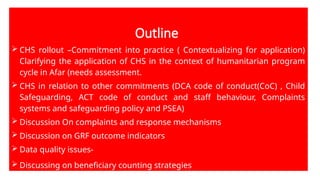
CHS rollout–Commitment into practice ( Contextualizing for application)
Clarifying the application of CHS in the context of humanitarian program
cycle in Afar (needs assessment.
CHS in relation to other commitments (DCA code of conduct(CoC) , Child
Safeguarding, ACT code of conduct and staff behaviour, Complaints
systems and safeguarding policy and PSEA)
Discussion On complaints and response mechanisms
Discussion on GRF outcome indicators
Data quality issues-
Discussing on beneficiary counting strategies
3.
The launch ofthe Core Humanitarian Standard
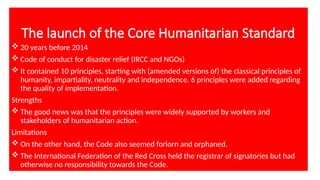
20 years before 2014
Code of conduct for disaster relief (IRCC and NGOs)
It contained 10 principles, starting with (amended versions of) the classical principles of
humanity, impartiality, neutrality and independence. 6 principles were added regarding
the quality of implementation.
Strengths
The good news was that the principles were widely supported by workers and
stakeholders of humanitarian action.
Limitations
On the other hand, the Code also seemed forlorn and orphaned.
The International Federation of the Red Cross held the registrar of signatories but had
otherwise no responsibility towards the Code.
4.
The launch ofthe Core Humanitarian Standard
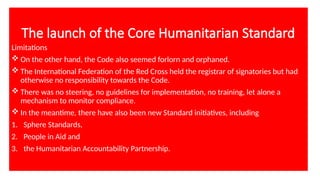
Limitations
On the other hand, the Code also seemed forlorn and orphaned.
The International Federation of the Red Cross held the registrar of signatories but had
otherwise no responsibility towards the Code.
There was no steering, no guidelines for implementation, no training, let alone a
mechanism to monitor compliance.
In the meantime, there have also been new Standard initiatives, including
1. Sphere Standards,
2. People in Aid and
3. the Humanitarian Accountability Partnership.
5.
The launch ofthe Core Humanitarian Standard
The Core Humanitarian Standard is the result of a collaborative process between
Groupe URD,
the Humanitarian Accountability Partnership (HAP) International,
People In Aid and
The Sphere Project.
It sets out nine commitments that organisations and individuals involved in
humanitarian intervention can use to improve the quality and effectiveness of aid
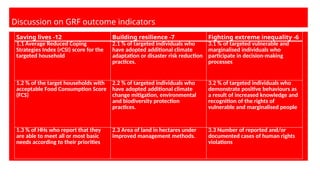
delivered. Communities and individuals affected by a disaster or conflict can also
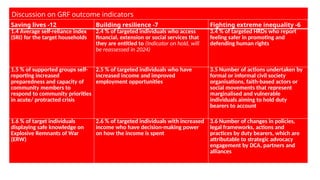
rely on it to hold organizations to account.
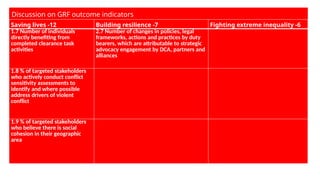
The Core Humanitarian Standard on Quality and Accountability (CHS) is a direct
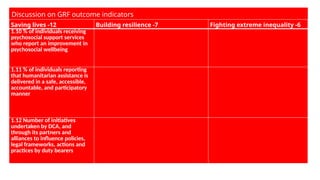
result of the Joint Standards Initiative (JSI) in which the Humanitarian Accountability
Partnership (HAP) International, People In Aid and the Sphere Project joined forces
to seek greater coherence for users of humanitarian standards.
6.
The launch ofthe Core Humanitarian Standard
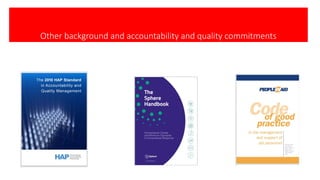
The Standard brings together the main elements of :-
the Sphere and HAP 2010 standards, the Red Cross and Red Crescent Code
of Conduct,
the People in Aid Code of Good Practice and
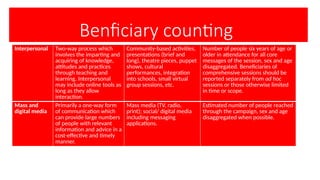
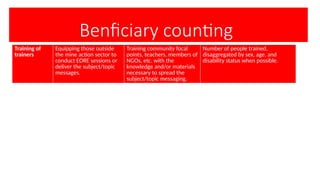
criteria from the OECD’s DAC and
from the Quality Compass developed by Groupe URD.
It has been developed due to the need to improve the coherence between the
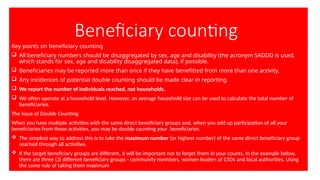
numerous different standards that exist.
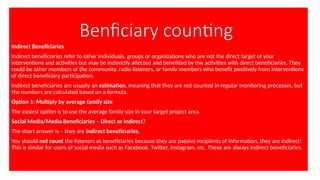
CHS interactive handbook
The launch ofthe Core Humanitarian Standard
A few years ago, a process was started to bring about a new, shared standard that
would combine the best of existing standards and be more embedded. The result was
launched today: the Core Humanitarian Standard .
The classic principles underpin the CHS, which sets out 9 commitments. They are
accompanied by pointers for actionand pointers for the responsibility of organizations.
A major difference with the Code of Conduct is the people-centred nature of the CHS.
The CHS is written from the point of view of crisis-affected communities and people.
9.
The launch ofthe Core Humanitarian Standard
When the Code is applied, crisis-affected communities and people
1. will receive appropriate and relevant assistance;
2. have access to the assistance they need at the right time;
3. are not negatively affected and are more prepared, resilient and less-at-risk as a result
of assistance;
4. know their rights and entitlements;
10.
The launch ofthe Core Humanitarian Standard
5. have access to safe and responsive complaint mechanisms;
6. can expect improved assistance of learning organisations;
7. Receive a humanitarian response that is coordinatedand complementary among
stakehodlers
8. receive assistance from competent and well-managed staff and volunteers; and
9. can expect that assisting organizations manage resources effectively, efficiently and
ethically.
The people-centredness of the CHS empowers communities. It also results in an
inclusive standard that can be equally adopted by humanitarian agencies, as well as any
other development, peace-building, rights-based or otherorganisations responding to
crises.
11.
Humanitarian principles
The corehumanitarian principles
of humanity, impartiality, independence and neutrality are based on International
Humanitarian Law (such as the Fourth Geneva Convention) and underpin the definition of
what constitutes a ‘humanitarian’ response (OCHA, 2012).
These principles are the foundation for integrated and widely accepted codes of conduct,
commitments and core standards, including the ICRC Code of Conduct, the Humanitarian
Charter and Minimum Standards in Humanitarian Response, and the Core Humanitarian
Standard (CHS) on Quality and Accountability.
12.
Humanitarian principles
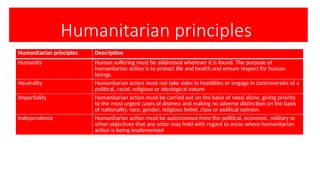
Humanitarian principlesDescription
Humanity Human suffering must be addressed wherever it is found. The purpose of
humanitarian action is to protect life and health and ensure respect for human
beings.
Neutrality Humanitarian actors must not take sides in hostilities or engage in controversies of a
political, racial, religious or ideological nature
Impartiality Humanitarian action must be carried out on the basis of need alone, giving priority
to the most urgent cases of distress and making no adverse distinction on the basis
of nationality, race, gender, religious belief, class or political opinion.
Independence Humanitarian action must be autonomous from the political, economic, military or
other objectives that any actor may hold with regard to areas where humanitarian
action is being implemented
13.
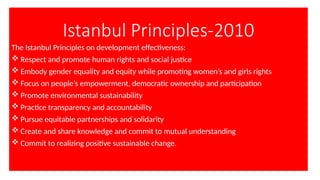
Istanbul Principles-2010
The IstanbulPrinciples on development effectiveness:
Respect and promote human rights and social justice
Embody gender equality and equity while promoting women’s and girls rights
Focus on people’s empowerment, democratic ownership and participation
Promote environmental sustainability
Practice transparency and accountability
Pursue equitable partnerships and solidarity
Create and share knowledge and commit to mutual understanding
Commit to realizing positive sustainable change.
14.
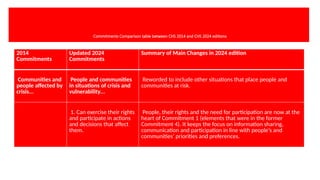
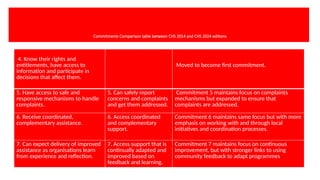
Commitments Comparison tablebetween CHS 2014 and CHS 2024 editions
2014
Commitments
Updated 2024
Commitments
Summary of Main Changes in 2024 edition
Communities and
people affected by
crisis...
People and communities
in situations of crisis and
vulnerability...
Reworded to include other situations that place people and
communities at risk.
1. Can exercise their rights
and participate in actions
and decisions that affect
them.
People, their rights and the need for participation are now at the
heart of Commitment 1 (elements that were in the former
Commitment 4). It keeps the focus on information sharing,
communication and participation in line with people’s and
communities’ priorities and preferences.
15.
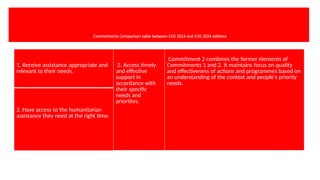
Commitments Comparison tablebetween CHS 2014 and CHS 2024 editions
1. Receive assistance appropriate and
relevant to their needs.
2. Access timely
and effective
support in
accordance with
their specific
needs and
priorities.
Commitment 2 combines the former elements of
Commitments 1 and 2. It maintains focus on quality
and effectiveness of actions and programmes based on
an understanding of the context and people's priority
needs.
2. Have access to the humanitarian
assistance they need at the right time.
16.
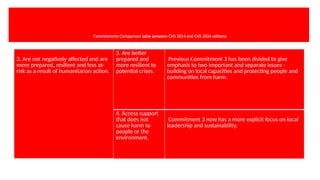
Commitments Comparison tablebetween CHS 2014 and CHS 2024 editions
3. Are not negatively affected and are
more prepared, resilient and less at-
risk as a result of humanitarian action.
3. Are better
prepared and
more resilient to
potential crises.
Previous Commitment 3 has been divided to give
emphasis to two important and separate issues -
building on local capacities and protecting people and
communities from harm.
4. Access support
that does not
cause harm to
people or the
environment.
Commitment 3 now has a more explicit focus on local
leadership and sustainability.
17.
Commitments Comparison tablebetween CHS 2014 and CHS 2024 editions
4. Know their rights and
entitlements, have access to
information and participate in
decisions that affect them.
Moved to become first commitment.
5. Have access to safe and
responsive mechanisms to handle
complaints.
5. Can safely report
concerns and complaints
and get them addressed.
Commitment 5 maintains focus on complaints
mechanisms but expanded to ensure that
complaints are addressed.
6. Receive coordinated,
complementary assistance.
6. Access coordinated
and complementary
support.
Commitment 6 maintains same focus but with more
emphasis on working with and through local
initiatives and coordination processes.
7. Can expect delivery of improved
assistance as organisations learn
from experience and reflection.
7. Access support that is
continually adapted and
improved based on
feedback and learning.
Commitment 7 maintains focus on continuous
improvement, but with stronger links to using
community feedback to adapt programmes
18.
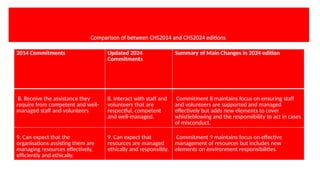
Comparison of betweenCHS2014 and CHS2024 editions
2014 Commitments Updated 2024
Commitments
Summary of Main Changes in 2024 edition
8. Receive the assistance they
require from competent and well-
managed staff and volunteers
8. Interact with staff and
volunteers that are
respectful, competent
and well-managed.
Commitment 8 maintains focus on ensuring staff
and volunteers are supported and managed
effectively but adds new elements to cover
whistleblowing and the responsibility to act in cases
of misconduct.
9. Can expect that the
organisations assisting them are
managing resources effectively,
efficiently and ethically.
9. Can expect that
resources are managed
ethically and responsibly.
Commitment 9 maintains focus on effective
management of resources but includes new
elements on environment responsibilities.
19.
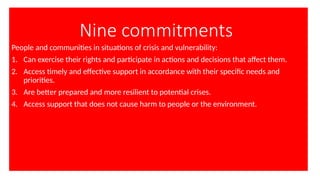
Nine commitments
People andcommunities in situations of crisis and vulnerability:
1. Can exercise their rights and participate in actions and decisions that affect them.
2. Access timely and effective support in accordance with their specific needs and
priorities.
3. Are better prepared and more resilient to potential crises.
4. Access support that does not cause harm to people or the environment.
20.
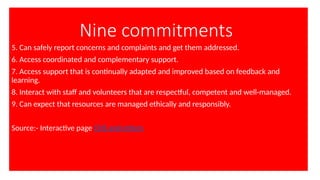
Nine commitments
5. Cansafely report concerns and complaints and get them addressed.
6. Access coordinated and complementary support.
7. Access support that is continually adapted and improved based on feedback and
learning.
8. Interact with staff and volunteers that are respectful, competent and well-managed.
9. Can expect that resources are managed ethically and responsibly.
Source:- Interactive page CHS and others
21.
CHS (Nine commitments)vis a vis
Other DCA code of conducts and guidelines :-
DCA code of conduct
Conflict sensitivity risk analysis guideline (don not harm principle)
Environmental and social risk management guideline
Innovation Action guideline
DCA quality management guideline
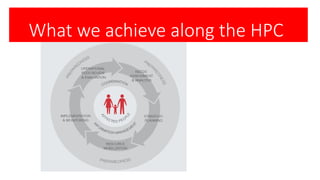
The humanitarian programmecycle:-HPC
1.Needs assessment and analysis
2.Strategic planning
3.Resource mobilization
4.Implementation and monitoring
5.Operational peer review and evaluation
24.
Structure of theCHS
1. the Nine Commitments;
2. supporting Quality Criteria;
3. Key Actions to be undertaken in order to fulfil the
Commitments; and
4. Organisational Responsibilities to support the consistent
and systematic implementation of the Key Actions
throughout the organisation.
25.
Commitment1
Communities and peopleaffected by crisis participations in decisions that affect them
Needs assessment
Intersectional severity analysis
Who are the most vulnerable
Identifying the most vulnerable during targeting
Setting targeting criteria
Protection
26.
Commitment1
Participations in decisionsthat affect them
Strategic planning
What are existing capacities to build up on
Enagage the different communities so as to learn about their capacities
What are community resources and assests
Building back better (resilience)
27.
Commitment1
Participations in decisionsthat affect them
Implementation and monitoring
Joint monitoring of activities
Disaggregate reporting of participants by gender as well as persons with disabiltiies
Do the most vulnerable targeted and getting access to benefits and services from the
humanitarian assistance
Create ownership and buy –in of activities ( ensure acceptance of the humanitaraian
assistance)
Gender –responsive monitoring and evaluation
Ensure monitoring from a different perspective (do PWD engage in the monitoring)
28.
Commitment1
Communities and peopleaffected by crisis participations in decisions that affect them
PROTECTION MAINSTREAMING is the process of incorporating protection principles and promoting
meaningful access, safety, and dignity in humanitarian aid. The following elements must be ensured in all
humanitarian activities: - FOUR THEMES
1. Prioritize safety & dignity, and avoid causing harm
2. Meaningful Access: ensure people’s access to assistance and services – in proportion to need and without
any barriers (e.g. discrimination).
3. Accountability: Set-up appropriate mechanisms through which affected populations can measure the
adequacy of interventions, and address concerns and complaints.
4. Participation and empowerment: Support the development of self-protection capacities and assist people to
claim their rights.
29.
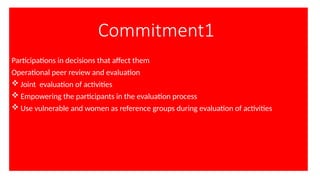
Commitment1
Participations in decisionsthat affect them
Operational peer review and evaluation
Joint evaluation of activities
Empowering the participants in the evaluation process
Use vulnerable and women as reference groups during evaluation of activities
30.
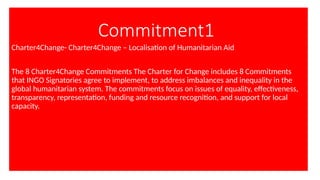
Commitment1
Charter4Change- Charter4Change –Localisation of Humanitarian Aid
The 8 Charter4Change Commitments The Charter for Change includes 8 Commitments
that INGO Signatories agree to implement, to address imbalances and inequality in the
global humanitarian system. The commitments focus on issues of equality, effectiveness,
transparency, representation, funding and resource recognition, and support for local
capacity.
31.
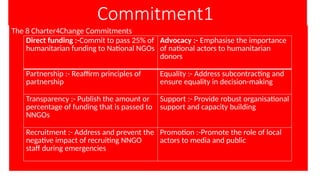
Commitment1
The 8 Charter4ChangeCommitments
Direct funding :-Commit to pass 25% of
humanitarian funding to National NGOs
Advocacy :- Emphasise the importance
of national actors to humanitarian
donors
Partnership :- Reaffirm principles of
partnership
Equality :- Address subcontracting and
ensure equality in decision-making
Transparency :- Publish the amount or
percentage of funding that is passed to
NNGOs
Support :- Provide robust organisational
support and capacity building
Recruitment :- Address and prevent the
negative impact of recruiting NNGO
staff during emergencies
Promotion :-Promote the role of local
actors to media and public
32.
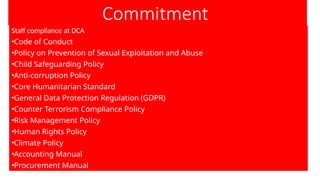
Commitment
Staff compliance atDCA
•Code of Conduct
•Policy on Prevention of Sexual Exploitation and Abuse
•Child Safeguarding Policy
•Anti-corruption Policy
•Core Humanitarian Standard
•General Data Protection Regulation (GDPR)
•Counter Terrorism Compliance Policy
•Risk Management Policy
•Human Rights Policy
•Climate Policy
•Accounting Manual
•Procurement Manual
33.
Commitment2
Communities and peopleaffected by crisis access timely and effective support in accordance with
their specific needs and priorities.
What else ? Discussion within the participants
34.
Commitment3
People and communitiesare better prepared and more resilient to potential crises.
Support formal and informal community leadership and locally led efforts to reinforce the resilience of people and
communities.
What else action? Discussion with the group
35.
Commitment4
People and communitiesaccess support that does not cause harm to people or the environment.
Identify potential negative impacts of the organisation and its work on people and communities, and take actions to
prevent, mitigate and address immediate and long-term negative effects.
Protect and safeguard data and information that could place people, communities and the organisation at risk, in
line with recognised good practice.
What else? Discussion with in the participants
36.
Commitment5
People and communitiescan safely report concerns and complaints and get them addressed.
Regularly monitor that people and communities understand how staff and volunteers are expected to act to prevent
harmful behaviours, including sexual exploitation and abuse, and harassment.
The IAS C Six Core Principles Relating to Sexual Exploitation and Abuse are:-
1. “Sexual exploitation and abuse by humanitarian workers constitute acts of
gross misconduct and are therefore grounds for termination of
employment.
2. Sexual activity with children (persons under the age of 18) is prohibited
regardless of the age of majority or age of consent locally. Mistaken belief
regarding the age of a child is not a defence.
37.
Commitment5
The IAS CSix Core Principles Relating to Sexual Exploitation and Abuse are:-
1. Exchange of money, employment, goods, or services for sex, including sexual favours or other forms
of humiliating, degrading or exploitative behaviour is prohibited. This includes exchange of
assistance that is due to beneficiaries.
2. Any sexual relationship between those providing humanitarian assistance and protection and a
person benefitting from such humanitarian assistance and protection that involves improper use of
rank or position is prohibited. Such relationships undermine the credibility and integrity of
humanitarian aid work.
3. Where a humanitarian worker develops concerns or suspicions regarding sexual abuse or
exploitation by a fellow worker, whether in the same agency or not, he or she must report such
concerns via established agency reporting mechanisms.
4. Humanitarian workers are obliged to create and maintain an environment which prevents sexual
exploitation and abuse and promotes the implementation of their code of conduct. Managers at all
levels have particular responsibilities to support and develop systems which maintain this
environment.
38.
Commitment5
People and communitiescan safely report concerns and complaints and get them addressed.
What else? Discussion with in the participants
39.
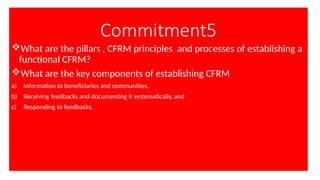
Commitment5
What are thepillars , CFRM principles and processes of establishing a
functional CFRM?
What are the key components of establishing CFRM
a) Information to beneficiaries and communities,
b) Receiving feedbacks and documenting it systematically, and
c) Responding to feedbacks.
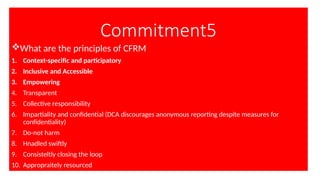
40.
Commitment5
What are theprinciples of CFRM
1. Context-specific and participatory
2. Inclusive and Accessible
3. Empowering
4. Transparent
5. Collective responsibility
6. Impartiality and confidential (DCA discourages anonymous reporting despite measures for
confidentiality)
7. Do-not harm
8. Hnadled swiftly
9. Consisteltly closing the loop
10. Appropraitely resourced
41.
Commitment5
What are thesteps /processes of establishing a functional CFRM ?
Discussion with the participants?
42.
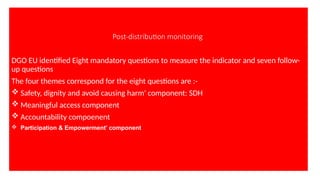
Post-distribution monitoring
DGO EUidentified Eight mandatory questions to measure the indicator and seven follow-
up questions
The four themes correspond for the eight questions are :-
Safety, dignity and avoid causing harm' component: SDH
Meaningful access component
Accountability compoenent
Participation & Empowerment’ component
43.
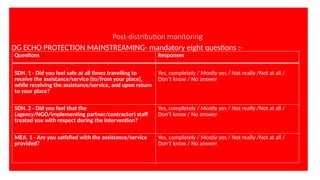
Post-distribution monitoring
DG ECHOPROTECTION MAINSTREAMING- mandatory eight questions :-
Questions Responses
SDH. 1 - Did you feel safe at all times travelling to
receive the assistance/service (to/from your place),
while receiving the assistance/service, and upon return
to your place?
Yes, completely / Mostly yes / Not really /Not at all /
Don’t know / No answer
SDH. 2 - Did you feel that the
(agency/NGO/implementing partner/contractor) staff
treated you with respect during the intervention?
Yes, completely / Mostly yes / Not really /Not at all /
Don’t know / No answer
MEA. 1 - Are you satisfied with the assistance/service
provided?
Yes, completely / Mostly yes / Not really /Not at all /
Don’t know / No answer
44.
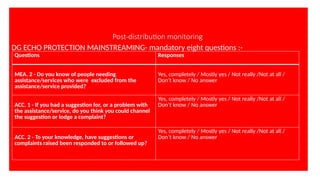
Post-distribution monitoring
DG ECHOPROTECTION MAINSTREAMING- mandatory eight questions :-
Questions Responses
MEA. 2 - Do you know of people needing
assistance/services who were excluded from the
assistance/service provided?
Yes, completely / Mostly yes / Not really /Not at all /
Don’t know / No answer
ACC. 1 - If you had a suggestion for, or a problem with
the assistance/service, do you think you could channel
the suggestion or lodge a complaint?
Yes, completely / Mostly yes / Not really /Not at all /
Don’t know / No answer
ACC. 2 - To your knowledge, have suggestions or
complaints raised been responded to or followed up?
Yes, completely / Mostly yes / Not really /Not at all /
Don’t know / No answer
45.
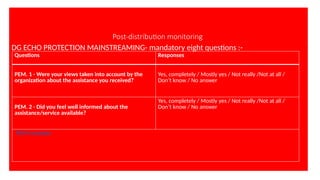
Post-distribution monitoring
DG ECHOPROTECTION MAINSTREAMING- mandatory eight questions :-
Questions Responses
PEM. 1 - Were your views taken into account by the
organization about the assistance you received?
Yes, completely / Mostly yes / Not really /Not at all /
Don’t know / No answer
PEM. 2 - Did you feel well informed about the
assistance/service available?
Yes, completely / Mostly yes / Not really /Not at all /
Don’t know / No answer
PDM template
46.
Discussion on GRFoutcome indicators
Saving lives -12 Building resilience -7 Fighting extreme inequality -6
1.1 Average Reduced Coping
Strategies Index (rCSI) score for the
targeted household
2.1 % of targeted individuals who
have adopted additional climate
adaptation or disaster risk reduction
practices.
3.1 % of targeted vulnerable and
marginalised individuals who
participate in decision-making
processes
1.2 % of the target households with
acceptable Food Consumption Score
(FCS)
2.2 % of targeted individuals who
have adopted additional climate
change mitigation, environmental
and biodiversity protection
practices.
3.2 % of targeted individuals who
demonstrate positive behaviours as
a result of increased knowledge and
recognition of the rights of
vulnerable and marginalised people
1.3 % of HHs who report that they
are able to meet all or most basic
needs according to their priorities
2.3 Area of land in hectares under
improved management methods.
3.3 Number of reported and/or
documented cases of human rights
violations
47.
Discussion on GRFoutcome indicators
Saving lives -12 Building resilience -7 Fighting extreme inequality -6
1.4 Average self-reliance index
(SRI) for the target households
2.4 % of targeted individuals who access
financial, extension or social services that
they are entitled to (Indicator on hold, will
be reassessed in 2024)
3.4 % of targeted HRDs who report
feeling safer in promoting and
defending human rights
1.5 % of supported groups self-
reporting increased
preparedness and capacity of
community members to
respond to community priorities
in acute/ protracted crisis
2.5 % of targeted individuals who have
increased income and improved
employment opportunities
3.5 Number of actions undertaken by
formal or informal civil society
organisations, faith-based actors or
social movements that represent
marginalised and vulnerable
individuals aiming to hold duty
bearers to account
1.6 % of target individuals
displaying safe knowledge on
Explosive Remnants of War
(ERW)
2.6 % of targeted individuals with increased
income who have decision-making power
on how the income is spent
3.6 Number of changes in policies,
legal frameworks, actions and
practices by duty bearers, which are
attributable to strategic advocacy
engagement by DCA, partners and
alliances
48.
Discussion on GRFoutcome indicators
Saving lives -12 Building resilience -7 Fighting extreme inequality -6
1.7 Number of individuals
directly benefiting from
completed clearance task
activities
2.7 Number of changes in policies, legal
frameworks, actions and practices by duty
bearers, which are attributable to strategic
advocacy engagement by DCA, partners and
alliances
1.8 % of targeted stakeholders
who actively conduct conflict
sensitivity assessments to
identify and where possible
address drivers of violent
conflict
1.9 % of targeted stakeholders
who believe there is social
cohesion in their geographic
area
49.
Discussion on GRFoutcome indicators
Saving lives -12 Building resilience -7 Fighting extreme inequality -6
1.10 % of individuals receiving
psychosocial support services
who report an improvement in
psychosocial wellbeing
1.11 % of individuals reporting
that humanitarian assistance is
delivered in a safe, accessible,
accountable, and participatory
manner
1.12 Number of initiatives
undertaken by DCA, and
through its partners and
alliances to influence policies,
legal frameworks, actions and
practices by duty bearers
50.
Data quality issuesand beneficiary counting strategies
What are data quality issues ?
Data quality dimensions
Indicator protocol
What should you care about collecting FCS /rCSI data?
Measuring protection indicators
Others
51.
Commitment6
People and communitiesaccess coordinated and complementary support.
Ensure the work of the organisation is coordinated with and complementary to locally led and community-based
actions, and those of relevant stakeholders.
Do you see overlaps (duplication) in the humanitarian response?
52.
Commitment7
People and communitiesaccess support that is continually adapted and improved based on
feedback
and learning.
7.1 Regularly listen and respond to feedback and inputs from people and communities on the organisation and its
work.
The post distribution monitoring after each distributions (CASH, multipurpose cash, voucher for fresh food,
Emergency Shelter , NFI or something else ) is a feedback for the management and the staffs to improve their
pefromance
53.
Commitment7
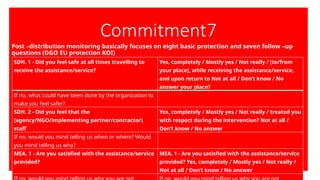
Post –distribution monitoringbasically focuses on eight basic protection and seven follow –up
questions (DGO EU protection KOI)
SDH. 1 - Did you feel safe at all times travelling to
receive the assistance/service?
Yes, completely / Mostly yes / Not really / (to/from
your place), while receiving the assistance/service,
and upon return to Not at all / Don’t know / No
answer your place?
If no, what could have been done by the organization to
make you feel safer?
SDH. 2 - Did you feel that the
(agency/NGO/implementing partner/contractor)
staff
Yes, completely / Mostly yes / Not really / treated you
with respect during the intervention? Not at all /
Don’t know / No answer
If no, would you mind telling us when or where? Would
you mind telling us why?
MEA. 1 - Are you satisfied with the assistance/service
provided?
MEA. 1 - Are you satisfied with the assistance/service
provided? Yes, completely / Mostly yes / Not really /
Not at all / Don’t know / No answer
54.
Commitment7
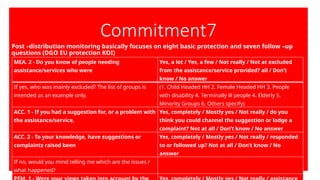
Post –distribution monitoringbasically focuses on eight basic protection and seven follow –up
questions (DGO EU protection KOI)
MEA. 2 - Do you know of people needing
assistance/services who were
Yes, a lot / Yes, a few / Not really / Not at excluded
from the assistance/service provided? all / Don’t
know / No answer
If yes, who was mainly excluded? The list of groups is
intended as an example only.
(1. Child Headed HH 2. Female Headed HH 3. People
with disability 4. Terminally ill people 4. Elderly 5.
Minority Groups 6. Others specify)
ACC. 1 - If you had a suggestion for, or a problem with
the assistance/service,
Yes, completely / Mostly yes / Not really / do you
think you could channel the suggestion or lodge a
complaint? Not at all / Don’t know / No answer
ACC. 2 - To your knowledge, have suggestions or
complaints raised been
Yes, completely / Mostly yes / Not really / responded
to or followed up? Not at all / Don’t know / No
answer
If no, would you mind telling me which are the issues /
what happened?
55.
Commitment7
Post –distribution monitoringbasically focuses on eight basic protection and seven follow –up
questions (DGO EU protection KOI)
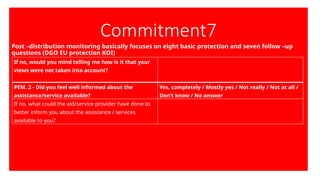
If no, would you mind telling me how is it that your
views were not taken into account?
PEM. 2 - Did you feel well informed about the
assistance/service available?
Yes, completely / Mostly yes / Not really / Not at all /
Don’t know / No answer
If no, what could the aid/service provider have done to
better inform you about the assistance / services
available to you?
56.
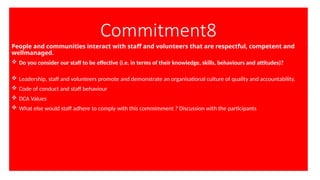
Commitment8
People and communitiesinteract with staff and volunteers that are respectful, competent and
wellmanaged.
Do you consider our staff to be effective (i.e. in terms of their knowledge, skills, behaviours and attitudes)?
Leadership, staff and volunteers promote and demonstrate an organisational culture of quality and accountability.
Code of conduct and staff behaviour
DCA Values
What else would staff adhere to comply with this commimment ? Discussion with the participants
57.
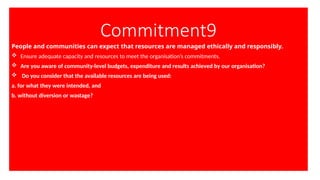
Commitment9
People and communitiescan expect that resources are managed ethically and responsibly.
Ensure adequate capacity and resources to meet the organisation’s commitments.
Are you aware of community-level budgets, expenditure and results achieved by our organisation?
Do you consider that the available resources are being used:
a. for what they were intended, and
b. without diversion or wastage?
58.
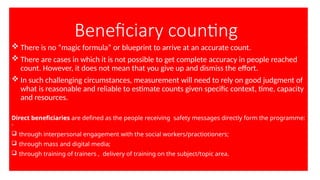
Beneficiary counting
Thereis no “magic formula” or blueprint to arrive at an accurate count.
There are cases in which it is not possible to get complete accuracy in people reached
count. However, it does not mean that you give up and dismiss the effort.
In such challenging circumstances, measurement will need to rely on good judgment of
what is reasonable and reliable to estimate counts given specific context, time, capacity
and resources.
Direct beneficiaries are defined as the people receiving safety messages directly form the programme:
-
through interpersonal engagement with the social workers/practiotioners;
through mass and digital media;
through training of trainers , delivery of training on the subject/topic area.
59.
Benficiary counting
Interpersonal Two-wayprocess which
involves the imparting and
acquiring of knowledge,
attitudes and practices
through teaching and
learning. Interpersonal
may include online tools as
long as they allow
interaction.
Community-based activities,
presentations (brief and
long), theatre pieces, puppet
shows, cultural
performances, integration
into schools, small virtual
group sessions, etc.
Number of people six years of age or
older in attendance for all core
messages of the session, sex and age
disaggregated. Beneficiaries of
comprehensive sessions should be
reported separately from ad hoc
sessions or those otherwise limited
in time or scope.
Mass and
digital media
Primarily a one-way form
of communication which
can provide large numbers
of people with relevant
information and advice in a
cost-effective and timely
manner.
Mass media (TV, radio,
print); social/ digital media
including messaging
applications.
Estimated number of people reached
through the campaign, sex and age
disaggregated when possible.
60.
Benficiary counting
Training of
trainers
Equippingthose outside
the mine action sector to
conduct EORE sessions or
deliver the subject/topic
messages.
Training community focal
points, teachers, members of
NGOs, etc. with the
knowledge and/or materials
necessary to spread the
subject/topic messaging.
Number of people trained,
disaggregated by sex, age, and
disability status when possible.
61.
Beneficiary counting
Key pointson beneficiary counting
All beneficiary numbers should be disaggregated by sex, age and disability (the acronym SADDD is used,
which stands for sex, age and disability disaggregated data), if possible.
Beneficiaries may be reported more than once if they have benefitted from more than one activity.
Any incidences of potential double counting should be made clear in reporting.
We report the number of individuals reached, not households.
We often operate at a household level. However, an average household size can be used to calculate the total number of
beneficiaries.
The Issue of Double Counting
When you have multiple activities with the same direct beneficiary groups and, when you add up participation of all your
beneficiaries from these activities, you may be double counting your beneficiaries.
The simplest way to address this is to take the maximum number (or highest number) of the same direct beneficiary group
reached through all activities.
If the target beneficiary groups are different, it will be important not to forget them in your counts. In the example below,
there are three (3) different beneficiary groups - community members, women leaders of CSOs and local authorities. Using
the same rule of taking them maximum
62.
Benficiary counting
Indirect Beneficiaries
Indirectbeneficiaries refer to other individuals, groups or organizations who are not the direct target of your
interventions and activities but may be indirectly affected and benefited by the activities with direct beneficiaries. They
could be other members of the community, radio listeners, or family members who benefit positively from interventions
of direct beneficiary participation.
Indirect beneficiaries are usually an estimation, meaning that they are not counted in regular monitoring processes, but
the numbers are calculated based on a formula.
Option 1: Multiply by average family size
The easiest option is to use the average family size in your target project area.
Social Media/Media Beneficiaries – Direct or Indirect?
The short answer is – they are indirect beneficiaries.
You should not count the listeners as beneficiaries because they are passive recipients of information, they are indirect!
This is similar for users of social media such as Facebook, Twitter, Instagram, etc. These are always indirect beneficiaries.
63.
Benficiary counting
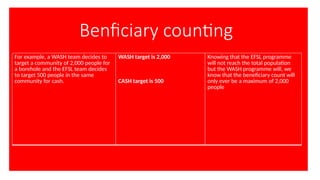
For example,a WASH team decides to
target a community of 2,000 people for
a borehole and the EFSL team decides
to target 500 people in the same
community for cash.
WASH target is 2,000
CASH target is 500
Knowing that the EFSL programme
will not reach the total population
but the WASH programme will, we
know that the beneficiary count will
only ever be a maximum of 2,000
people
64.
Beneficiary counting
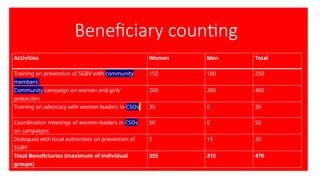
Activities WomenMen Total
Training on prevention of SGBV with community
members
150 100 250
Community campaign on women and girls’
protection
200 200 400
Training on advocacy with women leaders in CSOs 30 0 30
Coordination meetings of women leaders in CSOs
on campaigns
50 0 50
Dialogues with local authorities on prevention of
SGBV
5 15 20
Total Beneficiaries (maximum of individual
groups)
255 215 470
65.
CHS self assessmentreport of DCA
CHS self-assessment manual
What is our circumstance in translating CHS commitments in practice
xxx
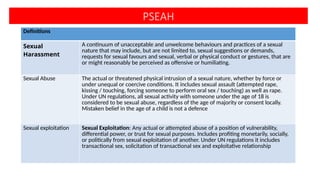
PSEAH
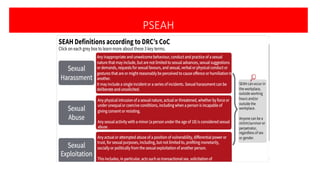
Definitions
Sexual
Harassment
A continuum ofunacceptable and unwelcome behaviours and practices of a sexual
nature that may include, but are not limited to, sexual suggestions or demands,
requests for sexual favours and sexual, verbal or physical conduct or gestures, that are
or might reasonably be perceived as offensive or humiliating.
Sexual Abuse The actual or threatened physical intrusion of a sexual nature, whether by force or
under unequal or coercive conditions. It includes sexual assault (attempted rape,
kissing / touching, forcing someone to perform oral sex / touching) as well as rape.
Under UN regulations, all sexual activity with someone under the age of 18 is
considered to be sexual abuse, regardless of the age of majority or consent locally.
Mistaken belief in the age of a child is not a defence
Sexual exploitation Sexual Exploitation: Any actual or attempted abuse of a position of vulnerability,
differential power, or trust for sexual purposes. Includes profiting monetarily, socially,
or politically from sexual exploitation of another. Under UN regulations it includes
transactional sex, solicitation of transactional sex and exploitative relationship
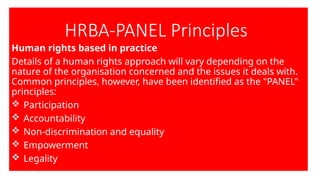
69.
HRBA-PANEL Principles
Human rightsbased in practice
Details of a human rights approach will vary depending on the
nature of the organisation concerned and the issues it deals with.
Common principles, however, have been identified as the "PANEL"
principles:
Participation
Accountability
Non-discrimination and equality
Empowerment
Legality
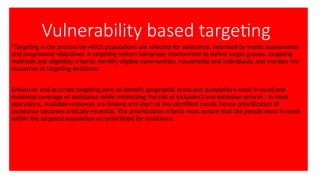
70.
Vulnerability based targeting
“Targetingis the process by which populations are selected for assistance, informed by needs assessments
and programme objectives. A targeting system comprises mechanisms to define target groups, targeting
methods and eligibility criteria; identify eligible communities, households and individuals; and monitor the
outcomes of targeting decisions.
Enhanced and accurate targeting aims to identify geographic areas and populations most in need and
maximize coverage of assistance while minimizing the risk of inclusion3 and exclusion errors4 . In most
operations, available resources are limited and short of the identified needs, hence prioritization of
assistance becomes critically essential. The prioritization criteria must ensure that the people most in need
within the targeted population are prioritized for assistance.
71.
Targeting and verification
Community –based targeting
Self targeting
Proxy means test targeting
Geographic targeting
Balnket targeting
72.
Vulnerability based targeting
“Targetingis the process by which populations are selected for assistance, informed by needs assessments
and programme objectives. A targeting system comprises mechanisms to define target groups, targeting
methods and eligibility criteria; identify eligible communities, households and individuals; and monitor the
outcomes of targeting decisions.
Different types of targeting
Community –based targeting
Self targeting
Proxy means test targeting
Geographic targeting
Balnket targeting
73.
Reource packs
CHS Amharic
CHSself assessment webinar
Post-Distribution Monitoring (PDM) Tool - Central African Republic | ReliefWeb
Use of Non-Food Items | IndiKit
Post Distribution Monitoring Tool | Shelter Cluster
SRI tool