PUTTING SPELL 
INTO ACTION!
Objectives 
• Learn about SPELL research findings 
• Explore how to remove barriers to library use & home 
early literacy activities 
• Discuss how to leverage collaboration & outreach 
• Plan how to incorporate SPELL recommendations into 
your projects & services 
• Network & share ideas 
• End the day with concrete next steps on using SPELL to 
inform your programs & services!
Our thanks to: 
And our Community Supporters:
Once upon a time… 
•We wanted to establish a state-wide baby library 
card program for babies 
• But as planning progressed, we realized we 
needed more information 
• So we applied for an IMLS National Leadership 
Planning Grant
First step: collaboration 
•We established a partnership with the 
University of Denver Morgridge College of 
Education; 
• convened an exceptional Advisory Board; 
• and partnered with 4 library jurisdictions
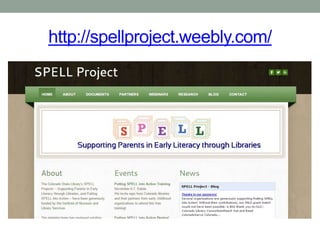
http://spellproject.weebly.com/
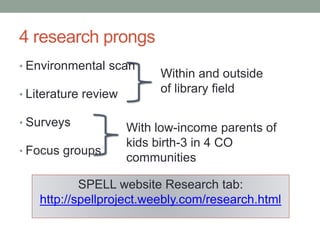
4 research prongs 
• Environmental scan 
• Literature review 
• Surveys 
• Focus groups 
Within and outside 
of library field 
With low-income parents of 
kids birth-3 in 4 CO 
communities 
SPELL website Research tab: 
http://spellproject.weebly.com/research.html
Importance vs. frequency of reading 
ALL respondents, save only one, believe 
reading daily to their young children is very 
important. 
Actual reading, though, varies by income 
and education levels, as well as number of 
children.
Reading frequency 
Amount that caregivers read to their young 
children 
• Increases with income 
• Increases with education level (except…) 
• Decreases with the number of children in the 
household
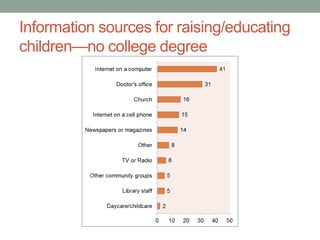
Information sources for raising/educating 
children—no college degree
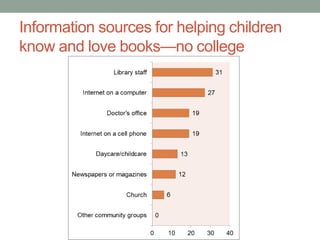
Information sources for helping children 
know and love books—no college
Barriers to library use 
• Sheer busy-ness/scheduling 
• Hard to get to the library when it’s open 
• Hard to get to the library building 
(transportation) 
• Library fines and fees 
• Can’t find needed materials 
• Library not welcoming/young child-friendly
Promoting early literacy 
Parents suggested places/ways to promote early 
literacy and library programs: 
• Big box stores 
• Grocery stores 
• Gas stations 
• Post offices 
• Text messages 
• Mail lists
From research to blueprint 
Recommendations crafted from findings of 4 
research prongs 
3 spheres: 
• In your organization 
• Reaching out 
• Home early literacy practices 
spellproject.weebly.com/uploads/1/5/3/3/15331602 
/spell_blueprint_final.pdf
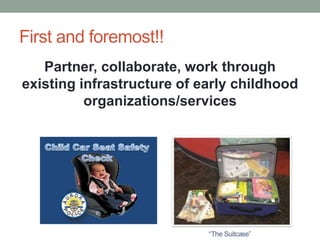
First and foremost!! 
Partner, collaborate, work through 
existing infrastructure of early childhood 
organizations/services
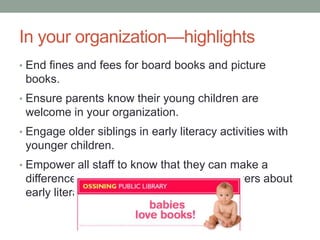
In your organization—highlights 
• End fines and fees for board books and picture 
books. 
• Ensure parents know their young children are 
welcome in your organization. 
• Engage older siblings in early literacy activities with 
younger children. 
• Empower all staff to know that they can make a 
difference in informing parents and caregivers about 
early literacy.
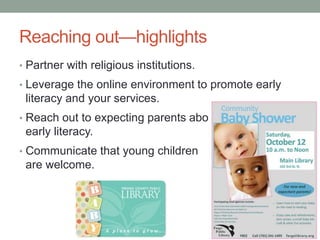
Reaching out—highlights 
• Partner with religious institutions. 
• Leverage the online environment to promote early 
literacy and your services. 
• Reach out to expecting parents about 
early literacy. 
• Communicate that young children 
are welcome.
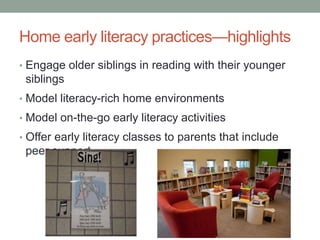
Home early literacy practices—highlights 
• Engage older siblings in reading with their younger 
siblings 
• Model literacy-rich home environments 
• Model on-the-go early literacy activities 
• Offer early literacy classes to parents that include 
peer support
Once upon a time… 
We’re starting our next chapter: 
Putting SPELL into Action! 
October 2014-2016
Prototypes 
• Locally-designed programs informed by 
SPELL blueprint 
• 8 SPELL libraries, based on demographics 
• All are welcome! 
• Mentoring & professional development 
provided
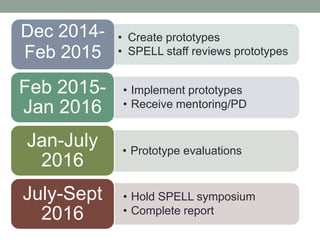
Dec 2014- 
Feb 2015 
• Implement prototypes 
• Receive mentoring/PD 
Feb 2015- 
Jan 2016 
• Prototype evaluations 
Jan-July 
2016 
• Hold SPELL symposium 
• Complete report 
July-Sept 
2016 
• Create prototypes 
• SPELL staff reviews prototypes
Exploring the blueprint 
What recommendations do you 
already do?
Exploring the blueprint 
How can you incorporate the blueprint 
into your existing programs?
Exploring the blueprint 
Identify your largest gaps and barriers 
in incorporating the recommendations; 
how can you overcome them?
Thank You! 
Beth Crist, crist_b@cde.state.co.us 
Jean Heilig, heilig_j@cde.state.co.us 
Sharon Morris, morris_s@cde.state.co.us 
Meghan Wanucha, 
wanucha_m@cde.state.co.us

Spell training

  • 1.
  • 2.
    Objectives • Learnabout SPELL research findings • Explore how to remove barriers to library use & home early literacy activities • Discuss how to leverage collaboration & outreach • Plan how to incorporate SPELL recommendations into your projects & services • Network & share ideas • End the day with concrete next steps on using SPELL to inform your programs & services!
  • 3.
    Our thanks to: And our Community Supporters:
  • 4.
    Once upon atime… •We wanted to establish a state-wide baby library card program for babies • But as planning progressed, we realized we needed more information • So we applied for an IMLS National Leadership Planning Grant
  • 5.
    First step: collaboration •We established a partnership with the University of Denver Morgridge College of Education; • convened an exceptional Advisory Board; • and partnered with 4 library jurisdictions
  • 6.
  • 7.
    4 research prongs • Environmental scan • Literature review • Surveys • Focus groups Within and outside of library field With low-income parents of kids birth-3 in 4 CO communities SPELL website Research tab: http://spellproject.weebly.com/research.html
  • 8.
    Importance vs. frequencyof reading ALL respondents, save only one, believe reading daily to their young children is very important. Actual reading, though, varies by income and education levels, as well as number of children.
  • 9.
    Reading frequency Amountthat caregivers read to their young children • Increases with income • Increases with education level (except…) • Decreases with the number of children in the household
  • 10.
    Information sources forraising/educating children—no college degree
  • 11.
    Information sources forhelping children know and love books—no college
  • 12.
    Barriers to libraryuse • Sheer busy-ness/scheduling • Hard to get to the library when it’s open • Hard to get to the library building (transportation) • Library fines and fees • Can’t find needed materials • Library not welcoming/young child-friendly
  • 13.
    Promoting early literacy Parents suggested places/ways to promote early literacy and library programs: • Big box stores • Grocery stores • Gas stations • Post offices • Text messages • Mail lists
  • 14.
    From research toblueprint Recommendations crafted from findings of 4 research prongs 3 spheres: • In your organization • Reaching out • Home early literacy practices spellproject.weebly.com/uploads/1/5/3/3/15331602 /spell_blueprint_final.pdf
  • 15.
    First and foremost!! Partner, collaborate, work through existing infrastructure of early childhood organizations/services
  • 16.
    In your organization—highlights • End fines and fees for board books and picture books. • Ensure parents know their young children are welcome in your organization. • Engage older siblings in early literacy activities with younger children. • Empower all staff to know that they can make a difference in informing parents and caregivers about early literacy.
  • 17.
    Reaching out—highlights •Partner with religious institutions. • Leverage the online environment to promote early literacy and your services. • Reach out to expecting parents about early literacy. • Communicate that young children are welcome.
  • 18.
    Home early literacypractices—highlights • Engage older siblings in reading with their younger siblings • Model literacy-rich home environments • Model on-the-go early literacy activities • Offer early literacy classes to parents that include peer support
  • 19.
    Once upon atime… We’re starting our next chapter: Putting SPELL into Action! October 2014-2016
  • 20.
    Prototypes • Locally-designedprograms informed by SPELL blueprint • 8 SPELL libraries, based on demographics • All are welcome! • Mentoring & professional development provided
  • 21.
    Dec 2014- Feb2015 • Implement prototypes • Receive mentoring/PD Feb 2015- Jan 2016 • Prototype evaluations Jan-July 2016 • Hold SPELL symposium • Complete report July-Sept 2016 • Create prototypes • SPELL staff reviews prototypes
  • 22.
    Exploring the blueprint What recommendations do you already do?
  • 23.
    Exploring the blueprint How can you incorporate the blueprint into your existing programs?
  • 24.
    Exploring the blueprint Identify your largest gaps and barriers in incorporating the recommendations; how can you overcome them?
  • 25.
    Thank You! BethCrist, crist_b@cde.state.co.us Jean Heilig, heilig_j@cde.state.co.us Sharon Morris, morris_s@cde.state.co.us Meghan Wanucha, wanucha_m@cde.state.co.us

Editor's Notes

  • #8 Looked at programs in CO and nationwide Looked within and beyond library programs Handout Go to website--Came up with 10 patterns and 11 examples Look at expectant parents, sustained effort in patterns Look at Cooking Matters, Raising a Reader in programs Lit review Attitudes:  Importance of early literacy Likelihood of interacting with various support providers Family’s influence and role Relationships: Trust in support providers Family roles Knowledge base: What is already known How knowledge has been used Culture: Barriers Preferences for interacting with providers Surveys Self-administered in libraries for parents with kids birth-3 Available in English and Spanish Started with 4 partner communities but hard to get responses; moved to nearby areas to help Not all respondents were low income Self-administered surveys in libraries to determine parents’: Current library use Importance and frequency of reading with their children Sources of parenting info Barriers to using the library Demographic data Group discussions with parents to find out: Their challenges to inspiring their kids to know and love books The best ways to reach them with parenting info The most convenient times and places to offer programs The best organizations to partner with What support they’d need to complete an early literacy program
  • #11 Parents see topic of raising children as separate from the topic of encouraging reading and literacy. Similar results in focus groups Study did not id specific websites (except a few mentioned in focus groups) or searching behavior—for future research
  • #13 Transportation an issue especially for urban rather than rural parents Others: working or can’t get to library during storytimes Not welcoming—parents afraid their children will be disruptive. May be misperception
  • #15 First 2 columns inform 3rd
  • #16 Aurora PL partnered with police for car seat program PPLD takes suitcase full of books, puzzles, lib cards and lib brochures to ROAR clinic
  • #18 Baby shower partners include early intervention center, child care resource and referral center, regional parenting resource center, united way, safe kids organization
  • #19 Anythink family place lib on right—comfy seating for families, developmentally appropriate toys, lots of books, well lit