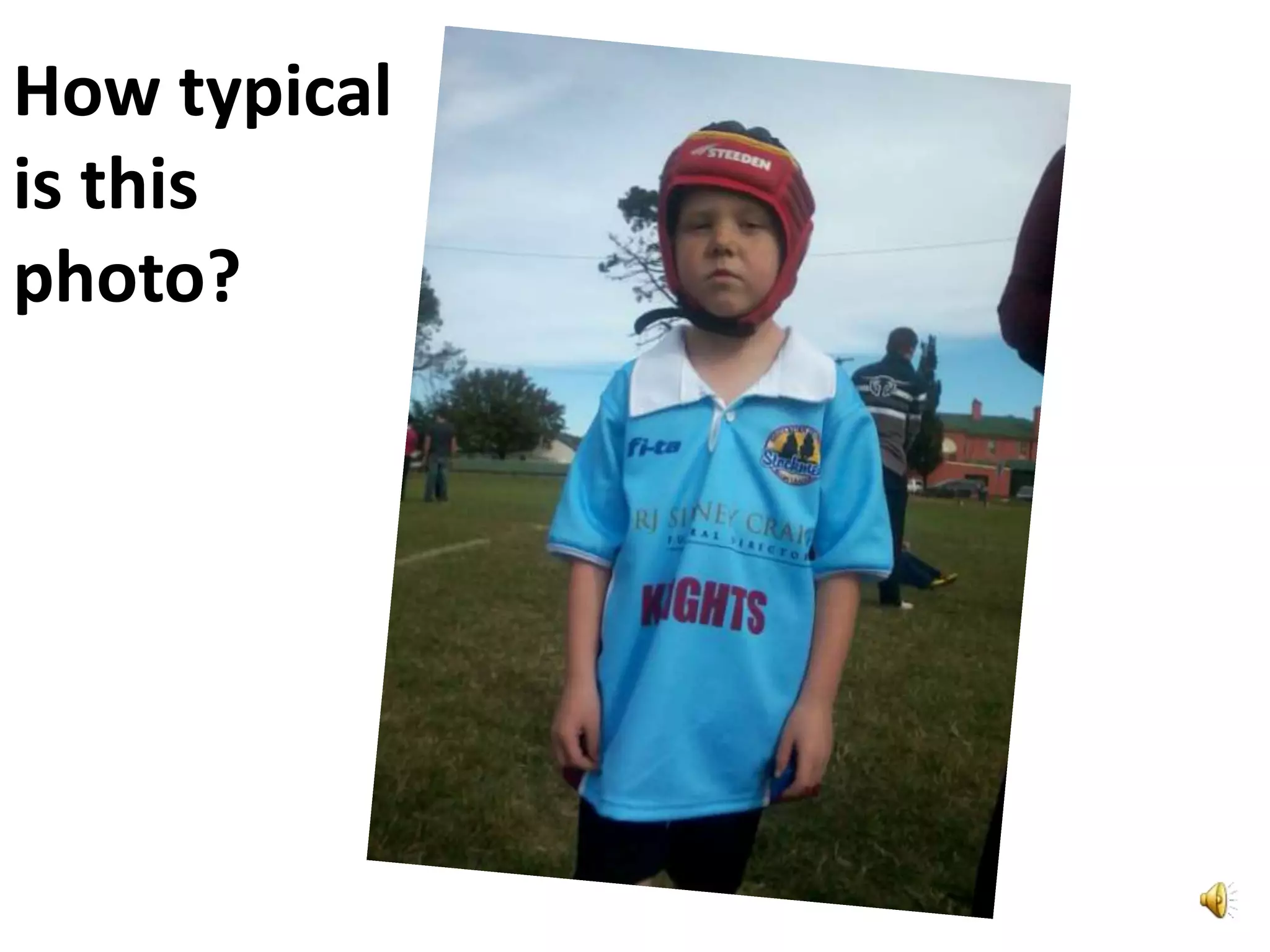
How typical
is this
photo?
The Best Form of Athletic
Development for Children
                    Emma Friend
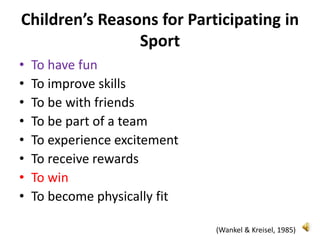
Children’s Reasons for Participating in
                Sport
•   To have fun
•   To improve skills
•   To be with friends
•   To be part of a team
•   To experience excitement
•   To receive rewards
•   To win
•   To become physically fit

                               (Wankel & Kreisel, 1985)
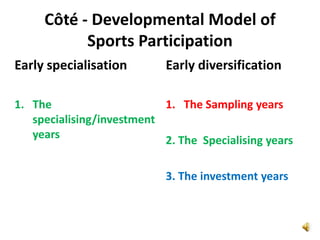
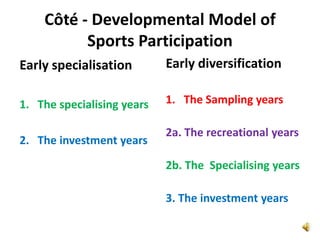
Côté - Developmental Model of
           Sports Participation
Early specialisation        Early diversification

1. The                     1. The Sampling years
   specialising/investment
   years                   2. The Specialising years

                            3. The investment years
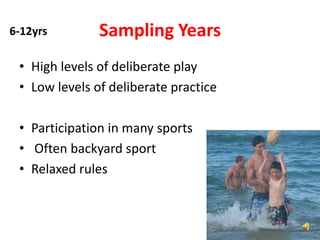
6-12yrs        Sampling Years
 • High levels of deliberate play
 • Low levels of deliberate practice

 • Participation in many sports
 • Often backyard sport
 • Relaxed rules
Côté - Developmental Model of
          Sports Participation
Early specialisation        Early diversification

1. The specialising years   1. The Sampling years

                            2a. The recreational years
2. The investment years

                            2b. The Specialising years

                            3. The investment years
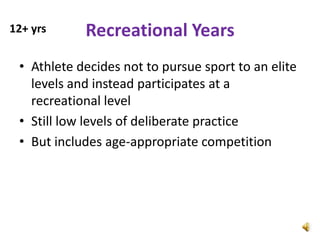
12+ yrs     Recreational Years
 • Athlete decides not to pursue sport to an elite
   levels and instead participates at a
   recreational level
 • Still low levels of deliberate practice
 • But includes age-appropriate competition
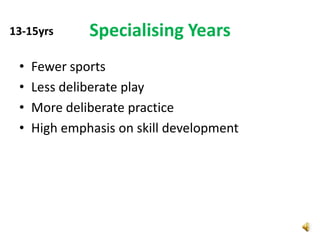
13-15yrs      Specialising Years
 •   Fewer sports
 •   Less deliberate play
 •   More deliberate practice
 •   High emphasis on skill development
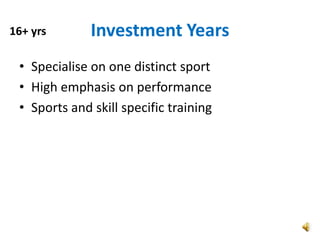
16+ yrs       Investment Years
 • Specialise on one distinct sport
 • High emphasis on performance
 • Sports and skill specific training
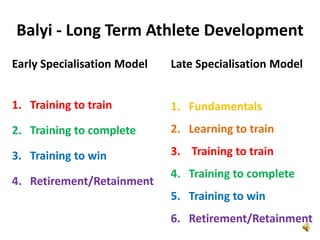
Balyi - Long Term Athlete Development
Early Specialisation Model   Late Specialisation Model


1. Training to train         1. Fundamentals
2. Training to complete      2. Learning to train

3. Training to win           3. Training to train
                             4. Training to complete
4. Retirement/Retainment
                             5. Training to win
                             6. Retirement/Retainment
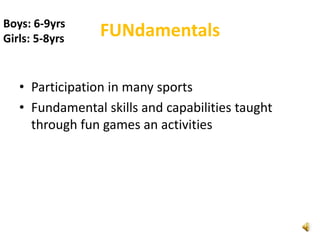
Boys: 6-9yrs
Girls: 5-8yrs    FUNdamentals

   • Participation in many sports
   • Fundamental skills and capabilities taught
     through fun games an activities
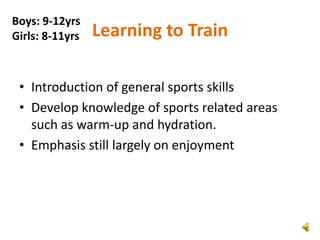
Boys: 9-12yrs
Girls: 8-11yrs   Learning to Train

 • Introduction of general sports skills
 • Develop knowledge of sports related areas
   such as warm-up and hydration.
 • Emphasis still largely on enjoyment
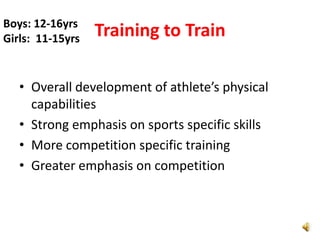
Boys: 12-16yrs
Girls: 11-15yrs   Training to Train

   • Overall development of athlete’s physical
     capabilities
   • Strong emphasis on sports specific skills
   • More competition specific training
   • Greater emphasis on competition
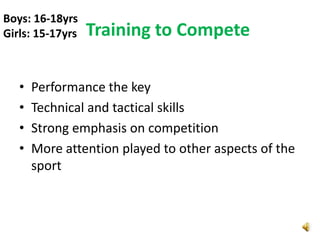
Boys: 16-18yrs
Girls: 15-17yrs   Training to Compete

   •   Performance the key
   •   Technical and tactical skills
   •   Strong emphasis on competition
   •   More attention played to other aspects of the
       sport
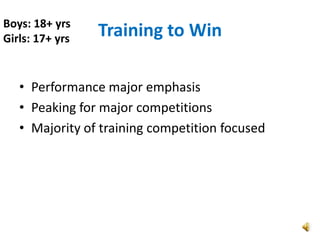
Boys: 18+ yrs
Girls: 17+ yrs   Training to Win

   • Performance major emphasis
   • Peaking for major competitions
   • Majority of training competition focused
Retirement/Retainment

• Retaining athletes to be involved in sport
  through coaching, officiating or
  administration.
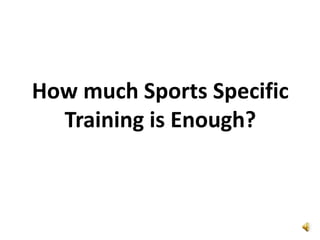
How much Sports Specific
  Training is Enough?
The Effects of Specialisation
 on Athletic Development
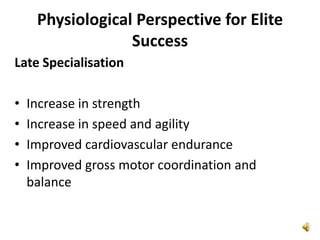
Physiological Perspective for Elite
                  Success
Late Specialisation

•   Increase in strength
•   Increase in speed and agility
•   Improved cardiovascular endurance
•   Improved gross motor coordination and
    balance
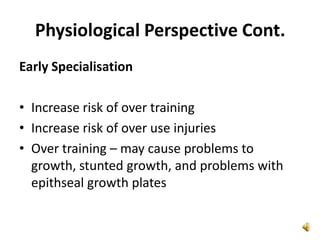
Physiological Perspective Cont.
Early Specialisation

• Increase risk of over training
• Increase risk of over use injuries
• Over training – may cause problems to
  growth, stunted growth, and problems with
  epithseal growth plates
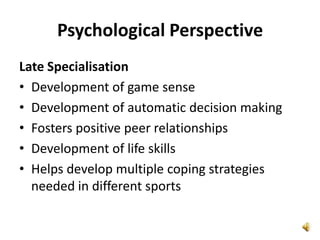
Psychological Perspective
Late Specialisation
• Development of game sense
• Development of automatic decision making
• Fosters positive peer relationships
• Development of life skills
• Helps develop multiple coping strategies
  needed in different sports
Psychological Perspective
Early Specialisation
• Decrease intrinsic motivation
• Increase risk of dropout
• Increase risk of athletic burnout
International Athletes

Past research has found majority of elite athlete
      participated in a vary of sports through
                     childhood
Summary
• Reasons for participation
• Côté - Developmental Model of Sports
  Participation
• Balyi – Long Term Athlete Development Model

• Physiological Perspective
• Psychological Perspective
Conclusion

According to the research we have viewed late
 specialisation appears to be more beneficial to
 athletic development from a physiological and
             psychological perceptive.
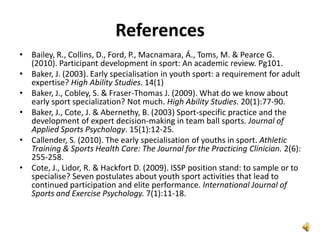
References
• Bailey, R., Collins, D., Ford, P., Macnamara, Á., Toms, M. & Pearce G.
  (2010). Participant development in sport: An academic review. Pg101.
• Baker, J. (2003). Early specialisation in youth sport: a requirement for adult
  expertise? High Ability Studies. 14(1)
• Baker, J., Cobley, S. & Fraser-Thomas J. (2009). What do we know about
  early sport specialization? Not much. High Ability Studies. 20(1):77-90.
• Baker, J., Cote, J. & Abernethy, B. (2003) Sport-specific practice and the
  development of expert decision-making in team ball sports. Journal of
  Applied Sports Psychology. 15(1):12-25.
• Callender, S. (2010). The early specialisation of youths in sport. Athletic
  Training & Sports Health Care: The Journal for the Practicing Clinician. 2(6):
  255-258.
• Cote, J., Lidor, R. & Hackfort D. (2009). ISSP position stand: to sample or to
  specialise? Seven postulates about youth sport activities that lead to
  continued participation and elite performance. International Journal of
  Sports and Exercise Psychology. 7(1):11-18.
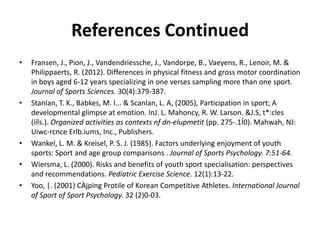
References Continued
•   Fransen, J., Pion, J., Vandendriessche, J., Vandorpe, B., Vaeyens, R., Lenoir, M. &
    Philippaerts, R. (2012). Differences in physical fitness and gross motor coordination
    in boys aged 6-12 years specializing in one verses sampling more than one sport.
    Journal of Sports Sciences. 30(4):379-387.
•   Stanlan, T. K., Babkes, M. I... & Scanlan, L. A, (2005), Participation in sport; A
    developmental glimpse at emotion. InJ. L. Mahoncy, R. W. Larson. &J.S, t*:cles
    (ííls.). Organized activities as contexts nf dn-elupmetit (pp. 275-.1Í0). Mahwah, NJ:
    Uiwc-rcnce Erlb.iums, Inc., Publishers.
•   Wankel, L. M. & Kreisel, P. S. J. (1985). Factors underlying enjoyment of youth
    sports: Sport and age group comparisons . Journal of Sports Psychology. 7:51-64.
•   Wiersma, L. (2000). Risks and benefits of youth sport specialisation: perspectives
    and recommendations. Pediatric Exercise Science. 12(1):13-22.
•   Yoo, |. (2001) CÀjping Protile of Korean Competitive Athletes. International Journal
    of Sport of Sport Psychology. 32 (2)0-03.
Picture References
All images were sourced via creative commons
Pictures on title page
• “Golf Thursdays” by chispita_666
• “Sunny Saturday at the Park” by chispita_666
• “Where Amazing Happens” by
• “Silhouettes” by Tezza #

Specialisation and Athletic Development

  • 1.
  • 2.
    The Best Formof Athletic Development for Children Emma Friend
  • 3.
    Children’s Reasons forParticipating in Sport • To have fun • To improve skills • To be with friends • To be part of a team • To experience excitement • To receive rewards • To win • To become physically fit (Wankel & Kreisel, 1985)
  • 4.
    Côté - DevelopmentalModel of Sports Participation Early specialisation Early diversification 1. The 1. The Sampling years specialising/investment years 2. The Specialising years 3. The investment years
  • 5.
    6-12yrs Sampling Years • High levels of deliberate play • Low levels of deliberate practice • Participation in many sports • Often backyard sport • Relaxed rules
  • 6.
    Côté - DevelopmentalModel of Sports Participation Early specialisation Early diversification 1. The specialising years 1. The Sampling years 2a. The recreational years 2. The investment years 2b. The Specialising years 3. The investment years
  • 7.
    12+ yrs Recreational Years • Athlete decides not to pursue sport to an elite levels and instead participates at a recreational level • Still low levels of deliberate practice • But includes age-appropriate competition
  • 8.
    13-15yrs Specialising Years • Fewer sports • Less deliberate play • More deliberate practice • High emphasis on skill development
  • 9.
    16+ yrs Investment Years • Specialise on one distinct sport • High emphasis on performance • Sports and skill specific training
  • 10.
    Balyi - LongTerm Athlete Development Early Specialisation Model Late Specialisation Model 1. Training to train 1. Fundamentals 2. Training to complete 2. Learning to train 3. Training to win 3. Training to train 4. Training to complete 4. Retirement/Retainment 5. Training to win 6. Retirement/Retainment
  • 11.
    Boys: 6-9yrs Girls: 5-8yrs FUNdamentals • Participation in many sports • Fundamental skills and capabilities taught through fun games an activities
  • 12.
    Boys: 9-12yrs Girls: 8-11yrs Learning to Train • Introduction of general sports skills • Develop knowledge of sports related areas such as warm-up and hydration. • Emphasis still largely on enjoyment
  • 13.
    Boys: 12-16yrs Girls: 11-15yrs Training to Train • Overall development of athlete’s physical capabilities • Strong emphasis on sports specific skills • More competition specific training • Greater emphasis on competition
  • 14.
    Boys: 16-18yrs Girls: 15-17yrs Training to Compete • Performance the key • Technical and tactical skills • Strong emphasis on competition • More attention played to other aspects of the sport
  • 15.
    Boys: 18+ yrs Girls:17+ yrs Training to Win • Performance major emphasis • Peaking for major competitions • Majority of training competition focused
  • 16.
    Retirement/Retainment • Retaining athletesto be involved in sport through coaching, officiating or administration.
  • 17.
    How much SportsSpecific Training is Enough?
  • 18.
    The Effects ofSpecialisation on Athletic Development
  • 19.
    Physiological Perspective forElite Success Late Specialisation • Increase in strength • Increase in speed and agility • Improved cardiovascular endurance • Improved gross motor coordination and balance
  • 20.
    Physiological Perspective Cont. EarlySpecialisation • Increase risk of over training • Increase risk of over use injuries • Over training – may cause problems to growth, stunted growth, and problems with epithseal growth plates
  • 21.
    Psychological Perspective Late Specialisation •Development of game sense • Development of automatic decision making • Fosters positive peer relationships • Development of life skills • Helps develop multiple coping strategies needed in different sports
  • 22.
    Psychological Perspective Early Specialisation •Decrease intrinsic motivation • Increase risk of dropout • Increase risk of athletic burnout
  • 23.
    International Athletes Past researchhas found majority of elite athlete participated in a vary of sports through childhood
  • 24.
    Summary • Reasons forparticipation • Côté - Developmental Model of Sports Participation • Balyi – Long Term Athlete Development Model • Physiological Perspective • Psychological Perspective
  • 25.
    Conclusion According to theresearch we have viewed late specialisation appears to be more beneficial to athletic development from a physiological and psychological perceptive.
  • 26.
    References • Bailey, R.,Collins, D., Ford, P., Macnamara, Á., Toms, M. & Pearce G. (2010). Participant development in sport: An academic review. Pg101. • Baker, J. (2003). Early specialisation in youth sport: a requirement for adult expertise? High Ability Studies. 14(1) • Baker, J., Cobley, S. & Fraser-Thomas J. (2009). What do we know about early sport specialization? Not much. High Ability Studies. 20(1):77-90. • Baker, J., Cote, J. & Abernethy, B. (2003) Sport-specific practice and the development of expert decision-making in team ball sports. Journal of Applied Sports Psychology. 15(1):12-25. • Callender, S. (2010). The early specialisation of youths in sport. Athletic Training & Sports Health Care: The Journal for the Practicing Clinician. 2(6): 255-258. • Cote, J., Lidor, R. & Hackfort D. (2009). ISSP position stand: to sample or to specialise? Seven postulates about youth sport activities that lead to continued participation and elite performance. International Journal of Sports and Exercise Psychology. 7(1):11-18.
  • 27.
    References Continued • Fransen, J., Pion, J., Vandendriessche, J., Vandorpe, B., Vaeyens, R., Lenoir, M. & Philippaerts, R. (2012). Differences in physical fitness and gross motor coordination in boys aged 6-12 years specializing in one verses sampling more than one sport. Journal of Sports Sciences. 30(4):379-387. • Stanlan, T. K., Babkes, M. I... & Scanlan, L. A, (2005), Participation in sport; A developmental glimpse at emotion. InJ. L. Mahoncy, R. W. Larson. &J.S, t*:cles (ííls.). Organized activities as contexts nf dn-elupmetit (pp. 275-.1Í0). Mahwah, NJ: Uiwc-rcnce Erlb.iums, Inc., Publishers. • Wankel, L. M. & Kreisel, P. S. J. (1985). Factors underlying enjoyment of youth sports: Sport and age group comparisons . Journal of Sports Psychology. 7:51-64. • Wiersma, L. (2000). Risks and benefits of youth sport specialisation: perspectives and recommendations. Pediatric Exercise Science. 12(1):13-22. • Yoo, |. (2001) CÀjping Protile of Korean Competitive Athletes. International Journal of Sport of Sport Psychology. 32 (2)0-03.
  • 28.
    Picture References All imageswere sourced via creative commons Pictures on title page • “Golf Thursdays” by chispita_666 • “Sunny Saturday at the Park” by chispita_666 • “Where Amazing Happens” by • “Silhouettes” by Tezza #