Space
optimization
in modular
kitchen
Athulya B R
14/08/24
contents
1.INTRODUCTION
2.Importance of Space optimization
3.Ergonomics and user friendly layout
4.Smart storage solutions
5.Multifunctional furniture
6. Utilizing wall space
7.Under Cabinet Solutions
8.Drawer organizers and Dividers
9.Applications and Gadgets
10.Minimalistic design approach
11.Design solutions for small Spaces
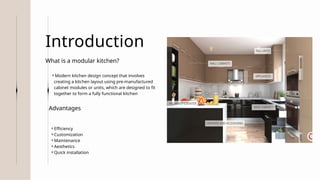
⚬Modern kitchen design concept that involves
creating a kitchen layout using pre-manufactured
cabinet modules or units, which are designed to fit
together to form a fully functional kitchen
Introduction
What is a modular kitchen?
⚬Efficiency
⚬Customization
⚬Maintenance
⚬Aesthetics
⚬Quick installation
Advantages
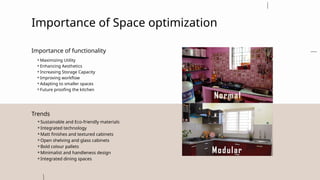
Importance of Space optimization
⚬Maximizing Utility
⚬Enhancing Aesthetics
⚬Increasing Storage Capacity
⚬Improving workflow
⚬Adapting to smaller spaces
⚬Future proofing the kitchen
Importance of functionality
⚬Sustainable and Eco-friendly materials
⚬Integrated technology
⚬Matt finishes and textured cabinets
⚬Open shelving and glass cabinets
⚬Bold colour pallets
⚬Minimalist and handleness design
⚬Integrated dining spaces
Trends
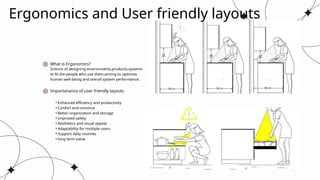
Ergonomics and User friendly layouts
Science of designing environments,products,systems
to fit the people who use them,aiming to optimize
human well-being and overall system performance.
What is Ergonomics?
Importanance of user friendly layouts
⚬Enhanced efficiency and productivity
⚬Confort and convince
⚬Better organization and storage
⚬Improved safety
⚬Aesthetics and visual appeal
⚬Adaptability for multiple users
⚬Support daily routines
⚬long term value
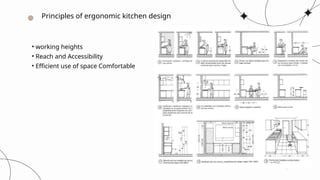
Principles of ergonomic kitchen design
• working heights
• Reach and Accessibility
• Efficient use of space Comfortable
`
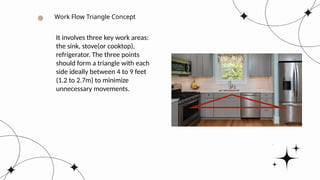
Work Flow Triangle Concept
It involves three key work areas:
the sink, stove(or cooktop),
refrigerator. The three points
should form a triangle with each
side ideally between 4 to 9 feet
(1.2 to 2.7m) to minimize
unnecessary movements.
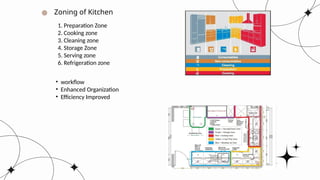
Zoning of Kitchen
1. Preparation Zone
2. Cooking zone
3. Cleaning zone
4. Storage Zone
5. Serving zone
6. Refrigeration zone
• workflow
• Enhanced Organization
• Efficiency Improved
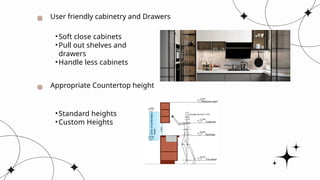
User friendly cabinetry and Drawers
Appropriate Countertop height
•Soft close cabinets
•Pull out shelves and
drawers
•Handle less cabinets
•Standard heights
•Custom Heights
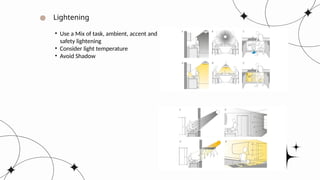
Lightening
• Use a Mix of task, ambient, accent and
safety lightening
• Consider light temperature
• Avoid Shadow
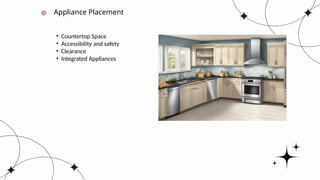
Appliance Placement
• Countertop Space
• Accessibility and safety
• Clearance
• Integrated Appliances
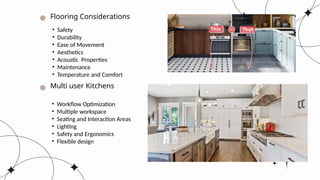
Flooring Considerations
Multi user Kitchens
• Safety
• Durability
• Ease of Movement
• Aesthetics
• Acoustic Properties
• Maintenance
• Temperature and Comfort
• Workflow Optimization
• Multiple workspace
• Seating and Interaction Areas
• Lighting
• Safety and Ergonomics
• Flexible design
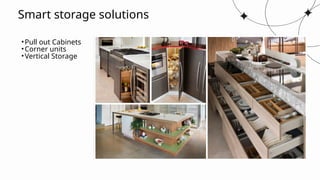
Smart storage solutions
•Pull out Cabinets
•Corner units
•Vertical Storage
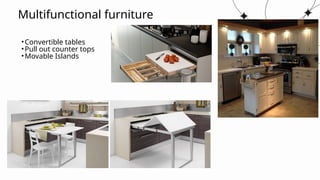
Multifunctional furniture
•Convertible tables
•Pull out counter tops
•Movable Islands
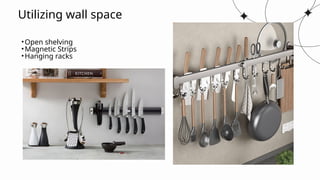
Utilizing wall space
•Open shelving
•Magnetic Strips
•Hanging racks
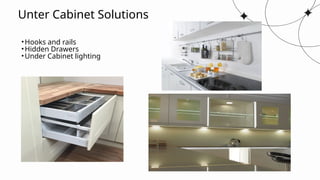
Unter Cabinet Solutions
•Hooks and rails
•Hidden Drawers
•Under Cabinet lighting
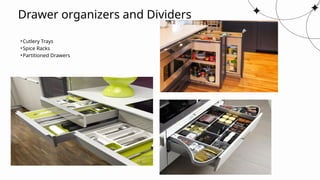
Drawer organizers and Dividers
•Cutlery Trays
•Spice Racks
•Partitioned Drawers
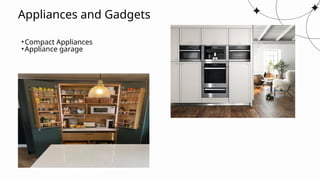
Appliances and Gadgets
•Compact Appliances
•Appliance garage
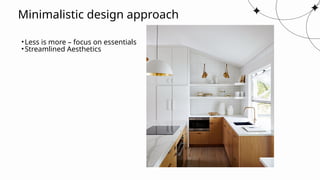
Minimalistic design approach
•Less is more – focus on essentials
•Streamlined Aesthetics
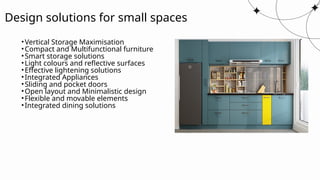
Design solutions for small spaces
•Vertical Storage Maximisation
•Compact and Multifunctional furniture
•Smart storage solutions
•Light colours and reflective surfaces
•Effective lightening solutions
•Integrated Appliances
•Sliding and pocket doors
•Open layout and Minimalistic design
•Flexible and movable elements
•Integrated dining solutions
Any Questions?
SPACE OPTIMIZATION IN MODULAR KITCHEN.pptx

SPACE OPTIMIZATION IN MODULAR KITCHEN.pptx

  • 1.
  • 2.
    contents 1.INTRODUCTION 2.Importance of Spaceoptimization 3.Ergonomics and user friendly layout 4.Smart storage solutions 5.Multifunctional furniture 6. Utilizing wall space 7.Under Cabinet Solutions 8.Drawer organizers and Dividers 9.Applications and Gadgets 10.Minimalistic design approach 11.Design solutions for small Spaces
  • 3.
    ⚬Modern kitchen designconcept that involves creating a kitchen layout using pre-manufactured cabinet modules or units, which are designed to fit together to form a fully functional kitchen Introduction What is a modular kitchen? ⚬Efficiency ⚬Customization ⚬Maintenance ⚬Aesthetics ⚬Quick installation Advantages
  • 4.
    Importance of Spaceoptimization ⚬Maximizing Utility ⚬Enhancing Aesthetics ⚬Increasing Storage Capacity ⚬Improving workflow ⚬Adapting to smaller spaces ⚬Future proofing the kitchen Importance of functionality ⚬Sustainable and Eco-friendly materials ⚬Integrated technology ⚬Matt finishes and textured cabinets ⚬Open shelving and glass cabinets ⚬Bold colour pallets ⚬Minimalist and handleness design ⚬Integrated dining spaces Trends
  • 5.
    Ergonomics and Userfriendly layouts Science of designing environments,products,systems to fit the people who use them,aiming to optimize human well-being and overall system performance. What is Ergonomics? Importanance of user friendly layouts ⚬Enhanced efficiency and productivity ⚬Confort and convince ⚬Better organization and storage ⚬Improved safety ⚬Aesthetics and visual appeal ⚬Adaptability for multiple users ⚬Support daily routines ⚬long term value
  • 6.
    Principles of ergonomickitchen design • working heights • Reach and Accessibility • Efficient use of space Comfortable
  • 7.
    ` Work Flow TriangleConcept It involves three key work areas: the sink, stove(or cooktop), refrigerator. The three points should form a triangle with each side ideally between 4 to 9 feet (1.2 to 2.7m) to minimize unnecessary movements.
  • 8.
    Zoning of Kitchen 1.Preparation Zone 2. Cooking zone 3. Cleaning zone 4. Storage Zone 5. Serving zone 6. Refrigeration zone • workflow • Enhanced Organization • Efficiency Improved
  • 9.
    User friendly cabinetryand Drawers Appropriate Countertop height •Soft close cabinets •Pull out shelves and drawers •Handle less cabinets •Standard heights •Custom Heights
  • 10.
    Lightening • Use aMix of task, ambient, accent and safety lightening • Consider light temperature • Avoid Shadow
  • 11.
    Appliance Placement • CountertopSpace • Accessibility and safety • Clearance • Integrated Appliances
  • 12.
    Flooring Considerations Multi userKitchens • Safety • Durability • Ease of Movement • Aesthetics • Acoustic Properties • Maintenance • Temperature and Comfort • Workflow Optimization • Multiple workspace • Seating and Interaction Areas • Lighting • Safety and Ergonomics • Flexible design
  • 13.
    Smart storage solutions •Pullout Cabinets •Corner units •Vertical Storage
  • 14.
  • 15.
    Utilizing wall space •Openshelving •Magnetic Strips •Hanging racks
  • 16.
    Unter Cabinet Solutions •Hooksand rails •Hidden Drawers •Under Cabinet lighting
  • 17.
    Drawer organizers andDividers •Cutlery Trays •Spice Racks •Partitioned Drawers
  • 18.
    Appliances and Gadgets •CompactAppliances •Appliance garage
  • 19.
    Minimalistic design approach •Lessis more – focus on essentials •Streamlined Aesthetics
  • 20.
    Design solutions forsmall spaces •Vertical Storage Maximisation •Compact and Multifunctional furniture •Smart storage solutions •Light colours and reflective surfaces •Effective lightening solutions •Integrated Appliances •Sliding and pocket doors •Open layout and Minimalistic design •Flexible and movable elements •Integrated dining solutions
  • 24.

Editor's Notes