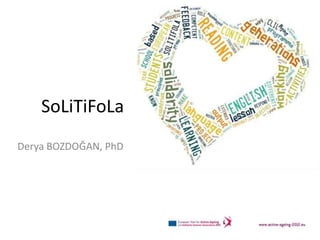
SoLiTiFoLa
Derya BOZDOĞAN, PhD
In this presentation:
 EY
 CBI
 SoLiTiFoLa?
 Evaluation
Background
• European themes of years
• 2010: European Year for Combating Poverty and Social
  Exclusion
• 2011: European Year of Volunteering
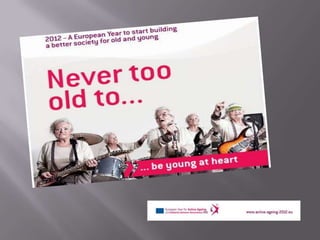
• 2012: European Year of Active Ageing and Solidarity between
  Generations
• 2013: European Year of Citizens
Solidarity in Turkey
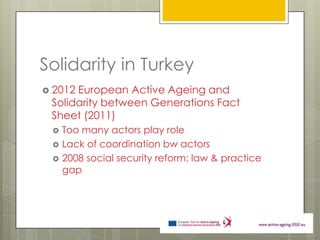
 2012European Active Ageing and
 Solidarity between Generations Fact
 Sheet (2011)
    Too many actors play role
    Lack of coordination bw actors
    2008 social security reform: law & practice
     gap
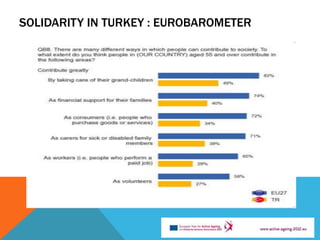
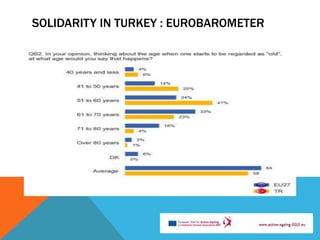
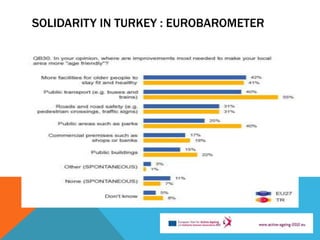
SOLIDARITY IN TURKEY : EUROBAROMETER
Solidarity & Language Learning
• CBI (Content-based Instruction)

“approach to language instruction that
integrates the presentation of topics of tasks
from subject matter classes (eg. Math,
Social Studies) within the context of
teaching a second or foreign language.”
                          Crandall and Tucker
(1990, p.187)
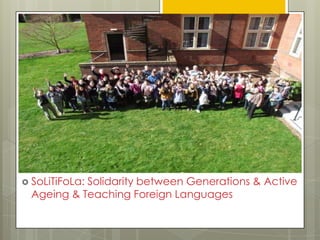
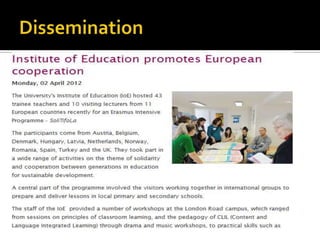
 SoLiTiFoLa:
           Solidarity between Generations & Active
 Ageing & Teaching Foreign Languages
SoLiTiFoLa

 Erasmus Intensive Program (IP)
 11 European countries: Austria, Belgium,
  Denmark, England, Hungary, Latvia,
  Norway, Romania, Spain, The Netherlands
  and Turkey (in alphabetical order)
 2 weeks in University of Reading, Reading,
  UK
 IP program
Daily reports
“Can you feel solidarity with people you haven’t
met?” This question leads to a discussion of a
definition of the word Solidarity. What do we
consider as being solidaric? Is it only a feeling or
does it require an action behind the feeling? You
can compare it with solidarity versus charity?
We Danes were surprised to find that so many
countries did so many different things for the
elderly, which is similar to Denmark.”
                                    Danish team
Daily reports (2)
“It was interesting to exchange ideas and
opinions regarding solidarity with people from
different countries. We realized that although
we are from different cultures there are the
some problems in our society nowadays. We
really enjoyed the opportunity to be creative and
working together in groups where everyone got
involved and everybody could improve the social
skills.”
                                   Austrian team
Lesson observation
• “In Belgium we only have one teacher per classroom and
  we could use more teachers to help more students. The
  things that caught my attention are:
• The quality of the student’s work displayed on the walls
• Codes used while teaching: clapping, students have to ask
  before leaving their chair and the importance of respect for
  both students and teacher.
• The use of different houses – colouring, story reading
  &telling etc.
• Classrooms were old fashioned, but all had smart boards
  and were very colourful.
• Point system to mark good and bad behaviour.”
Lesson observation (2)
• “In Norway we only have one teacher per
  class and assistants depending on needs. I feel
  like we have more structure, silence, and
  order than what I experienced here. My
  expectations might have been a little high; I
  thought they had very high structure, order,
  and respect.”
• Example lesson plans
  –1
  –2
• Visits to MERL and RISC
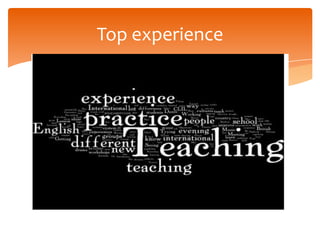
Top experience
REFERENCES
Daily reports for SoLiTiFoLa (2012). Retrieved April 04, 2012 from
    http://moodle.hinesna.no/course/view.php?id=77.
Eurobarometer survey on Active Ageing (2011). Retrieved March 21, 2012 from
    (http://ec.europa.eu/public_opinion/archives/ebs/ebs_378_fact_tr_en.pdf.
European Year of Active Ageing and Solidarity between Generations. (2012).
    Retrieved March 21, 2012 from
    http://europa.eu/ey2012/ey2012main.jsp?langId=en&catId=971.
European Year of Citizens. (2012). Retrieved April 04, 2012 from
    http://ec.europa.eu/citizenship/european-year-of-citizens-2013/index_en.htm.
European Year of Volunteering. (2011). Retrieved March 25, 2012 from
    http://europa.eu/volunteering/en/home2.
http://moodle.hinesna.no/course/view.php?id=77 (Moodle platform of the project)
Türkiye Cumhuriyeti Avrupa Birliği Bakanlığı. (2011). 2012 Avrupa Aktif Yaşlanma
    ve Nesiller Arası Dayanışma Yılı Hakkında Bilgi Notu. Ankara.
Thanks
   deryaerice@gmail.com


       Derya Bozdoğan, PhD
   Abant İzzet Baysal University
English Language Teaching Program
               Bolu

Solitifola: Solidarity between generations and active ageing

  • 1.
  • 2.
    In this presentation: EY  CBI  SoLiTiFoLa?  Evaluation
  • 4.
    Background • European themesof years • 2010: European Year for Combating Poverty and Social Exclusion • 2011: European Year of Volunteering • 2012: European Year of Active Ageing and Solidarity between Generations • 2013: European Year of Citizens
  • 5.
    Solidarity in Turkey 2012European Active Ageing and Solidarity between Generations Fact Sheet (2011)  Too many actors play role  Lack of coordination bw actors  2008 social security reform: law & practice gap
  • 6.
    SOLIDARITY IN TURKEY: EUROBAROMETER
  • 7.
    SOLIDARITY IN TURKEY: EUROBAROMETER
  • 8.
    SOLIDARITY IN TURKEY: EUROBAROMETER
  • 9.
    Solidarity & LanguageLearning • CBI (Content-based Instruction) “approach to language instruction that integrates the presentation of topics of tasks from subject matter classes (eg. Math, Social Studies) within the context of teaching a second or foreign language.” Crandall and Tucker (1990, p.187)
  • 11.
     SoLiTiFoLa: Solidarity between Generations & Active Ageing & Teaching Foreign Languages
  • 12.
    SoLiTiFoLa  Erasmus IntensiveProgram (IP)  11 European countries: Austria, Belgium, Denmark, England, Hungary, Latvia, Norway, Romania, Spain, The Netherlands and Turkey (in alphabetical order)  2 weeks in University of Reading, Reading, UK  IP program
  • 13.
    Daily reports “Can youfeel solidarity with people you haven’t met?” This question leads to a discussion of a definition of the word Solidarity. What do we consider as being solidaric? Is it only a feeling or does it require an action behind the feeling? You can compare it with solidarity versus charity? We Danes were surprised to find that so many countries did so many different things for the elderly, which is similar to Denmark.” Danish team
  • 14.
    Daily reports (2) “Itwas interesting to exchange ideas and opinions regarding solidarity with people from different countries. We realized that although we are from different cultures there are the some problems in our society nowadays. We really enjoyed the opportunity to be creative and working together in groups where everyone got involved and everybody could improve the social skills.” Austrian team
  • 15.
    Lesson observation • “InBelgium we only have one teacher per classroom and we could use more teachers to help more students. The things that caught my attention are: • The quality of the student’s work displayed on the walls • Codes used while teaching: clapping, students have to ask before leaving their chair and the importance of respect for both students and teacher. • The use of different houses – colouring, story reading &telling etc. • Classrooms were old fashioned, but all had smart boards and were very colourful. • Point system to mark good and bad behaviour.”
  • 16.
    Lesson observation (2) •“In Norway we only have one teacher per class and assistants depending on needs. I feel like we have more structure, silence, and order than what I experienced here. My expectations might have been a little high; I thought they had very high structure, order, and respect.”
  • 17.
    • Example lessonplans –1 –2 • Visits to MERL and RISC
  • 20.
  • 23.
    REFERENCES Daily reports forSoLiTiFoLa (2012). Retrieved April 04, 2012 from http://moodle.hinesna.no/course/view.php?id=77. Eurobarometer survey on Active Ageing (2011). Retrieved March 21, 2012 from (http://ec.europa.eu/public_opinion/archives/ebs/ebs_378_fact_tr_en.pdf. European Year of Active Ageing and Solidarity between Generations. (2012). Retrieved March 21, 2012 from http://europa.eu/ey2012/ey2012main.jsp?langId=en&catId=971. European Year of Citizens. (2012). Retrieved April 04, 2012 from http://ec.europa.eu/citizenship/european-year-of-citizens-2013/index_en.htm. European Year of Volunteering. (2011). Retrieved March 25, 2012 from http://europa.eu/volunteering/en/home2. http://moodle.hinesna.no/course/view.php?id=77 (Moodle platform of the project) Türkiye Cumhuriyeti Avrupa Birliği Bakanlığı. (2011). 2012 Avrupa Aktif Yaşlanma ve Nesiller Arası Dayanışma Yılı Hakkında Bilgi Notu. Ankara.
  • 24.
    Thanks deryaerice@gmail.com Derya Bozdoğan, PhD Abant İzzet Baysal University English Language Teaching Program Bolu