Soil genetic horizons
-HORIZON: soil layer parallel to surface
with characteristics produced by soil-
forming processes
(based on qualitative judgement)
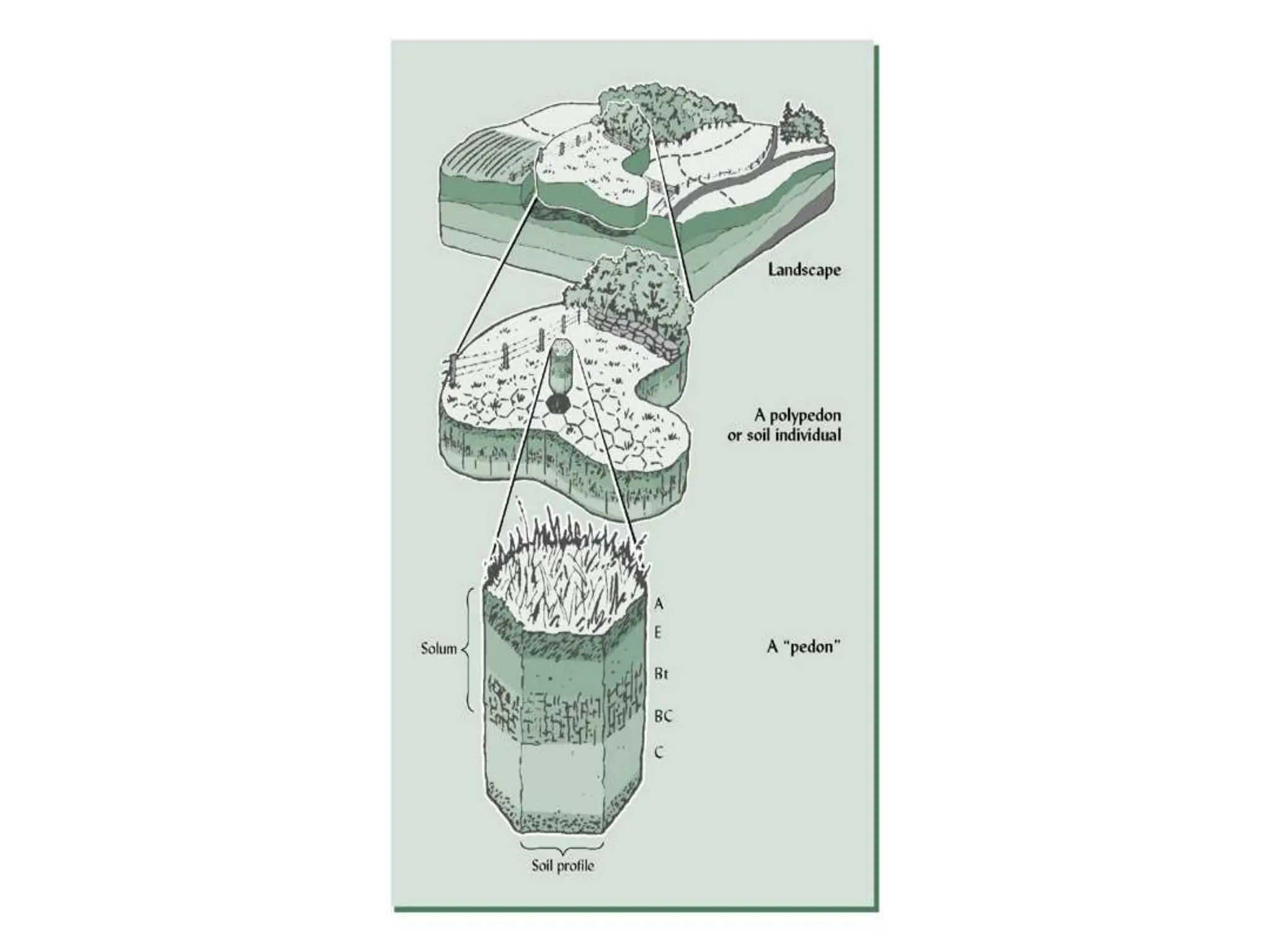
3 basic soil units (scale)
Pedon: smallest volume called a soil
Polypedon: soil body (2 or more pedons) in
which soils are relatively uniform
Soil Series: groups of like polypedons
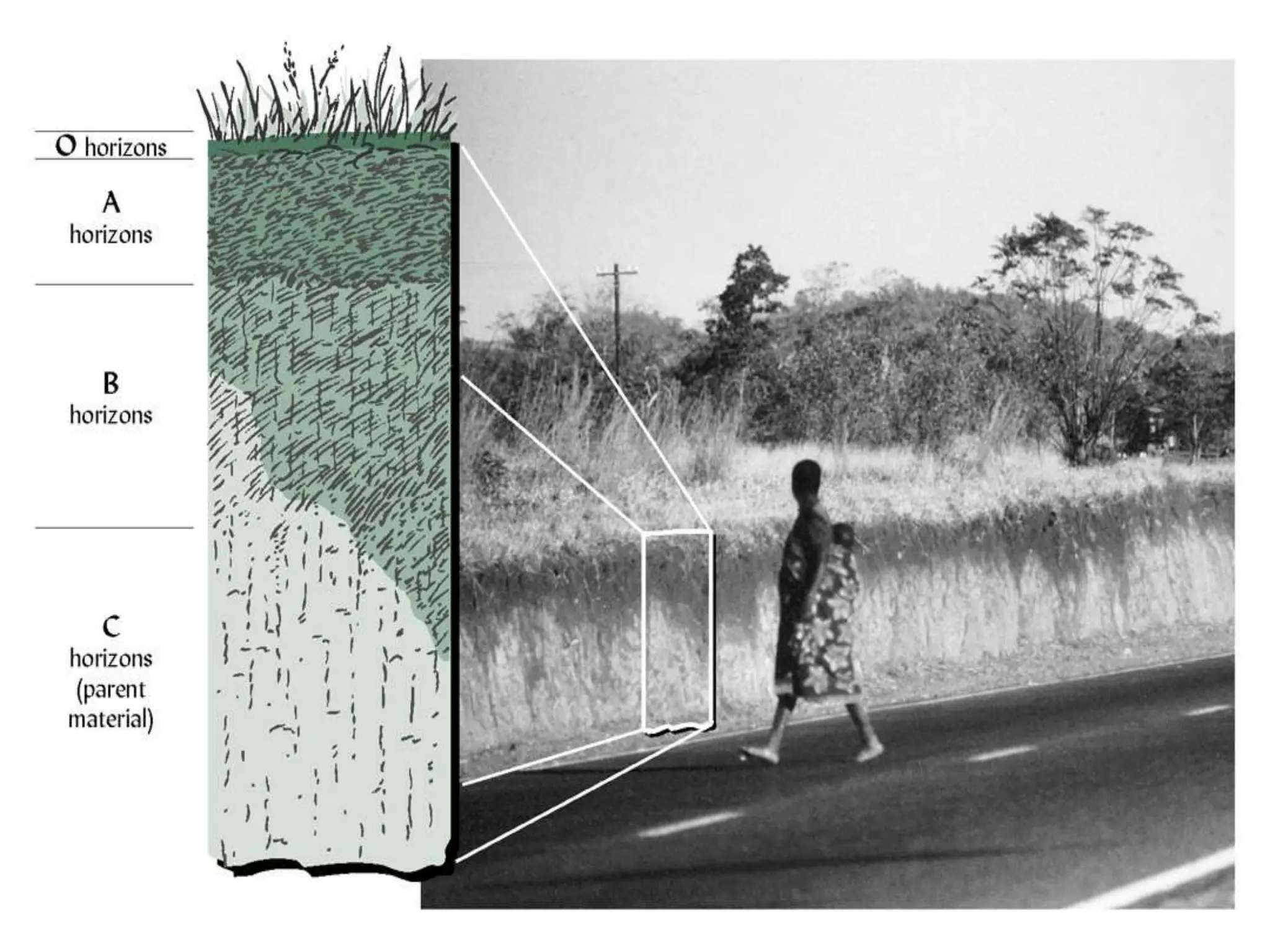
profile: one side of pedon, showing all
horizons; 2-D
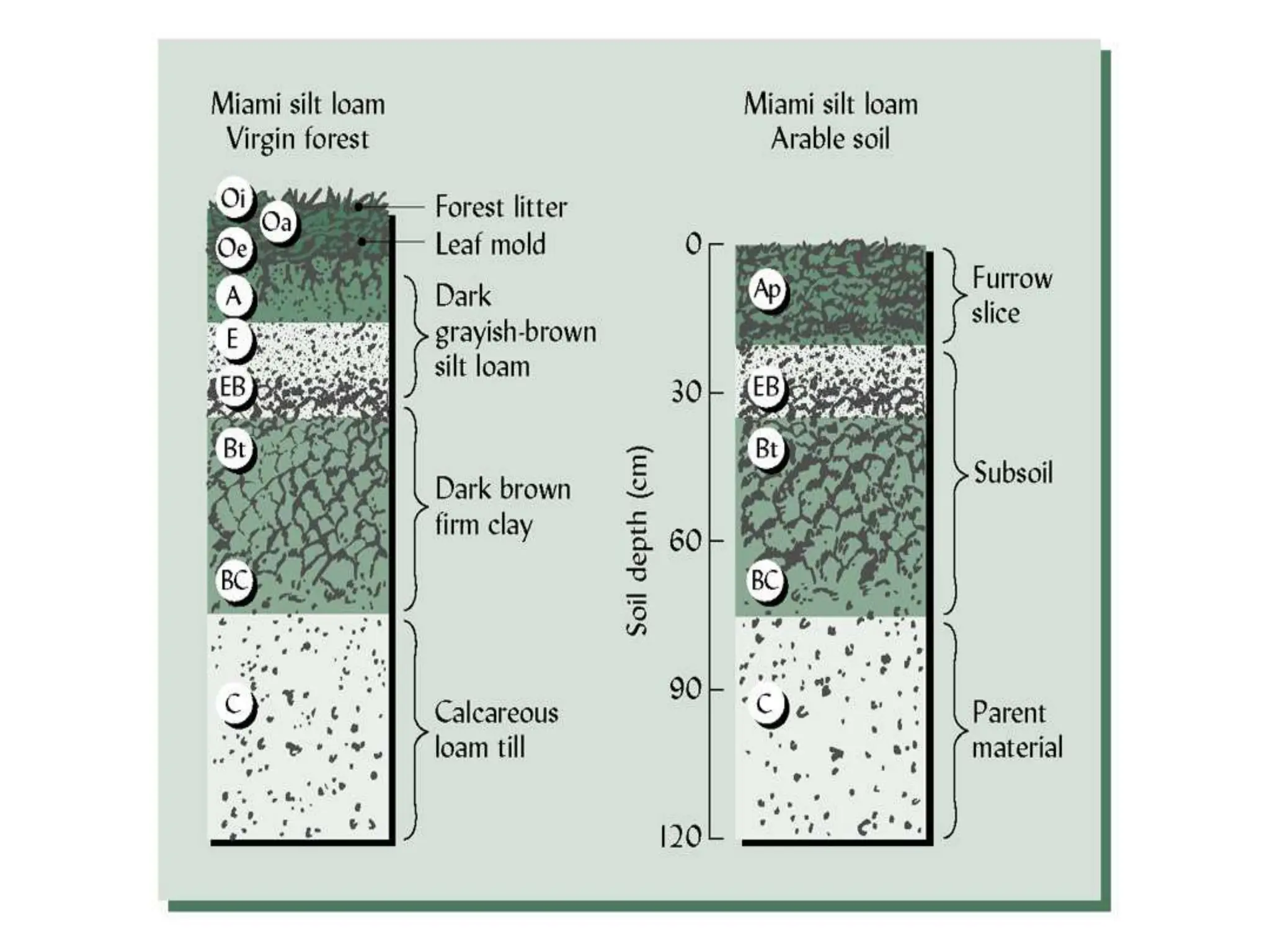
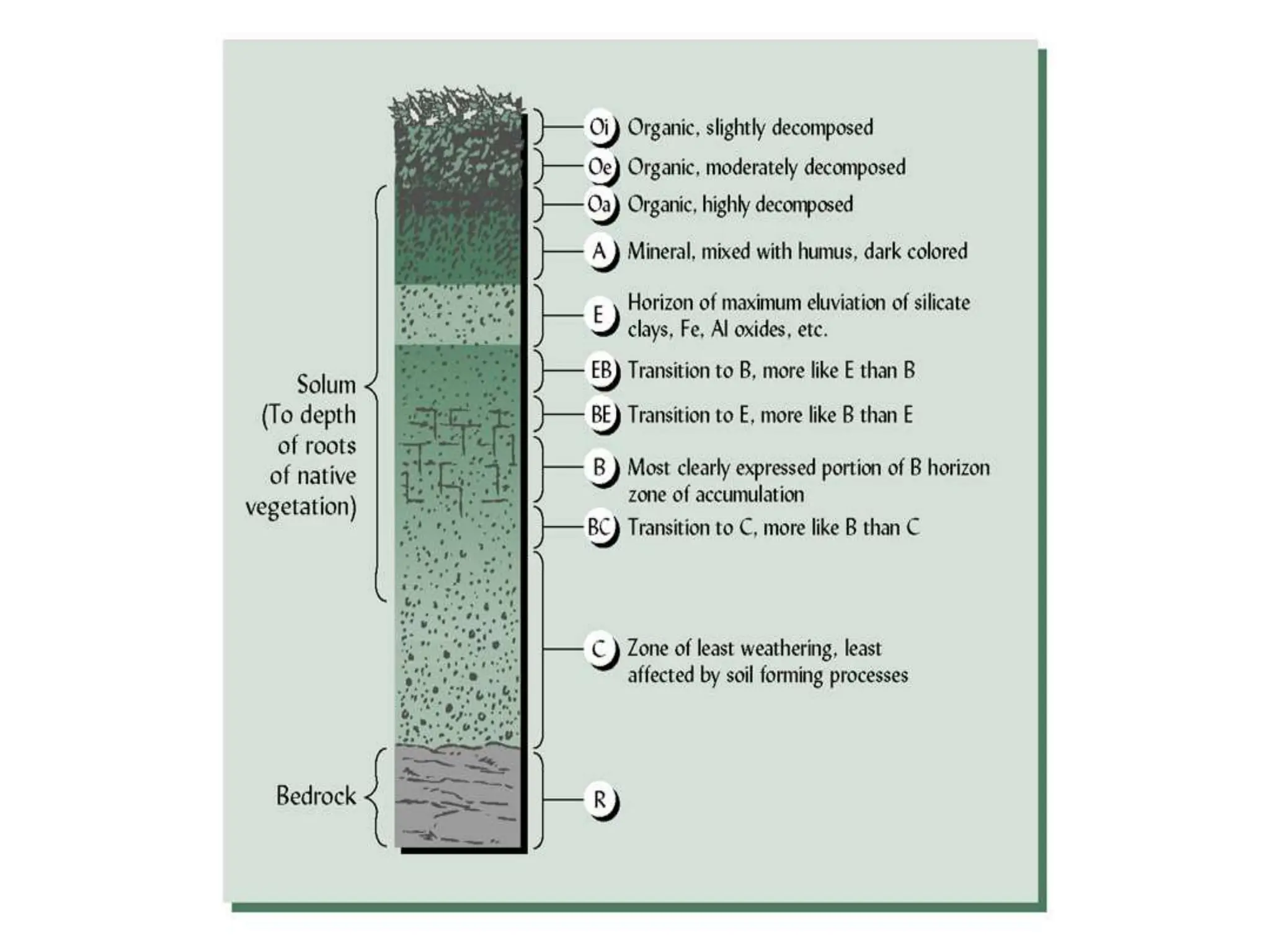
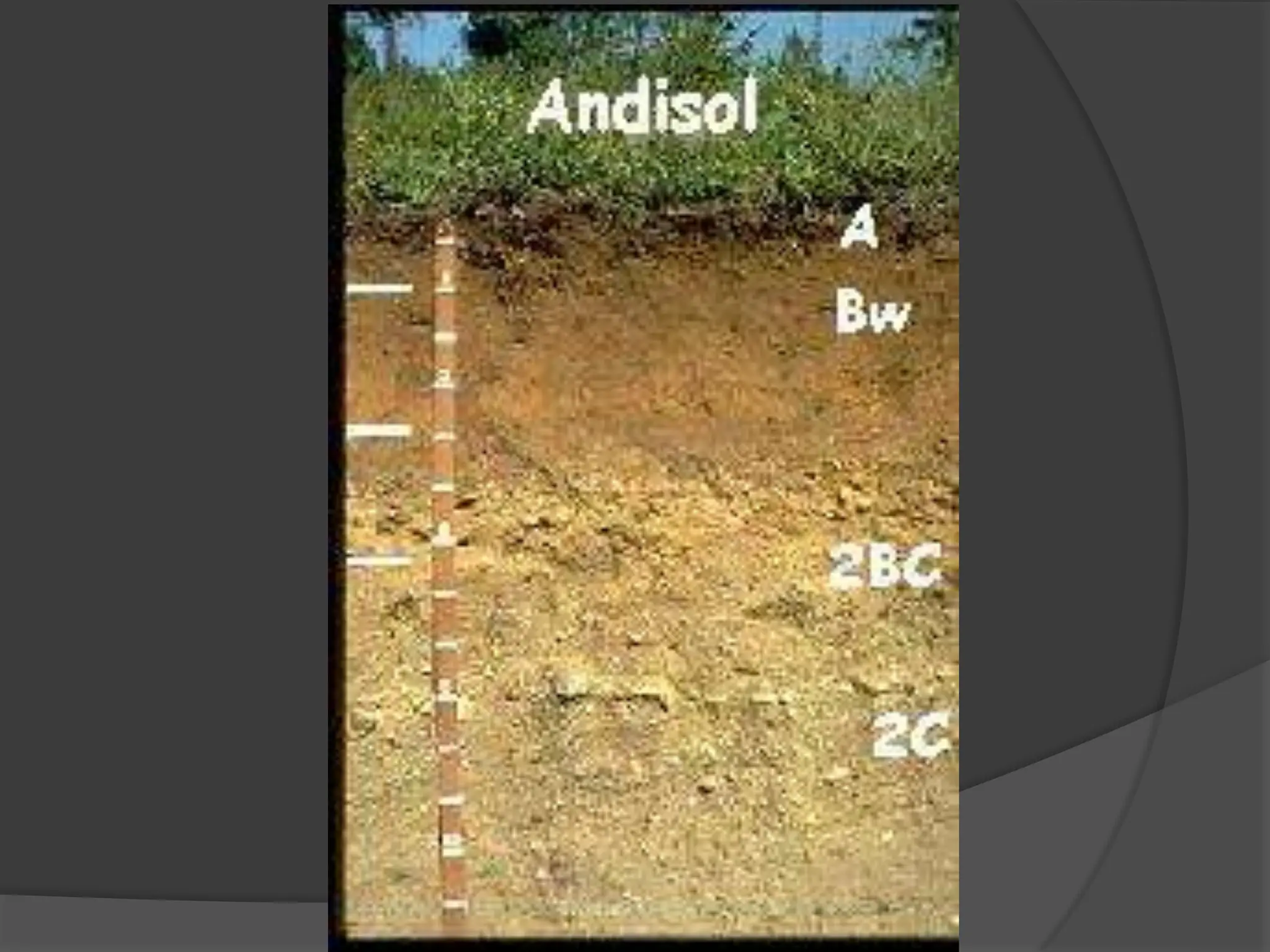
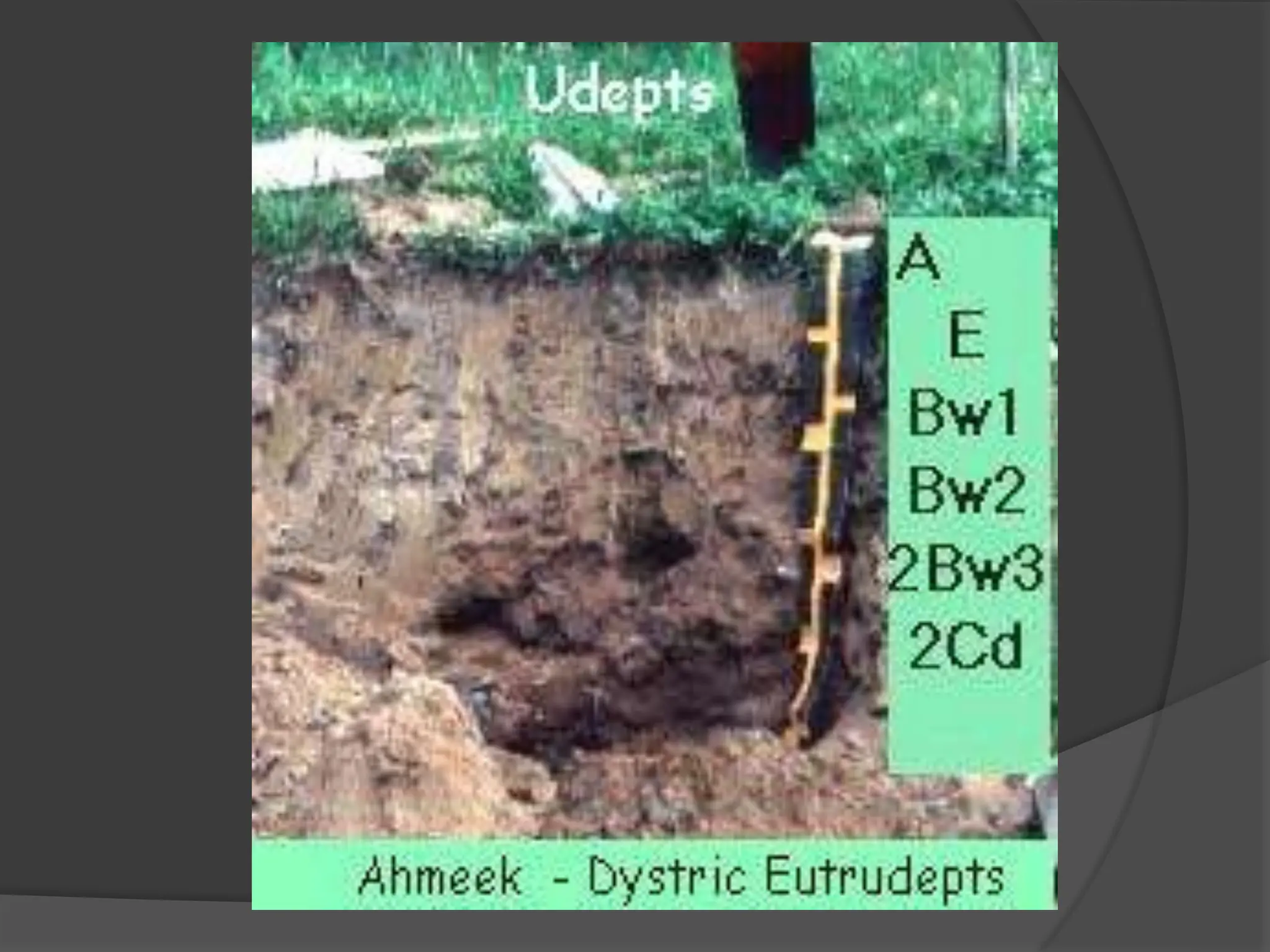
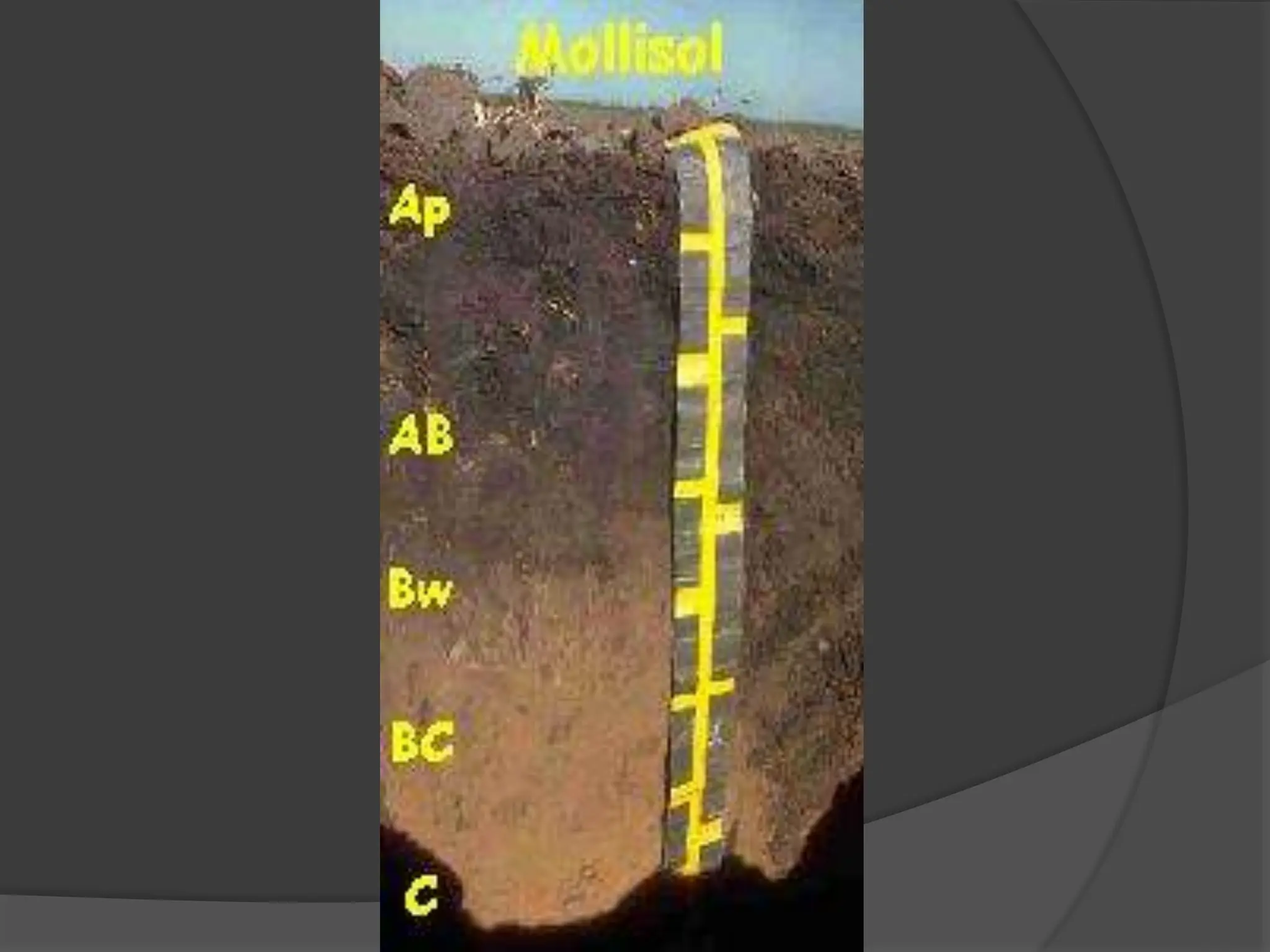
Master horizons
O
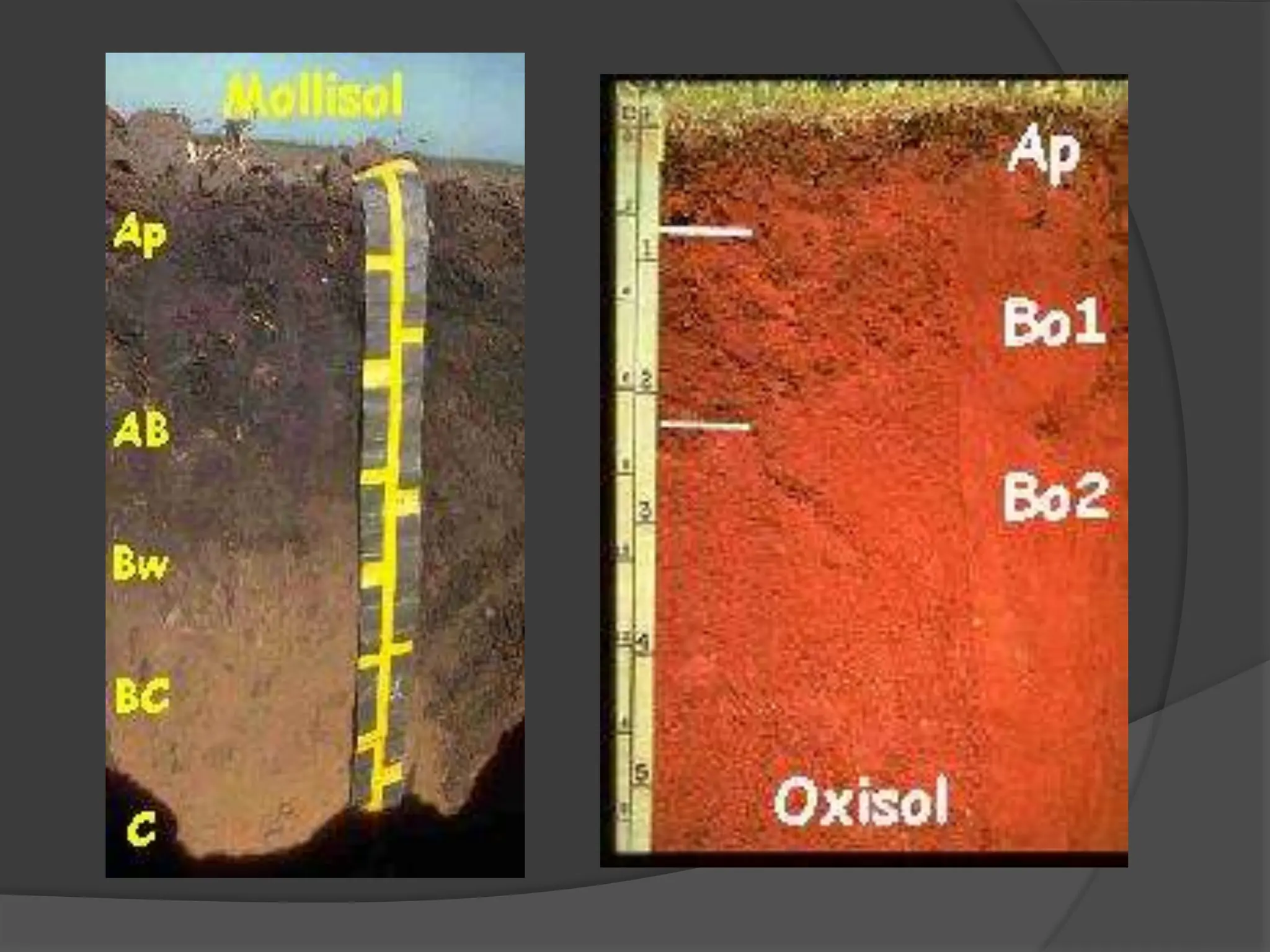
A
E
B
C
R
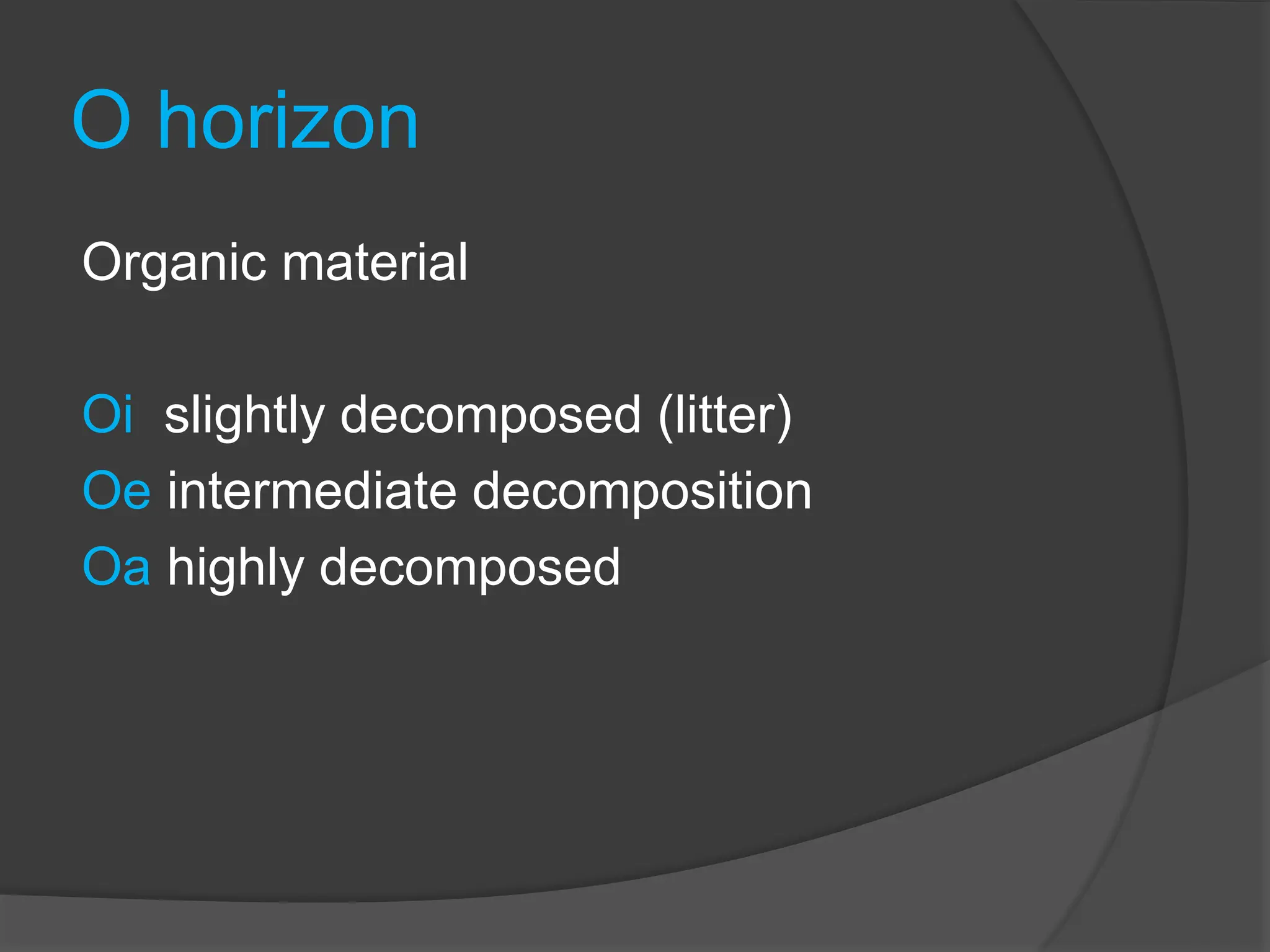
O horizon
Organic material
Oi slightly decomposed (litter)
Oe intermediate decomposition
Oa highly decomposed
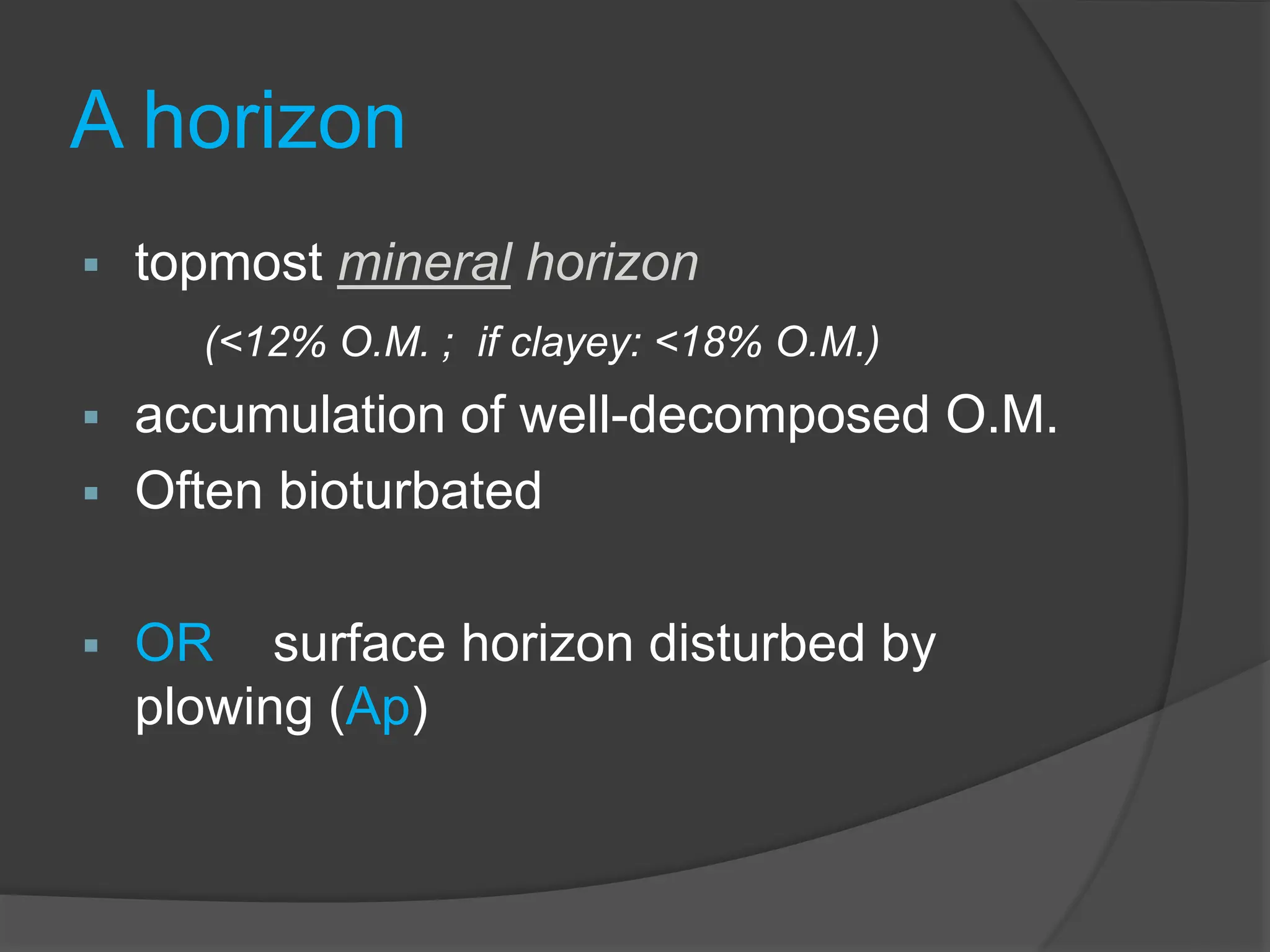
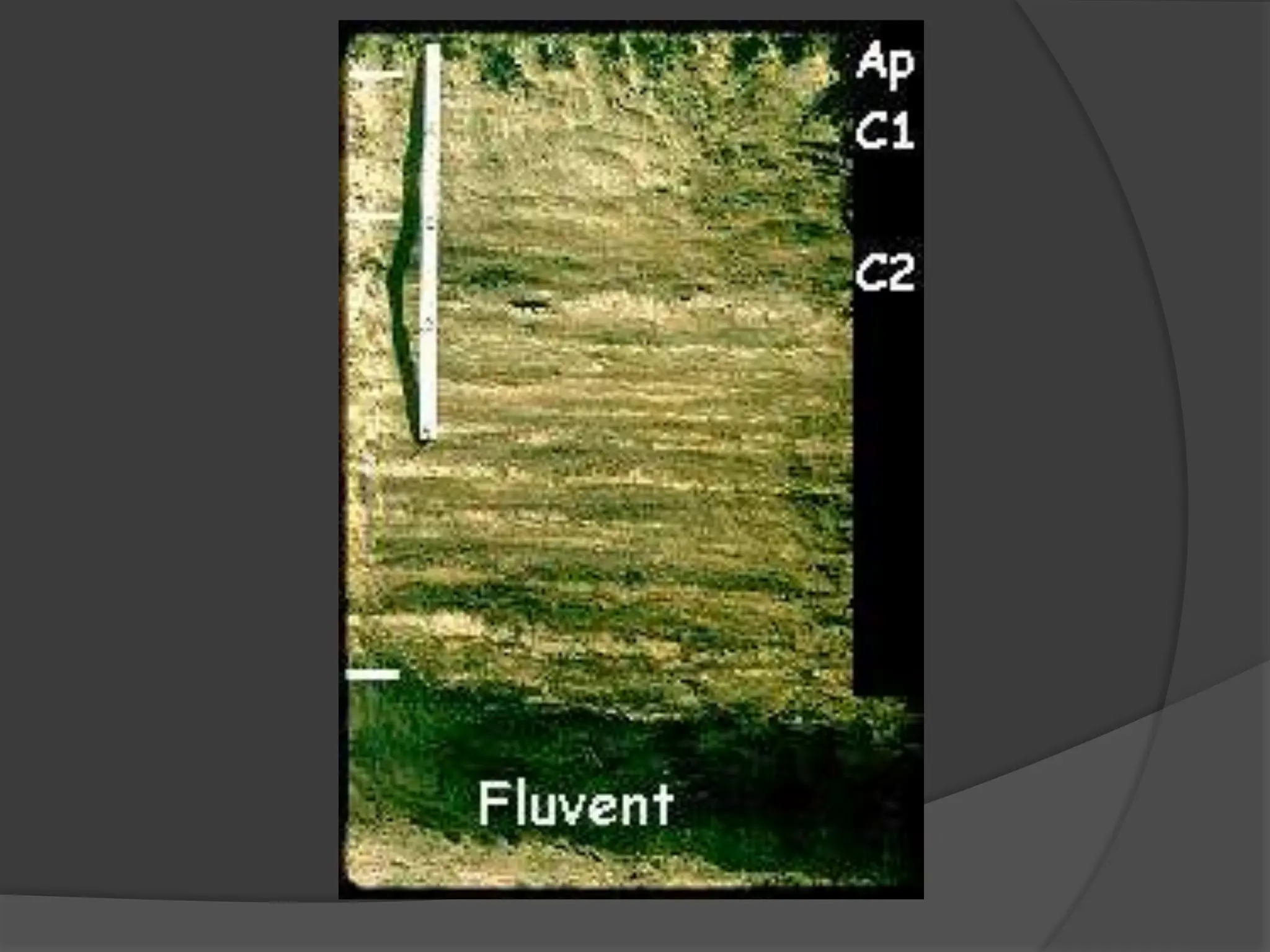
A horizon
 topmost mineral horizon
(<12% O.M. ; if clayey: <18% O.M.)
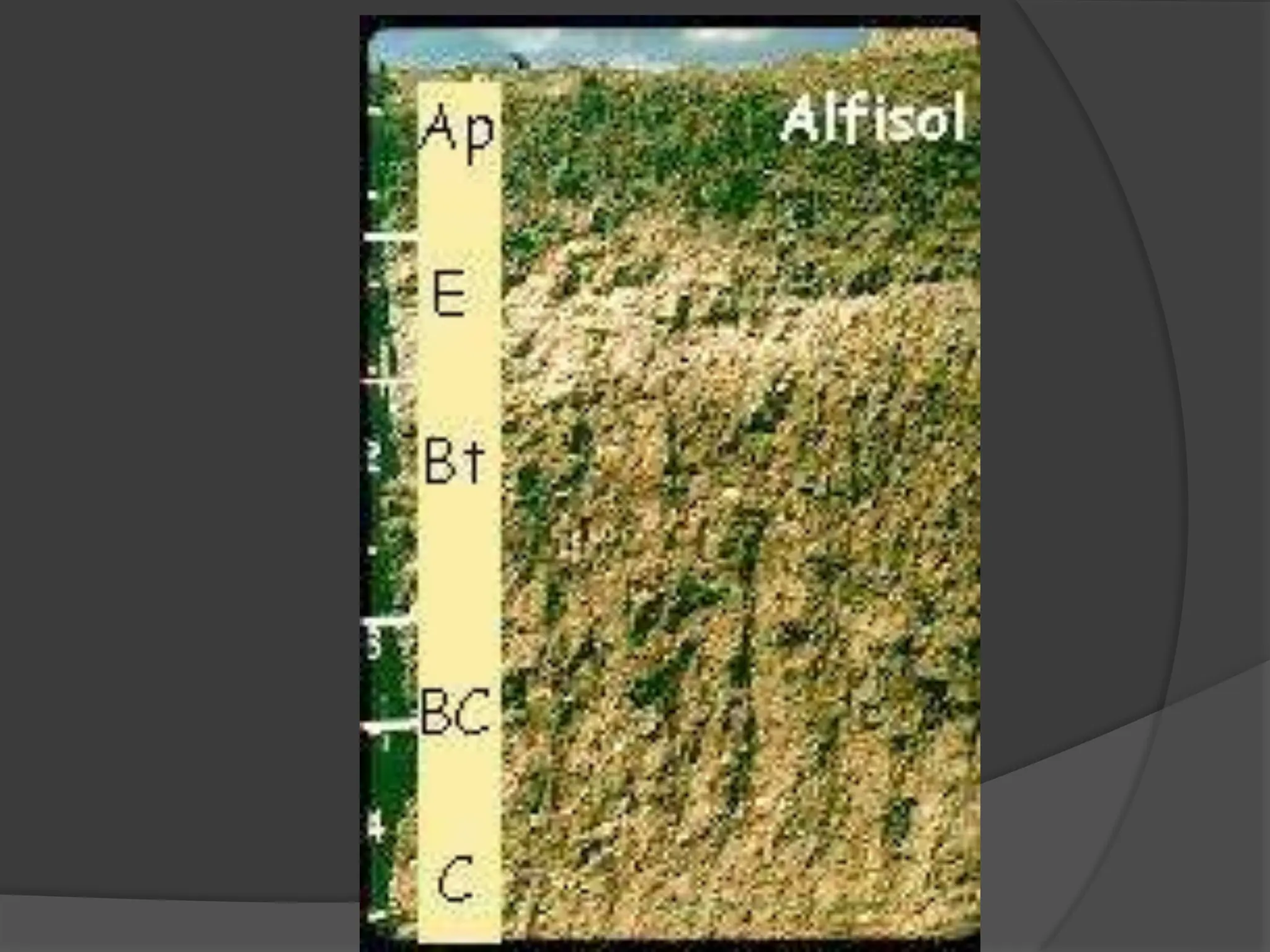
 accumulation of well-decomposed O.M.
 Often bioturbated
 OR surface horizon disturbed by
plowing (Ap)
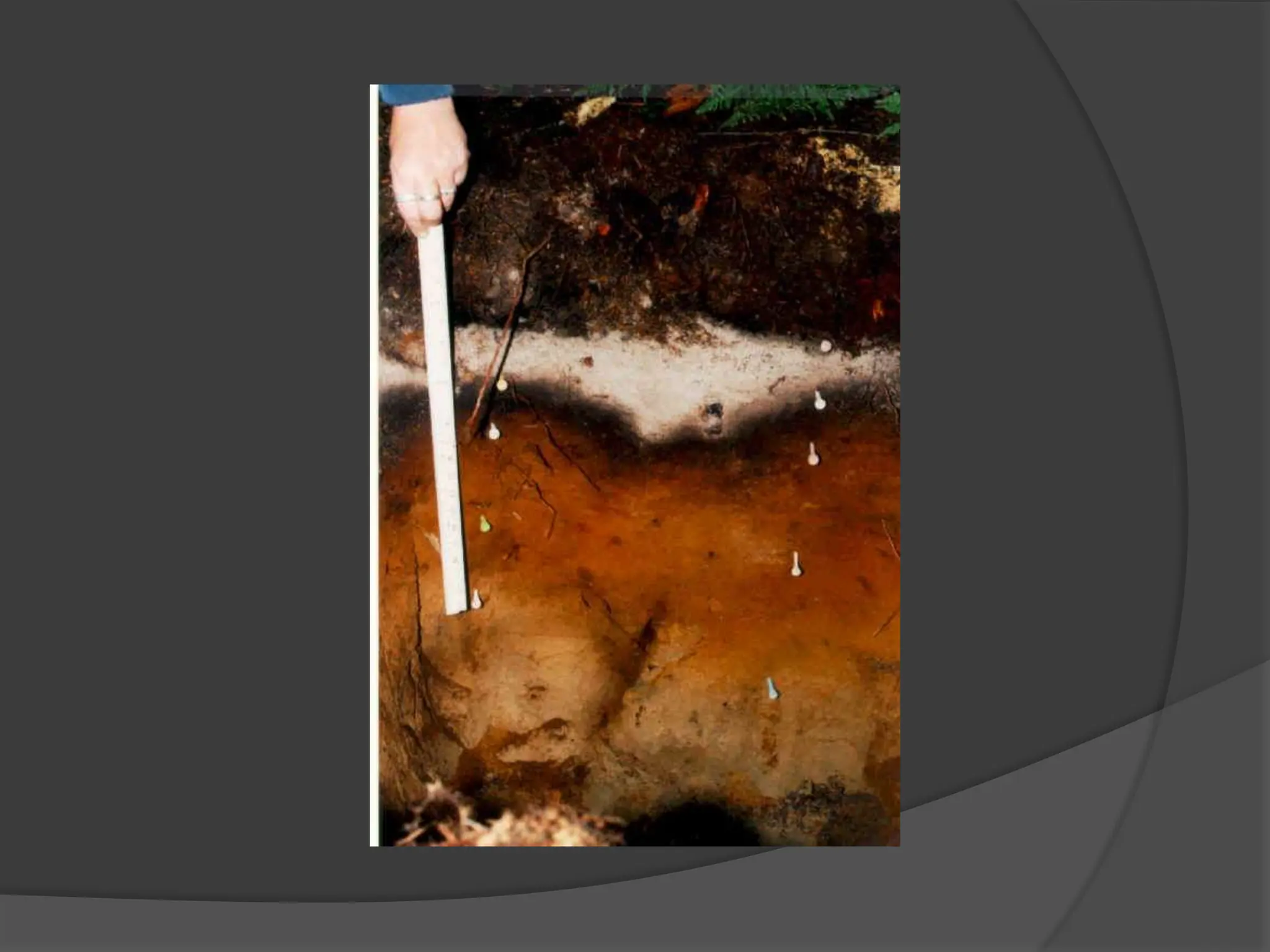
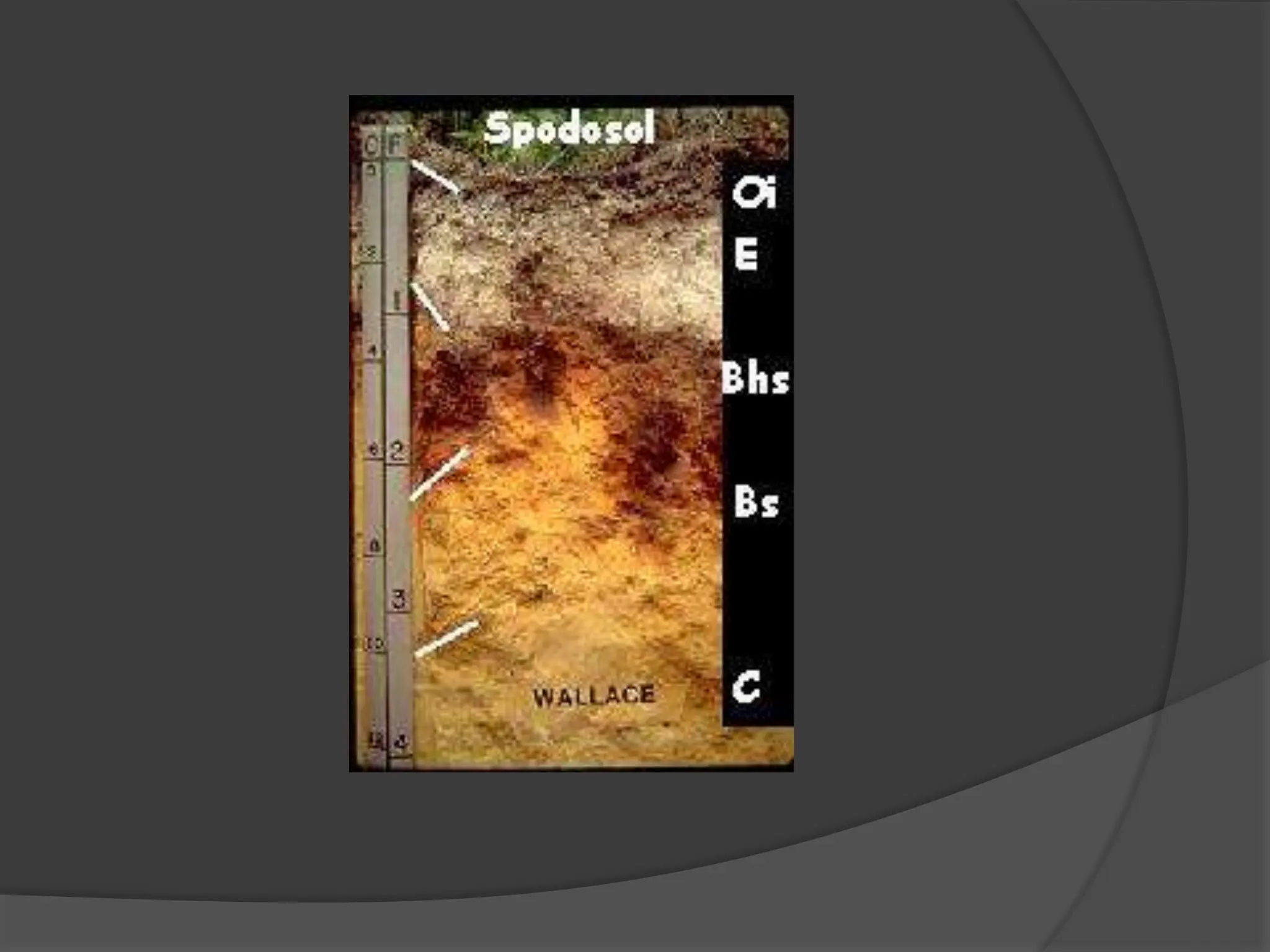
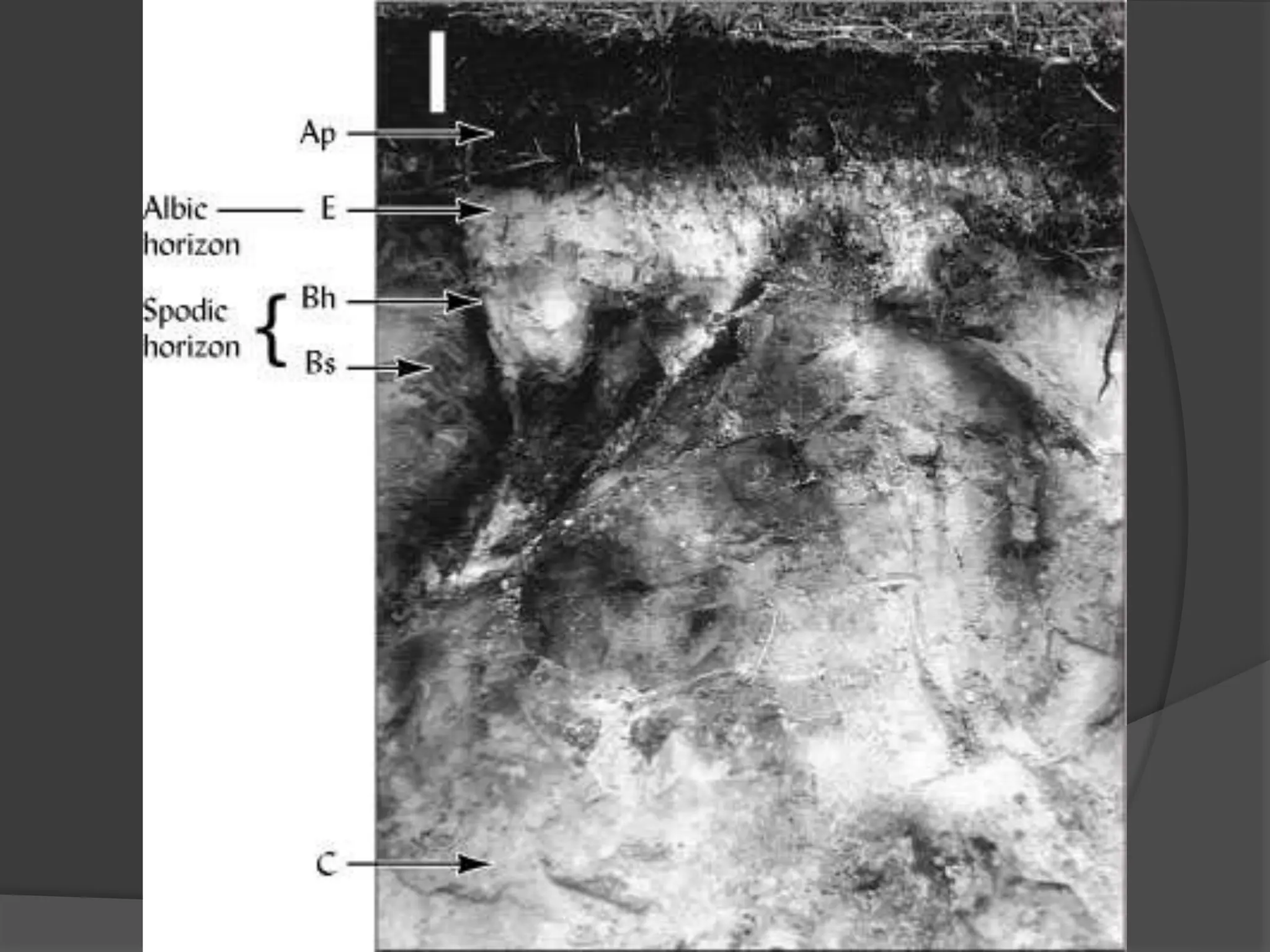
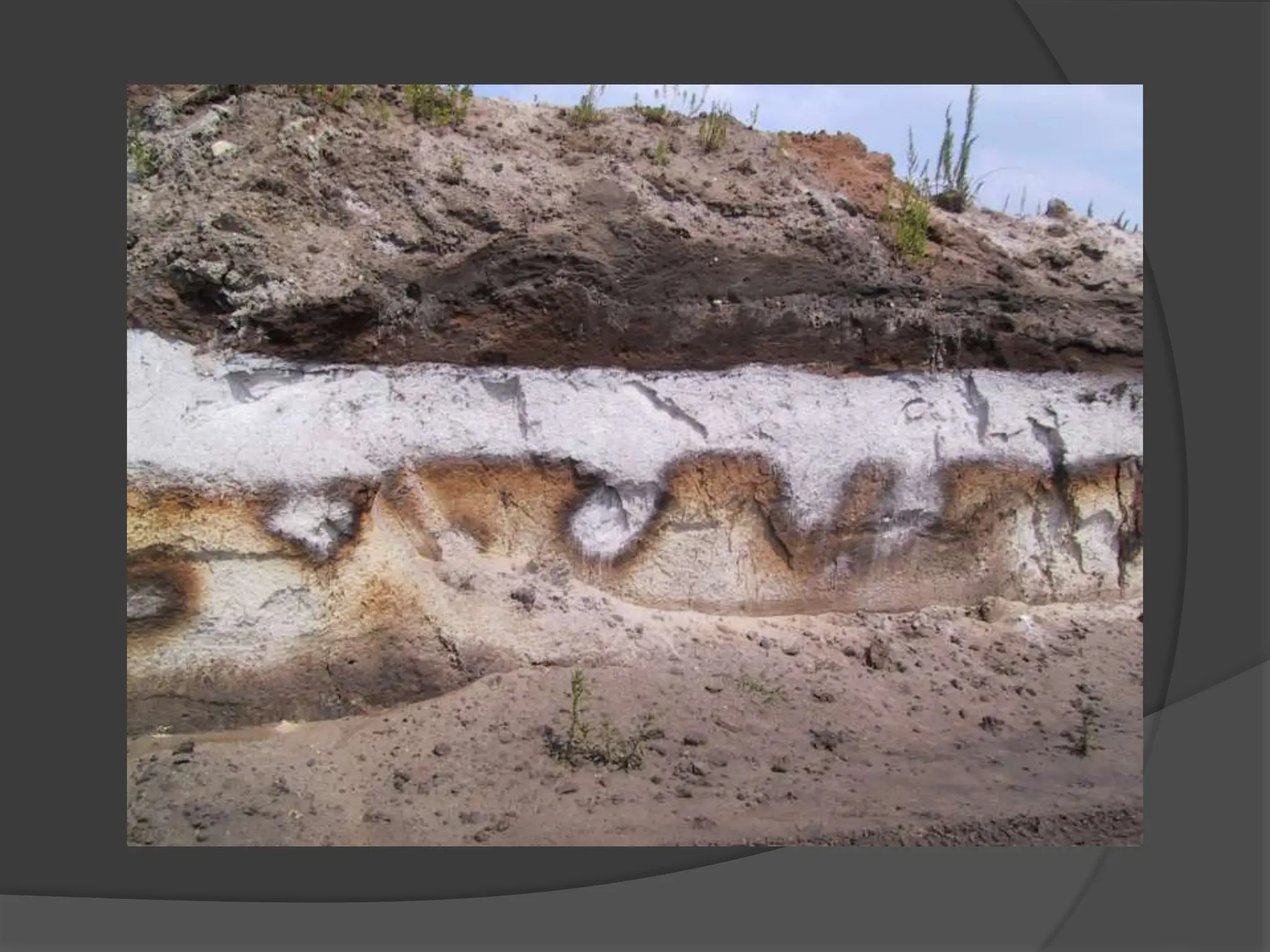
E horizon
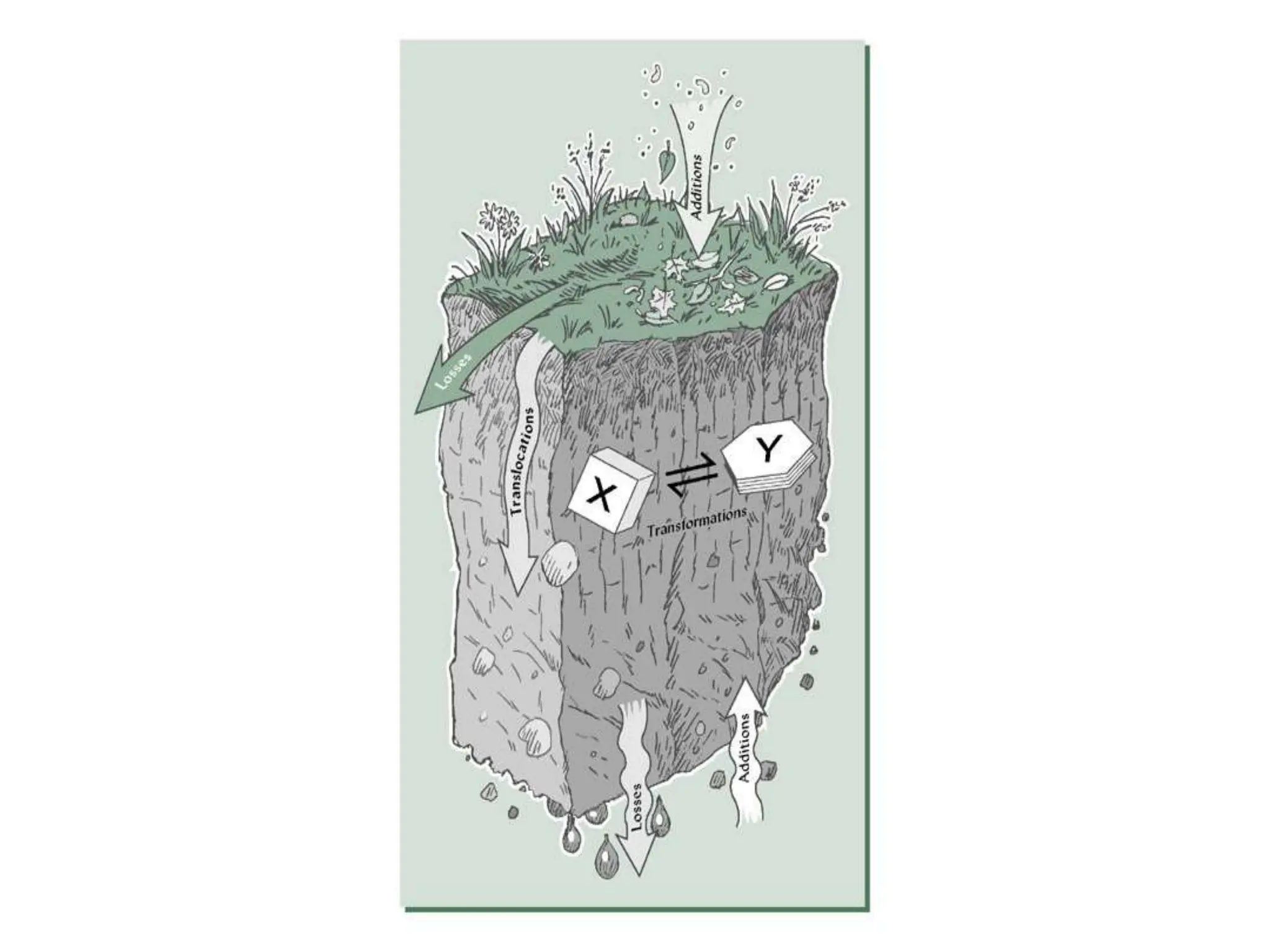
 LOSS of
 silicate clay, Fe & Al oxides, humus by
eluviation
 carbonates, gypsum by leaching
 lighter color than A
 coarser texture than B due to clay loss
LEACHING : removal of soluble minerals (Ca,
Mg, Na) in solution
ELUVIATION : loss (by water) of suspended
materials (clay, humus, oxides)
”emigrating”
ILLUVIATION : accumulation of suspended
materials (clay, humus, oxides) and/or
precipitated materials from solution (Ca, Mg,
Na)
“immigrating”
B horizon
 ACCUMULATED (illuviated ) silicate
clay, Fe & Al oxides, carbonates,
gypsum, humus
 distinguished from A :
 stronger, redder, or darker color
 OR different texture
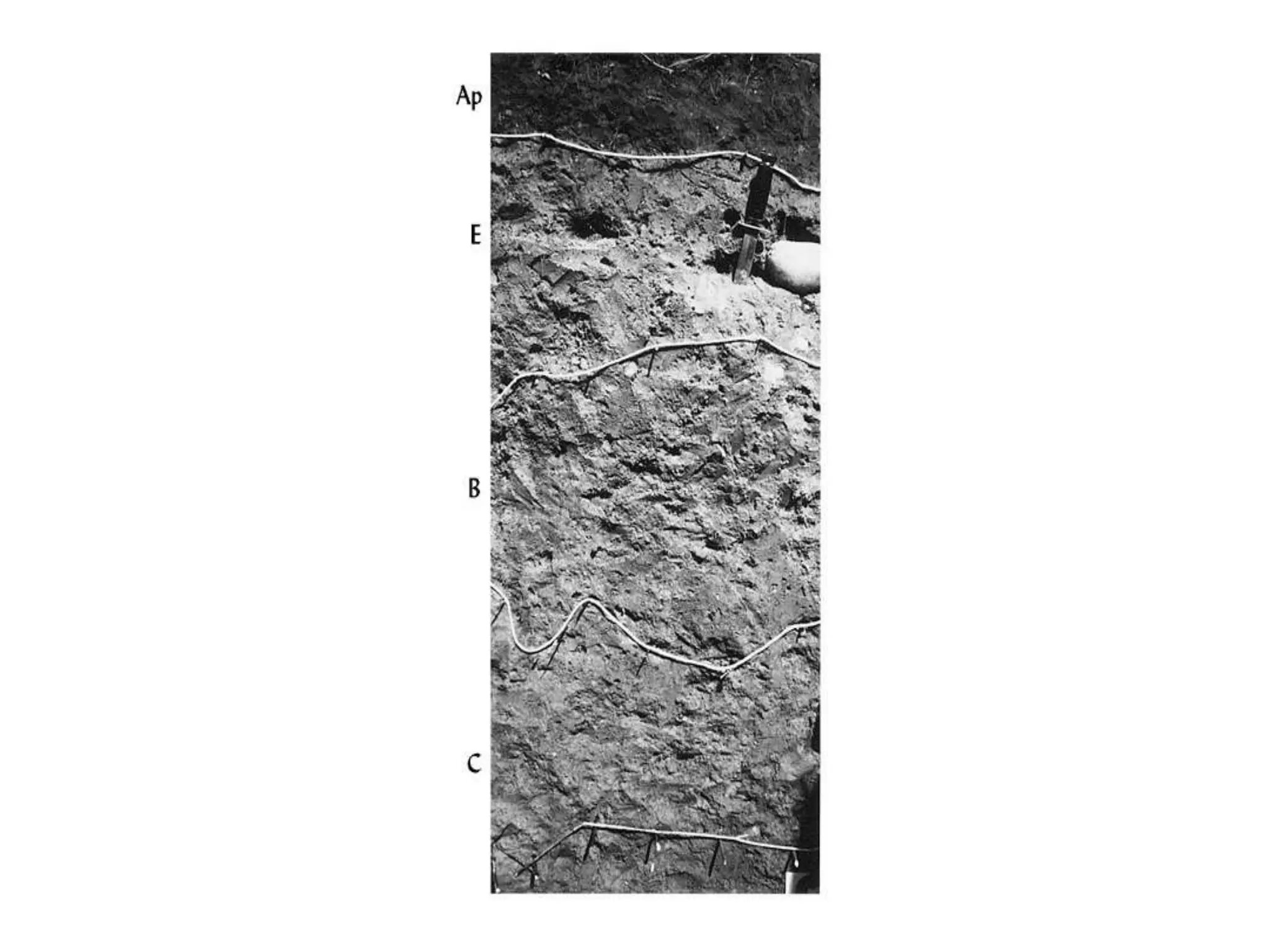
C horizon
 Mineral horizon (not bedrock) underlying
A,E,B horizons
 not affected by soil-forming processes
 may be parent material
R horizon
Consolidated rock
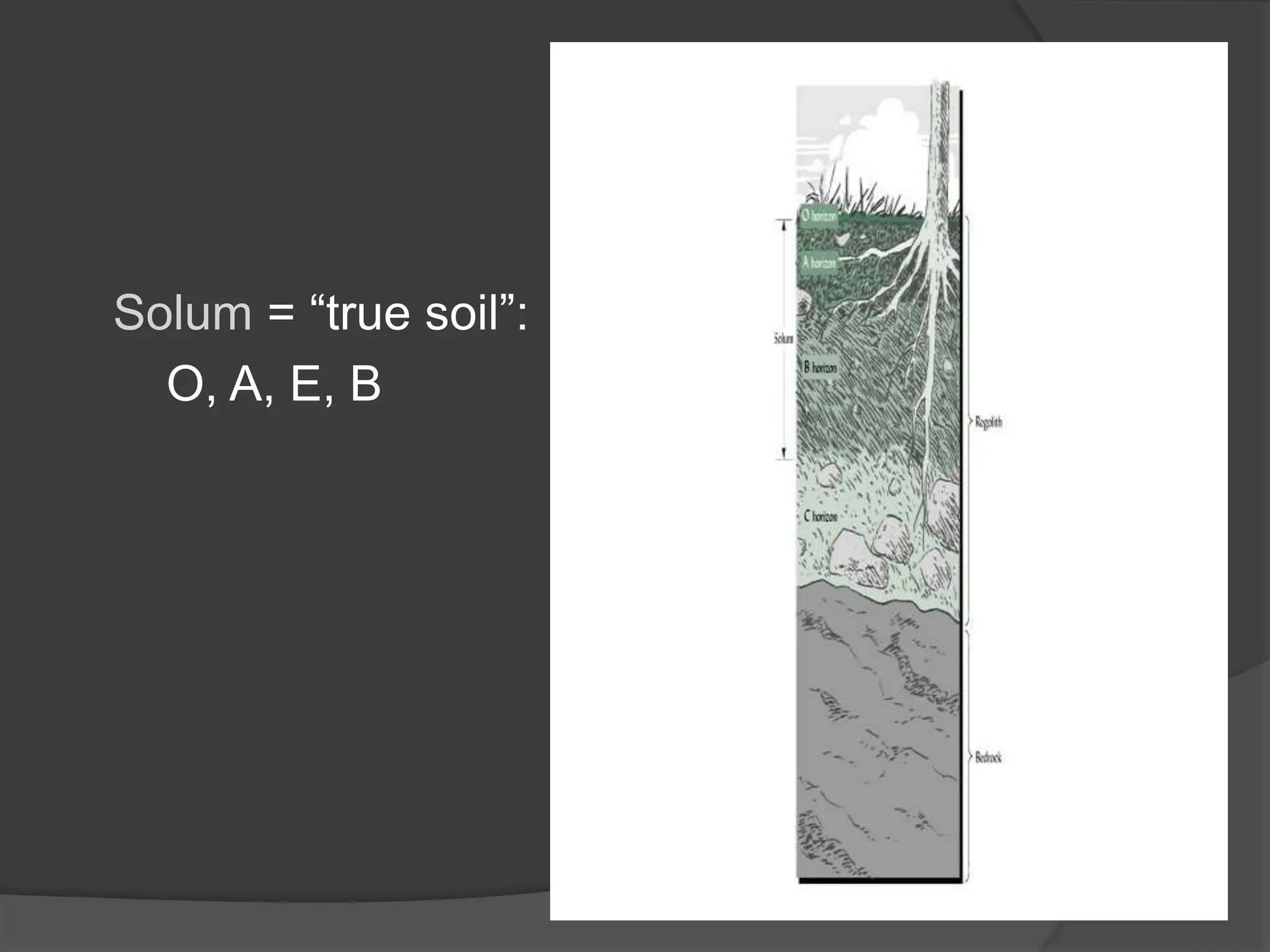
Solum = “true soil”:
O, A, E, B
Transitional horizons
Zone of transition between master
horizons
AB A B; A dominates
BA A B; B dominates
AC A C; A dominates
EB E B; E dominates
etc….
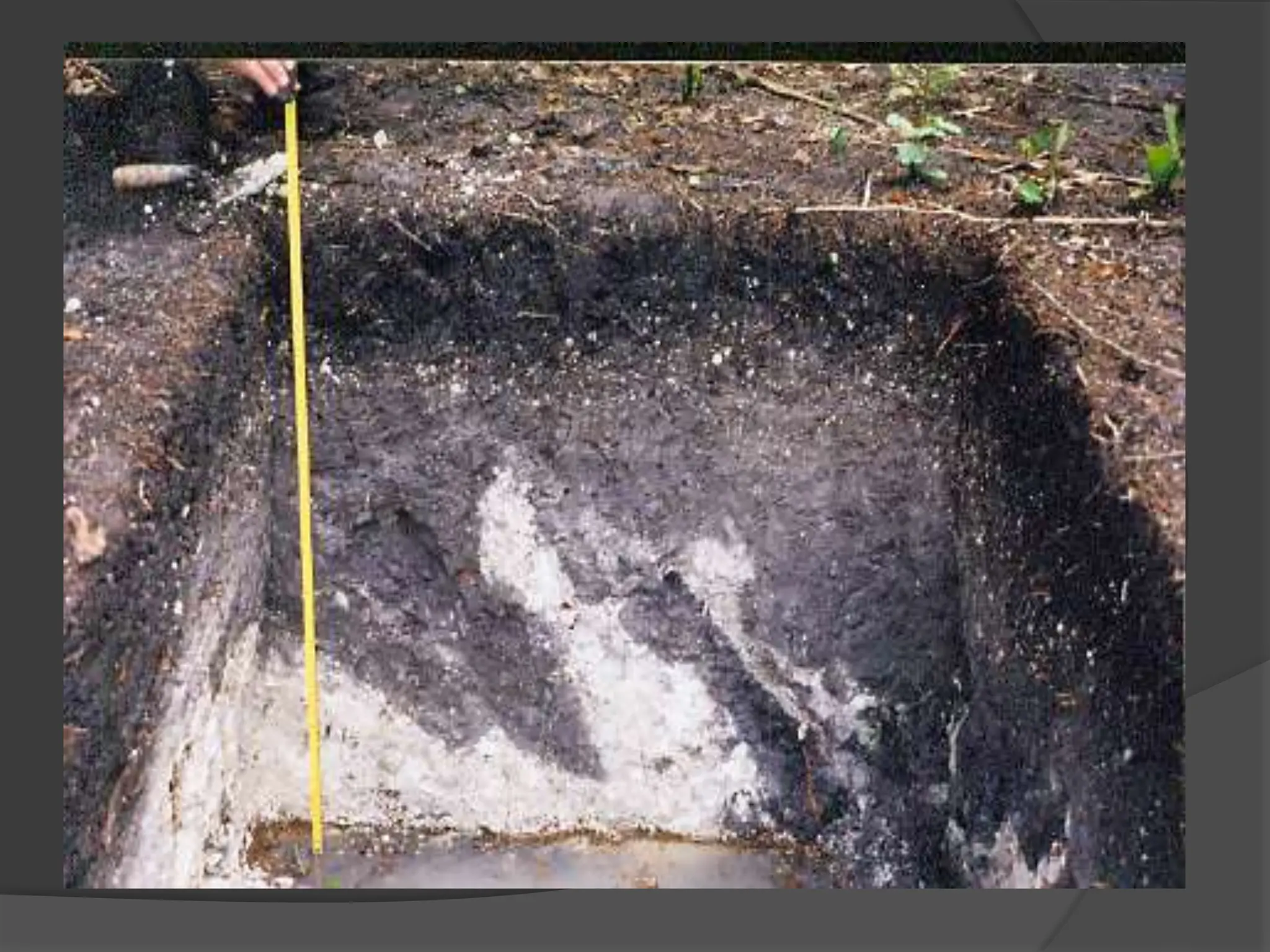
Mixed horizons
One horizon scattered within another
horizon
B/A mixed A&B; B is matrix for A
E/B E is matrix
etc….
Numbers after letters
Changes within master horizon for which
there is no subhorizon designation
e.g., A1 A2 for color change within A
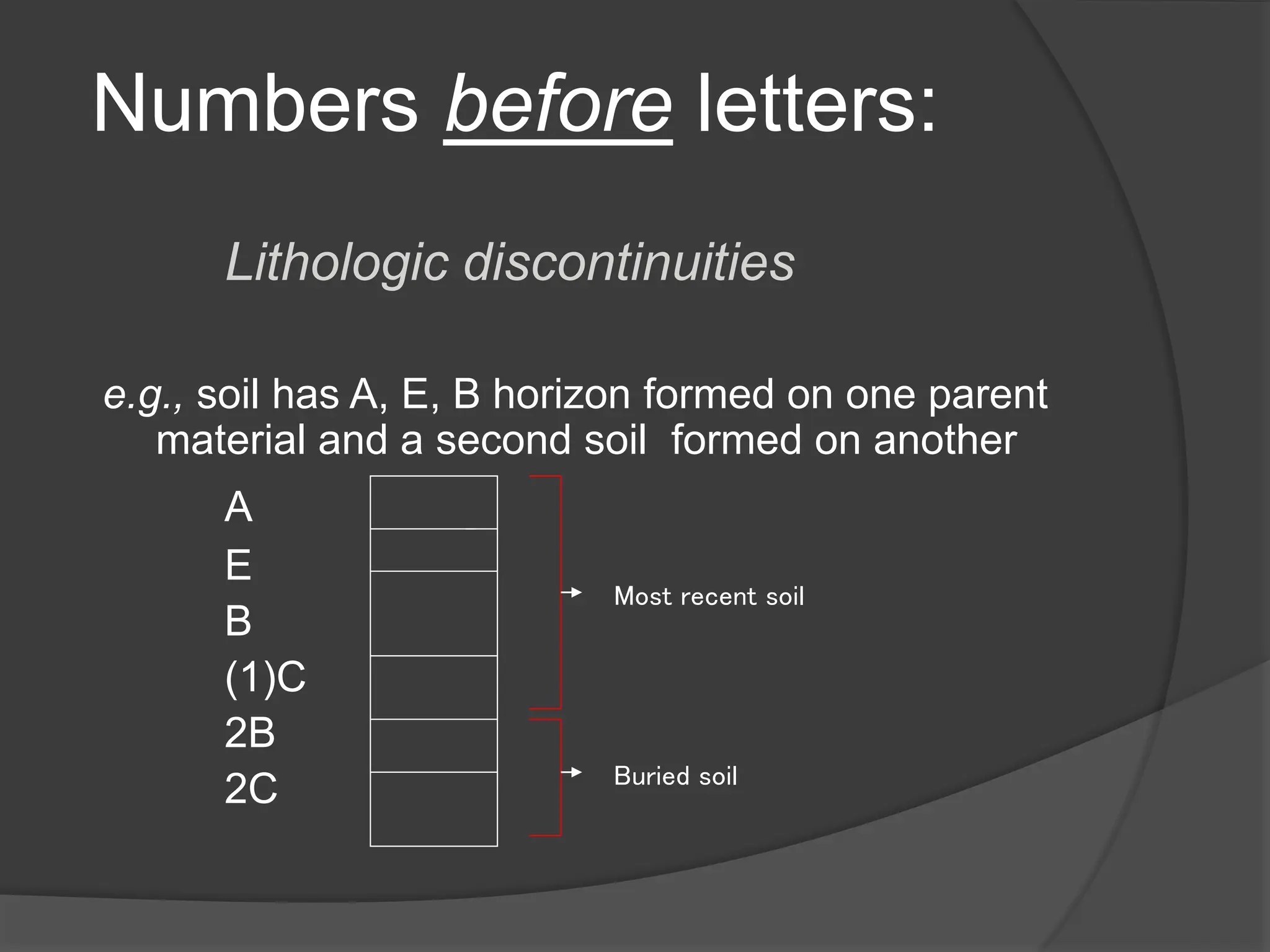
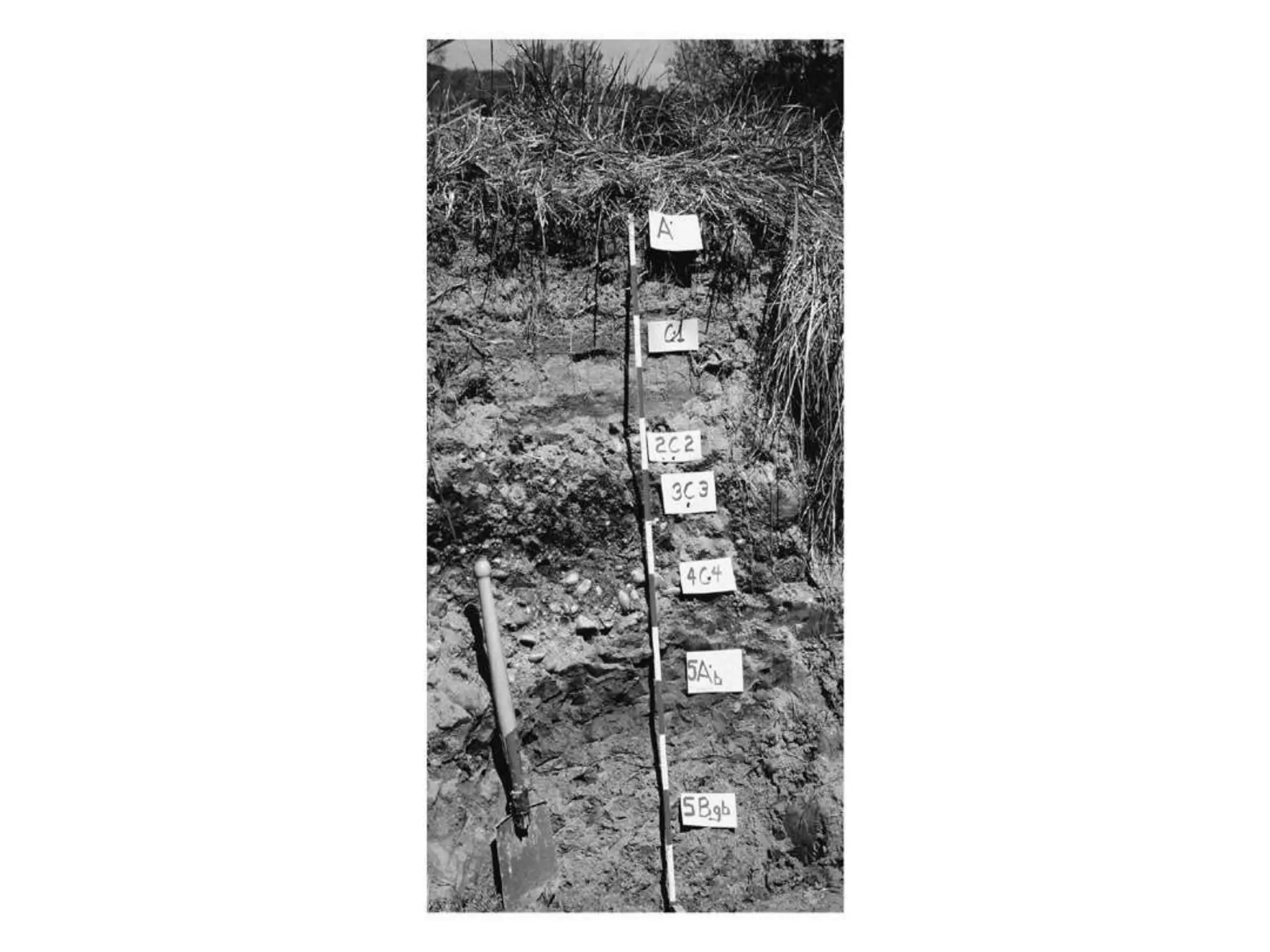
Numbers before letters:
Lithologic discontinuities
e.g., soil has A, E, B horizon formed on one parent
material and a second soil formed on another
A
E
B
(1)C
2B
2C
Most recent soil
Buried soil
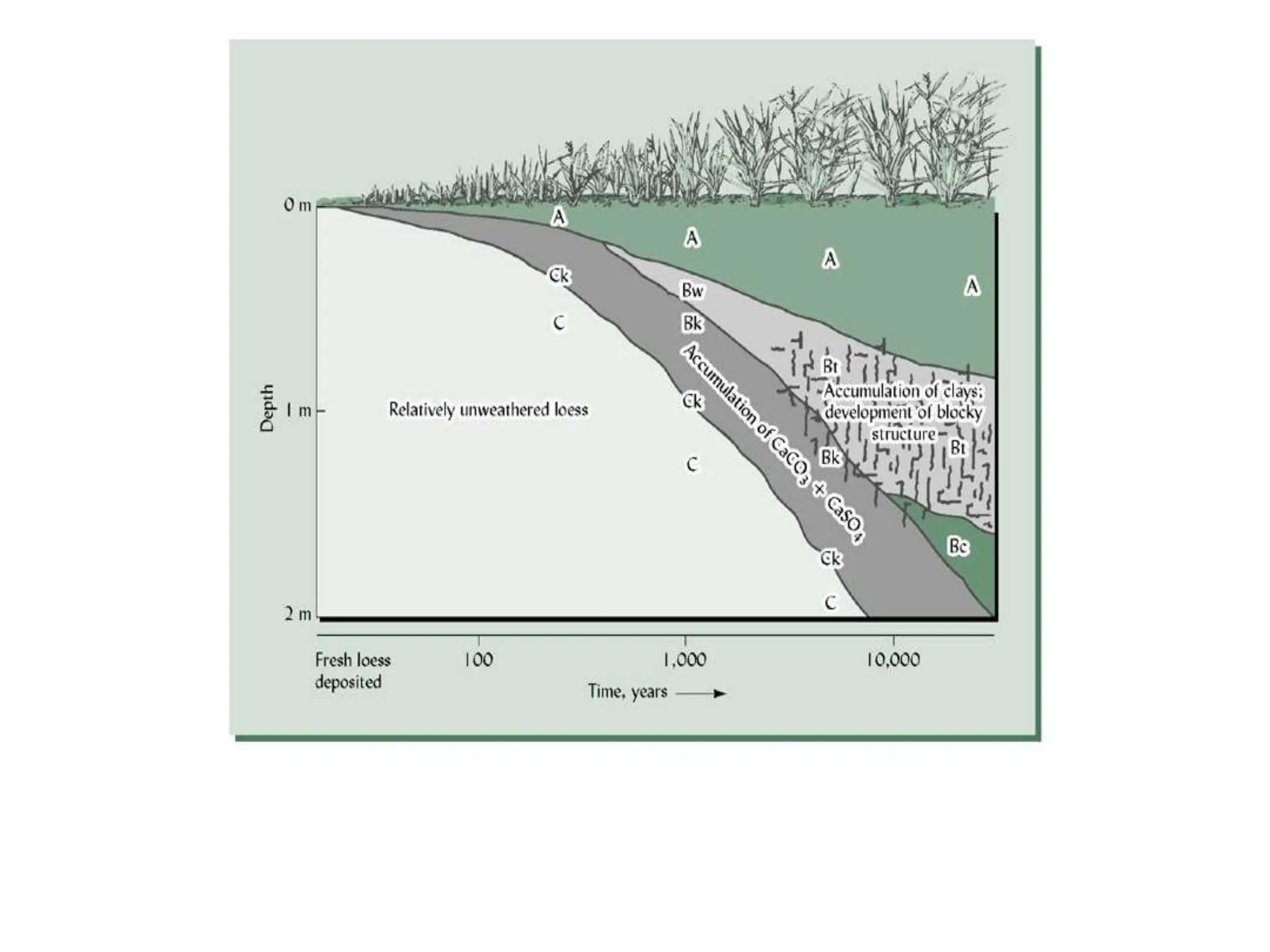
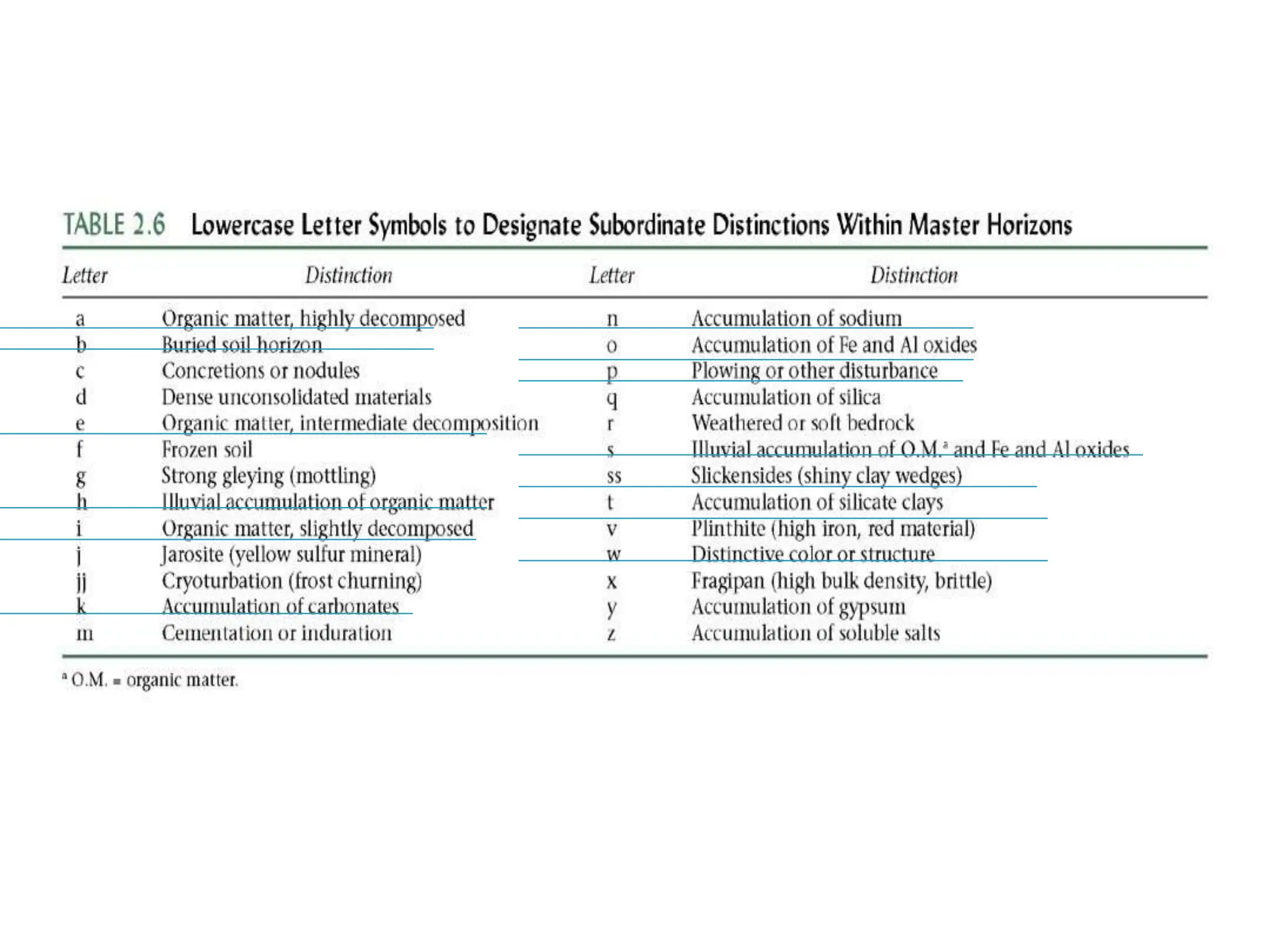
Subhorizons
Lowercase letters symbolizing divisions
within master horizons or characteristics
of master horizons
some terminology…
 Colloidal : submicroscopic
 humus and clay are colloidal
 Humus: ultimate stage of organic decay
 predominately protein, gums, lignin
 Sesquioxides: 1½ oxygens for each Fe, Al
 sesquioxides of Fe, Al:
Fe2O3 Al2O3

Soil_Profile_and_Its_Classification_Geology

  • 2.
    Soil genetic horizons -HORIZON:soil layer parallel to surface with characteristics produced by soil- forming processes (based on qualitative judgement)
  • 4.
    3 basic soilunits (scale) Pedon: smallest volume called a soil Polypedon: soil body (2 or more pedons) in which soils are relatively uniform Soil Series: groups of like polypedons
  • 6.
    profile: one sideof pedon, showing all horizons; 2-D
  • 9.
  • 10.
    O horizon Organic material Oislightly decomposed (litter) Oe intermediate decomposition Oa highly decomposed
  • 11.
    A horizon  topmostmineral horizon (<12% O.M. ; if clayey: <18% O.M.)  accumulation of well-decomposed O.M.  Often bioturbated  OR surface horizon disturbed by plowing (Ap)
  • 13.
    E horizon  LOSSof  silicate clay, Fe & Al oxides, humus by eluviation  carbonates, gypsum by leaching  lighter color than A  coarser texture than B due to clay loss
  • 14.
    LEACHING : removalof soluble minerals (Ca, Mg, Na) in solution ELUVIATION : loss (by water) of suspended materials (clay, humus, oxides) ”emigrating” ILLUVIATION : accumulation of suspended materials (clay, humus, oxides) and/or precipitated materials from solution (Ca, Mg, Na) “immigrating”
  • 18.
    B horizon  ACCUMULATED(illuviated ) silicate clay, Fe & Al oxides, carbonates, gypsum, humus  distinguished from A :  stronger, redder, or darker color  OR different texture
  • 23.
    C horizon  Mineralhorizon (not bedrock) underlying A,E,B horizons  not affected by soil-forming processes  may be parent material
  • 25.
  • 26.
    Solum = “truesoil”: O, A, E, B
  • 28.
    Transitional horizons Zone oftransition between master horizons AB A B; A dominates BA A B; B dominates AC A C; A dominates EB E B; E dominates etc….
  • 30.
    Mixed horizons One horizonscattered within another horizon B/A mixed A&B; B is matrix for A E/B E is matrix etc….
  • 32.
    Numbers after letters Changeswithin master horizon for which there is no subhorizon designation e.g., A1 A2 for color change within A
  • 34.
    Numbers before letters: Lithologicdiscontinuities e.g., soil has A, E, B horizon formed on one parent material and a second soil formed on another A E B (1)C 2B 2C Most recent soil Buried soil
  • 36.
    Subhorizons Lowercase letters symbolizingdivisions within master horizons or characteristics of master horizons
  • 42.
    some terminology…  Colloidal: submicroscopic  humus and clay are colloidal  Humus: ultimate stage of organic decay  predominately protein, gums, lignin  Sesquioxides: 1½ oxygens for each Fe, Al  sesquioxides of Fe, Al: Fe2O3 Al2O3