SOIL MOISTURE
SENSOR INSTALLATION
Chris Chambers
GOALS
Background 3
What installation trouble looks like in your data 4
Priorities in installing soil moisture sensors 5
The METER Contribution 6
BACKGROUND
ME
10 years of experience working
with soil moisture data from the
viewpoint of data quality.
Installed 100’s of sensors
BACKGROUND
A bad installation isn’t an indictment
I’ve personally made almost every mistake our customers have.
I will prove it later.
BACKGROUND
SOIL MOISTURE SENSORS
§ Volumetric Water content
m3/m3
§ Sensors that use the electrical properties of the soil to
measure water content
§ TDR, FDR, Capacitance
BACKGROUND
THE SENSORS
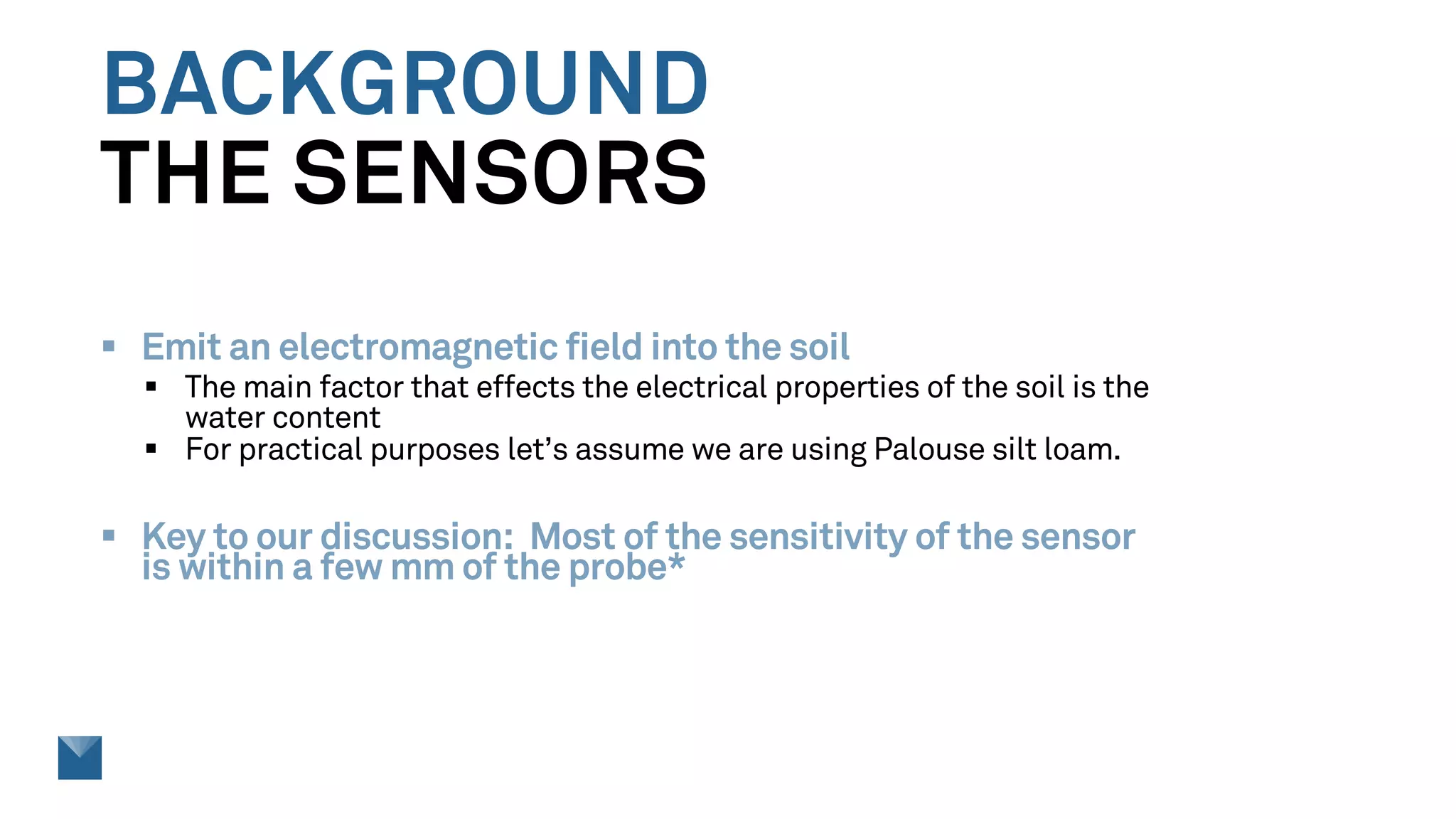
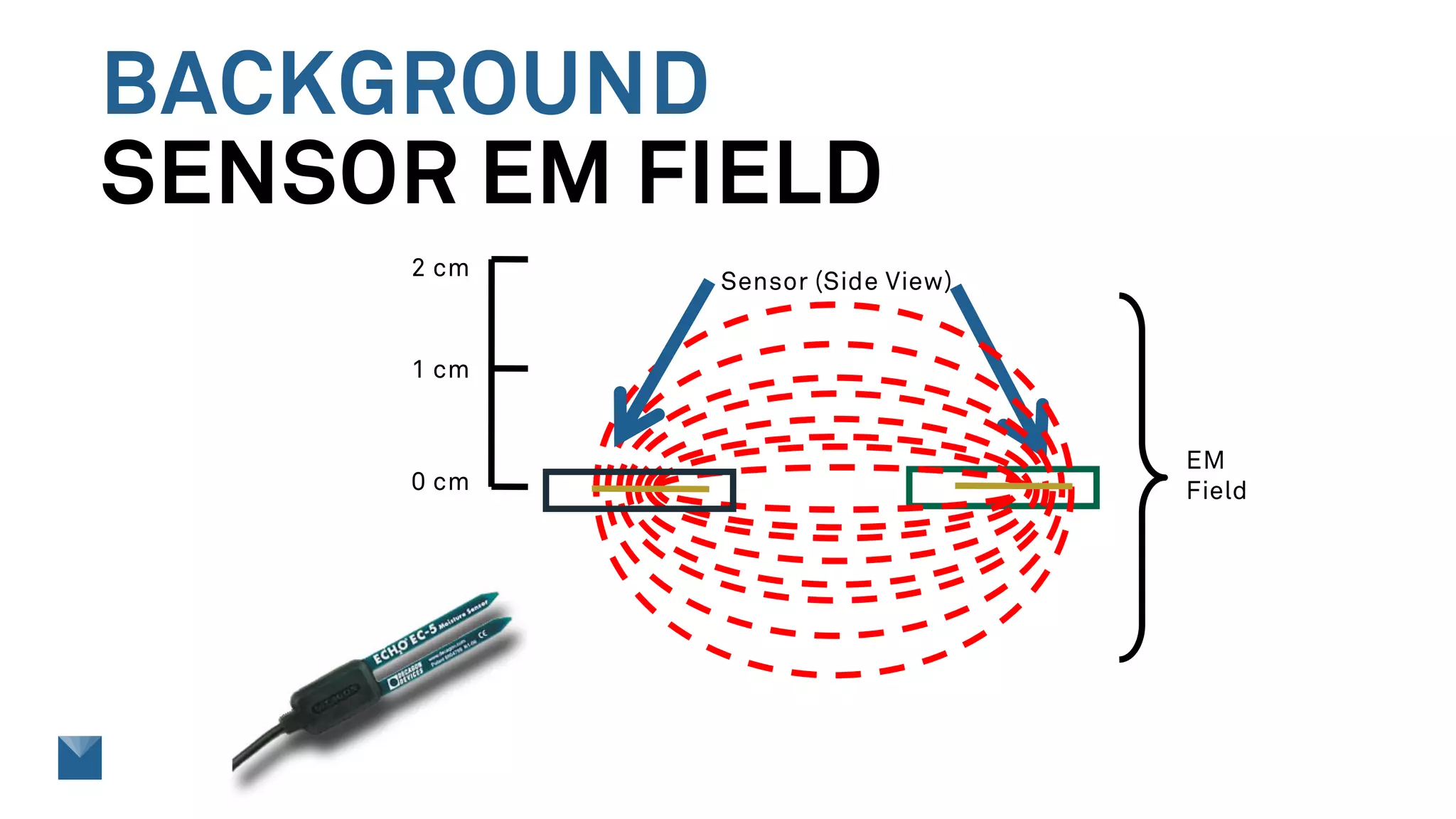
§ Emit an electromagnetic field into the soil
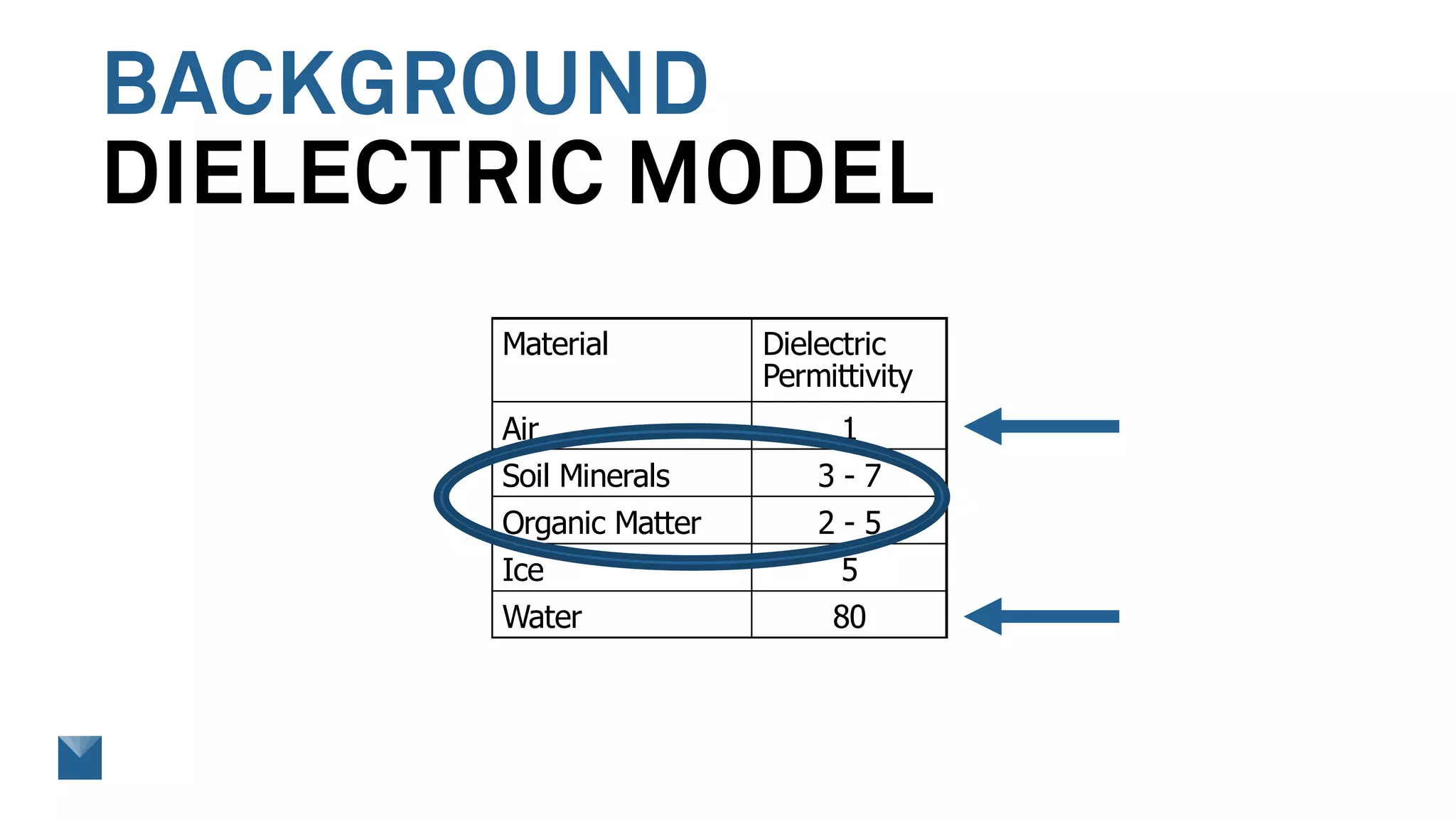
§ The main factor that effects the electrical properties of the soil is the
water content
§ For practical purposes let’s assume we are using Palouse silt loam.
§ Key to our discussion: Most of the sensitivity of the sensor
is within a few mm of the probe*
BACKGROUND
SENSOR EM FIELD
EM
Field
Sensor (Side View)
0 cm
1 cm
2 cm
BACKGROUND
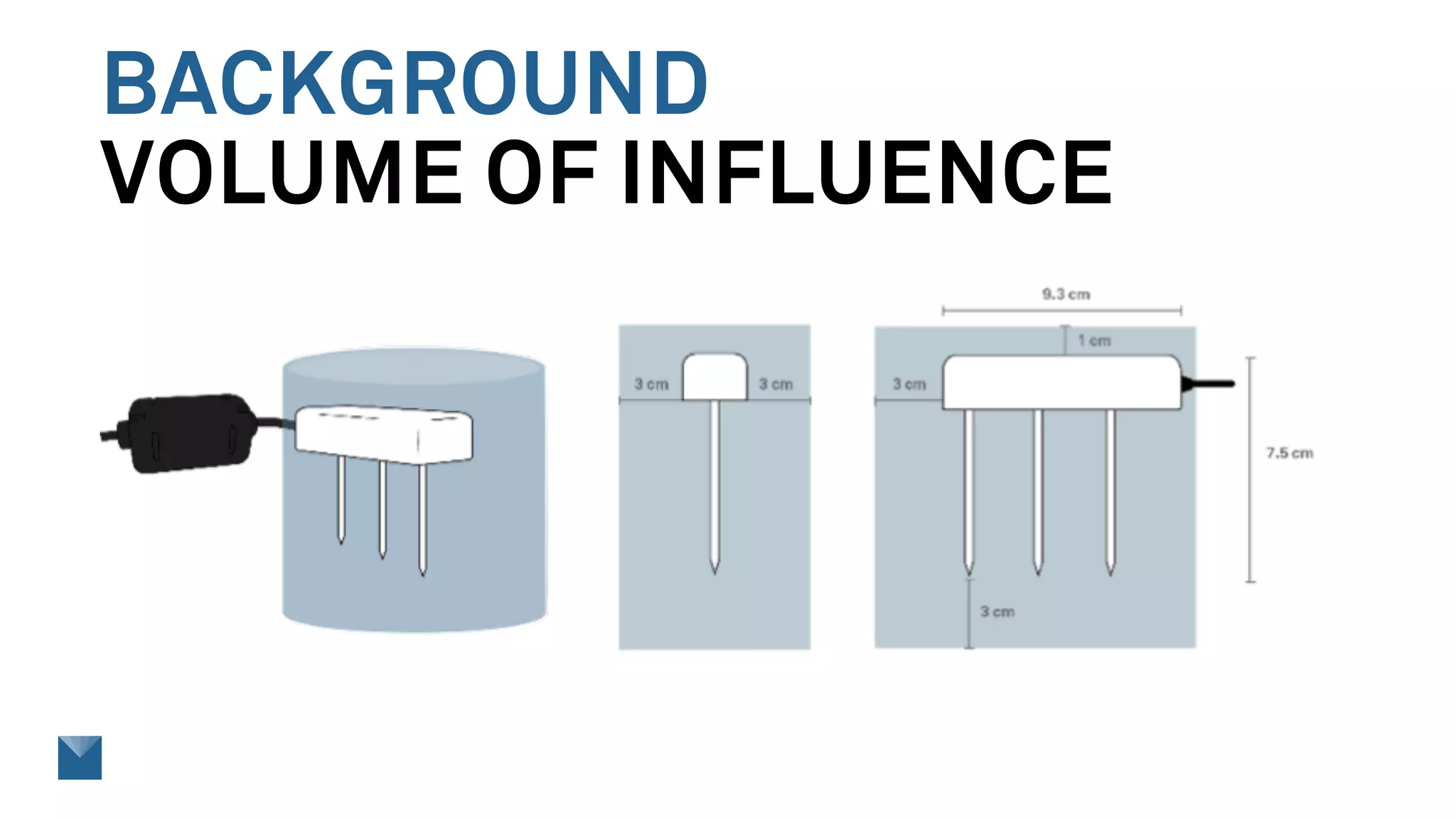
VOLUME OF INFLUENCE
BACKGROUND
DIELECTRIC MODEL
Material Dielectric
Permittivity
Air 1
Soil Minerals 3 - 7
Organic Matter 2 - 5
Ice 5
Water 80
LET’S LOOK
AT SOME DATA
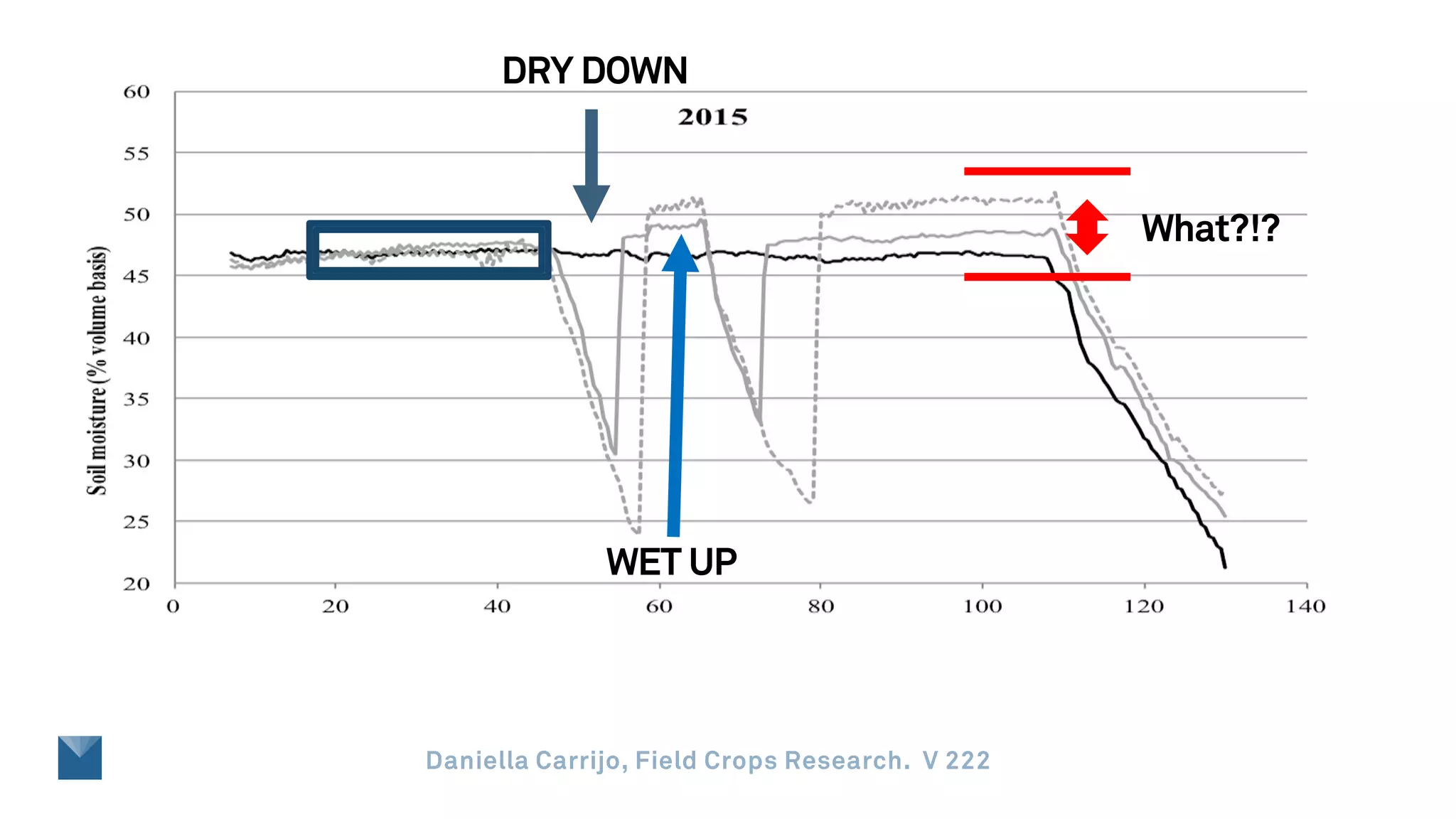
DRY DOWN
WET UP
What?!?
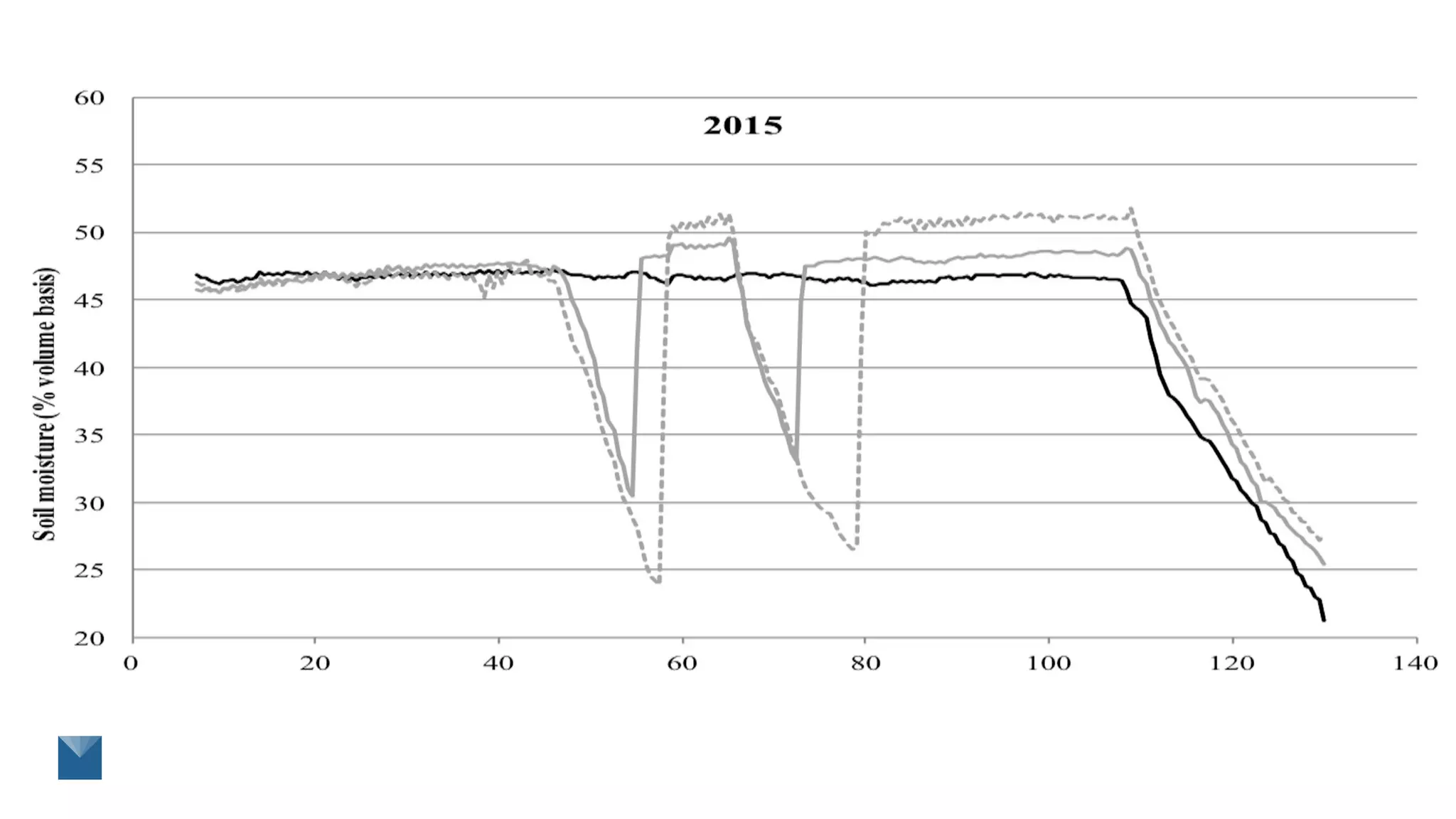
Daniella Carrijo, Field Crops Research. V 222
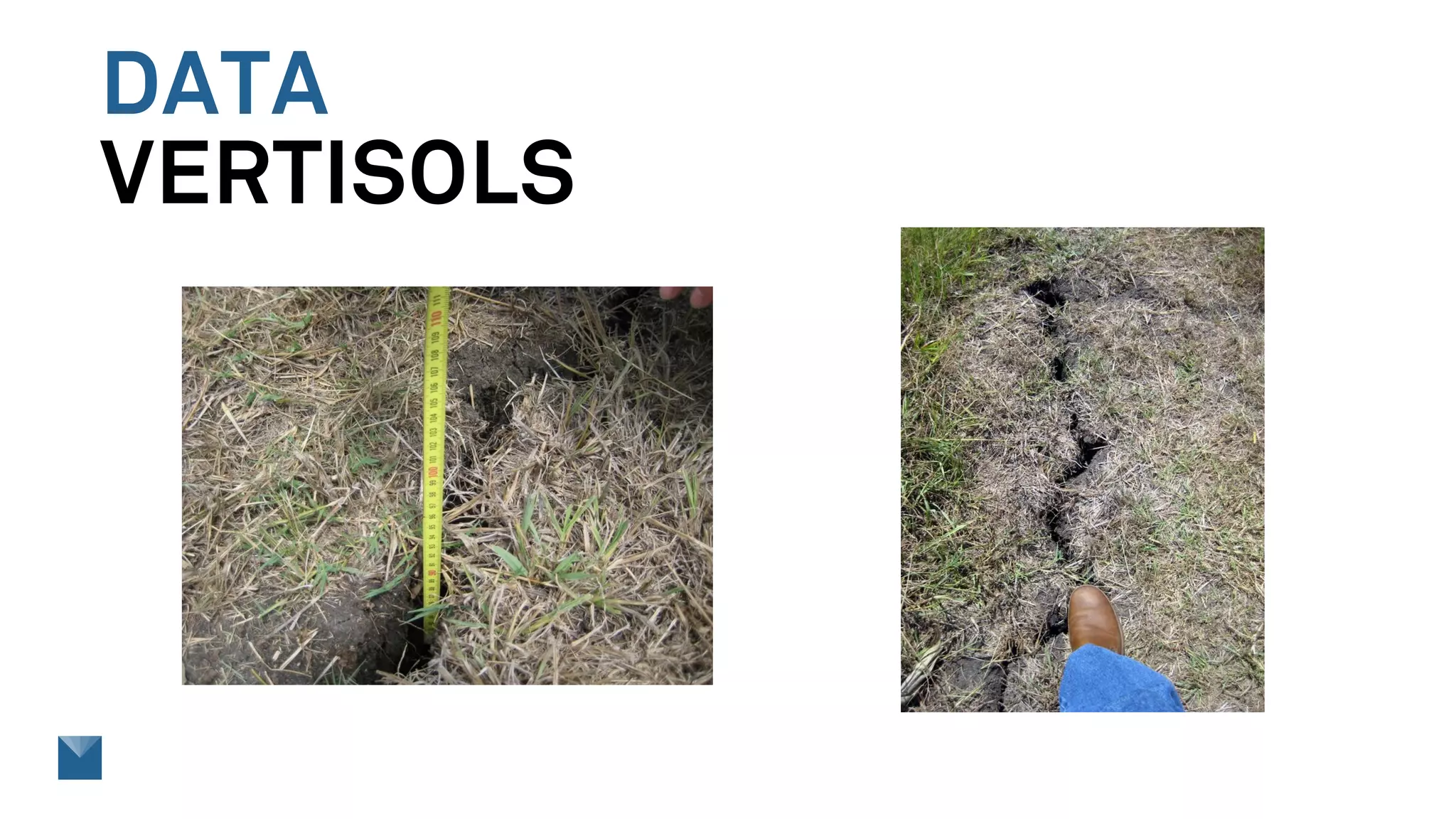
DATA
VERTISOLS
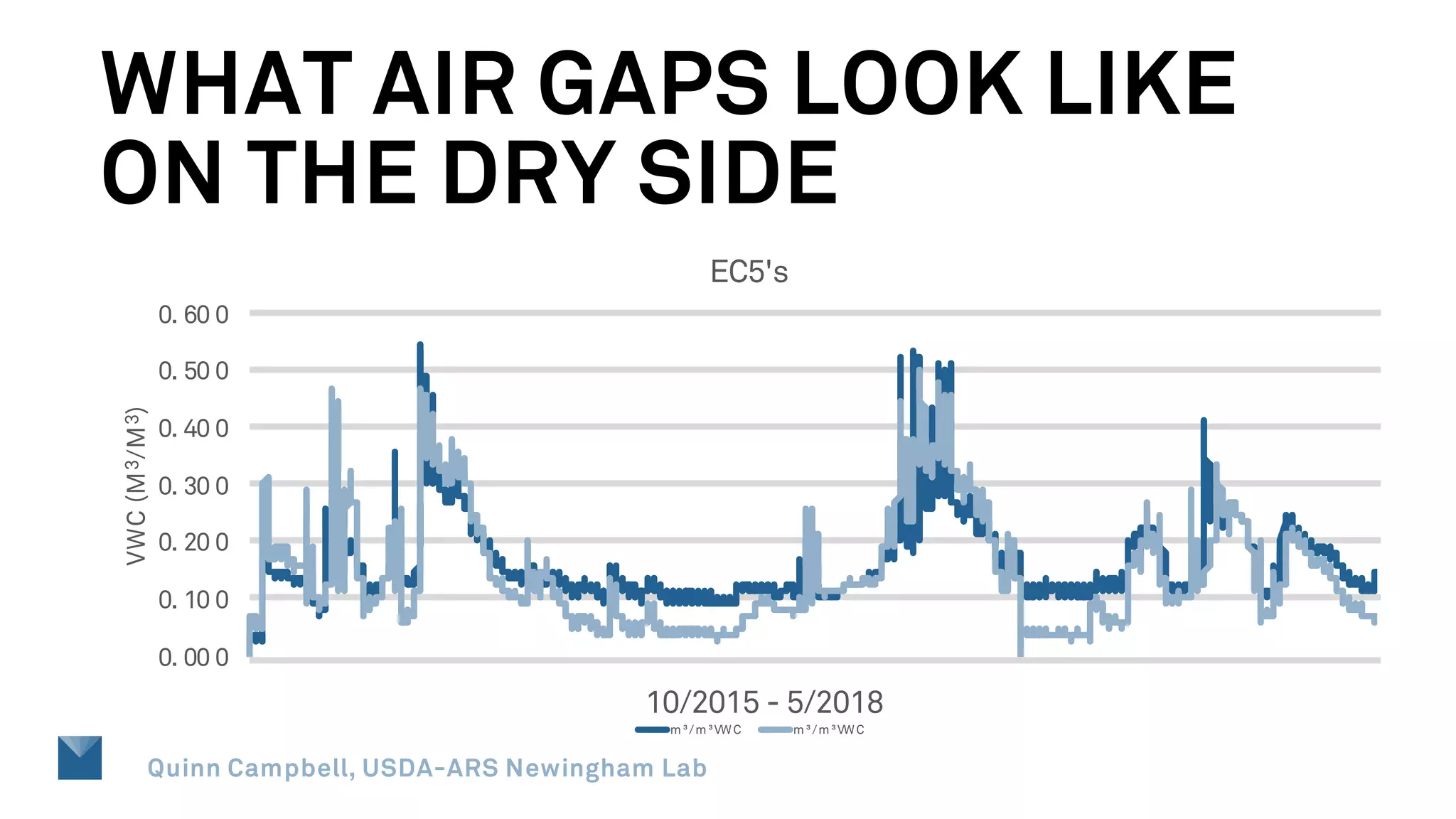
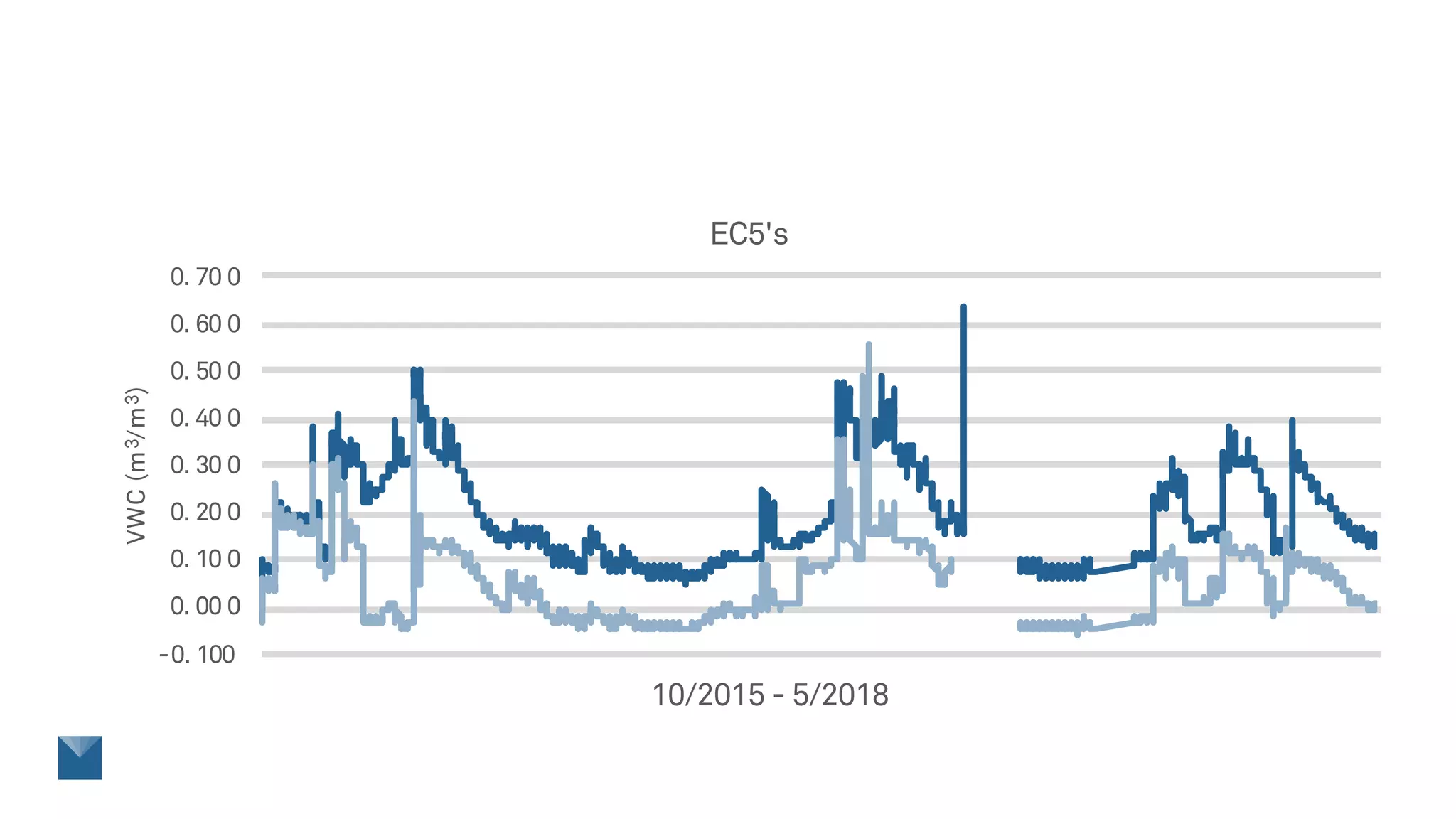
WHAT AIR GAPS LOOK LIKE
ON THE DRY SIDE
0. 00 0
0. 10 0
0. 20 0
0. 30 0
0. 40 0
0. 50 0
0. 60 0
VWC(M3/M3)
10/2015 - 5/2018
EC5's
m³/m³VWC m³/m³VWC
Quinn Campbell, USDA-ARS Newingham Lab
-0. 100
0. 00 0
0. 10 0
0. 20 0
0. 30 0
0. 40 0
0. 50 0
0. 60 0
0. 70 0
VWC(m3/m3)
10/2015 - 5/2018
EC5's
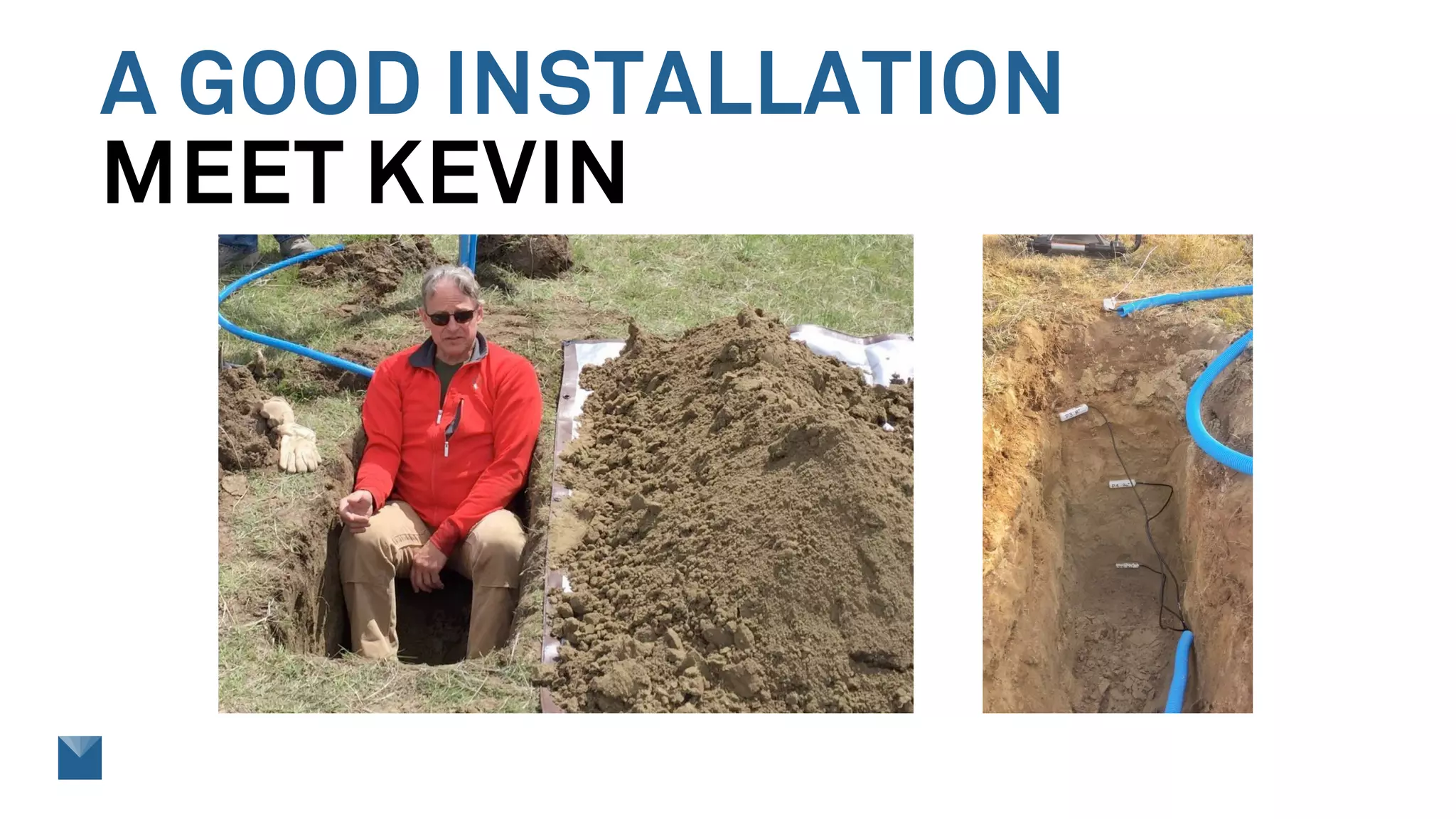
A GOOD INSTALLATION
MEET KEVIN
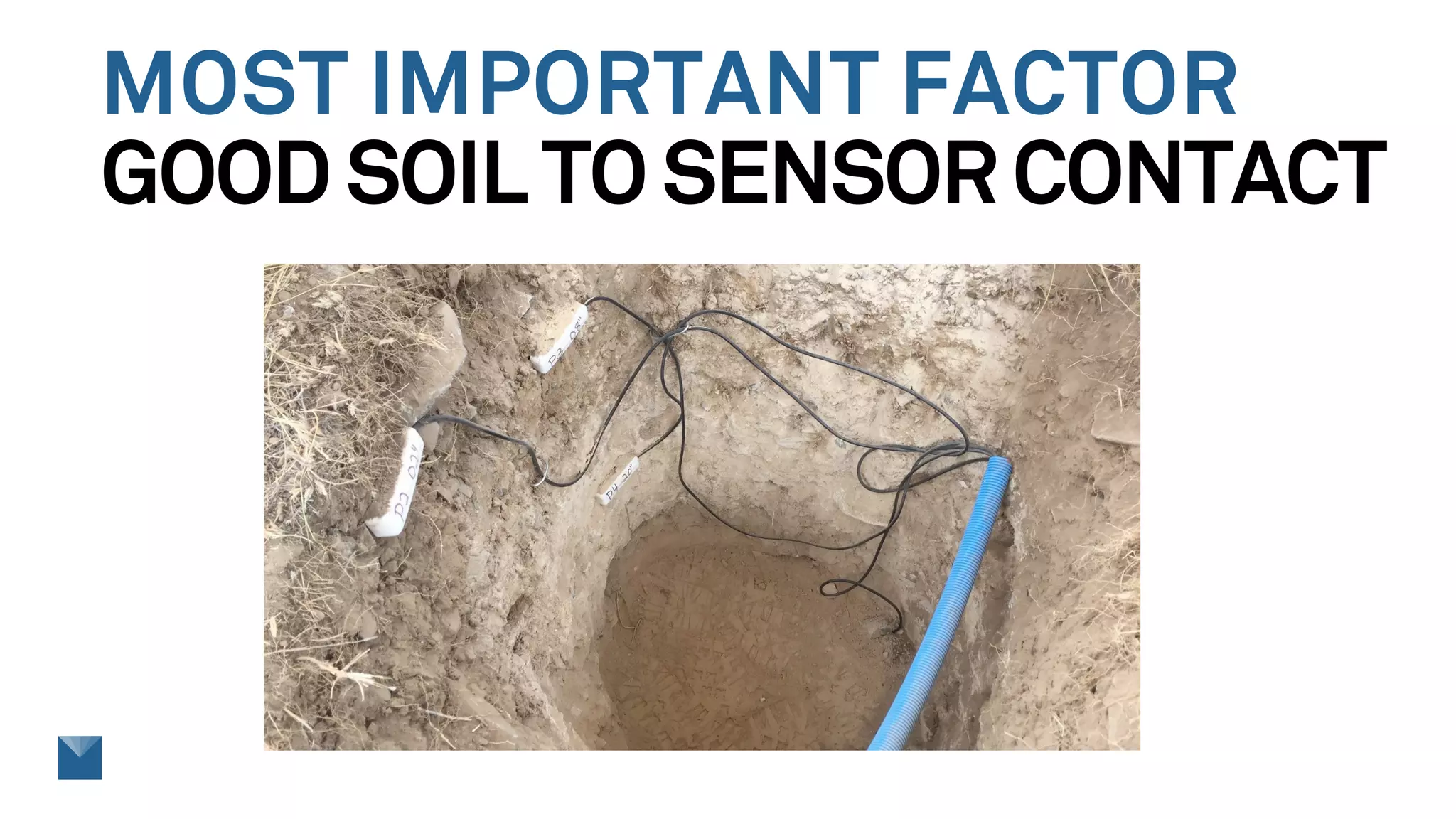
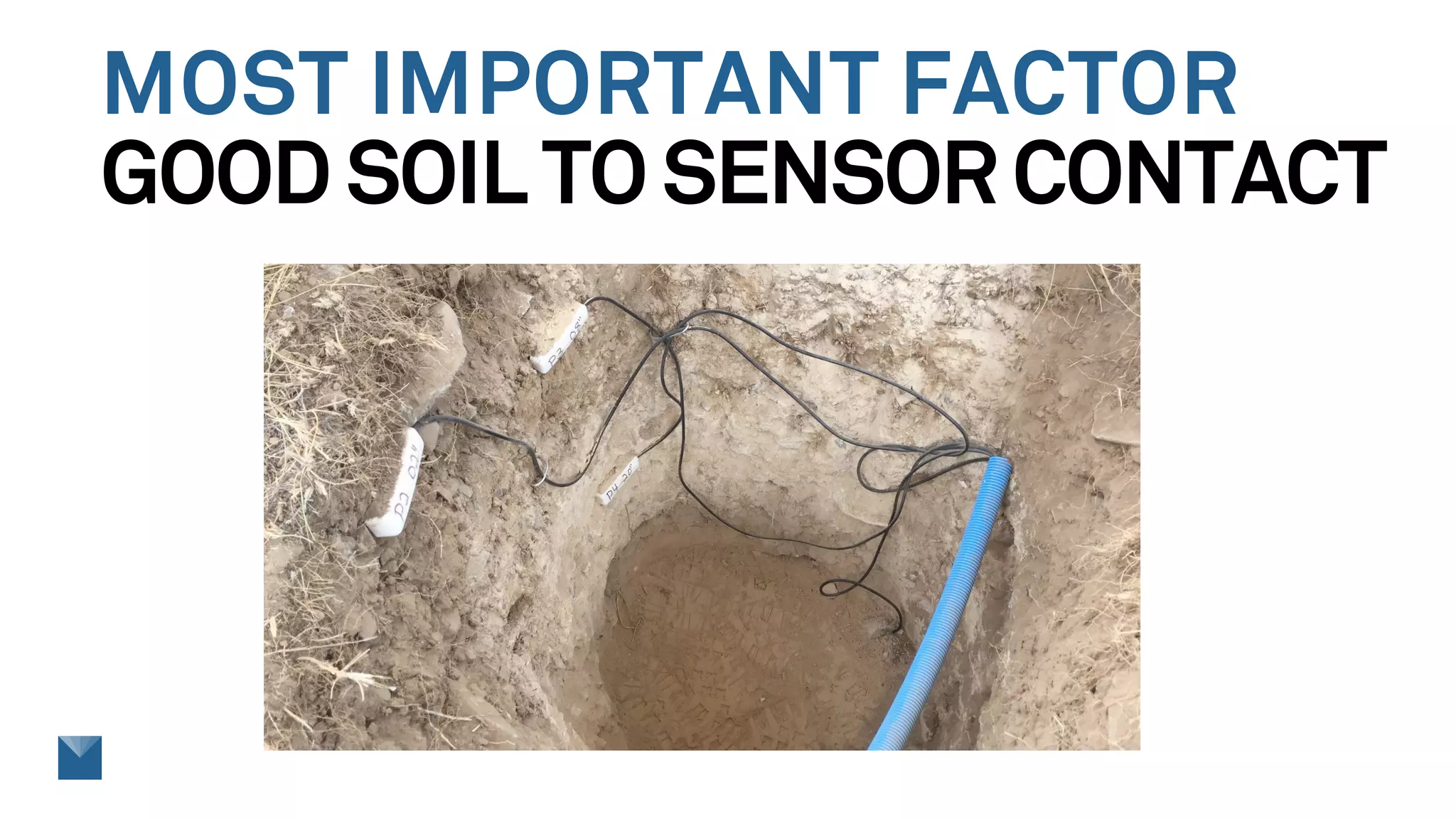
MOST IMPORTANT FACTOR
GOOD SOIL TO SENSOR CONTACT
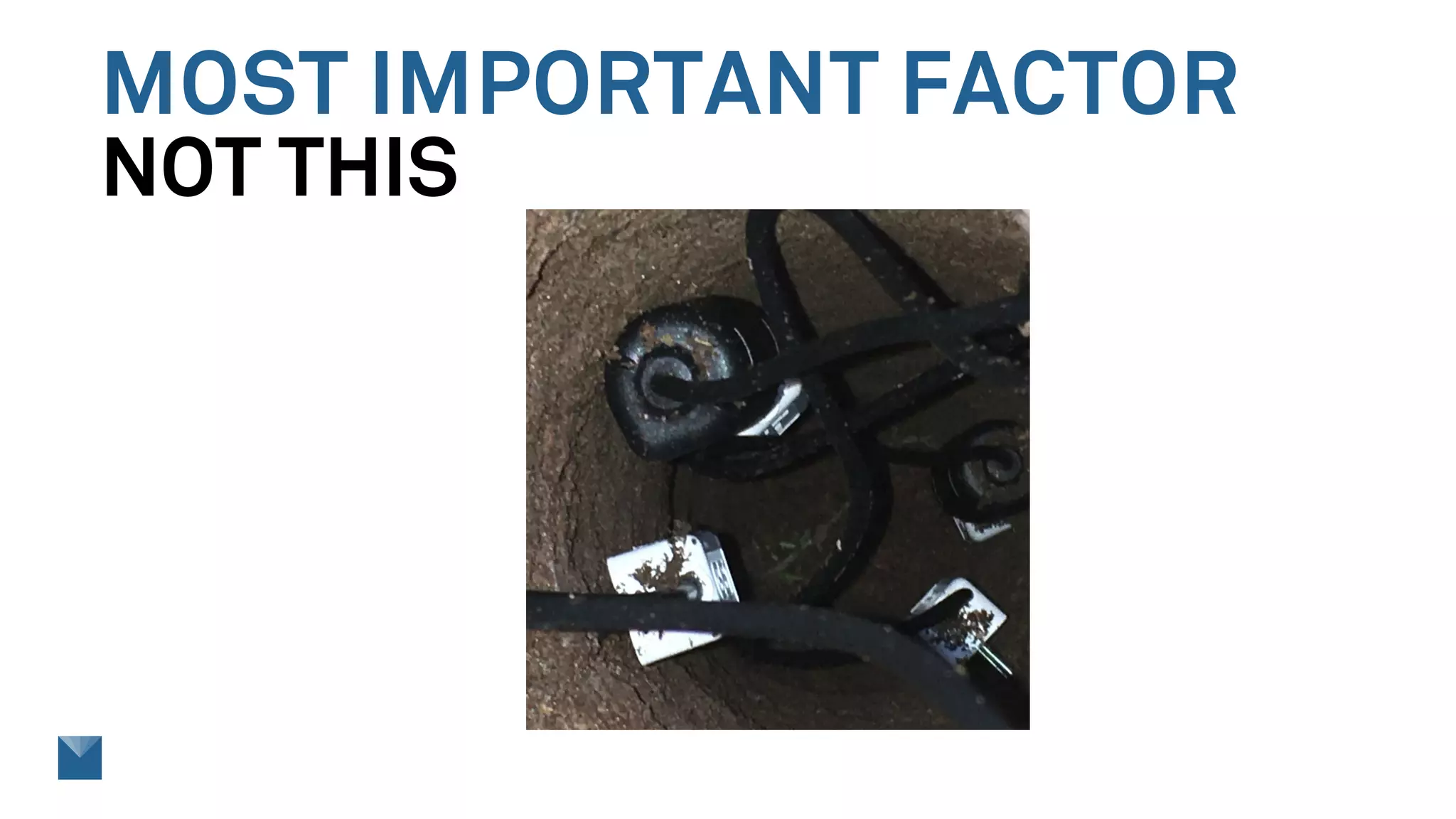
MOST IMPORTANT FACTOR
NOT THIS
MOST IMPORTANT FACTOR
GOOD SOIL TO SENSOR CONTACT
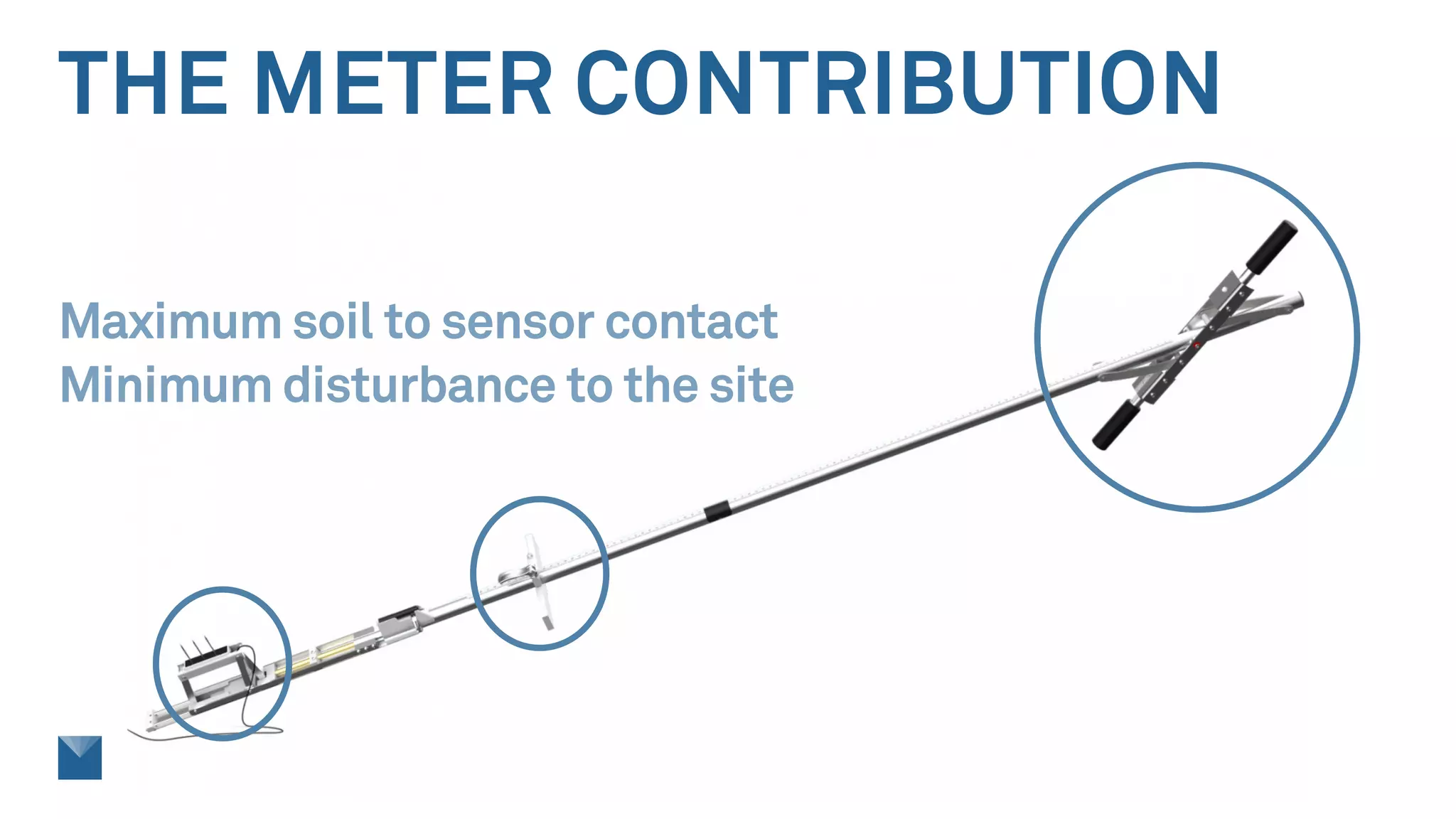
THE METER CONTRIBUTION
Maximum soil to sensor contact
Minimum disturbance to the site
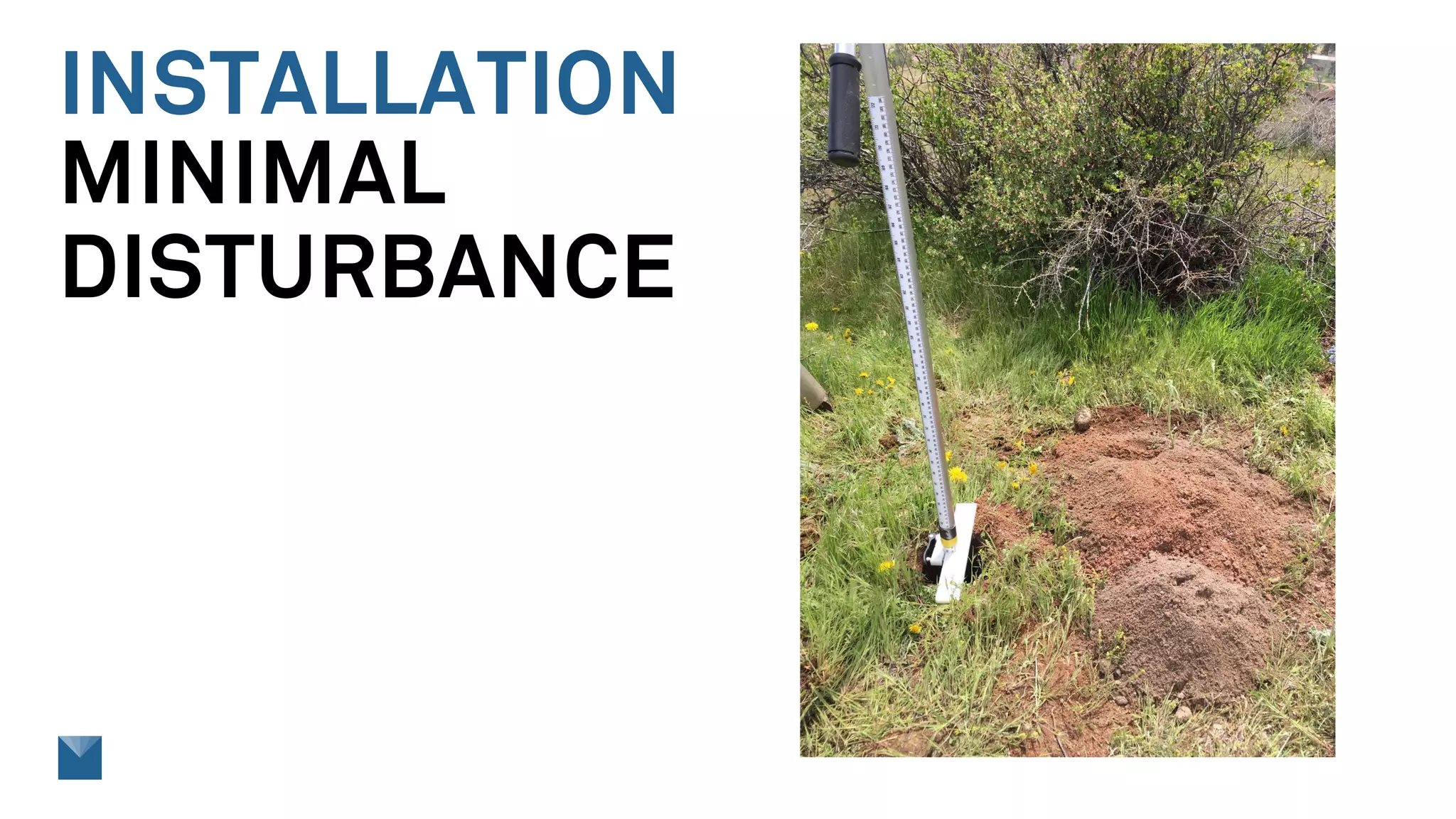
INSTALLATION
MINIMAL
DISTURBANCE
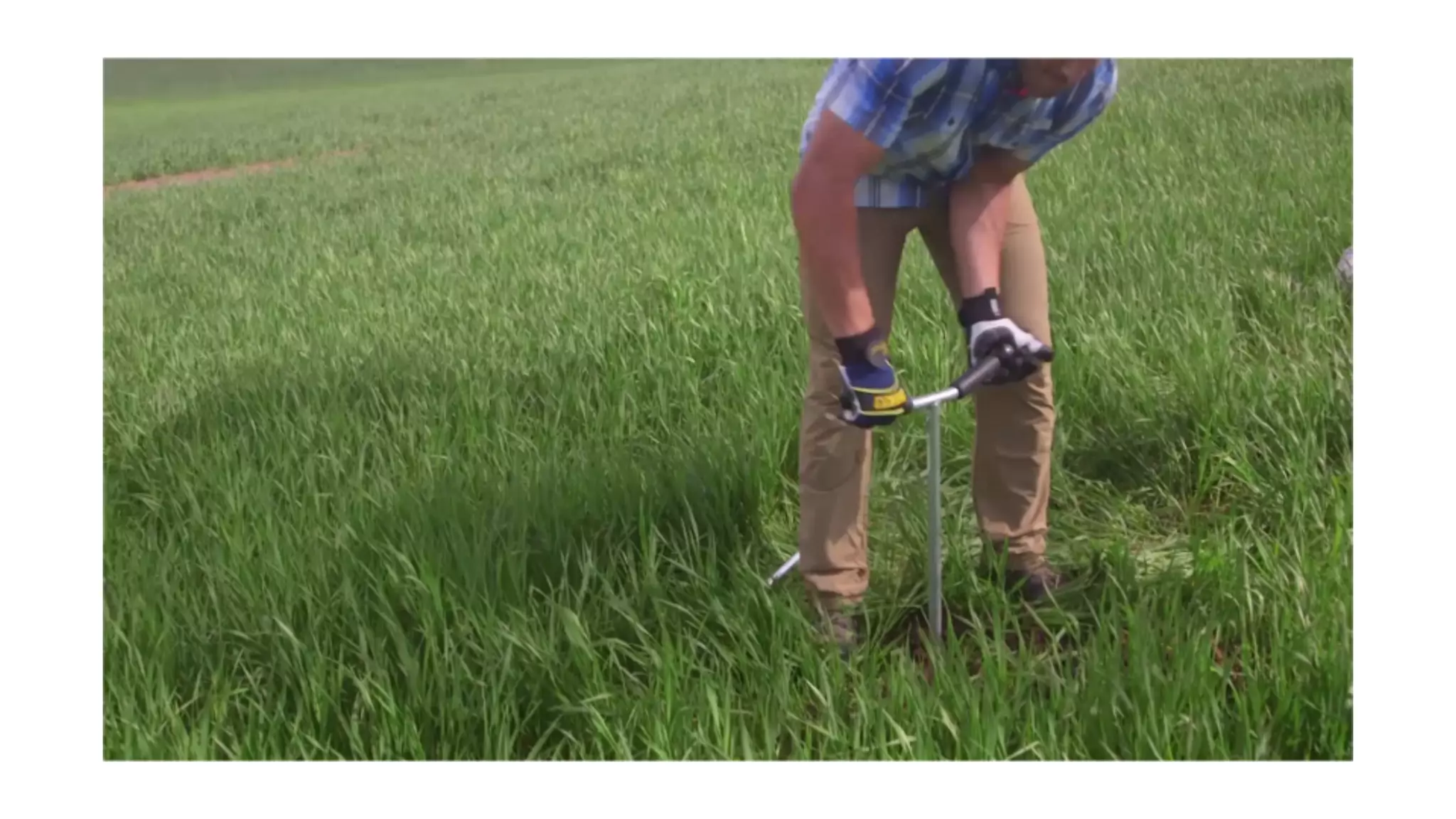
INSTALLATION
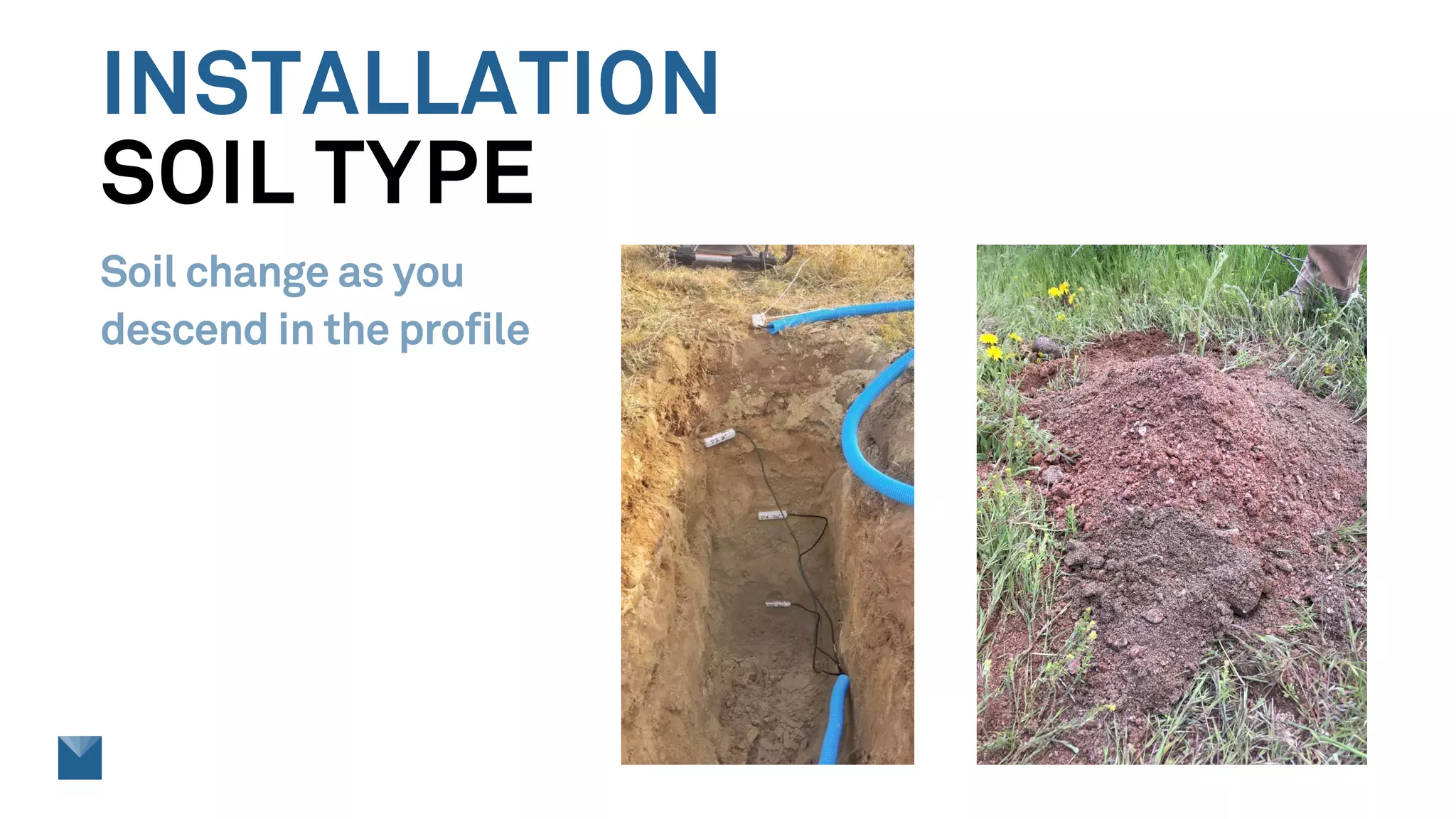
SOIL TYPE
Soil change as you
descend in the profile
INSTALLATION
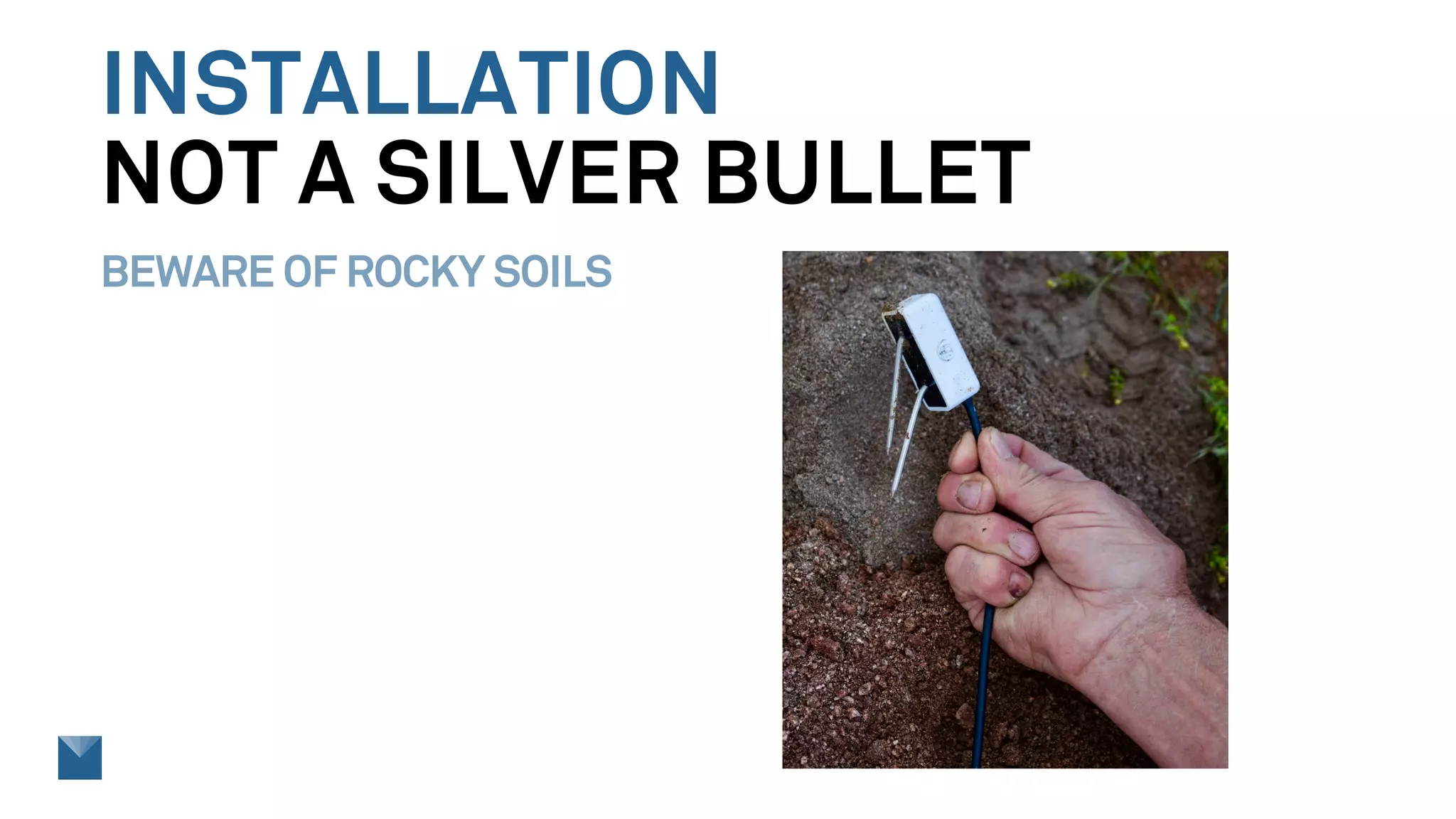
NOT A SILVER BULLET
BEWARE OF ROCKY SOILS
ACKNOWLEDGEMENTS
Kevin Hyde – Montana Climate Office
Quinn Campbell – USDA-ARS Newingham Lab
Leo Rivera – METER Group, Inc.
Colin Campbell – METER Group, Inc.
Daniella Carrijo – UC Davis
REFERENCES
Carrijo et al. Field Crops Research. Impacts of variable soil drying
in alternate wetting and drying rice systems on yields, grain arsenic
concentration and soil moisture dynamics. 2018. v 222. p 101
FOR MORE INFORMATION
CONTACT US
Chris Chambers
METER Environment General Manager
T 509.332.2756 or 1.800.755.2751 F 509.332.5158
E chris.chambers@metergroup.com W www.metergroup.com

Soil Moisture Sensor Installation