NADAR SARASWATI COLLEGE OF ARTS AND SCIENCE
Title: NAVIGATING ETHICS, TEAM DECISION AND STRUCTURE IN SOFTWARE PROJECT
MANAGEMENT
NAME: M. PRATHIYATHI
II-M.Sc CS
Software Project
Management: Navigating
Ethics, Teams, Decisions, and
Structures
A comprehensive guide to successful software project delivery
The Complex Landscape of Software
Projects
Software project management is a multifaceted discipline, far more than just coding and debugging. It involves
a intricate dance between technical challenges, human dynamics, strategic choices, and organizational
frameworks. This presentation will delve into the critical, often interconnected, elements that define success
or failure in the software realm. We'll explore how ethical considerations, effective teamwork, sound decision-
making processes, and appropriate organizational structures are not just add-ons, but fundamental pillars for
delivering high-quality, impactful software solutions in today's rapidly evolving technological landscape.
User Trust and Data Privacy
Ensuring robust data protection,
transparency in data usage, and
prioritizing user privacy are
paramount. Breaches of trust can
have devastating consequences
for reputation and legal
standing.
Fairness and Bias Mitigation
Developing algorithms and
systems free from inherent
biases that could lead to
discriminatory outcomes. This
requires conscious effort in
data selection and model
training.
Social Impact and
Accountability
Considering the broader societal
implications of the software,
and being accountable for its
effects, both intended and
unintended, on communities and
individuals.
Ethical considerations form the bedrock of sustainable software development. Building trust is not merely a
moral obligation but a business imperative. From safeguarding user data to ensuring fairness in algorithms and
taking responsibility for the societal impact of our creations, ethical imperatives guide us toward responsible
innovation. Ignoring these can lead to significant reputational damage, legal challenges, and ultimately, a
loss of user confidence in the digital products we build.
Professional
Accountability:
Delivering Quality and
Managing Expectations
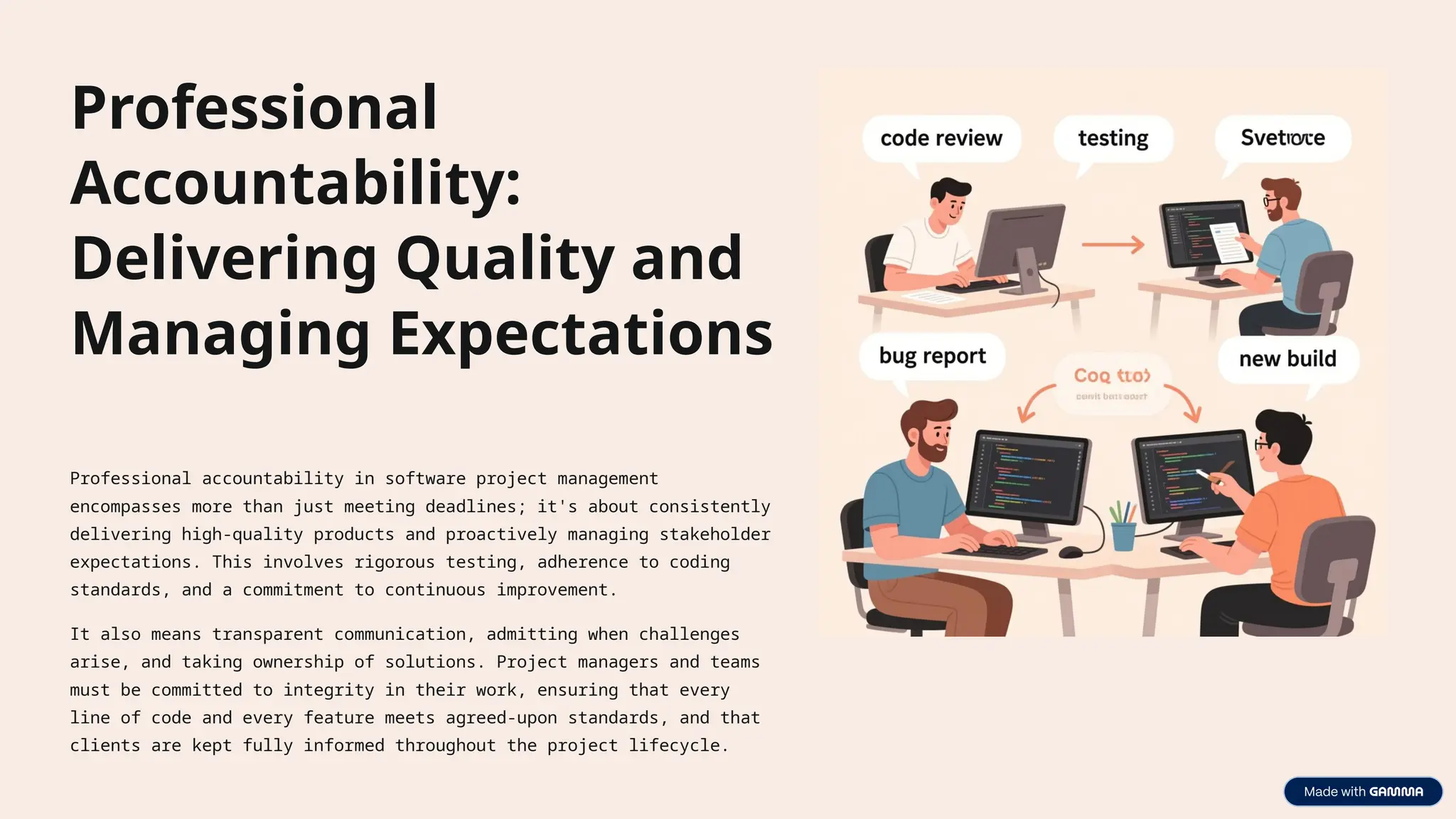
Professional accountability in software project management
encompasses more than just meeting deadlines; it's about consistently
delivering high-quality products and proactively managing stakeholder
expectations. This involves rigorous testing, adherence to coding
standards, and a commitment to continuous improvement.
It also means transparent communication, admitting when challenges
arise, and taking ownership of solutions. Project managers and teams
must be committed to integrity in their work, ensuring that every
line of code and every feature meets agreed-upon standards, and that
clients are kept fully informed throughout the project lifecycle.
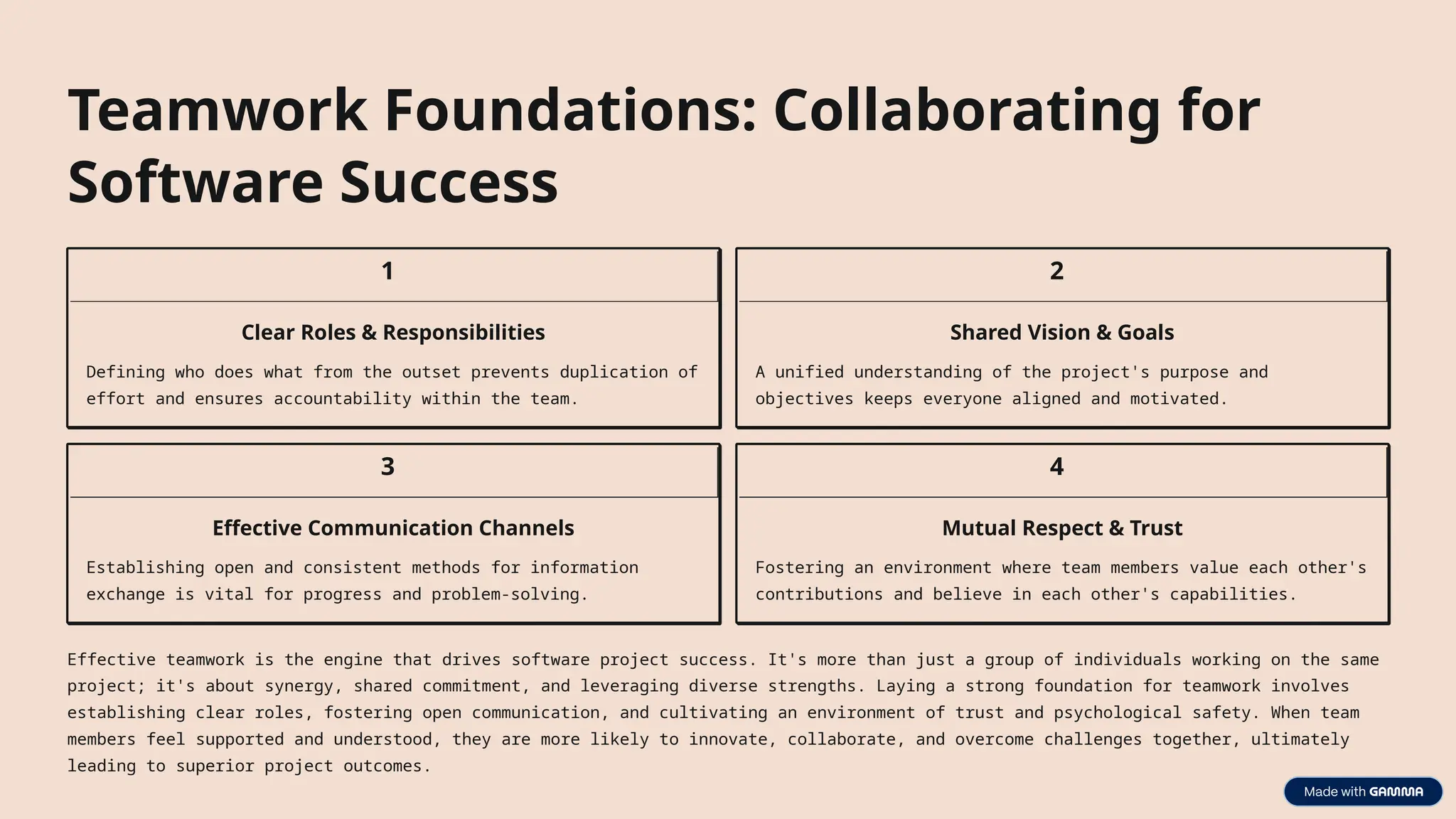
Teamwork Foundations: Collaborating for
Software Success
1
Clear Roles & Responsibilities
Defining who does what from the outset prevents duplication of
effort and ensures accountability within the team.
2
Shared Vision & Goals
A unified understanding of the project's purpose and
objectives keeps everyone aligned and motivated.
3
Effective Communication Channels
Establishing open and consistent methods for information
exchange is vital for progress and problem-solving.
4
Mutual Respect & Trust
Fostering an environment where team members value each other's
contributions and believe in each other's capabilities.
Effective teamwork is the engine that drives software project success. It's more than just a group of individuals working on the same
project; it's about synergy, shared commitment, and leveraging diverse strengths. Laying a strong foundation for teamwork involves
establishing clear roles, fostering open communication, and cultivating an environment of trust and psychological safety. When team
members feel supported and understood, they are more likely to innovate, collaborate, and overcome challenges together, ultimately
leading to superior project outcomes.
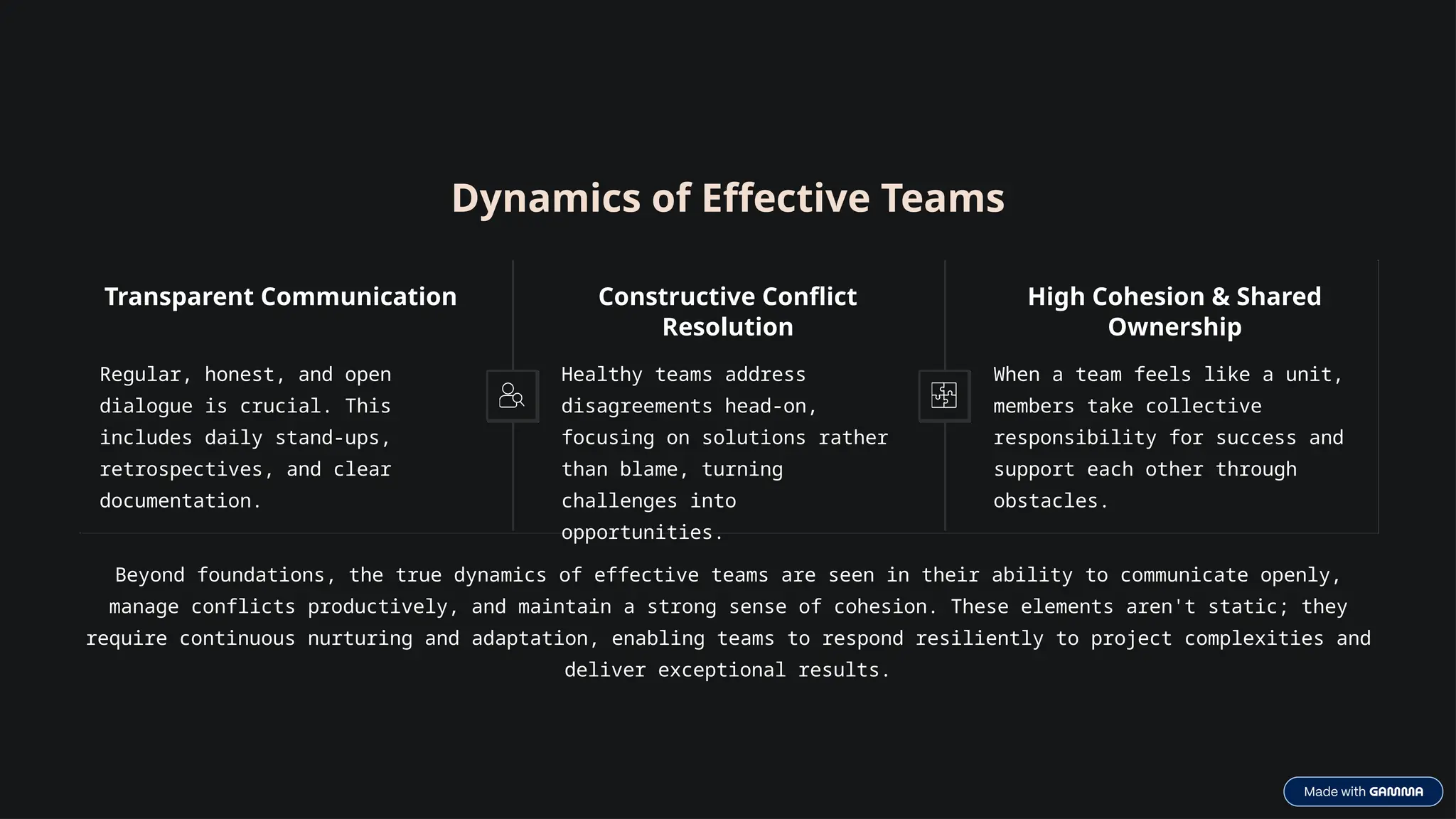
Dynamics of Effective Teams
Transparent Communication
Regular, honest, and open
dialogue is crucial. This
includes daily stand-ups,
retrospectives, and clear
documentation.
Constructive Conflict
Resolution
Healthy teams address
disagreements head-on,
focusing on solutions rather
than blame, turning
challenges into
opportunities.
High Cohesion & Shared
Ownership
When a team feels like a unit,
members take collective
responsibility for success and
support each other through
obstacles.
Beyond foundations, the true dynamics of effective teams are seen in their ability to communicate openly,
manage conflicts productively, and maintain a strong sense of cohesion. These elements aren't static; they
require continuous nurturing and adaptation, enabling teams to respond resiliently to project complexities and
deliver exceptional results.
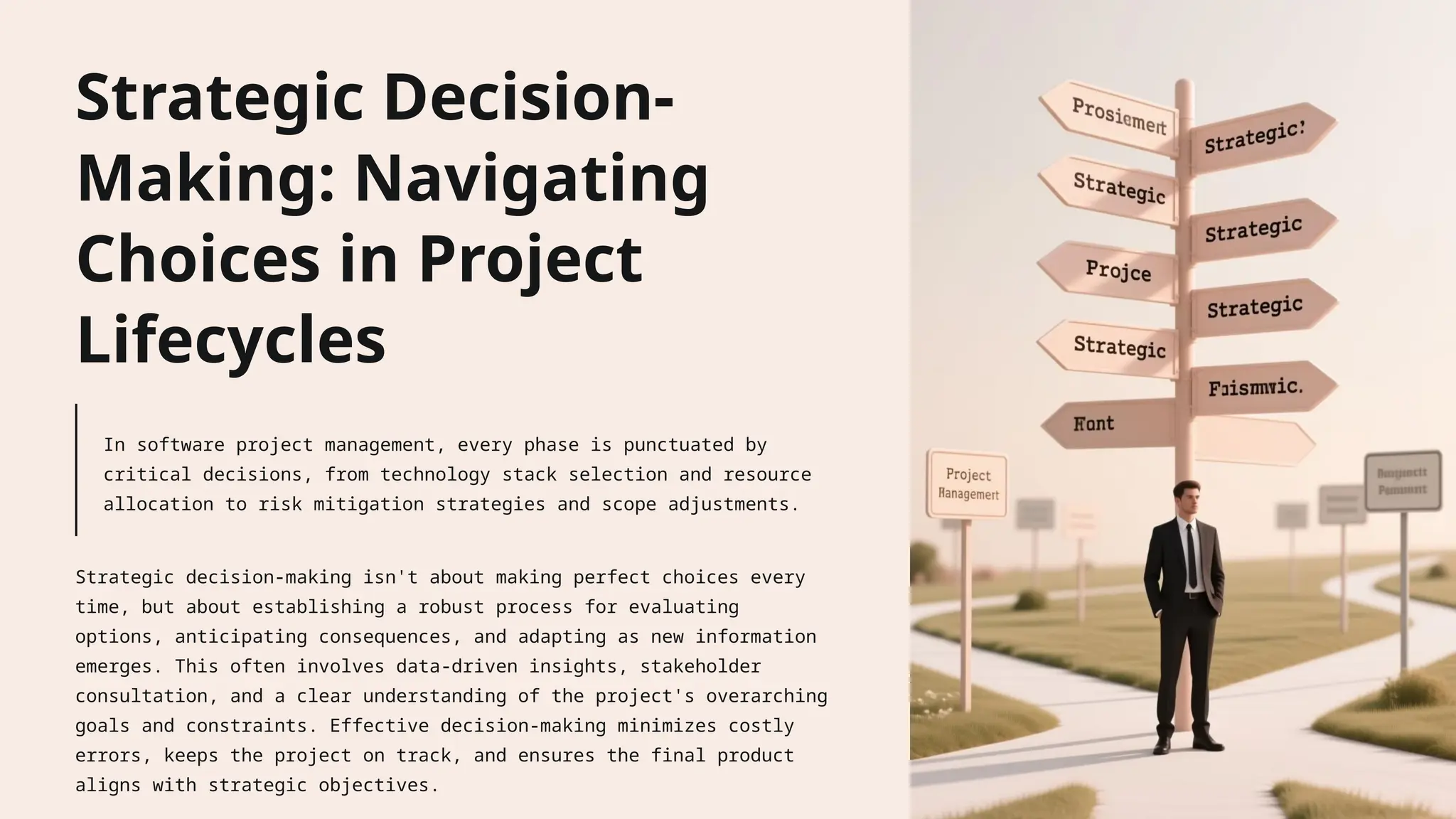
Strategic Decision-
Making: Navigating
Choices in Project
Lifecycles
In software project management, every phase is punctuated by
critical decisions, from technology stack selection and resource
allocation to risk mitigation strategies and scope adjustments.
Strategic decision-making isn't about making perfect choices every
time, but about establishing a robust process for evaluating
options, anticipating consequences, and adapting as new information
emerges. This often involves data-driven insights, stakeholder
consultation, and a clear understanding of the project's overarching
goals and constraints. Effective decision-making minimizes costly
errors, keeps the project on track, and ensures the final product
aligns with strategic objectives.
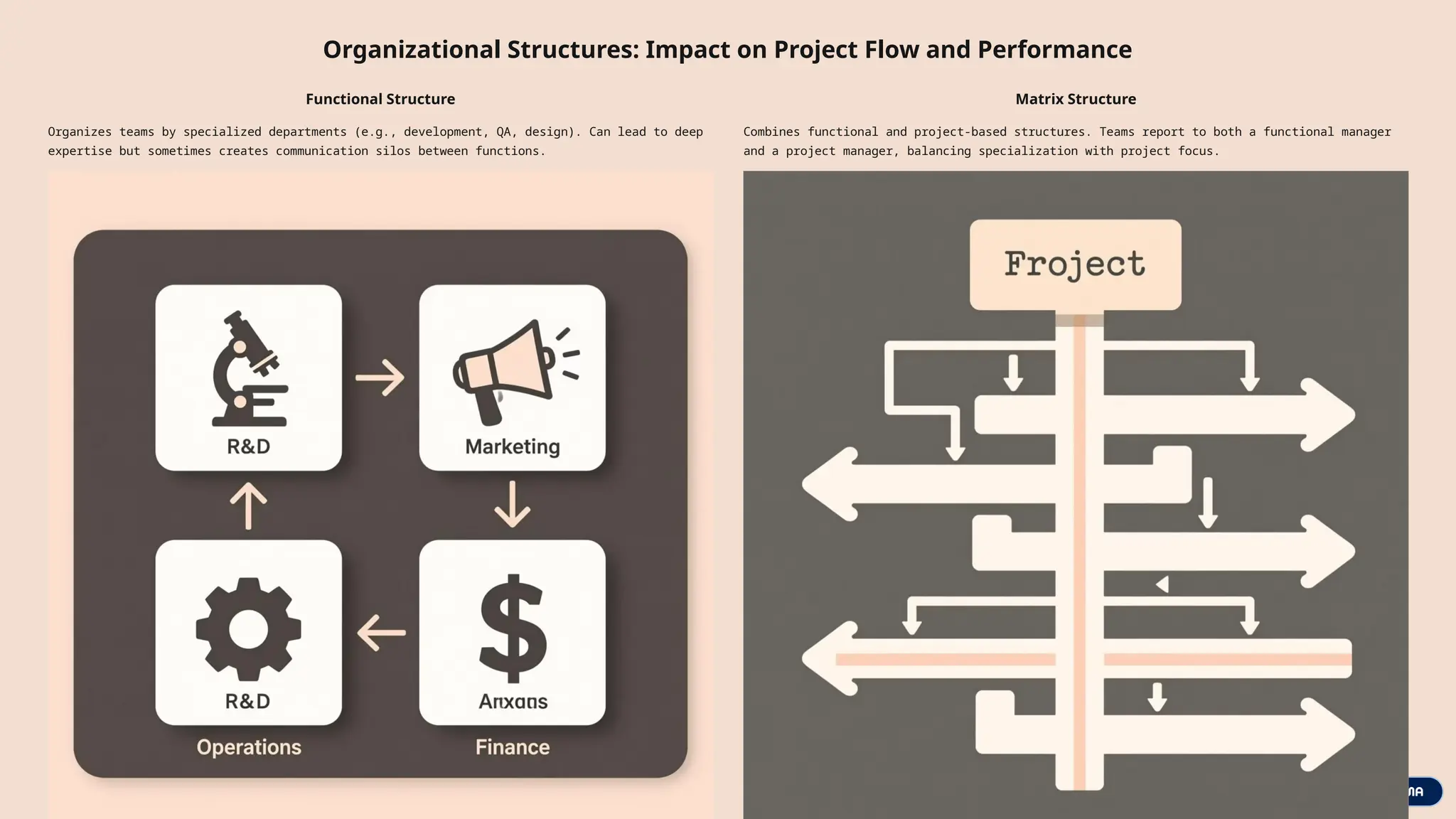
Organizational Structures: Impact on Project Flow and Performance
Functional Structure
Organizes teams by specialized departments (e.g., development, QA, design). Can lead to deep
expertise but sometimes creates communication silos between functions.
Matrix Structure
Combines functional and project-based structures. Teams report to both a functional manager
and a project manager, balancing specialization with project focus.
Bridging the Gaps
Processes
Establishing agile methodologies, clear workflows, and iterative development cycles.
Principles
Upholding ethical guidelines, promoting continuous learning, and fostering
a culture of accountability.
People
Empowering teams, facilitating communication, and
investing in skill development and well-being.
Ultimately, successful software project management is about seamlessly integrating people, processes, and principles.
It's about empowering diverse teams through robust processes, guided by strong ethical principles. This holistic
approach ensures that projects are not only technically sound but also socially responsible, efficiently managed, and
delivered by a cohesive and motivated workforce. Bridging these gaps creates a synergistic environment where
innovation thrives and challenges are transformed into opportunities for growth and impactful delivery.
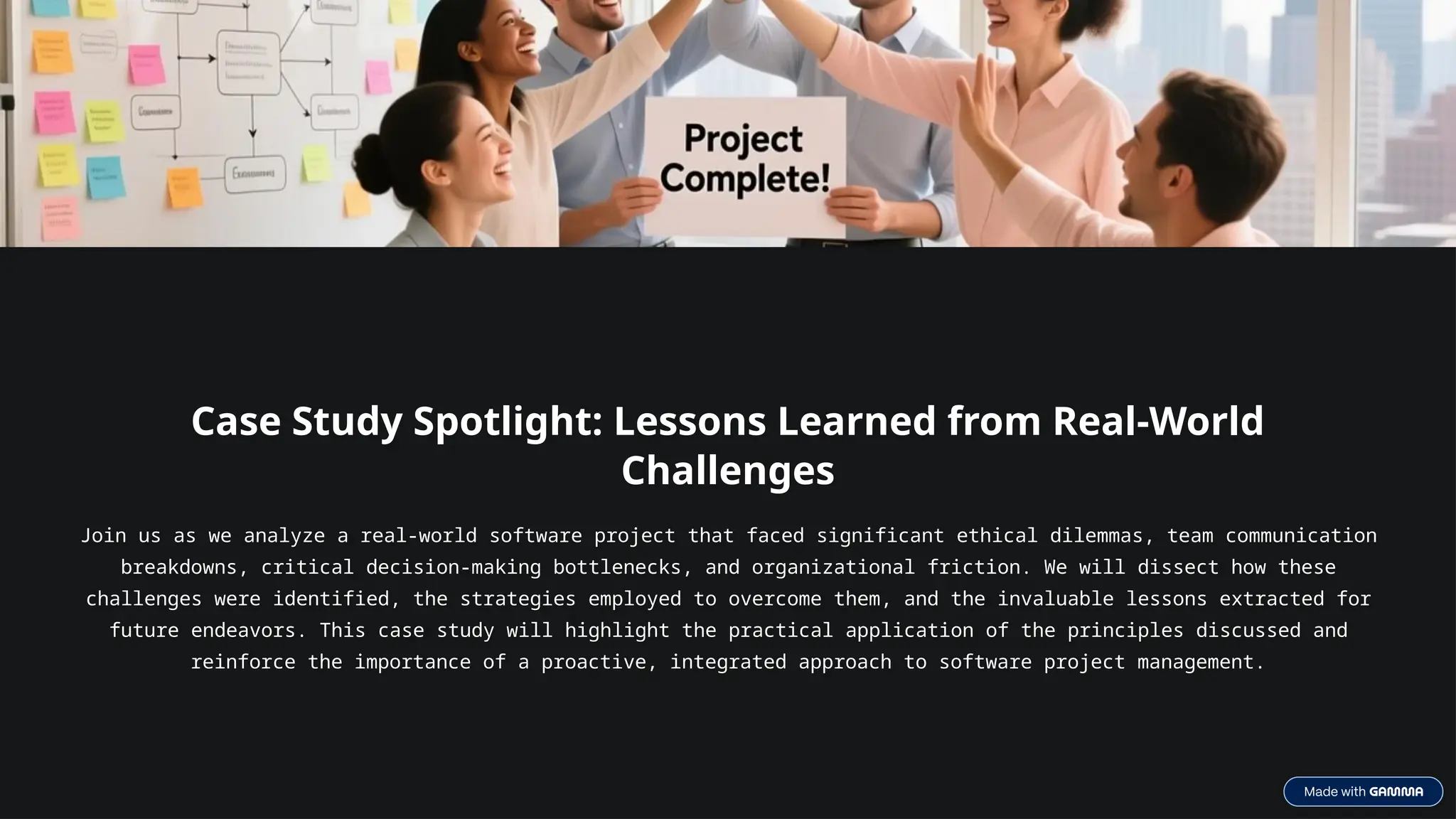
Case Study Spotlight: Lessons Learned from Real-World
Challenges
Join us as we analyze a real-world software project that faced significant ethical dilemmas, team communication
breakdowns, critical decision-making bottlenecks, and organizational friction. We will dissect how these
challenges were identified, the strategies employed to overcome them, and the invaluable lessons extracted for
future endeavors. This case study will highlight the practical application of the principles discussed and
reinforce the importance of a proactive, integrated approach to software project management.

software project management ethics and team decision structure.pptx

  • 1.
    NADAR SARASWATI COLLEGEOF ARTS AND SCIENCE Title: NAVIGATING ETHICS, TEAM DECISION AND STRUCTURE IN SOFTWARE PROJECT MANAGEMENT NAME: M. PRATHIYATHI II-M.Sc CS
  • 2.
    Software Project Management: Navigating Ethics,Teams, Decisions, and Structures A comprehensive guide to successful software project delivery
  • 3.
    The Complex Landscapeof Software Projects Software project management is a multifaceted discipline, far more than just coding and debugging. It involves a intricate dance between technical challenges, human dynamics, strategic choices, and organizational frameworks. This presentation will delve into the critical, often interconnected, elements that define success or failure in the software realm. We'll explore how ethical considerations, effective teamwork, sound decision- making processes, and appropriate organizational structures are not just add-ons, but fundamental pillars for delivering high-quality, impactful software solutions in today's rapidly evolving technological landscape.
  • 4.
    User Trust andData Privacy Ensuring robust data protection, transparency in data usage, and prioritizing user privacy are paramount. Breaches of trust can have devastating consequences for reputation and legal standing. Fairness and Bias Mitigation Developing algorithms and systems free from inherent biases that could lead to discriminatory outcomes. This requires conscious effort in data selection and model training. Social Impact and Accountability Considering the broader societal implications of the software, and being accountable for its effects, both intended and unintended, on communities and individuals. Ethical considerations form the bedrock of sustainable software development. Building trust is not merely a moral obligation but a business imperative. From safeguarding user data to ensuring fairness in algorithms and taking responsibility for the societal impact of our creations, ethical imperatives guide us toward responsible innovation. Ignoring these can lead to significant reputational damage, legal challenges, and ultimately, a loss of user confidence in the digital products we build.
  • 5.
    Professional Accountability: Delivering Quality and ManagingExpectations Professional accountability in software project management encompasses more than just meeting deadlines; it's about consistently delivering high-quality products and proactively managing stakeholder expectations. This involves rigorous testing, adherence to coding standards, and a commitment to continuous improvement. It also means transparent communication, admitting when challenges arise, and taking ownership of solutions. Project managers and teams must be committed to integrity in their work, ensuring that every line of code and every feature meets agreed-upon standards, and that clients are kept fully informed throughout the project lifecycle.
  • 6.
    Teamwork Foundations: Collaboratingfor Software Success 1 Clear Roles & Responsibilities Defining who does what from the outset prevents duplication of effort and ensures accountability within the team. 2 Shared Vision & Goals A unified understanding of the project's purpose and objectives keeps everyone aligned and motivated. 3 Effective Communication Channels Establishing open and consistent methods for information exchange is vital for progress and problem-solving. 4 Mutual Respect & Trust Fostering an environment where team members value each other's contributions and believe in each other's capabilities. Effective teamwork is the engine that drives software project success. It's more than just a group of individuals working on the same project; it's about synergy, shared commitment, and leveraging diverse strengths. Laying a strong foundation for teamwork involves establishing clear roles, fostering open communication, and cultivating an environment of trust and psychological safety. When team members feel supported and understood, they are more likely to innovate, collaborate, and overcome challenges together, ultimately leading to superior project outcomes.
  • 7.
    Dynamics of EffectiveTeams Transparent Communication Regular, honest, and open dialogue is crucial. This includes daily stand-ups, retrospectives, and clear documentation. Constructive Conflict Resolution Healthy teams address disagreements head-on, focusing on solutions rather than blame, turning challenges into opportunities. High Cohesion & Shared Ownership When a team feels like a unit, members take collective responsibility for success and support each other through obstacles. Beyond foundations, the true dynamics of effective teams are seen in their ability to communicate openly, manage conflicts productively, and maintain a strong sense of cohesion. These elements aren't static; they require continuous nurturing and adaptation, enabling teams to respond resiliently to project complexities and deliver exceptional results.
  • 8.
    Strategic Decision- Making: Navigating Choicesin Project Lifecycles In software project management, every phase is punctuated by critical decisions, from technology stack selection and resource allocation to risk mitigation strategies and scope adjustments. Strategic decision-making isn't about making perfect choices every time, but about establishing a robust process for evaluating options, anticipating consequences, and adapting as new information emerges. This often involves data-driven insights, stakeholder consultation, and a clear understanding of the project's overarching goals and constraints. Effective decision-making minimizes costly errors, keeps the project on track, and ensures the final product aligns with strategic objectives.
  • 9.
    Organizational Structures: Impacton Project Flow and Performance Functional Structure Organizes teams by specialized departments (e.g., development, QA, design). Can lead to deep expertise but sometimes creates communication silos between functions. Matrix Structure Combines functional and project-based structures. Teams report to both a functional manager and a project manager, balancing specialization with project focus.
  • 10.
    Bridging the Gaps Processes Establishingagile methodologies, clear workflows, and iterative development cycles. Principles Upholding ethical guidelines, promoting continuous learning, and fostering a culture of accountability. People Empowering teams, facilitating communication, and investing in skill development and well-being. Ultimately, successful software project management is about seamlessly integrating people, processes, and principles. It's about empowering diverse teams through robust processes, guided by strong ethical principles. This holistic approach ensures that projects are not only technically sound but also socially responsible, efficiently managed, and delivered by a cohesive and motivated workforce. Bridging these gaps creates a synergistic environment where innovation thrives and challenges are transformed into opportunities for growth and impactful delivery.
  • 11.
    Case Study Spotlight:Lessons Learned from Real-World Challenges Join us as we analyze a real-world software project that faced significant ethical dilemmas, team communication breakdowns, critical decision-making bottlenecks, and organizational friction. We will dissect how these challenges were identified, the strategies employed to overcome them, and the invaluable lessons extracted for future endeavors. This case study will highlight the practical application of the principles discussed and reinforce the importance of a proactive, integrated approach to software project management.