www.studymafia.org
Submitted To: Submitted By:
www.studymafia.org www.studymafia.org
Content
 Introduction
 History
 What is SDLC
 SDLC Phases
 Model of SDLC
 Conclusion
Introduction
 SDLC, Software Development Life Cycle is a process used by
software industry to design, develop and test high quality
software’s.
 The SDLC aims to produce a high quality software that meets
or exceeds customer expectations, reaches completion within
times and cost estimates.
 SDLC is the acronym of Software Development Life Cycle.
 It is also called as Software development process.
 The software development life cycle (SDLC) is a framework
defining tasks performed at each step in the software
development process.
 ISO/IEC 12207 is an international standard for software life-
cycle processes. It aims to be the standard that defines all the
tasks required for developing and maintaining software.
History
 The Systems Life Cycle (SLC) is a type of methodology used
to describe the process for building information systems,
intended to develop information systems in a very deliberate,
structured and methodical way, reiterating each stage of the
life cycle.
 Ever since, according to Elliott (2004), "the traditional life
cycle approaches to systems development have been
increasingly replaced with alternative approaches and
frameworks, which attempted to overcome some of the
inherent deficiencies of the traditional SDLC.
What is SDLC?
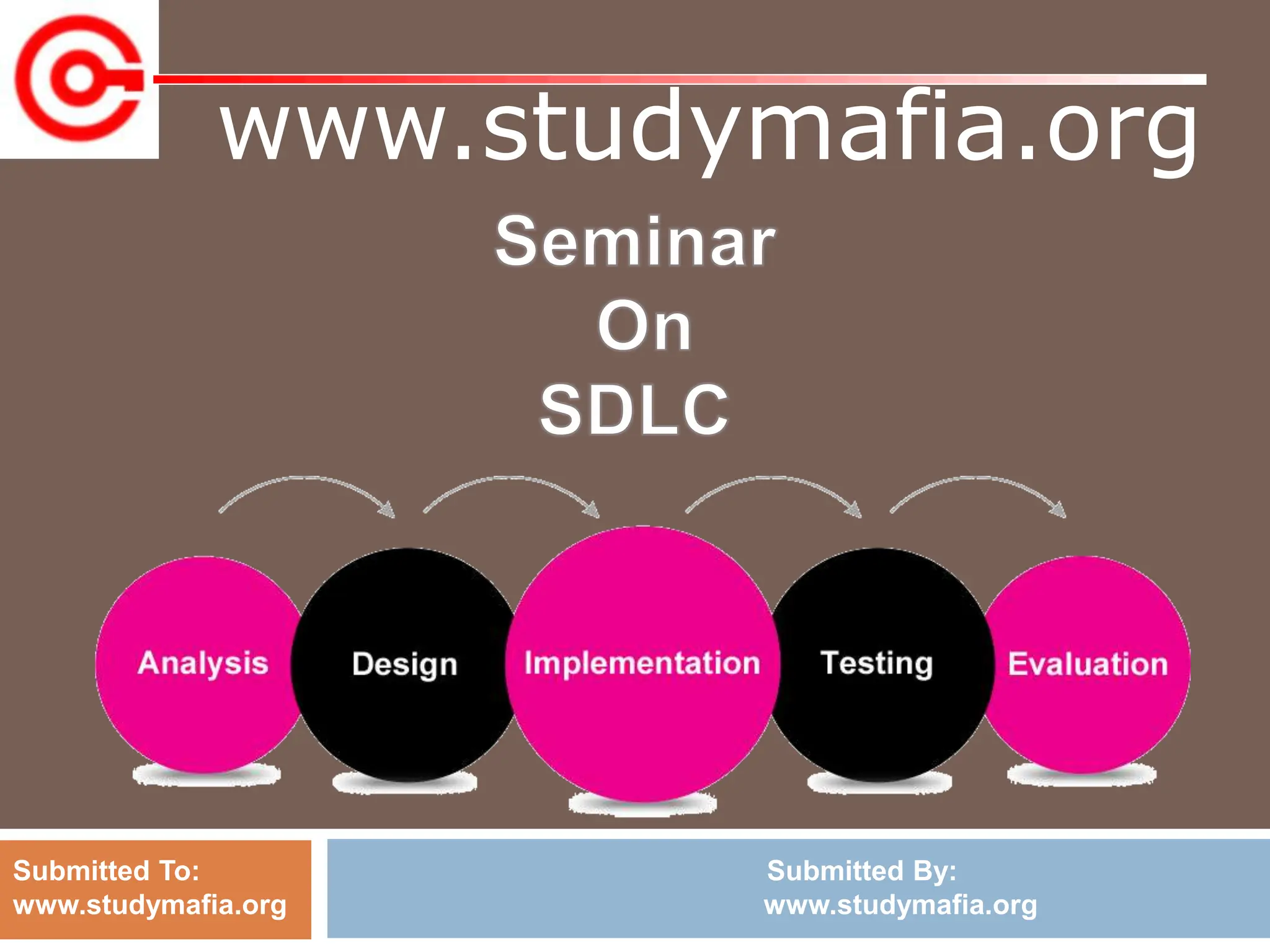
 SDLC is a process followed for a software project, within a
software organization.
 It consists of a detailed plan describing how to develop,
maintain, replace and alter or enhance specific software.
 The life cycle defines a methodology for improving the
quality of software and the overall development process.
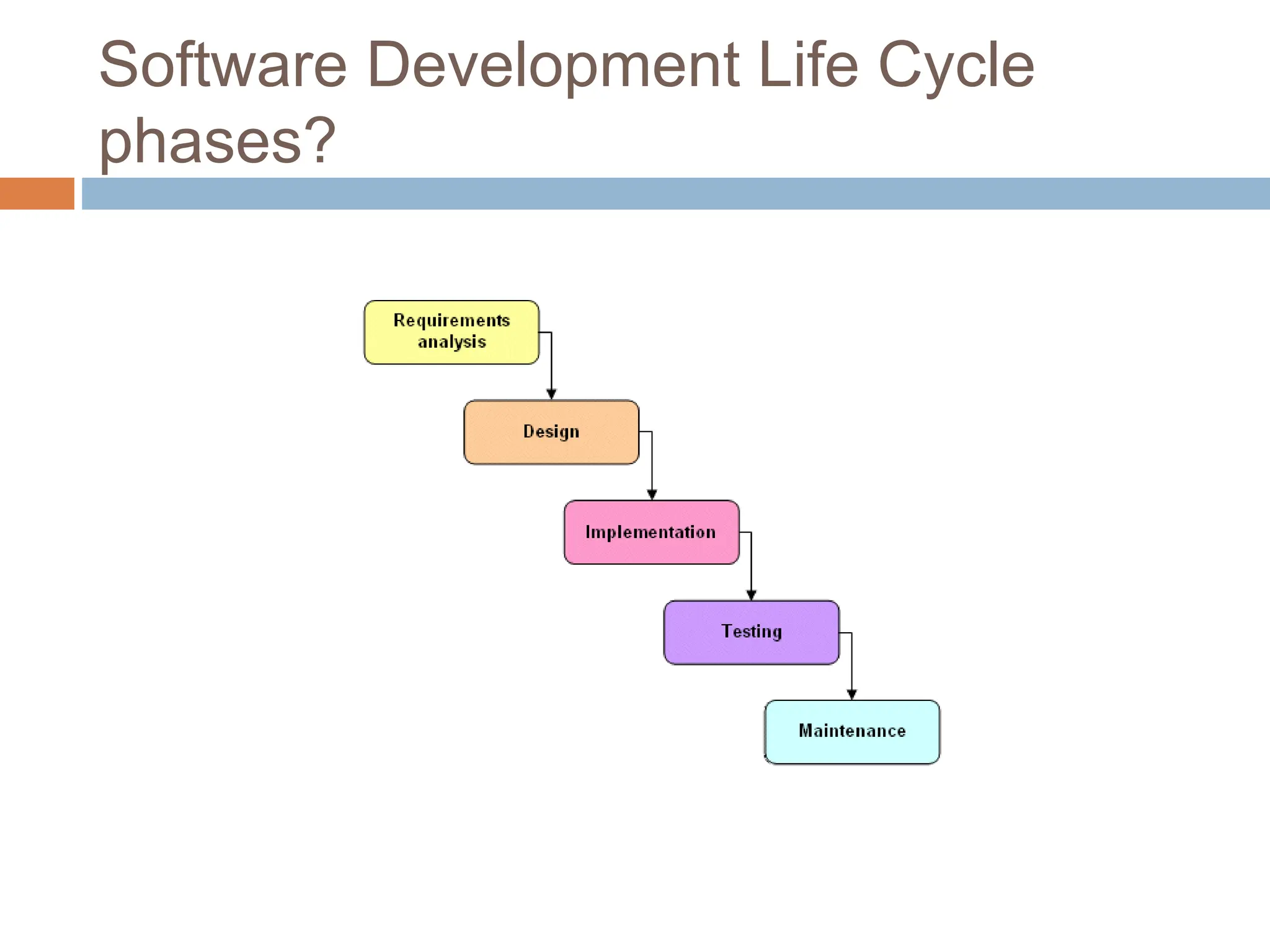
Software Development Life Cycle
phases?
Requirement gathering and
analysis:
 Business requirements are gathered in this phase.
 This phase is the main focus of the project managers and stake
holders.
 Meetings with managers, stake holders and users are held in
order to determine the requirements like; who is going to use
the system.
Design
 In this phase the system and software design is prepared from
the requirement specifications which were studied in the first
phase.
 System Design helps in specifying hardware and system
requirements and also helps in defining overall system
architecture.
 The system design specifications serve as input for the next
phase of the model.
Implementation / Coding:
 On receiving system design
documents, the work is divided in
modules/units and actual coding is
started.
 Since, in this phase the code is
produced so it is the main focus for
the developer. This is the longest
phase of the software development
life cycle.
Testing
 After the code is developed it is tested against the
requirements to make sure that the product is actually solving
the needs addressed and gathered during the requirements
phase.
 During this phase unit testing, integration testing, system
testing, acceptance testing are done.
Maintenance
 Once when the customers starts using the developed system
then the actual problems comes up and needs to be solved
from time to time.
 This process where the care is taken for the developed product
is known as maintenance.
Model of SDLC
Waterfall
Advantages
 Simple goal.
 Simple to understand and use.
 Clearly defined stages.
 Well understood milestones.
Disadvantages
 It is difficult to measure progress within stages.
 Cannot accommodate changing requirements.
 No working software is produced until late in the life cycle.
 Risk and uncertainty is high with this process model.
Incremental
Advantages
 Some working functionality can be developed quickly and
early in the life cycle.
 Results are obtained early and periodically.
 Parallel development can be planned.
 Progress can be measured.
Disadvantages
 More resources may be required.
 Although cost of change is lesser but it is not very suitable for
changing requirements.
 More management attention is required.
Evolutionary
Advantages
 Risk analysis is better.
 It supports changing requirements.
 Initial Operating time is less.
Disadvantages
 Not suitable for smaller projects.
 Management complexity is more.
 End of project may not be known which a risk is.
 Can be costly to use.
Spiral
Advantages
 Changing requirements can be accommodated.
 Allows for extensive use of prototypes.
 Requirements can be captured more accurately.
 Users see the system early.
Disadvantages
 Management is more complex.
 End of project may not be known early.
 Not suitable for small or low risk projects (expensive for small
projects).
 Process is complex.
RAD (Rapid Application
Development)
Advantages
 Time to deliver is less.
 Changing requirements can be accommodated.
 Progress can be measured.
Disadvantages
 Management complexity is more.
 Resource requirements may be more.
 Suitable for systems that are component based and scalable.
 Suitable only when requirements are well known.
Extreme/Agile Development
Advantages
 Promotes teamwork and cross training.
 Functionality can be developed rapidly and demonstrated.
 Resource requirements are minimum.
Disadvantages
 Not suitable for handling complex dependencies.
 More risk of sustainability, maintainability and extensibility.
 An overall plan, an agile leader and agile PM practice is a must
without which it will not work.
Conclusion
 Software Development Life Cycle (SDLC) is the process of
developing information systems through analysis, planning,
design, implementation, integration maintenance and testing
of software applications.
 Scope Restriction
 Progressive Enhancement
 Pre-defined Structure
 Incremental Planning at each of the stages
Thanks…!!!

Software Developement Life Cycle ppt.pptx

  • 1.
    www.studymafia.org Submitted To: SubmittedBy: www.studymafia.org www.studymafia.org
  • 2.
    Content  Introduction  History What is SDLC  SDLC Phases  Model of SDLC  Conclusion
  • 3.
    Introduction  SDLC, SoftwareDevelopment Life Cycle is a process used by software industry to design, develop and test high quality software’s.  The SDLC aims to produce a high quality software that meets or exceeds customer expectations, reaches completion within times and cost estimates.  SDLC is the acronym of Software Development Life Cycle.  It is also called as Software development process.  The software development life cycle (SDLC) is a framework defining tasks performed at each step in the software development process.  ISO/IEC 12207 is an international standard for software life- cycle processes. It aims to be the standard that defines all the tasks required for developing and maintaining software.
  • 4.
    History  The SystemsLife Cycle (SLC) is a type of methodology used to describe the process for building information systems, intended to develop information systems in a very deliberate, structured and methodical way, reiterating each stage of the life cycle.  Ever since, according to Elliott (2004), "the traditional life cycle approaches to systems development have been increasingly replaced with alternative approaches and frameworks, which attempted to overcome some of the inherent deficiencies of the traditional SDLC.
  • 5.
    What is SDLC? SDLC is a process followed for a software project, within a software organization.  It consists of a detailed plan describing how to develop, maintain, replace and alter or enhance specific software.  The life cycle defines a methodology for improving the quality of software and the overall development process.
  • 6.
  • 7.
    Requirement gathering and analysis: Business requirements are gathered in this phase.  This phase is the main focus of the project managers and stake holders.  Meetings with managers, stake holders and users are held in order to determine the requirements like; who is going to use the system.
  • 8.
    Design  In thisphase the system and software design is prepared from the requirement specifications which were studied in the first phase.  System Design helps in specifying hardware and system requirements and also helps in defining overall system architecture.  The system design specifications serve as input for the next phase of the model.
  • 9.
    Implementation / Coding: On receiving system design documents, the work is divided in modules/units and actual coding is started.  Since, in this phase the code is produced so it is the main focus for the developer. This is the longest phase of the software development life cycle.
  • 10.
    Testing  After thecode is developed it is tested against the requirements to make sure that the product is actually solving the needs addressed and gathered during the requirements phase.  During this phase unit testing, integration testing, system testing, acceptance testing are done.
  • 11.
    Maintenance  Once whenthe customers starts using the developed system then the actual problems comes up and needs to be solved from time to time.  This process where the care is taken for the developed product is known as maintenance.
  • 12.
    Model of SDLC Waterfall Advantages Simple goal.  Simple to understand and use.  Clearly defined stages.  Well understood milestones. Disadvantages  It is difficult to measure progress within stages.  Cannot accommodate changing requirements.  No working software is produced until late in the life cycle.  Risk and uncertainty is high with this process model.
  • 13.
    Incremental Advantages  Some workingfunctionality can be developed quickly and early in the life cycle.  Results are obtained early and periodically.  Parallel development can be planned.  Progress can be measured. Disadvantages  More resources may be required.  Although cost of change is lesser but it is not very suitable for changing requirements.  More management attention is required.
  • 14.
    Evolutionary Advantages  Risk analysisis better.  It supports changing requirements.  Initial Operating time is less. Disadvantages  Not suitable for smaller projects.  Management complexity is more.  End of project may not be known which a risk is.  Can be costly to use.
  • 15.
    Spiral Advantages  Changing requirementscan be accommodated.  Allows for extensive use of prototypes.  Requirements can be captured more accurately.  Users see the system early. Disadvantages  Management is more complex.  End of project may not be known early.  Not suitable for small or low risk projects (expensive for small projects).  Process is complex.
  • 16.
    RAD (Rapid Application Development) Advantages Time to deliver is less.  Changing requirements can be accommodated.  Progress can be measured. Disadvantages  Management complexity is more.  Resource requirements may be more.  Suitable for systems that are component based and scalable.  Suitable only when requirements are well known.
  • 17.
    Extreme/Agile Development Advantages  Promotesteamwork and cross training.  Functionality can be developed rapidly and demonstrated.  Resource requirements are minimum. Disadvantages  Not suitable for handling complex dependencies.  More risk of sustainability, maintainability and extensibility.  An overall plan, an agile leader and agile PM practice is a must without which it will not work.
  • 18.
    Conclusion  Software DevelopmentLife Cycle (SDLC) is the process of developing information systems through analysis, planning, design, implementation, integration maintenance and testing of software applications.  Scope Restriction  Progressive Enhancement  Pre-defined Structure  Incremental Planning at each of the stages
  • 19.