Topic Overview
• Whatare social networks?
• What is social network analysis?
• Why social network analysis?
• Tools for visualizing social networks
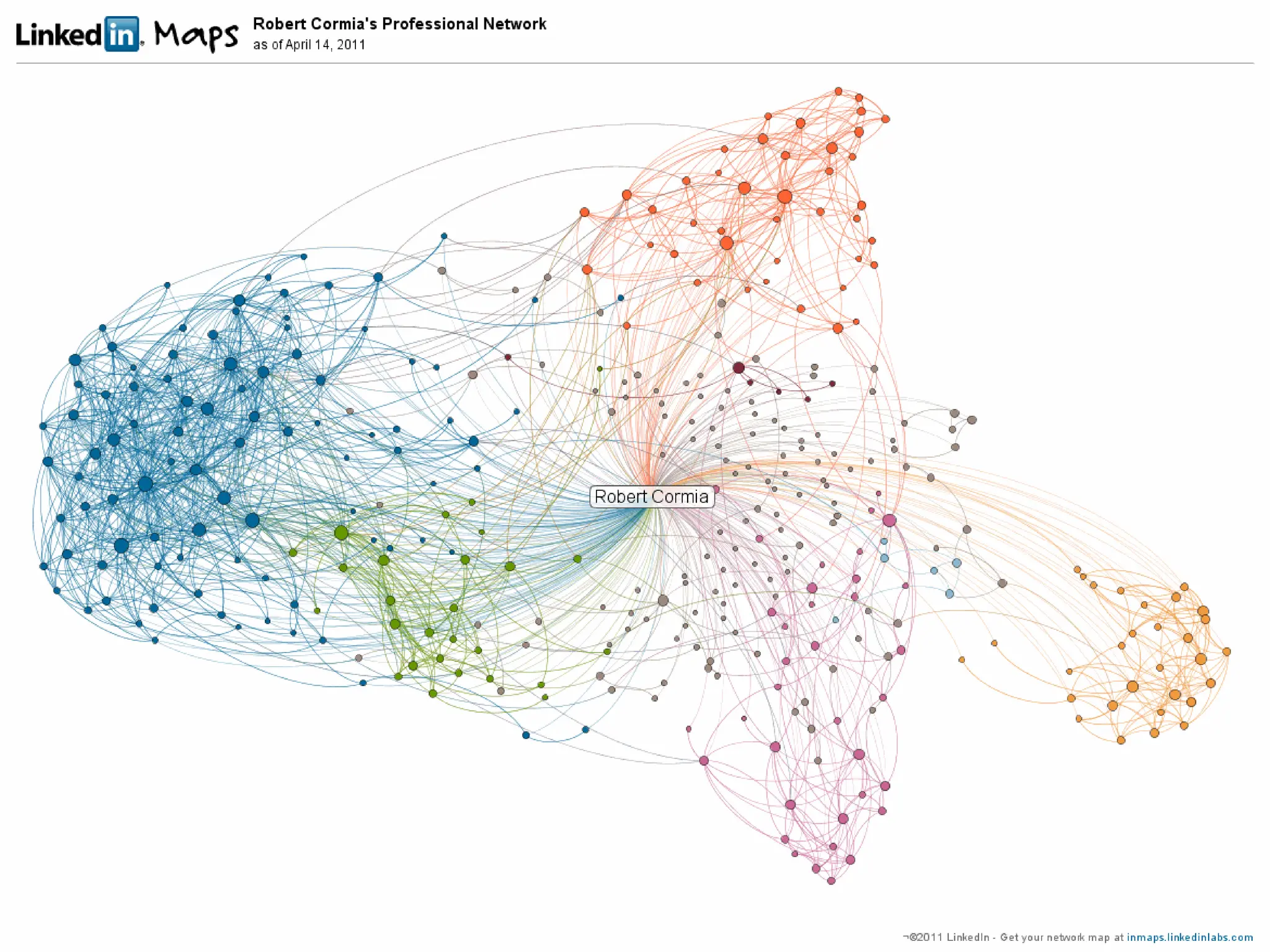
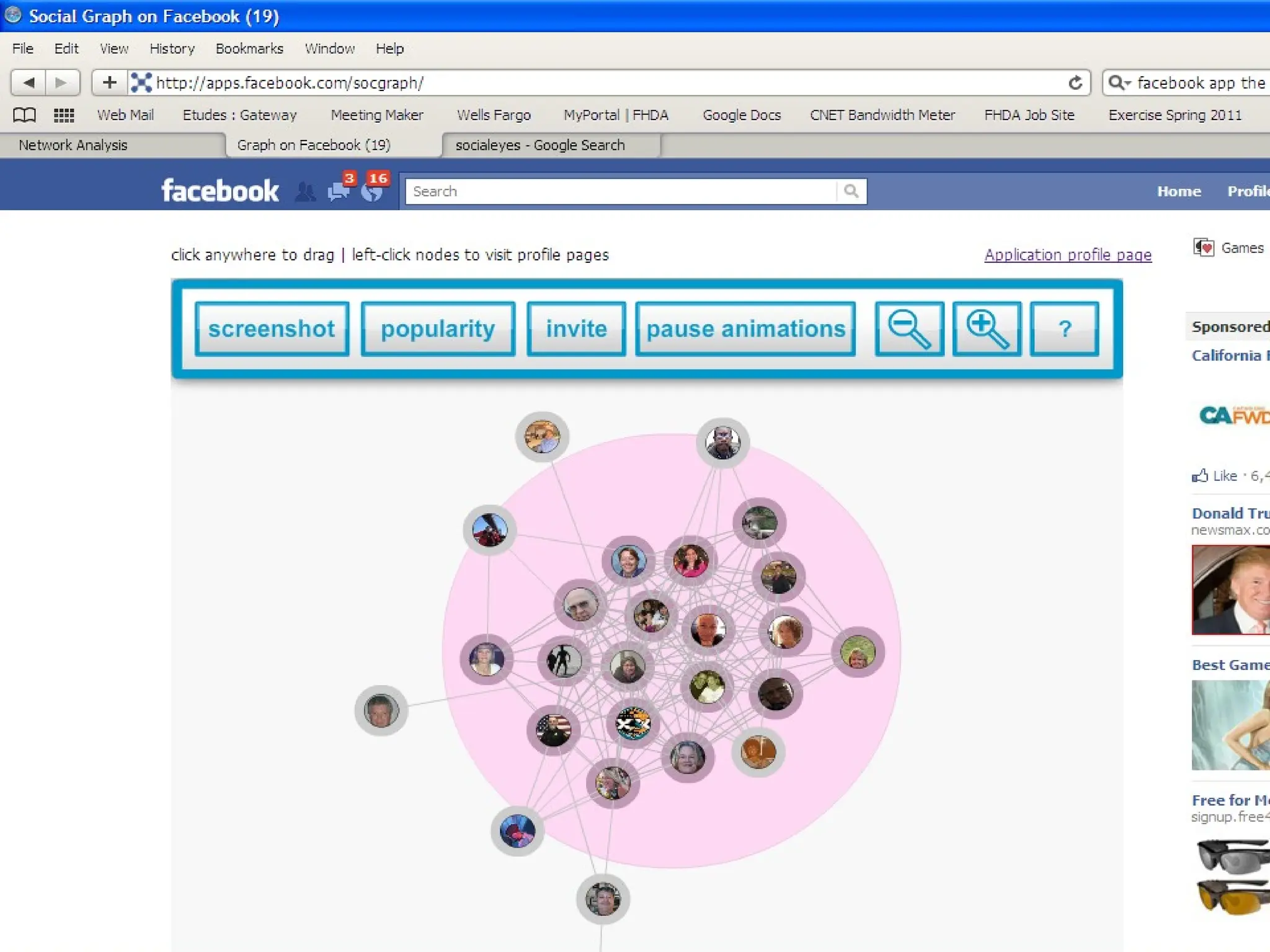
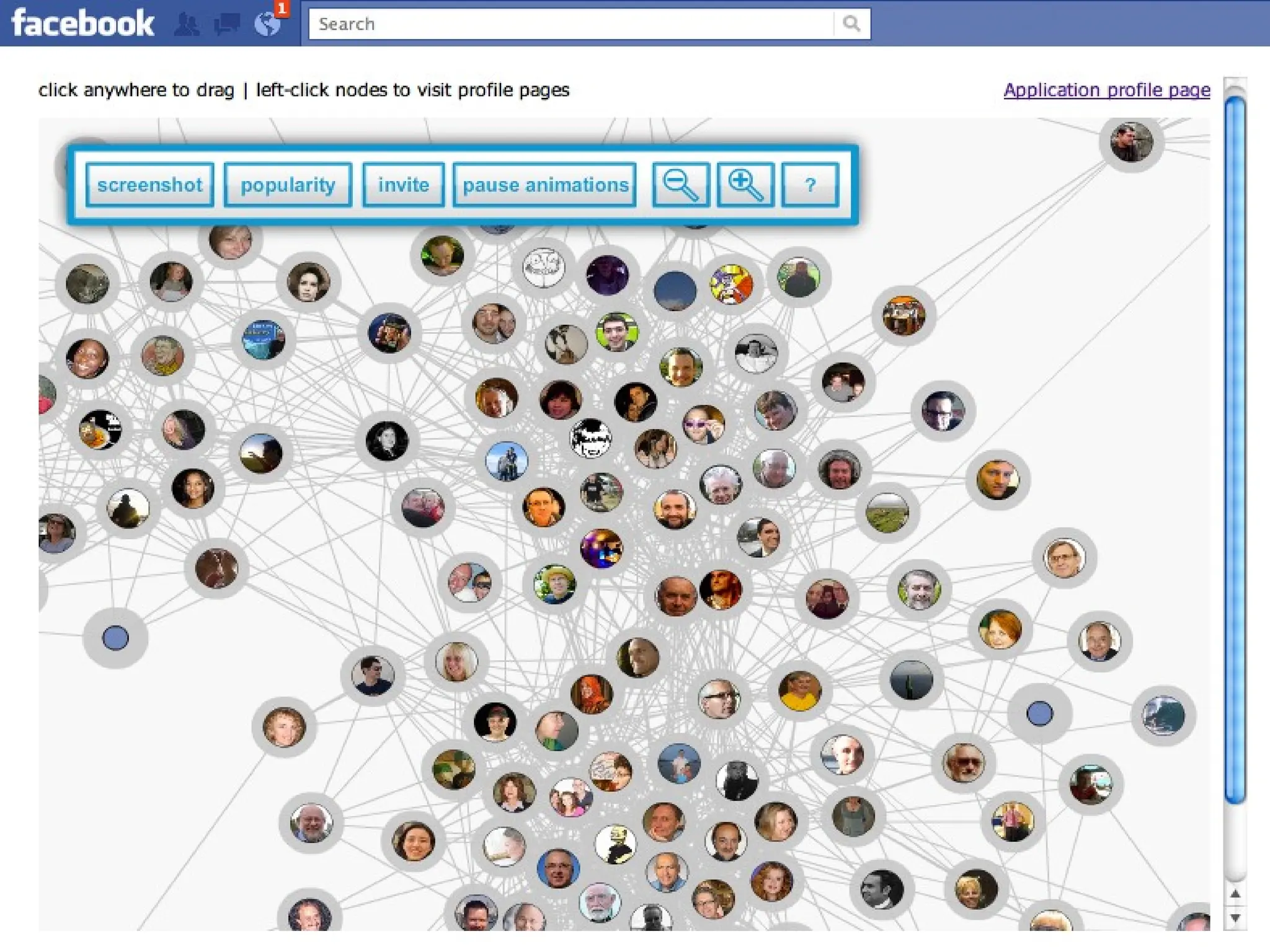
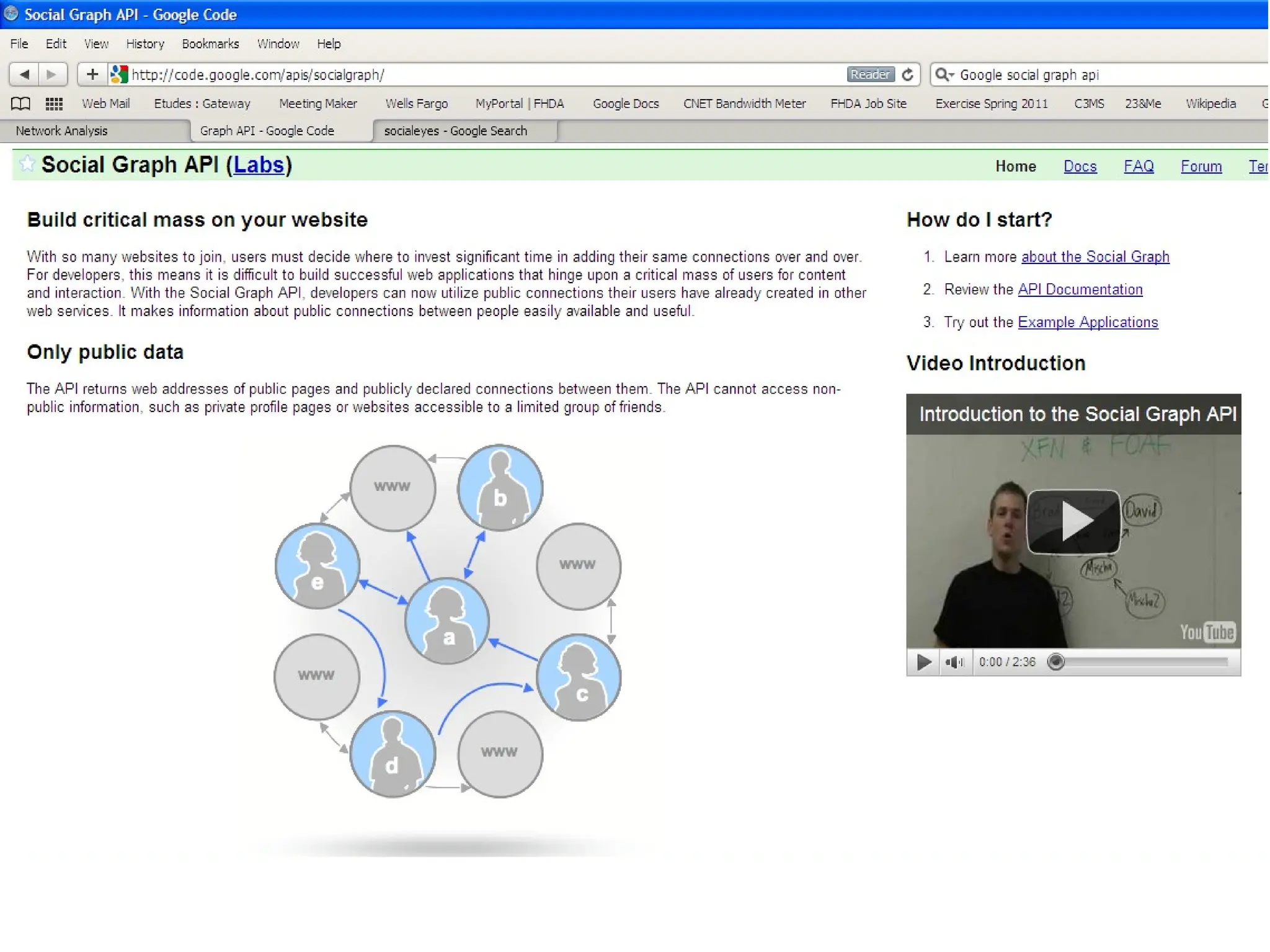
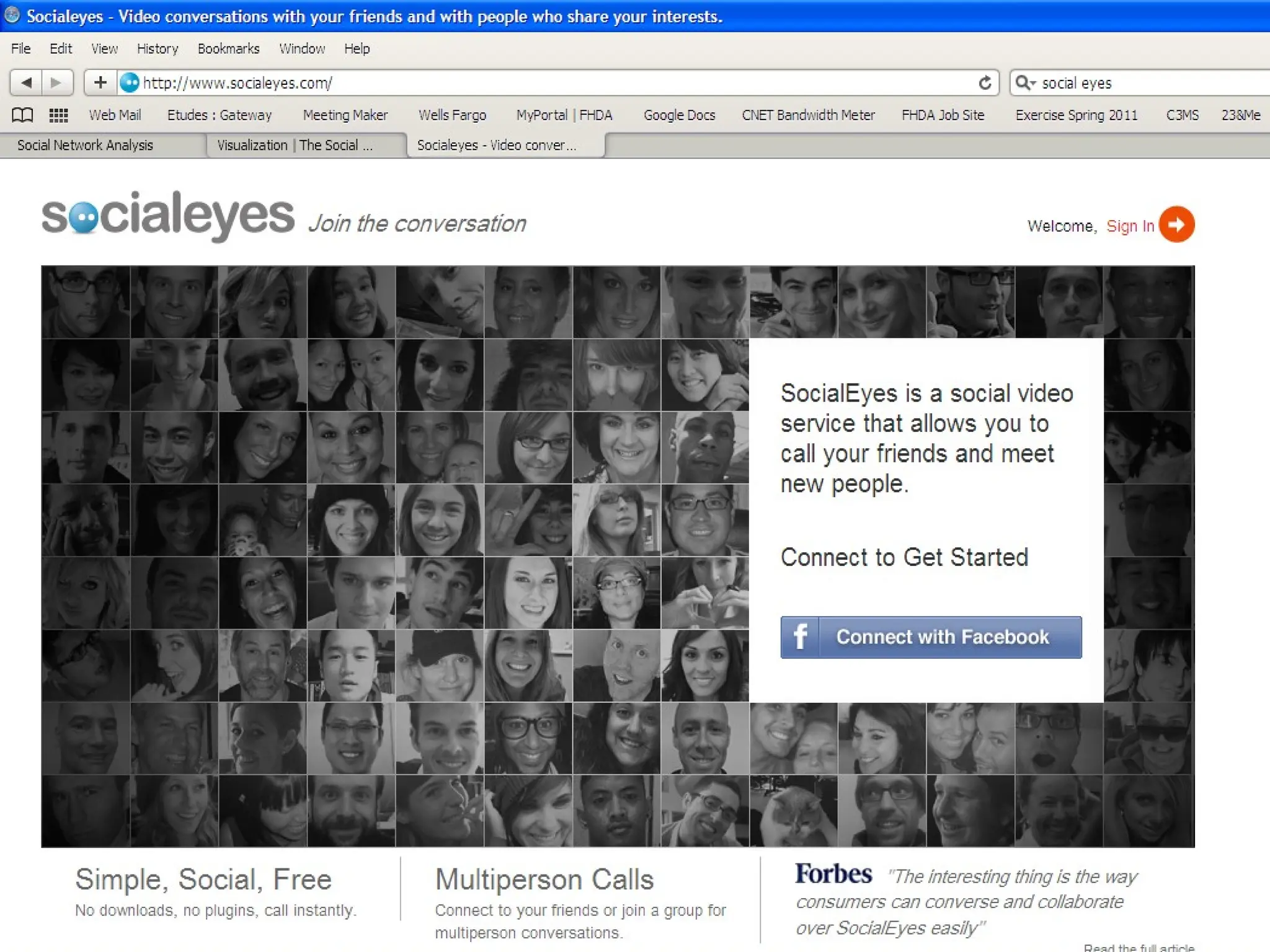
– Google, LinkedIn, Facebook, Twitter
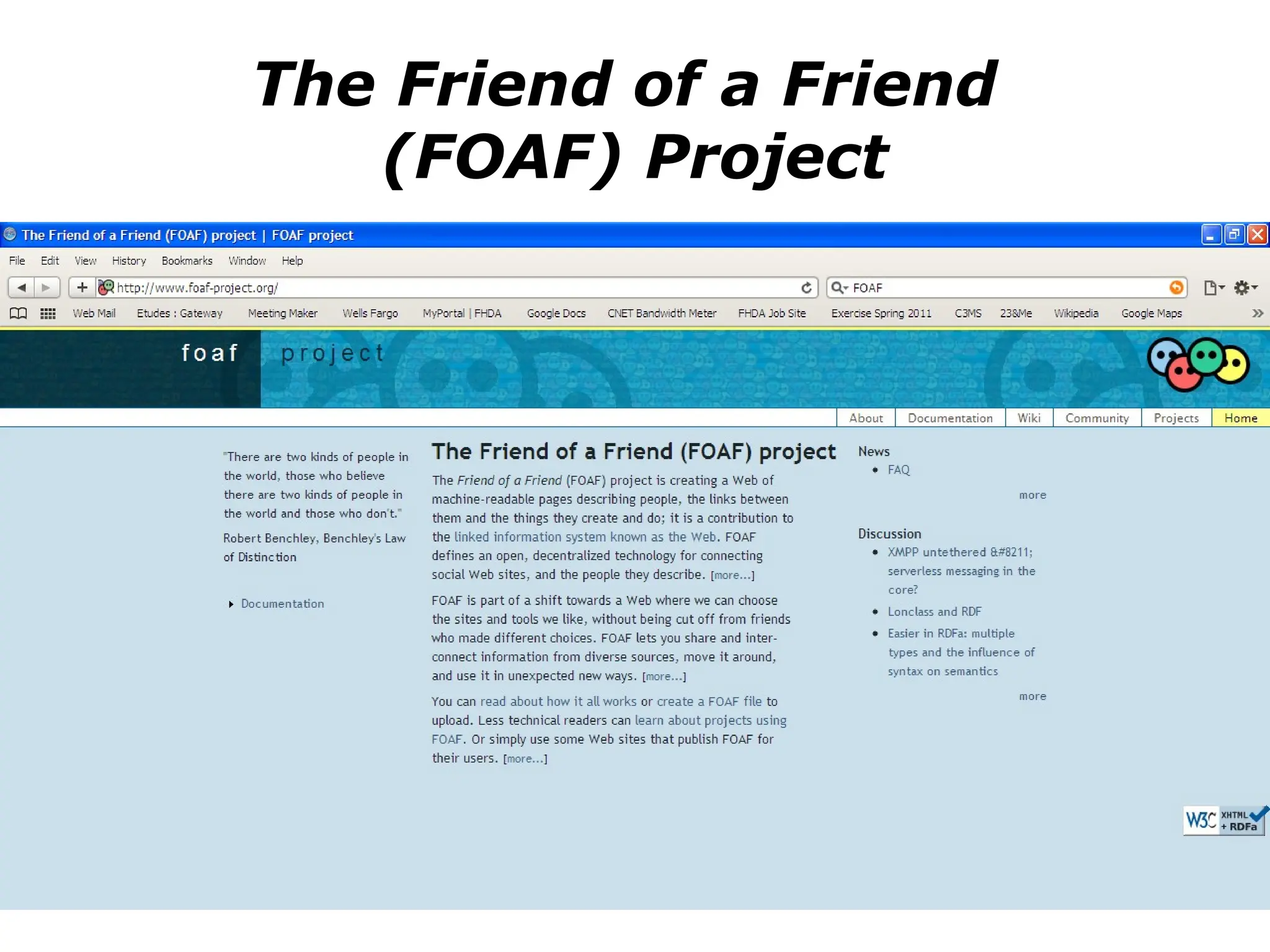
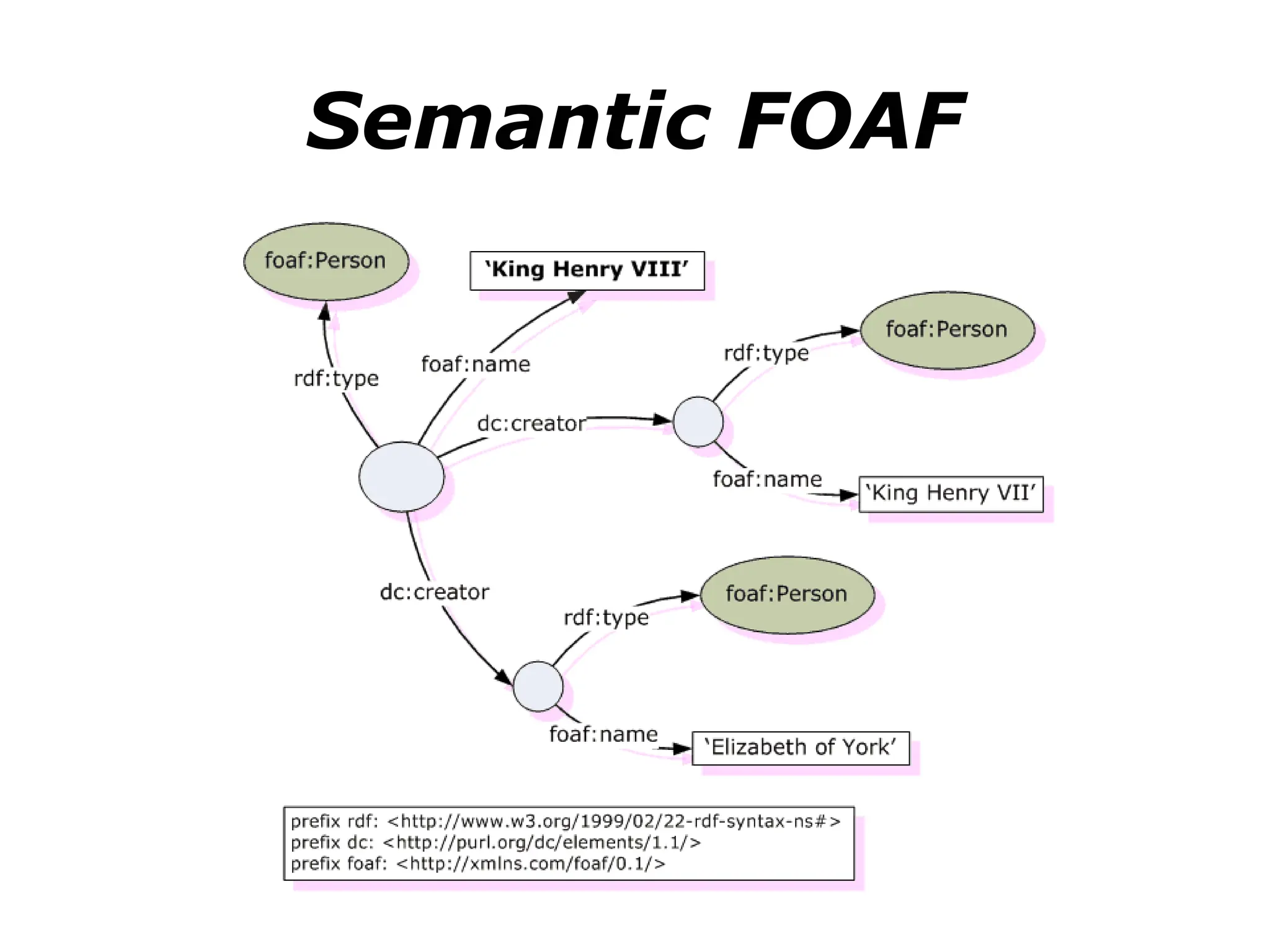
– FOAF and XFN
• Navigating your network
3.
Graph Theory
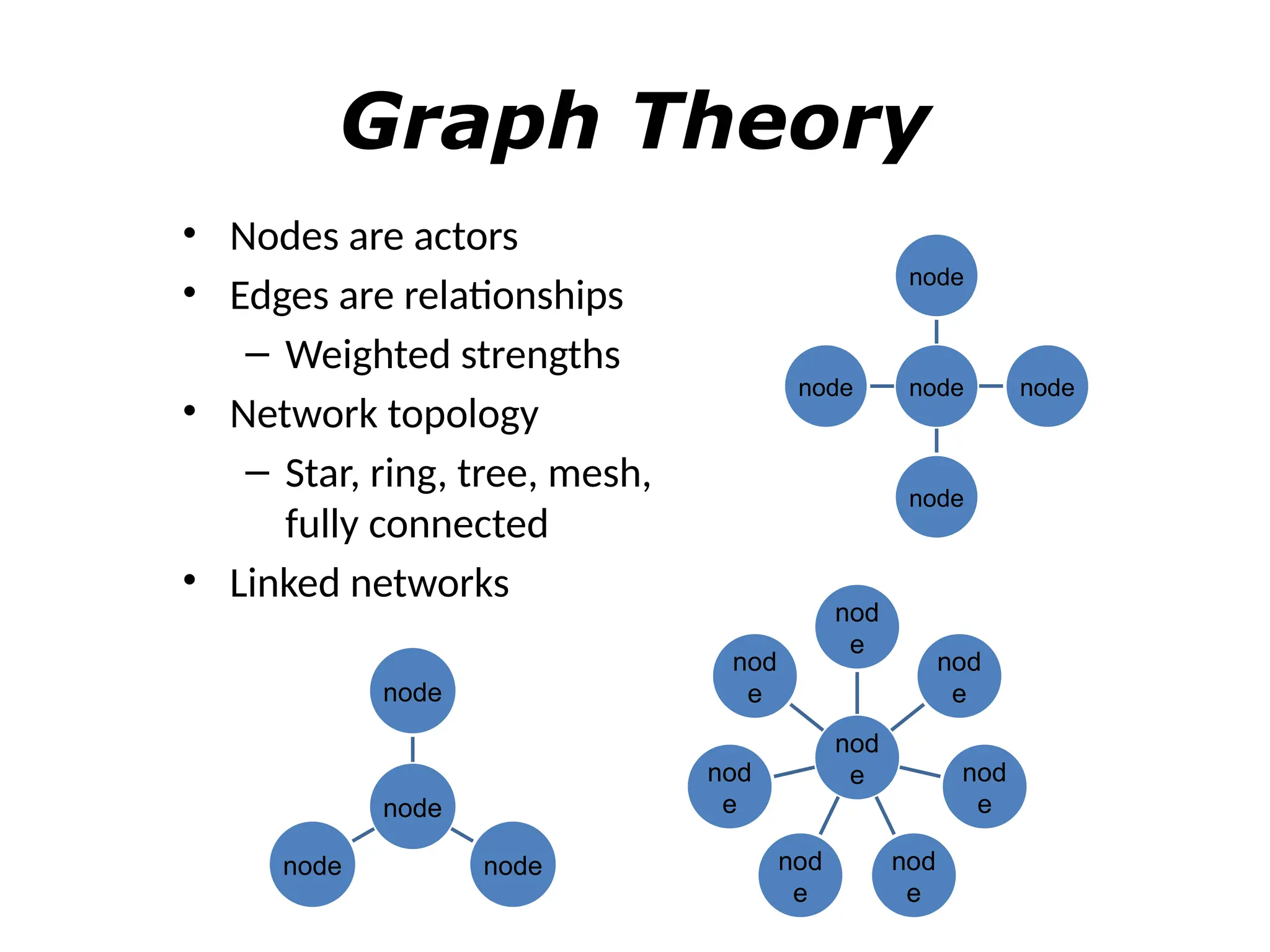
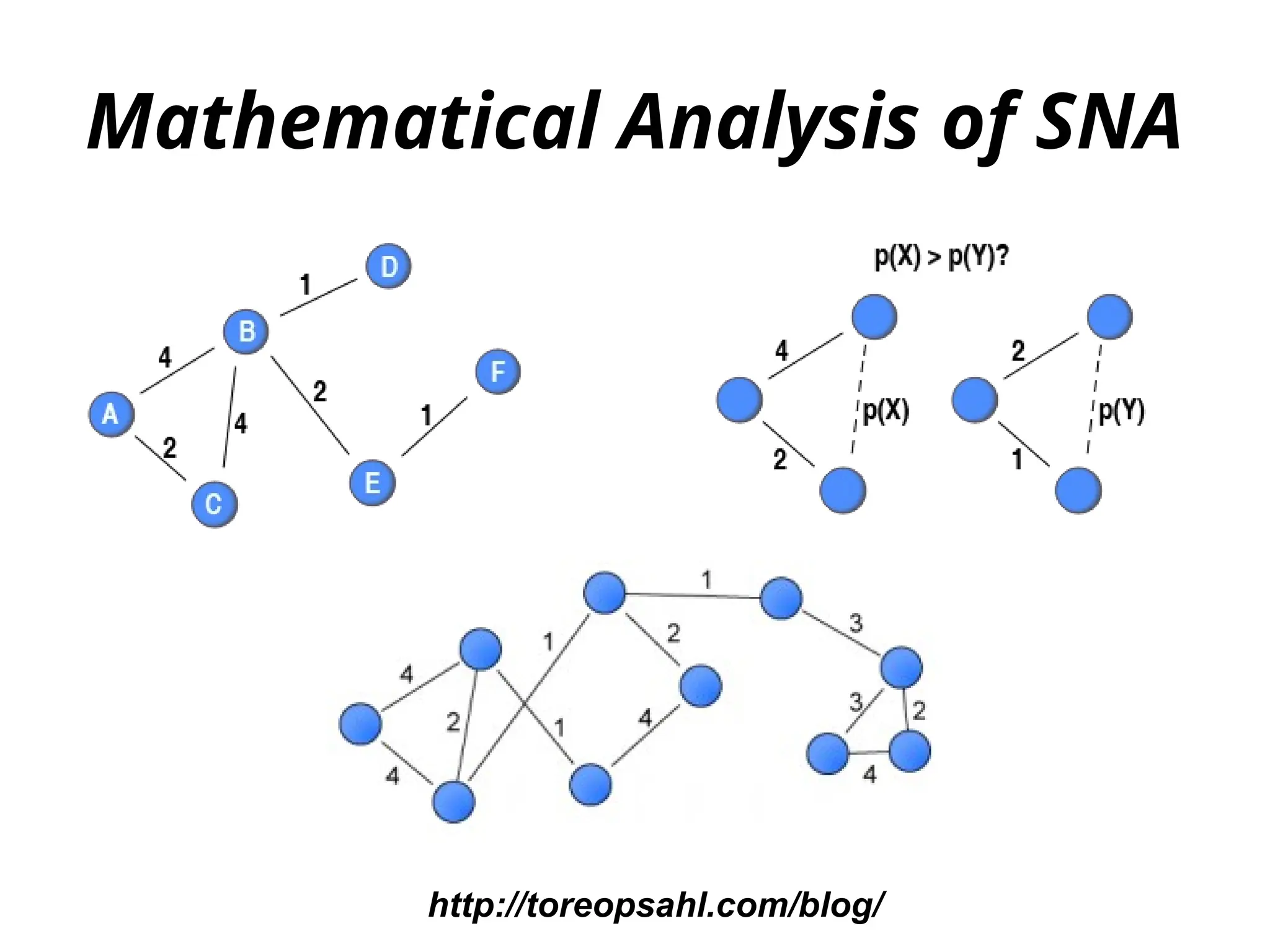
• Nodesare actors
• Edges are relationships
– Weighted strengths
• Network topology
– Star, ring, tree, mesh,
fully connected
• Linked networks
nod
e
nod
e
nod
e
nod
e
nod
e
nod
e
nod
e
nod
e
node
node
node
node
node
node
node
node
node
4.
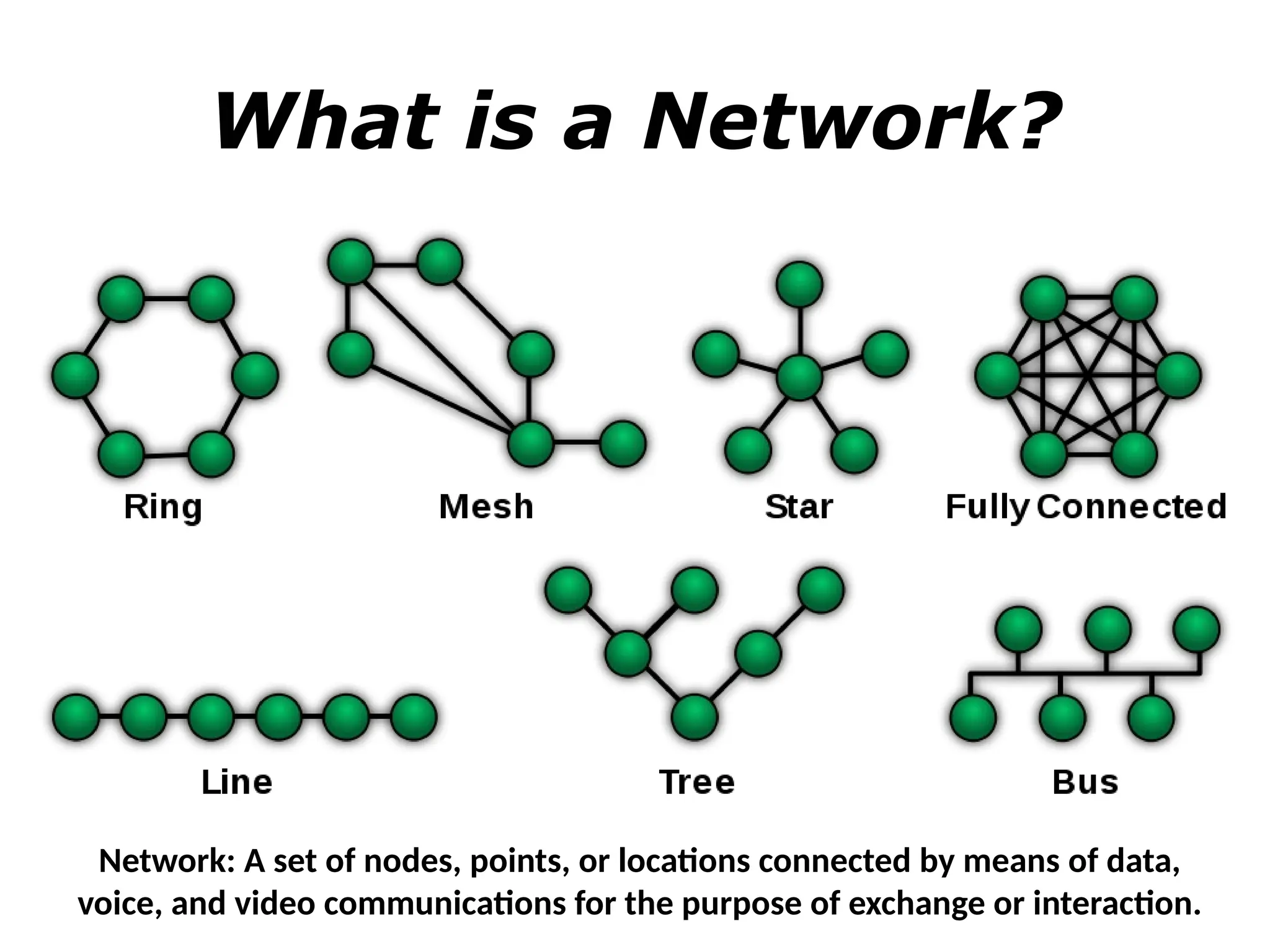
What is aNetwork?
Network: A set of nodes, points, or locations connected by means of data,
voice, and video communications for the purpose of exchange or interaction.
6.
Social Network Analysis
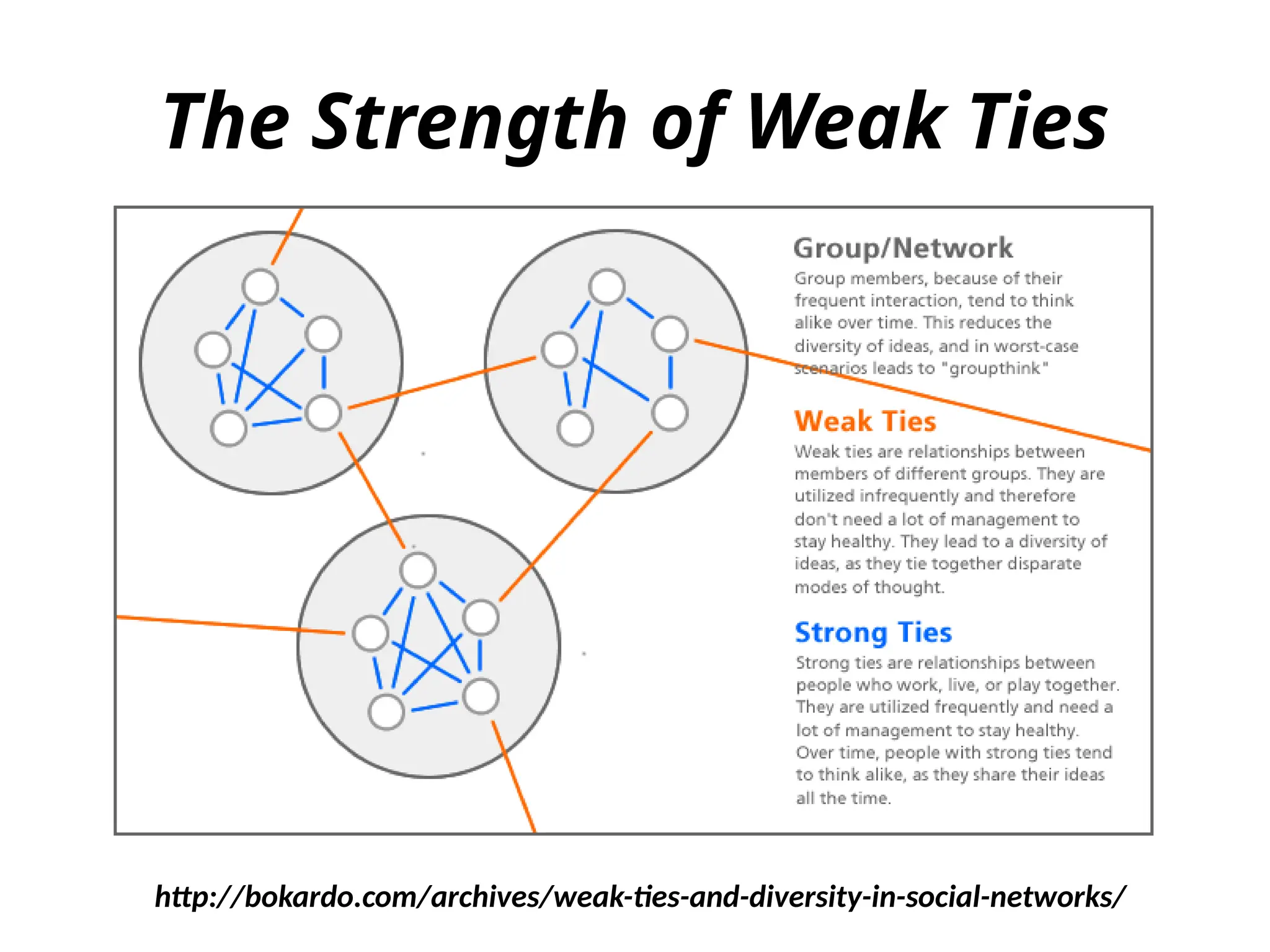
Knowledgeis located in social networks,
therefore it is important to better understand
them. Social networks are nodes of
individuals, groups, organizations or related
systems which are connected by types of
interdependency. Social Network Analysis
(SNA) is an instrument to map these
connections and visualize formal and
informal connections and knowledge flows
between people, groups and organizations.
http://itcilo.wordpress.com/2011/03/07/social-network-analysis/
7.
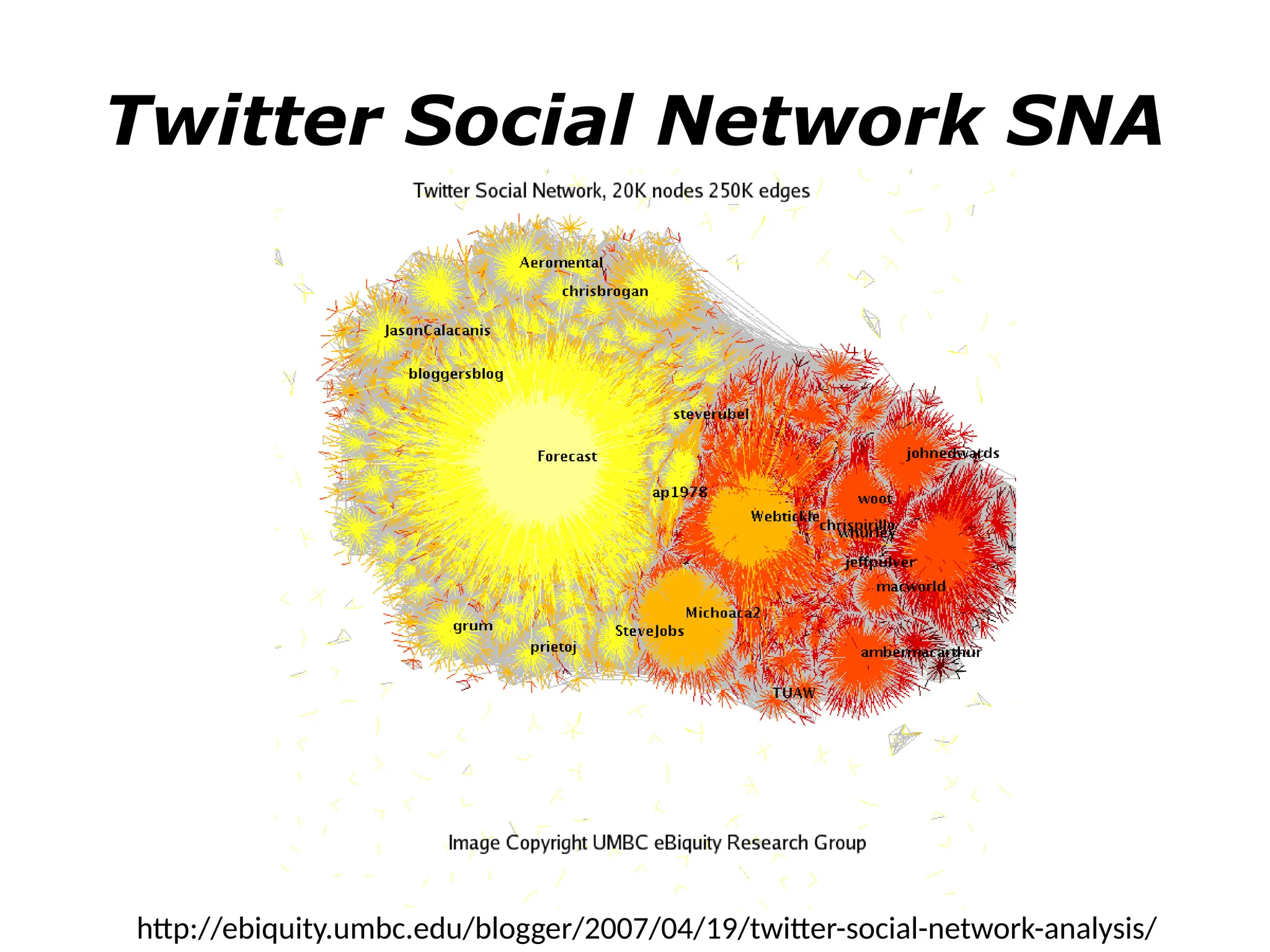
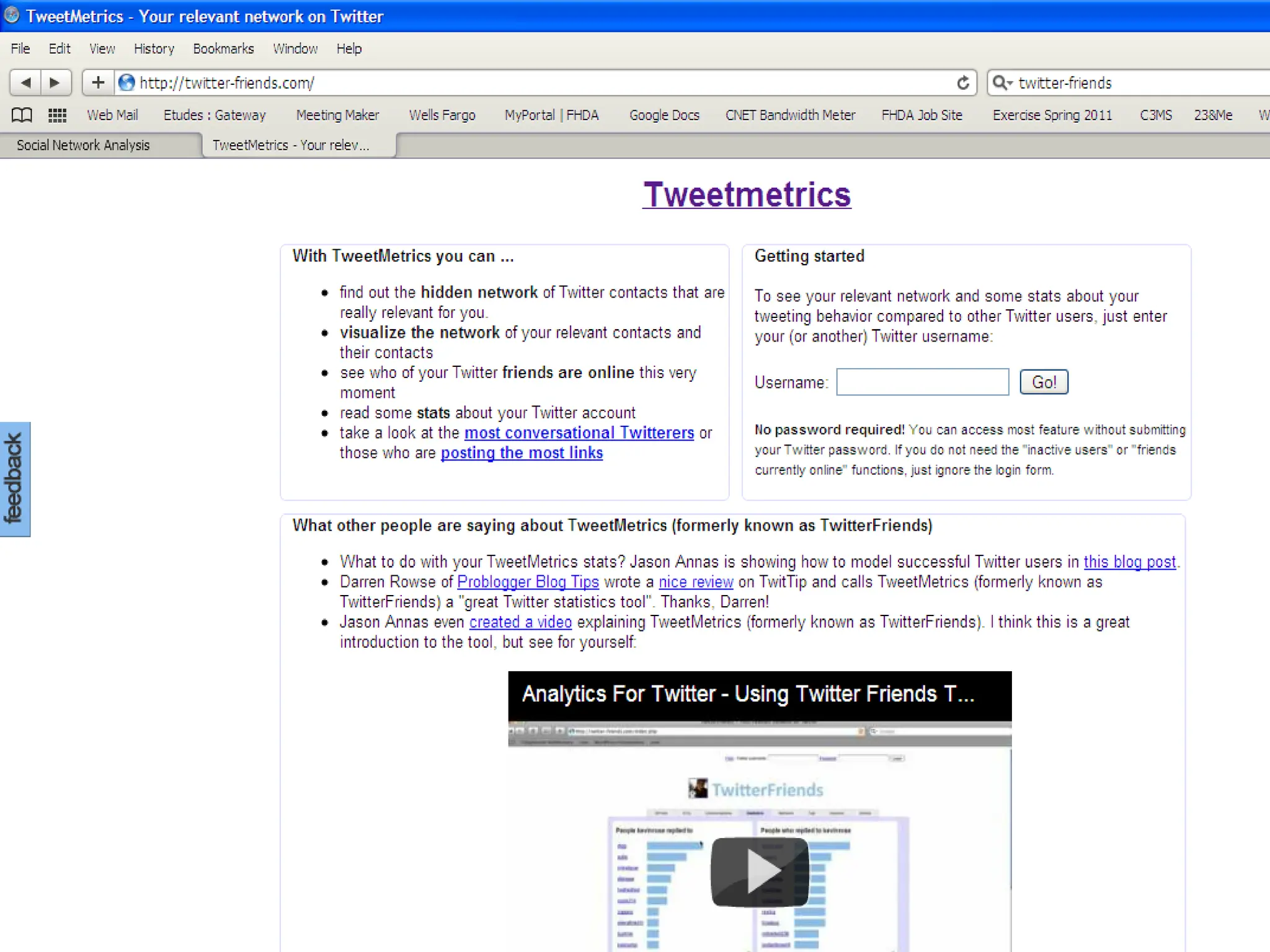
Twitter Social NetworkSNA
http://ebiquity.umbc.edu/blogger/2007/04/19/twitter-social-network-analysis/
10.
Social Network Analysis,A Brief
Introduction (OrgNET)
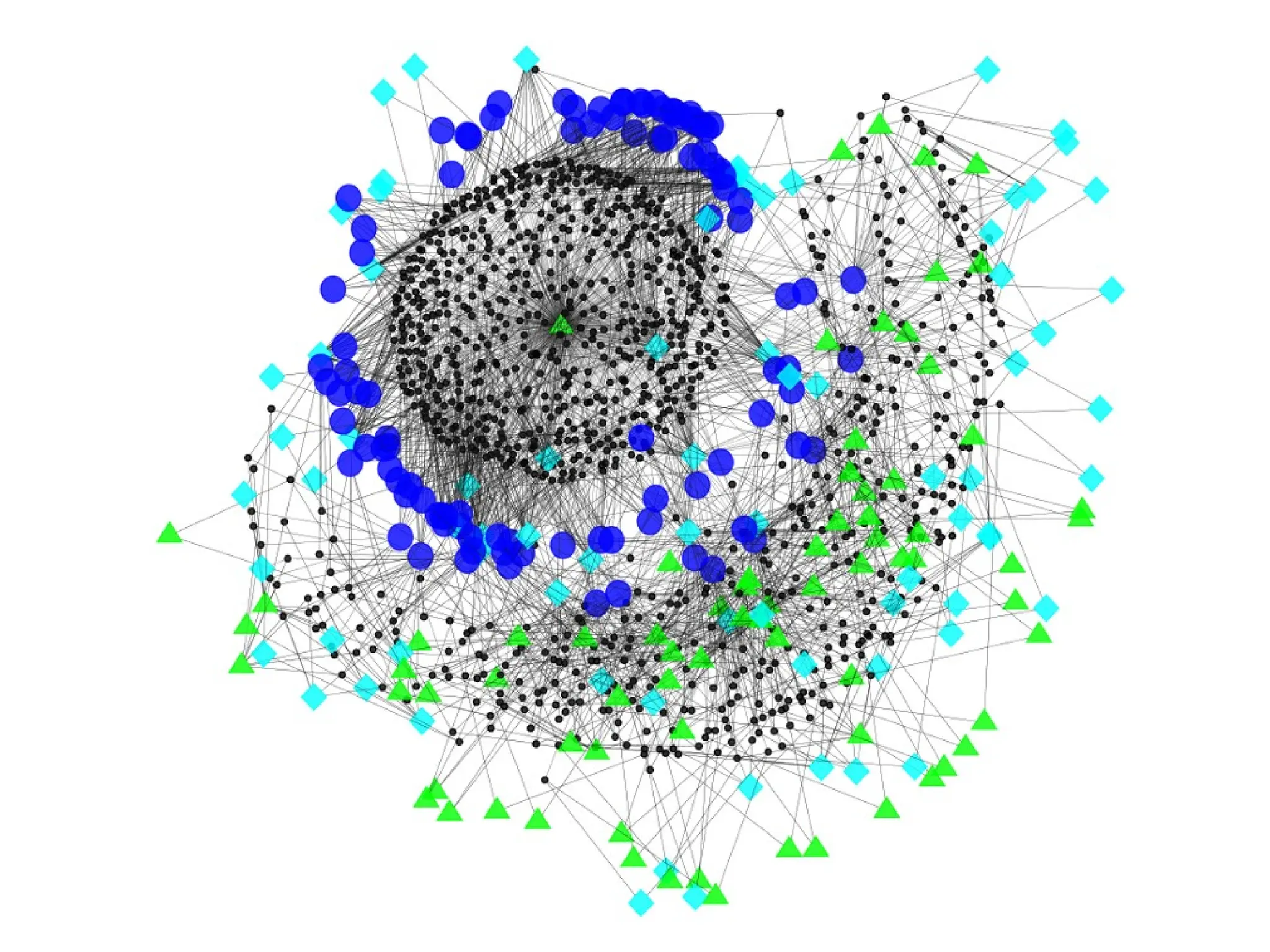
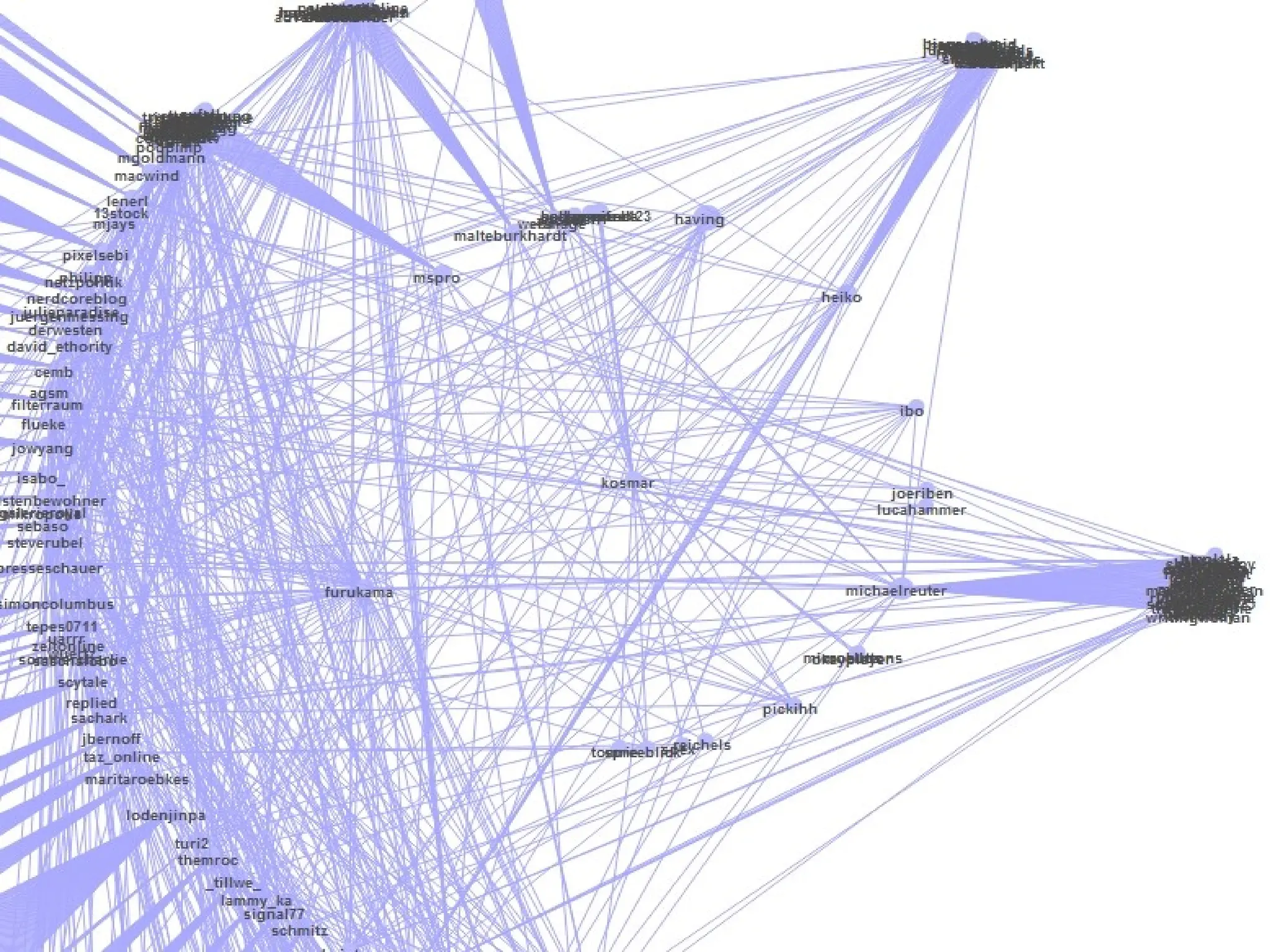
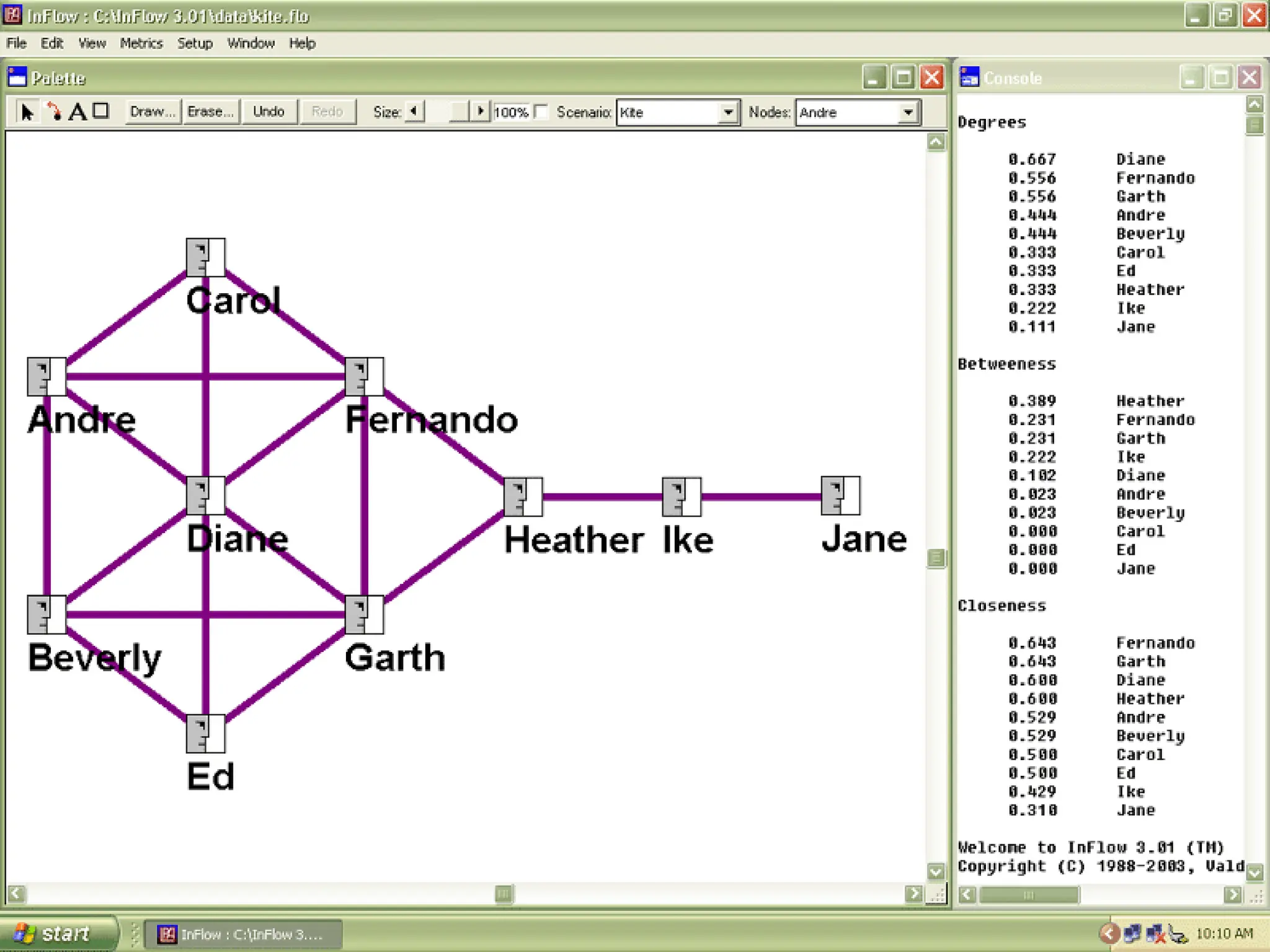
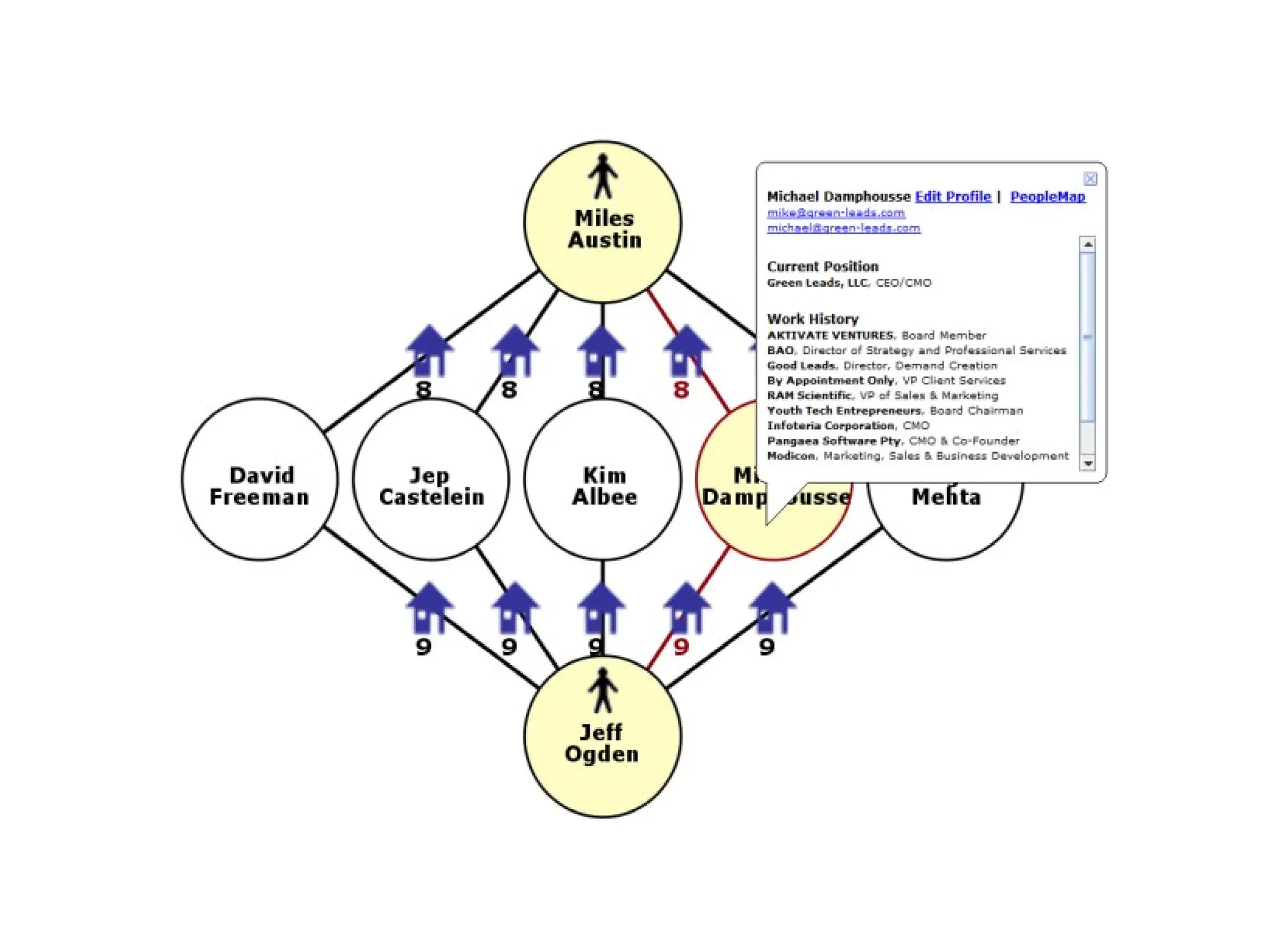
Social network analysis [SNA] is the mapping and
measuring of relationships and flows between
people, groups, organizations, computers,
URLs, and other connected information/knowledge
entities. The nodes in the network are the people
and groups while the links show relationships or
flows between the nodes. SNA provides both a
visual and a mathematical analysis of human
relationships. Management consultants use this
methodology with their business clients and call it
Organizational Network Analysis [ONA].
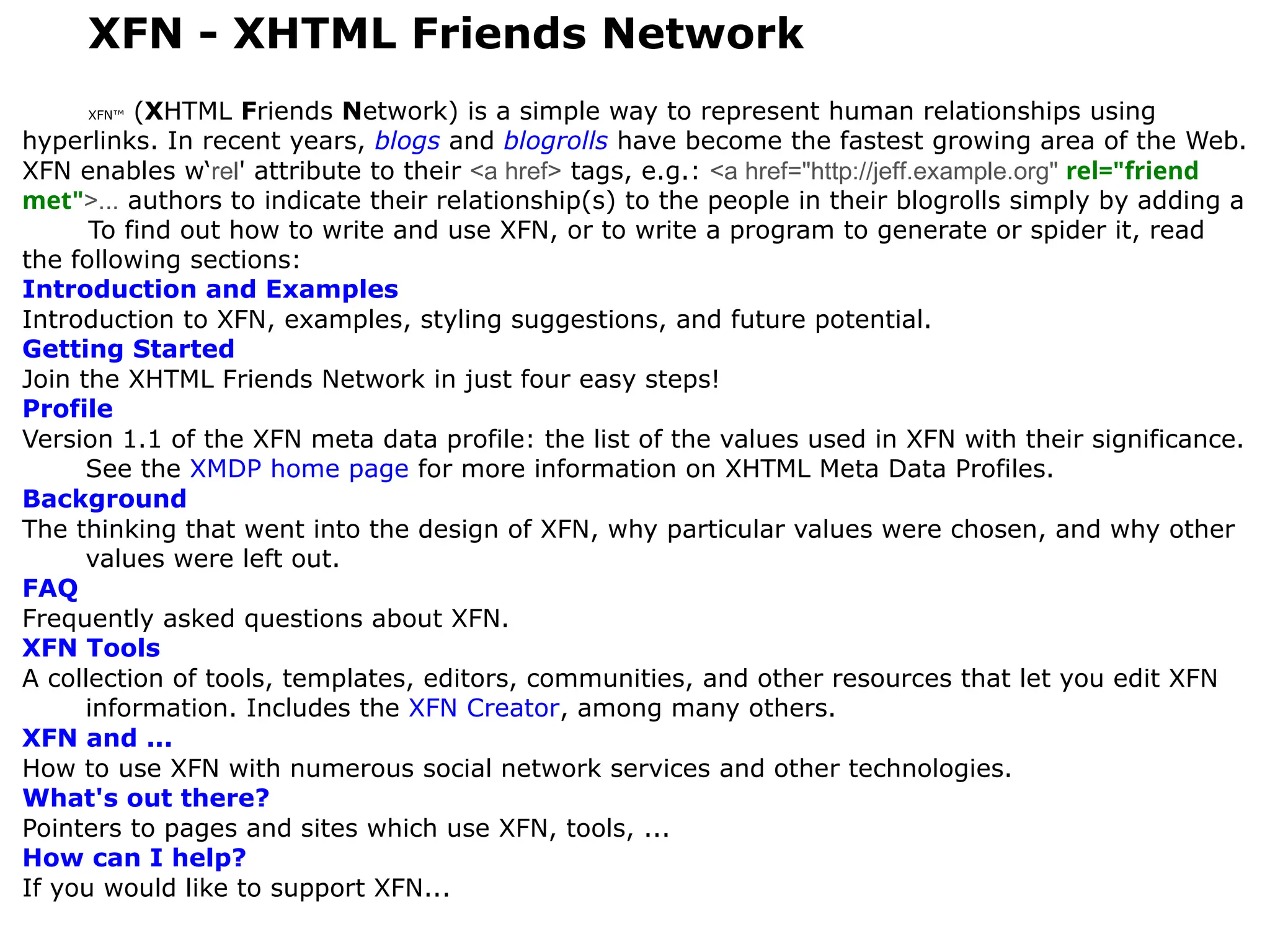
XFN - XHTMLFriends Network
XFN™ (XHTML Friends Network) is a simple way to represent human relationships using
hyperlinks. In recent years, blogs and blogrolls have become the fastest growing area of the Web.
XFN enables w‘rel' attribute to their <a href> tags, e.g.: <a href="http://jeff.example.org" rel="friend
met">... authors to indicate their relationship(s) to the people in their blogrolls simply by adding a
To find out how to write and use XFN, or to write a program to generate or spider it, read
the following sections:
Introduction and Examples
Introduction to XFN, examples, styling suggestions, and future potential.
Getting Started
Join the XHTML Friends Network in just four easy steps!
Profile
Version 1.1 of the XFN meta data profile: the list of the values used in XFN with their significance.
See the XMDP home page for more information on XHTML Meta Data Profiles.
Background
The thinking that went into the design of XFN, why particular values were chosen, and why other
values were left out.
FAQ
Frequently asked questions about XFN.
XFN Tools
A collection of tools, templates, editors, communities, and other resources that let you edit XFN
information. Includes the XFN Creator, among many others.
XFN and ...
How to use XFN with numerous social network services and other technologies.
What's out there?
Pointers to pages and sites which use XFN, tools, ...
How can I help?
If you would like to support XFN...
28.
Weaving the SocialWeb
The Web is more a social creation than a
technical one. I designed it for a social effect
— to help people work together — and not
as a technical toy. The ultimate goal of the
Web is to support and improve our
weblike existence in the world. We clump
into families, associations, and companies.
We develop trust across the miles and
distrust around the corner.
—Tim Berners-Lee, Weaving The Web
29.
SNA in Review
•Social Network Analysis (SNA)
• Networks are graphs, nodes and edges
– Actors (nodes) and interactions (edges)
– Relationships have direction and weights
• Networks have topologies
– Organizational and extended
• Tools for visualizing and navigating networks
– Leverage your local and extended networks
30.
References
• “How todo Social Network Analysis?”
-http://www.orgnet.com/sna.html
• Cross, R., Parker, A. and Borgatti, S.
A bird's eye view: Using Social Network Analysis to Improve Kno
wledge Creation and Sharing
. IBM Institute for Business Value Publication.
• J.C.Thomas, W.A Kellogg, T. Erickson, “The Knowledge
Management Puzzle: Human and social factors in Knowledge
Management”. IBM Systems Journal. Volume 40. Number 4.2001
• Wellman, B. (1996)
For a Social Network Analysis of Computer Networks: A Sociologi
cal Perspective on Collaborative work and Virtual Community.
Proceedings of SIGCPR/SIGMIS. ACM Press.
![Social Network Analysis, A Brief
Introduction (OrgNET)
Social network analysis [SNA] is the mapping and
measuring of relationships and flows between
people, groups, organizations, computers,
URLs, and other connected information/knowledge
entities. The nodes in the network are the people
and groups while the links show relationships or
flows between the nodes. SNA provides both a
visual and a mathematical analysis of human
relationships. Management consultants use this
methodology with their business clients and call it
Organizational Network Analysis [ONA].](https://image.slidesharecdn.com/socialnetworkanalysis1-250414155509-c2c2f932/75/Social-Network-Analysis-for-business-and-study-10-2048.jpg)




![Social network analysis [SNA] is the mapping and measuring of relationships a...](https://cdn.slidesharecdn.com/ss_thumbnails/representationandclassesofproerties-241121092336-8d88e173-thumbnail.jpg?width=640&height=640&fit=bounds)


