Bridgeway Rehabilitation Services, Inc "When Hard Science Meets Psych Rehab” Session 2: Social isolation Thursday May 22, 2008 UMDNJ/SHRP, Scotch Plains, NJ http://www.slideshare.net/johnfossella
PART 1: Social isolation / exclusion / betrayal “ hurts”and leads to cognitive impairment via the cingulate gyrus PART 2: “ changing the brain ?”  via your interventions via cingulate gyrus
 
 
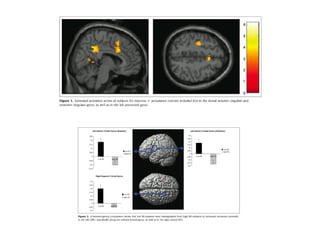
Straube et al., 2008 Human Brain Mapping Finger shock pain


… . Play the “trust” game
 
“ changing the brain ?”   via love, empathy & compassion building trust CBT


“ Together these data indicate that the mental expertise to cultivate positive emotion alters the activation of circuitries previously linked to empathy and theory of mind in response to emotional stimuli.”
? How ?  do your CBT interventions engage the cingulate cortex in a rehabilitative way ?  The inability to extinguish or inhibit maladaptive fear responses is a hallmark of most anxiety disorders and PTSD in particular. Current treatments for anxiety disorders involve the use of medications and/or behavioral therapy. The major class of drugs that is currently used to treat anxiety disorders, the selective serotonin reuptake inhibitors or SSRIs, can be effective at reducing the symptoms of some anxiety disorders but are not cures. Cognitive and behavioral therapies use exposure techniques that require patients to confront the fear-inducing situation in a safe environment. The aim of these treatments is to teach the patient that the fearful stimulus no longer predicts harmful consequences.  One of the ways the National Institute of Mental Health (NIMH) seeks to enhance the effectiveness of pharmacological and behavioral therapies for anxiety disorders is through basic research on extinction learning and its consolidation into long-term memory.  Like exposure therapy, extinction learning occurs after repeated exposure to a previously fearful event that is no longer associated with an aversive outcome. -Thomas Insel


Social Isolation Bridgeway

  • 1.
    Bridgeway Rehabilitation Services,Inc "When Hard Science Meets Psych Rehab” Session 2: Social isolation Thursday May 22, 2008 UMDNJ/SHRP, Scotch Plains, NJ http://www.slideshare.net/johnfossella
  • 2.
    PART 1: Socialisolation / exclusion / betrayal “ hurts”and leads to cognitive impairment via the cingulate gyrus PART 2: “ changing the brain ?” via your interventions via cingulate gyrus
  • 3.
  • 4.
  • 5.
    Straube et al.,2008 Human Brain Mapping Finger shock pain
  • 6.
  • 7.
  • 8.
  • 9.
  • 10.
  • 11.
  • 12.
    … . Playthe “trust” game
  • 13.
  • 14.
    “ changing thebrain ?” via love, empathy & compassion building trust CBT
  • 15.
  • 16.
  • 17.
  • 18.
  • 19.
  • 20.
  • 21.
  • 22.
  • 23.
  • 24.
    “ Together thesedata indicate that the mental expertise to cultivate positive emotion alters the activation of circuitries previously linked to empathy and theory of mind in response to emotional stimuli.”
  • 25.
    ? How ? do your CBT interventions engage the cingulate cortex in a rehabilitative way ? The inability to extinguish or inhibit maladaptive fear responses is a hallmark of most anxiety disorders and PTSD in particular. Current treatments for anxiety disorders involve the use of medications and/or behavioral therapy. The major class of drugs that is currently used to treat anxiety disorders, the selective serotonin reuptake inhibitors or SSRIs, can be effective at reducing the symptoms of some anxiety disorders but are not cures. Cognitive and behavioral therapies use exposure techniques that require patients to confront the fear-inducing situation in a safe environment. The aim of these treatments is to teach the patient that the fearful stimulus no longer predicts harmful consequences. One of the ways the National Institute of Mental Health (NIMH) seeks to enhance the effectiveness of pharmacological and behavioral therapies for anxiety disorders is through basic research on extinction learning and its consolidation into long-term memory. Like exposure therapy, extinction learning occurs after repeated exposure to a previously fearful event that is no longer associated with an aversive outcome. -Thomas Insel
  • 26.
  • 27.
  • 28.
  • 29.