Tobacco smoking isthe practice of burning tobacco
and ingesting the smoke that is produced.The smoke
may be inhaled, as is done with cigarettes, or simply
released from the mouth, as is generally done with
pipes and cigars
4.
Tobacco and the
effecton Lungs
Smoking causes chronic obstructive
lung disease, coronary heart disease
and increased risks of several different
types of cancer, including lung cancer
Chemicals in cigarettes include:
Tar – a carcinogen (a substance that causes
cancer))
Nicotine – an addictive substance which
also narrows blood vessels
Carbon monoxide – reduces the oxygen-
carrying capacity of the blood
5.
Tar and ChronicBronchitis
+ Tar is a carcinogen and is linked to increased chances of
cancerous cells developing in the lungs
+ It also contributes to COPD, which occurs when chronic
bronchitis and emphysema, two different diseases
which are frequently linked to smoking, occur together
+ Chronic bronchitis is caused by tar which stimulates
goblet cells and mucus glands to enlarge, producing
more mucus
+ It destroys cilia, inhibiting the cleaning of the airways,
and mucus (containing dirt, bacteria and viruses) builds
up blocking the smallest bronchioles
+ A smoker’s cough is the attempt to move the mucus
but it damages the epithelia resulting in scar tissue,
which narrows the airways and makes breathing
difficult
6.
Emphysema
+ Emphysema developsas a result
of frequent infection,
meaning phagocytes are attracted to the
lungs where they release elastase – an
enzyme that breaks down the elastin in the
alveoli walls, to enable them to reach the
surface where the bacteria are
+ Without adequate elastin, the alveoli cannot
stretch, so they recoil and many burst
+ The breakdown of alveoli results in the
appearance of large air spaces, reducing the
surface area for gas exchange and making
sufferers breathe more rapidly
+ As it progresses, patients
become breathless and wheezy – they may
need a constant supply of oxygen to stay
alive
7.
Nicotine
+ Nicotine narrowsblood vessels so will put more strain
on the circulatory system and increase blood pressure
+ Narrow blood vessels are more likely to become clogged
with fat, including cholesterol – if this happens in the
coronary artery, this causes coronary heart disease
+ This means the heart muscle cells do not get sufficient
oxygen and so less aerobic respiration takes place
+ To compensate the cells respire anaerobically,
producing lactic acid which cannot be removed (due to
lack of blood supply)
+ This creates a low pH environment in the cells
causing enzymes to denature and eventually heart
muscle cells will die
+ If enough die this can cause a heart attack
8.
Carbon
Monoxide
+ Carbon monoxidebinds irreversibly to
hemoglobin, reducing the capacity of
blood to carry oxygen
+ This puts more strain on the breathing
system as breathing frequency and
depth need to increase in order to get
the same amount of oxygen into the
blood
+ It also puts more strain on the circulatory
system to pump the blood faster around
the body and increases the risk of
coronary heart disease and strokes
9.
Smoking and LungCancer
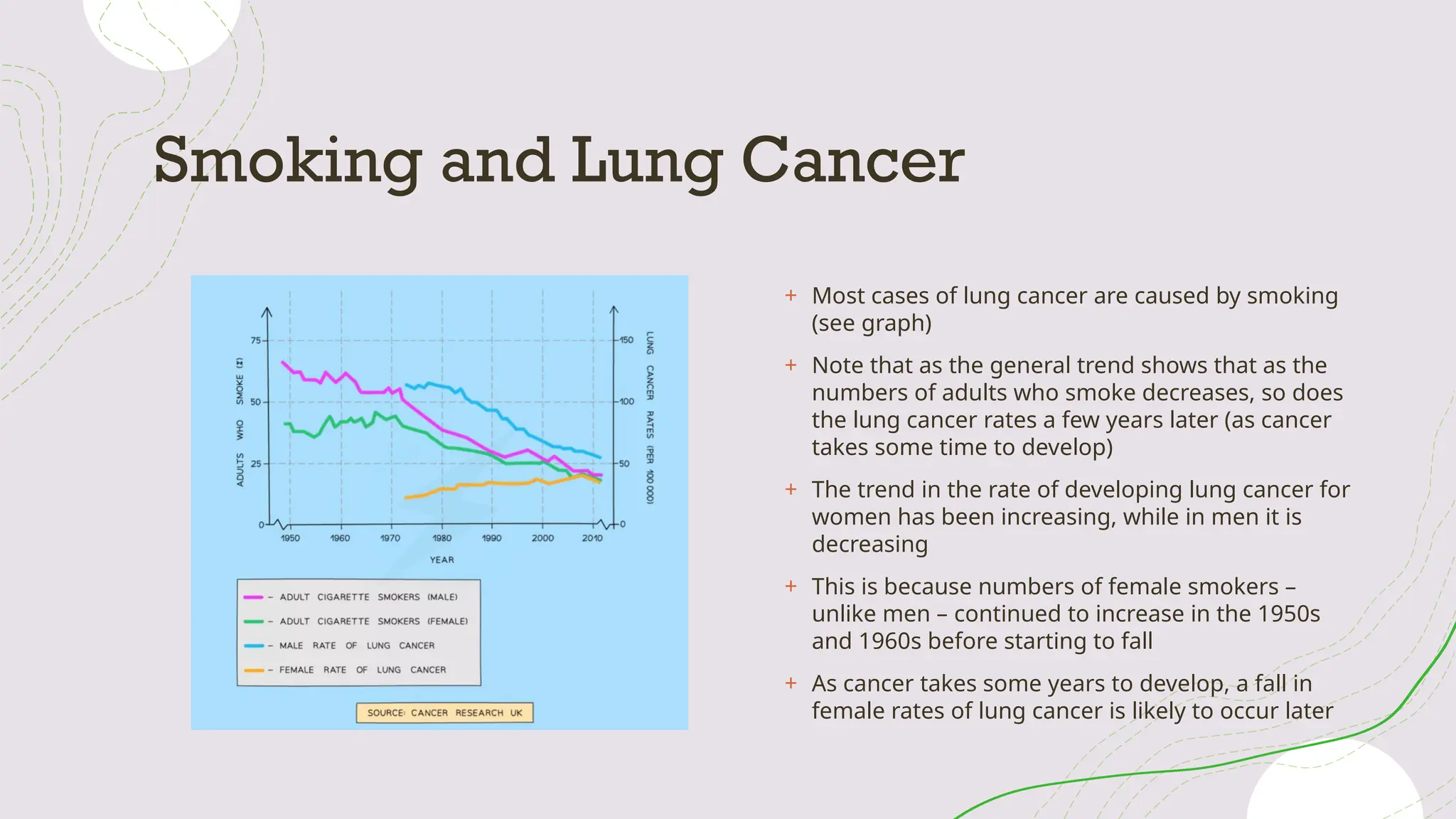
+ Most cases of lung cancer are caused by smoking
(see graph)
+ Note that as the general trend shows that as the
numbers of adults who smoke decreases, so does
the lung cancer rates a few years later (as cancer
takes some time to develop)
+ The trend in the rate of developing lung cancer for
women has been increasing, while in men it is
decreasing
+ This is because numbers of female smokers –
unlike men – continued to increase in the 1950s
and 1960s before starting to fall
+ As cancer takes some years to develop, a fall in
female rates of lung cancer is likely to occur later
10.
Getting rid ofit
Smoking is a hard habit to break because tobacco contains the
very addictive chemical nicotine. As with heroin or other
addictive drugs, the body and mind quickly get used to the
nicotine in cigarettes. Soon, a person needs to have it just to
feel normal. Smokers that want to quit need to have a plan in
place to beat cravings and triggers. The benefits of quitting
smoking begin in as little as 1 hour after the last cigarette!




![Smoking [autosaved]](https://cdn.slidesharecdn.com/ss_thumbnails/smokingautosaved-180131132051-thumbnail.jpg?width=640&height=640&fit=bounds)


