GOVT WOMEN ENGINEERING
COLLEG , AJMER
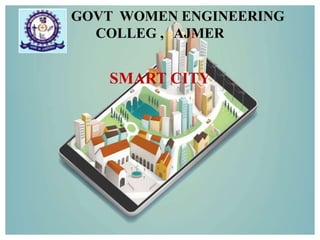
SMART CITY
 What is a Smart City?
A smart city uses digital technologies to enhance
performance and wellbeing, to reduce costs and
resource consumption, and to engage more
effectively and actively with its citizens.
Introduction:-
A smart city should be able to respond faster to city
and global challenges than one with a simple
'transactional' relationship with its citizens. The term
encompasses a vision of an urban space that is
ecologically friendly, technologically integrated and
meticulously planned, with a particular reliance on
the use of information technology to improve
efficiency.
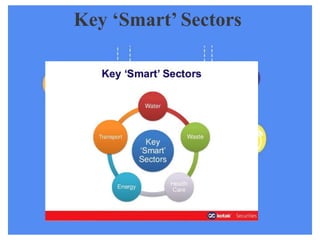
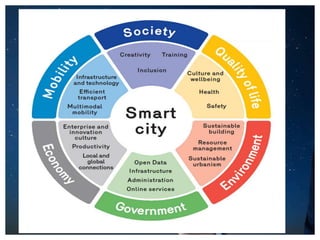
Key ‘Smart’ Sectors
 Why do we need them?
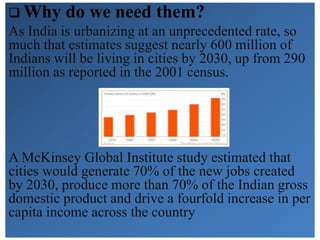
As India is urbanizing at an unprecedented rate, so
much that estimates suggest nearly 600 million of
Indians will be living in cities by 2030, up from 290
million as reported in the 2001 census.
A McKinsey Global Institute study estimated that
cities would generate 70% of the new jobs created
by 2030, produce more than 70% of the Indian gross
domestic product and drive a fourfold increase in per
capita income across the country
Smart Cities
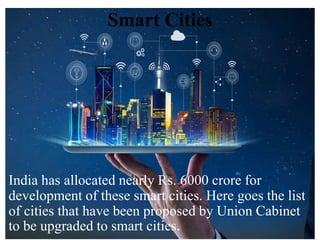
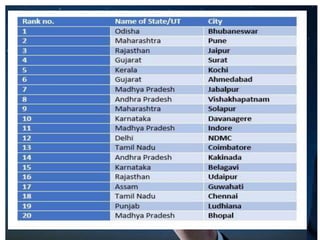
India has allocated nearly Rs. 6000 crore for
development of these smart cities. Here goes the list
of cities that have been proposed by Union Cabinet
to be upgraded to smart cities.
What’s the plan?
The ‘Smart City Challenge Competition’ will be
carried out by Bloomberg Philanthropes, which has
been involved in conducting similar competitions in
various countries. According to the plan, 20 cities
will be selected this year, followed by 40 each in the
next two years. Smart City aspirants will be selected
through the competition which intends to link
financing with their ability to achieve the mission
objectives.
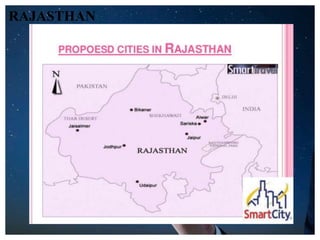
RAJASTHAN
City selection Process
The city selection process is based on the idea of
Cooperative and Competitive Federalism. Cities are
diverse - Each city has to construct its idea and
vision of a smart city that is aligned to its local
context.
The city selection process follows a Challenge
method - two stages, in conjunct, to select cities.
Stage – I : Intra-State city selection on objective
criteria to identify cities to compete in stage-II.
Stage – II: All India competition to select smart cities
for multiple rounds of selection
What are ‘smart solutions’ ?
Smart solutions are application of IT&C to
municipal services and infrastructure to make them
better.
Examples –
Smart water meters and billing systems,
 Remotely controlled automatic distribution
valves,
Real time, online systems of monitoring water
quality,
 City-wide intelligent video surveillance network,
Using mobile phones for cyber tour of worksites,
Components of area-based development
 Holistic development of existing and new areas.
 One area catalyzes the development of other areas,
and
Sets an example for other cities.
 Quality of life in Areas meets citizens expectations
and has
 Planned mixed land use,
 Housing, especially for the poor,
 Walkable localities – accessibility to parks, public
transport,
Preservation and development of open space,
 Public transport, last mile connectivity,
 Governance is citizen friendly and cost effective.
THANK YOU

Smart city.ppt

  • 1.
  • 2.
     What isa Smart City? A smart city uses digital technologies to enhance performance and wellbeing, to reduce costs and resource consumption, and to engage more effectively and actively with its citizens. Introduction:- A smart city should be able to respond faster to city and global challenges than one with a simple 'transactional' relationship with its citizens. The term encompasses a vision of an urban space that is ecologically friendly, technologically integrated and meticulously planned, with a particular reliance on the use of information technology to improve efficiency.
  • 3.
  • 4.
     Why dowe need them? As India is urbanizing at an unprecedented rate, so much that estimates suggest nearly 600 million of Indians will be living in cities by 2030, up from 290 million as reported in the 2001 census. A McKinsey Global Institute study estimated that cities would generate 70% of the new jobs created by 2030, produce more than 70% of the Indian gross domestic product and drive a fourfold increase in per capita income across the country
  • 5.
    Smart Cities India hasallocated nearly Rs. 6000 crore for development of these smart cities. Here goes the list of cities that have been proposed by Union Cabinet to be upgraded to smart cities.
  • 8.
    What’s the plan? The‘Smart City Challenge Competition’ will be carried out by Bloomberg Philanthropes, which has been involved in conducting similar competitions in various countries. According to the plan, 20 cities will be selected this year, followed by 40 each in the next two years. Smart City aspirants will be selected through the competition which intends to link financing with their ability to achieve the mission objectives.
  • 9.
  • 10.
    City selection Process Thecity selection process is based on the idea of Cooperative and Competitive Federalism. Cities are diverse - Each city has to construct its idea and vision of a smart city that is aligned to its local context. The city selection process follows a Challenge method - two stages, in conjunct, to select cities. Stage – I : Intra-State city selection on objective criteria to identify cities to compete in stage-II. Stage – II: All India competition to select smart cities for multiple rounds of selection
  • 11.
    What are ‘smartsolutions’ ? Smart solutions are application of IT&C to municipal services and infrastructure to make them better. Examples – Smart water meters and billing systems,  Remotely controlled automatic distribution valves, Real time, online systems of monitoring water quality,  City-wide intelligent video surveillance network, Using mobile phones for cyber tour of worksites,
  • 12.
    Components of area-baseddevelopment  Holistic development of existing and new areas.  One area catalyzes the development of other areas, and Sets an example for other cities.  Quality of life in Areas meets citizens expectations and has  Planned mixed land use,  Housing, especially for the poor,  Walkable localities – accessibility to parks, public transport, Preservation and development of open space,  Public transport, last mile connectivity,  Governance is citizen friendly and cost effective.
  • 13.