Presents

Compensation Strategies
for Small Businesses
  Women’s Business Council-SW
        April 11, 2011

          Linda A. Wilkins
       lwilkins@wifilawgroup.com
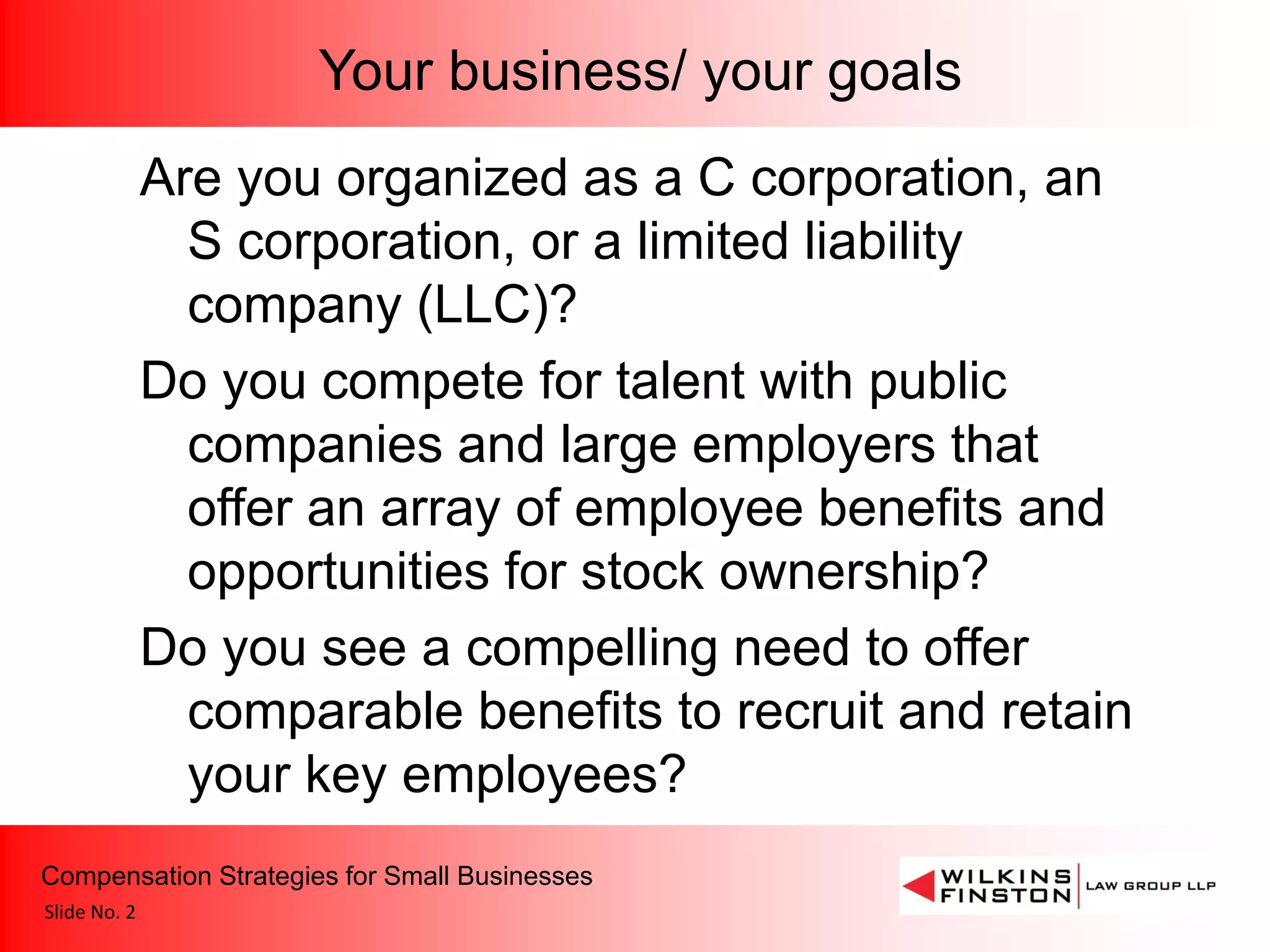
Your business/ your goals
              Are you organized as a C corporation, an
                S corporation, or a limited liability
                company (LLC)?
              Do you compete for talent with public
                companies and large employers that
                offer an array of employee benefits and
                opportunities for stock ownership?
              Do you see a compelling need to offer
                comparable benefits to recruit and retain
                your key employees?
Compensation Strategies for Small Businesses
Slide No. 2
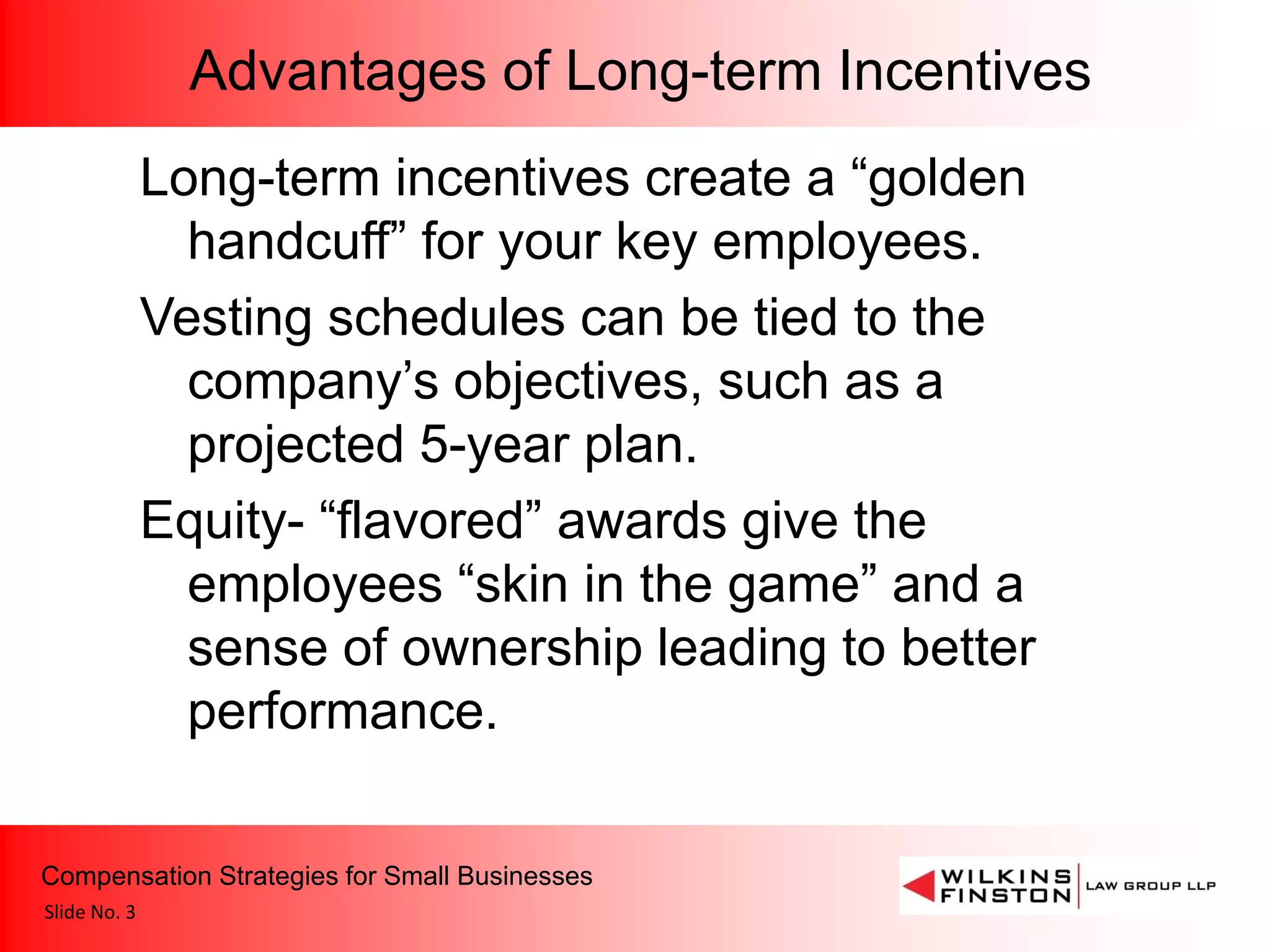
Advantages of Long-term Incentives
              Long-term incentives create a “golden
                handcuff” for your key employees.
              Vesting schedules can be tied to the
                company’s objectives, such as a
                projected 5-year plan.
              Equity- “flavored” awards give the
                employees “skin in the game” and a
                sense of ownership leading to better
                performance.

Compensation Strategies for Small Businesses
Slide No. 3
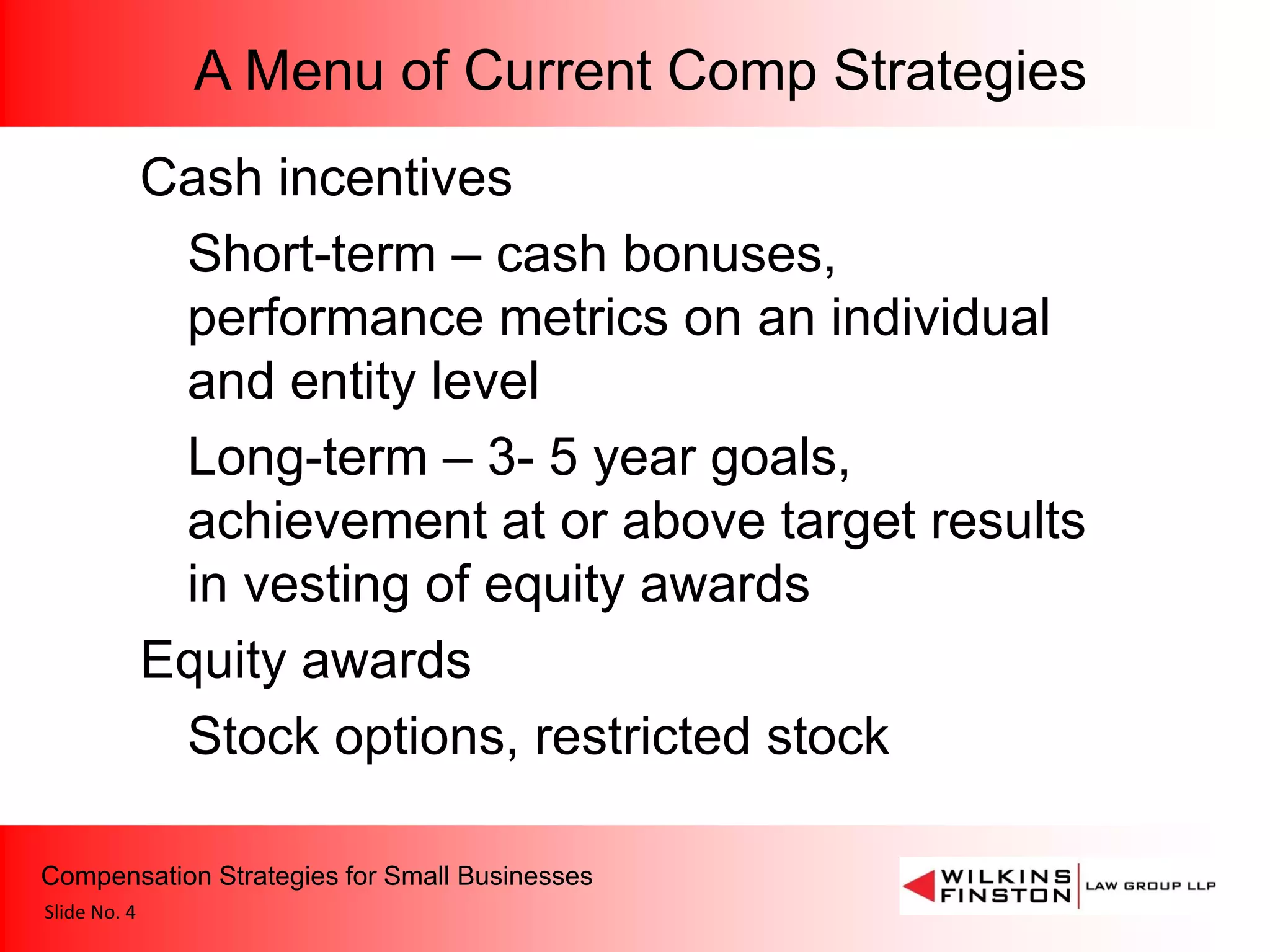
A Menu of Current Comp Strategies
              Cash incentives
               Short-term – cash bonuses,
               performance metrics on an individual
               and entity level
               Long-term – 3- 5 year goals,
               achievement at or above target results
               in vesting of equity awards
              Equity awards
               Stock options, restricted stock

Compensation Strategies for Small Businesses
Slide No. 4
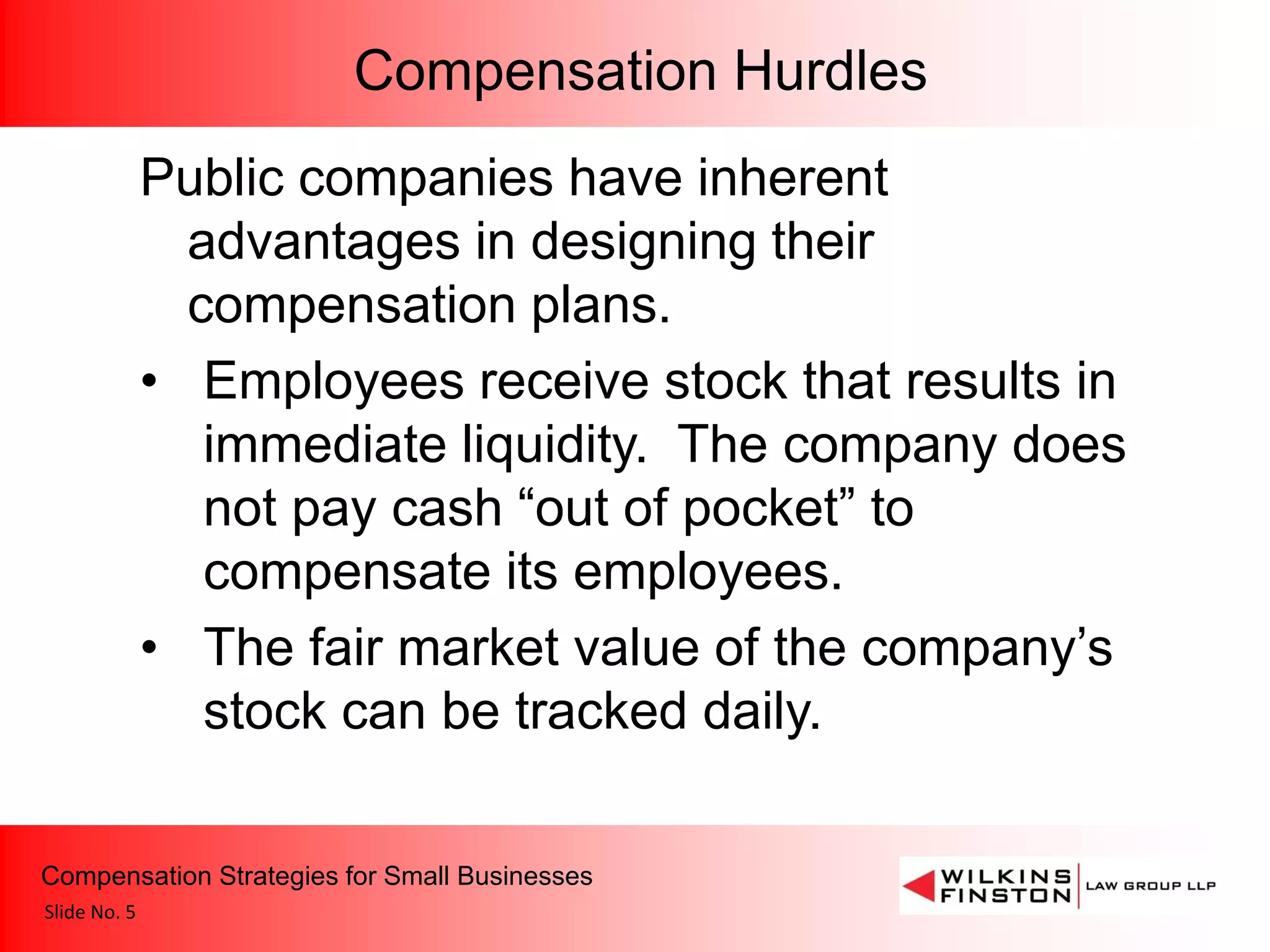
Compensation Hurdles
              Public companies have inherent
                advantages in designing their
                compensation plans.
              • Employees receive stock that results in
                 immediate liquidity. The company does
                 not pay cash “out of pocket” to
                 compensate its employees.
              • The fair market value of the company’s
                 stock can be tracked daily.

Compensation Strategies for Small Businesses
Slide No. 5
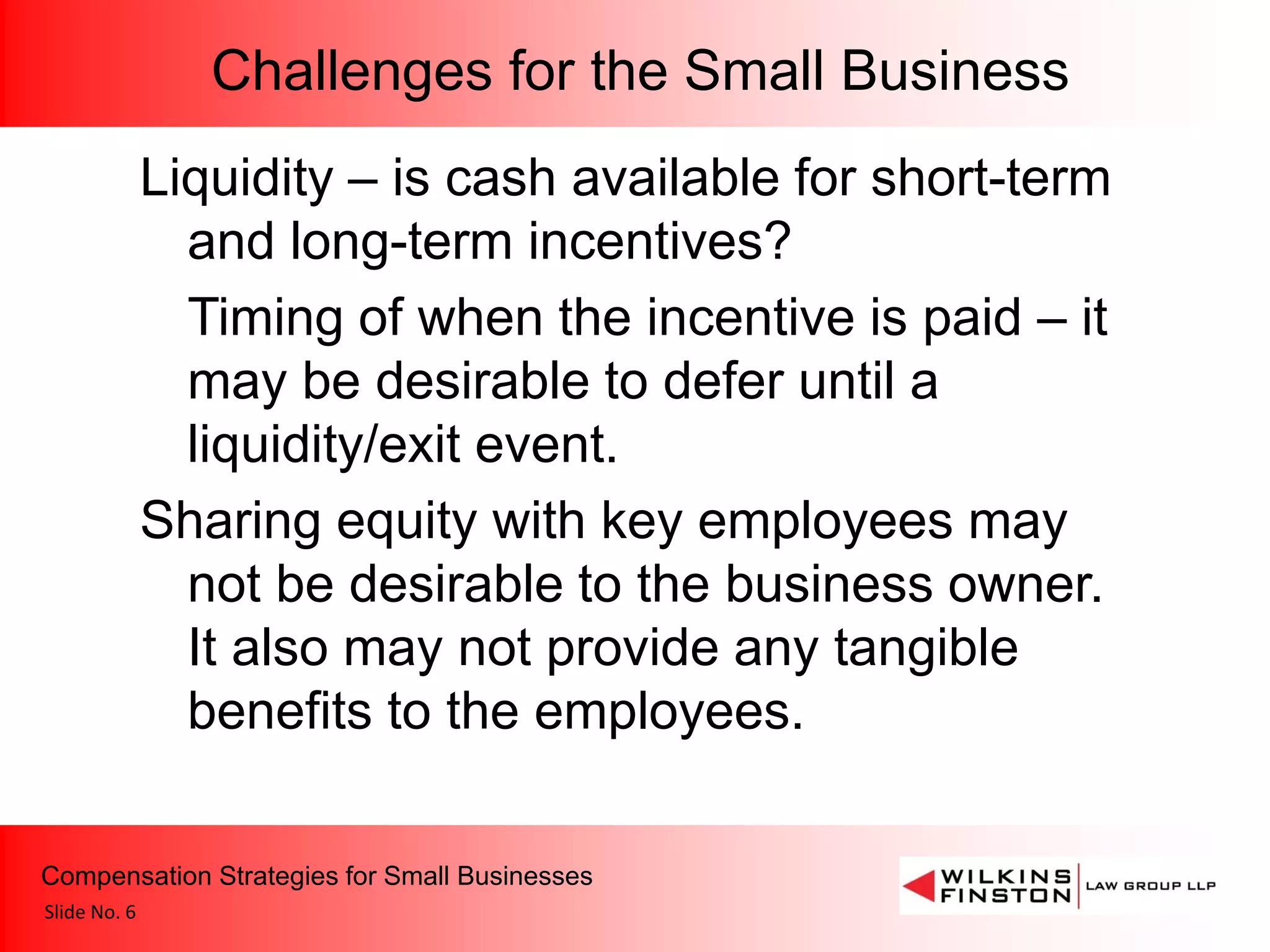
Challenges for the Small Business
              Liquidity – is cash available for short-term
                and long-term incentives?
                Timing of when the incentive is paid – it
                may be desirable to defer until a
                liquidity/exit event.
              Sharing equity with key employees may
                not be desirable to the business owner.
                It also may not provide any tangible
                benefits to the employees.

Compensation Strategies for Small Businesses
Slide No. 6
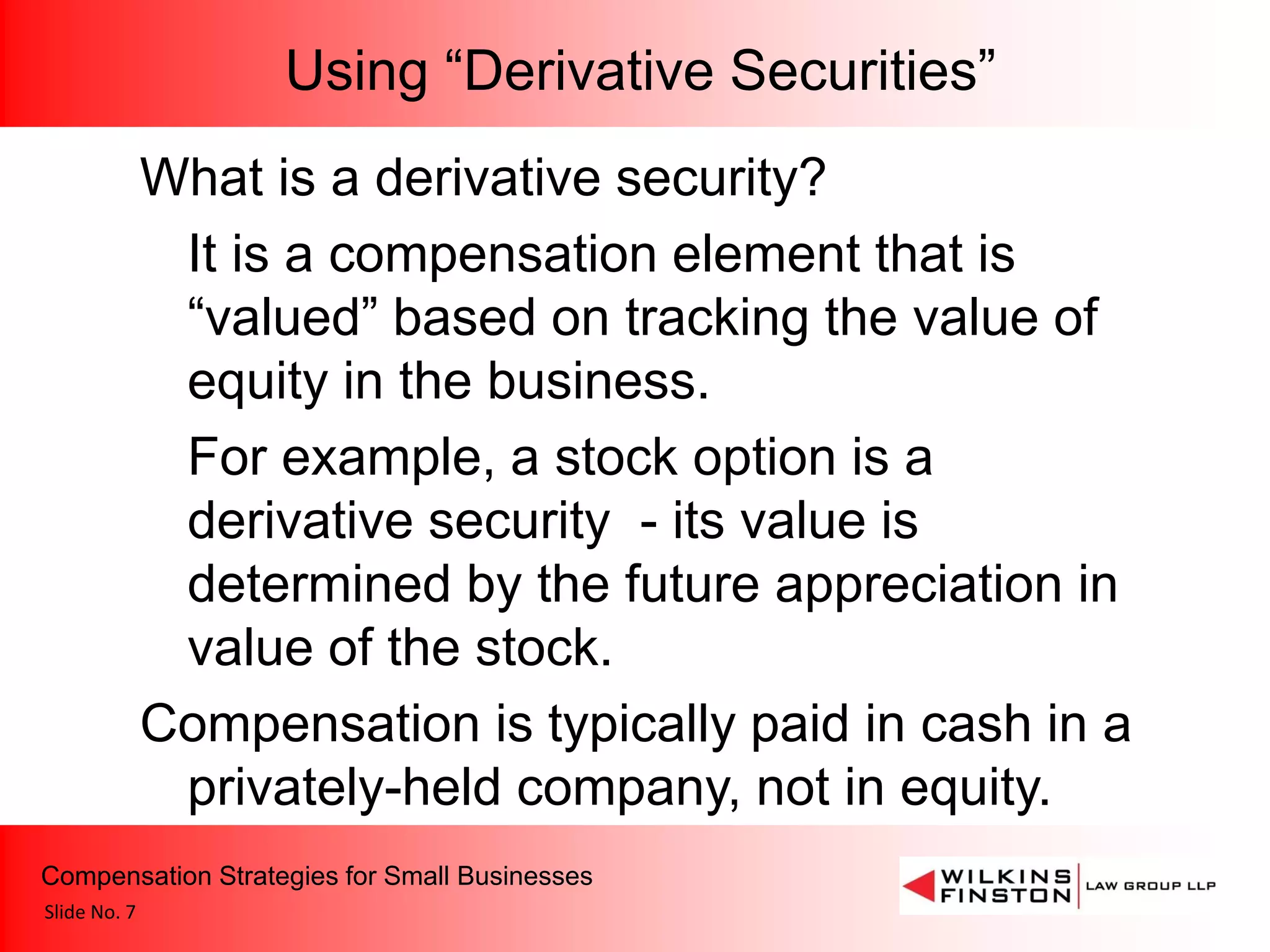
Using “Derivative Securities”
              What is a derivative security?
               It is a compensation element that is
               “valued” based on tracking the value of
               equity in the business.
               For example, a stock option is a
               derivative security - its value is
               determined by the future appreciation in
               value of the stock.
              Compensation is typically paid in cash in a
               privately-held company, not in equity.
Compensation Strategies for Small Businesses
Slide No. 7
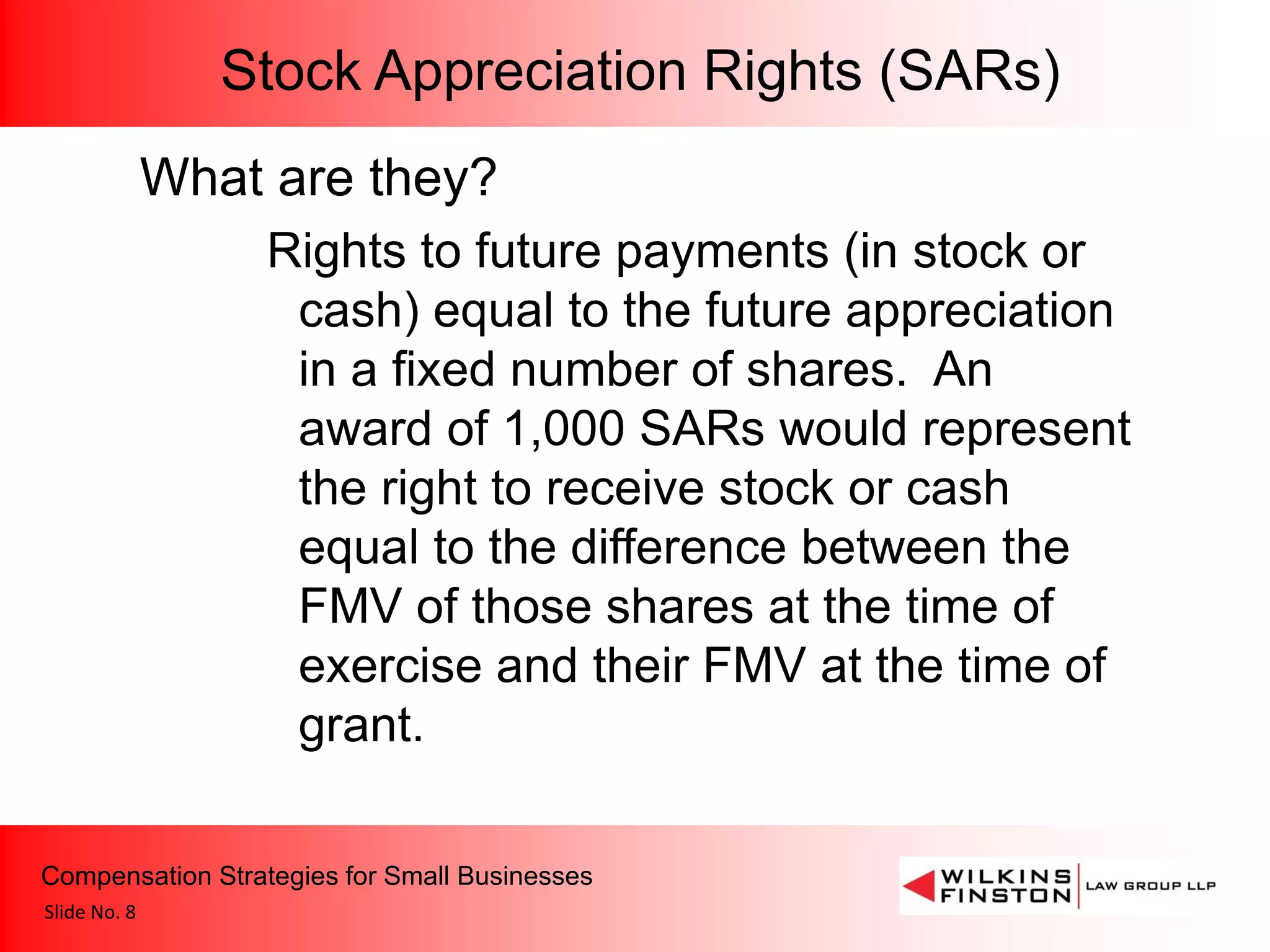
Stock Appreciation Rights (SARs)
              What are they?
                  Rights to future payments (in stock or
                   cash) equal to the future appreciation
                   in a fixed number of shares. An
                   award of 1,000 SARs would represent
                   the right to receive stock or cash
                   equal to the difference between the
                   FMV of those shares at the time of
                   exercise and their FMV at the time of
                   grant.

Compensation Strategies for Small Businesses
Slide No. 8
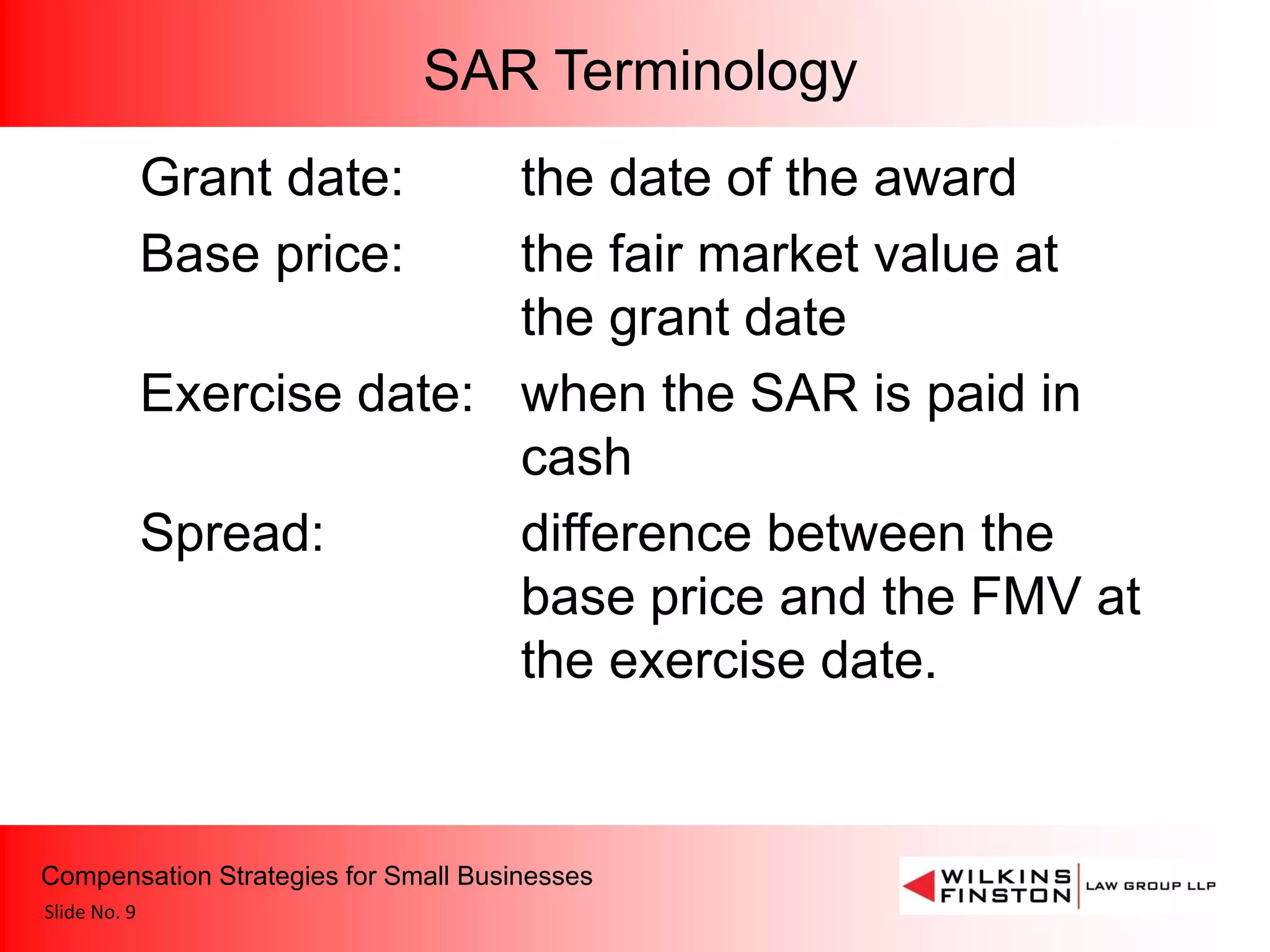
SAR Terminology
              Grant date:    the date of the award
              Base price:    the fair market value at
                             the grant date
              Exercise date: when the SAR is paid in
                             cash
              Spread:        difference between the
                             base price and the FMV at
                             the exercise date.


Compensation Strategies for Small Businesses
Slide No. 9
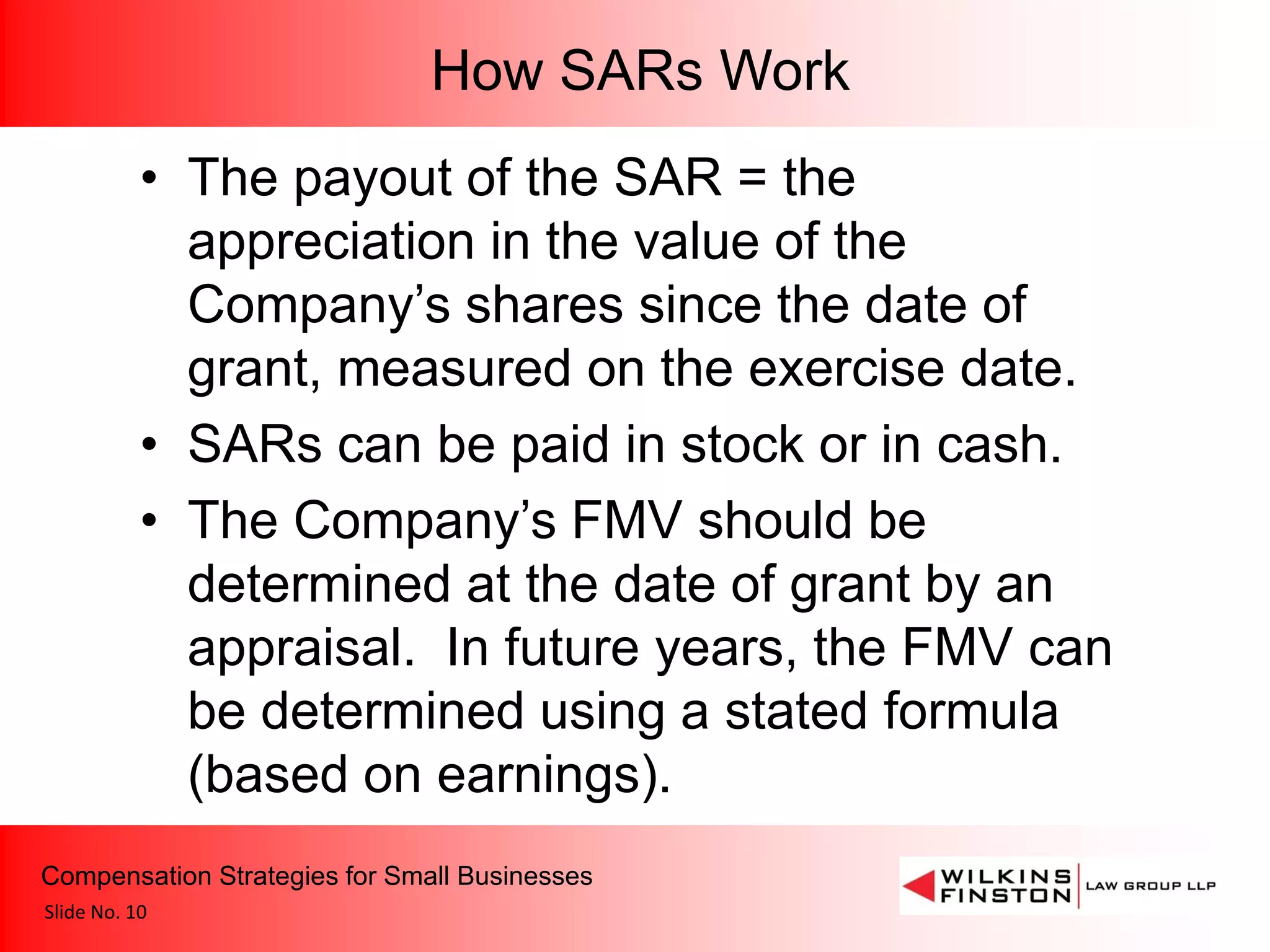
How SARs Work
           • The payout of the SAR = the
             appreciation in the value of the
             Company’s shares since the date of
             grant, measured on the exercise date.
           • SARs can be paid in stock or in cash.
           • The Company’s FMV should be
             determined at the date of grant by an
             appraisal. In future years, the FMV can
             be determined using a stated formula
             (based on earnings).
Compensation Strategies for Small Businesses
Slide No. 10
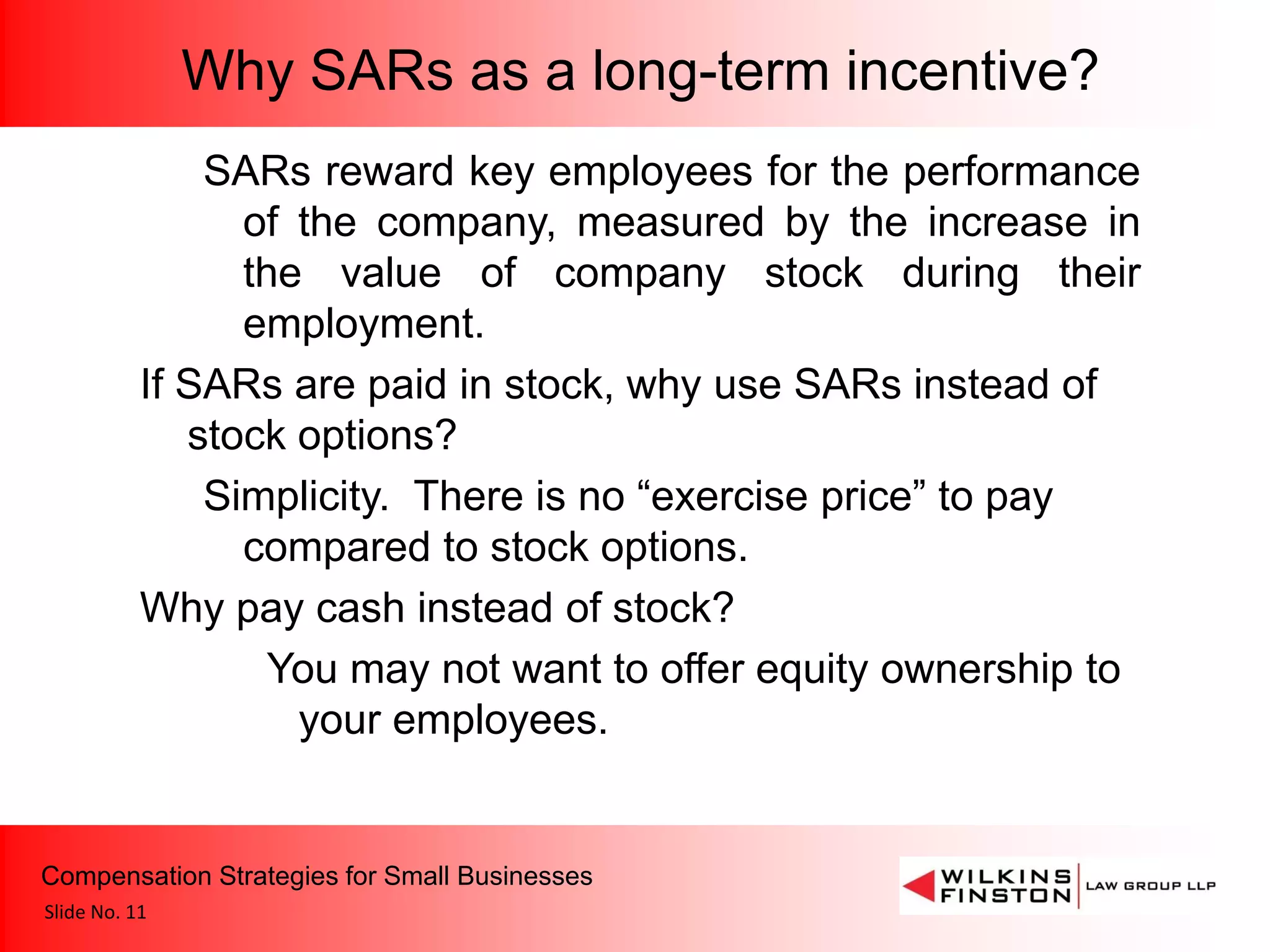
Why SARs as a long-term incentive?
               SARs reward key employees for the performance
                 of the company, measured by the increase in
                 the value of company stock during their
                 employment.
           If SARs are paid in stock, why use SARs instead of
              stock options?
               Simplicity. There is no “exercise price” to pay
                 compared to stock options.
           Why pay cash instead of stock?
                   You may not want to offer equity ownership to
                    your employees.


Compensation Strategies for Small Businesses
Slide No. 11
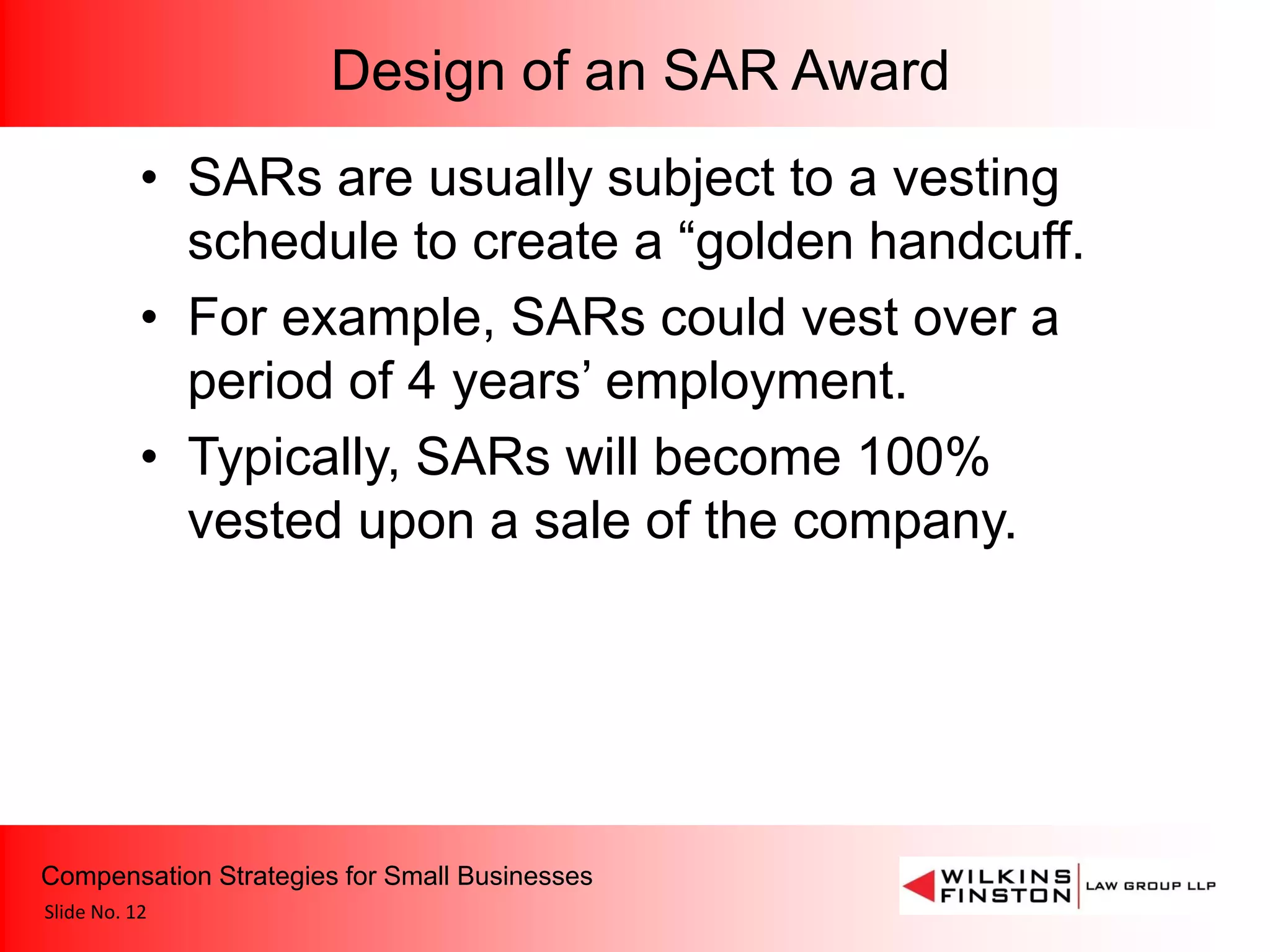
Design of an SAR Award
           • SARs are usually subject to a vesting
             schedule to create a “golden handcuff.
           • For example, SARs could vest over a
             period of 4 years’ employment.
           • Typically, SARs will become 100%
             vested upon a sale of the company.


Compensation Strategies for Small Businesses
Slide No. 12
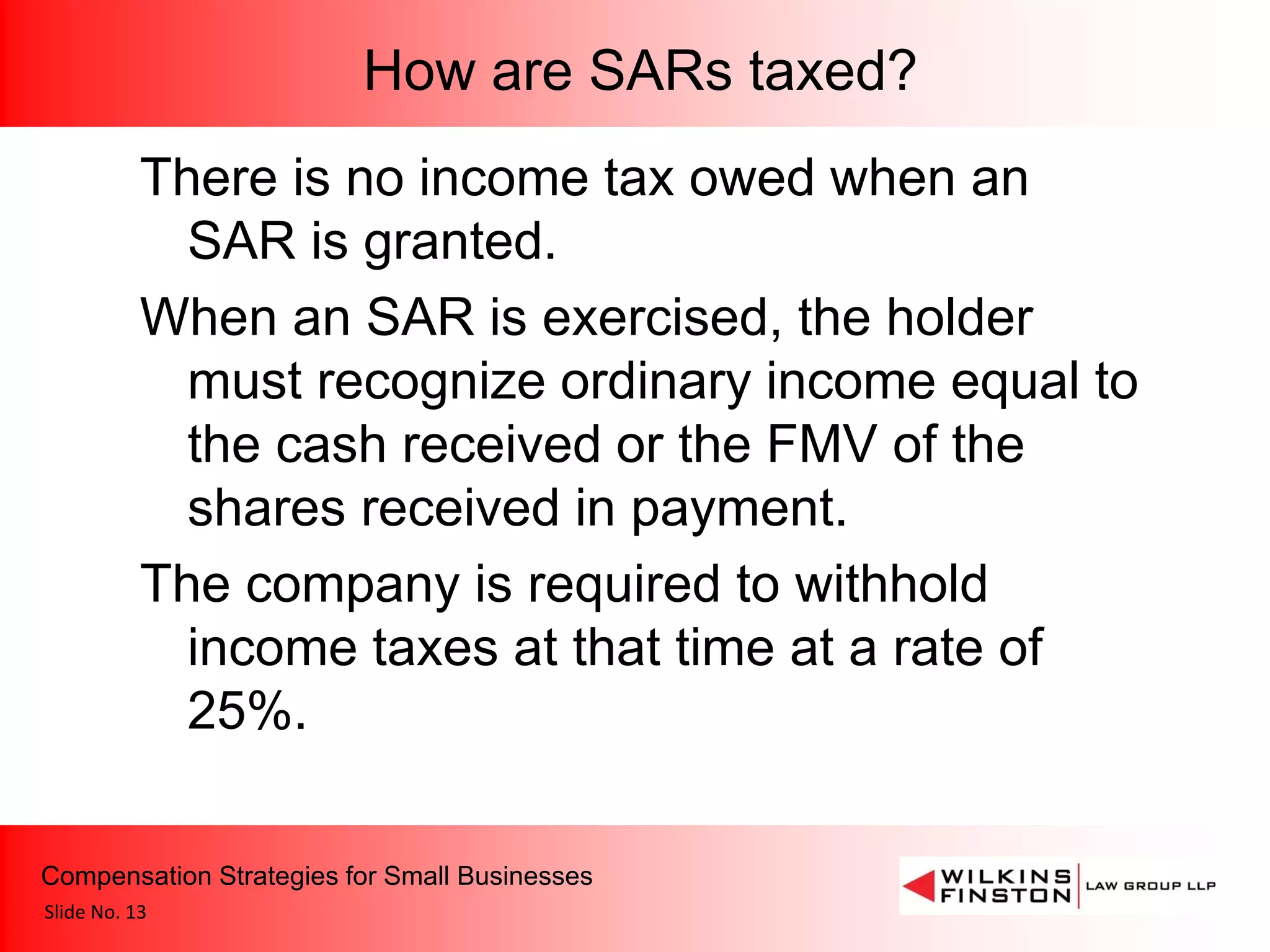
How are SARs taxed?
           There is no income tax owed when an
             SAR is granted.
           When an SAR is exercised, the holder
             must recognize ordinary income equal to
             the cash received or the FMV of the
             shares received in payment.
           The company is required to withhold
             income taxes at that time at a rate of
             25%.

Compensation Strategies for Small Businesses
Slide No. 13
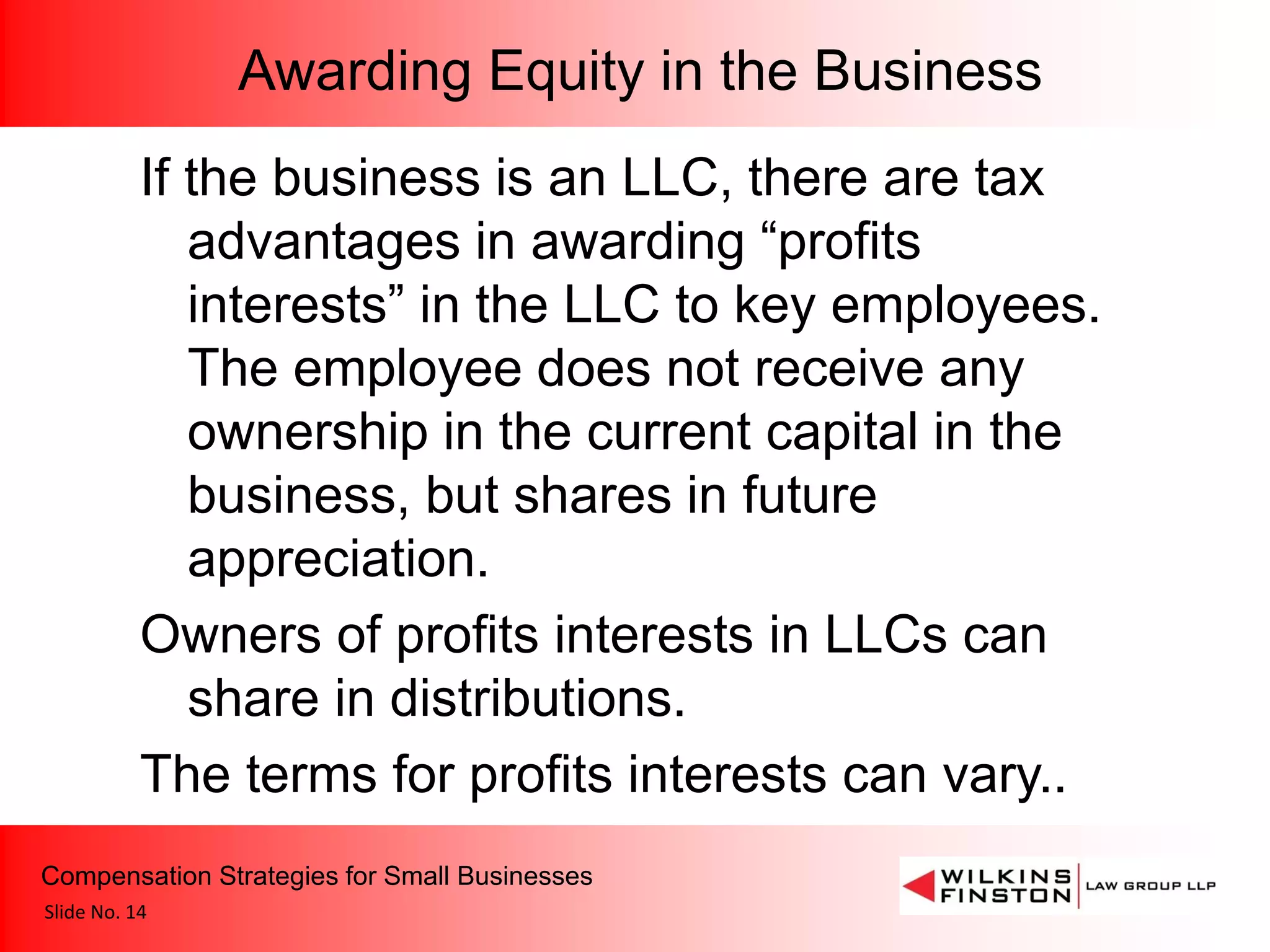
Awarding Equity in the Business
           If the business is an LLC, there are tax
              advantages in awarding “profits
              interests” in the LLC to key employees.
              The employee does not receive any
              ownership in the current capital in the
              business, but shares in future
              appreciation.
           Owners of profits interests in LLCs can
              share in distributions.
           The terms for profits interests can vary..
Compensation Strategies for Small Businesses
Slide No. 14
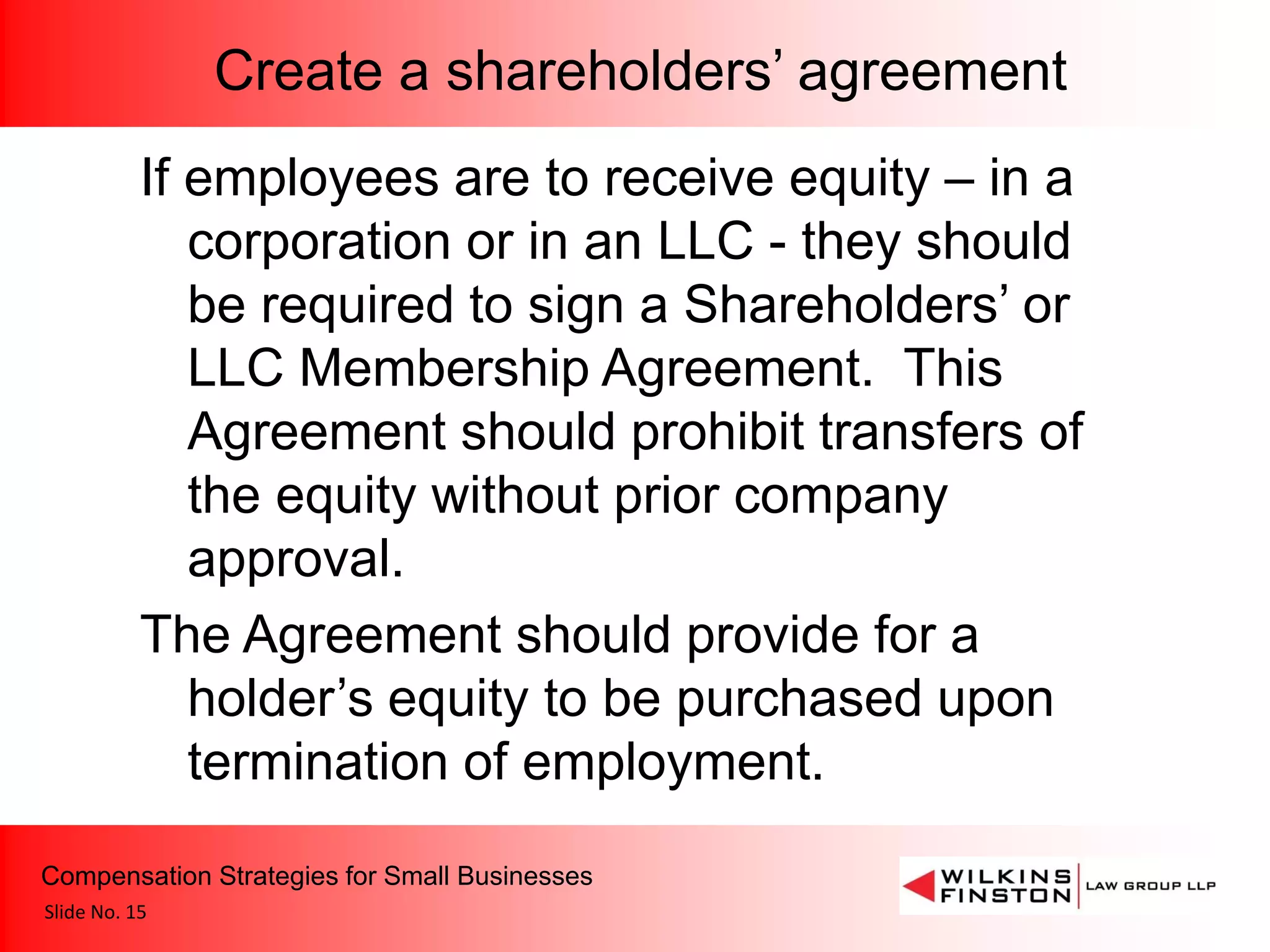
Create a shareholders’ agreement
           If employees are to receive equity – in a
              corporation or in an LLC - they should
              be required to sign a Shareholders’ or
              LLC Membership Agreement. This
              Agreement should prohibit transfers of
              the equity without prior company
              approval.
           The Agreement should provide for a
              holder’s equity to be purchased upon
              termination of employment.
Compensation Strategies for Small Businesses
Slide No. 15

Small Business Compensation Strategies

  • 1.
    Presents Compensation Strategies for SmallBusinesses Women’s Business Council-SW April 11, 2011 Linda A. Wilkins lwilkins@wifilawgroup.com
  • 2.
    Your business/ yourgoals Are you organized as a C corporation, an S corporation, or a limited liability company (LLC)? Do you compete for talent with public companies and large employers that offer an array of employee benefits and opportunities for stock ownership? Do you see a compelling need to offer comparable benefits to recruit and retain your key employees? Compensation Strategies for Small Businesses Slide No. 2
  • 3.
    Advantages of Long-termIncentives Long-term incentives create a “golden handcuff” for your key employees. Vesting schedules can be tied to the company’s objectives, such as a projected 5-year plan. Equity- “flavored” awards give the employees “skin in the game” and a sense of ownership leading to better performance. Compensation Strategies for Small Businesses Slide No. 3
  • 4.
    A Menu ofCurrent Comp Strategies Cash incentives Short-term – cash bonuses, performance metrics on an individual and entity level Long-term – 3- 5 year goals, achievement at or above target results in vesting of equity awards Equity awards Stock options, restricted stock Compensation Strategies for Small Businesses Slide No. 4
  • 5.
    Compensation Hurdles Public companies have inherent advantages in designing their compensation plans. • Employees receive stock that results in immediate liquidity. The company does not pay cash “out of pocket” to compensate its employees. • The fair market value of the company’s stock can be tracked daily. Compensation Strategies for Small Businesses Slide No. 5
  • 6.
    Challenges for theSmall Business Liquidity – is cash available for short-term and long-term incentives? Timing of when the incentive is paid – it may be desirable to defer until a liquidity/exit event. Sharing equity with key employees may not be desirable to the business owner. It also may not provide any tangible benefits to the employees. Compensation Strategies for Small Businesses Slide No. 6
  • 7.
    Using “Derivative Securities” What is a derivative security? It is a compensation element that is “valued” based on tracking the value of equity in the business. For example, a stock option is a derivative security - its value is determined by the future appreciation in value of the stock. Compensation is typically paid in cash in a privately-held company, not in equity. Compensation Strategies for Small Businesses Slide No. 7
  • 8.
    Stock Appreciation Rights(SARs) What are they? Rights to future payments (in stock or cash) equal to the future appreciation in a fixed number of shares. An award of 1,000 SARs would represent the right to receive stock or cash equal to the difference between the FMV of those shares at the time of exercise and their FMV at the time of grant. Compensation Strategies for Small Businesses Slide No. 8
  • 9.
    SAR Terminology Grant date: the date of the award Base price: the fair market value at the grant date Exercise date: when the SAR is paid in cash Spread: difference between the base price and the FMV at the exercise date. Compensation Strategies for Small Businesses Slide No. 9
  • 10.
    How SARs Work • The payout of the SAR = the appreciation in the value of the Company’s shares since the date of grant, measured on the exercise date. • SARs can be paid in stock or in cash. • The Company’s FMV should be determined at the date of grant by an appraisal. In future years, the FMV can be determined using a stated formula (based on earnings). Compensation Strategies for Small Businesses Slide No. 10
  • 11.
    Why SARs asa long-term incentive? SARs reward key employees for the performance of the company, measured by the increase in the value of company stock during their employment. If SARs are paid in stock, why use SARs instead of stock options? Simplicity. There is no “exercise price” to pay compared to stock options. Why pay cash instead of stock? You may not want to offer equity ownership to your employees. Compensation Strategies for Small Businesses Slide No. 11
  • 12.
    Design of anSAR Award • SARs are usually subject to a vesting schedule to create a “golden handcuff. • For example, SARs could vest over a period of 4 years’ employment. • Typically, SARs will become 100% vested upon a sale of the company. Compensation Strategies for Small Businesses Slide No. 12
  • 13.
    How are SARstaxed? There is no income tax owed when an SAR is granted. When an SAR is exercised, the holder must recognize ordinary income equal to the cash received or the FMV of the shares received in payment. The company is required to withhold income taxes at that time at a rate of 25%. Compensation Strategies for Small Businesses Slide No. 13
  • 14.
    Awarding Equity inthe Business If the business is an LLC, there are tax advantages in awarding “profits interests” in the LLC to key employees. The employee does not receive any ownership in the current capital in the business, but shares in future appreciation. Owners of profits interests in LLCs can share in distributions. The terms for profits interests can vary.. Compensation Strategies for Small Businesses Slide No. 14
  • 15.
    Create a shareholders’agreement If employees are to receive equity – in a corporation or in an LLC - they should be required to sign a Shareholders’ or LLC Membership Agreement. This Agreement should prohibit transfers of the equity without prior company approval. The Agreement should provide for a holder’s equity to be purchased upon termination of employment. Compensation Strategies for Small Businesses Slide No. 15