BAQS 3290
Principles of Estimating for Building
Services and External Works
1
Topic: Electrical Works
OUTLINE
2
• Purpose of M & E Measurement
• Electrical Installations and Main
Components
• Electrical System
• Lighting System
• Domestic Distribution
• Wiring System
• Fittings and Accessories
• Cost Factors – Materials
• Cost Factors - Labour
Purpose Of M & E Measurement
3
 To determine elements and components
involved in M & E works
 To estimate with relation to SMM2
 To protect the interest of the client and the
contractor
 A tool for cost control in mechanical and
electrical services.
 To minimize future disagreements
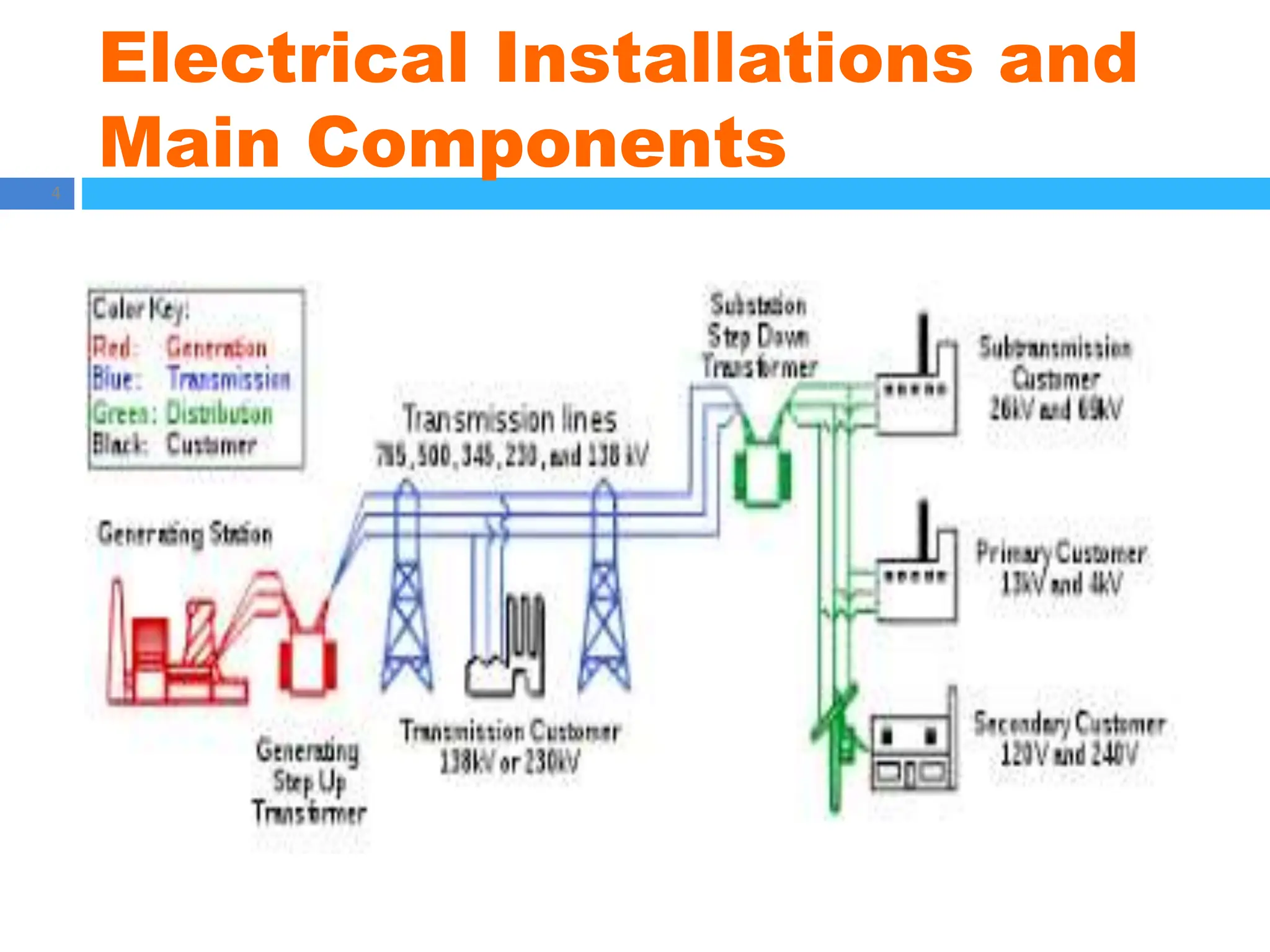
Electrical Installations and
Main Components
4
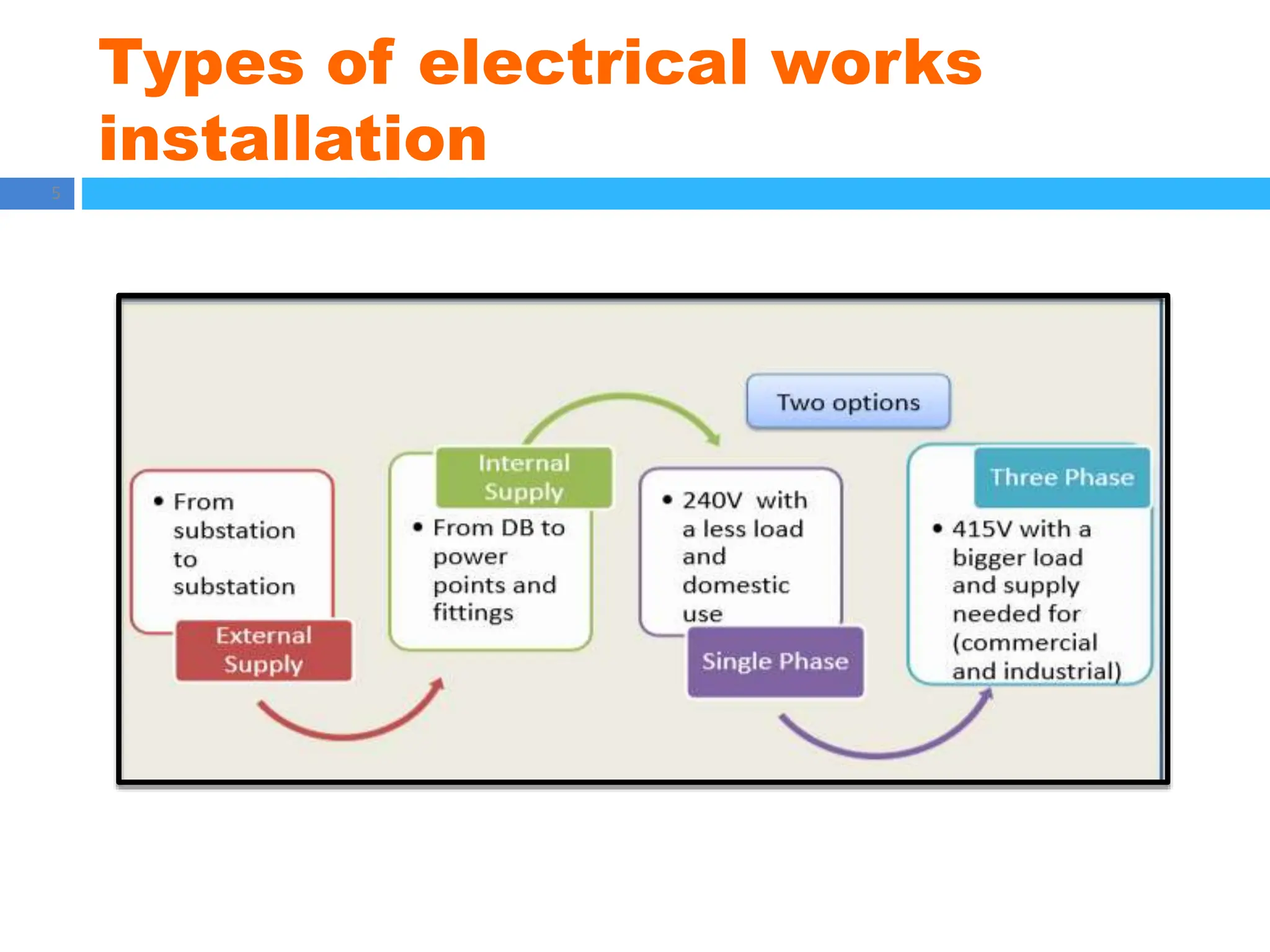
Types of electrical works
installation
5
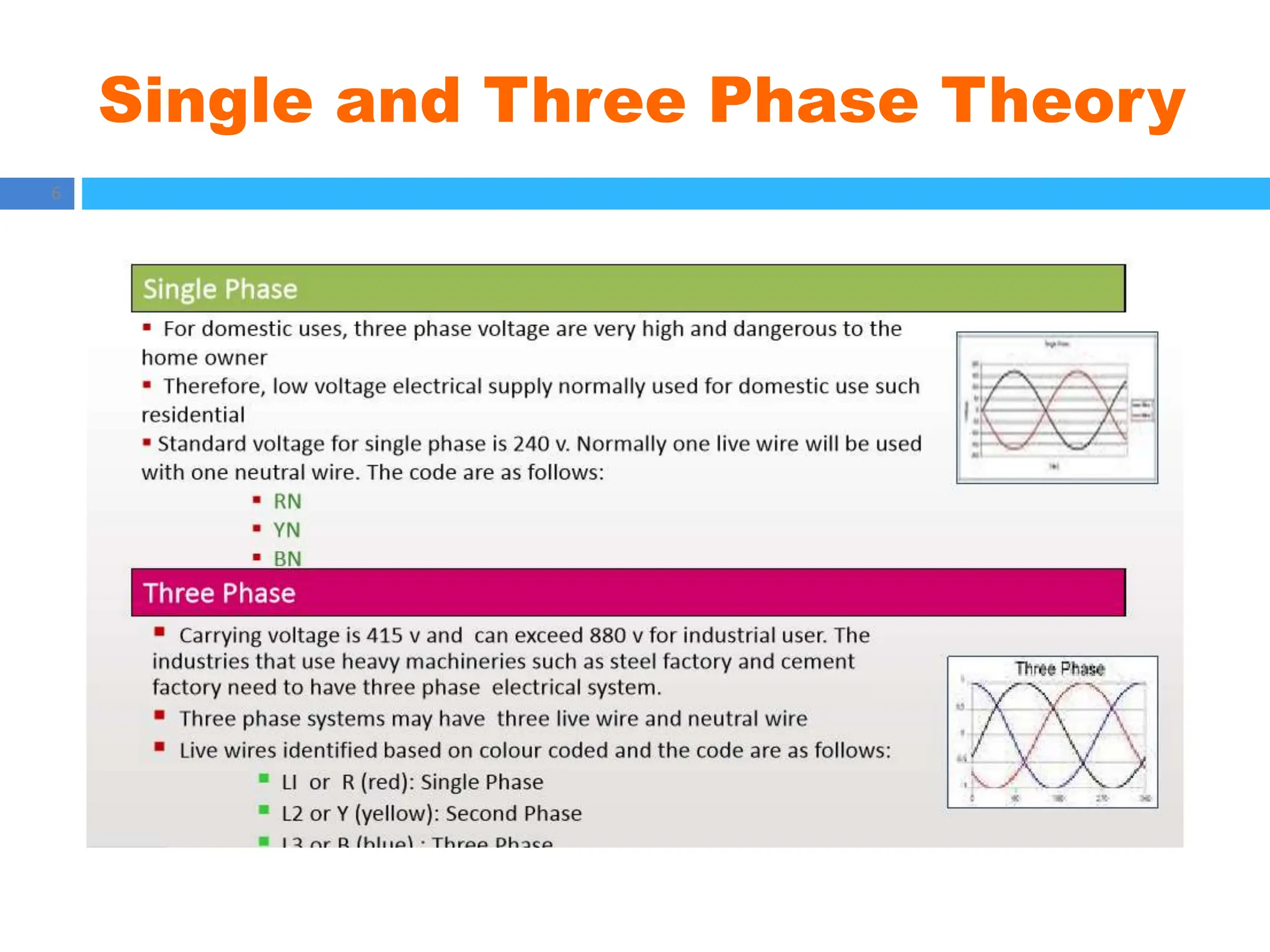
Single and Three Phase Theory
6
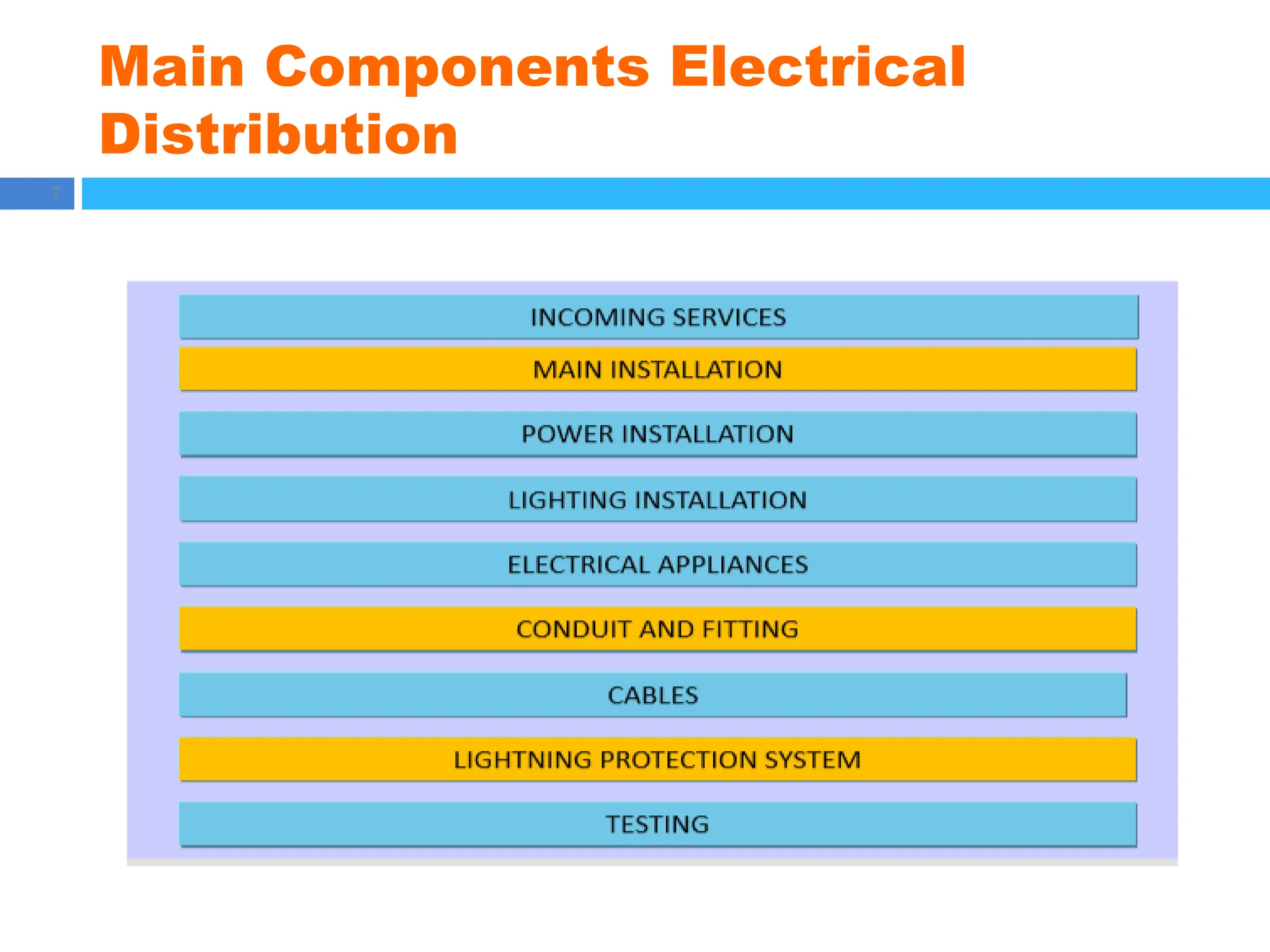
Main Components Electrical
Distribution
7
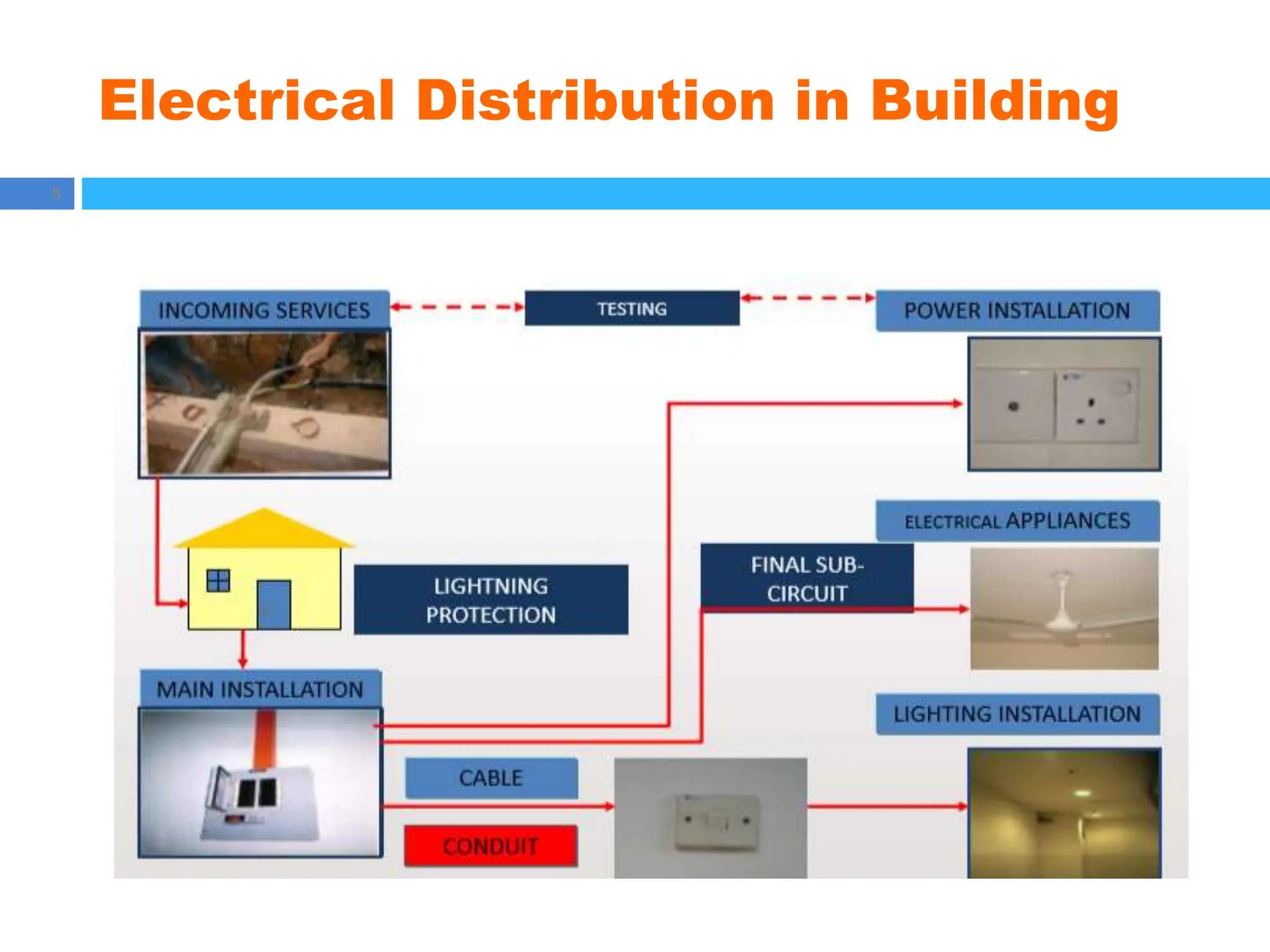
Electrical Distribution in Building
8
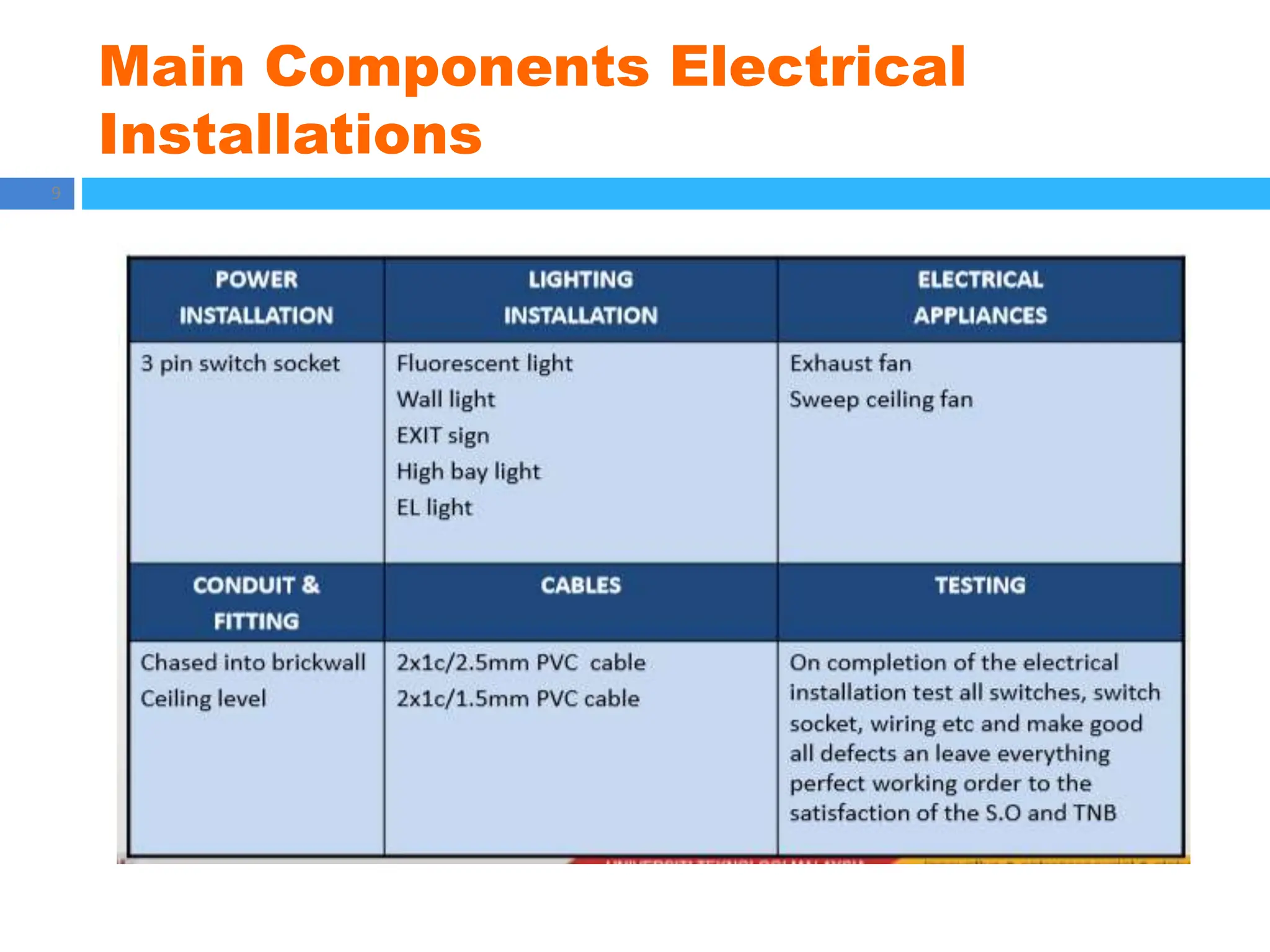
Main Components Electrical
Installations
9
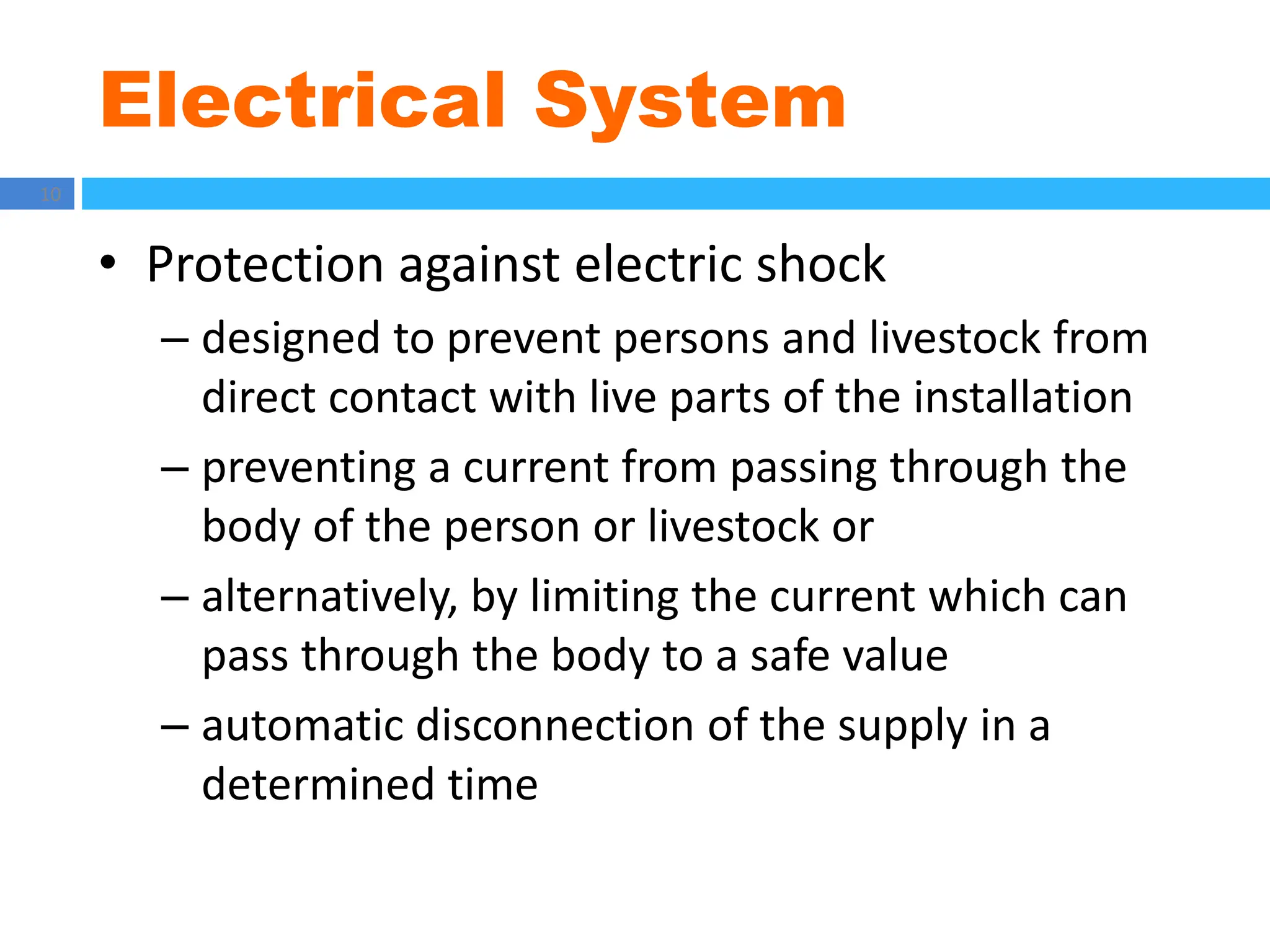
Electrical System
10
• Protection against electric shock
– designed to prevent persons and livestock from
direct contact with live parts of the installation
– preventing a current from passing through the
body of the person or livestock or
– alternatively, by limiting the current which can
pass through the body to a safe value
– automatic disconnection of the supply in a
determined time
Electrical System
11
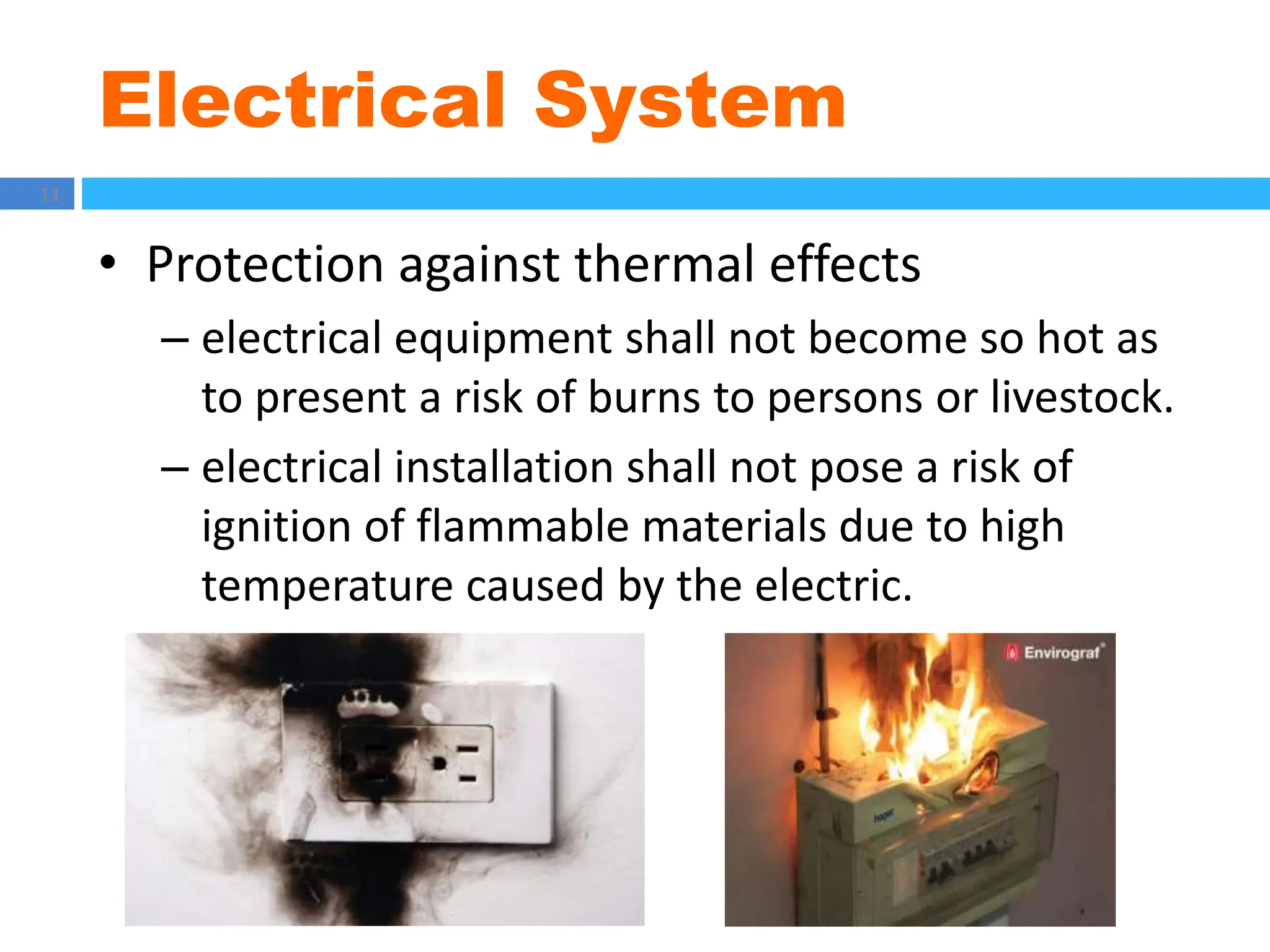
• Protection against thermal effects
– electrical equipment shall not become so hot as
to present a risk of burns to persons or livestock.
– electrical installation shall not pose a risk of
ignition of flammable materials due to high
temperature caused by the electric.
Electrical System
12
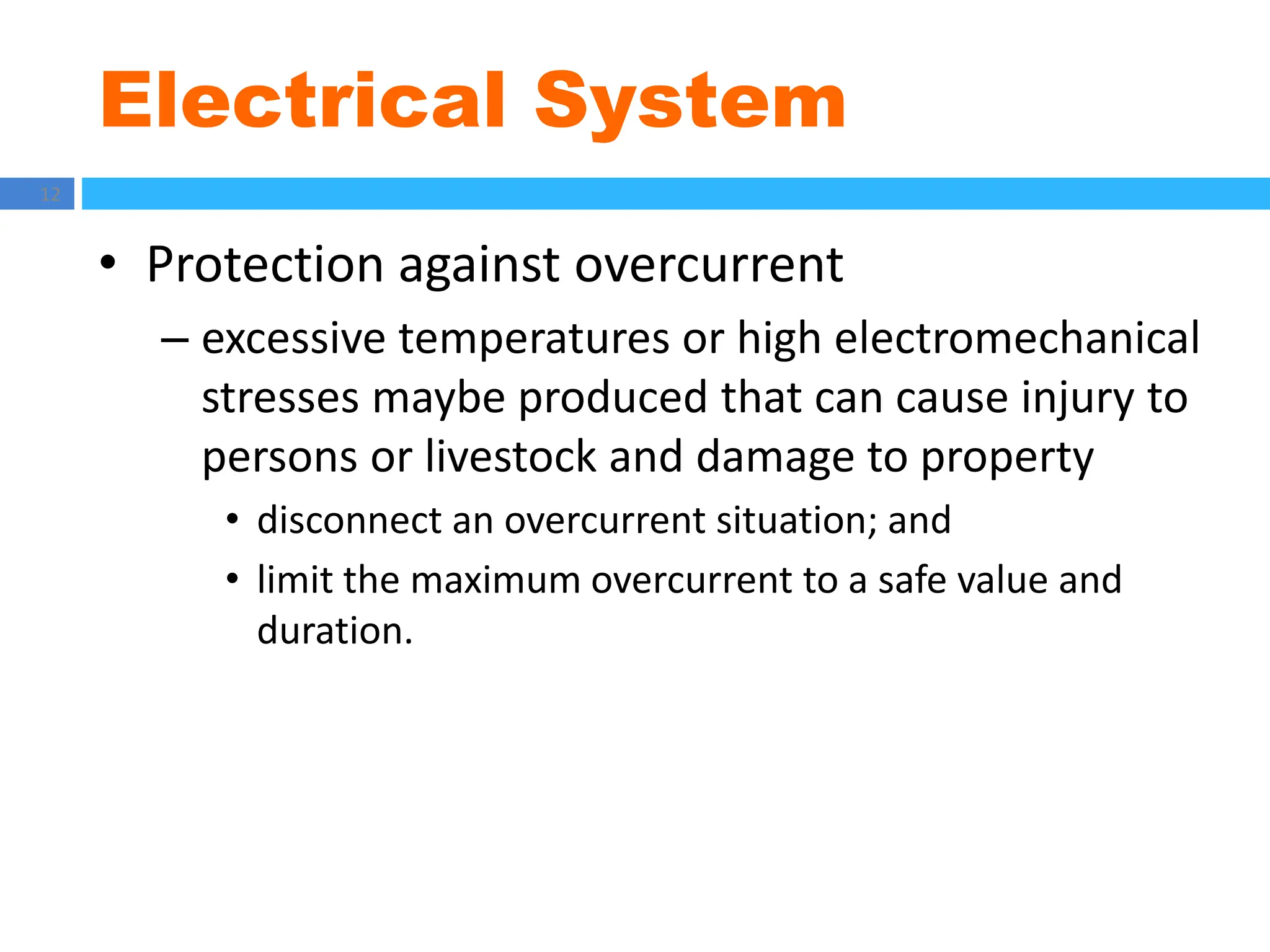
• Protection against overcurrent
– excessive temperatures or high electromechanical
stresses maybe produced that can cause injury to
persons or livestock and damage to property
• disconnect an overcurrent situation; and
• limit the maximum overcurrent to a safe value and
duration.
Electrical System
13
• Erection and initial verification of electrical
installation
– good workmanship carried out by qualified
personnel using proper materials
– identification of conductors, reliable electrical
connections and measures taken to eliminate risk
of fire
Electrical System
14
• Division of installation
– divided into several circuits to avoid danger
and minimise inconvenience
– in the event of an electrical fault it
facilitates safe investigation and testing
Electrical System
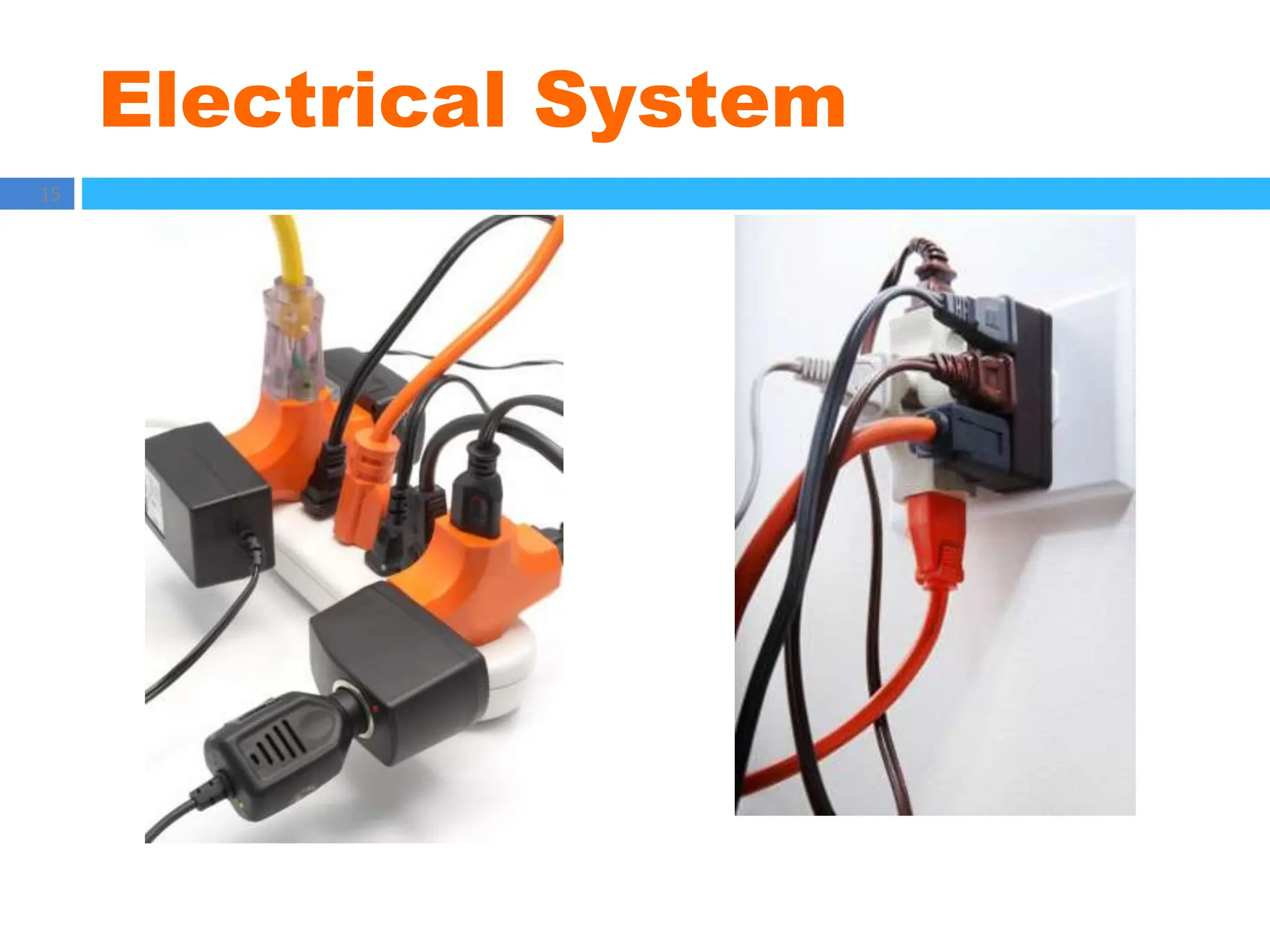
15
Electrical System
16
• Protection against direct contact:
• Insulating the live parts
– covering the live parts with insulation
• Use of barriers or enclosures
• Placing out of reach
• Earthing
• Combustible constructional materials
– cause a fire to the walls, floors and ceilings
Electrical System
17
• Fire propagating structures
– some structures may facilitate the spread of fires
– recommended to install fire detectors
• Protection against overheating
– ensure that the required airflow be established before
the heating elements are activated
– when the air flow is stopped, the heating element
shall be stopped
– two temperature limiting devices, independent of
each other, shall be installed to prevent permissible
temperatures from being exceeded
Electrical System
18
• Wiring system
– an assembly consisting of cables, busbars or cable
trunkings and parts, which secure, support or
enclose them
– components including cables and wiring
accessories shall be installed at temperatures
within its limits
Electrical System
19
• Wiring system
– protected from heat sources by:
a) shielding;
b) placing sufficiently far from heat source;
c) selecting a wiring system rated for the effects of the
heat source; and
d) local reinforcement or substitution of insulating
material.
– Examples of heat sources are hot water systems
or steam pipes; manufacturing process; and the
sun.
Electrical System
20
• Wiring system
– not to be damaged by water
• make provisions for the water to escape
– not to be damaged by solid foreign objects
• dusty environment
– corrosive or polluting environment
• protected or made from materials resistant to these
detrimental substances
Electrical System
21
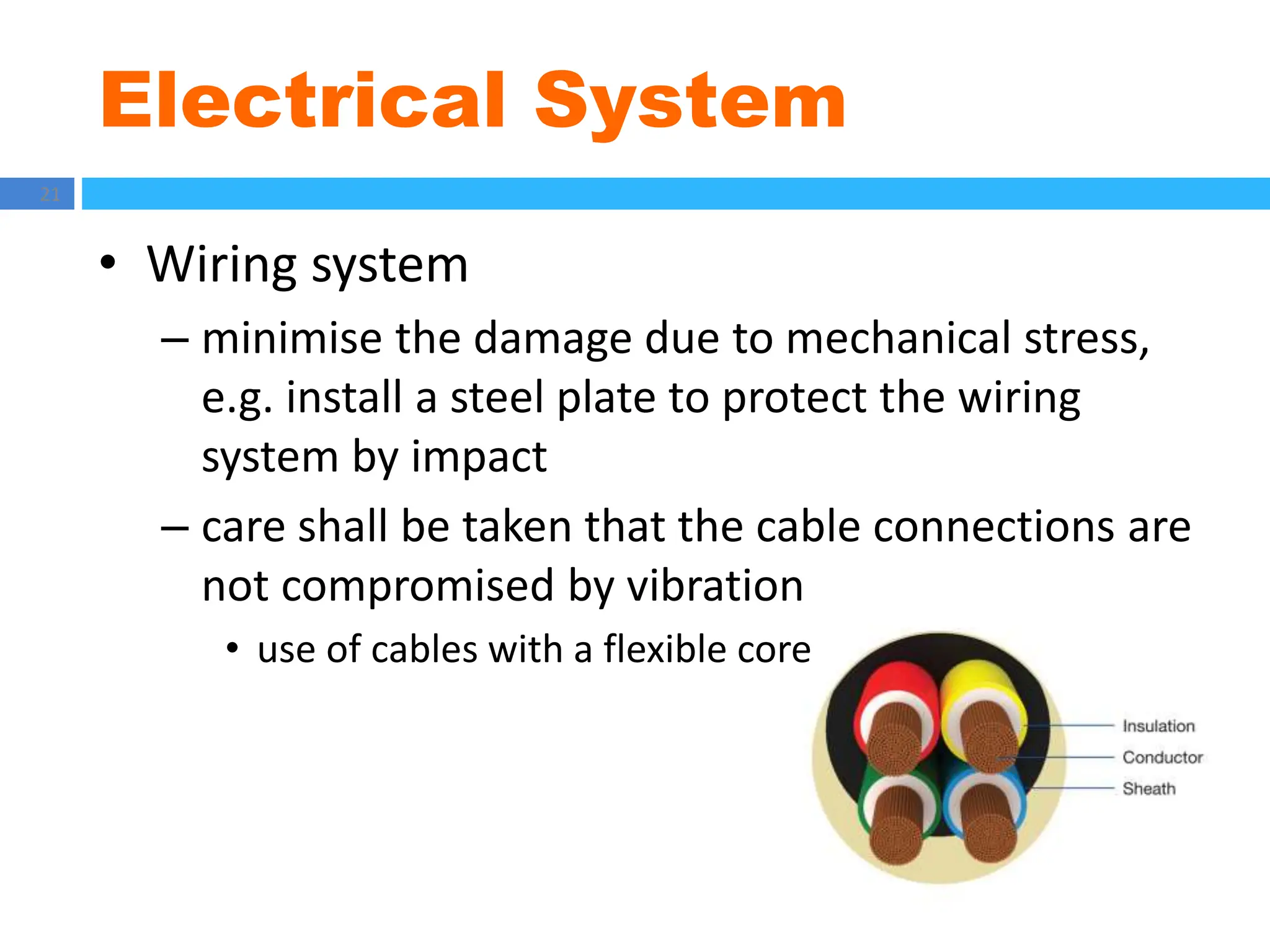
• Wiring system
– minimise the damage due to mechanical stress,
e.g. install a steel plate to protect the wiring
system by impact
– care shall be taken that the cable connections are
not compromised by vibration
• use of cables with a flexible core
Electrical System
22
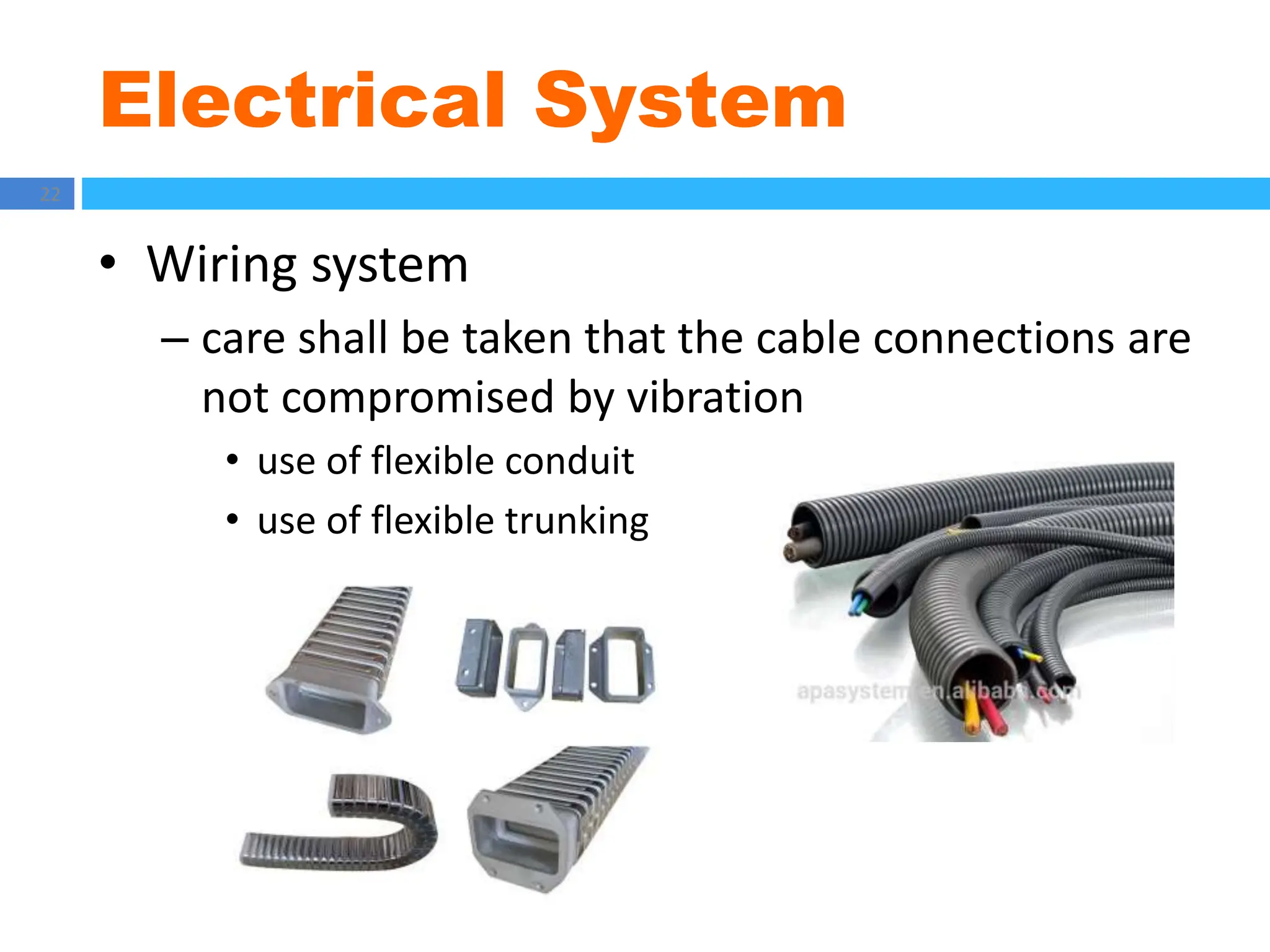
• Wiring system
– care shall be taken that the cable connections are
not compromised by vibration
• use of flexible conduit
• use of flexible trunking
Electrical System
23
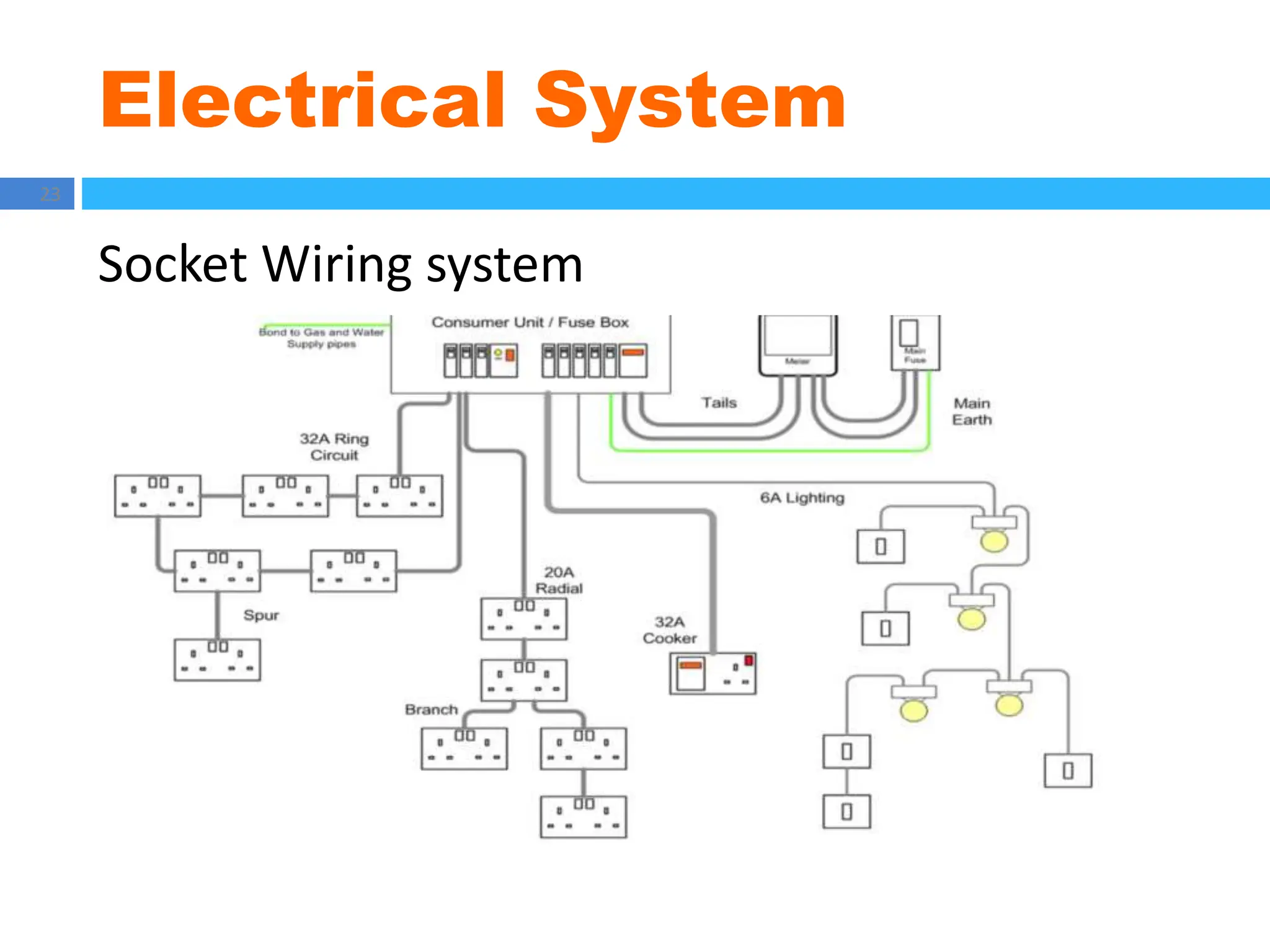
Socket Wiring system
Electrical System
24
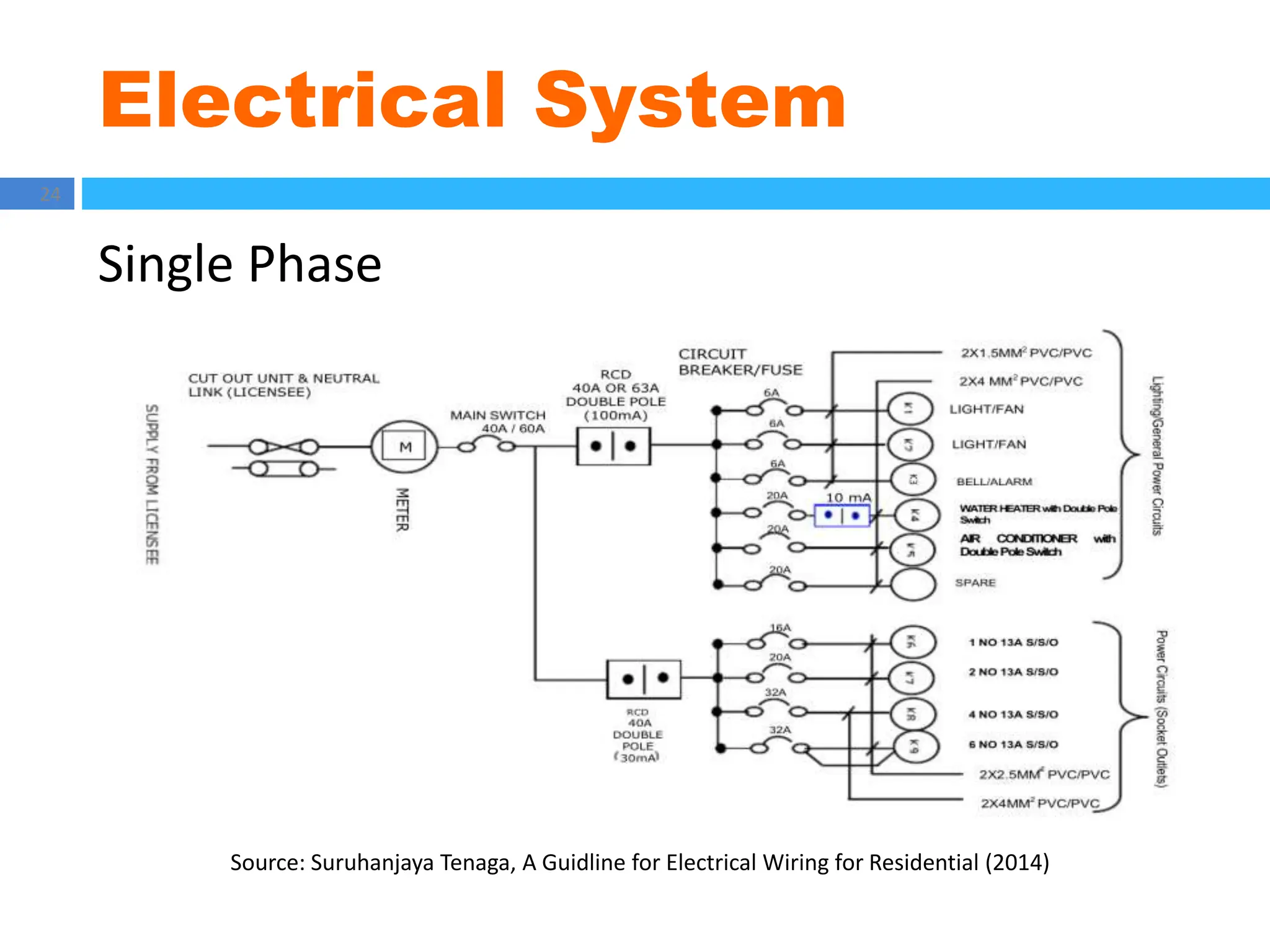
Single Phase
Source: Suruhanjaya Tenaga, A Guidline for Electrical Wiring for Residential (2014)
Electrical System
25
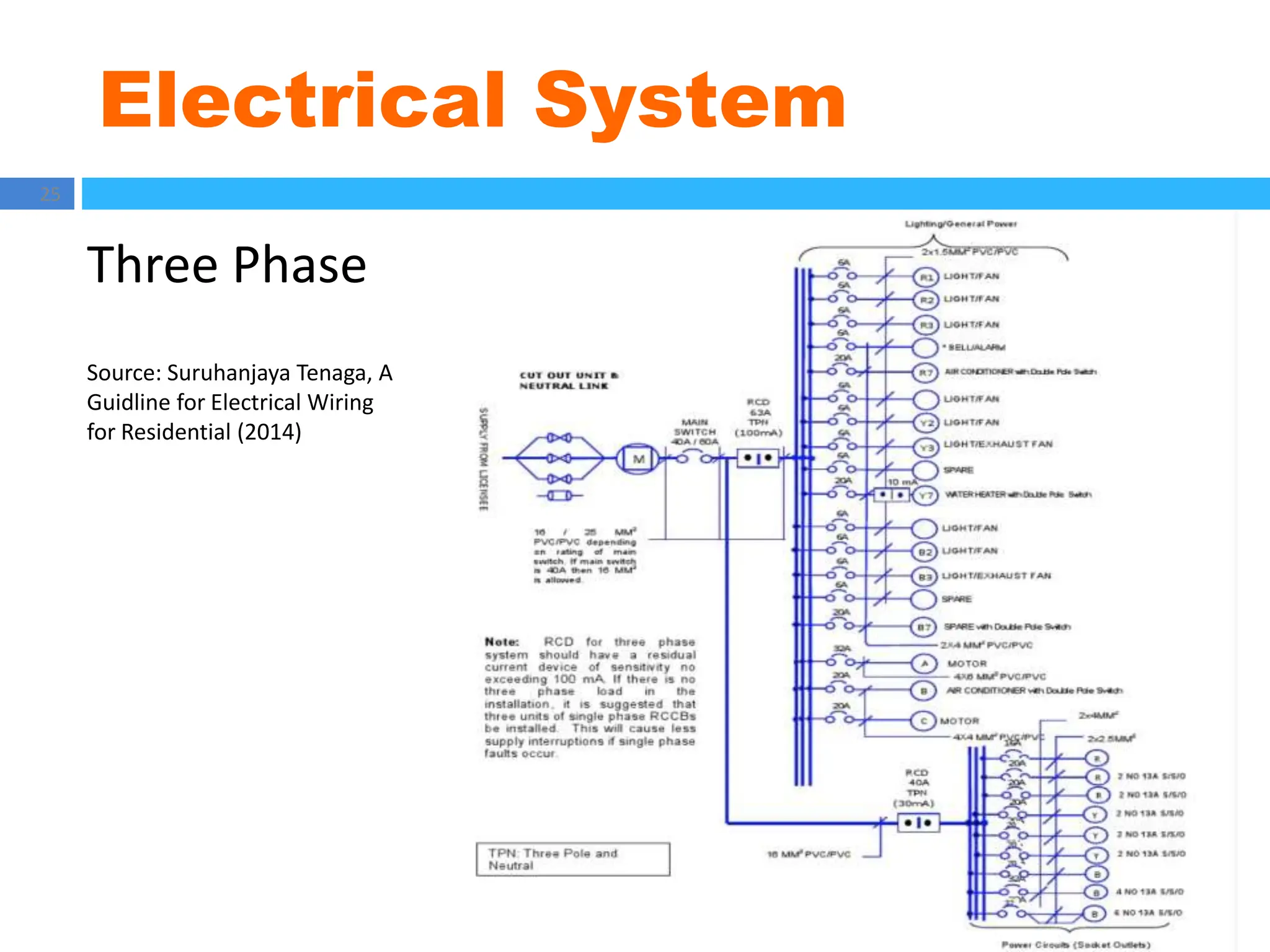
Three Phase
Source: Suruhanjaya Tenaga, A
Guidline for Electrical Wiring
for Residential (2014)
Lighting System
26
• Lighting designers must consider eight key factors
when specifying lighting systems
– The owner's project requirements (OPR) that include
project costs and schedule
– The basis of design (BOD)
– Codes and standards, including energy guidelines
– Sustainability certifications (GBI, etc.)
– Recommended lighting levels
– Lifecycle costs
– Safety and security
– Maintenance and warranty
Lighting System
27
• building occupants do not necessarily want
LEDs or wireless control—they want to be
comfortably seeing what they are doing
• enhancing the architecture,
• integrating with the available daylight,
• minimizing building energy use, and
• aligning with the overall construction process
and budget
Lighting System
28
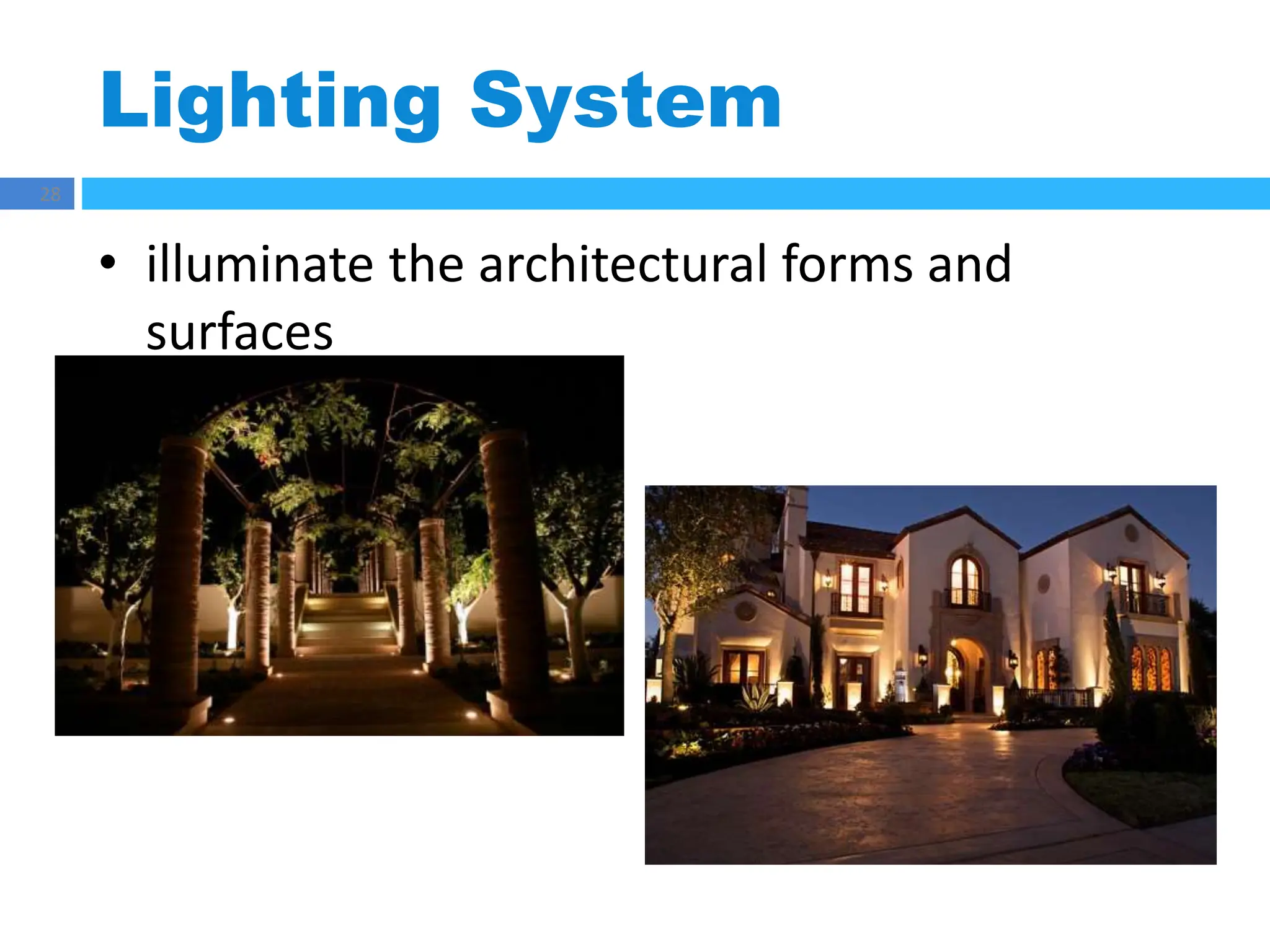
• illuminate the architectural forms and
surfaces
Lighting System
29
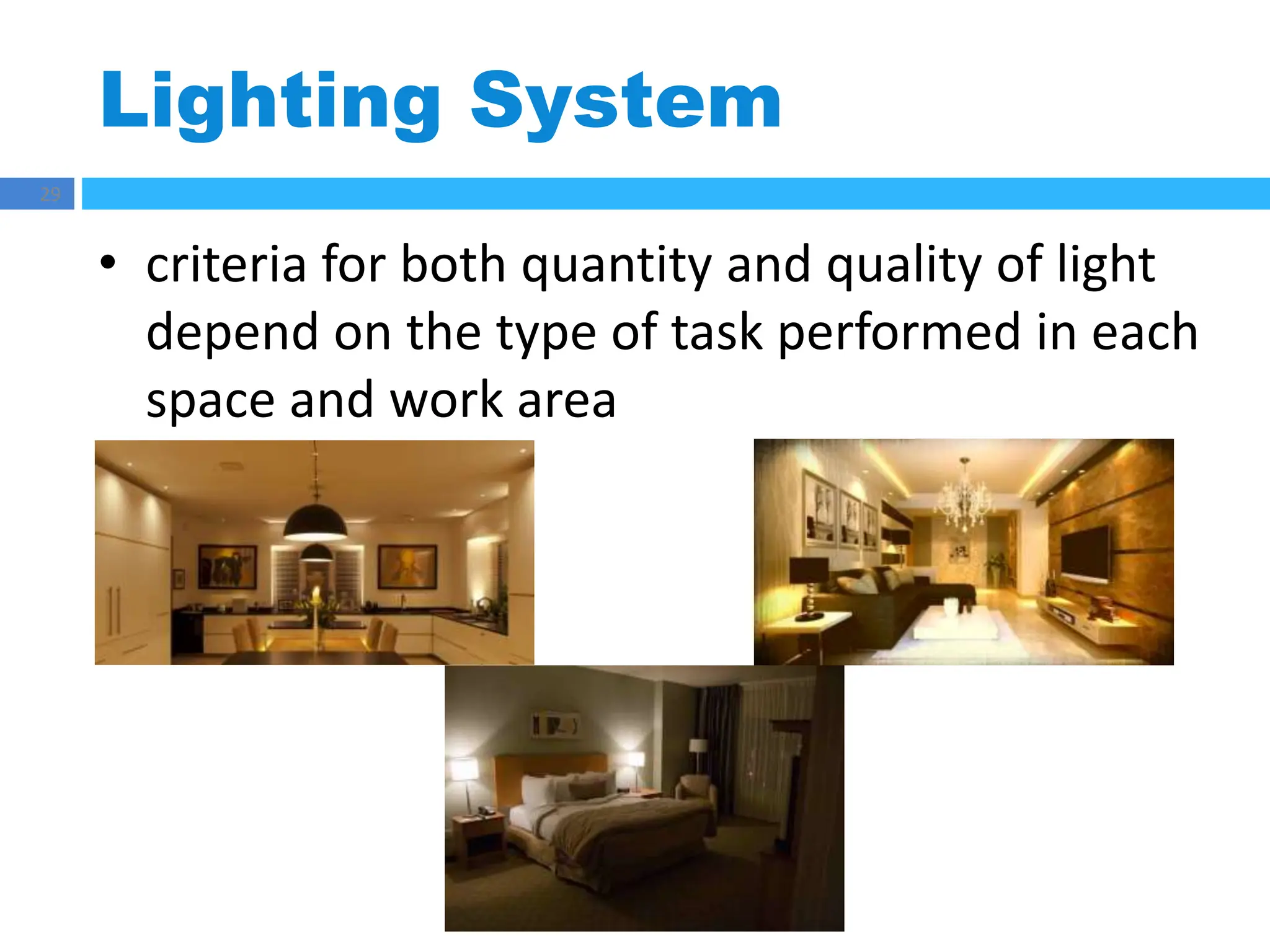
• criteria for both quantity and quality of light
depend on the type of task performed in each
space and work area
Lighting System
30
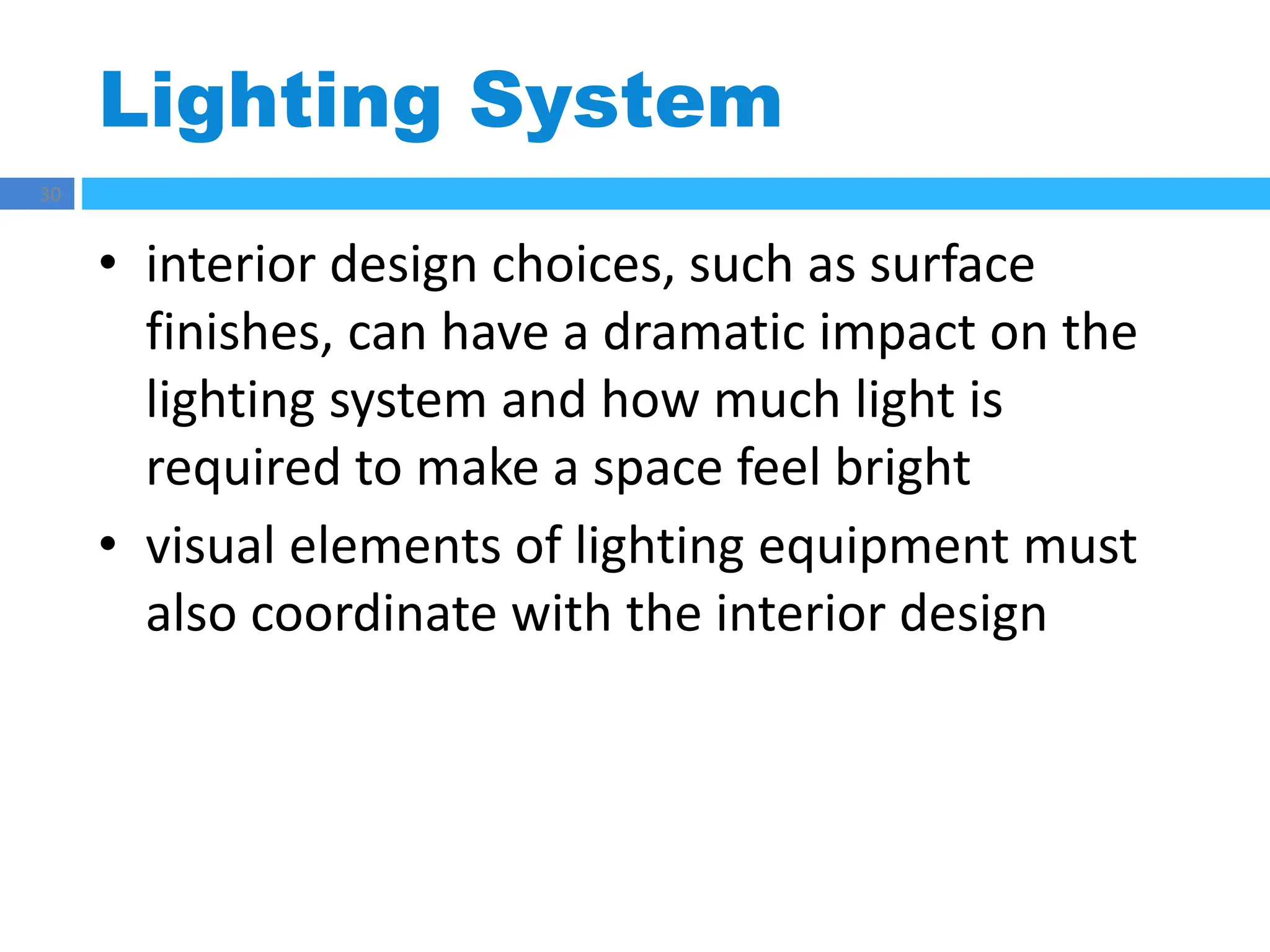
• interior design choices, such as surface
finishes, can have a dramatic impact on the
lighting system and how much light is
required to make a space feel bright
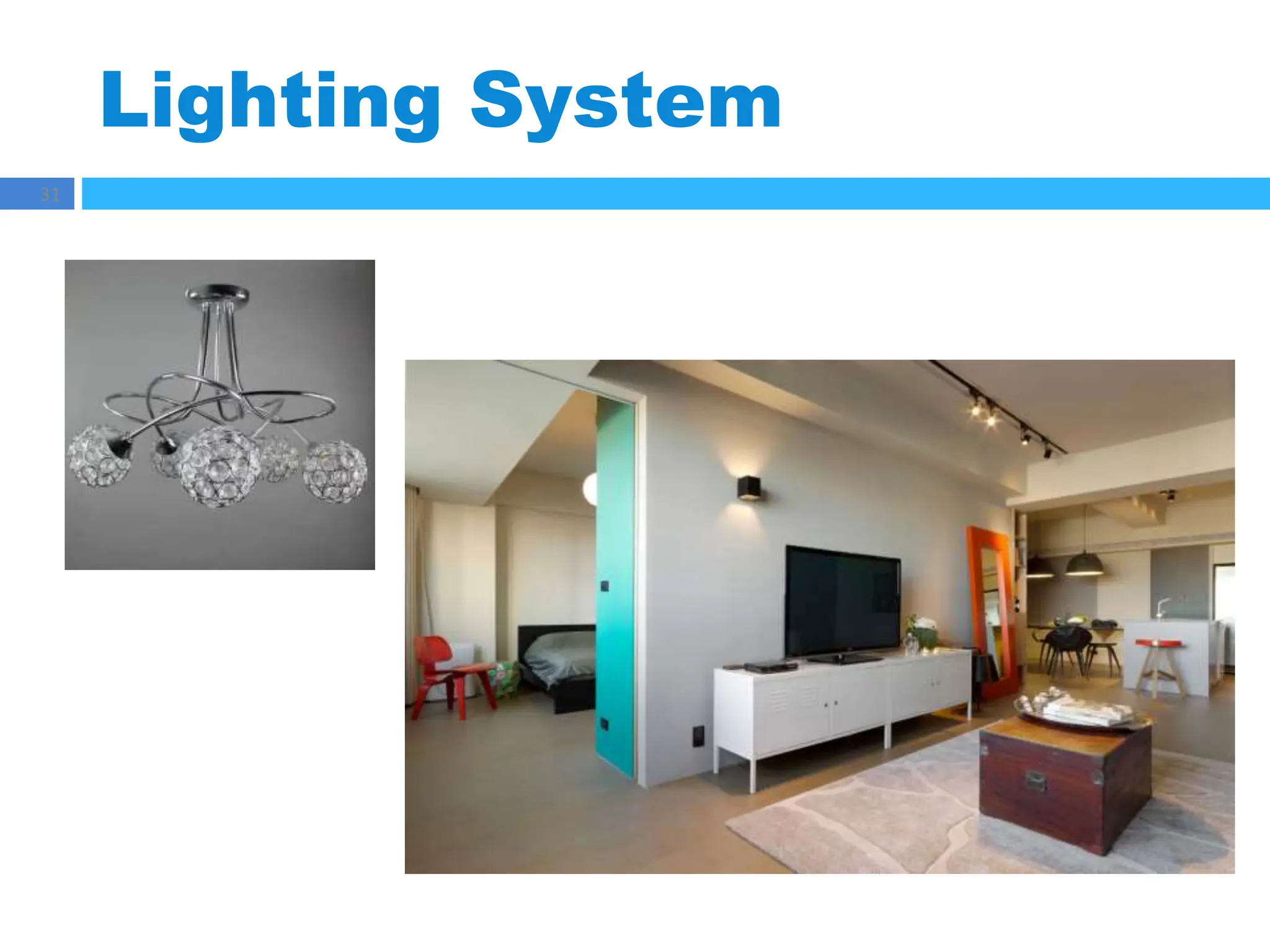
• visual elements of lighting equipment must
also coordinate with the interior design
Lighting System
31
Lighting System
32
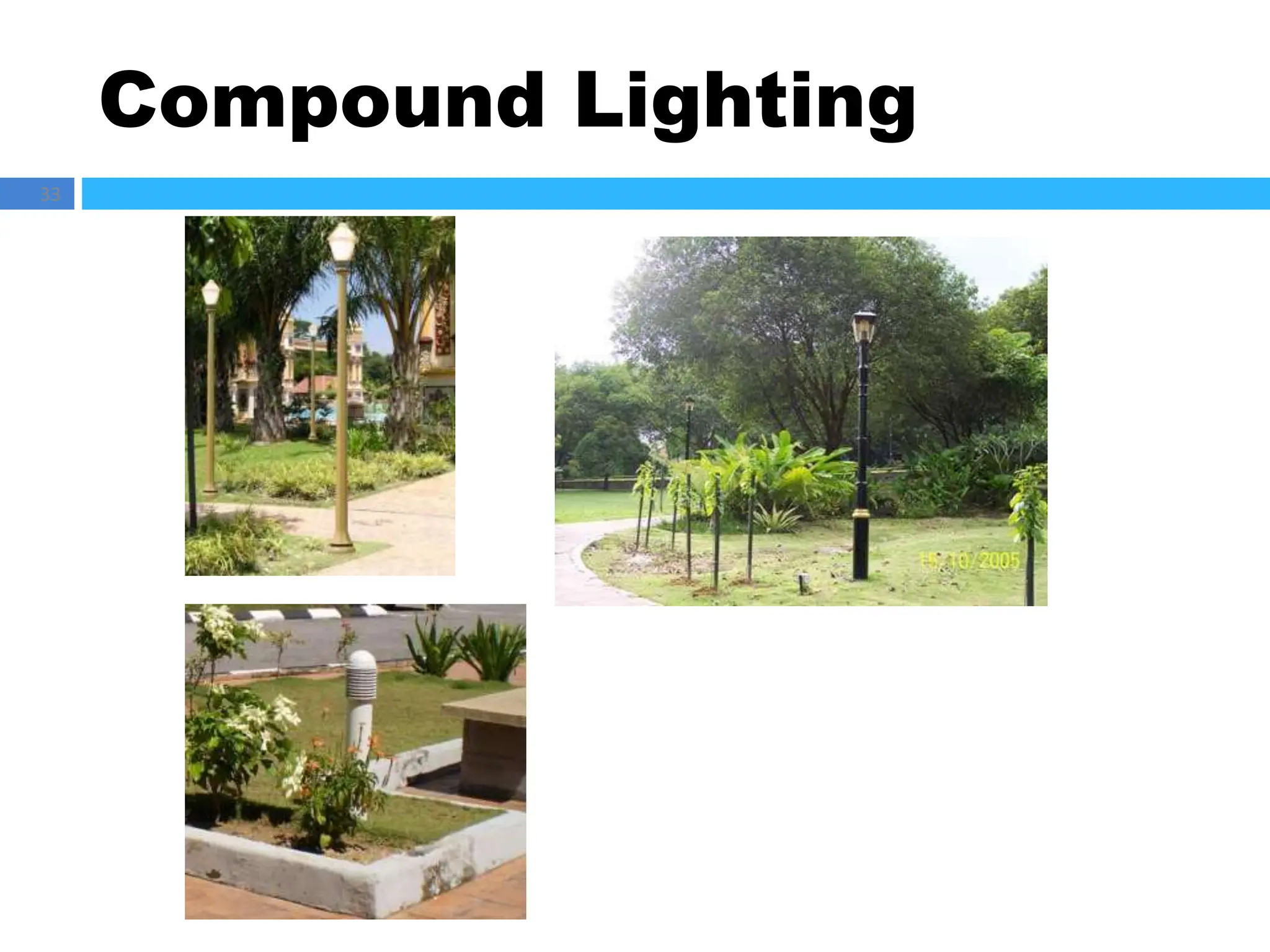
Compound Lighting
33
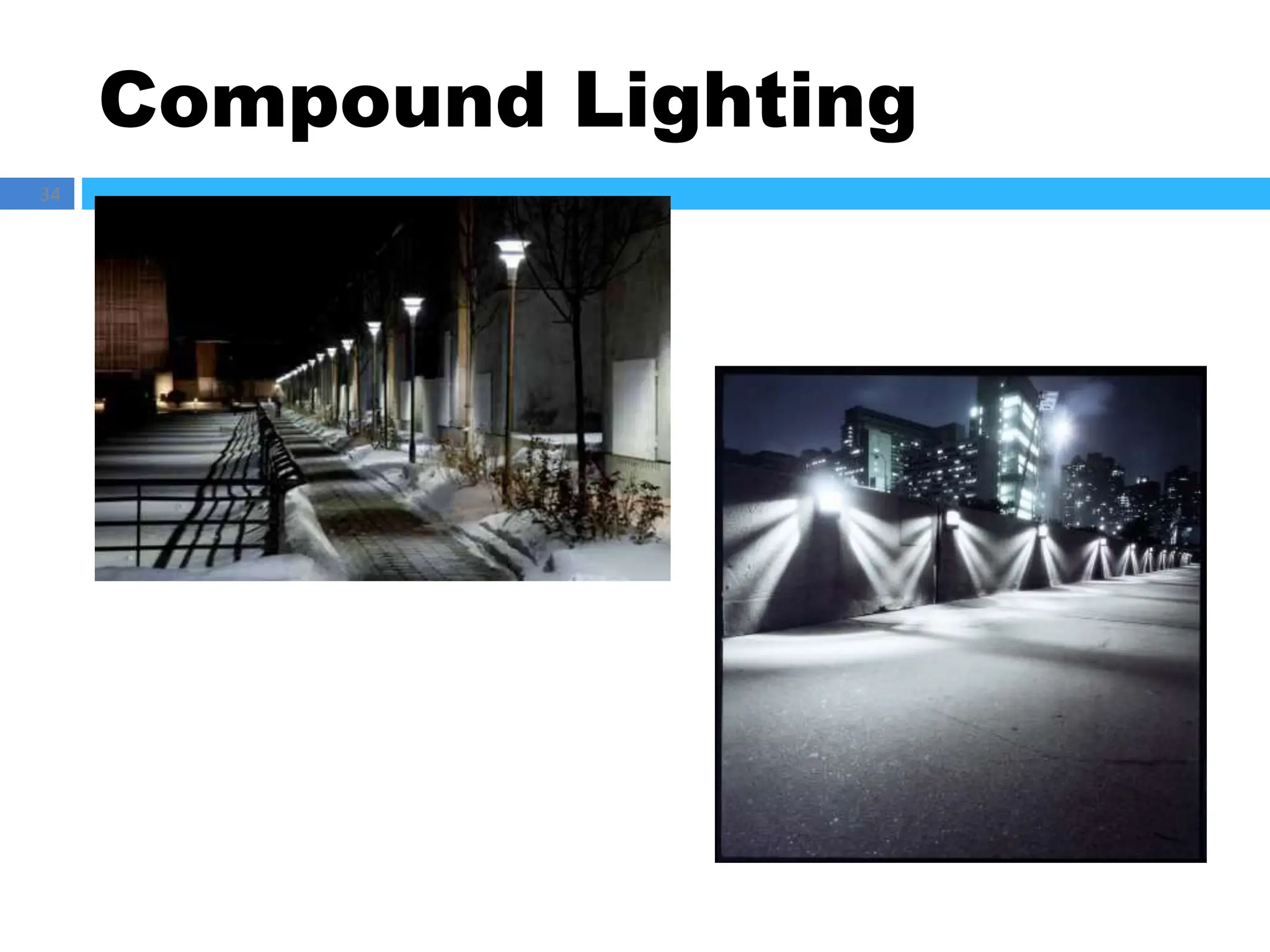
Compound Lighting
34
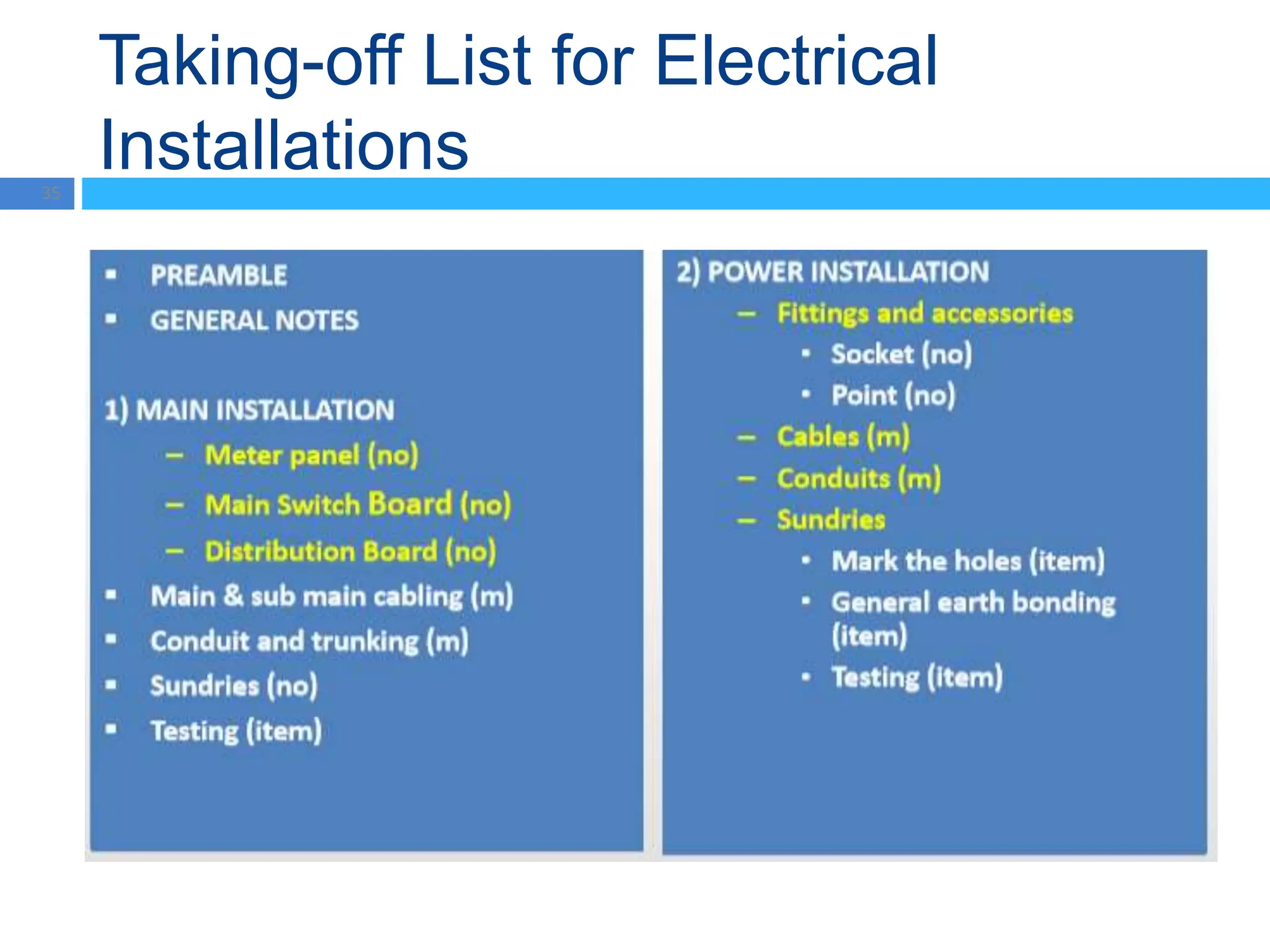
Taking-off List for Electrical
Installations
35
36
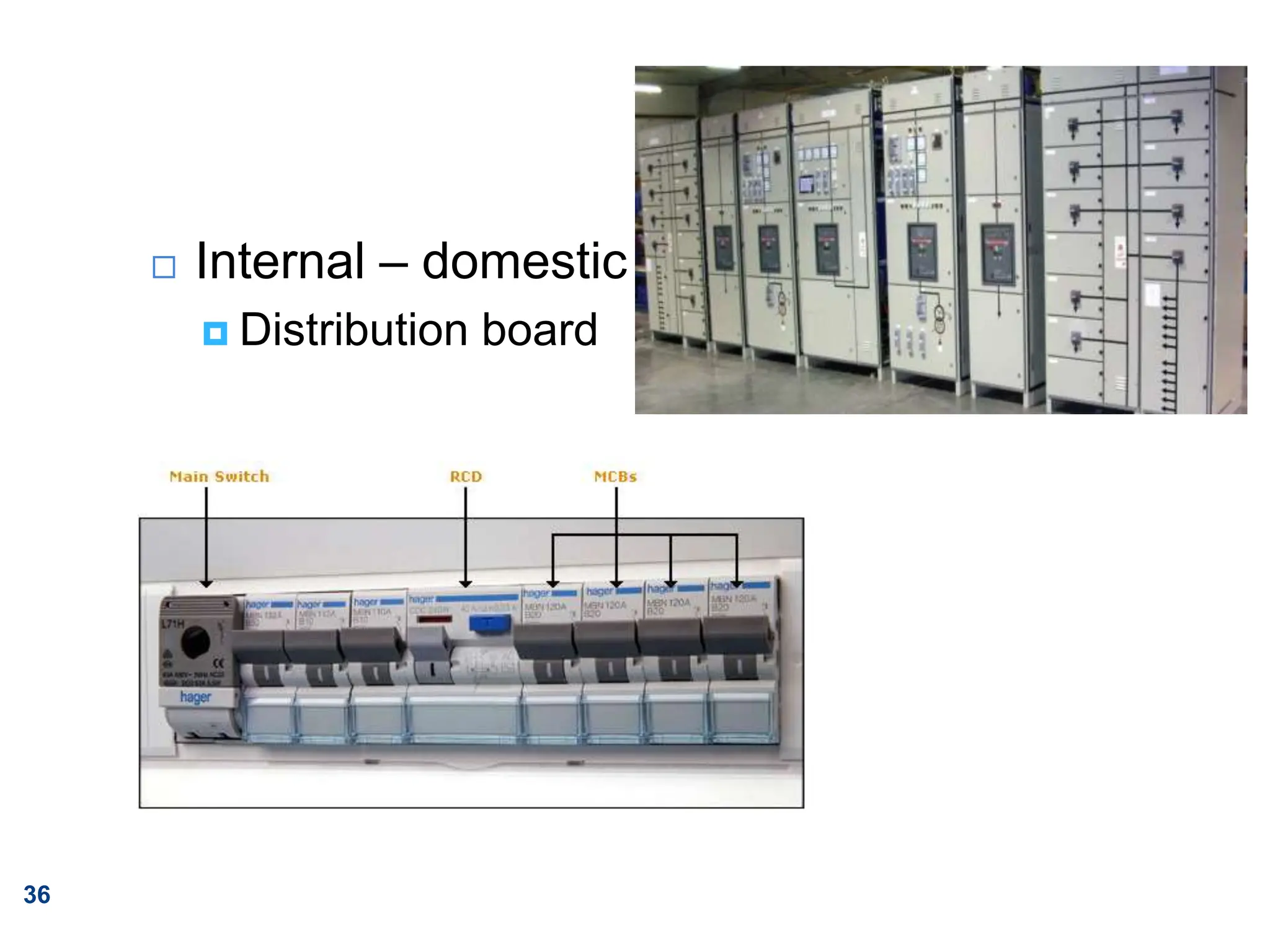
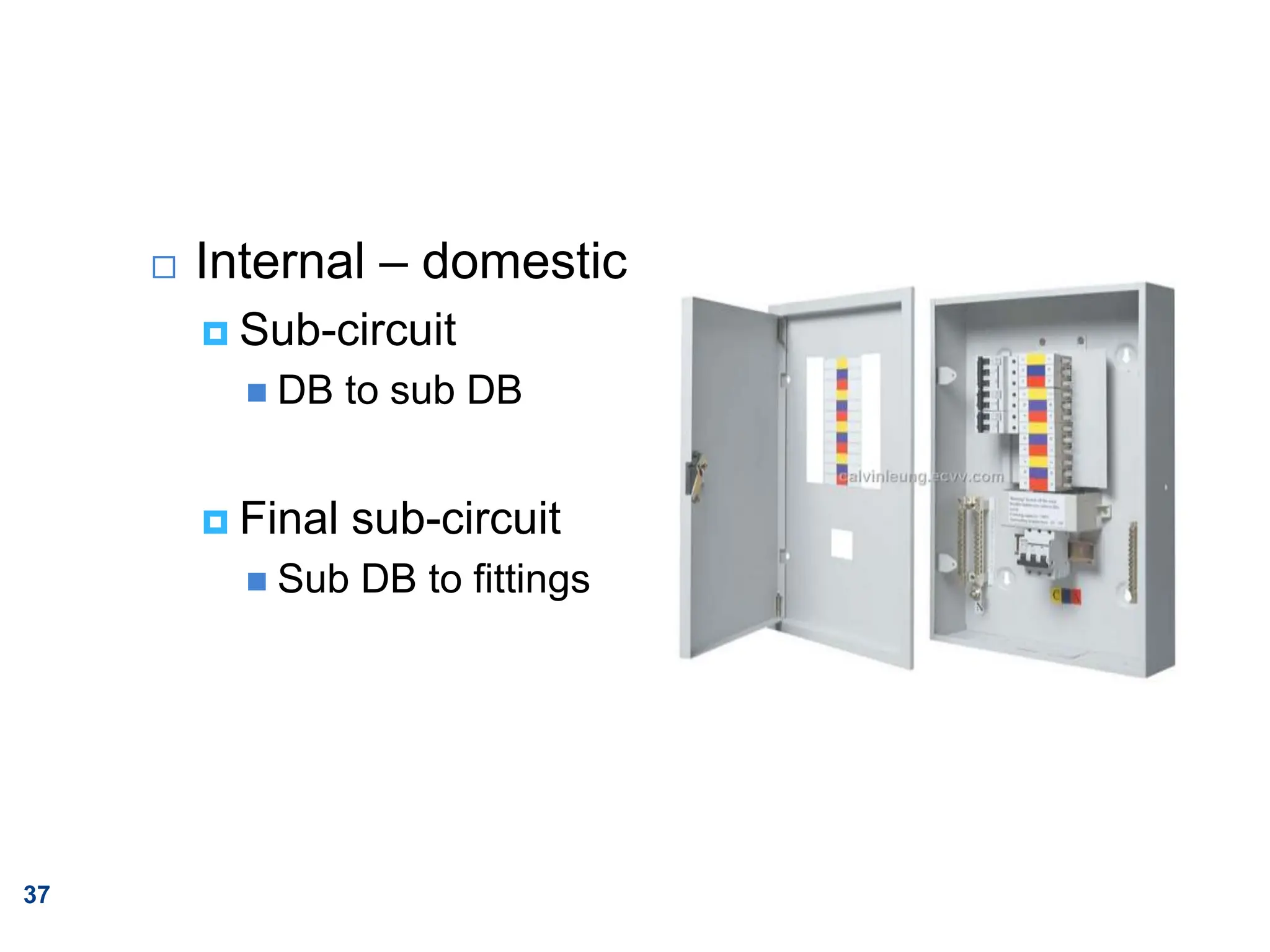
 Internal – domestic
 Distribution board
37
 Internal – domestic
 Sub-circuit
 DB to sub DB
 Final sub-circuit
 Sub DB to fittings
38
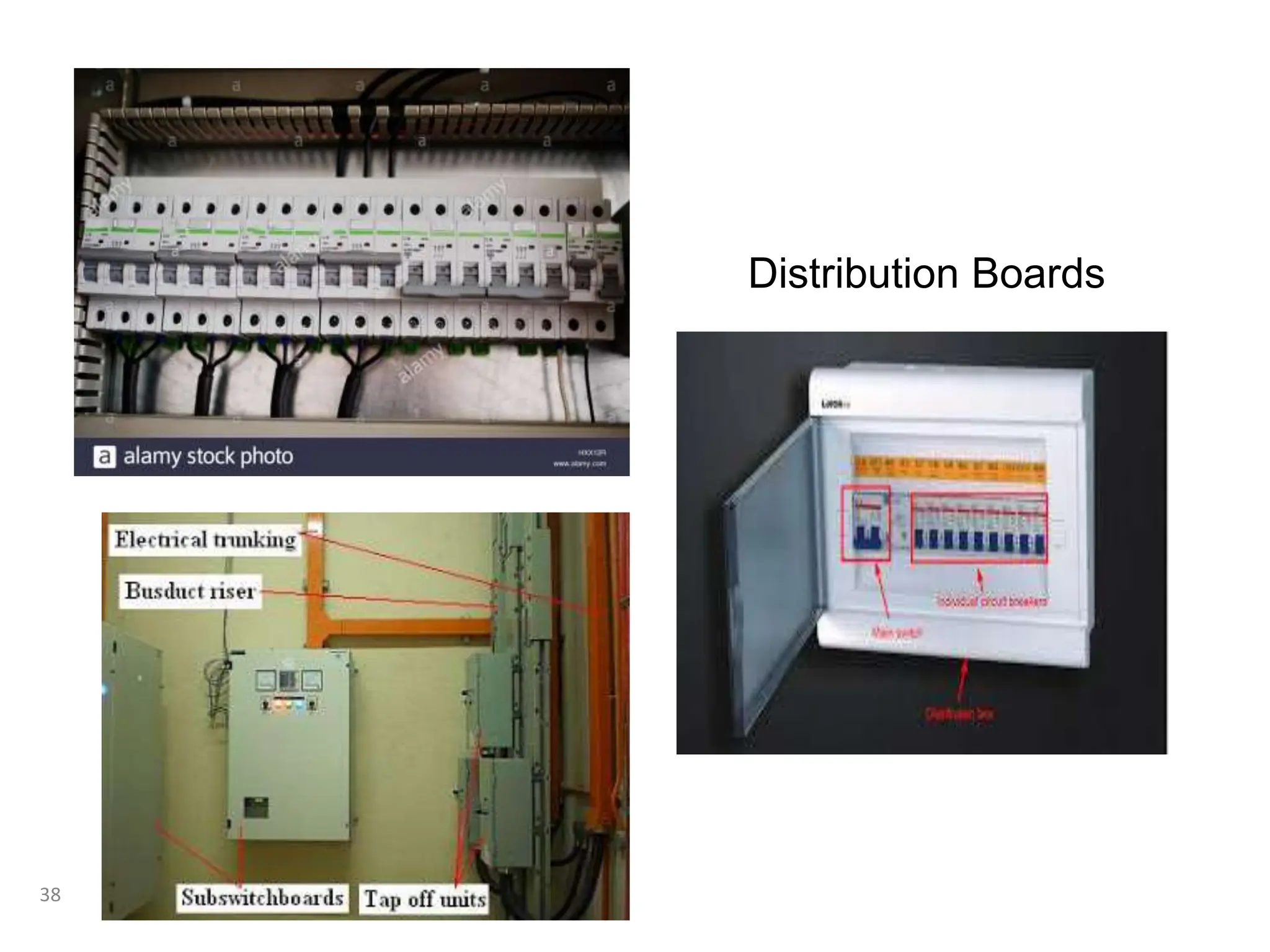
Distribution Boards
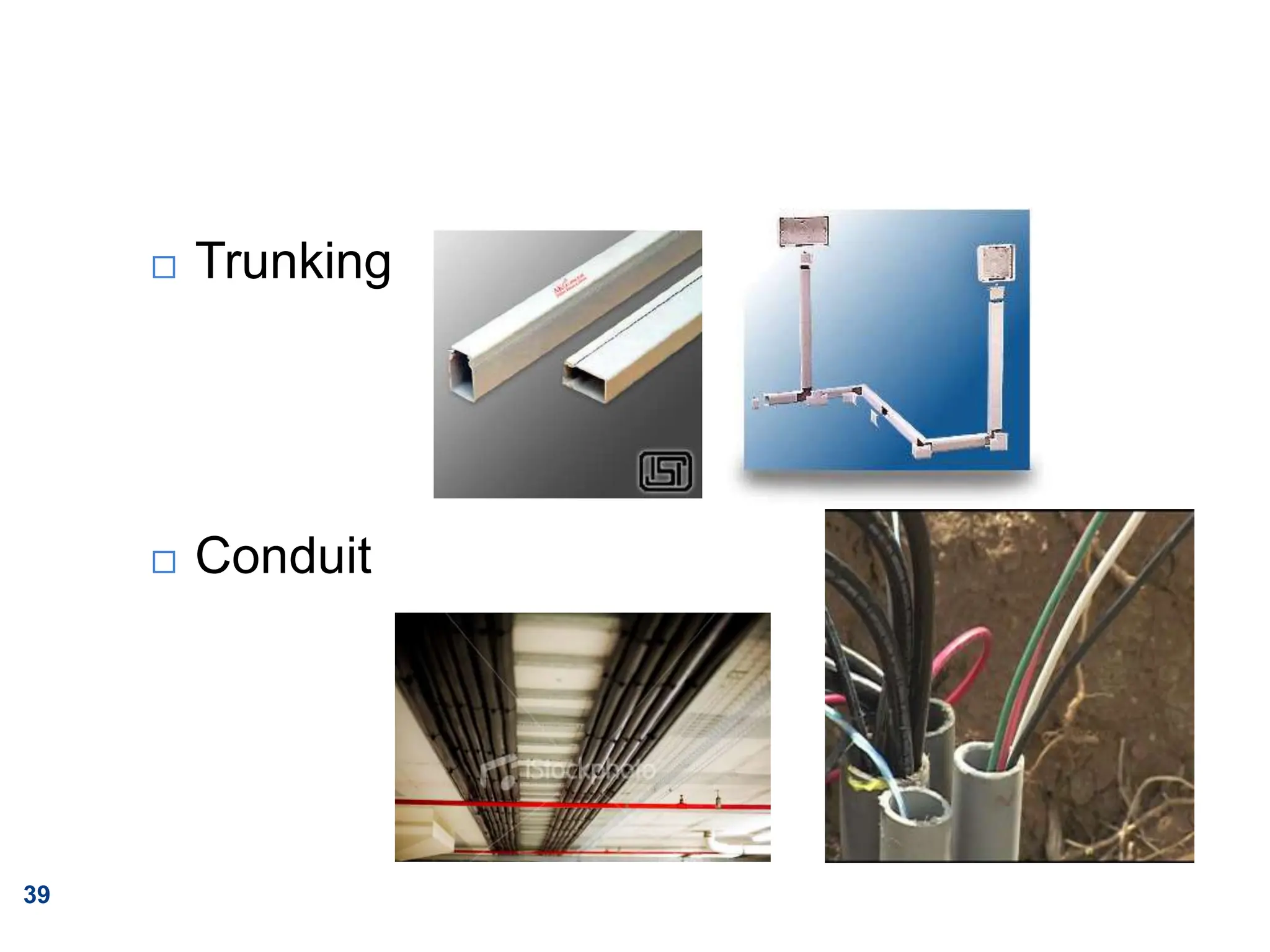
39
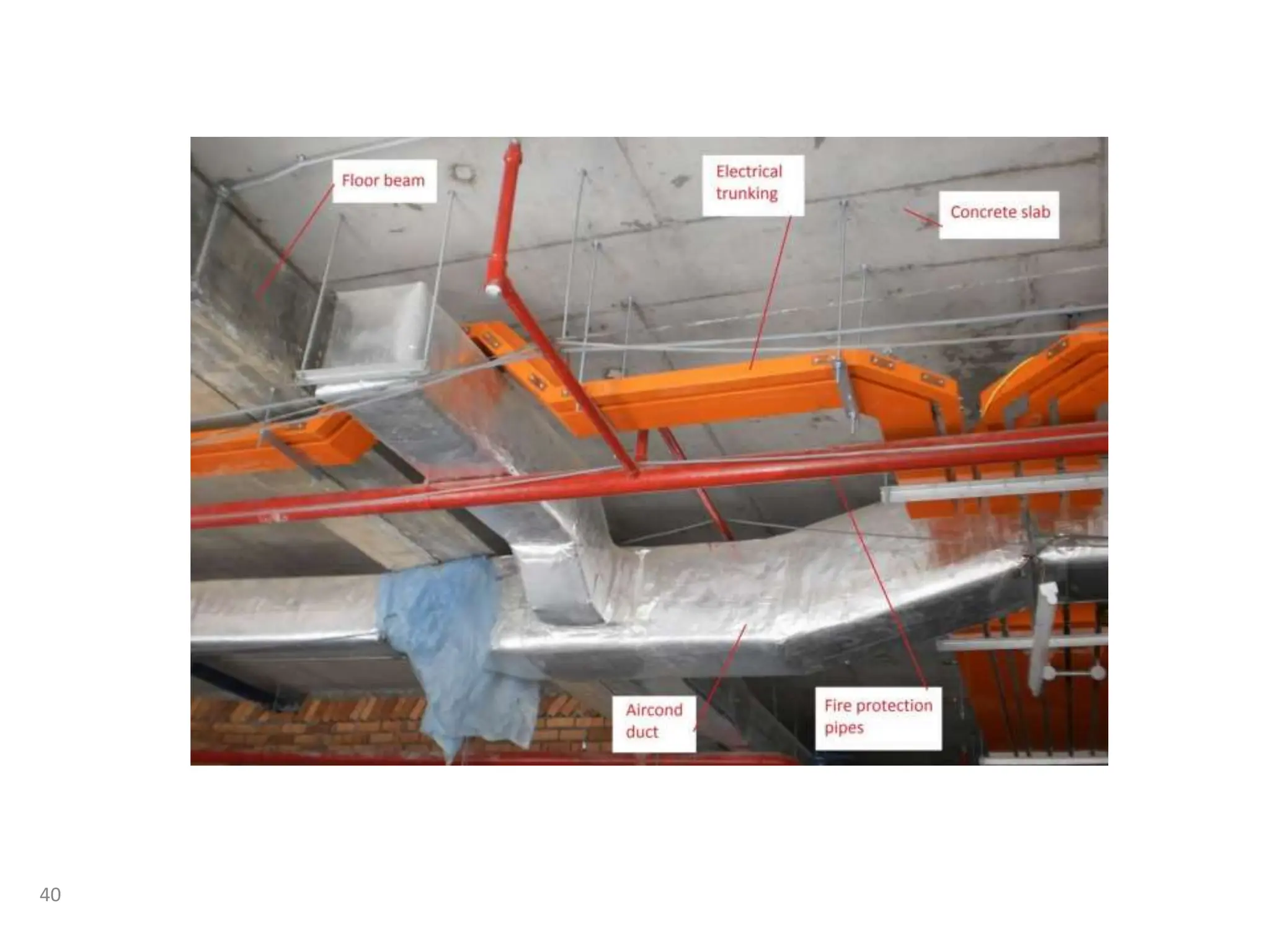
 Trunking
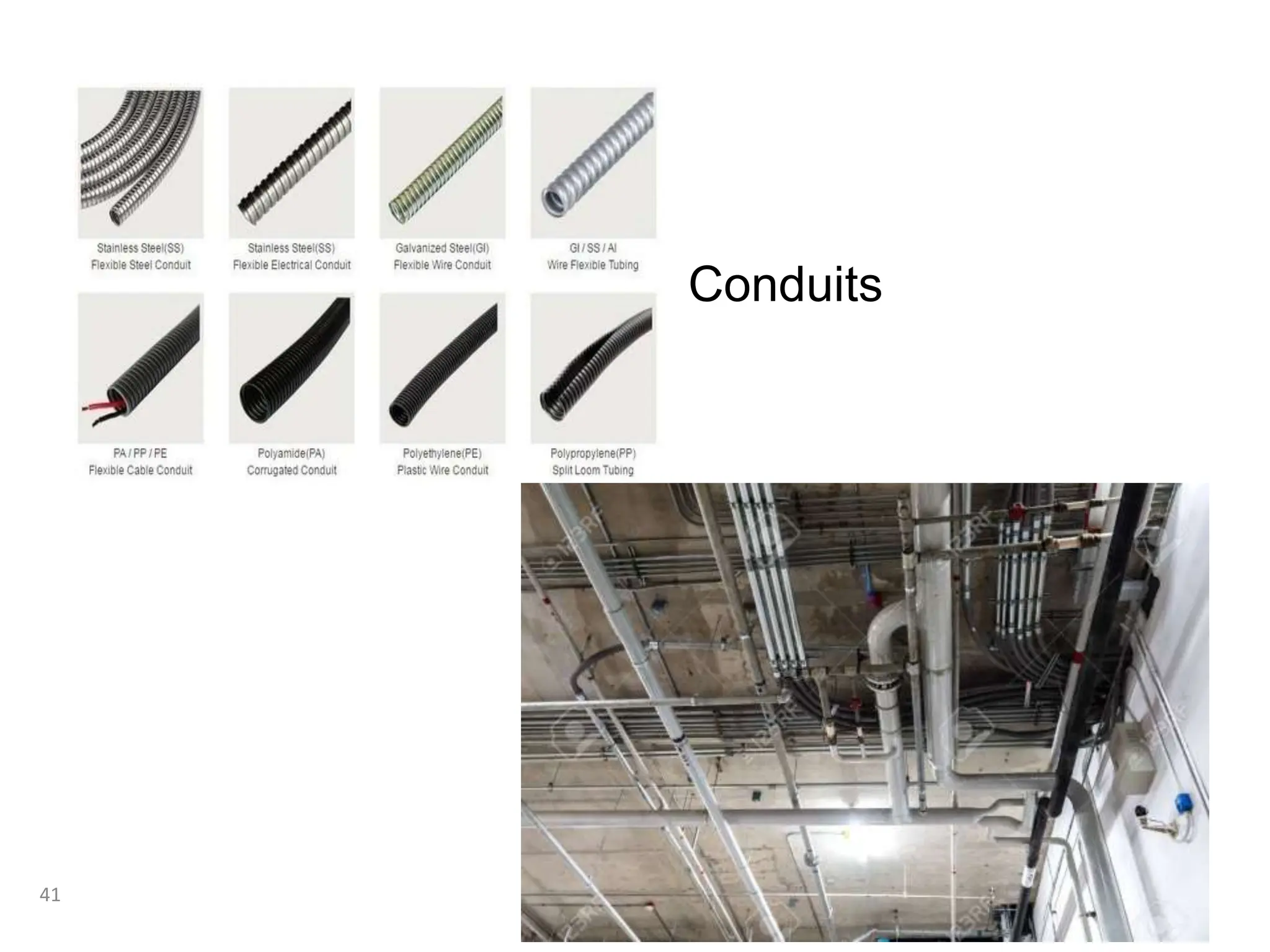
 Conduit
40
41
Conduits
42
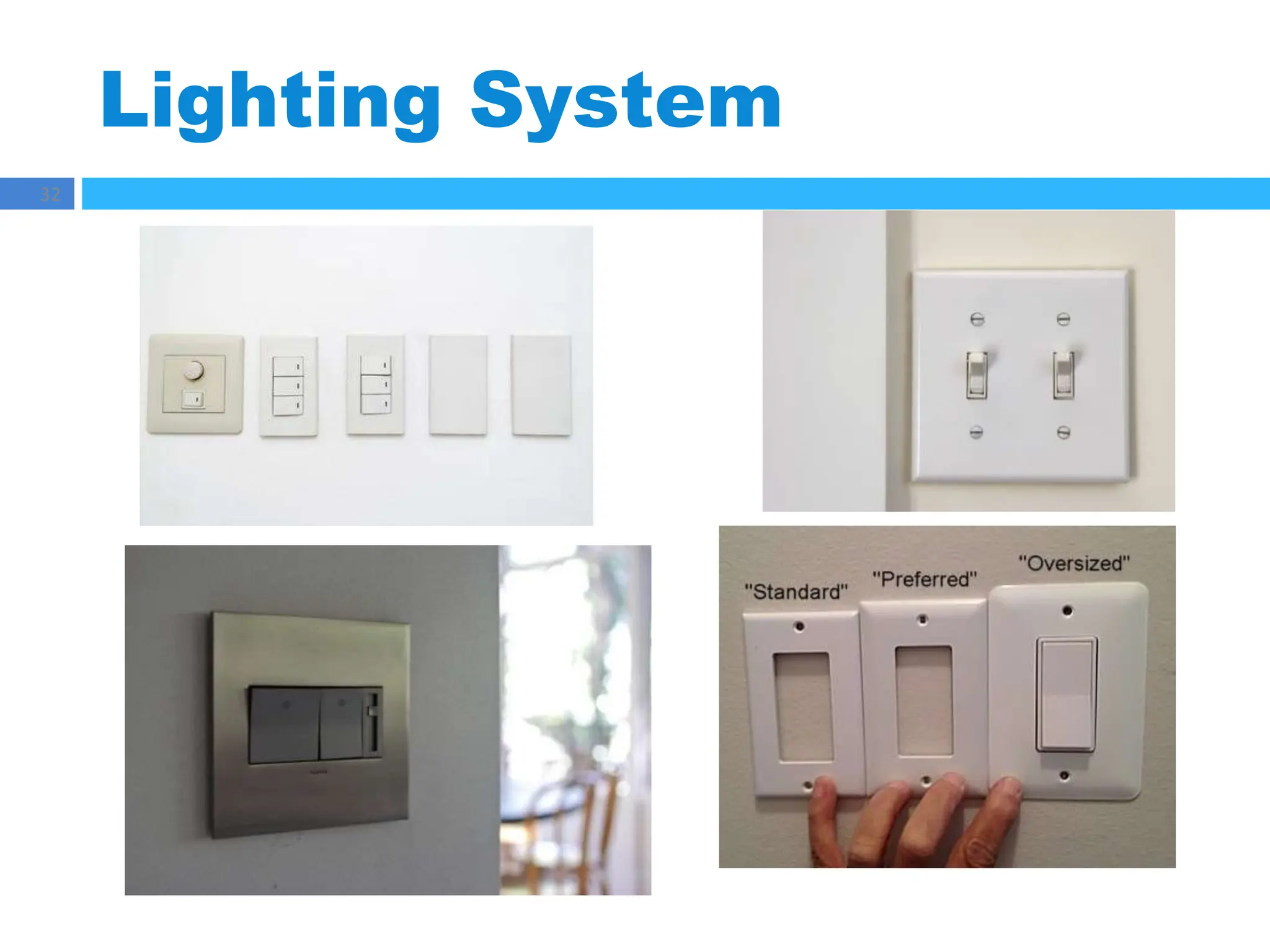
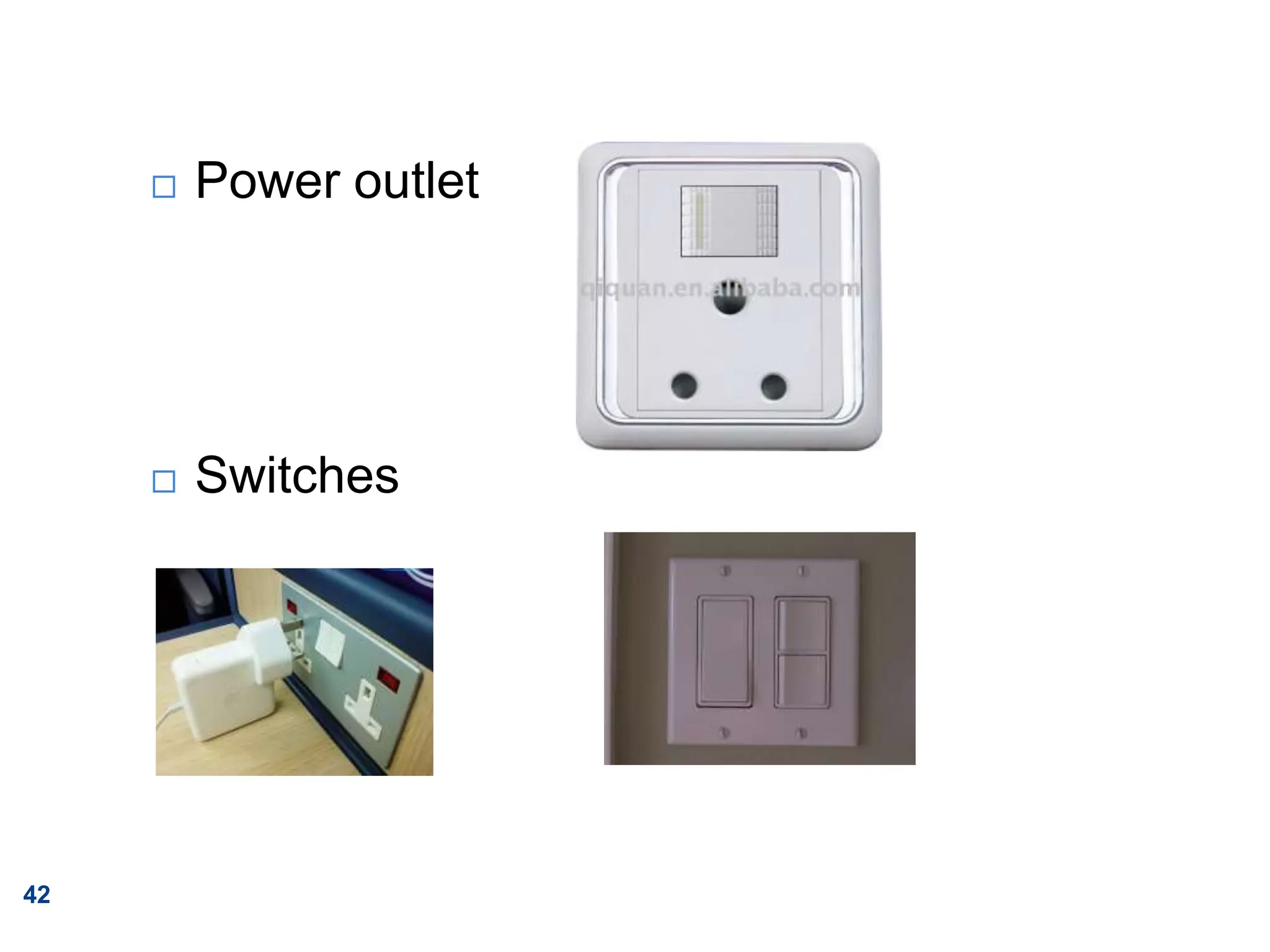
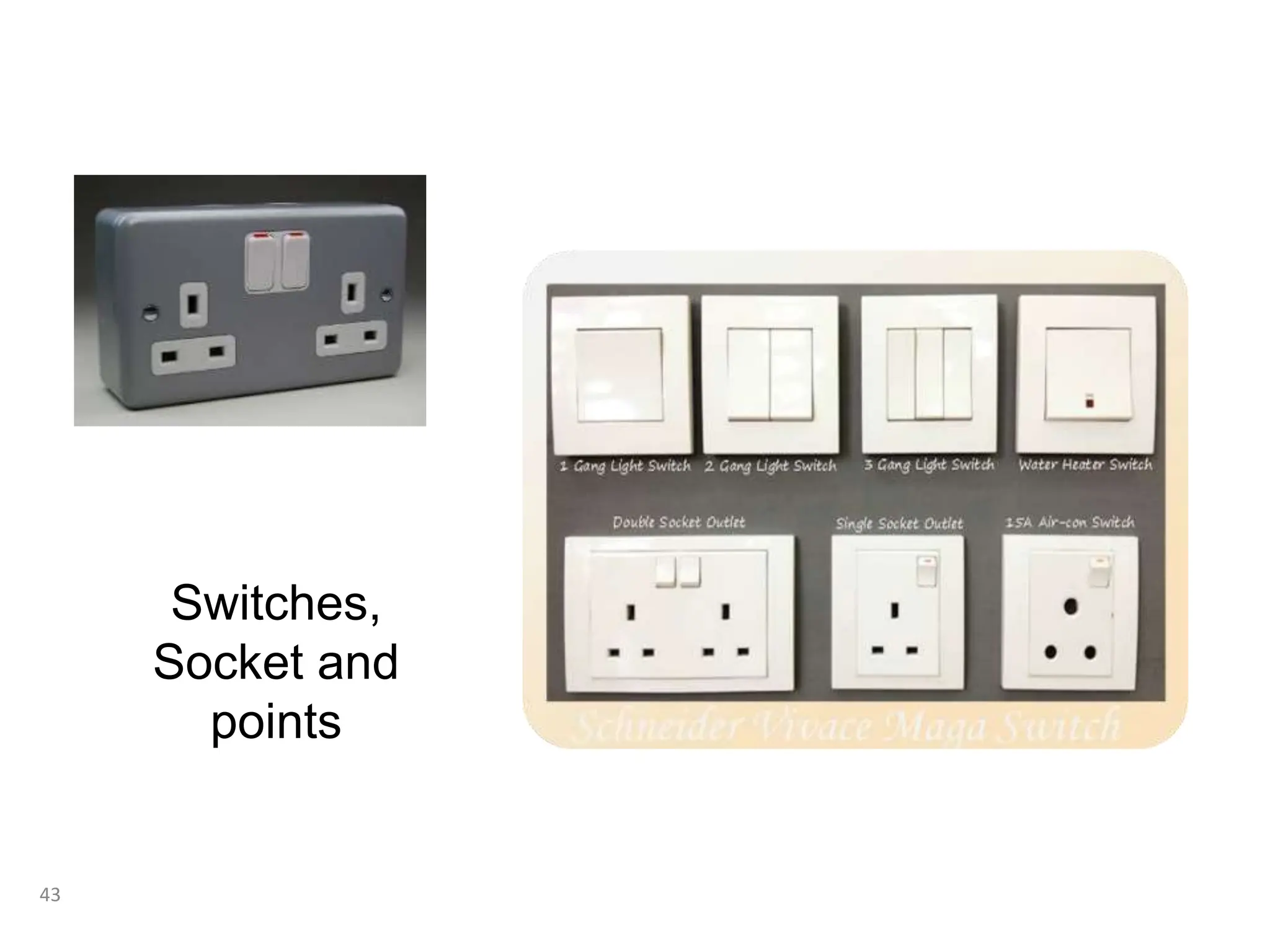
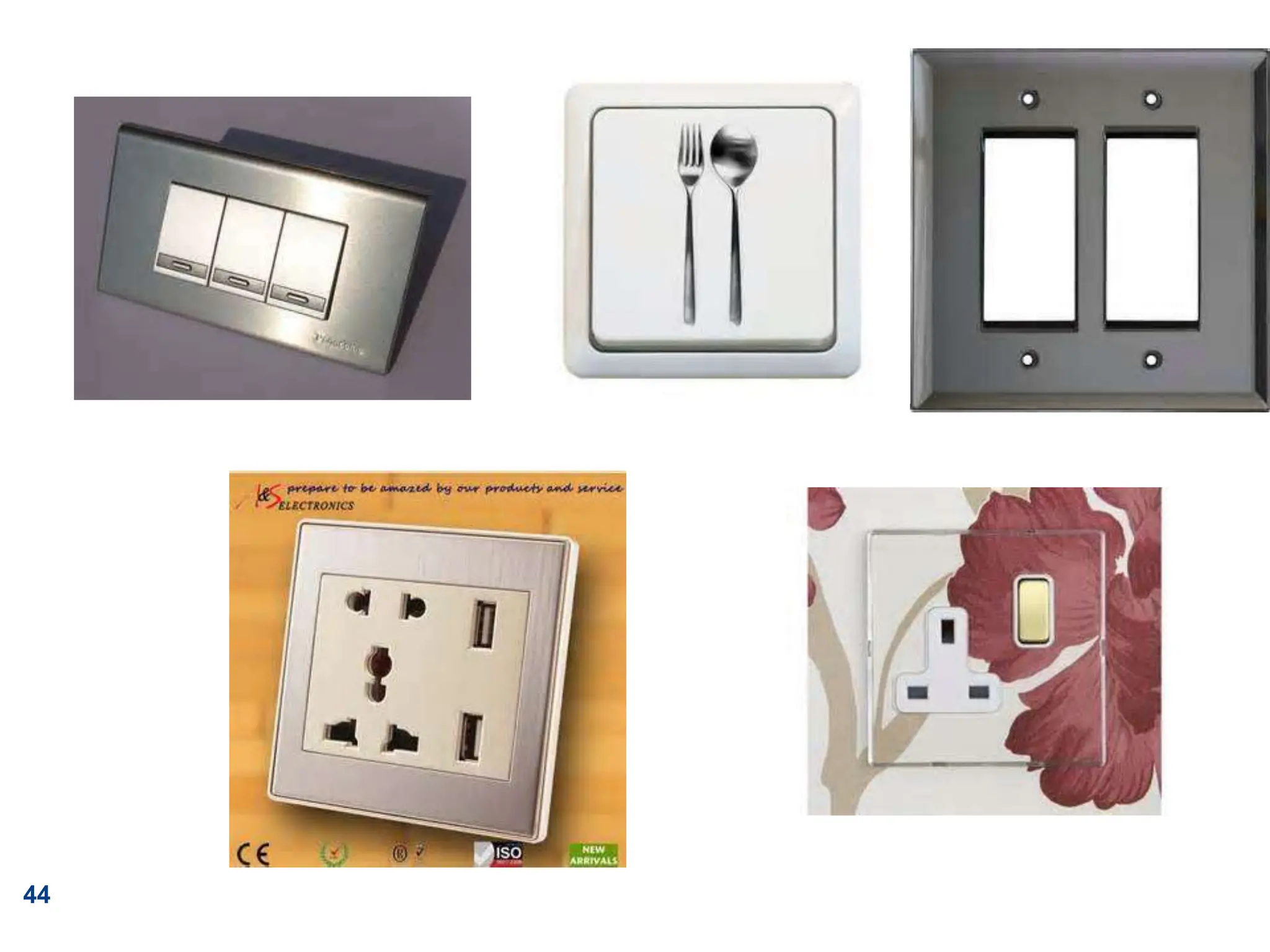
 Power outlet
 Switches
43
Switches,
Socket and
points
44
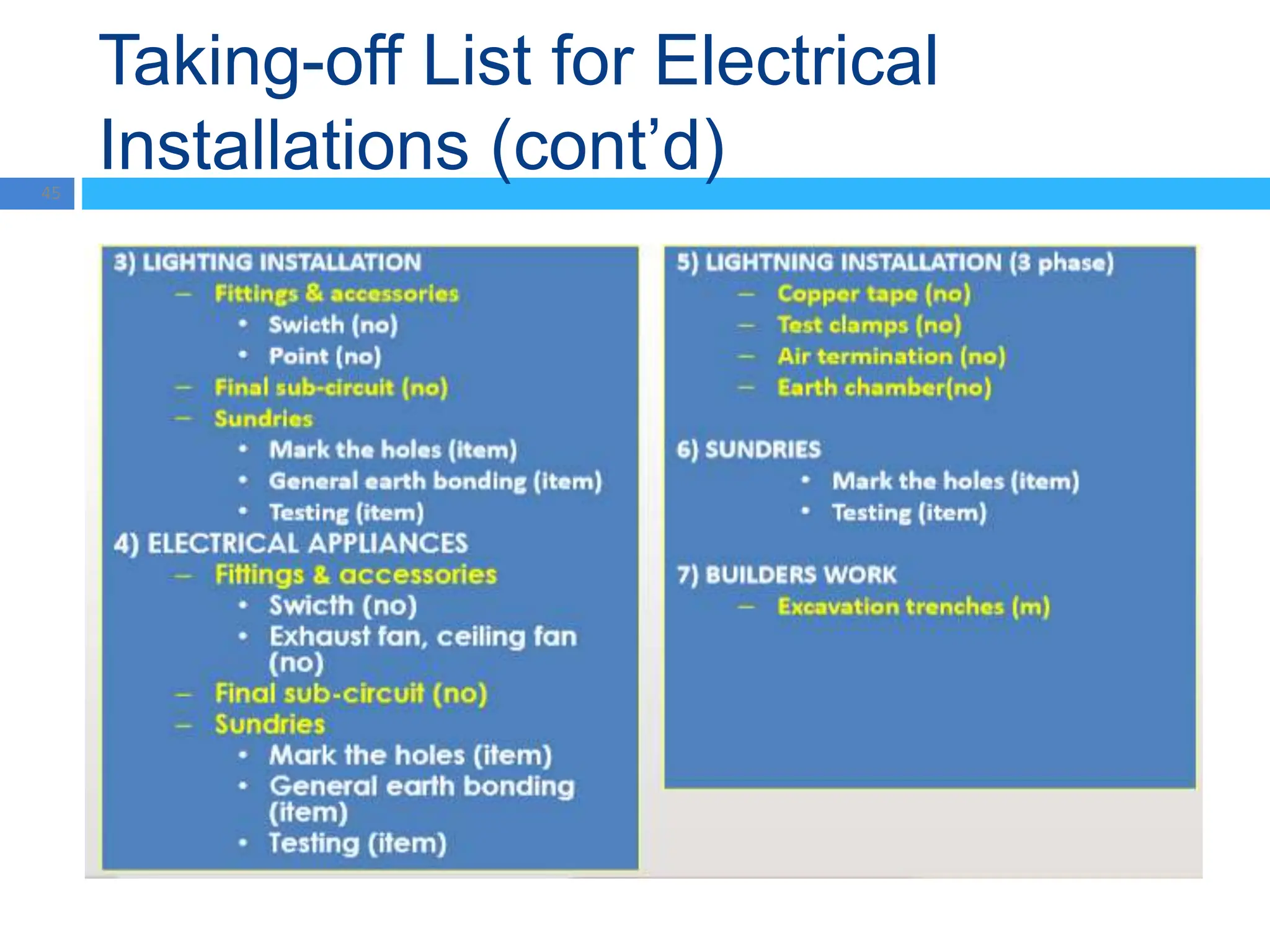
Taking-off List for Electrical
Installations (cont’d)
45
Electrical System
46
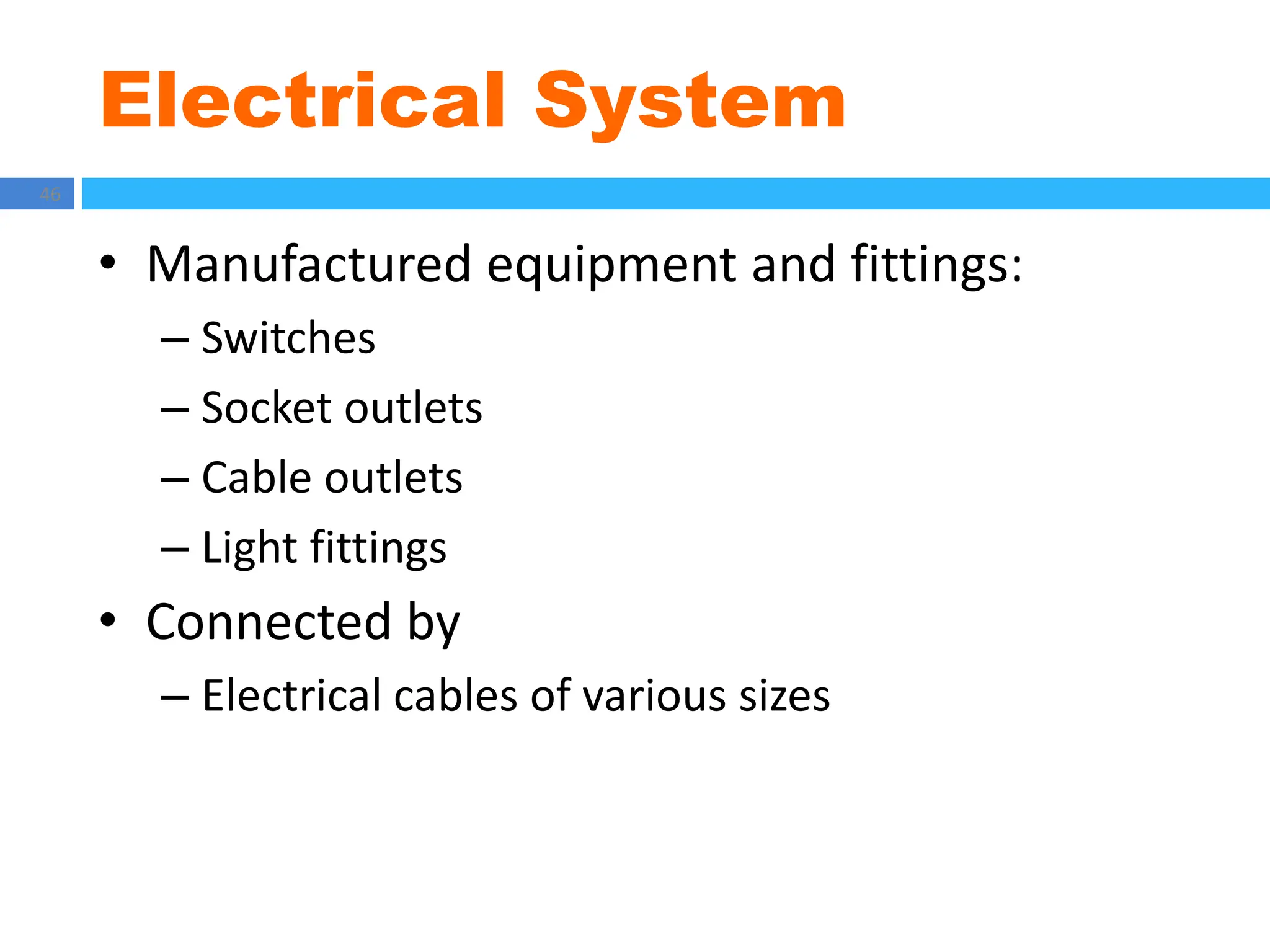
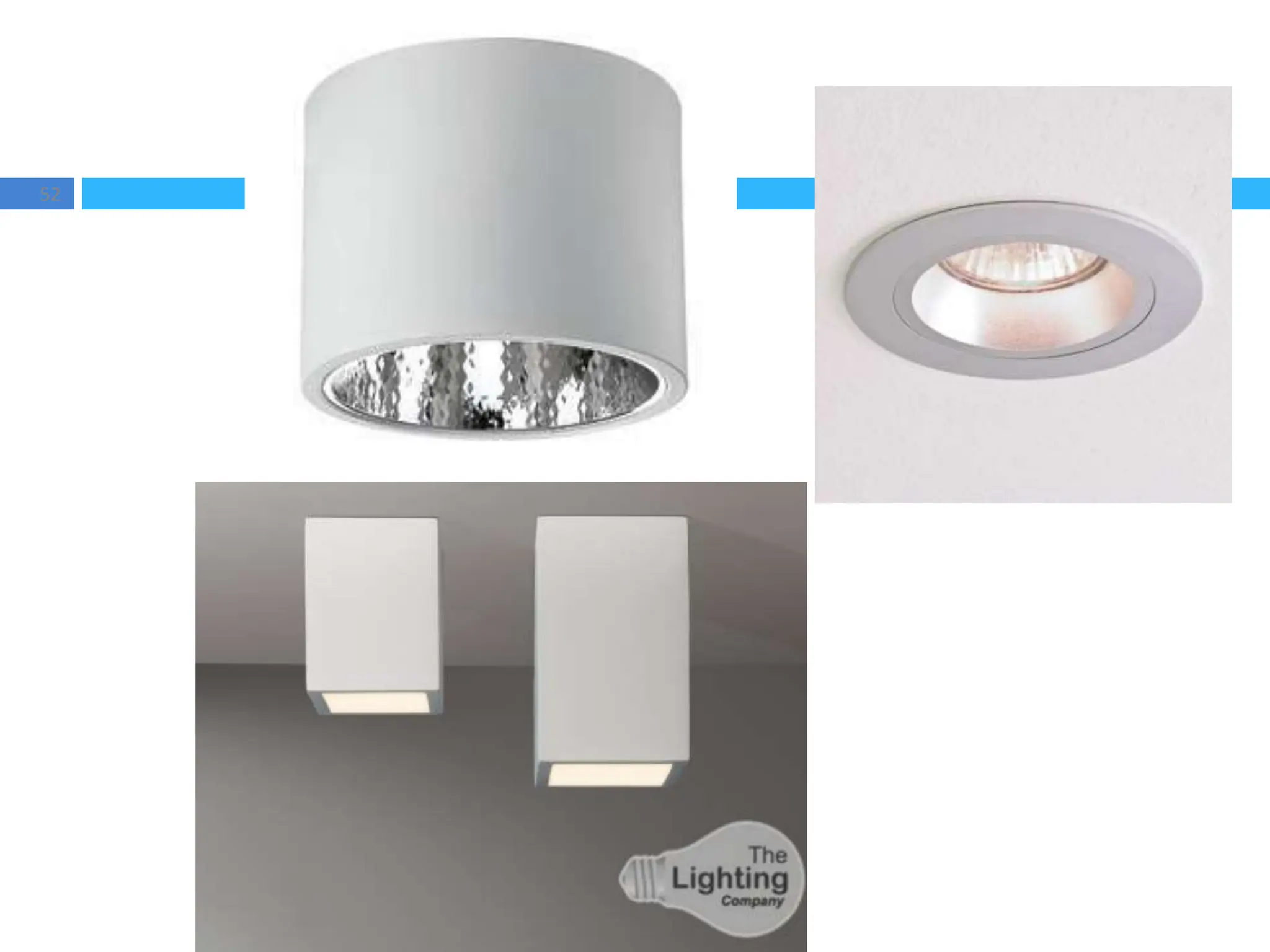
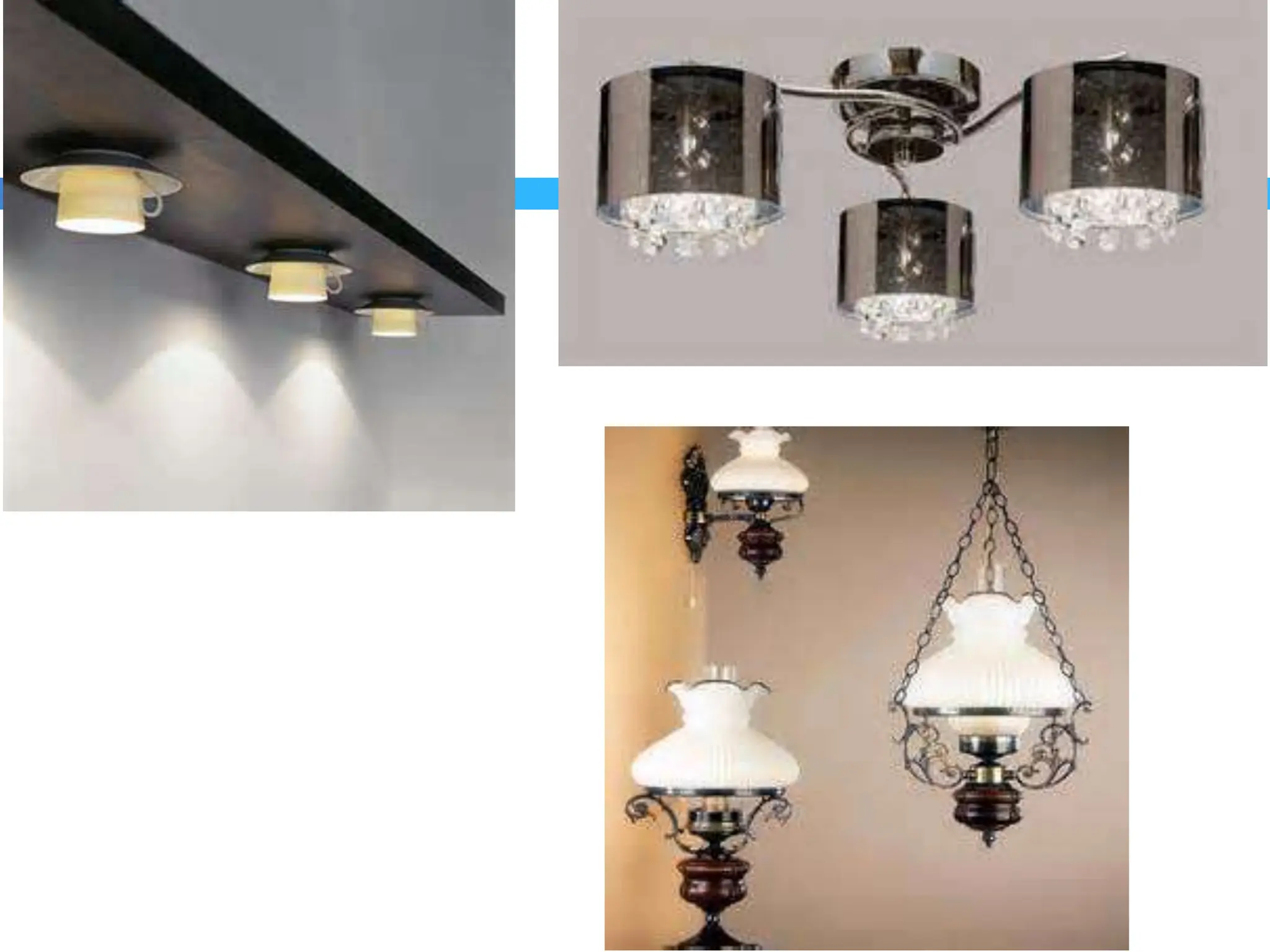
• Manufactured equipment and fittings:
– Switches
– Socket outlets
– Cable outlets
– Light fittings
• Connected by
– Electrical cables of various sizes
Electrical System
47
• Labour:
– Delivery
– Storing
– Setting or supporting during installation
– Connecting equipment, outlets and fittings
Cost Factors - Materials
48
• Wiring
• Trunking/conduit
• Installation route
– In wall – chased
– In celing
– In floor
• Fittings
Cost Factors - Materials
49
Wiring – Factors that affect the cost of wiring
Type of the building
Size of the building
Arrangement of the buildings
Materials used in the construction of the
building
Building frame (Steel, masonry, concrete)
Cost Factors - Materials
50
Wiring – Factors that affect the cost of wiring
per outlet
Length run between outlet
Kind of installation
Size of wire required
Type of conduit used
Materials
Labour
Cost Factors - Materials
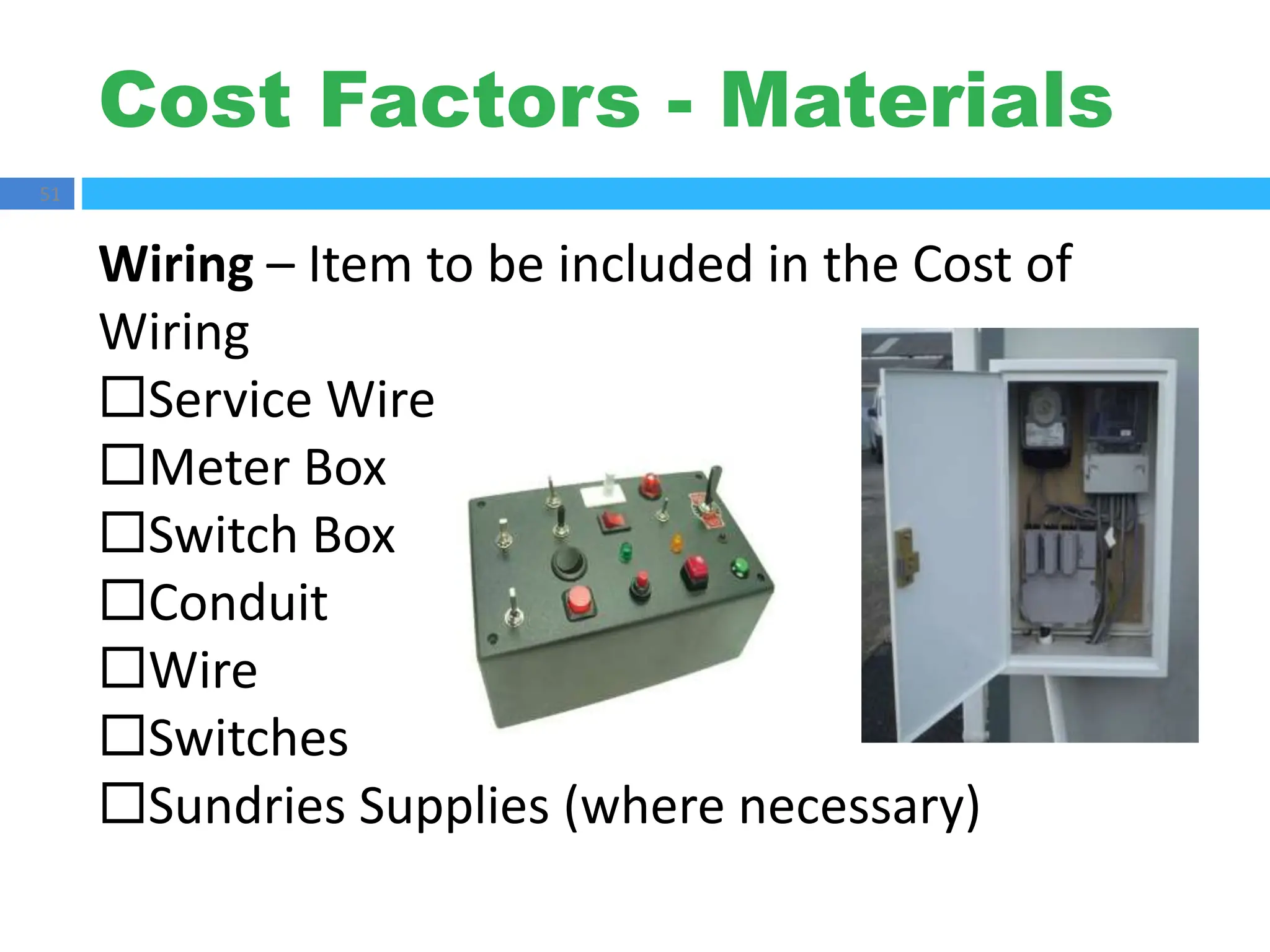
51
Wiring – Item to be included in the Cost of
Wiring
Service Wire
Meter Box
Switch Box
Conduit
Wire
Switches
Sundries Supplies (where necessary)
52
53
54
Cost Factors - Labour
55
Labour Factors
There are three (3) approach to estimate labour
cost for wiring:
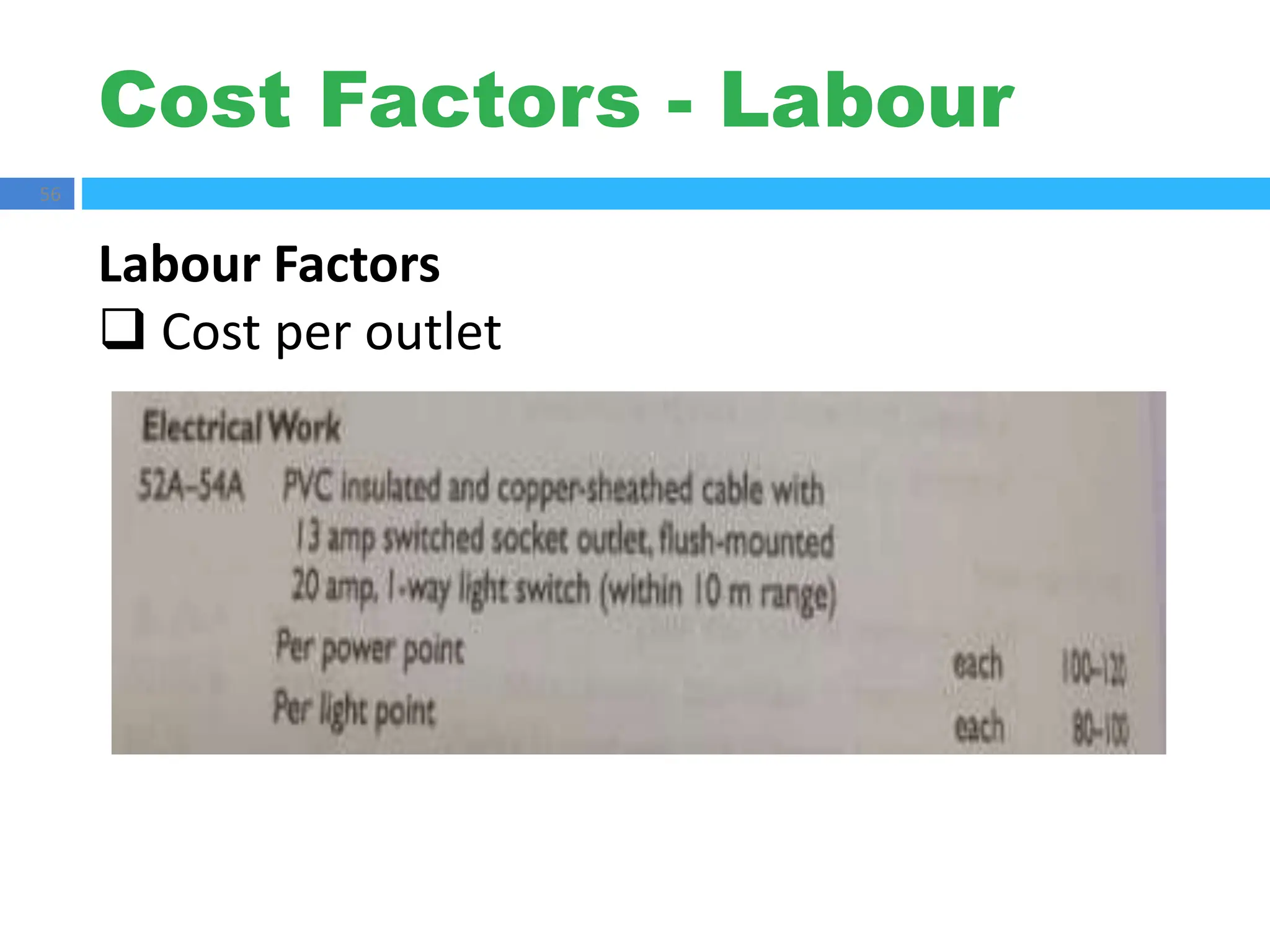
 Cost per outlet
 Percentage from cost of materials
 Time required to perform the task/ labour
constant
Cost Factors - Labour
56
Labour Factors
 Cost per outlet
Cost Factors - Labour
57
Labour Factors
 Time required to perform the task
Normally requires two labour, an
electrician and a helper (semi-skilled).
Labour-hour
Estimating for Electrical
Works
58
 Materials
 Fittings and Accessories
 Cables (times 2 – thru and for/ or sometimes 3
depending on the specification)
 Conduits
 Total of all material cost to add wastages
 Labour Cost
 Testing and Commissioning
 Overhead and profit

Slide Presentation of Electrical System.

  • 1.
    BAQS 3290 Principles ofEstimating for Building Services and External Works 1 Topic: Electrical Works
  • 2.
    OUTLINE 2 • Purpose ofM & E Measurement • Electrical Installations and Main Components • Electrical System • Lighting System • Domestic Distribution • Wiring System • Fittings and Accessories • Cost Factors – Materials • Cost Factors - Labour
  • 3.
    Purpose Of M& E Measurement 3  To determine elements and components involved in M & E works  To estimate with relation to SMM2  To protect the interest of the client and the contractor  A tool for cost control in mechanical and electrical services.  To minimize future disagreements
  • 4.
  • 5.
    Types of electricalworks installation 5
  • 6.
    Single and ThreePhase Theory 6
  • 7.
  • 8.
  • 9.
  • 10.
    Electrical System 10 • Protectionagainst electric shock – designed to prevent persons and livestock from direct contact with live parts of the installation – preventing a current from passing through the body of the person or livestock or – alternatively, by limiting the current which can pass through the body to a safe value – automatic disconnection of the supply in a determined time
  • 11.
    Electrical System 11 • Protectionagainst thermal effects – electrical equipment shall not become so hot as to present a risk of burns to persons or livestock. – electrical installation shall not pose a risk of ignition of flammable materials due to high temperature caused by the electric.
  • 12.
    Electrical System 12 • Protectionagainst overcurrent – excessive temperatures or high electromechanical stresses maybe produced that can cause injury to persons or livestock and damage to property • disconnect an overcurrent situation; and • limit the maximum overcurrent to a safe value and duration.
  • 13.
    Electrical System 13 • Erectionand initial verification of electrical installation – good workmanship carried out by qualified personnel using proper materials – identification of conductors, reliable electrical connections and measures taken to eliminate risk of fire
  • 14.
    Electrical System 14 • Divisionof installation – divided into several circuits to avoid danger and minimise inconvenience – in the event of an electrical fault it facilitates safe investigation and testing
  • 15.
  • 16.
    Electrical System 16 • Protectionagainst direct contact: • Insulating the live parts – covering the live parts with insulation • Use of barriers or enclosures • Placing out of reach • Earthing • Combustible constructional materials – cause a fire to the walls, floors and ceilings
  • 17.
    Electrical System 17 • Firepropagating structures – some structures may facilitate the spread of fires – recommended to install fire detectors • Protection against overheating – ensure that the required airflow be established before the heating elements are activated – when the air flow is stopped, the heating element shall be stopped – two temperature limiting devices, independent of each other, shall be installed to prevent permissible temperatures from being exceeded
  • 18.
    Electrical System 18 • Wiringsystem – an assembly consisting of cables, busbars or cable trunkings and parts, which secure, support or enclose them – components including cables and wiring accessories shall be installed at temperatures within its limits
  • 19.
    Electrical System 19 • Wiringsystem – protected from heat sources by: a) shielding; b) placing sufficiently far from heat source; c) selecting a wiring system rated for the effects of the heat source; and d) local reinforcement or substitution of insulating material. – Examples of heat sources are hot water systems or steam pipes; manufacturing process; and the sun.
  • 20.
    Electrical System 20 • Wiringsystem – not to be damaged by water • make provisions for the water to escape – not to be damaged by solid foreign objects • dusty environment – corrosive or polluting environment • protected or made from materials resistant to these detrimental substances
  • 21.
    Electrical System 21 • Wiringsystem – minimise the damage due to mechanical stress, e.g. install a steel plate to protect the wiring system by impact – care shall be taken that the cable connections are not compromised by vibration • use of cables with a flexible core
  • 22.
    Electrical System 22 • Wiringsystem – care shall be taken that the cable connections are not compromised by vibration • use of flexible conduit • use of flexible trunking
  • 23.
  • 24.
    Electrical System 24 Single Phase Source:Suruhanjaya Tenaga, A Guidline for Electrical Wiring for Residential (2014)
  • 25.
    Electrical System 25 Three Phase Source:Suruhanjaya Tenaga, A Guidline for Electrical Wiring for Residential (2014)
  • 26.
    Lighting System 26 • Lightingdesigners must consider eight key factors when specifying lighting systems – The owner's project requirements (OPR) that include project costs and schedule – The basis of design (BOD) – Codes and standards, including energy guidelines – Sustainability certifications (GBI, etc.) – Recommended lighting levels – Lifecycle costs – Safety and security – Maintenance and warranty
  • 27.
    Lighting System 27 • buildingoccupants do not necessarily want LEDs or wireless control—they want to be comfortably seeing what they are doing • enhancing the architecture, • integrating with the available daylight, • minimizing building energy use, and • aligning with the overall construction process and budget
  • 28.
    Lighting System 28 • illuminatethe architectural forms and surfaces
  • 29.
    Lighting System 29 • criteriafor both quantity and quality of light depend on the type of task performed in each space and work area
  • 30.
    Lighting System 30 • interiordesign choices, such as surface finishes, can have a dramatic impact on the lighting system and how much light is required to make a space feel bright • visual elements of lighting equipment must also coordinate with the interior design
  • 31.
  • 32.
  • 33.
  • 34.
  • 35.
    Taking-off List forElectrical Installations 35
  • 36.
    36  Internal –domestic  Distribution board
  • 37.
    37  Internal –domestic  Sub-circuit  DB to sub DB  Final sub-circuit  Sub DB to fittings
  • 38.
  • 39.
  • 40.
  • 41.
  • 42.
  • 43.
  • 44.
  • 45.
    Taking-off List forElectrical Installations (cont’d) 45
  • 46.
    Electrical System 46 • Manufacturedequipment and fittings: – Switches – Socket outlets – Cable outlets – Light fittings • Connected by – Electrical cables of various sizes
  • 47.
    Electrical System 47 • Labour: –Delivery – Storing – Setting or supporting during installation – Connecting equipment, outlets and fittings
  • 48.
    Cost Factors -Materials 48 • Wiring • Trunking/conduit • Installation route – In wall – chased – In celing – In floor • Fittings
  • 49.
    Cost Factors -Materials 49 Wiring – Factors that affect the cost of wiring Type of the building Size of the building Arrangement of the buildings Materials used in the construction of the building Building frame (Steel, masonry, concrete)
  • 50.
    Cost Factors -Materials 50 Wiring – Factors that affect the cost of wiring per outlet Length run between outlet Kind of installation Size of wire required Type of conduit used Materials Labour
  • 51.
    Cost Factors -Materials 51 Wiring – Item to be included in the Cost of Wiring Service Wire Meter Box Switch Box Conduit Wire Switches Sundries Supplies (where necessary)
  • 52.
  • 53.
  • 54.
  • 55.
    Cost Factors -Labour 55 Labour Factors There are three (3) approach to estimate labour cost for wiring:  Cost per outlet  Percentage from cost of materials  Time required to perform the task/ labour constant
  • 56.
    Cost Factors -Labour 56 Labour Factors  Cost per outlet
  • 57.
    Cost Factors -Labour 57 Labour Factors  Time required to perform the task Normally requires two labour, an electrician and a helper (semi-skilled). Labour-hour
  • 58.
    Estimating for Electrical Works 58 Materials  Fittings and Accessories  Cables (times 2 – thru and for/ or sometimes 3 depending on the specification)  Conduits  Total of all material cost to add wastages  Labour Cost  Testing and Commissioning  Overhead and profit