Skills of Ethical Hacking
Ethical hacking is a term used to describe the act of testing for
vulnerabilities in an IT system without the intention of exploiting it.
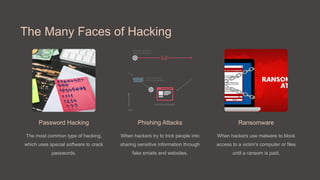
The Many Faces of Hacking
Password Hacking
The most common type of hacking,
which uses special software to crack
passwords.
Phishing Attacks
When hackers try to trick people into
sharing sensitive information through
fake emails and websites.
Ransomware
When hackers use malware to block
access to a victim's computer or files
until a ransom is paid.
The Importance of Ethical
Hacking
1 Protecting Against
Cyber Attacks
Identifying and fixing
vulnerabilities before
attackers can exploit them.
2 Ethical Penetration
Testing
Thoroughly and safely
testing the security of an
organization's systems and
procedures.
3 Compliance and Regulation
Meeting the standards and guidelines of government and industry
regulations for data protection.
Skills of an Ethical Hacker
Critical Thinking
Analyze and identify weaknesses in
an organization's security
infrastructure.
Technical Knowledge
Understand software, hardware,
networking, and operating systems
to identify vulnerabilities.
Perseverance
Stay focused and committed to
finding the best solution despite
obstacles.
Communication
Clearly convey risks and vulnerabilities to technical and non-technical stakeholders.
Skills of an Ethical Hacker
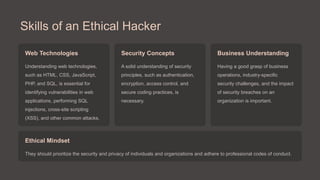
Web Technologies
Understanding web technologies,
such as HTML, CSS, JavaScript,
PHP, and SQL, is essential for
identifying vulnerabilities in web
applications, performing SQL
injections, cross-site scripting
(XSS), and other common attacks.
Security Concepts
A solid understanding of security
principles, such as authentication,
encryption, access control, and
secure coding practices, is
necessary.
Business Understanding
Having a good grasp of business
operations, industry-specific
security challenges, and the impact
of security breaches on an
organization is important.
Ethical Mindset
They should prioritize the security and privacy of individuals and organizations and adhere to professional codes of conduct.
Real-World Examples
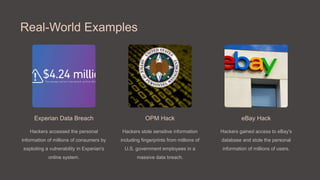
Experian Data Breach
Hackers accessed the personal
information of millions of consumers by
exploiting a vulnerability in Experian's
online system.
OPM Hack
Hackers stole sensitive information
including fingerprints from millions of
U.S. government employees in a
massive data breach.
eBay Hack
Hackers gained access to eBay's
database and stole the personal
information of millions of users.
The Future of Ethical Hacking
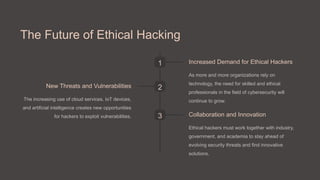
1 Increased Demand for Ethical Hackers
As more and more organizations rely on
technology, the need for skilled and ethical
professionals in the field of cybersecurity will
continue to grow.
2
New Threats and Vulnerabilities
The increasing use of cloud services, IoT devices,
and artificial intelligence creates new opportunities
for hackers to exploit vulnerabilities. 3 Collaboration and Innovation
Ethical hackers must work together with industry,
government, and academia to stay ahead of
evolving security threats and find innovative
solutions.
Skills of Ethical Hacking
Follow For More Update!

Skills-of-Ethical-Hacking.pptx

  • 1.
    Skills of EthicalHacking Ethical hacking is a term used to describe the act of testing for vulnerabilities in an IT system without the intention of exploiting it.
  • 2.
    The Many Facesof Hacking Password Hacking The most common type of hacking, which uses special software to crack passwords. Phishing Attacks When hackers try to trick people into sharing sensitive information through fake emails and websites. Ransomware When hackers use malware to block access to a victim's computer or files until a ransom is paid.
  • 3.
    The Importance ofEthical Hacking 1 Protecting Against Cyber Attacks Identifying and fixing vulnerabilities before attackers can exploit them. 2 Ethical Penetration Testing Thoroughly and safely testing the security of an organization's systems and procedures. 3 Compliance and Regulation Meeting the standards and guidelines of government and industry regulations for data protection.
  • 4.
    Skills of anEthical Hacker Critical Thinking Analyze and identify weaknesses in an organization's security infrastructure. Technical Knowledge Understand software, hardware, networking, and operating systems to identify vulnerabilities. Perseverance Stay focused and committed to finding the best solution despite obstacles. Communication Clearly convey risks and vulnerabilities to technical and non-technical stakeholders.
  • 5.
    Skills of anEthical Hacker Web Technologies Understanding web technologies, such as HTML, CSS, JavaScript, PHP, and SQL, is essential for identifying vulnerabilities in web applications, performing SQL injections, cross-site scripting (XSS), and other common attacks. Security Concepts A solid understanding of security principles, such as authentication, encryption, access control, and secure coding practices, is necessary. Business Understanding Having a good grasp of business operations, industry-specific security challenges, and the impact of security breaches on an organization is important. Ethical Mindset They should prioritize the security and privacy of individuals and organizations and adhere to professional codes of conduct.
  • 6.
    Real-World Examples Experian DataBreach Hackers accessed the personal information of millions of consumers by exploiting a vulnerability in Experian's online system. OPM Hack Hackers stole sensitive information including fingerprints from millions of U.S. government employees in a massive data breach. eBay Hack Hackers gained access to eBay's database and stole the personal information of millions of users.
  • 7.
    The Future ofEthical Hacking 1 Increased Demand for Ethical Hackers As more and more organizations rely on technology, the need for skilled and ethical professionals in the field of cybersecurity will continue to grow. 2 New Threats and Vulnerabilities The increasing use of cloud services, IoT devices, and artificial intelligence creates new opportunities for hackers to exploit vulnerabilities. 3 Collaboration and Innovation Ethical hackers must work together with industry, government, and academia to stay ahead of evolving security threats and find innovative solutions.
  • 8.
  • 9.