Ethical Hacking
Course After 12th
Learn the ins and outs of cybersecurity with our comprehensive Ethical
Hacking course. Discover how to protect businesses and individuals from
digital threats.
Introduction to Ethical Hacking
What is Ethical
Hacking?
Ethical hacking involves
testing and identifying
vulnerabilities in a
computer system to
reinforce its security
systems rather than
exploiting them.
How is it different
from regular
hacking?
While regular hackers
exploit vulnerabilities for
malicious purposes, ethical
hackers work to identify
and report them to
organizations to help
secure their systems and
data.
Who can become an
Ethical Hacker?
Anyone with a passion to
learn and a desire to work
in the cybersecurity
industry can become an
ethical hacker with the right
training and certification.
Why take a course in Ethical Hacking
after 12th?
1 High Demand Career
The demand for cybersecurity experts
is on the rise, and ethical hacking is
one of the most in-demand areas of
cybersecurity.
2
Relevant Skills and Knowledge
Studying ethical hacking offers a range
of skills useful for any future career in
the computer science industry: network
security foundations, penetration
testing, and incident response
planning.
3 Job Opportunities
There are many job opportunities with
lucrative salaries for ethical hackers
such as Security Consultant,
Penetration Tester, and Cybersecurity
Analyst.
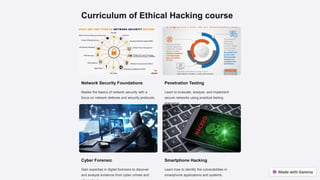
Curriculum of Ethical Hacking course
Network Security Foundations
Master the basics of network security with a
focus on network defense and security protocols.
Penetration Testing
Learn to evaluate, analyze, and implement
secure networks using practical testing
scenarios.
Cyber Forensic
Gain expertise in digital forensics to discover
and analyze evidence from cyber crimes and
Smartphone Hacking
Learn how to identify the vulnerabilities in
smartphone applications and systems.
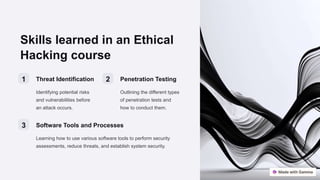
Skills learned in an Ethical
Hacking course
1 Threat Identification
Identifying potential risks
and vulnerabilities before
an attack occurs.
2 Penetration Testing
Outlining the different types
of penetration tests and
how to conduct them.
3 Software Tools and Processes
Learning how to use various software tools to perform security
assessments, reduce threats, and establish system security.
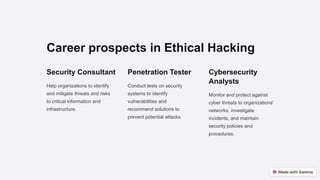
Career prospects in Ethical Hacking
Security Consultant
Help organizations to identify
and mitigate threats and risks
to critical information and
infrastructure.
Penetration Tester
Conduct tests on security
systems to identify
vulnerabilities and
recommend solutions to
prevent potential attacks.
Cybersecurity
Analysts
Monitor and protect against
cyber threats to organizations'
networks, investigate
incidents, and maintain
security policies and
procedures.
Future of Ethical Hacking
Industry
"Cybersecurity threats are becoming more sophisticated, and the
industry is expected to grow with the increasing need for cybersecurity
professionals."
With the continued surge in cyberthreats on individuals and organizations
and corporate data breaches, the industry is expected to grow
exponentially in the next few years.
Conclusion and key takeaways
1 Increased Demand
The increasing demand
for cybersecurity
professionals indicates a
great future for ethical
hacking.
2 Highly Paid Jobs
Job prospects for ethical
hackers are high as they
can expect to earn a
handsome salary and
have job security.
3 Critical Skills
Skills learned in an
ethical hacking course
are highly relevant and
applicable in the ever-
evolving technology
industry.
THANKS FOR WATCHING!!

Ethical-Hacking-Course-After-12th.pptx

  • 1.
    Ethical Hacking Course After12th Learn the ins and outs of cybersecurity with our comprehensive Ethical Hacking course. Discover how to protect businesses and individuals from digital threats.
  • 2.
    Introduction to EthicalHacking What is Ethical Hacking? Ethical hacking involves testing and identifying vulnerabilities in a computer system to reinforce its security systems rather than exploiting them. How is it different from regular hacking? While regular hackers exploit vulnerabilities for malicious purposes, ethical hackers work to identify and report them to organizations to help secure their systems and data. Who can become an Ethical Hacker? Anyone with a passion to learn and a desire to work in the cybersecurity industry can become an ethical hacker with the right training and certification.
  • 3.
    Why take acourse in Ethical Hacking after 12th? 1 High Demand Career The demand for cybersecurity experts is on the rise, and ethical hacking is one of the most in-demand areas of cybersecurity. 2 Relevant Skills and Knowledge Studying ethical hacking offers a range of skills useful for any future career in the computer science industry: network security foundations, penetration testing, and incident response planning. 3 Job Opportunities There are many job opportunities with lucrative salaries for ethical hackers such as Security Consultant, Penetration Tester, and Cybersecurity Analyst.
  • 4.
    Curriculum of EthicalHacking course Network Security Foundations Master the basics of network security with a focus on network defense and security protocols. Penetration Testing Learn to evaluate, analyze, and implement secure networks using practical testing scenarios. Cyber Forensic Gain expertise in digital forensics to discover and analyze evidence from cyber crimes and Smartphone Hacking Learn how to identify the vulnerabilities in smartphone applications and systems.
  • 5.
    Skills learned inan Ethical Hacking course 1 Threat Identification Identifying potential risks and vulnerabilities before an attack occurs. 2 Penetration Testing Outlining the different types of penetration tests and how to conduct them. 3 Software Tools and Processes Learning how to use various software tools to perform security assessments, reduce threats, and establish system security.
  • 6.
    Career prospects inEthical Hacking Security Consultant Help organizations to identify and mitigate threats and risks to critical information and infrastructure. Penetration Tester Conduct tests on security systems to identify vulnerabilities and recommend solutions to prevent potential attacks. Cybersecurity Analysts Monitor and protect against cyber threats to organizations' networks, investigate incidents, and maintain security policies and procedures.
  • 7.
    Future of EthicalHacking Industry "Cybersecurity threats are becoming more sophisticated, and the industry is expected to grow with the increasing need for cybersecurity professionals." With the continued surge in cyberthreats on individuals and organizations and corporate data breaches, the industry is expected to grow exponentially in the next few years.
  • 8.
    Conclusion and keytakeaways 1 Increased Demand The increasing demand for cybersecurity professionals indicates a great future for ethical hacking. 2 Highly Paid Jobs Job prospects for ethical hackers are high as they can expect to earn a handsome salary and have job security. 3 Critical Skills Skills learned in an ethical hacking course are highly relevant and applicable in the ever- evolving technology industry.
  • 9.