THE SKILLS AND
TECHNIQUES OF SOCCER
Prepared by ;
Muhsina T K
NO – 27
B Ed mathematics
The sport of soccer (called football in most of
the world) is considered to be the world's most
popular sport. In soccer there are two teams of
eleven players. Soccer is played on a large grass
field with a goal at each end. The object of the
game is to get the soccer ball into the opposing
team's goal. The key to soccer is that, with the
exception of the goalie, players cannot touch the
ball with their hands, they can only kick, knee, or
head the ball to advance it or score a goal.
FOOT BALL
THE SKILLS OF FOOT
BALL
Passing
Passing is one of the most fundamental
skills in soccer. For a short basic pass, you
will turn your foot 90 degrees to the
outside and swing your leg so that the
inside of your leg makes contact. If you
want to send the ball further, you will
swing your leg with more power and aim
for the lower half
Receiving a Pass
Whether you are receiving a pass that is on the ground or
traveling through the air, you will want to square your
shoulders to the direction the ball is coming from. If it is on
the ground, turn your foot toward the outside as if you were
passing, and with your knees bent, cushion the ball so it
stops right at your feet. For a ball traveling through the air,
you will most likely want to receive the ball with your
chest. Stand with your back arched slightly backwards so
when the ball hits your chest, it will pop gently into the air
and then land at your feet, rather than bounce off out of
your control
Shooting
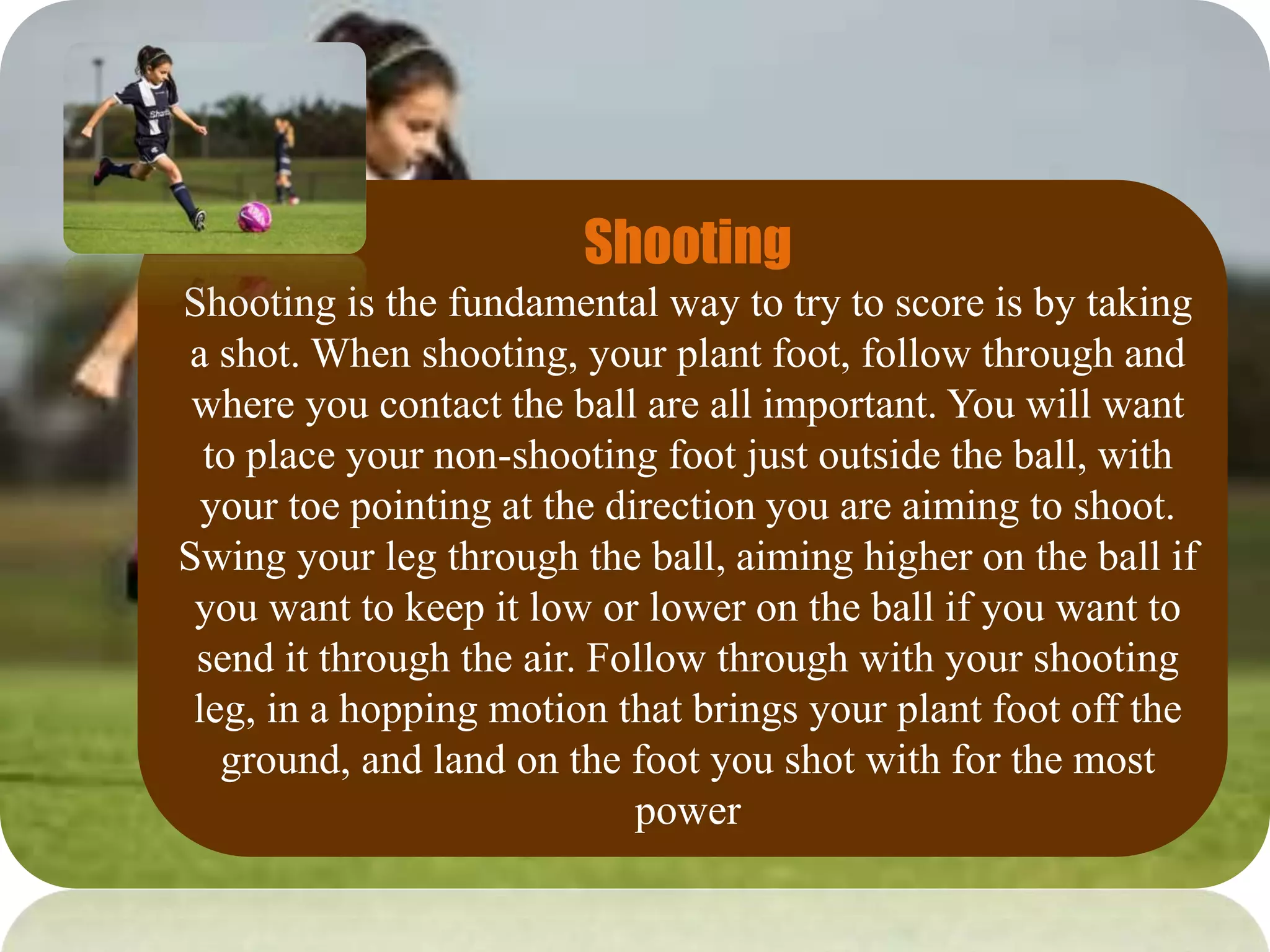
Shooting is the fundamental way to try to score is by taking
a shot. When shooting, your plant foot, follow through and
where you contact the ball are all important. You will want
to place your non-shooting foot just outside the ball, with
your toe pointing at the direction you are aiming to shoot.
Swing your leg through the ball, aiming higher on the ball if
you want to keep it low or lower on the ball if you want to
send it through the air. Follow through with your shooting
leg, in a hopping motion that brings your plant foot off the
ground, and land on the foot you shot with for the most
power
Dribbling
Outside of passing, dribbling is the primary method of
moving the ball up the field. This works best when you
have open field in front of you without pressing defenders.
Most players find success using the top of their foot to
push the ball along the ground when passing, and the more
advanced you get the more parts of your foot you will be
able to use when dribbling. The goal of dribbling is to
move the ball quickly while keeping the ball close to your
body, so that you can make a quick decision to pass, shoot
or change direction whenever needed
Goalkeeping
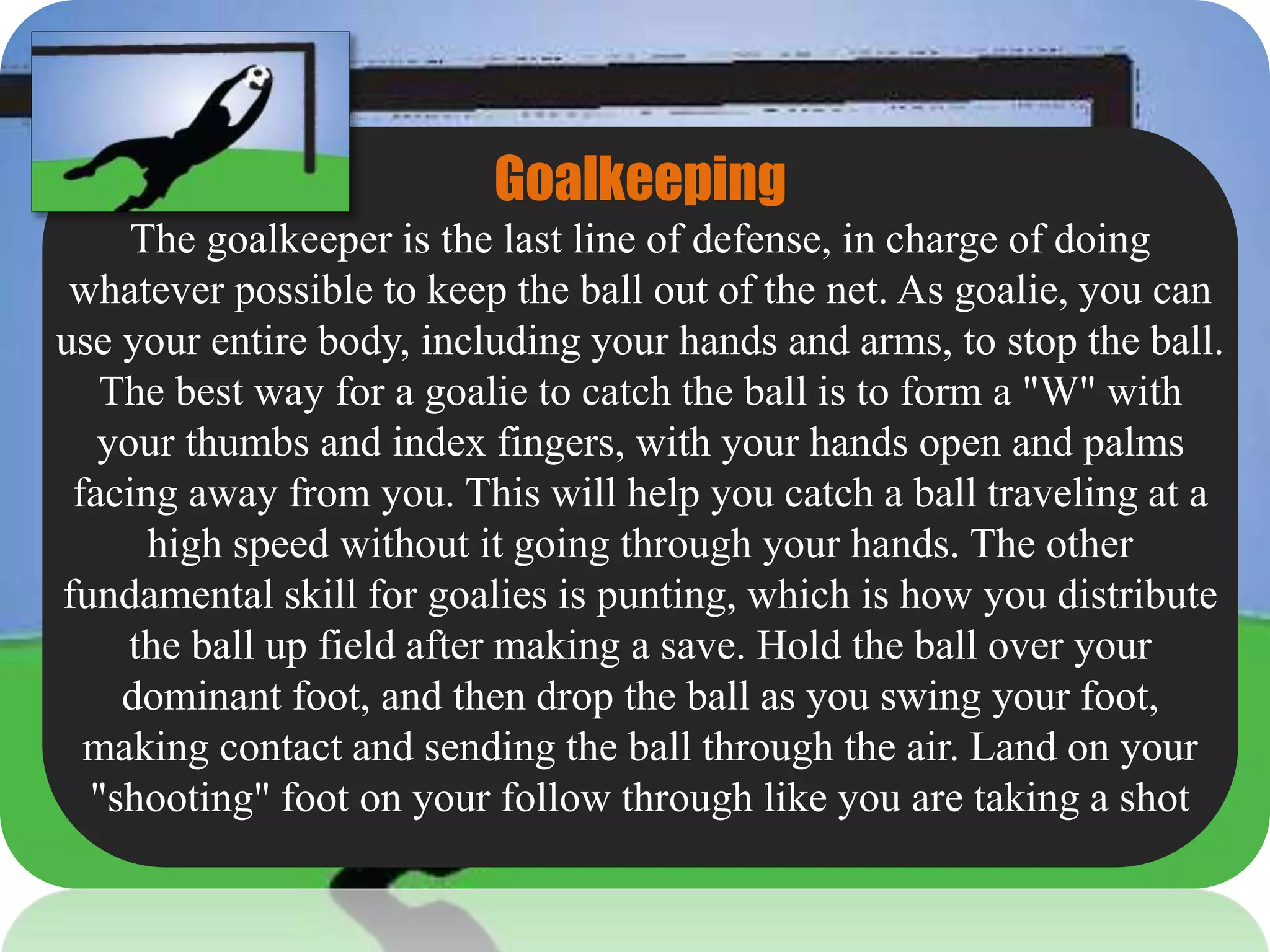
The goalkeeper is the last line of defense, in charge of doing
whatever possible to keep the ball out of the net. As goalie, you can
use your entire body, including your hands and arms, to stop the ball.
The best way for a goalie to catch the ball is to form a "W" with
your thumbs and index fingers, with your hands open and palms
facing away from you. This will help you catch a ball traveling at a
high speed without it going through your hands. The other
fundamental skill for goalies is punting, which is how you distribute
the ball up field after making a save. Hold the ball over your
dominant foot, and then drop the ball as you swing your foot,
making contact and sending the ball through the air. Land on your
"shooting" foot on your follow through like you are taking a shot
THE TECHNIQUES OF
FOOT BALL
Inside of the Foot Pass
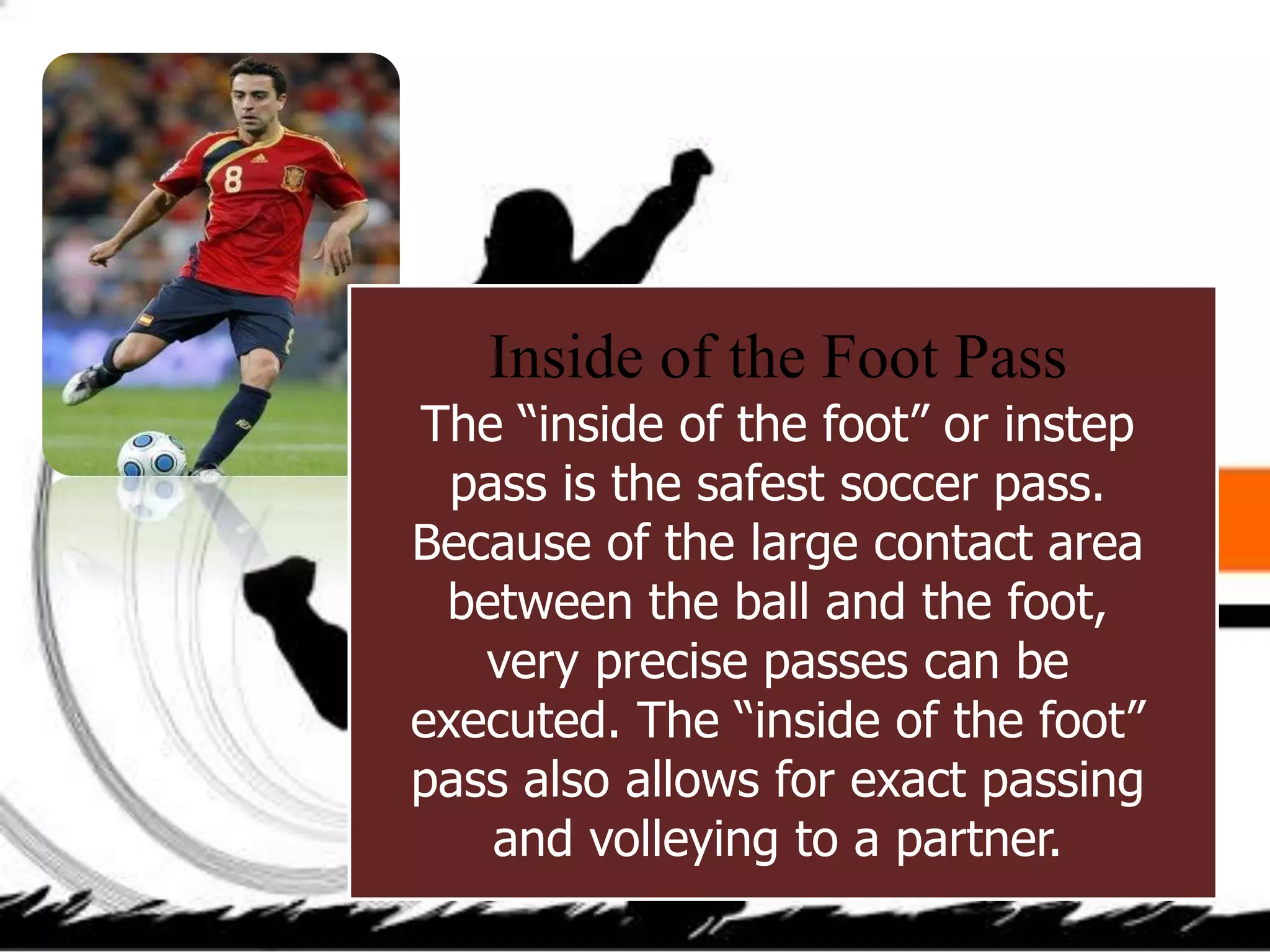
The “inside of the foot” or instep
pass is the safest soccer pass.
Because of the large contact area
between the ball and the foot,
very precise passes can be
executed. The “inside of the foot”
pass also allows for exact passing
and volleying to a partner.
Outside of the Foot Pass
The “outside of the foot” pass is
often employed to avoid kicking
with the “weaker” foot. This fact
must be taken into consideration
when training youngsters. The
“outside of the foot” pass may only
be used where the situation
demands it and in a sensible
manner.
Chip Cross
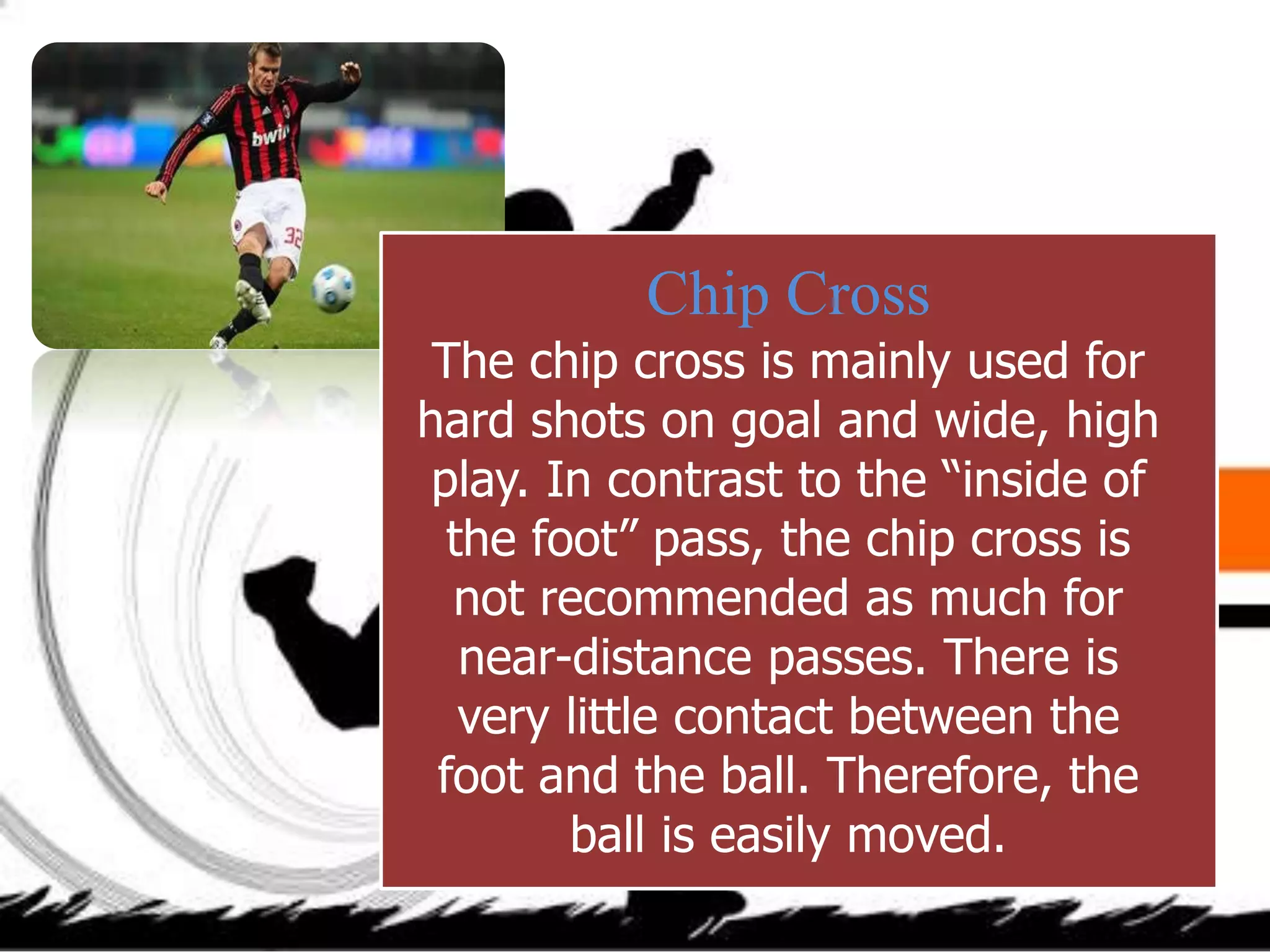
The chip cross is mainly used for
hard shots on goal and wide, high
play. In contrast to the “inside of
the foot” pass, the chip cross is
not recommended as much for
near-distance passes. There is
very little contact between the
foot and the ball. Therefore, the
ball is easily moved.
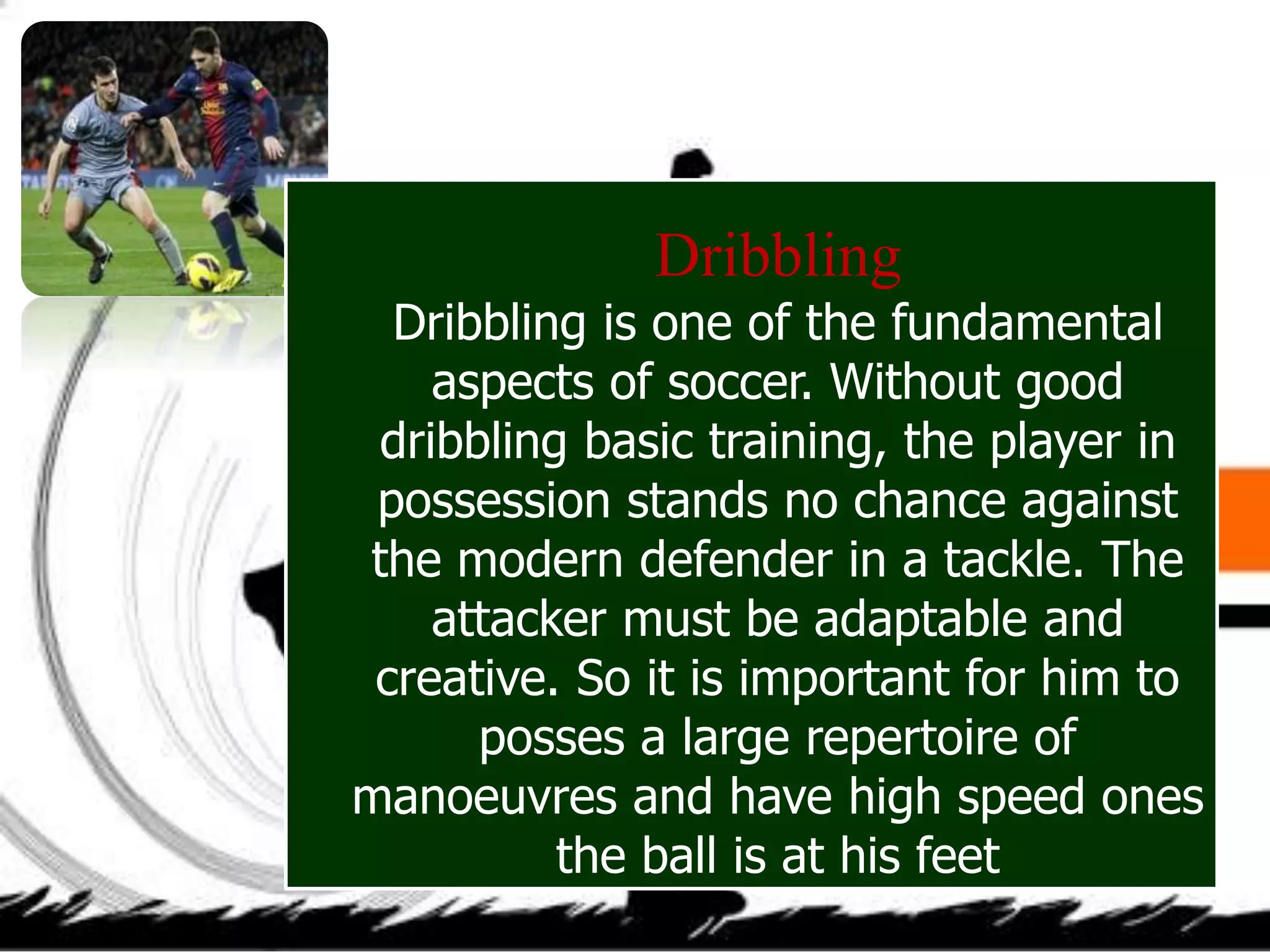
Dribbling
Dribbling is one of the fundamental
aspects of soccer. Without good
dribbling basic training, the player in
possession stands no chance against
the modern defender in a tackle. The
attacker must be adaptable and
creative. So it is important for him to
posses a large repertoire of
manoeuvres and have high speed ones
the ball is at his feet
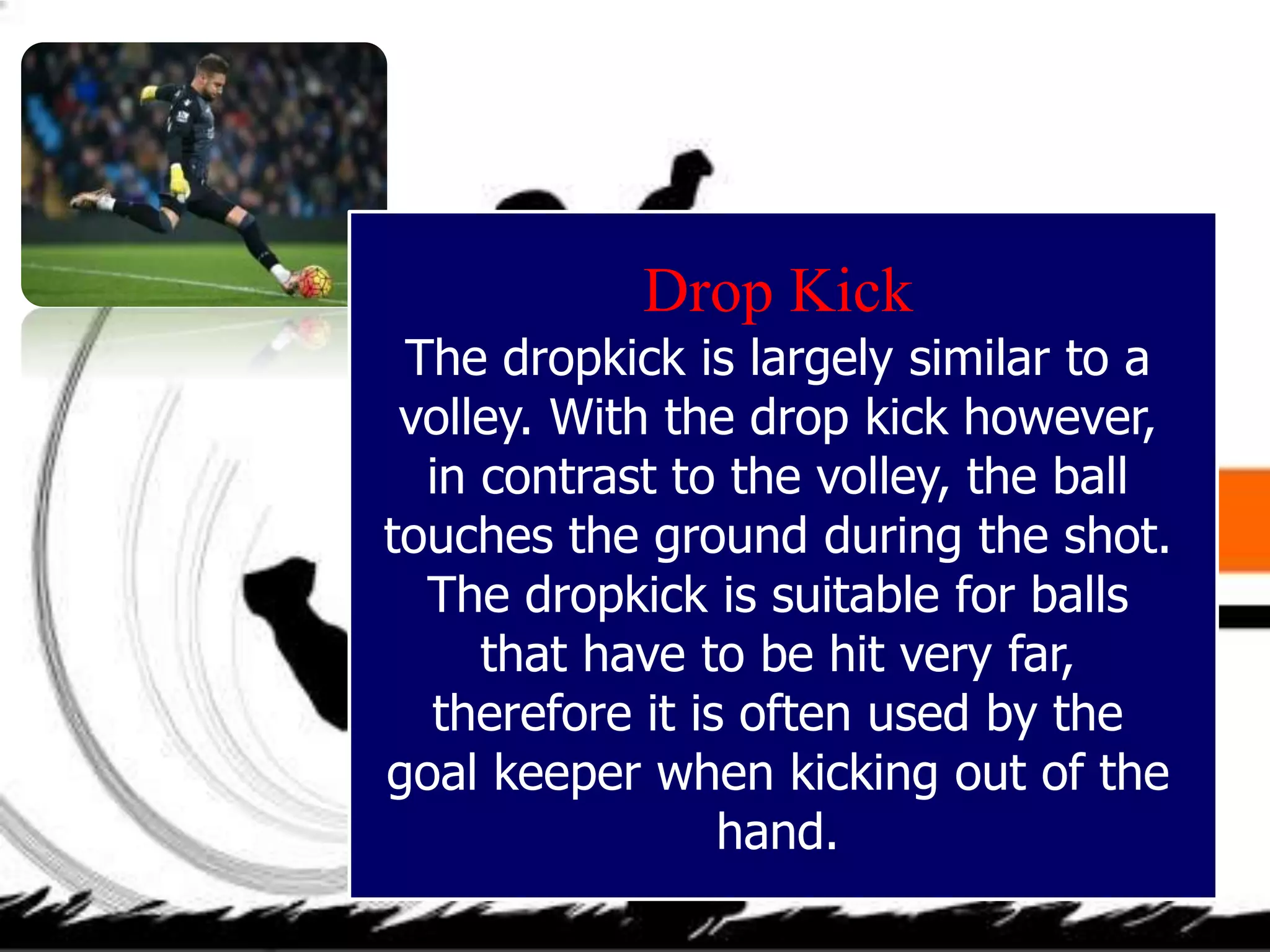
Drop Kick
The dropkick is largely similar to a
volley. With the drop kick however,
in contrast to the volley, the ball
touches the ground during the shot.
The dropkick is suitable for balls
that have to be hit very far,
therefore it is often used by the
goal keeper when kicking out of the
hand.
Throw-In Technique
Throw in is taken from the point where
ball crossed the line, either on the ground
or in the air, though typically a referee will
tolerate small discrepancies between the
positions where the ball is crossed the
touch line and the position throw in. The
throw in is taken by the opponent player
who last touched the ball when it is
crossed the line.
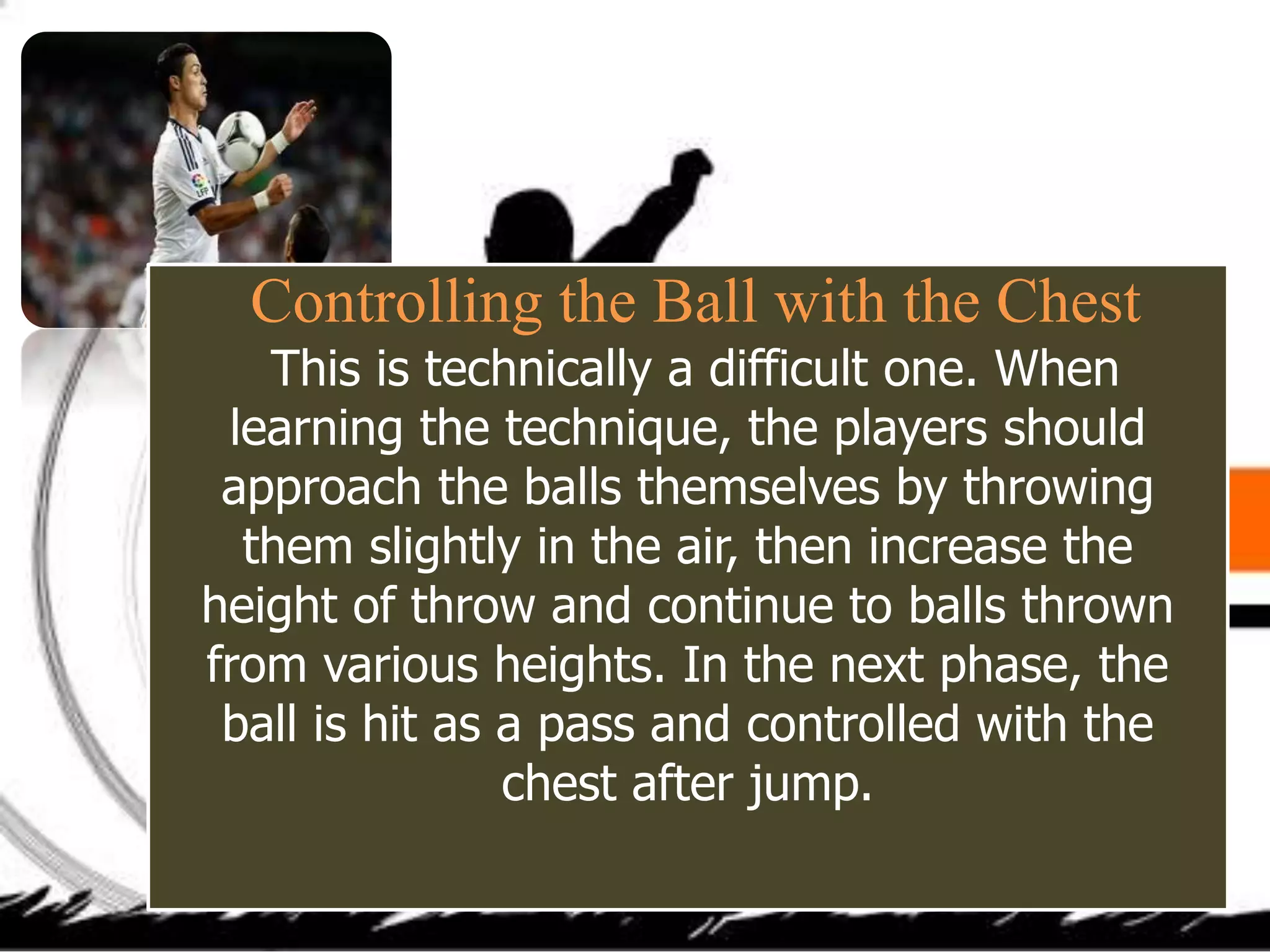
Controlling the Ball with the Chest
This is technically a difficult one. When
learning the technique, the players should
approach the balls themselves by throwing
them slightly in the air, then increase the
height of throw and continue to balls thrown
from various heights. In the next phase, the
ball is hit as a pass and controlled with the
chest after jump.
Header
This technique is used to control
the ball using the head to pass,
shoot or clear. This can be done by
standing , jumping or diving
position. It is a common technique
and players are used in almost
every match.
THANK YOU

Skills and techniques of foot ball

  • 1.
    THE SKILLS AND TECHNIQUESOF SOCCER Prepared by ; Muhsina T K NO – 27 B Ed mathematics
  • 2.
    The sport ofsoccer (called football in most of the world) is considered to be the world's most popular sport. In soccer there are two teams of eleven players. Soccer is played on a large grass field with a goal at each end. The object of the game is to get the soccer ball into the opposing team's goal. The key to soccer is that, with the exception of the goalie, players cannot touch the ball with their hands, they can only kick, knee, or head the ball to advance it or score a goal. FOOT BALL
  • 3.
    THE SKILLS OFFOOT BALL
  • 4.
    Passing Passing is oneof the most fundamental skills in soccer. For a short basic pass, you will turn your foot 90 degrees to the outside and swing your leg so that the inside of your leg makes contact. If you want to send the ball further, you will swing your leg with more power and aim for the lower half
  • 5.
    Receiving a Pass Whetheryou are receiving a pass that is on the ground or traveling through the air, you will want to square your shoulders to the direction the ball is coming from. If it is on the ground, turn your foot toward the outside as if you were passing, and with your knees bent, cushion the ball so it stops right at your feet. For a ball traveling through the air, you will most likely want to receive the ball with your chest. Stand with your back arched slightly backwards so when the ball hits your chest, it will pop gently into the air and then land at your feet, rather than bounce off out of your control
  • 6.
    Shooting Shooting is thefundamental way to try to score is by taking a shot. When shooting, your plant foot, follow through and where you contact the ball are all important. You will want to place your non-shooting foot just outside the ball, with your toe pointing at the direction you are aiming to shoot. Swing your leg through the ball, aiming higher on the ball if you want to keep it low or lower on the ball if you want to send it through the air. Follow through with your shooting leg, in a hopping motion that brings your plant foot off the ground, and land on the foot you shot with for the most power
  • 7.
    Dribbling Outside of passing,dribbling is the primary method of moving the ball up the field. This works best when you have open field in front of you without pressing defenders. Most players find success using the top of their foot to push the ball along the ground when passing, and the more advanced you get the more parts of your foot you will be able to use when dribbling. The goal of dribbling is to move the ball quickly while keeping the ball close to your body, so that you can make a quick decision to pass, shoot or change direction whenever needed
  • 8.
    Goalkeeping The goalkeeper isthe last line of defense, in charge of doing whatever possible to keep the ball out of the net. As goalie, you can use your entire body, including your hands and arms, to stop the ball. The best way for a goalie to catch the ball is to form a "W" with your thumbs and index fingers, with your hands open and palms facing away from you. This will help you catch a ball traveling at a high speed without it going through your hands. The other fundamental skill for goalies is punting, which is how you distribute the ball up field after making a save. Hold the ball over your dominant foot, and then drop the ball as you swing your foot, making contact and sending the ball through the air. Land on your "shooting" foot on your follow through like you are taking a shot
  • 9.
  • 10.
    Inside of theFoot Pass The “inside of the foot” or instep pass is the safest soccer pass. Because of the large contact area between the ball and the foot, very precise passes can be executed. The “inside of the foot” pass also allows for exact passing and volleying to a partner.
  • 11.
    Outside of theFoot Pass The “outside of the foot” pass is often employed to avoid kicking with the “weaker” foot. This fact must be taken into consideration when training youngsters. The “outside of the foot” pass may only be used where the situation demands it and in a sensible manner.
  • 12.
    Chip Cross The chipcross is mainly used for hard shots on goal and wide, high play. In contrast to the “inside of the foot” pass, the chip cross is not recommended as much for near-distance passes. There is very little contact between the foot and the ball. Therefore, the ball is easily moved.
  • 13.
    Dribbling Dribbling is oneof the fundamental aspects of soccer. Without good dribbling basic training, the player in possession stands no chance against the modern defender in a tackle. The attacker must be adaptable and creative. So it is important for him to posses a large repertoire of manoeuvres and have high speed ones the ball is at his feet
  • 14.
    Drop Kick The dropkickis largely similar to a volley. With the drop kick however, in contrast to the volley, the ball touches the ground during the shot. The dropkick is suitable for balls that have to be hit very far, therefore it is often used by the goal keeper when kicking out of the hand.
  • 15.
    Throw-In Technique Throw inis taken from the point where ball crossed the line, either on the ground or in the air, though typically a referee will tolerate small discrepancies between the positions where the ball is crossed the touch line and the position throw in. The throw in is taken by the opponent player who last touched the ball when it is crossed the line.
  • 16.
    Controlling the Ballwith the Chest This is technically a difficult one. When learning the technique, the players should approach the balls themselves by throwing them slightly in the air, then increase the height of throw and continue to balls thrown from various heights. In the next phase, the ball is hit as a pass and controlled with the chest after jump.
  • 17.
    Header This technique isused to control the ball using the head to pass, shoot or clear. This can be done by standing , jumping or diving position. It is a common technique and players are used in almost every match.
  • 18.