


Skeuomorphs,
Databases,
and Mobile Performance
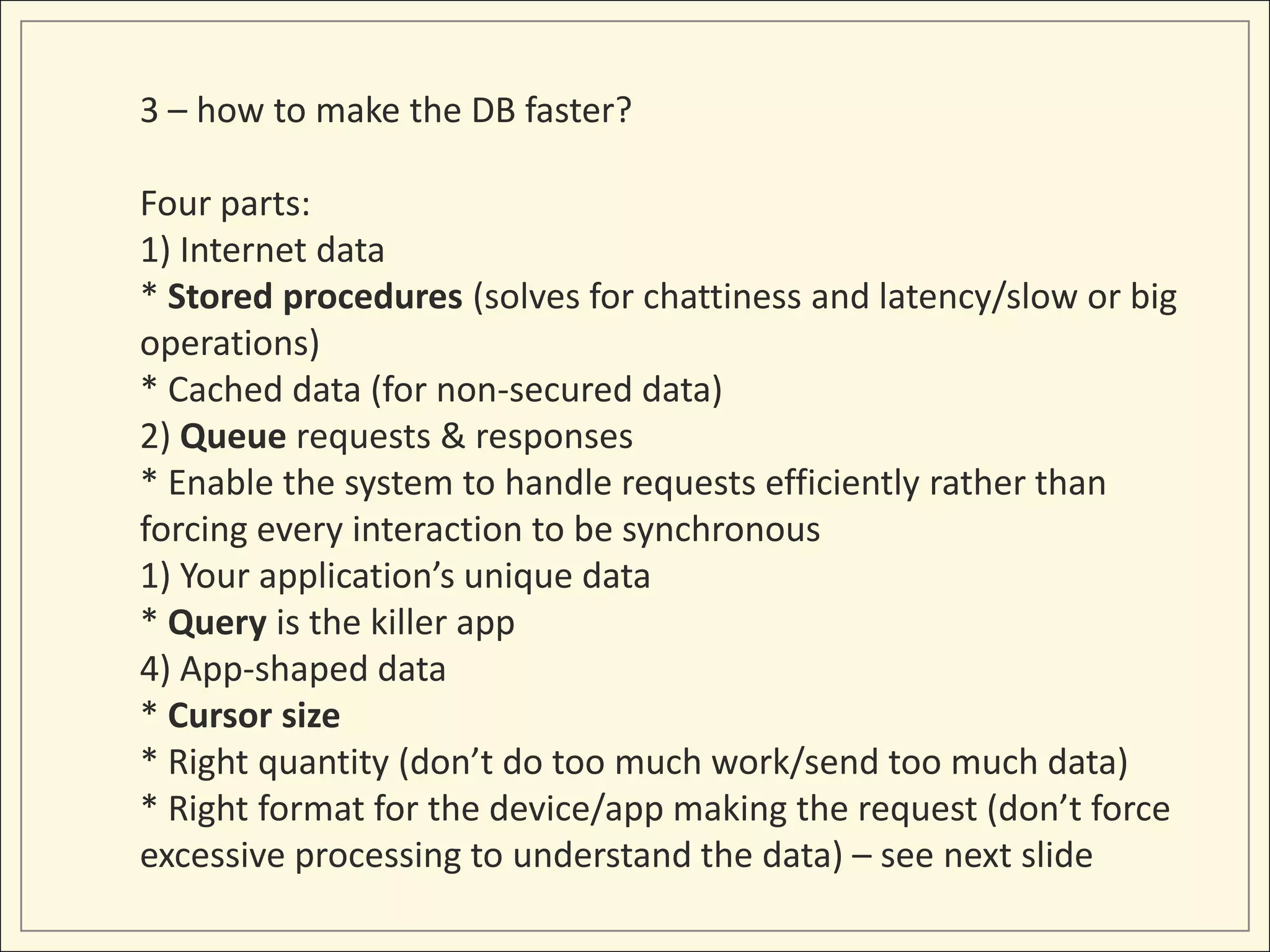
Architecting for performance with devices & APIs


groups.google.com/group/api-craft

Sam Ramji               @sramji
Apigee
SKEUOMORPHS
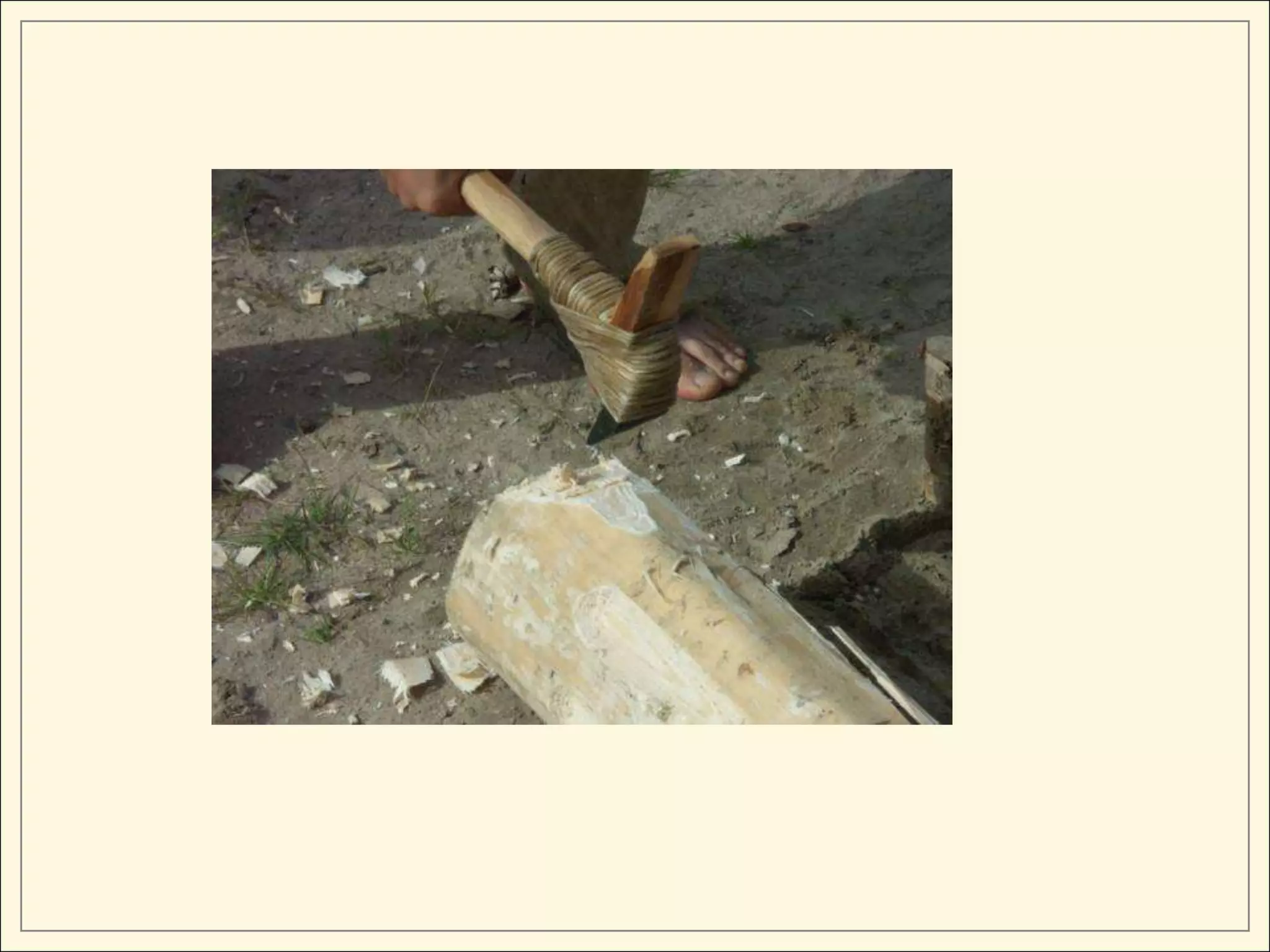
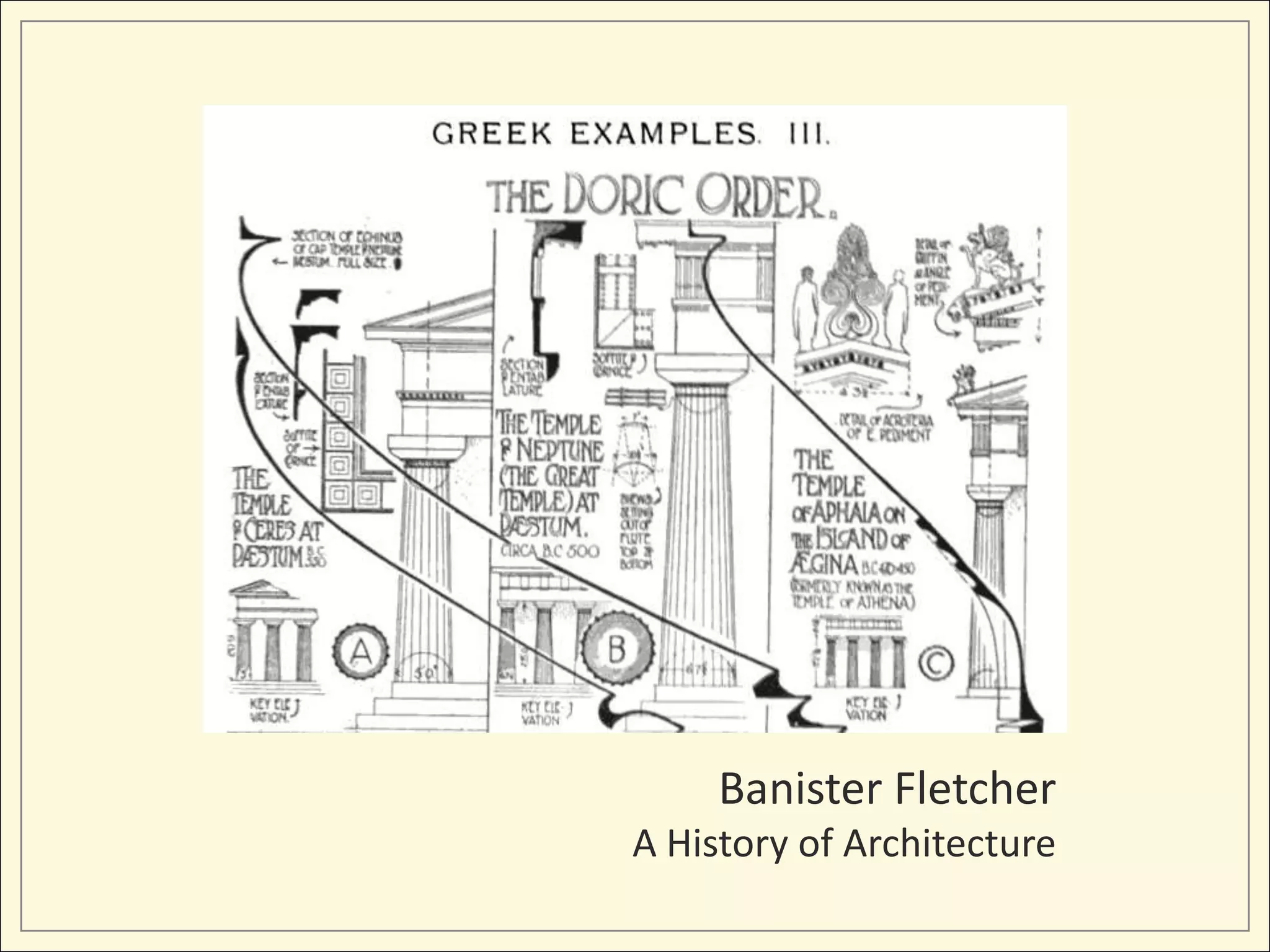
A brief history of architecture
Banister Fletcher
A History of Architecture
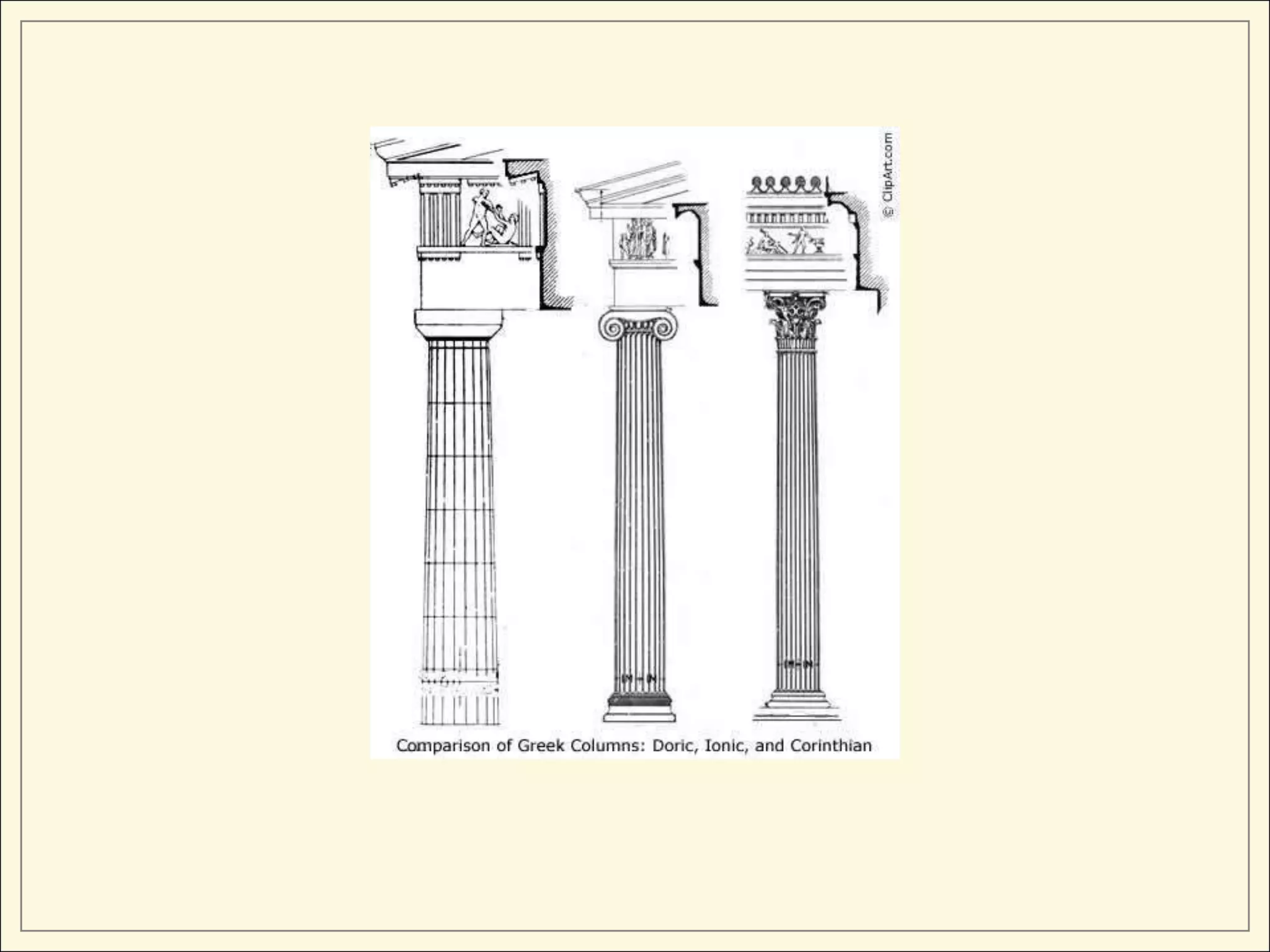
“   Greek columns and their entablatures were at
    first entirely of timber, with terra-cotta
    decorations in the upper trabeation, but were
    converted into stone quite early in the
    [Hellenic] period, about 600 BC. The translation
    was quite direct, timber forms being imitated in
    stonework with remarkable exactness. For this
    reason, Greek architecture sometimes has been
    called a ‘carpentry in marble’…
                                   Banister Fletcher
                              A History of Architecture
Skeuomorphs and metaphors
Skeuomorph

A skeuomorph is a design feature found on an
imitation, pastiche or homage that was necessary
only to the original. Often used for the sake of
familiarity, they are details that have moved from
function to form.

                                      Tom Petty
                          hipstercheerleaders.com
Metaphor

In cognitive linguistics, conceptual metaphor, or
cognitive metaphor, refers to the understanding
of one idea, or conceptual domain, in terms of
another, for example, understanding quantity in
terms of directionality (e.g. "prices are rising").

                                   Wikipedia.org
                             Conceptual Metaphors
“   The concepts that govern our thought are not just
    matters of the intellect. They also govern our everyday
    functioning, down to the most mundane details. Our
    concepts structure what we perceive, how we get
    around in the world, and how we relate to other
    people. Our conceptual system thus plays a central role
    in defining our everyday realities. If we are right in
    suggesting that our conceptual system is largely
    metaphorical, then the way we thinks what we
    experience, and what we do every day is very much a
    matter of metaphor.
                     George Lakoff and Mark Johnson
                                     Metaphors We Live By
DATABASES
A brief history of   ^ architecture
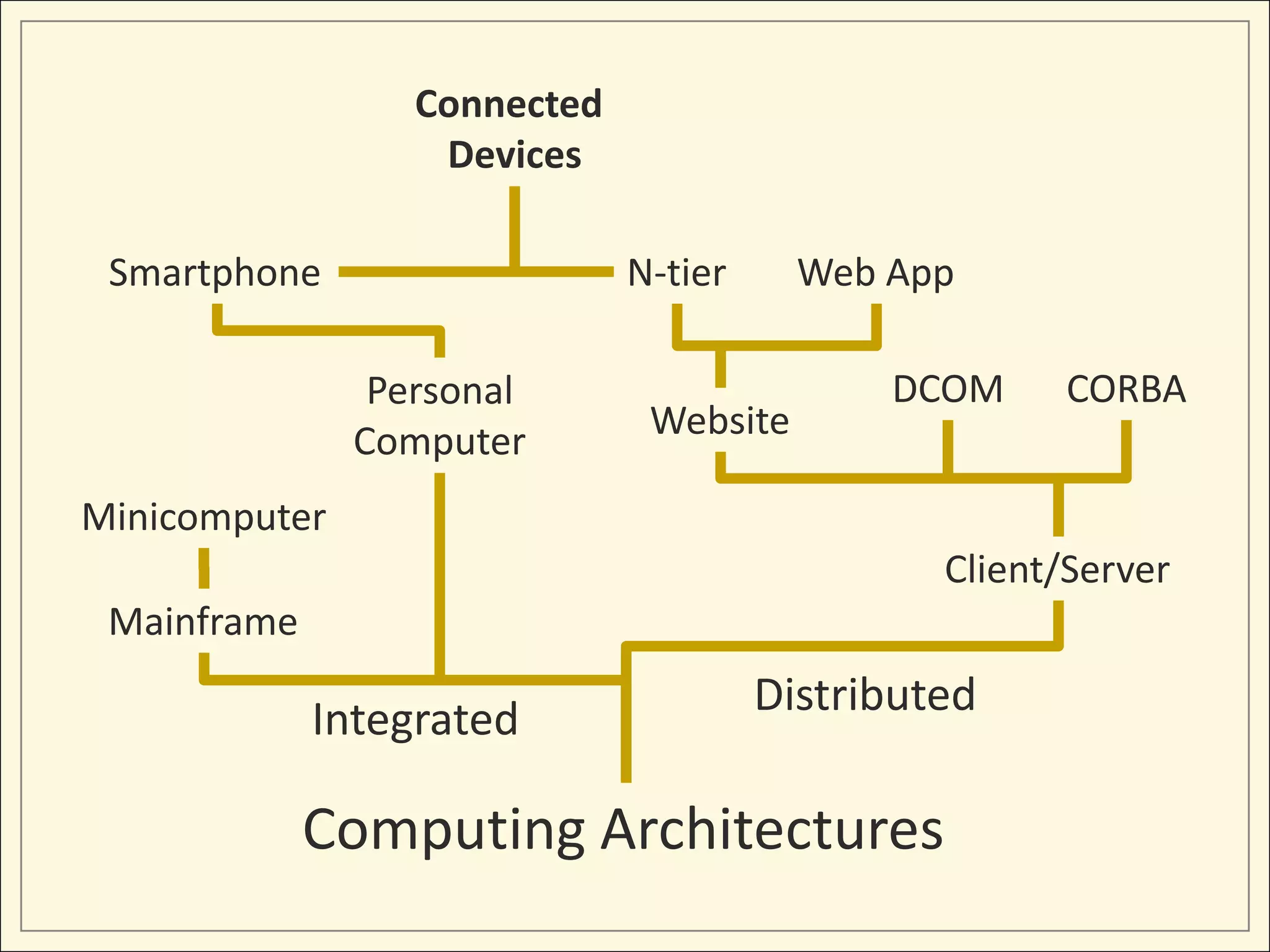
Connected
                   Devices

 Smartphone                   N-tier     Web App

                Personal                     DCOM      CORBA
               Computer        Website

Minicomputer
                                                Client/Server
 Mainframe

             Integrated                Distributed

             Computing Architectures
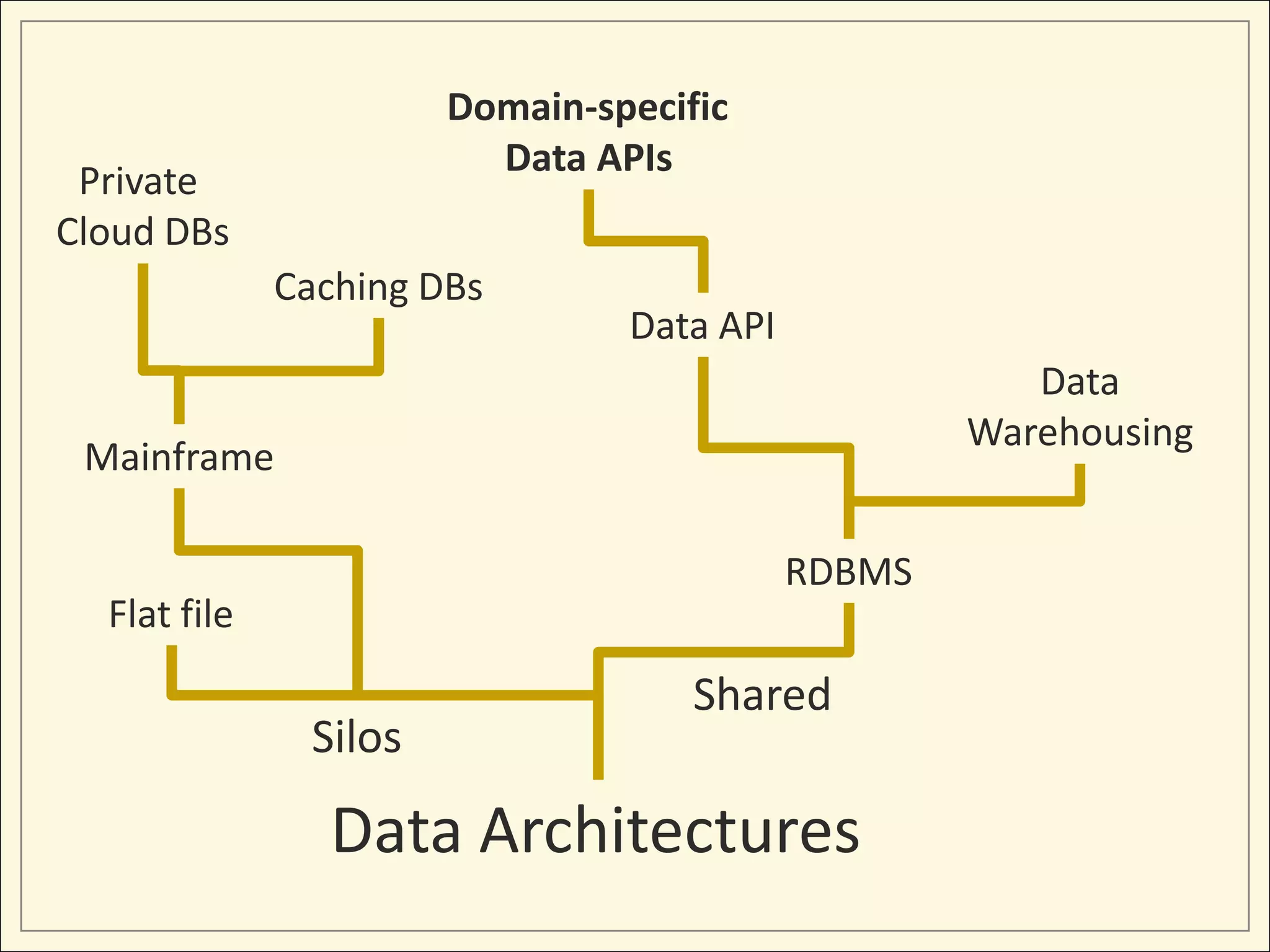
Domain-specific
                         Data APIs
 Private
Cloud DBs
              Caching DBs
                                Data API
                                                      Data
                                                   Warehousing
 Mainframe

                                           RDBMS
  Flat file
                                    Shared
               Silos

                Data Architectures
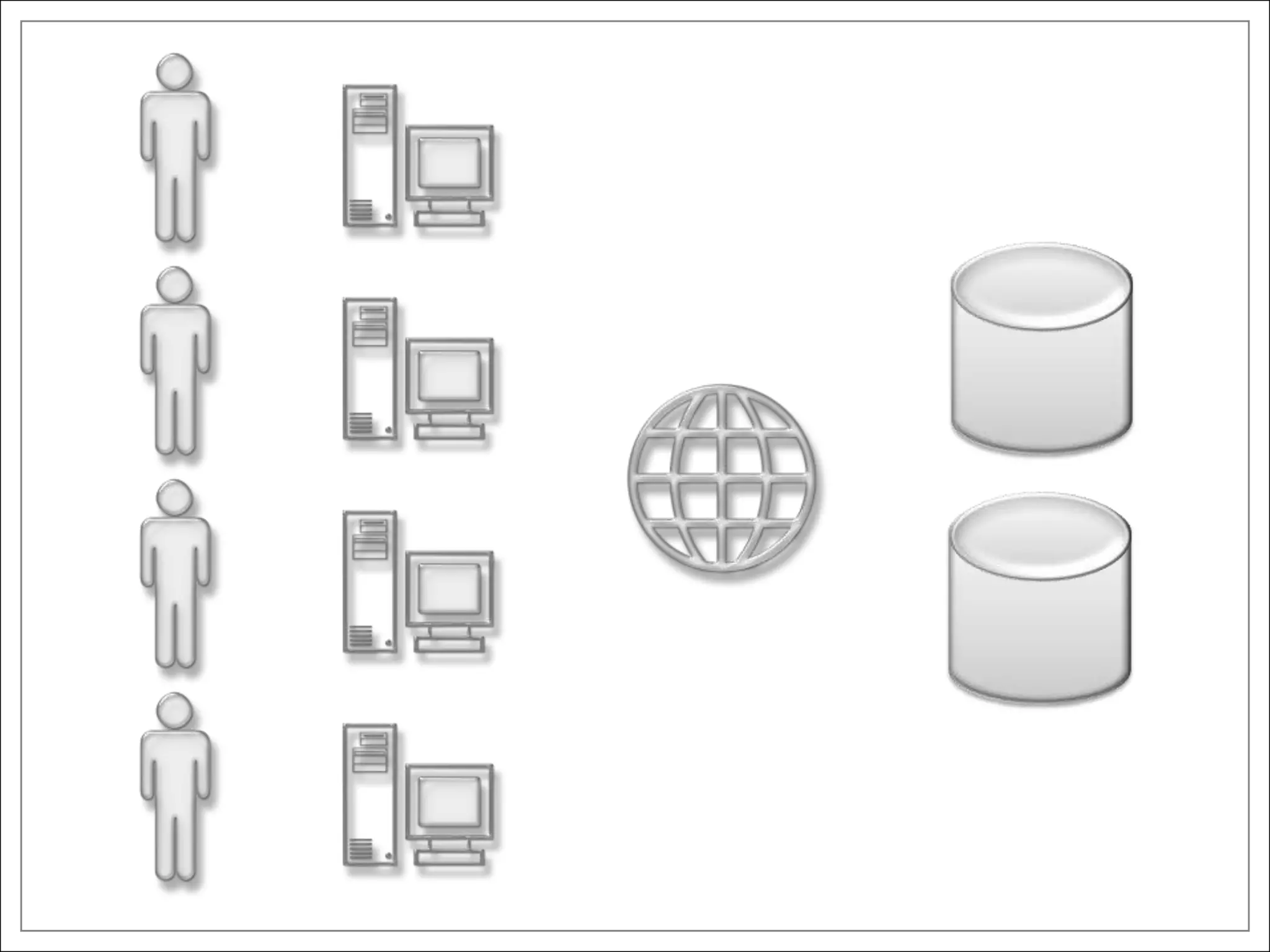
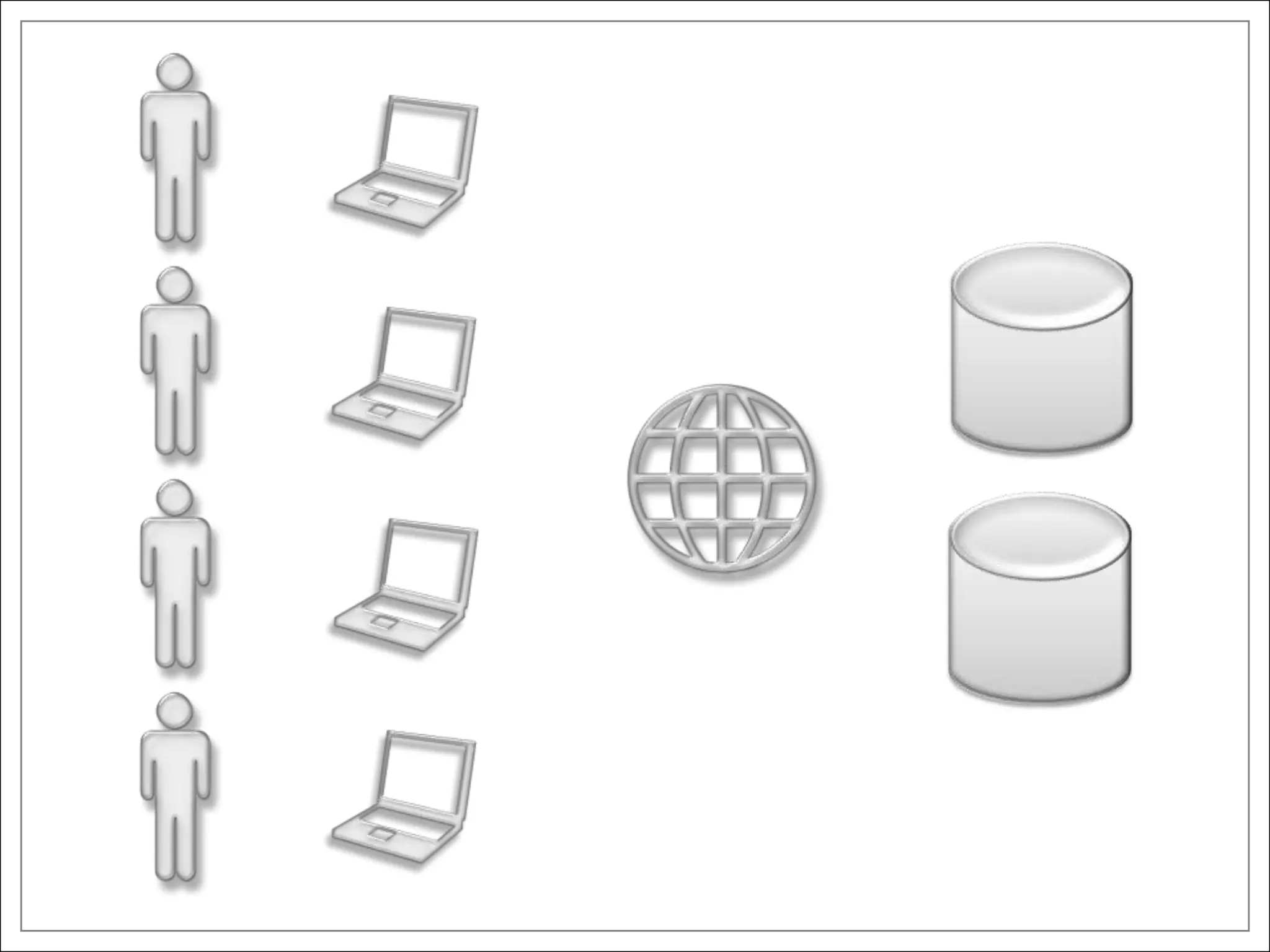
We’ve come back to client-server computing
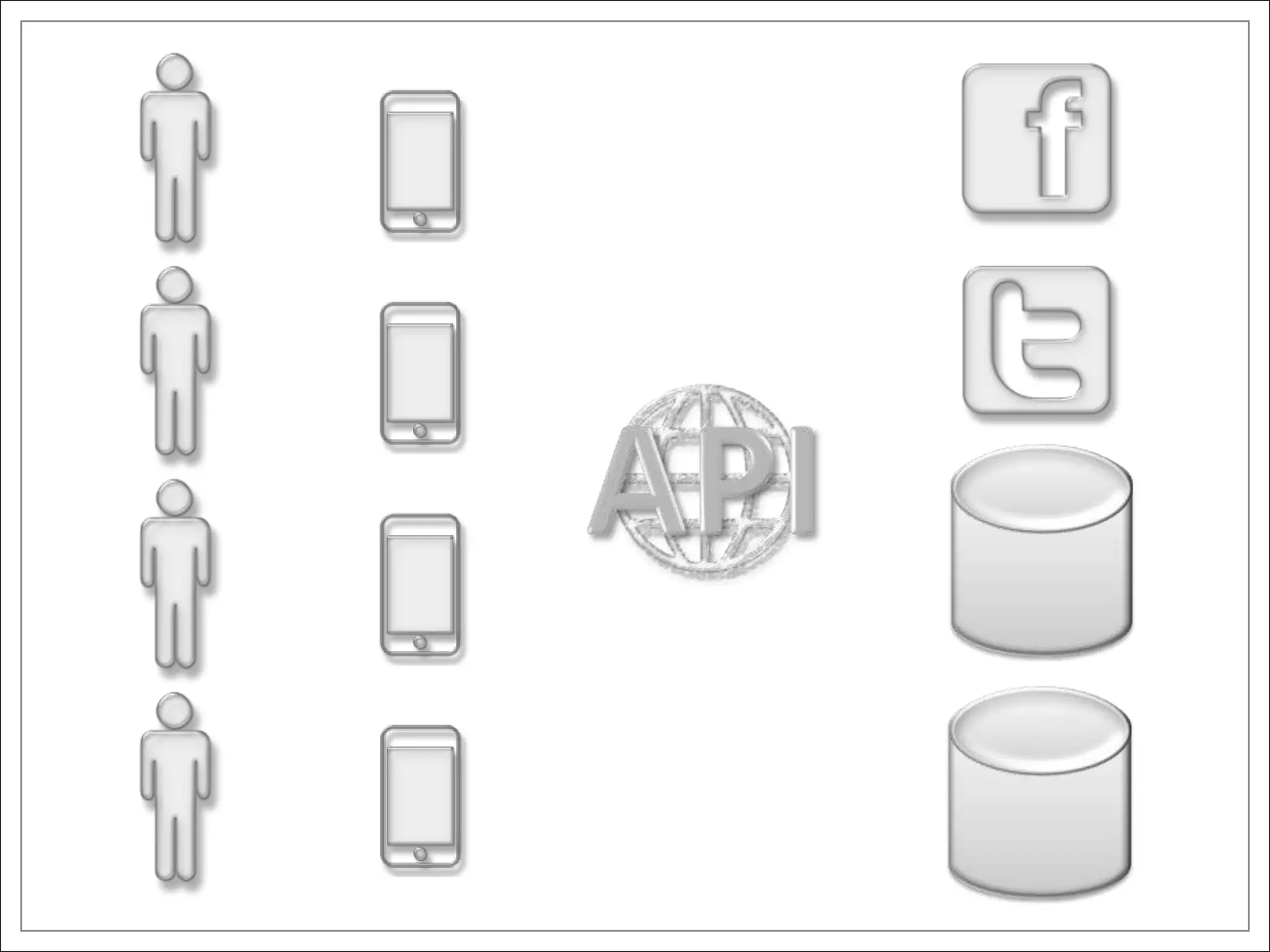
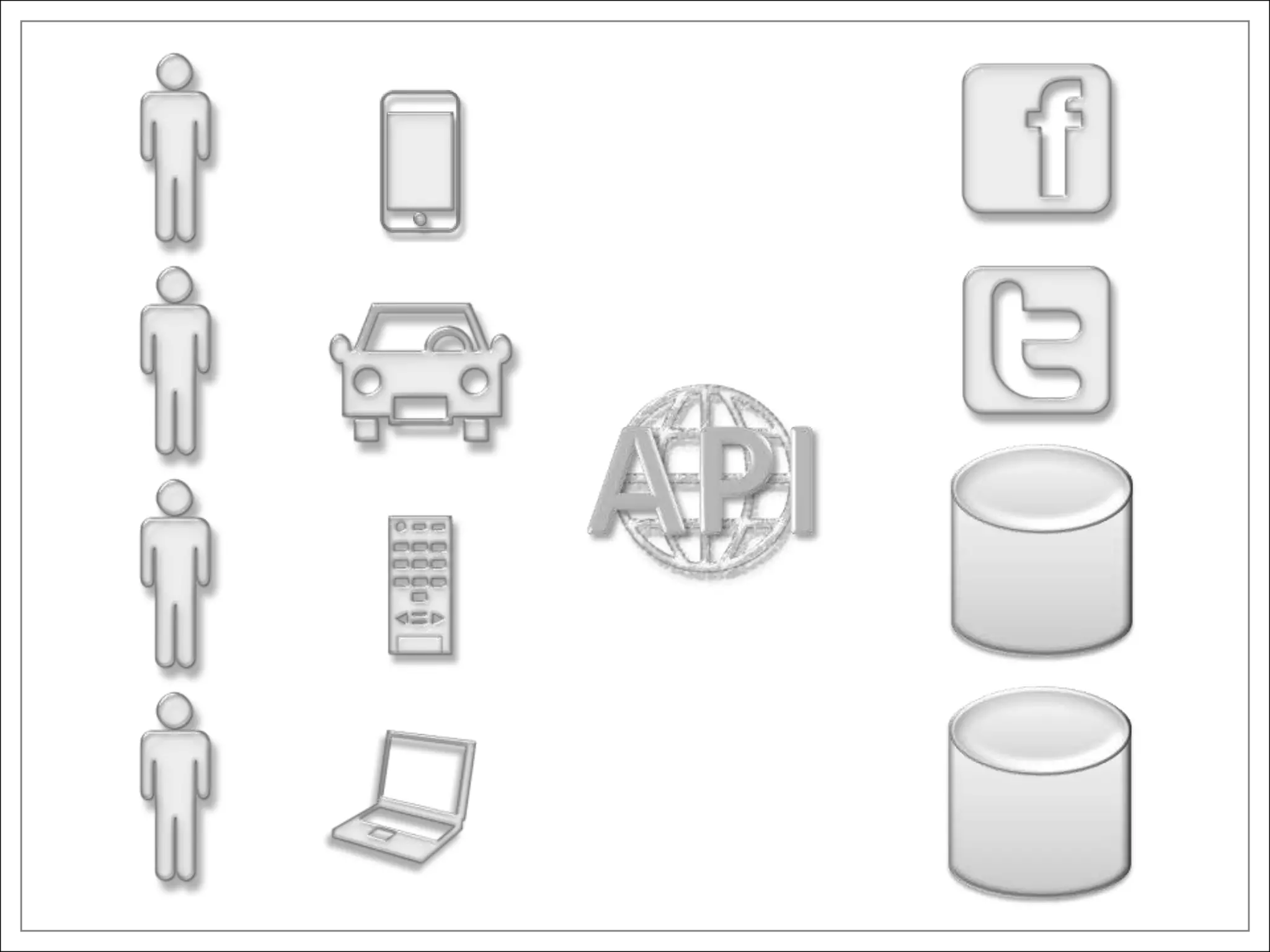
From the perspective of the mobile client,
the Internet is a database.
Is that a skeuomorph or a metaphor?
If the Internet is a database,
what have we learned from prior eras about
architecting for performance?
MOBILE
PERFORMANCE
The classic client-server problem returns
If the database is slow, the app is slow.
Research shows that people will put up with
about 1.5 seconds between interactions.
More than 3 seconds on average
and they’ll stop using the app.
This is a problem.
Let’s dig into our client-server history
to break it down.
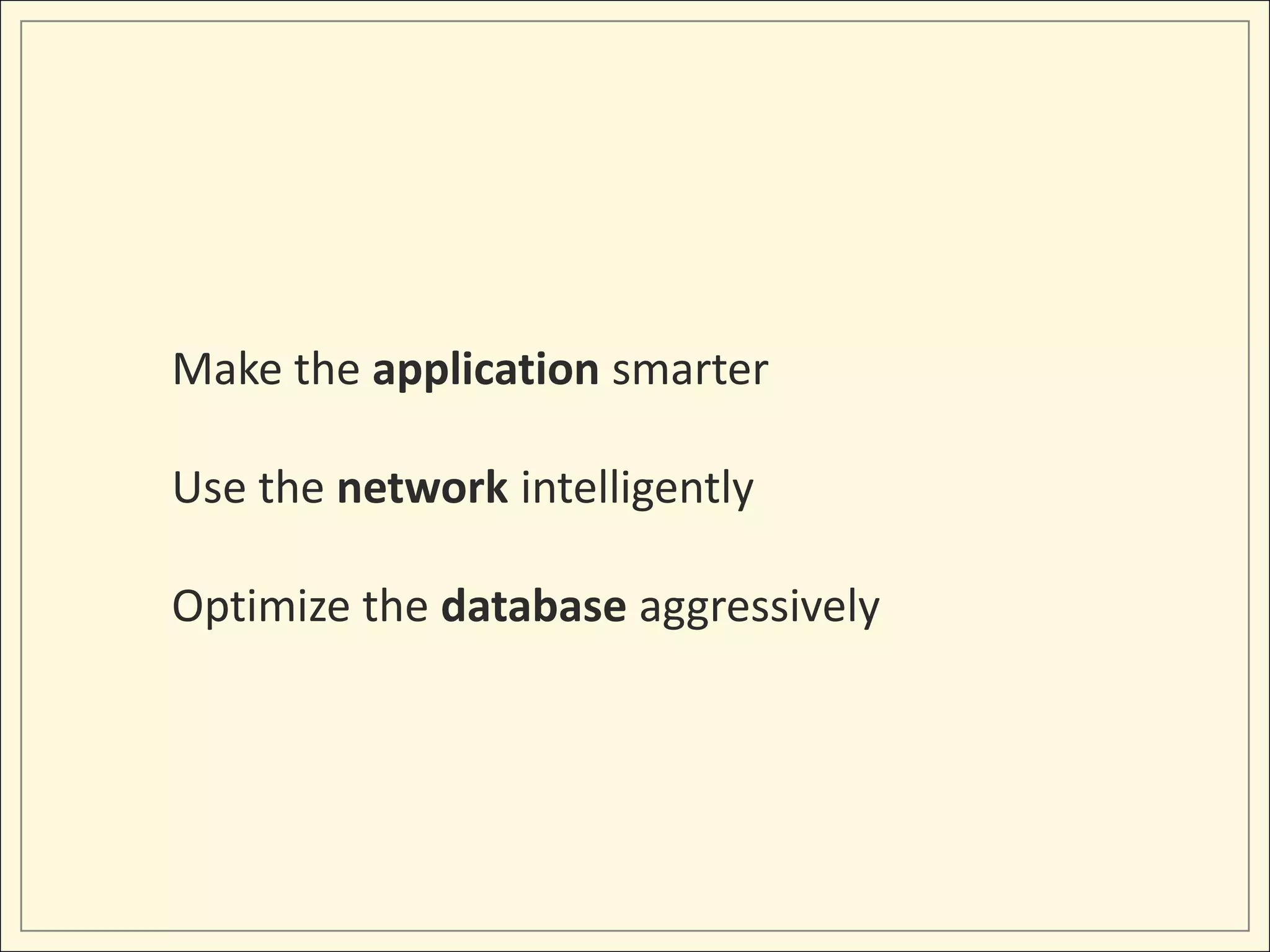
Make the application smarter

Use the network intelligently

Optimize the database aggressively
MAKE THE
APPLICATION
SMARTER
application


    What makes the app feel fast to the user?
application


    Time to first render

    Time to first interaction

    Time between interactions
application


    Three mutually reinforcing techniques:

    Code profiling for performance optimization

    Threading/concurrency for user interactions

    Client-side caching for everything else
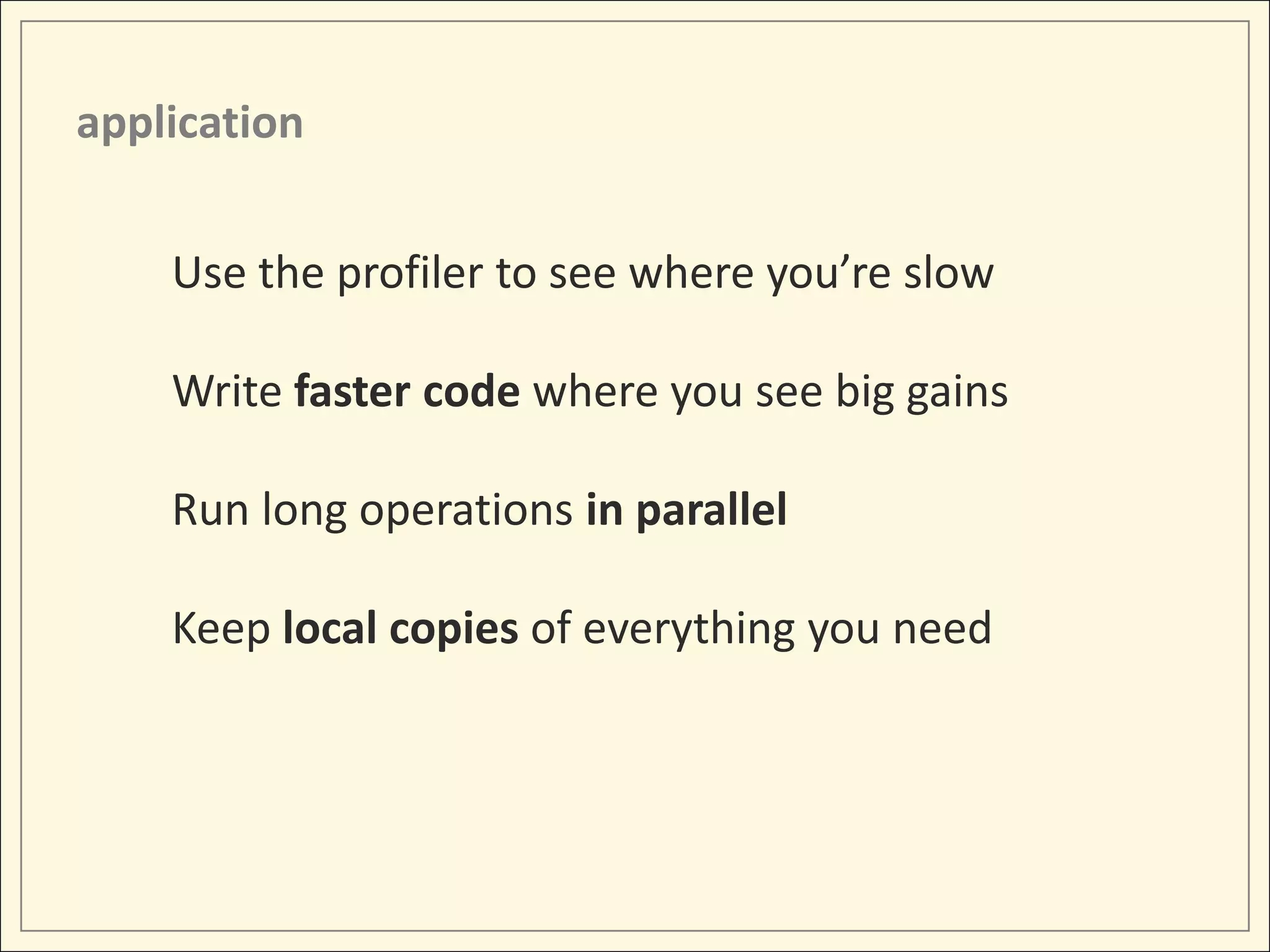
application


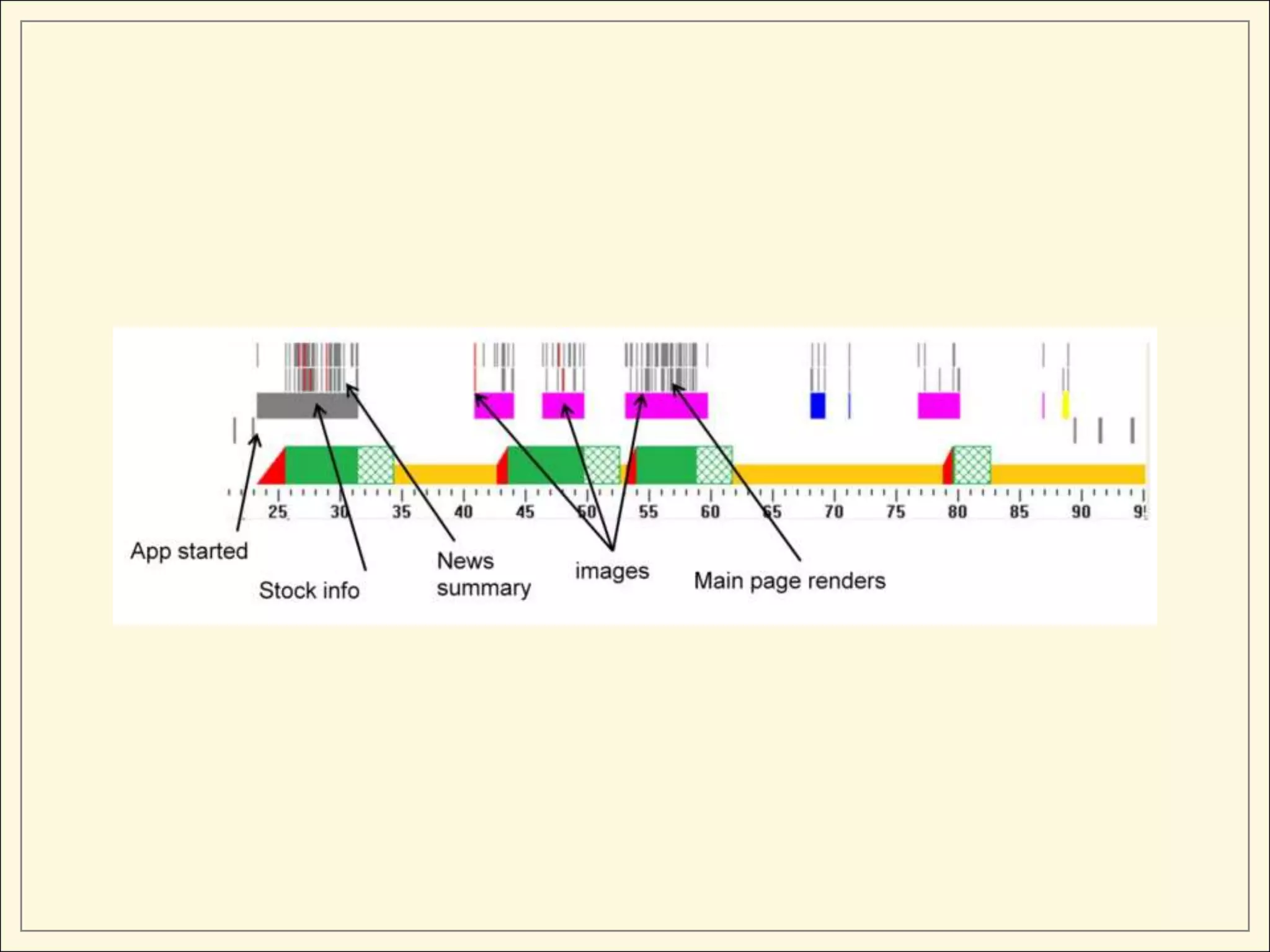
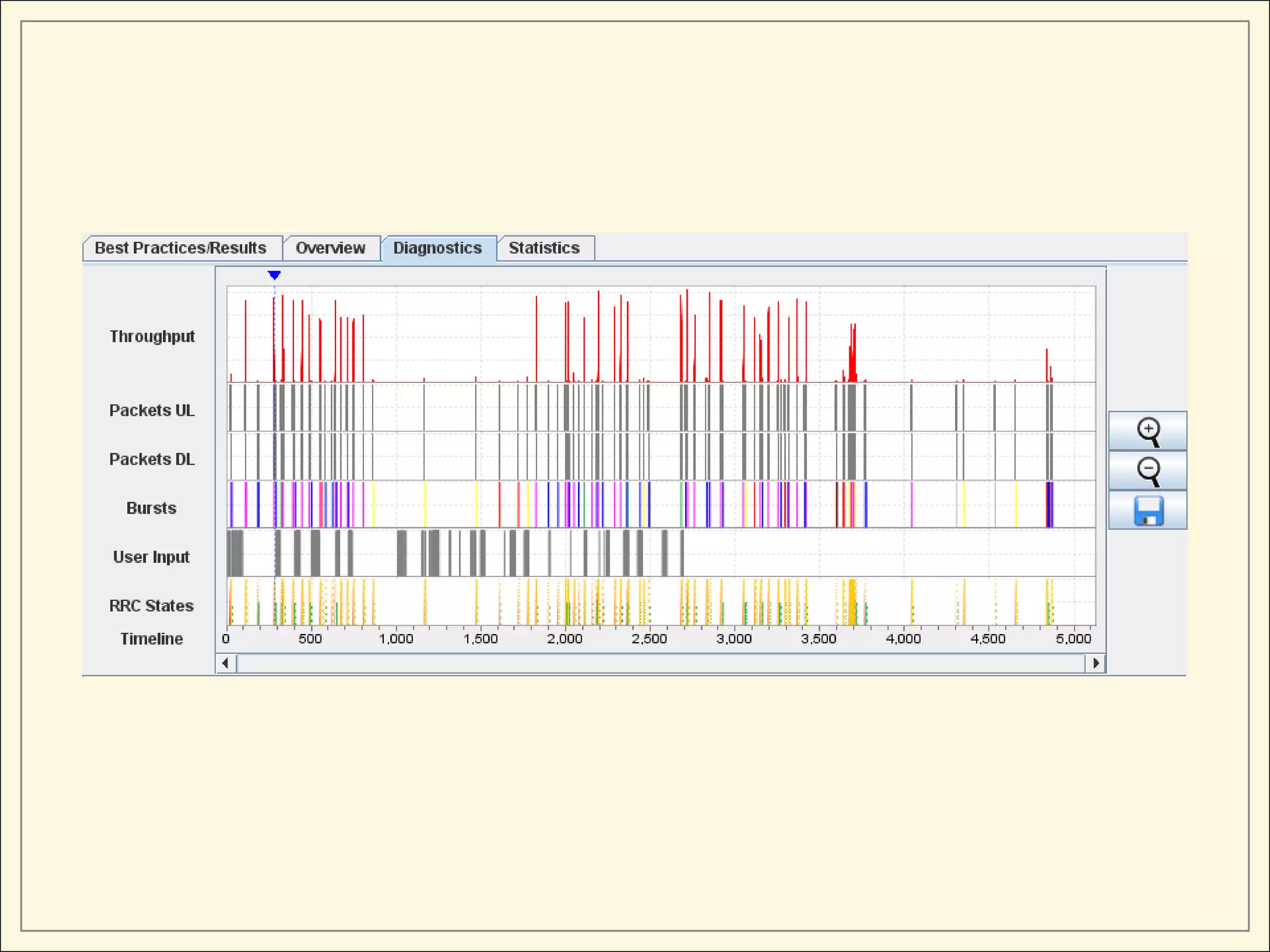
    Use the profiler to see where you’re slow

    Write faster code where you see big gains

    Run long operations in parallel

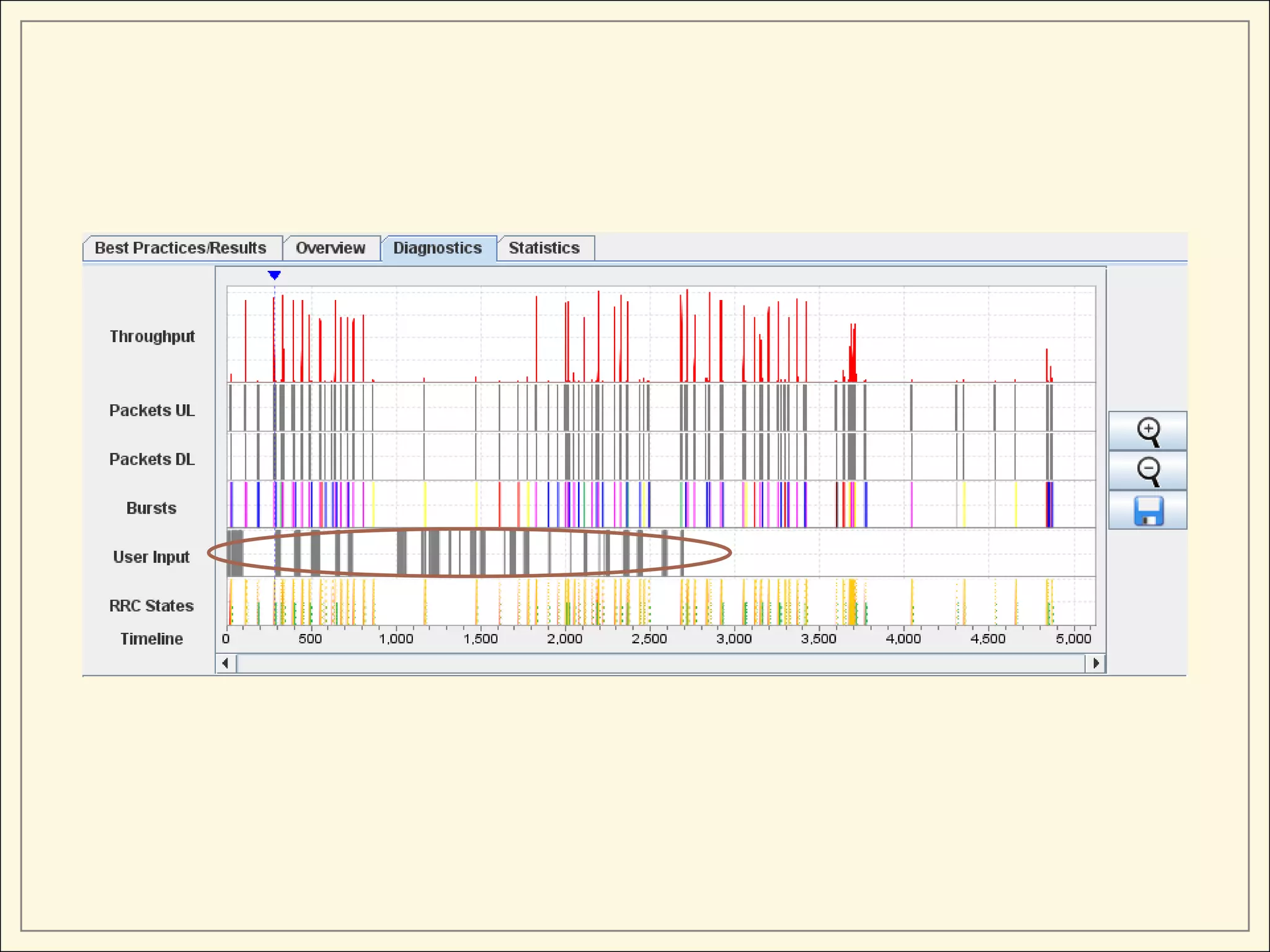
    Keep local copies of everything you need
application


    Concurrency
application


    Anticipation
application


    Caching
application


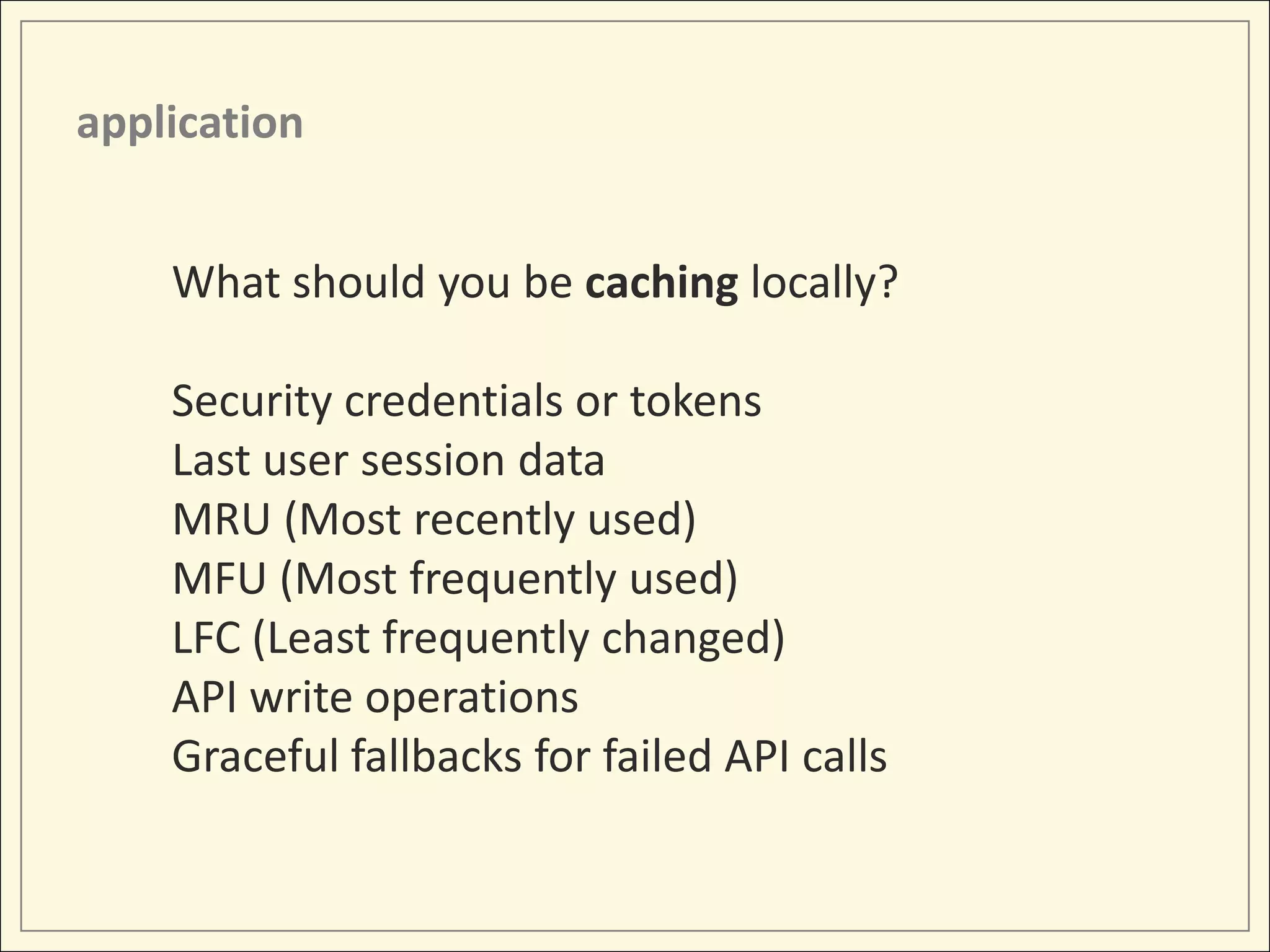
    What should you be caching locally?

    Security credentials or tokens
    Last user session data
    MRU (Most recently used)
    MFU (Most frequently used)
    LFC (Least frequently changed)
    API write operations
    Graceful fallbacks for failed API calls
application


    Issues do remain

    Can’t hit local cache on first use of app
    Receiving the right shape of data
USE THE
NETWORK
INTELLIGENTLY
network


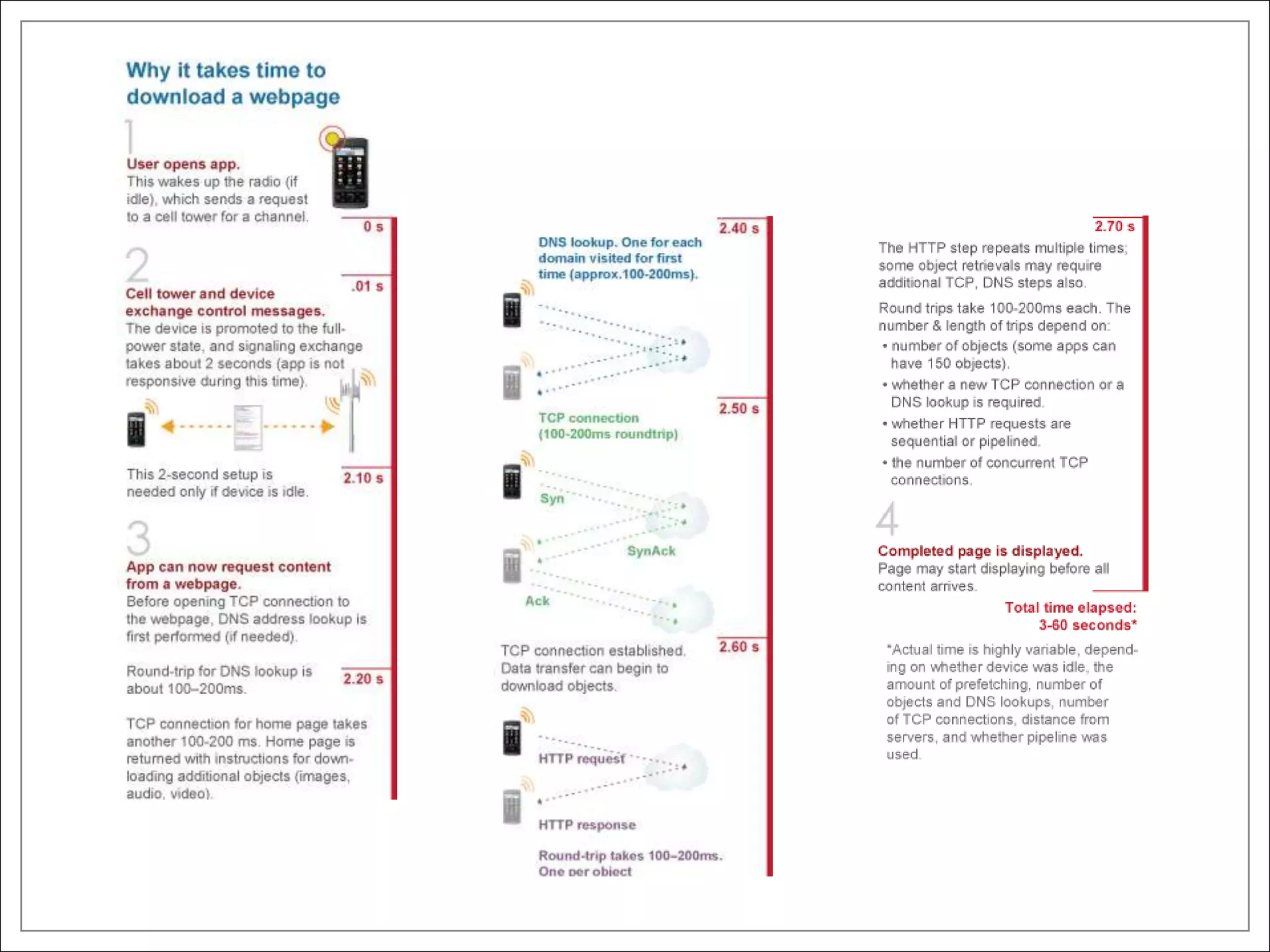
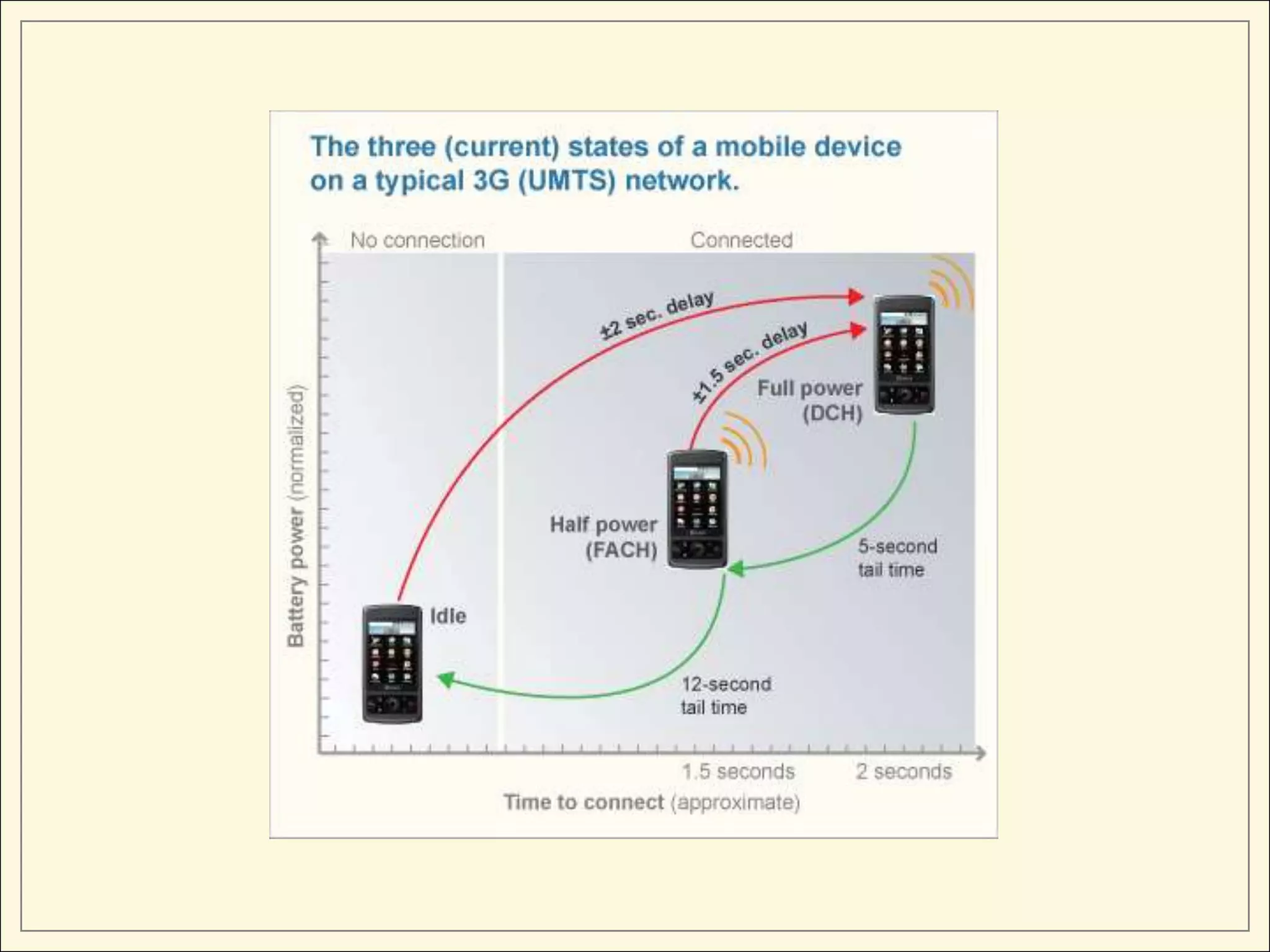
   The radio network is a
         high-latency,
                limited-resource environment.
network


   Speed and battery usage
   are both important dimensions of
   mobile performance
network


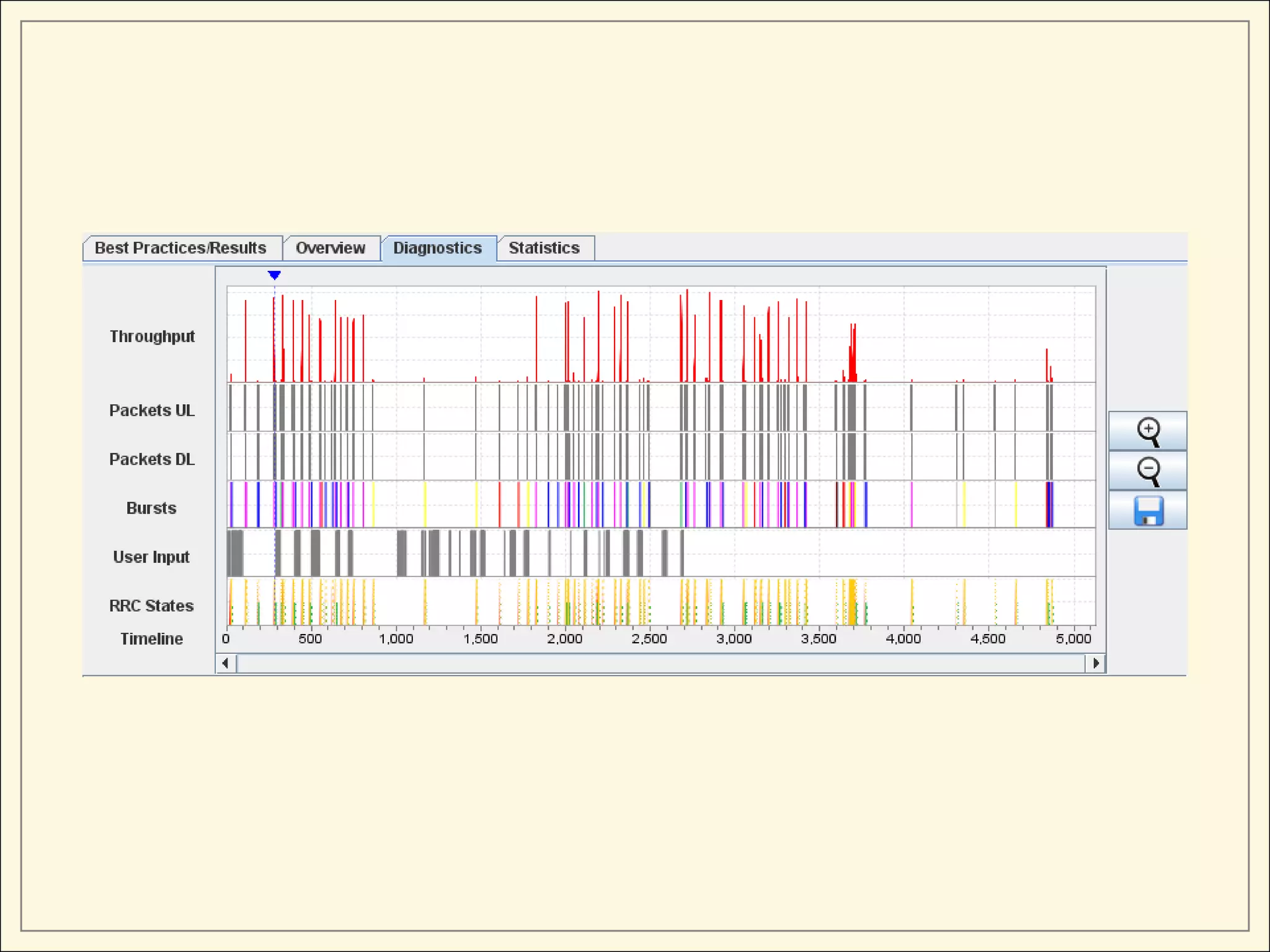
   Intermittent usage of the radio for

   pingbacks
   keep-alives
   analytics
   screen rotations

   will slow you down and burn battery.
network


   A better approach:

   Bundling, piggybacking, and pipelining
network

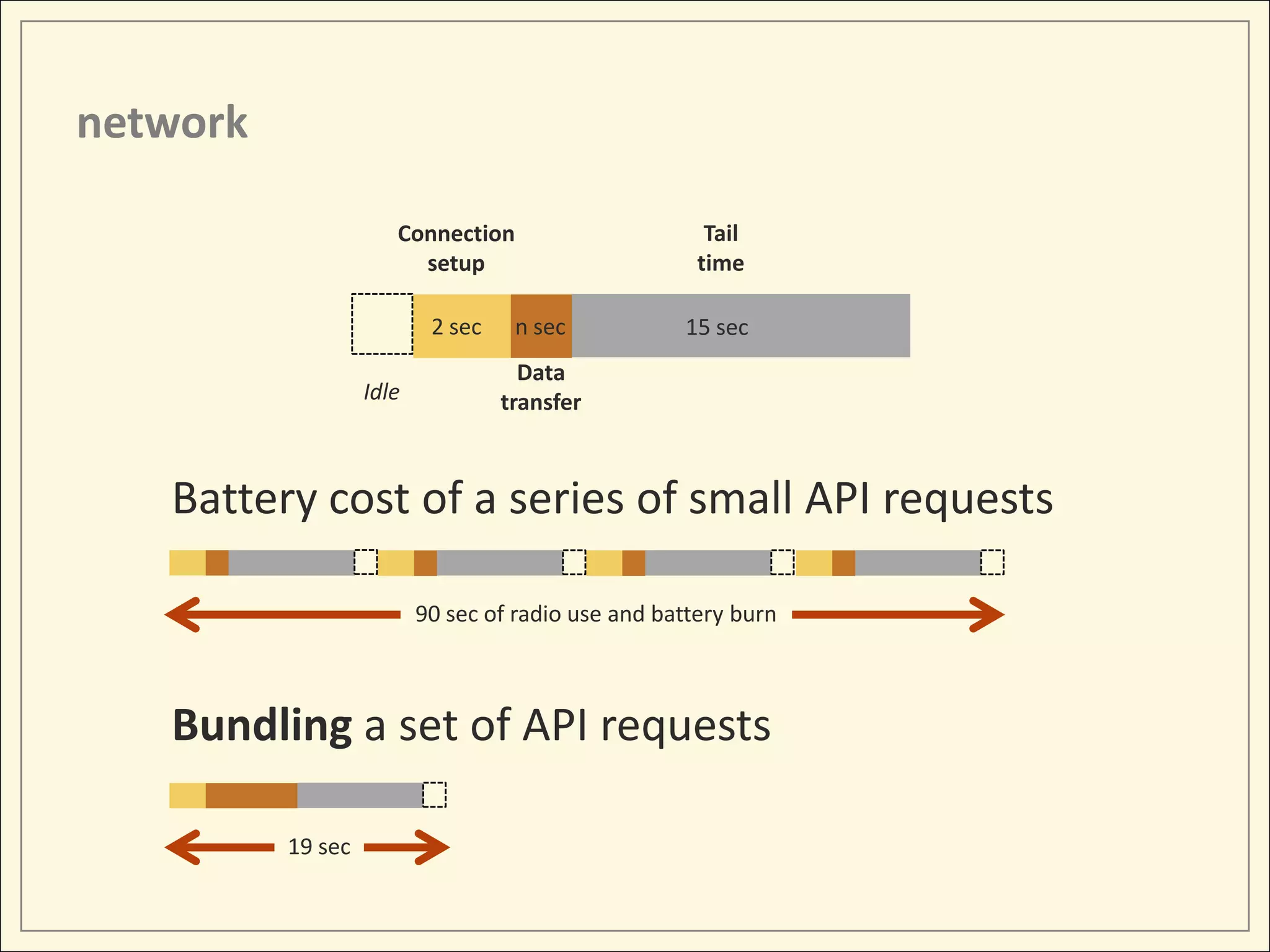
                      Connection                       Tail
                        setup                         time

                           2 sec    n sec           15 sec
                                     Data
                   Idle            transfer


   Battery cost of a series of small API requests

                          90 sec of radio use and battery burn


   Bundling a set of API requests

          19 sec
network


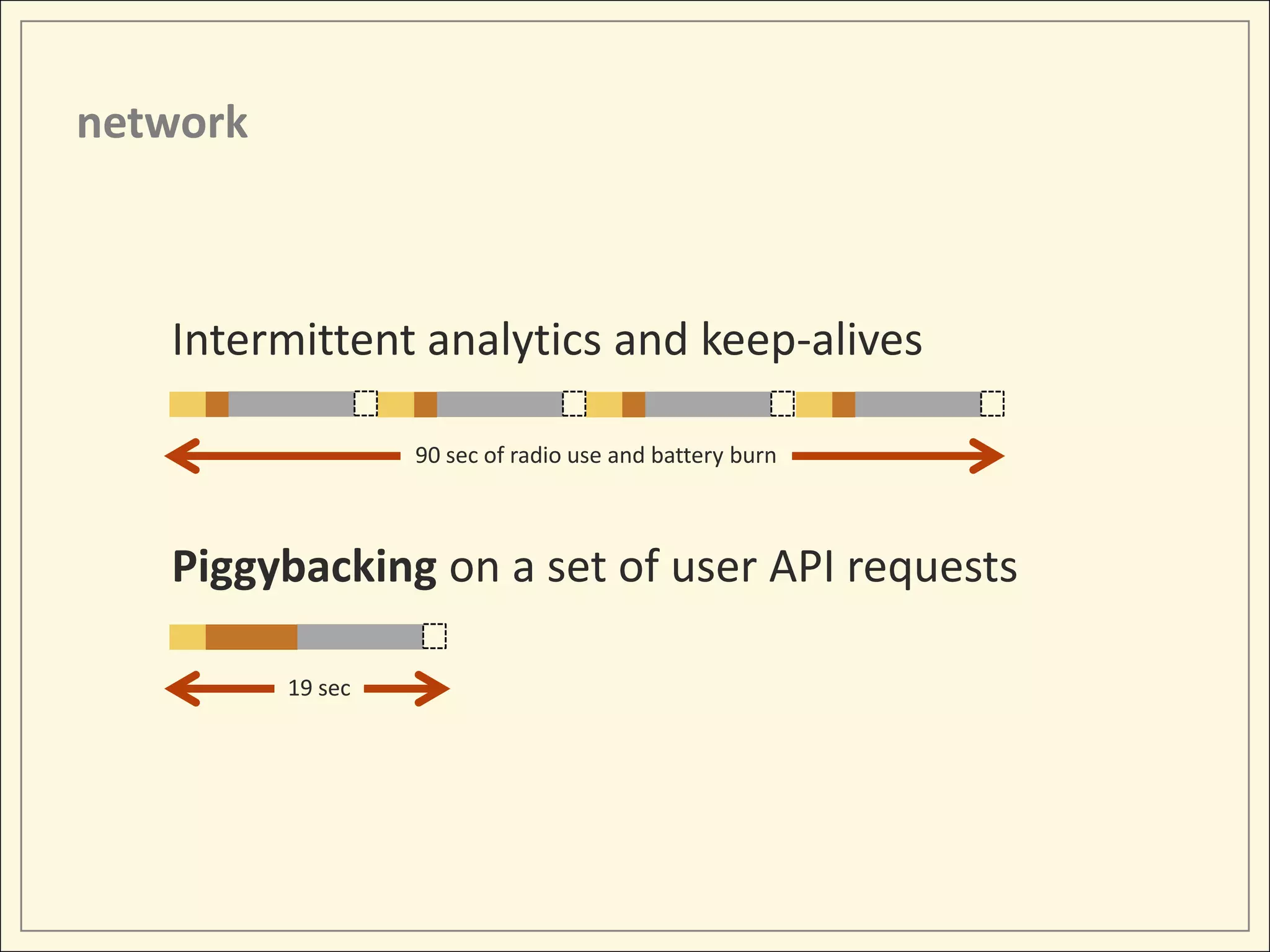
   Intermittent analytics and keep-alives

                   90 sec of radio use and battery burn


   Piggybacking on a set of user API requests

          19 sec
network
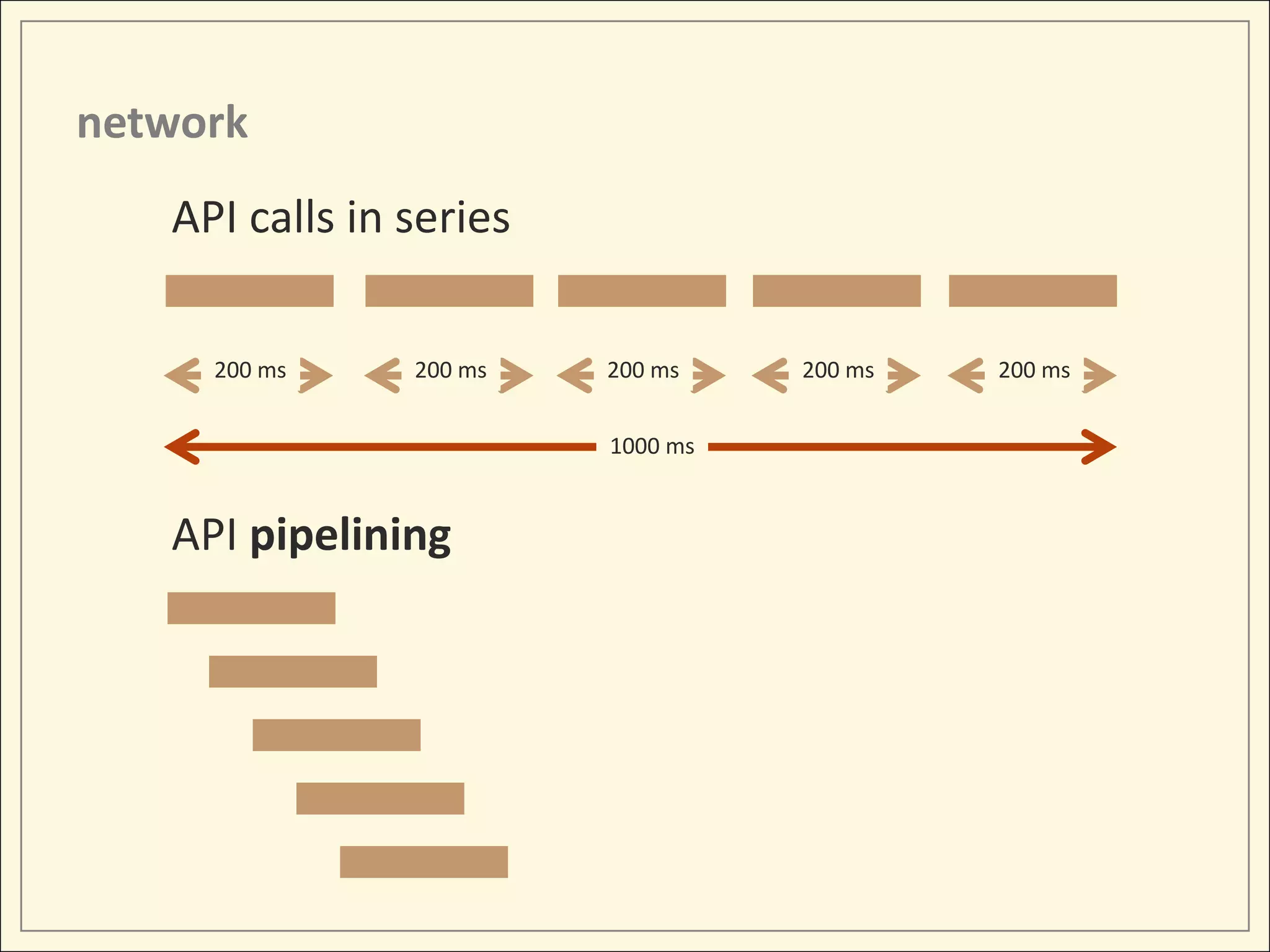
   API calls in series

     200 ms     200 ms   200 ms    200 ms   200 ms


                         1000 ms


   API pipelining
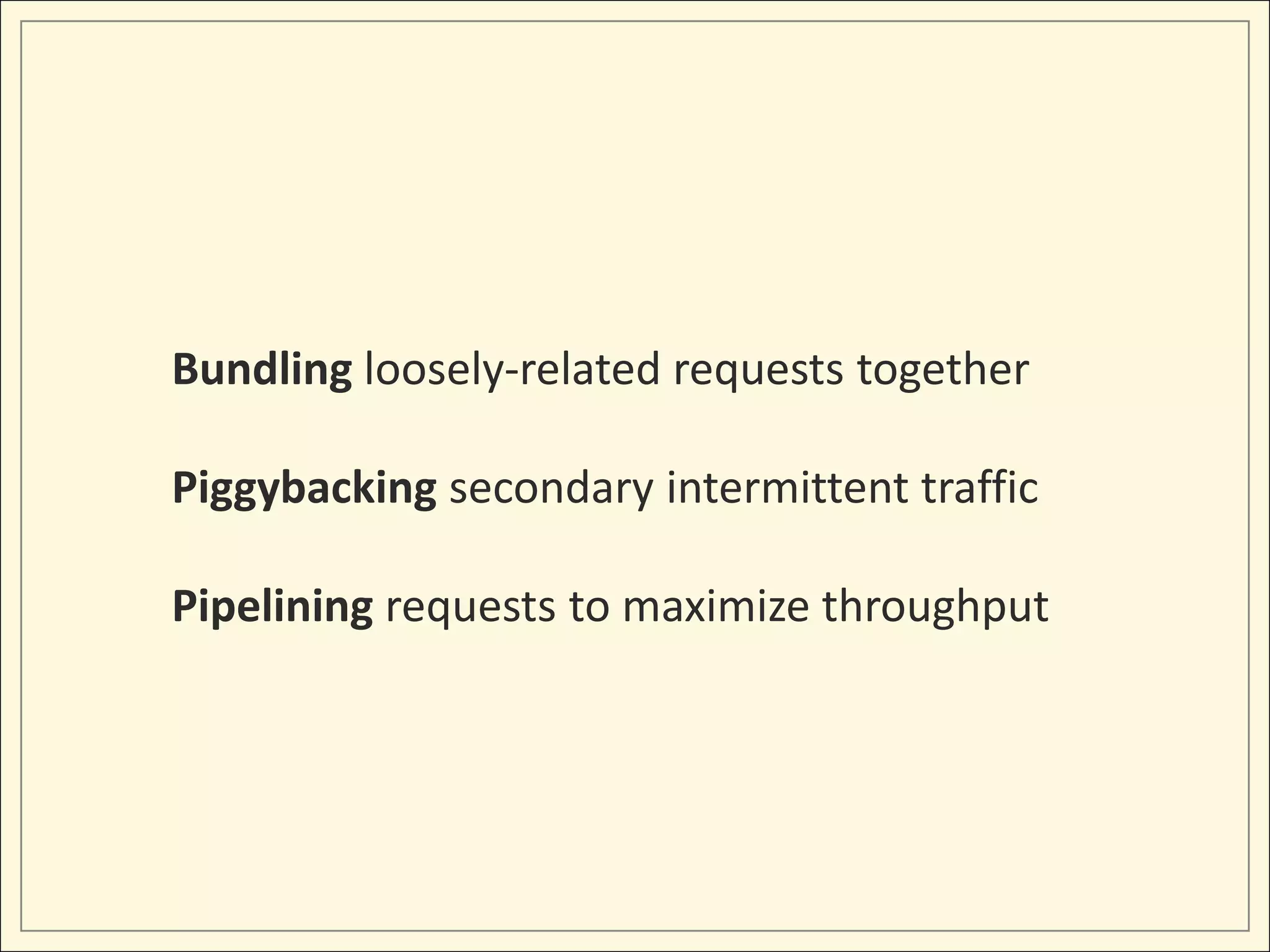
Bundling loosely-related requests together

Piggybacking secondary intermittent traffic

Pipelining requests to maximize throughput
OPTIMIZE THE
DATABASE
AGGRESSIVELY
database


    What were our old
    database optimization tricks
    that we can apply to Internet data?
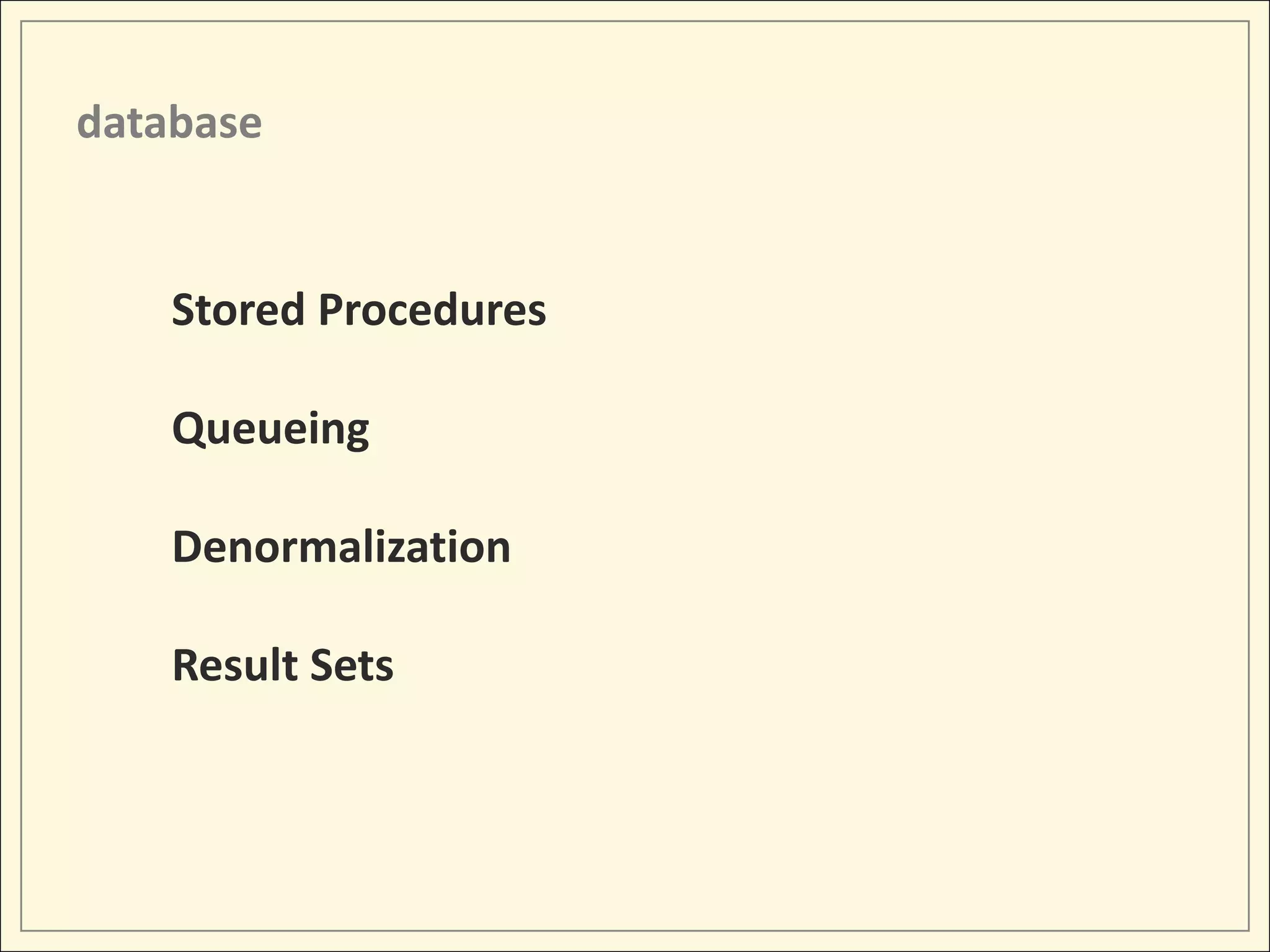
database


    Stored Procedures

    Queueing

    Denormalization

    Result Sets
database

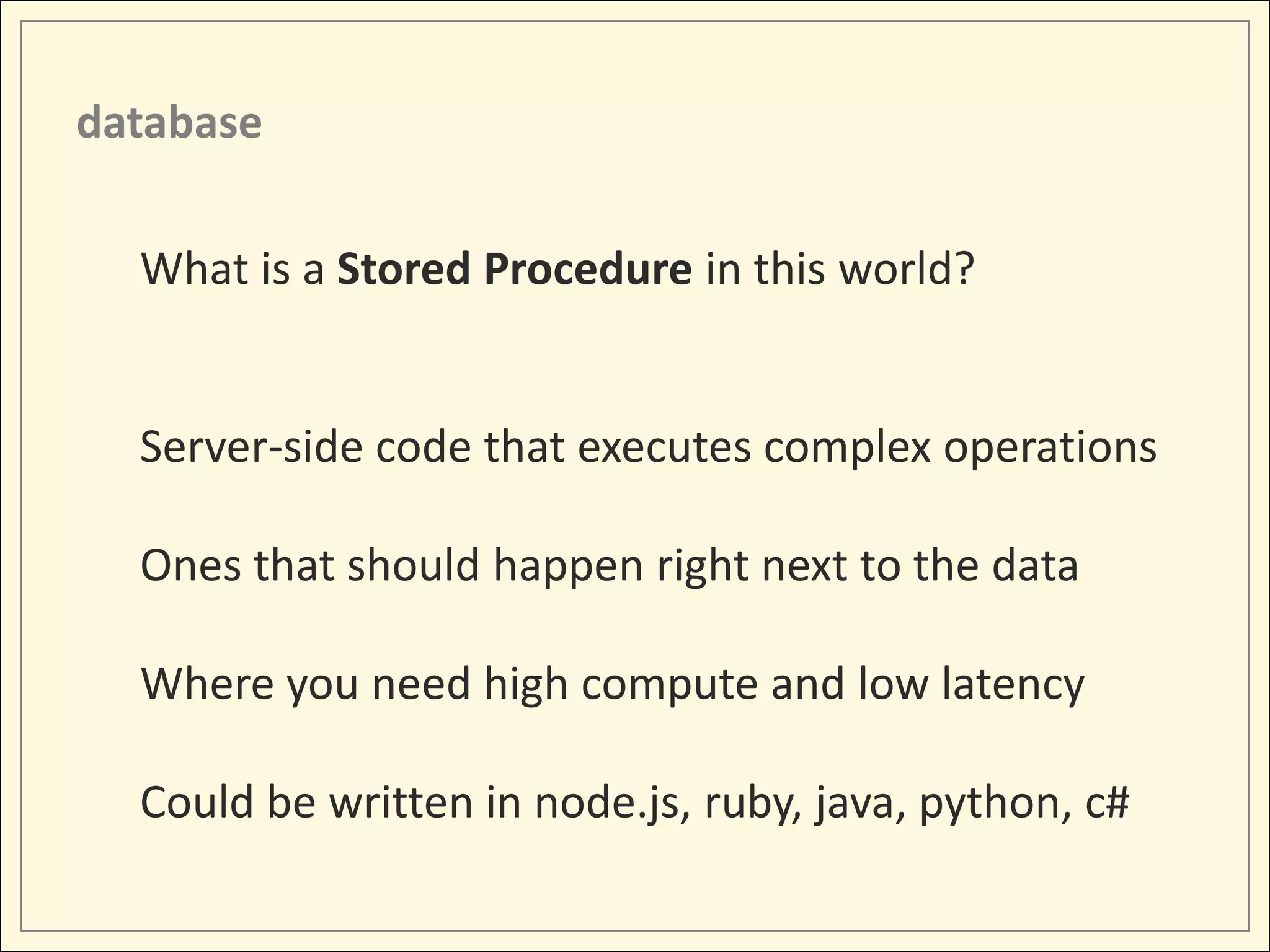
  What is a Stored Procedure in this world?


  Server-side code that executes complex operations

  Ones that should happen right next to the data

  Where you need high compute and low latency

  Could be written in node.js, ruby, java, python, c#
database

  Where does a Stored Procedure run in this world?
database

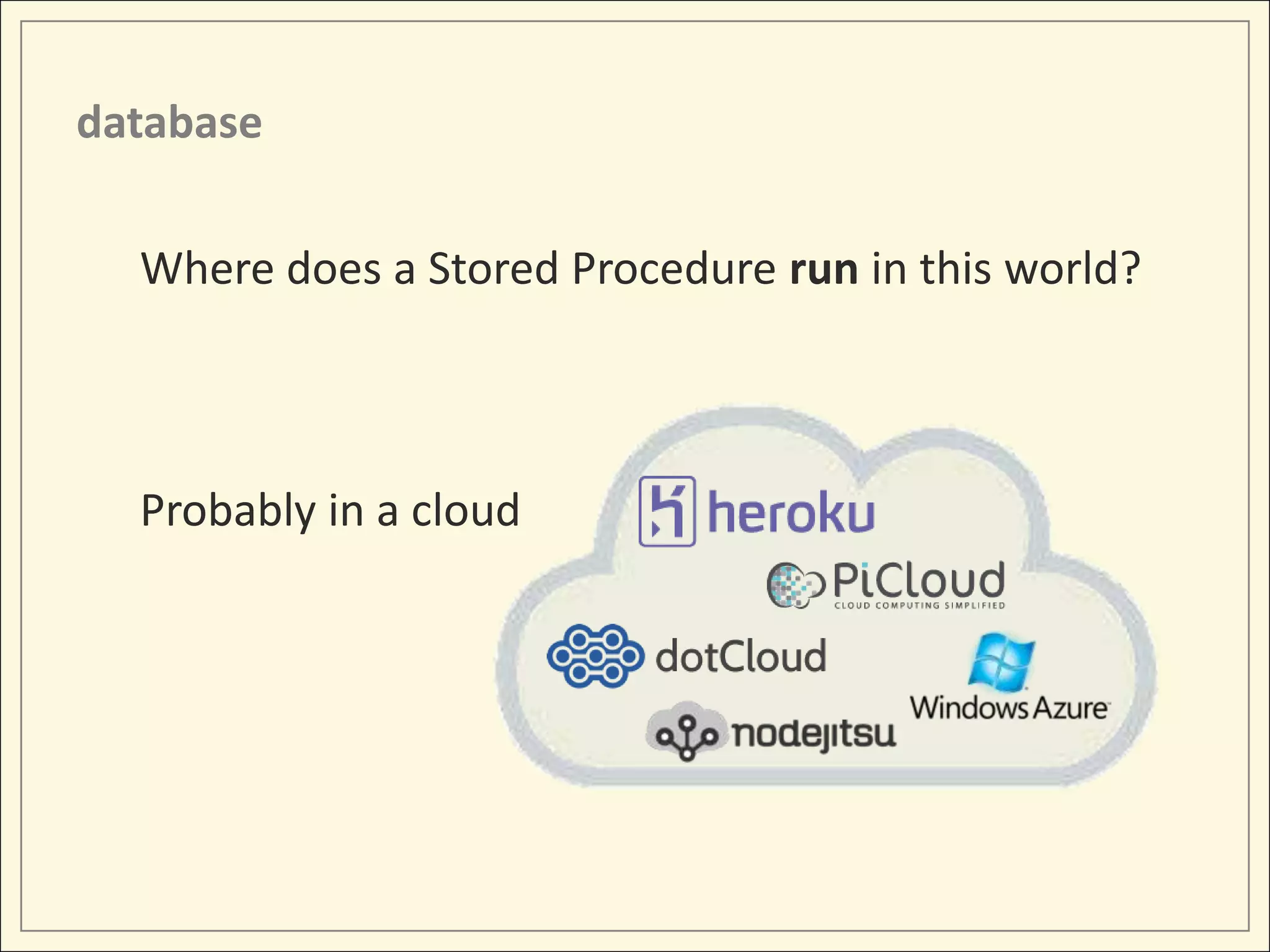
  Where does a Stored Procedure run in this world?


  Probably in a cloud
database


    Once you’ve built this architectural layer
    you gain a lot of control
database


    You can deal with
    queueing, denormalization, and manage
    result sets properly.
database


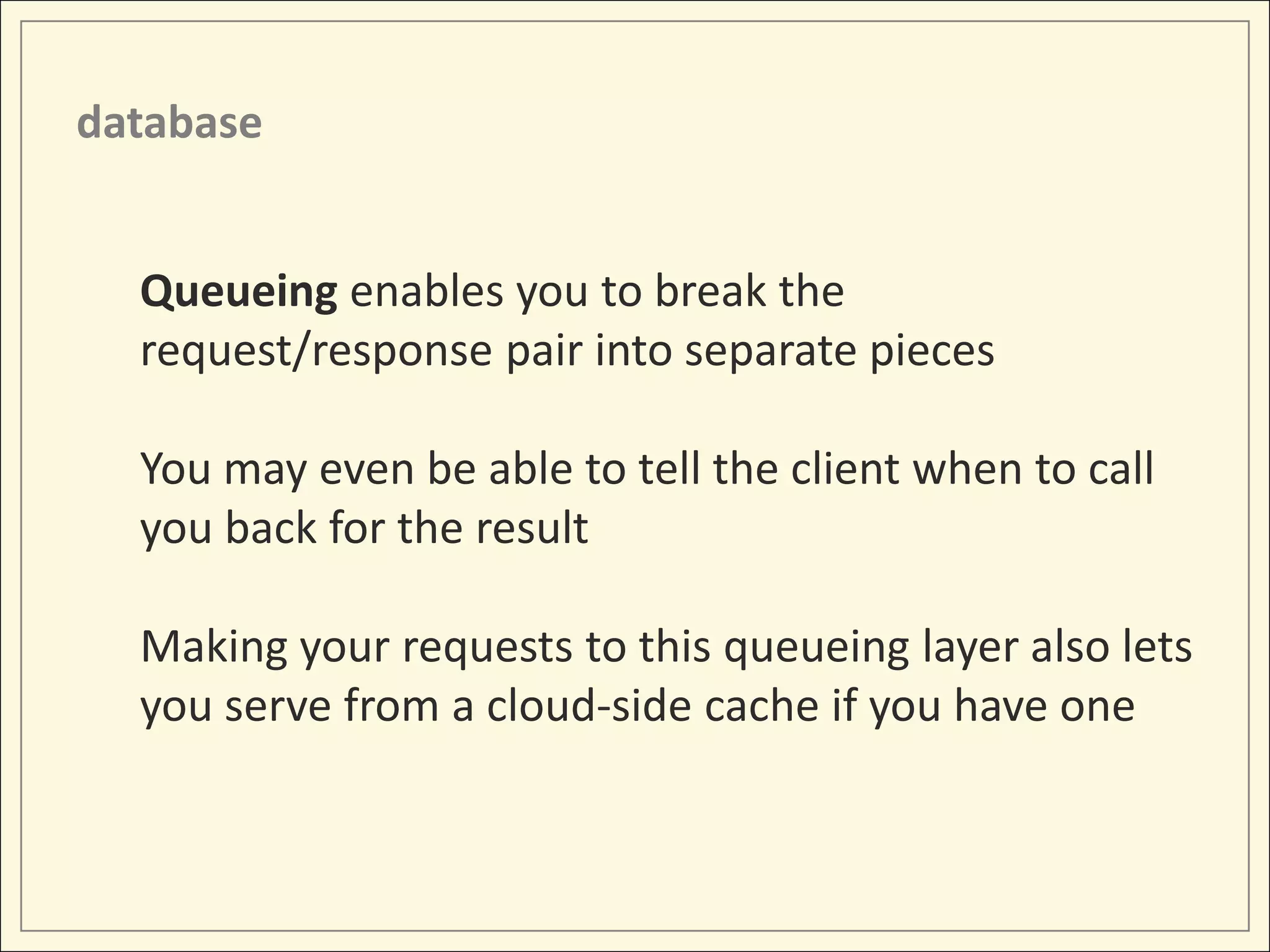
  Queueing enables you to break the
  request/response pair into separate pieces

  You may even be able to tell the client when to call
  you back for the result

  Making your requests to this queueing layer also lets
  you serve from a cloud-side cache if you have one
database


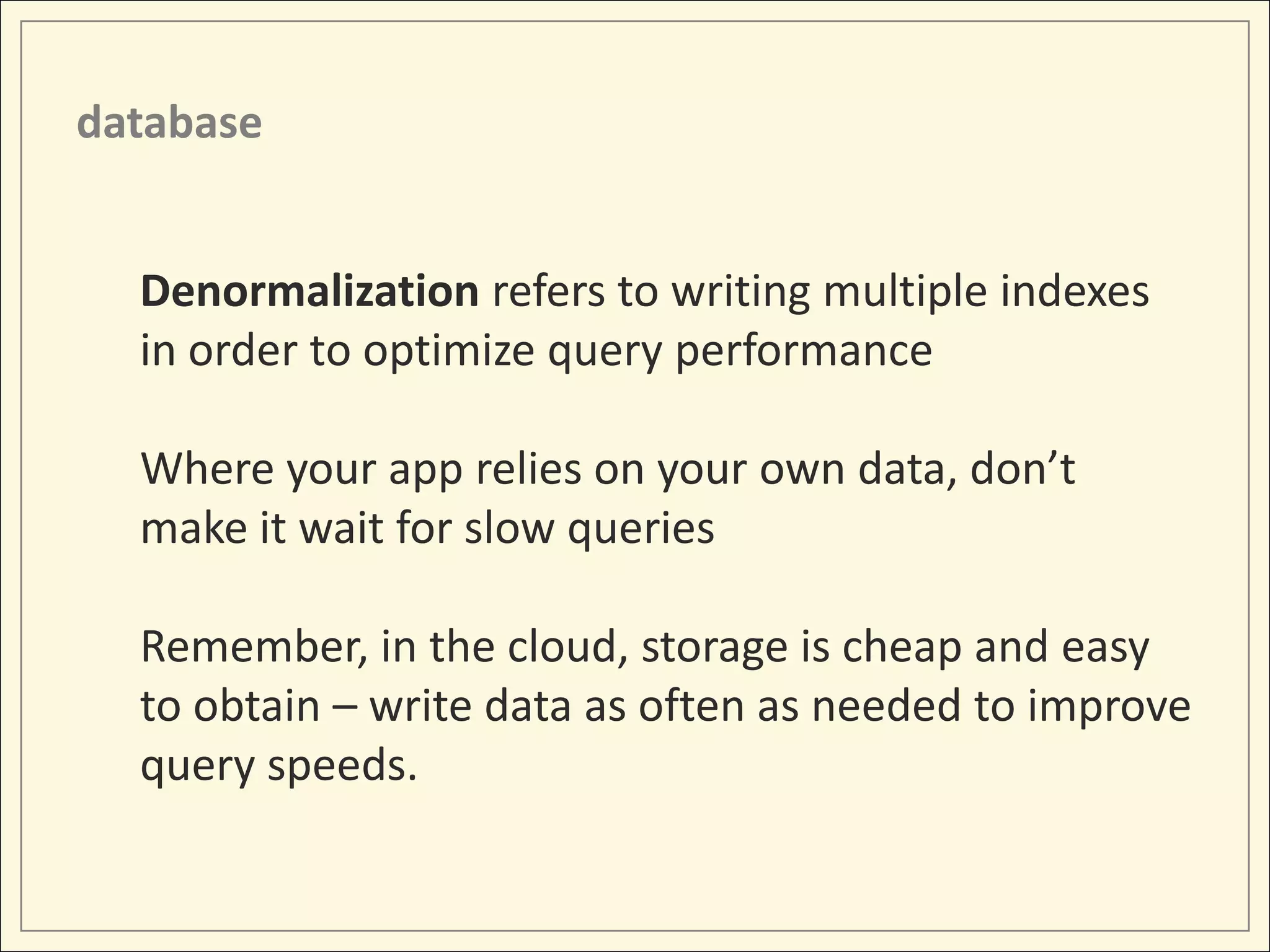
  Denormalization refers to writing multiple indexes
  in order to optimize query performance

  Where your app relies on your own data, don’t
  make it wait for slow queries

  Remember, in the cloud, storage is cheap and easy
  to obtain – write data as often as needed to improve
  query speeds.
database


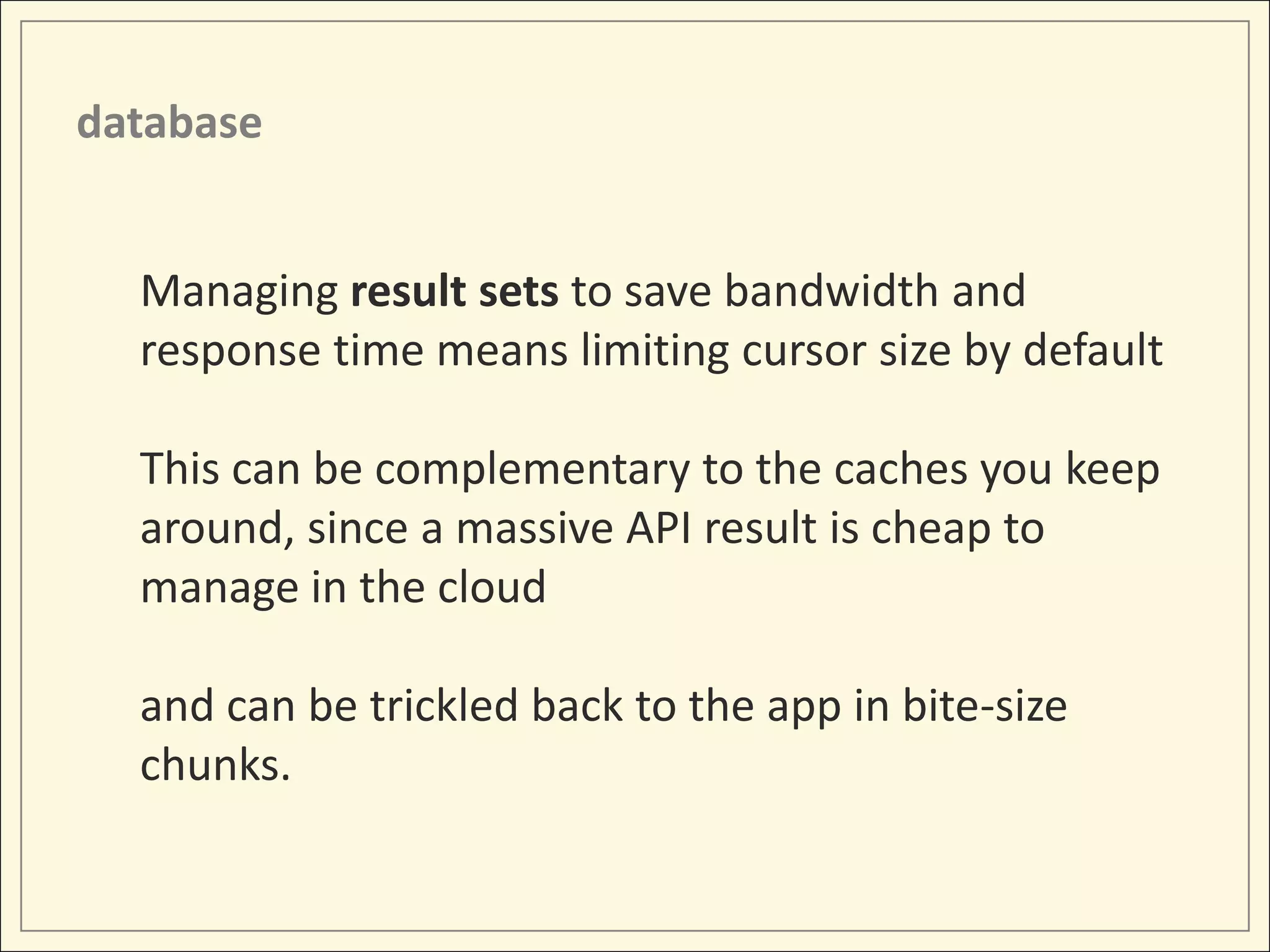
  Managing result sets to save bandwidth and
  response time means limiting cursor size by default

  This can be complementary to the caches you keep
  around, since a massive API result is cheap to
  manage in the cloud

  and can be trickled back to the app in bite-size
  chunks.
database


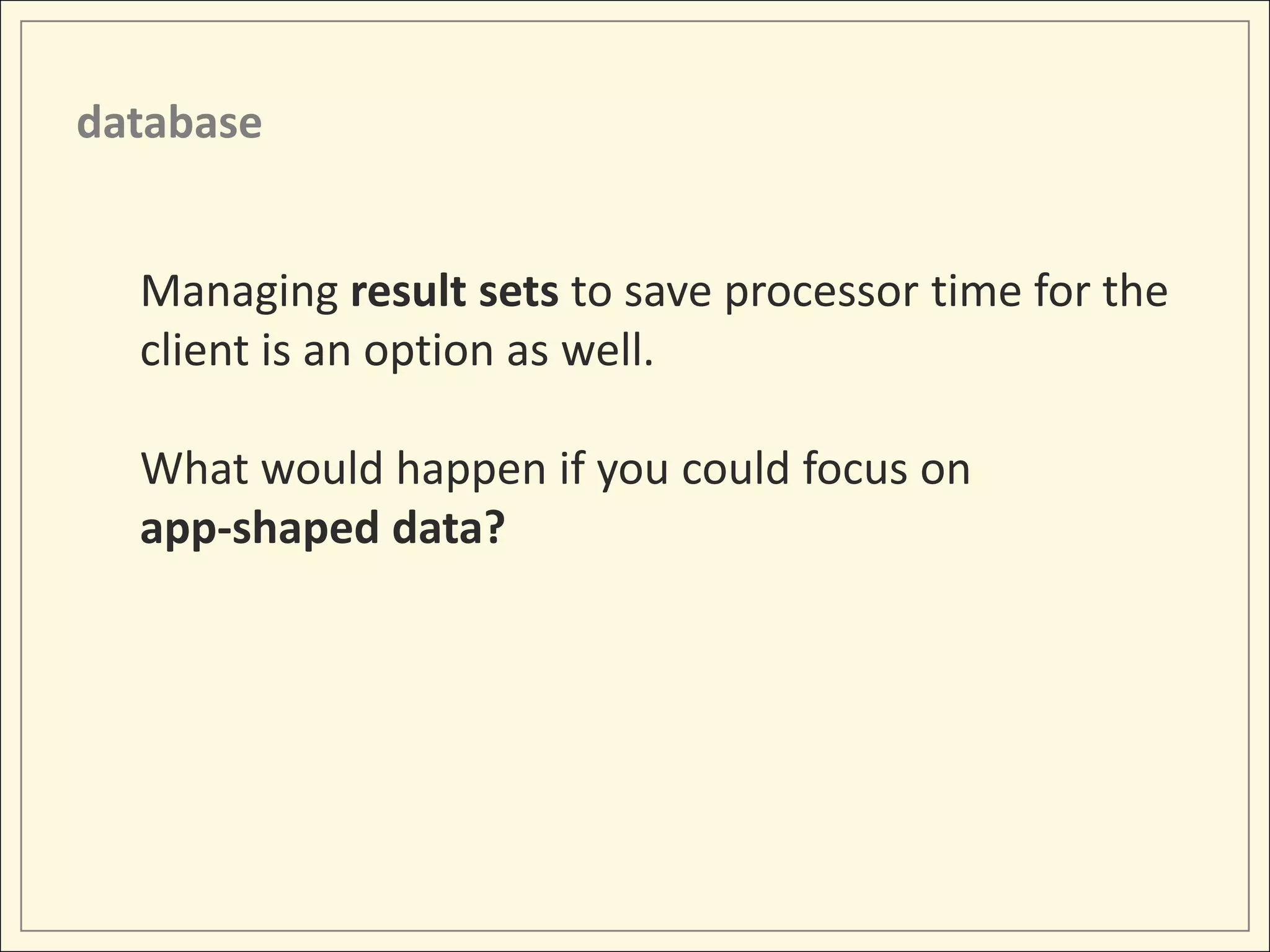
  Managing result sets to save processor time for the
  client is an option as well.

  What would happen if you could focus on
  app-shaped data?
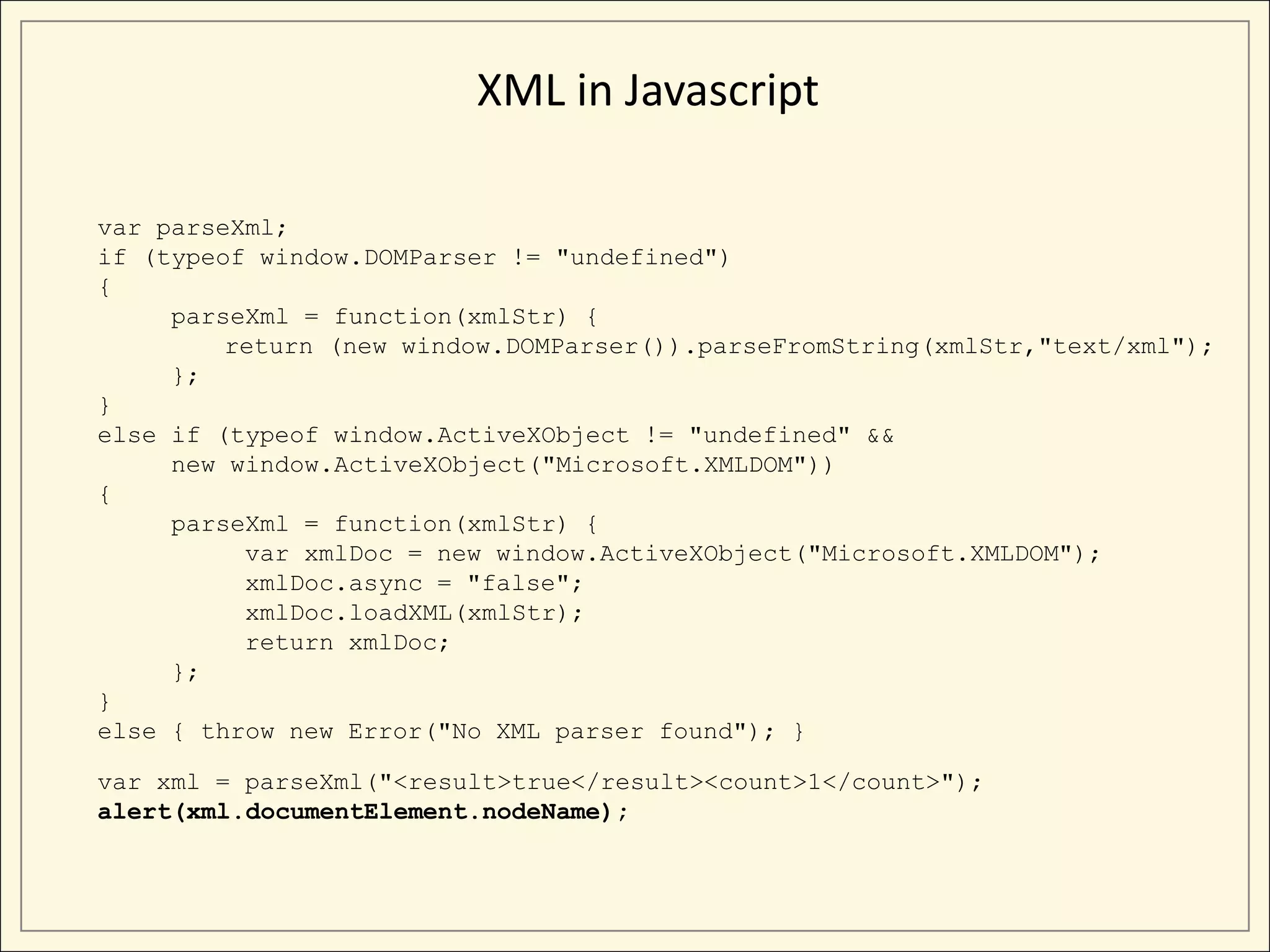
XML in Javascript

var parseXml;
if (typeof window.DOMParser != "undefined")
{
     parseXml = function(xmlStr) {
         return (new window.DOMParser()).parseFromString(xmlStr,"text/xml");
     };
}
else if (typeof window.ActiveXObject != "undefined" &&
     new window.ActiveXObject("Microsoft.XMLDOM"))
{
     parseXml = function(xmlStr) {
          var xmlDoc = new window.ActiveXObject("Microsoft.XMLDOM");
          xmlDoc.async = "false";
          xmlDoc.loadXML(xmlStr);
          return xmlDoc;
     };
}
else { throw new Error("No XML parser found"); }

var xml = parseXml("<result>true</result><count>1</count>");
alert(xml.documentElement.nodeName);
JSON in Javascript

var json = '{"result":true,"count":1}',
    obj = JSON.parse(json);

alert(obj.count);
IN
CLOSING
There are a few things we can
borrow from the past
to help us right now
Make the application smarter

Use the network intelligently

Optimize the database aggressively
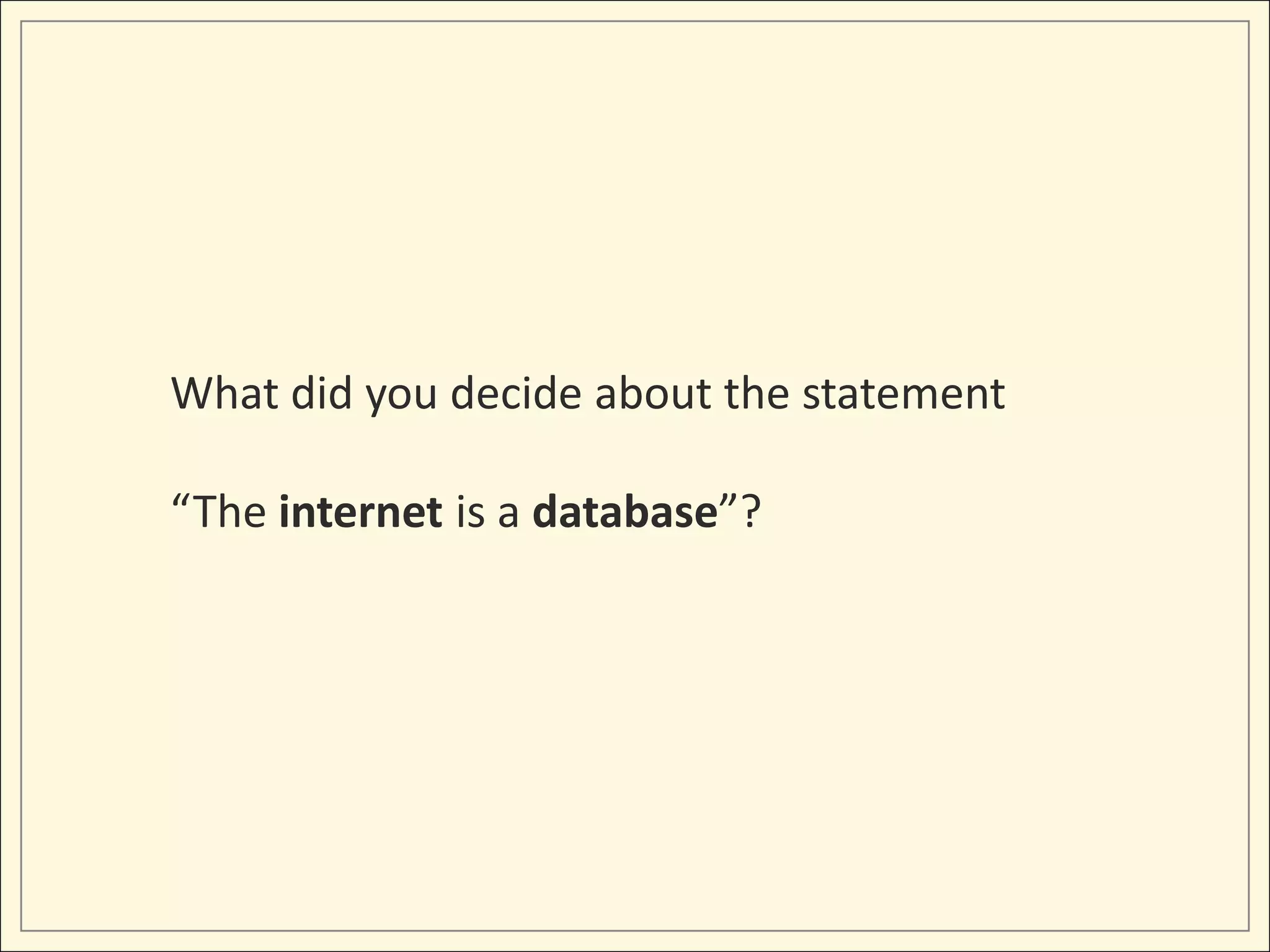
What did you decide about the statement

“The internet is a database”?
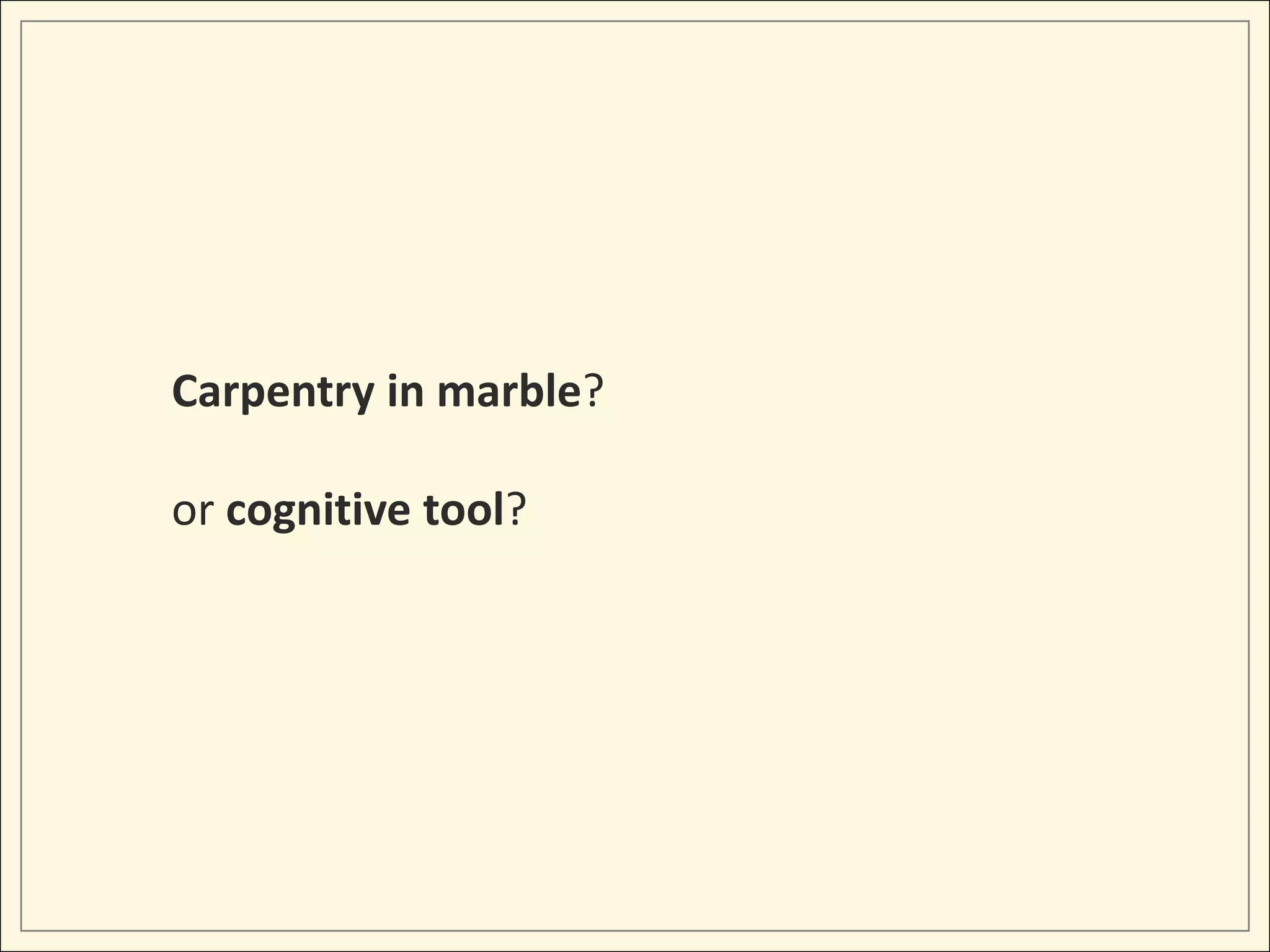
Carpentry in marble?

or cognitive tool?
Skeuomorph?

or metaphor?
groups.google.com/group/api-craft
THANK YOU
Questions and ideas to:
@sramji


groups.google.com/group/api-craft

Skeuomorphs, Databases, and Mobile Performance

  • 1.
    Skeuomorphs, Databases, and Mobile Performance Architectingfor performance with devices & APIs groups.google.com/group/api-craft Sam Ramji @sramji Apigee
  • 2.
  • 3.
    A brief historyof architecture
  • 4.
  • 7.
    Greek columns and their entablatures were at first entirely of timber, with terra-cotta decorations in the upper trabeation, but were converted into stone quite early in the [Hellenic] period, about 600 BC. The translation was quite direct, timber forms being imitated in stonework with remarkable exactness. For this reason, Greek architecture sometimes has been called a ‘carpentry in marble’… Banister Fletcher A History of Architecture
  • 13.
  • 14.
    Skeuomorph A skeuomorph isa design feature found on an imitation, pastiche or homage that was necessary only to the original. Often used for the sake of familiarity, they are details that have moved from function to form. Tom Petty hipstercheerleaders.com
  • 15.
    Metaphor In cognitive linguistics,conceptual metaphor, or cognitive metaphor, refers to the understanding of one idea, or conceptual domain, in terms of another, for example, understanding quantity in terms of directionality (e.g. "prices are rising"). Wikipedia.org Conceptual Metaphors
  • 16.
    The concepts that govern our thought are not just matters of the intellect. They also govern our everyday functioning, down to the most mundane details. Our concepts structure what we perceive, how we get around in the world, and how we relate to other people. Our conceptual system thus plays a central role in defining our everyday realities. If we are right in suggesting that our conceptual system is largely metaphorical, then the way we thinks what we experience, and what we do every day is very much a matter of metaphor. George Lakoff and Mark Johnson Metaphors We Live By
  • 17.
  • 18.
    A brief historyof ^ architecture
  • 19.
    Connected Devices Smartphone N-tier Web App Personal DCOM CORBA Computer Website Minicomputer Client/Server Mainframe Integrated Distributed Computing Architectures
  • 20.
    Domain-specific Data APIs Private Cloud DBs Caching DBs Data API Data Warehousing Mainframe RDBMS Flat file Shared Silos Data Architectures
  • 38.
    We’ve come backto client-server computing
  • 39.
    From the perspectiveof the mobile client, the Internet is a database.
  • 40.
    Is that askeuomorph or a metaphor?
  • 41.
    If the Internetis a database, what have we learned from prior eras about architecting for performance?
  • 42.
  • 43.
  • 44.
    If the databaseis slow, the app is slow.
  • 45.
    Research shows thatpeople will put up with about 1.5 seconds between interactions.
  • 46.
    More than 3seconds on average and they’ll stop using the app.
  • 47.
    This is aproblem.
  • 48.
    Let’s dig intoour client-server history to break it down.
  • 49.
    Make the applicationsmarter Use the network intelligently Optimize the database aggressively
  • 50.
  • 51.
    application What makes the app feel fast to the user?
  • 52.
    application Time to first render Time to first interaction Time between interactions
  • 53.
    application Three mutually reinforcing techniques: Code profiling for performance optimization Threading/concurrency for user interactions Client-side caching for everything else
  • 54.
    application Use the profiler to see where you’re slow Write faster code where you see big gains Run long operations in parallel Keep local copies of everything you need
  • 55.
    application Concurrency
  • 57.
    application Anticipation
  • 60.
    application Caching
  • 63.
    application What should you be caching locally? Security credentials or tokens Last user session data MRU (Most recently used) MFU (Most frequently used) LFC (Least frequently changed) API write operations Graceful fallbacks for failed API calls
  • 64.
    application Issues do remain Can’t hit local cache on first use of app Receiving the right shape of data
  • 65.
  • 66.
    network The radio network is a high-latency, limited-resource environment.
  • 68.
    network Speed and battery usage are both important dimensions of mobile performance
  • 70.
    network Intermittent usage of the radio for pingbacks keep-alives analytics screen rotations will slow you down and burn battery.
  • 72.
    network A better approach: Bundling, piggybacking, and pipelining
  • 73.
    network Connection Tail setup time 2 sec n sec 15 sec Data Idle transfer Battery cost of a series of small API requests 90 sec of radio use and battery burn Bundling a set of API requests 19 sec
  • 74.
    network Intermittent analytics and keep-alives 90 sec of radio use and battery burn Piggybacking on a set of user API requests 19 sec
  • 75.
    network API calls in series 200 ms 200 ms 200 ms 200 ms 200 ms 1000 ms API pipelining
  • 76.
    Bundling loosely-related requeststogether Piggybacking secondary intermittent traffic Pipelining requests to maximize throughput
  • 77.
  • 78.
    database What were our old database optimization tricks that we can apply to Internet data?
  • 79.
    database Stored Procedures Queueing Denormalization Result Sets
  • 80.
    database Whatis a Stored Procedure in this world? Server-side code that executes complex operations Ones that should happen right next to the data Where you need high compute and low latency Could be written in node.js, ruby, java, python, c#
  • 81.
    database Wheredoes a Stored Procedure run in this world?
  • 82.
    database Wheredoes a Stored Procedure run in this world? Probably in a cloud
  • 83.
    database Once you’ve built this architectural layer you gain a lot of control
  • 84.
    database You can deal with queueing, denormalization, and manage result sets properly.
  • 85.
    database Queueingenables you to break the request/response pair into separate pieces You may even be able to tell the client when to call you back for the result Making your requests to this queueing layer also lets you serve from a cloud-side cache if you have one
  • 86.
    database Denormalizationrefers to writing multiple indexes in order to optimize query performance Where your app relies on your own data, don’t make it wait for slow queries Remember, in the cloud, storage is cheap and easy to obtain – write data as often as needed to improve query speeds.
  • 87.
    database Managingresult sets to save bandwidth and response time means limiting cursor size by default This can be complementary to the caches you keep around, since a massive API result is cheap to manage in the cloud and can be trickled back to the app in bite-size chunks.
  • 88.
    database Managingresult sets to save processor time for the client is an option as well. What would happen if you could focus on app-shaped data?
  • 89.
    XML in Javascript varparseXml; if (typeof window.DOMParser != "undefined") { parseXml = function(xmlStr) { return (new window.DOMParser()).parseFromString(xmlStr,"text/xml"); }; } else if (typeof window.ActiveXObject != "undefined" && new window.ActiveXObject("Microsoft.XMLDOM")) { parseXml = function(xmlStr) { var xmlDoc = new window.ActiveXObject("Microsoft.XMLDOM"); xmlDoc.async = "false"; xmlDoc.loadXML(xmlStr); return xmlDoc; }; } else { throw new Error("No XML parser found"); } var xml = parseXml("<result>true</result><count>1</count>"); alert(xml.documentElement.nodeName);
  • 90.
    JSON in Javascript varjson = '{"result":true,"count":1}', obj = JSON.parse(json); alert(obj.count);
  • 91.
  • 92.
    There are afew things we can borrow from the past to help us right now
  • 93.
    Make the applicationsmarter Use the network intelligently Optimize the database aggressively
  • 94.
    What did youdecide about the statement “The internet is a database”?
  • 95.
    Carpentry in marble? orcognitive tool?
  • 96.
  • 97.
  • 98.
    THANK YOU Questions andideas to: @sramji groups.google.com/group/api-craft

Editor's Notes

  • #9 http://openarch.eu/work-packages/activities/everyday-life-past-crafting-wooden-anthropomorphic-statue-using-wooden
  • #10 http://greenwood-carving.blogspot.co.uk/2012/02/more-bronze-age-woodworking.html
  • #12 So now we make them out of concrete!What’s even funnier is that since we discovered the Greek columns so long after they were used, the gilding and brightly colored paint used on them had faded, so we associate white columns with eminence and classical majesty… when they in fact were never so pale.
  • #15 http://hipstercheerleaders.com/post/6981850000/how-to-talk-to-bolivian-hand-models-at-parties
  • #16 http://en.wikipedia.org/wiki/Conceptual_metaphor
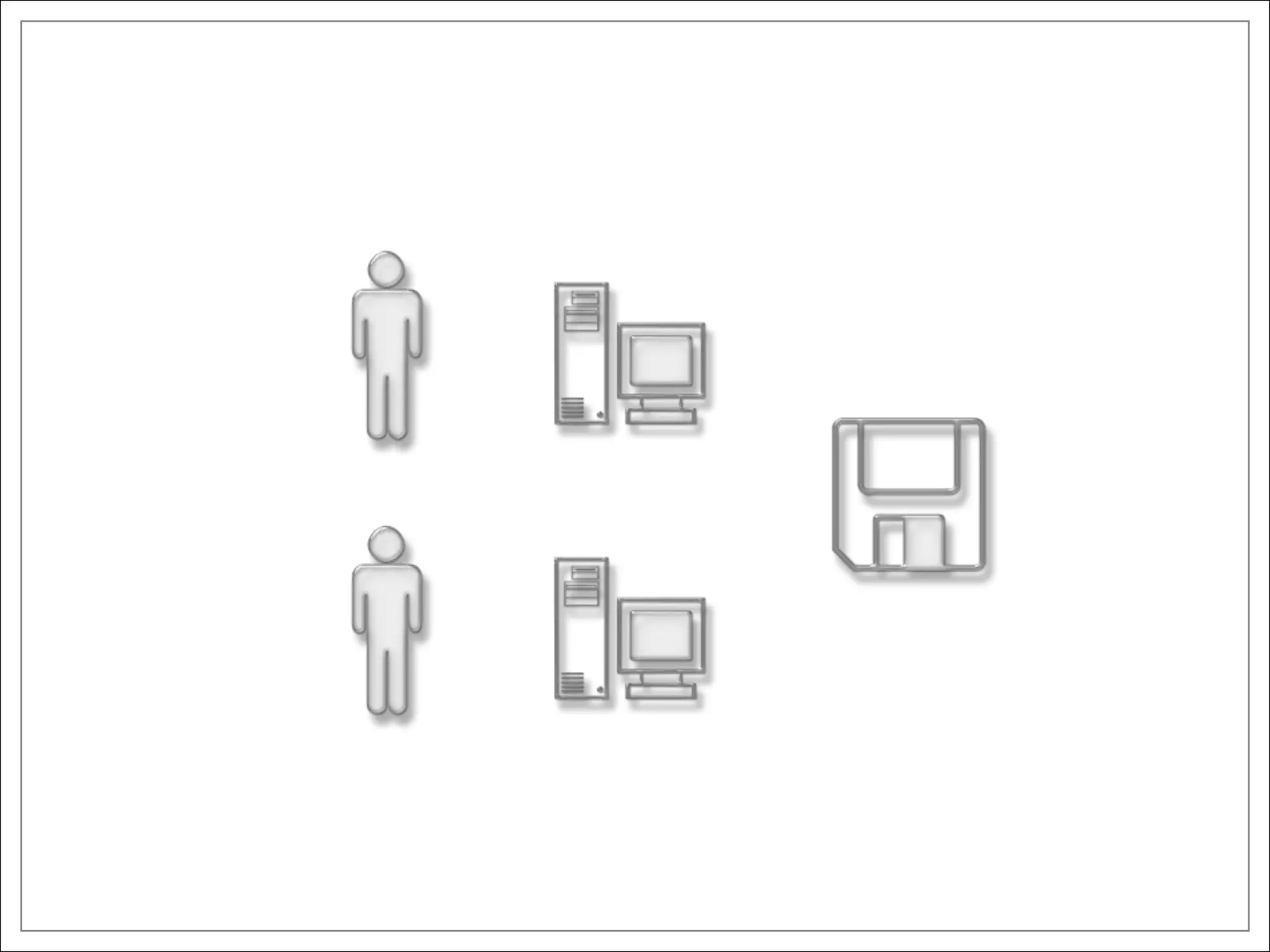
  • #22 Just in the last twenty years, we’ve gone from writing code on a single PC or Mac that will run on a single PC or Mac and its local filesystem -&gt; writing code on a single PC that will run simultaneously on several PCs, coordinated by a shared database -&gt; writing code on a single PC that will run on a single server and its local database while sending UI files to any PC or Mac that can access the server -&gt; writing code as a team on several different PCs that will run partially on {one or more servers in a cluster and their shared database plus other network-addressable applications such as file servers or ERP/CRM systems} and partially in the browser app sandbox on any PC or Mac that can access the server cluster -&gt; writing code on a single Mac that will run on a single iPhone -&gt; writing code as a team on several different PCs and Macs that will run partially on a single iPhone and partially on one or more servers in a cluster and their shared database plus other network-addressable applications such as file servers, ERP/CRM systems, Twitter, Facebook, Salesforce, or eBay -&gt; writing code as a team on several different PCs and Macs that will run partially on an iPhone, an iPad, an Android phone, a PC, and a Mac and partially on one or more servers in a cluster and their shared database plus other network-addressable applications such as file servers, ERP/CRM systems, Twitter, Facebook, Salesforce, or eBay.
  • #28 We called it client-server, and it was good
  • #29 Then we found more servers we needed to get data from
  • #30 And then we delivered it over the internet in web pages or sometimes just a longer wire (which often broke apps due to WAN/VPN latency).
  • #31 And then the computers got smaller so people started to move around and work from anywhere
  • #32 In the beginning, there was a smartphone
  • #33 Then Apple made phones REALLY smart
  • #34 So of course we wanted Twitter on our phone
  • #36 And Facebook. And why can’t we get our work done on this too?
  • #37 And pretty quickly we ended up back heree
  • #38 But it got even more complex because we need to support many different devices.[discuss shift from MVC on a web server to “exploded model” – ‘some people call this a distributed model, I prefer exploded to show just how distributed it really is – not just on-prem distribution but to 3rd parties like Salesforce, Facebook, et al]
  • #65 Issues remain – can’t hit local cache on first use of the app; important in a world of disposable apps and disposable devices. Are we getting the right shape of data at the right time or are we getting more than we need or spending time reshaping it?
  • #67 Issues remain – can’t hit local cache on first use of the app; important in a world of disposable apps and disposable devices. Are we getting the right shape of data at the right time or are we getting more than we need or spending time reshaping it?
  • #68 http://www.research.att.com/articles/featured_stories/2011_03/201102_Energy_efficient?fbid=XyFGnPzW0TV“A Call for More Energy-Efficient Apps”
  • #69 Issues remain – can’t hit local cache on first use of the app; important in a world of disposable apps and disposable devices. Are we getting the right shape of data at the right time or are we getting more than we need or spending time reshaping it?
  • #70 http://www.research.att.com/articles/featured_stories/2011_03/201102_Energy_efficient?fbid=XyFGnPzW0TV“A Call for More Energy-Efficient Apps”
  • #71 Issues remain – can’t hit local cache on first use of the app; important in a world of disposable apps and disposable devices. Are we getting the right shape of data at the right time or are we getting more than we need or spending time reshaping it?
  • #73 Issues remain – can’t hit local cache on first use of the app; important in a world of disposable apps and disposable devices. Are we getting the right shape of data at the right time or are we getting more than we need or spending time reshaping it?
  • #74 Adapted from http://www.research.att.com/articles/featured_stories/2011_03/201102_Energy_efficient?fbid=XyFGnPzW0TV
  • #75 Adapted from http://www.research.att.com/articles/featured_stories/2011_03/201102_Energy_efficient?fbid=XyFGnPzW0TV
  • #76 Adapted from http://www.research.att.com/articles/featured_stories/2011_03/201102_Energy_efficient?fbid=XyFGnPzW0TV
  • #90 http://stackoverflow.com/questions/649614/xml-parsing-in-javascript
  • #91 http://stackoverflow.com/questions/649614/xml-parsing-in-javascript