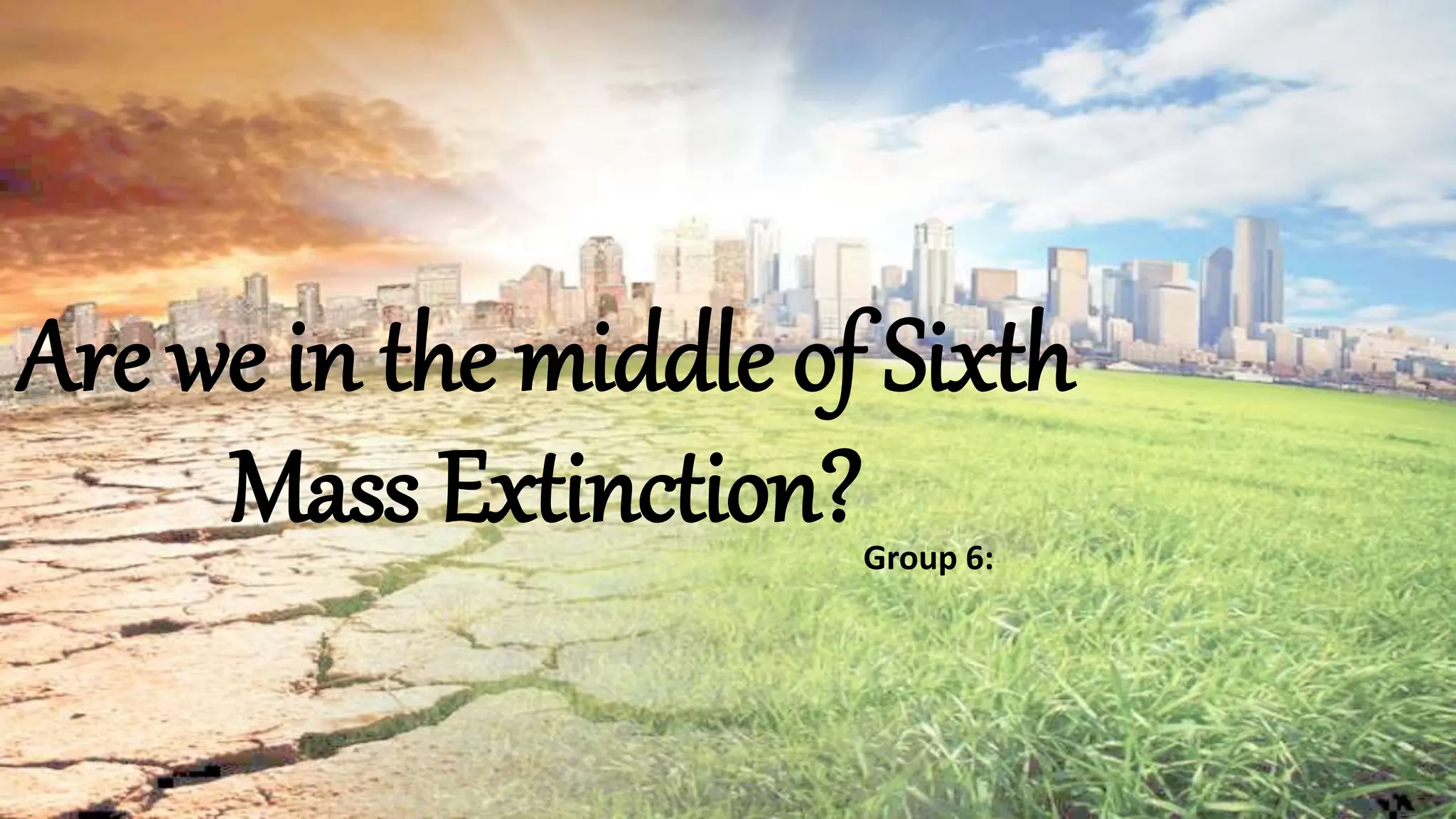
Are we in the middle of Sixth
Mass Extinction?Group 6:
Mass Extinction
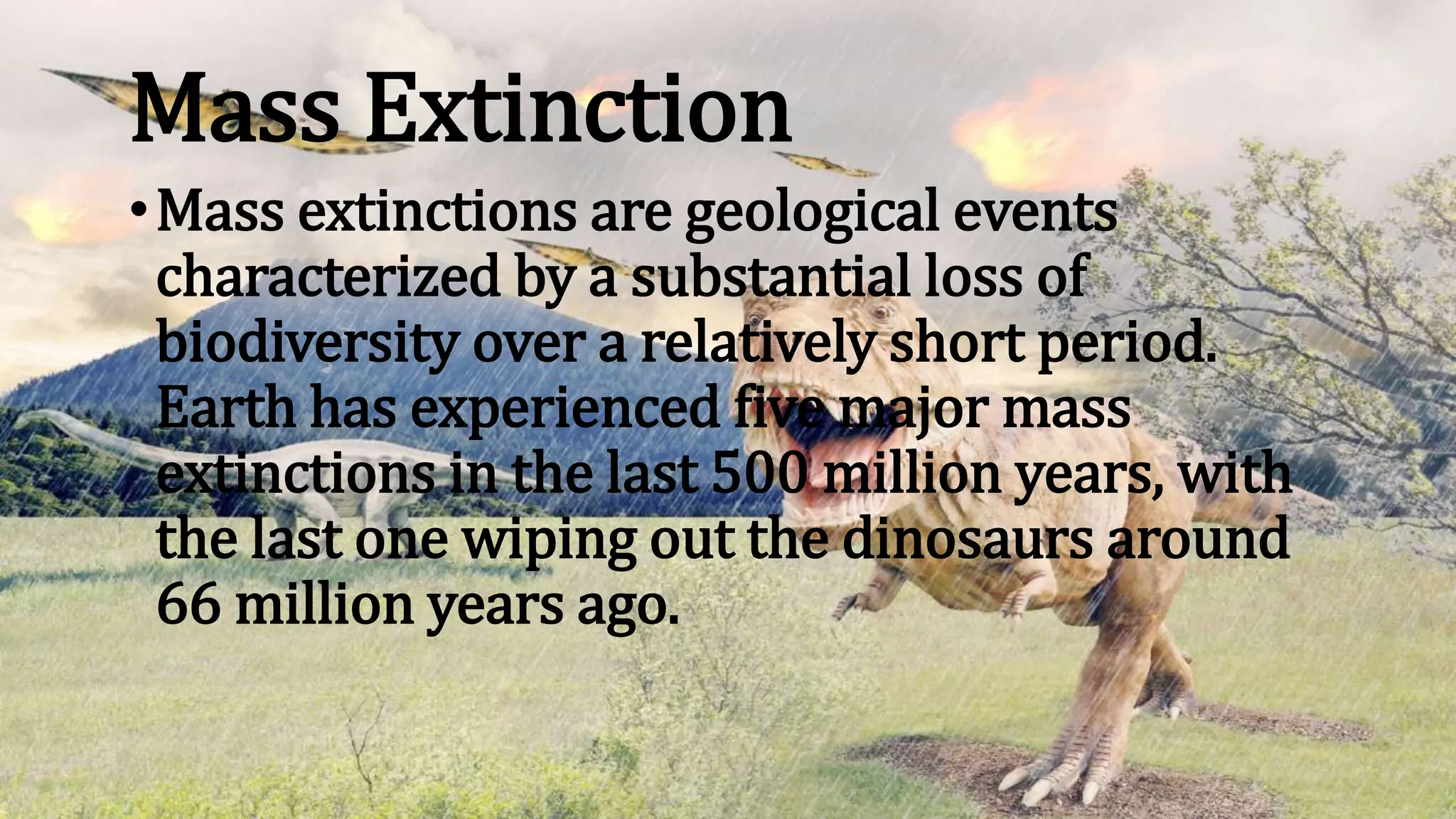
•Mass extinctions are geological events
characterized by a substantial loss of
biodiversity over a relatively short period.
Earth has experienced five major mass
extinctions in the last 500 million years, with
the last one wiping out the dinosaurs around
66 million years ago.
•Mass Extinction
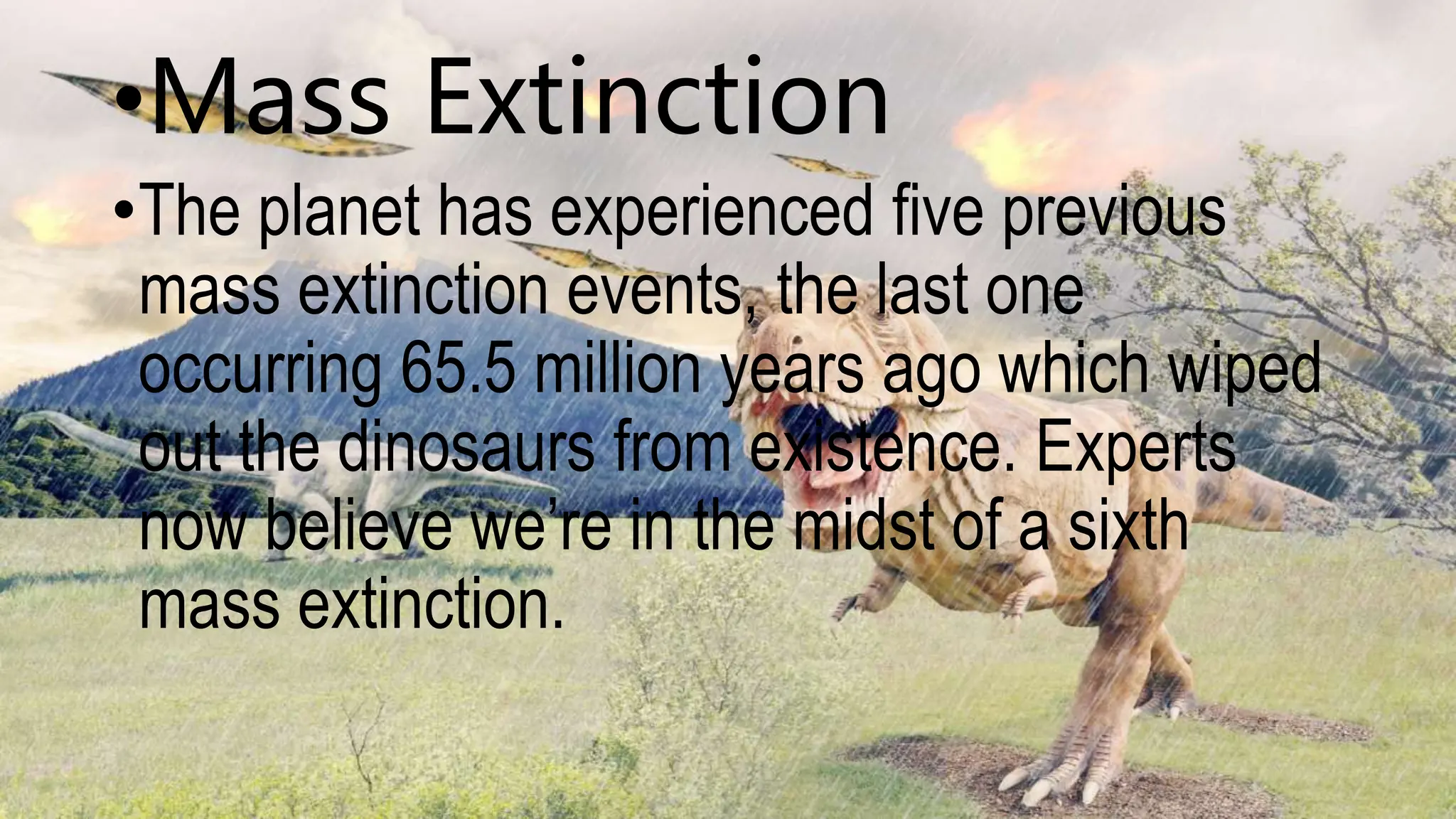
•The planet has experienced five previous
mass extinction events, the last one
occurring 65.5 million years ago which wiped
out the dinosaurs from existence. Experts
now believe we’re in the midst of a sixth
mass extinction.
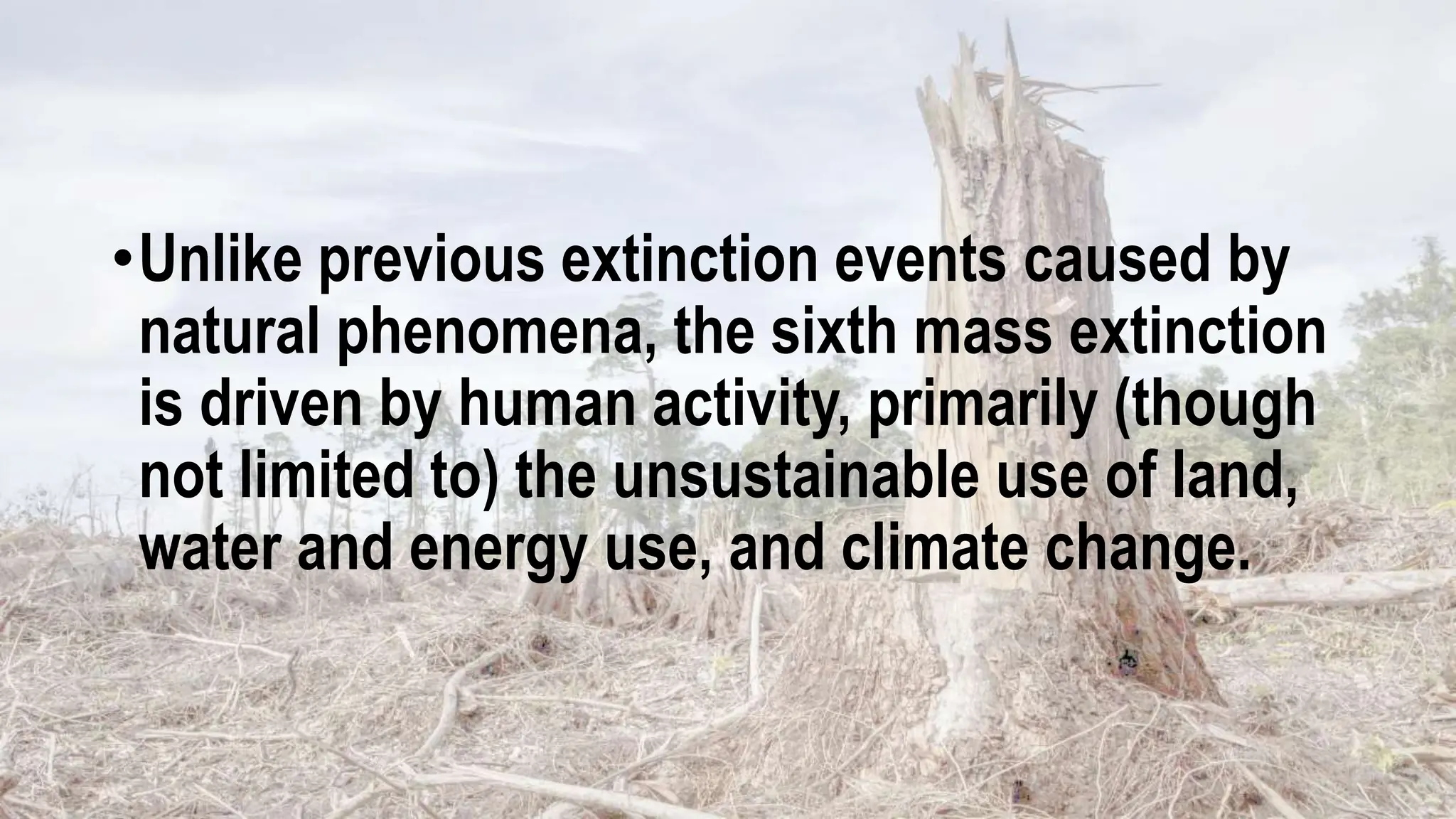
•Unlike previous extinction events caused by
natural phenomena, the sixth mass extinction
is driven by human activity, primarily (though
not limited to) the unsustainable use of land,
water and energy use, and climate change.
•Currently, 40% of all land has been converted for
food productionWe can see it in the fossil record.
Fossils that are abundant in earlier rock layers
are simply not present in later rock layers. A wide
range of animals and plants suddenly died out,
from tiny marine organisms to large dinosaurs.
1. End-Ordovician Extinction (444 million years
ago):
•This event resulted in the
disappearance of 85% of marine
species due to a combination of
climate change, glaciation, and
falling sea levels.
2. Late Devonian Extinction (375-360 million years
ago):
This extinction event primarily
impacted marine life, causing the
loss of approximately 70% of species
due to global cooling, anoxia (oxygen
depletion) in oceans, and asteroid
impacts.
3. Permian-Triassic Extinction (252 million years
ago):
•Known as the “Great Dying,” this was the
most severe extinction event in Earth’s
history. It led to the loss of around 96% of
marine species and 70% of terrestrial
species, likely caused by multiple factors
such as massive volcanic eruptions, global
warming, and ocean acidification.
4. Triassic-Jurassic Extinction (201 million years
ago):
•Approximately 70% of species,
mostly marine, vanished during
this event. The causes include
volcanic activity, climate change,
and asteroid impacts.
5. Cretaceous-Paleogene Extinction (66 million
years ago):
•This event wiped out non-avian
dinosaurs, along with many other
species. It was triggered by a massive
asteroid impact, leading to drastic
environmental changes and ecosystem
collapse.
•Based on these historical
patterns, we can draw several
conclusions relevant to the
current sixth mass extinction:
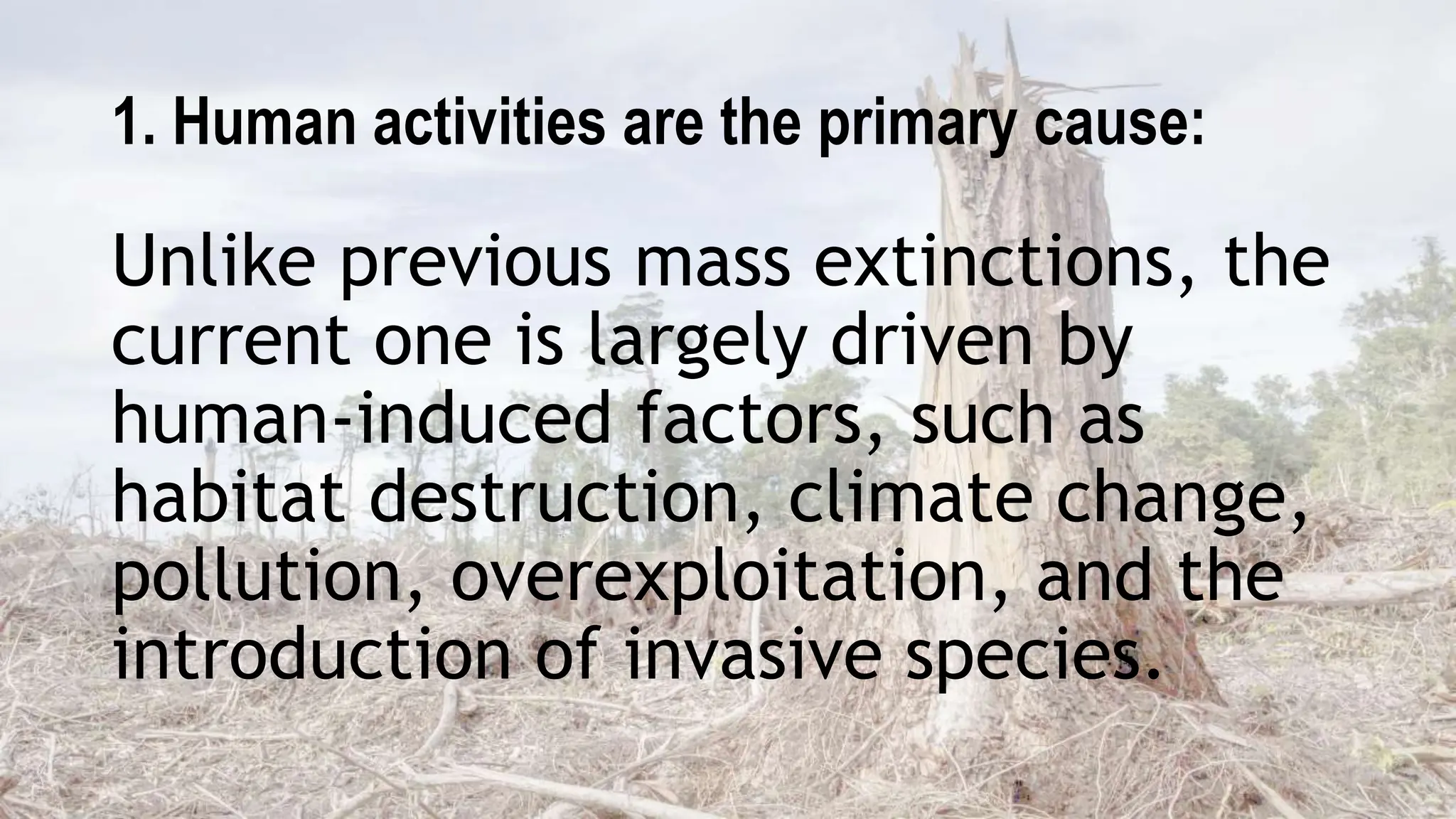
1. Human activities are the primary cause:
Unlike previous mass extinctions, the
current one is largely driven by
human-induced factors, such as
habitat destruction, climate change,
pollution, overexploitation, and the
introduction of invasive species.
2. Alarming rate of species loss:
•The rate of species extinction
today is estimated to be 100 to
1,000 times higher than natural
background rates, suggesting an
unprecedented biodiversity
crisis.
3. Ecosystem collapse:
The loss of species in an ecosystem
can lead to cascading impacts,
disrupting vital ecological processes,
and compromising the stability and
resilience of ecosystems.
4. Irreversible consequences:
Once a species goes extinct, it is
lost forever, eroding the Earth’s
overall biodiversity and
depleting important genetic
resources for future generations.
5. Urgent need for action:
•To prevent further biodiversity loss
and mitigate the sixth mass
extinction, immediate and
concerted efforts are required at all
levels, from individual actions to
international collaborations.
•Based on these conclusions,
I propose the following
recommendations for
biodiversity and species
conservation:
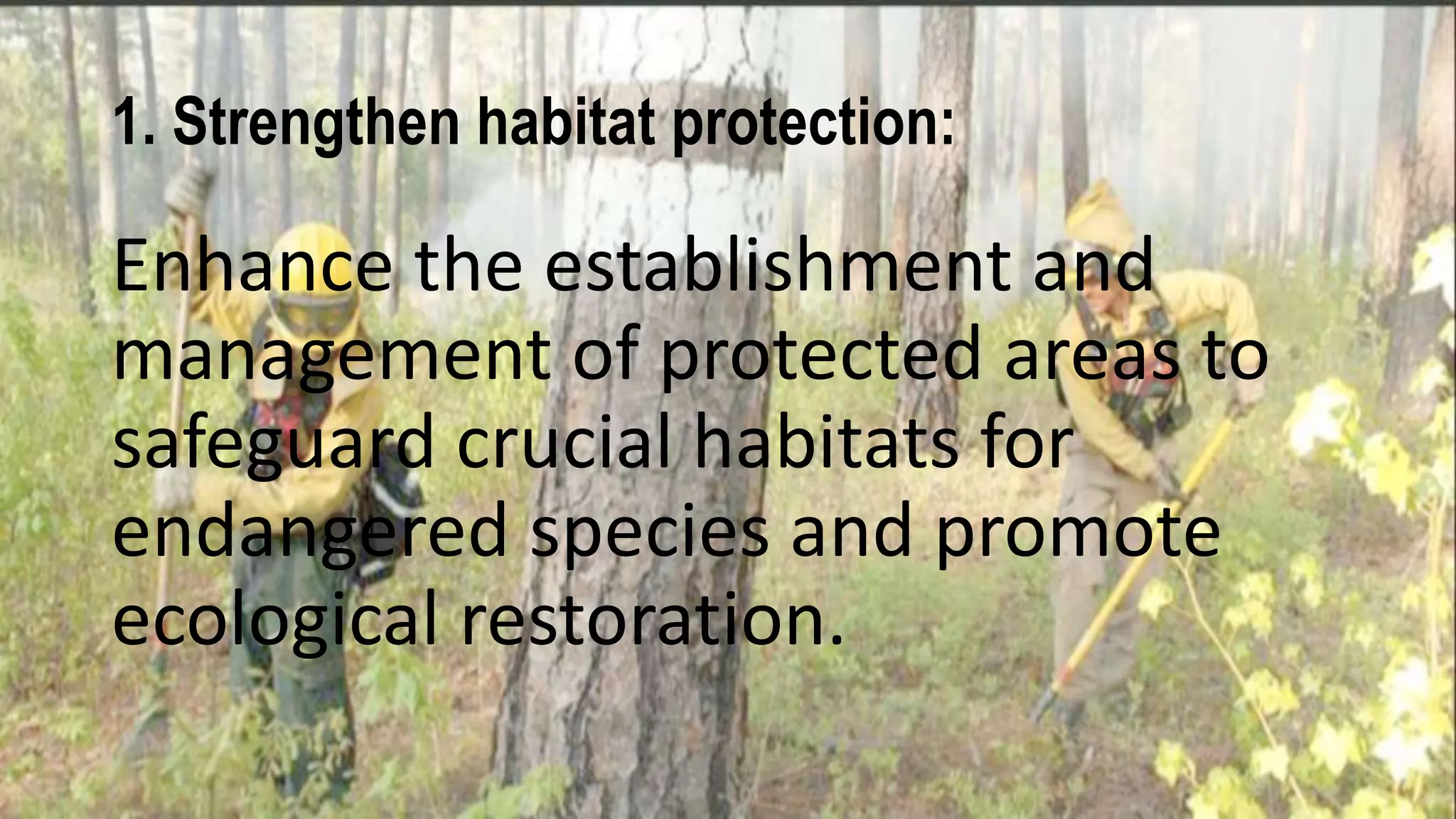
1. Strengthen habitat protection:
Enhance the establishment and
management of protected areas to
safeguard crucial habitats for
endangered species and promote
ecological restoration.
2. Combat climate change:
•Mitigate greenhouse gas emissions,
transition to clean and renewable
energy sources, and implement
adaptation strategies to reduce the
impacts of climate change on species
and ecosystems.
3. Promote sustainable practices:
•Encourage sustainable
agriculture, fisheries, and
forestry practices that minimize
habitat destruction, pollution,
and overexploitation of natural
resources.
4. Combat illegal wildlife trade:
•Strengthen law enforcement
efforts to combat the illegal
trade of endangered species
and their derivatives, addressing
both supply and demand sides
of this issue.
5. Enhance education and public awareness:
Promote environmental
education, raise public
awareness about the importance
of biodiversity, and engage
communities in conservation
initiatives.
ARIGATHANKS
From G6 9B

Sixth Mass Extinction Are Alive Or Dead?.pptx

  • 1.
    Are we inthe middle of Sixth Mass Extinction?Group 6:
  • 2.
    Mass Extinction •Mass extinctionsare geological events characterized by a substantial loss of biodiversity over a relatively short period. Earth has experienced five major mass extinctions in the last 500 million years, with the last one wiping out the dinosaurs around 66 million years ago.
  • 3.
    •Mass Extinction •The planethas experienced five previous mass extinction events, the last one occurring 65.5 million years ago which wiped out the dinosaurs from existence. Experts now believe we’re in the midst of a sixth mass extinction.
  • 4.
    •Unlike previous extinctionevents caused by natural phenomena, the sixth mass extinction is driven by human activity, primarily (though not limited to) the unsustainable use of land, water and energy use, and climate change.
  • 5.
    •Currently, 40% ofall land has been converted for food productionWe can see it in the fossil record. Fossils that are abundant in earlier rock layers are simply not present in later rock layers. A wide range of animals and plants suddenly died out, from tiny marine organisms to large dinosaurs.
  • 6.
    1. End-Ordovician Extinction(444 million years ago): •This event resulted in the disappearance of 85% of marine species due to a combination of climate change, glaciation, and falling sea levels.
  • 7.
    2. Late DevonianExtinction (375-360 million years ago): This extinction event primarily impacted marine life, causing the loss of approximately 70% of species due to global cooling, anoxia (oxygen depletion) in oceans, and asteroid impacts.
  • 8.
    3. Permian-Triassic Extinction(252 million years ago): •Known as the “Great Dying,” this was the most severe extinction event in Earth’s history. It led to the loss of around 96% of marine species and 70% of terrestrial species, likely caused by multiple factors such as massive volcanic eruptions, global warming, and ocean acidification.
  • 9.
    4. Triassic-Jurassic Extinction(201 million years ago): •Approximately 70% of species, mostly marine, vanished during this event. The causes include volcanic activity, climate change, and asteroid impacts.
  • 10.
    5. Cretaceous-Paleogene Extinction(66 million years ago): •This event wiped out non-avian dinosaurs, along with many other species. It was triggered by a massive asteroid impact, leading to drastic environmental changes and ecosystem collapse.
  • 11.
    •Based on thesehistorical patterns, we can draw several conclusions relevant to the current sixth mass extinction:
  • 12.
    1. Human activitiesare the primary cause: Unlike previous mass extinctions, the current one is largely driven by human-induced factors, such as habitat destruction, climate change, pollution, overexploitation, and the introduction of invasive species.
  • 13.
    2. Alarming rateof species loss: •The rate of species extinction today is estimated to be 100 to 1,000 times higher than natural background rates, suggesting an unprecedented biodiversity crisis.
  • 14.
    3. Ecosystem collapse: Theloss of species in an ecosystem can lead to cascading impacts, disrupting vital ecological processes, and compromising the stability and resilience of ecosystems.
  • 15.
    4. Irreversible consequences: Oncea species goes extinct, it is lost forever, eroding the Earth’s overall biodiversity and depleting important genetic resources for future generations.
  • 16.
    5. Urgent needfor action: •To prevent further biodiversity loss and mitigate the sixth mass extinction, immediate and concerted efforts are required at all levels, from individual actions to international collaborations.
  • 17.
    •Based on theseconclusions, I propose the following recommendations for biodiversity and species conservation:
  • 18.
    1. Strengthen habitatprotection: Enhance the establishment and management of protected areas to safeguard crucial habitats for endangered species and promote ecological restoration.
  • 19.
    2. Combat climatechange: •Mitigate greenhouse gas emissions, transition to clean and renewable energy sources, and implement adaptation strategies to reduce the impacts of climate change on species and ecosystems.
  • 20.
    3. Promote sustainablepractices: •Encourage sustainable agriculture, fisheries, and forestry practices that minimize habitat destruction, pollution, and overexploitation of natural resources.
  • 21.
    4. Combat illegalwildlife trade: •Strengthen law enforcement efforts to combat the illegal trade of endangered species and their derivatives, addressing both supply and demand sides of this issue.
  • 22.
    5. Enhance educationand public awareness: Promote environmental education, raise public awareness about the importance of biodiversity, and engage communities in conservation initiatives.
  • 23.