SIX STROKE ENGINE
By:
Y SIVANJANEYA REDDY
Introduction:
•The concept of six stroke engine was developed in mid 20th
century when pollution due to conventional IC engine
increased
•The six stroke engine “Using water” was developed by
Brush Crower in 2006 and he patented his product at the end
of 2007.
What is six stroke engine ?
• Six stroke engine is a type of internal combustion engine
based on conventional four stroke engine ,but it’s
additional two strokes made it more efficient and reduce
the emission
• The engine captures heat which is lose from conventional
four stroke cycle and additional strokes use to produce
power by introducing water inside the super heated
cylinder
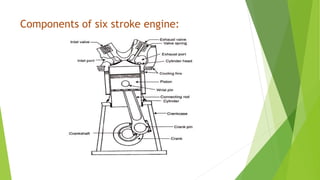
Components of six stroke engine:
Components and their function:
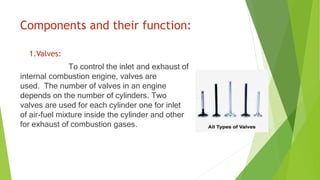
1.Valves:
To control the inlet and exhaust of
internal combustion engine, valves are
used. The number of valves in an engine
depends on the number of cylinders. Two
valves are used for each cylinder one for inlet
of air-fuel mixture inside the cylinder and other
for exhaust of combustion gases.
Piston:
A piston is fitted to each cylinder. It is the prime
mover in the engine. The main function of
piston is to give tight seal to the cylinder
through bore and slide freely inside of cylinder.
The piston is made by aluminum alloy and
sometimes it is made by cast iron because light
alloy piston expands more than cast iron so they
need more clearances to the bore.
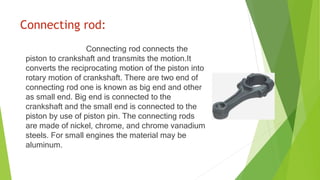
Connecting rod:
Connecting rod connects the
piston to crankshaft and transmits the motion.It
converts the reciprocating motion of the piston into
rotary motion of crankshaft. There are two end of
connecting rod one is known as big end and other
as small end. Big end is connected to the
crankshaft and the small end is connected to the
piston by use of piston pin. The connecting rods
are made of nickel, chrome, and chrome vanadium
steels. For small engines the material may be
aluminum.
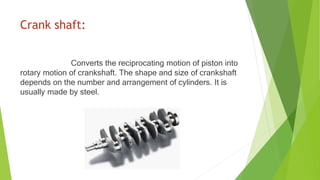
Crank shaft:
Converts the reciprocating motion of piston into
rotary motion of crankshaft. The shape and size of crankshaft
depends on the number and arrangement of cylinders. It is
usually made by steel.
Cooling fins:
Fins are provided anywhere primarily
for increasing the rate of heat transfer to the cooling
media. An IC engine heats up and over-heating can
cause engine seizure. To prevent this, fins are provided.
Fins basically increase the rate of heat transfer by
increasing the area available for convection.
Crankcase:
A crankcase is the housing for the
crankshaft in a reciprocating internal combustion engine.
Working principle:
The working principle of six stroke engine is based on the
concept of four stroke engine but with some modifications
where another two strokes are added.
• In a six-stroke engine, when the combustion chamber
temperature reaches approx. 400 °F (200 °C). Just
before the fifth stroke, fresh water is injected directly
into the hot combustion chamber through the engine's
fuel injector pump, which is quickly turned to
superheated steam, which causes the water to expand
to 1600 times its volume and forces the piston down for
an additional Power stroke
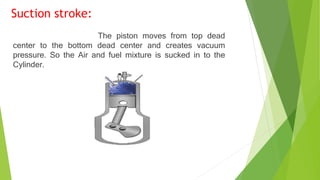
Suction stroke:
The piston moves from top dead
center to the bottom dead center and creates vacuum
pressure. So the Air and fuel mixture is sucked in to the
Cylinder.
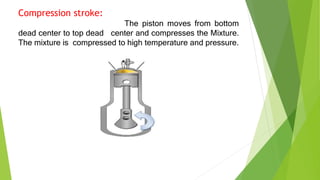
Compression stroke:
The piston moves from bottom
dead center to top dead center and compresses the Mixture.
The mixture is compressed to high temperature and pressure.
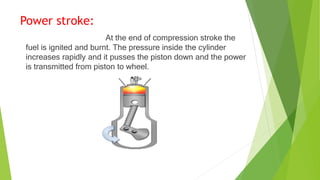
Power stroke:
At the end of compression stroke the
fuel is ignited and burnt. The pressure inside the cylinder
increases rapidly and it pusses the piston down and the power
is transmitted from piston to wheel.
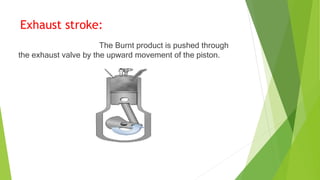
Exhaust stroke:
The Burnt product is pushed through
the exhaust valve by the upward movement of the piston.
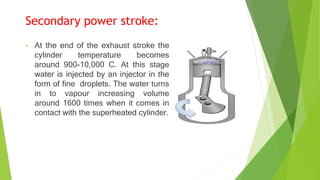
Secondary power stroke:
• At the end of the exhaust stroke the
cylinder temperature becomes
around 900-10,000 C. At this stage
water is injected by an injector in the
form of fine droplets. The water turns
in to vapour increasing volume
around 1600 times when it comes in
contact with the superheated cylinder.
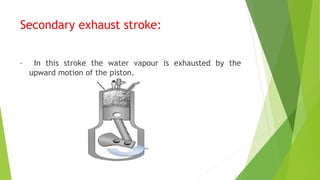
Secondary exhaust stroke:
• In this stroke the water vapour is exhausted by the
upward motion of the piston.
 In this engine all the first four strokes are carried in the
same way as the crowner engine.
 The difference is carried out at the last two strokes of the
combustion process.
 At fifth stroke pure air is injected into the cylinder where it
expands due to the temperature of cylinder and pulls down
the piston.
 After expansion outlet valve is opened and air is pushed out
by the piston.
Advantages of Six stroke engine:
 Uses rejected heat from engine
 Fuel economy increases to 60% of conventional engine
 Power output per stroke is more
 Exhaust gas emission is low
 High thermal Efficiency
 There is 40%reduction in fuel consumption
 Reduction in fuel consumption
 Higher overall efficiencyThe engine can run on a variety of
fuels ranging from gasoline and diesel fuel to LPG
 It shows 65% reduction in CO pollution when compared
with the four stroke from which it was developed.
Disadvantages:
 Injecting relatively cold water onto a hot metal piston can
damage it over time from thermal expansion and contraction
 Separate water tank would have significant weight and space
penalties
 A steam-free cool down reduces the temperature inside the
combustion chamber.
 Cold climate anti-freezing measures would be needed in the
water reservoir.
 Air injected into cylinder should be pure without contaminents.
 Power output will be less than 4stroke engine.
Thank you..,

sixstrokeengie

  • 1.
    SIX STROKE ENGINE By: YSIVANJANEYA REDDY
  • 2.
    Introduction: •The concept ofsix stroke engine was developed in mid 20th century when pollution due to conventional IC engine increased •The six stroke engine “Using water” was developed by Brush Crower in 2006 and he patented his product at the end of 2007.
  • 3.
    What is sixstroke engine ? • Six stroke engine is a type of internal combustion engine based on conventional four stroke engine ,but it’s additional two strokes made it more efficient and reduce the emission • The engine captures heat which is lose from conventional four stroke cycle and additional strokes use to produce power by introducing water inside the super heated cylinder
  • 4.
    Components of sixstroke engine:
  • 5.
    Components and theirfunction: 1.Valves: To control the inlet and exhaust of internal combustion engine, valves are used. The number of valves in an engine depends on the number of cylinders. Two valves are used for each cylinder one for inlet of air-fuel mixture inside the cylinder and other for exhaust of combustion gases.
  • 6.
    Piston: A piston isfitted to each cylinder. It is the prime mover in the engine. The main function of piston is to give tight seal to the cylinder through bore and slide freely inside of cylinder. The piston is made by aluminum alloy and sometimes it is made by cast iron because light alloy piston expands more than cast iron so they need more clearances to the bore.
  • 7.
    Connecting rod: Connecting rodconnects the piston to crankshaft and transmits the motion.It converts the reciprocating motion of the piston into rotary motion of crankshaft. There are two end of connecting rod one is known as big end and other as small end. Big end is connected to the crankshaft and the small end is connected to the piston by use of piston pin. The connecting rods are made of nickel, chrome, and chrome vanadium steels. For small engines the material may be aluminum.
  • 8.
    Crank shaft: Converts thereciprocating motion of piston into rotary motion of crankshaft. The shape and size of crankshaft depends on the number and arrangement of cylinders. It is usually made by steel.
  • 9.
    Cooling fins: Fins areprovided anywhere primarily for increasing the rate of heat transfer to the cooling media. An IC engine heats up and over-heating can cause engine seizure. To prevent this, fins are provided. Fins basically increase the rate of heat transfer by increasing the area available for convection.
  • 10.
    Crankcase: A crankcase isthe housing for the crankshaft in a reciprocating internal combustion engine.
  • 11.
    Working principle: The workingprinciple of six stroke engine is based on the concept of four stroke engine but with some modifications where another two strokes are added. • In a six-stroke engine, when the combustion chamber temperature reaches approx. 400 °F (200 °C). Just before the fifth stroke, fresh water is injected directly into the hot combustion chamber through the engine's fuel injector pump, which is quickly turned to superheated steam, which causes the water to expand to 1600 times its volume and forces the piston down for an additional Power stroke
  • 12.
    Suction stroke: The pistonmoves from top dead center to the bottom dead center and creates vacuum pressure. So the Air and fuel mixture is sucked in to the Cylinder.
  • 13.
    Compression stroke: The pistonmoves from bottom dead center to top dead center and compresses the Mixture. The mixture is compressed to high temperature and pressure.
  • 14.
    Power stroke: At theend of compression stroke the fuel is ignited and burnt. The pressure inside the cylinder increases rapidly and it pusses the piston down and the power is transmitted from piston to wheel.
  • 15.
    Exhaust stroke: The Burntproduct is pushed through the exhaust valve by the upward movement of the piston.
  • 16.
    Secondary power stroke: •At the end of the exhaust stroke the cylinder temperature becomes around 900-10,000 C. At this stage water is injected by an injector in the form of fine droplets. The water turns in to vapour increasing volume around 1600 times when it comes in contact with the superheated cylinder.
  • 17.
    Secondary exhaust stroke: •In this stroke the water vapour is exhausted by the upward motion of the piston.
  • 18.
     In thisengine all the first four strokes are carried in the same way as the crowner engine.  The difference is carried out at the last two strokes of the combustion process.  At fifth stroke pure air is injected into the cylinder where it expands due to the temperature of cylinder and pulls down the piston.  After expansion outlet valve is opened and air is pushed out by the piston.
  • 19.
    Advantages of Sixstroke engine:  Uses rejected heat from engine  Fuel economy increases to 60% of conventional engine  Power output per stroke is more  Exhaust gas emission is low  High thermal Efficiency  There is 40%reduction in fuel consumption  Reduction in fuel consumption  Higher overall efficiencyThe engine can run on a variety of fuels ranging from gasoline and diesel fuel to LPG  It shows 65% reduction in CO pollution when compared with the four stroke from which it was developed.
  • 20.
    Disadvantages:  Injecting relativelycold water onto a hot metal piston can damage it over time from thermal expansion and contraction  Separate water tank would have significant weight and space penalties  A steam-free cool down reduces the temperature inside the combustion chamber.  Cold climate anti-freezing measures would be needed in the water reservoir.  Air injected into cylinder should be pure without contaminents.  Power output will be less than 4stroke engine.
  • 21.