Dominic Egan 12325401
Health and safety placement visit.
What Kepak do.
• Slaughter and process
lamb and beef.
• Access to European
and global markets,
• Athleague, lamb and
beef line , lamb boning
hall. Beef sent to
kilbeggan plant.
• maintenance
department.
• Repair and upkeep of
factory.
• Breakdowns, planned
maintenance of line.
• Oversee contractors
on site.
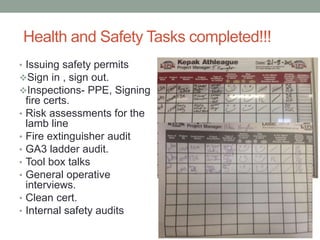
Health and Safety Tasks completed!!!
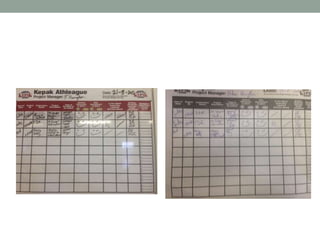
• Issuing safety permits
Sign in , sign out.
Inspections- PPE, Signing
fire certs.
• Risk assessments for the
lamb line
• Fire extinguisher audit
• GA3 ladder audit.
• Tool box talks
• General operative
interviews.
• Clean cert.
• Internal safety audits
Daily tasks.
• Issue safety permits to
contractors who are
participating in planned
and unplanned work
on site.
Other companies who I have worked with
while on placement:
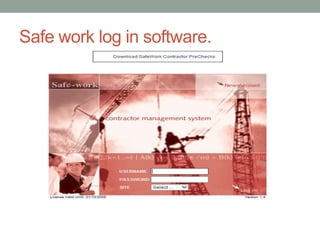
Safe work log in software.
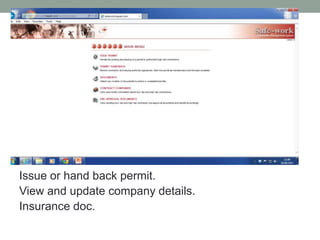
Issue or hand back permit.
View and update company details.
Insurance doc.
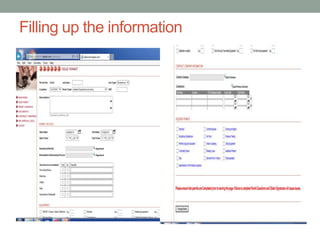
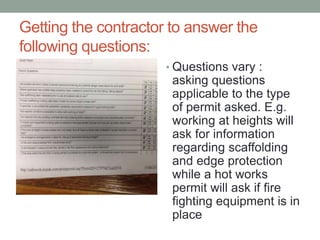
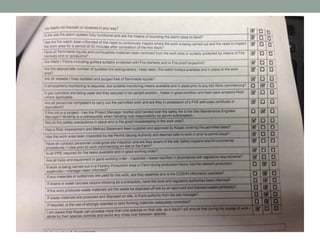
Filling up the information
Getting the contractor to answer the
following questions:
• Questions vary :
asking questions
applicable to the type
of permit asked. E.g.
working at heights will
ask for information
regarding scaffolding
and edge protection
while a hot works
permit will ask if fire
fighting equipment is in
place
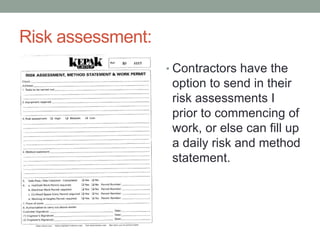
Risk assessment:
• Contractors have the
option to send in their
risk assessments I
prior to commencing of
work, or else can fill up
a daily risk and method
statement.
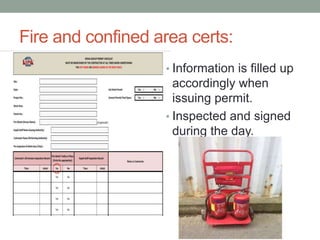
Fire and confined area certs:
• Information is filled up
accordingly when
issuing permit.
• Inspected and signed
during the day.
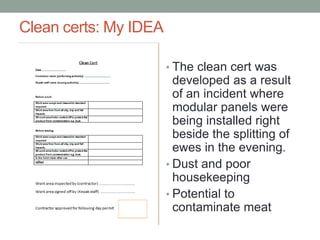
Clean certs: My IDEA
• The clean cert was
developed as a result
of an incident where
modular panels were
being installed right
beside the splitting of
ewes in the evening.
• Dust and poor
housekeeping
• Potential to
contaminate meat
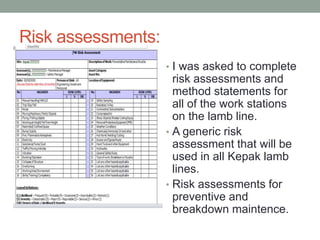
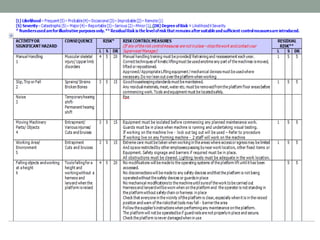
Risk assessments:
• I was asked to complete
risk assessments and
method statements for
all of the work stations
on the lamb line.
• A generic risk
assessment that will be
used in all Kepak lamb
lines.
• Risk assessments for
preventive and
breakdown maintence.
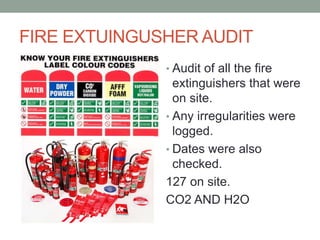
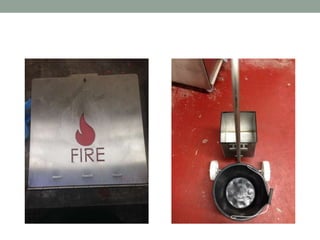
FIRE EXTUINGUSHER AUDIT
• Audit of all the fire
extinguishers that were
on site.
• Any irregularities were
logged.
• Dates were also
checked.
127 on site.
CO2 AND H2O
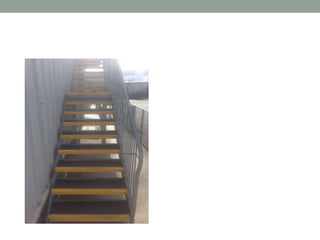
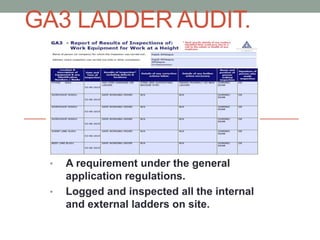
GA3 LADDER AUDIT.
• A requirement under the general
application regulations.
• Logged and inspected all the internal
and external ladders on site.
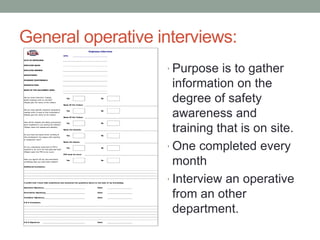
General operative interviews:
• Purpose is to gather
information on the
degree of safety
awareness and
training that is on site.
• One completed every
month
• Interview an operative
from an other
department.
SITE:
Name Of the Trainer:
Name the Hazards:
Name the Issues:
PPE must be worn:
Additional Comments:
I confim that I have fully understood and answered the questions above to the best of my knowledge.
Operative Signature: Date:
Interviewer Signature: Date:
Translator Signature: Date:
H & S Comments:
H & S Signature: Date:
Yes No
No
Yes No
Yes
confirming that you have been trained?
(Please name the PPE to be worn)
required to be worn for this particular task?
Have you signed off any documentation
NoYes
Yes No
Did you have specific machine/ equipment
(Please give the name of the trainer)
Do you have any issues when working at
or equipment used?
Do you understand what kind of PPE is
this workstation? Any issues with machine
Yes No
(Please give the name of the trainer)
Have all the hazards and safety precautions
(Please name the hazards and safeties)
been explained to you during this training?
Did you have Induction Training
training which is used at this workstation?
before starting work on the line?
DEPARTMENT:
MANAGER RESPONSIBLE:
WORKSTATION:
NAME OF THE MACHINERY USED:
Employee Interview
DATE OF INTERVIEW:
EMPLOYEE NAME:
EMPLOYEE NUMBER:
Tool box talks:
• Every week there is a
requirement to every
department within the
factory to complete a
toolbox talk.
• Topics vary from hygiene
issues to what
characteristics you
should look out for in
work boots.
• Stock pile of toolbox
talks completed.
Projects overseen while here.
• Toilets-
• A complete renovation
of the welfare facility's
on site.
• Tempory toilets hired
in.
• King and Moffett, Sean
Kelly builders, Morley
and O'Connell.
• New pan line and
steriliser.
• GM steel fabrications.
• King and moffett
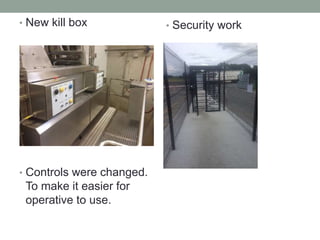
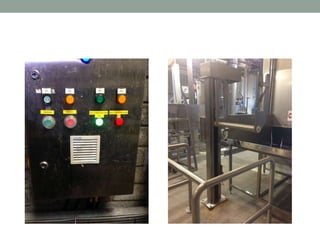
• New kill box
• Controls were changed.
To make it easier for
operative to use.
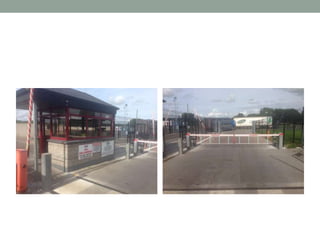
• Security work
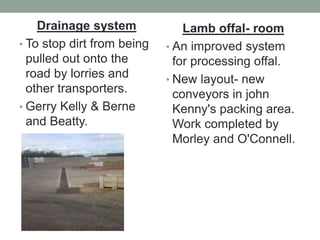
Drainage system
• To stop dirt from being
pulled out onto the
road by lorries and
other transporters.
• Gerry Kelly & Berne
and Beatty.
Lamb offal- room
• An improved system
for processing offal.
• New layout- new
conveyors in john
Kenny's packing area.
Work completed by
Morley and O'Connell.
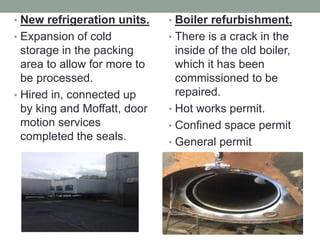
• New refrigeration units.
• Expansion of cold
storage in the packing
area to allow for more to
be processed.
• Hired in, connected up
by king and Moffatt, door
motion services
completed the seals.
• Boiler refurbishment.
• There is a crack in the
inside of the old boiler,
which it has been
commissioned to be
repaired.
• Hot works permit.
• Confined space permit
• General permit
Other safety related tasks completed!
• Contractors waste up
in the attic.
• Broken barriers and
manhole covers.
• helping in the design of
engineering controls of
issues that have been
raised in the health
and safety meetings.
• Papas and vets stand.
• PPE- get contractors
to wear appropriate
PPE.
• Kepak safety meeting
with Kate Robac.
Expansion of knowledge.
• Electrical-
• The names of safety
parts and switches such
as limit switches , MCBs,
how and when the
LOTO policy should be
followed.
• Food industry bulbs-
plastic cover over the
bulb to stop glass
contaminating the meat.
• Fabrication.
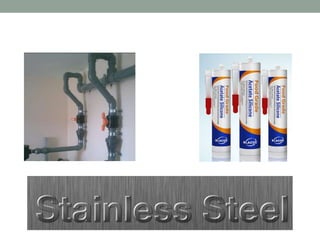
• The importance of using
stainless steel parts in
the food industry.
• Lock nuts.
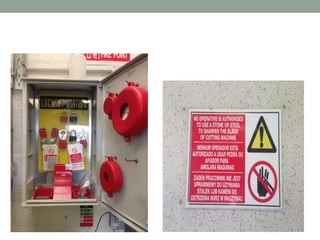
• LOTO POLICY.
• Food grade lubricants
and silicone.
• Swan necks on hot
water pipework to
reduce pressure.
site visit presentation

site visit presentation

  • 1.
    Dominic Egan 12325401 Healthand safety placement visit.
  • 2.
    What Kepak do. •Slaughter and process lamb and beef. • Access to European and global markets, • Athleague, lamb and beef line , lamb boning hall. Beef sent to kilbeggan plant. • maintenance department. • Repair and upkeep of factory. • Breakdowns, planned maintenance of line. • Oversee contractors on site.
  • 3.
    Health and SafetyTasks completed!!! • Issuing safety permits Sign in , sign out. Inspections- PPE, Signing fire certs. • Risk assessments for the lamb line • Fire extinguisher audit • GA3 ladder audit. • Tool box talks • General operative interviews. • Clean cert. • Internal safety audits
  • 4.
    Daily tasks. • Issuesafety permits to contractors who are participating in planned and unplanned work on site.
  • 5.
    Other companies whoI have worked with while on placement:
  • 6.
    Safe work login software.
  • 7.
    Issue or handback permit. View and update company details. Insurance doc.
  • 8.
    Filling up theinformation
  • 9.
    Getting the contractorto answer the following questions: • Questions vary : asking questions applicable to the type of permit asked. E.g. working at heights will ask for information regarding scaffolding and edge protection while a hot works permit will ask if fire fighting equipment is in place
  • 12.
    Risk assessment: • Contractorshave the option to send in their risk assessments I prior to commencing of work, or else can fill up a daily risk and method statement.
  • 13.
    Fire and confinedarea certs: • Information is filled up accordingly when issuing permit. • Inspected and signed during the day.
  • 14.
    Clean certs: MyIDEA • The clean cert was developed as a result of an incident where modular panels were being installed right beside the splitting of ewes in the evening. • Dust and poor housekeeping • Potential to contaminate meat
  • 15.
    Risk assessments: • Iwas asked to complete risk assessments and method statements for all of the work stations on the lamb line. • A generic risk assessment that will be used in all Kepak lamb lines. • Risk assessments for preventive and breakdown maintence.
  • 17.
    FIRE EXTUINGUSHER AUDIT •Audit of all the fire extinguishers that were on site. • Any irregularities were logged. • Dates were also checked. 127 on site. CO2 AND H2O
  • 19.
    GA3 LADDER AUDIT. •A requirement under the general application regulations. • Logged and inspected all the internal and external ladders on site.
  • 20.
    General operative interviews: •Purpose is to gather information on the degree of safety awareness and training that is on site. • One completed every month • Interview an operative from an other department. SITE: Name Of the Trainer: Name Of the Trainer: Name the Hazards: Name the Issues: PPE must be worn: Additional Comments: I confim that I have fully understood and answered the questions above to the best of my knowledge. Operative Signature: Date: Interviewer Signature: Date: Translator Signature: Date: H & S Comments: H & S Signature: Date: Yes No No Yes No Yes confirming that you have been trained? (Please name the PPE to be worn) required to be worn for this particular task? Have you signed off any documentation NoYes Yes No Did you have specific machine/ equipment (Please give the name of the trainer) Do you have any issues when working at or equipment used? Do you understand what kind of PPE is this workstation? Any issues with machine Yes No (Please give the name of the trainer) Have all the hazards and safety precautions (Please name the hazards and safeties) been explained to you during this training? Did you have Induction Training training which is used at this workstation? before starting work on the line? DEPARTMENT: MANAGER RESPONSIBLE: WORKSTATION: NAME OF THE MACHINERY USED: Employee Interview DATE OF INTERVIEW: EMPLOYEE NAME: EMPLOYEE NUMBER:
  • 21.
    Tool box talks: •Every week there is a requirement to every department within the factory to complete a toolbox talk. • Topics vary from hygiene issues to what characteristics you should look out for in work boots. • Stock pile of toolbox talks completed.
  • 24.
    Projects overseen whilehere. • Toilets- • A complete renovation of the welfare facility's on site. • Tempory toilets hired in. • King and Moffett, Sean Kelly builders, Morley and O'Connell. • New pan line and steriliser. • GM steel fabrications. • King and moffett
  • 25.
    • New killbox • Controls were changed. To make it easier for operative to use. • Security work
  • 27.
    Drainage system • Tostop dirt from being pulled out onto the road by lorries and other transporters. • Gerry Kelly & Berne and Beatty. Lamb offal- room • An improved system for processing offal. • New layout- new conveyors in john Kenny's packing area. Work completed by Morley and O'Connell.
  • 28.
    • New refrigerationunits. • Expansion of cold storage in the packing area to allow for more to be processed. • Hired in, connected up by king and Moffatt, door motion services completed the seals. • Boiler refurbishment. • There is a crack in the inside of the old boiler, which it has been commissioned to be repaired. • Hot works permit. • Confined space permit • General permit
  • 29.
    Other safety relatedtasks completed! • Contractors waste up in the attic. • Broken barriers and manhole covers. • helping in the design of engineering controls of issues that have been raised in the health and safety meetings. • Papas and vets stand. • PPE- get contractors to wear appropriate PPE. • Kepak safety meeting with Kate Robac.
  • 36.
    Expansion of knowledge. •Electrical- • The names of safety parts and switches such as limit switches , MCBs, how and when the LOTO policy should be followed. • Food industry bulbs- plastic cover over the bulb to stop glass contaminating the meat. • Fabrication. • The importance of using stainless steel parts in the food industry. • Lock nuts. • LOTO POLICY. • Food grade lubricants and silicone. • Swan necks on hot water pipework to reduce pressure.