THE SYSTEM OF EDUCATION
IN ROMANIA
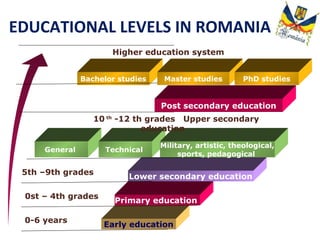
EDUCATIONAL LEVELS IN ROMANIA
Bachelor studies
General
Lower secondary education
Primary education
Early education
0-6 years
0st – 4th grades
5th –9th grades
Higher education system
Technical
Military, artistic, theological,
sports, pedagogical
Master studies PhD studies
Post s10 th
-12 th grades Upper secondary
education
Post secondary education
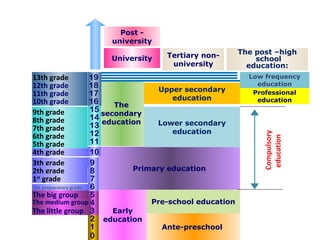
Early
education
Ante-preschool
Pre-school education
0
1
2
3
4
5
The little group
The medium group
The big group
Primary education
6
7
8
9
10
The
secondary
education
4th grade
3th grade
2th grade
1st
grade
The preparatory grade
Lower secondary
education
Upper secondary
education
Professional
education
Low frequency
education
11
12
13
14
15
16
17
18
19
University
Post -
university
Tertiary non-
university
The post –high
school
education:
5th grade
6th grade
7th grade
8th grade
10th grade
11th grade
12th grade
13th grade
Compulsory
education
9th grade
FORMS OF PRE-UNIVERSITY
EDUCATION
Daytime education
Low frequency education
Besides medical education units
Homeschooling
“SCHOOL AFTER SCHOOL”
Activities with
the pupils
through the
“School after
school”
after classes
in cooperation with the parents’
associations and with public authorities
in cooperation with the parents’
associations and with public authorities
the partnership may be carried out with
non-governmental organizations
the partnership may be carried out with
non-governmental organizations
The
preschool
group
10 < 15 < 20
The ante-
preschool
group
5 < 7 < 9
The special
education
8 < 10 < 12
The post –high
school
education
15 < 25 < 30
Upper secondary
education
15 < 25 < 30
Lower secondary
education
12 < 25 < 30
The primary
education
12 < 20 < 25
EFFECTIVE
CURRICULUM
Primary
Maximum
20
hours per
week
Lower secondary
education
Maximum
25
Hours per
week
High-school
Maximum
30
hours per
week
Primary
80%
Compulsor
20%
School
decided
curriculum
70%
Compuls
30%
School
decided
curriculum
TEACHING LOAD
one position of teacher in the pre-
school and primary education
18 hours /week for the teachers in the secondary and
tertiary non-university education
24 hours / week for the practical training teachers
16 hours / week for the teaching staff in the special
education
20 hours /week teacher-educator and teacher for the
practical training in the special education
one position for a resource teacher in the
documentation and information centres
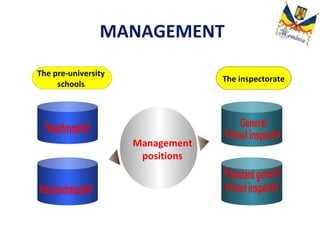
MANAGEMENT
Management
positions
The inspectorate
The pre-university
schools
PRE-UNIVERSITY FINANCING
Basic financing
takes place based on
and within the limits
of the standard
cost per student
or child
The primary
education
The primary
education
Lower secondary
education
Lower secondary
education
Upper secondary
education
Upper secondary
education
The preschool educationThe preschool education
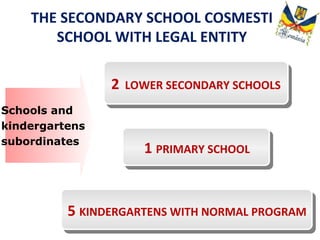
THE SECONDARY SCHOOL COSMESTI
SCHOOL WITH LEGAL ENTITY
Schools and
kindergartens
subordinates
5 KINDERGARTENS WITH NORMAL PROGRAM5 KINDERGARTENS WITH NORMAL PROGRAM
1 PRIMARY SCHOOL1 PRIMARY SCHOOL
2 LOWER SECONDARY SCHOOLS2 LOWER SECONDARY SCHOOLS

Sistem educational

  • 1.
    THE SYSTEM OFEDUCATION IN ROMANIA
  • 2.
    EDUCATIONAL LEVELS INROMANIA Bachelor studies General Lower secondary education Primary education Early education 0-6 years 0st – 4th grades 5th –9th grades Higher education system Technical Military, artistic, theological, sports, pedagogical Master studies PhD studies Post s10 th -12 th grades Upper secondary education Post secondary education
  • 3.
    Early education Ante-preschool Pre-school education 0 1 2 3 4 5 The littlegroup The medium group The big group Primary education 6 7 8 9 10 The secondary education 4th grade 3th grade 2th grade 1st grade The preparatory grade Lower secondary education Upper secondary education Professional education Low frequency education 11 12 13 14 15 16 17 18 19 University Post - university Tertiary non- university The post –high school education: 5th grade 6th grade 7th grade 8th grade 10th grade 11th grade 12th grade 13th grade Compulsory education 9th grade
  • 4.
    FORMS OF PRE-UNIVERSITY EDUCATION Daytimeeducation Low frequency education Besides medical education units Homeschooling
  • 5.
    “SCHOOL AFTER SCHOOL” Activitieswith the pupils through the “School after school” after classes in cooperation with the parents’ associations and with public authorities in cooperation with the parents’ associations and with public authorities the partnership may be carried out with non-governmental organizations the partnership may be carried out with non-governmental organizations
  • 6.
    The preschool group 10 < 15< 20 The ante- preschool group 5 < 7 < 9 The special education 8 < 10 < 12 The post –high school education 15 < 25 < 30 Upper secondary education 15 < 25 < 30 Lower secondary education 12 < 25 < 30 The primary education 12 < 20 < 25 EFFECTIVE
  • 7.
    CURRICULUM Primary Maximum 20 hours per week Lower secondary education Maximum 25 Hoursper week High-school Maximum 30 hours per week Primary 80% Compulsor 20% School decided curriculum 70% Compuls 30% School decided curriculum
  • 8.
    TEACHING LOAD one positionof teacher in the pre- school and primary education 18 hours /week for the teachers in the secondary and tertiary non-university education 24 hours / week for the practical training teachers 16 hours / week for the teaching staff in the special education 20 hours /week teacher-educator and teacher for the practical training in the special education one position for a resource teacher in the documentation and information centres
  • 9.
  • 10.
    PRE-UNIVERSITY FINANCING Basic financing takesplace based on and within the limits of the standard cost per student or child The primary education The primary education Lower secondary education Lower secondary education Upper secondary education Upper secondary education The preschool educationThe preschool education
  • 11.
    THE SECONDARY SCHOOLCOSMESTI SCHOOL WITH LEGAL ENTITY Schools and kindergartens subordinates 5 KINDERGARTENS WITH NORMAL PROGRAM5 KINDERGARTENS WITH NORMAL PROGRAM 1 PRIMARY SCHOOL1 PRIMARY SCHOOL 2 LOWER SECONDARY SCHOOLS2 LOWER SECONDARY SCHOOLS