U.S. Department of the Interior
U.S. Geological Survey
Scientific Investigations Report 2006-5207
Evaluation of Baseline Ground-Water Conditions in
the Mosteiros, Ribeira Paul, and Ribeira Fajã Basins,
Republic of Cape Verde, West Africa, 2005-06
Evaluation of Baseline Ground-Water Conditions in
the Mosteiros, Ribeira Paul, and Ribeira Fajã Basins,
Republic of Cape Verde, West Africa, 2005-06
Prepared in cooperation with the
MILLENNIUM CHALLENGE CORPORATION, MILLENNIUM CHALLENGE ACCOUNT, AND
INSTITUTO NACIONAL DE GESTÃO DOS RECURSOS HÍDRICOS
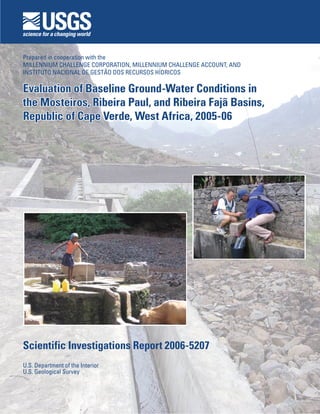
Cover photos:
Background—Rainwater catchment structure in the Ribeira Fajã Basin, São Nicolau.
Foreground (left)—Gathering water from a well in the Mosteiros Basin, Fogo.
Foreground (right)—USGS and INGRH technicians making a discharge measurement at a
spring in Ribeira Paul Basin, Santo Antão.
(Photographs by Victor Heilweil.)
Evaluation of Baseline Ground-Water
Conditions in the Mosteiros, Ribeira Paul,
and Ribeira Fajã Basins, Republic of Cape
Verde, West Africa, 2005-06
By Victor M. Heilweil, John D. Earle, Jay R. Cederberg, Mickey M. Messer,
Brent E. Jorgensen, and Ingrid M. Verstraeten, U.S. Geological Survey
Miguel A. Moura, Arrigo Querido, Fernanda Spencer, and Tatiana Osório,
Instituto Nacional de Gestão dos Recursos Hídricos
U.S. Department of the Interior
U.S. Geological Survey
Prepared in cooperation with the
MILLENNIUM CHALLENGE CORPORATION, MILLENNIUM CHALLENGE ACCOUNT,
AND INSTITUTO NACIONAL DE GESTÃO DOS RECURSOS HÍDRICOS
Scientific Investigations Report 2006-5207
U.S. Department of the Interior
Dirk Kempthorne, Secretary
U.S. Geological Survey
P. Patrick Leahy, Acting Director
Reston, Virginia: 2006
For additional information write to:
U.S. Geological Survey
Director, USGS International Water Resources Branch
MS 420, National Center
Reston, Virginia 20192
http://international.usgs.gov/disciplines/water.htm
For more information about the USGS and its products:
Telephone: 1-888-ASK-USGS
World Wide Web: http://www.usgs.gov/
Any use of trade, firm, or product names is for descriptive purposes only and does not imply endorsement by the
U.S. Government.
Although this report is in the public domain, permission must be secured from the individual copyright owners to
reproduce any copyrighted materials contained within this report.
Scientific Investigations Report 2006-5207
iii
Contents
Abstract............................................................................................................................................................. 1
Introduction...................................................................................................................................................... 2
Purpose and Scope............................................................................................................................. 2
Acknowledgments............................................................................................................................... 2
General Conceptual Model of Volcanic Island Hydrogeology................................................................. 2
Methods............................................................................................................................................................ 4
Ground-Water Level Data................................................................................................................... 4
Electric-Tape Measurements...................................................................................................... 5
Pressure-Transducer Measurements........................................................................................ 5
Water-Quality Data.............................................................................................................................. 5
Field Parameters............................................................................................................................ 5
Environmental Tracer Analyses................................................................................................... 5
Spring and Stream Discharge Data.................................................................................................. 9
Hydrogeologic Setting.................................................................................................................................... 9
Mosteiros Basin, Fogo......................................................................................................................... 9
Ribeira Paul Basin, Santo Antão..................................................................................................... 12
Ribeira Fajã Basin, São Nicolau...................................................................................................... 15
Baseline Ground-Water Conditions............................................................................................................ 17
Mosteiros............................................................................................................................................. 17
Ground-Water Budget................................................................................................................. 17
Ground-Water Levels.................................................................................................................. 21
Water Quality and Environmental Tracers............................................................................... 22
Ribeira Paul......................................................................................................................................... 25
Ground-Water Discharge........................................................................................................... 25
Ground-Water Levels.................................................................................................................. 31
Water Quality and Environmental Tracers............................................................................... 32
Ribeira Fajã.......................................................................................................................................... 33
Ground-Water Discharge........................................................................................................... 33
Ground-Water Levels.................................................................................................................. 34
Water Quality and Environmental Tracers............................................................................... 35
Measured Ground-Water Discharge as a Percentage of Precipitation............................................... 37
Challenges in Evaluating Ground-Water Conditions in the Three Basins............................................ 38
Summary and Conclusions........................................................................................................................... 38
References Cited........................................................................................................................................... 40
iv
Figures
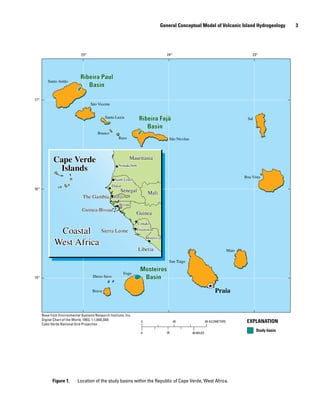
Figure 1. 	 Location of the study basins within the Republic of Cape Verde, West Africa....................... 3
Figure 2. 	 Generalized conceptual model of volcanic island hydrogeology.............................................. 4
Figure 3. 	 Relation between land-surface altitude and water temperature for springs in
Cape Verde.......................................................................................................................................... 7
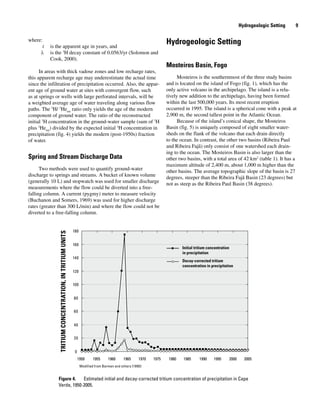
Figure 4. 	 Estimated initial and decay-corrected tritium concentration of precipitation in Cape
Verde, 1950-2005................................................................................................................................. 9
Figure 5. 	 Location of wells, springs, and precipitation stations in the Mosteiros Basin, Fogo,
Cape Verde........................................................................................................................................ 10
Figure 6. 	 Geology of the Mosteiros Basin, Fogo, Cape Verde................................................................... 11
Figure 7. 	 Location of wells, springs, and precipitation stations in the Ribeira Paul Basin,
Santo Antão, Cape Verde................................................................................................................ 13
Figure 8. 	 Geology of the Ribeira Paul Basin, Santo Antão, Cape Verde.................................................. 14
Figure 9. 	 Location of wells, springs, and precipitation stations in the Ribeira Fajã Basin, São
Nicolau, Cape Verde........................................................................................................................ 15
Figure 10. 	 Geology of the Ribeira Fajã Basin, São Nicolau, Cape Verde................................................... 16
Figure 11. 	 Historical precipitation at Posto Cachaço, Ribeira Fajã Basin, 1961-2005............................. 17
Figure 12. 	 Total annual well withdrawal and the portion of Monte Vermelho spring discharge
used for public supply in Mosteiros Basin, 1998-2005............................................................... 17
Figure 13. 	 Water level in well FF07, Mosteiros Basin, December 2005 through March 2006................ 21
Figure 14. 	 Depth profile of specific-conductance values at well FF07, Mosteiros Basin,
December 2005................................................................................................................................. 22
Figure 15. 	 Relation between δ18
O and δ2
H values in precipitation and ground water from the
Mosteiros, Ribeira Paul, and Ribeira Fajã Basins, Cape Verde................................................ 23
Figure 16. 	 Temperature lapse band and the range of possible dissolved-gas ground-water
recharge temperatures for sites in Mosteiros, Ribeira Paul, and Ribeira Fajã Basins,
Cape Verde........................................................................................................................................ 24
Figure 17. 	 3
Helium:4
Helium ratios relative to the helium isotopic ratio of air and total 4
Helium
concentration in ground water from the Mosteiros, Ribeira Paul, and Ribeira Fajã
Basins, Cape Verde.......................................................................................................................... 25
Figure 18. 	 Relation between the 3
Helium:4
Helium ratio and fraction of 4
Helium derived from
atmospheric gases in ground water from the Mosteiros, Ribeira Paul, and Ribeira
Fajã Basins, Cape Verde................................................................................................................. 30
Figure 19. 	 Water level in well FA93, Ribeira Paul Basin, August 2005 through June 2006..................... 31
Figure 20. 	 Galleria Fajã discharge and annual precipitation at nearby Posto Cachaço, Ribeira
Fajã Basin, 1984-2005....................................................................................................................... 34
Figure 21.	 Water level in well FN41, Ribeira Fajã Basin, 1980-86................................................................ 35
Figure 22. 	 Water level in well FN21, Ribeira Fajã Basin, 1984-87................................................................ 36
Figure 23. 	 Water level in well FN39, Ribeira Fajã Basin, December 2005 through March 2006............ 36
Tables
Table 1. 	 Area, slope, and average and maximum altitude of the Mosteiros, Ribeira Paul, and
Ribeira Fajã Basins, Cape Verde.................................................................................................... 10
Table 2. 	 Annual precipitation at selected stations in the Mosteiros, Ribeira Paul, and Ribeira
Fajã Basins, Cape Verde ............................................................................................................... 12
Table 3. 	 Records of selected springs and streams in the Mosteiros, Ribeira Paul, and Ribeira
Fajã Basins, Cape Verde................................................................................................................. 18
Table 4. 	 Records of selected wells in the Mosteiros, Ribeira Paul, and Ribeira Fajã Basins,
Cape Verde........................................................................................................................................ 20
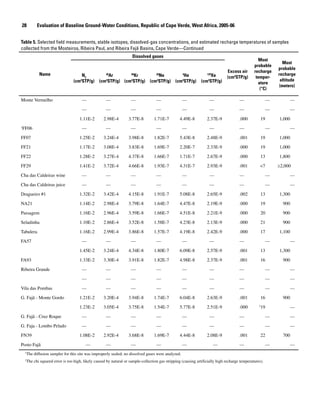
Table 5. 	 Selected field measurements, stable isotopes, dissolved-gas concentrations, and
estimated recharge temperatures of samples collected from the Mosteiros, Ribeira
Paul, and Ribeira Fajã Basins, Cape Verde.................................................................................. 26
Table 6. 	 Tritium and helium concentration and estimated age of samples collected from the
Mosteiros, Ribeira Paul, and Ribeira Fajã Basins, Cape Verde................................................ 29
vi
Conversion Factors, Datums, and Abbreviated
Water-Quality Units
Multiply By To obtain
Length
millimeter (mm) 0.0394 inch (in.)
meter (m) 3.2808 foot (ft)
kilometer (km) 0.6215 mile (mi)
Area
square kilometer (km2
) 247.0966 acre
square kilometer (km2
) 0.3861 square mile (mi2
)
Volume
milliliter (ml) 0.0338 ounce, fluid (fl. oz)
liter (L) 2.1133 pint (pt)
liter (L) 1.0566 quart (qt)
liter (L) 0.2642 gallon (gal)
cubic meter (m3
) 264.201 gallon (gal)
cubic centimeter (cm3
) 0.0610 cubic inch (in3
)
cubic meter (m3
) 35.3107 cubic foot (ft3
)
cubic meter (m3
) 1.3079 cubic yard (yd3
)
Flow rate
cubic meter per day (m3
/d) 35.3107 cubic foot per day (ft3
/d)
liter per minute (L/m) 0.2642 gallon per minute (gal/min)
Density
cubic centimeter per gram (cm3
/g) 0.0160 cubic foot per pound (ft3
/lb)
Hydraulic conductivity
meter per day (m/d) 3.2808 foot per day (ft/d)
Hydraulic gradient
meter per kilometer (m/km) 5.2798 foot per mile (ft/mi)
Transmissivity1
meter squared per day (m2
/d) 10.7643 foot squared per day (ft2
/d)
1
Transmissivity: The standard unit for transmissivity is cubic foot per day per square foot times foot of aquifer thick-
ness [(ft3
/d)/ft2
]ft. In this report, the mathematically reduced form, foot squared per day (ft2
/d), is used for conve-
nience.
vii
Temperature in degrees Celsius (°C) may be converted to degrees Fahrenheit (°F) as follows:
°F = (1.8 × °C) + 32.
Temperature in degrees Fahrenheit (°F) may be converted to degrees Celsius (°C) as follows:
°C = (°F - 32) / 1.8.
Horizontal coordinate information is referenced to the North American Datum of 1983 (NAD 83). Vertical
coordinate information is referenced to the North American Vertical Datum of 1988 (NAVD 88). Altitude, as
used in this report, refers to distance above the vertical datum.
Specific conductance is reported in microsiemens per centimeter at 25 degrees Celsius (µS/cm at 25°C).
Concentration of chemical constituents in water is reported in milligrams per liter (mg/L). Concentration of
dissolved gases is reported in cubic centimeters at standard temperature and pressure per gram (cm3
STP/g).
Tritium concentration is reported in tritium units (TU).
viii
Abstract
This report documents current (2005-06) baseline
ground-water conditions in three basins within the West
African Republic of Cape Verde (Mosteiros on Fogo, Ribeira
Paul on Santo Antão, and Ribeira Fajã on São Nicolau) based
on existing data and additional data collected during this study.
Ground-water conditions (indicators) include ground-water
levels, ground-water recharge altitude, ground-water discharge
amounts, ground-water age (residence time), and ground-water
quality. These indicators are needed to evaluate (1) long-term
changes in ground-water resources or water quality caused by
planned ground-water development associated with agricul-
tural projects in these basins, and (2) the feasibility of artifi-
cial recharge as a mitigation strategy to offset the potentially
declining water levels associated with increased ground-water
development.
Ground-water levels in all three basins vary from less
than a few meters to more than 170 meters (m) below land
surface. Continuous recorder and electric tape measurements
at three monitoring wells (one per basin) showed variations
between August 2005 and June 2006 of as much as 1.8 m. Few
historical water-level data were available for the Mosteiros or
Ribeira Paul Basins. Historical records from Ribeira Fajã indi-
cate very large ground-water declines during the 1980s and
early 1990s, associated with dewatering of the Galleria Fajã
tunnel. More-recent data indicate that ground-water levels in
Ribeira Fajã have reached a new equilibrium, remaining fairly
constant since the late 1990s.
Because of the scarcity of observation wells within each
basin, water-level data were combined with other techniques
to evaluate ground-water conditions. These techniques include
the quantification of ground-water discharge (well with-
drawals, spring discharge, seepage to springs, and gallery
drainage), field water-quality measurements, and the use of
environmental tracers to evaluate sources of aquifer recharge,
flow paths, and ground-water residence times.
In the Mosteiros Basin, measured well and spring dis-
charge is about 220,000 cubic meters per year (m3
/yr). For the
Ribeira Paul Basin, measured well discharge, spring discharge,
and ground-water seepage to springs is about 1,600,000 m3
/yr.
Ribeira Fajã Basin is the driest of the three basins with a pre-
cipitation rate of about half that of the other two basins. The
only measurable ground-water discharge from this basin is
from Galleria Fajã, estimated to be about 150,000 m3
/yr. Mea-
sured discharge for all three basins does not include submarine
outflow or agricultural/phreatophyte consumptive use (Paul
Basin, only) and is assumed to be less than total ground-water
discharge.
Ground-water ages indicate that recharge to wells and
springs occurred from more than 50 years ago at some loca-
tions to within the past decade at other sites. Ground water
in Paul is younger than that in the other two basins, indicat-
ing that recharge generally occurred within the past 50 years.
Ground water at all the dateable sites using tritium/helium in
both the Mosteiros and Ribeira Fajã Basins show that recharge
occurred more than 50 years before the sampling dates.
Ground-water tritium/helium age dating was not possible at
some sites in Mosteiros and Ribeira Fajã Basins because of the
presence of helium in the aquifer derived from the mantle or
aquifer matrix. However, this helium was useful for accurate
age dating of the unaffected ground-water sites.
Dissolved gases indicate that most ground-water recharge
occurs at mid and high altitudes within all three basins; calcu-
lated recharge altitudes ranged from 700 to more than 2,000
m. In the Mosteiros and Ribeira Fajã Basins, recharge altitudes
are much higher than the wells and springs. This suggests that
it may take many years for artificial recharge to result in a
beneficial impact on the aquifer in areas where the agricultural
projects are implemented. Recharge altitudes in Paul Basin
also were generally higher than their respective ground-water
discharge sampling sites. Generally younger ground-water
ages in Paul, however, indicate the existence of some short
flow paths where artificial recharge may possibly enhance
available water resources within a few years.
The salinity of wells and springs is generally low in the
Ribeira Paul and Ribeira Fajã Basins, but somewhat higher
in Mosteiros Basin. Specific-conductance measurements of
wells and springs in Ribeira Paul and Ribeira Fajã ranged from
about 200 to 700 microsiemens per centimeter at 25 degrees
Celsius (μS/cm). Although the Monte Vermelho spring in
Evaluation of Baseline Ground-Water Conditions in the
Mosteiros, Ribeira Paul, and Ribeira Fajã Basins, Republic
of Cape Verde, West Africa, 2005-06
By Victor M. Heilweil, John D. Earle, Jay R. Cederberg, Mickey M. Messer, Brent E. Jorgensen, and Ingrid M.
Verstraeten, U.S. Geological Survey; Miguel A. Moura, Arrigo Querido, Fernanda Spencer, and Tatiana Osório,
Instituto Nacional de Gestão dos Recursos Hídricos
   Evaluation of Baseline Ground-Water Conditions, Republic of Cape Verde, West Africa, 2005-06
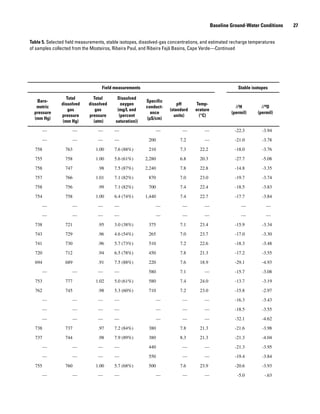
Mosteiros Basin also has very low salinity (200 μS/cm),
water from the wells along the coastal plain has specific-con-
ductance measurements of as much as 16,000 μS/cm. These
higher values indicate some brackish water intrusion. Addi-
tional ground-water development of the Mosteiros coastal
plain may exacerbate this situation.
Introduction
The Republic of Cape Verde is an island archipelago
located about 750 km off the west coast of Africa (fig. 1). Its
400,000 inhabitants live on 9 separate small islands with a
combined area of 4,000 km2
, resulting in one of the highest
population densities among the West African nations (Lang-
worthy and Finan, 1997). The majority of the population
resides in rural areas and derives its livelihood from rain-fed
agriculture. Farming is challenging in the Sahelian climate,
dominated by the cool, dry northeast trade winds. Total annual
precipitation ranges from 0 to 50 mm along the populated
coastal areas to 400-800 mm in the highlands and is extremely
variable from year to year (Haagsma, 1995). About 80 percent
of this precipitation is associated with the equatorial monsoon
(August-October; Vailleux and Bourguet, 1974) and comes
during only a few days each year. The majority of the precipi-
tation is lost to evapotranspiration and runoff to the sea. The
evaporation and runoff losses are caused by a combination
of warm climate, thin soil cover, steep topographic gradients,
and short distances to the sea. Surface-water resources on the
islands are virtually non-existent; there are no lakes and only
a few small perennial streams. Nearly all of the water for con-
sumption comes either from rainfall catchment structures or
ground water. Because of the lack of rainfall and sparse water
resources, Cape Verde currently imports about 70 percent of
its food (Instituto Nacional de Gestão dos Recursos Hídricos,
written commun., 2005).
To decrease this dependence on imported food, agricul-
tural development projects funded by the U.S. Millennium
Challenge Corporation (MCC) are currently underway in three
basins on three islands: Mosteiros on Fogo, Ribeira Paul on
Santo Antão, and Ribeira Fajã on São Nicolau. These projects
are dependent on enhanced availability of water resources
through additional rainfall catchment infrastructure and/or
ground-water development. Artificial recharge of ground
water is being planned as a mitigation strategy to offset the
potential of declining aquifer water levels and/or deteriorating
water quality associated with increased use. An important met-
ric for the success of the agricultural development projects is
the identification of current ground-water baseline conditions
in order to evaluate any long-term changes in ground-water
resources or water quality.
The U.S. Geological Survey (USGS) received support
from the MCC to provide training in ground-water data collec-
tion and to assess the current (2005-06) baseline ground-water
conditions in the three project basins. Ground-water conditions
include ground-water levels, ground-water recharge altitudes
and sources, ground-water discharge quantities, ground-water
age (residence time), and ground-water quality. These tasks
were accomplished, in coordination with the Instituto Nacional
de Gestão dos Recursos Hídricos (INGRH), during and after
two technical missions to Cape Verde.
Purpose and Scope
The purpose of this report is to summarize and interpret
the ground-water data collected during the project. In addition
to this report, ground-water monitoring equipment, training
classes and manuals, and field demonstrations were provided
in all three study basins. Because of the scarcity of observa-
tion wells within each basin and the inability to drill additional
wells within the scope of this project, sparse water-level data
were combined with other techniques to evaluate ground-water
conditions. These other methods include (1) the use of pres-
sure transducers and historical ground-water levels to evaluate
temporal changes in potentiometric surfaces in each basin, (2)
the measurement of well withdrawals, spring discharge, and
gallery drainage in order to estimate ground-water discharge
budgets for each basin, and (3) the use of environmental trac-
ers to evaluate sources of aquifer recharge, flow paths, and
ground-water residence times.
Acknowledgments
The authors thank Sra. Elsa Samoes, Millennium Chal-
lenge Account Cape Verde, for providing historical precipita-
tion data and artificial recharge development plans; Sra. Maria
Modesto, Ministereo de Infrastructuras, Transportes, e Mar,
Cape Verde, for providing GIS topographic coverages; Tony
Mulhern and Kayo Shiraishi, U.S. Peace Corps volunteers in
Santo Antão, for collecting precipitation samples and provid-
ing translating assistance during the USGS missions; D. Kip
Solomon and Alan Rigby, University of Utah Dissolved-Gas
Service Center, for their laboratory analysis and interpretive
assistance with dissolved-gas samples; Keith Halford and
Edwin Weeks, USGS, for their assistance with interpreting the
Galleria Fajã aquifer drawdown data; Patrick Tucci, Richard
Healy, and Steven Gingerich, USGS, for technical support;
and Lourdes Lima, Instituto Nacional de Gestão dos Recursos
Hídricos, Cape Verde, for overseeing in-country logistical sup-
port and technical assistance
General Conceptual Model of Volcanic
Island Hydrogeology
Cape Verde consists of a chain of volcanic islands
believed to have been formed over an oceanic hot spot (Lodge
and Helffrich, 2006). The islands are predominantly basaltic
layered lava flows interspersed with pyroclastics and breccias
Figure 1. 	 Location of the study basins within the Republic of Cape Verde, West Africa.
San Tiago
Fogo
Boa Vista
Sal
Santo Antão
Maio
São Nicolau
São Vicente
Brava
Santa Luzia
Raso
Branco
Ilheus Seco
Mosteiros
Basin
Ribeira Fajã
Basin
Ribeira Paul
Basin
Mosteiros
Basin
Ribeira Fajã
Basin
Ribeira Paul
Basin
Praia
EXPLANATION
15°
16°
17°
25° 24° 23°
Study basin
0 8040 KILOMETERS
0 40 MILES20
Base from Environmental Systems Research Institute, Inc.
Digital Chart of the World, 1993, 1:1,000,000
Cabo Verde National Grid Projection
Coastal
West Africa
Mali
Mauritania
Guinea
Senegal
Liberia
Sierra Leone
Guinea-Bissau
The Gambia
Cape Verde
Islands
Dakar
Bissau
Conakry
Monrovia
Freetown
Nouakchott
Saint Louis
Coastal
West Africa
Mali
Mauritania
Guinea
Senegal
Liberia
Sierra Leone
Guinea-Bissau
The Gambia
Cape Verde
Islands
Dakar
Bissau
Conakry
Monrovia
Freetown
Nouakchott
Saint Louis
BanjulBanjul
General Conceptual Model of Volcanic Island Hydrogeology  
   Evaluation of Baseline Ground-Water Conditions, Republic of Cape Verde, West Africa, 2005-06
and intruded by near-vertical mafic dikes (Barmen and others,
1990). Volcanic islands, especially those recently formed like
Cape Verde, typically have high topographic relief, shallow
soils, and rapid runoff. Rainfall distribution and infiltration is
dependent upon basin altitude and morphology, orientation
with respect to the tropical trade winds, strength of monsoonal
patterns, and the thickness and type of soil cover. As is com-
mon on most islands with much topographic relief, the islands
of Cape Verde typically have wet and dry sides that result from
wind and precipitation patterns. In general, however, most
infiltration occurs in the higher-altitude parts of the islands,
where precipitation rates are highest. Part of this moisture is
subsequently lost as either evapotranspiration or lateral flow
to perched springs. The component of infiltration that contin-
ues downward to recharge the aquifer is herein referred to as
net infiltration. Water-table altitude and slope of this aquifer
would generally be dependent on both aquifer permeability
and net infiltration (recharge) rate. Hydraulic conductivity of
basalt is reported to range from about 0.1 to 1,000 m/d (Freeze
and Cherry, 1979). Studies from Hawaii indicate that highly
transmissive volcanic island basalts generally have hydrau-
lic-conductivity values of about 100 to 1,000 m/d (Gingerich
and Voss, 2002), whereas low-transmissivity basalts generally
have hydraulic-conductivities of about 0.1 to 10 m/d (Izuka
and Gingerich, 2003). Watersheds with high recharge rates
and/or low permeability basalt aquifers would have steeper
water-table slopes and higher-altitude water tables; water-
sheds with low net-infiltration rates and/or high permeability
basalt aquifers would have lesser slopes, with water tables
only a few meters above sea level. Relatively high horizontal
hydraulic-conductivity values (hundreds of meters per day) are
often reported for basaltic volcanic islands (Prada and others,
2005) and result in a regional (basal) water table within tens
of meters of sea level. Low-permeability intrusive mafic dikes,
where present, are thought to act as horizontal flow barriers.
Similarly, low-permeability breccias, tuffs, and pyroclastics
may act as either horizontal or vertical flow barriers. Horizon-
tal and vertical flow barriers may cause perched ground water,
high-altitude springs, and/or ground-water compartmentaliza-
tion resulting in a stepped (rather than smooth) overall water
table (fig. 2)
Measurable ground-water discharge from volcanic island
watersheds typically includes discharge to springs, well with-
drawals, seepage to streams, and evapotranspiration in areas
of shallow water table. Also, in Cape Verde and some other
volcanic islands, horizontal tunnels have often been con-
structed to drain ground water as an additional water-supply
source. Ground-water discharge, however, is often dominated
by submarine outflow, which is difficult to quantify. Subma-
rine discharge has been documented in other volcanic island
sites (Izuka and Gingerich, 2003; Prada and others, 2005) and
quantified in other settings (Bokuniewicz, 1980; Cable, 1997;
Cambareri and Eichner, 1998; Michael and others, 2003).
Small islands typically have a freshwater lens of ground
water (lower density) floating on top of higher-density brack-
ish and salt water. The fresh water/brackish water boundary
is not fixed or sharp; rather it is controlled by pressure and
density and dependent upon the balance between ground-water
recharge and ground-water discharge. Aquifer drawdown
associated with excessive pumping, therefore, may lower
water levels in the aquifer and move the fresh/brackish water
boundary inland, causing salt-water intrusion.
Methods
Ground-Water Level Data
In order to evaluate ground-water conditions and provide
a baseline for the future assessment of changes in ground-
water storage in the three study basins, ground-water levels
were measured periodically with electric tapes. In addi-
tion, pressure transducers and data loggers were installed in
selected observation wells to provide a continuous record of
water-level changes.
Figure 2. 	 Generalized conceptual model of volcanic island hydrogeology.EXPLANATION
Fractured basalt
Unconsolidated materials
Brackish water
Brackish water
Submarine
outflow
Galleria Tunnel
WellWell
Brackish water
Brackish water
Atlantic
Ocean
Atlantic
Ocean
FreshwaterFreshwater
SaltwaterSaltwater
SaltwaterSaltwater
NOT TO SCALE Modified from Macdonald and others (1983)
Water table
Perched
water body
Dike-compartment
water table
Electric-Tape Measurements
Manual water-level measurements in production and
observation wells were made by the INGRH and the USGS
with calibrated electric tapes in all three project basins. The
accuracy of this method is about 0.01 m, which is of sufficient
precision to provide a baseline for monitoring both seasonal
and longer-term water-level changes. Three lengths of electric
water-level tapes (60-, 100- and 250-m) were used, depending
on the depth to water at each well. Water-level measurements
were corrected by subtracting the distance from the measur-
ing point above land surface. Land-surface altitudes were
estimated with hand-held GPS, topographic maps, or from
drillers’ logs. Although the accuracy of these altitudes is only
about plus or minus 10 m, this study was concerned with rela-
tive depth below land surface and temporal changes in ground-
water levels, rather than absolute altitude.
Pressure-Transducer Measurements
Two types of pressure transducers, vented and non-
vented, and data loggers were installed in observation wells
to continuously monitor water levels. A vented transducer
was installed in observation well FA93 in the Ribeira Paul
Basin. These transducers are vented to the atmosphere and
automatically compensate for changes in atmospheric pres-
sure. They do not require barometric pressure corrections, but
have a fixed-length cable that cannot be modified. Non-vented
transducers were installed in observation wells FF07 in the
Mosteiros Basin and FN39 in the Ribeira Fajã Basin. The non-
vented transducers require independently measured barometric
pressure data in order to correct for changes in atmospheric
pressure; thus loggers also were installed in FF07 and FN39 to
record barometric pressure. The non-vented transducers hang
on a small-diameter steel cable rather than requiring a fixed-
length cable and, therefore, are better suited for wells with
large depths to water and/or where sharp objects in the well
may damage the more-delicate vented cable. All the transduc-
ers were programmed to record water-pressure and barometric
pressure or water-level data every 6 hours, which was later
corrected for instrument drift based on independent electric-
tape water-level measurements (Freeman and others, 2004).
Because of both ocean and earth tides and the relatively
small daily absolute water-level change, tidal effects were
corrected in two of the four transducer wells. The tidal cor-
rections were done with a digital Butterworth filter program
(Umari, M.J., and Earle, J.D., U.S. Geological Survey, written
commun., 2002) using a low pass cutoff frequency of 0.8
cycles per day. This is based on frequencies of tidal harmonic
components ranging from 0.85 to 2 cycles per day (Merritt,
2004).
Water-Quality Data
Field parameters were measured and laboratory analysis
of environmental tracers was conducted on water samples
collected from springs, wells, streams, and tunnels in the three
study basins. This information is used for evaluating sources
of recharge, ground-water residence times, ground-water flow
paths, and salt-water intrusion. It will also provide a baseline
geochemical data set for potential evaluation of future changes
to the ground-water systems.
Field Parameters
Field water-quality parameters were measured at ground-
water and surface-water sites according to USGS procedures
(Wilde and Radtke, 1998). Parameters include specific con-
ductance, pH, temperature, dissolved oxygen, barometric and
total dissolved-gas pressure. These parameters were measured
with a multimeter probe, which was calibrated daily to a repre-
sentative set of standards.
Specific conductance was used as a proxy for dissolved-
solids concentration because geochemical laboratory analysis
of dissolved solids was not within the scope of this study.
Dissolved-solids concentration is generally about 55 to 75
percent of the specific-conductance value, depending on the
chemical makeup of the water (Hem, 1992). The pH of a water
sample is often indicative of the movement of ground water
through differing geologic layers, such as volcanic or allu-
vial deposits. Low pH values may indicate geothermal water
sources. Water temperature also is useful for evaluating the
influence of upwelling geothermal waters and is needed for
the dissolved-gas solubility calculations used in determining
recharge temperatures and for tritium/helium age dating. Dis-
solved oxygen is an indicator of oxidation conditions within
an aquifer, including both anaerobic and aerobic bacterial
activity associated with the decomposition of organic matter.
Barometric and total dissolved-gas pressures are used to guide
appropriate dissolved-gas sampling methods and are needed
for the determination of absolute dissolved-gas concentrations
from in-situ diffusion samplers. Total dissolved gas pressures
can also be used to evaluate hydrologic processes such as
denitrification, anaerobic decay and gas production (CH4
, H2
,
CO2
), degassing of deep geothermal fluids (CO2
production),
and air entrapment in the recharge zone.
Environmental Tracer Analyses
Ground-water samples were analyzed for the stable
(deuterium and oxygen-18) isotopes of the water molecule.
Samples for deuterium (2
H) and oxygen-18 (18
O) were col-
lected from open boreholes by using polyvinyl chloride 1,000-
ml sample bailers. Water samples from production wells were
collected by using existing submersible pumps. Water samples
from springs and tunnels were collected by gravity flow.
Stable-isotope samples were collected according to procedures
Methods  
described by Coplen and others (1996), stored in clean poly-
ethylene bottles, and analyzed by the USGS Stable Isotope
Laboratory in Reston, Virginia. The stable isotopes (2
H, 18
O)
are used to evaluate the relative altitude of source precipitation
that recharges a ground-water system. These stable isotopes
are analyzed by measuring the ratio of the heavier, less-abun-
dant isotope to the lighter, more-abundant isotope and are
reported as differences to a known standard. The isotope ratios
are reported as delta (δ) values expressed as parts per thousand
(permil). The δ value for an isotope ratio, R, is determined by:
	 δR = (Rsample
/ Rstandard
–1)x1000	 (1)
where:
	 δR 	 is the δ value for a specific isotope in the sample
(2
H or 18
O),
	 Rsample 	
is the ratio of the rare isotope to the common iso-
tope for a specific element in the sample, and
	Rstandard  	
is the ratio of the rare isotope to the common iso-
tope for the same element in the standard reference
material.
A positive δR value indicates that the sample is enriched in
the heavier isotope with respect to the sample. A negative
δR value indicates that the sample is depleted in the heavier
isotope with respect to the sample. In general, precipitation
falling at a higher altitude is more isotopically depleted in
2
H and 18
O than precipitation at lower altitudes. Therefore,
these stable isotopes are generally helpful for evaluating the
precipitation source areas of recharge to an aquifer (Mazor,
1991). The relation between δ2
H and δ18
O values generally
plots along a trend line known as the global meteoric water
line. This trend is described by the equation:
	 δ2
H = 8 (δ18
O)+ d	 (2)
where:
	 d 	 is defined as the 2
H excess (Dansgaard, 1964). The
mean global value for d in freshwater is 10 (Craig,
1961).
Dissolved-gas samples were collected to evaluate
ground-water recharge temperature (temperature of water
entering the water table). In contrast to stable isotopes, these
tracers are useful for evaluating the altitude where recharge
actually enters the aquifer rather than the altitude where the
precipitation occurs. A large fraction of gases dissolved in
ground water originate in the atmosphere and their solubil-
ity in water is temperature-dependent (Stute and Schlosser,
2001). As recharging water enters an aquifer, these dissolved-
gas concentrations are “locked in” based on the temperature,
barometric pressure, amount of excess air, and salinity at the
water table (Aeschbach-Hertig and others, 1999; Ballentine
and Hall, 1999; Stute, 2001). Because the gases are rela-
tively inert, their concentrations generally remain unchanged
along ground-water flow paths to points of discharge (wells
and springs). Dissolved-gas concentrations in discharging
ground water, therefore, can be used to estimate ground-water
recharge temperatures. For this study, dissolved concentrations
of N2
, 40
Ar, 84
Kr, 20
Ne, and 129
Xe were used in the closed sys-
tem equilibration model (Aeschbach-Hertig and others, 2000;
Kipfer and others, 2002) to calculate estimated ground-water
recharge temperature, pressure, excess air, and a fractionation
factor (related to the partial dissolution of trapped air bubbles).
Because there are five known parameters (the individual
dissolved-gas concentrations) and four unknowns, this is an
over-determined problem that can be solved (optimized) with
a system of linear equations.
Dissolved-gas samples were collected as water samples
in copper tubes and as gas samples with in-situ diffusion sam-
plers. The copper-tube collection method for dissolved gases
is described by Stute and Schlosser (2001). The diffusion
sampler method is described by Sheldon (2002). The diffu-
sion sampler consists of a small copper chamber (about 0.82
cm3
) with gas-permeable membranes. Samplers were installed
in wells and springs and allowed to equilibrate with the water
for 24 hours. The samples were quickly removed and cold-
welded by using a pinch-off tool. Dissolved-gas concentra-
tions were analyzed by the University of Utah’s Dissolved Gas
Service Center using both quadrapole and sector-field mass
spectrometers. The mass-spectrometer analysis provides the
relative mole fractions of dissolved gases. The dissolved-gas
concentrations of the water sample are then calculated based
on Henry’s Law relations by using field measurements of total
dissolved-gas pressure and water temperature. The University
of Utah’s analytical precision generally results in a ± 0.5°C
uncertainty in dissolved-gas recharge temperatures for samples
with small amounts of excess air and known recharge altitude
(K. Solomon, University of Utah, oral commun., 2006).
Recharge altitude is an unknown parameter, a typical
situation in locations with high topographic gradient, such
as the three study basins in Cape Verde. Because recharge
temperature and recharge altitude are correlated, it is com-
mon to generate a range of estimated dissolved-gas recharge
temperatures for each ground-water sample using (1) the land-
surface altitude (the minimum altitude where recharge could
occur) at each sample site to calculate a maximum dissolved-
gas recharge temperature (Trmax
), and (2) the highest possible
water-table altitude (the maximum altitude where recharge
could occur) within the watershed to calculate a minimum
dissolved-gas recharge temperature (Trmin
). This possible range
of dissolved-gas recharge temperatures for each sample is then
compared to the atmospheric temperature lapse curve to deter-
mine the “most-probable” dissolved-gas recharge temperature
and recharge altitude.
Temperature lapse rates vary at different locations.
Factors affecting temperature lapse rates include strength of
solar radiation (season, slope, aspect), proximity to oceans,
topography (cold air drainage), and relative humidity. Air
temperature lapse rates are generally about -6°C per 1,000 m
(Rolland, 2003), but can vary from -10°C per 1,000 m (dry air
adiabatic lapse rate) to -4°C per 1,000 m (saturated adiabatic
lapse rate). Water-table temperature lapse rates are assumed
   Evaluation of Baseline Ground-Water Conditions, Republic of Cape Verde, West Africa, 2005-06
to be similar to air temperature lapse rates in places having
shallow depth to water and can be generated from measure-
ments of spring altitude and water temperature (Manning and
Solomon, 2003). However, if there is a thick vadose zone and
large depth to water, the apparent temperature lapse rate may
be lower because of the geothermal gradient. Therefore, appar-
ent recharge altitudes derived from dissolved-gas recharge
temperatures in this study are likely a minimum and may
underestimate actual recharge altitudes towards the interior of
the islands where there is the possibility of a thick vadose zone
and deep water table.
A local temperature lapse rate for Cape Verde was con-
structed based on the relation between altitude and measured
water temperature for seven springs within the three study
basins, as well as other published data. These published data
include 10 springs in Fogo but outside the Mosteiros Basin
study area (Kallrén and Schreiber, 1988; Barmen and others,
1990) and 34 springs on the island of Santiago (Barmen and
others, 1984). In order to minimize the influence of geother-
mally affected waters, only springs with water temperatures of
 26°C were used when constructing the lapse curve. Spring
altitude and water temperature are closely correlated (r2
=
0.75; fig. 3). The resulting temperature lapse rate is about
-5°C per 1,000 m. This lapse rate is within the reported range
in lapse rates (Rolland, 2003). The following relation can be
used for estimating water-table temperature lapse rate (fig. 3):
	 A = (24.3 – T) / 0.005	 (3)
where:
	 A 	 is altitude, in m, and
	 T	 is temperature, in °C.
Figure 3. 	 Relation between land-surface altitude and water temperature for springs in Cape Verde.
0
200
400
600
800
1,000
1,200
1,400
1,600
1,800
2,000
10 12 14 16 18 20 22 24 26 28 30
WATER TEMPERATURE, IN DEGREES CELSIUS
LAND-SURFACEALTITUDE,INMETERS
Maximum
temperature
Minimum
temperature
Best fit
Methods  
Because of uncertainty in the measured temperature lapse
curve, it is often presented as a band of altitude-dependent
temperatures. Residuals calculated by subtracting the mea-
sured temperature from the theoretical temperature for each
spring by using equation 3 result in a standard deviation of
1.6°C. A 2-sigma temperature band of 3.2°C for each altitude
was used, therefore, in order to encompass 95 percent of the
samples.
The “most probable” range of recharge temperature/alti-
tude combinations is then determined by the intersection of
the maximum range of recharge temperatures (Trmin
/Trmax
) and
the temperature lapse band. Estimated recharge altitudes have
an uncertainty that is difficult to quantify, caused primarily by
uncertainty in the temperature lapse rate.
Ground-water samples also were collected and analyzed
for the tritium (3
H) isotope in the water molecule. As with the
stable isotopes, 3
H samples were collected from open bore-
holes by using polyvinyl chloride 1,000-ml sample bailers.
Water samples from production wells were collected by using
existing submersible pumps. Water samples from springs
and tunnels were collected by gravity flow. All samples were
stored in clean polyethylene bottles. Tritium samples were
analyzed with the tritium in-growth method (Clarke and oth-
ers, 1976) at the University of Utah’s Dissolved Gas Service
Center.
Tritium is a radioactive isotope of hydrogen and decays
to tritiogenic helium (3
Hetrit
) with a half life of 12.3 years and,
therefore, can be used for evaluating the relative age of ground
water. As with the stable isotopes, tritium is analyzed by
measuring the ratio of the heavier and less-abundant isotope to
the lighter and more-abundant isotope. Tritium concentrations
are reported in tritium units, where one tritium unit represents
one molecule of 3
H1
HO in 1018
molecules of 1
H2
O (Solomon
and Cook, 2000). Tritium is naturally produced in earth’s
upper atmosphere through cosmic-ray neutron bombardment
of nitrogen. Much larger amounts were introduced into the
atmosphere during thermonuclear testing in the 1950s and
1960s. On the basis of International Atomic Energy Agency
records from network stations at similar latitudes (Barbados,
Ascension Island, St. Helena), Barmen and others (1990)
estimated that the natural background concentration of 3
H in
precipitation in Cape Verde was about 4 TU prior to 1953 and
after 1980. This conclusion is consistent with five precipita-
tion samples collected on Santiago Island during 1984 with 3
H
concentrations ranging from 2.3 ± 0.1 to 4.4 ± 0.2 TU (Akiti,
1985) and one sample collected on Fogo Island in 1987 with
a 3
H concentration of 3.0 ± 1 TU (Barmen and others, 1990).
The samples collected during the 1980s, however, may still
have contained some anthropogenic 3
H. Sampling during
2005, as part of this study, indicates a current atmospheric
concentration of 1 to 3 TU, which may be a more accurate
natural background concentration for Cape Verde. Relatively
large amounts of anthropogenic 3
H were introduced into the
atmosphere by thermonuclear testing in the 1950s and 1960s,
with estimated peak precipitation 3
H concentrations in Cape
Verde reaching about 175 TU in 1964 (Kallrén and Schreiber,
1988).
Based on its 12.3-year half life, decay-corrected 3
H con-
centrations can be calculated with:
	 C = Co
e-tλ
	 (4)
where:
	 C 	 is the measured 3
H concentration in water,
	 Co
	 is the initial 3
H concentration,
	 t 	 is the number of years since the precipitation
occurred, and
	 λ 	 is the decay constant (0.0565/yr for 3
H).
The estimated initial and decay-corrected 3
H concentra-
tion of precipitation in Cape Verde from 1950 through 2005,
modified from Barmen and others (1990), is shown in figure
4. Assuming that precipitation recharging aquifers in Cape
Verde prior to the early 1950s had an initial 3
H concentra-
tion of 3.0 TU, these waters in 2005 would have had a 3
H
concentration of ≤0.3 TU. Recharge that occurred during
above-ground nuclear testing in the late 1950s and 1960s
(assuming initial 3
H concentrations in precipitation of 10 to
175 TU) would have current 3
H concentrations of about 1 to
17 TU. Water recharging the aquifer during the 1970s (assum-
ing initial 3
H concentrations in precipitation of 4.0 to 14 TU)
would have current 3
H concentrations between 0.6 and 2.0 TU.
Water recharging the aquifer during the 1980s (assuming an
average 3
H concentration in precipitation of 3.5 TU) would
have current 3
H concentrations between 0.9 to 1.4 TU. Water
recharging the aquifer during the 1990s to present (assuming
an average 3
H concentration in precipitation of about 2.0 to
3.0 TU) would have current 3
H concentrations between 1.4
and 3.0 TU. Ground water discharging from springs and wells
often contains a mixture of flow paths having water of various
ages. Ground water having a 3
H concentration less than 4 TU
but greater than 0.3 TU may represent a mixture of both young
and old waters rather than representing a discrete flow path
and recharge year. Except for ground-water recharge occurring
during the 1963 3
H peak, therefore, it is generally not possible
to uniquely determine modern (post-1950s) ground-water ages
from tritium alone.
Tritium/helium (3
H/ 3
Hetrit
) age dating is a technique,
however, that can be used for dating relatively young ground
water recharged within the past 50 years. 3
H in the water
molecule decays to 3
Hetrit
, a gas which is readily lost in the
atmosphere but is geochemically conservative (inert) when
dissolved in ground water. The age-dating clock begins, there-
fore, when recharge crosses the water table rather than when
it infiltrates the subsurface. The 3
H/ 3
Hetrit
ratio can be used
to determine the number of years since the water entered the
aquifer as recharge with the following equation:
	 t = λ-1
ln(3
Hetrit
/ 3
H +1)	 (5)
   Evaluation of Baseline Ground-Water Conditions, Republic of Cape Verde, West Africa, 2005-06
Figure 4. 	 Estimated initial and decay-corrected tritium concentration of precipitation in Cape
Verde, 1950-2005.
0
20
40
60
80
100
120
140
160
180
1950 1955 1960 1965 1970 1975 1980 1985 1990 1995 2000 2005
TRITIUMCONCENTRATION,INTRITIUMUNITS
Decay-corrected tritium
concentration in precipitation
Initial tritium concentration
in precipitation
Modified from Barmen and others (1990)
where:
	 t 	 is the apparent age in years, and
	 λ 	 is the 3
H decay constant of 0.0563/yr (Solomon and
Cook, 2000).
In areas with thick vadose zones and low recharge rates,
this apparent recharge age may underestimate the actual time
since the infiltration of precipitation occurred. Also, the appar-
ent age of ground water at sites with convergent flow, such
as at springs or wells with large perforated intervals, will be
a weighted average age of water traveling along various flow
paths. The 3
H/ 3
Hetrit
ratio only yields the age of the modern
component of ground water. The ratio of the reconstructed
initial 3
H concentration in the ground-water sample (sum of 3
H
plus 3
Hetrit
) divided by the expected initial 3
H concentration in
precipitation (fig. 4) yields the modern (post-1950s) fraction
of water.
Spring and Stream Discharge Data
Two methods were used to quantify ground-water
discharge to springs and streams. A bucket of known volume
(generally 10 L) and stopwatch was used for smaller discharge
measurements where the flow could be diverted into a free-
falling column. A current (pygmy) meter to measure velocity
(Buchanon and Somers, 1969) was used for higher discharge
rates (greater than 300 L/min) and where the flow could not be
diverted to a free-falling column.
Hydrogeologic Setting
Mosteiros Basin, Fogo
Mosteiros is the southernmost of the three study basins
and is located on the island of Fogo (fig. 1), which has the
only active volcano in the archipelago. The island is a rela-
tively new addition to the archipelago, having been formed
within the last 500,000 years. Its most recent eruption
occurred in 1995. The island is a spherical cone with a peak at
2,900 m, the second tallest point in the Atlantic Ocean.
Because of the island’s conical shape, the Mosteiros
Basin (fig. 5) is uniquely composed of eight smaller water-
sheds on the flank of the volcano that each drain directly
to the ocean. In contrast, the other two basins (Ribeira Paul
and Ribeira Fajã) only consist of one watershed each drain-
ing to the ocean. The Mosteiros Basin is also larger than the
other two basins, with a total area of 42 km2
(table 1). It has a
maximum altitude of 2,400 m, about 1,000 m higher than the
other basins. The average topographic slope of the basin is 27
degrees, steeper than the Ribeira Fajã Basin (23 degrees) but
not as steep as the Ribeira Paul Basin (38 degrees).
Hydrogeologic Setting  
Figure 5. 	 Location of wells, springs, and precipitation stations in the Mosteiros Basin, Fogo, Cape Verde.
FF29
FF07
FF06
FF21
FF22
Monte Vermelho
Mosteiros
Monte Velha Pãu Cortado
Monte Barro Fonsaco
Atalaia
Fajazinha
Mosteiros
Pai Antonio
Ribeira Ilheu
Fajazinha Airport
Cha das
Caldeiras
Mosteiros Basin
Fogo
FF29
FF07
FF06
FF21
FF22
Monte Vermelho
Mosteiros
Monte Velha Pãu Cortado
Monte Barro Fonsaco
Atalaia
Fajazinha
Mosteiros
Pai Antonio
Ribeira Ilheu
Fajazinha Airport200
400
600
800
1000
1200
1400
1600
1800
2000
2200
Cha das
Caldeiras
Mosteiros Basin
Fogo
24°24' 24°22' 24°20'
15°0'
15°2'
Base from Instituto Nacional de Gestão dos Recursos Hídricos
Digital Elevation Data, 2005, 1:2,400
Cabo Verde National Grid Projection
Spring
Precipitation station
Town
Altitude, in meters
2,400
0
Basin boundary
200-meter topographic contour
100-meter topographic contour
Road
Stream
Well
EXPLANATION
FF06
KILOMETERS0 1 2 30.5
0 1 MILE0.5
Table 1. Area, slope, and average and maximum altitude of the Mosteiros,
Ribeira Paul, and Ribeira Fajã Basins, Cape Verde
Basin
Total area
(square kilo-
meters)
Average
slope
(degrees)
Average
altitude
(meters)
Maximum
altitude
(meters)
Mosteiros 42 27 820 2,400
Ribeira Paul 15 38 620 1,500
Ribeira Fajã 16 23 480 1,300
10   Evaluation of Baseline Ground-Water Conditions, Republic of Cape Verde, West Africa, 2005-06
The geology of the Mosteiros Basin (fig. 6) is dominated
by basaltic lava flows with intercalated pyroclastic deposits
(Barmen and others, 1990). The basin is also dotted with
numerous cinder cones made of coarse volcanic fragments
(lapilli). The basement rocks within the basin consist of an
alkaline-carbonatite basaltic complex. Lava flows associ-
ated with the basement rocks are highly weathered to clays,
presumably acting as a low-permeability barrier. The basement
rocks are also cut by a dense network of igneous dikes and
contain granular xenoliths, further reducing their permeability.
Basaltic lava flows of the Principal Eruptive Complex
overlie these basement rocks. These basalts have prominent
columnar jointing (Barmen and others, 1990), as observed
along the sea cliffs in the northernmost part of the Mosteiros
Basin. Pillow lavas also are associated with these basalts. The
basalts are intercalated with both coarse-grained pyroclas-
tic tuffs and thin layers of clays. The lava flows form fairly
continuous steeply dipping layers (20 to more than 30 degrees)
from the island’s central caldera complex (Cha das Caldeiras)
to the sea that likely are important conduits of ground-water
flow. In addition to columnar jointing, widespread fracturing
Figure 6. 	 Geology of the Mosteiros Basin, Fogo, Cape Verde.
Cha das
Caldeiras
Monte Vermelho
Fajazinha Airport
Monte Vermelho
Fonsaco
Atalaia
Mosteiros
Pai Antonio
Ribeira Ilheu
Fonsaco
Atalaia
Mosteiros
Pai Antonio
Ribeira Ilheu
FF21
FF22
FF21
FF22
KILOMETERS0 1 2 30.5
0 1 MILE0.5
Mosteiros Basin
Fogo
Mosteiros Basin
Fogo
24°24' 24°22' 24°20'
15°0'
15°2'
Base from Instituto Nacional de Gestão dos Recursos Hídricos
Digital Elevation Data, 2005, 1:2,400
Geologic data from Barmen and others (1990)
Cabo Verde National Grid Projection
FF07
FF06
FF29
FF07
FF06
FajazinhaFajazinha
Fajazinha Airport
FF29
Recent basaltic lava flow
Basalts with intercalated pyroclastic
deposits of the Principal Eruptive Complex
Pre-Caldera cinder cones
Pyroclastic deposits intercalated with
basalts of the Upper Principal Eruptive
Complex
Recent cinder cones
Caldera wall
EXPLANATION
Town
Basin boundary
Road
Stream
WellFF06
Approximate location
of contact
Hydrogeologic Setting   11
12   Evaluation of Baseline Ground-Water Conditions, Republic of Cape Verde, West Africa, 2005-06
also increases the permeability of these basaltic lava flows. In
contrast to the basement rocks, the noticeable absence of dikes
cutting across the basalts of the Principal Eruptive Complex
reduces the likelihood of flow barriers, thus further enhancing
the probability of ground-water flow in this layer.
The southern (highest-altitude) part of the Mosteiros
Basin is composed of the Upper Principal Eruptive Complex
associated with Fogo’s upper volcanic cone. In contrast to the
prominent lava flows of the Principal Eruptive Complex, this
layer is dominated by pyroclastic tuffs, lapilli, and agglomer-
ates and is cut by a dense network of basaltic sills and dikes,
which are less transmissive for ground-water flow.
The morphology of the Mosteiros Basin is dominated
by the steep slope of the main volcanic cone and numerous
recent lava flows and cinder cones (fig. 6). Superimposed on
this slope are narrow incised gullies, indicative of the high-
energy runoff from sporadic but intense precipitation events.
Because of the recent creation of the island and the intensity of
runoff, soil layers are generally very thin or non-existent. The
exception to this is along the northeastern coast, where vol-
canic cliffs form a very steep escarpment juxtaposed against
a nearly flat coastal plain with rich volcanically derived soils.
The southern border of the Mosteiros Basin is defined by the
1,000-m near-vertical wall of the island’s 8-km-wide caldera.
This feature acts as a prominent surface-water divide. Water
falling on the north-facing slope of the caldera wall runs off
toward the coastal areas of the Mosteiros Basin; water falling
on the south-facing slope drains into the closed basin of the
caldera. Because the caldera bottom is covered by highly
permeable volcanic deposits (lapilli, scoria, and basalt flows)
and receives relatively large amounts of precipitation, this area
likely provides a substantial amount of recharge to the island’s
ground-water system.
Seven-year (1996-2002) average annual precipitation was
207 mm at the Mosteiros station (75-m altitude), 346 mm at
the Monte Barro station (348-m altitude), and 379 mm at the
Pau Cortado station (460-m altitude) (fig. 5, table 2; Instituto
Nacional de Meteorologia e Geofisica, written commun.,
2005). These data follow the expected trend of higher precipi-
tation rates at higher altitudes. Although precipitation data
for the same 7-year period are not available in the highland
areas of the basin, historical data from the Monte Velha station
(850-m altitude) and the Cha das Caldeiras station (1,650-m
altitude) indicate that annual rainfall exceeds 1,000 mm in the
upper reaches of the basin (Barmen and others, 1990). This
precipitation supplies sporadic runoff and flow to gullies, but
there are no perennial streams in the basin. The range from 72
to 453 mm/yr at Mosteiros (table 2) shows the annual variabil-
ity in precipitation within the basin.
Ribeira Paul Basin, Santo Antão
Santo Antão is the northwesternmost island of Cape
Verde and the Ribeira Paul Basin is located on its northeast-
ern coast (fig. 1). The basin area, not including the adjacent
La Cova closed basin, is 15 km2
(table 1). The basin’s verti-
cal relief of 1,500 m (fig. 7) is much less than that of the
Mosteiros Basin; however, it is a more deeply incised basin,
as indicated by its higher average topographic slope of about
38 degrees, compared to 23 and 27 degrees for the other two
study basins.
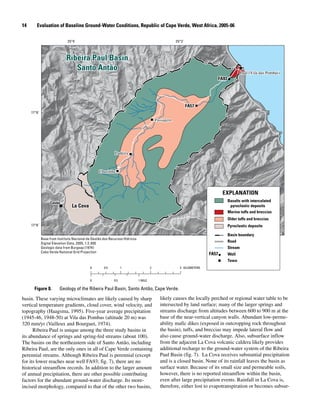
As with the Mosteiros Basin, the geology of the Ribeira
Paul Basin is dominated by volcanic rocks. In contrast to
Fogo, the island of Santo Antão is geologically much older,
Table 2. Annual precipitation at selected stations in the Mosteiros, Ribeira Paul, and Ribeira Fajã Basins, Cape Verde
[Precipitation reported in millimeters]
Station name Mosteiros
Monte
Barro
Pau
Cortado
Figeuiral
Paul
Passagem Covão Posto
Canto
Fajã
Cachaço
Altitude
(meters)
75 348 460 200 300 810 410 575 715
Basin Mosteiros Mosteiros Mosteiros Paul Paul Paul Fajã Fajã Fajã
1996 72 435 207 599 1054 773 187 251 319
1997 149 213 272 246 525 509 237 371 378
1998 158 410 366 276 384 409 230 213 296
1999 453 504 620 1,044 1,391 958 430 386 541
2000 76 117 196 695 1,172 940 366 187 344
2001 279 403 731 263 314 438 189 207 352
2002 264 339 259 443 658 636 411 501 677
7-year average 207 346 379 509 785 666 293 302 415
12   Evaluation of Baseline Ground-Water Conditions, Republic of Cape Verde, West Africa
thus there has been more time for erosion to create a well-
developed canyon system. The predominant exposed rocks
within the basin include basaltic lava flows and pyroclas-
tic deposits (fig. 8). Many near-vertical igneous dikes in
the basalts are exposed along the upper canyon headwalls.
Beneath these rocky headwalls, most of the sloping terrain
within the basin has only a veneer of soils. Alluvial deposits
thicker than a few meters are only present along the wash at
the lower end of Ribeira Paul.
Annual precipitation in the Ribeira Paul Basin is much
higher than the other two study basins, even though the aver-
age basin altitude (620 m) is less than the Mosteiros Basin
(820 m; table 1). This difference is caused by the orientation
and steep topographic relief of the basin and its ability to trap
the moisture of ascending air masses associated with both the
northeastern trade winds and the equatorial monsoon winds
(Haagsma, 1995). Seven-year (1996-2002) average annual
precipitation was 509 mm at the Figueiral Paul station (200-m
altitude), 785 mm at the Passagem station (300-m altitude),
and 666 mm at the Covão station (810-m altitude; fig. 7, table
2; Instituto Nacional de Meteorologia e Geofisica, written
commun., 2005). The larger amount of precipitation at Pas-
sagem, at an altitude about 500 m lower than that of Covão,
illustrates the spatially erratic nature of precipitation in the
Figure 7. 	 Location of wells, springs, and precipitation stations in the Ribeira Paul Basin, Santo Antão, Cape Verde.
1000
800
600
200
400
600
400600
800
200
400
1400 800
1200
1000
1200
400
200
R. Joao Deaninha
R. Cringa - Cha de Padre Cima
Covão
Ladeira
Passagem
Chazinha
Paul (Vila das Pombas)
FA93
FA57
R. Cringa
R. Cabouco
R. Cabelao
R. das Morcas
R. Oio de Agua
R. Calistrinho diversion
R. Zeagrios #5
R. Zeagrios #4
R. Zeagrios #3
R. Calistrinho
R. Cha Joao Vaz
R. Covada Clara
R. Fidelo Diversion
R. Cabelao Diversion
Covão
Passagem
Figueiral Paul
NA21
Tabulera
Seladinha
Ribeirinha
Dragueiro #1
Dragueiro #2
R. Joao Deaninha
R. Cringa - Cha de Padre Cima
Covão
Ladeira
Passagem
Chazinha
Paul (Vila das Pombas)
FA93
FA57
R. Cringa
R. Cabouco
R. Cabelao
R. das Morcas
R. Oio de Agua
R. Calistrinho diversion
R. Zeagrios #5
R. Zeagrios #4
R. Zeagrios #3
R. Calistrinho
R. Cha Joao Vaz
R. Covada Clara
R. Fidelo Diversion
R. Cabelao Diversion
Covão
Passagem
Figueiral Paul
NA21
Tabulera
Seladinha
Ribeirinha
Dragueiro #1
Dragueiro #2
Ribeira Paul Basin
Santo Antão
Ribeira Paul Basin
Santo Antão
Base from Instituto Nacional de Gestão dos Recursos Hídricos
Digital Elevation Data, 2005, 1:2,400
Cabo Verde National Grid Projection
25°4' 25°2'
17°6'
17°8'
La Cova
Altitude, in meters
1,500
0
Stream site
Spring
Precipitation station
Town
Basin boundary
200-meter topographic contour
100-meter topographic contour
Road
Crater wall
Stream
WellFF06
EXPLANATION
KILOMETERS0 1 2 30.5
0 1 MILE0.5
Hydrogeologic Setting   13
14   Evaluation of Baseline Ground-Water Conditions, Republic of Cape Verde, West Africa, 2005-06
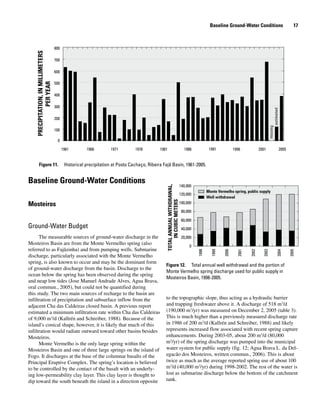
Figure 8. 	 Geology of the Ribeira Paul Basin, Santo Antão, Cape Verde.
basin. These varying microclimates are likely caused by sharp
vertical temperature gradients, cloud cover, wind velocity, and
topography (Haagsma, 1995). Five-year average precipitation
(1945-46, 1948-50) at Vila das Pombas (altitude 20 m) was
320 mm/yr (Vailleux and Bourguet, 1974).
Ribeira Paul is unique among the three study basins in
its abundance of springs and spring-fed streams (about 100).
The basins on the northeastern side of Santo Antão, including
Ribeira Paul, are the only ones in all of Cape Verde containing
perennial streams. Although Ribeira Paul is perennial (except
for its lower reaches near well FA93; fig. 7), there are no
historical streamflow records. In addition to the larger amount
of annual precipitation, there are other possible contributing
factors for the abundant ground-water discharge. Its more-
incised morphology, compared to that of the other two basins,
likely causes the locally perched or regional water table to be
intersected by land surface; many of the larger springs and
streams discharge from altitudes between 600 to 900 m at the
base of the near-vertical canyon walls. Abundant low-perme-
ability mafic dikes (exposed in outcropping rock throughout
the basin), tuffs, and breccias may impede lateral flow and
also cause ground-water discharge. Also, subsurface inflow
from the adjacent La Cova volcanic caldera likely provides
additional recharge to the ground-water system of the Ribeira
Paul Basin (fig. 7). La Cova receives substantial precipitation
and is a closed basin. None of its rainfall leaves the basin as
surface water. Because of its small size and permeable soils,
however, there is no reported streamflow within the basin,
even after large precipitation events. Rainfall in La Cova is,
therefore, either lost to evapotranspiration or becomes subsur-
Ribeira Paul Basin
Santo Antão
La Cova
Covão
Ladeira
Passagem
Chazinha
Paul (Vila das Pombas)
FA93
FA57
Ribeira Paul Basin
Santo Antão
Base from Instituto Nacional de Gestão dos Recursos Hídricos
Digital Elevation Data, 2005, 1:2,400
Geologic data from Burgeap (1974)
Cabo Verde National Grid Projection
25°4' 25°2'
17°6'
17°8'
La Cova
Covão
Ladeira
Chazinha
Paul (Vila das Pombas)
FA93
FA57

KILOMETERS0 1 2 30.5
0 1 MILE0.5
Ribeira Paul Basin
Santo Antão
La Cova
Covão
Ladeira
Passagem
Chazinha
Paul (Vila das Pombas)
FA93
FA57
EXPLANATION
Basalts with intercalated
pyroclastic deposits
Marine tuffs and breccias
Older tuffs and breccias
Pyroclastic deposits
Town
Basin boundary
Road
Stream
WellFA57
14   Evaluation of Baseline Ground-Water Conditions, Republic of Cape Verde, West Africa
face recharge, similar to that in the Cha das Caldeiras caldera
located adjacent to the Mosteiros Basin.
Ribeira Fajã Basin, São Nicolau
São Nicolau is located near the center of the Cape Verde
island archipelago. The Ribeira Fajã Basin is a deep basin
incised in the mountains on the northwestern side of the island
(fig. 1). The basin is about the same size as the Ribeira Paul
Basin, with an area of 16 km2
. The basin’s vertical relief of
1,300 m (fig. 9) is also similar to Ribeira Paul Basin, however,
Ribeira Fajã Basin is longer than Ribeira Paul Basin, resulting
in a smaller average topographic slope of about 23 degrees
(table 1).
Like the other two study basins, the geology of the
Ribeira Fajã Basin is volcanic. The geologic map (fig. 10)
shows exposures of basalt and scoria along much of the main
reach of the Ribeira Fajã stream channel (Hidroprojecto
Engenharia Gestão, 2000). The side walls and head of the
basin have exposed basalts with intercalated pyroclastic depos-
its, crosscut by near-vertical igneous dikes. The highland area
along the southwestern margin of the basin has a thick out-
cropping layer of pyroclastic deposits, which have weathered
to clays at the surface, resulting in a fairly low-permeability
surficial soil that likely impedes infiltration of precipitation.
Annual precipitation in the Ribeira Fajã Basin is much
less than that in the other two basins. The rain generally
occurs between June and December, with the most intense
storms during August and September (Langworthy and Finan,
Figure 9. 	 Location of wells, springs, and precipitation stations in the Ribeira Fajã Basin, São Nicolau, Cape Verde.
1000
400
600
200
400
800
400
200
1200
600
GalleriaTunnel
GalleriaTunnel
24°22' 24°20' 24°18'
16°38'
16°40'
Ribeira Fajã Basin
São Nicolau
Ribeira Fajã Basin
São Nicolau
Base from Instituto Nacional de Gestão dos Recursos Hídricos
Digital Elevation Data, 2005, 1:2,400
Cabo Verde National Grid Projection
KILOMETERS0 1 2 30.5
0 1 MILE0.5
Potential artificial
recharge
Water storage tank
Spring
Precipitation station
Town
Altitude, in meters
1,300
0
Basin boundary
200-meter topographic contour
100-meter topographic contour
Road
Stream
Well
EXPLANATION
FN41
Cha de Miguel de Jose
Cha de Monte
(dry spring)(dry spring)
FN12
Posto
Cachaco
Canto Faja
Monte Gordo
Queimada
Faja de Cima
Faja de Baixo
Cruz Roque
Monte Gordo
Lombo Pelado
FN21
FN41
FN39
Caldeirinha
Cha de Miguel de Jose
Cha de Monte
(dry spring)(dry spring)
FN12
Posto
Cachaco
Canto Faja
Monte Gordo
Queimada
Faja de Cima
Faja de Baixo
Cruz Roque
Monte Gordo
Lombo Pelado
FN21
FN41
FN39
Caldeirinha
Hydrogeologic Setting   15
16   Evaluation of Baseline Ground-Water Conditions, Republic of Cape Verde, West Africa, 2005-06
Figure 10. 	 Geology of the Ribeira Fajã Basin, São Nicolau, Cape Verde.
FN12
Queimada
Fajã de Cima
Fajã de Baixo
FN21
FN41
FN39
GalleriaTunnel
FN12
Queimada
Fajã de Cima
Fajã de Baixo
FN21
FN41
FN39
GalleriaTunnel
Ribeira Fajã Basin
São Nicolau
Ribeira Fajã Basin
São Nicolau
Base from Instituto Nacional de Gestão dos Recursos Hídricos
Digital Elevation Data, 2005, 1:2,400
Geologic data from Hídroprojecto Engenharia E Gestão (2000)
Cabo Verde National Grid Projection
24°22' 24°20'
24°18'
16°38'
16°40'
KILOMETERS0 1 2 30.5
0 1 MILE0.5
EXPLANATION
FF06
Town
Basin boundary
Road
Stream
Well
Basaltic slope deposits
Pyroclastic deposits
Phonolitic and basaltic chimney
Basalts with intercalated pyroclastic deposits
Vesicular basalt and scoria
1997). Seven-year (1996-2002) average annual precipitation
was 293 mm at the Posto Fajã station (410-m altitude), 302
mm at the Canto Fajã station (575-m altitude), and 415 mm
at the Cachaço station (715-m altitude; fig. 9, table 2; Insti-
tuto Nacional de Meteorologia e Geofisica, written commun.,
2005). In contrast to Ribeira Paul, the Ribeira Fajã Basin fol-
lows the expected trend of higher precipitation rates at higher
altitudes.
A historical chart of precipitation at the Cachaço station
(fig. 11) was constructed from data obtained from the Min-
istero de Agricultura e Ambiente (written commun., 2005),
the Instituto Nacional de Meteorologia e Geofisica (written
commun., 2005), Sabino (1986), and Olivry (1981). In order
to estimate total precipitation at Cachaço for 2004, the ratio of
the average precipitation for the Cachaço and Posto stations
for 1978-85, 1995-2002, and 2005 was multiplied by the total
2004 precipitation at Posto. No precipitation data are available
within the Ribeira Fajã Basin for 2003. The histogram indi-
cates that the most recent two decades (1984-2005) were wet-
ter than the prior two decades (1961-1983). This illustrates the
cyclical nature of precipitation in Cape Verde and is consistent
with longer historical records that show periods of several suc-
cessive extremely dry years (Haagsma, 1995; Langworthy and
Finan, 1997). The driest year on record during the past four
decades was 1972, with only 19 mm of rain; the wettest year
was 2002 with 677 mm of rain (Olivry, 1981).
16   Evaluation of Baseline Ground-Water Conditions, Republic of Cape Verde, West Africa
Baseline Ground-Water Conditions
Mosteiros
Ground-Water Budget
The measurable sources of ground-water discharge in the
Mosteiros Basin are from the Monte Vermelho spring (also
referred to as Fajãzinha) and from pumping wells. Submarine
discharge, particularly associated with the Monte Vermelho
spring, is also known to occur and may be the dominant form
of ground-water discharge from the basin. Discharge to the
ocean below the spring has been observed during the spring
and neap low tides (Jose Manuel Andrade Alves, Agua Brava,
oral commun., 2005), but could not be quantified during
this study. The two main sources of recharge to the basin are
infiltration of precipitation and subsurface inflow from the
adjacent Cha das Caldeiras closed basin. A previous report
estimated a minimum infiltration rate within Cha das Caldeiras
of 9,000 m3
/d (Kallrén and Schreiber, 1988). Because of the
island’s conical shape, however, it is likely that much of this
infiltration would radiate outward toward other basins besides
Mosteiros.
Monte Vermelho is the only large spring within the
Mosteiros Basin and one of three large springs on the island of
Fogo. It discharges at the base of the columnar basalts of the
Principal Eruptive Complex. The spring’s location is believed
to be controlled by the contact of the basalt with an underly-
ing low-permeability clay layer. This clay layer is thought to
dip toward the south beneath the island in a direction opposite
to the topographic slope, thus acting as a hydraulic barrier
and trapping freshwater above it. A discharge of 518 m3
/d
(190,000 m3
/yr) was measured on December 2, 2005 (table 3).
This is much higher than a previously measured discharge rate
in 1986 of 200 m3
/d (Kallrén and Schreiber, 1988) and likely
represents increased flow associated with recent spring capture
enhancements. During 2003-05, about 200 m3
/d (80,000
m3
/yr) of the spring discharge was pumped into the municipal
water system for public supply (fig. 12; Agua Brava L. da Del-
egacão dos Mosteiros, written commun., 2006). This is about
twice as much as the average reported spring use of about 100
m3
/d (40,000 m3
/yr) during 1998-2002. The rest of the water is
lost as submarine discharge below the bottom of the catchment
tank.
Figure 11. 	 Historical precipitation at Posto Cachaço, Ribeira Fajã Basin, 1961-2005.
0
100
200
300
400
500
600
700
800
1961 1966 1971 1976 1981 1986 1991 1996 2001 2005
PRECIPITATION,INMILLIMETERS
PERYEAR
missing
estimated
Figure 12. 	 Total annual well withdrawal and the portion of
Monte Vermelho spring discharge used for public supply in
Mosteiros Basin, 1998-2005.
0
20,000
40,000
60,000
80,000
100,000
120,000
140,000
1998
1999
2000
2001
2002
2003
2004
2005
Monte Vermelho spring, public supply
Well withdrawal
TOTALANNUALWITHDRAWAL,
INCUBICMETERS
Baseline Ground-Water Conditions   17
18   Evaluation of Baseline Ground-Water Conditions, Republic of Cape Verde, West Africa, 2005-06
Table 3. Records of selected springs and streams in the Mosteiros, Ribeira Paul, and Ribeira Fajã Basins, Cape Verde
[Altitude: m, meters; Discharge: m3
/d, cubic meters per day; Specific conductance: μS/cm, microsiemens per centimeter at 25 degrees Celsius; Temperature:
°C, degrees Celsius; Measurement Agency: INGRH, Instituto Nacional de Gestão dos Recursos Hídricos; MAAP, Ministero do Ambiente, Agricultura e
Pescas; SAF, Servicio Autonimo Fajã; USGS, U.S. Geological Survey; —, no data]
Site name Basin
Latitude Longitude
(degree/minute/
second)
Altitude
(m)
Discharge
measurement
method
Date
Springs
Tabulera Paul 170654 0250328 830 Bucket  stopwatch 8/4/2005
NA21 Paul 170834 0250234 440 Bucket  stopwatch 8/6/2005
Dragueiro #1 Paul 170816 0250231 270 Bucket  stopwatch 12/8/2005
Dragueiro #2 Paul 170823 0250231 250 Bucket  stopwatch 12/7/2005
Seladinha Paul 170711 0250249 460 Bucket  stopwatch 12/5/2005
Bucket  stopwatch 12/8/2005
Passagem Paul 170756 0250232 300 Bucket  stopwatch 8/4/2005
Monte Vermelho Mosteiros 150254 0242147 5 — 8/12/2005
Bucket  stopwatch; tank level 12/2/2005
Galleria Fajã (Total) Fajã 163845 0241927 250 Tank level, in-line flow meter 8/18/2005
Tank level, in-line flow meter 12/13/2005
G. Fajã Monte Gordo Irrigation Fajã 270 In-line flow meter  stopwatch 12/13/2005
G. Fajã Monte Gordo Domestic Fajã 270 In-line flow meter  stopwatch 12/13/2005
G. Fajã Cruz Roque Branch Fajã 267 Bucket  stopwatch 12/13/2005
G. Fajã Lombo Pelado Branch Fajã 265 Bucket  stopwatch 12/13/2005
Streams
Ribeirinha Paul 170819 0250231 250 Bucket  stopwatch 12/6/2005
Morcas Paul 170628 0250302 710 Bucket  stopwatch 12/5/2005
Oio de Agua Paul 170624 0250320 955 Bucket  stopwatch 12/5/2005
João Deaninha Paul 170648 0250227 740 Bucket  stopwatch 12/5/2005
Covada Clara Paul 170646 0250239 550 Bucket  stopwatch 12/5/2005
Cabouco Paul 170755 0250245 560 Bucket  stopwatch 12/5/2005
Cringa stream channel Paul 170656 0250259 560 Bucket  stopwatch 12/8/2005
Cringa - Cha de Padre Cima Paul 170654 0250256 480 Bucket  stopwatch 12/8/2005
Zeagrios # 3 Paul 170629 0250234 680 Bucket  stopwatch 12/5/2005
Zeagrios # 4 Paul 170629 0250232 700 Bucket  stopwatch 12/5/2005
Bucket  stopwatch 12/8/2005
Zeagrios # 5 Paul 170636 0250230 750 Bucket  stopwatch 12/8/2005
Calistrinho Paul 170650 0250243 500 Estimate only 12/5/2005
Calistrinho A Paul 170659 0250242 500 Bucket  stopwatch 12/8/2005
Calistrinho B Paul 170659 0250242 500 Pygmy flow meter 12/8/2005
Fidelo Diversion Paul 170715 0250258 430 Estimate only 12/5/2005
Pygmy flow meter 12/9/2005
Cabelão Diversion Paul 170714 0250256 430 Bucket  stopwatch 12/9/2005
Ribeira Cabelão Paul 170702 0250258 425 Bucket  stopwatch 12/5/2005
170717 0250256 420 Pygmy flow meter 12/9/2005
Cha João Vaz A Paul 170734 0250248 360 Bucket  stopwatch 12/9/2005
Cha João Vaz B Paul 170734 0250248 355 Bucket  stopwatch 12/9/2005
Cha João Vaz C Paul 170734 0250248 350 Pygmy flow meter 12/9/2005
Cha João Vaz D Paul 170734 0250248 355 Pygmy flow meter 12/9/2005
1
Spring and stream sites measured by the INGRH on December 5-6, 2005, do not have specific-conductance measurements because of equipment failure.
Table 3. Records of selected springs and streams in the Mosteiros, Ribeira Paul, and Ribeira Fajã Basins, Cape
Verde—Continued
Site name
Discharge
(m3
/d)
Specific
conductance
(μS/cm)
Temper-
ature
(°C)
Measurement
agency
Springs
Tabulera 95 220 18.9 INGRH, USGS
NA21 100 265 23.7 INGRH, USGS
Dragueiro #1 19 365 23.4 INGRH, USGS
Dragueiro #2 34 375 23.7 INGRH, USGS
Seladinha 35 1
— 24.1 INGRH
23 450 21.3 INGRH, USGS
Passagem 950 510 22.6 INGRH, USGS
Monte Vermelho — 200 — INGRH, USGS
518 215 22.2 INGRH, USGS
Galleria Fajã (Total) 430 — — SAF
430 — — SAF
G. Fajã Monte Gordo Irrigation 250 380 21.3 INGRH, MAAP, USGS
G. Fajã Monte Gordo Domestic 91 — — INGRH, MAAP, USGS
G. Fajã Cruz Roque Branch 56 440 — INGRH, MAAP, USGS
G. Fajã Lombo Pelado Branch 73 550 — INGRH, MAAP, USGS
Streams
Ribeirinha 35 1
— 25.0 INGRH
Morcas 140 1
— 18.3 INGRH
Oio de Agua 63 1
— 21.2 INGRH
João Deaninha 95 1
— 26.0 INGRH
Covada Clara 25 1
— 23.3 INGRH
Cabouco 24 1
— 24.0 INGRH
Cringa stream channel 170 440 22.4 INGRH, MAAP, USGS
Cringa - Cha de Padre Cima 230 420 20.2 INGRH, MAAP, USGS
Zeagrios # 3 86 1
— 22.0 INGRH
Zeagrios # 4 320 1
— 22.5 INGRH
270 200 19.1 INGRH, MAAP, USGS
Zeagrios # 5 260 190 19.0 INGRH, MAAP, USGS
Calistrinho 1,700 1
— 23.5 INGRH
Calistrinho A 300 370 21.0 INGRH, MAAP, USGS
Calistrinho B 950 — — INGRH, MAAP, USGS
Fidelo Diversion 1,200 1
— 23.2 INGRH
780 480 22.2 INGRH, USGS
Cabelão Diversion 42 590 22.0 MAAP, USGS
Ribeira Cabelão 19 1
— 24.2 INGRH
420 570 21.4 INGRH, USGS
Cha João Vaz A 630 410 23.2 INGRH, USGS
Cha João Vaz B 860 520 23.0 INGRH, USGS
Cha João Vaz C 240 540 22.6 INGRH, USGS
Cha João Vaz D 2,100 580 22.3 INGRH, USGS
Baseline Ground-Water Conditions   19
20   Evaluation of Baseline Ground-Water Conditions, Republic of Cape Verde, West Africa, 2005-06
Table 4. Records of selected wells in the Mosteiros, Ribeira Paul, and Ribeira Fajã Basins, Cape Verde
[Altitude, Depth of well, and Water level below land surface: m, meters; Pumping rate: m3
/d, cubic meters per day; —, no data]
Well name Basin
Latitude Longitude
(degree/minute/second)
Altitude
(m)
Year
Drilled
Depth of
well (m)
Water level
below land
surface (m)
Date
Pumping
rate
(m3
/d)
FF06 Mosteiros 150133 0241908 60 70.6 63.50 12/02/05
FF07 Mosteiros 150221 0242014 20 35.8 17.61 12/02/05
17.57 12/03/05
17.73 03/31/06
FF21 Mosteiros 150246 0242104 40 54.3 — 08/11/05 180
39.46 12/03/05
FF22 Mosteiros 150246 0242104 40 53.0 39.55 03/11/98
39.55 08/11/05
39.25 12/03/05 470
FF29 Mosteiros 150229 0242043 60 2005 61.9 51.94 06/01/05
51.46 08/12/05
51.45 12/03/05
51.48 03/31/06
FA57 Paul 170820 0250140 80 1993 43.0 1.60 08/17/93
1.29 01/07/94
— 08/08/05 192
— 12/07/05
FA93 Paul 170849 0250104 20 2004 21.1 16.15 07/14/04
15.40 08/25/04
16.24 08/05/05
15.34 12/08/05
16.40 06/15/06
FN12 Fajã 163839 0241935 250 1978 146.0 111.10 10/14/78
FN21 Fajã 163813 0242014 310 1980 128.0 115.07 04/10/79
FN39 Fajã 163950 0241914 80 1980 104.3 51.54 01/10/80
52.58 10/30/82
72.43 11/02/98
72.81 02/18/02
73.12 12/13/05
73.11 03/08/06
FN41 Faja 163758 0242042 490 1980 189.2 173.40 03/10/80
163809 0242025 Dry 03/08/06
17.2
17.3
17.4
17.5
17.6
17.7
17.8
17.9
DEPTHTOWATERBELOWLANDSURFACE,INMETERS
JANUARY
20062005
DECEMBER FEBRUARY MARCH
Barometer-corrected
Barometer-corrected and tide-filtered
Figure 13. 	 Water level in well FF07, Mosteiros Basin, December 2005 through March 2006.
Currently (2006) two production wells exist in the
Mosteiros Basin: FF21 and FF22. Collectively, withdrawals
from these wells averaged about 100 m3
/d between 1998 and
2005 (Agua Brava L. da Delegacão dos Mosteiros, written
commun., 2006). Well FF21 had a measured instantaneous
pumping rate of 180 m3
/d on August 11, 2005 (table 4). Well
FF22 had a measured instantaneous pumping rate of 470 m3
/d
on December 3, 2005. Combined total annual well withdrawal
from the two wells from 1998 to 2005 has varied between
about 28,000 and 48,000 m3
(fig. 12). One new well (FF29)
was recently completed (2005) with plans to eventually install
a submersible pump.
The average annual volume of precipitation falling within
the Mosteiros Basin is estimated to be about 2.5 x 10⁷
m3
(7
x 104
m3
/d). This is based on an average basin altitude of 816
m, an interpolated annual precipitation value of 590 mm, and
a basin area of about 42 km2
. The interpolated 590 mm annual
precipitation is based on a linear interpolation of the 1996-
2002 average precipitation for the three lower-altitude pre-
cipitation stations (75 m, 348 m, and 460 m) in the Mosteiros
Basin, along with reported precipitation at Monte Velha (850
m) and Cha das Caldeiras (1,650 m). Combining the Monte
Vermelho spring discharge with withdrawals from the two
production wells, the total spring and well discharge from the
Mosteiros Basin is estimated to be about 620 m3
/d or 230,000
m3
/yr. Subsurface outflow as submarine discharge is thought
to be a large component of the ground-water budget, but could
not be quantified during this study. By using the estimated
average annual 2.5 x 10⁷
m3
volume of precipitation falling
within the basin, about 1 percent (2.3 x 10⁵
m3
divided by 2.5
x 107
m3
) of this precipitation is calculated to discharge from
the aquifer through wells and springs.
Ground-Water Levels
Ground-water levels were measured with an electric
tape at five wells in the Mosteiros Basin: FF06, FF07, FF21,
FF22, and FF29 (table 4). These wells are all located along
the coastal plain in the northeastern part of the basin (fig. 5).
There are no wells located in the highlands part of the basin to
evaluate ground-water levels or ground-water hydraulic gra-
dients. The land-surface altitude of the five wells ranged from
about 20 to 60 m and the depth to water ranged from 18 to
64 m below land surface. Wells FF06 and FF07 are currently
monitoring wells; both were drilled as production wells but
subsequently abandoned. Well FF06 had a very low yield dur-
ing well testing (Agua Brava L. da Delegacão dos Mosteiros,
written commun., 2006) and well FF07 had only a thin lens of
freshwater overlying brackish water.
A nonvented pressure transducer, barometer, and data
logger were installed in well FF07 in December 2005 to
continuously record water level and barometric pressure.
Barometrically corrected water levels, both corrected and non-
corrected for tidal fluctuations, are shown in figure 13. After
removing the tidal effects, there is a gradual decline of about
0.2 m between December 2005 and March 2006. Without
additional information, it cannot be determined if this is a
seasonal or longer-term decline. A seasonal decline in ground-
water level may be caused by either decreased infiltration of
precipitation at the end of the rainy season (August-Novem-
ber) or a delayed response to seasonal pumping. The combined
monthly pumping of wells FF21 and FF22, located 1.6 km
to the northwest, was 3,600 m3
/month during May-October,
2005, larger than the 4-year (2002-2005) average of about
3,000 m3
/month (Agua Brava L. da Delegacão dos Mosteiros,
Baseline Ground-Water Conditions   21
22   Evaluation of Baseline Ground-Water Conditions, Republic of Cape Verde, West Africa, 2005-06
written commun., 2006). Because precipitation data were not
available beyond 2002, it cannot be determined if the small
water-level decline is part of a longer-term climatic trend.
Total annual pumping from wells FF21 and FF22 (fig. 12) also
does not show any trend of increased pumping as a cause for
long-term regional water-level declines.
Water Quality and Environmental Tracers
The specific-conductance value of ground water in the
Mosteiros Basin varies from about 200 to 16,000 μS/cm (table
5; fig. 14). The best-quality (lowest specific-conductance
value) water was sampled at the Monte Vermelho spring. The
poorest quality (highest specific-conductance value) water was
sampled at depth in the FF07 observation well. Because of its
proximity to the ocean, a thin lens of fresh ground water in
the Mosteiros coastal plain overlies brackish water. Discrete
depth sampling with a downhole water-quality meter at FF07
illustrates this (fig. 14). The specific-conductance value of the
shallowest 4 m of water was about 2,200 μS/cm, but gradually
increased to more than 10,000 μS/cm at a depth of 7 m below
the water table. Similarly, if either of the two production wells
in the Mosteiros Basin (FF21 and FF22) pumps more than
about 160 m3
/d, they produce brackish water. This influx of
brackish water was documented during environmental tracer
sampling at FF21 on August 11 and 12, 2005. The specific-
conductance value of the well water at the beginning of the
pumping period was 870 μS/cm and increased to about 1,500
μS/cm after a 20-hour pumping period. Therefore, only one
well is generally pumped at a time and for a maximum of
about 8 hours per day. This is similar to salt-water intrusion
problems reported by Kallrén and Schreiber (1988, fig. 4.2) at
the Praia Ladrao spring located at a similar altitude (5 m) on
the west coast of Fogo. The specific conductance of water dis-
charging from this spring increased from about 400 to 1,500
μS/cm during June 1987 and was attributed to pumping.
Ground-water pH and temperature ranges in the Moste-
iros Basin are 6.8 to 7.8 and 20.3°C to 23.0°C, respectively
(table 5). These values are similar to those of ground water
from the other two study basins and do not indicate upwelling
geothermal sources of water. The relatively high dissolved-
oxygen concentration of 5.6 to 7.6 mg/L (61 to 88 percent
saturation) indicates oxidized conditions within the aquifer
and the lack of substantial bacterial decay of organic matter.
Measured total dissolved-gas pressure values were within a
very small range (747 to 766 mm Hg) and are nearly identical
to barometric pressure values (754 to 758 mm Hg), indicat-
ing little or no excess gas in the aquifer from air entrapment,
degassing of deep geothermal fluids, or anaerobic decay and
gas production.
No source precipitation data were collected for stable-iso-
tope analysis within Mosteiros Basin for this study. Stable-
isotope samples of two agricultural products (wine and juice)
from the nearby Cha das Caldeiras were collected, but the
analyses were not successful. Stable-isotope concentrations
of Fogo precipitation were previously reported at Cha das
Caldeiras (-7.0 permil for δ18
O and -45 permil for δ2
H) and
at Achada Fora (-4.0 permil for δ18
O and -30 permil for δ2
H;
Barmen and others, 1990). Except for well FF06, the stable-
isotope ratios of ground water from the Mosteiros Basin fall
within a fairly tight cluster on the meteoric water line (fig.
15), with values ranging from -3.4 to -3.8 permil for δ18
O and
from -15 to -21 permil for δ2
H. The water sample from well
FF06 is much more depleted (δ18
O of -5.1 and δ2
H of -28),
indicating a higher-altitude precipitation source of recharge
to this well. The well is located southeast of the other wells
and Monte Vermelho spring, closer to the high-altitude Cha
das Caldeiras caldera (fig. 5). The stable-isotope concentra-
tions of the Monte Vermelho spring water do not seem to vary
substantially with time: the concentration of δ18
O and δ2
H was
-3.8 and -21 permil, respectively, on August 12, 2005, and -3.8
and -18 permil, respectively, on December 2, 2005. A previous
ground-water isotopic study by Kallrén and Schreiber (1988)
reported similar concentrations on October 10, 1987, of -3.9
and -22 permil for δ2
H and δ18
O, respectively. This indicates a
steady, uniform recharge source.
The dissolved-gas concentration of N2
, 40
Ar, 84
Kr, 20
Ne,
4
He, and 129
Xe in ground water is listed in table 5. Most of the
dissolved gases in ground-water samples from the Mosteiros
Basin are of atmospheric origin, as indicated by the close
comparison between measured and theoretical atmospheri-
cally equilibrated concentrations of the individual gases (K.
Solomon, written commun., 2006). Furthermore, the relatively
low excess-air concentrations indicate that little air entrapment
at the water table or gas generation from within or beneath
the aquifer is occurring. Little excess air generally reduces
uncertainty in the calculation of recharge temperatures based
on dissolved-gas concentrations. Estimated most-probable
recharge temperatures are 19°C for the Monte Vermelho
spring and less than 7 to 19°C for wells FF07, 21, 22, and
0
2
4
6
8
10
12
14
16
0 5,000 10,000 15,000 20,000
SPECIFIC CONDUCTANCE, IN MICROSIEMENS
PER CENTIMETER
DEPTHBELOWWATERTABLE,
INMETERS
Figure 14. 	 Depth profile of specific-conductance values at
well FF07, Mosteiros Basin, December 2005.
29. Plotting Trmin
/Trmax
ranges for each sample against the
temperature lapse curve (fig. 16) indicates a most-probable
recharge altitude of 1,000 m for the Monte Vermelho spring.
This is very similar to a previously reported estimate of 900
m based on the relation between spring altitude and δ18
O
values (Kallrén and Schreiber, 1988). Estimated dissolved-gas
recharge altitudes for wells FF07, 21, 22, and 29 range from
1,000 to more than 2,000 m (table 5). These recharge altitudes
are higher than the land-surface altitudes at all of these sites
(5 to 60 m), indicating that recharge to these wells and springs
does not occur locally, but rather higher up in the watershed.
It also indicates that the water-table altitudes in the recharge
zone of Mosteiros basin are much higher than sea level, either
because of horizontal flow barriers and compartmentalization
(fig. 2) or low permeability of the basalts.
Although no precipitation 3
H samples were collected
in Mosteiros Basin, two agricultural product samples were
analyzed from Cha das Caldeiras: wine from grapes of the
2004 growing season and juice from grapes and pomegran-
ates grown during the 2005 season. These samples had 3
H
concentrations of 3.0 and 1.0 TU, respectively (table 6).
This indicates that precipitation 3
H concentrations in Fogo
have remained fairly constant since previous sampling in the
1980s. Ground-water 3
H concentrations from samples col-
lected in Mosteiros Basin ranged from about 0.2 to 1.2 TU.
As discussed in the “Methods” section, values less than 0.3
TU indicate ground-water recharge that occurred prior to the
early 1950s. Water from wells FF06, FF21, and FF29 all had
3
H concentrations less than 0.3 TU. Water from well FF22 and
the Monte Vermelho spring had 3
H concentrations between 0.4
and 0.8 TU, likely indicating a mixture of pre- and post-1950s
recharge (a sample collected from Monte Vermelho spring on
April 28, 1980, had a reported 3
H concentration of less than
2 TU (Barmen and others, 1990), which would be equivalent
to a decay-corrected 2005 concentration of less than 0.5 TU).
Water from well FF07 had a 3
H concentration of 1.2 TU,
indicating either uniform post-1960s recharge or a mixture of
pre- and post-1950s recharge.
Elevated dissolved 4
He concentrations and 3
He:4
He ratios
were measured in water from all of the wells sampled in
Mosteiros (fig. 17, table 6). This is likely caused by the occur-
-40
-35
-30
-25
-20
-15
-10
-5
0
-6.0 -5.5 -5.0 -4.5 -4.0 -3.5 -3.0 -2.5 -2.0 -1.5 -1.0 -0.5 0.0
18
O, IN PERMIL
2
H,INPERMIL
Precipitation (this study)
Ribeira Paul wells
Mosteiros wells
Ribeira Fajã wells
Global Meteoric Water Line (Craig, 1961)
Ribeira Paul springs
Mosteiros springs
Galleria Fajã
Precipitation on São Nicolau (Barmen and others, 1990)
Figure 15. 	 Relation between δ18
O and δ2
H values in precipitation and ground water from the Mosteiros, Ribeira Paul,
and Ribeira Fajã Basins, Cape Verde.
Baseline Ground-Water Conditions   23
24   Evaluation of Baseline Ground-Water Conditions, Republic of Cape Verde, West Africa, 2005-06
0
200
400
600
800
1,000
1,200
1,400
1,600
1,800
2,000
5 7 9 11 13 15 17 19 21 23 25
TEMPERATURE, IN DEGREES CELSIUS
LAND-SURFACEALTITUDE,INMETERS
Dragueiro Spring
Galleria Passagem
Seladinha Spring
Tabulera Spring
Well FF07
Well FF21
Well FF22
Well FF29
Galleria Fajã
Average temperature lapse
Maximum temperature
Minimum temperature
Monte Vermelho Spring
Maximum
dissolved-gas
recharge
temperature
Minimum
dissolved-gas
recharge
temperature
Temperature lapse band
EXPLANATION
Well FA57
Well FA93
Well FN39
NA21 Spring
Figure 16. 	 Temperature lapse band (from fig. 3) and the range of possible dissolved-gas ground-water recharge temperatures
for sites in Mosteiros, Ribeira Paul, and Ribeira Fajã Basins, Cape Verde.
Ribeira Paul Ribeira Fajã Mosteiros
0.0
1.0
2.0
3.0
4.0
5.0
6.0
7.0
8.0
9.0
10.0
0.0E+00
5.0E-08
1.0E-07
1.5E-07
2.0E-07
2.5E-07
3.0E-07
3.5E-07
4.0E-07
4.5E-07
3
He:4
He ratio
4
He concentration
RATIOOF3
HELIUMTO4
HELIUMINSAMPLEDIVIDED
BYRATIOOFATMOSPHERIC3
HELIUMTO4
HELIUMTabulera
Spring
Seladinha
SpringNA
21Spring
Galleria
PassagemW
ellFA93
Dragueiro
#1SpringW
ellFA57
W
ellFN39
Galleria
Fajã
-August
Galleria
Fajã
-Decem
ber
M
onte
Verm
elho
Spring
W
ellFF07
W
ellFF21
W
ellFF22
W
ellFF29
4
HELIUMCONCENTRATION,INCUBICCENTIMETERSPER
GRAMATSTANDARDTEMPERATUREANDPRESSURE
Figure 17. 	 3
Helium:4
Helium ratios relative to the helium isotopic ratio of air and total 4
Helium concentration in ground water from
the Mosteiros, Ribeira Paul, and Ribeira Fajã Basins, Cape Verde.
rence of terrigenically derived helium in the aquifer, associ-
ated with recent volcanic activity of the island (last eruption in
1995). 4
He concentrations from these wells range as much as
an order of magnitude higher than typical concentrations mea-
sured in atmospherically equilibrated ground water. Similarly,
the dissolved 3
He:4
He ratios of samples from these wells are as
much as eight times Ra
, where Ra
is the atmospheric 3
He:4
He
ratio of 1.384 x 10⁻⁶
. This is consistent with earlier studies of
mantle-derived helium (Andrews, 1985). Because of its sensi-
tivity to non-atmospheric sources of helium, 3
H/3
He age dating
of these samples was not possible.
The 3
He and 4
He concentrations of these and other ter-
rigenically influenced samples, however, are very useful for
constraining the 3
H/3
He age dating of the Monte Vermelho
spring and ground water from other basins not affected by ter-
rigenically derived helium. The relation between the 3
He:4
He
ratio and the fraction of 4
He derived from atmospheric gases
in ground-water samples from Mosteiros and the other two
basins is shown in figure 18. The samples not affected by
terrigenic helium sources are those having a fraction of 4
He
derived from the atmosphere equal to about 1.0 and 3
He:4
He
ratios of about 2 x 10⁻⁶
. The samples that are affected by ter-
rigenic helium plot along a linear trend of increasing 3
He:4
He
ratio with decreasing fraction of 4
He derived from the atmo-
sphere. The extrapolation of this straight line to a zero fraction
of atmospherically derived 4
He yields a y-intercept (3
He:4
He
ratio) of about 1.3 x 10⁻⁵
, very similar to mantle ratios
(Andrews, 1985). This ratio was used as the end-member
terrigenic helium value in the age-dating corrections for those
ground-water samples not significantly affected by terrigeni-
cally derived helium. With this ratio, the Monte Vermelho
spring sample collected on December 2, 2005, has an apparent
age of 5 to 50 years, indicating that recharge occurred after the
1950s (table 6).
Ribeira Paul
Ground-Water Discharge
The measurable sources of ground-water discharge in
the Ribeira Paul Basin are to springs, seepage to streams,
and well withdrawals. Because of the shallow water table in
the basin, ground-water discharge as evapotranspiration also
likely occurs. As in Mosteiros Basin, submarine ground-water
outflow may be the dominant form of ground-water discharge,
but this could not be quantified during this study.
About 100 springs and spring-fed streams are reported in
the Ribeira Paul Basin. Measured discharge at five sites where
springs discharge directly from the subsurface ranged from 19
to 100 m3
/d (table 3). Measured discharge at 21 stream sites
Baseline Ground-Water Conditions   25
26   Evaluation of Baseline Ground-Water Conditions, Republic of Cape Verde, West Africa, 2005-06
Table 5. Selected field measurements, stable isotopes, dissolved-gas concentrations, and estimated recharge temperatures of
samples collected from the Mosteiros, Ribeira Paul, and Ribeira Fajã Basins, Cape Verde
[Sample type: precip, precipitation; Altitude: m, meters; Barometric pressure and Total dissolved gas pressure: mm Hg, millimeters mercury; Dissolved
oxygen: mg/L, milligrams per liter, %, percent saturation; Specific conductance: μS/cm, microsiemens per centimeter at 25 degrees Celsius; Temperature: °C,
degrees Celsius; Dissolved gases: cm3
STP/g, cubic centimeters per gram at standard temperature and pressure; E, exponent; Most probable recharge tempera-
ture and altitude: average of most probable range based on intersection of Trmin
/Trmax
line with temperature lapse band; —, no data; , less than; ≥, greater than
or equal to]
Name
Sample
type
Basin
Latitude Longitude
Date
Altitude
(m)(degree/minute/ second)
Monte Vermelho Spring Mosteiros 150254 242147 10/29/1987 5
8/12/2005
12/2/2005
1
FF06 Well Mosteiros 150133 0241908 12/2/2005 60
FF07 Well Mosteiros 150221 0242014 12/2/2005 20
FF21 Well Mosteiros 150246 0242104 8/11/2005 40
FF22 Well Mosteiros 150246 0242104 12/3/2005 40
FF29 Well Mosteiros 150229 0242043 12/3/2005 60
Cha das Caldeiras wine Precip. Mosteiros 145830 0242150 2004 1,650
Cha das Caldeiras juice Precip. Mosteiros 145830 0242150 2005 1,650
Dragueiro #1 Spring Paul 170816 0250231 12/8/2005 270
NA21 Spring Paul 170834 0250234 8/6/2005 440
Passagem Spring Paul 170756 0250232 8/4/2005 300
Seladinha Spring Paul 170711 0250249 12/8/2005 460
Tabulera Spring Paul 170654 0250328 8/4/2005 840
FA57 Well Paul 170820 0250140 8/8/2005 80
12/7/2005 80
FA93 Well Paul 170849 0250104 8/5/2005 20
Ribeira Grande Precip. Paul 171049 0250356 11/22/2005 18
11/24/2005
Vila das Pombas Precip. Paul 170851 0250048 11/23/2005 10
G. Fajã - Monte Gordo Spring Fajã 163845 0241927 8/18/2005 270
12/14/2005
G. Fajã - Cruz Roque Spring Fajã 163845 0241927 12/15/2005 267
G. Faja - Lombo Pelado Spring Fajã 163845 0241927 12/15/2005 265
FN39 Well Fajã 163950 0241914 12/13/2005 90
Posto Fajã Precip. Fajã 163829 0242012 9/16/2005 410
Table 5. Selected field measurements, stable isotopes, dissolved-gas concentrations, and estimated recharge temperatures
of samples collected from the Mosteiros, Ribeira Paul, and Ribeira Fajã Basins, Cape Verde—Continued
Field measurements Stable isotopes
Baro-
metric
pressure
(mm Hg)
Total
dissolved
gas
pressure
(mm Hg)
Total
dissolved
gas
pressure
(atm)
Dissolved
oxygen
(mg/L and
(percent
saturation))
Specific
conduct-
ance
(μS/cm)
pH
(standard
units)
Temp-
erature
(°C)
δ2
H
(permil)
δ18
O
(permil)
— — — — — — — -22.3 -3.94
— — — — 200 7.2 — -21.0 -3.78
758 763 1.00 7.6 (88%) 210 7.3 22.2 -18.0 -3.76
755 758 1.00 5.6 (61%) 2,280 6.8 20.3 -27.7 -5.08
758 747 .98 7.5 (87%) 2,240 7.8 22.8 -14.8 -3.35
757 766 1.01 7.1 (82%) 870 7.0 23.0 -19.7 -3.74
758 756 .99 7.1 (82%) 700 7.4 22.4 -18.5 -3.83
754 758 1.00 6.4 (74%) 1,440 7.4 22.7 -17.7 -3.84
— — — — — — — — —
— — — — — — — — —
738 721 .95 3.0 (38%) 375 7.1 23.4 -15.9 -3.34
743 729 .96 4.6 (54%) 265 7.0 23.7 -17.0 -3.30
741 730 .96 5.7 (73%) 510 7.2 22.6 -18.3 -3.48
720 712 .94 6.5 (78%) 450 7.8 21.3 -17.2 -3.55
694 689 .91 7.5 (88%) 220 7.6 18.9 -29.1 -4.93
— — — — 580 7.1 — -15.7 -3.08
753 777 1.02 5.0 (61%) 580 7.4 24.0 -13.7 -3.19
762 745 .98 5.3 (60%) 710 7.2 23.0 -15.8 -2.97
— — — — — — — -16.3 -3.43
— — — — — — — -18.5 -3.55
— — — — — — — -32.1 -4.62
738 737 .97 7.2 (84%) 380 7.8 21.3 -21.6 -3.98
737 744 .98 7.9 (89%) 380 8.3 21.3 -21.3 -4.04
— — — — 440 — — -21.3 -3.95
— — — — 550 — — -19.4 -3.84
755 760 1.00 5.7 (68%) 500 7.6 23.9 -20.6 -3.93
— — — — — — — -5.0 -.63
Baseline Ground-Water Conditions   27
28   Evaluation of Baseline Ground-Water Conditions, Republic of Cape Verde, West Africa, 2005-06
Table 5. Selected field measurements, stable isotopes, dissolved-gas concentrations, and estimated recharge temperatures of samples
collected from the Mosteiros, Ribeira Paul, and Ribeira Fajã Basins, Cape Verde—Continued
Name
Dissolved gases
Excess air
(cm3
STP/g)
Most
probable
recharge
temper-
ature
(°C)
Most
probable
recharge
altitude
(meters)
N2
(cm3
STP/g)
40
Ar
(cm3
STP/g)
84
Kr
(cm3
STP/g)
20
Ne
(cm3
STP/g)
4
He
(cm3
STP/g)
129
Xe
(cm3
STP/g)
Monte Vermelho — — — — — — — — —
— — — — — — — — —
1.11E-2 2.98E-4 3.77E-8 1.71E-7 4.49E-8 2.37E-9 .000 19 1,000
1
FF06 — — — — — — — — —
FF07 1.25E-2 3.24E-4 3.98E-8 1.82E-7 5.43E-8 2.48E-9 .001 19 1,000
FF21 1.17E-2 3.08E-4 3.83E-8 1.69E-7 2.20E-7 2.33E-9 .000 19 1,000
FF22 1.28E-2 3.27E-4 4.37E-8 1.66E-7 1.71E-7 2.67E-9 .000 13 1,800
FF29 1.41E-2 3.72E-4 4.66E-8 1.93E-7 4.31E-7 2.93E-9 .001 7 ≥2,000
Cha das Caldeiras wine — — — — — — — — —
Cha das Caldeiras juice — — — — — — — — —
Dragueiro #1 1.32E-2 3.42E-4 4.15E-8 1.91E-7 5.08E-8 2.65E-9 .002 13 1,300
NA21 1.14E-2 2.98E-4 3.79E-8 1.64E-7 4.47E-8 2.19E-9 .000 19 900
Passagem 1.16E-2 2.96E-4 3.59E-8 1.66E-7 4.51E-8 2.21E-9 .000 20 900
Seladinha 1.10E-2 2.86E-4 3.52E-8 1.58E-7 4.23E-8 2.13E-9 .000 21 900
Tabulera 1.16E-2 2.99E-4 3.86E-8 1.57E-7 4.19E-8 2.42E-9 .000 17 1,100
FA57 — — — — — — — — —
1.45E-2 3.24E-4 4.34E-8 1.80E-7 6.09E-8 2.57E-9 .001 13 1,300
FA93 1.33E-2 3.30E-4 3.91E-8 1.82E-7 4.98E-8 2.37E-9 .001 16 900
Ribeira Grande — — — — — — — — —
— — — — — — — — —
Vila das Pombas — — — — — — — — —
G. Fajã - Monte Gordo 1.21E-2 3.20E-4 3.94E-8 1.74E-7 6.04E-8 2.63E-9 .001 16 900
1.23E-2 3.05E-4 3.75E-8 1.54E-7 5.77E-8 2.51E-9 .000 2
19 —
G. Fajã - Cruz Roque — — — — — — — — —
G. Faja - Lombo Pelado — — — — — — — — —
FN39 1.08E-2 2.92E-4 3.68E-8 1.69E-7 4.44E-8 2.08E-9 .001 22 700
Posto Fajã — — — — — — — — —
1
The diffusion sampler for this site was improperly sealed; no dissolved gases were analyzed.
2
The chi squared error is too high, likely caused by natural or sample-collection gas stripping (causing artificially high recharge temperatures).
Table6.TritiumandheliumconcentrationandestimatedageofsamplescollectedfromtheMosteiros,RibeiraPaul,andRibeiraFajãBasins,CapeVerde
[3
Handprecision:TU,tritiumunits;4
He:cm3
STP/g,cubiccentimeterspergramatstandardtemperatureandpressure;R/Ra
:Measured3
He:4
Heisotopicratiorelativetotheheliumisotopicratioofair;4
Heterr
:
terrigenichelium,cm3
STP/g,cubiccentimeterspergramatstandardtemperatureandpressure;3
Hetrit
:tritiogenichelium,TU,tritiumunits;3
Hetrit
andApparent3
H/3
Heage:rangesbasedonterrigenic3
He:4
He
ratiosbetween1.3x10-5
and1x10-8
;NMF,notmeaningful;—,nodata;±,plusorminus;,lessthan;,greaterthan]
Name
Sample
type
Basin
LatitudeLongitude
Date
3
Hand
precision
(TU)
4
He
(cm3
STP/g)
R/Ra
4
Heterr
(cm3
STP/g)
3
Hetrit
(TU)
Apparent
3
H/3
He
age
(year)
Apparent
recharge
year
(degree/minute/second)
MonteVermelhoSpringMosteiros15025402421478/12/20050.8±0.1—————1
post-1950s
12/2/2005.4±.14.49E-81.0281.0E-100to65to50post-1950s
FF06WellMosteiros150133024190812/2/2005.2±.1—————1
pre-1950s
FF07WellMosteiros150221024201412/2/20051.2±.15.43E-81.8935.02E-9NMFNMF1
post-1950s
FF21WellMosteiros15024602421048/11/2005.3±.12.20E-77.5401.74E-7NMFNMF1
pre-1950s
FF22WellMosteiros150246024210412/3/2005.9±.21.71E-77.0021.26E-7NMFNMF1
post-1950s
FF29WellMosteiros150229024204312/3/2005.2±.14.31E-78.2963.80E-7NMFNMF1
pre-1950s
ChadasCaldeirasWineMosteiros145830024215020043.0±.1——————
ChadasCaldeirasJuiceMosteiros145830024215020051.0±.1——————
Dragueiro#1SpringPaul170816025023112/8/2005.5±.15.08E-81.0391.0E-101to515to45post-1950s
NA21SpringPaul17083402502348/6/2005.7±.14.47E-81.0043.55E-100to0.30to10post-1950s
PassagemSpringPaul17075602502328/4/20051.2±.14.51E-81.2521.0E-106to730to40post-1950s
SeladinhaSpringPaul170711025024912/8/20052.1±.14.23E-8.9981.0E-100to20to15post-1950s
TabuleraSpringPaul17065402503288/4/2005.2±.14.19E-81.0044.89E-100to0.350pre-1950s
FA57WellPaul17082002501408/8/20051.7±.1——————
12/7/2005.9±.16.09E-82.6451.11E-8NMFNMF1
post-1950s
FA93WellPaul17084902501048/5/20051.3±.14.98E-81.0714.39E-100to20to20post-1950s
RibeiraGrandePrecip.Paul171049025035611/24/20051.1±.1——————
ViladasPombasPrecip.Paul170851025004811/23/20051.4±.1——————
G.Fajã-Monte
Gordo
SpringFajã16384502419278/18/2005.2±.16.04E-83.3301.40E-8NMFNMF1
pre-1950s
12/14/2005.0±.15.77E-83.4211.44E-8NMFNMF1
pre-1950s
G.Fajã-CruzRoqueSpringFajã163845024192712/15/2005.0±.1—————1
pre-1950s
G.Faja-Lombo
Pelado
SpringFajã163845024192712/15/2005.0±.1—————1
pre-1950s
FN39WellFajã163950024191412/13/2005.3±.14.44E-81.0031.0E-100to850pre-1950s
1
Apparentrechargeyearisonlybasedon3
Hconcentration.
Baseline Ground-Water Conditions   29
30   Evaluation of Baseline Ground-Water Conditions, Republic of Cape Verde, West Africa, 2005-06
ranged from 19 to about 2,100 m3
/d. These streams include
both high-altitude spring-fed streams and lower-altitude
coalescing flow from tributary streams and irrigation canals.
The 27 spring- and stream-discharge measurements made
during this study provide a baseline for future evaluation of
ground-water resources in the Ribeira Paul Basin.
A total spring and spring-fed stream discharge of about
4,000 m3
/d is estimated for the Ribeira Paul Basin. This
quantity is based primarily on a cross section established at the
Ribeira Cha João Vaz site along Ribeira Paul stream channel
(fig. 7). The combined discharge of about 3,800 m3
/d from the
streambed and three diversions at this site (Ribeira Cha João
Vaz A through D, table 3) represent all of the discharge above
this point in the basin except for (1) the two black plastic pipes
parallel to the stream carrying public-supply water, and (2)
upgradient consumptive use of spring discharge by natural
flora and irrigated agriculture. The public-supply pipes are
small diameter and divert a relatively small proportion of the
upper basin flow. The amount of consumptive use by natural
flora and irrigated agriculture in the upper basin was not evalu-
ated during this study. In addition to the Ribeira Cha João Vaz
cross section, a total flow of about 200 m3
/d from mid-basin
springs (NA21, Dragueiro #1, Dragueiro #2) and spring-fed
streams (Ribeirinha and Ribeira Cabouço) along the northwest
wall of the valley is included in the total discharge estimate.
Because the discharge at Ribeira Cha João Vaz was measured
in stream channels soon after the end of the rainy season, it
may include some surface-water flow and could overestimate
the yearly average ground-water discharge above this point. In
contrast, because the measured discharge at Ribeira Cha João
Vaz does not include evapotranspiration or diverted public-
supply water, it may be an underestimate of actual ground-
water discharge. Although there is much uncertainty in the
4,000 m3
/d spring-discharge estimate, it is generally consistent
with the previous estimate of 7,500 m3
/d of combined ground-
0.0E+00
2.0E-06
4.0E-06
6.0E-06
8.0E-06
1.0E-05
1.2E-05
1.4E-05
0.0 0.2 0.4 0.6 0.8 1.0 1.2
FRACTION OF
4
HELIUM DERIVED FROM ATMOSPHERE, CORRECTED FOR EXCESS AIR
RATIOOF3
HELIUMTO4
HELIUM,CORRECTED
FOREXCESSAIR
Linear fit
Drageiro Spring
NA21 Spring
Galleria Passagem
Seladinha Spring
Tabulera Spring
Well FA93
Monte Vermelho Spring
Well FN39
Well FA57
Well FF07
Well FF21
Well FF22
Well FF29
Galleria Fajã - August
Galleria Fajã - December
Samples not
affected by
terrigenic
helium
End-member
terrigenic
helium ratio
EXPLANATION
Figure 18. 	 Relation between the 3
Helium:4
Helium ratio and fraction of 4
Helium derived from atmospheric gases in
ground water from the Mosteiros, Ribeira Paul, and Ribeira Fajã Basins, Cape Verde.
water infiltration made by Vailleux and Bourguet (1974) for
both Ribeira Paul Basin and the adjacent Ribeira Mesa Basin.
Well FA57 is the only production well in the Ribeira
Paul Basin. An instantaneous pumping rate of 190 m3
/d was
measured on August 8, 2005. It pumps about 4 hours per day
to provide culinary water for the town of Vila das Pombas
(Joãs Jose Andrade Sausa, Santo Antão Agua e Sanitación,
oral commun., 2005), resulting in an average daily discharge
of about 30 m3
. Well withdrawal, therefore, is a relatively
insignificant part of the total ground-water discharge from the
Ribeira Paul Basin.
The average annual volume of precipitation falling within
the Ribeira Paul Basin is estimated to be about 1.0 x 10⁷
m3
.
This is based on an estimated average annual precipitation
of 650 mm and a basin area of 15 km2
. Unlike the other two
basins, there is no clear trend of increasing precipitation with
increasing altitude in Ribeira Paul. Therefore, rather than
using a linear interpolation and average basin altitude, the
estimated 650 mm annual precipitation is based on the average
of the 1996-2002 average precipitation for the three precipita-
tion stations. Combining estimated total spring discharge with
withdrawals from the one production well, the total spring
and well discharge from the Paul Basin is estimated to be
about 4,000 m3
/d or 1.5 x 10⁶
m3
/yr. Subsurface outflow as
submarine discharge is thought to be a large component of the
ground-water budget but could not be quantified during this
study. By using the estimated average annual 1.0 x 10⁷
m3
vol-
ume of precipitation falling within the basin, about 15 percent
of this precipitation is calculated to discharge from the aquifer
through wells and springs.
Ground-Water Levels
During this study, ground-water levels in the Ribeira Paul
Basin were measured only at well FA93. This well is currently
the only open borehole suitable for water-level observations.
It was drilled in 2004 and is located at an altitude of about
20 m along the lower end of the Ribeira Paul stream chan-
nel. Although most of Ribeira Paul is perennial, this lowest
reach is ephemeral and generally does not flow during the dry
season. The well was drilled to a depth of 21 meters and is fin-
ished in streambed alluvium. Electric-tape and barometrically
corrected transducer water-level measurements (fig. 19) indi-
cate that the water level has varied between 14.6 and 16.4 m
below land surface. Because of the relatively large water-level
changes at this well, it was not necessary to correct for tidal
effects. The highest level of 14.6 m was recorded on January
29, 2006, shortly after the rainy season and when the nearby
stream had flowing water. A vented transducer and data logger
were installed in well FA93 in December 2005 to continuously
record ground-water levels. In combination with electric-tape
measurements in August 2005 and June 2006, the hydrograph
shows a rise of about 0.8 m between August and January,
followed by a decline of about 1.8 m between January and
June. This is likely associated with the nearby stream, which
only flows for a short time during and after the rainy season.
In 2005, the major precipitation events occurred in November,
with flow remaining in the stream channel through January.
Because of the strong effects of the nearby stream, additional
water-level measurements are needed to confirm that the
changes are seasonal and not longer-term trends. Because this
14.4
14.6
14.8
15.0
15.2
15.4
15.6
15.8
16.0
16.2
16.4
16.6
7/22/2005
8/21/2005
9/20/2005
10/20/2005
11/19/2005
12/19/2005
1/18/2006
2/17/2006
3/19/2006
4/18/2006
5/18/2006
6/17/2006
DEPTHTOWATERBELOWLANDSURFACE,INMETERS
Water level
Check measurement
Figure 19. 	 Water level in well FA93, Ribeira Paul Basin, August 2005 through June 2006.
Baseline Ground-Water Conditions  31
32   Evaluation of Baseline Ground-Water Conditions, Republic of Cape Verde, West Africa, 2005-06
well is so close to the stream, however, it may not be suitable
for evaluating regional ground-water levels.
FA57 is the only other well in the Ribeira Paul Basin.
It has an installed submersible pump and, thus, no access for
water-level measurements. The original FA57 drillers’ log
reported a depth to water of 1.60 m below land surface (80 m)
on August 17, 1993. Assuming steady-state conditions in the
basin (no substantial change in ground-water levels with time),
a horizontal hydraulic gradient between the FA57 and FA93
wells of 0.05 can be estimated on the basis of water-level
altitudes of 78 m at FA57 and 4 m at FA93, and a distance of
1,400 meters between the two sites. This is similar to ground-
water hydraulic gradients reported for a basin in western
Santiago having similar altitudes, geology, and precipitation
(Barmen and others, 1984).
Water Quality and Environmental Tracers
The specific conductance of ground water in the Ribeira
Paul Basin varies between 190 and 710 μS/cm (tables 3, 5).
The lowest specific-conductance values (about 200 μS/cm)
were measured at the Tabulera, Zeagrios #4 and Zeagrios
#5 sites. At 840 m, Tabulera is the highest-altitude spring
measured in the study (fig. 7) and discharges from the base of
a thick sequence of basalt. Zeagrios #4 and #5 are sites along
a spring-fed stream at an altitude of about 690 m (the actual
spring discharge location is not accessible because of the steep
terrain). The highest specific-conductance value (710 μS/cm)
was measured at well FA93 at an altitude of 20 m, the lowest-
altitude ground-water sampling point in the basin. In general,
the specific-conductance value of ground water increases with
decreasing altitude and proximity to the ocean. This is likely
caused by (1) irrigation and wastewater return flow in the
streams, (2) recharge to the lower-altitude springs from higher-
salinity precipitation and sea spray closer to the ocean, or (3)
longer flow paths and residence times.
Ground-water pH and temperature ranges in the Ribeira
Paul Basin are 7.0 to 7.8 and 18.9°C to 24.0°C, respectively
(table 5). These measurements were taken in water from wells
and springs that discharge directly from the subsurface and do
not include water from spring-fed streams where mixing with
the atmosphere would affect these parameters. These values
are similar to those of ground water from the other two study
basins and do not indicate upwelling geothermal sources of
water. As with specific conductance, both pH and temperature
show altitude trends: pH generally increases with altitude and
temperature generally decreases with altitude, as expected
from the temperature lapse rate. As with the Mosteiros Basin,
the relatively high dissolved-oxygen concentration of 3.0 to
7.5 mg/L (38 to 88 percent saturation) indicate oxidized condi-
tions within the aquifer and the lack of substantial bacterial
decay of organic matter. Measured total dissolved-gas pres-
sure values range from 689 to 777 mm Hg and are generally
similar to barometric pressure measurements at each site (694
to 762 mm Hg), indicating little entrapped (excess) air or gas
production in the aquifer. The range of values for both total
dissolved-gas pressure and barometric pressure in the Ribeira
Paul Basin is larger than that of the other two basins because
of the larger difference in altitude of the measured ground-
water sites.
The stable-isotope ratios of ground water from the
Ribeira Paul Basin generally follow the global meteoric water
line (fig. 15), with the most-depleted δ18
O and δ2
H values of
-29.1 and -4.93 permil, respectively, for the Tabulera spring
(highest-altitude site) and the least-depleted δ18
O and δ2
H
values of -13.7 and -3.19 permil, respectively, for well FA57
(lower in the basin). Precipitation samples during a 3-day
rain event in late November 2005 were collected by U.S.
Peace Corps volunteers in and near the Ribeira Paul Basin for
stable-isotope analyses. One sample was collected in Vila das
Pombas at the mouth of Ribeira Paul and two others were col-
lected in nearby Ribeira Grande, along the coast about 20 km
to the northwest of Vila das Pombas. The two Ribeira Grande
samples plot along the meteoric water line but are generally
more enriched than the ground-water samples from Ribeira
Paul, likely because of the lower altitude of the precipita-
tion-collection site compared to the ground-water sites. The
Vila das Pombas sample is very isotopically depleted (δ18
O of
-4.63 permil and δ2
H of -32.1 permil; table 5, fig. 15) but also
shows an evaporative shift off the meteoric water line, possibly
caused by evaporation occurring between the precipitation
event and sample placement in a sealed container.
Like Mosteiros, most of the dissolved gases in ground-
water samples from the Paul Basin are of atmospheric origin,
as indicated by the close comparison of measured and theoreti-
cal concentrations of the individual gases and small amounts
of excess air (≤0.0015 cm3
/g). Calculated most-probable
recharge temperatures range from 13-21°C for the springs and
wells of Ribeira Paul Basin. The coolest recharge tempera-
tures were 13°C, measured at the Dragueiro #1 spring and
well FA57 (table 5). The warmest recharge temperatures were
more than 20°C, measured at the Passagem and Seladinha
springs. Plotting Trmin
/Trmax
ranges for each sample against the
temperature lapse curve (fig. 16) indicates recharge altitudes
from about 900 m for Passagem and Seladinha to 1,300 m
for Dragueiro #1 and well FA57. These recharge altitudes are
higher than the land-surface altitudes at all of these sites (20
to 840 m), indicating that recharge to these wells and springs
does not occur locally, but rather higher up in the water-
shed. The highest recharge altitude of 1,300 m indicates that
recharge occurs either near the basin divide or in the La Cova
caldera (fig. 7). It also indicates that the water-table altitudes
in Paul basin are much higher than sea level, either as a result
of horizontal flow barriers and compartmentalization or low
permeability of the basalts. This is consistent with the numer-
ous intrusive dikes visible in outcropping rocks, as well as the
exposed tuffs and breccias in the center of the basin (fig. 8).
Two precipitation 3
H samples were collected in and near
Ribeira Paul Basin during a rain event in late November 2005.
These samples had 3
H concentrations of 1.1 to 1.4 TU (table
6). Ground-water 3
H concentrations from samples collected in
Paul Basin ranged from 0.2 to 1.7 TU. Tabulera was the only
site having 3
H concentrations less than 0.3 TU, indicating that
ground-water recharge to this spring occurred prior to the early
1950s. The other springs in Paul Basin had 3
H concentrations
ranging from 0.5 to 1.2 TU. Water from wells FA57 and FA93
had 3
H concentrations of 0.9 to 1.7 TU.
3
H /3
He age dating was useful at five springs and one well
in Ribeira Paul Basin: Tabulera, Dragueiro #1, NA21, Passa-
gem, Seladinha, and well FA93 (table 6). These sites indi-
cate that ground water in Ribeira Paul is a mixture of waters
recharged both pre- and post-1950s. Water collected from
Tabulera had an apparent age of more than 50 years, indicating
recharge prior to the 1950s. Water collected from Dragueiro
#1, NA21, Passagem, Seladinha, and FA93 all have apparent
ages of less than 50 years, indicating recharge since the 1950s.
Compared with Mosteiros Basin, there was a much less-
pronounced influence of mantle-derived helium on ground
water in Ribeira Paul Basin. This is likely because of the much
longer time since there was active volcanism on the island of
Santo Antão. Only one well (FA57) showed the influence of
terrigenic helium (fig. 17, table 6). The 3
He:4
He ratio of this
ground-water sample was about 2.5 times the atmospheric
ratio and 4
He was slightly above the atmospherically equili-
brated concentration. Because of this terrigenic 4
He (fig. 18),
3
H/3
He age dating was not possible at this one site. Water at
the other well in Ribeira Paul Basin (FA93) is assumed to be
coming from the adjacent stream and fell as recent precipita-
tion. The sample had no tritiogenic helium and a 3
H concen-
tration of 1.3 TU, within the range of current precipitation tri-
tium concentrations measured during this study. Because this
young water comes from a well screened in shallow alluvium
(total depth = 21 m) and is adjacent to the stream, there is a
high potential for anthropogenic contamination from upstream
sources (nitrates, pathogenic bacteria). Although the water
has low salinity, the measured specific-conductance value
was higher than that measured at any other location in Ribeira
Paul, possibly because of irrigation return flow or discharge of
wastewater.
Ribeira Fajã
Ground-Water Discharge
The main source of ground-water discharge in the Ribeira
Fajã Basin is from the Galleria Fajã tunnel. No natural springs
or ground-water evapotranspiration occurs within the basin
and there is currently no well production. As in the other
basins, submarine discharge may be the dominant form of
ground-water discharge from the Ribeira Fajã Basin, but this
could not be evaluated during the study.
The 1,800-m-long Galleria Fajã tunnel was constructed
during the 1980s to act as a ground-water drain and supply a
steady source of water for agriculture and public supply. The
tunnel begins at an altitude of about 250 m near the town of
Fajã de Baixo. It trends southwest toward the upland areas of
the basin (fig. 9) at a slope of about 1 percent. Water enters
the upper end of the tunnel at Lombo Pelado, Cruz Roque, and
Monte Gordo, with altitudes between 265 and 270 m. Monte
Gordo is the largest source, providing all of the culinary water
and the majority of the irrigation water for the basin.
Construction of the Galleria Fajã tunnel began in 1980
under the supervision of the French government and was
completed in 1986. The first discharge measurements were
made in 1984 (fig. 20). Discharge rapidly increased to about
1,500 m3
/d by late 1984 (Geoffray, 1985). No discharge mea-
surements are available from May 1985 to September 1986;
discharge likely exceeded 1,500 m3
/d during this interval.
Discharge rapidly decreased from late 1986 to late 1997 and
has remained fairly constant through 2005 at about 400 m3
/d
(measured by Servicio Autonimo Fajã (SAF) and reported by
Ministero de Ambiente e Agricultura, 2005). The USGS eval-
uated the accuracy of the flow-meter measurements reported
by SAF for the combined flow from the Lombo Pelado, Cruz
Roque, and Monte Gorde irrigation spring by making inde-
pendent bucket and stop-watch discharge measurements of
the four separate springs on the same date as a combined SAF
measurement (December 13, 2005). In order to compare the
total flow measurements using both techniques (bucket and
stopwatch versus in-line flow meter), 60 m3
/d (the amount of
public-supply water) was added to the metered irrigation pipe
flow of 370 m3
/d measured by the SAF. There is no separate
in-line instantaneous flow meter for measuring the public-sup-
ply portion of the Monte Gordo spring, so the 60 m3
/d was
calculated from a totalizing meter monthly flow calculation of
the public-supply water reported by SAF (Ministero de Agri-
cultura e Ambiente, written commun., 2005). This analysis
results in a reported discharge of 430 m3
/d for December 13,
2005, compared with a total measurement of 470 m3
/d for the
four separate spring sources within the galleria measured by
the USGS (table 3). The 10-percent difference is within the
uncertainty generally associated with both in-line flow meters
and the bucket-and-stopwatch method.
The annual precipitation at the Cachaço station shows
that the decrease in Galleria Fajã discharge during 1986-97
was not caused by drought. The average annual precipitation
during this period (320 mm) was about the same as the aver-
age precipitation of 340 mm during the entire period (1984-
2005) of Galleria Fajã discharge measurements. The Galleria
acts as a large ground-water drain for the Ribeira Fajã Basin
and the large decline in discharge from 1986 through 1997
was likely a result of dewatering of the aquifer in response to
the construction of the tunnel. This is supported by histori-
cal spring discharge observations and water-level data from
observation wells FN12, FN21, FN39, and FN41 (all drilled
between 1978 and 1980; table 4) showing rapidly declining
ground-water levels. According to local accounts (Armindo
Basilio, Servicio Autonomo de Agua, Ribeira Brava, oral com-
mun., 2005), a fairly large perennial spring discharged from
the sea cliffs north of the town of Queimada (fig. 9) prior to
construction of the Galleria, but went dry soon after comple-
tion of the tunnel. There are no accounts of any other surface
Baseline Ground-Water Conditions  33
34   Evaluation of Baseline Ground-Water Conditions, Republic of Cape Verde, West Africa, 2005-06
0
100
200
300
400
500
600
700
800
1986 1987 1988 1989 19901984 1985 1991 1992 1993 1994 1995 1996 1997 1998 1999 2000 2001 2002 2003 2004 2005
PRECIPITATION,INMILLIMETERS
PERYEAR
0
200
400
600
800
1,000
1,200
1,400
1,600
GALLERIAFAJADISCHARGE,INCUBIC
METERSPERDAY
(Estimated)
Vailleux (1985); Geoffray (1985); Ministerio do Ambiente, Agricultura e Pescas (written commun., 2005); Instituto Nacional de Meterologia e Geofisica (written commun., 2005).
(Missing)
Discharge
Precipitation
Figure 20. 	 Galleria Fajã discharge and annual precipitation at nearby Posto Cachaço, Ribeira Fajã Basin, 1984-2005.
water, besides ephemeral flow after large precipitation events,
occurring in the Ribeira Fajã Basin prior to the construction of
Galleria Fajã.
Wells FN41 and FN21 are located about 820 m and 1,700
m, respectively, from the main Monte Gordo spring at the head
of the tunnel (fig. 9). The hydrographs of these wells (figs. 21,
22) show ground-water levels declining rapidly beginning in
1985. Well FN41 went dry in November 1986 and well FN21
went dry in February 1987. Well FN39 is located about 4,000
m from the Monte Gordo spring. Between 1982 and 1998,
water levels in this well decreased by 20 m (from about 53 m
to about 73 m below land surface; table 4). The loss of flow
at the Queimada spring and the rapid water-level decline in
these three observation wells is directly attributed to dewater-
ing caused by the completion of the Galleria Fajã tunnel. Their
response to the Galleria Fajã also indicates that, despite the
fairly complex geology of the basin (fig. 10), the wells, spring,
and tunnel are all hydraulically connected within the same
aquifer system.
The average annual volume of precipitation falling
within the Ribeira Fajã Basin is estimated to be about 5 x 10⁶
m3
. This is based on an average basin altitude of 483 m, an
interpolated annual precipitation value of 300 mm, and a basin
area of 16 km2
. The interpolated 300-mm annual precipitation
is based on a linear interpolation (r2
= 0.77) of the 1996-2002
average precipitation for the three precipitation stations in the
Ribeira Fajã Basin. For the water-budget estimate, Galleria
Fajã is assumed to be the only measurable ground-water dis-
charge from the basin, with a flow of 400 m3
/d (fig. 20). The
total measurable annual discharge from the basin, not includ-
ing submarine discharge, is estimated to be about 150,000 m3
per year.
Ground-Water Levels
Ground-water levels were measured during this study in
Ribeira Fajã Basin only at well FN39. An attempted water-
level measurement by the INGRH at well FN41 on March
8, 2006, confirmed that this well remains dry. A non-vented
transducer, barometer, and data logger were installed in
December 2005 to continuously record ground-water levels
and barometric pressure in well FN39. Small water-level
fluctuations of less than 0.1 m occurred between December
2005 and March 2006 (fig. 23), much less than the 20-m
decline during the 1980s and 1990s. Since 1998, water levels
have remained fairly constant in well FN39 (table 4). Both the
steady ground-water levels and the relatively constant tunnel
discharge since 1998 indicate that a new ground-water equilib-
rium in the basin has been established in response to construc-
tion of the Galleria Fajã.
Because observation wells FN41 and FN39 are aligned
along the northeast-trending axis of the Ribeira Fajã Basin,
it is likely that they generally lie along a ground-water flow
path. The pre-Galleria horizontal hydraulic gradient can be
calculated by dividing the difference in the water-table altitude
at these two wells by their distance apart. In 1980, the water-
table altitudes in wells FN41 and FN39 were about 316 m
and 39 m, respectively, yielding a water-level difference of
277 m. The distance between the two wells is about 3,450 m,
resulting in a horizontal hydraulic gradient of 0.08. Assuming
the 270-m altitude of the Monte Gordo spring at the head of
the Galleria Fajã represents the water table at that location, a
similar calculation can be made of the post-Galleria horizontal
hydraulic gradient. The recently measured water-level altitude
at FN39 is 17 m, based on a land-surface altitude of 90 m and
a depth to water of 73 m. Therefore the water-level difference
between the Monte Gordo spring and FN39 is about 253 m.
The distance between the spring and well is about 3,970 m,
yielding a horizontal hydraulic gradient of 0.06. This indi-
cates that the dewatering associated with the Galleria Fajã has
resulted in a less-steep hydraulic gradient in the lower two-
thirds of the Ribeira Fajã Basin. The opposite is probably true
for the upper one-third of the basin – the hydraulic gradient
in this upland area has likely increased since the construction
of the Galleria. Both the pre- and post-Galleria horizontal
hydraulic gradients are slightly higher than the gradient mea-
sured in the lower Ribeira Paul Basin.
Galleria Fajã discharge measurements and water-level
drawdown in wells FN21 and FN41 during the mid-1980s
were evaluated to estimate aquifer hydraulic properties in
Ribeira Fajã. Two alternative methods were used. A transient
numerical ground-water flow model of the aquifer yielded
approximate values for transmissivity and storage of about
20 m2
/d and 0.01, respectively (K. Halford, U.S. Geological
Survey, written commun., 2006). A multiple-well Theis curve-
matching method resulted in a transmissivity value of about 2
m2
/d and storage values between 0.003 and 0.009 (E. Weeks,
U.S. Geological Survey, written commun., 2006). Assuming
an aquifer thickness of 30 m, this range in transmissivity is
equal to a hydraulic-conductivity range of 0.07 to 0.7 m/d, on
the low end of the reported range of permeable basalts (0.1
to 1,000 m/d; Freeze and Cherry, 1979) and similar to values
reported for thick ponded Hawaiian basalts (Gingerich, 1999;
Izuka and Gingerich, 1998). This indicates that the water table
in Ribeira Fajã would have a steep gradient and be located at a
substantial altitude above land surface. This is consistent with
water-table altitudes, calculated from land surface and depth-
to-water measurements (table 4), of about 10 to 200 m.
Water Quality and Environmental Tracers
The measured specific-conductance value of ground
water in the Galleria Fajã spring tunnel decreases with
increasing distance from the tunnel entrance: 550 μS/cm at the
Lombo Pelado spring, 440 μS/cm at the Cruz Roque spring,
and 380 μS/cm at the Monte Gordo spring (table 5). Measured
specific conductance in water from well FN39 was 500 μS/cm.
Measured ground-water pH was 7.8 to 8.3 at the Monte Gordo
spring and 7.6 at FN39. Ground-water temperature was 21.3°C
at the Monte Gordo spring and 23.9°C at FN39. These values
are similar to those of ground water from the other two study
basins and do not indicate upwelling geothermal sources of
water. Like the other two basins, relatively large dissolved-
oxygen concentrations (5.7 to 7.9 mg/L; 68 to 89 percent
saturation) indicate oxidized conditions within the aquifer and
the lack of substantial bacterial decay of organic matter. Mea-
sured total dissolved-gas pressure values were 737 mm Hg at
the Monte Gordo spring and 760 mm Hg in well FN39. These
values are nearly identical to the barometric pressure mea-
surements at each site (737 to 755 mm Hg), indicating little
entrapped (excess) air or gas production in the aquifer.
172
174
176
178
180
182
184
186
188
190
May 1979 May 1980 May 1981 May 1982 May 1983 May 1984 May 1985 May 1986 May 1987
DEPTHTOWATERBELOWLANDSURFACE,INMETERS
Construction of
Galleria Fajã
begins
Total depth of well (189.2 meters)
Galleria Fajã
completed
Initial Galleria Fajã
recorded
discharge
measurements
Figure 21.	 Water level in well FN41, Ribeira Fajã Basin, 1980-86.
Baseline Ground-Water Conditions  35
36   Evaluation of Baseline Ground-Water Conditions, Republic of Cape Verde, West Africa, 2005-06
119
120
121
122
123
124
125
December 1983 December 1984 December 1985 December 1986 December 1987
DEPTHTOWATERBELOWLANDSURFACE,INMETERS
Total depth of well (124.2 meters)
Initial Galleria Fajã recorded
discharge measurements
Galleria Fajã
completed
Figure 22. 	 Water level in well FN21, Ribeira Fajã Basin, 1984-87.
73.05
73.10
73.15
73.20
73.25
DEPTHTOWATERBELOWLANDSURFACE,INMETERS
JANUARY
20062005
DECEMBER FEBRUARY MARCH
Barometer-corrected
Barometer-corrected and tide-filtered
Figure 23. 	 Water level in well FN39, Ribeira Fajã Basin, December 2005 through March 2006.
One precipitation sample was collected for stable-isotope
analyses within Ribeira Fajã Basin for this study, with δ18
O
and δ2
H values of -0.6 and -5.0 permil, respectively. Stable-
isotope concentrations for São Nicolau precipitation were
previously reported for the 10 most important precipitation
events of 1981, with δ18
O values from -1.2 to -4.8 permil and
δ2
H values from -2 to -30 permil (Barmen and others, 1990).
The stable isotope ratios of ground water from Galleria Fajã
tunnel and well FN39 both plot along the meteoric water
line within a very tight range, indicating a similar source of
precipitation recharging the aquifer for these two locations
(fig. 15). Values of δ18
O range from -3.84 to -4.04 permil and
values of δ2
H range from -19.4 to -21.6 permil. Except for two
samples (FF06 in the Mosteiros Basin and Tabulera Spring
in the Ribeira Paul Basin), the stable-isotope ratios of ground
water from the Ribeira Fajã Basin are more depleted than
the other two basins, even though the average altitude of the
Ribeira Fajã Basin is much lower than the average altitude of
both the Mosteiros and the Ribeira Paul Basins (table 1). This
indicates either that the majority of recharge in the Ribeira
Fajã Basin is from higher-altitude source precipitation or the
atmospheric patterns result in more isotopically depleted air
masses entering the basin.
Like Mosteiros and Paul, most of the dissolved gases
in ground-water samples from the Ribeira Fajã Basin are of
atmospheric origin, as indicated by the close comparison of
measured and theoretical concentrations of the individual
gases and small quantities of excess air (≤0.001 cm3
/g; table
5). Calculated most-probable recharge temperatures are 16°C
for the Galleria Fajã (Monte Gordo spring) and 22°C for well
FN39. Plotting Trmin
/Trmax
ranges for each sample against the
temperature lapse curve (fig. 16) indicates recharge altitudes
of 900 m for the Galleria Fajã and 700 m for the FN39 well.
These recharge altitudes are higher than the land-surface alti-
tudes of the two sites (270 and 90 m, respectively), indicating
that recharge does not occur locally, but rather higher up in
the watershed (fig. 9). Like the other basins, this indicates that
water-table altitudes in Ribeira Fajã Basin are much higher
than sea level, likely caused by horizontal flow barriers and
the low permeability of the basalts. This is consistent with the
numerous intrusive dikes visible along the walls of the Galle-
ria Fajã and the small values of hydraulic conductivity for the
basalt determined by analyzing aquifer drawdown associated
with completion of the tunnel.
Ground-water 3
H concentrations from samples collected
in Ribeira Fajã Basin were all ≤ 0.3 TU, indicative of ground-
water recharge occurring prior to the early 1950s. Both dis-
solved-gas samples collected in Galleria Fajã display evidence
of terrigenic helium with R/Ra
values greater than 3.0 (fig. 17,
table 6). Because of this terrigenic helium (fig. 18), 3
H/3
He age
dating of the Galleria Fajã samples was not possible. Water
from well FN39, however, does not appear to be influenced by
terrigenic helium; the estimated 3
Hetrit
concentration of 0 to 8
TU results in an apparent age of greater than 50 years, indicat-
ing that recharge likely occurred prior to the 1950s.
Measured Ground-Water Discharge as
a Percentage of Precipitation
As determined from measured ground-water discharge
in the Mosteiros Basin, only about 1 percent of precipitation
discharges from the aquifer as well withdrawals and spring
flow. If a substantial part of the precipitation falling within the
Cha das Caldeiras Cova caldera recharges the Mosteiros Basin
ground-water system, this ratio of measured ground-water dis-
charge to precipitation would be even less. Assuming steady-
state conditions where ground-water recharge equals ground-
water discharge, this infiltration ratio does not compare closely
to values based on a previously published equation by Vailleux
and Bourguet (1974) for estimation of ground-water infiltra-
tion in Cape Verde:
	
I = 0.25(P −300)	 (6)
where:
	 I 	 is average annual infiltration in mm/yr, and
	 P 	 is average annual precipitation, in mm/yr.
Applying equation 6 to Mosteiros Basin results in an
infiltration rate of 73 mm/yr, or 12 percent of the estimated
average annual precipitation of 590 mm/yr for the basin. The
likely reason for this large discrepancy is that actual net infil-
tration and ground-water recharge rates are much larger than
indicated by measured ground-water discharge, but much of
this recharge is lost as unmeasured submarine outflow to the
ocean. This prospect of large (and currently unexploited) sub-
marine discharge was first proposed by Kallrén and Schreiber
(1988).
For the Ribeira Paul Basin, about 15 percent of the
average annual 1.0 x 10⁷
m3
volume of precipitation falling
within the basin was measured as ground-water discharge. A
similar infiltration rate of about 13 percent (88 mm/yr) of the
annual precipitation for Ribeira Paul Basin was calculated by
using equation 6. The actual percent of precipitation within
the basin that recharges the aquifer and then discharges to
wells and springs, however, may be lower than 15 percent
if a substantial part of the precipitation falling within the La
Cova caldera also flows into the aquifer beneath the Ribeira
Paul Basin. Alternatively, if there is substantial ground-water
evapotranspiration (agricultural or natural flora consumptive
use) or submarine outflow of ground-water from the basin,
the percentage of precipitation recharging the aquifer may be
higher than 15 percent.
For the Ribeira Fajã Basin, about 3 percent of the average
annual 5 x 10⁶
m3
volume of precipitation falling within the
basin was measured as ground-water discharge. This estimated
percent of precipitation is likely too low for two reasons: (1)
the estimated basin-average precipitation value of 300 mm/yr
may be higher than the long-term average because the 1961-
2005 average annual precipitation at the Cachaço station was
294 mm, compared with the 1996-2002 average of 415 mm;
Measured Ground-Water Discharge as a Percentage of Precipitation  37
38   Evaluation of Baseline Ground-Water Conditions, Republic of Cape Verde, West Africa, 2005-06
and (2) there likely is additional ground-water discharge as
subsurface outflow directly to the ocean that could not be
quantified during this study. The ground-water infiltration
estimated for Ribeira Fajã Basin by using equation 6 (Vailleux
and Bourguet, 1974), however, is even lower (0 mm/yr). Equa-
tion 6 assumes that no ground-water infiltration occurs in areas
receiving less than 300 mm annual precipitation. However, if
the Ribeira Fajã basin was divided into distinct precipitation
zones rather than using one mean basin average, the equation
would predict some infiltration in the higher-altitude parts of
the basin where precipitation likely exceeds 300 mm/yr.
In summary, measured ground-water discharge as a per-
cent of precipitation was about one percent for the Mosteiros
Basin, three percent for the Ribeira Fajã Basin, and fifteen
percent for the Ribeira Paul Basin. These are large differences,
particularly between the Mosteiros and Ribeira Paul Basins,
which receive similar average annual rainfall. Actual net
infiltration and recharge as a percentage of precipitation may
be smaller in Mosteiros Basin because of the smaller amount
of soil cover, which results in less water retention and more
runoff during storms. However, a large amount of unmeasured
submarine ground-water discharge from the Mosteiros Basin
also would cause this apparently small net-infiltration percent-
age. The large regional spring discharge near the high-tide
mark at Monte Vermelho may be evidence for this alternative
hypothesis. The steeper topographic gradients and occurrence
of low permeability dikes, tuffs, and breccias in the Ribeira
Paul Basin may force a higher percentage of ground water to
discharge at springs, which may result in a smaller proportion
of ground-water discharge as submarine outflow. Similarly, the
smaller apparent net infiltration and recharge in the Mosteiros
Basin as compared with Ribeira Fajã seems to be an enigma,
particularly since the Mosteiros Basin receives about twice the
amount of average annual precipitation and has a more north-
erly exposure. In order to determine if actual net infiltration
rates are lower in Mosteiros because of its steeper topographic
gradients and smaller amount of soil cover, further data collec-
tion and analysis is needed.
Challenges in Evaluating Ground-
Water Conditions in the Three Basins
Evaluating baseline ground-water conditions in the three
Cape Verde watersheds has a certain degree of uncertainty
because of various data limitations. This study and previ-
ous work have provided much information on precipitation,
ground-water levels, some ground-water discharge fluxes
(wells and springs), recharge source altitudes, and ground-
water age. However, there are no simple methods for evalu-
ating other ground-water budget components, such as net
infiltration and recharge, changes in ground-water storage,
plant evapotranspiration and consumptive use (Paul Basin
only), and submarine ground-water discharge without substan-
tial amounts of additional data and analysis. Contributing to
additional uncertainty is the limited understanding within each
basin of geology, soil permeability, and complex precipitation
patterns caused by topography and wind patterns. Of particu-
lar concern are:
1.	 The scarcity of wells and historical water-level and
precipitation information. Although dedicated moni-
toring wells were available in Mosteiros Basin, the
Ribeira Paul and Ribeira Fajã Basins each only had
one well temporarily available for monitoring.
2.	 The 3- to 6-month period of continuous water-level
measurements made in monitoring wells during this
study. This short time was insufficient for evaluation
of longer-term responses to natural (seasonal, multi-
year) climatic cycles.
3.	 The spatial distribution of existing observation wells.
These wells were not uniformly distributed within
the basins, but were located only at low altitudes near
the coast. Consequently, water levels from two of the
three continuous recorder wells displayed strong tidal
effects.
4.	 The lack of precipitation data after 2002 for evalu-
ating ground-water response to climatic change
in Ribeira Fajã and the lack of data after 2004 for
Mosteiros and Ribeira Paul.
5.	 Spring and spring-fed stream-discharge measure-
ments made in Ribeira Paul shortly after the rainy
season. Total spring discharge for the Ribeira Paul
Basin is an important value for evaluating baseline
ground-water conditions. Yearly measurements dur-
ing base-flow conditions (prior to the rainy season)
would reduce the uncertainty in this ground-water
budget component.
6.	 The presence of terrigenic helium in ground-water
samples because of recent volcanic activity. This pre-
vented 3
H/3
He age-dating at some ground-water sites.
At these sites, tritium could only be used as a general
indicator of either modern (post-1950s) or older (pre-
1950s) recharge. Additional age-dating techniques,
such as CFCs and 14
C were outside the scope of this
study.
Summary and Conclusions
This study assessed baseline ground-water conditions
in the Mosteiros, Ribeira Paul, and Ribeira Fajã Basins of
Cape Verde, on the basis of existing and new data collection.
This information is needed to evaluate long-term changes in
ground-water resources or water-quality associated with future
development. The study initially focused on measuring current
ground-water levels in each basin. Because of the scarcity of
monitoring wells in all three basins, however, other hydro-
logic indicators also were examined to understand baseline
ground-water conditions for all three basins. These indica-
tors included the compilation of historical ground-water level
information, the estimation of ground-water budgets on the
basis of discharge measurements, field ground-water quality
measurements to evaluate salt-water intrusion, and laboratory
analysis and interpretation of environmental tracers to evaluate
recharge altitude and ground-water age.
In the Mosteiros Basin, the measured discharge from
wells and springs of about 600 m3
/d represents about one
percent of the precipitation. Therefore, unmeasured submarine
outflow is likely an important form of ground-water discharge
from the basin. Intercepting this discharge could provide an
additional source of water for future development. Mount
Vermelho spring accounts for most of the 600 m3
/d of the
measured discharge from the basin. Half of this is assumed
to be lost to the sea. However, no historical records exist for
evaluating the long-term effects of pumping or climate on
discharge from this spring. The other source of discharge, well
withdrawals along the narrow coastal plain, appears to have
been fairly steady at about 100 m3
/d. While demand for water
has increased, well pumping from the two existing produc-
tion wells has not increased because of salt-water intrusion
problems. If the existing production wells are pumped con-
tinuously, the water becomes brackish (exceeding 1,000 mg/L
dissolved solids). This is consistent with a specific-conduc-
tance depth profile of monitoring well FF06, which showed
values exceeding 10,000 μS/cm (equivalent to about 5,500 to
7,500 mg/L dissolved solids) at depths greater than 7 m below
the water table. An important metric for evaluating the effects
of additional pumping would be to monitor salinity in the
observation and production wells of the coastal plain. Water
levels monitored continuously in Mosteiros at well FF07 from
December 2005 through March 2006 showed a 0.2 m decline.
Reasons for this small decline could not be determined; longer
periods of water-level records are needed to discern whether
this is a climatic response or caused by nearby pumping. No
historical water-level records exist for evaluating longer-
term ground-water trends in Mosteiros Basin. Ground-water
age dates, stable-isotope concentrations, and dissolved-gas
recharge temperatures from Mosteiros Basin indicate that
recharge to the wells in Mosteiros mostly occurred more than
50 years ago and at much higher altitudes in the aquifer. This
suggests that it may take many years for artificial recharge to
result in a beneficial impact on the aquifer in areas where the
agricultural projects are implemented.
Ribeira Paul Basin has more abundant ground-water
resources than the other two basins. Measured ground-water
discharge accounts for about 12 percent of the precipitation
falling within the basin. The 4,000 m3
/d of measured discharge
(mostly from springs and spring-fed streams) is based on an
inventory at the end of the rainy season and does not include
ground-water evapotranspiration. Base flow spring/stream
discharge and evapotranspiration measurements at the end
of the dry season would provide more accurate estimates of
available ground-water resources; the Ribeira Cha João Vaz
constriction point and at the northern springs would be ideal
locations for these comparative discharge measurements. Only
a small amount of water (about 200 m3
/d) is currently pumped
out of wells. Water levels at the monitoring well appear to be
strongly affected by streamflow in the nearby Ribeira Paul.
The water level in this well rose by 1.3 m between August
2005 and January 2006, then declined 1.8 m by June 2006.
This seasonal variation is associated with flow in the nearby
ephemeral stream channel. Because of this strong surface-
water influence on the water level, this well may not be suit-
able for evaluating long-term regional ground-water condi-
tions. Ground-water age dates, stable-isotope concentrations,
and dissolved-gas recharge temperatures from the Ribeira Paul
Basin indicate a wide variation in recharge source altitudes,
ground-water flow paths, and ground-water residence times
Most-probable recharge altitudes estimated from dissolved-gas
recharge temperatures range from 900 to 1,300 m, indicating
that recharge generally occurs at altitudes much higher than
the ground-water discharge points. Ground-water ages range
from pre-1950s to modern, indicating both short, quick flow
paths from nearby recharge and long, slow flow paths from
distant recharge. This combination of differing flow paths
is probably caused by the steeply incised topography of the
basin, the relatively high precipitation rates, and the horizontal
flow barriers associated with breccia deposits and intrusive
dikes. Because of this complexity, detailed water budget and
soil permeability investigations are needed for evaluating the
feasibility of localized artificial recharge.
Ribeira Fajã is the driest basin, receiving only about half
of the average annual precipitation of the other two basins.
The only measurable ground-water discharge is from Galleria
Fajã tunnel, currently flowing at about 400 m3
/d. As with the
Mosteiros Basin, it is likely that unmeasured submarine out-
flow is the dominant form of ground-water discharge from the
basin. Historical water-level records from Ribeira Fajã indi-
cate very large ground-water declines of tens of meters during
the 1980s and early 1990s. This probably was associated
with dewatering of the Galleria Fajã tunnel, whose discharge
peaked at more than 1,400 m3
/d in the mid-1980s. More-recent
data indicate that ground-water levels in Ribeira Fajã have
reached a new equilibrium, remaining fairly constant since the
late 1990s. No substantial water-level changes were observed
between December 2005 and March 2006 at the monitoring
well in Ribeira Fajã. Ground-water age dates, stable-isotope
concentrations, and dissolved-gas recharge temperatures all
indicate that recharge to the Galleria occurred more than
50 years ago and at much higher altitudes (about 900 m) in
the aquifer. Analysis of water-level declines associated with
the Galleria Fajã dewatering in the 1980s indicates that the
fractured basalt aquifer is hydraulically connected throughout
the lower basin but has low hydraulic conductivity (2 to 20
m/d) and storage (0.003 to 0.01). The analyses of environ-
mental tracers and hydraulic properties indicate that if the
artificial recharge infrastructure is located above the upland
part of the aquifer, it may eventually enhance discharge from
the Galleria. However, the effect of such recharge structures
on discharge from the Galleria may take decades or longer.
Surface-water budget calculations and soil permeability testing
for the planned artificial recharge locations would be help-
Summary and Conclusions  39
40   Evaluation of Baseline Ground-Water Conditions, Republic of Cape Verde, West Africa, 2005-06
ful for evaluating the potential amount of recharge The only
other potential source of ground water in Ribeira Fajã would
be additional well pumping. Such ground-water development
may intercept submarine outflow, but would need to be located
both sufficiently far from the ocean to avoid salt-water intru-
sion and sufficiently downgradient from the galleria so as not
to cause decreased flow from the tunnel.
References Cited
Aeshbach-Hertig, W., Peeters, F., Beyerle, U., and Kipfer, R.,
1999, Interpretation of dissolved atmospheric noble gases in
natural waters: Water Resources Research, v. 35, p. 2779-
2792.
Aeshbach-Hertig, W., Peeters, F., Beyerle, U., and Kipfer, R.,
2000, Paleotemperature reconstruction from noble gases in
ground water taking into account equilibrium with trapped
air: Nature, v. 405, p. 1044.
Akiti, T., 1985, Environmental isotope study of the groundwa-
ters of the island of Santiago: Vienna, International Atomic
Energy Association Section of Isotope Hydrology Report,
27 p.
Andrews, J.N., 1985, The composition of radiogenic helium
and its use to study groundwater movement in confined
aquifers: Chemical Geology, v. 49: p. 339-351.
Ballentine, C.J., and Hall, C.M., 1999, Determining paleo-
temperature and other variables by using an error-weighted,
nonlinear inversion of noble gas concentrations in water:
Geochemica Cosmochimica Acta, v. 63, p. 2315-2336.
Barmen, G., Carvalho, V., and Querido, A., 1990, Ground-
water-related geological and isotopic investigations on the
island of Fogo: An overview: Lund University Institute of
Technology Report TVTG-90/3027, 72 p.
Barmen, G., Joseffson, G., Magnusson, M., and Wernersson,
H., 1984, A hydrogeological investigation on Santiago,
Cape Verde Islands: Lund University Institute of Technol-
ogy Report TVTG-5009, 43 p.
Bokuniewicz, H.J., 1980, Groundwater seepage into Great
South Bay, New York: Estuarine and Coastal Marine Sci-
ence, v. 10, p. 437-444.
Buchanon, T.J., and Somers, W.P., 1969, Discharge measure-
ments at gauging stations, U.S. Geological Survey Tech-
niques of Water-Resources Investigations, book 3, chap. A8,
65 p.
Cable, J.E., 1997, Magnitude and variations of groundwater
seepage along a Florida marine shoreline: Biogeochemistry,
v. 38, p. 189-205.
Cambereri, T.C., and Eichner, E.M., 1998, Watershed delinea-
tion and ground water discharge to a coastal embayment:
Groundwater, v. 36, no. 4, p. 626-634.
Clarke, W.B., Jenkins, W.J., and Top, Z., 1976, Determina-
tion of tritium by mass spectrometric measurements of 3
He:
International Journal of Applied Radiation Isotopes, v. 27,
p. 515-522.
Coplen, T.B., Plummer, L.N., and Mullin, A., 1996, Collec-
tion, processing, and analysis of carbon isotope samples:
U.S. Geological Survey National Water Quality Laboratory
Technical Memorandum 96.05, 10 p.
Craig, H., 1961, Standard for reporting concentrations of deu-
terium and oxygen-18 in natural waters: Science, v. 133, no.
3467, p. 1833-1834.
Dansgaard, W., 1964, Stable isotopes in precipitation: Talus, v.
16, pp. 436-468.
Freeman, L.A., Carpenter, M.C., Rosenberry, D.O., Rousseau,
J.P., Unger, R., and McLean, J.S., 2004, Use of submersible
pressure transducers in water-resources investigations: U.S.
Geological Survey Techniques of Water-Resources Investi-
gations 8-A3, 65 p.
Freeze, R.A., and Cherry, J.A., 1979, Groundwater: Engle-
wood Cliffs, New Jersey, Prentice-Hall, 604 p.
Geoffray, D., 1985, Recherches des eauz souterranes, Gal-
erie de Faja Situation au 15 Mai 1985: Perspectives pour
l’achevement des travaux et cout final actualise de la
galerie, BURGEAP, Republic Francaise Ministere des Rela-
tions Exterieures, Note Technique NT 05-85, 23 p.
Gingerich, S.B., 1999, Estimating transmissivity and storage
properties from aquifer tests in the southern Lihue Basin,
Kauai, Hawaii: U.S. Geological Survey Water-Resources
Investigations Report 99-4066, 33 p.
Gingerich, S.B., and Voss, C.I., 2002, Three-dimensional vari-
able density flow simulation of a coastal aquifer in southern
Oahu, Hawaii, USA: Hydrogeology Journal, v. 13, p. 436-
450.
Haagsma, B., 1995, Traditional water management and state
intervention: The case of Santo Antão, Cape Verde: Moun-
tain Research and Development, v. 15, no. 1, p. 39-56.
Hem, J.D., 1992, Study and interpretation of the chemical
characteristics of natural water: U.S. Geological Survey
Water-Supply Paper 2254, 263 p.
Hidroprojecto Engenharia Gestão, 2000, Etude
d’amenagement des basins versants, Phase 1: Caracterisa-
tion de la situation actuaelle et diagnostic, v. 2.5 – Bassin
de Ribeira da Faja, Republique du Cap Vert Ministere de
L’Agriculture, de L’Alimentation et de L’Environment,
Lisbon, Portugal.
Izuka, S.K., and Gingerich, S.B., 1998, Ground water in the
southern Lihue Basin, Kauai, Hawaii: U.S. Geological Sur-
vey Water-Resources Investigations Report 98-4021, 71 p.
Izuka, S.K., and Gingerich, S.B., 2003, A thick lens of fresh
groundwater in the southern Lijue Basin, Kauia, Hawaii,
USA: Hydrogeology Journal, v. 11, no. 2, p. 240-248.
Kallrén, L., and Schreiber, I., 1988, Groundwater survey on
western Fogo, Cape Verde: Lund University Institute of
Technology Report TVTG-5019, 83 p.
Kipfer, R., Aeschbach-Hertig, W., Peeters, F., and Stute, M.,
2002, Noble gases in lakes and ground waters, in Porcelli,
D., and others, eds., Noble gases in geochemistry and cos-
mochemistry, Reviews in Mineralogy and Geochemistry, v.
47, p. 615-700.
Langworthy, M., and Finan, T.J., 1997, Waiting for Rain:
Agriculture and ecological imbalance in Cape Verde: Boul-
der, Colorado, Lynne Rienner Publishers, 212 p.
Lodge, A., and Helffrich, G., 2006, Depleted swell root
beneath the Cape Verde Islands: Geology, v. 34, no. 6, p.
449-452.
Macdonald, G.A., Abbott, A.T., and Peterson, F.L., 1983, Vol-
canoes in the sea: The geology of Hawaii (2d ed.): Hono-
lulu, Hawaii, University of Hawaii Press, 517 p.
Manning, A.H., and Solomon, D.K., 2003, Using noble gases
to investigate mountain-front recharge: Journal of Hydrol-
ogy, v. 275, no. 3-4, p. 194-207.
Mazor, E., 1991, Applied chemical and isotopic groundwater
hydrology: New York, Halsted Press, 274 p.
Merritt, M.L., 2004, Estimating hydraulic properties of the
Floridan aquifer system by analysis of earth-tide, ocean-
tide, and barometric effects, Collier and Hendry Counties,
Florida: U.S. Geological Survey Water-Resources Investiga-
tions Report 03-4267, 70 p.
Michael, H.A., Lubetsky, J.S., and Harvey, C.F., 2003, Char-
acterizing submarine groundwater discharge: A seepage
meter study in Waquoit Bay, Massachusetts: Geophysical
Research Letters, v. 30, no. 6, p. 1297.
Olivry, J.C., 1981, Estudo de precipitacoes em São Nicolau,
Republica das ilhas de CV, Office de la Recherche Sci-
entifique et Technique outre mer centre orstom de Dakar:
Bureau Central Hydrologique BONDY, Republique Fran-
caise Ministere de la cooperation e Republique des Iles du
Cap Vert Ministere du developpement Rural, 55 p.
Prada, S.N., da Silva, M.O., Cruz, J.V., 2005, Groundwater
behavior in Madeira, volcanic island (Portugal): Hydrogeol-
ogy Journal, v. 13, no. 5-6, p. 800-812.
Rolland, C., 2003, Spatial and seasonal variations of air tem-
perature lapse rates in alpine regions: Journal of Climate, v.
16, p. 1032-1046.
Sabino, A.A., 1986, Proyecto de recarga de Galerie de Faja
- Ilhe de São Nicolau: Ministero de Ambiente, Agricultura,
e Pescas, Cabo Verde.
Sheldon, A., 2002, Diffusion of radiogenic helium in shallow
ground water: Implications for crustal degassing, Salt Lake
City, University of Utah, Ph.D. dissertation, 185 p.
Solomon, D.K., and Cook, P.G., 2000, 3
H and 3
He, in Cook,
P.G., and Herczeg, A.L., eds., Environmental Tracers in
Subsurface Hydrology: Boston, Mass., Kluwer Academic
Publishers, p. 397-424.
Stute, M., and Schlosser, P., 2001, Atmospheric noble gases,
in Cook, P., Herczeg, A.L., eds., Environmental Tracers in
Subsurface Hydrology: Boston, Mass., Kluwer Academic
Publishers, p. 349-377.
Vailleux, Y., 1985, Recherches des eauz souterranes, Galerie
de Faja Situation debut Mai 1984: Incidences des travaux:
BURGEAP, Republic Francaise Ministere des Relations
Exterieures, Note Technique NT 09-84, 20 p.
Vailleux, Y., and Bourguet, L., 1974, La mise en valeur des
eaux souterraines dans l’archipel du Cap Vert: BURGEAP,
Ministerio da Coordenacão interterritorial, Brigada de
Aguas Subterraneas do Cabo Verde Final Mission Report
140, 291 p.
Wilde, F.D., and Radtke, D.B., 1998, National field manual for
the collection of water-quality data, Field measurements:
U.S. Geological Survey Techniques of Water-Resources
Investigations, book 9, chap. A6, 233 p.
References Cited  41
42   Evaluation of Baseline Ground-Water Conditions, Republic of Cape Verde, West Africa, 2005-06
V.M.Heilweilandothers—EvaluationofBaselineGround-WaterConditionsintheMosteiros,RibeiraPaul,andRibeiraFajãBasins,
RepublicofCapeVerde,WestAfrica,2005-06—SIR2006-5207

SIR2006_5207

  • 1.
    U.S. Department ofthe Interior U.S. Geological Survey Scientific Investigations Report 2006-5207 Evaluation of Baseline Ground-Water Conditions in the Mosteiros, Ribeira Paul, and Ribeira Fajã Basins, Republic of Cape Verde, West Africa, 2005-06 Evaluation of Baseline Ground-Water Conditions in the Mosteiros, Ribeira Paul, and Ribeira Fajã Basins, Republic of Cape Verde, West Africa, 2005-06 Prepared in cooperation with the MILLENNIUM CHALLENGE CORPORATION, MILLENNIUM CHALLENGE ACCOUNT, AND INSTITUTO NACIONAL DE GESTÃO DOS RECURSOS HÍDRICOS
  • 2.
    Cover photos: Background—Rainwater catchmentstructure in the Ribeira Fajã Basin, São Nicolau. Foreground (left)—Gathering water from a well in the Mosteiros Basin, Fogo. Foreground (right)—USGS and INGRH technicians making a discharge measurement at a spring in Ribeira Paul Basin, Santo Antão. (Photographs by Victor Heilweil.)
  • 3.
    Evaluation of BaselineGround-Water Conditions in the Mosteiros, Ribeira Paul, and Ribeira Fajã Basins, Republic of Cape Verde, West Africa, 2005-06 By Victor M. Heilweil, John D. Earle, Jay R. Cederberg, Mickey M. Messer, Brent E. Jorgensen, and Ingrid M. Verstraeten, U.S. Geological Survey Miguel A. Moura, Arrigo Querido, Fernanda Spencer, and Tatiana Osório, Instituto Nacional de Gestão dos Recursos Hídricos U.S. Department of the Interior U.S. Geological Survey Prepared in cooperation with the MILLENNIUM CHALLENGE CORPORATION, MILLENNIUM CHALLENGE ACCOUNT, AND INSTITUTO NACIONAL DE GESTÃO DOS RECURSOS HÍDRICOS Scientific Investigations Report 2006-5207
  • 4.
    U.S. Department ofthe Interior Dirk Kempthorne, Secretary U.S. Geological Survey P. Patrick Leahy, Acting Director Reston, Virginia: 2006 For additional information write to: U.S. Geological Survey Director, USGS International Water Resources Branch MS 420, National Center Reston, Virginia 20192 http://international.usgs.gov/disciplines/water.htm For more information about the USGS and its products: Telephone: 1-888-ASK-USGS World Wide Web: http://www.usgs.gov/ Any use of trade, firm, or product names is for descriptive purposes only and does not imply endorsement by the U.S. Government. Although this report is in the public domain, permission must be secured from the individual copyright owners to reproduce any copyrighted materials contained within this report. Scientific Investigations Report 2006-5207
  • 5.
    iii Contents Abstract............................................................................................................................................................. 1 Introduction...................................................................................................................................................... 2 Purposeand Scope............................................................................................................................. 2 Acknowledgments............................................................................................................................... 2 General Conceptual Model of Volcanic Island Hydrogeology................................................................. 2 Methods............................................................................................................................................................ 4 Ground-Water Level Data................................................................................................................... 4 Electric-Tape Measurements...................................................................................................... 5 Pressure-Transducer Measurements........................................................................................ 5 Water-Quality Data.............................................................................................................................. 5 Field Parameters............................................................................................................................ 5 Environmental Tracer Analyses................................................................................................... 5 Spring and Stream Discharge Data.................................................................................................. 9 Hydrogeologic Setting.................................................................................................................................... 9 Mosteiros Basin, Fogo......................................................................................................................... 9 Ribeira Paul Basin, Santo Antão..................................................................................................... 12 Ribeira Fajã Basin, São Nicolau...................................................................................................... 15 Baseline Ground-Water Conditions............................................................................................................ 17 Mosteiros............................................................................................................................................. 17 Ground-Water Budget................................................................................................................. 17 Ground-Water Levels.................................................................................................................. 21 Water Quality and Environmental Tracers............................................................................... 22 Ribeira Paul......................................................................................................................................... 25 Ground-Water Discharge........................................................................................................... 25 Ground-Water Levels.................................................................................................................. 31 Water Quality and Environmental Tracers............................................................................... 32 Ribeira Fajã.......................................................................................................................................... 33 Ground-Water Discharge........................................................................................................... 33 Ground-Water Levels.................................................................................................................. 34 Water Quality and Environmental Tracers............................................................................... 35 Measured Ground-Water Discharge as a Percentage of Precipitation............................................... 37 Challenges in Evaluating Ground-Water Conditions in the Three Basins............................................ 38 Summary and Conclusions........................................................................................................................... 38 References Cited........................................................................................................................................... 40
  • 6.
    iv Figures Figure 1. Location of the study basins within the Republic of Cape Verde, West Africa....................... 3 Figure 2. Generalized conceptual model of volcanic island hydrogeology.............................................. 4 Figure 3. Relation between land-surface altitude and water temperature for springs in Cape Verde.......................................................................................................................................... 7 Figure 4. Estimated initial and decay-corrected tritium concentration of precipitation in Cape Verde, 1950-2005................................................................................................................................. 9 Figure 5. Location of wells, springs, and precipitation stations in the Mosteiros Basin, Fogo, Cape Verde........................................................................................................................................ 10 Figure 6. Geology of the Mosteiros Basin, Fogo, Cape Verde................................................................... 11 Figure 7. Location of wells, springs, and precipitation stations in the Ribeira Paul Basin, Santo Antão, Cape Verde................................................................................................................ 13 Figure 8. Geology of the Ribeira Paul Basin, Santo Antão, Cape Verde.................................................. 14 Figure 9. Location of wells, springs, and precipitation stations in the Ribeira Fajã Basin, São Nicolau, Cape Verde........................................................................................................................ 15 Figure 10. Geology of the Ribeira Fajã Basin, São Nicolau, Cape Verde................................................... 16 Figure 11. Historical precipitation at Posto Cachaço, Ribeira Fajã Basin, 1961-2005............................. 17 Figure 12. Total annual well withdrawal and the portion of Monte Vermelho spring discharge used for public supply in Mosteiros Basin, 1998-2005............................................................... 17 Figure 13. Water level in well FF07, Mosteiros Basin, December 2005 through March 2006................ 21 Figure 14. Depth profile of specific-conductance values at well FF07, Mosteiros Basin, December 2005................................................................................................................................. 22 Figure 15. Relation between δ18 O and δ2 H values in precipitation and ground water from the Mosteiros, Ribeira Paul, and Ribeira Fajã Basins, Cape Verde................................................ 23 Figure 16. Temperature lapse band and the range of possible dissolved-gas ground-water recharge temperatures for sites in Mosteiros, Ribeira Paul, and Ribeira Fajã Basins, Cape Verde........................................................................................................................................ 24 Figure 17. 3 Helium:4 Helium ratios relative to the helium isotopic ratio of air and total 4 Helium concentration in ground water from the Mosteiros, Ribeira Paul, and Ribeira Fajã Basins, Cape Verde.......................................................................................................................... 25 Figure 18. Relation between the 3 Helium:4 Helium ratio and fraction of 4 Helium derived from atmospheric gases in ground water from the Mosteiros, Ribeira Paul, and Ribeira Fajã Basins, Cape Verde................................................................................................................. 30 Figure 19. Water level in well FA93, Ribeira Paul Basin, August 2005 through June 2006..................... 31 Figure 20. Galleria Fajã discharge and annual precipitation at nearby Posto Cachaço, Ribeira Fajã Basin, 1984-2005....................................................................................................................... 34 Figure 21. Water level in well FN41, Ribeira Fajã Basin, 1980-86................................................................ 35 Figure 22. Water level in well FN21, Ribeira Fajã Basin, 1984-87................................................................ 36 Figure 23. Water level in well FN39, Ribeira Fajã Basin, December 2005 through March 2006............ 36
  • 7.
    Tables Table 1. Area, slope, and average and maximum altitude of the Mosteiros, Ribeira Paul, and Ribeira Fajã Basins, Cape Verde.................................................................................................... 10 Table 2. Annual precipitation at selected stations in the Mosteiros, Ribeira Paul, and Ribeira Fajã Basins, Cape Verde ............................................................................................................... 12 Table 3. Records of selected springs and streams in the Mosteiros, Ribeira Paul, and Ribeira Fajã Basins, Cape Verde................................................................................................................. 18 Table 4. Records of selected wells in the Mosteiros, Ribeira Paul, and Ribeira Fajã Basins, Cape Verde........................................................................................................................................ 20 Table 5. Selected field measurements, stable isotopes, dissolved-gas concentrations, and estimated recharge temperatures of samples collected from the Mosteiros, Ribeira Paul, and Ribeira Fajã Basins, Cape Verde.................................................................................. 26 Table 6. Tritium and helium concentration and estimated age of samples collected from the Mosteiros, Ribeira Paul, and Ribeira Fajã Basins, Cape Verde................................................ 29
  • 8.
    vi Conversion Factors, Datums,and Abbreviated Water-Quality Units Multiply By To obtain Length millimeter (mm) 0.0394 inch (in.) meter (m) 3.2808 foot (ft) kilometer (km) 0.6215 mile (mi) Area square kilometer (km2 ) 247.0966 acre square kilometer (km2 ) 0.3861 square mile (mi2 ) Volume milliliter (ml) 0.0338 ounce, fluid (fl. oz) liter (L) 2.1133 pint (pt) liter (L) 1.0566 quart (qt) liter (L) 0.2642 gallon (gal) cubic meter (m3 ) 264.201 gallon (gal) cubic centimeter (cm3 ) 0.0610 cubic inch (in3 ) cubic meter (m3 ) 35.3107 cubic foot (ft3 ) cubic meter (m3 ) 1.3079 cubic yard (yd3 ) Flow rate cubic meter per day (m3 /d) 35.3107 cubic foot per day (ft3 /d) liter per minute (L/m) 0.2642 gallon per minute (gal/min) Density cubic centimeter per gram (cm3 /g) 0.0160 cubic foot per pound (ft3 /lb) Hydraulic conductivity meter per day (m/d) 3.2808 foot per day (ft/d) Hydraulic gradient meter per kilometer (m/km) 5.2798 foot per mile (ft/mi) Transmissivity1 meter squared per day (m2 /d) 10.7643 foot squared per day (ft2 /d) 1 Transmissivity: The standard unit for transmissivity is cubic foot per day per square foot times foot of aquifer thick- ness [(ft3 /d)/ft2 ]ft. In this report, the mathematically reduced form, foot squared per day (ft2 /d), is used for conve- nience.
  • 9.
    vii Temperature in degreesCelsius (°C) may be converted to degrees Fahrenheit (°F) as follows: °F = (1.8 × °C) + 32. Temperature in degrees Fahrenheit (°F) may be converted to degrees Celsius (°C) as follows: °C = (°F - 32) / 1.8. Horizontal coordinate information is referenced to the North American Datum of 1983 (NAD 83). Vertical coordinate information is referenced to the North American Vertical Datum of 1988 (NAVD 88). Altitude, as used in this report, refers to distance above the vertical datum. Specific conductance is reported in microsiemens per centimeter at 25 degrees Celsius (µS/cm at 25°C). Concentration of chemical constituents in water is reported in milligrams per liter (mg/L). Concentration of dissolved gases is reported in cubic centimeters at standard temperature and pressure per gram (cm3 STP/g). Tritium concentration is reported in tritium units (TU).
  • 10.
  • 11.
    Abstract This report documentscurrent (2005-06) baseline ground-water conditions in three basins within the West African Republic of Cape Verde (Mosteiros on Fogo, Ribeira Paul on Santo Antão, and Ribeira Fajã on São Nicolau) based on existing data and additional data collected during this study. Ground-water conditions (indicators) include ground-water levels, ground-water recharge altitude, ground-water discharge amounts, ground-water age (residence time), and ground-water quality. These indicators are needed to evaluate (1) long-term changes in ground-water resources or water quality caused by planned ground-water development associated with agricul- tural projects in these basins, and (2) the feasibility of artifi- cial recharge as a mitigation strategy to offset the potentially declining water levels associated with increased ground-water development. Ground-water levels in all three basins vary from less than a few meters to more than 170 meters (m) below land surface. Continuous recorder and electric tape measurements at three monitoring wells (one per basin) showed variations between August 2005 and June 2006 of as much as 1.8 m. Few historical water-level data were available for the Mosteiros or Ribeira Paul Basins. Historical records from Ribeira Fajã indi- cate very large ground-water declines during the 1980s and early 1990s, associated with dewatering of the Galleria Fajã tunnel. More-recent data indicate that ground-water levels in Ribeira Fajã have reached a new equilibrium, remaining fairly constant since the late 1990s. Because of the scarcity of observation wells within each basin, water-level data were combined with other techniques to evaluate ground-water conditions. These techniques include the quantification of ground-water discharge (well with- drawals, spring discharge, seepage to springs, and gallery drainage), field water-quality measurements, and the use of environmental tracers to evaluate sources of aquifer recharge, flow paths, and ground-water residence times. In the Mosteiros Basin, measured well and spring dis- charge is about 220,000 cubic meters per year (m3 /yr). For the Ribeira Paul Basin, measured well discharge, spring discharge, and ground-water seepage to springs is about 1,600,000 m3 /yr. Ribeira Fajã Basin is the driest of the three basins with a pre- cipitation rate of about half that of the other two basins. The only measurable ground-water discharge from this basin is from Galleria Fajã, estimated to be about 150,000 m3 /yr. Mea- sured discharge for all three basins does not include submarine outflow or agricultural/phreatophyte consumptive use (Paul Basin, only) and is assumed to be less than total ground-water discharge. Ground-water ages indicate that recharge to wells and springs occurred from more than 50 years ago at some loca- tions to within the past decade at other sites. Ground water in Paul is younger than that in the other two basins, indicat- ing that recharge generally occurred within the past 50 years. Ground water at all the dateable sites using tritium/helium in both the Mosteiros and Ribeira Fajã Basins show that recharge occurred more than 50 years before the sampling dates. Ground-water tritium/helium age dating was not possible at some sites in Mosteiros and Ribeira Fajã Basins because of the presence of helium in the aquifer derived from the mantle or aquifer matrix. However, this helium was useful for accurate age dating of the unaffected ground-water sites. Dissolved gases indicate that most ground-water recharge occurs at mid and high altitudes within all three basins; calcu- lated recharge altitudes ranged from 700 to more than 2,000 m. In the Mosteiros and Ribeira Fajã Basins, recharge altitudes are much higher than the wells and springs. This suggests that it may take many years for artificial recharge to result in a beneficial impact on the aquifer in areas where the agricultural projects are implemented. Recharge altitudes in Paul Basin also were generally higher than their respective ground-water discharge sampling sites. Generally younger ground-water ages in Paul, however, indicate the existence of some short flow paths where artificial recharge may possibly enhance available water resources within a few years. The salinity of wells and springs is generally low in the Ribeira Paul and Ribeira Fajã Basins, but somewhat higher in Mosteiros Basin. Specific-conductance measurements of wells and springs in Ribeira Paul and Ribeira Fajã ranged from about 200 to 700 microsiemens per centimeter at 25 degrees Celsius (μS/cm). Although the Monte Vermelho spring in Evaluation of Baseline Ground-Water Conditions in the Mosteiros, Ribeira Paul, and Ribeira Fajã Basins, Republic of Cape Verde, West Africa, 2005-06 By Victor M. Heilweil, John D. Earle, Jay R. Cederberg, Mickey M. Messer, Brent E. Jorgensen, and Ingrid M. Verstraeten, U.S. Geological Survey; Miguel A. Moura, Arrigo Querido, Fernanda Spencer, and Tatiana Osório, Instituto Nacional de Gestão dos Recursos Hídricos
  • 12.
       Evaluation ofBaseline Ground-Water Conditions, Republic of Cape Verde, West Africa, 2005-06 Mosteiros Basin also has very low salinity (200 μS/cm), water from the wells along the coastal plain has specific-con- ductance measurements of as much as 16,000 μS/cm. These higher values indicate some brackish water intrusion. Addi- tional ground-water development of the Mosteiros coastal plain may exacerbate this situation. Introduction The Republic of Cape Verde is an island archipelago located about 750 km off the west coast of Africa (fig. 1). Its 400,000 inhabitants live on 9 separate small islands with a combined area of 4,000 km2 , resulting in one of the highest population densities among the West African nations (Lang- worthy and Finan, 1997). The majority of the population resides in rural areas and derives its livelihood from rain-fed agriculture. Farming is challenging in the Sahelian climate, dominated by the cool, dry northeast trade winds. Total annual precipitation ranges from 0 to 50 mm along the populated coastal areas to 400-800 mm in the highlands and is extremely variable from year to year (Haagsma, 1995). About 80 percent of this precipitation is associated with the equatorial monsoon (August-October; Vailleux and Bourguet, 1974) and comes during only a few days each year. The majority of the precipi- tation is lost to evapotranspiration and runoff to the sea. The evaporation and runoff losses are caused by a combination of warm climate, thin soil cover, steep topographic gradients, and short distances to the sea. Surface-water resources on the islands are virtually non-existent; there are no lakes and only a few small perennial streams. Nearly all of the water for con- sumption comes either from rainfall catchment structures or ground water. Because of the lack of rainfall and sparse water resources, Cape Verde currently imports about 70 percent of its food (Instituto Nacional de Gestão dos Recursos Hídricos, written commun., 2005). To decrease this dependence on imported food, agricul- tural development projects funded by the U.S. Millennium Challenge Corporation (MCC) are currently underway in three basins on three islands: Mosteiros on Fogo, Ribeira Paul on Santo Antão, and Ribeira Fajã on São Nicolau. These projects are dependent on enhanced availability of water resources through additional rainfall catchment infrastructure and/or ground-water development. Artificial recharge of ground water is being planned as a mitigation strategy to offset the potential of declining aquifer water levels and/or deteriorating water quality associated with increased use. An important met- ric for the success of the agricultural development projects is the identification of current ground-water baseline conditions in order to evaluate any long-term changes in ground-water resources or water quality. The U.S. Geological Survey (USGS) received support from the MCC to provide training in ground-water data collec- tion and to assess the current (2005-06) baseline ground-water conditions in the three project basins. Ground-water conditions include ground-water levels, ground-water recharge altitudes and sources, ground-water discharge quantities, ground-water age (residence time), and ground-water quality. These tasks were accomplished, in coordination with the Instituto Nacional de Gestão dos Recursos Hídricos (INGRH), during and after two technical missions to Cape Verde. Purpose and Scope The purpose of this report is to summarize and interpret the ground-water data collected during the project. In addition to this report, ground-water monitoring equipment, training classes and manuals, and field demonstrations were provided in all three study basins. Because of the scarcity of observa- tion wells within each basin and the inability to drill additional wells within the scope of this project, sparse water-level data were combined with other techniques to evaluate ground-water conditions. These other methods include (1) the use of pres- sure transducers and historical ground-water levels to evaluate temporal changes in potentiometric surfaces in each basin, (2) the measurement of well withdrawals, spring discharge, and gallery drainage in order to estimate ground-water discharge budgets for each basin, and (3) the use of environmental trac- ers to evaluate sources of aquifer recharge, flow paths, and ground-water residence times. Acknowledgments The authors thank Sra. Elsa Samoes, Millennium Chal- lenge Account Cape Verde, for providing historical precipita- tion data and artificial recharge development plans; Sra. Maria Modesto, Ministereo de Infrastructuras, Transportes, e Mar, Cape Verde, for providing GIS topographic coverages; Tony Mulhern and Kayo Shiraishi, U.S. Peace Corps volunteers in Santo Antão, for collecting precipitation samples and provid- ing translating assistance during the USGS missions; D. Kip Solomon and Alan Rigby, University of Utah Dissolved-Gas Service Center, for their laboratory analysis and interpretive assistance with dissolved-gas samples; Keith Halford and Edwin Weeks, USGS, for their assistance with interpreting the Galleria Fajã aquifer drawdown data; Patrick Tucci, Richard Healy, and Steven Gingerich, USGS, for technical support; and Lourdes Lima, Instituto Nacional de Gestão dos Recursos Hídricos, Cape Verde, for overseeing in-country logistical sup- port and technical assistance General Conceptual Model of Volcanic Island Hydrogeology Cape Verde consists of a chain of volcanic islands believed to have been formed over an oceanic hot spot (Lodge and Helffrich, 2006). The islands are predominantly basaltic layered lava flows interspersed with pyroclastics and breccias
  • 13.
    Figure 1. Location of the study basins within the Republic of Cape Verde, West Africa. San Tiago Fogo Boa Vista Sal Santo Antão Maio São Nicolau São Vicente Brava Santa Luzia Raso Branco Ilheus Seco Mosteiros Basin Ribeira Fajã Basin Ribeira Paul Basin Mosteiros Basin Ribeira Fajã Basin Ribeira Paul Basin Praia EXPLANATION 15° 16° 17° 25° 24° 23° Study basin 0 8040 KILOMETERS 0 40 MILES20 Base from Environmental Systems Research Institute, Inc. Digital Chart of the World, 1993, 1:1,000,000 Cabo Verde National Grid Projection Coastal West Africa Mali Mauritania Guinea Senegal Liberia Sierra Leone Guinea-Bissau The Gambia Cape Verde Islands Dakar Bissau Conakry Monrovia Freetown Nouakchott Saint Louis Coastal West Africa Mali Mauritania Guinea Senegal Liberia Sierra Leone Guinea-Bissau The Gambia Cape Verde Islands Dakar Bissau Conakry Monrovia Freetown Nouakchott Saint Louis BanjulBanjul General Conceptual Model of Volcanic Island Hydrogeology  
  • 14.
       Evaluation ofBaseline Ground-Water Conditions, Republic of Cape Verde, West Africa, 2005-06 and intruded by near-vertical mafic dikes (Barmen and others, 1990). Volcanic islands, especially those recently formed like Cape Verde, typically have high topographic relief, shallow soils, and rapid runoff. Rainfall distribution and infiltration is dependent upon basin altitude and morphology, orientation with respect to the tropical trade winds, strength of monsoonal patterns, and the thickness and type of soil cover. As is com- mon on most islands with much topographic relief, the islands of Cape Verde typically have wet and dry sides that result from wind and precipitation patterns. In general, however, most infiltration occurs in the higher-altitude parts of the islands, where precipitation rates are highest. Part of this moisture is subsequently lost as either evapotranspiration or lateral flow to perched springs. The component of infiltration that contin- ues downward to recharge the aquifer is herein referred to as net infiltration. Water-table altitude and slope of this aquifer would generally be dependent on both aquifer permeability and net infiltration (recharge) rate. Hydraulic conductivity of basalt is reported to range from about 0.1 to 1,000 m/d (Freeze and Cherry, 1979). Studies from Hawaii indicate that highly transmissive volcanic island basalts generally have hydrau- lic-conductivity values of about 100 to 1,000 m/d (Gingerich and Voss, 2002), whereas low-transmissivity basalts generally have hydraulic-conductivities of about 0.1 to 10 m/d (Izuka and Gingerich, 2003). Watersheds with high recharge rates and/or low permeability basalt aquifers would have steeper water-table slopes and higher-altitude water tables; water- sheds with low net-infiltration rates and/or high permeability basalt aquifers would have lesser slopes, with water tables only a few meters above sea level. Relatively high horizontal hydraulic-conductivity values (hundreds of meters per day) are often reported for basaltic volcanic islands (Prada and others, 2005) and result in a regional (basal) water table within tens of meters of sea level. Low-permeability intrusive mafic dikes, where present, are thought to act as horizontal flow barriers. Similarly, low-permeability breccias, tuffs, and pyroclastics may act as either horizontal or vertical flow barriers. Horizon- tal and vertical flow barriers may cause perched ground water, high-altitude springs, and/or ground-water compartmentaliza- tion resulting in a stepped (rather than smooth) overall water table (fig. 2) Measurable ground-water discharge from volcanic island watersheds typically includes discharge to springs, well with- drawals, seepage to streams, and evapotranspiration in areas of shallow water table. Also, in Cape Verde and some other volcanic islands, horizontal tunnels have often been con- structed to drain ground water as an additional water-supply source. Ground-water discharge, however, is often dominated by submarine outflow, which is difficult to quantify. Subma- rine discharge has been documented in other volcanic island sites (Izuka and Gingerich, 2003; Prada and others, 2005) and quantified in other settings (Bokuniewicz, 1980; Cable, 1997; Cambareri and Eichner, 1998; Michael and others, 2003). Small islands typically have a freshwater lens of ground water (lower density) floating on top of higher-density brack- ish and salt water. The fresh water/brackish water boundary is not fixed or sharp; rather it is controlled by pressure and density and dependent upon the balance between ground-water recharge and ground-water discharge. Aquifer drawdown associated with excessive pumping, therefore, may lower water levels in the aquifer and move the fresh/brackish water boundary inland, causing salt-water intrusion. Methods Ground-Water Level Data In order to evaluate ground-water conditions and provide a baseline for the future assessment of changes in ground- water storage in the three study basins, ground-water levels were measured periodically with electric tapes. In addi- tion, pressure transducers and data loggers were installed in selected observation wells to provide a continuous record of water-level changes. Figure 2. Generalized conceptual model of volcanic island hydrogeology.EXPLANATION Fractured basalt Unconsolidated materials Brackish water Brackish water Submarine outflow Galleria Tunnel WellWell Brackish water Brackish water Atlantic Ocean Atlantic Ocean FreshwaterFreshwater SaltwaterSaltwater SaltwaterSaltwater NOT TO SCALE Modified from Macdonald and others (1983) Water table Perched water body Dike-compartment water table
  • 15.
    Electric-Tape Measurements Manual water-levelmeasurements in production and observation wells were made by the INGRH and the USGS with calibrated electric tapes in all three project basins. The accuracy of this method is about 0.01 m, which is of sufficient precision to provide a baseline for monitoring both seasonal and longer-term water-level changes. Three lengths of electric water-level tapes (60-, 100- and 250-m) were used, depending on the depth to water at each well. Water-level measurements were corrected by subtracting the distance from the measur- ing point above land surface. Land-surface altitudes were estimated with hand-held GPS, topographic maps, or from drillers’ logs. Although the accuracy of these altitudes is only about plus or minus 10 m, this study was concerned with rela- tive depth below land surface and temporal changes in ground- water levels, rather than absolute altitude. Pressure-Transducer Measurements Two types of pressure transducers, vented and non- vented, and data loggers were installed in observation wells to continuously monitor water levels. A vented transducer was installed in observation well FA93 in the Ribeira Paul Basin. These transducers are vented to the atmosphere and automatically compensate for changes in atmospheric pres- sure. They do not require barometric pressure corrections, but have a fixed-length cable that cannot be modified. Non-vented transducers were installed in observation wells FF07 in the Mosteiros Basin and FN39 in the Ribeira Fajã Basin. The non- vented transducers require independently measured barometric pressure data in order to correct for changes in atmospheric pressure; thus loggers also were installed in FF07 and FN39 to record barometric pressure. The non-vented transducers hang on a small-diameter steel cable rather than requiring a fixed- length cable and, therefore, are better suited for wells with large depths to water and/or where sharp objects in the well may damage the more-delicate vented cable. All the transduc- ers were programmed to record water-pressure and barometric pressure or water-level data every 6 hours, which was later corrected for instrument drift based on independent electric- tape water-level measurements (Freeman and others, 2004). Because of both ocean and earth tides and the relatively small daily absolute water-level change, tidal effects were corrected in two of the four transducer wells. The tidal cor- rections were done with a digital Butterworth filter program (Umari, M.J., and Earle, J.D., U.S. Geological Survey, written commun., 2002) using a low pass cutoff frequency of 0.8 cycles per day. This is based on frequencies of tidal harmonic components ranging from 0.85 to 2 cycles per day (Merritt, 2004). Water-Quality Data Field parameters were measured and laboratory analysis of environmental tracers was conducted on water samples collected from springs, wells, streams, and tunnels in the three study basins. This information is used for evaluating sources of recharge, ground-water residence times, ground-water flow paths, and salt-water intrusion. It will also provide a baseline geochemical data set for potential evaluation of future changes to the ground-water systems. Field Parameters Field water-quality parameters were measured at ground- water and surface-water sites according to USGS procedures (Wilde and Radtke, 1998). Parameters include specific con- ductance, pH, temperature, dissolved oxygen, barometric and total dissolved-gas pressure. These parameters were measured with a multimeter probe, which was calibrated daily to a repre- sentative set of standards. Specific conductance was used as a proxy for dissolved- solids concentration because geochemical laboratory analysis of dissolved solids was not within the scope of this study. Dissolved-solids concentration is generally about 55 to 75 percent of the specific-conductance value, depending on the chemical makeup of the water (Hem, 1992). The pH of a water sample is often indicative of the movement of ground water through differing geologic layers, such as volcanic or allu- vial deposits. Low pH values may indicate geothermal water sources. Water temperature also is useful for evaluating the influence of upwelling geothermal waters and is needed for the dissolved-gas solubility calculations used in determining recharge temperatures and for tritium/helium age dating. Dis- solved oxygen is an indicator of oxidation conditions within an aquifer, including both anaerobic and aerobic bacterial activity associated with the decomposition of organic matter. Barometric and total dissolved-gas pressures are used to guide appropriate dissolved-gas sampling methods and are needed for the determination of absolute dissolved-gas concentrations from in-situ diffusion samplers. Total dissolved gas pressures can also be used to evaluate hydrologic processes such as denitrification, anaerobic decay and gas production (CH4 , H2 , CO2 ), degassing of deep geothermal fluids (CO2 production), and air entrapment in the recharge zone. Environmental Tracer Analyses Ground-water samples were analyzed for the stable (deuterium and oxygen-18) isotopes of the water molecule. Samples for deuterium (2 H) and oxygen-18 (18 O) were col- lected from open boreholes by using polyvinyl chloride 1,000- ml sample bailers. Water samples from production wells were collected by using existing submersible pumps. Water samples from springs and tunnels were collected by gravity flow. Stable-isotope samples were collected according to procedures Methods  
  • 16.
    described by Coplenand others (1996), stored in clean poly- ethylene bottles, and analyzed by the USGS Stable Isotope Laboratory in Reston, Virginia. The stable isotopes (2 H, 18 O) are used to evaluate the relative altitude of source precipitation that recharges a ground-water system. These stable isotopes are analyzed by measuring the ratio of the heavier, less-abun- dant isotope to the lighter, more-abundant isotope and are reported as differences to a known standard. The isotope ratios are reported as delta (δ) values expressed as parts per thousand (permil). The δ value for an isotope ratio, R, is determined by: δR = (Rsample / Rstandard –1)x1000 (1) where: δR is the δ value for a specific isotope in the sample (2 H or 18 O), Rsample is the ratio of the rare isotope to the common iso- tope for a specific element in the sample, and Rstandard is the ratio of the rare isotope to the common iso- tope for the same element in the standard reference material. A positive δR value indicates that the sample is enriched in the heavier isotope with respect to the sample. A negative δR value indicates that the sample is depleted in the heavier isotope with respect to the sample. In general, precipitation falling at a higher altitude is more isotopically depleted in 2 H and 18 O than precipitation at lower altitudes. Therefore, these stable isotopes are generally helpful for evaluating the precipitation source areas of recharge to an aquifer (Mazor, 1991). The relation between δ2 H and δ18 O values generally plots along a trend line known as the global meteoric water line. This trend is described by the equation: δ2 H = 8 (δ18 O)+ d (2) where: d is defined as the 2 H excess (Dansgaard, 1964). The mean global value for d in freshwater is 10 (Craig, 1961). Dissolved-gas samples were collected to evaluate ground-water recharge temperature (temperature of water entering the water table). In contrast to stable isotopes, these tracers are useful for evaluating the altitude where recharge actually enters the aquifer rather than the altitude where the precipitation occurs. A large fraction of gases dissolved in ground water originate in the atmosphere and their solubil- ity in water is temperature-dependent (Stute and Schlosser, 2001). As recharging water enters an aquifer, these dissolved- gas concentrations are “locked in” based on the temperature, barometric pressure, amount of excess air, and salinity at the water table (Aeschbach-Hertig and others, 1999; Ballentine and Hall, 1999; Stute, 2001). Because the gases are rela- tively inert, their concentrations generally remain unchanged along ground-water flow paths to points of discharge (wells and springs). Dissolved-gas concentrations in discharging ground water, therefore, can be used to estimate ground-water recharge temperatures. For this study, dissolved concentrations of N2 , 40 Ar, 84 Kr, 20 Ne, and 129 Xe were used in the closed sys- tem equilibration model (Aeschbach-Hertig and others, 2000; Kipfer and others, 2002) to calculate estimated ground-water recharge temperature, pressure, excess air, and a fractionation factor (related to the partial dissolution of trapped air bubbles). Because there are five known parameters (the individual dissolved-gas concentrations) and four unknowns, this is an over-determined problem that can be solved (optimized) with a system of linear equations. Dissolved-gas samples were collected as water samples in copper tubes and as gas samples with in-situ diffusion sam- plers. The copper-tube collection method for dissolved gases is described by Stute and Schlosser (2001). The diffusion sampler method is described by Sheldon (2002). The diffu- sion sampler consists of a small copper chamber (about 0.82 cm3 ) with gas-permeable membranes. Samplers were installed in wells and springs and allowed to equilibrate with the water for 24 hours. The samples were quickly removed and cold- welded by using a pinch-off tool. Dissolved-gas concentra- tions were analyzed by the University of Utah’s Dissolved Gas Service Center using both quadrapole and sector-field mass spectrometers. The mass-spectrometer analysis provides the relative mole fractions of dissolved gases. The dissolved-gas concentrations of the water sample are then calculated based on Henry’s Law relations by using field measurements of total dissolved-gas pressure and water temperature. The University of Utah’s analytical precision generally results in a ± 0.5°C uncertainty in dissolved-gas recharge temperatures for samples with small amounts of excess air and known recharge altitude (K. Solomon, University of Utah, oral commun., 2006). Recharge altitude is an unknown parameter, a typical situation in locations with high topographic gradient, such as the three study basins in Cape Verde. Because recharge temperature and recharge altitude are correlated, it is com- mon to generate a range of estimated dissolved-gas recharge temperatures for each ground-water sample using (1) the land- surface altitude (the minimum altitude where recharge could occur) at each sample site to calculate a maximum dissolved- gas recharge temperature (Trmax ), and (2) the highest possible water-table altitude (the maximum altitude where recharge could occur) within the watershed to calculate a minimum dissolved-gas recharge temperature (Trmin ). This possible range of dissolved-gas recharge temperatures for each sample is then compared to the atmospheric temperature lapse curve to deter- mine the “most-probable” dissolved-gas recharge temperature and recharge altitude. Temperature lapse rates vary at different locations. Factors affecting temperature lapse rates include strength of solar radiation (season, slope, aspect), proximity to oceans, topography (cold air drainage), and relative humidity. Air temperature lapse rates are generally about -6°C per 1,000 m (Rolland, 2003), but can vary from -10°C per 1,000 m (dry air adiabatic lapse rate) to -4°C per 1,000 m (saturated adiabatic lapse rate). Water-table temperature lapse rates are assumed    Evaluation of Baseline Ground-Water Conditions, Republic of Cape Verde, West Africa, 2005-06
  • 17.
    to be similarto air temperature lapse rates in places having shallow depth to water and can be generated from measure- ments of spring altitude and water temperature (Manning and Solomon, 2003). However, if there is a thick vadose zone and large depth to water, the apparent temperature lapse rate may be lower because of the geothermal gradient. Therefore, appar- ent recharge altitudes derived from dissolved-gas recharge temperatures in this study are likely a minimum and may underestimate actual recharge altitudes towards the interior of the islands where there is the possibility of a thick vadose zone and deep water table. A local temperature lapse rate for Cape Verde was con- structed based on the relation between altitude and measured water temperature for seven springs within the three study basins, as well as other published data. These published data include 10 springs in Fogo but outside the Mosteiros Basin study area (Kallrén and Schreiber, 1988; Barmen and others, 1990) and 34 springs on the island of Santiago (Barmen and others, 1984). In order to minimize the influence of geother- mally affected waters, only springs with water temperatures of 26°C were used when constructing the lapse curve. Spring altitude and water temperature are closely correlated (r2 = 0.75; fig. 3). The resulting temperature lapse rate is about -5°C per 1,000 m. This lapse rate is within the reported range in lapse rates (Rolland, 2003). The following relation can be used for estimating water-table temperature lapse rate (fig. 3): A = (24.3 – T) / 0.005 (3) where: A is altitude, in m, and T is temperature, in °C. Figure 3. Relation between land-surface altitude and water temperature for springs in Cape Verde. 0 200 400 600 800 1,000 1,200 1,400 1,600 1,800 2,000 10 12 14 16 18 20 22 24 26 28 30 WATER TEMPERATURE, IN DEGREES CELSIUS LAND-SURFACEALTITUDE,INMETERS Maximum temperature Minimum temperature Best fit Methods  
  • 18.
    Because of uncertaintyin the measured temperature lapse curve, it is often presented as a band of altitude-dependent temperatures. Residuals calculated by subtracting the mea- sured temperature from the theoretical temperature for each spring by using equation 3 result in a standard deviation of 1.6°C. A 2-sigma temperature band of 3.2°C for each altitude was used, therefore, in order to encompass 95 percent of the samples. The “most probable” range of recharge temperature/alti- tude combinations is then determined by the intersection of the maximum range of recharge temperatures (Trmin /Trmax ) and the temperature lapse band. Estimated recharge altitudes have an uncertainty that is difficult to quantify, caused primarily by uncertainty in the temperature lapse rate. Ground-water samples also were collected and analyzed for the tritium (3 H) isotope in the water molecule. As with the stable isotopes, 3 H samples were collected from open bore- holes by using polyvinyl chloride 1,000-ml sample bailers. Water samples from production wells were collected by using existing submersible pumps. Water samples from springs and tunnels were collected by gravity flow. All samples were stored in clean polyethylene bottles. Tritium samples were analyzed with the tritium in-growth method (Clarke and oth- ers, 1976) at the University of Utah’s Dissolved Gas Service Center. Tritium is a radioactive isotope of hydrogen and decays to tritiogenic helium (3 Hetrit ) with a half life of 12.3 years and, therefore, can be used for evaluating the relative age of ground water. As with the stable isotopes, tritium is analyzed by measuring the ratio of the heavier and less-abundant isotope to the lighter and more-abundant isotope. Tritium concentrations are reported in tritium units, where one tritium unit represents one molecule of 3 H1 HO in 1018 molecules of 1 H2 O (Solomon and Cook, 2000). Tritium is naturally produced in earth’s upper atmosphere through cosmic-ray neutron bombardment of nitrogen. Much larger amounts were introduced into the atmosphere during thermonuclear testing in the 1950s and 1960s. On the basis of International Atomic Energy Agency records from network stations at similar latitudes (Barbados, Ascension Island, St. Helena), Barmen and others (1990) estimated that the natural background concentration of 3 H in precipitation in Cape Verde was about 4 TU prior to 1953 and after 1980. This conclusion is consistent with five precipita- tion samples collected on Santiago Island during 1984 with 3 H concentrations ranging from 2.3 ± 0.1 to 4.4 ± 0.2 TU (Akiti, 1985) and one sample collected on Fogo Island in 1987 with a 3 H concentration of 3.0 ± 1 TU (Barmen and others, 1990). The samples collected during the 1980s, however, may still have contained some anthropogenic 3 H. Sampling during 2005, as part of this study, indicates a current atmospheric concentration of 1 to 3 TU, which may be a more accurate natural background concentration for Cape Verde. Relatively large amounts of anthropogenic 3 H were introduced into the atmosphere by thermonuclear testing in the 1950s and 1960s, with estimated peak precipitation 3 H concentrations in Cape Verde reaching about 175 TU in 1964 (Kallrén and Schreiber, 1988). Based on its 12.3-year half life, decay-corrected 3 H con- centrations can be calculated with: C = Co e-tλ (4) where: C is the measured 3 H concentration in water, Co is the initial 3 H concentration, t is the number of years since the precipitation occurred, and λ is the decay constant (0.0565/yr for 3 H). The estimated initial and decay-corrected 3 H concentra- tion of precipitation in Cape Verde from 1950 through 2005, modified from Barmen and others (1990), is shown in figure 4. Assuming that precipitation recharging aquifers in Cape Verde prior to the early 1950s had an initial 3 H concentra- tion of 3.0 TU, these waters in 2005 would have had a 3 H concentration of ≤0.3 TU. Recharge that occurred during above-ground nuclear testing in the late 1950s and 1960s (assuming initial 3 H concentrations in precipitation of 10 to 175 TU) would have current 3 H concentrations of about 1 to 17 TU. Water recharging the aquifer during the 1970s (assum- ing initial 3 H concentrations in precipitation of 4.0 to 14 TU) would have current 3 H concentrations between 0.6 and 2.0 TU. Water recharging the aquifer during the 1980s (assuming an average 3 H concentration in precipitation of 3.5 TU) would have current 3 H concentrations between 0.9 to 1.4 TU. Water recharging the aquifer during the 1990s to present (assuming an average 3 H concentration in precipitation of about 2.0 to 3.0 TU) would have current 3 H concentrations between 1.4 and 3.0 TU. Ground water discharging from springs and wells often contains a mixture of flow paths having water of various ages. Ground water having a 3 H concentration less than 4 TU but greater than 0.3 TU may represent a mixture of both young and old waters rather than representing a discrete flow path and recharge year. Except for ground-water recharge occurring during the 1963 3 H peak, therefore, it is generally not possible to uniquely determine modern (post-1950s) ground-water ages from tritium alone. Tritium/helium (3 H/ 3 Hetrit ) age dating is a technique, however, that can be used for dating relatively young ground water recharged within the past 50 years. 3 H in the water molecule decays to 3 Hetrit , a gas which is readily lost in the atmosphere but is geochemically conservative (inert) when dissolved in ground water. The age-dating clock begins, there- fore, when recharge crosses the water table rather than when it infiltrates the subsurface. The 3 H/ 3 Hetrit ratio can be used to determine the number of years since the water entered the aquifer as recharge with the following equation: t = λ-1 ln(3 Hetrit / 3 H +1) (5)    Evaluation of Baseline Ground-Water Conditions, Republic of Cape Verde, West Africa, 2005-06
  • 19.
    Figure 4. Estimated initial and decay-corrected tritium concentration of precipitation in Cape Verde, 1950-2005. 0 20 40 60 80 100 120 140 160 180 1950 1955 1960 1965 1970 1975 1980 1985 1990 1995 2000 2005 TRITIUMCONCENTRATION,INTRITIUMUNITS Decay-corrected tritium concentration in precipitation Initial tritium concentration in precipitation Modified from Barmen and others (1990) where: t is the apparent age in years, and λ is the 3 H decay constant of 0.0563/yr (Solomon and Cook, 2000). In areas with thick vadose zones and low recharge rates, this apparent recharge age may underestimate the actual time since the infiltration of precipitation occurred. Also, the appar- ent age of ground water at sites with convergent flow, such as at springs or wells with large perforated intervals, will be a weighted average age of water traveling along various flow paths. The 3 H/ 3 Hetrit ratio only yields the age of the modern component of ground water. The ratio of the reconstructed initial 3 H concentration in the ground-water sample (sum of 3 H plus 3 Hetrit ) divided by the expected initial 3 H concentration in precipitation (fig. 4) yields the modern (post-1950s) fraction of water. Spring and Stream Discharge Data Two methods were used to quantify ground-water discharge to springs and streams. A bucket of known volume (generally 10 L) and stopwatch was used for smaller discharge measurements where the flow could be diverted into a free- falling column. A current (pygmy) meter to measure velocity (Buchanon and Somers, 1969) was used for higher discharge rates (greater than 300 L/min) and where the flow could not be diverted to a free-falling column. Hydrogeologic Setting Mosteiros Basin, Fogo Mosteiros is the southernmost of the three study basins and is located on the island of Fogo (fig. 1), which has the only active volcano in the archipelago. The island is a rela- tively new addition to the archipelago, having been formed within the last 500,000 years. Its most recent eruption occurred in 1995. The island is a spherical cone with a peak at 2,900 m, the second tallest point in the Atlantic Ocean. Because of the island’s conical shape, the Mosteiros Basin (fig. 5) is uniquely composed of eight smaller water- sheds on the flank of the volcano that each drain directly to the ocean. In contrast, the other two basins (Ribeira Paul and Ribeira Fajã) only consist of one watershed each drain- ing to the ocean. The Mosteiros Basin is also larger than the other two basins, with a total area of 42 km2 (table 1). It has a maximum altitude of 2,400 m, about 1,000 m higher than the other basins. The average topographic slope of the basin is 27 degrees, steeper than the Ribeira Fajã Basin (23 degrees) but not as steep as the Ribeira Paul Basin (38 degrees). Hydrogeologic Setting  
  • 20.
    Figure 5. Location of wells, springs, and precipitation stations in the Mosteiros Basin, Fogo, Cape Verde. FF29 FF07 FF06 FF21 FF22 Monte Vermelho Mosteiros Monte Velha Pãu Cortado Monte Barro Fonsaco Atalaia Fajazinha Mosteiros Pai Antonio Ribeira Ilheu Fajazinha Airport Cha das Caldeiras Mosteiros Basin Fogo FF29 FF07 FF06 FF21 FF22 Monte Vermelho Mosteiros Monte Velha Pãu Cortado Monte Barro Fonsaco Atalaia Fajazinha Mosteiros Pai Antonio Ribeira Ilheu Fajazinha Airport200 400 600 800 1000 1200 1400 1600 1800 2000 2200 Cha das Caldeiras Mosteiros Basin Fogo 24°24' 24°22' 24°20' 15°0' 15°2' Base from Instituto Nacional de Gestão dos Recursos Hídricos Digital Elevation Data, 2005, 1:2,400 Cabo Verde National Grid Projection Spring Precipitation station Town Altitude, in meters 2,400 0 Basin boundary 200-meter topographic contour 100-meter topographic contour Road Stream Well EXPLANATION FF06 KILOMETERS0 1 2 30.5 0 1 MILE0.5 Table 1. Area, slope, and average and maximum altitude of the Mosteiros, Ribeira Paul, and Ribeira Fajã Basins, Cape Verde Basin Total area (square kilo- meters) Average slope (degrees) Average altitude (meters) Maximum altitude (meters) Mosteiros 42 27 820 2,400 Ribeira Paul 15 38 620 1,500 Ribeira Fajã 16 23 480 1,300 10   Evaluation of Baseline Ground-Water Conditions, Republic of Cape Verde, West Africa, 2005-06
  • 21.
    The geology ofthe Mosteiros Basin (fig. 6) is dominated by basaltic lava flows with intercalated pyroclastic deposits (Barmen and others, 1990). The basin is also dotted with numerous cinder cones made of coarse volcanic fragments (lapilli). The basement rocks within the basin consist of an alkaline-carbonatite basaltic complex. Lava flows associ- ated with the basement rocks are highly weathered to clays, presumably acting as a low-permeability barrier. The basement rocks are also cut by a dense network of igneous dikes and contain granular xenoliths, further reducing their permeability. Basaltic lava flows of the Principal Eruptive Complex overlie these basement rocks. These basalts have prominent columnar jointing (Barmen and others, 1990), as observed along the sea cliffs in the northernmost part of the Mosteiros Basin. Pillow lavas also are associated with these basalts. The basalts are intercalated with both coarse-grained pyroclas- tic tuffs and thin layers of clays. The lava flows form fairly continuous steeply dipping layers (20 to more than 30 degrees) from the island’s central caldera complex (Cha das Caldeiras) to the sea that likely are important conduits of ground-water flow. In addition to columnar jointing, widespread fracturing Figure 6. Geology of the Mosteiros Basin, Fogo, Cape Verde. Cha das Caldeiras Monte Vermelho Fajazinha Airport Monte Vermelho Fonsaco Atalaia Mosteiros Pai Antonio Ribeira Ilheu Fonsaco Atalaia Mosteiros Pai Antonio Ribeira Ilheu FF21 FF22 FF21 FF22 KILOMETERS0 1 2 30.5 0 1 MILE0.5 Mosteiros Basin Fogo Mosteiros Basin Fogo 24°24' 24°22' 24°20' 15°0' 15°2' Base from Instituto Nacional de Gestão dos Recursos Hídricos Digital Elevation Data, 2005, 1:2,400 Geologic data from Barmen and others (1990) Cabo Verde National Grid Projection FF07 FF06 FF29 FF07 FF06 FajazinhaFajazinha Fajazinha Airport FF29 Recent basaltic lava flow Basalts with intercalated pyroclastic deposits of the Principal Eruptive Complex Pre-Caldera cinder cones Pyroclastic deposits intercalated with basalts of the Upper Principal Eruptive Complex Recent cinder cones Caldera wall EXPLANATION Town Basin boundary Road Stream WellFF06 Approximate location of contact Hydrogeologic Setting   11
  • 22.
    12   Evaluation ofBaseline Ground-Water Conditions, Republic of Cape Verde, West Africa, 2005-06 also increases the permeability of these basaltic lava flows. In contrast to the basement rocks, the noticeable absence of dikes cutting across the basalts of the Principal Eruptive Complex reduces the likelihood of flow barriers, thus further enhancing the probability of ground-water flow in this layer. The southern (highest-altitude) part of the Mosteiros Basin is composed of the Upper Principal Eruptive Complex associated with Fogo’s upper volcanic cone. In contrast to the prominent lava flows of the Principal Eruptive Complex, this layer is dominated by pyroclastic tuffs, lapilli, and agglomer- ates and is cut by a dense network of basaltic sills and dikes, which are less transmissive for ground-water flow. The morphology of the Mosteiros Basin is dominated by the steep slope of the main volcanic cone and numerous recent lava flows and cinder cones (fig. 6). Superimposed on this slope are narrow incised gullies, indicative of the high- energy runoff from sporadic but intense precipitation events. Because of the recent creation of the island and the intensity of runoff, soil layers are generally very thin or non-existent. The exception to this is along the northeastern coast, where vol- canic cliffs form a very steep escarpment juxtaposed against a nearly flat coastal plain with rich volcanically derived soils. The southern border of the Mosteiros Basin is defined by the 1,000-m near-vertical wall of the island’s 8-km-wide caldera. This feature acts as a prominent surface-water divide. Water falling on the north-facing slope of the caldera wall runs off toward the coastal areas of the Mosteiros Basin; water falling on the south-facing slope drains into the closed basin of the caldera. Because the caldera bottom is covered by highly permeable volcanic deposits (lapilli, scoria, and basalt flows) and receives relatively large amounts of precipitation, this area likely provides a substantial amount of recharge to the island’s ground-water system. Seven-year (1996-2002) average annual precipitation was 207 mm at the Mosteiros station (75-m altitude), 346 mm at the Monte Barro station (348-m altitude), and 379 mm at the Pau Cortado station (460-m altitude) (fig. 5, table 2; Instituto Nacional de Meteorologia e Geofisica, written commun., 2005). These data follow the expected trend of higher precipi- tation rates at higher altitudes. Although precipitation data for the same 7-year period are not available in the highland areas of the basin, historical data from the Monte Velha station (850-m altitude) and the Cha das Caldeiras station (1,650-m altitude) indicate that annual rainfall exceeds 1,000 mm in the upper reaches of the basin (Barmen and others, 1990). This precipitation supplies sporadic runoff and flow to gullies, but there are no perennial streams in the basin. The range from 72 to 453 mm/yr at Mosteiros (table 2) shows the annual variabil- ity in precipitation within the basin. Ribeira Paul Basin, Santo Antão Santo Antão is the northwesternmost island of Cape Verde and the Ribeira Paul Basin is located on its northeast- ern coast (fig. 1). The basin area, not including the adjacent La Cova closed basin, is 15 km2 (table 1). The basin’s verti- cal relief of 1,500 m (fig. 7) is much less than that of the Mosteiros Basin; however, it is a more deeply incised basin, as indicated by its higher average topographic slope of about 38 degrees, compared to 23 and 27 degrees for the other two study basins. As with the Mosteiros Basin, the geology of the Ribeira Paul Basin is dominated by volcanic rocks. In contrast to Fogo, the island of Santo Antão is geologically much older, Table 2. Annual precipitation at selected stations in the Mosteiros, Ribeira Paul, and Ribeira Fajã Basins, Cape Verde [Precipitation reported in millimeters] Station name Mosteiros Monte Barro Pau Cortado Figeuiral Paul Passagem Covão Posto Canto Fajã Cachaço Altitude (meters) 75 348 460 200 300 810 410 575 715 Basin Mosteiros Mosteiros Mosteiros Paul Paul Paul Fajã Fajã Fajã 1996 72 435 207 599 1054 773 187 251 319 1997 149 213 272 246 525 509 237 371 378 1998 158 410 366 276 384 409 230 213 296 1999 453 504 620 1,044 1,391 958 430 386 541 2000 76 117 196 695 1,172 940 366 187 344 2001 279 403 731 263 314 438 189 207 352 2002 264 339 259 443 658 636 411 501 677 7-year average 207 346 379 509 785 666 293 302 415 12   Evaluation of Baseline Ground-Water Conditions, Republic of Cape Verde, West Africa
  • 23.
    thus there hasbeen more time for erosion to create a well- developed canyon system. The predominant exposed rocks within the basin include basaltic lava flows and pyroclas- tic deposits (fig. 8). Many near-vertical igneous dikes in the basalts are exposed along the upper canyon headwalls. Beneath these rocky headwalls, most of the sloping terrain within the basin has only a veneer of soils. Alluvial deposits thicker than a few meters are only present along the wash at the lower end of Ribeira Paul. Annual precipitation in the Ribeira Paul Basin is much higher than the other two study basins, even though the aver- age basin altitude (620 m) is less than the Mosteiros Basin (820 m; table 1). This difference is caused by the orientation and steep topographic relief of the basin and its ability to trap the moisture of ascending air masses associated with both the northeastern trade winds and the equatorial monsoon winds (Haagsma, 1995). Seven-year (1996-2002) average annual precipitation was 509 mm at the Figueiral Paul station (200-m altitude), 785 mm at the Passagem station (300-m altitude), and 666 mm at the Covão station (810-m altitude; fig. 7, table 2; Instituto Nacional de Meteorologia e Geofisica, written commun., 2005). The larger amount of precipitation at Pas- sagem, at an altitude about 500 m lower than that of Covão, illustrates the spatially erratic nature of precipitation in the Figure 7. Location of wells, springs, and precipitation stations in the Ribeira Paul Basin, Santo Antão, Cape Verde. 1000 800 600 200 400 600 400600 800 200 400 1400 800 1200 1000 1200 400 200 R. Joao Deaninha R. Cringa - Cha de Padre Cima Covão Ladeira Passagem Chazinha Paul (Vila das Pombas) FA93 FA57 R. Cringa R. Cabouco R. Cabelao R. das Morcas R. Oio de Agua R. Calistrinho diversion R. Zeagrios #5 R. Zeagrios #4 R. Zeagrios #3 R. Calistrinho R. Cha Joao Vaz R. Covada Clara R. Fidelo Diversion R. Cabelao Diversion Covão Passagem Figueiral Paul NA21 Tabulera Seladinha Ribeirinha Dragueiro #1 Dragueiro #2 R. Joao Deaninha R. Cringa - Cha de Padre Cima Covão Ladeira Passagem Chazinha Paul (Vila das Pombas) FA93 FA57 R. Cringa R. Cabouco R. Cabelao R. das Morcas R. Oio de Agua R. Calistrinho diversion R. Zeagrios #5 R. Zeagrios #4 R. Zeagrios #3 R. Calistrinho R. Cha Joao Vaz R. Covada Clara R. Fidelo Diversion R. Cabelao Diversion Covão Passagem Figueiral Paul NA21 Tabulera Seladinha Ribeirinha Dragueiro #1 Dragueiro #2 Ribeira Paul Basin Santo Antão Ribeira Paul Basin Santo Antão Base from Instituto Nacional de Gestão dos Recursos Hídricos Digital Elevation Data, 2005, 1:2,400 Cabo Verde National Grid Projection 25°4' 25°2' 17°6' 17°8' La Cova Altitude, in meters 1,500 0 Stream site Spring Precipitation station Town Basin boundary 200-meter topographic contour 100-meter topographic contour Road Crater wall Stream WellFF06 EXPLANATION KILOMETERS0 1 2 30.5 0 1 MILE0.5 Hydrogeologic Setting   13
  • 24.
    14   Evaluation ofBaseline Ground-Water Conditions, Republic of Cape Verde, West Africa, 2005-06 Figure 8. Geology of the Ribeira Paul Basin, Santo Antão, Cape Verde. basin. These varying microclimates are likely caused by sharp vertical temperature gradients, cloud cover, wind velocity, and topography (Haagsma, 1995). Five-year average precipitation (1945-46, 1948-50) at Vila das Pombas (altitude 20 m) was 320 mm/yr (Vailleux and Bourguet, 1974). Ribeira Paul is unique among the three study basins in its abundance of springs and spring-fed streams (about 100). The basins on the northeastern side of Santo Antão, including Ribeira Paul, are the only ones in all of Cape Verde containing perennial streams. Although Ribeira Paul is perennial (except for its lower reaches near well FA93; fig. 7), there are no historical streamflow records. In addition to the larger amount of annual precipitation, there are other possible contributing factors for the abundant ground-water discharge. Its more- incised morphology, compared to that of the other two basins, likely causes the locally perched or regional water table to be intersected by land surface; many of the larger springs and streams discharge from altitudes between 600 to 900 m at the base of the near-vertical canyon walls. Abundant low-perme- ability mafic dikes (exposed in outcropping rock throughout the basin), tuffs, and breccias may impede lateral flow and also cause ground-water discharge. Also, subsurface inflow from the adjacent La Cova volcanic caldera likely provides additional recharge to the ground-water system of the Ribeira Paul Basin (fig. 7). La Cova receives substantial precipitation and is a closed basin. None of its rainfall leaves the basin as surface water. Because of its small size and permeable soils, however, there is no reported streamflow within the basin, even after large precipitation events. Rainfall in La Cova is, therefore, either lost to evapotranspiration or becomes subsur- Ribeira Paul Basin Santo Antão La Cova Covão Ladeira Passagem Chazinha Paul (Vila das Pombas) FA93 FA57 Ribeira Paul Basin Santo Antão Base from Instituto Nacional de Gestão dos Recursos Hídricos Digital Elevation Data, 2005, 1:2,400 Geologic data from Burgeap (1974) Cabo Verde National Grid Projection 25°4' 25°2' 17°6' 17°8' La Cova Covão Ladeira Chazinha Paul (Vila das Pombas) FA93 FA57 KILOMETERS0 1 2 30.5 0 1 MILE0.5 Ribeira Paul Basin Santo Antão La Cova Covão Ladeira Passagem Chazinha Paul (Vila das Pombas) FA93 FA57 EXPLANATION Basalts with intercalated pyroclastic deposits Marine tuffs and breccias Older tuffs and breccias Pyroclastic deposits Town Basin boundary Road Stream WellFA57 14   Evaluation of Baseline Ground-Water Conditions, Republic of Cape Verde, West Africa
  • 25.
    face recharge, similarto that in the Cha das Caldeiras caldera located adjacent to the Mosteiros Basin. Ribeira Fajã Basin, São Nicolau São Nicolau is located near the center of the Cape Verde island archipelago. The Ribeira Fajã Basin is a deep basin incised in the mountains on the northwestern side of the island (fig. 1). The basin is about the same size as the Ribeira Paul Basin, with an area of 16 km2 . The basin’s vertical relief of 1,300 m (fig. 9) is also similar to Ribeira Paul Basin, however, Ribeira Fajã Basin is longer than Ribeira Paul Basin, resulting in a smaller average topographic slope of about 23 degrees (table 1). Like the other two study basins, the geology of the Ribeira Fajã Basin is volcanic. The geologic map (fig. 10) shows exposures of basalt and scoria along much of the main reach of the Ribeira Fajã stream channel (Hidroprojecto Engenharia Gestão, 2000). The side walls and head of the basin have exposed basalts with intercalated pyroclastic depos- its, crosscut by near-vertical igneous dikes. The highland area along the southwestern margin of the basin has a thick out- cropping layer of pyroclastic deposits, which have weathered to clays at the surface, resulting in a fairly low-permeability surficial soil that likely impedes infiltration of precipitation. Annual precipitation in the Ribeira Fajã Basin is much less than that in the other two basins. The rain generally occurs between June and December, with the most intense storms during August and September (Langworthy and Finan, Figure 9. Location of wells, springs, and precipitation stations in the Ribeira Fajã Basin, São Nicolau, Cape Verde. 1000 400 600 200 400 800 400 200 1200 600 GalleriaTunnel GalleriaTunnel 24°22' 24°20' 24°18' 16°38' 16°40' Ribeira Fajã Basin São Nicolau Ribeira Fajã Basin São Nicolau Base from Instituto Nacional de Gestão dos Recursos Hídricos Digital Elevation Data, 2005, 1:2,400 Cabo Verde National Grid Projection KILOMETERS0 1 2 30.5 0 1 MILE0.5 Potential artificial recharge Water storage tank Spring Precipitation station Town Altitude, in meters 1,300 0 Basin boundary 200-meter topographic contour 100-meter topographic contour Road Stream Well EXPLANATION FN41 Cha de Miguel de Jose Cha de Monte (dry spring)(dry spring) FN12 Posto Cachaco Canto Faja Monte Gordo Queimada Faja de Cima Faja de Baixo Cruz Roque Monte Gordo Lombo Pelado FN21 FN41 FN39 Caldeirinha Cha de Miguel de Jose Cha de Monte (dry spring)(dry spring) FN12 Posto Cachaco Canto Faja Monte Gordo Queimada Faja de Cima Faja de Baixo Cruz Roque Monte Gordo Lombo Pelado FN21 FN41 FN39 Caldeirinha Hydrogeologic Setting   15
  • 26.
    16   Evaluation ofBaseline Ground-Water Conditions, Republic of Cape Verde, West Africa, 2005-06 Figure 10. Geology of the Ribeira Fajã Basin, São Nicolau, Cape Verde. FN12 Queimada Fajã de Cima Fajã de Baixo FN21 FN41 FN39 GalleriaTunnel FN12 Queimada Fajã de Cima Fajã de Baixo FN21 FN41 FN39 GalleriaTunnel Ribeira Fajã Basin São Nicolau Ribeira Fajã Basin São Nicolau Base from Instituto Nacional de Gestão dos Recursos Hídricos Digital Elevation Data, 2005, 1:2,400 Geologic data from Hídroprojecto Engenharia E Gestão (2000) Cabo Verde National Grid Projection 24°22' 24°20' 24°18' 16°38' 16°40' KILOMETERS0 1 2 30.5 0 1 MILE0.5 EXPLANATION FF06 Town Basin boundary Road Stream Well Basaltic slope deposits Pyroclastic deposits Phonolitic and basaltic chimney Basalts with intercalated pyroclastic deposits Vesicular basalt and scoria 1997). Seven-year (1996-2002) average annual precipitation was 293 mm at the Posto Fajã station (410-m altitude), 302 mm at the Canto Fajã station (575-m altitude), and 415 mm at the Cachaço station (715-m altitude; fig. 9, table 2; Insti- tuto Nacional de Meteorologia e Geofisica, written commun., 2005). In contrast to Ribeira Paul, the Ribeira Fajã Basin fol- lows the expected trend of higher precipitation rates at higher altitudes. A historical chart of precipitation at the Cachaço station (fig. 11) was constructed from data obtained from the Min- istero de Agricultura e Ambiente (written commun., 2005), the Instituto Nacional de Meteorologia e Geofisica (written commun., 2005), Sabino (1986), and Olivry (1981). In order to estimate total precipitation at Cachaço for 2004, the ratio of the average precipitation for the Cachaço and Posto stations for 1978-85, 1995-2002, and 2005 was multiplied by the total 2004 precipitation at Posto. No precipitation data are available within the Ribeira Fajã Basin for 2003. The histogram indi- cates that the most recent two decades (1984-2005) were wet- ter than the prior two decades (1961-1983). This illustrates the cyclical nature of precipitation in Cape Verde and is consistent with longer historical records that show periods of several suc- cessive extremely dry years (Haagsma, 1995; Langworthy and Finan, 1997). The driest year on record during the past four decades was 1972, with only 19 mm of rain; the wettest year was 2002 with 677 mm of rain (Olivry, 1981). 16   Evaluation of Baseline Ground-Water Conditions, Republic of Cape Verde, West Africa
  • 27.
    Baseline Ground-Water Conditions Mosteiros Ground-WaterBudget The measurable sources of ground-water discharge in the Mosteiros Basin are from the Monte Vermelho spring (also referred to as Fajãzinha) and from pumping wells. Submarine discharge, particularly associated with the Monte Vermelho spring, is also known to occur and may be the dominant form of ground-water discharge from the basin. Discharge to the ocean below the spring has been observed during the spring and neap low tides (Jose Manuel Andrade Alves, Agua Brava, oral commun., 2005), but could not be quantified during this study. The two main sources of recharge to the basin are infiltration of precipitation and subsurface inflow from the adjacent Cha das Caldeiras closed basin. A previous report estimated a minimum infiltration rate within Cha das Caldeiras of 9,000 m3 /d (Kallrén and Schreiber, 1988). Because of the island’s conical shape, however, it is likely that much of this infiltration would radiate outward toward other basins besides Mosteiros. Monte Vermelho is the only large spring within the Mosteiros Basin and one of three large springs on the island of Fogo. It discharges at the base of the columnar basalts of the Principal Eruptive Complex. The spring’s location is believed to be controlled by the contact of the basalt with an underly- ing low-permeability clay layer. This clay layer is thought to dip toward the south beneath the island in a direction opposite to the topographic slope, thus acting as a hydraulic barrier and trapping freshwater above it. A discharge of 518 m3 /d (190,000 m3 /yr) was measured on December 2, 2005 (table 3). This is much higher than a previously measured discharge rate in 1986 of 200 m3 /d (Kallrén and Schreiber, 1988) and likely represents increased flow associated with recent spring capture enhancements. During 2003-05, about 200 m3 /d (80,000 m3 /yr) of the spring discharge was pumped into the municipal water system for public supply (fig. 12; Agua Brava L. da Del- egacão dos Mosteiros, written commun., 2006). This is about twice as much as the average reported spring use of about 100 m3 /d (40,000 m3 /yr) during 1998-2002. The rest of the water is lost as submarine discharge below the bottom of the catchment tank. Figure 11. Historical precipitation at Posto Cachaço, Ribeira Fajã Basin, 1961-2005. 0 100 200 300 400 500 600 700 800 1961 1966 1971 1976 1981 1986 1991 1996 2001 2005 PRECIPITATION,INMILLIMETERS PERYEAR missing estimated Figure 12. Total annual well withdrawal and the portion of Monte Vermelho spring discharge used for public supply in Mosteiros Basin, 1998-2005. 0 20,000 40,000 60,000 80,000 100,000 120,000 140,000 1998 1999 2000 2001 2002 2003 2004 2005 Monte Vermelho spring, public supply Well withdrawal TOTALANNUALWITHDRAWAL, INCUBICMETERS Baseline Ground-Water Conditions   17
  • 28.
    18   Evaluation ofBaseline Ground-Water Conditions, Republic of Cape Verde, West Africa, 2005-06 Table 3. Records of selected springs and streams in the Mosteiros, Ribeira Paul, and Ribeira Fajã Basins, Cape Verde [Altitude: m, meters; Discharge: m3 /d, cubic meters per day; Specific conductance: μS/cm, microsiemens per centimeter at 25 degrees Celsius; Temperature: °C, degrees Celsius; Measurement Agency: INGRH, Instituto Nacional de Gestão dos Recursos Hídricos; MAAP, Ministero do Ambiente, Agricultura e Pescas; SAF, Servicio Autonimo Fajã; USGS, U.S. Geological Survey; —, no data] Site name Basin Latitude Longitude (degree/minute/ second) Altitude (m) Discharge measurement method Date Springs Tabulera Paul 170654 0250328 830 Bucket stopwatch 8/4/2005 NA21 Paul 170834 0250234 440 Bucket stopwatch 8/6/2005 Dragueiro #1 Paul 170816 0250231 270 Bucket stopwatch 12/8/2005 Dragueiro #2 Paul 170823 0250231 250 Bucket stopwatch 12/7/2005 Seladinha Paul 170711 0250249 460 Bucket stopwatch 12/5/2005 Bucket stopwatch 12/8/2005 Passagem Paul 170756 0250232 300 Bucket stopwatch 8/4/2005 Monte Vermelho Mosteiros 150254 0242147 5 — 8/12/2005 Bucket stopwatch; tank level 12/2/2005 Galleria Fajã (Total) Fajã 163845 0241927 250 Tank level, in-line flow meter 8/18/2005 Tank level, in-line flow meter 12/13/2005 G. Fajã Monte Gordo Irrigation Fajã 270 In-line flow meter stopwatch 12/13/2005 G. Fajã Monte Gordo Domestic Fajã 270 In-line flow meter stopwatch 12/13/2005 G. Fajã Cruz Roque Branch Fajã 267 Bucket stopwatch 12/13/2005 G. Fajã Lombo Pelado Branch Fajã 265 Bucket stopwatch 12/13/2005 Streams Ribeirinha Paul 170819 0250231 250 Bucket stopwatch 12/6/2005 Morcas Paul 170628 0250302 710 Bucket stopwatch 12/5/2005 Oio de Agua Paul 170624 0250320 955 Bucket stopwatch 12/5/2005 João Deaninha Paul 170648 0250227 740 Bucket stopwatch 12/5/2005 Covada Clara Paul 170646 0250239 550 Bucket stopwatch 12/5/2005 Cabouco Paul 170755 0250245 560 Bucket stopwatch 12/5/2005 Cringa stream channel Paul 170656 0250259 560 Bucket stopwatch 12/8/2005 Cringa - Cha de Padre Cima Paul 170654 0250256 480 Bucket stopwatch 12/8/2005 Zeagrios # 3 Paul 170629 0250234 680 Bucket stopwatch 12/5/2005 Zeagrios # 4 Paul 170629 0250232 700 Bucket stopwatch 12/5/2005 Bucket stopwatch 12/8/2005 Zeagrios # 5 Paul 170636 0250230 750 Bucket stopwatch 12/8/2005 Calistrinho Paul 170650 0250243 500 Estimate only 12/5/2005 Calistrinho A Paul 170659 0250242 500 Bucket stopwatch 12/8/2005 Calistrinho B Paul 170659 0250242 500 Pygmy flow meter 12/8/2005 Fidelo Diversion Paul 170715 0250258 430 Estimate only 12/5/2005 Pygmy flow meter 12/9/2005 Cabelão Diversion Paul 170714 0250256 430 Bucket stopwatch 12/9/2005 Ribeira Cabelão Paul 170702 0250258 425 Bucket stopwatch 12/5/2005 170717 0250256 420 Pygmy flow meter 12/9/2005 Cha João Vaz A Paul 170734 0250248 360 Bucket stopwatch 12/9/2005 Cha João Vaz B Paul 170734 0250248 355 Bucket stopwatch 12/9/2005 Cha João Vaz C Paul 170734 0250248 350 Pygmy flow meter 12/9/2005 Cha João Vaz D Paul 170734 0250248 355 Pygmy flow meter 12/9/2005 1 Spring and stream sites measured by the INGRH on December 5-6, 2005, do not have specific-conductance measurements because of equipment failure.
  • 29.
    Table 3. Recordsof selected springs and streams in the Mosteiros, Ribeira Paul, and Ribeira Fajã Basins, Cape Verde—Continued Site name Discharge (m3 /d) Specific conductance (μS/cm) Temper- ature (°C) Measurement agency Springs Tabulera 95 220 18.9 INGRH, USGS NA21 100 265 23.7 INGRH, USGS Dragueiro #1 19 365 23.4 INGRH, USGS Dragueiro #2 34 375 23.7 INGRH, USGS Seladinha 35 1 — 24.1 INGRH 23 450 21.3 INGRH, USGS Passagem 950 510 22.6 INGRH, USGS Monte Vermelho — 200 — INGRH, USGS 518 215 22.2 INGRH, USGS Galleria Fajã (Total) 430 — — SAF 430 — — SAF G. Fajã Monte Gordo Irrigation 250 380 21.3 INGRH, MAAP, USGS G. Fajã Monte Gordo Domestic 91 — — INGRH, MAAP, USGS G. Fajã Cruz Roque Branch 56 440 — INGRH, MAAP, USGS G. Fajã Lombo Pelado Branch 73 550 — INGRH, MAAP, USGS Streams Ribeirinha 35 1 — 25.0 INGRH Morcas 140 1 — 18.3 INGRH Oio de Agua 63 1 — 21.2 INGRH João Deaninha 95 1 — 26.0 INGRH Covada Clara 25 1 — 23.3 INGRH Cabouco 24 1 — 24.0 INGRH Cringa stream channel 170 440 22.4 INGRH, MAAP, USGS Cringa - Cha de Padre Cima 230 420 20.2 INGRH, MAAP, USGS Zeagrios # 3 86 1 — 22.0 INGRH Zeagrios # 4 320 1 — 22.5 INGRH 270 200 19.1 INGRH, MAAP, USGS Zeagrios # 5 260 190 19.0 INGRH, MAAP, USGS Calistrinho 1,700 1 — 23.5 INGRH Calistrinho A 300 370 21.0 INGRH, MAAP, USGS Calistrinho B 950 — — INGRH, MAAP, USGS Fidelo Diversion 1,200 1 — 23.2 INGRH 780 480 22.2 INGRH, USGS Cabelão Diversion 42 590 22.0 MAAP, USGS Ribeira Cabelão 19 1 — 24.2 INGRH 420 570 21.4 INGRH, USGS Cha João Vaz A 630 410 23.2 INGRH, USGS Cha João Vaz B 860 520 23.0 INGRH, USGS Cha João Vaz C 240 540 22.6 INGRH, USGS Cha João Vaz D 2,100 580 22.3 INGRH, USGS Baseline Ground-Water Conditions   19
  • 30.
    20   Evaluation ofBaseline Ground-Water Conditions, Republic of Cape Verde, West Africa, 2005-06 Table 4. Records of selected wells in the Mosteiros, Ribeira Paul, and Ribeira Fajã Basins, Cape Verde [Altitude, Depth of well, and Water level below land surface: m, meters; Pumping rate: m3 /d, cubic meters per day; —, no data] Well name Basin Latitude Longitude (degree/minute/second) Altitude (m) Year Drilled Depth of well (m) Water level below land surface (m) Date Pumping rate (m3 /d) FF06 Mosteiros 150133 0241908 60 70.6 63.50 12/02/05 FF07 Mosteiros 150221 0242014 20 35.8 17.61 12/02/05 17.57 12/03/05 17.73 03/31/06 FF21 Mosteiros 150246 0242104 40 54.3 — 08/11/05 180 39.46 12/03/05 FF22 Mosteiros 150246 0242104 40 53.0 39.55 03/11/98 39.55 08/11/05 39.25 12/03/05 470 FF29 Mosteiros 150229 0242043 60 2005 61.9 51.94 06/01/05 51.46 08/12/05 51.45 12/03/05 51.48 03/31/06 FA57 Paul 170820 0250140 80 1993 43.0 1.60 08/17/93 1.29 01/07/94 — 08/08/05 192 — 12/07/05 FA93 Paul 170849 0250104 20 2004 21.1 16.15 07/14/04 15.40 08/25/04 16.24 08/05/05 15.34 12/08/05 16.40 06/15/06 FN12 Fajã 163839 0241935 250 1978 146.0 111.10 10/14/78 FN21 Fajã 163813 0242014 310 1980 128.0 115.07 04/10/79 FN39 Fajã 163950 0241914 80 1980 104.3 51.54 01/10/80 52.58 10/30/82 72.43 11/02/98 72.81 02/18/02 73.12 12/13/05 73.11 03/08/06 FN41 Faja 163758 0242042 490 1980 189.2 173.40 03/10/80 163809 0242025 Dry 03/08/06
  • 31.
    17.2 17.3 17.4 17.5 17.6 17.7 17.8 17.9 DEPTHTOWATERBELOWLANDSURFACE,INMETERS JANUARY 20062005 DECEMBER FEBRUARY MARCH Barometer-corrected Barometer-correctedand tide-filtered Figure 13. Water level in well FF07, Mosteiros Basin, December 2005 through March 2006. Currently (2006) two production wells exist in the Mosteiros Basin: FF21 and FF22. Collectively, withdrawals from these wells averaged about 100 m3 /d between 1998 and 2005 (Agua Brava L. da Delegacão dos Mosteiros, written commun., 2006). Well FF21 had a measured instantaneous pumping rate of 180 m3 /d on August 11, 2005 (table 4). Well FF22 had a measured instantaneous pumping rate of 470 m3 /d on December 3, 2005. Combined total annual well withdrawal from the two wells from 1998 to 2005 has varied between about 28,000 and 48,000 m3 (fig. 12). One new well (FF29) was recently completed (2005) with plans to eventually install a submersible pump. The average annual volume of precipitation falling within the Mosteiros Basin is estimated to be about 2.5 x 10⁷ m3 (7 x 10⁴ m3 /d). This is based on an average basin altitude of 816 m, an interpolated annual precipitation value of 590 mm, and a basin area of about 42 km2 . The interpolated 590 mm annual precipitation is based on a linear interpolation of the 1996- 2002 average precipitation for the three lower-altitude pre- cipitation stations (75 m, 348 m, and 460 m) in the Mosteiros Basin, along with reported precipitation at Monte Velha (850 m) and Cha das Caldeiras (1,650 m). Combining the Monte Vermelho spring discharge with withdrawals from the two production wells, the total spring and well discharge from the Mosteiros Basin is estimated to be about 620 m3 /d or 230,000 m3 /yr. Subsurface outflow as submarine discharge is thought to be a large component of the ground-water budget, but could not be quantified during this study. By using the estimated average annual 2.5 x 10⁷ m3 volume of precipitation falling within the basin, about 1 percent (2.3 x 10⁵ m3 divided by 2.5 x 10⁷ m3 ) of this precipitation is calculated to discharge from the aquifer through wells and springs. Ground-Water Levels Ground-water levels were measured with an electric tape at five wells in the Mosteiros Basin: FF06, FF07, FF21, FF22, and FF29 (table 4). These wells are all located along the coastal plain in the northeastern part of the basin (fig. 5). There are no wells located in the highlands part of the basin to evaluate ground-water levels or ground-water hydraulic gra- dients. The land-surface altitude of the five wells ranged from about 20 to 60 m and the depth to water ranged from 18 to 64 m below land surface. Wells FF06 and FF07 are currently monitoring wells; both were drilled as production wells but subsequently abandoned. Well FF06 had a very low yield dur- ing well testing (Agua Brava L. da Delegacão dos Mosteiros, written commun., 2006) and well FF07 had only a thin lens of freshwater overlying brackish water. A nonvented pressure transducer, barometer, and data logger were installed in well FF07 in December 2005 to continuously record water level and barometric pressure. Barometrically corrected water levels, both corrected and non- corrected for tidal fluctuations, are shown in figure 13. After removing the tidal effects, there is a gradual decline of about 0.2 m between December 2005 and March 2006. Without additional information, it cannot be determined if this is a seasonal or longer-term decline. A seasonal decline in ground- water level may be caused by either decreased infiltration of precipitation at the end of the rainy season (August-Novem- ber) or a delayed response to seasonal pumping. The combined monthly pumping of wells FF21 and FF22, located 1.6 km to the northwest, was 3,600 m3 /month during May-October, 2005, larger than the 4-year (2002-2005) average of about 3,000 m3 /month (Agua Brava L. da Delegacão dos Mosteiros, Baseline Ground-Water Conditions   21
  • 32.
    22   Evaluation ofBaseline Ground-Water Conditions, Republic of Cape Verde, West Africa, 2005-06 written commun., 2006). Because precipitation data were not available beyond 2002, it cannot be determined if the small water-level decline is part of a longer-term climatic trend. Total annual pumping from wells FF21 and FF22 (fig. 12) also does not show any trend of increased pumping as a cause for long-term regional water-level declines. Water Quality and Environmental Tracers The specific-conductance value of ground water in the Mosteiros Basin varies from about 200 to 16,000 μS/cm (table 5; fig. 14). The best-quality (lowest specific-conductance value) water was sampled at the Monte Vermelho spring. The poorest quality (highest specific-conductance value) water was sampled at depth in the FF07 observation well. Because of its proximity to the ocean, a thin lens of fresh ground water in the Mosteiros coastal plain overlies brackish water. Discrete depth sampling with a downhole water-quality meter at FF07 illustrates this (fig. 14). The specific-conductance value of the shallowest 4 m of water was about 2,200 μS/cm, but gradually increased to more than 10,000 μS/cm at a depth of 7 m below the water table. Similarly, if either of the two production wells in the Mosteiros Basin (FF21 and FF22) pumps more than about 160 m3 /d, they produce brackish water. This influx of brackish water was documented during environmental tracer sampling at FF21 on August 11 and 12, 2005. The specific- conductance value of the well water at the beginning of the pumping period was 870 μS/cm and increased to about 1,500 μS/cm after a 20-hour pumping period. Therefore, only one well is generally pumped at a time and for a maximum of about 8 hours per day. This is similar to salt-water intrusion problems reported by Kallrén and Schreiber (1988, fig. 4.2) at the Praia Ladrao spring located at a similar altitude (5 m) on the west coast of Fogo. The specific conductance of water dis- charging from this spring increased from about 400 to 1,500 μS/cm during June 1987 and was attributed to pumping. Ground-water pH and temperature ranges in the Moste- iros Basin are 6.8 to 7.8 and 20.3°C to 23.0°C, respectively (table 5). These values are similar to those of ground water from the other two study basins and do not indicate upwelling geothermal sources of water. The relatively high dissolved- oxygen concentration of 5.6 to 7.6 mg/L (61 to 88 percent saturation) indicates oxidized conditions within the aquifer and the lack of substantial bacterial decay of organic matter. Measured total dissolved-gas pressure values were within a very small range (747 to 766 mm Hg) and are nearly identical to barometric pressure values (754 to 758 mm Hg), indicat- ing little or no excess gas in the aquifer from air entrapment, degassing of deep geothermal fluids, or anaerobic decay and gas production. No source precipitation data were collected for stable-iso- tope analysis within Mosteiros Basin for this study. Stable- isotope samples of two agricultural products (wine and juice) from the nearby Cha das Caldeiras were collected, but the analyses were not successful. Stable-isotope concentrations of Fogo precipitation were previously reported at Cha das Caldeiras (-7.0 permil for δ18 O and -45 permil for δ2 H) and at Achada Fora (-4.0 permil for δ18 O and -30 permil for δ2 H; Barmen and others, 1990). Except for well FF06, the stable- isotope ratios of ground water from the Mosteiros Basin fall within a fairly tight cluster on the meteoric water line (fig. 15), with values ranging from -3.4 to -3.8 permil for δ18 O and from -15 to -21 permil for δ2 H. The water sample from well FF06 is much more depleted (δ18 O of -5.1 and δ2 H of -28), indicating a higher-altitude precipitation source of recharge to this well. The well is located southeast of the other wells and Monte Vermelho spring, closer to the high-altitude Cha das Caldeiras caldera (fig. 5). The stable-isotope concentra- tions of the Monte Vermelho spring water do not seem to vary substantially with time: the concentration of δ18 O and δ2 H was -3.8 and -21 permil, respectively, on August 12, 2005, and -3.8 and -18 permil, respectively, on December 2, 2005. A previous ground-water isotopic study by Kallrén and Schreiber (1988) reported similar concentrations on October 10, 1987, of -3.9 and -22 permil for δ2 H and δ18 O, respectively. This indicates a steady, uniform recharge source. The dissolved-gas concentration of N2 , 40 Ar, 84 Kr, 20 Ne, 4 He, and 129 Xe in ground water is listed in table 5. Most of the dissolved gases in ground-water samples from the Mosteiros Basin are of atmospheric origin, as indicated by the close comparison between measured and theoretical atmospheri- cally equilibrated concentrations of the individual gases (K. Solomon, written commun., 2006). Furthermore, the relatively low excess-air concentrations indicate that little air entrapment at the water table or gas generation from within or beneath the aquifer is occurring. Little excess air generally reduces uncertainty in the calculation of recharge temperatures based on dissolved-gas concentrations. Estimated most-probable recharge temperatures are 19°C for the Monte Vermelho spring and less than 7 to 19°C for wells FF07, 21, 22, and 0 2 4 6 8 10 12 14 16 0 5,000 10,000 15,000 20,000 SPECIFIC CONDUCTANCE, IN MICROSIEMENS PER CENTIMETER DEPTHBELOWWATERTABLE, INMETERS Figure 14. Depth profile of specific-conductance values at well FF07, Mosteiros Basin, December 2005.
  • 33.
    29. Plotting Trmin /Trmax rangesfor each sample against the temperature lapse curve (fig. 16) indicates a most-probable recharge altitude of 1,000 m for the Monte Vermelho spring. This is very similar to a previously reported estimate of 900 m based on the relation between spring altitude and δ18 O values (Kallrén and Schreiber, 1988). Estimated dissolved-gas recharge altitudes for wells FF07, 21, 22, and 29 range from 1,000 to more than 2,000 m (table 5). These recharge altitudes are higher than the land-surface altitudes at all of these sites (5 to 60 m), indicating that recharge to these wells and springs does not occur locally, but rather higher up in the watershed. It also indicates that the water-table altitudes in the recharge zone of Mosteiros basin are much higher than sea level, either because of horizontal flow barriers and compartmentalization (fig. 2) or low permeability of the basalts. Although no precipitation 3 H samples were collected in Mosteiros Basin, two agricultural product samples were analyzed from Cha das Caldeiras: wine from grapes of the 2004 growing season and juice from grapes and pomegran- ates grown during the 2005 season. These samples had 3 H concentrations of 3.0 and 1.0 TU, respectively (table 6). This indicates that precipitation 3 H concentrations in Fogo have remained fairly constant since previous sampling in the 1980s. Ground-water 3 H concentrations from samples col- lected in Mosteiros Basin ranged from about 0.2 to 1.2 TU. As discussed in the “Methods” section, values less than 0.3 TU indicate ground-water recharge that occurred prior to the early 1950s. Water from wells FF06, FF21, and FF29 all had 3 H concentrations less than 0.3 TU. Water from well FF22 and the Monte Vermelho spring had 3 H concentrations between 0.4 and 0.8 TU, likely indicating a mixture of pre- and post-1950s recharge (a sample collected from Monte Vermelho spring on April 28, 1980, had a reported 3 H concentration of less than 2 TU (Barmen and others, 1990), which would be equivalent to a decay-corrected 2005 concentration of less than 0.5 TU). Water from well FF07 had a 3 H concentration of 1.2 TU, indicating either uniform post-1960s recharge or a mixture of pre- and post-1950s recharge. Elevated dissolved 4 He concentrations and 3 He:4 He ratios were measured in water from all of the wells sampled in Mosteiros (fig. 17, table 6). This is likely caused by the occur- -40 -35 -30 -25 -20 -15 -10 -5 0 -6.0 -5.5 -5.0 -4.5 -4.0 -3.5 -3.0 -2.5 -2.0 -1.5 -1.0 -0.5 0.0 18 O, IN PERMIL 2 H,INPERMIL Precipitation (this study) Ribeira Paul wells Mosteiros wells Ribeira Fajã wells Global Meteoric Water Line (Craig, 1961) Ribeira Paul springs Mosteiros springs Galleria Fajã Precipitation on São Nicolau (Barmen and others, 1990) Figure 15. Relation between δ18 O and δ2 H values in precipitation and ground water from the Mosteiros, Ribeira Paul, and Ribeira Fajã Basins, Cape Verde. Baseline Ground-Water Conditions   23
  • 34.
    24   Evaluation ofBaseline Ground-Water Conditions, Republic of Cape Verde, West Africa, 2005-06 0 200 400 600 800 1,000 1,200 1,400 1,600 1,800 2,000 5 7 9 11 13 15 17 19 21 23 25 TEMPERATURE, IN DEGREES CELSIUS LAND-SURFACEALTITUDE,INMETERS Dragueiro Spring Galleria Passagem Seladinha Spring Tabulera Spring Well FF07 Well FF21 Well FF22 Well FF29 Galleria Fajã Average temperature lapse Maximum temperature Minimum temperature Monte Vermelho Spring Maximum dissolved-gas recharge temperature Minimum dissolved-gas recharge temperature Temperature lapse band EXPLANATION Well FA57 Well FA93 Well FN39 NA21 Spring Figure 16. Temperature lapse band (from fig. 3) and the range of possible dissolved-gas ground-water recharge temperatures for sites in Mosteiros, Ribeira Paul, and Ribeira Fajã Basins, Cape Verde.
  • 35.
    Ribeira Paul RibeiraFajã Mosteiros 0.0 1.0 2.0 3.0 4.0 5.0 6.0 7.0 8.0 9.0 10.0 0.0E+00 5.0E-08 1.0E-07 1.5E-07 2.0E-07 2.5E-07 3.0E-07 3.5E-07 4.0E-07 4.5E-07 3 He:4 He ratio 4 He concentration RATIOOF3 HELIUMTO4 HELIUMINSAMPLEDIVIDED BYRATIOOFATMOSPHERIC3 HELIUMTO4 HELIUMTabulera Spring Seladinha SpringNA 21Spring Galleria PassagemW ellFA93 Dragueiro #1SpringW ellFA57 W ellFN39 Galleria Fajã -August Galleria Fajã -Decem ber M onte Verm elho Spring W ellFF07 W ellFF21 W ellFF22 W ellFF29 4 HELIUMCONCENTRATION,INCUBICCENTIMETERSPER GRAMATSTANDARDTEMPERATUREANDPRESSURE Figure 17. 3 Helium:4 Helium ratios relative to the helium isotopic ratio of air and total 4 Helium concentration in ground water from the Mosteiros, Ribeira Paul, and Ribeira Fajã Basins, Cape Verde. rence of terrigenically derived helium in the aquifer, associ- ated with recent volcanic activity of the island (last eruption in 1995). 4 He concentrations from these wells range as much as an order of magnitude higher than typical concentrations mea- sured in atmospherically equilibrated ground water. Similarly, the dissolved 3 He:4 He ratios of samples from these wells are as much as eight times Ra , where Ra is the atmospheric 3 He:4 He ratio of 1.384 x 10⁻⁶ . This is consistent with earlier studies of mantle-derived helium (Andrews, 1985). Because of its sensi- tivity to non-atmospheric sources of helium, 3 H/3 He age dating of these samples was not possible. The 3 He and 4 He concentrations of these and other ter- rigenically influenced samples, however, are very useful for constraining the 3 H/3 He age dating of the Monte Vermelho spring and ground water from other basins not affected by ter- rigenically derived helium. The relation between the 3 He:4 He ratio and the fraction of 4 He derived from atmospheric gases in ground-water samples from Mosteiros and the other two basins is shown in figure 18. The samples not affected by terrigenic helium sources are those having a fraction of 4 He derived from the atmosphere equal to about 1.0 and 3 He:4 He ratios of about 2 x 10⁻⁶ . The samples that are affected by ter- rigenic helium plot along a linear trend of increasing 3 He:4 He ratio with decreasing fraction of 4 He derived from the atmo- sphere. The extrapolation of this straight line to a zero fraction of atmospherically derived 4 He yields a y-intercept (3 He:4 He ratio) of about 1.3 x 10⁻⁵ , very similar to mantle ratios (Andrews, 1985). This ratio was used as the end-member terrigenic helium value in the age-dating corrections for those ground-water samples not significantly affected by terrigeni- cally derived helium. With this ratio, the Monte Vermelho spring sample collected on December 2, 2005, has an apparent age of 5 to 50 years, indicating that recharge occurred after the 1950s (table 6). Ribeira Paul Ground-Water Discharge The measurable sources of ground-water discharge in the Ribeira Paul Basin are to springs, seepage to streams, and well withdrawals. Because of the shallow water table in the basin, ground-water discharge as evapotranspiration also likely occurs. As in Mosteiros Basin, submarine ground-water outflow may be the dominant form of ground-water discharge, but this could not be quantified during this study. About 100 springs and spring-fed streams are reported in the Ribeira Paul Basin. Measured discharge at five sites where springs discharge directly from the subsurface ranged from 19 to 100 m3 /d (table 3). Measured discharge at 21 stream sites Baseline Ground-Water Conditions   25
  • 36.
    26   Evaluation ofBaseline Ground-Water Conditions, Republic of Cape Verde, West Africa, 2005-06 Table 5. Selected field measurements, stable isotopes, dissolved-gas concentrations, and estimated recharge temperatures of samples collected from the Mosteiros, Ribeira Paul, and Ribeira Fajã Basins, Cape Verde [Sample type: precip, precipitation; Altitude: m, meters; Barometric pressure and Total dissolved gas pressure: mm Hg, millimeters mercury; Dissolved oxygen: mg/L, milligrams per liter, %, percent saturation; Specific conductance: μS/cm, microsiemens per centimeter at 25 degrees Celsius; Temperature: °C, degrees Celsius; Dissolved gases: cm3 STP/g, cubic centimeters per gram at standard temperature and pressure; E, exponent; Most probable recharge tempera- ture and altitude: average of most probable range based on intersection of Trmin /Trmax line with temperature lapse band; —, no data; , less than; ≥, greater than or equal to] Name Sample type Basin Latitude Longitude Date Altitude (m)(degree/minute/ second) Monte Vermelho Spring Mosteiros 150254 242147 10/29/1987 5 8/12/2005 12/2/2005 1 FF06 Well Mosteiros 150133 0241908 12/2/2005 60 FF07 Well Mosteiros 150221 0242014 12/2/2005 20 FF21 Well Mosteiros 150246 0242104 8/11/2005 40 FF22 Well Mosteiros 150246 0242104 12/3/2005 40 FF29 Well Mosteiros 150229 0242043 12/3/2005 60 Cha das Caldeiras wine Precip. Mosteiros 145830 0242150 2004 1,650 Cha das Caldeiras juice Precip. Mosteiros 145830 0242150 2005 1,650 Dragueiro #1 Spring Paul 170816 0250231 12/8/2005 270 NA21 Spring Paul 170834 0250234 8/6/2005 440 Passagem Spring Paul 170756 0250232 8/4/2005 300 Seladinha Spring Paul 170711 0250249 12/8/2005 460 Tabulera Spring Paul 170654 0250328 8/4/2005 840 FA57 Well Paul 170820 0250140 8/8/2005 80 12/7/2005 80 FA93 Well Paul 170849 0250104 8/5/2005 20 Ribeira Grande Precip. Paul 171049 0250356 11/22/2005 18 11/24/2005 Vila das Pombas Precip. Paul 170851 0250048 11/23/2005 10 G. Fajã - Monte Gordo Spring Fajã 163845 0241927 8/18/2005 270 12/14/2005 G. Fajã - Cruz Roque Spring Fajã 163845 0241927 12/15/2005 267 G. Faja - Lombo Pelado Spring Fajã 163845 0241927 12/15/2005 265 FN39 Well Fajã 163950 0241914 12/13/2005 90 Posto Fajã Precip. Fajã 163829 0242012 9/16/2005 410
  • 37.
    Table 5. Selectedfield measurements, stable isotopes, dissolved-gas concentrations, and estimated recharge temperatures of samples collected from the Mosteiros, Ribeira Paul, and Ribeira Fajã Basins, Cape Verde—Continued Field measurements Stable isotopes Baro- metric pressure (mm Hg) Total dissolved gas pressure (mm Hg) Total dissolved gas pressure (atm) Dissolved oxygen (mg/L and (percent saturation)) Specific conduct- ance (μS/cm) pH (standard units) Temp- erature (°C) δ2 H (permil) δ18 O (permil) — — — — — — — -22.3 -3.94 — — — — 200 7.2 — -21.0 -3.78 758 763 1.00 7.6 (88%) 210 7.3 22.2 -18.0 -3.76 755 758 1.00 5.6 (61%) 2,280 6.8 20.3 -27.7 -5.08 758 747 .98 7.5 (87%) 2,240 7.8 22.8 -14.8 -3.35 757 766 1.01 7.1 (82%) 870 7.0 23.0 -19.7 -3.74 758 756 .99 7.1 (82%) 700 7.4 22.4 -18.5 -3.83 754 758 1.00 6.4 (74%) 1,440 7.4 22.7 -17.7 -3.84 — — — — — — — — — — — — — — — — — — 738 721 .95 3.0 (38%) 375 7.1 23.4 -15.9 -3.34 743 729 .96 4.6 (54%) 265 7.0 23.7 -17.0 -3.30 741 730 .96 5.7 (73%) 510 7.2 22.6 -18.3 -3.48 720 712 .94 6.5 (78%) 450 7.8 21.3 -17.2 -3.55 694 689 .91 7.5 (88%) 220 7.6 18.9 -29.1 -4.93 — — — — 580 7.1 — -15.7 -3.08 753 777 1.02 5.0 (61%) 580 7.4 24.0 -13.7 -3.19 762 745 .98 5.3 (60%) 710 7.2 23.0 -15.8 -2.97 — — — — — — — -16.3 -3.43 — — — — — — — -18.5 -3.55 — — — — — — — -32.1 -4.62 738 737 .97 7.2 (84%) 380 7.8 21.3 -21.6 -3.98 737 744 .98 7.9 (89%) 380 8.3 21.3 -21.3 -4.04 — — — — 440 — — -21.3 -3.95 — — — — 550 — — -19.4 -3.84 755 760 1.00 5.7 (68%) 500 7.6 23.9 -20.6 -3.93 — — — — — — — -5.0 -.63 Baseline Ground-Water Conditions   27
  • 38.
    28   Evaluation ofBaseline Ground-Water Conditions, Republic of Cape Verde, West Africa, 2005-06 Table 5. Selected field measurements, stable isotopes, dissolved-gas concentrations, and estimated recharge temperatures of samples collected from the Mosteiros, Ribeira Paul, and Ribeira Fajã Basins, Cape Verde—Continued Name Dissolved gases Excess air (cm3 STP/g) Most probable recharge temper- ature (°C) Most probable recharge altitude (meters) N2 (cm3 STP/g) 40 Ar (cm3 STP/g) 84 Kr (cm3 STP/g) 20 Ne (cm3 STP/g) 4 He (cm3 STP/g) 129 Xe (cm3 STP/g) Monte Vermelho — — — — — — — — — — — — — — — — — — 1.11E-2 2.98E-4 3.77E-8 1.71E-7 4.49E-8 2.37E-9 .000 19 1,000 1 FF06 — — — — — — — — — FF07 1.25E-2 3.24E-4 3.98E-8 1.82E-7 5.43E-8 2.48E-9 .001 19 1,000 FF21 1.17E-2 3.08E-4 3.83E-8 1.69E-7 2.20E-7 2.33E-9 .000 19 1,000 FF22 1.28E-2 3.27E-4 4.37E-8 1.66E-7 1.71E-7 2.67E-9 .000 13 1,800 FF29 1.41E-2 3.72E-4 4.66E-8 1.93E-7 4.31E-7 2.93E-9 .001 7 ≥2,000 Cha das Caldeiras wine — — — — — — — — — Cha das Caldeiras juice — — — — — — — — — Dragueiro #1 1.32E-2 3.42E-4 4.15E-8 1.91E-7 5.08E-8 2.65E-9 .002 13 1,300 NA21 1.14E-2 2.98E-4 3.79E-8 1.64E-7 4.47E-8 2.19E-9 .000 19 900 Passagem 1.16E-2 2.96E-4 3.59E-8 1.66E-7 4.51E-8 2.21E-9 .000 20 900 Seladinha 1.10E-2 2.86E-4 3.52E-8 1.58E-7 4.23E-8 2.13E-9 .000 21 900 Tabulera 1.16E-2 2.99E-4 3.86E-8 1.57E-7 4.19E-8 2.42E-9 .000 17 1,100 FA57 — — — — — — — — — 1.45E-2 3.24E-4 4.34E-8 1.80E-7 6.09E-8 2.57E-9 .001 13 1,300 FA93 1.33E-2 3.30E-4 3.91E-8 1.82E-7 4.98E-8 2.37E-9 .001 16 900 Ribeira Grande — — — — — — — — — — — — — — — — — — Vila das Pombas — — — — — — — — — G. Fajã - Monte Gordo 1.21E-2 3.20E-4 3.94E-8 1.74E-7 6.04E-8 2.63E-9 .001 16 900 1.23E-2 3.05E-4 3.75E-8 1.54E-7 5.77E-8 2.51E-9 .000 2 19 — G. Fajã - Cruz Roque — — — — — — — — — G. Faja - Lombo Pelado — — — — — — — — — FN39 1.08E-2 2.92E-4 3.68E-8 1.69E-7 4.44E-8 2.08E-9 .001 22 700 Posto Fajã — — — — — — — — — 1 The diffusion sampler for this site was improperly sealed; no dissolved gases were analyzed. 2 The chi squared error is too high, likely caused by natural or sample-collection gas stripping (causing artificially high recharge temperatures).
  • 39.
    Table6.TritiumandheliumconcentrationandestimatedageofsamplescollectedfromtheMosteiros,RibeiraPaul,andRibeiraFajãBasins,CapeVerde [3 Handprecision:TU,tritiumunits;4 He:cm3 STP/g,cubiccentimeterspergramatstandardtemperatureandpressure;R/Ra :Measured3 He:4 Heisotopicratiorelativetotheheliumisotopicratioofair;4 Heterr : terrigenichelium,cm3 STP/g,cubiccentimeterspergramatstandardtemperatureandpressure;3 Hetrit :tritiogenichelium,TU,tritiumunits;3 Hetrit andApparent3 H/3 Heage:rangesbasedonterrigenic3 He:4 He ratiosbetween1.3x10-5 and1x10-8 ;NMF,notmeaningful;—,nodata;±,plusorminus;,lessthan;,greaterthan] Name Sample type Basin LatitudeLongitude Date 3 Hand precision (TU) 4 He (cm3 STP/g) R/Ra 4 Heterr (cm3 STP/g) 3 Hetrit (TU) Apparent 3 H/3 He age (year) Apparent recharge year (degree/minute/second) MonteVermelhoSpringMosteiros15025402421478/12/20050.8±0.1—————1 post-1950s 12/2/2005.4±.14.49E-81.0281.0E-100to65to50post-1950s FF06WellMosteiros150133024190812/2/2005.2±.1—————1 pre-1950s FF07WellMosteiros150221024201412/2/20051.2±.15.43E-81.8935.02E-9NMFNMF1 post-1950s FF21WellMosteiros15024602421048/11/2005.3±.12.20E-77.5401.74E-7NMFNMF1 pre-1950s FF22WellMosteiros150246024210412/3/2005.9±.21.71E-77.0021.26E-7NMFNMF1 post-1950s FF29WellMosteiros150229024204312/3/2005.2±.14.31E-78.2963.80E-7NMFNMF1 pre-1950s ChadasCaldeirasWineMosteiros145830024215020043.0±.1—————— ChadasCaldeirasJuiceMosteiros145830024215020051.0±.1—————— Dragueiro#1SpringPaul170816025023112/8/2005.5±.15.08E-81.0391.0E-101to515to45post-1950s NA21SpringPaul17083402502348/6/2005.7±.14.47E-81.0043.55E-100to0.30to10post-1950s PassagemSpringPaul17075602502328/4/20051.2±.14.51E-81.2521.0E-106to730to40post-1950s SeladinhaSpringPaul170711025024912/8/20052.1±.14.23E-8.9981.0E-100to20to15post-1950s TabuleraSpringPaul17065402503288/4/2005.2±.14.19E-81.0044.89E-100to0.350pre-1950s FA57WellPaul17082002501408/8/20051.7±.1—————— 12/7/2005.9±.16.09E-82.6451.11E-8NMFNMF1 post-1950s FA93WellPaul17084902501048/5/20051.3±.14.98E-81.0714.39E-100to20to20post-1950s RibeiraGrandePrecip.Paul171049025035611/24/20051.1±.1—————— ViladasPombasPrecip.Paul170851025004811/23/20051.4±.1—————— G.Fajã-Monte Gordo SpringFajã16384502419278/18/2005.2±.16.04E-83.3301.40E-8NMFNMF1 pre-1950s 12/14/2005.0±.15.77E-83.4211.44E-8NMFNMF1 pre-1950s G.Fajã-CruzRoqueSpringFajã163845024192712/15/2005.0±.1—————1 pre-1950s G.Faja-Lombo Pelado SpringFajã163845024192712/15/2005.0±.1—————1 pre-1950s FN39WellFajã163950024191412/13/2005.3±.14.44E-81.0031.0E-100to850pre-1950s 1 Apparentrechargeyearisonlybasedon3 Hconcentration. Baseline Ground-Water Conditions  29
  • 40.
    30   Evaluation ofBaseline Ground-Water Conditions, Republic of Cape Verde, West Africa, 2005-06 ranged from 19 to about 2,100 m3 /d. These streams include both high-altitude spring-fed streams and lower-altitude coalescing flow from tributary streams and irrigation canals. The 27 spring- and stream-discharge measurements made during this study provide a baseline for future evaluation of ground-water resources in the Ribeira Paul Basin. A total spring and spring-fed stream discharge of about 4,000 m3 /d is estimated for the Ribeira Paul Basin. This quantity is based primarily on a cross section established at the Ribeira Cha João Vaz site along Ribeira Paul stream channel (fig. 7). The combined discharge of about 3,800 m3 /d from the streambed and three diversions at this site (Ribeira Cha João Vaz A through D, table 3) represent all of the discharge above this point in the basin except for (1) the two black plastic pipes parallel to the stream carrying public-supply water, and (2) upgradient consumptive use of spring discharge by natural flora and irrigated agriculture. The public-supply pipes are small diameter and divert a relatively small proportion of the upper basin flow. The amount of consumptive use by natural flora and irrigated agriculture in the upper basin was not evalu- ated during this study. In addition to the Ribeira Cha João Vaz cross section, a total flow of about 200 m3 /d from mid-basin springs (NA21, Dragueiro #1, Dragueiro #2) and spring-fed streams (Ribeirinha and Ribeira Cabouço) along the northwest wall of the valley is included in the total discharge estimate. Because the discharge at Ribeira Cha João Vaz was measured in stream channels soon after the end of the rainy season, it may include some surface-water flow and could overestimate the yearly average ground-water discharge above this point. In contrast, because the measured discharge at Ribeira Cha João Vaz does not include evapotranspiration or diverted public- supply water, it may be an underestimate of actual ground- water discharge. Although there is much uncertainty in the 4,000 m3 /d spring-discharge estimate, it is generally consistent with the previous estimate of 7,500 m3 /d of combined ground- 0.0E+00 2.0E-06 4.0E-06 6.0E-06 8.0E-06 1.0E-05 1.2E-05 1.4E-05 0.0 0.2 0.4 0.6 0.8 1.0 1.2 FRACTION OF 4 HELIUM DERIVED FROM ATMOSPHERE, CORRECTED FOR EXCESS AIR RATIOOF3 HELIUMTO4 HELIUM,CORRECTED FOREXCESSAIR Linear fit Drageiro Spring NA21 Spring Galleria Passagem Seladinha Spring Tabulera Spring Well FA93 Monte Vermelho Spring Well FN39 Well FA57 Well FF07 Well FF21 Well FF22 Well FF29 Galleria Fajã - August Galleria Fajã - December Samples not affected by terrigenic helium End-member terrigenic helium ratio EXPLANATION Figure 18. Relation between the 3 Helium:4 Helium ratio and fraction of 4 Helium derived from atmospheric gases in ground water from the Mosteiros, Ribeira Paul, and Ribeira Fajã Basins, Cape Verde.
  • 41.
    water infiltration madeby Vailleux and Bourguet (1974) for both Ribeira Paul Basin and the adjacent Ribeira Mesa Basin. Well FA57 is the only production well in the Ribeira Paul Basin. An instantaneous pumping rate of 190 m3 /d was measured on August 8, 2005. It pumps about 4 hours per day to provide culinary water for the town of Vila das Pombas (Joãs Jose Andrade Sausa, Santo Antão Agua e Sanitación, oral commun., 2005), resulting in an average daily discharge of about 30 m3 . Well withdrawal, therefore, is a relatively insignificant part of the total ground-water discharge from the Ribeira Paul Basin. The average annual volume of precipitation falling within the Ribeira Paul Basin is estimated to be about 1.0 x 10⁷ m3 . This is based on an estimated average annual precipitation of 650 mm and a basin area of 15 km2 . Unlike the other two basins, there is no clear trend of increasing precipitation with increasing altitude in Ribeira Paul. Therefore, rather than using a linear interpolation and average basin altitude, the estimated 650 mm annual precipitation is based on the average of the 1996-2002 average precipitation for the three precipita- tion stations. Combining estimated total spring discharge with withdrawals from the one production well, the total spring and well discharge from the Paul Basin is estimated to be about 4,000 m3 /d or 1.5 x 10⁶ m3 /yr. Subsurface outflow as submarine discharge is thought to be a large component of the ground-water budget but could not be quantified during this study. By using the estimated average annual 1.0 x 10⁷ m3 vol- ume of precipitation falling within the basin, about 15 percent of this precipitation is calculated to discharge from the aquifer through wells and springs. Ground-Water Levels During this study, ground-water levels in the Ribeira Paul Basin were measured only at well FA93. This well is currently the only open borehole suitable for water-level observations. It was drilled in 2004 and is located at an altitude of about 20 m along the lower end of the Ribeira Paul stream chan- nel. Although most of Ribeira Paul is perennial, this lowest reach is ephemeral and generally does not flow during the dry season. The well was drilled to a depth of 21 meters and is fin- ished in streambed alluvium. Electric-tape and barometrically corrected transducer water-level measurements (fig. 19) indi- cate that the water level has varied between 14.6 and 16.4 m below land surface. Because of the relatively large water-level changes at this well, it was not necessary to correct for tidal effects. The highest level of 14.6 m was recorded on January 29, 2006, shortly after the rainy season and when the nearby stream had flowing water. A vented transducer and data logger were installed in well FA93 in December 2005 to continuously record ground-water levels. In combination with electric-tape measurements in August 2005 and June 2006, the hydrograph shows a rise of about 0.8 m between August and January, followed by a decline of about 1.8 m between January and June. This is likely associated with the nearby stream, which only flows for a short time during and after the rainy season. In 2005, the major precipitation events occurred in November, with flow remaining in the stream channel through January. Because of the strong effects of the nearby stream, additional water-level measurements are needed to confirm that the changes are seasonal and not longer-term trends. Because this 14.4 14.6 14.8 15.0 15.2 15.4 15.6 15.8 16.0 16.2 16.4 16.6 7/22/2005 8/21/2005 9/20/2005 10/20/2005 11/19/2005 12/19/2005 1/18/2006 2/17/2006 3/19/2006 4/18/2006 5/18/2006 6/17/2006 DEPTHTOWATERBELOWLANDSURFACE,INMETERS Water level Check measurement Figure 19. Water level in well FA93, Ribeira Paul Basin, August 2005 through June 2006. Baseline Ground-Water Conditions  31
  • 42.
    32   Evaluation ofBaseline Ground-Water Conditions, Republic of Cape Verde, West Africa, 2005-06 well is so close to the stream, however, it may not be suitable for evaluating regional ground-water levels. FA57 is the only other well in the Ribeira Paul Basin. It has an installed submersible pump and, thus, no access for water-level measurements. The original FA57 drillers’ log reported a depth to water of 1.60 m below land surface (80 m) on August 17, 1993. Assuming steady-state conditions in the basin (no substantial change in ground-water levels with time), a horizontal hydraulic gradient between the FA57 and FA93 wells of 0.05 can be estimated on the basis of water-level altitudes of 78 m at FA57 and 4 m at FA93, and a distance of 1,400 meters between the two sites. This is similar to ground- water hydraulic gradients reported for a basin in western Santiago having similar altitudes, geology, and precipitation (Barmen and others, 1984). Water Quality and Environmental Tracers The specific conductance of ground water in the Ribeira Paul Basin varies between 190 and 710 μS/cm (tables 3, 5). The lowest specific-conductance values (about 200 μS/cm) were measured at the Tabulera, Zeagrios #4 and Zeagrios #5 sites. At 840 m, Tabulera is the highest-altitude spring measured in the study (fig. 7) and discharges from the base of a thick sequence of basalt. Zeagrios #4 and #5 are sites along a spring-fed stream at an altitude of about 690 m (the actual spring discharge location is not accessible because of the steep terrain). The highest specific-conductance value (710 μS/cm) was measured at well FA93 at an altitude of 20 m, the lowest- altitude ground-water sampling point in the basin. In general, the specific-conductance value of ground water increases with decreasing altitude and proximity to the ocean. This is likely caused by (1) irrigation and wastewater return flow in the streams, (2) recharge to the lower-altitude springs from higher- salinity precipitation and sea spray closer to the ocean, or (3) longer flow paths and residence times. Ground-water pH and temperature ranges in the Ribeira Paul Basin are 7.0 to 7.8 and 18.9°C to 24.0°C, respectively (table 5). These measurements were taken in water from wells and springs that discharge directly from the subsurface and do not include water from spring-fed streams where mixing with the atmosphere would affect these parameters. These values are similar to those of ground water from the other two study basins and do not indicate upwelling geothermal sources of water. As with specific conductance, both pH and temperature show altitude trends: pH generally increases with altitude and temperature generally decreases with altitude, as expected from the temperature lapse rate. As with the Mosteiros Basin, the relatively high dissolved-oxygen concentration of 3.0 to 7.5 mg/L (38 to 88 percent saturation) indicate oxidized condi- tions within the aquifer and the lack of substantial bacterial decay of organic matter. Measured total dissolved-gas pres- sure values range from 689 to 777 mm Hg and are generally similar to barometric pressure measurements at each site (694 to 762 mm Hg), indicating little entrapped (excess) air or gas production in the aquifer. The range of values for both total dissolved-gas pressure and barometric pressure in the Ribeira Paul Basin is larger than that of the other two basins because of the larger difference in altitude of the measured ground- water sites. The stable-isotope ratios of ground water from the Ribeira Paul Basin generally follow the global meteoric water line (fig. 15), with the most-depleted δ18 O and δ2 H values of -29.1 and -4.93 permil, respectively, for the Tabulera spring (highest-altitude site) and the least-depleted δ18 O and δ2 H values of -13.7 and -3.19 permil, respectively, for well FA57 (lower in the basin). Precipitation samples during a 3-day rain event in late November 2005 were collected by U.S. Peace Corps volunteers in and near the Ribeira Paul Basin for stable-isotope analyses. One sample was collected in Vila das Pombas at the mouth of Ribeira Paul and two others were col- lected in nearby Ribeira Grande, along the coast about 20 km to the northwest of Vila das Pombas. The two Ribeira Grande samples plot along the meteoric water line but are generally more enriched than the ground-water samples from Ribeira Paul, likely because of the lower altitude of the precipita- tion-collection site compared to the ground-water sites. The Vila das Pombas sample is very isotopically depleted (δ18 O of -4.63 permil and δ2 H of -32.1 permil; table 5, fig. 15) but also shows an evaporative shift off the meteoric water line, possibly caused by evaporation occurring between the precipitation event and sample placement in a sealed container. Like Mosteiros, most of the dissolved gases in ground- water samples from the Paul Basin are of atmospheric origin, as indicated by the close comparison of measured and theoreti- cal concentrations of the individual gases and small amounts of excess air (≤0.0015 cm3 /g). Calculated most-probable recharge temperatures range from 13-21°C for the springs and wells of Ribeira Paul Basin. The coolest recharge tempera- tures were 13°C, measured at the Dragueiro #1 spring and well FA57 (table 5). The warmest recharge temperatures were more than 20°C, measured at the Passagem and Seladinha springs. Plotting Trmin /Trmax ranges for each sample against the temperature lapse curve (fig. 16) indicates recharge altitudes from about 900 m for Passagem and Seladinha to 1,300 m for Dragueiro #1 and well FA57. These recharge altitudes are higher than the land-surface altitudes at all of these sites (20 to 840 m), indicating that recharge to these wells and springs does not occur locally, but rather higher up in the water- shed. The highest recharge altitude of 1,300 m indicates that recharge occurs either near the basin divide or in the La Cova caldera (fig. 7). It also indicates that the water-table altitudes in Paul basin are much higher than sea level, either as a result of horizontal flow barriers and compartmentalization or low permeability of the basalts. This is consistent with the numer- ous intrusive dikes visible in outcropping rocks, as well as the exposed tuffs and breccias in the center of the basin (fig. 8). Two precipitation 3 H samples were collected in and near Ribeira Paul Basin during a rain event in late November 2005. These samples had 3 H concentrations of 1.1 to 1.4 TU (table 6). Ground-water 3 H concentrations from samples collected in Paul Basin ranged from 0.2 to 1.7 TU. Tabulera was the only
  • 43.
    site having 3 Hconcentrations less than 0.3 TU, indicating that ground-water recharge to this spring occurred prior to the early 1950s. The other springs in Paul Basin had 3 H concentrations ranging from 0.5 to 1.2 TU. Water from wells FA57 and FA93 had 3 H concentrations of 0.9 to 1.7 TU. 3 H /3 He age dating was useful at five springs and one well in Ribeira Paul Basin: Tabulera, Dragueiro #1, NA21, Passa- gem, Seladinha, and well FA93 (table 6). These sites indi- cate that ground water in Ribeira Paul is a mixture of waters recharged both pre- and post-1950s. Water collected from Tabulera had an apparent age of more than 50 years, indicating recharge prior to the 1950s. Water collected from Dragueiro #1, NA21, Passagem, Seladinha, and FA93 all have apparent ages of less than 50 years, indicating recharge since the 1950s. Compared with Mosteiros Basin, there was a much less- pronounced influence of mantle-derived helium on ground water in Ribeira Paul Basin. This is likely because of the much longer time since there was active volcanism on the island of Santo Antão. Only one well (FA57) showed the influence of terrigenic helium (fig. 17, table 6). The 3 He:4 He ratio of this ground-water sample was about 2.5 times the atmospheric ratio and 4 He was slightly above the atmospherically equili- brated concentration. Because of this terrigenic 4 He (fig. 18), 3 H/3 He age dating was not possible at this one site. Water at the other well in Ribeira Paul Basin (FA93) is assumed to be coming from the adjacent stream and fell as recent precipita- tion. The sample had no tritiogenic helium and a 3 H concen- tration of 1.3 TU, within the range of current precipitation tri- tium concentrations measured during this study. Because this young water comes from a well screened in shallow alluvium (total depth = 21 m) and is adjacent to the stream, there is a high potential for anthropogenic contamination from upstream sources (nitrates, pathogenic bacteria). Although the water has low salinity, the measured specific-conductance value was higher than that measured at any other location in Ribeira Paul, possibly because of irrigation return flow or discharge of wastewater. Ribeira Fajã Ground-Water Discharge The main source of ground-water discharge in the Ribeira Fajã Basin is from the Galleria Fajã tunnel. No natural springs or ground-water evapotranspiration occurs within the basin and there is currently no well production. As in the other basins, submarine discharge may be the dominant form of ground-water discharge from the Ribeira Fajã Basin, but this could not be evaluated during the study. The 1,800-m-long Galleria Fajã tunnel was constructed during the 1980s to act as a ground-water drain and supply a steady source of water for agriculture and public supply. The tunnel begins at an altitude of about 250 m near the town of Fajã de Baixo. It trends southwest toward the upland areas of the basin (fig. 9) at a slope of about 1 percent. Water enters the upper end of the tunnel at Lombo Pelado, Cruz Roque, and Monte Gordo, with altitudes between 265 and 270 m. Monte Gordo is the largest source, providing all of the culinary water and the majority of the irrigation water for the basin. Construction of the Galleria Fajã tunnel began in 1980 under the supervision of the French government and was completed in 1986. The first discharge measurements were made in 1984 (fig. 20). Discharge rapidly increased to about 1,500 m3 /d by late 1984 (Geoffray, 1985). No discharge mea- surements are available from May 1985 to September 1986; discharge likely exceeded 1,500 m3 /d during this interval. Discharge rapidly decreased from late 1986 to late 1997 and has remained fairly constant through 2005 at about 400 m3 /d (measured by Servicio Autonimo Fajã (SAF) and reported by Ministero de Ambiente e Agricultura, 2005). The USGS eval- uated the accuracy of the flow-meter measurements reported by SAF for the combined flow from the Lombo Pelado, Cruz Roque, and Monte Gorde irrigation spring by making inde- pendent bucket and stop-watch discharge measurements of the four separate springs on the same date as a combined SAF measurement (December 13, 2005). In order to compare the total flow measurements using both techniques (bucket and stopwatch versus in-line flow meter), 60 m3 /d (the amount of public-supply water) was added to the metered irrigation pipe flow of 370 m3 /d measured by the SAF. There is no separate in-line instantaneous flow meter for measuring the public-sup- ply portion of the Monte Gordo spring, so the 60 m3 /d was calculated from a totalizing meter monthly flow calculation of the public-supply water reported by SAF (Ministero de Agri- cultura e Ambiente, written commun., 2005). This analysis results in a reported discharge of 430 m3 /d for December 13, 2005, compared with a total measurement of 470 m3 /d for the four separate spring sources within the galleria measured by the USGS (table 3). The 10-percent difference is within the uncertainty generally associated with both in-line flow meters and the bucket-and-stopwatch method. The annual precipitation at the Cachaço station shows that the decrease in Galleria Fajã discharge during 1986-97 was not caused by drought. The average annual precipitation during this period (320 mm) was about the same as the aver- age precipitation of 340 mm during the entire period (1984- 2005) of Galleria Fajã discharge measurements. The Galleria acts as a large ground-water drain for the Ribeira Fajã Basin and the large decline in discharge from 1986 through 1997 was likely a result of dewatering of the aquifer in response to the construction of the tunnel. This is supported by histori- cal spring discharge observations and water-level data from observation wells FN12, FN21, FN39, and FN41 (all drilled between 1978 and 1980; table 4) showing rapidly declining ground-water levels. According to local accounts (Armindo Basilio, Servicio Autonomo de Agua, Ribeira Brava, oral com- mun., 2005), a fairly large perennial spring discharged from the sea cliffs north of the town of Queimada (fig. 9) prior to construction of the Galleria, but went dry soon after comple- tion of the tunnel. There are no accounts of any other surface Baseline Ground-Water Conditions  33
  • 44.
    34   Evaluation ofBaseline Ground-Water Conditions, Republic of Cape Verde, West Africa, 2005-06 0 100 200 300 400 500 600 700 800 1986 1987 1988 1989 19901984 1985 1991 1992 1993 1994 1995 1996 1997 1998 1999 2000 2001 2002 2003 2004 2005 PRECIPITATION,INMILLIMETERS PERYEAR 0 200 400 600 800 1,000 1,200 1,400 1,600 GALLERIAFAJADISCHARGE,INCUBIC METERSPERDAY (Estimated) Vailleux (1985); Geoffray (1985); Ministerio do Ambiente, Agricultura e Pescas (written commun., 2005); Instituto Nacional de Meterologia e Geofisica (written commun., 2005). (Missing) Discharge Precipitation Figure 20. Galleria Fajã discharge and annual precipitation at nearby Posto Cachaço, Ribeira Fajã Basin, 1984-2005. water, besides ephemeral flow after large precipitation events, occurring in the Ribeira Fajã Basin prior to the construction of Galleria Fajã. Wells FN41 and FN21 are located about 820 m and 1,700 m, respectively, from the main Monte Gordo spring at the head of the tunnel (fig. 9). The hydrographs of these wells (figs. 21, 22) show ground-water levels declining rapidly beginning in 1985. Well FN41 went dry in November 1986 and well FN21 went dry in February 1987. Well FN39 is located about 4,000 m from the Monte Gordo spring. Between 1982 and 1998, water levels in this well decreased by 20 m (from about 53 m to about 73 m below land surface; table 4). The loss of flow at the Queimada spring and the rapid water-level decline in these three observation wells is directly attributed to dewater- ing caused by the completion of the Galleria Fajã tunnel. Their response to the Galleria Fajã also indicates that, despite the fairly complex geology of the basin (fig. 10), the wells, spring, and tunnel are all hydraulically connected within the same aquifer system. The average annual volume of precipitation falling within the Ribeira Fajã Basin is estimated to be about 5 x 10⁶ m3 . This is based on an average basin altitude of 483 m, an interpolated annual precipitation value of 300 mm, and a basin area of 16 km2 . The interpolated 300-mm annual precipitation is based on a linear interpolation (r2 = 0.77) of the 1996-2002 average precipitation for the three precipitation stations in the Ribeira Fajã Basin. For the water-budget estimate, Galleria Fajã is assumed to be the only measurable ground-water dis- charge from the basin, with a flow of 400 m3 /d (fig. 20). The total measurable annual discharge from the basin, not includ- ing submarine discharge, is estimated to be about 150,000 m3 per year. Ground-Water Levels Ground-water levels were measured during this study in Ribeira Fajã Basin only at well FN39. An attempted water- level measurement by the INGRH at well FN41 on March 8, 2006, confirmed that this well remains dry. A non-vented transducer, barometer, and data logger were installed in December 2005 to continuously record ground-water levels and barometric pressure in well FN39. Small water-level fluctuations of less than 0.1 m occurred between December 2005 and March 2006 (fig. 23), much less than the 20-m decline during the 1980s and 1990s. Since 1998, water levels have remained fairly constant in well FN39 (table 4). Both the steady ground-water levels and the relatively constant tunnel discharge since 1998 indicate that a new ground-water equilib- rium in the basin has been established in response to construc- tion of the Galleria Fajã. Because observation wells FN41 and FN39 are aligned along the northeast-trending axis of the Ribeira Fajã Basin, it is likely that they generally lie along a ground-water flow path. The pre-Galleria horizontal hydraulic gradient can be calculated by dividing the difference in the water-table altitude at these two wells by their distance apart. In 1980, the water- table altitudes in wells FN41 and FN39 were about 316 m and 39 m, respectively, yielding a water-level difference of 277 m. The distance between the two wells is about 3,450 m, resulting in a horizontal hydraulic gradient of 0.08. Assuming the 270-m altitude of the Monte Gordo spring at the head of the Galleria Fajã represents the water table at that location, a similar calculation can be made of the post-Galleria horizontal hydraulic gradient. The recently measured water-level altitude at FN39 is 17 m, based on a land-surface altitude of 90 m and a depth to water of 73 m. Therefore the water-level difference between the Monte Gordo spring and FN39 is about 253 m. The distance between the spring and well is about 3,970 m, yielding a horizontal hydraulic gradient of 0.06. This indi-
  • 45.
    cates that thedewatering associated with the Galleria Fajã has resulted in a less-steep hydraulic gradient in the lower two- thirds of the Ribeira Fajã Basin. The opposite is probably true for the upper one-third of the basin – the hydraulic gradient in this upland area has likely increased since the construction of the Galleria. Both the pre- and post-Galleria horizontal hydraulic gradients are slightly higher than the gradient mea- sured in the lower Ribeira Paul Basin. Galleria Fajã discharge measurements and water-level drawdown in wells FN21 and FN41 during the mid-1980s were evaluated to estimate aquifer hydraulic properties in Ribeira Fajã. Two alternative methods were used. A transient numerical ground-water flow model of the aquifer yielded approximate values for transmissivity and storage of about 20 m2 /d and 0.01, respectively (K. Halford, U.S. Geological Survey, written commun., 2006). A multiple-well Theis curve- matching method resulted in a transmissivity value of about 2 m2 /d and storage values between 0.003 and 0.009 (E. Weeks, U.S. Geological Survey, written commun., 2006). Assuming an aquifer thickness of 30 m, this range in transmissivity is equal to a hydraulic-conductivity range of 0.07 to 0.7 m/d, on the low end of the reported range of permeable basalts (0.1 to 1,000 m/d; Freeze and Cherry, 1979) and similar to values reported for thick ponded Hawaiian basalts (Gingerich, 1999; Izuka and Gingerich, 1998). This indicates that the water table in Ribeira Fajã would have a steep gradient and be located at a substantial altitude above land surface. This is consistent with water-table altitudes, calculated from land surface and depth- to-water measurements (table 4), of about 10 to 200 m. Water Quality and Environmental Tracers The measured specific-conductance value of ground water in the Galleria Fajã spring tunnel decreases with increasing distance from the tunnel entrance: 550 μS/cm at the Lombo Pelado spring, 440 μS/cm at the Cruz Roque spring, and 380 μS/cm at the Monte Gordo spring (table 5). Measured specific conductance in water from well FN39 was 500 μS/cm. Measured ground-water pH was 7.8 to 8.3 at the Monte Gordo spring and 7.6 at FN39. Ground-water temperature was 21.3°C at the Monte Gordo spring and 23.9°C at FN39. These values are similar to those of ground water from the other two study basins and do not indicate upwelling geothermal sources of water. Like the other two basins, relatively large dissolved- oxygen concentrations (5.7 to 7.9 mg/L; 68 to 89 percent saturation) indicate oxidized conditions within the aquifer and the lack of substantial bacterial decay of organic matter. Mea- sured total dissolved-gas pressure values were 737 mm Hg at the Monte Gordo spring and 760 mm Hg in well FN39. These values are nearly identical to the barometric pressure mea- surements at each site (737 to 755 mm Hg), indicating little entrapped (excess) air or gas production in the aquifer. 172 174 176 178 180 182 184 186 188 190 May 1979 May 1980 May 1981 May 1982 May 1983 May 1984 May 1985 May 1986 May 1987 DEPTHTOWATERBELOWLANDSURFACE,INMETERS Construction of Galleria Fajã begins Total depth of well (189.2 meters) Galleria Fajã completed Initial Galleria Fajã recorded discharge measurements Figure 21. Water level in well FN41, Ribeira Fajã Basin, 1980-86. Baseline Ground-Water Conditions  35
  • 46.
    36   Evaluation ofBaseline Ground-Water Conditions, Republic of Cape Verde, West Africa, 2005-06 119 120 121 122 123 124 125 December 1983 December 1984 December 1985 December 1986 December 1987 DEPTHTOWATERBELOWLANDSURFACE,INMETERS Total depth of well (124.2 meters) Initial Galleria Fajã recorded discharge measurements Galleria Fajã completed Figure 22. Water level in well FN21, Ribeira Fajã Basin, 1984-87. 73.05 73.10 73.15 73.20 73.25 DEPTHTOWATERBELOWLANDSURFACE,INMETERS JANUARY 20062005 DECEMBER FEBRUARY MARCH Barometer-corrected Barometer-corrected and tide-filtered Figure 23. Water level in well FN39, Ribeira Fajã Basin, December 2005 through March 2006.
  • 47.
    One precipitation samplewas collected for stable-isotope analyses within Ribeira Fajã Basin for this study, with δ18 O and δ2 H values of -0.6 and -5.0 permil, respectively. Stable- isotope concentrations for São Nicolau precipitation were previously reported for the 10 most important precipitation events of 1981, with δ18 O values from -1.2 to -4.8 permil and δ2 H values from -2 to -30 permil (Barmen and others, 1990). The stable isotope ratios of ground water from Galleria Fajã tunnel and well FN39 both plot along the meteoric water line within a very tight range, indicating a similar source of precipitation recharging the aquifer for these two locations (fig. 15). Values of δ18 O range from -3.84 to -4.04 permil and values of δ2 H range from -19.4 to -21.6 permil. Except for two samples (FF06 in the Mosteiros Basin and Tabulera Spring in the Ribeira Paul Basin), the stable-isotope ratios of ground water from the Ribeira Fajã Basin are more depleted than the other two basins, even though the average altitude of the Ribeira Fajã Basin is much lower than the average altitude of both the Mosteiros and the Ribeira Paul Basins (table 1). This indicates either that the majority of recharge in the Ribeira Fajã Basin is from higher-altitude source precipitation or the atmospheric patterns result in more isotopically depleted air masses entering the basin. Like Mosteiros and Paul, most of the dissolved gases in ground-water samples from the Ribeira Fajã Basin are of atmospheric origin, as indicated by the close comparison of measured and theoretical concentrations of the individual gases and small quantities of excess air (≤0.001 cm3 /g; table 5). Calculated most-probable recharge temperatures are 16°C for the Galleria Fajã (Monte Gordo spring) and 22°C for well FN39. Plotting Trmin /Trmax ranges for each sample against the temperature lapse curve (fig. 16) indicates recharge altitudes of 900 m for the Galleria Fajã and 700 m for the FN39 well. These recharge altitudes are higher than the land-surface alti- tudes of the two sites (270 and 90 m, respectively), indicating that recharge does not occur locally, but rather higher up in the watershed (fig. 9). Like the other basins, this indicates that water-table altitudes in Ribeira Fajã Basin are much higher than sea level, likely caused by horizontal flow barriers and the low permeability of the basalts. This is consistent with the numerous intrusive dikes visible along the walls of the Galle- ria Fajã and the small values of hydraulic conductivity for the basalt determined by analyzing aquifer drawdown associated with completion of the tunnel. Ground-water 3 H concentrations from samples collected in Ribeira Fajã Basin were all ≤ 0.3 TU, indicative of ground- water recharge occurring prior to the early 1950s. Both dis- solved-gas samples collected in Galleria Fajã display evidence of terrigenic helium with R/Ra values greater than 3.0 (fig. 17, table 6). Because of this terrigenic helium (fig. 18), 3 H/3 He age dating of the Galleria Fajã samples was not possible. Water from well FN39, however, does not appear to be influenced by terrigenic helium; the estimated 3 Hetrit concentration of 0 to 8 TU results in an apparent age of greater than 50 years, indicat- ing that recharge likely occurred prior to the 1950s. Measured Ground-Water Discharge as a Percentage of Precipitation As determined from measured ground-water discharge in the Mosteiros Basin, only about 1 percent of precipitation discharges from the aquifer as well withdrawals and spring flow. If a substantial part of the precipitation falling within the Cha das Caldeiras Cova caldera recharges the Mosteiros Basin ground-water system, this ratio of measured ground-water dis- charge to precipitation would be even less. Assuming steady- state conditions where ground-water recharge equals ground- water discharge, this infiltration ratio does not compare closely to values based on a previously published equation by Vailleux and Bourguet (1974) for estimation of ground-water infiltra- tion in Cape Verde: I = 0.25(P −300) (6) where: I is average annual infiltration in mm/yr, and P is average annual precipitation, in mm/yr. Applying equation 6 to Mosteiros Basin results in an infiltration rate of 73 mm/yr, or 12 percent of the estimated average annual precipitation of 590 mm/yr for the basin. The likely reason for this large discrepancy is that actual net infil- tration and ground-water recharge rates are much larger than indicated by measured ground-water discharge, but much of this recharge is lost as unmeasured submarine outflow to the ocean. This prospect of large (and currently unexploited) sub- marine discharge was first proposed by Kallrén and Schreiber (1988). For the Ribeira Paul Basin, about 15 percent of the average annual 1.0 x 10⁷ m3 volume of precipitation falling within the basin was measured as ground-water discharge. A similar infiltration rate of about 13 percent (88 mm/yr) of the annual precipitation for Ribeira Paul Basin was calculated by using equation 6. The actual percent of precipitation within the basin that recharges the aquifer and then discharges to wells and springs, however, may be lower than 15 percent if a substantial part of the precipitation falling within the La Cova caldera also flows into the aquifer beneath the Ribeira Paul Basin. Alternatively, if there is substantial ground-water evapotranspiration (agricultural or natural flora consumptive use) or submarine outflow of ground-water from the basin, the percentage of precipitation recharging the aquifer may be higher than 15 percent. For the Ribeira Fajã Basin, about 3 percent of the average annual 5 x 10⁶ m3 volume of precipitation falling within the basin was measured as ground-water discharge. This estimated percent of precipitation is likely too low for two reasons: (1) the estimated basin-average precipitation value of 300 mm/yr may be higher than the long-term average because the 1961- 2005 average annual precipitation at the Cachaço station was 294 mm, compared with the 1996-2002 average of 415 mm; Measured Ground-Water Discharge as a Percentage of Precipitation  37
  • 48.
    38   Evaluation ofBaseline Ground-Water Conditions, Republic of Cape Verde, West Africa, 2005-06 and (2) there likely is additional ground-water discharge as subsurface outflow directly to the ocean that could not be quantified during this study. The ground-water infiltration estimated for Ribeira Fajã Basin by using equation 6 (Vailleux and Bourguet, 1974), however, is even lower (0 mm/yr). Equa- tion 6 assumes that no ground-water infiltration occurs in areas receiving less than 300 mm annual precipitation. However, if the Ribeira Fajã basin was divided into distinct precipitation zones rather than using one mean basin average, the equation would predict some infiltration in the higher-altitude parts of the basin where precipitation likely exceeds 300 mm/yr. In summary, measured ground-water discharge as a per- cent of precipitation was about one percent for the Mosteiros Basin, three percent for the Ribeira Fajã Basin, and fifteen percent for the Ribeira Paul Basin. These are large differences, particularly between the Mosteiros and Ribeira Paul Basins, which receive similar average annual rainfall. Actual net infiltration and recharge as a percentage of precipitation may be smaller in Mosteiros Basin because of the smaller amount of soil cover, which results in less water retention and more runoff during storms. However, a large amount of unmeasured submarine ground-water discharge from the Mosteiros Basin also would cause this apparently small net-infiltration percent- age. The large regional spring discharge near the high-tide mark at Monte Vermelho may be evidence for this alternative hypothesis. The steeper topographic gradients and occurrence of low permeability dikes, tuffs, and breccias in the Ribeira Paul Basin may force a higher percentage of ground water to discharge at springs, which may result in a smaller proportion of ground-water discharge as submarine outflow. Similarly, the smaller apparent net infiltration and recharge in the Mosteiros Basin as compared with Ribeira Fajã seems to be an enigma, particularly since the Mosteiros Basin receives about twice the amount of average annual precipitation and has a more north- erly exposure. In order to determine if actual net infiltration rates are lower in Mosteiros because of its steeper topographic gradients and smaller amount of soil cover, further data collec- tion and analysis is needed. Challenges in Evaluating Ground- Water Conditions in the Three Basins Evaluating baseline ground-water conditions in the three Cape Verde watersheds has a certain degree of uncertainty because of various data limitations. This study and previ- ous work have provided much information on precipitation, ground-water levels, some ground-water discharge fluxes (wells and springs), recharge source altitudes, and ground- water age. However, there are no simple methods for evalu- ating other ground-water budget components, such as net infiltration and recharge, changes in ground-water storage, plant evapotranspiration and consumptive use (Paul Basin only), and submarine ground-water discharge without substan- tial amounts of additional data and analysis. Contributing to additional uncertainty is the limited understanding within each basin of geology, soil permeability, and complex precipitation patterns caused by topography and wind patterns. Of particu- lar concern are: 1. The scarcity of wells and historical water-level and precipitation information. Although dedicated moni- toring wells were available in Mosteiros Basin, the Ribeira Paul and Ribeira Fajã Basins each only had one well temporarily available for monitoring. 2. The 3- to 6-month period of continuous water-level measurements made in monitoring wells during this study. This short time was insufficient for evaluation of longer-term responses to natural (seasonal, multi- year) climatic cycles. 3. The spatial distribution of existing observation wells. These wells were not uniformly distributed within the basins, but were located only at low altitudes near the coast. Consequently, water levels from two of the three continuous recorder wells displayed strong tidal effects. 4. The lack of precipitation data after 2002 for evalu- ating ground-water response to climatic change in Ribeira Fajã and the lack of data after 2004 for Mosteiros and Ribeira Paul. 5. Spring and spring-fed stream-discharge measure- ments made in Ribeira Paul shortly after the rainy season. Total spring discharge for the Ribeira Paul Basin is an important value for evaluating baseline ground-water conditions. Yearly measurements dur- ing base-flow conditions (prior to the rainy season) would reduce the uncertainty in this ground-water budget component. 6. The presence of terrigenic helium in ground-water samples because of recent volcanic activity. This pre- vented 3 H/3 He age-dating at some ground-water sites. At these sites, tritium could only be used as a general indicator of either modern (post-1950s) or older (pre- 1950s) recharge. Additional age-dating techniques, such as CFCs and 14 C were outside the scope of this study. Summary and Conclusions This study assessed baseline ground-water conditions in the Mosteiros, Ribeira Paul, and Ribeira Fajã Basins of Cape Verde, on the basis of existing and new data collection. This information is needed to evaluate long-term changes in ground-water resources or water-quality associated with future development. The study initially focused on measuring current ground-water levels in each basin. Because of the scarcity of monitoring wells in all three basins, however, other hydro- logic indicators also were examined to understand baseline ground-water conditions for all three basins. These indica- tors included the compilation of historical ground-water level
  • 49.
    information, the estimationof ground-water budgets on the basis of discharge measurements, field ground-water quality measurements to evaluate salt-water intrusion, and laboratory analysis and interpretation of environmental tracers to evaluate recharge altitude and ground-water age. In the Mosteiros Basin, the measured discharge from wells and springs of about 600 m3 /d represents about one percent of the precipitation. Therefore, unmeasured submarine outflow is likely an important form of ground-water discharge from the basin. Intercepting this discharge could provide an additional source of water for future development. Mount Vermelho spring accounts for most of the 600 m3 /d of the measured discharge from the basin. Half of this is assumed to be lost to the sea. However, no historical records exist for evaluating the long-term effects of pumping or climate on discharge from this spring. The other source of discharge, well withdrawals along the narrow coastal plain, appears to have been fairly steady at about 100 m3 /d. While demand for water has increased, well pumping from the two existing produc- tion wells has not increased because of salt-water intrusion problems. If the existing production wells are pumped con- tinuously, the water becomes brackish (exceeding 1,000 mg/L dissolved solids). This is consistent with a specific-conduc- tance depth profile of monitoring well FF06, which showed values exceeding 10,000 μS/cm (equivalent to about 5,500 to 7,500 mg/L dissolved solids) at depths greater than 7 m below the water table. An important metric for evaluating the effects of additional pumping would be to monitor salinity in the observation and production wells of the coastal plain. Water levels monitored continuously in Mosteiros at well FF07 from December 2005 through March 2006 showed a 0.2 m decline. Reasons for this small decline could not be determined; longer periods of water-level records are needed to discern whether this is a climatic response or caused by nearby pumping. No historical water-level records exist for evaluating longer- term ground-water trends in Mosteiros Basin. Ground-water age dates, stable-isotope concentrations, and dissolved-gas recharge temperatures from Mosteiros Basin indicate that recharge to the wells in Mosteiros mostly occurred more than 50 years ago and at much higher altitudes in the aquifer. This suggests that it may take many years for artificial recharge to result in a beneficial impact on the aquifer in areas where the agricultural projects are implemented. Ribeira Paul Basin has more abundant ground-water resources than the other two basins. Measured ground-water discharge accounts for about 12 percent of the precipitation falling within the basin. The 4,000 m3 /d of measured discharge (mostly from springs and spring-fed streams) is based on an inventory at the end of the rainy season and does not include ground-water evapotranspiration. Base flow spring/stream discharge and evapotranspiration measurements at the end of the dry season would provide more accurate estimates of available ground-water resources; the Ribeira Cha João Vaz constriction point and at the northern springs would be ideal locations for these comparative discharge measurements. Only a small amount of water (about 200 m3 /d) is currently pumped out of wells. Water levels at the monitoring well appear to be strongly affected by streamflow in the nearby Ribeira Paul. The water level in this well rose by 1.3 m between August 2005 and January 2006, then declined 1.8 m by June 2006. This seasonal variation is associated with flow in the nearby ephemeral stream channel. Because of this strong surface- water influence on the water level, this well may not be suit- able for evaluating long-term regional ground-water condi- tions. Ground-water age dates, stable-isotope concentrations, and dissolved-gas recharge temperatures from the Ribeira Paul Basin indicate a wide variation in recharge source altitudes, ground-water flow paths, and ground-water residence times Most-probable recharge altitudes estimated from dissolved-gas recharge temperatures range from 900 to 1,300 m, indicating that recharge generally occurs at altitudes much higher than the ground-water discharge points. Ground-water ages range from pre-1950s to modern, indicating both short, quick flow paths from nearby recharge and long, slow flow paths from distant recharge. This combination of differing flow paths is probably caused by the steeply incised topography of the basin, the relatively high precipitation rates, and the horizontal flow barriers associated with breccia deposits and intrusive dikes. Because of this complexity, detailed water budget and soil permeability investigations are needed for evaluating the feasibility of localized artificial recharge. Ribeira Fajã is the driest basin, receiving only about half of the average annual precipitation of the other two basins. The only measurable ground-water discharge is from Galleria Fajã tunnel, currently flowing at about 400 m3 /d. As with the Mosteiros Basin, it is likely that unmeasured submarine out- flow is the dominant form of ground-water discharge from the basin. Historical water-level records from Ribeira Fajã indi- cate very large ground-water declines of tens of meters during the 1980s and early 1990s. This probably was associated with dewatering of the Galleria Fajã tunnel, whose discharge peaked at more than 1,400 m3 /d in the mid-1980s. More-recent data indicate that ground-water levels in Ribeira Fajã have reached a new equilibrium, remaining fairly constant since the late 1990s. No substantial water-level changes were observed between December 2005 and March 2006 at the monitoring well in Ribeira Fajã. Ground-water age dates, stable-isotope concentrations, and dissolved-gas recharge temperatures all indicate that recharge to the Galleria occurred more than 50 years ago and at much higher altitudes (about 900 m) in the aquifer. Analysis of water-level declines associated with the Galleria Fajã dewatering in the 1980s indicates that the fractured basalt aquifer is hydraulically connected throughout the lower basin but has low hydraulic conductivity (2 to 20 m/d) and storage (0.003 to 0.01). The analyses of environ- mental tracers and hydraulic properties indicate that if the artificial recharge infrastructure is located above the upland part of the aquifer, it may eventually enhance discharge from the Galleria. However, the effect of such recharge structures on discharge from the Galleria may take decades or longer. Surface-water budget calculations and soil permeability testing for the planned artificial recharge locations would be help- Summary and Conclusions  39
  • 50.
    40   Evaluation ofBaseline Ground-Water Conditions, Republic of Cape Verde, West Africa, 2005-06 ful for evaluating the potential amount of recharge The only other potential source of ground water in Ribeira Fajã would be additional well pumping. Such ground-water development may intercept submarine outflow, but would need to be located both sufficiently far from the ocean to avoid salt-water intru- sion and sufficiently downgradient from the galleria so as not to cause decreased flow from the tunnel. References Cited Aeshbach-Hertig, W., Peeters, F., Beyerle, U., and Kipfer, R., 1999, Interpretation of dissolved atmospheric noble gases in natural waters: Water Resources Research, v. 35, p. 2779- 2792. Aeshbach-Hertig, W., Peeters, F., Beyerle, U., and Kipfer, R., 2000, Paleotemperature reconstruction from noble gases in ground water taking into account equilibrium with trapped air: Nature, v. 405, p. 1044. Akiti, T., 1985, Environmental isotope study of the groundwa- ters of the island of Santiago: Vienna, International Atomic Energy Association Section of Isotope Hydrology Report, 27 p. Andrews, J.N., 1985, The composition of radiogenic helium and its use to study groundwater movement in confined aquifers: Chemical Geology, v. 49: p. 339-351. Ballentine, C.J., and Hall, C.M., 1999, Determining paleo- temperature and other variables by using an error-weighted, nonlinear inversion of noble gas concentrations in water: Geochemica Cosmochimica Acta, v. 63, p. 2315-2336. Barmen, G., Carvalho, V., and Querido, A., 1990, Ground- water-related geological and isotopic investigations on the island of Fogo: An overview: Lund University Institute of Technology Report TVTG-90/3027, 72 p. Barmen, G., Joseffson, G., Magnusson, M., and Wernersson, H., 1984, A hydrogeological investigation on Santiago, Cape Verde Islands: Lund University Institute of Technol- ogy Report TVTG-5009, 43 p. Bokuniewicz, H.J., 1980, Groundwater seepage into Great South Bay, New York: Estuarine and Coastal Marine Sci- ence, v. 10, p. 437-444. Buchanon, T.J., and Somers, W.P., 1969, Discharge measure- ments at gauging stations, U.S. Geological Survey Tech- niques of Water-Resources Investigations, book 3, chap. A8, 65 p. Cable, J.E., 1997, Magnitude and variations of groundwater seepage along a Florida marine shoreline: Biogeochemistry, v. 38, p. 189-205. Cambereri, T.C., and Eichner, E.M., 1998, Watershed delinea- tion and ground water discharge to a coastal embayment: Groundwater, v. 36, no. 4, p. 626-634. Clarke, W.B., Jenkins, W.J., and Top, Z., 1976, Determina- tion of tritium by mass spectrometric measurements of 3 He: International Journal of Applied Radiation Isotopes, v. 27, p. 515-522. Coplen, T.B., Plummer, L.N., and Mullin, A., 1996, Collec- tion, processing, and analysis of carbon isotope samples: U.S. Geological Survey National Water Quality Laboratory Technical Memorandum 96.05, 10 p. Craig, H., 1961, Standard for reporting concentrations of deu- terium and oxygen-18 in natural waters: Science, v. 133, no. 3467, p. 1833-1834. Dansgaard, W., 1964, Stable isotopes in precipitation: Talus, v. 16, pp. 436-468. Freeman, L.A., Carpenter, M.C., Rosenberry, D.O., Rousseau, J.P., Unger, R., and McLean, J.S., 2004, Use of submersible pressure transducers in water-resources investigations: U.S. Geological Survey Techniques of Water-Resources Investi- gations 8-A3, 65 p. Freeze, R.A., and Cherry, J.A., 1979, Groundwater: Engle- wood Cliffs, New Jersey, Prentice-Hall, 604 p. Geoffray, D., 1985, Recherches des eauz souterranes, Gal- erie de Faja Situation au 15 Mai 1985: Perspectives pour l’achevement des travaux et cout final actualise de la galerie, BURGEAP, Republic Francaise Ministere des Rela- tions Exterieures, Note Technique NT 05-85, 23 p. Gingerich, S.B., 1999, Estimating transmissivity and storage properties from aquifer tests in the southern Lihue Basin, Kauai, Hawaii: U.S. Geological Survey Water-Resources Investigations Report 99-4066, 33 p. Gingerich, S.B., and Voss, C.I., 2002, Three-dimensional vari- able density flow simulation of a coastal aquifer in southern Oahu, Hawaii, USA: Hydrogeology Journal, v. 13, p. 436- 450. Haagsma, B., 1995, Traditional water management and state intervention: The case of Santo Antão, Cape Verde: Moun- tain Research and Development, v. 15, no. 1, p. 39-56. Hem, J.D., 1992, Study and interpretation of the chemical characteristics of natural water: U.S. Geological Survey Water-Supply Paper 2254, 263 p. Hidroprojecto Engenharia Gestão, 2000, Etude d’amenagement des basins versants, Phase 1: Caracterisa- tion de la situation actuaelle et diagnostic, v. 2.5 – Bassin de Ribeira da Faja, Republique du Cap Vert Ministere de L’Agriculture, de L’Alimentation et de L’Environment, Lisbon, Portugal.
  • 51.
    Izuka, S.K., andGingerich, S.B., 1998, Ground water in the southern Lihue Basin, Kauai, Hawaii: U.S. Geological Sur- vey Water-Resources Investigations Report 98-4021, 71 p. Izuka, S.K., and Gingerich, S.B., 2003, A thick lens of fresh groundwater in the southern Lijue Basin, Kauia, Hawaii, USA: Hydrogeology Journal, v. 11, no. 2, p. 240-248. Kallrén, L., and Schreiber, I., 1988, Groundwater survey on western Fogo, Cape Verde: Lund University Institute of Technology Report TVTG-5019, 83 p. Kipfer, R., Aeschbach-Hertig, W., Peeters, F., and Stute, M., 2002, Noble gases in lakes and ground waters, in Porcelli, D., and others, eds., Noble gases in geochemistry and cos- mochemistry, Reviews in Mineralogy and Geochemistry, v. 47, p. 615-700. Langworthy, M., and Finan, T.J., 1997, Waiting for Rain: Agriculture and ecological imbalance in Cape Verde: Boul- der, Colorado, Lynne Rienner Publishers, 212 p. Lodge, A., and Helffrich, G., 2006, Depleted swell root beneath the Cape Verde Islands: Geology, v. 34, no. 6, p. 449-452. Macdonald, G.A., Abbott, A.T., and Peterson, F.L., 1983, Vol- canoes in the sea: The geology of Hawaii (2d ed.): Hono- lulu, Hawaii, University of Hawaii Press, 517 p. Manning, A.H., and Solomon, D.K., 2003, Using noble gases to investigate mountain-front recharge: Journal of Hydrol- ogy, v. 275, no. 3-4, p. 194-207. Mazor, E., 1991, Applied chemical and isotopic groundwater hydrology: New York, Halsted Press, 274 p. Merritt, M.L., 2004, Estimating hydraulic properties of the Floridan aquifer system by analysis of earth-tide, ocean- tide, and barometric effects, Collier and Hendry Counties, Florida: U.S. Geological Survey Water-Resources Investiga- tions Report 03-4267, 70 p. Michael, H.A., Lubetsky, J.S., and Harvey, C.F., 2003, Char- acterizing submarine groundwater discharge: A seepage meter study in Waquoit Bay, Massachusetts: Geophysical Research Letters, v. 30, no. 6, p. 1297. Olivry, J.C., 1981, Estudo de precipitacoes em São Nicolau, Republica das ilhas de CV, Office de la Recherche Sci- entifique et Technique outre mer centre orstom de Dakar: Bureau Central Hydrologique BONDY, Republique Fran- caise Ministere de la cooperation e Republique des Iles du Cap Vert Ministere du developpement Rural, 55 p. Prada, S.N., da Silva, M.O., Cruz, J.V., 2005, Groundwater behavior in Madeira, volcanic island (Portugal): Hydrogeol- ogy Journal, v. 13, no. 5-6, p. 800-812. Rolland, C., 2003, Spatial and seasonal variations of air tem- perature lapse rates in alpine regions: Journal of Climate, v. 16, p. 1032-1046. Sabino, A.A., 1986, Proyecto de recarga de Galerie de Faja - Ilhe de São Nicolau: Ministero de Ambiente, Agricultura, e Pescas, Cabo Verde. Sheldon, A., 2002, Diffusion of radiogenic helium in shallow ground water: Implications for crustal degassing, Salt Lake City, University of Utah, Ph.D. dissertation, 185 p. Solomon, D.K., and Cook, P.G., 2000, 3 H and 3 He, in Cook, P.G., and Herczeg, A.L., eds., Environmental Tracers in Subsurface Hydrology: Boston, Mass., Kluwer Academic Publishers, p. 397-424. Stute, M., and Schlosser, P., 2001, Atmospheric noble gases, in Cook, P., Herczeg, A.L., eds., Environmental Tracers in Subsurface Hydrology: Boston, Mass., Kluwer Academic Publishers, p. 349-377. Vailleux, Y., 1985, Recherches des eauz souterranes, Galerie de Faja Situation debut Mai 1984: Incidences des travaux: BURGEAP, Republic Francaise Ministere des Relations Exterieures, Note Technique NT 09-84, 20 p. Vailleux, Y., and Bourguet, L., 1974, La mise en valeur des eaux souterraines dans l’archipel du Cap Vert: BURGEAP, Ministerio da Coordenacão interterritorial, Brigada de Aguas Subterraneas do Cabo Verde Final Mission Report 140, 291 p. Wilde, F.D., and Radtke, D.B., 1998, National field manual for the collection of water-quality data, Field measurements: U.S. Geological Survey Techniques of Water-Resources Investigations, book 9, chap. A6, 233 p. References Cited  41
  • 52.
    42   Evaluation ofBaseline Ground-Water Conditions, Republic of Cape Verde, West Africa, 2005-06
  • 53.