JAI HIND
Sinusitis
Shree Ram
Krishna
Guidance Center
VIRENDRA K MAURYA
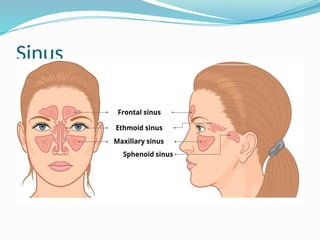
Sinus
Sinusitis
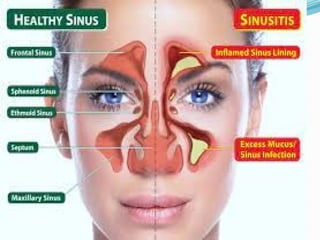
 Sinusitis is an inflammation of the tissues in your
sinuses (spaces in your forehead, cheeks and
nose usually filled with air).
Or
 Sinusitis is present when the tissue lining the
sinuses become swollen or inflamed. It occurs as
the result of an inflammatory reaction or an
infection from a virus, bacteria, or fungus
pathophysiology
 There are four paired sinus cavities: the ethmoid,
sphenoid, frontal, and maxillary sinus cavities.
These paired cavities allow air to be filtered
during inhalation. For the antigens to be filtered
and expelled, sinuses need to drain. Chronic
inflammation can cause obstruction to the nasal
passage, hinder drainage, and lead to lower
oxygen tension. This creates foci for bacteria to
build up. Ciliary dysfunction or structural
abnormalities can further exacerbate this process
Causes
 Sinusitis is usually the result of a cold or flu virus
spreading to the sinuses from the upper airways.
Only a few cases are caused by bacteria infecting
the sinuses.
 An infected tooth or fungal infection can also
occasionally cause the sinuses to become
inflamed.
 Streptococcus pneumoniae bacteria.
 Haemophilus influenza bacteria.
 Moraxella catarrhalis bacteria.
Symptoms
 Postnasal drip (mucus dripping down your
throat).
 Runny nose with thick yellow or green mucus.
 Stuffy nose.
 Facial pressure (particularly around your nose,
eyes and forehead). This might get worse when
you move your head around or bend over.
 Pressure or pain in your teeth.
 Ear pressure or pain.
 Fever.
 Bad breath (halitosis) or a bad taste in your
mouth.
 Cough.
 Headache.
 Tiredness.
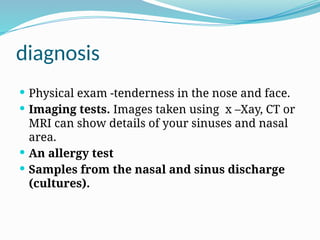
diagnosis
 Physical exam -tenderness in the nose and face.
 Imaging tests. Images taken using x –Xay, CT or
MRI can show details of your sinuses and nasal
area.
 An allergy test
 Samples from the nasal and sinus discharge
(cultures).
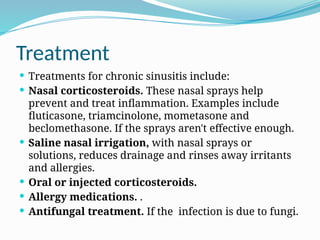
Treatment
 Treatments for chronic sinusitis include:
 Nasal corticosteroids. These nasal sprays help
prevent and treat inflammation. Examples include
fluticasone, triamcinolone, mometasone and
beclomethasone. If the sprays aren't effective enough.
 Saline nasal irrigation, with nasal sprays or
solutions, reduces drainage and rinses away irritants
and allergies.
 Oral or injected corticosteroids.
 Allergy medications. .
 Antifungal treatment. If the infection is due to fungi.
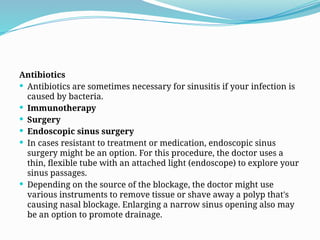
Antibiotics
 Antibiotics are sometimes necessary for sinusitis if your infection is
caused by bacteria.
 Immunotherapy
 Surgery
 Endoscopic sinus surgery
 In cases resistant to treatment or medication, endoscopic sinus
surgery might be an option. For this procedure, the doctor uses a
thin, flexible tube with an attached light (endoscope) to explore your
sinus passages.
 Depending on the source of the blockage, the doctor might use
various instruments to remove tissue or shave away a polyp that's
causing nasal blockage. Enlarging a narrow sinus opening also may
be an option to promote drainage.
 References
 https://www.mayoclinic.org/diseases-conditions/
chronic-sinusitis/diagnosis-treatment/drc-
20351667
sinusitis indication pathophysiology ,diagnosis

sinusitis indication pathophysiology ,diagnosis

  • 1.
  • 2.
  • 3.
    Sinusitis  Sinusitis isan inflammation of the tissues in your sinuses (spaces in your forehead, cheeks and nose usually filled with air). Or  Sinusitis is present when the tissue lining the sinuses become swollen or inflamed. It occurs as the result of an inflammatory reaction or an infection from a virus, bacteria, or fungus
  • 4.
    pathophysiology  There arefour paired sinus cavities: the ethmoid, sphenoid, frontal, and maxillary sinus cavities. These paired cavities allow air to be filtered during inhalation. For the antigens to be filtered and expelled, sinuses need to drain. Chronic inflammation can cause obstruction to the nasal passage, hinder drainage, and lead to lower oxygen tension. This creates foci for bacteria to build up. Ciliary dysfunction or structural abnormalities can further exacerbate this process
  • 6.
    Causes  Sinusitis isusually the result of a cold or flu virus spreading to the sinuses from the upper airways. Only a few cases are caused by bacteria infecting the sinuses.  An infected tooth or fungal infection can also occasionally cause the sinuses to become inflamed.  Streptococcus pneumoniae bacteria.  Haemophilus influenza bacteria.  Moraxella catarrhalis bacteria.
  • 7.
    Symptoms  Postnasal drip(mucus dripping down your throat).  Runny nose with thick yellow or green mucus.  Stuffy nose.  Facial pressure (particularly around your nose, eyes and forehead). This might get worse when you move your head around or bend over.
  • 8.
     Pressure orpain in your teeth.  Ear pressure or pain.  Fever.  Bad breath (halitosis) or a bad taste in your mouth.  Cough.  Headache.  Tiredness.
  • 9.
    diagnosis  Physical exam-tenderness in the nose and face.  Imaging tests. Images taken using x –Xay, CT or MRI can show details of your sinuses and nasal area.  An allergy test  Samples from the nasal and sinus discharge (cultures).
  • 10.
    Treatment  Treatments forchronic sinusitis include:  Nasal corticosteroids. These nasal sprays help prevent and treat inflammation. Examples include fluticasone, triamcinolone, mometasone and beclomethasone. If the sprays aren't effective enough.  Saline nasal irrigation, with nasal sprays or solutions, reduces drainage and rinses away irritants and allergies.  Oral or injected corticosteroids.  Allergy medications. .  Antifungal treatment. If the infection is due to fungi.
  • 11.
    Antibiotics  Antibiotics aresometimes necessary for sinusitis if your infection is caused by bacteria.  Immunotherapy  Surgery  Endoscopic sinus surgery  In cases resistant to treatment or medication, endoscopic sinus surgery might be an option. For this procedure, the doctor uses a thin, flexible tube with an attached light (endoscope) to explore your sinus passages.  Depending on the source of the blockage, the doctor might use various instruments to remove tissue or shave away a polyp that's causing nasal blockage. Enlarging a narrow sinus opening also may be an option to promote drainage.
  • 12.