SENIORLECTURERDAFFODILINTERNATIONAL UNIVERSITY
PAPON SARKER (182-15-11580)
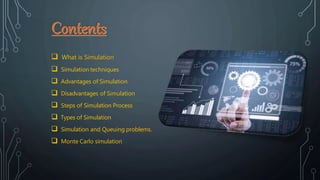
 What is Simulation
 Simulation techniques
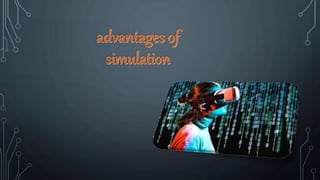
 Advantages of Simulation
 Disadvantages of Simulation
 Steps of Simulation Process
 Types of Simulation
 Simulation and Queuing problems.
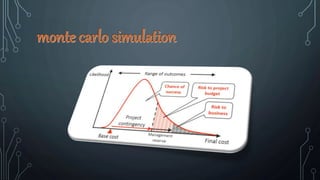
 Monte Carlo simulation
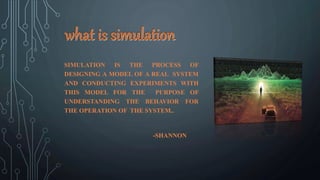
SIMULATION IS THE PROCESS OF
DESIGNING A MODEL OF A REAL SYSTEM
AND CONDUCTING EXPERIMENTS WITH
THIS MODEL FOR THE PURPOSE OF
UNDERSTANDING THE BEHAVIOR FOR
THE OPERATION OF THE SYSTEM..
-SHANNON
Time dependent and time independent simulation
Corporate and financial simulations
Visual interactive simulation
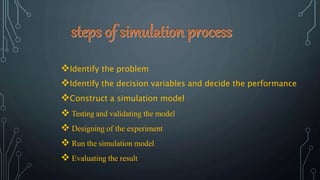
Identify the problem
Identify the decision variables and decide the performance
Construct a simulation model
 Testing and validating the model
 Designing of the experiment
 Run the simulation model
 Evaluating the result
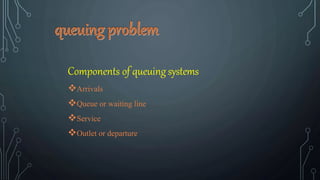
Components of queuing systems
Arrivals
Queue or waiting line
Service
Outlet or departure
Simulation and modeling

Simulation and modeling

  • 2.
  • 4.
     What isSimulation  Simulation techniques  Advantages of Simulation  Disadvantages of Simulation  Steps of Simulation Process  Types of Simulation  Simulation and Queuing problems.  Monte Carlo simulation
  • 5.
    SIMULATION IS THEPROCESS OF DESIGNING A MODEL OF A REAL SYSTEM AND CONDUCTING EXPERIMENTS WITH THIS MODEL FOR THE PURPOSE OF UNDERSTANDING THE BEHAVIOR FOR THE OPERATION OF THE SYSTEM.. -SHANNON
  • 9.
    Time dependent andtime independent simulation Corporate and financial simulations Visual interactive simulation
  • 10.
    Identify the problem Identifythe decision variables and decide the performance Construct a simulation model  Testing and validating the model  Designing of the experiment  Run the simulation model  Evaluating the result
  • 12.
    Components of queuingsystems Arrivals Queue or waiting line Service Outlet or departure