Elements of Business Continuity


     A high level methodology

                                 December 2009


   Michael Wilkovesky
   Business Continuity & Recovery Consulting
        www.continuityrecovery.com      1
         Copywrite: BC&RC 2009
Why plan? Nothing can go wrong, right?
               www.continuityrecovery.com   2
                Copywrite: BC&RC 2009
Daily operations


A disaster - An unexpected event that
cause a break in your businesses
normal operation

             www.continuityrecovery.com       3
              Copywrite: BC&RC 2009
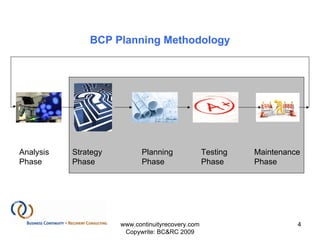
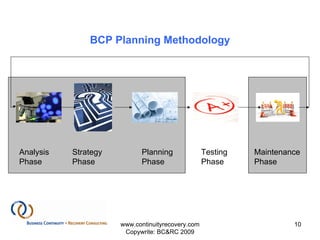
BCP Planning Methodology


Analysis   Strategy         Planning               Testing   Maintenance
Phase      Phase            Phase                  Phase     Phase


                      www.continuityrecovery.com                       4
                       Copywrite: BC&RC 2009
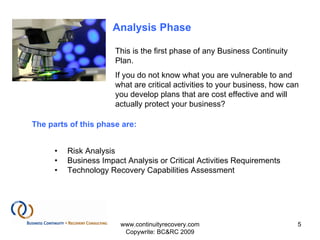
Analysis Phase

                       This is the first phase of any Business Continuity
                       Plan.
                       If you do not know what you are vulnerable to and
                       what are critical activities to your business, how can
                       you develop plans that are cost effective and will
                       actually protect your business?

The parts of this phase are:


      •   Risk Analysis
      •   Business Impact Analysis or Critical Activities Requirements
      •   Technology Recovery Capabilities Assessment


                        www.continuityrecovery.com                          5
                         Copywrite: BC&RC 2009
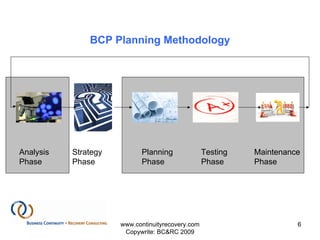
BCP Planning Methodology


Analysis   Strategy         Planning               Testing   Maintenance
Phase      Phase            Phase                  Phase     Phase


                      www.continuityrecovery.com                       6
                       Copywrite: BC&RC 2009
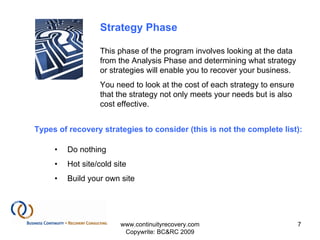
Strategy Phase

                  This phase of the program involves looking at the data
                  from the Analysis Phase and determining what strategy
                  or strategies will enable you to recover your business.
                  You need to look at the cost of each strategy to ensure
                  that the strategy not only meets your needs but is also
                  cost effective.


Types of recovery strategies to consider (this is not the complete list):

     •   Do nothing
     •   Hot site/cold site
     •   Build your own site


                         www.continuityrecovery.com                         7
                          Copywrite: BC&RC 2009
BCP Planning Methodology


Analysis   Strategy         Planning               Testing   Maintenance
Phase      Phase            Phase                  Phase     Phase


                      www.continuityrecovery.com                       8
                       Copywrite: BC&RC 2009
Planning Phase

                      You know what you have to protect, you have your
                      strategy selected, now you need to build your
                      plans.
                      These plans are very detailed and include all of the
                      necessary steps that you, your business groups or
                      your technical staff need to recover your business.


Types of plans you will need to develop:

      •   Business unit/group plans
      •   Technology recovery plans
      •   Crisis Management Plans


                        www.continuityrecovery.com                           9
                         Copywrite: BC&RC 2009
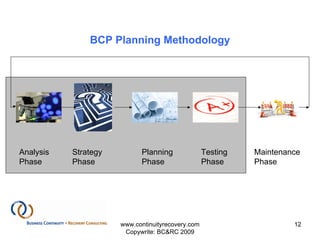
BCP Planning Methodology


Analysis   Strategy         Planning               Testing   Maintenance
Phase      Phase            Phase                  Phase     Phase


                      www.continuityrecovery.com                      10
                       Copywrite: BC&RC 2009
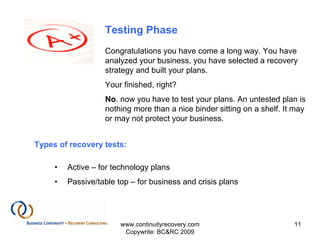
Testing Phase
                   Congratulations you have come a long way. You have
                   analyzed your business, you have selected a recovery
                   strategy and built your plans.
                   Your finished, right?
                   No. now you have to test your plans. An untested plan is
                   nothing more than a nice binder sitting on a shelf. It may
                   or may not protect your business.


Types of recovery tests:

     •   Active – for technology plans
     •   Passive/table top – for business and crisis plans


                        www.continuityrecovery.com                       11
                         Copywrite: BC&RC 2009
BCP Planning Methodology


Analysis   Strategy         Planning               Testing   Maintenance
Phase      Phase            Phase                  Phase     Phase


                      www.continuityrecovery.com                      12
                       Copywrite: BC&RC 2009
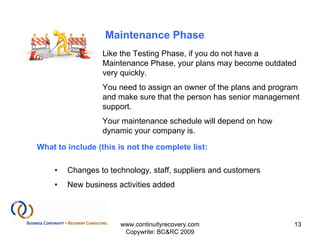
Maintenance Phase
                  Like the Testing Phase, if you do not have a
                  Maintenance Phase, your plans may become outdated
                  very quickly.
                  You need to assign an owner of the plans and program
                  and make sure that the person has senior management
                  support.
                  Your maintenance schedule will depend on how
                  dynamic your company is.

What to include (this is not the complete list:

    •   Changes to technology, staff, suppliers and customers
    •   New business activities added


                       www.continuityrecovery.com                   13
                        Copywrite: BC&RC 2009
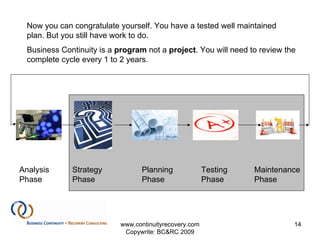
Now you can congratulate yourself. You have a tested well maintained
  plan. But you still have work to do.
  Business Continuity is a program not a project. You will need to review the
  complete cycle every 1 to 2 years.


Analysis      Strategy            Planning               Testing   Maintenance
Phase         Phase               Phase                  Phase     Phase


                            www.continuityrecovery.com                      14
                             Copywrite: BC&RC 2009
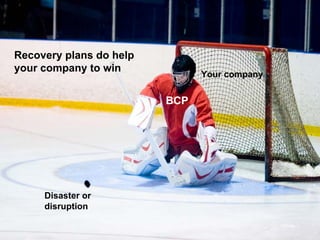
Recovery plans do help
your company to win
                                                Your company


                                 BCP


     Disaster or
     disruption
                   www.continuityrecovery.com                  15
                    Copywrite: BC&RC 2009
Michael Wilkovesky

     Business Continuity & Recovery Consulting

             Telephone: 1-416-318-6222

         Email: info@continuityrecovery.com

     Website: http://www.continuityrecovery.com

    Blog: http://continuityrecovery.wordpress.com

Linked In: http://ca.linkedin.com/in/continuityrecovery


                   www.continuityrecovery.com             16
                    Copywrite: BC&RC 2009
Disasters can happen at anytime
… is your company prepared?


          www.continuityrecovery.com   17
           Copywrite: BC&RC 2009

Simplified BCP methodology

  • 1.
    Elements of BusinessContinuity A high level methodology December 2009 Michael Wilkovesky Business Continuity & Recovery Consulting www.continuityrecovery.com 1 Copywrite: BC&RC 2009
  • 2.
    Why plan? Nothingcan go wrong, right? www.continuityrecovery.com 2 Copywrite: BC&RC 2009
  • 3.
    Daily operations A disaster- An unexpected event that cause a break in your businesses normal operation www.continuityrecovery.com 3 Copywrite: BC&RC 2009
  • 4.
    BCP Planning Methodology Analysis Strategy Planning Testing Maintenance Phase Phase Phase Phase Phase www.continuityrecovery.com 4 Copywrite: BC&RC 2009
  • 5.
    Analysis Phase This is the first phase of any Business Continuity Plan. If you do not know what you are vulnerable to and what are critical activities to your business, how can you develop plans that are cost effective and will actually protect your business? The parts of this phase are: • Risk Analysis • Business Impact Analysis or Critical Activities Requirements • Technology Recovery Capabilities Assessment www.continuityrecovery.com 5 Copywrite: BC&RC 2009
  • 6.
    BCP Planning Methodology Analysis Strategy Planning Testing Maintenance Phase Phase Phase Phase Phase www.continuityrecovery.com 6 Copywrite: BC&RC 2009
  • 7.
    Strategy Phase This phase of the program involves looking at the data from the Analysis Phase and determining what strategy or strategies will enable you to recover your business. You need to look at the cost of each strategy to ensure that the strategy not only meets your needs but is also cost effective. Types of recovery strategies to consider (this is not the complete list): • Do nothing • Hot site/cold site • Build your own site www.continuityrecovery.com 7 Copywrite: BC&RC 2009
  • 8.
    BCP Planning Methodology Analysis Strategy Planning Testing Maintenance Phase Phase Phase Phase Phase www.continuityrecovery.com 8 Copywrite: BC&RC 2009
  • 9.
    Planning Phase You know what you have to protect, you have your strategy selected, now you need to build your plans. These plans are very detailed and include all of the necessary steps that you, your business groups or your technical staff need to recover your business. Types of plans you will need to develop: • Business unit/group plans • Technology recovery plans • Crisis Management Plans www.continuityrecovery.com 9 Copywrite: BC&RC 2009
  • 10.
    BCP Planning Methodology Analysis Strategy Planning Testing Maintenance Phase Phase Phase Phase Phase www.continuityrecovery.com 10 Copywrite: BC&RC 2009
  • 11.
    Testing Phase Congratulations you have come a long way. You have analyzed your business, you have selected a recovery strategy and built your plans. Your finished, right? No. now you have to test your plans. An untested plan is nothing more than a nice binder sitting on a shelf. It may or may not protect your business. Types of recovery tests: • Active – for technology plans • Passive/table top – for business and crisis plans www.continuityrecovery.com 11 Copywrite: BC&RC 2009
  • 12.
    BCP Planning Methodology Analysis Strategy Planning Testing Maintenance Phase Phase Phase Phase Phase www.continuityrecovery.com 12 Copywrite: BC&RC 2009
  • 13.
    Maintenance Phase Like the Testing Phase, if you do not have a Maintenance Phase, your plans may become outdated very quickly. You need to assign an owner of the plans and program and make sure that the person has senior management support. Your maintenance schedule will depend on how dynamic your company is. What to include (this is not the complete list: • Changes to technology, staff, suppliers and customers • New business activities added www.continuityrecovery.com 13 Copywrite: BC&RC 2009
  • 14.
    Now you cancongratulate yourself. You have a tested well maintained plan. But you still have work to do. Business Continuity is a program not a project. You will need to review the complete cycle every 1 to 2 years. Analysis Strategy Planning Testing Maintenance Phase Phase Phase Phase Phase www.continuityrecovery.com 14 Copywrite: BC&RC 2009
  • 15.
    Recovery plans dohelp your company to win Your company BCP Disaster or disruption www.continuityrecovery.com 15 Copywrite: BC&RC 2009
  • 16.
    Michael Wilkovesky Business Continuity & Recovery Consulting Telephone: 1-416-318-6222 Email: info@continuityrecovery.com Website: http://www.continuityrecovery.com Blog: http://continuityrecovery.wordpress.com Linked In: http://ca.linkedin.com/in/continuityrecovery www.continuityrecovery.com 16 Copywrite: BC&RC 2009
  • 17.
    Disasters can happenat anytime … is your company prepared? www.continuityrecovery.com 17 Copywrite: BC&RC 2009