. Regular verbs
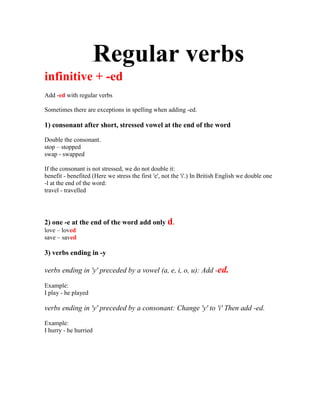
infinitive + -ed
Add -ed with regular verbs

Sometimes there are exceptions in spelling when adding -ed.

1) consonant after short, stressed vowel at the end of the word

Double the consonant.
stop – stopped
swap - swapped

If the consonant is not stressed, we do not double it:
benefit - benefited (Here we stress the first 'e', not the 'i'.) In British English we double one
-l at the end of the word:
travel - travelled


2) one -e at the end of the word add only d.
love – loved
save – saved

3) verbs ending in -y

verbs ending in 'y' preceded by a vowel (a, e, i, o, u): Add -ed.

Example:
I play - he played

verbs ending in 'y' preceded by a consonant: Change 'y' to 'i' Then add -ed.

Example:
I hurry - he hurried
Pronunciation of the ending -ed in the Simple Past
In the Simple Past we add -ed to regular verbs. Be careful pronuncing the verbs:

1) verbs ending in -ed preceded by a voiceless consonant [p, k, f, ʃ , ʧ , s, θ]
-> speak [t].

The -e is silent. Example: I stop - I stopped [stɒ pt]

2) verbs ending in -ed preceded by a voiced consonant [b, g, v, ʒ , ʤ , z, ð, l, m, n]   or a
vowel
-> speak [d].

The -e is silent. Example: I clean - I cleaned [kli:nd]

3) verbs ending in -ed preceded by [t] or [d]
-> speak [ɪ   d].
The -e changes to [ɪ ]. Example: I visit - I visited [vɪ zɪ tɪ d]


FORM OF THE SIMPLE PAST
Form the Simple Past:
- with regular verbs: infinitive + -ed
- with irregular verbs: use the 2nd column of the table of the irregular verbs


Affirmative sentences:
Use the same form of the verb every time regardless the subject.

       regular verbs               irregular verbs

I played football.          I went to the supermarket.
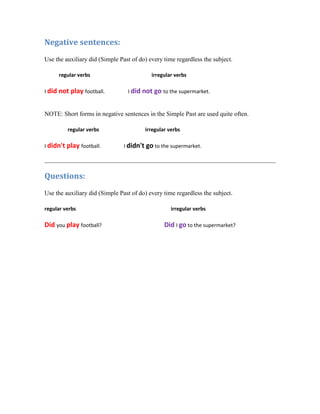
Negative sentences:
Use the auxiliary did (Simple Past of do) every time regardless the subject.

     regular verbs                         irregular verbs

I did not play football.         I did not go to the supermarket.


NOTE: Short forms in negative sentences in the Simple Past are used quite often.

         regular verbs                  irregular verbs

I didn't play football.         I didn't go to the supermarket.


Questions:
Use the auxiliary did (Simple Past of do) every time regardless the subject.

regular verbs                                      irregular verbs

Did you play football?                          Did I go to the supermarket?
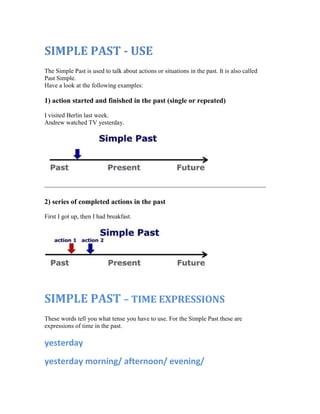
SIMPLE PAST - USE
The Simple Past is used to talk about actions or situations in the past. It is also called
Past Simple.
Have a look at the following examples:

1) action started and finished in the past (single or repeated)

I visited Berlin last week.
Andrew watched TV yesterday.


2) series of completed actions in the past

First I got up, then I had breakfast.


SIMPLE PAST – TIME EXPRESSIONS
These words tell you what tense you have to use. For the Simple Past these are
expressions of time in the past.

yesterday
yesterday morning/ afternoon/ evening/
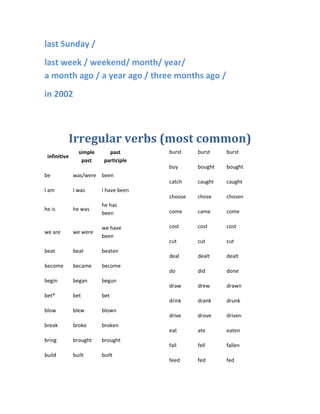
last Sunday /
last week / weekend/ month/ year/
a month ago / a year ago / three months ago /
in 2002


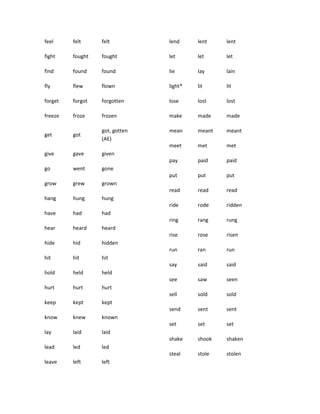
              Irregular verbs (most common)
                simple      past       burst    burst    burst
 infinitive
                 past     participle
                                       buy      bought   bought
be            was/were been
                                       catch    caught   caught
I am          I was      I have been
                                       choose   chose    chosen
                         he has
he is         he was                   come     came     come
                         been

                         we have       cost     cost     cost
we are        we were
                         been
                                       cut      cut      cut
beat          beat       beaten
                                       deal     dealt    dealt
become        became     become
                                       do       did      done
begin         began      begun
                                       draw     drew     drawn
bet*          bet        bet
                                       drink    drank    drunk
blow          blew       blown
                                       drive    drove    driven
break         broke      broken
                                       eat      ate      eaten
bring         brought    brought
                                       fall     fell     fallen
build         built      built
                                       feed     fed      fed
feel     felt     felt          lend     lent    lent

fight    fought   fought        let      let     let

find     found    found         lie      lay     lain

fly      flew     flown         light*   lit     lit

forget   forgot   forgotten     lose     lost    lost

freeze   froze    frozen        make     made    made

                  got, gotten   mean     meant   meant
get      got
                  (AE)
                                meet     met     met
give     gave     given
                                pay      paid    paid
go       went     gone
                                put      put     put
grow     grew     grown
                                read     read    read
hang     hung     hung
                                ride     rode    ridden
have     had      had
                                ring     rang    rung
hear     heard    heard
                                rise     rose    risen
hide     hid      hidden
                                run      ran     run
hit      hit      hit
                                say      said    said
hold     held     held
                                see      saw     seen
hurt     hurt     hurt
                                sell     sold    sold
keep     kept     kept
                                send     sent    sent
know     knew     known
                                set      set     set
lay      laid     laid
                                shake    shook   shaken
lead     led      led
                                steal    stole   stolen
leave    left     left
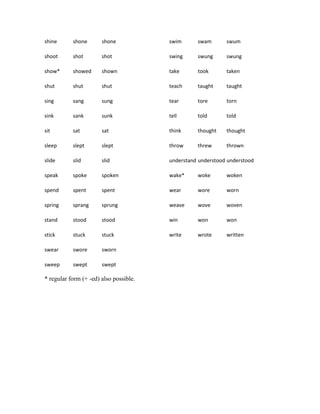
shine      shone       shone            swim      swam       swum

shoot      shot        shot             swing     swung      swung

show*      showed      shown            take      took       taken

shut       shut        shut             teach     taught     taught

sing       sang        sung             tear      tore       torn

sink       sank        sunk             tell      told       told

sit        sat         sat              think     thought    thought

sleep      slept       slept            throw     threw      thrown

slide      slid        slid             understand understood understood

speak      spoke       spoken           wake*     woke       woken

spend      spent       spent            wear      wore       worn

spring     sprang      sprung           weave     wove       woven

stand      stood       stood            win       won        won

stick      stuck       stuck            write     wrote      written

swear      swore       sworn

sweep      swept       swept

* regular form (+ -ed) also possible.

Simple past

  • 1.
    . Regular verbs infinitive+ -ed Add -ed with regular verbs Sometimes there are exceptions in spelling when adding -ed. 1) consonant after short, stressed vowel at the end of the word Double the consonant. stop – stopped swap - swapped If the consonant is not stressed, we do not double it: benefit - benefited (Here we stress the first 'e', not the 'i'.) In British English we double one -l at the end of the word: travel - travelled 2) one -e at the end of the word add only d. love – loved save – saved 3) verbs ending in -y verbs ending in 'y' preceded by a vowel (a, e, i, o, u): Add -ed. Example: I play - he played verbs ending in 'y' preceded by a consonant: Change 'y' to 'i' Then add -ed. Example: I hurry - he hurried
  • 2.
    Pronunciation of theending -ed in the Simple Past In the Simple Past we add -ed to regular verbs. Be careful pronuncing the verbs: 1) verbs ending in -ed preceded by a voiceless consonant [p, k, f, ʃ , ʧ , s, θ] -> speak [t]. The -e is silent. Example: I stop - I stopped [stɒ pt] 2) verbs ending in -ed preceded by a voiced consonant [b, g, v, ʒ , ʤ , z, ð, l, m, n] or a vowel -> speak [d]. The -e is silent. Example: I clean - I cleaned [kli:nd] 3) verbs ending in -ed preceded by [t] or [d] -> speak [ɪ d]. The -e changes to [ɪ ]. Example: I visit - I visited [vɪ zɪ tɪ d] FORM OF THE SIMPLE PAST Form the Simple Past: - with regular verbs: infinitive + -ed - with irregular verbs: use the 2nd column of the table of the irregular verbs Affirmative sentences: Use the same form of the verb every time regardless the subject. regular verbs irregular verbs I played football. I went to the supermarket.
  • 3.
    Negative sentences: Use theauxiliary did (Simple Past of do) every time regardless the subject. regular verbs irregular verbs I did not play football. I did not go to the supermarket. NOTE: Short forms in negative sentences in the Simple Past are used quite often. regular verbs irregular verbs I didn't play football. I didn't go to the supermarket. Questions: Use the auxiliary did (Simple Past of do) every time regardless the subject. regular verbs irregular verbs Did you play football? Did I go to the supermarket?
  • 4.
    SIMPLE PAST -USE The Simple Past is used to talk about actions or situations in the past. It is also called Past Simple. Have a look at the following examples: 1) action started and finished in the past (single or repeated) I visited Berlin last week. Andrew watched TV yesterday. 2) series of completed actions in the past First I got up, then I had breakfast. SIMPLE PAST – TIME EXPRESSIONS These words tell you what tense you have to use. For the Simple Past these are expressions of time in the past. yesterday yesterday morning/ afternoon/ evening/
  • 5.
    last Sunday / lastweek / weekend/ month/ year/ a month ago / a year ago / three months ago / in 2002 Irregular verbs (most common) simple past burst burst burst infinitive past participle buy bought bought be was/were been catch caught caught I am I was I have been choose chose chosen he has he is he was come came come been we have cost cost cost we are we were been cut cut cut beat beat beaten deal dealt dealt become became become do did done begin began begun draw drew drawn bet* bet bet drink drank drunk blow blew blown drive drove driven break broke broken eat ate eaten bring brought brought fall fell fallen build built built feed fed fed
  • 6.
    feel felt felt lend lent lent fight fought fought let let let find found found lie lay lain fly flew flown light* lit lit forget forgot forgotten lose lost lost freeze froze frozen make made made got, gotten mean meant meant get got (AE) meet met met give gave given pay paid paid go went gone put put put grow grew grown read read read hang hung hung ride rode ridden have had had ring rang rung hear heard heard rise rose risen hide hid hidden run ran run hit hit hit say said said hold held held see saw seen hurt hurt hurt sell sold sold keep kept kept send sent sent know knew known set set set lay laid laid shake shook shaken lead led led steal stole stolen leave left left
  • 7.
    shine shone shone swim swam swum shoot shot shot swing swung swung show* showed shown take took taken shut shut shut teach taught taught sing sang sung tear tore torn sink sank sunk tell told told sit sat sat think thought thought sleep slept slept throw threw thrown slide slid slid understand understood understood speak spoke spoken wake* woke woken spend spent spent wear wore worn spring sprang sprung weave wove woven stand stood stood win won won stick stuck stuck write wrote written swear swore sworn sweep swept swept * regular form (+ -ed) also possible.