













Simple, Battle Proven
Microservices Strategy
About me
Chief Architect @ Kenshoo
Java backend since 2004
Microservices + CD since 2008
Agenda
Quick intro to MSA
Scope
Speed
Stability
Stuff we learned
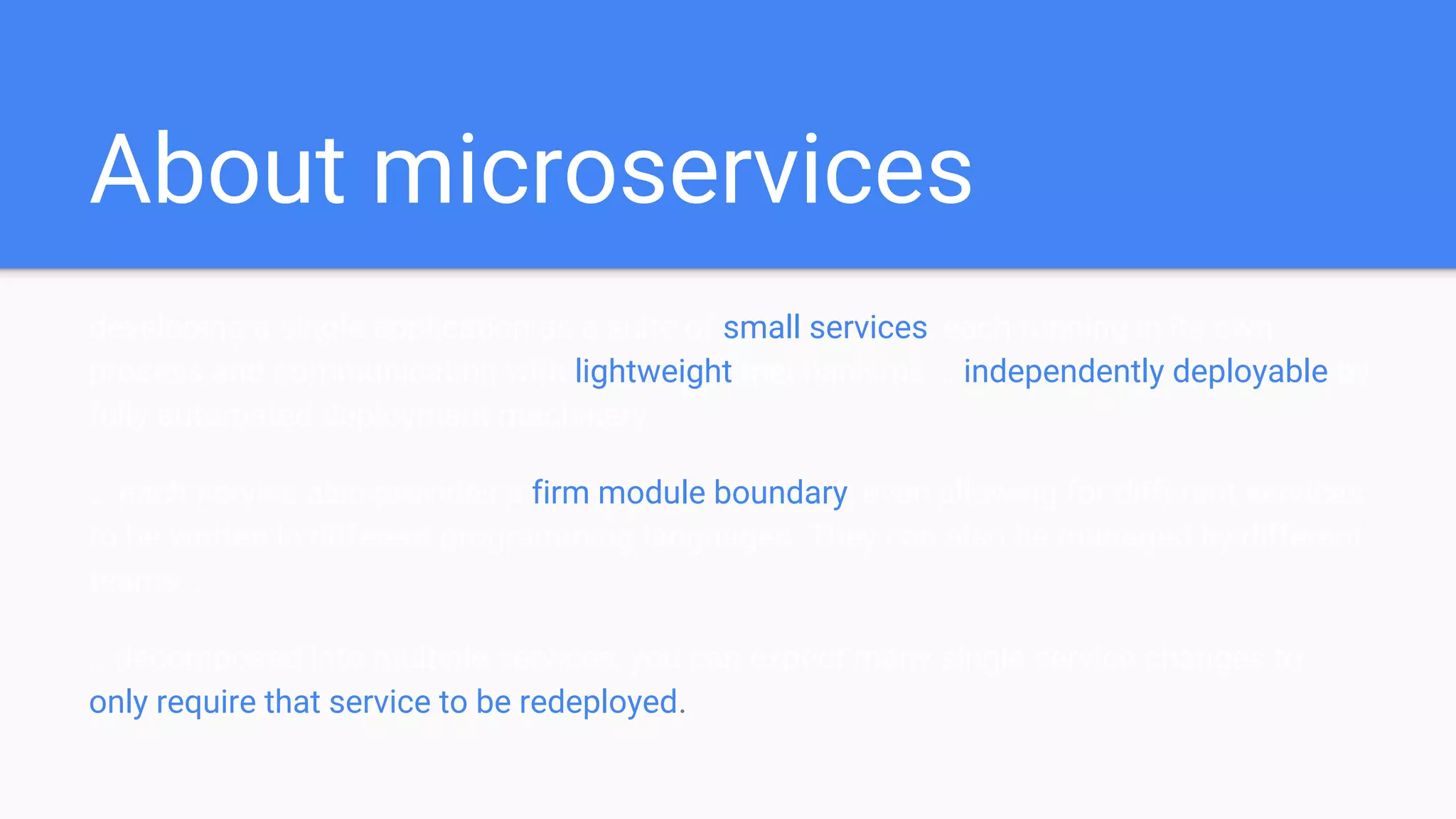
About microservices
developing a single application as a suite of small services, each running in its own
process and communicating with lightweight mechanisms … independently deployable by
fully automated deployment machinery.
… each service also provides a firm module boundary, even allowing for different services
to be written in different programming languages. They can also be managed by different
teams …
...decomposed into multiple services, you can expect many single service changes to
only require that service to be redeployed.
James Lewis, Martin Fowler - Microservices a definition of this new architectural term
About microservices
developing a single application as a suite of small services, each running in its own
process and communicating with lightweight mechanisms … independently deployable by
fully automated deployment machinery.
… each service also provides a firm module boundary, even allowing for different services
to be written in different programming languages. They can also be managed by different
teams …
...decomposed into multiple services, you can expect many single service changes to
only require that service to be redeployed.
High
FocusPhoto by Philippe Henry, available under a Creative Commons Attribution-Noncommercial license.
Limited
Scope
Independant
Photo by PEXELS, available under a CC0 license.
Simple
Scope
Define Firm Boundary
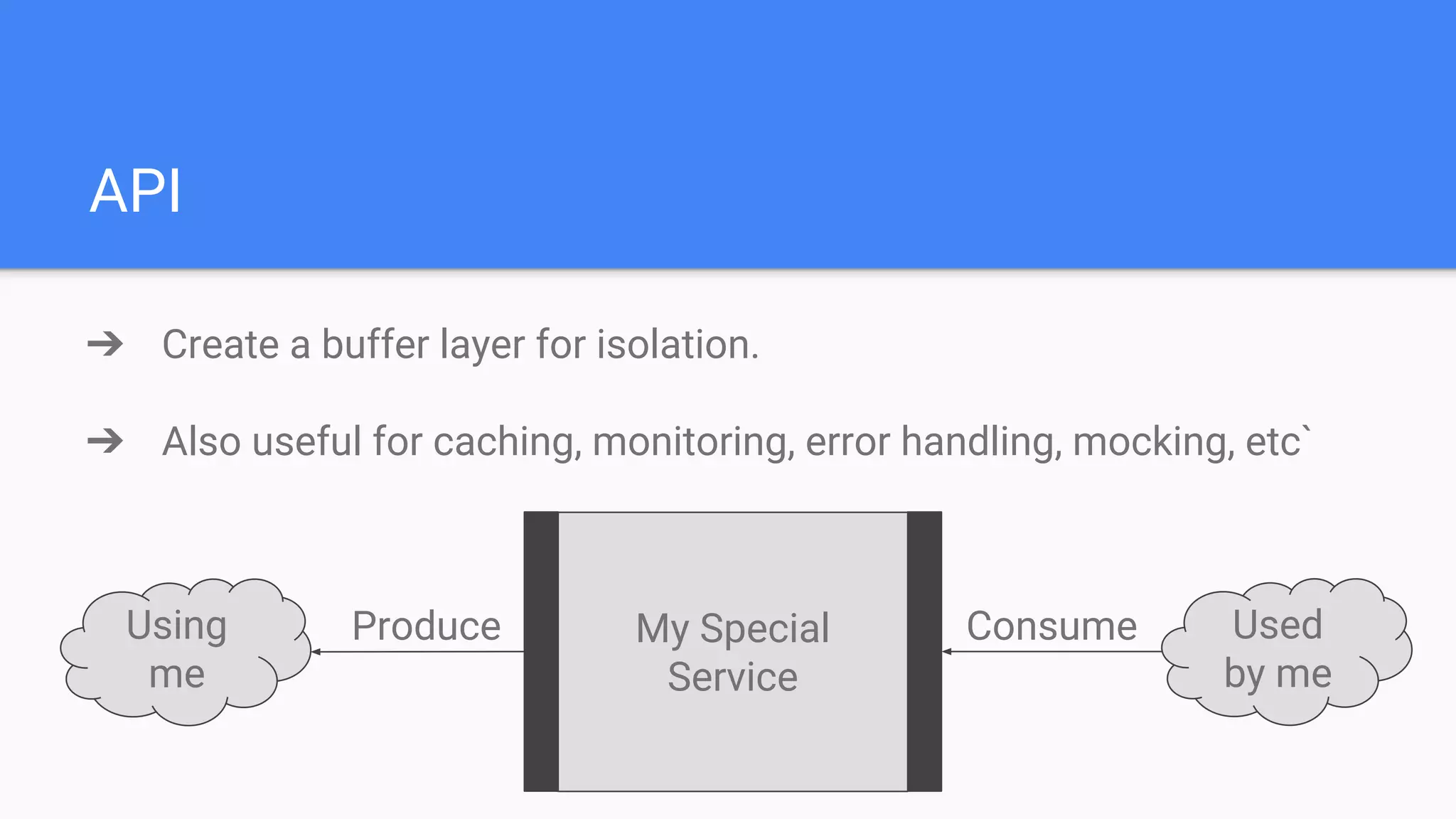
API
➔ Create a buffer layer for isolation.
➔ Also useful for caching, monitoring, error handling, mocking, etc`
ConsumeMy Special
Service
Used
by me
Using
me
Produce
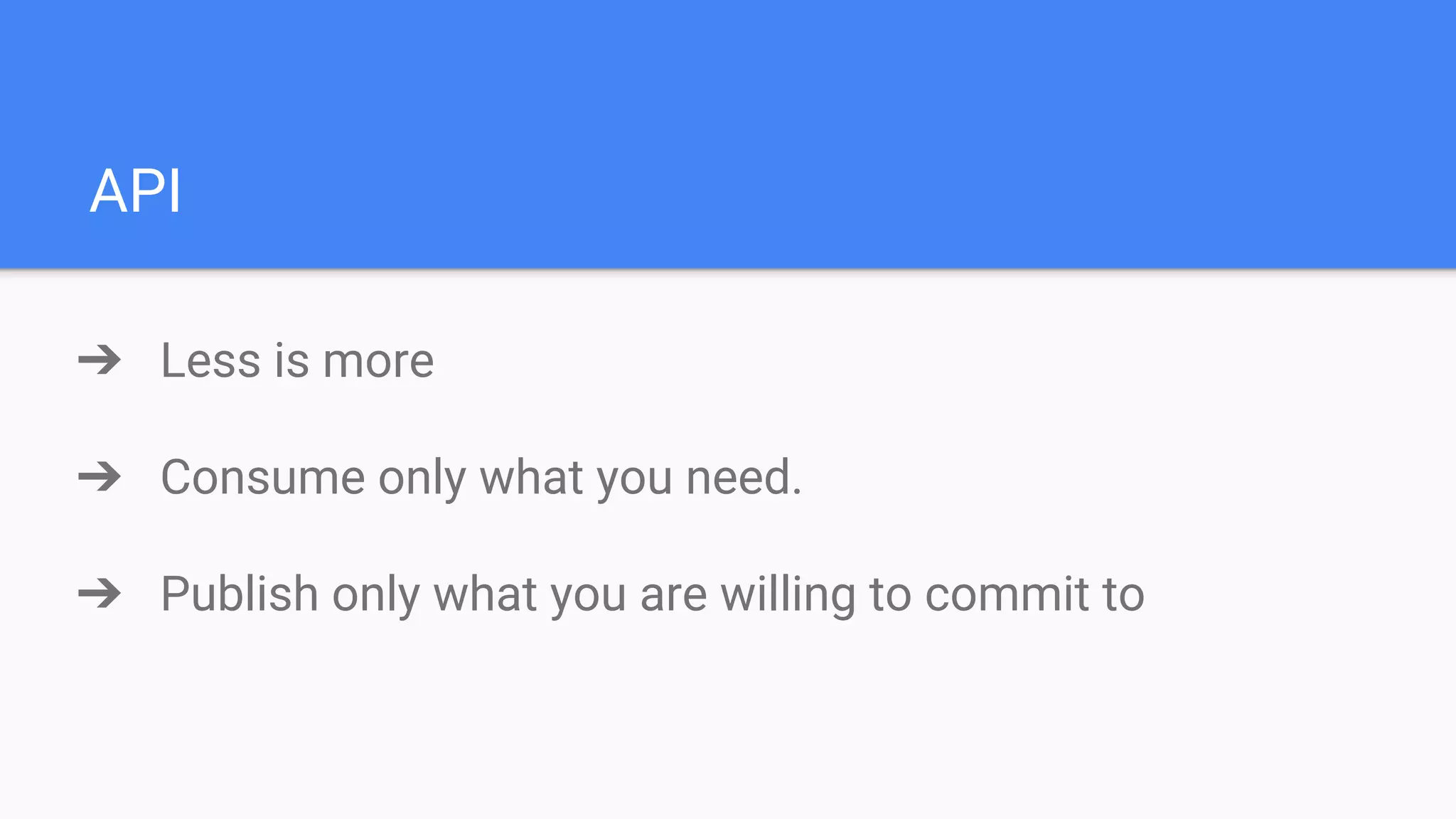
API
➔ Less is more
➔ Consume only what you need.
➔ Publish only what you are willing to commit to
I DON’T ALWAYS BUILD
MICROSERVICES
BUT WHEN I DO I NEVER
USE CLIENT LIBRARIES
Speed
Maintain fast pace over time
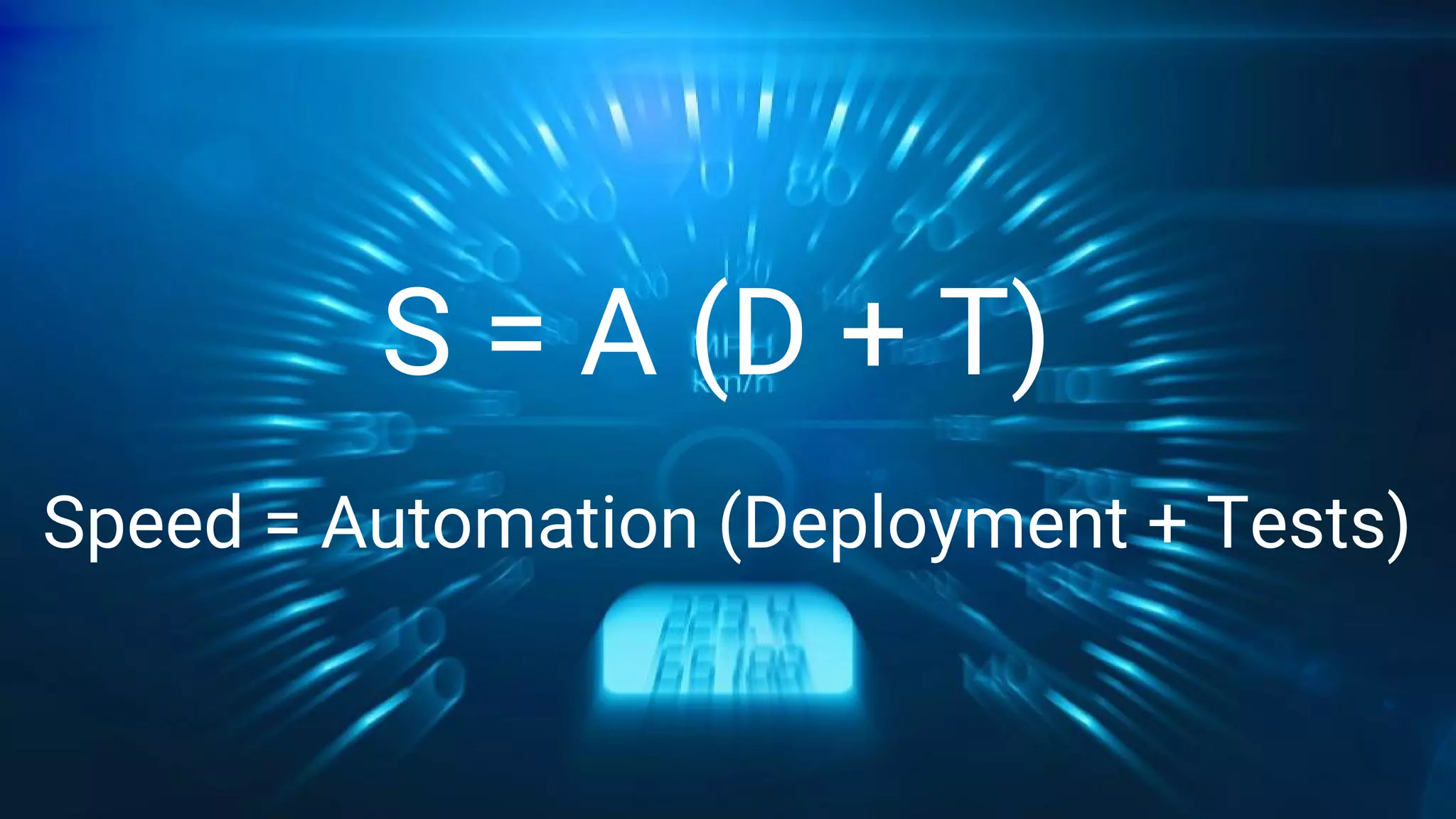
S = A (D + T)
Speed = Automation (Deployment + Tests)
S = A (D + T)
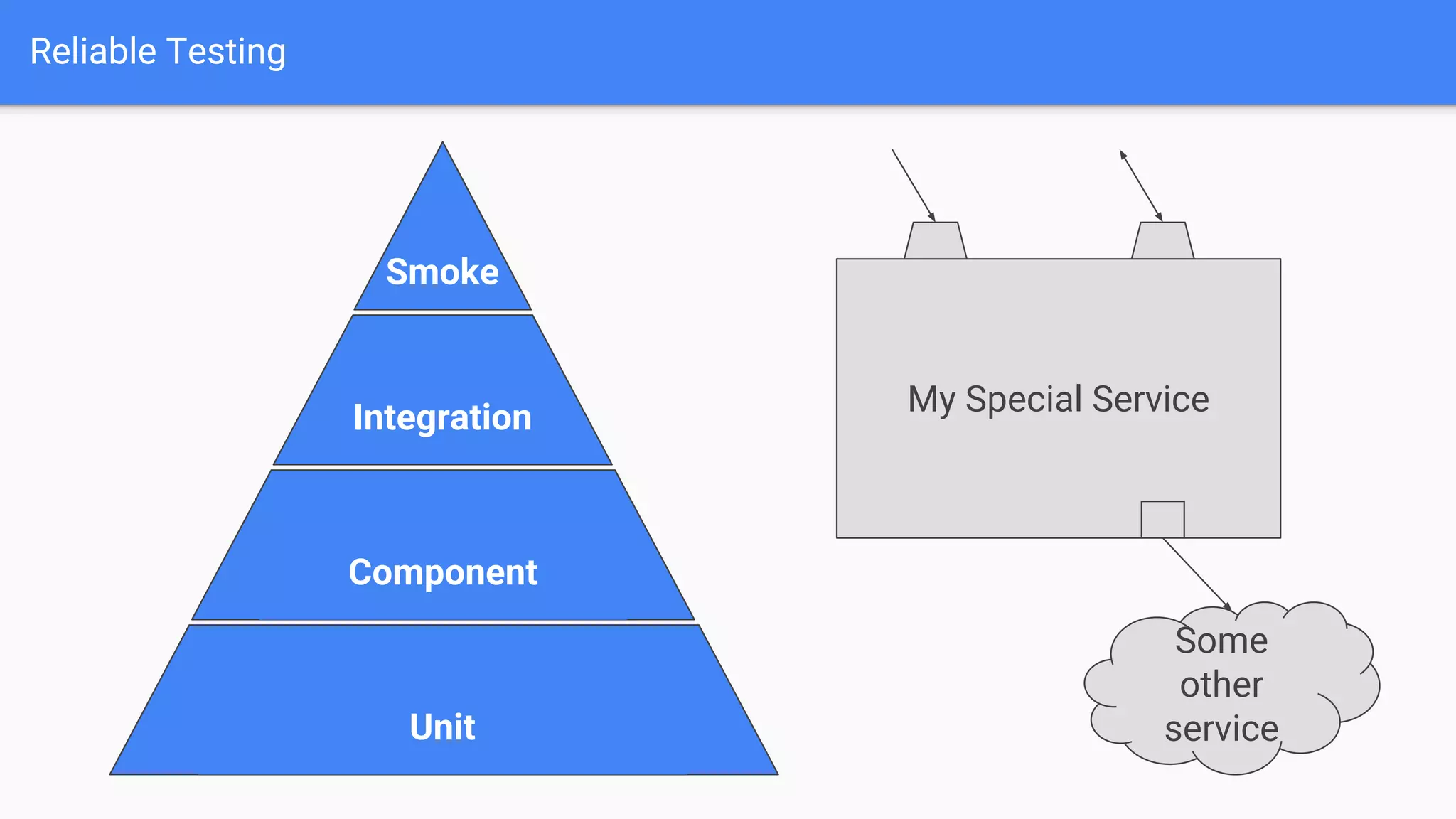
Reliable Testing
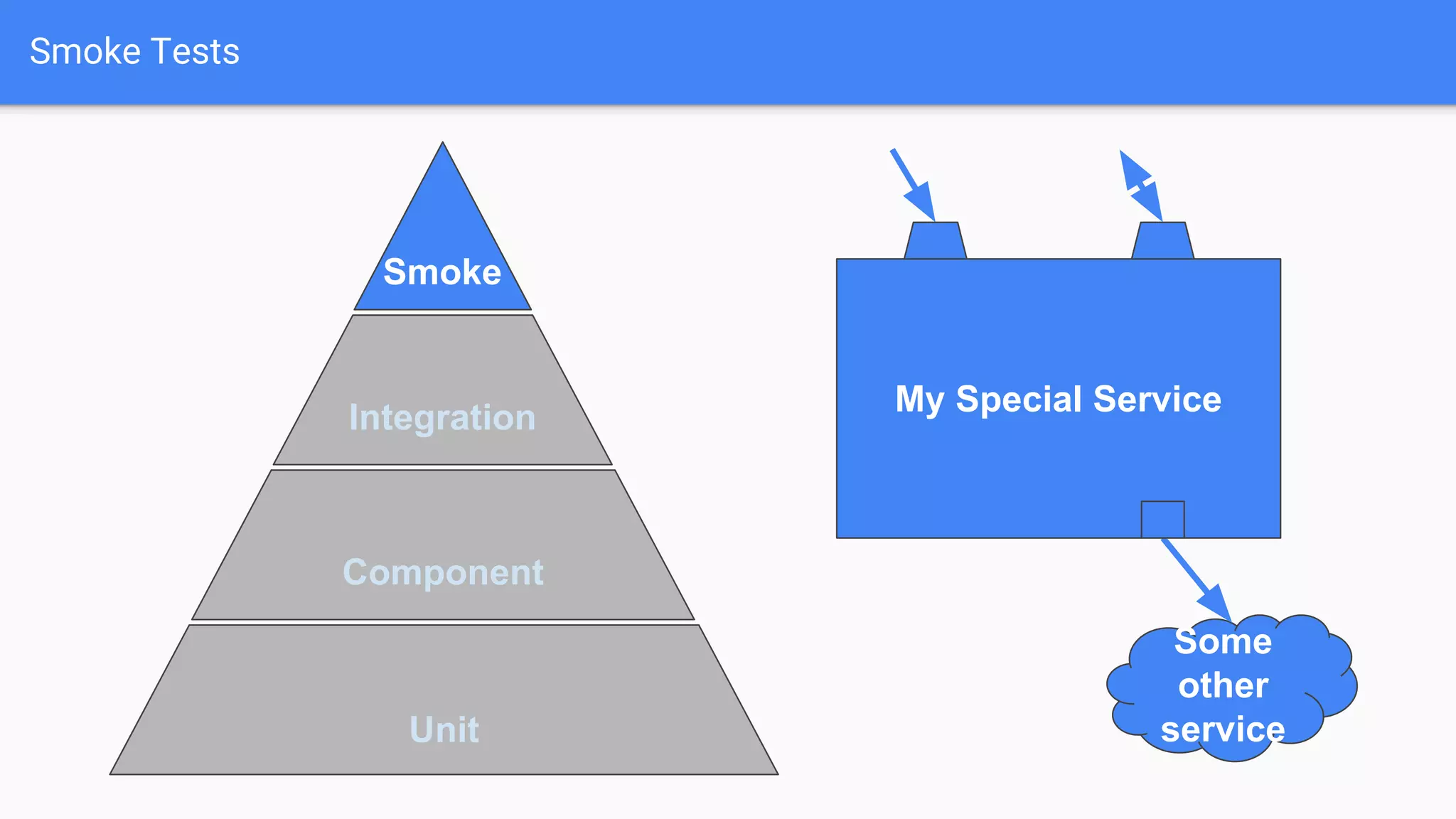
Unit
Component
Integration
Smoke
My Special Service
Some
other
service
Some
other
service
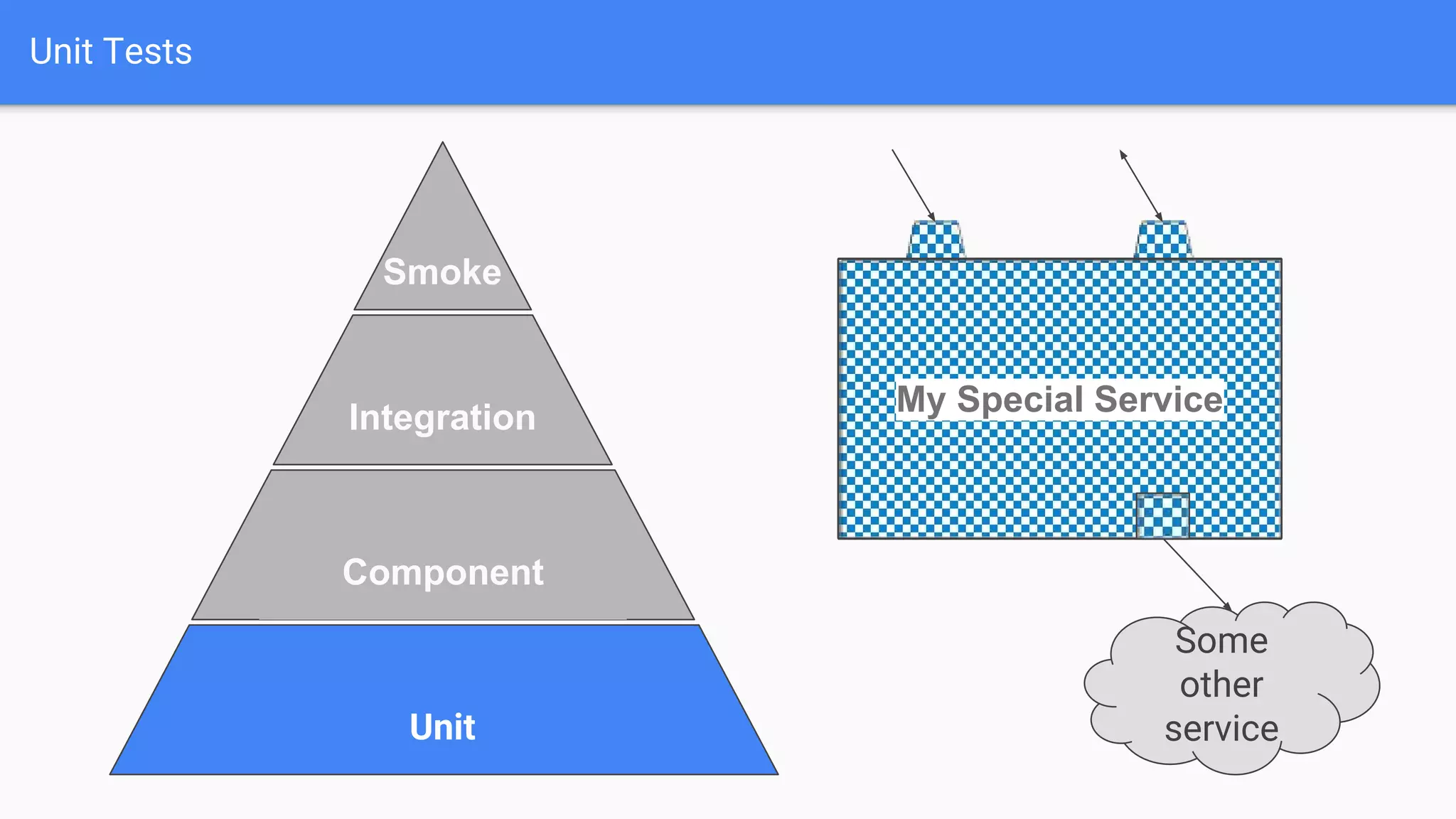
Unit Tests
Unit
Component
Integration
Smoke
My Special Service
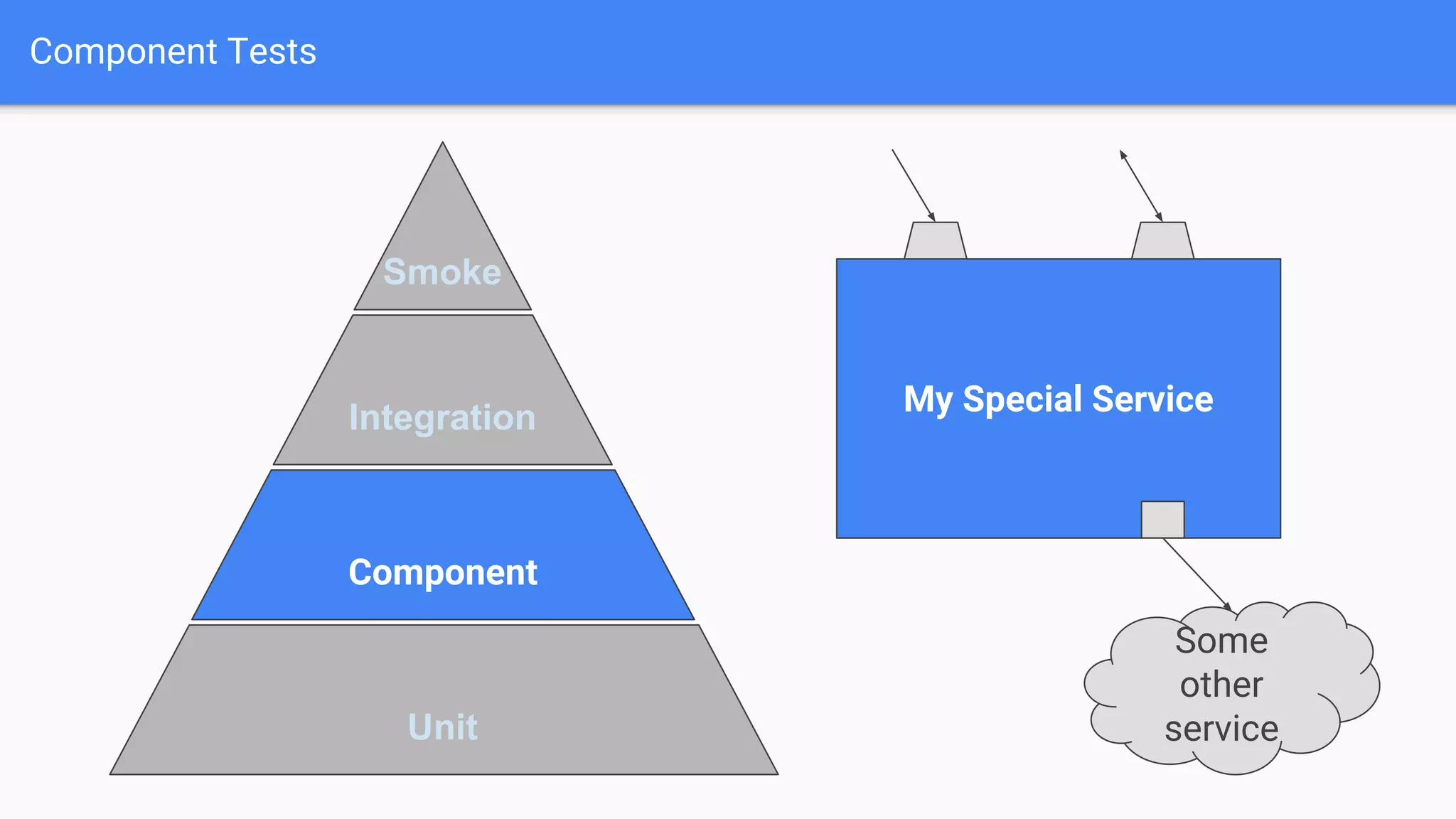
Component Tests
Unit
Component
Integration
Smoke
My Special Service
Some
other
service
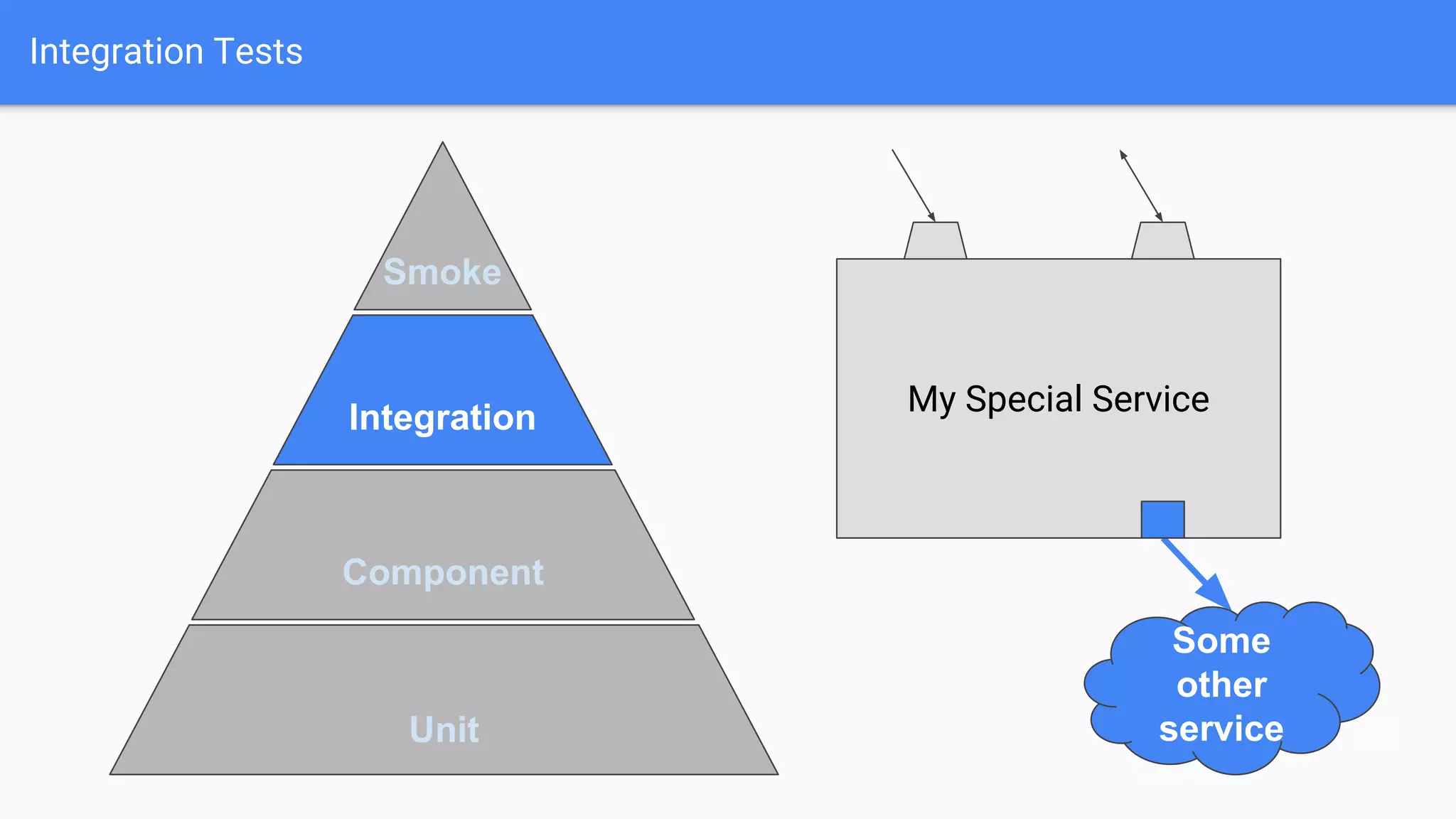
Integration Tests
Unit
Component
Integration
Smoke
My Special Service
Some
other
service
Smoke Tests
Unit
Component
Integration
Smoke
My Special Service
Some
other
service
Photo by William Warby
NO
We’re not doing it enough
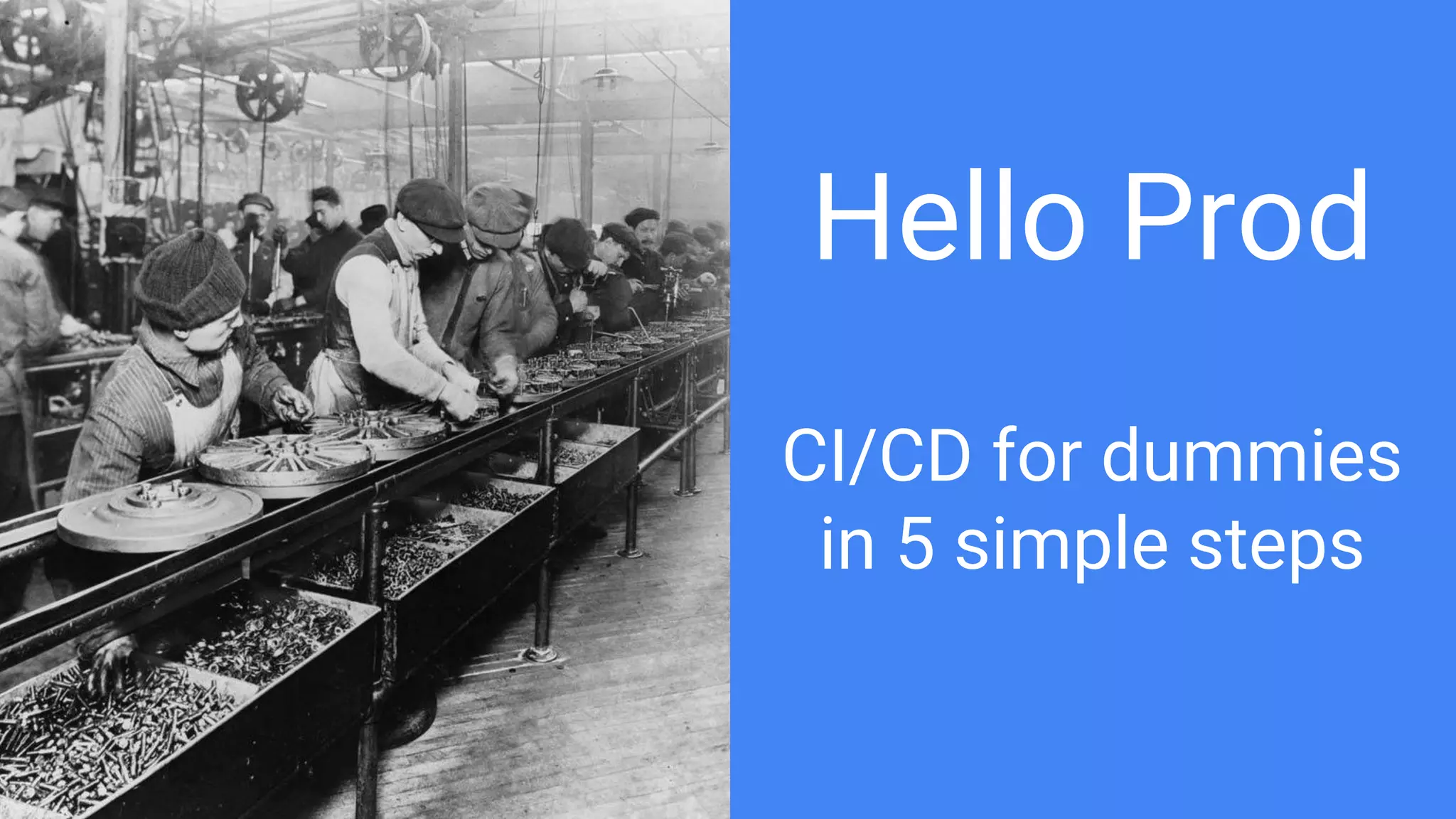
Hello Prod
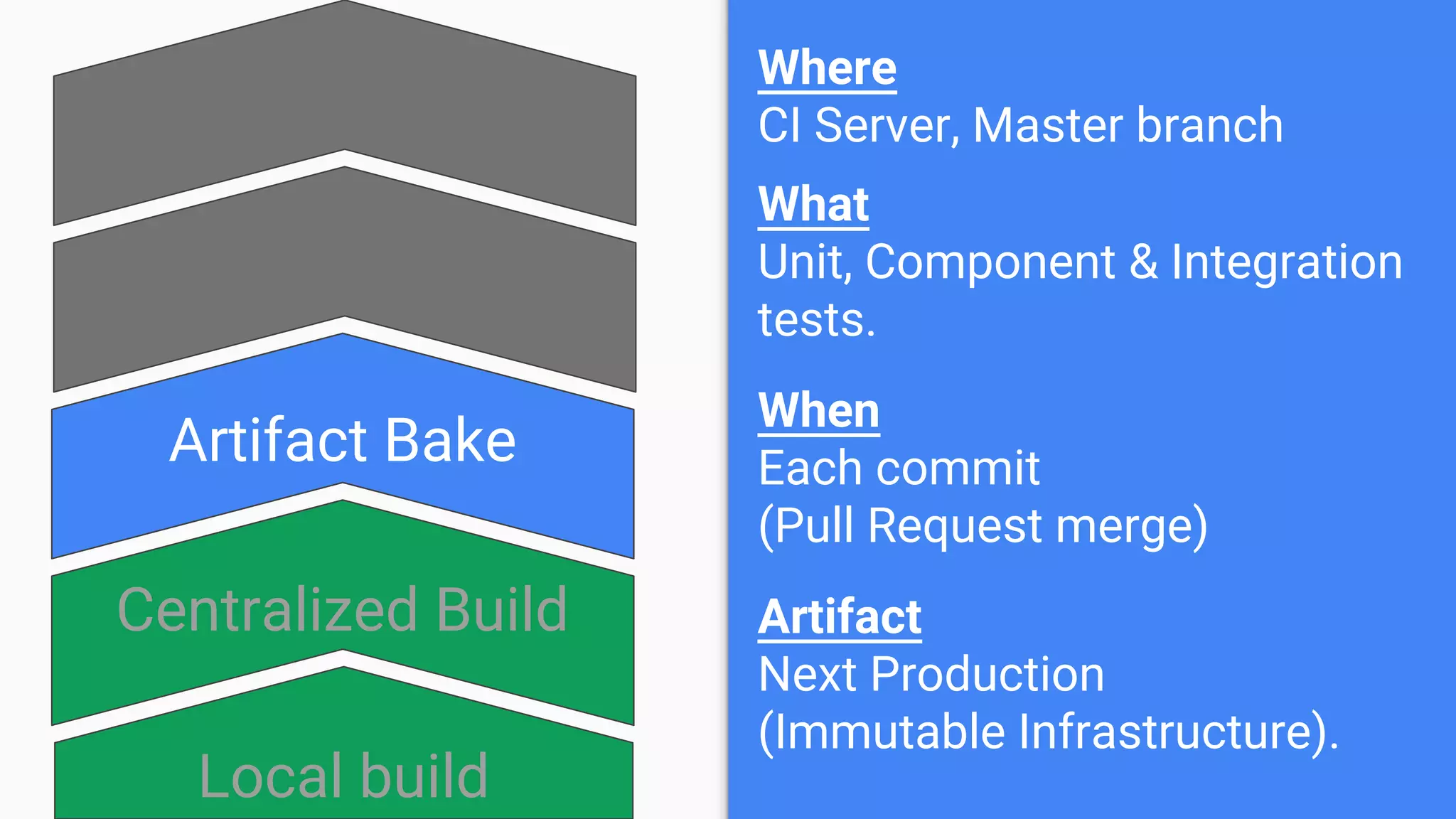
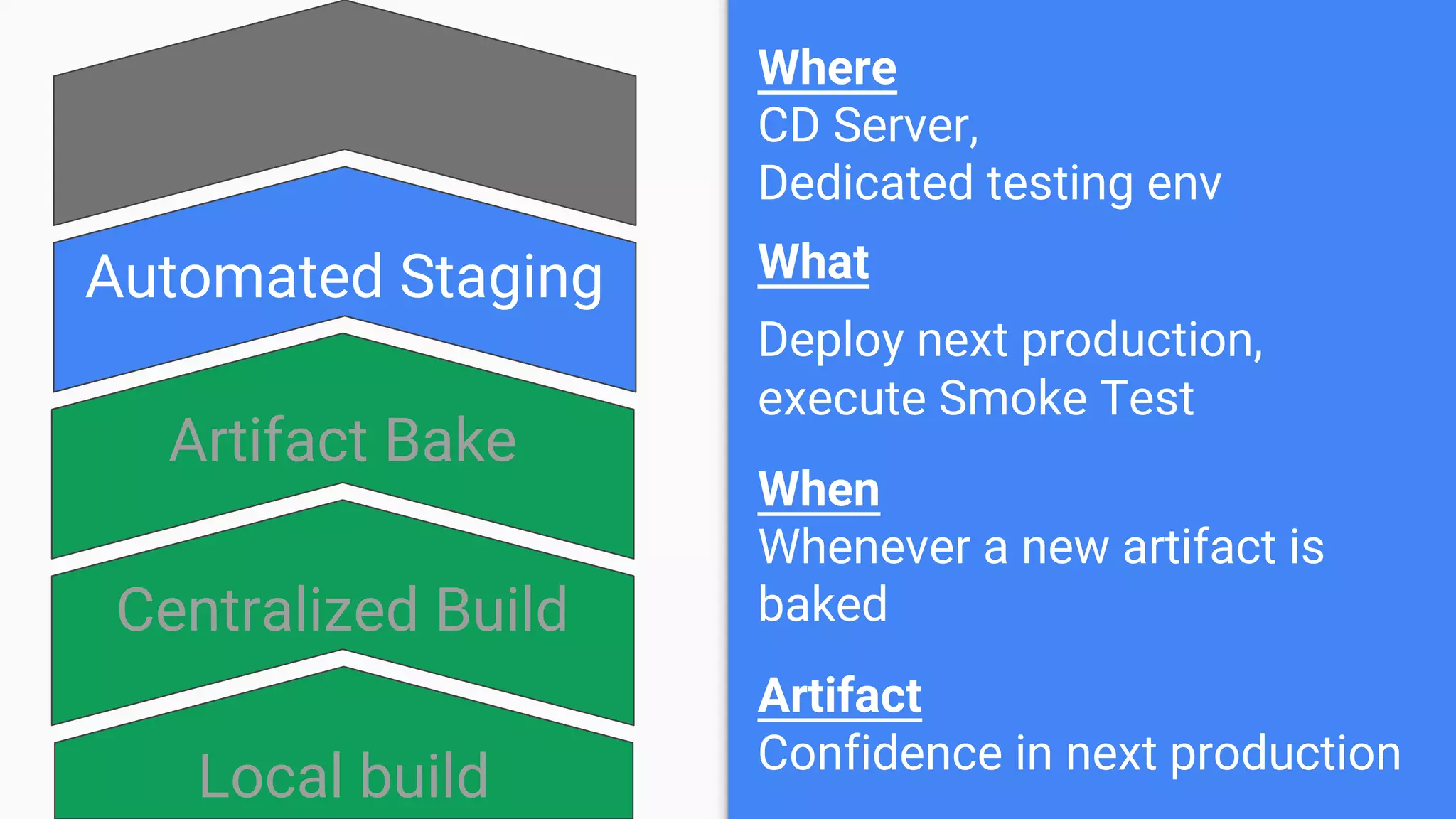
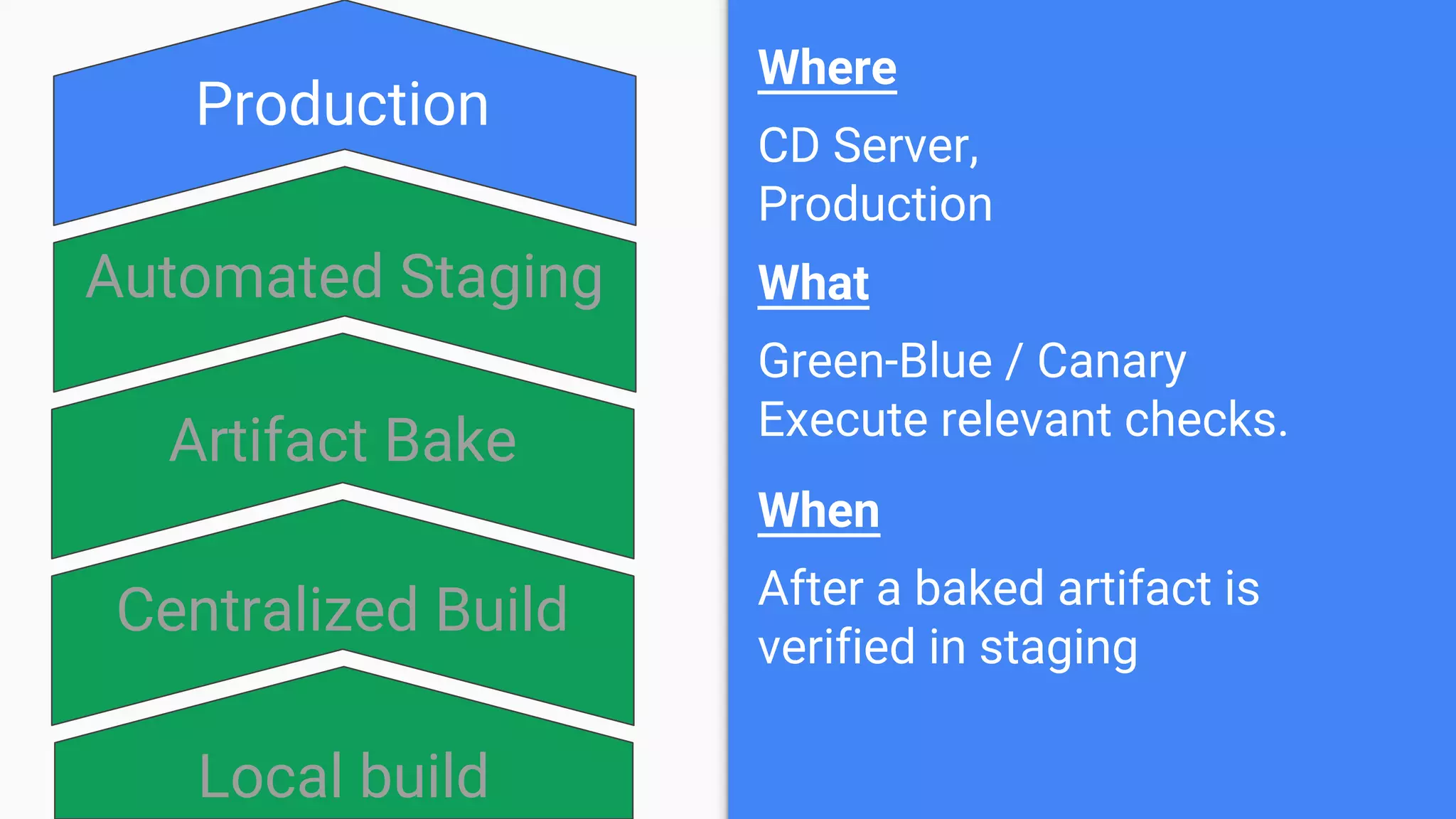
CI/CD for dummies
in 5 simple steps
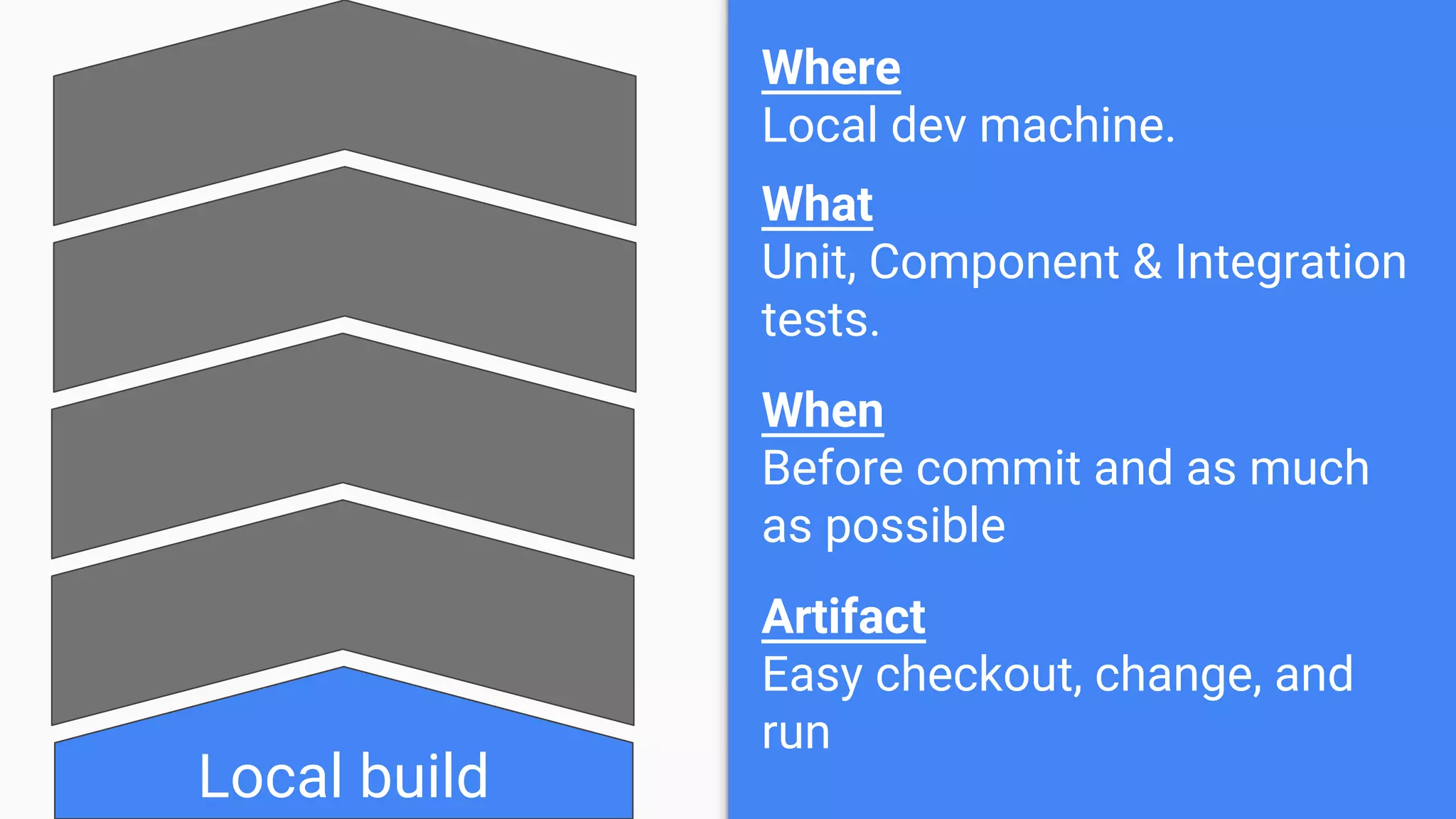
Where
Local dev machine.
What
Unit, Component & Integration
tests.
When
Before commit and as much
as possible
Artifact
Easy checkout, change, and
run
Local build
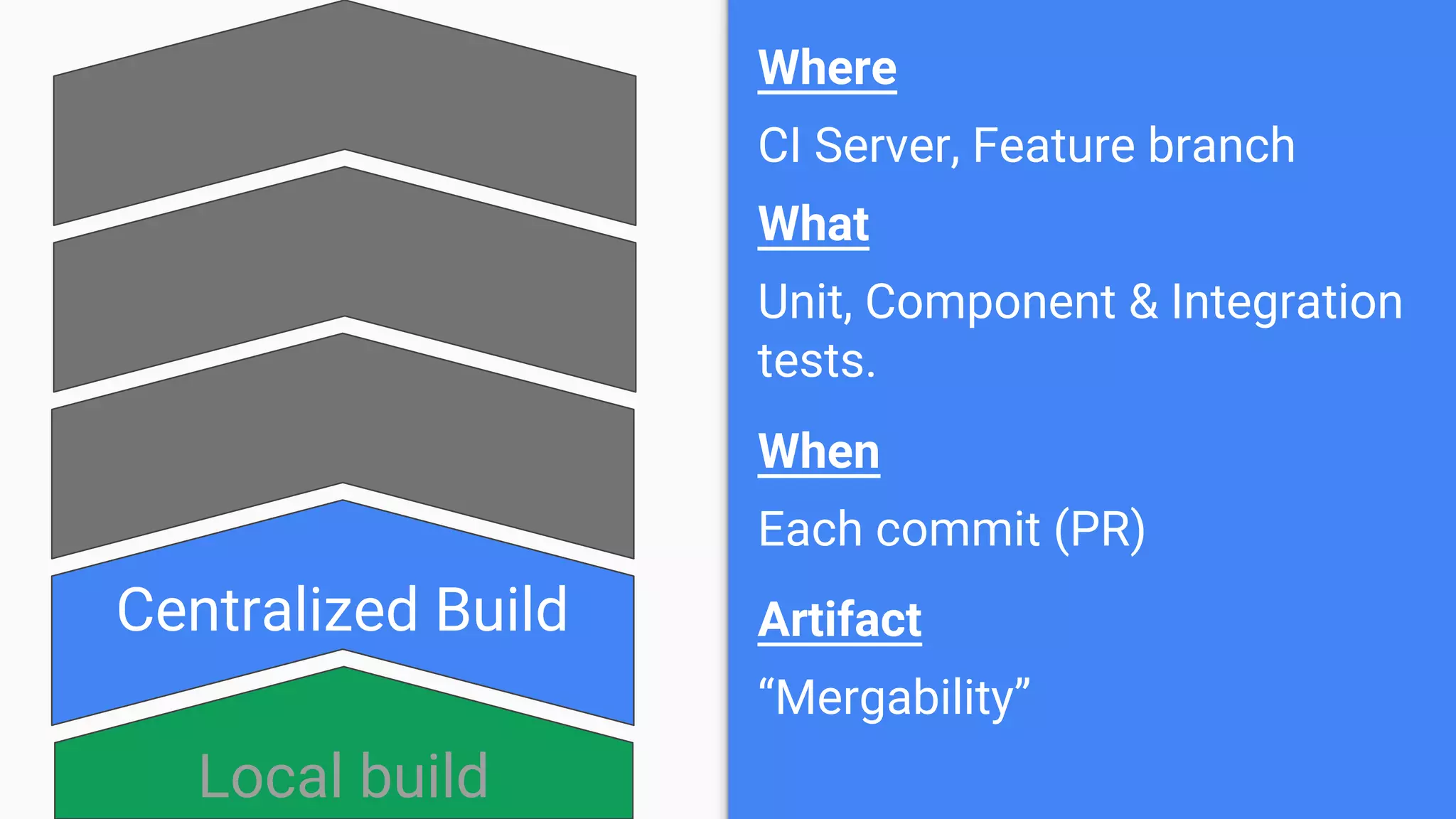
Centralized Build
Artifact Bake
Automated Staging
Production
Local build
Centralized Build
Artifact Bake
Automated Staging
Production
Where
CI Server, Feature branch
What
Unit, Component & Integration
tests.
When
Each commit (PR)
Artifact
“Mergability”
Local build
Centralized Build
Artifact Bake
Automated Staging
Production
Where
CI Server, Master branch
What
Unit, Component & Integration
tests.
When
Each commit
(Pull Request merge)
Artifact
Next Production
(Immutable Infrastructure).
Local build
Centralized Build
Artifact Bake
Automated Staging
Production
Where
CD Server,
Dedicated testing env
What
Deploy next production,
execute Smoke Test
When
Whenever a new artifact is
baked
Artifact
Confidence in next production
Local build
Centralized Build
Artifact Bake
Automated Staging
Production
Where
CD Server,
Production
What
Green-Blue / Canary
Execute relevant checks.
When
After a baked artifact is
verified in staging
Stability
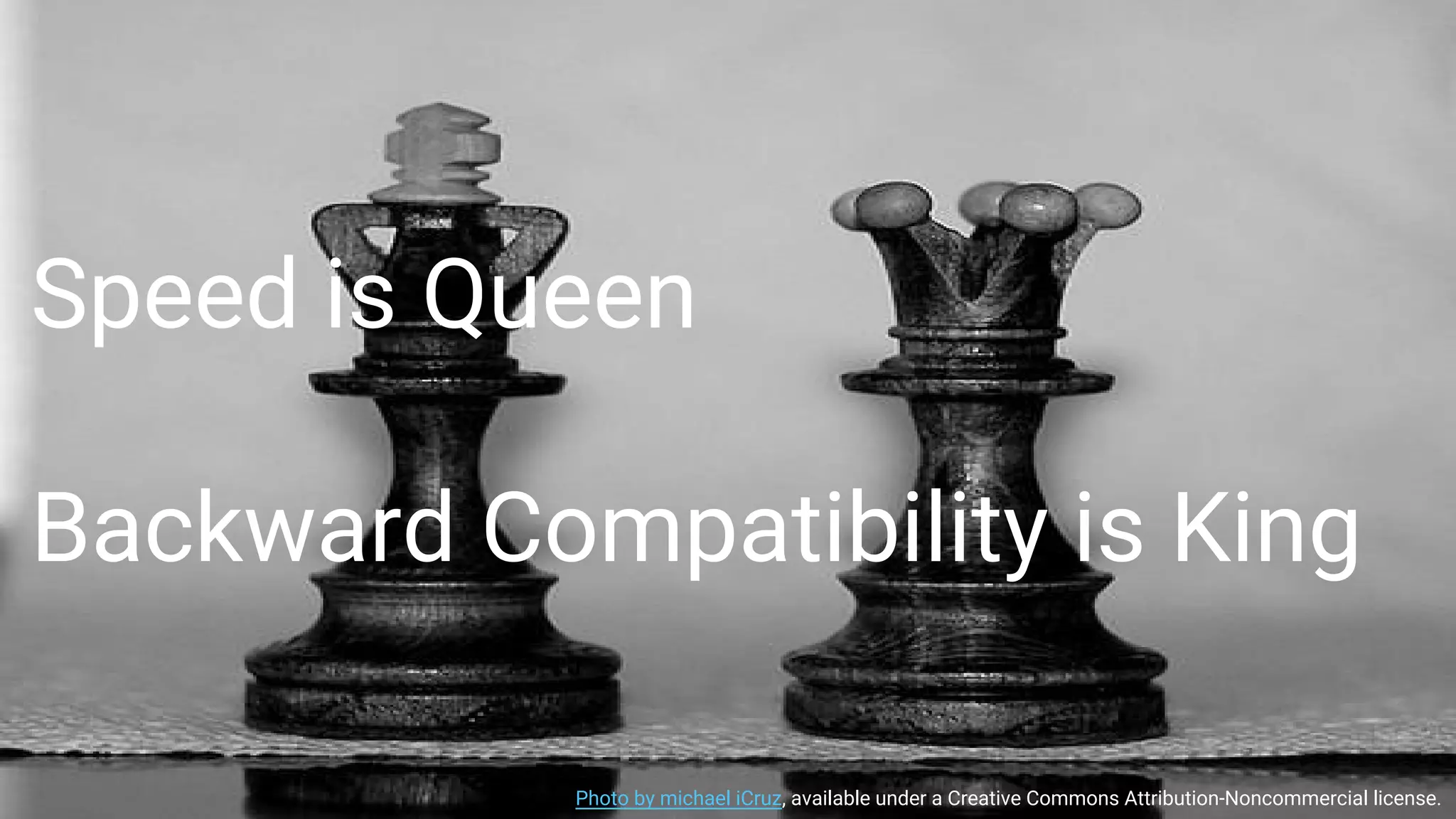
Speed is Queen
Backward Compatibility is King
Photo by michael iCruz, available under a Creative Commons Attribution-Noncommercial license.
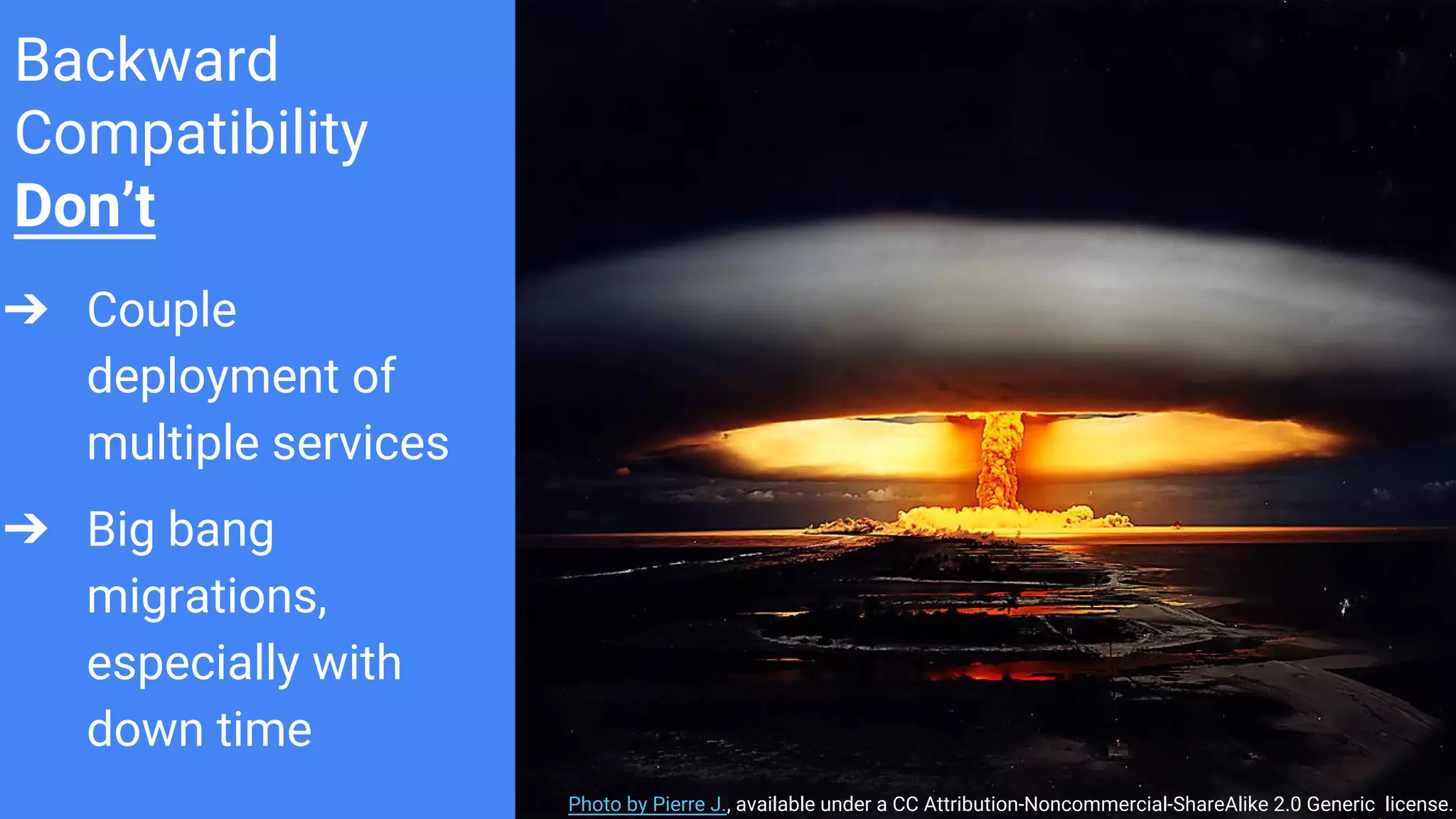
Backward
Compatibility
Don’t
➔ Couple
deployment of
multiple services
➔ Big bang
migrations,
especially with
down time
Photo by Pierre J., available under a CC Attribution-Noncommercial-ShareAlike 2.0 Generic license.
Backward
Compatibility
Do
➔ Many small
changes through
multiple services
➔ Decouple data
migration from
logic change
Backward
Compatibility
API
Data
Logic
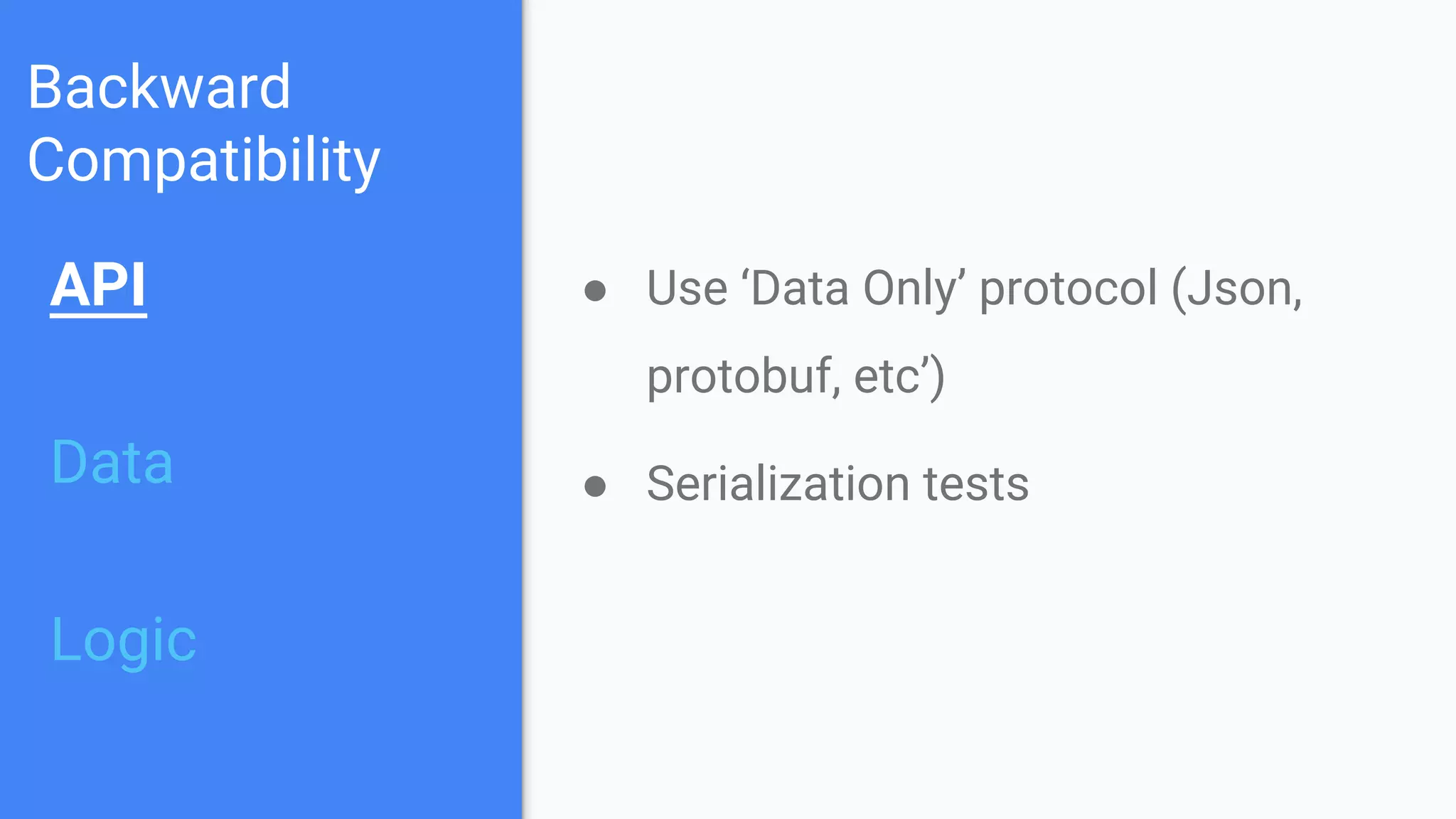
● Use ‘Data Only’ protocol (Json,
protobuf, etc’)
● Serialization tests
Backward
Compatibility
API
Data
Logic
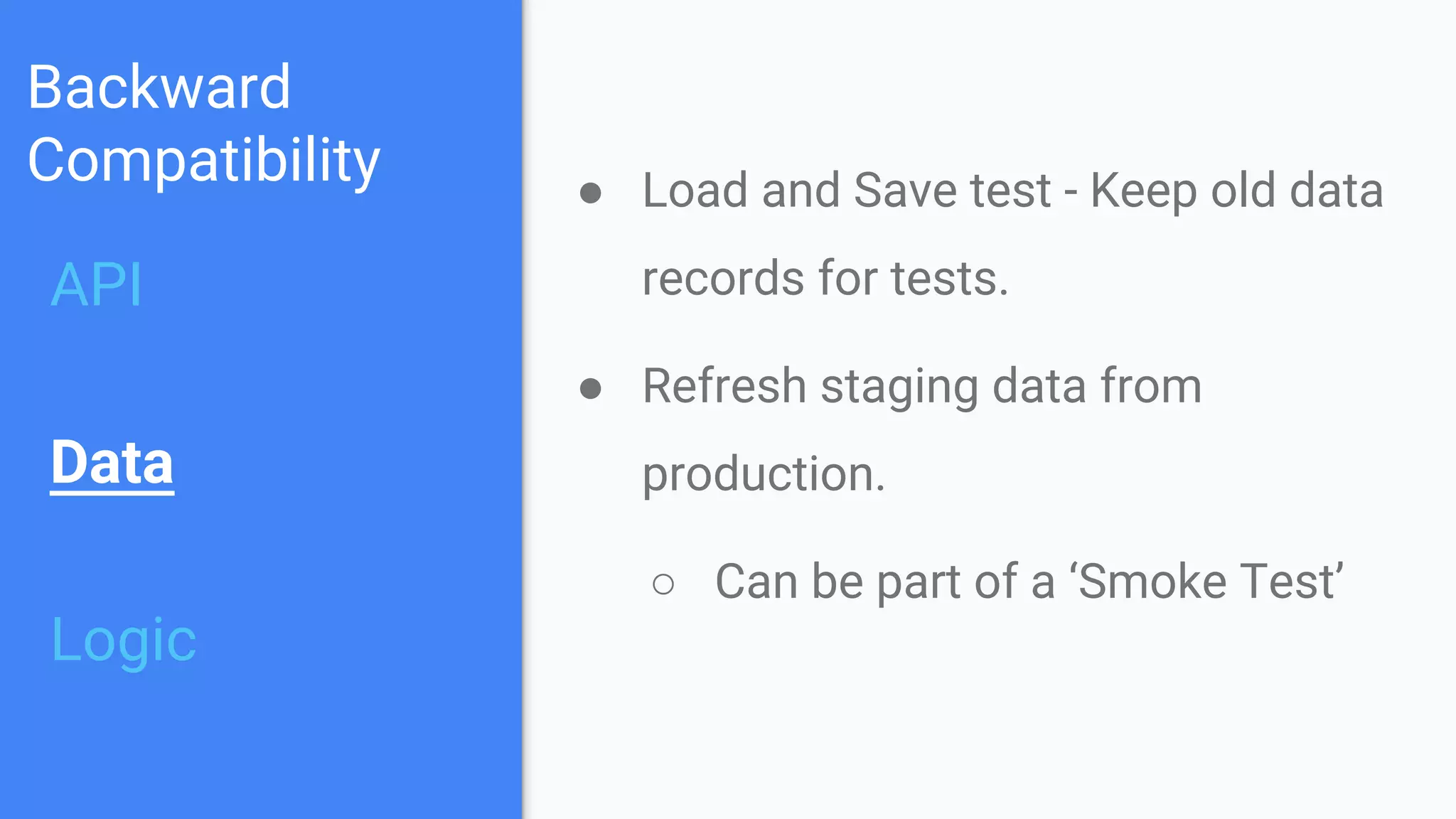
● Load and Save test - Keep old data
records for tests.
● Refresh staging data from
production.
○ Can be part of a ‘Smoke Test’
Backward
Compatibility
API
Data
Logic
● What counts for broken
compatibility logic?
● Changing / removing Component
tests is a red signal.
● Prefer degraded service over broken
service
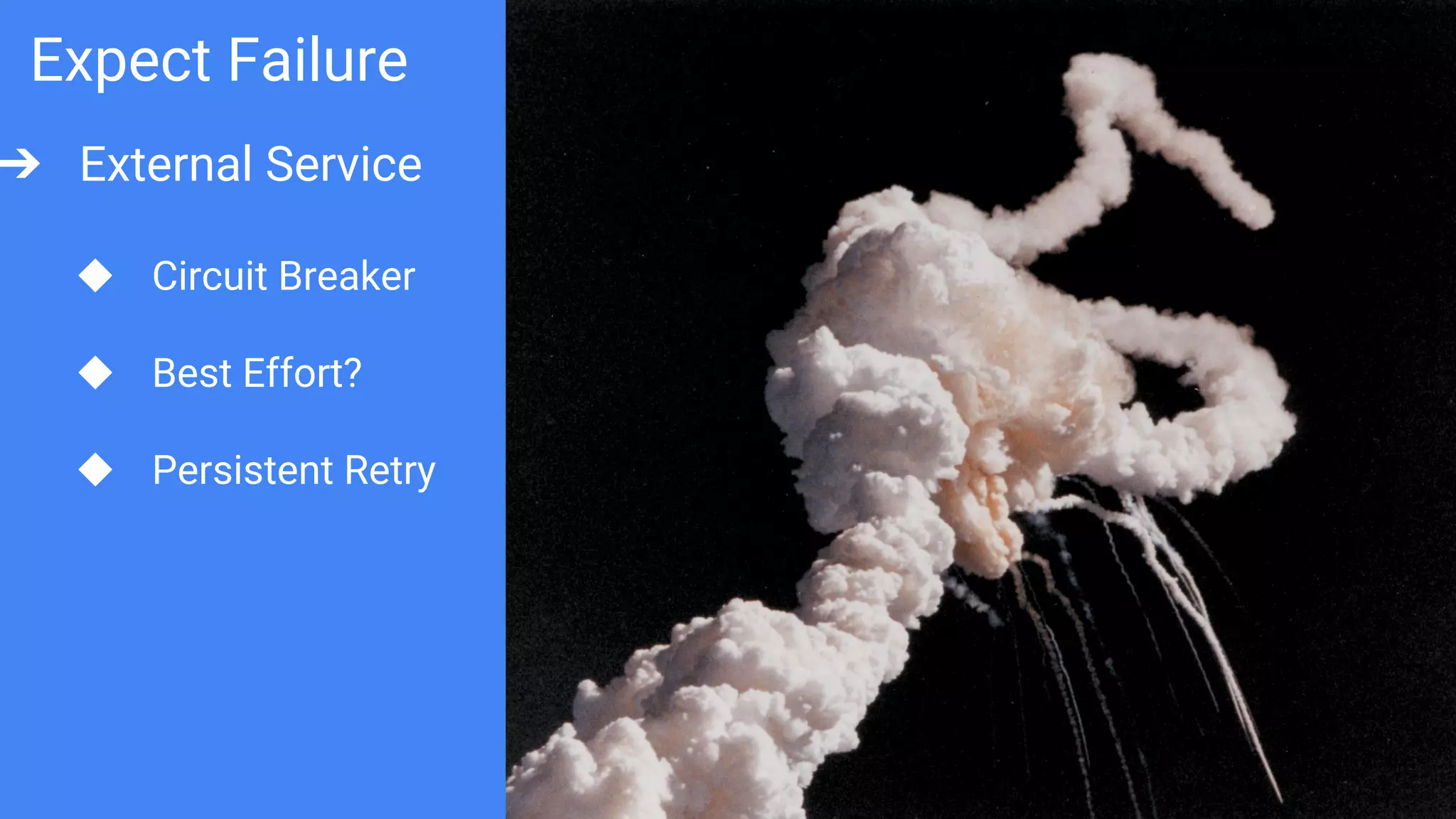
Expect Failure
➔ External Service
◆ Circuit Breaker
◆ Best Effort?
◆ Persistent Retry
Stuff we learned at Kenshoo
Remember the episode I waited for someone to fix my servers?
Yeah,... me neither
Who’s looking at the big
picture?
Who’s looking at the big
picture?
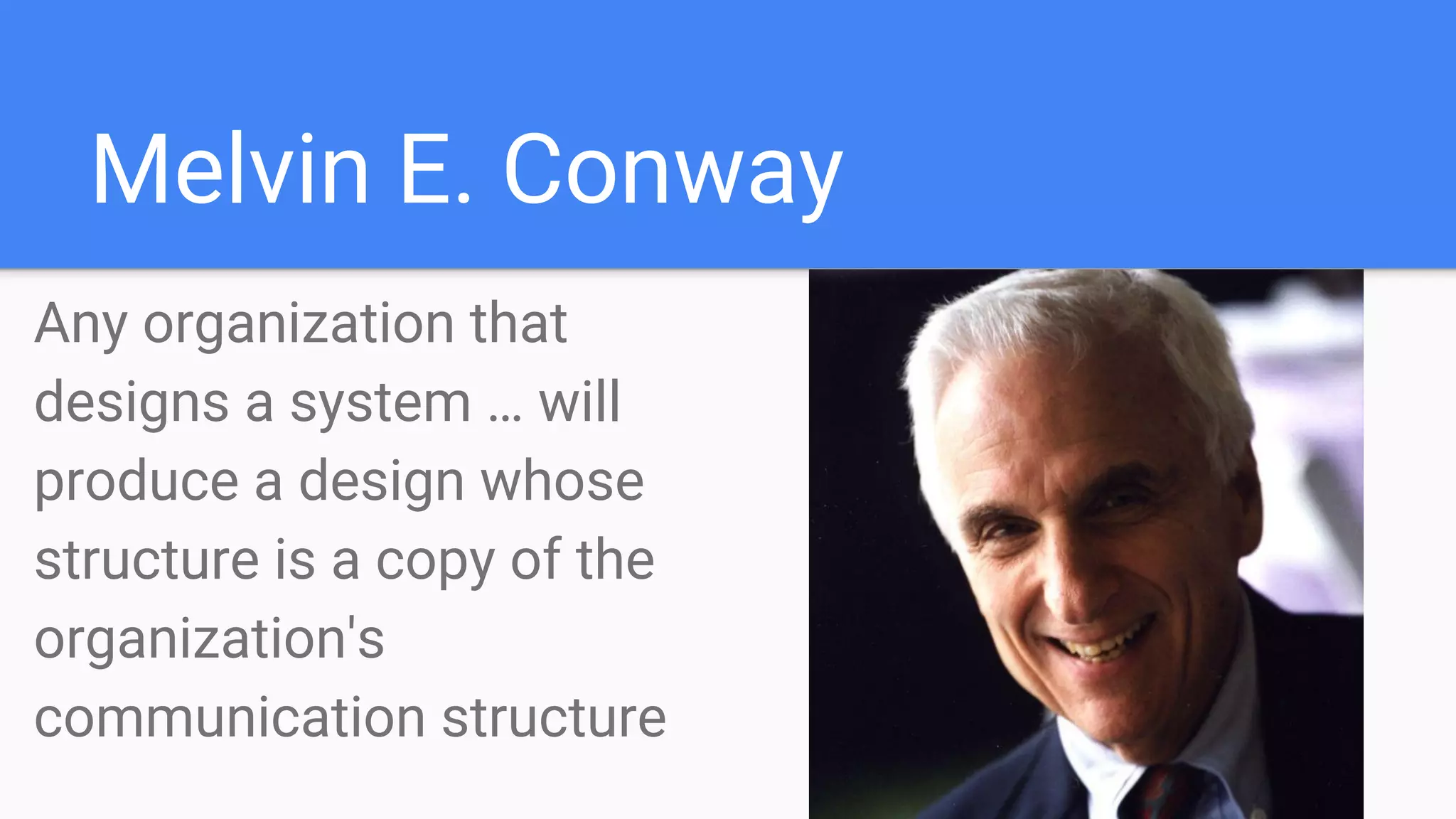
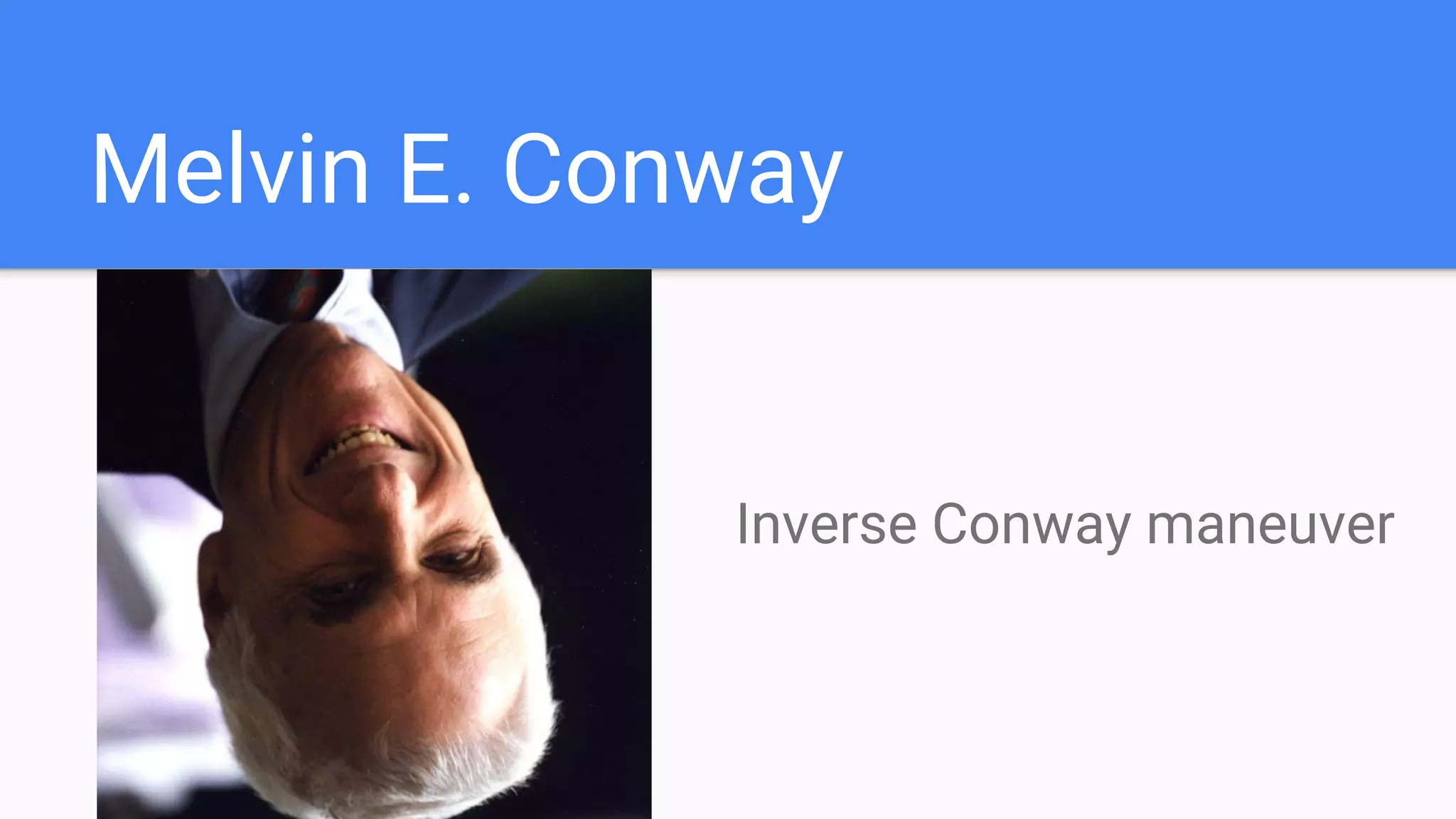
Melvin E. Conway
Any organization that
designs a system … will
produce a design whose
structure is a copy of the
organization's
communication structure
Melvin E. Conway
Inverse Conway maneuver
Q&A
Thank You

Simple, battle proven microservices strategy