Maurya et al. Int.
Int.
Int.
Int. J. Biomol. Biomed.
J. Biomol. Biomed.
J. Biomol. Biomed.
J. Biomol. Biomed.
REVIEW
REVIEW
REVIEW
REVIEW PAPER
PAPER
PAPER
PAPER OPEN ACCESS
OPEN ACCESS
OPEN ACCESS
OPEN ACCESS
Silver nanoparticles in the biomedical field
Preeti Maurya, Khushaboo Soni, Sanjay Singh*
Department of Botany, CMP Degree College, University of Allahabad, Prayagraj, Uttar Pradesh, India
Key words: Silver nanoparticles, Algae, Biological synthesis, Biomedical applications
DOI: https://dx.doi.org/10.12692/ijbb/20.3.1-12 PUBLISHED: 06 June 2025
Abstract
Silver nanoparticles are gaining popularity due to their potential uses in bioengineering and medical diagnosis.
Nanoparticles possess specific characteristics, including an enhanced surface-to-volume ratio and improved magnetic
properties, making them suitable for various biological applications. They feature several functionalities, a high surface
plasmon resonance, a huge surface area, a stable nature, and are simple to produce. Silver nanoparticles have
promising uses in biomedical fields such as biomaterials, detection and diagnostics, formulations, medication
transport, and medical device coatings. This review covers current research on silver nanoparticles in biomedical
applications, including their creation methods, antimicrobial properties, and potential biological uses.
*Corresponding Author: Sanjay Singh  drsanjaybotany@gmail.com
International Journal of Biomolecules and Biomedicine |
|
|
| IJBB
ISSN: 2221-1063 (Print), 2222-503X (Online)
Website: https://www.innspub.net
Email contact: info@innspub.net
Vol. 20, Issue: 3, p. 1-12, 2025
International Journal of Biomolecules and Biomedicine
ISSN: 2221-1063 (Print), 2222-503X (Online)
Vol. 20, Issue: 3, p. 1-12, 2025
Website: https://innspub.net
Maurya et al. 2 Int. J. Biomol. Biomed.
Int. J. Biomol. Biomed.
INTRODUCTION
Nanotechnology is fast-growing subject that works
on the materials at the nanoscale with the
dimensions 1-100nm (Vinayagam et al., 2024). The
term nano is a Greek word derived from word nano
which means dwarf and the unit represents a part of
a billion (Jafar and Athbi, 2024). It has gained
enormous potential and diverse use in
nanomedicine, electronic gadgets, biosensors and in
agriculture. Nanomaterial, is opposed to the bulk
materials and have a superior physicochemical
characteristic, distinctive properties.
Nanotechnology to cover the area to design and
manipulate various well-known attribute of
nanoparticles (NPs) like stability, high surface area
to volume ratio, charge and shape. NPs are divided
into different categories such as organic, inorganic,
metal, metal oxide and carbon based etc. NPs is
produced by Ag, Au, and Platinum. Metal NPs are
widely used in healthcare or medical industry,
electronic gadgets, biosensors, and in
agriculture(Vinayagam et al., 2024).
Silver is relatively soft, tiny metal. The surface of
black silver sulphide negatively impacts
progressively in air due to the reaction of sulphur
compounds with it. Silver is a transition metal. It is
used to make mirror, as it is best reflector of visible
light, used in dental alloys, electrical contacts and
batteries, and to make printed circuits. Silver lacks a
biological function; yet, prolonged consumption or
inhalation of silver compounds may induce a
disorder termed argyria, characterised by a greyish
pigmentation of the skin and mucous membranes. It
has antibacterial properties and kill lower organisms
quite effectively. Silver nanoparticles are
incorporated into textiles to inhibit bacterial
degradation of sweating, hence mitigating
unpleasant odours. Silver fibres are integrated into
the fingertips of gloves to enable their usage with
touchscreen devices.
The field of biology and therapeutics places special
emphasis on AgNPs. It is well-established that
AgNPs have an antibacterial impact against several
pathogens, including bacteria, fungi, and viruses.
Physical, chemical, biological, and environmentally
friendly approaches can all be used to synthesise
NPs (Soliman et al., 2023). Simply the
biosynthesized NPs have recently been identified as
significant nanomedicines for a wide range of
biomedical uses(Balaraman et al., 2020; Choudhary
et al., 2024).Green synthesis is an alternative
technique to physical and chemical methods that use
toxic chemicals, surfactants, and unfavourable
circumstances such as high temperatures or
excessive energy. The green is relatively energy
efficient, sustainable, affordable, simple and scalable
for industrial production (Nindawat and Agrawal,
2019).There are three preconditions such as- (i)
opting for environmentally favourable systems of
solvents, (ii) sustainable reducing agent, and (iii) an
appropriate capping agent for stabilizing NPs
(Choudhary et al., 2024).
Varieties of algae are utilized for green synthesis.
When it comes to bioactive chemicals, seaweeds are
head and shoulders above the competition. Not only
that, but they have medical, culinary, and
wastewater treatment applications. Nanoparticles
(NPs) mediated by seaweeds are rich in bioactive
chemicals and secondary components with several
specific biological functions. The many types of
seaweed (green, brown, red, and blue green) have a
wide range of biological activities. Some of these
activities include fighting microbes, preventing
cancer, reducing inflammation, delivering drugs,
preventing blood clots, and even killing sperm
(Balaraman et al., 2020; Choudhary et al., 2024).
Because algae have such a remarkable ability to
absorb metals and decrease metal ions, the
production of AgNPs by algae is quite intriguing.
Because they can withstand a broad variety of extreme
environmental conditions, they can be employed as
efficient bioagents to eliminate heavy metal
contamination (Hamida et al. 2022). Algae are a
plentiful and widely dispersed organism; their ability to
thrive in a lab setting is an additional benefit. These
organisms offer low cost in large production.
International Journal of Biomolecules and Biomedicine
ISSN: 2221-1063 (Print), 2222-503X (Online)
Vol. 20, Issue: 3, p. 1-12, 2025
Website: https://innspub.net
Maurya et al. 3 Int. J. Biomol. Biomed.
Int. J. Biomol. Biomed.
One of the main components that helps algae
synthesise AgNPs is the cellular reductase, which leads
to reduction during the process. The ability of algae to
create silver nanoparticles both within and outside of
their cells was recently discovered (Khanna et al.,
2019). The bioactive chemicals contained in green
algae, which include proteins, lipids, carbs,
carotenoids, vitamins, and secondary metabolites,
stabilise the produced nanoparticles by acting as both a
cap and an anchor, and reductant(Mahajan et al.,
2019; Nindawat and Agrawal, 2019).
Bioimaging, biosensors, gene transfer,
photocatalysis, antimicrobial, antioxidant, and anti-
cancer medicines are just a few of the many
biological uses for silver nanoparticles (Rahmani et
al., 2018; Nindawat and Agrawal, 2019).
Interactions between Ag+ and bacterial cell walls,
inactivation of enzymes linked to membranes,
bacterial cell assembly, impairment of vital
biomolecules, breakdown of the cell envelope, and
generation of reactive oxygen species (ROS) all
contribute to the enhanced antimicrobial activity of
AgNPs (Aref and Salem 2020). Pharmaceutical
companies utilise AgNPs due of their wide
temperature stability and low toxicity to human cells
(Chugh et al., 2021).The bioactive substances found
in algae like polysaccharides, phenolic compound,
proteins and alkaloids are allow to the creation of
NPs (Patel et al., 2024).
Synthesis of silver nanoparticles
Biological methods involve the use of plant extracts and
microorganisms. Due to their detoxifying, reducing, and
accumulation-inducing capabilities, plants are the sole
ingredients in the water-based Ag+ ion solution used in
green synthesis. Research conducted by Logeswari et al.
(2015), Nadaroglu et al. (2017), Ansari and Alzohairy
(2018), and Chugh et al. (2021) has shown that plant
extracts include a variety of chemicals, including
polysaccharides, flavonoids, alkaloids, enzymes,
polymers, and proteins, which can both reduce and cap
substances (Logeswari et al., 2015; Nadaroglu et al.,
2017; Ansari and Alzohairy, 2018; Chugh et al., 2021)
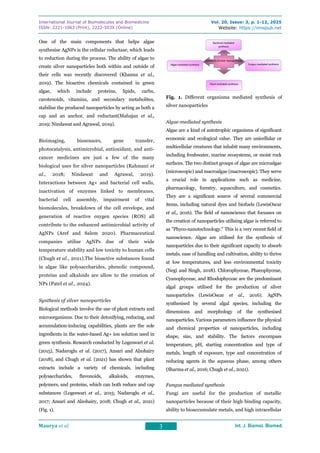
(Fig. 1).
Fig. 1. Different organisms mediated synthesis of
silver nanoparticles
Algae-mediated synthesis
Algae are a kind of autotrophic organisms of significant
economic and ecological value. They are unicellular or
multicellular creatures that inhabit many environments,
including freshwater, marine ecosystems, or moist rock
surfaces. The two distinct groups of algae are microalgae
(microscopic) and macroalgae (macroscopic). They serve
a crucial role in applications such as medicine,
pharmacology, forestry, aquaculture, and cosmetics.
They are a significant source of several commercial
items, including natural dyes and biofuels (LewisOscar
et al., 2016). The field of nanoscience that focusses on
the creation of nanoparticles utilising algae is referred to
as "Phyco-nanotechnology." This is a very recent field of
nanoscience. Algae are utilised for the synthesis of
nanoparticles due to their significant capacity to absorb
metals, ease of handling and cultivation, ability to thrive
at low temperatures, and less environmental toxicity
(Negi and Singh, 2018). Chlorophyceae, Phaeophyceae,
Cyanophyceae, and Rhodophyceae are the predominant
algal groups utilised for the production of silver
nanoparticles (LewisOscar et al., 2016). AgNPs
synthesised by several algal species, including the
dimensions and morphology of the synthesised
nanoparticles. Various parameters influence the physical
and chemical properties of nanoparticles, including
shape, size, and stability. The factors encompass
temperature, pH, starting concentration and type of
metals, length of exposure, type and concentration of
reducing agents in the aqueous phase, among others
(Sharma et al., 2016; Chugh et al., 2021).
Fungus mediated synthesis
Fungi are useful for the production of metallic
nanoparticles because of their high binding capacity,
ability to bioaccumulate metals, and high intracellular
International Journal of Biomolecules and Biomedicine
ISSN: 2221-1063 (Print), 2222-503X (Online)
Vol. 20, Issue: 3, p. 1-12, 2025
Website: https://innspub.net
Maurya et al. 4 Int. J. Biomol. Biomed.
Int. J. Biomol. Biomed.
uptake (Ahmad et al., 2003). The advantage of
synthesizing nanoparticles with fungus is that it
grows faster, is easier to handle, can be quickly
manufactured in a laboratory, and can survive harsh
climatic conditions. Metallic nanoparticles function
by reducing their ions using enzymes released by
them (Mandal et al., 2006), and reduction is reported
to be assisted by extracellular enzymes such as
naphthoquinones and anthraquinones. In the first
effort for fungi-mediated manufacture of metallic
nanoparticles in the early twentieth century, the
fungus Verticillium was employed to produce AgNPs
(Mukherjee et al., 2001). The extract from the
saprophytic straw mushroom fungus Volvariella
volvacea was used to create gold, silver, and silver-
gold nanoparticles in fungus-mediated nanoparticle
synthesis (Philip, 2009). Using Penicillium
fellutanum, which was isolated from coastal
mangrove silt, and AgNO3 as a substrate, Kathiresan
et al. reported producing silver nanoparticles in
vitro (Kathiresan et al., 2009). In fungus,
nanoparticles are produced by forming them on the
surface of the mycelia rather than in solution. First,
the electrostatic interaction of positively charged Ag
ions and negatively charged carboxylate groups in
enzymes deposits Ag+ particles on the surface of
fungal cells. The fungus's cell wall enzymes
subsequently degrade the Ag particles, resulting in
the formation of Ag nuclei.
Bacteria mediated synthesis
Bacteria are single-celled creatures that produce
diverse inorganic compounds both intracellularly and
extracellularly. In the intracellular type of synthesis,
silver deposited in the cell commences the process,
which continues owing to microbial proliferation.
After optimal bacterial growth, the cells and
nanoparticles are collected. The cell then undergoes a
specific mechanism to release the nanoparticle. In
contrast, the extracellular type of synthesis uses
bacteria's extracellular secretion and does not require
any special treatment. They are an attractive source
for manufacturing nanoparticles such as gold and
silver; nevertheless, some of them are resistant to
silver and can accumulate a dry mass of silver on their
cell wall (Paulkumar et al., 2013). Isolating the
Pseudomonas stutzeri AG259 strain from a silver
mine provided the first evidence of bacteria
producing silver nanoparticles. In the presence of
alpha-nicotinamide adenine dinucleotide phosphate
reduced by NADPH-dependent nitrate reductase,
AgNPs were produced in vitro, converting nitrate to
nitrite. There have been several hypotheses on how
bacteria produce silver nanoparticles, but the most
probable one is that AgNPs are synthesized in the
presence of the enzyme nitrate reductase. Rathod et
al. investigated the manufacture of AgNPs from the
alkaliphilic actinobacterium Nocardiopsis valliformis
and discovered that they have antibacterial and
cytotoxic characteristics (Rathod et al., 2016). Lateef
et al. proposed using crude extracellular keratinase to
synthesize AgNPs from Bacillus safensis, a keratin-
degrading bacterial strain (Lateef et al., 2015).
Patrycja et al. found that conjugating antibiotics with
AgNPs produced by Pilimelia columellifers subsp.
Pallida, an acidophilic actinomycete, improved their
activity (Golińska et al., 2016). The main
disadvantage of using bacteria to make nanoparticles
is their sluggish rate of synthesis and limited size
range when compared to other approaches (Rafique
et al., 2017).
Plant mediated synthesis
Plant-mediated nanoparticle synthesis has grown in
favor in recent years because to its speed,
environmental friendliness, simplicity, and lack of
pathogenicity. Plants have a wide range of
metabolites that aid in the formation of AgNPs. Plant
extracts create nanoparticles with greater kinetics
than other biological or chemical agents. Alfalfa
sprouts were employed by (Gardea-Torresdey et al.
2003) to offer the first evidence of plant-mediated
synthesis of metallic nanoparticles. Alfalfa roots may
extract silver from an agar media and transfer it to
the plant's shoots in the same oxidation state, where
the silver atoms are rearranged to form AgNPs.
Various crops, including Oryza sativa, Helianthus
annus, Saccharum officinarum, Sorghum bicolor,
Aloevera, Zeamays, Basella alba, and Capsicum
annuum, have been employed to synthesize AgNPs
International Journal of Biomolecules and Biomedicine
ISSN: 2221-1063 (Print), 2222-503X (Online)
Vol. 20, Issue: 3, p. 1-12, 2025
Website: https://innspub.net
Maurya et al. 5 Int. J. Biomol. Biomed.
Int. J. Biomol. Biomed.
with medicinal and biological applications (Kasthuri
et al., 2009). AgNPs produced from Justicia glauca
leaf extracts were shown to have antibacterial and
antifungal activities (Emmanuel et al., 2015).
Latha et al. (2015) found that using Hemidesmus
indicus leaf extract resulted in faster production of
AgNPs and improved antibacterial activity against
Shigella sonnei bacteria at 40μg/mL. According to
dynamic light scattering, banana peel extract is most
effective when employed as a reducing agent to
produce AgNPs from silver nitrate solution. When
coupled with levofloxacin antibiotics, AgNPs showed
strong antibacterial activity against several yeast and
bacterial pathogens (Ibrahim, 2015). Spherical AgNPs
varying in diameter from 20 to 118nm were produced
from Erythrina indica root extract. They
demonstrated a cytotoxic effect on breast and lung
cancer cell lines and strong antibacterial activity
against both gram-positive and gram-negative
bacteria (Sre et al., 2015). Palaniyandi et al. produced
silver nanoparticles from Azadirachta indica gum
extract, which when combined with silver nitrate
solution, shown antibacterial action against
Salmonella enteritidis and Bacillus cereus (Velusamy
et al., 2015).
Biomedical applications of silver nanoparticles
A variety of planktonic and sessile pathogenic
microorganisms, including bacteria, were evaluated
to determine the effectiveness of biomaterials derived
from nanosilver as potential antibacterial agents
(Alshareef et al., 2017; Adur et al., 2018), viruses
(Etemadzade et al., 2016; Tamilselvan et al., 2017),
fungi, and yeasts (Dojčilović et al., 2017; Kalaivani et
al., 2018) (Fig. 2).
Nanosilver-based biomedical goods including
anticancer agents, drug delivery platforms,
orthopaedic materials and devices, and more may be
designed, developed, and implemented thanks to
AgNPs' remarkable antibacterial activity (Zhang et
al., 2016), bandages, antiseptic sprays, and catheters
(Wei et al., 2015). Because of its outstanding
relevance in nanotechnology, biology and the
environment, there is an ongoing demand for the
development of cost-effective AgNP synthesis
techniques (Singh et al., 2015). The translation of
silver-based nanotechnology to clinical applications
necessitates not only the development of safe, simple,
environmentally friendly, and cost-effective methods
for silver nanoparticle synthesis, but also a thorough
understanding of the related physicochemical
properties, in vitro and in vivo effects, biodistribution,
safety control mechanisms, pharmacokinetics, and
pharmacodynamics of AgNPs (Wei et al., 2015;
Burdușel et al., 2018). There are some biomedical
applications of silver nanoparticles are given below.
Fig. 2. Biomedical applications of silver nanoparticles
Anticancer activity
Researchers are investigating the potential of many
medicinal chemicals found in Chaetomorpha sp. as
chemo-protective agents, anticancer agents, and
drug-delivery systems for the treatment of cancer
(Jiang and Shi 2018; Rocha et al. 2018). The
secondary metabolites found in Chaetomorpha sp.
include phenols, sulfated polysaccharides, and
halogenated chemicals, in addition to proteins, carbs,
fatty acids, pigments, and more (Salehi et al., 2019).
GC-MS analysis of C. ligustica extracts revealed the
presence of anticancer chemicals. Investigating C.
ligustica and its biogenic nanoparticles for anticancer
chemicals seems to be a promising endeavour. C.
ligustica and the AgNPs it biosynthesises have
tremendous promise as medicinal agents, particularly
in the treatment of cancer. Nanoparticles were
determined to be more harmful than the algal extract,
while the cytotoxicity of AgNPs against cancer cell
International Journal of Biomolecules and Biomedicine
ISSN: 2221-1063 (Print), 2222-503X (Online)
Vol. 20, Issue: 3, p. 1-12, 2025
Website: https://innspub.net
Maurya et al. 6 Int. J. Biomol. Biomed.
Int. J. Biomol. Biomed.
types was dose-dependent. Our results are well
supported by Gurunathan et al. (Gurunathan et al.,
2018) reporting plant-based nanoparticles are more
effective against HCT116 as compared to HT29 (Al-
Zahrani et al. 2021).
Antimicrobial activity
Nanoparticle antimicrobials have several benefits
over traditional antibiotics, including less acute
toxicity, resistance prevention, and cost savings (Pal
et al., 2007; Weir et al., 2008). Antibiotics in the NPs
form may sustain for long run than in tiny molecules
(Nisizawa and Mchaugh, 1988; Kathiraven et al.,
2015). Metal nanoparticles produced via green
synthesis can serve as antioxidants, biosensors, and
for the detection of heavy metals (Teodoro et al.,
2019; Akjouj and Mir, 2020; Chavan et al., 2020).
Their unique physicochemical properties make them
ideal antimicrobial agents for use against plant
disease pathogens and other organisms that can cause
foodborne diseases. These agents have a large surface
area to volume ratio, high surface reactivity, are easy
to synthesise and characterise, have reduced
cytotoxicity, and can enhance gene expression for
redox processes (Bhattacharya and Mukherjee, 2008;
Murphy et al., 2008; Giljohann et al., 2020; Pardhi et
al., 2020). A wide range of plant extracts have been
studied for their potential antibacterial efficacy
against bacterial and fungal plant diseases, and these
nanoparticles have been synthesised from a number
of plants (Ali et al., 2019; Nishanthi et al., 2019).
Bone healing
Silver nanoparticles have antibacterial capabilities,
rendering them well-suited for the prevention of
infections throughout the bone- mending process.
Moreover, their diminutive size facilitates enhanced
tissue penetration, hence accelerating and optimizing
the healing process. Silver nanoparticles have been
discovered to decrease inflammation and enhance cell
proliferation, hence expediting the bone repair
process. In general, their distinctive characteristics
make them a potential choice for enhancing results in
orthopaedic procedures.
Table 1. Antiviral activity of silver nanoparticles in different viruses and their family
Virus and family AgNPs synthesis
methods
Mechanism of
Action
Main Features of and factors
influencing the antiviral Activity
references
Respiratorysyncytial
virus(RSV)
(Paramyxoviridae
family)
Curcumin-modified
silvernanoparticles
(cAgNPs)
Directvirus
inactivation
Shape:/Size: 20nm Concentration:
range 1.23–900 g/mL. C. A.e.
Modification/functionalization:/
Exposuretime:90min
(Khandelwal
et al., 2014)
Vacciniavirus (VACV)
(Poxvirus family)
AgNPs Inhibition of viral
entry through a
micropinocytosis
dependent
mechanism
Shape:/Size:25nm 10nm
Concentration:32 g/mL
Modification/functionalization:/
Exposuretime:1h
(Trefry and
Wooley,
2013)
Felinecalicivirus(FCV)
(Calicidiviridae family)
AgNPs Alteration of the
viral capsid
protein
Shape:spherical Size:10,75,110nm.
Strongereffectwithsmallerdimension
Concentration:25,50,100 g/mL. C.
A.e. Modification/functionalization:/
Exposuretime:15min,30min,1h,2h,4h
(Bekele et al.,
2016)
Moreover, studies have shown that silver
nanoparticles may improve the mechanical
robustness of the repaired bone, resulting in
enhanced bone quality as a whole. Due to their
biocompatibility and capacity to enhance osteoblast
activity, they are very beneficial in facilitating
effective bone regeneration. Crystallized
hydroxyapatite is the mineral that makes up human
bones. Hydroxyapatite is a combination of calcium
and phosphate. It is a commonly acknowledged and
utilized sub stance for use in body implants.
Biocompatible hydroxyapatite that has been
combined with either metallic or ionic forms of silver
is employed as a superficial implant material because
it is an excellent choice for the creation of
antibacterial and bioactive bone implants. These
hydroxy apatite coatings coated with silver
nanoparticles were discovered to be efficient
International Journal of Biomolecules and Biomedicine
ISSN: 2221-1063 (Print), 2222-503X (Online)
Vol. 20, Issue: 3, p. 1-12, 2025
Website: https://innspub.net
Maurya et al. 7 Int. J. Biomol. Biomed.
Int. J. Biomol. Biomed.
inhibitors of both Gram-negative and Gram-positive
bacteria (Bharti et al., 2016; Meher et al., 2024).
Antiviral activity
AgNPs have gained attention for their exceptional
antibacterial properties. Despite their well-
documented antibacterial efficiency, the interaction of
AgNPs with viruses was overlooked until recent
scientific research revealed their intriguing antiviral
activity (Ghosh et al., 2022).
These expanding investigations have demonstrated
AgNPs' potential as powerful antiviral medicines,
particularly against enveloped viruses (Galdiero et al.,
2011). The ease with which enveloped viruses are
spread, their high rates of reproduction and mutation,
and the current absence of comprehensive broad-
spectrum antiviral medicines all contribute to the
necessity for research into AgNP-virus interactions
(Ghosh et al., 2022). The rising threat of enveloped
viruses contributing to imminent pandemics and
biosafety concerns heightens the significance of this
work (Mosidze et al., 2025).
Catheters
Artificial catheters implanted in patients are highly
inclined to contamination which leads to complications.
Catheters made up of polyurethane are coated with
silver nanoparticles for preventing biofilm formation.
The silver nanoparticle-coated catheter is nontoxic and
reduces bacterial growth and helps avoid Catheter-
Associated Ventriculitis (Ahuja et al., 2024).
Orthopaedic implants
The greatest challenge in orthopaedic surgery has
always been bacterial contamination, so to reduce
bacterial resistance, silver nanoparticles (AgNPs)
were used to make the prosthesis. Silver
nanoparticles also began to be used in orthodontic
adhesive for increasing the shear bond strength and
expanding resistance to bacteria(Ahuja et al., 2024).
CONCLUSION
The review covers many synthetic approaches,
including physical, chemical, and environmentally
friendly biological processes. The biological synthesis
is the simplest, quickest, and most cost-effective,
commercial, ecologically friendly, and energy-
efficient method for synthesizing silver nanoparticles.
Chemical methods of producing silver nanoparticles
offer advantages, but they are also dangerous and
environmentally unfriendly.
This review examines the possibilities for mass-
producing silver nanoparticles by a biological
technique. Nanoparticles are believed to have several
biomedical applications. It has a wide range of
medicinal uses, including anti-cancer, antiviral,
antibacterial, and antifungal properties, wound
healing, and anticancer activity. Researchers are now
developing green production methods for silver
nanoparticles, which will be useful for biological
applications. The limitations of standard medical
therapy, as well as the challenges associated with nano-
silver-based technologies, underscore the potential of
silver nanoparticles in biology. Nanostructured
biomaterials and technologies used in modern
biomedicine may come into close contact with AgNPs.
REFERENCES
Adur AJ, Nandini N, Shilpashree Mayachar K,
Ramya R, Srinatha N. 2018. Bio-synthesis and
antimicrobial activity of silver nanoparticles using
anaerobically digested parthenium slurry. Journal of
Photochemistry and Photobiology B: Biology 183, 30-
34. https://doi.org/10.1016/j.jphotobiol.2018.04.020
Ahmad A, Mukherjee P, Senapati S, Mandal D,
Khan MI, Kumar R, Sastry M. 2003.
Extracellular biosynthesis of silver nanoparticles
using the fungus Fusarium oxysporum. Colloids and
Surfaces B: Biointerfaces 28(4), 313-318.
Ahuja P, Rami E, Singh A, Pathak D. 2024.
Green synthesis of silver nanoparticles and their
potential biological applications. In: Nanotechnology
and in silico tools. Elsevier, pp. 97-115. Available from
https://www.sciencedirect.com/science/article/pii/B
9780443154577000228 [accessed 29 November
2024].
International Journal of Biomolecules and Biomedicine
ISSN: 2221-1063 (Print), 2222-503X (Online)
Vol. 20, Issue: 3, p. 1-12, 2025
Website: https://innspub.net
Maurya et al. 8 Int. J. Biomol. Biomed.
Int. J. Biomol. Biomed.
Akjouj A, Mir A. 2020. Design of silver nanoparticles
with graphene coatings layers used for LSPR biosensor
applications. Vacuum 180, 109497.
Ali J, Ali N, Wang L, Waseem H, Pan G. 2019.
Revisiting the mechanistic pathways for bacterial
mediated synthesis of noble metal nanoparticles.
Journal of Microbiological Methods 159, 18-25.
Alshareef A, Laird K, Cross RBM. 2017. Shape-
dependent antibacterial activity of silver nanoparticles
on Escherichia coli and Enterococcus faecium
bacterium. Applied Surface Science 424, 310-315.
https://doi.org/10.1016/j.apsusc.2017.03.176
Al-Zahrani SA, Bhat RS, Al Rashed SA,
Mahmood A, Al Fahad A, Alamro G, Almusallam
J, Al Subki R, Orfali R, Al Daihan S. 2021. Green-
synthesized silver nanoparticles with aqueous extract of
green algae Chaetomorpha ligustica and its anticancer
potential. Green Processing and Synthesis 10(1), 711-721.
https://doi.org/10.1515/gps-2021-0067
Ansari MA, Alzohairy MA. 2018. One-pot facile
green synthesis of silver nanoparticles using seed extract
of Phoenix dactylifera and their bactericidal potential
against MRSA. Evidence-based Complementary and
Alternative Medicine 2018, 1860280.
https://doi.org/10.1155/2018/1860280
Aref MS, Salem SS. 2020. Bio-callus synthesis of
silver nanoparticles, characterization, and antibacterial
activities via Cinnamomum camphora callus culture.
Biocatalysis and Agricultural Biotechnology 27, 101689.
Balaraman P, Balasubramanian B, Durairaj K,
Mahendran, Kamyab H, Park S, Chelliapan S,
Lee CT, Maluventhen V, Maruthupandian A.
2020. Phyco-synthesis of silver nanoparticles mediated
from marine algae Sargassum myriocystum and its
potential biological and environmental applications.
Waste and Biomass Valorization 11.
https://doi.org/10.1007/s12649-020-01083-5
Bekele AZ, Gokulan K, Williams KM, Khare
S. 2016. Dose and size-dependent antiviral effects
of silver nanoparticles on feline calicivirus, a
human norovirus surrogate. Foodborne Pathogens
and Disease 13(5), 239-244.
https://doi.org/10.1089/fpd.2015.2054
Bharti A, Singh S, Meena VK, Goyal N. 2016.
Structural characterization of silver-hydroxyapatite
nanocomposite: A bone repair biomaterial.
Materials Today: Proceedings 3(6), 2113-2120.
Bhattacharya R, Mukherjee P. 2008.
Biological properties of “naked” metal
nanoparticles. Advanced Drug Delivery Reviews
60(11), 1289-1306.
Burdușel AC, Gherasim O, Grumezescu AM,
Mogoantă L, Ficai A, Andronescu E. 2018.
Biomedical applications of silver nanoparticles: An
up-to-date overview. Nanomaterials (Basel) 8(9),
681. https://doi.org/10.3390/nano8090681
Chavan RR, Bhinge SD, Bhutkar MA,
Randive DS, Wadkar GH, Todkar SS, Urade
MN. 2020. Characterization, antioxidant,
antimicrobial and cytotoxic activities of green
synthesized silver and iron nanoparticles using
alcoholic Blumea eriantha DC plant extract.
Materials Today Communications 24, 101320.
Choudhary S, Kumawat G, Khandelwal M,
Khangarot RK, Saharan V, Nigam S, Harish.
2024. Phyco-synthesis of silver nanoparticles by
environmentally safe approach and their
applications. Scientific Reports 14(1), 9568.
Chugh D, Viswamalya VS, Das B. 2021. Green
synthesis of silver nanoparticles with algae and the
importance of capping agents in the process.
Journal of Genetic Engineering and Biotechnology
19(1), 126.
International Journal of Biomolecules and Biomedicine
ISSN: 2221-1063 (Print), 2222-503X (Online)
Vol. 20, Issue: 3, p. 1-12, 2025
Website: https://innspub.net
Maurya et al. 9 Int. J. Biomol. Biomed.
Int. J. Biomol. Biomed.
Dojčilović R, Pajović JD, Božanić DK,
Bogdanović U, Vodnik VV, Dimitrijević-
Branković S, Miljković MG, Kaščaková S,
Réfrégiers M, Djoković V. 2017. Interaction of
amino acid-functionalized silver nanoparticles and
Candida albicans polymorphs: A deep-UV
fluorescence imaging study. Colloids and Surfaces B:
Biointerfaces 155, 341-348.
https://doi.org/10.1016/j.colsurfb.2017.04.044
Emmanuel R, Palanisamy S, Chen S-M,
Chelladurai K, Padmavathy S, Saravanan M,
Prakash P, Ali MA, Al-Hemaid FM. 2015.
Antimicrobial efficacy of green synthesized drug
blended silver nanoparticles against dental caries and
periodontal disease causing microorganisms.
Materials Science and Engineering: C 56, 374-379.
Etemadzade M, Ghamarypour A, Zabihollahi
R, Shabbak G, Shirazi M, Sahebjamee H,
Vaziri AZ, Assadi A, Ardestani MS, Shandiz
SAS, Aghasadeghi MR. 2016. Synthesis and
evaluation of antiviral activities of novel
sonochemical silver nanorods against HIV and HSV
viruses. Asian Pacific Journal of Tropical Disease
6(11), 854-858.
https://doi.org/10.1016/S2222-1808(16)61145-3
Galdiero S, Falanga A, Vitiello M, Cantisani M,
Marra V, Galdiero M. 2011. Silver nanoparticles as
potential antiviral agents. Molecules 16(10), 8894-
8918.
Gardea-Torresdey JL, Gomez E, Peralta-Videa
JR, Parsons JG, Troiani H, Jose-Yacaman M.
2003. Alfalfa sprouts: A natural source for the
synthesis of silver nanoparticles. Langmuir 19(4),
1357-1361. https://doi.org/10.1021/la020835i
Ghosh U, Sayef Ahammed K, Mishra S,
Bhaumik A. 2022. The emerging roles of silver
nanoparticles to target viral life cycle and detect viral
pathogens. Chemistry- An Asian Journal 17(5),
e202101149. https://doi.org/10.1002/asia.202101149
Giljohann DA, Seferos DS, Daniel WL,
Massich MD, Patel PC, Mirkin CA. 2020. Gold
nanoparticles for biology and medicine. In:
Spherical nucleic acids. Jenny Stanford Publishing,
pp. 55-90.
Golińska P, Wypij M, Rathod D, Tikar S, Dahm
H, Rai M. 2016. Synthesis of silver nanoparticles
from two acidophilic strains of Pilimelia columellifera
subsp. pallida and their antibacterial activities.
Journal of Basic Microbiology 56(5), 541-556.
https://doi.org/10.1002/jobm.201500516
Gurunathan S, Qasim M, Park C, Yoo H, Kim
J-H, Hong K. 2018. Cytotoxic potential and
molecular pathway analysis of silver nanoparticles in
human colon cancer cells HCT116. International
Journal of Molecular Sciences 19(8), 2269.
Hamida RS, Ali MA, Almohawes ZN, Alahdal
H, Momenah MA, Bin-Meferij MM. 2022.
Green synthesis of hexagonal silver nanoparticles
using a novel microalgae Coelastrella
aeroterrestrica strain BA_Chlo4 and resulting
anticancer, antibacterial, and antioxidant activities.
Pharmaceutics 14(10), 2002.
Ibrahim HM. 2015. Green synthesis and
characterization of silver nanoparticles using banana
peel extract and their antimicrobial activity against
representative microorganisms. Journal of Radiation
Research and Applied Sciences 8(3), 265-275.
Jafar ZN, Athbi AM. 2024. Biosynthesis of silver
nanoparticles using ethanolic extract of the marine
alga Enteromorpha intestinalis and evaluation of
their antibacterial activity. Egyptian Journal of
Aquatic Biology and Fisheries 28(2), 735-756.
https://doi.org/10.21608/ejabf.2024.350083
Jiang J, Shi S. 2018. Seaweeds and cancer
prevention. In: Bioactive seaweeds for food
applications. Elsevier, pp. 269-290.
International Journal of Biomolecules and Biomedicine
ISSN: 2221-1063 (Print), 2222-503X (Online)
Vol. 20, Issue: 3, p. 1-12, 2025
Website: https://innspub.net
Maurya et al. 10 Int. J. Biomol. Biomed.
Int. J. Biomol. Biomed.
Kalaivani R, Maruthupandy M,
Muneeswaran T, Hameedha Beevi A, Anand
M, Ramakritinan CM, Kumaraguru AK. 2018.
Synthesis of chitosan mediated silver nanoparticles
(Ag NPs) for potential antimicrobial applications.
Frontiers in Laboratory Medicine 2(1), 30-35.
https://doi.org/10.1016/j.flm.2018.04.002
Kasthuri J, Kathiravan K, Rajendiran N.
2009. Phyllanthin-assisted biosynthesis of silver
and gold nanoparticles: A novel biological
approach. Journal of Nanoparticle Research 11(5),
1075-1085.
https://doi.org/10.1007/s11051-008-9494-9
Kathiraven T, Sundaramanickam A,
Shanmugam N, Balasubramanian T. 2015.
Green synthesis of silver nanoparticles using
marine algae Caulerpa racemosa and their
antibacterial activity against some human
pathogens. Applied Nanoscience 5(4), 499-504.
https://doi.org/10.1007/s13204-014-0341-2
Kathiresan K, Manivannan S, Nabeel MA,
Dhivya B. 2009. Studies on silver nanoparticles
synthesized by a marine fungus, Penicillium
fellutanum isolated from coastal mangrove sediment.
Colloids and Surfaces B: Biointerfaces 71(1), 133-137.
Khandelwal N, Kaur G, Chaubey KK, Singh P,
Sharma S, Tiwari A, Singh SV, Kumar N. 2014.
Silver nanoparticles impair peste des petits ruminants
virus replication. Virus Research 190, 1-7.
Khanna P, Kaur A, Goyal D. 2019. Algae-based
metallic nanoparticles: Synthesis, characterization
and applications. Journal of Microbiological
Methods 163, 105656.
Lateef A, Adelere IA, Gueguim-Kana EB,
Asafa TB, Beukes LS. 2015. Green synthesis of
silver nanoparticles using keratinase obtained from
a strain of Bacillus safensis LAU 13. International
Nano Letters 5(1), 29-35.
https://doi.org/10.1007/s40089-014-0133-4
LewisOscar F, Vismaya S, Arunkumar M,
Thajuddin N, Dhanasekaran D, Nithya C. 2016.
Algal nanoparticles: Synthesis and biotechnological
potentials. In: Algae- Organisms for imminent
biotechnology. IntechOpen.
https://doi.org/10.5772/62909
Logeswari P, Silambarasan S, Abraham J. 2015.
Synthesis of silver nanoparticles using plants extract and
analysis of their antimicrobial property. Journal of Saudi
Chemical Society 19(3), 311-317.
https://doi.org/10.1016/j.jscs.2012.04.007
Mahajan A, Arya A, Chundawat TS. 2019. Green
synthesis of silver nanoparticles using green alga
(Chlorella vulgaris) and its application for synthesis of
quinolines derivatives. Synthetic Communications
49(15), 1926-1937.
https://doi.org/10.1080/00397911.2019.1610776
Mandal D, Bolander ME, Mukhopadhyay D,
Sarkar G, Mukherjee P. 2006. The use of
microorganisms for the formation of metal nanoparticles
and their application. Applied Microbiology and
Biotechnology 69(5), 485-492.
https://doi.org/10.1007/s00253-005-0179-3
Meher A, Tandi A, Moharana S, Chakroborty S,
Mohapatra SS, Mondal A, Dey S, Chandra P.
2024. Silver nanoparticle for biomedical applications: A
review. Hybrid Advances 100184.
Mosidze E, Franci G, Dell’Annunziata F,
Capuano N, Colella M, Salzano F, Galdiero M,
Bakuridze A, Folliero V. 2025. Silver
nanoparticle‐mediated antiviral efficacy against
enveloped viruses: A comprehensive review. Global
Challenges 2400380.
https://doi.org/10.1002/gch2.202400380
Mukherjee P, Ahmad A, Mandal D, Senapati S,
Sainkar SR, Khan MI, Parishcha R, Ajaykumar
PV, Alam M, Kumar R, Sastry M. 2001. Fungus-
mediated synthesis of silver nanoparticles and their
immobilization in the mycelial matrix: A novel biological
approach to nanoparticle synthesis. Nano Letters 1(10),
515-519. https://doi.org/10.1021/nl0155274
International Journal of Biomolecules and Biomedicine
ISSN: 2221-1063 (Print), 2222-503X (Online)
Vol. 20, Issue: 3, p. 1-12, 2025
Website: https://innspub.net
Maurya et al. 11 Int. J. Biomol. Biomed.
Int. J. Biomol. Biomed.
Murphy CJ, Gole AM, Stone JW, Sisco PN,
Alkilany AM, Goldsmith EC, Baxter SC. 2008.
Gold nanoparticles in biology: Beyond toxicity to
cellular imaging. Accounts of Chemical Research
41(12), 1721-1730.
https://doi.org/10.1021/ar800035u
Nadaroglu H, Güngör AA, İnce S. 2017.
Synthesis of nanoparticles by green synthesis method.
International Journal of Innovative Research and
Review 1(1), 6-9.
Negi S, Singh V. 2018. Algae: A potential source for
nanoparticle synthesis. Journal of Applied and
Natural Science 10(4), 1134-1140.
https://doi.org/10.31018/jans.v10i4.1878
Nindawat S, Agrawal V. 2019. Fabrication of silver
nanoparticles using Arnebia hispidissima (Lehm.) A.
DC. root extract and unravelling their potential
biomedical applications. Artificial Cells,
Nanomedicine, and Biotechnology 47(1), 166-180.
https://doi.org/10.1080/21691401.2018.1548469
Nishanthi R, Malathi S, Palani P. 2019. Green
synthesis and characterization of bioinspired silver,
gold and platinum nanoparticles and evaluation of
their synergistic antibacterial activity after combining
with different classes of antibiotics. Materials Science
and Engineering: C 96, 693-707.
Nisizawa K, Mchaugh DJ. 1988. Production and
utilization of products from commercial seaweeds.
FAO, Rome, p. 147.
Pal S, Tak YK, Song JM. 2007. Does the
antibacterial activity of silver nanoparticles depend
on the shape of the nanoparticle. A study of the
Gram-negative bacterium Escherichia coli. Applied
and Environmental Microbiology 73(6), 1712-1720.
https://doi.org/10.1128/AEM.02218-06
Pardhi DM, Karaman DŞ, Timonen J, Wu W,
Zhang Q, Satija S, Mehta M, Charbe N,
McCarron PA, Tambuwala MM. 2020. Anti-
bacterial activity of inorganic nanomaterials and their
antimicrobial peptide conjugates against resistant
and non-resistant pathogens. International Journal of
Pharmaceutics 586, 119531.
Patel D, Patel B, Yadav VK, Sudhakar MP,
Alharbi SA, Salmen SH, Patel I, Choudhary N,
Patel A. 2024. Silver nanoparticles synthesized from
marine algae Spatoglossum asperum: Antioxidant
properties and seed germination enhancement.
Journal of Hazardous Materials Advances 16,
100478.
Paulkumar K, Rajeshkumar S, Gnanajobitha
G, Vanaja M, Malarkodi C, Annadurai G. 2013.
Biosynthesis of silver chloride nanoparticles using
Bacillus subtilis MTCC 3053 and assessment of its
antifungal activity. ISRN Nanomaterials 2013, 1-8.
https://doi.org/10.1155/2013/317963
Philip D. 2009. Biosynthesis of Au, Ag and Au–Ag
nanoparticles using edible mushroom extract.
Spectrochimica Acta Part A: Molecular and
Biomolecular Spectroscopy 73(2), 374-381.
Rafique M, Sadaf I, Rafique MS, Tahir MB.
2017. A review on green synthesis of silver
nanoparticles and their applications. Artificial Cells,
Nanomedicine, and Biotechnology 45(7), 1272-1291.
https://doi.org/10.1080/21691401.2016.1241792
Rahmani S, Mogharizadeh L, Attar F, Rezayat
SM, Mousavi SE, Falahati M. 2018. Probing the
interaction of silver nanoparticles with tau protein
and neuroblastoma cell line as nervous system
models. Journal of Biomolecular Structure and
Dynamics 36(15), 4057-4071.
https://doi.org/10.1080/07391102.2017.1407673
Rathod D, Golinska P, Wypij M, Dahm H, Rai
M. 2016. A new report of Nocardiopsis valliformis
strain OT1 from alkaline Lonar crater of India and its
use in synthesis of silver nanoparticles with special
reference to evaluation of antibacterial activity and
cytotoxicity. Medical Microbiology and Immunology
205(5), 435-447. https://doi.org/10.1007/s00430-
016-0462-1
Rocha DH, Seca AM, Pinto DC. 2018. Seaweed
secondary metabolites in vitro and in vivo anticancer
activity. Marine Drugs 16(11), 410.
International Journal of Biomolecules and Biomedicine
ISSN: 2221-1063 (Print), 2222-503X (Online)
Vol. 20, Issue: 3, p. 1-12, 2025
Website: https://innspub.net
Maurya et al. 12 Int. J. Biomol. Biomed.
Int. J. Biomol. Biomed.
Salehi B, Sharifi-Rad J, Seca AM, Pinto DC,
Michalak I, Trincone A, Mishra AP, Nigam M,
Zam W, Martins N. 2019. Current trends on
seaweeds: Looking at chemical composition,
phytopharmacology, and cosmetic applications.
Molecules 24(22), 4182.
Sharma A, Sharma S, Sharma K, Chetri SPK,
Vashishtha A, Singh P, Kumar R, Rathi B,
Agrawal V. 2016. Algae as crucial organisms in
advancing nanotechnology: A systematic review.
Journal of Applied Phycology 28, 1759-1774.
https://doi.org/10.1007/s10811-015-0715-1
Singh P, Kim YJ, Singh H, Wang C, Hwang
KH, Farh MEA, Yang DC. 2015. Biosynthesis,
characterization, and antimicrobial applications of
silver nanoparticles. International Journal of
Nanomedicine 10, 2567-2577.
https://doi.org/10.2147/IJN.S72313
Soliman MKY, Salem SS, Abu-Elghait M, Azab
MS. 2023. Biosynthesis of silver and gold
nanoparticles and their efficacy towards antibacterial,
antibiofilm, cytotoxicity and antioxidant activities.
Applied Biochemistry and Biotechnology 195(2),
1158-1183.
https://doi.org/10.1007/s12010-022-04199-7
Sre PR, Reka M, Poovazhagi R, Kumar MA,
Murugesan K. 2015. Antibacterial and cytotoxic
effect of biologically synthesized silver nanoparticles
using aqueous root extract of Erythrina indica Lam.
Spectrochimica Acta Part A: Molecular and
Biomolecular Spectroscopy 135, 1137-1144.
Tamilselvan S, Ashokkumar T, Govindaraju K.
2017. Microscopy based studies on the interaction of
bio-based silver nanoparticles with Bombyx mori
nuclear polyhedrosis virus. Journal of Virological
Methods 242, 58-66.
https://doi.org/10.1016/j.jviromet.2017.01.001
Teodoro KB, Shimizu FM, Scagion VP, Correa
DS. 2019. Ternary nanocomposites based on
cellulose nanowhiskers, silver nanoparticles and
electrospun nanofibers: Use in an electronic tongue
for heavy metal detection. Sensors and Actuators B:
Chemical 290, 387-395.
Trefry JC, Wooley DP. 2013. Silver nanoparticles
inhibit vaccinia virus infection by preventing viral
entry through a macropinocytosis-dependent
mechanism. Journal of Biomedical Nanotechnology
9(9), 1624-1635.
Velusamy P, Das J, Pachaiappan R,
Vaseeharan B, Pandian K. 2015. Greener
approach for synthesis of antibacterial silver
nanoparticles using aqueous solution of neem gum
(Azadirachta indica L.). Industrial Crops and
Products 66, 103-109.
Vinayagam R, Nagendran V, Goveas LC,
Narasimhan MK, Varadavenkatesan T,
Chandrasekar N, Selvaraj R. 2024. Structural
characterization of marine macroalgae derived silver
nanoparticles and their colorimetric sensing of hydrogen
peroxide. Materials Chemistry and Physics 128-787.
https://doi.org/10.1016/j.matchemphys.2023.1287
Wei L, Lu J, Xu H, Patel A, Chen Z-S, Chen G.
2015. Silver nanoparticles: Synthesis, properties, and
therapeutic applications. Drug Discovery Today
20(5), 595-601.
https://doi.org/10.1016/j.drudis.2014.11.014
Weir E, Lawlor A, Whelan A, Regan F. 2008.
The use of nanoparticles in anti-microbial materials
and their characterization. Analyst 133(7), 835-845.
Zhang X-F, Liu Z-G, Shen W, Gurunathan S.
2016. Silver nanoparticles: Synthesis,
characterization, properties, applications, and
therapeutic approaches. International Journal of
Molecular Sciences 17(9), 1534.
https://doi.org/10.3390/ijms17091534

Silver nanoparticles in the biomedical field

  • 1.
    Maurya et al.Int. Int. Int. Int. J. Biomol. Biomed. J. Biomol. Biomed. J. Biomol. Biomed. J. Biomol. Biomed. REVIEW REVIEW REVIEW REVIEW PAPER PAPER PAPER PAPER OPEN ACCESS OPEN ACCESS OPEN ACCESS OPEN ACCESS Silver nanoparticles in the biomedical field Preeti Maurya, Khushaboo Soni, Sanjay Singh* Department of Botany, CMP Degree College, University of Allahabad, Prayagraj, Uttar Pradesh, India Key words: Silver nanoparticles, Algae, Biological synthesis, Biomedical applications DOI: https://dx.doi.org/10.12692/ijbb/20.3.1-12 PUBLISHED: 06 June 2025 Abstract Silver nanoparticles are gaining popularity due to their potential uses in bioengineering and medical diagnosis. Nanoparticles possess specific characteristics, including an enhanced surface-to-volume ratio and improved magnetic properties, making them suitable for various biological applications. They feature several functionalities, a high surface plasmon resonance, a huge surface area, a stable nature, and are simple to produce. Silver nanoparticles have promising uses in biomedical fields such as biomaterials, detection and diagnostics, formulations, medication transport, and medical device coatings. This review covers current research on silver nanoparticles in biomedical applications, including their creation methods, antimicrobial properties, and potential biological uses. *Corresponding Author: Sanjay Singh  drsanjaybotany@gmail.com International Journal of Biomolecules and Biomedicine | | | | IJBB ISSN: 2221-1063 (Print), 2222-503X (Online) Website: https://www.innspub.net Email contact: info@innspub.net Vol. 20, Issue: 3, p. 1-12, 2025
  • 2.
    International Journal ofBiomolecules and Biomedicine ISSN: 2221-1063 (Print), 2222-503X (Online) Vol. 20, Issue: 3, p. 1-12, 2025 Website: https://innspub.net Maurya et al. 2 Int. J. Biomol. Biomed. Int. J. Biomol. Biomed. Int. J. Biomol. Biomed. Int. J. Biomol. Biomed. INTRODUCTION Nanotechnology is fast-growing subject that works on the materials at the nanoscale with the dimensions 1-100nm (Vinayagam et al., 2024). The term nano is a Greek word derived from word nano which means dwarf and the unit represents a part of a billion (Jafar and Athbi, 2024). It has gained enormous potential and diverse use in nanomedicine, electronic gadgets, biosensors and in agriculture. Nanomaterial, is opposed to the bulk materials and have a superior physicochemical characteristic, distinctive properties. Nanotechnology to cover the area to design and manipulate various well-known attribute of nanoparticles (NPs) like stability, high surface area to volume ratio, charge and shape. NPs are divided into different categories such as organic, inorganic, metal, metal oxide and carbon based etc. NPs is produced by Ag, Au, and Platinum. Metal NPs are widely used in healthcare or medical industry, electronic gadgets, biosensors, and in agriculture(Vinayagam et al., 2024). Silver is relatively soft, tiny metal. The surface of black silver sulphide negatively impacts progressively in air due to the reaction of sulphur compounds with it. Silver is a transition metal. It is used to make mirror, as it is best reflector of visible light, used in dental alloys, electrical contacts and batteries, and to make printed circuits. Silver lacks a biological function; yet, prolonged consumption or inhalation of silver compounds may induce a disorder termed argyria, characterised by a greyish pigmentation of the skin and mucous membranes. It has antibacterial properties and kill lower organisms quite effectively. Silver nanoparticles are incorporated into textiles to inhibit bacterial degradation of sweating, hence mitigating unpleasant odours. Silver fibres are integrated into the fingertips of gloves to enable their usage with touchscreen devices. The field of biology and therapeutics places special emphasis on AgNPs. It is well-established that AgNPs have an antibacterial impact against several pathogens, including bacteria, fungi, and viruses. Physical, chemical, biological, and environmentally friendly approaches can all be used to synthesise NPs (Soliman et al., 2023). Simply the biosynthesized NPs have recently been identified as significant nanomedicines for a wide range of biomedical uses(Balaraman et al., 2020; Choudhary et al., 2024).Green synthesis is an alternative technique to physical and chemical methods that use toxic chemicals, surfactants, and unfavourable circumstances such as high temperatures or excessive energy. The green is relatively energy efficient, sustainable, affordable, simple and scalable for industrial production (Nindawat and Agrawal, 2019).There are three preconditions such as- (i) opting for environmentally favourable systems of solvents, (ii) sustainable reducing agent, and (iii) an appropriate capping agent for stabilizing NPs (Choudhary et al., 2024). Varieties of algae are utilized for green synthesis. When it comes to bioactive chemicals, seaweeds are head and shoulders above the competition. Not only that, but they have medical, culinary, and wastewater treatment applications. Nanoparticles (NPs) mediated by seaweeds are rich in bioactive chemicals and secondary components with several specific biological functions. The many types of seaweed (green, brown, red, and blue green) have a wide range of biological activities. Some of these activities include fighting microbes, preventing cancer, reducing inflammation, delivering drugs, preventing blood clots, and even killing sperm (Balaraman et al., 2020; Choudhary et al., 2024). Because algae have such a remarkable ability to absorb metals and decrease metal ions, the production of AgNPs by algae is quite intriguing. Because they can withstand a broad variety of extreme environmental conditions, they can be employed as efficient bioagents to eliminate heavy metal contamination (Hamida et al. 2022). Algae are a plentiful and widely dispersed organism; their ability to thrive in a lab setting is an additional benefit. These organisms offer low cost in large production.
  • 3.
    International Journal ofBiomolecules and Biomedicine ISSN: 2221-1063 (Print), 2222-503X (Online) Vol. 20, Issue: 3, p. 1-12, 2025 Website: https://innspub.net Maurya et al. 3 Int. J. Biomol. Biomed. Int. J. Biomol. Biomed. Int. J. Biomol. Biomed. Int. J. Biomol. Biomed. One of the main components that helps algae synthesise AgNPs is the cellular reductase, which leads to reduction during the process. The ability of algae to create silver nanoparticles both within and outside of their cells was recently discovered (Khanna et al., 2019). The bioactive chemicals contained in green algae, which include proteins, lipids, carbs, carotenoids, vitamins, and secondary metabolites, stabilise the produced nanoparticles by acting as both a cap and an anchor, and reductant(Mahajan et al., 2019; Nindawat and Agrawal, 2019). Bioimaging, biosensors, gene transfer, photocatalysis, antimicrobial, antioxidant, and anti- cancer medicines are just a few of the many biological uses for silver nanoparticles (Rahmani et al., 2018; Nindawat and Agrawal, 2019). Interactions between Ag+ and bacterial cell walls, inactivation of enzymes linked to membranes, bacterial cell assembly, impairment of vital biomolecules, breakdown of the cell envelope, and generation of reactive oxygen species (ROS) all contribute to the enhanced antimicrobial activity of AgNPs (Aref and Salem 2020). Pharmaceutical companies utilise AgNPs due of their wide temperature stability and low toxicity to human cells (Chugh et al., 2021).The bioactive substances found in algae like polysaccharides, phenolic compound, proteins and alkaloids are allow to the creation of NPs (Patel et al., 2024). Synthesis of silver nanoparticles Biological methods involve the use of plant extracts and microorganisms. Due to their detoxifying, reducing, and accumulation-inducing capabilities, plants are the sole ingredients in the water-based Ag+ ion solution used in green synthesis. Research conducted by Logeswari et al. (2015), Nadaroglu et al. (2017), Ansari and Alzohairy (2018), and Chugh et al. (2021) has shown that plant extracts include a variety of chemicals, including polysaccharides, flavonoids, alkaloids, enzymes, polymers, and proteins, which can both reduce and cap substances (Logeswari et al., 2015; Nadaroglu et al., 2017; Ansari and Alzohairy, 2018; Chugh et al., 2021) (Fig. 1). Fig. 1. Different organisms mediated synthesis of silver nanoparticles Algae-mediated synthesis Algae are a kind of autotrophic organisms of significant economic and ecological value. They are unicellular or multicellular creatures that inhabit many environments, including freshwater, marine ecosystems, or moist rock surfaces. The two distinct groups of algae are microalgae (microscopic) and macroalgae (macroscopic). They serve a crucial role in applications such as medicine, pharmacology, forestry, aquaculture, and cosmetics. They are a significant source of several commercial items, including natural dyes and biofuels (LewisOscar et al., 2016). The field of nanoscience that focusses on the creation of nanoparticles utilising algae is referred to as "Phyco-nanotechnology." This is a very recent field of nanoscience. Algae are utilised for the synthesis of nanoparticles due to their significant capacity to absorb metals, ease of handling and cultivation, ability to thrive at low temperatures, and less environmental toxicity (Negi and Singh, 2018). Chlorophyceae, Phaeophyceae, Cyanophyceae, and Rhodophyceae are the predominant algal groups utilised for the production of silver nanoparticles (LewisOscar et al., 2016). AgNPs synthesised by several algal species, including the dimensions and morphology of the synthesised nanoparticles. Various parameters influence the physical and chemical properties of nanoparticles, including shape, size, and stability. The factors encompass temperature, pH, starting concentration and type of metals, length of exposure, type and concentration of reducing agents in the aqueous phase, among others (Sharma et al., 2016; Chugh et al., 2021). Fungus mediated synthesis Fungi are useful for the production of metallic nanoparticles because of their high binding capacity, ability to bioaccumulate metals, and high intracellular
  • 4.
    International Journal ofBiomolecules and Biomedicine ISSN: 2221-1063 (Print), 2222-503X (Online) Vol. 20, Issue: 3, p. 1-12, 2025 Website: https://innspub.net Maurya et al. 4 Int. J. Biomol. Biomed. Int. J. Biomol. Biomed. Int. J. Biomol. Biomed. Int. J. Biomol. Biomed. uptake (Ahmad et al., 2003). The advantage of synthesizing nanoparticles with fungus is that it grows faster, is easier to handle, can be quickly manufactured in a laboratory, and can survive harsh climatic conditions. Metallic nanoparticles function by reducing their ions using enzymes released by them (Mandal et al., 2006), and reduction is reported to be assisted by extracellular enzymes such as naphthoquinones and anthraquinones. In the first effort for fungi-mediated manufacture of metallic nanoparticles in the early twentieth century, the fungus Verticillium was employed to produce AgNPs (Mukherjee et al., 2001). The extract from the saprophytic straw mushroom fungus Volvariella volvacea was used to create gold, silver, and silver- gold nanoparticles in fungus-mediated nanoparticle synthesis (Philip, 2009). Using Penicillium fellutanum, which was isolated from coastal mangrove silt, and AgNO3 as a substrate, Kathiresan et al. reported producing silver nanoparticles in vitro (Kathiresan et al., 2009). In fungus, nanoparticles are produced by forming them on the surface of the mycelia rather than in solution. First, the electrostatic interaction of positively charged Ag ions and negatively charged carboxylate groups in enzymes deposits Ag+ particles on the surface of fungal cells. The fungus's cell wall enzymes subsequently degrade the Ag particles, resulting in the formation of Ag nuclei. Bacteria mediated synthesis Bacteria are single-celled creatures that produce diverse inorganic compounds both intracellularly and extracellularly. In the intracellular type of synthesis, silver deposited in the cell commences the process, which continues owing to microbial proliferation. After optimal bacterial growth, the cells and nanoparticles are collected. The cell then undergoes a specific mechanism to release the nanoparticle. In contrast, the extracellular type of synthesis uses bacteria's extracellular secretion and does not require any special treatment. They are an attractive source for manufacturing nanoparticles such as gold and silver; nevertheless, some of them are resistant to silver and can accumulate a dry mass of silver on their cell wall (Paulkumar et al., 2013). Isolating the Pseudomonas stutzeri AG259 strain from a silver mine provided the first evidence of bacteria producing silver nanoparticles. In the presence of alpha-nicotinamide adenine dinucleotide phosphate reduced by NADPH-dependent nitrate reductase, AgNPs were produced in vitro, converting nitrate to nitrite. There have been several hypotheses on how bacteria produce silver nanoparticles, but the most probable one is that AgNPs are synthesized in the presence of the enzyme nitrate reductase. Rathod et al. investigated the manufacture of AgNPs from the alkaliphilic actinobacterium Nocardiopsis valliformis and discovered that they have antibacterial and cytotoxic characteristics (Rathod et al., 2016). Lateef et al. proposed using crude extracellular keratinase to synthesize AgNPs from Bacillus safensis, a keratin- degrading bacterial strain (Lateef et al., 2015). Patrycja et al. found that conjugating antibiotics with AgNPs produced by Pilimelia columellifers subsp. Pallida, an acidophilic actinomycete, improved their activity (Golińska et al., 2016). The main disadvantage of using bacteria to make nanoparticles is their sluggish rate of synthesis and limited size range when compared to other approaches (Rafique et al., 2017). Plant mediated synthesis Plant-mediated nanoparticle synthesis has grown in favor in recent years because to its speed, environmental friendliness, simplicity, and lack of pathogenicity. Plants have a wide range of metabolites that aid in the formation of AgNPs. Plant extracts create nanoparticles with greater kinetics than other biological or chemical agents. Alfalfa sprouts were employed by (Gardea-Torresdey et al. 2003) to offer the first evidence of plant-mediated synthesis of metallic nanoparticles. Alfalfa roots may extract silver from an agar media and transfer it to the plant's shoots in the same oxidation state, where the silver atoms are rearranged to form AgNPs. Various crops, including Oryza sativa, Helianthus annus, Saccharum officinarum, Sorghum bicolor, Aloevera, Zeamays, Basella alba, and Capsicum annuum, have been employed to synthesize AgNPs
  • 5.
    International Journal ofBiomolecules and Biomedicine ISSN: 2221-1063 (Print), 2222-503X (Online) Vol. 20, Issue: 3, p. 1-12, 2025 Website: https://innspub.net Maurya et al. 5 Int. J. Biomol. Biomed. Int. J. Biomol. Biomed. Int. J. Biomol. Biomed. Int. J. Biomol. Biomed. with medicinal and biological applications (Kasthuri et al., 2009). AgNPs produced from Justicia glauca leaf extracts were shown to have antibacterial and antifungal activities (Emmanuel et al., 2015). Latha et al. (2015) found that using Hemidesmus indicus leaf extract resulted in faster production of AgNPs and improved antibacterial activity against Shigella sonnei bacteria at 40μg/mL. According to dynamic light scattering, banana peel extract is most effective when employed as a reducing agent to produce AgNPs from silver nitrate solution. When coupled with levofloxacin antibiotics, AgNPs showed strong antibacterial activity against several yeast and bacterial pathogens (Ibrahim, 2015). Spherical AgNPs varying in diameter from 20 to 118nm were produced from Erythrina indica root extract. They demonstrated a cytotoxic effect on breast and lung cancer cell lines and strong antibacterial activity against both gram-positive and gram-negative bacteria (Sre et al., 2015). Palaniyandi et al. produced silver nanoparticles from Azadirachta indica gum extract, which when combined with silver nitrate solution, shown antibacterial action against Salmonella enteritidis and Bacillus cereus (Velusamy et al., 2015). Biomedical applications of silver nanoparticles A variety of planktonic and sessile pathogenic microorganisms, including bacteria, were evaluated to determine the effectiveness of biomaterials derived from nanosilver as potential antibacterial agents (Alshareef et al., 2017; Adur et al., 2018), viruses (Etemadzade et al., 2016; Tamilselvan et al., 2017), fungi, and yeasts (Dojčilović et al., 2017; Kalaivani et al., 2018) (Fig. 2). Nanosilver-based biomedical goods including anticancer agents, drug delivery platforms, orthopaedic materials and devices, and more may be designed, developed, and implemented thanks to AgNPs' remarkable antibacterial activity (Zhang et al., 2016), bandages, antiseptic sprays, and catheters (Wei et al., 2015). Because of its outstanding relevance in nanotechnology, biology and the environment, there is an ongoing demand for the development of cost-effective AgNP synthesis techniques (Singh et al., 2015). The translation of silver-based nanotechnology to clinical applications necessitates not only the development of safe, simple, environmentally friendly, and cost-effective methods for silver nanoparticle synthesis, but also a thorough understanding of the related physicochemical properties, in vitro and in vivo effects, biodistribution, safety control mechanisms, pharmacokinetics, and pharmacodynamics of AgNPs (Wei et al., 2015; Burdușel et al., 2018). There are some biomedical applications of silver nanoparticles are given below. Fig. 2. Biomedical applications of silver nanoparticles Anticancer activity Researchers are investigating the potential of many medicinal chemicals found in Chaetomorpha sp. as chemo-protective agents, anticancer agents, and drug-delivery systems for the treatment of cancer (Jiang and Shi 2018; Rocha et al. 2018). The secondary metabolites found in Chaetomorpha sp. include phenols, sulfated polysaccharides, and halogenated chemicals, in addition to proteins, carbs, fatty acids, pigments, and more (Salehi et al., 2019). GC-MS analysis of C. ligustica extracts revealed the presence of anticancer chemicals. Investigating C. ligustica and its biogenic nanoparticles for anticancer chemicals seems to be a promising endeavour. C. ligustica and the AgNPs it biosynthesises have tremendous promise as medicinal agents, particularly in the treatment of cancer. Nanoparticles were determined to be more harmful than the algal extract, while the cytotoxicity of AgNPs against cancer cell
  • 6.
    International Journal ofBiomolecules and Biomedicine ISSN: 2221-1063 (Print), 2222-503X (Online) Vol. 20, Issue: 3, p. 1-12, 2025 Website: https://innspub.net Maurya et al. 6 Int. J. Biomol. Biomed. Int. J. Biomol. Biomed. Int. J. Biomol. Biomed. Int. J. Biomol. Biomed. types was dose-dependent. Our results are well supported by Gurunathan et al. (Gurunathan et al., 2018) reporting plant-based nanoparticles are more effective against HCT116 as compared to HT29 (Al- Zahrani et al. 2021). Antimicrobial activity Nanoparticle antimicrobials have several benefits over traditional antibiotics, including less acute toxicity, resistance prevention, and cost savings (Pal et al., 2007; Weir et al., 2008). Antibiotics in the NPs form may sustain for long run than in tiny molecules (Nisizawa and Mchaugh, 1988; Kathiraven et al., 2015). Metal nanoparticles produced via green synthesis can serve as antioxidants, biosensors, and for the detection of heavy metals (Teodoro et al., 2019; Akjouj and Mir, 2020; Chavan et al., 2020). Their unique physicochemical properties make them ideal antimicrobial agents for use against plant disease pathogens and other organisms that can cause foodborne diseases. These agents have a large surface area to volume ratio, high surface reactivity, are easy to synthesise and characterise, have reduced cytotoxicity, and can enhance gene expression for redox processes (Bhattacharya and Mukherjee, 2008; Murphy et al., 2008; Giljohann et al., 2020; Pardhi et al., 2020). A wide range of plant extracts have been studied for their potential antibacterial efficacy against bacterial and fungal plant diseases, and these nanoparticles have been synthesised from a number of plants (Ali et al., 2019; Nishanthi et al., 2019). Bone healing Silver nanoparticles have antibacterial capabilities, rendering them well-suited for the prevention of infections throughout the bone- mending process. Moreover, their diminutive size facilitates enhanced tissue penetration, hence accelerating and optimizing the healing process. Silver nanoparticles have been discovered to decrease inflammation and enhance cell proliferation, hence expediting the bone repair process. In general, their distinctive characteristics make them a potential choice for enhancing results in orthopaedic procedures. Table 1. Antiviral activity of silver nanoparticles in different viruses and their family Virus and family AgNPs synthesis methods Mechanism of Action Main Features of and factors influencing the antiviral Activity references Respiratorysyncytial virus(RSV) (Paramyxoviridae family) Curcumin-modified silvernanoparticles (cAgNPs) Directvirus inactivation Shape:/Size: 20nm Concentration: range 1.23–900 g/mL. C. A.e. Modification/functionalization:/ Exposuretime:90min (Khandelwal et al., 2014) Vacciniavirus (VACV) (Poxvirus family) AgNPs Inhibition of viral entry through a micropinocytosis dependent mechanism Shape:/Size:25nm 10nm Concentration:32 g/mL Modification/functionalization:/ Exposuretime:1h (Trefry and Wooley, 2013) Felinecalicivirus(FCV) (Calicidiviridae family) AgNPs Alteration of the viral capsid protein Shape:spherical Size:10,75,110nm. Strongereffectwithsmallerdimension Concentration:25,50,100 g/mL. C. A.e. Modification/functionalization:/ Exposuretime:15min,30min,1h,2h,4h (Bekele et al., 2016) Moreover, studies have shown that silver nanoparticles may improve the mechanical robustness of the repaired bone, resulting in enhanced bone quality as a whole. Due to their biocompatibility and capacity to enhance osteoblast activity, they are very beneficial in facilitating effective bone regeneration. Crystallized hydroxyapatite is the mineral that makes up human bones. Hydroxyapatite is a combination of calcium and phosphate. It is a commonly acknowledged and utilized sub stance for use in body implants. Biocompatible hydroxyapatite that has been combined with either metallic or ionic forms of silver is employed as a superficial implant material because it is an excellent choice for the creation of antibacterial and bioactive bone implants. These hydroxy apatite coatings coated with silver nanoparticles were discovered to be efficient
  • 7.
    International Journal ofBiomolecules and Biomedicine ISSN: 2221-1063 (Print), 2222-503X (Online) Vol. 20, Issue: 3, p. 1-12, 2025 Website: https://innspub.net Maurya et al. 7 Int. J. Biomol. Biomed. Int. J. Biomol. Biomed. Int. J. Biomol. Biomed. Int. J. Biomol. Biomed. inhibitors of both Gram-negative and Gram-positive bacteria (Bharti et al., 2016; Meher et al., 2024). Antiviral activity AgNPs have gained attention for their exceptional antibacterial properties. Despite their well- documented antibacterial efficiency, the interaction of AgNPs with viruses was overlooked until recent scientific research revealed their intriguing antiviral activity (Ghosh et al., 2022). These expanding investigations have demonstrated AgNPs' potential as powerful antiviral medicines, particularly against enveloped viruses (Galdiero et al., 2011). The ease with which enveloped viruses are spread, their high rates of reproduction and mutation, and the current absence of comprehensive broad- spectrum antiviral medicines all contribute to the necessity for research into AgNP-virus interactions (Ghosh et al., 2022). The rising threat of enveloped viruses contributing to imminent pandemics and biosafety concerns heightens the significance of this work (Mosidze et al., 2025). Catheters Artificial catheters implanted in patients are highly inclined to contamination which leads to complications. Catheters made up of polyurethane are coated with silver nanoparticles for preventing biofilm formation. The silver nanoparticle-coated catheter is nontoxic and reduces bacterial growth and helps avoid Catheter- Associated Ventriculitis (Ahuja et al., 2024). Orthopaedic implants The greatest challenge in orthopaedic surgery has always been bacterial contamination, so to reduce bacterial resistance, silver nanoparticles (AgNPs) were used to make the prosthesis. Silver nanoparticles also began to be used in orthodontic adhesive for increasing the shear bond strength and expanding resistance to bacteria(Ahuja et al., 2024). CONCLUSION The review covers many synthetic approaches, including physical, chemical, and environmentally friendly biological processes. The biological synthesis is the simplest, quickest, and most cost-effective, commercial, ecologically friendly, and energy- efficient method for synthesizing silver nanoparticles. Chemical methods of producing silver nanoparticles offer advantages, but they are also dangerous and environmentally unfriendly. This review examines the possibilities for mass- producing silver nanoparticles by a biological technique. Nanoparticles are believed to have several biomedical applications. It has a wide range of medicinal uses, including anti-cancer, antiviral, antibacterial, and antifungal properties, wound healing, and anticancer activity. Researchers are now developing green production methods for silver nanoparticles, which will be useful for biological applications. The limitations of standard medical therapy, as well as the challenges associated with nano- silver-based technologies, underscore the potential of silver nanoparticles in biology. Nanostructured biomaterials and technologies used in modern biomedicine may come into close contact with AgNPs. REFERENCES Adur AJ, Nandini N, Shilpashree Mayachar K, Ramya R, Srinatha N. 2018. Bio-synthesis and antimicrobial activity of silver nanoparticles using anaerobically digested parthenium slurry. Journal of Photochemistry and Photobiology B: Biology 183, 30- 34. https://doi.org/10.1016/j.jphotobiol.2018.04.020 Ahmad A, Mukherjee P, Senapati S, Mandal D, Khan MI, Kumar R, Sastry M. 2003. Extracellular biosynthesis of silver nanoparticles using the fungus Fusarium oxysporum. Colloids and Surfaces B: Biointerfaces 28(4), 313-318. Ahuja P, Rami E, Singh A, Pathak D. 2024. Green synthesis of silver nanoparticles and their potential biological applications. In: Nanotechnology and in silico tools. Elsevier, pp. 97-115. Available from https://www.sciencedirect.com/science/article/pii/B 9780443154577000228 [accessed 29 November 2024].
  • 8.
    International Journal ofBiomolecules and Biomedicine ISSN: 2221-1063 (Print), 2222-503X (Online) Vol. 20, Issue: 3, p. 1-12, 2025 Website: https://innspub.net Maurya et al. 8 Int. J. Biomol. Biomed. Int. J. Biomol. Biomed. Int. J. Biomol. Biomed. Int. J. Biomol. Biomed. Akjouj A, Mir A. 2020. Design of silver nanoparticles with graphene coatings layers used for LSPR biosensor applications. Vacuum 180, 109497. Ali J, Ali N, Wang L, Waseem H, Pan G. 2019. Revisiting the mechanistic pathways for bacterial mediated synthesis of noble metal nanoparticles. Journal of Microbiological Methods 159, 18-25. Alshareef A, Laird K, Cross RBM. 2017. Shape- dependent antibacterial activity of silver nanoparticles on Escherichia coli and Enterococcus faecium bacterium. Applied Surface Science 424, 310-315. https://doi.org/10.1016/j.apsusc.2017.03.176 Al-Zahrani SA, Bhat RS, Al Rashed SA, Mahmood A, Al Fahad A, Alamro G, Almusallam J, Al Subki R, Orfali R, Al Daihan S. 2021. Green- synthesized silver nanoparticles with aqueous extract of green algae Chaetomorpha ligustica and its anticancer potential. Green Processing and Synthesis 10(1), 711-721. https://doi.org/10.1515/gps-2021-0067 Ansari MA, Alzohairy MA. 2018. One-pot facile green synthesis of silver nanoparticles using seed extract of Phoenix dactylifera and their bactericidal potential against MRSA. Evidence-based Complementary and Alternative Medicine 2018, 1860280. https://doi.org/10.1155/2018/1860280 Aref MS, Salem SS. 2020. Bio-callus synthesis of silver nanoparticles, characterization, and antibacterial activities via Cinnamomum camphora callus culture. Biocatalysis and Agricultural Biotechnology 27, 101689. Balaraman P, Balasubramanian B, Durairaj K, Mahendran, Kamyab H, Park S, Chelliapan S, Lee CT, Maluventhen V, Maruthupandian A. 2020. Phyco-synthesis of silver nanoparticles mediated from marine algae Sargassum myriocystum and its potential biological and environmental applications. Waste and Biomass Valorization 11. https://doi.org/10.1007/s12649-020-01083-5 Bekele AZ, Gokulan K, Williams KM, Khare S. 2016. Dose and size-dependent antiviral effects of silver nanoparticles on feline calicivirus, a human norovirus surrogate. Foodborne Pathogens and Disease 13(5), 239-244. https://doi.org/10.1089/fpd.2015.2054 Bharti A, Singh S, Meena VK, Goyal N. 2016. Structural characterization of silver-hydroxyapatite nanocomposite: A bone repair biomaterial. Materials Today: Proceedings 3(6), 2113-2120. Bhattacharya R, Mukherjee P. 2008. Biological properties of “naked” metal nanoparticles. Advanced Drug Delivery Reviews 60(11), 1289-1306. Burdușel AC, Gherasim O, Grumezescu AM, Mogoantă L, Ficai A, Andronescu E. 2018. Biomedical applications of silver nanoparticles: An up-to-date overview. Nanomaterials (Basel) 8(9), 681. https://doi.org/10.3390/nano8090681 Chavan RR, Bhinge SD, Bhutkar MA, Randive DS, Wadkar GH, Todkar SS, Urade MN. 2020. Characterization, antioxidant, antimicrobial and cytotoxic activities of green synthesized silver and iron nanoparticles using alcoholic Blumea eriantha DC plant extract. Materials Today Communications 24, 101320. Choudhary S, Kumawat G, Khandelwal M, Khangarot RK, Saharan V, Nigam S, Harish. 2024. Phyco-synthesis of silver nanoparticles by environmentally safe approach and their applications. Scientific Reports 14(1), 9568. Chugh D, Viswamalya VS, Das B. 2021. Green synthesis of silver nanoparticles with algae and the importance of capping agents in the process. Journal of Genetic Engineering and Biotechnology 19(1), 126.
  • 9.
    International Journal ofBiomolecules and Biomedicine ISSN: 2221-1063 (Print), 2222-503X (Online) Vol. 20, Issue: 3, p. 1-12, 2025 Website: https://innspub.net Maurya et al. 9 Int. J. Biomol. Biomed. Int. J. Biomol. Biomed. Int. J. Biomol. Biomed. Int. J. Biomol. Biomed. Dojčilović R, Pajović JD, Božanić DK, Bogdanović U, Vodnik VV, Dimitrijević- Branković S, Miljković MG, Kaščaková S, Réfrégiers M, Djoković V. 2017. Interaction of amino acid-functionalized silver nanoparticles and Candida albicans polymorphs: A deep-UV fluorescence imaging study. Colloids and Surfaces B: Biointerfaces 155, 341-348. https://doi.org/10.1016/j.colsurfb.2017.04.044 Emmanuel R, Palanisamy S, Chen S-M, Chelladurai K, Padmavathy S, Saravanan M, Prakash P, Ali MA, Al-Hemaid FM. 2015. Antimicrobial efficacy of green synthesized drug blended silver nanoparticles against dental caries and periodontal disease causing microorganisms. Materials Science and Engineering: C 56, 374-379. Etemadzade M, Ghamarypour A, Zabihollahi R, Shabbak G, Shirazi M, Sahebjamee H, Vaziri AZ, Assadi A, Ardestani MS, Shandiz SAS, Aghasadeghi MR. 2016. Synthesis and evaluation of antiviral activities of novel sonochemical silver nanorods against HIV and HSV viruses. Asian Pacific Journal of Tropical Disease 6(11), 854-858. https://doi.org/10.1016/S2222-1808(16)61145-3 Galdiero S, Falanga A, Vitiello M, Cantisani M, Marra V, Galdiero M. 2011. Silver nanoparticles as potential antiviral agents. Molecules 16(10), 8894- 8918. Gardea-Torresdey JL, Gomez E, Peralta-Videa JR, Parsons JG, Troiani H, Jose-Yacaman M. 2003. Alfalfa sprouts: A natural source for the synthesis of silver nanoparticles. Langmuir 19(4), 1357-1361. https://doi.org/10.1021/la020835i Ghosh U, Sayef Ahammed K, Mishra S, Bhaumik A. 2022. The emerging roles of silver nanoparticles to target viral life cycle and detect viral pathogens. Chemistry- An Asian Journal 17(5), e202101149. https://doi.org/10.1002/asia.202101149 Giljohann DA, Seferos DS, Daniel WL, Massich MD, Patel PC, Mirkin CA. 2020. Gold nanoparticles for biology and medicine. In: Spherical nucleic acids. Jenny Stanford Publishing, pp. 55-90. Golińska P, Wypij M, Rathod D, Tikar S, Dahm H, Rai M. 2016. Synthesis of silver nanoparticles from two acidophilic strains of Pilimelia columellifera subsp. pallida and their antibacterial activities. Journal of Basic Microbiology 56(5), 541-556. https://doi.org/10.1002/jobm.201500516 Gurunathan S, Qasim M, Park C, Yoo H, Kim J-H, Hong K. 2018. Cytotoxic potential and molecular pathway analysis of silver nanoparticles in human colon cancer cells HCT116. International Journal of Molecular Sciences 19(8), 2269. Hamida RS, Ali MA, Almohawes ZN, Alahdal H, Momenah MA, Bin-Meferij MM. 2022. Green synthesis of hexagonal silver nanoparticles using a novel microalgae Coelastrella aeroterrestrica strain BA_Chlo4 and resulting anticancer, antibacterial, and antioxidant activities. Pharmaceutics 14(10), 2002. Ibrahim HM. 2015. Green synthesis and characterization of silver nanoparticles using banana peel extract and their antimicrobial activity against representative microorganisms. Journal of Radiation Research and Applied Sciences 8(3), 265-275. Jafar ZN, Athbi AM. 2024. Biosynthesis of silver nanoparticles using ethanolic extract of the marine alga Enteromorpha intestinalis and evaluation of their antibacterial activity. Egyptian Journal of Aquatic Biology and Fisheries 28(2), 735-756. https://doi.org/10.21608/ejabf.2024.350083 Jiang J, Shi S. 2018. Seaweeds and cancer prevention. In: Bioactive seaweeds for food applications. Elsevier, pp. 269-290.
  • 10.
    International Journal ofBiomolecules and Biomedicine ISSN: 2221-1063 (Print), 2222-503X (Online) Vol. 20, Issue: 3, p. 1-12, 2025 Website: https://innspub.net Maurya et al. 10 Int. J. Biomol. Biomed. Int. J. Biomol. Biomed. Int. J. Biomol. Biomed. Int. J. Biomol. Biomed. Kalaivani R, Maruthupandy M, Muneeswaran T, Hameedha Beevi A, Anand M, Ramakritinan CM, Kumaraguru AK. 2018. Synthesis of chitosan mediated silver nanoparticles (Ag NPs) for potential antimicrobial applications. Frontiers in Laboratory Medicine 2(1), 30-35. https://doi.org/10.1016/j.flm.2018.04.002 Kasthuri J, Kathiravan K, Rajendiran N. 2009. Phyllanthin-assisted biosynthesis of silver and gold nanoparticles: A novel biological approach. Journal of Nanoparticle Research 11(5), 1075-1085. https://doi.org/10.1007/s11051-008-9494-9 Kathiraven T, Sundaramanickam A, Shanmugam N, Balasubramanian T. 2015. Green synthesis of silver nanoparticles using marine algae Caulerpa racemosa and their antibacterial activity against some human pathogens. Applied Nanoscience 5(4), 499-504. https://doi.org/10.1007/s13204-014-0341-2 Kathiresan K, Manivannan S, Nabeel MA, Dhivya B. 2009. Studies on silver nanoparticles synthesized by a marine fungus, Penicillium fellutanum isolated from coastal mangrove sediment. Colloids and Surfaces B: Biointerfaces 71(1), 133-137. Khandelwal N, Kaur G, Chaubey KK, Singh P, Sharma S, Tiwari A, Singh SV, Kumar N. 2014. Silver nanoparticles impair peste des petits ruminants virus replication. Virus Research 190, 1-7. Khanna P, Kaur A, Goyal D. 2019. Algae-based metallic nanoparticles: Synthesis, characterization and applications. Journal of Microbiological Methods 163, 105656. Lateef A, Adelere IA, Gueguim-Kana EB, Asafa TB, Beukes LS. 2015. Green synthesis of silver nanoparticles using keratinase obtained from a strain of Bacillus safensis LAU 13. International Nano Letters 5(1), 29-35. https://doi.org/10.1007/s40089-014-0133-4 LewisOscar F, Vismaya S, Arunkumar M, Thajuddin N, Dhanasekaran D, Nithya C. 2016. Algal nanoparticles: Synthesis and biotechnological potentials. In: Algae- Organisms for imminent biotechnology. IntechOpen. https://doi.org/10.5772/62909 Logeswari P, Silambarasan S, Abraham J. 2015. Synthesis of silver nanoparticles using plants extract and analysis of their antimicrobial property. Journal of Saudi Chemical Society 19(3), 311-317. https://doi.org/10.1016/j.jscs.2012.04.007 Mahajan A, Arya A, Chundawat TS. 2019. Green synthesis of silver nanoparticles using green alga (Chlorella vulgaris) and its application for synthesis of quinolines derivatives. Synthetic Communications 49(15), 1926-1937. https://doi.org/10.1080/00397911.2019.1610776 Mandal D, Bolander ME, Mukhopadhyay D, Sarkar G, Mukherjee P. 2006. The use of microorganisms for the formation of metal nanoparticles and their application. Applied Microbiology and Biotechnology 69(5), 485-492. https://doi.org/10.1007/s00253-005-0179-3 Meher A, Tandi A, Moharana S, Chakroborty S, Mohapatra SS, Mondal A, Dey S, Chandra P. 2024. Silver nanoparticle for biomedical applications: A review. Hybrid Advances 100184. Mosidze E, Franci G, Dell’Annunziata F, Capuano N, Colella M, Salzano F, Galdiero M, Bakuridze A, Folliero V. 2025. Silver nanoparticle‐mediated antiviral efficacy against enveloped viruses: A comprehensive review. Global Challenges 2400380. https://doi.org/10.1002/gch2.202400380 Mukherjee P, Ahmad A, Mandal D, Senapati S, Sainkar SR, Khan MI, Parishcha R, Ajaykumar PV, Alam M, Kumar R, Sastry M. 2001. Fungus- mediated synthesis of silver nanoparticles and their immobilization in the mycelial matrix: A novel biological approach to nanoparticle synthesis. Nano Letters 1(10), 515-519. https://doi.org/10.1021/nl0155274
  • 11.
    International Journal ofBiomolecules and Biomedicine ISSN: 2221-1063 (Print), 2222-503X (Online) Vol. 20, Issue: 3, p. 1-12, 2025 Website: https://innspub.net Maurya et al. 11 Int. J. Biomol. Biomed. Int. J. Biomol. Biomed. Int. J. Biomol. Biomed. Int. J. Biomol. Biomed. Murphy CJ, Gole AM, Stone JW, Sisco PN, Alkilany AM, Goldsmith EC, Baxter SC. 2008. Gold nanoparticles in biology: Beyond toxicity to cellular imaging. Accounts of Chemical Research 41(12), 1721-1730. https://doi.org/10.1021/ar800035u Nadaroglu H, Güngör AA, İnce S. 2017. Synthesis of nanoparticles by green synthesis method. International Journal of Innovative Research and Review 1(1), 6-9. Negi S, Singh V. 2018. Algae: A potential source for nanoparticle synthesis. Journal of Applied and Natural Science 10(4), 1134-1140. https://doi.org/10.31018/jans.v10i4.1878 Nindawat S, Agrawal V. 2019. Fabrication of silver nanoparticles using Arnebia hispidissima (Lehm.) A. DC. root extract and unravelling their potential biomedical applications. Artificial Cells, Nanomedicine, and Biotechnology 47(1), 166-180. https://doi.org/10.1080/21691401.2018.1548469 Nishanthi R, Malathi S, Palani P. 2019. Green synthesis and characterization of bioinspired silver, gold and platinum nanoparticles and evaluation of their synergistic antibacterial activity after combining with different classes of antibiotics. Materials Science and Engineering: C 96, 693-707. Nisizawa K, Mchaugh DJ. 1988. Production and utilization of products from commercial seaweeds. FAO, Rome, p. 147. Pal S, Tak YK, Song JM. 2007. Does the antibacterial activity of silver nanoparticles depend on the shape of the nanoparticle. A study of the Gram-negative bacterium Escherichia coli. Applied and Environmental Microbiology 73(6), 1712-1720. https://doi.org/10.1128/AEM.02218-06 Pardhi DM, Karaman DŞ, Timonen J, Wu W, Zhang Q, Satija S, Mehta M, Charbe N, McCarron PA, Tambuwala MM. 2020. Anti- bacterial activity of inorganic nanomaterials and their antimicrobial peptide conjugates against resistant and non-resistant pathogens. International Journal of Pharmaceutics 586, 119531. Patel D, Patel B, Yadav VK, Sudhakar MP, Alharbi SA, Salmen SH, Patel I, Choudhary N, Patel A. 2024. Silver nanoparticles synthesized from marine algae Spatoglossum asperum: Antioxidant properties and seed germination enhancement. Journal of Hazardous Materials Advances 16, 100478. Paulkumar K, Rajeshkumar S, Gnanajobitha G, Vanaja M, Malarkodi C, Annadurai G. 2013. Biosynthesis of silver chloride nanoparticles using Bacillus subtilis MTCC 3053 and assessment of its antifungal activity. ISRN Nanomaterials 2013, 1-8. https://doi.org/10.1155/2013/317963 Philip D. 2009. Biosynthesis of Au, Ag and Au–Ag nanoparticles using edible mushroom extract. Spectrochimica Acta Part A: Molecular and Biomolecular Spectroscopy 73(2), 374-381. Rafique M, Sadaf I, Rafique MS, Tahir MB. 2017. A review on green synthesis of silver nanoparticles and their applications. Artificial Cells, Nanomedicine, and Biotechnology 45(7), 1272-1291. https://doi.org/10.1080/21691401.2016.1241792 Rahmani S, Mogharizadeh L, Attar F, Rezayat SM, Mousavi SE, Falahati M. 2018. Probing the interaction of silver nanoparticles with tau protein and neuroblastoma cell line as nervous system models. Journal of Biomolecular Structure and Dynamics 36(15), 4057-4071. https://doi.org/10.1080/07391102.2017.1407673 Rathod D, Golinska P, Wypij M, Dahm H, Rai M. 2016. A new report of Nocardiopsis valliformis strain OT1 from alkaline Lonar crater of India and its use in synthesis of silver nanoparticles with special reference to evaluation of antibacterial activity and cytotoxicity. Medical Microbiology and Immunology 205(5), 435-447. https://doi.org/10.1007/s00430- 016-0462-1 Rocha DH, Seca AM, Pinto DC. 2018. Seaweed secondary metabolites in vitro and in vivo anticancer activity. Marine Drugs 16(11), 410.
  • 12.
    International Journal ofBiomolecules and Biomedicine ISSN: 2221-1063 (Print), 2222-503X (Online) Vol. 20, Issue: 3, p. 1-12, 2025 Website: https://innspub.net Maurya et al. 12 Int. J. Biomol. Biomed. Int. J. Biomol. Biomed. Int. J. Biomol. Biomed. Int. J. Biomol. Biomed. Salehi B, Sharifi-Rad J, Seca AM, Pinto DC, Michalak I, Trincone A, Mishra AP, Nigam M, Zam W, Martins N. 2019. Current trends on seaweeds: Looking at chemical composition, phytopharmacology, and cosmetic applications. Molecules 24(22), 4182. Sharma A, Sharma S, Sharma K, Chetri SPK, Vashishtha A, Singh P, Kumar R, Rathi B, Agrawal V. 2016. Algae as crucial organisms in advancing nanotechnology: A systematic review. Journal of Applied Phycology 28, 1759-1774. https://doi.org/10.1007/s10811-015-0715-1 Singh P, Kim YJ, Singh H, Wang C, Hwang KH, Farh MEA, Yang DC. 2015. Biosynthesis, characterization, and antimicrobial applications of silver nanoparticles. International Journal of Nanomedicine 10, 2567-2577. https://doi.org/10.2147/IJN.S72313 Soliman MKY, Salem SS, Abu-Elghait M, Azab MS. 2023. Biosynthesis of silver and gold nanoparticles and their efficacy towards antibacterial, antibiofilm, cytotoxicity and antioxidant activities. Applied Biochemistry and Biotechnology 195(2), 1158-1183. https://doi.org/10.1007/s12010-022-04199-7 Sre PR, Reka M, Poovazhagi R, Kumar MA, Murugesan K. 2015. Antibacterial and cytotoxic effect of biologically synthesized silver nanoparticles using aqueous root extract of Erythrina indica Lam. Spectrochimica Acta Part A: Molecular and Biomolecular Spectroscopy 135, 1137-1144. Tamilselvan S, Ashokkumar T, Govindaraju K. 2017. Microscopy based studies on the interaction of bio-based silver nanoparticles with Bombyx mori nuclear polyhedrosis virus. Journal of Virological Methods 242, 58-66. https://doi.org/10.1016/j.jviromet.2017.01.001 Teodoro KB, Shimizu FM, Scagion VP, Correa DS. 2019. Ternary nanocomposites based on cellulose nanowhiskers, silver nanoparticles and electrospun nanofibers: Use in an electronic tongue for heavy metal detection. Sensors and Actuators B: Chemical 290, 387-395. Trefry JC, Wooley DP. 2013. Silver nanoparticles inhibit vaccinia virus infection by preventing viral entry through a macropinocytosis-dependent mechanism. Journal of Biomedical Nanotechnology 9(9), 1624-1635. Velusamy P, Das J, Pachaiappan R, Vaseeharan B, Pandian K. 2015. Greener approach for synthesis of antibacterial silver nanoparticles using aqueous solution of neem gum (Azadirachta indica L.). Industrial Crops and Products 66, 103-109. Vinayagam R, Nagendran V, Goveas LC, Narasimhan MK, Varadavenkatesan T, Chandrasekar N, Selvaraj R. 2024. Structural characterization of marine macroalgae derived silver nanoparticles and their colorimetric sensing of hydrogen peroxide. Materials Chemistry and Physics 128-787. https://doi.org/10.1016/j.matchemphys.2023.1287 Wei L, Lu J, Xu H, Patel A, Chen Z-S, Chen G. 2015. Silver nanoparticles: Synthesis, properties, and therapeutic applications. Drug Discovery Today 20(5), 595-601. https://doi.org/10.1016/j.drudis.2014.11.014 Weir E, Lawlor A, Whelan A, Regan F. 2008. The use of nanoparticles in anti-microbial materials and their characterization. Analyst 133(7), 835-845. Zhang X-F, Liu Z-G, Shen W, Gurunathan S. 2016. Silver nanoparticles: Synthesis, characterization, properties, applications, and therapeutic approaches. International Journal of Molecular Sciences 17(9), 1534. https://doi.org/10.3390/ijms17091534