Teaching Change Through the
           Ages


         Keisha G. Sievers
Overview

What sort of educational background is
 required for the field of education
 (elementary school teacher)?

    Kindergarten and elementary school
    teachers must have at least a bachelor’s
    degree. In addition, public school teachers
    must have a state-issued certification or
    license. (Bureau of Labor & Statistics,
    2012)
What value does society place on
           this profession?

Primary school teaching is the single most important profession in the
world. Teachers pass on knowledge and values to children, prepare them
for further education and for working life and are main contributors to
good education. This most important profession however does not get the
recognition it deserves. Most teachers are held accountable for their
students’ performances on standardized tests, which can be frustrating.
What technological
  advancements have played a role
        in this profession?

Technology is making it possible for teachers to reach more students, allowing students the time they need to succeed, and providing our future
workforce with competent, knowledgeable employees.
What other forces have caused a
       need for change in the education
                 profession?

The knowledge Age, the 21st century, has already brought historic changes to the world of work. The Knowledge Age demands a steady supply of well-trained
workers using brainpower and digital tools to apply well-honed knowledge skills to their daily work.


Trilling, B., & Fadel, C. (2009). 21st century skills: Learning for life in
our times. San Francisco, CA: Jossey-Bass.
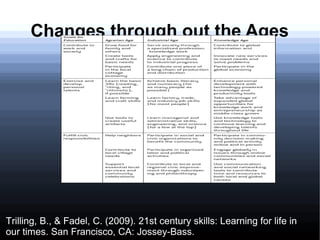
Changes through out the Ages


Trilling, B., & Fadel, C. (2009). 21st century skills: Learning for life in
our times. San Francisco, CA: Jossey-Bass.
Important skills of the 21                                                                                    st

                   Century

    
•          Oral and written communications

•          Critical thinking and problem solving

•          Professionalism and work ethic

•          Teamwork and collaboration

•          Working in diverse teams

•          Applying technology

•          Leadership and project management

Trilling, B., & Fadel, C. (2009). 21st century skills: Learning for life in our times. San Francisco, CA: Jossey-Bass.
References


Trilling, B., & Fadel, C. (2009). 21st century skills: Learning for life in
our times. San Francisco, CA: Jossey-Bass.

Bureau of Labor Statistics, U.S. Department of Labor, Occupational
Outlook Handbook, 2012-13 Edition, Kindergarten and Elementary
School Teachers,
on the Internet at http://www.bls.gov/ooh/education-training-and-
library/kindergarten-and-elementary-school-teachers.htm (visited July 24,
2012).

Sieversapp1

  • 1.
    Teaching Change Throughthe Ages Keisha G. Sievers
  • 2.
    Overview What sort ofeducational background is required for the field of education (elementary school teacher)?  Kindergarten and elementary school teachers must have at least a bachelor’s degree. In addition, public school teachers must have a state-issued certification or license. (Bureau of Labor & Statistics, 2012)
  • 3.
    What value doessociety place on this profession? Primary school teaching is the single most important profession in the world. Teachers pass on knowledge and values to children, prepare them for further education and for working life and are main contributors to good education. This most important profession however does not get the recognition it deserves. Most teachers are held accountable for their students’ performances on standardized tests, which can be frustrating.
  • 4.
    What technological advancements have played a role in this profession? Technology is making it possible for teachers to reach more students, allowing students the time they need to succeed, and providing our future workforce with competent, knowledgeable employees.
  • 5.
    What other forceshave caused a need for change in the education profession? The knowledge Age, the 21st century, has already brought historic changes to the world of work. The Knowledge Age demands a steady supply of well-trained workers using brainpower and digital tools to apply well-honed knowledge skills to their daily work. Trilling, B., & Fadel, C. (2009). 21st century skills: Learning for life in our times. San Francisco, CA: Jossey-Bass.
  • 6.
    Changes through outthe Ages Trilling, B., & Fadel, C. (2009). 21st century skills: Learning for life in our times. San Francisco, CA: Jossey-Bass.
  • 7.
    Important skills ofthe 21 st Century  • Oral and written communications • Critical thinking and problem solving • Professionalism and work ethic • Teamwork and collaboration • Working in diverse teams • Applying technology • Leadership and project management Trilling, B., & Fadel, C. (2009). 21st century skills: Learning for life in our times. San Francisco, CA: Jossey-Bass.
  • 8.
    References Trilling, B., &Fadel, C. (2009). 21st century skills: Learning for life in our times. San Francisco, CA: Jossey-Bass. Bureau of Labor Statistics, U.S. Department of Labor, Occupational Outlook Handbook, 2012-13 Edition, Kindergarten and Elementary School Teachers, on the Internet at http://www.bls.gov/ooh/education-training-and- library/kindergarten-and-elementary-school-teachers.htm (visited July 24, 2012).