Short Story Elements


What parts make up a story?
Story Terms
Plot
Setting
Characters
Point of View
Theme
Plot
Plot is what happens and how
it happens in a narrative. A
narrative is any work that tells
a story, such as a short story, a
novel, a drama, or a narrative
poem.
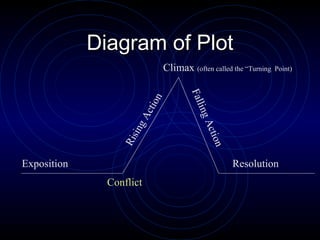
Parts of a Plot
Exposition – event that gives rise to conflict
 (opening situation)
Rising Action- events that complicate or
 intensify the central conflict (rising action)
Climax- highest point of interest or
 emotional involvement in the story
Falling Action- logical result of Climax
Resolution- Final outcome of the story
Conflict
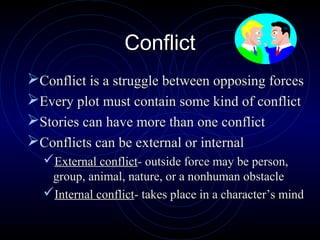
Conflict is a struggle between opposing forces
Every plot must contain some kind of conflict
Stories can have more than one conflict
Conflicts can be external or internal
  External conflict- outside force may be person,
   group, animal, nature, or a nonhuman obstacle
  Internal conflict- takes place in a character’s mind
Diagram of Plot
                                Climax (often called the “Turning   Point)


                                        Fal
                           on


                                            li
                       cti


                                          ng
                     gA


                                             Act
                      in
                  Ris


                                                 ion
Exposition                                             Resolution
               Conflict
Special Techniques of Plot
Suspense- excitement or tension
Foreshadowing- hint or clue about what
 will happen in story
Flashback- interrupts the normal sequence
 of events to tell about something that
 happened in the past
Surprise Ending- conclusion that reader
 does not expect (use of irony)
Setting
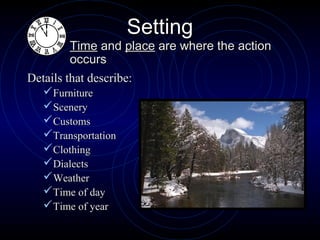
         Time and place are where the action
         occurs
Details that describe:
  Furniture
  Scenery
  Customs
  Transportation
  Clothing
  Dialects
  Weather
  Time of day
  Time of year
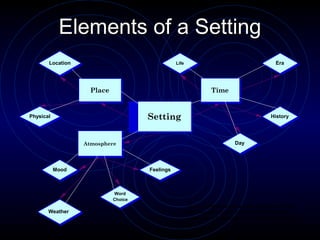
Elements of a Setting
       Location                                 Life                                              Era


                    Place                                         Time


Physical                             Setting                                                    History


                  Atmosphere                                                  Day


           Mood                      Feelings


                            Word
                            Choice
                                                       Use as activator to activate prior knowledge. Write
       Weather                                         the web on the board or overhead and students
                                                       create one at their seats. Then as class share and fill
                                                       in.
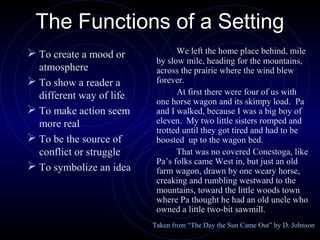
The Functions of a Setting
 To create a mood or            We left the home place behind, mile
                           by slow mile, heading for the mountains,
  atmosphere               across the prairie where the wind blew
 To show a reader a       forever.
  different way of life          At first there were four of us with
                           one horse wagon and its skimpy load. Pa
 To make action seem      and I walked, because I was a big boy of
  more real                eleven. My two little sisters romped and
                           trotted until they got tired and had to be
 To be the source of      boosted up to the wagon bed.
  conflict or struggle           That was no covered Conestoga, like
                           Pa’s folks came West in, but just an old
 To symbolize an idea     farm wagon, drawn by one weary horse,
                           creaking and rumbling westward to the
                           mountains, toward the little woods town
                           where Pa thought he had an old uncle who
                           owned a little two-bit sawmill.
                          Taken from “The Day the Sun Came Out” by D. Johnson
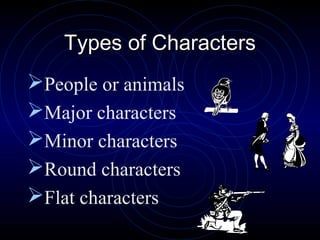
Types of Characters
People or animals
Major characters
Minor characters
Round characters
Flat characters
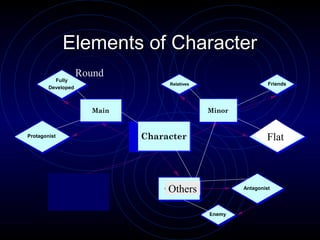
Elements of Character
                    Round
          Fully
                                       Relatives                    Friends
        Developed


                           Main                    Minor


                                                                   Not Fully
Protagonist                       Character                        Flat
                                                                  Developed


                    Flat               Others
                                      Co-Main              Antagonist


                                                   Enemy
Characterization
A writer reveals what a character is like and
 how the character changes throughout the
 story.
Two primary methods of characterization:
  Direct- writer tells what the character is like
  Indirect- writer shows what a character is like
    by describing what the character looks like, by
    telling what the character says and does, and by
    what other characters say about and do in
    response to the character.
Direct Characterization
     …And     I don’t play the dozens or believe
in standing around with somebody in my face
doing a lot of talking. I much rather just
knock you down and take my chances even if
I’m a little girl with skinny arms and a
squeaky voice, which is how I got the name
Squeaky.
                From “Raymond’s Run” by T. Bambara
Indirect Characterization

      The old man bowed to all of us
in the room. Then he removed his
hat and gloves, slowly and carefully.
 Chaplin once did that in a picture,
in a bank--he was the janitor.

    From “Gentleman of Rio en Medio” by J. Sedillo
Characterization
A writer reveals what a character is like and
 how the character changes throughout the
 story.
Two primary types of character:
  Flat- reveals only one or two traits.

  Round- reveals varied and sometimes
    contradictory traits.
Factors in Analyzing
          Characters
Physical appearance of character
Personality
Background/personal history
Motivation
Relationships
Conflict
Does character change?
Theme
A central message, concern, or insight
 into life expressed through a literary
 work
Can be expressed by one or two
 sentence statement about human beings
 or about life
May be stated directly or implied
Interpretation uncovers the theme
Example of Theme
“Every man needs to feel allegiance to
his native country, whether he always
appreciates that country or not.”


    From “A Man Without a Country” by Edward Hale
             pg. 185 in Prentice Hall Literature book

Short story

  • 1.
    Short Story Elements Whatparts make up a story?
  • 2.
  • 3.
    Plot Plot is whathappens and how it happens in a narrative. A narrative is any work that tells a story, such as a short story, a novel, a drama, or a narrative poem.
  • 4.
    Parts of aPlot Exposition – event that gives rise to conflict (opening situation) Rising Action- events that complicate or intensify the central conflict (rising action) Climax- highest point of interest or emotional involvement in the story Falling Action- logical result of Climax Resolution- Final outcome of the story
  • 5.
    Conflict Conflict is astruggle between opposing forces Every plot must contain some kind of conflict Stories can have more than one conflict Conflicts can be external or internal External conflict- outside force may be person, group, animal, nature, or a nonhuman obstacle Internal conflict- takes place in a character’s mind
  • 6.
    Diagram of Plot Climax (often called the “Turning Point) Fal on li cti ng gA Act in Ris ion Exposition Resolution Conflict
  • 7.
    Special Techniques ofPlot Suspense- excitement or tension Foreshadowing- hint or clue about what will happen in story Flashback- interrupts the normal sequence of events to tell about something that happened in the past Surprise Ending- conclusion that reader does not expect (use of irony)
  • 8.
    Setting Time and place are where the action occurs Details that describe: Furniture Scenery Customs Transportation Clothing Dialects Weather Time of day Time of year
  • 9.
    Elements of aSetting Location Life Era Place Time Physical Setting History Atmosphere Day Mood Feelings Word Choice Use as activator to activate prior knowledge. Write Weather the web on the board or overhead and students create one at their seats. Then as class share and fill in.
  • 10.
    The Functions ofa Setting  To create a mood or We left the home place behind, mile by slow mile, heading for the mountains, atmosphere across the prairie where the wind blew  To show a reader a forever. different way of life At first there were four of us with one horse wagon and its skimpy load. Pa  To make action seem and I walked, because I was a big boy of more real eleven. My two little sisters romped and trotted until they got tired and had to be  To be the source of boosted up to the wagon bed. conflict or struggle That was no covered Conestoga, like Pa’s folks came West in, but just an old  To symbolize an idea farm wagon, drawn by one weary horse, creaking and rumbling westward to the mountains, toward the little woods town where Pa thought he had an old uncle who owned a little two-bit sawmill. Taken from “The Day the Sun Came Out” by D. Johnson
  • 11.
    Types of Characters Peopleor animals Major characters Minor characters Round characters Flat characters
  • 12.
    Elements of Character Round Fully Relatives Friends Developed Main Minor Not Fully Protagonist Character Flat Developed Flat Others Co-Main Antagonist Enemy
  • 13.
    Characterization A writer revealswhat a character is like and how the character changes throughout the story. Two primary methods of characterization: Direct- writer tells what the character is like Indirect- writer shows what a character is like by describing what the character looks like, by telling what the character says and does, and by what other characters say about and do in response to the character.
  • 14.
    Direct Characterization …And I don’t play the dozens or believe in standing around with somebody in my face doing a lot of talking. I much rather just knock you down and take my chances even if I’m a little girl with skinny arms and a squeaky voice, which is how I got the name Squeaky. From “Raymond’s Run” by T. Bambara
  • 15.
    Indirect Characterization The old man bowed to all of us in the room. Then he removed his hat and gloves, slowly and carefully. Chaplin once did that in a picture, in a bank--he was the janitor. From “Gentleman of Rio en Medio” by J. Sedillo
  • 16.
    Characterization A writer revealswhat a character is like and how the character changes throughout the story. Two primary types of character: Flat- reveals only one or two traits. Round- reveals varied and sometimes contradictory traits.
  • 17.
    Factors in Analyzing Characters Physical appearance of character Personality Background/personal history Motivation Relationships Conflict Does character change?
  • 18.
    Theme A central message,concern, or insight into life expressed through a literary work Can be expressed by one or two sentence statement about human beings or about life May be stated directly or implied Interpretation uncovers the theme
  • 19.
    Example of Theme “Everyman needs to feel allegiance to his native country, whether he always appreciates that country or not.” From “A Man Without a Country” by Edward Hale pg. 185 in Prentice Hall Literature book