







Definition
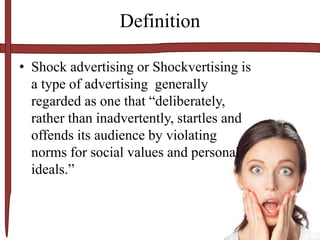
• Shock advertising or Shockvertising is
a type of advertising generally
regarded as one that “deliberately,
rather than inadvertently, startles and
offends its audience by violating
norms for social values and personal
ideals.”
examples
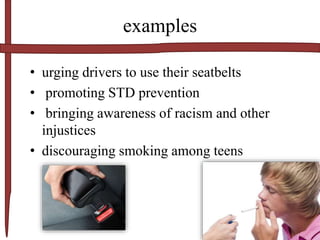
• urging drivers to use their seatbelts
• promoting STD prevention
• bringing awareness of racism and other
injustices
• discouraging smoking among teens
characteristics
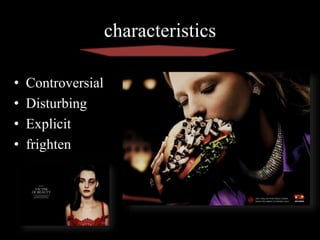
• Controversial
• Disturbing
• Explicit
• frighten
Contents
• disregard for tradition
• law or practice (e.g., lewd or tasteless sexual
references or obscenity)
• defiance of the social or moral code
• the display of images or words that are
horrifying, terrifying, or repulsive (e.g.,
gruesome or revolting scenes, or violence),
brutality, nudity, feces, or profanity)
The effects of shock advertising
• increases attention, benefits memory, and
positively influences behavior
• consumers are more likely to remember
shocking advertising content over advertising
content that is not shocking
• refer to the usage of emotional appeals such
as humor, sex or fear
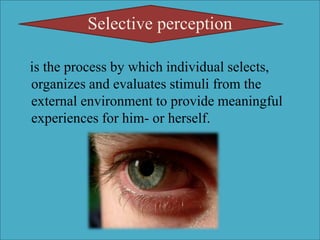
Selective perception
is the process by which individual selects,
organizes and evaluates stimuli from the
external environment to provide meaningful
experiences for him- or herself.
Selective perception
• people focus in certain features of their
environment to the exclusion of others
• consumer unconsciously chooses which
information to notice and this kind of selection
is dependent of different perceptual filters
which are based on the consumer’s earlier
experiences.
usage
• weight loss programs
• sex/gender related products
• clinics that provide AIDS and STD testing
• groups that advocate for less gun control
• casinos which naturally support and promote
gambling
usage
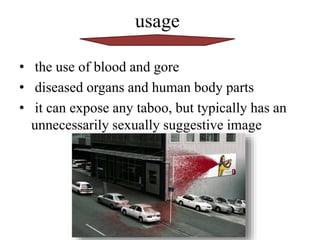
• the use of blood and gore
• diseased organs and human body parts
• it can expose any taboo, but typically has an
unnecessarily sexually suggestive image
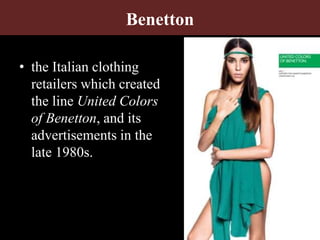
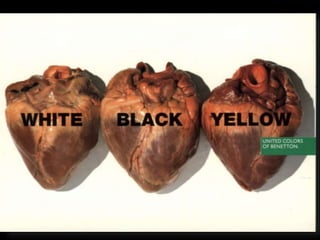
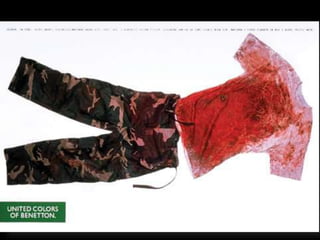
Benetton
• the Italian clothing
retailers which created
the line United Colors
of Benetton, and its
advertisements in the
late 1980s.
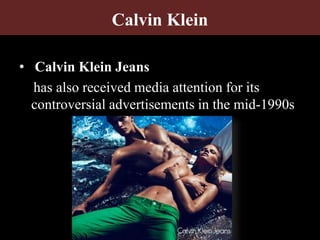
Calvin Klein
• Calvin Klein Jeans
has also received media attention for its
controversial advertisements in the mid-1990s
Shock advertising
Shock advertising
Shock advertising
Shock advertising
Shock advertising

Shock advertising

  • 2.
    Definition • Shock advertisingor Shockvertising is a type of advertising generally regarded as one that “deliberately, rather than inadvertently, startles and offends its audience by violating norms for social values and personal ideals.”
  • 3.
    examples • urging driversto use their seatbelts • promoting STD prevention • bringing awareness of racism and other injustices • discouraging smoking among teens
  • 4.
  • 5.
    Contents • disregard fortradition • law or practice (e.g., lewd or tasteless sexual references or obscenity) • defiance of the social or moral code • the display of images or words that are horrifying, terrifying, or repulsive (e.g., gruesome or revolting scenes, or violence), brutality, nudity, feces, or profanity)
  • 6.
    The effects ofshock advertising • increases attention, benefits memory, and positively influences behavior • consumers are more likely to remember shocking advertising content over advertising content that is not shocking • refer to the usage of emotional appeals such as humor, sex or fear
  • 7.
    Selective perception is theprocess by which individual selects, organizes and evaluates stimuli from the external environment to provide meaningful experiences for him- or herself.
  • 8.
    Selective perception • peoplefocus in certain features of their environment to the exclusion of others • consumer unconsciously chooses which information to notice and this kind of selection is dependent of different perceptual filters which are based on the consumer’s earlier experiences.
  • 9.
    usage • weight lossprograms • sex/gender related products • clinics that provide AIDS and STD testing • groups that advocate for less gun control • casinos which naturally support and promote gambling
  • 10.
    usage • the useof blood and gore • diseased organs and human body parts • it can expose any taboo, but typically has an unnecessarily sexually suggestive image
  • 11.
    Benetton • the Italianclothing retailers which created the line United Colors of Benetton, and its advertisements in the late 1980s.
  • 16.
    Calvin Klein • CalvinKlein Jeans has also received media attention for its controversial advertisements in the mid-1990s