Sharability: Prospects for Better Reallocation of Durable Household GoodsAlex Goldman, ABDDepartment of SociologyUniversity of Florida
The Motivating ProblemIndividuals buy many things that they want to use, but don't need to own. There simply aren't enough convenient and/or rewarding mechanisms for temporarily tapping into the utility of goods already owned by our friends and neighbors.
Three Related Themes:1.  Environmental Degradation 2.  Economic Irrationality3.  Social Alienation
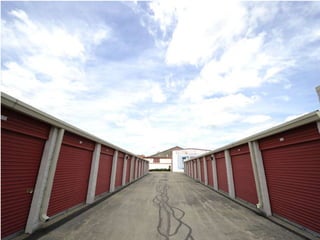
U-Store Environmental CatastropheSelf-storage space available in the US grew seven-fold over the last 25 years, even as new homes became 25% larger during the same period. This is a direct result of increasing consumer accumulation of infrequently used durable goods. Research continues to suggest that the kind of economic development fueled by expanding consumer demand is causing increasingly jarring shocks to our planetary ecosystems and their life-support services.
Connections to the Great RecessionWhile Americans have been busy accumulating all this stuff, they have also been falling deeper into debt. The connection between easy access to credit and rising levels of material wealth is at the root of the financial problems which came to a head in 2008.The encouragement to consume above our means is a key part of the "treadmill of production" thesis.
Simultaneous Commmunity Atrophy  Social scientists have extensively documented the post-industrial dissipation of neighborhood and civic ties.Our propensity to "bowl alone" stems partially from the weakening of social capital ties resulting from diminished investments in reciprocal social exchange.This state of affairs is related to perceptions of material self-sufficiency independence of modern households. 
Sharing Can Help…    by reducing the average amount of resources consumed when we want to do something that we don't currently have the requisite things to undertake    by reducing the financial outlay involved in purchasing an item of one's own and storing it while not in use    by encouraging individuals to get to know nearby others well enough to engage in trusted exchange Disclaimer: It might also result in bad things too... or just anarchy 
What Determines Goods' Sharability?    Durability- the extent to which a good's usage diminishes  its capacity to provide high quality services over its lifetime   Lumpiness- the usual time interval between a good's usage; lumpier means less frequently used and often idle   Granularity - the distribution of a good in a particular society; smaller grains are omnipresent, larger grains are more rare        What goods are durable, lumpy, and mid-grained?
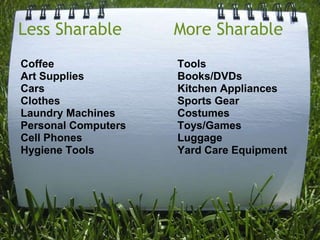
  Less Sharable          More SharableCoffeeArt SuppliesCarsClothesLaundry MachinesPersonal ComputersCell PhonesHygiene ToolsToolsBooks/DVDsKitchen AppliancesSports GearCostumesToys/GamesLuggageYard Care Equipment
Sharing Systems' GoalsEfficient sharing systems must satisfy owners' full demand for a lumpy good's functionality while temporarily transferring its excess capacity to others who value some of its utility, but not a large enough amount to justify purchasing a new unit of their own. 
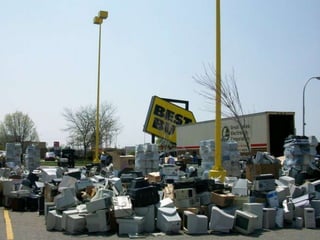
Non-Sharing AlternativesPrimary Markets - Wal-Mart, Amazon.com, etc. Secondary Markets - Yard Sales, Ebay, CraigslistRental Schemes - Rent-a-Center, ZilokGiveaways - Donation Centers, Freecycle.org, the curbThrowaways – dumpsters, hazardous waste disposal
Existing Sharing ModelsAccommodation Sharing - CouchSurfing, Hospitality ClubRidesharing - Zipcar, eRideshare, State/Municipal ProgramsSwapmeets - SwapTree, BookShare, GameShare, etc.Service Exchanges - Austin, San Francisco, Portland, etc.Tool Exchanges - Atlanta, Providence, Seattle, etc.
The Glaring GapNo extra-market model successfully taps into the huge wealth of dispersed durable goods scattered throughout residential neighborhoods and local social networks.  Why?
Why No Mainstream Attention?    We traditionally view sharing as an informal process    Individualist cultures are uncomfortable with sharing    Environmentalists have prioritized production (extraction/manufacturing) over distribution… plus the first “R” is much more difficult than the next two    Sharing doesn't represent much of a business   model...  in fact, it's arguably the antithesis of one, working against economic growth (a cardinal sin in a recession) and encouraging “anticonsumerism”
Why No Academic Attention?    Economists aren't very interested in non-monetary exchange because it doesn't allow for easy modeling    Sharing is often regarded as the province of early anthropologists and sociologists, or as a matter only of importance to traditional/impoverished peoples.    Questioning the basic processes of modern consumer culture is often viewed as an very politicized (Marxist) or ultimately futile pursuit.
Some de-politicized PragmatismOverconsumption is inefficient resource allocation!  Individuals buy too many products that they rarely use   because they can't find other ways to source their utility.Sharing Helps Correct Economic Inefficiency Because...  1. Current options make renting items neither cheap nor simple   2. "Renting" from Wal-Mart is bad for them and the environment  3. Buying used goods is often time consuming and hit-or-miss
The Major Practical ObstaclesBorrowing entails knowing who owns stuff and both what and with whom they will share.  So...Do we know what the people around us own?
What items are culturally appropriate to share?
Who is more or less disposed to sharing?Guesses and assumptions are OK, but systematic research is better
Two ways to do this Research1.  Ask many randomly selected individuals questions about their sharing attitudes and past behaviors - Thanks UF Survey Lab! 2.  Set up a real sharing system, recruit lots of participants, and see what they actually do.  
How does one start a sharing service?Create "phone trees" and "master lists" of stuff kept by "administrators"?Set up email listservs for different groups?Create a Facebook application for sharing?Just start tweeting your haves and wants?
What Capabilities are Required?easily list items that you are willing to lend
search or browse for items you might need

Sharability Presentation

  • 1.
    Sharability: Prospects forBetter Reallocation of Durable Household GoodsAlex Goldman, ABDDepartment of SociologyUniversity of Florida
  • 2.
    The Motivating ProblemIndividualsbuy many things that they want to use, but don't need to own. There simply aren't enough convenient and/or rewarding mechanisms for temporarily tapping into the utility of goods already owned by our friends and neighbors.
  • 3.
    Three Related Themes:1. Environmental Degradation 2.  Economic Irrationality3.  Social Alienation
  • 5.
    U-Store Environmental CatastropheSelf-storagespace available in the US grew seven-fold over the last 25 years, even as new homes became 25% larger during the same period. This is a direct result of increasing consumer accumulation of infrequently used durable goods. Research continues to suggest that the kind of economic development fueled by expanding consumer demand is causing increasingly jarring shocks to our planetary ecosystems and their life-support services.
  • 7.
    Connections to theGreat RecessionWhile Americans have been busy accumulating all this stuff, they have also been falling deeper into debt. The connection between easy access to credit and rising levels of material wealth is at the root of the financial problems which came to a head in 2008.The encouragement to consume above our means is a key part of the "treadmill of production" thesis.
  • 9.
    Simultaneous Commmunity Atrophy Social scientists have extensively documented the post-industrial dissipation of neighborhood and civic ties.Our propensity to "bowl alone" stems partially from the weakening of social capital ties resulting from diminished investments in reciprocal social exchange.This state of affairs is related to perceptions of material self-sufficiency independence of modern households. 
  • 11.
    Sharing Can Help… by reducing the average amount of resources consumed when we want to do something that we don't currently have the requisite things to undertake by reducing the financial outlay involved in purchasing an item of one's own and storing it while not in use by encouraging individuals to get to know nearby others well enough to engage in trusted exchange Disclaimer: It might also result in bad things too... or just anarchy 
  • 13.
    What Determines Goods'Sharability? Durability- the extent to which a good's usage diminishes its capacity to provide high quality services over its lifetime Lumpiness- the usual time interval between a good's usage; lumpier means less frequently used and often idle Granularity - the distribution of a good in a particular society; smaller grains are omnipresent, larger grains are more rare    What goods are durable, lumpy, and mid-grained?
  • 14.
      Less Sharable          MoreSharableCoffeeArt SuppliesCarsClothesLaundry MachinesPersonal ComputersCell PhonesHygiene ToolsToolsBooks/DVDsKitchen AppliancesSports GearCostumesToys/GamesLuggageYard Care Equipment
  • 15.
    Sharing Systems' GoalsEfficientsharing systems must satisfy owners' full demand for a lumpy good's functionality while temporarily transferring its excess capacity to others who value some of its utility, but not a large enough amount to justify purchasing a new unit of their own. 
  • 16.
    Non-Sharing AlternativesPrimary Markets- Wal-Mart, Amazon.com, etc. Secondary Markets - Yard Sales, Ebay, CraigslistRental Schemes - Rent-a-Center, ZilokGiveaways - Donation Centers, Freecycle.org, the curbThrowaways – dumpsters, hazardous waste disposal
  • 18.
    Existing Sharing ModelsAccommodationSharing - CouchSurfing, Hospitality ClubRidesharing - Zipcar, eRideshare, State/Municipal ProgramsSwapmeets - SwapTree, BookShare, GameShare, etc.Service Exchanges - Austin, San Francisco, Portland, etc.Tool Exchanges - Atlanta, Providence, Seattle, etc.
  • 19.
    The Glaring GapNoextra-market model successfully taps into the huge wealth of dispersed durable goods scattered throughout residential neighborhoods and local social networks.  Why?
  • 20.
    Why No MainstreamAttention? We traditionally view sharing as an informal process Individualist cultures are uncomfortable with sharing Environmentalists have prioritized production (extraction/manufacturing) over distribution… plus the first “R” is much more difficult than the next two Sharing doesn't represent much of a business model...  in fact, it's arguably the antithesis of one, working against economic growth (a cardinal sin in a recession) and encouraging “anticonsumerism”
  • 21.
    Why No AcademicAttention? Economists aren't very interested in non-monetary exchange because it doesn't allow for easy modeling Sharing is often regarded as the province of early anthropologists and sociologists, or as a matter only of importance to traditional/impoverished peoples. Questioning the basic processes of modern consumer culture is often viewed as an very politicized (Marxist) or ultimately futile pursuit.
  • 22.
    Some de-politicized PragmatismOverconsumption is inefficientresource allocation!  Individuals buy too many products that they rarely use because they can't find other ways to source their utility.Sharing Helps Correct Economic Inefficiency Because...  1. Current options make renting items neither cheap nor simple   2. "Renting" from Wal-Mart is bad for them and the environment  3. Buying used goods is often time consuming and hit-or-miss
  • 23.
    The Major PracticalObstaclesBorrowing entails knowing who owns stuff and both what and with whom they will share.  So...Do we know what the people around us own?
  • 24.
    What items areculturally appropriate to share?
  • 25.
    Who is moreor less disposed to sharing?Guesses and assumptions are OK, but systematic research is better
  • 26.
    Two ways todo this Research1.  Ask many randomly selected individuals questions about their sharing attitudes and past behaviors - Thanks UF Survey Lab! 2.  Set up a real sharing system, recruit lots of participants, and see what they actually do.  
  • 27.
    How does onestart a sharing service?Create "phone trees" and "master lists" of stuff kept by "administrators"?Set up email listservs for different groups?Create a Facebook application for sharing?Just start tweeting your haves and wants?
  • 28.
    What Capabilities areRequired?easily list items that you are willing to lend
  • 29.
    search or browsefor items you might need

Editor's Notes

  • #5 What is this a picture of? We’re all familiar with them today , right? I’ll bet when your parents were your age, because they weren’t nearly as ubiquitous in our culture. My bleeding heart liberalism wants to point out that these units would provide housing to humans that is superior to what most people on the planet currently live in… many are climate controlled for God’s sake. Or if you want to intellectualize it more, read the recent NYT magazine essay “The Self Storage Self”.
  • #7 Now many people are losing the place where they store most of the things they own… so expect self-storage to keep growing… because people are more loathe to part with their things than with their homes… at least that’s what the essay argues… again, I can’t say.
  • #9 Bling,Bling indeed. Though suburbs have become quite devalued these days, but they still have an aesthetic appeal to many folks. I think of the self storage centers as tenements and these as mini-castles separated by moats of lawn. Though these places are not very hip anymore, they continue to be emblematic of certain aspects of our society and culture.
  • #11 So here is what we want to see instead, right? Otherwise spiky people bonding initially over simple exchanges… but who knows what the heck that thing they’re passing is… a relay baton, another dog toy, whatever…Anyway, here comes my coreargument and three sub-arguments… which will be fairlysimple and optimistic. FLIP
  • #13 How do you decide what you would share with others? Especially if you organize your things like me…In my research, I actually ask people to make these decisions on the spot, which some people have a lot of trouble with… they need to look around their living space for a while and put items in categories… this is so cognitively taxing partly because we have so much stuff to sort through. However, I believe there are systematic ways to predict what people would be willing to share… and this partly has to do with the nature of specific things. So…
  • #18 This is what it looks like when Best Buy advertises that they will take back electrical appliances. This looks bad, but it is better than just stuffing it in the dumpster and having it end up in a landfill, potentially leaching chemicals into the soil and groundwater. Our own hazardous waste dumping station for Alachua County is located just north of the airport off of Waldo Road.