Islamic Emirate of Afghanistan
Ministry of Higher Education
Nangarhar University
Agriculture
Master Program in Agronomy
Introduction to Soil microorganisms
Prepared by: Shahidullah Ihsan, M.S.C student of
Agronomy Department
Instructor Lecture: Professor, Ph.D Asmatullah Durani
Date: 23/12/2024
•Definition of Soil microorganisms :
Soil microorganisms are microscopic organisms living in the soil , and
they are vital to soil health, nutrient cycling, and ecosystem stability .
They include bacteria , fungi ,algae , protozoa ,actinomycetes and
viruses . Below are detailed insights into their
roles ,diversity ,interaction and importance.
Soil microorganisms are the backbone of healthy soil
ecosystems ,playing essential roles in agriculture , environmental
sustainability and ecosystem services . Their conservation and proper
management are critical for long – term soil productivity and
environmental health.
Types of Soil Microorganisms
1 – Bacteria: Single – celled organisms most abundant microorganisms
in soil . Most abundant microorganisms,billions in just a teaspoon of
soil , 0.5 to 5 micrometers in size .
•Roles of Bacteria in soil
Decomposers: Break down organic matter into simpler substances.
Nitrogen fixation : Convert atmospheric nitrogen into ( Rhizobium,
Azotobacter)
Nutrient cycling : Aid in the sulfur and phosphorus cycles .
Bioremediation : Degrade toxic components and pollutants.
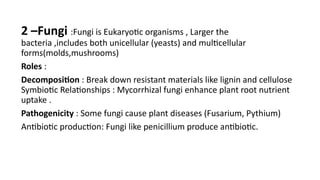
2 –Fungi :Fungi is Eukaryotic organisms , Larger the
bacteria ,includes both unicellular (yeasts) and multicellular
forms(molds,mushrooms)
Roles :
Decomposition : Break down resistant materials like lignin and cellulose
Symbiotic Relationships : Mycorrhizal fungi enhance plant root nutrient
uptake .
Pathogenicity : Some fungi cause plant diseases (Fusarium, Pythium)
Antibiotic production: Fungi like penicillium produce antibiotic.
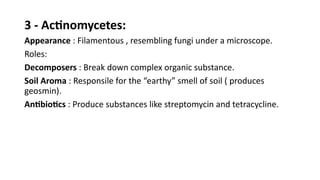
3 - Actinomycetes:
Appearance : Filamentous , resembling fungi under a microscope.
Roles:
Decomposers : Break down complex organic substance.
Soil Aroma : Responsile for the “earthy” smell of soil ( produces
geosmin).
Antibiotics : Produce substances like streptomycin and tetracycline.
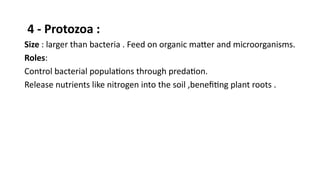
4 - Protozoa :
Size : larger than bacteria . Feed on organic matter and microorganisms.
Roles:
Control bacterial populations through predation.
Release nutrients like nitrogen into the soil ,benefiting plant roots .
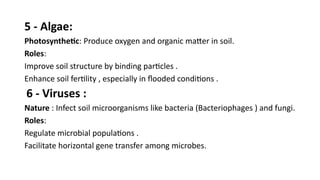
5 - Algae:
Photosynthetic: Produce oxygen and organic matter in soil.
Roles:
Improve soil structure by binding particles .
Enhance soil fertility , especially in flooded conditions .
6 - Viruses :
Nature : Infect soil microorganisms like bacteria (Bacteriophages ) and fungi.
Roles:
Regulate microbial populations .
Facilitate horizontal gene transfer among microbes.
2 -Roles of soil microorganisms
A – Nutrient cycling
Microorganisms convert complex organic and inorganic materials into
plant available nutrients:
1 - Nitrogen cycle:
A – Fixation :Conversion of atmospheric nigrogen ton
ammonia(Rhizobium,Azotobacter).
B – Nitrification : Ammonia to nitrate by nitrosomonas and nitrobacter.
D – denitrification : nitrates to nitrogen gas ( Pseudomonas , clostridium).
2 – Phosphorus cycle:solubilize and mineralize phosphorus , making it
available to plants (Bacillus , aspergillus)
3 - Carbon cycle :Decompose organic matter ,releasing Co2 and storing
carbon in stable forms.
Improving soil Structure
1 - Excrete extracellular polysaccharides that bind soil particles ,enhancing
aggregation.
2 – Promote aeration ,water retention and resistance to erosion.
Disease suppression
1 – Produce antifungal and antibacterial compounds(Bacillus subtilis,Trichoderma)
2- Outcompete pathogens for nutrients and space.
Biodegradation
1- Break down pollutants like pesticides ,hydrocarbons and heavy metals ,reducing
soil contamination
Factors affecting soil microorganisms
Environmental factors
1- pH: Most microorganisms thrive in a PH range of 6-7. Acidic or
alkaline condition reduce activity.
2 – Tempreture : Optimal ativity occurs between 20-30°c.
3- Moisture : Microbial activity is highest in moist soils but declines
in dry or waterlogged conditions.
4- Oxygen : Aerobic microbos dominate in well aerated soil ,while
anaerobic ones thrive in noorly aerated conditions.
Soil properties:
1 – Organic matter : Provides energy and nutrients for microbial
Populations.
2 – Texture : Loamy soil support higher microbial diversity compared
to sandy or clay soils.
3 – Nutrient Levels : Availability of nitrogen , phosphorus and other
nutrients influences microbial growth.
Application in Agriculture and environment
Biofertilizers
Microbial inoculants improve soil fertility (Rhizobium for nitrogen
fixation ,phosphate solubilizing bacteria ).
Biopesticides
Suppress plant pathogens and pests naturally(Bacillus thuringiensis for
insect control)
Composting
Accelerate organic waste decomposition , converting it into nutrient rich
compost.
Soil Remediation
Microbes degrade pollutants and restore soil health( Pseudomonas for oil
spill cleanup).
Importance of soil microbial diversity
1 – A diverse microbial community ensures resilience against
environmental changes and disturbances.
2 – Enhances soil multifunctionality ,including productivity ,
disease resistance and carbon sequestration .
3- Loss of microbial diversity due to overuse of
fertilizers ,pesticides and deforestation can degrade soil health.
Challenges in maintaining microbial health
1 – Overuse of synthetic fertilizers and pesticides harms beneficial
microbes .
2 – Soil erosion and compaction reduce microbial habitats.
3 – Climate change alters microbial activity through temperature
and moisture shifts.
Sustainable practices to enhance soil microbial activity
1- Add organic amendments like compost and manure.
2 – Minimize tillage to preserve microbial habitats.
3- Avoid overuse of chemicals and use biocontrol agents instead.
4 – Rotate crops and include cover crops to maintain soil diversity.
5- Ensure adequate soil aeration and moisture.
‫مننه‬ ‫مو‬ ‫توجو‬ ‫له‬

shahidullah soil microorganisms ppt.pptx

  • 2.
    Islamic Emirate ofAfghanistan Ministry of Higher Education Nangarhar University Agriculture Master Program in Agronomy Introduction to Soil microorganisms Prepared by: Shahidullah Ihsan, M.S.C student of Agronomy Department Instructor Lecture: Professor, Ph.D Asmatullah Durani Date: 23/12/2024
  • 3.
    •Definition of Soilmicroorganisms : Soil microorganisms are microscopic organisms living in the soil , and they are vital to soil health, nutrient cycling, and ecosystem stability . They include bacteria , fungi ,algae , protozoa ,actinomycetes and viruses . Below are detailed insights into their roles ,diversity ,interaction and importance. Soil microorganisms are the backbone of healthy soil ecosystems ,playing essential roles in agriculture , environmental sustainability and ecosystem services . Their conservation and proper management are critical for long – term soil productivity and environmental health.
  • 4.
    Types of SoilMicroorganisms 1 – Bacteria: Single – celled organisms most abundant microorganisms in soil . Most abundant microorganisms,billions in just a teaspoon of soil , 0.5 to 5 micrometers in size .
  • 5.
    •Roles of Bacteriain soil Decomposers: Break down organic matter into simpler substances. Nitrogen fixation : Convert atmospheric nitrogen into ( Rhizobium, Azotobacter) Nutrient cycling : Aid in the sulfur and phosphorus cycles . Bioremediation : Degrade toxic components and pollutants.
  • 6.
    2 –Fungi :Fungiis Eukaryotic organisms , Larger the bacteria ,includes both unicellular (yeasts) and multicellular forms(molds,mushrooms) Roles : Decomposition : Break down resistant materials like lignin and cellulose Symbiotic Relationships : Mycorrhizal fungi enhance plant root nutrient uptake . Pathogenicity : Some fungi cause plant diseases (Fusarium, Pythium) Antibiotic production: Fungi like penicillium produce antibiotic.
  • 7.
    3 - Actinomycetes: Appearance: Filamentous , resembling fungi under a microscope. Roles: Decomposers : Break down complex organic substance. Soil Aroma : Responsile for the “earthy” smell of soil ( produces geosmin). Antibiotics : Produce substances like streptomycin and tetracycline.
  • 8.
    4 - Protozoa: Size : larger than bacteria . Feed on organic matter and microorganisms. Roles: Control bacterial populations through predation. Release nutrients like nitrogen into the soil ,benefiting plant roots .
  • 9.
    5 - Algae: Photosynthetic:Produce oxygen and organic matter in soil. Roles: Improve soil structure by binding particles . Enhance soil fertility , especially in flooded conditions . 6 - Viruses : Nature : Infect soil microorganisms like bacteria (Bacteriophages ) and fungi. Roles: Regulate microbial populations . Facilitate horizontal gene transfer among microbes.
  • 10.
    2 -Roles ofsoil microorganisms A – Nutrient cycling Microorganisms convert complex organic and inorganic materials into plant available nutrients: 1 - Nitrogen cycle: A – Fixation :Conversion of atmospheric nigrogen ton ammonia(Rhizobium,Azotobacter). B – Nitrification : Ammonia to nitrate by nitrosomonas and nitrobacter. D – denitrification : nitrates to nitrogen gas ( Pseudomonas , clostridium). 2 – Phosphorus cycle:solubilize and mineralize phosphorus , making it available to plants (Bacillus , aspergillus)
  • 11.
    3 - Carboncycle :Decompose organic matter ,releasing Co2 and storing carbon in stable forms. Improving soil Structure 1 - Excrete extracellular polysaccharides that bind soil particles ,enhancing aggregation. 2 – Promote aeration ,water retention and resistance to erosion. Disease suppression 1 – Produce antifungal and antibacterial compounds(Bacillus subtilis,Trichoderma) 2- Outcompete pathogens for nutrients and space. Biodegradation 1- Break down pollutants like pesticides ,hydrocarbons and heavy metals ,reducing soil contamination
  • 12.
    Factors affecting soilmicroorganisms Environmental factors 1- pH: Most microorganisms thrive in a PH range of 6-7. Acidic or alkaline condition reduce activity. 2 – Tempreture : Optimal ativity occurs between 20-30°c. 3- Moisture : Microbial activity is highest in moist soils but declines in dry or waterlogged conditions. 4- Oxygen : Aerobic microbos dominate in well aerated soil ,while anaerobic ones thrive in noorly aerated conditions.
  • 13.
    Soil properties: 1 –Organic matter : Provides energy and nutrients for microbial Populations. 2 – Texture : Loamy soil support higher microbial diversity compared to sandy or clay soils. 3 – Nutrient Levels : Availability of nitrogen , phosphorus and other nutrients influences microbial growth.
  • 14.
    Application in Agricultureand environment Biofertilizers Microbial inoculants improve soil fertility (Rhizobium for nitrogen fixation ,phosphate solubilizing bacteria ). Biopesticides Suppress plant pathogens and pests naturally(Bacillus thuringiensis for insect control) Composting Accelerate organic waste decomposition , converting it into nutrient rich compost. Soil Remediation Microbes degrade pollutants and restore soil health( Pseudomonas for oil spill cleanup).
  • 15.
    Importance of soilmicrobial diversity 1 – A diverse microbial community ensures resilience against environmental changes and disturbances. 2 – Enhances soil multifunctionality ,including productivity , disease resistance and carbon sequestration . 3- Loss of microbial diversity due to overuse of fertilizers ,pesticides and deforestation can degrade soil health.
  • 16.
    Challenges in maintainingmicrobial health 1 – Overuse of synthetic fertilizers and pesticides harms beneficial microbes . 2 – Soil erosion and compaction reduce microbial habitats. 3 – Climate change alters microbial activity through temperature and moisture shifts. Sustainable practices to enhance soil microbial activity 1- Add organic amendments like compost and manure. 2 – Minimize tillage to preserve microbial habitats. 3- Avoid overuse of chemicals and use biocontrol agents instead. 4 – Rotate crops and include cover crops to maintain soil diversity.
  • 17.
    5- Ensure adequatesoil aeration and moisture.
  • 18.