10.11.2023 | South Tyrol Free Software Conference (SFSCON)
How IoT and AI are Revolutionizing
Mass Customization
Prof. Dr. Thomas Aichner
thomas.aichner@business-school.bz
www.business-school.bz
1. Traditional Mass Customization
2. AI: The New Frontier in Mass Customization
3. IoT: Connecting Devices for Personalized Experiences
4. Future Visions: The Next Wave of Customization
3
1 Traditional Mass Customization
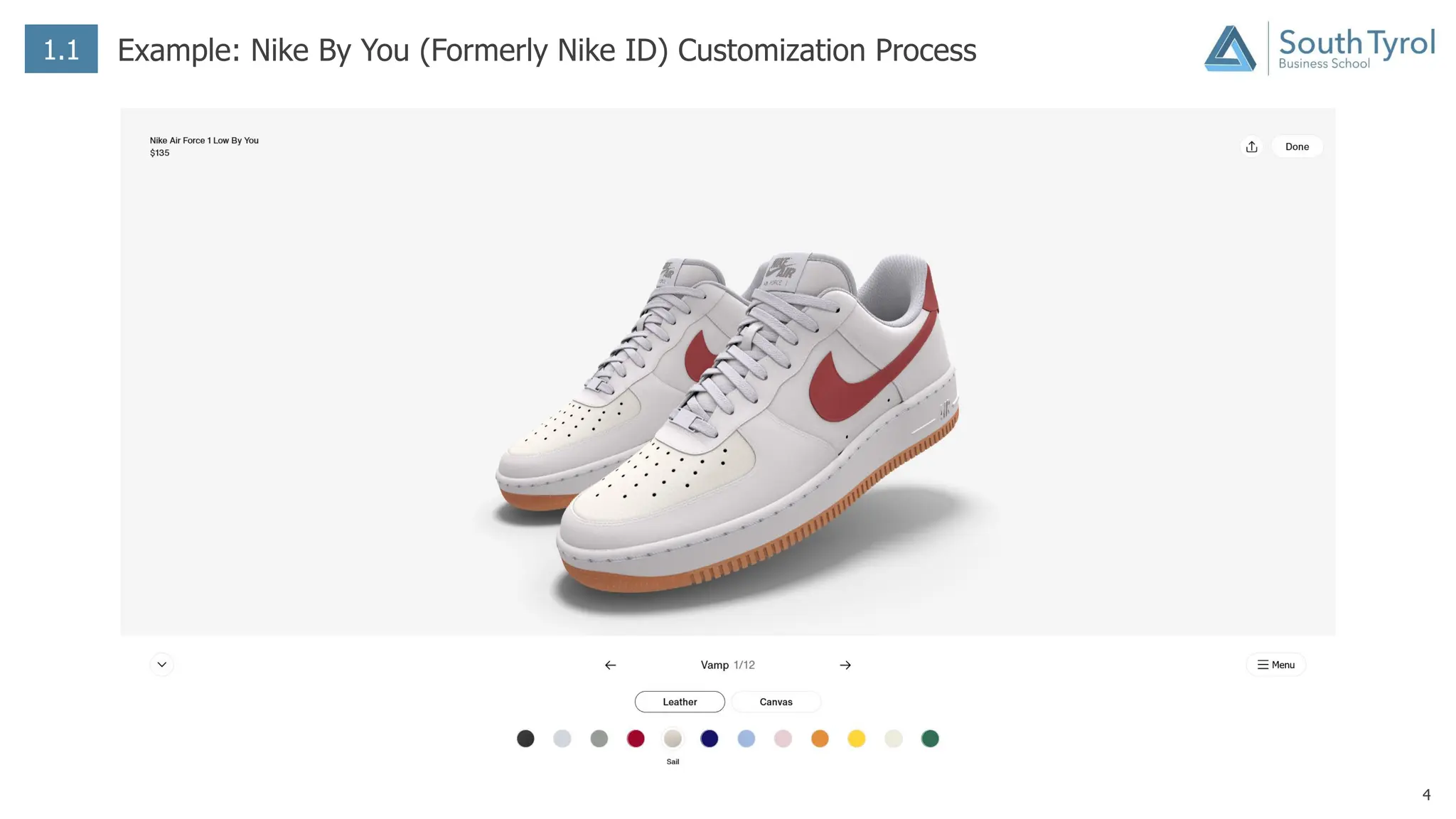
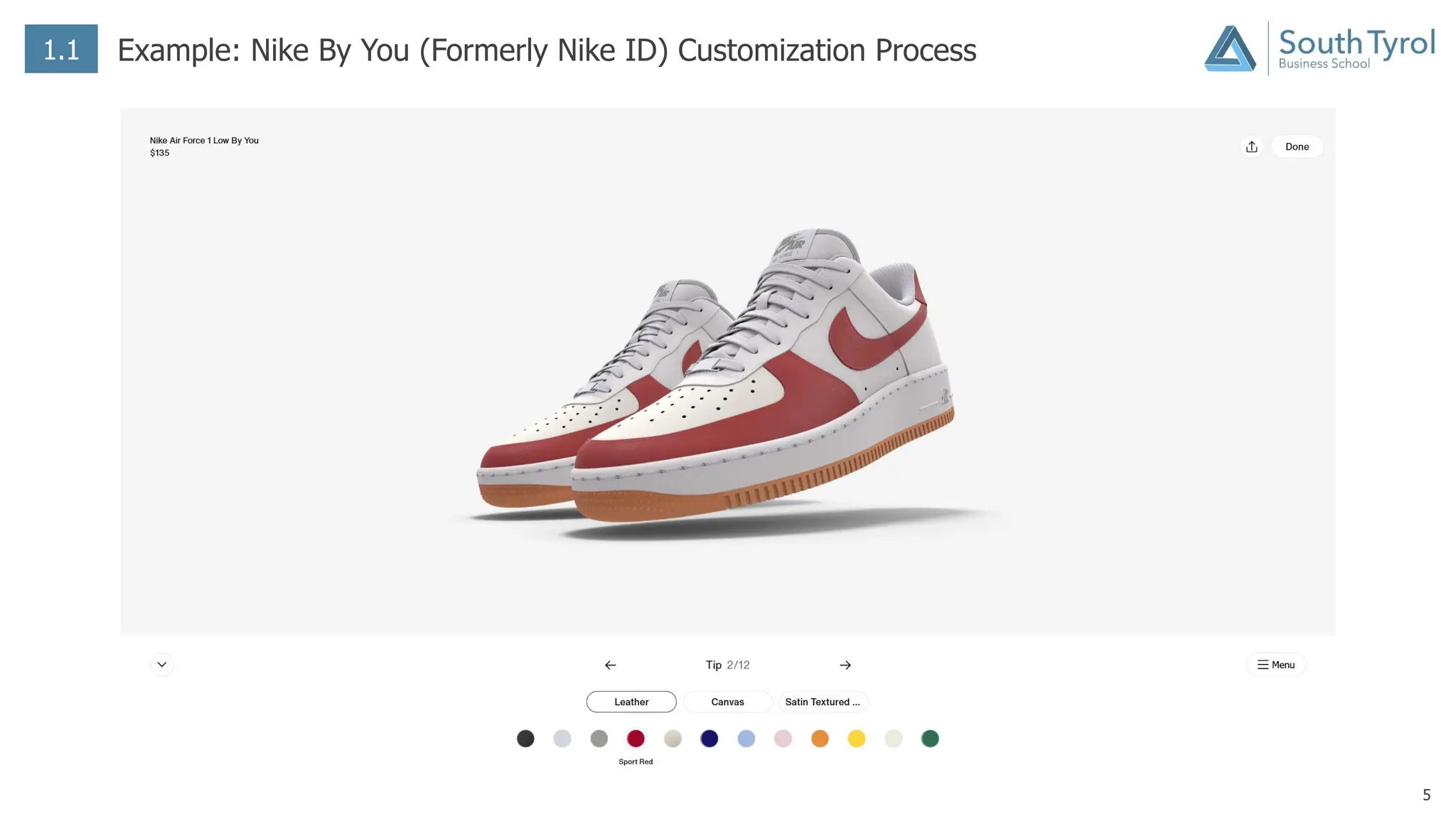
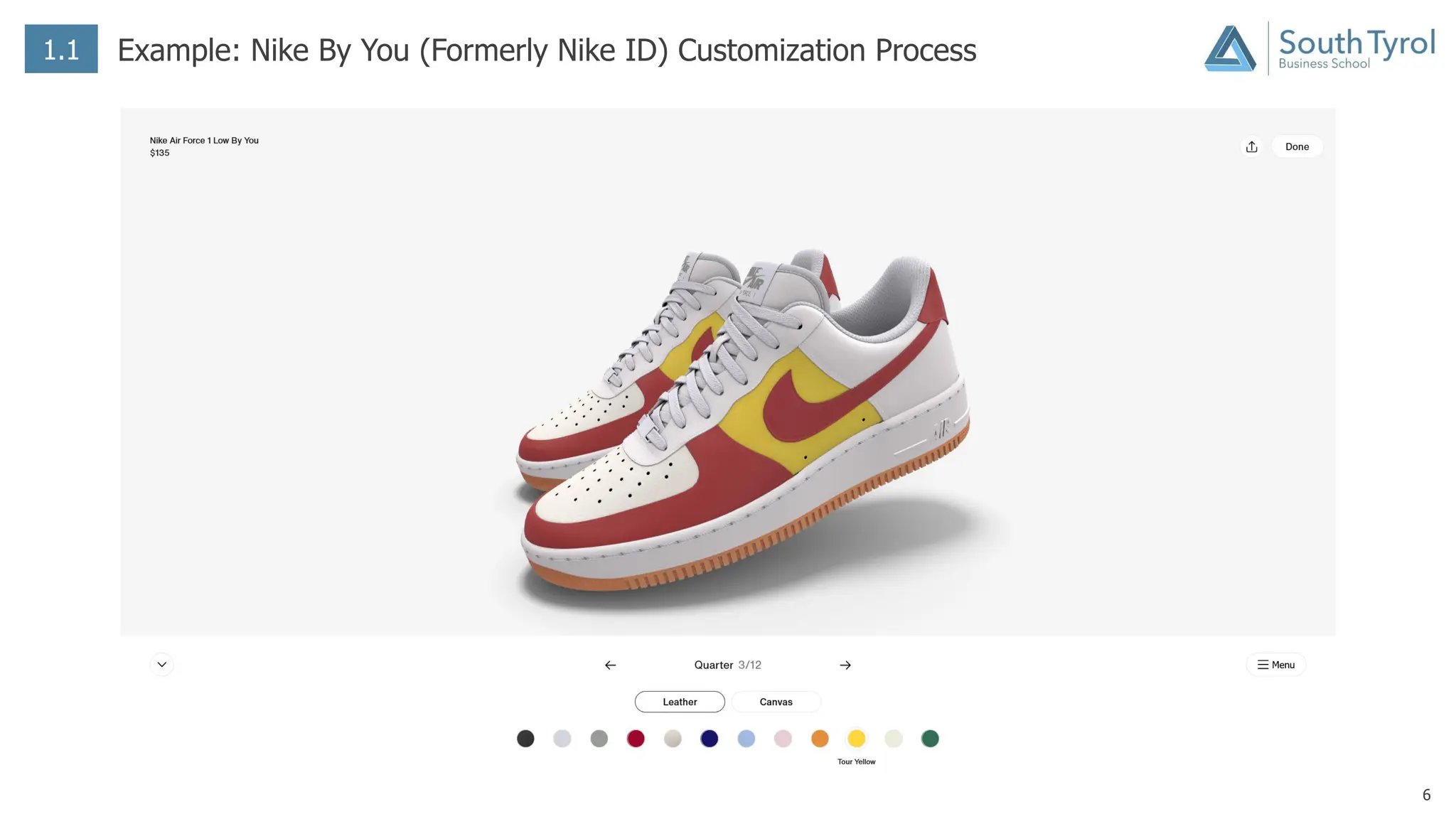
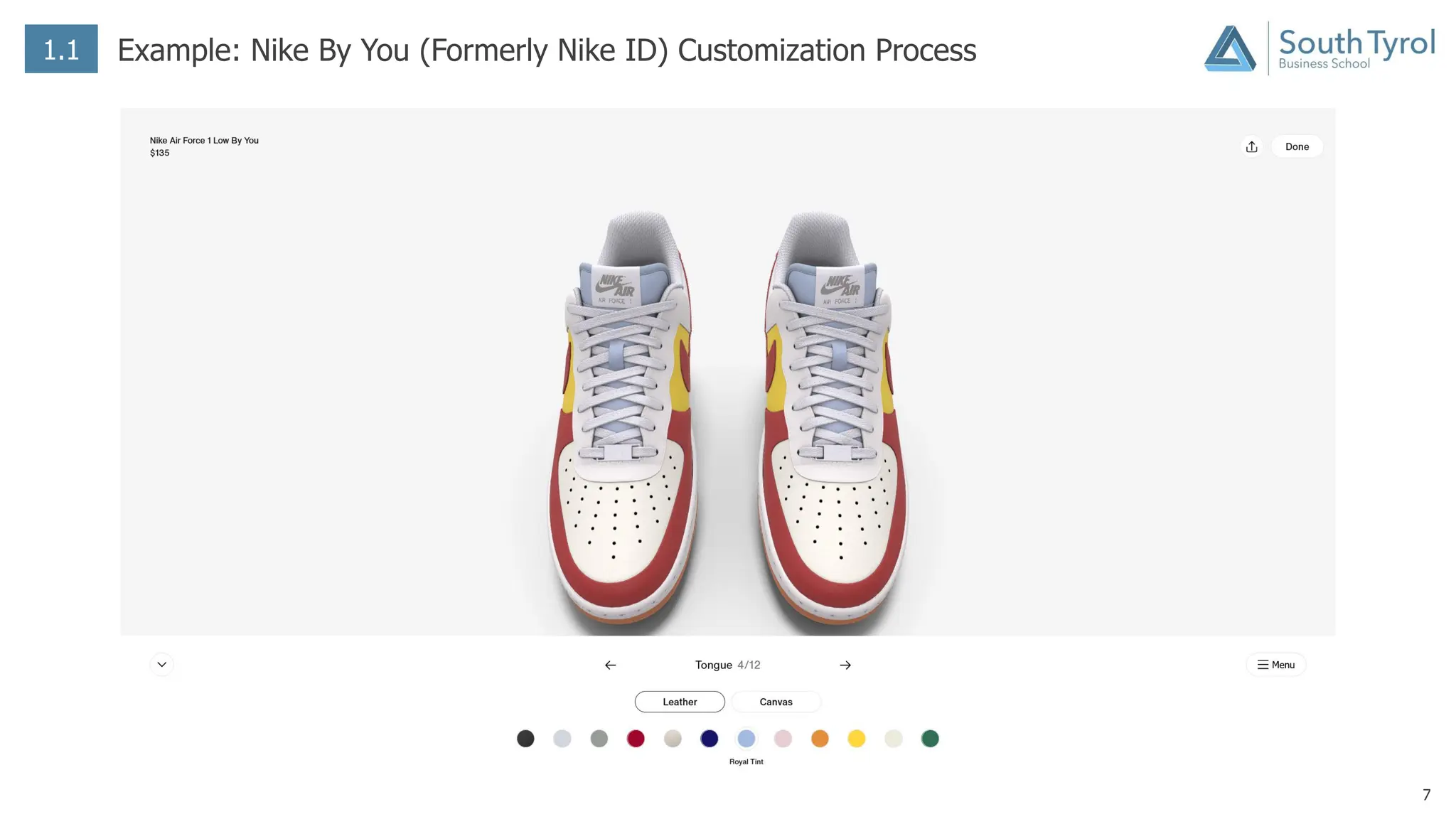
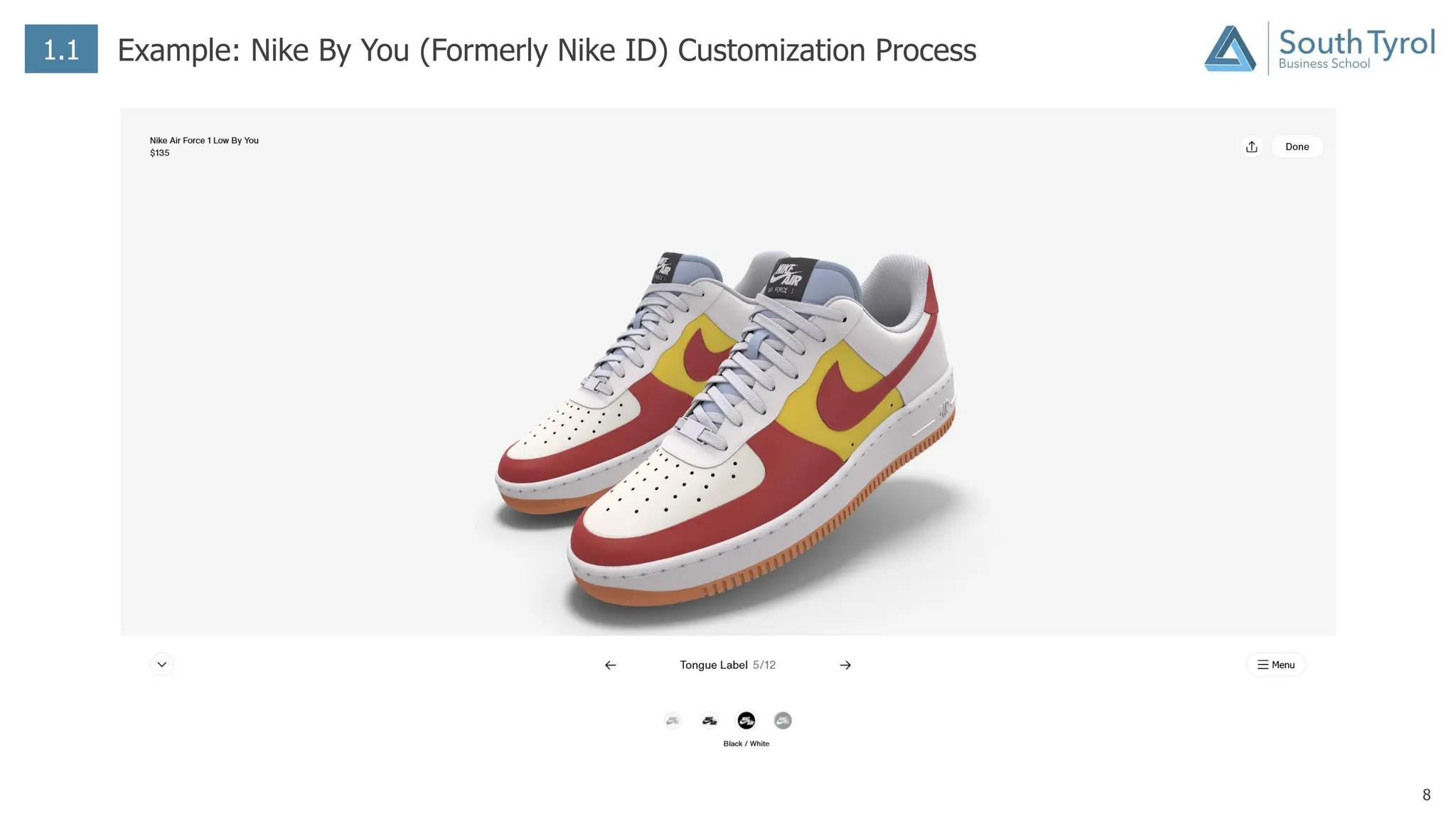
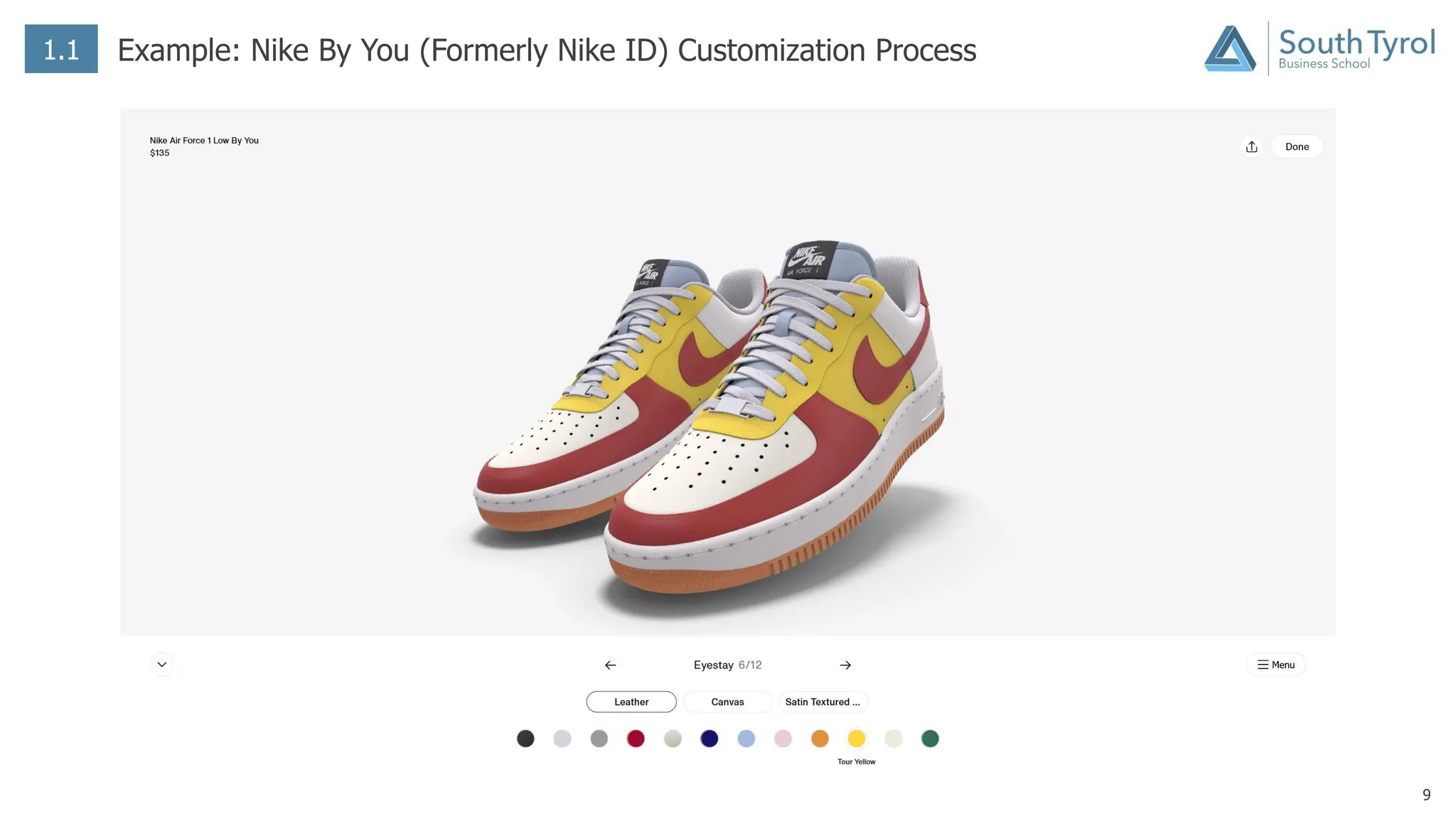
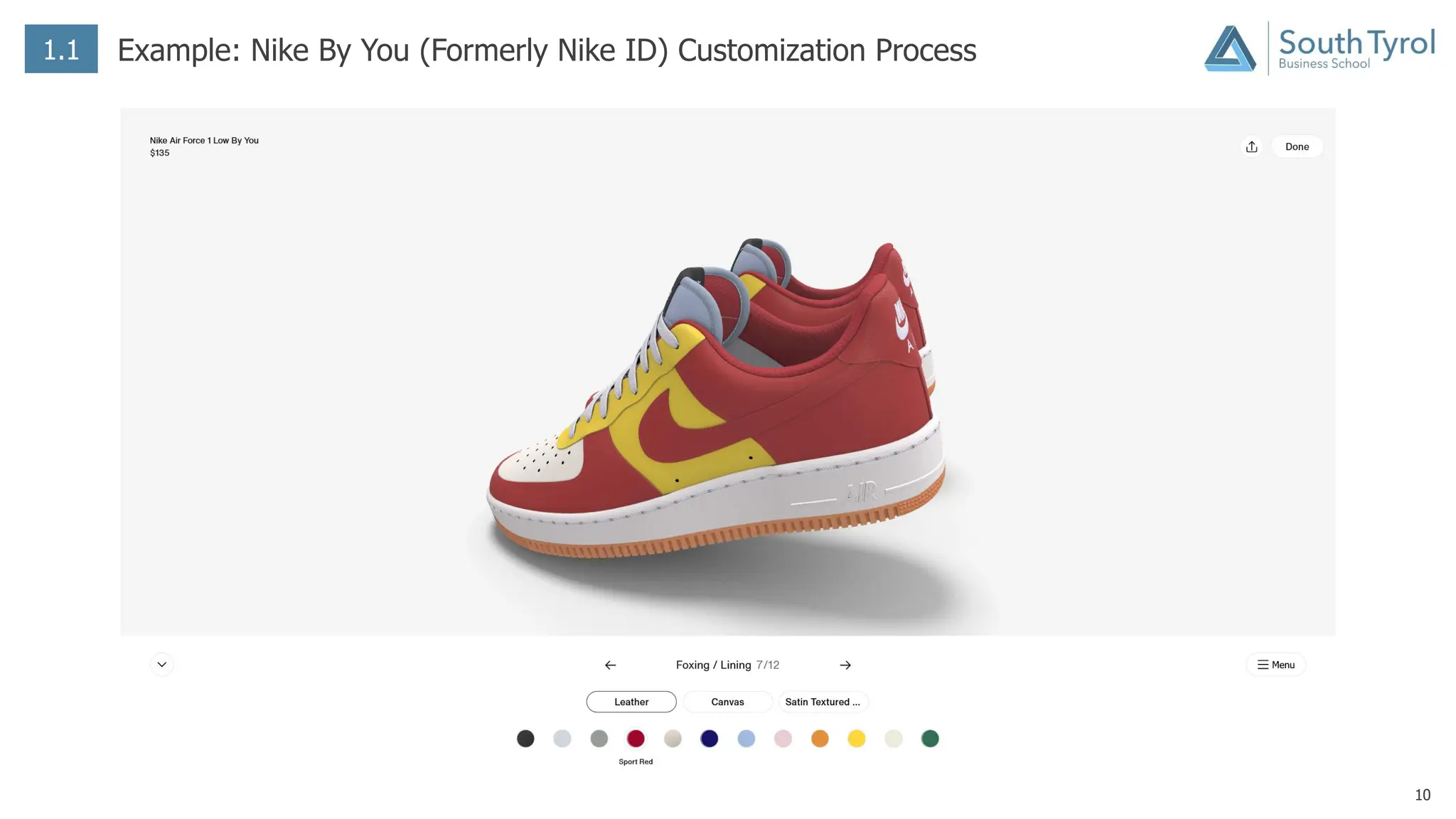
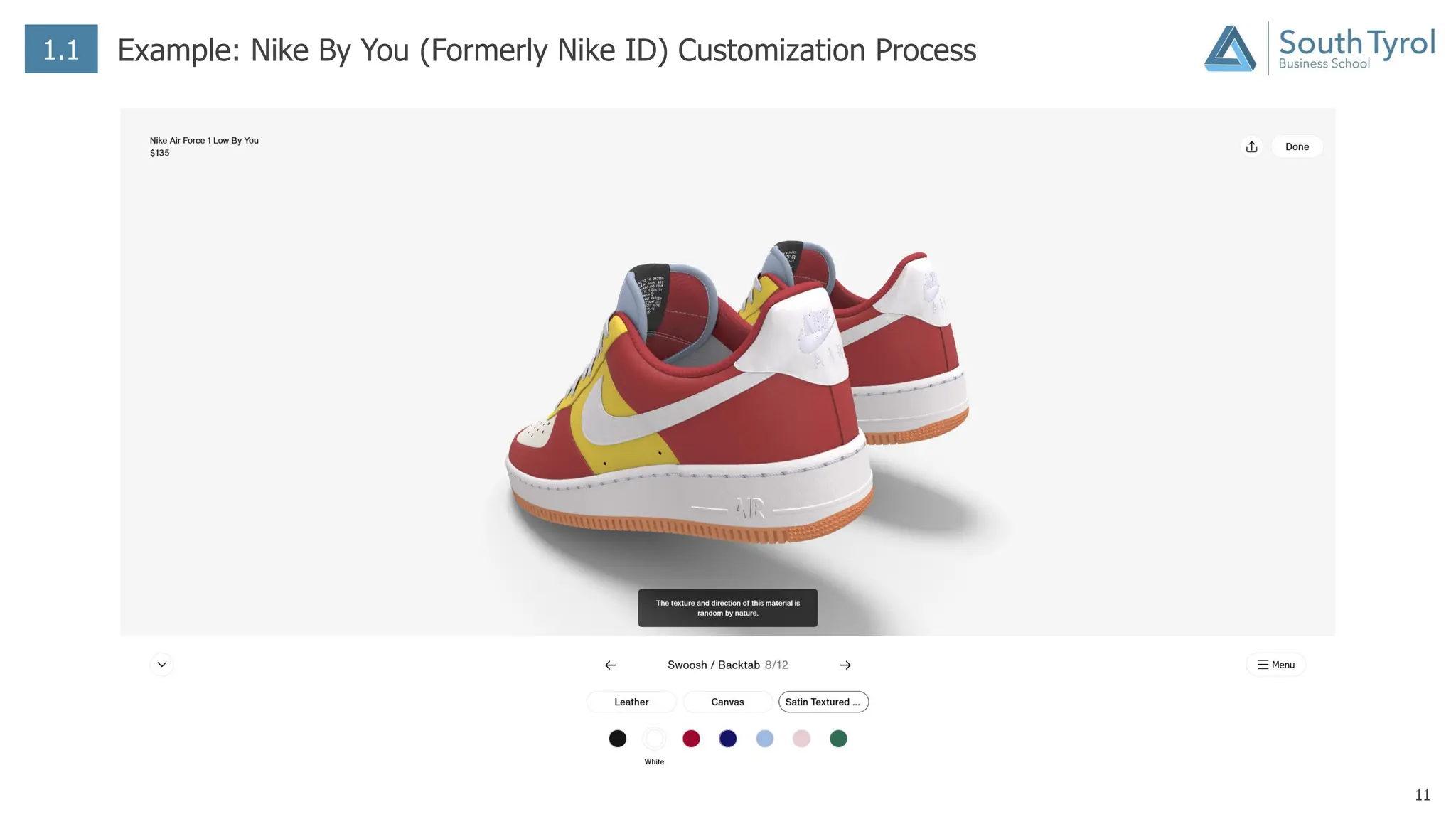
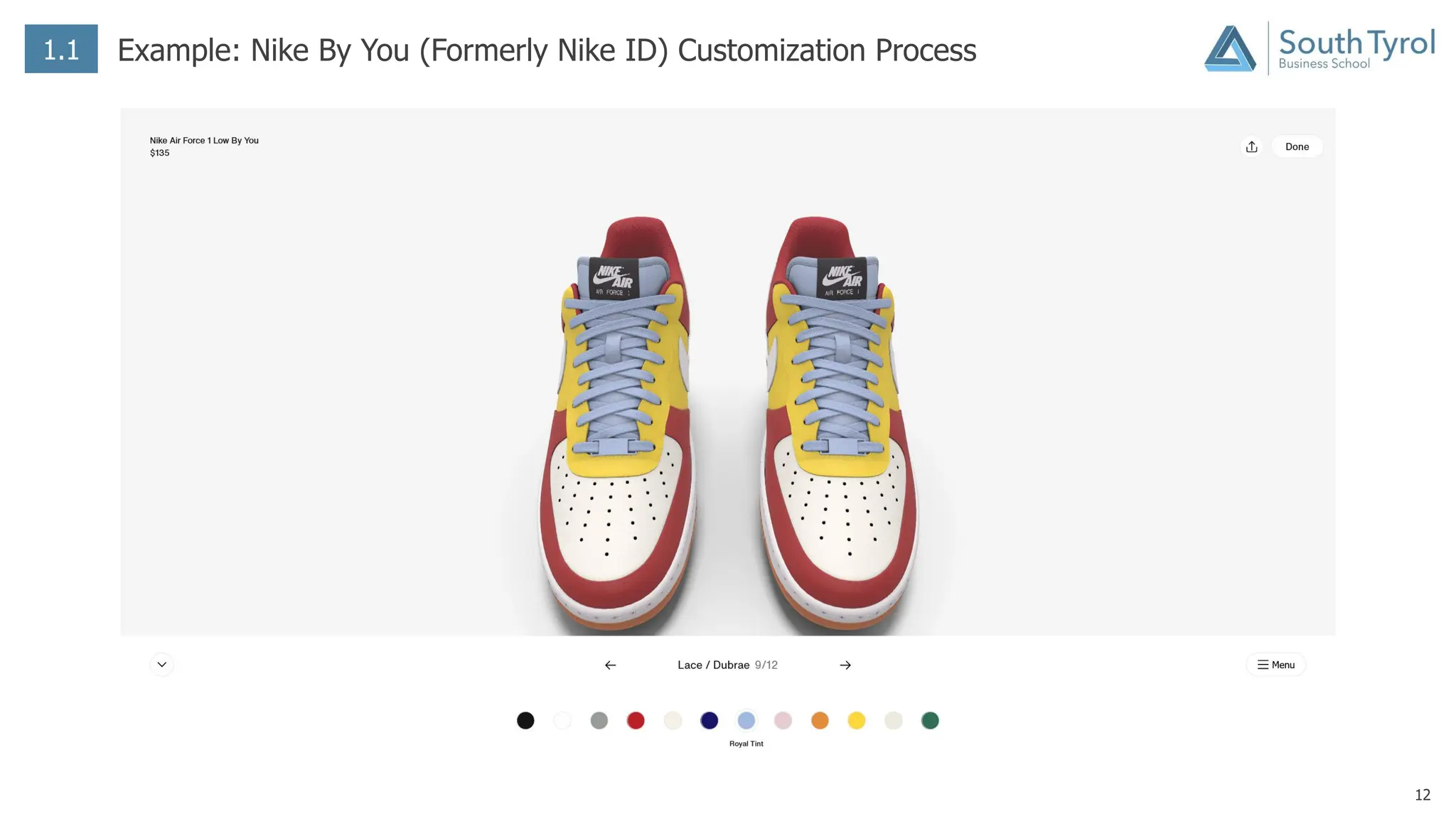
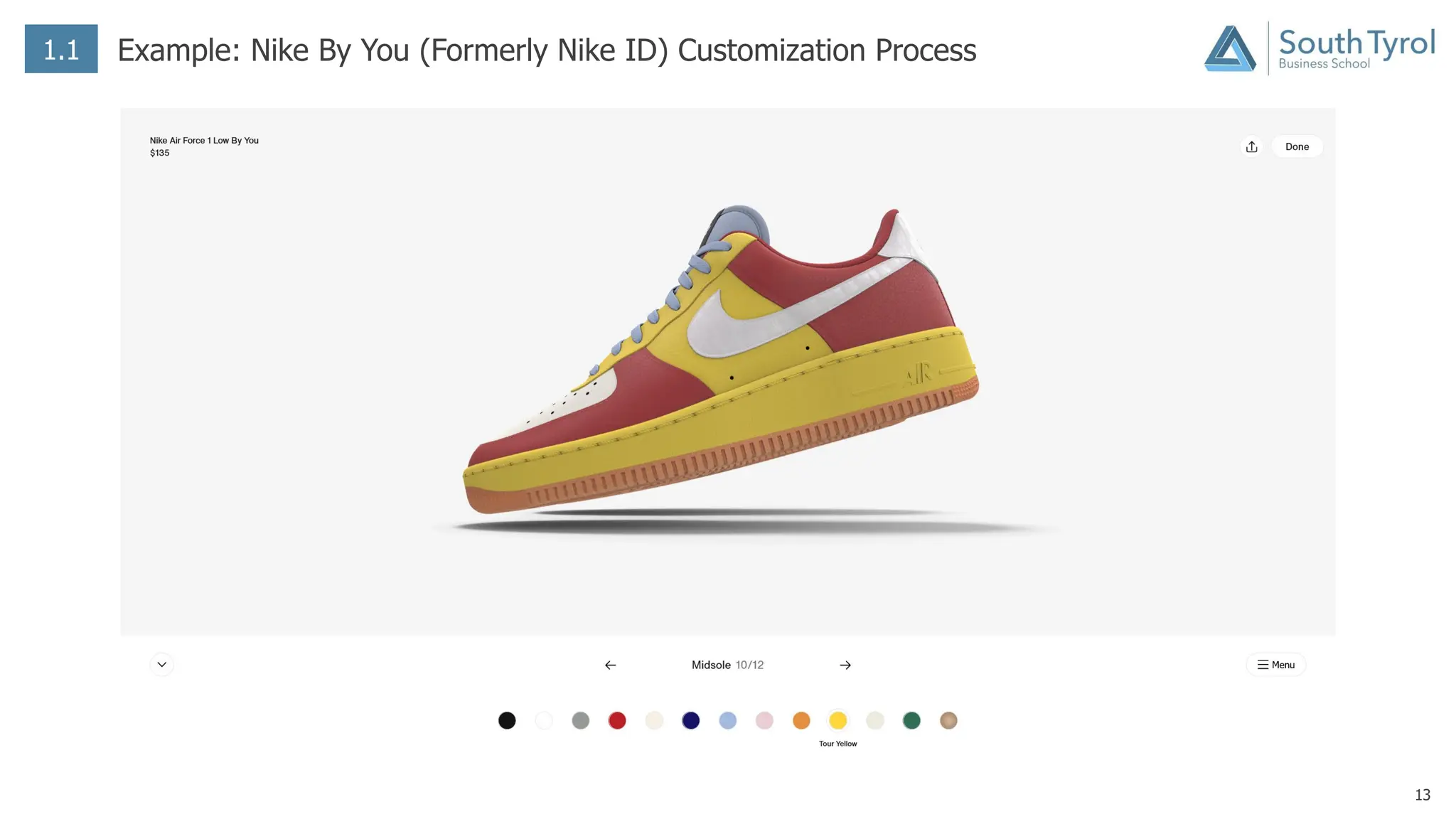
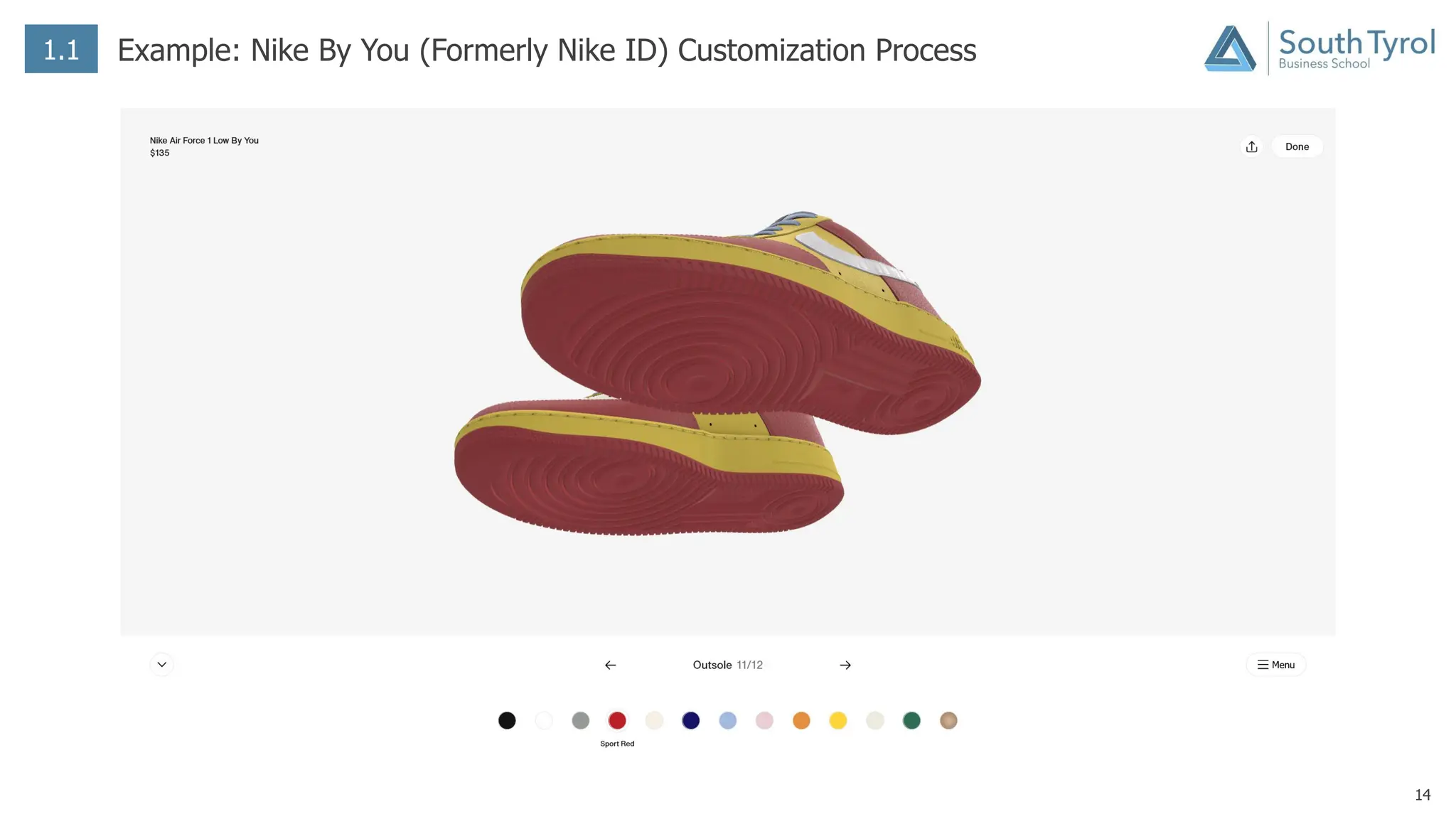
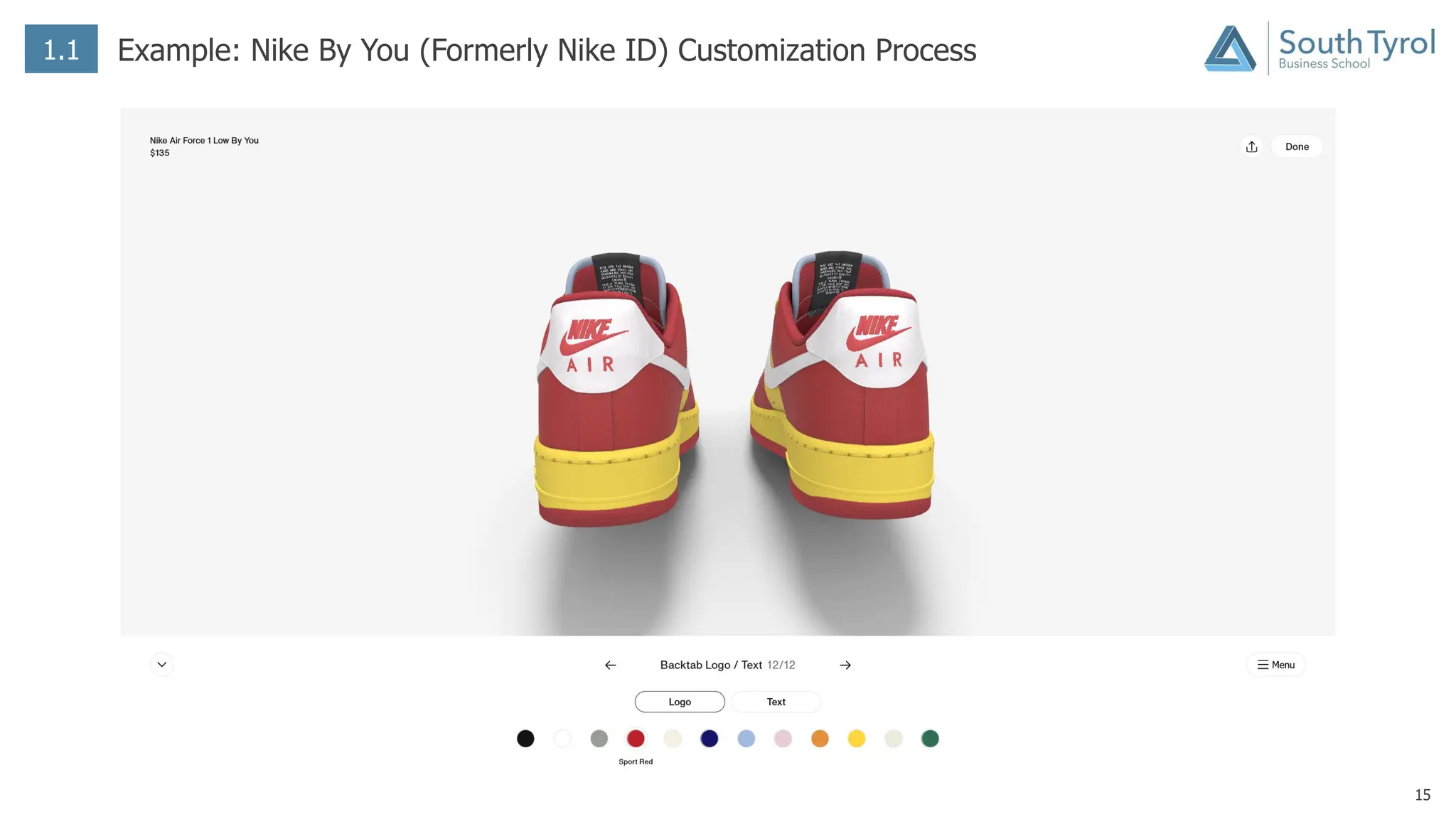
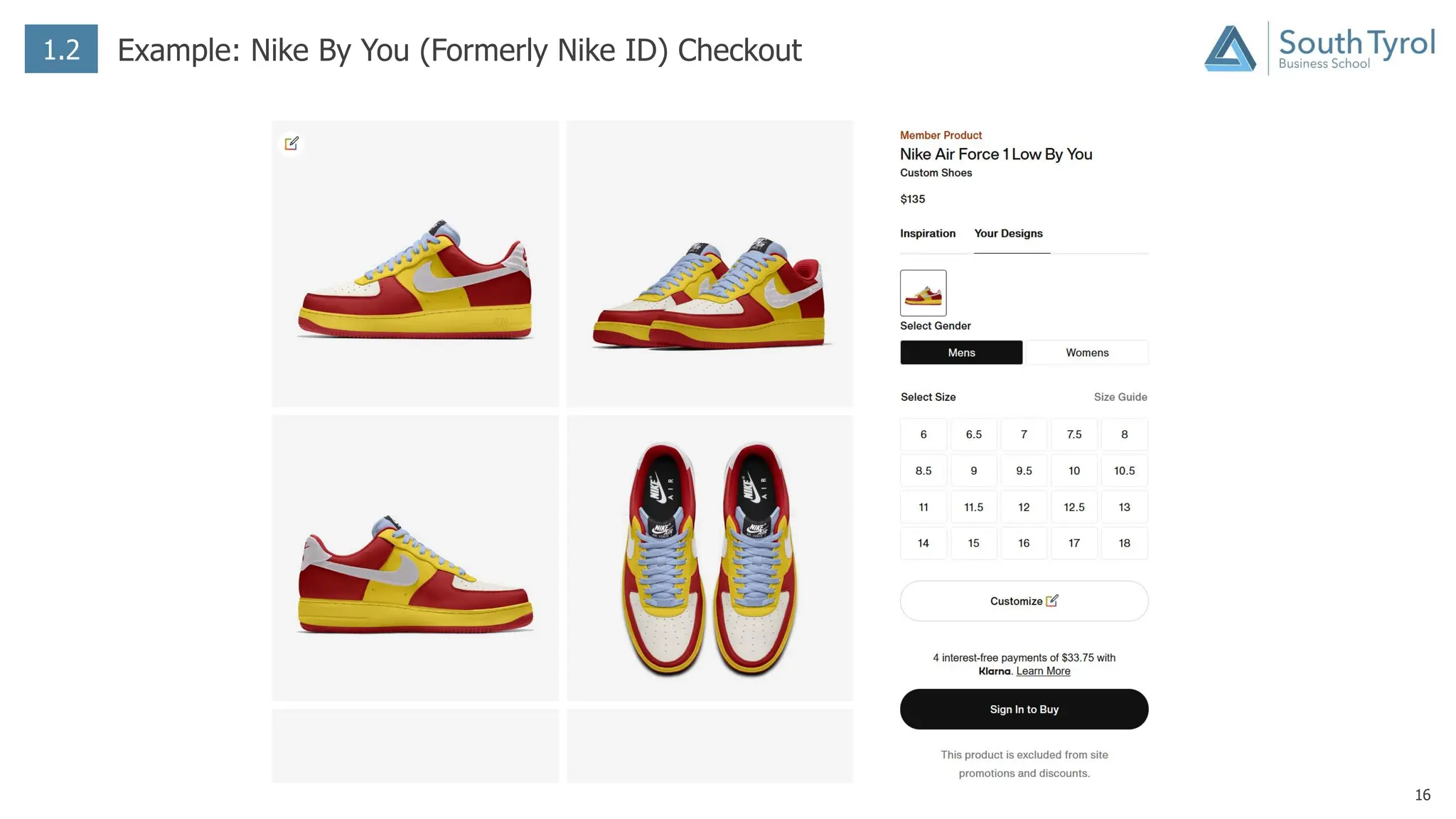
Traditional Mass Customization (MC) enables consumers to tailor a product to their individual needs
and preferences through an interactive online sales configurator. Upon visiting a website, the user is
guided through a sequential process where he can choose from various options to customize aspects
such as color, material, and features. As the users makes his selections, the product's appearance
and sometimes its price are updated in real-time, allowing the customer to visualize the
customizations. This process leads to a tailored product that reflects the customer’s unique choices,
which he can then proceed to purchase through a checkout process.
4
1.1 Example: Nike By You (Formerly Nike ID) Customization Process
5
1.1 Example: Nike By You (Formerly Nike ID) Customization Process
6
1.1 Example: Nike By You (Formerly Nike ID) Customization Process
7
1.1 Example: Nike By You (Formerly Nike ID) Customization Process
8
1.1 Example: Nike By You (Formerly Nike ID) Customization Process
9
1.1 Example: Nike By You (Formerly Nike ID) Customization Process
10
1.1 Example: Nike By You (Formerly Nike ID) Customization Process
11
1.1 Example: Nike By You (Formerly Nike ID) Customization Process
12
1.1 Example: Nike By You (Formerly Nike ID) Customization Process
13
1.1 Example: Nike By You (Formerly Nike ID) Customization Process
14
1.1 Example: Nike By You (Formerly Nike ID) Customization Process
15
1.1 Example: Nike By You (Formerly Nike ID) Customization Process
16
1.2 Example: Nike By You (Formerly Nike ID) Checkout
17
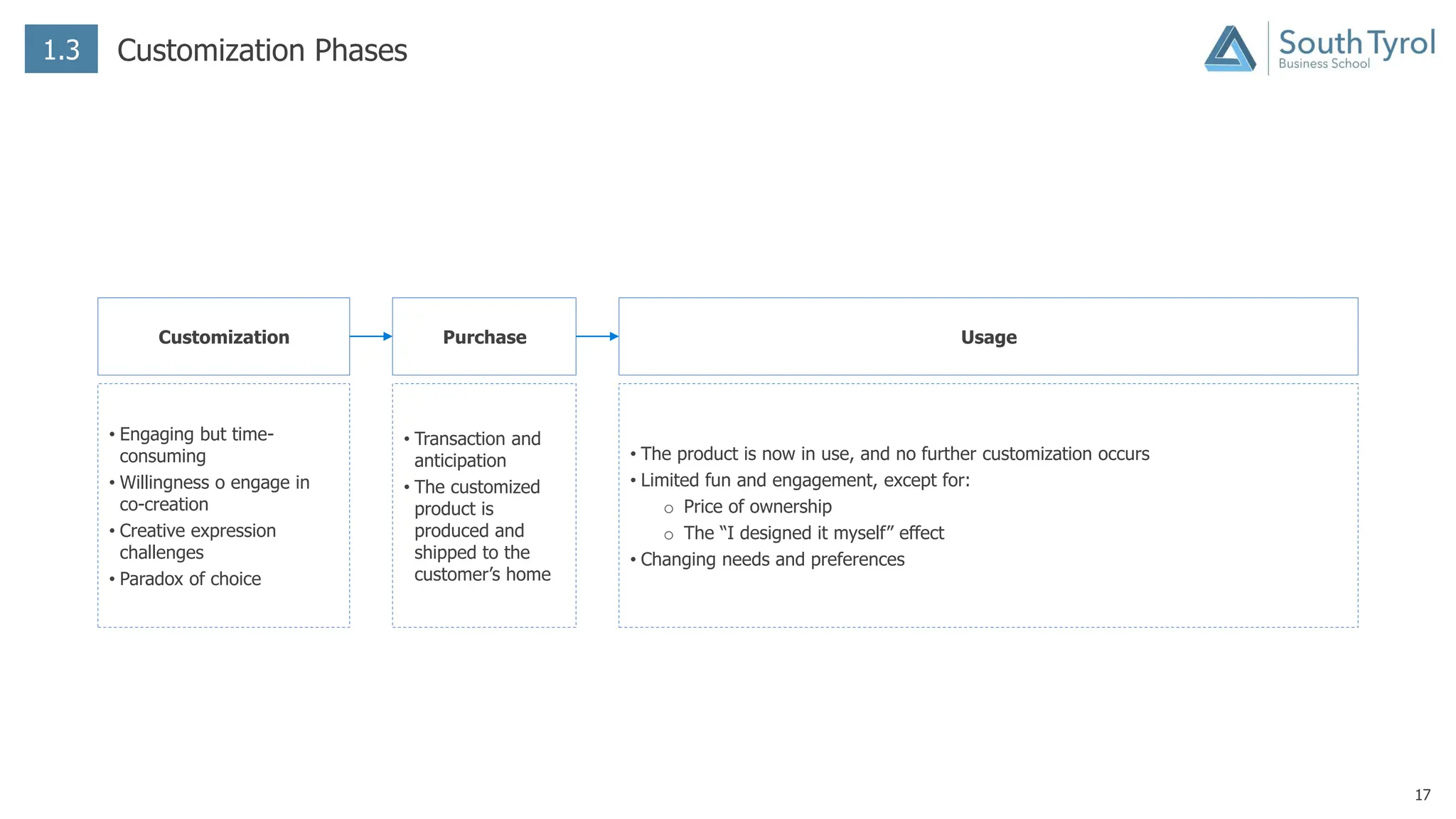
1.3 Customization Phases
Customization Purchase Usage
• Engaging but time-
consuming
• Willingness o engage in
co-creation
• Creative expression
challenges
• Paradox of choice
• Transaction and
anticipation
• The customized
product is
produced and
shipped to the
customer’s home
• The product is now in use, and no further customization occurs
• Limited fun and engagement, except for:
o Price of ownership
o The “I designed it myself” effect
• Changing needs and preferences
18
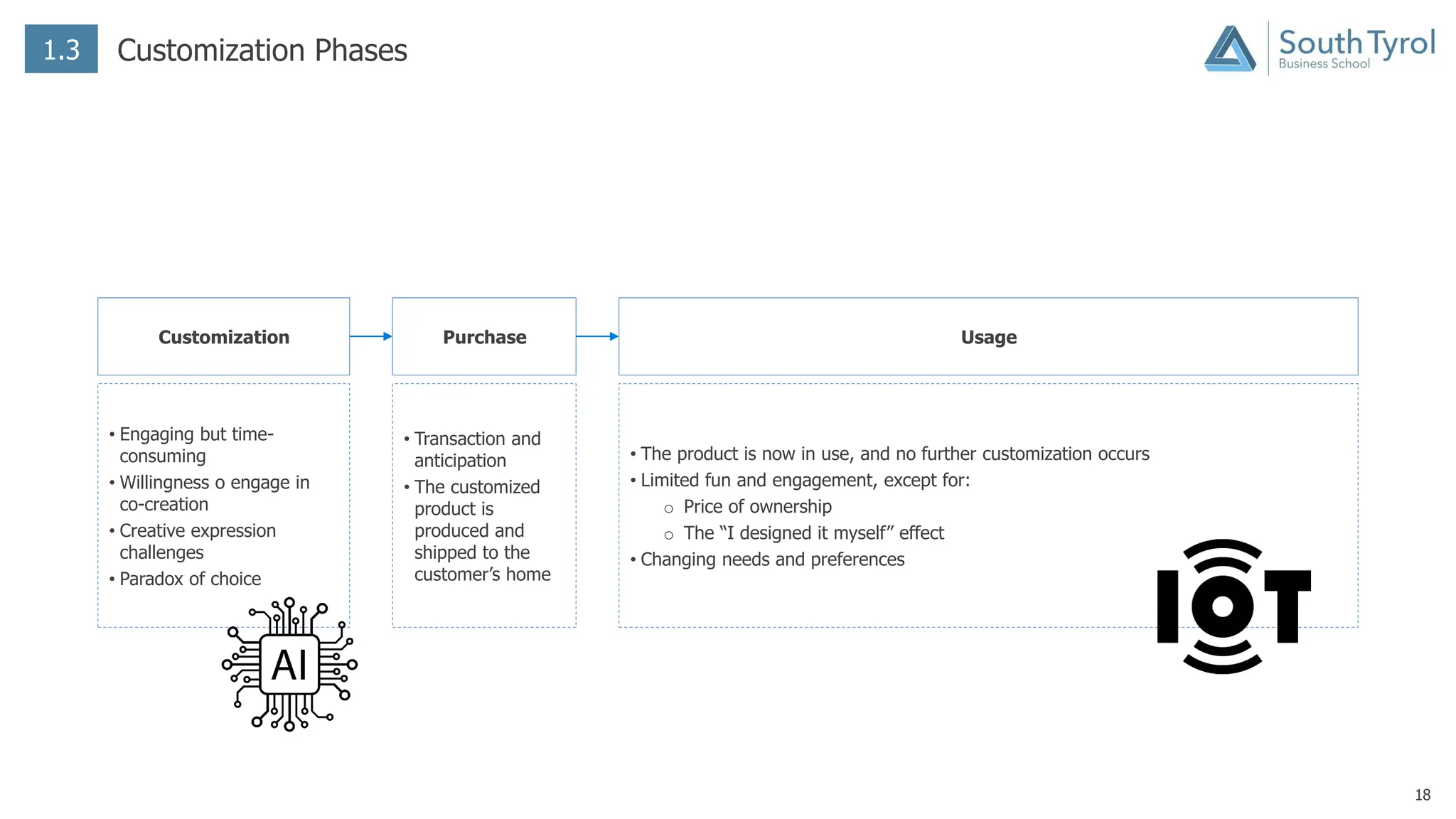
1.3 Customization Phases
Customization Purchase Usage
• Engaging but time-
consuming
• Willingness o engage in
co-creation
• Creative expression
challenges
• Paradox of choice
• Transaction and
anticipation
• The customized
product is
produced and
shipped to the
customer’s home
• The product is now in use, and no further customization occurs
• Limited fun and engagement, except for:
o Price of ownership
o The “I designed it myself” effect
• Changing needs and preferences
19
2 AI: The New Frontier in Mass Customization
The integration of Artificial Intelligence (AI) into MC expands the traditional model significantly,
allowing for a more intuitive and predictive approach to customer preferences. AI enables systems to
learn from customer data, leading to dynamic product and customization offerings that are
individual for each customer.
20
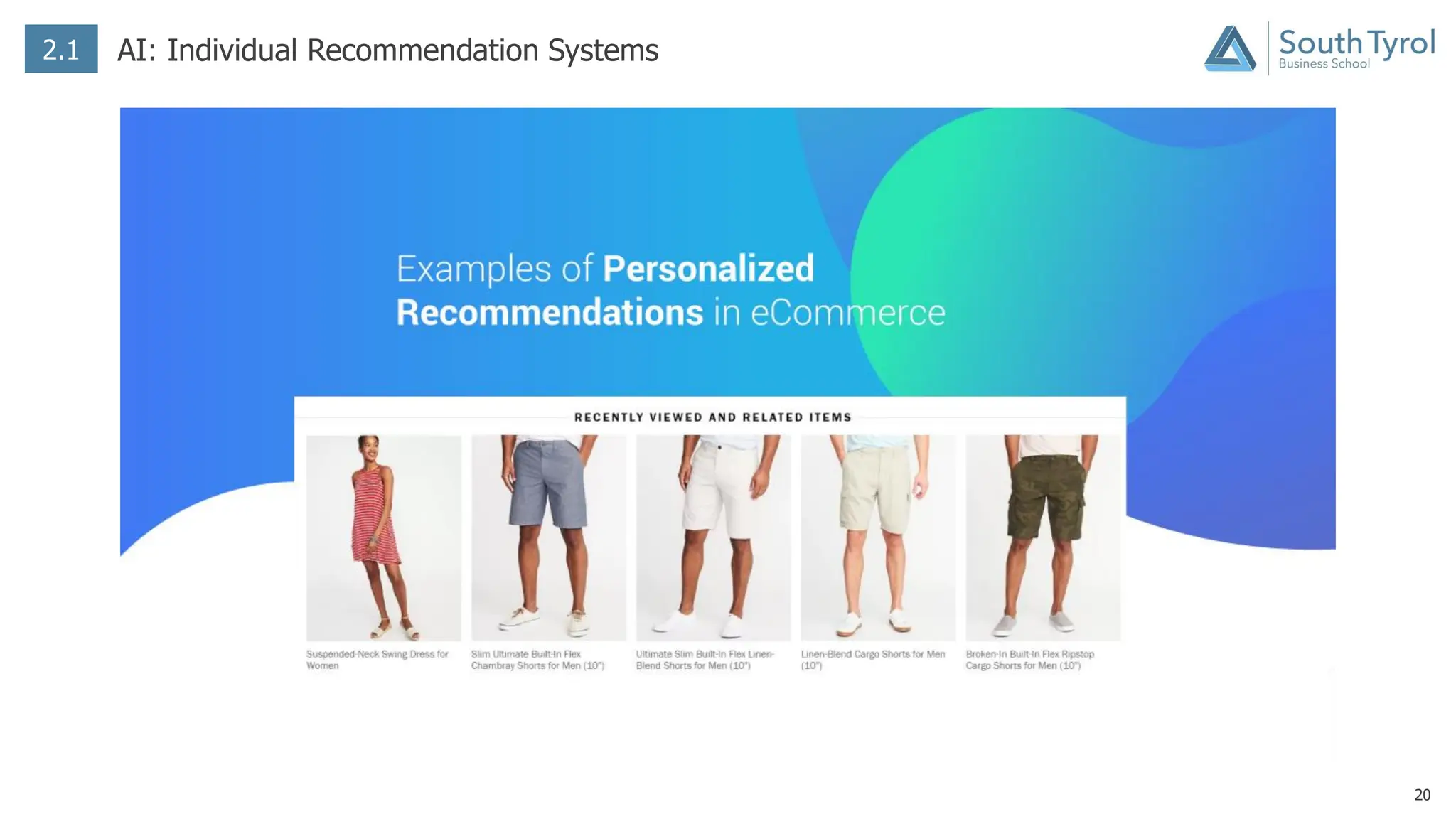
2.1 AI: Individual Recommendation Systems
21
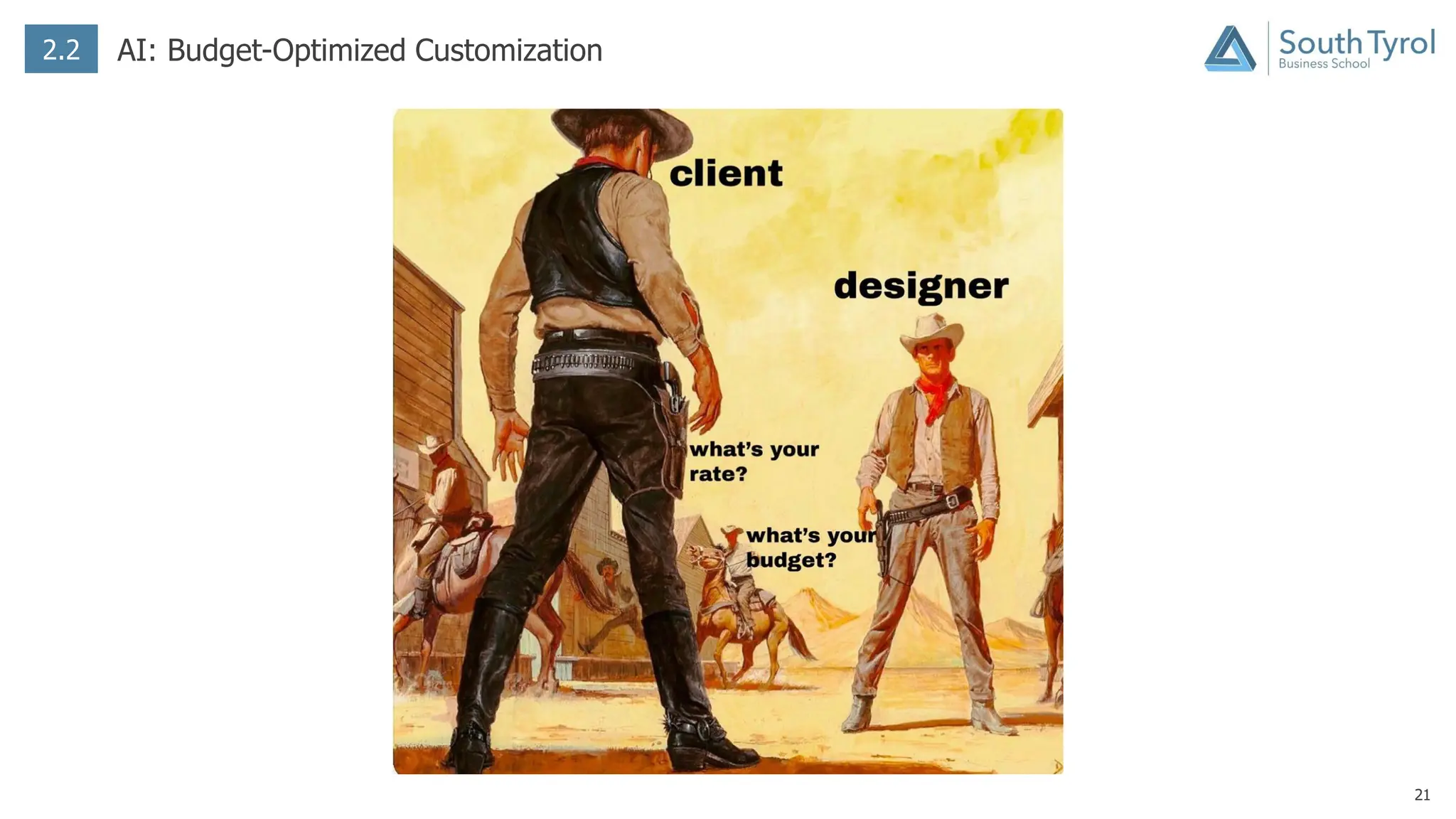
2.2 AI: Budget-Optimized Customization
22
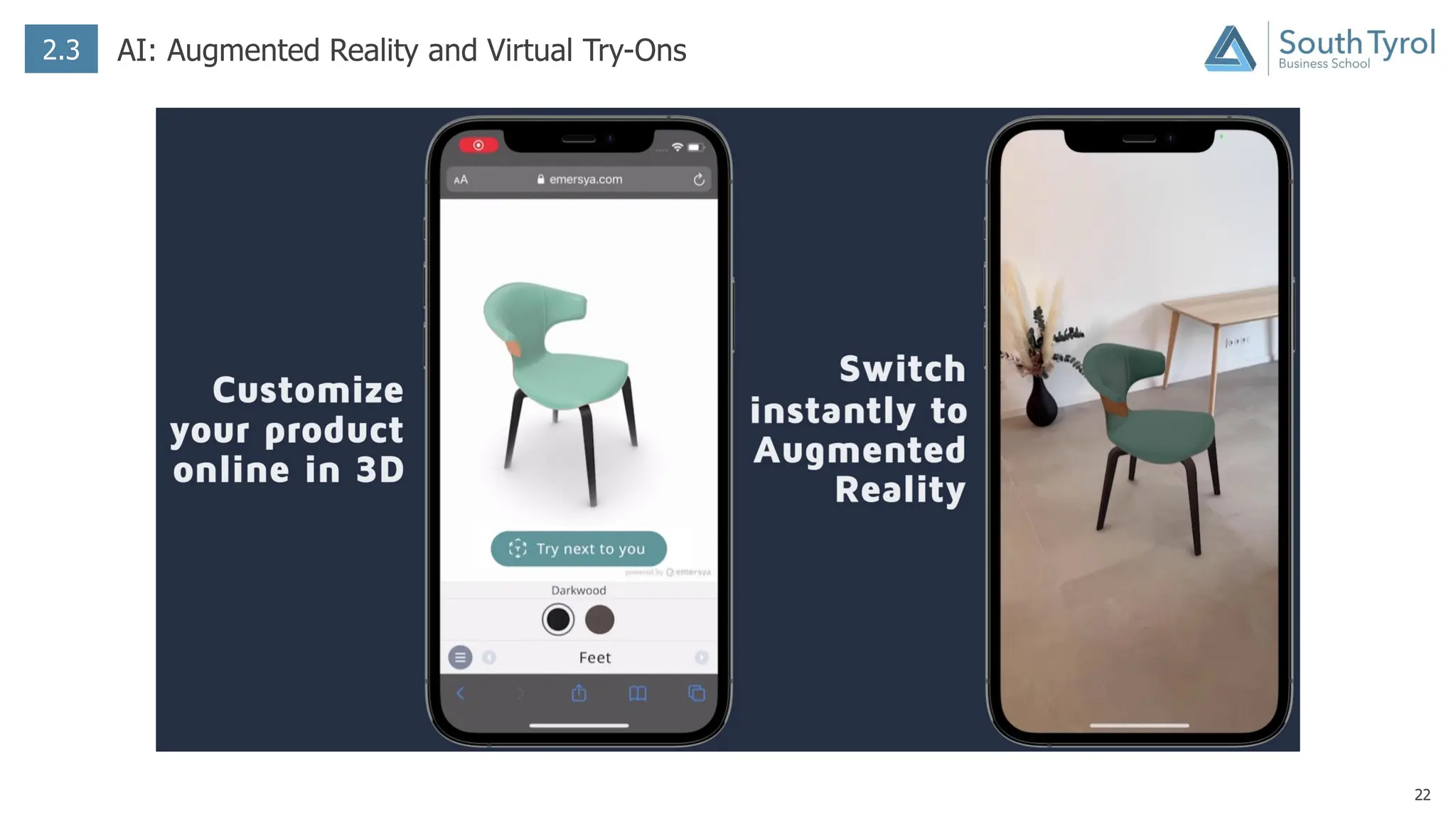
2.3 AI: Augmented Reality and Virtual Try-Ons
23
3 IoT: Connecting Devices for Personalized Experiences
The Internet of Things (IoT) has the potential to transform the traditional post-purchase phase of MC
by customizing the usage experience based on the individual's immediate context and needs.
24
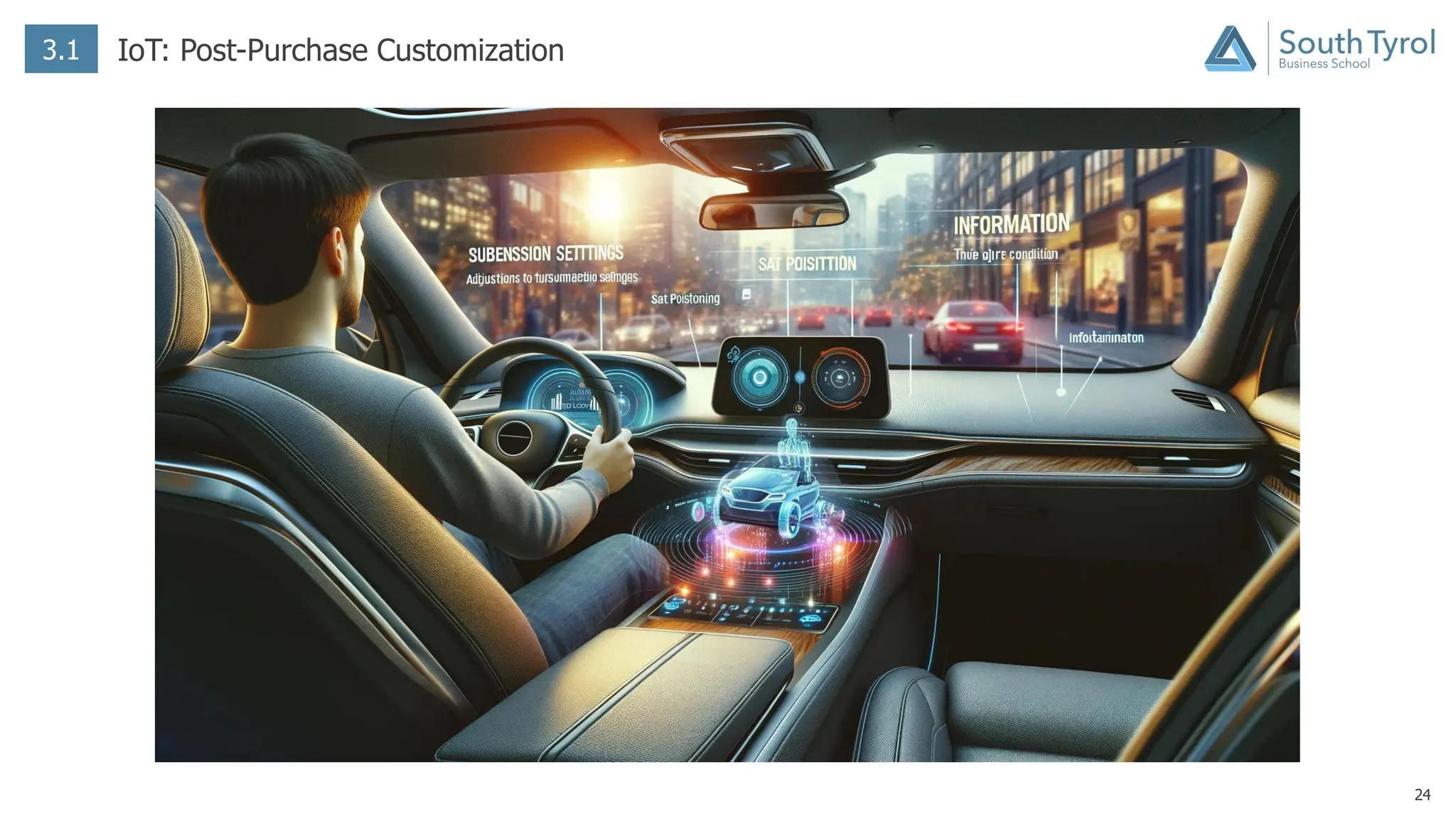
3.1 IoT: Post-Purchase Customization
25
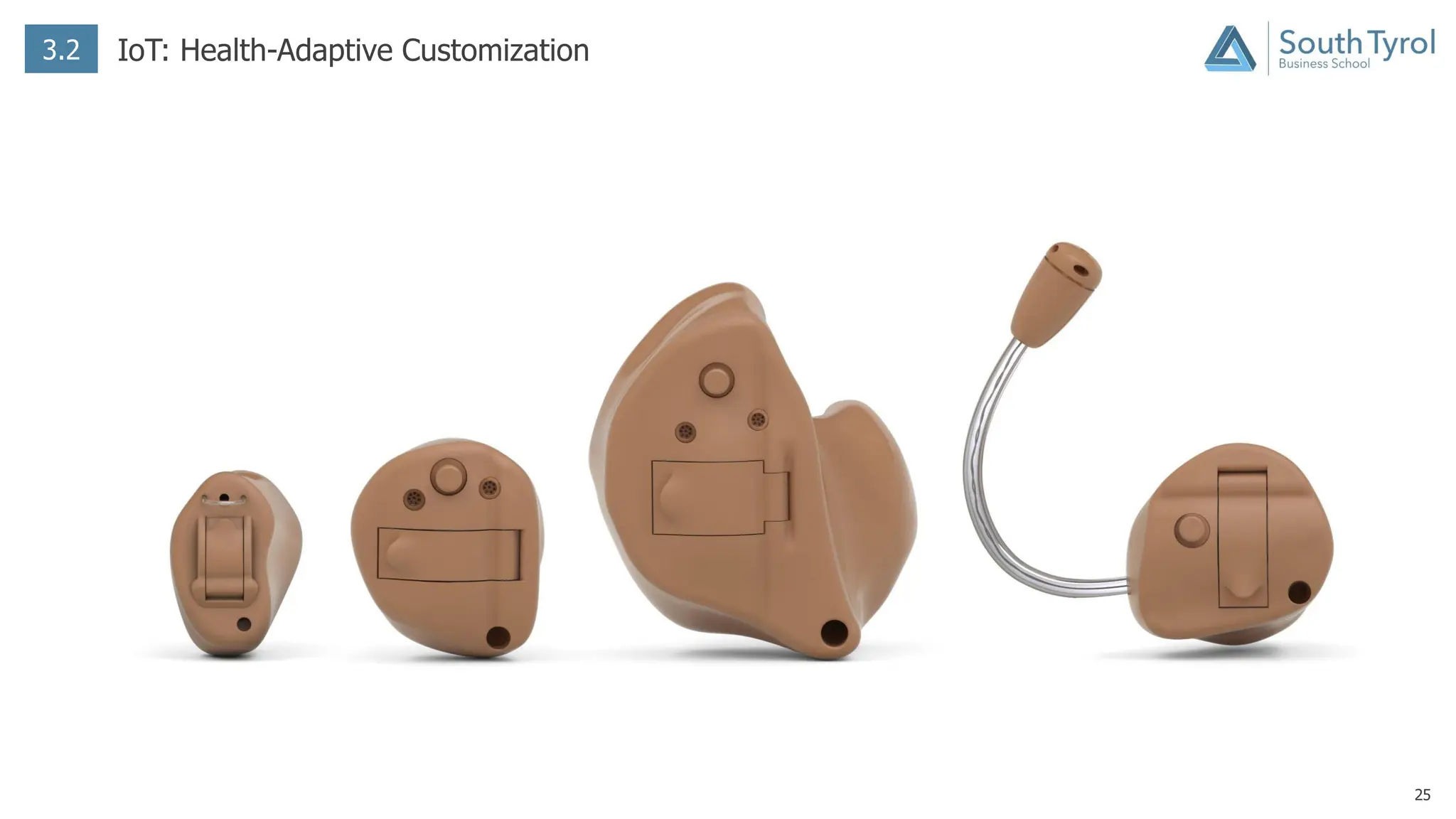
3.2 IoT: Health-Adaptive Customization
26
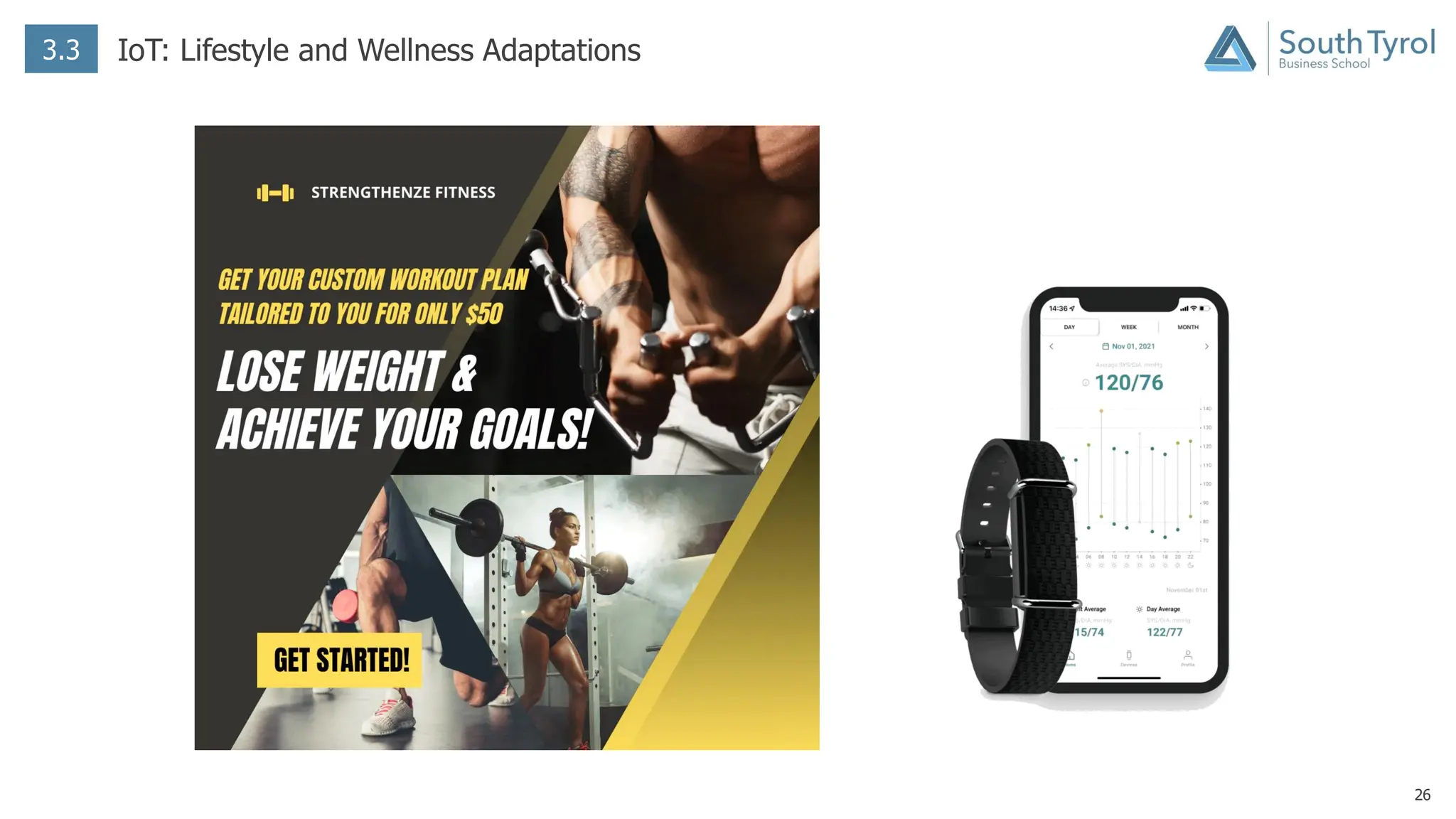
3.3 IoT: Lifestyle and Wellness Adaptations
27
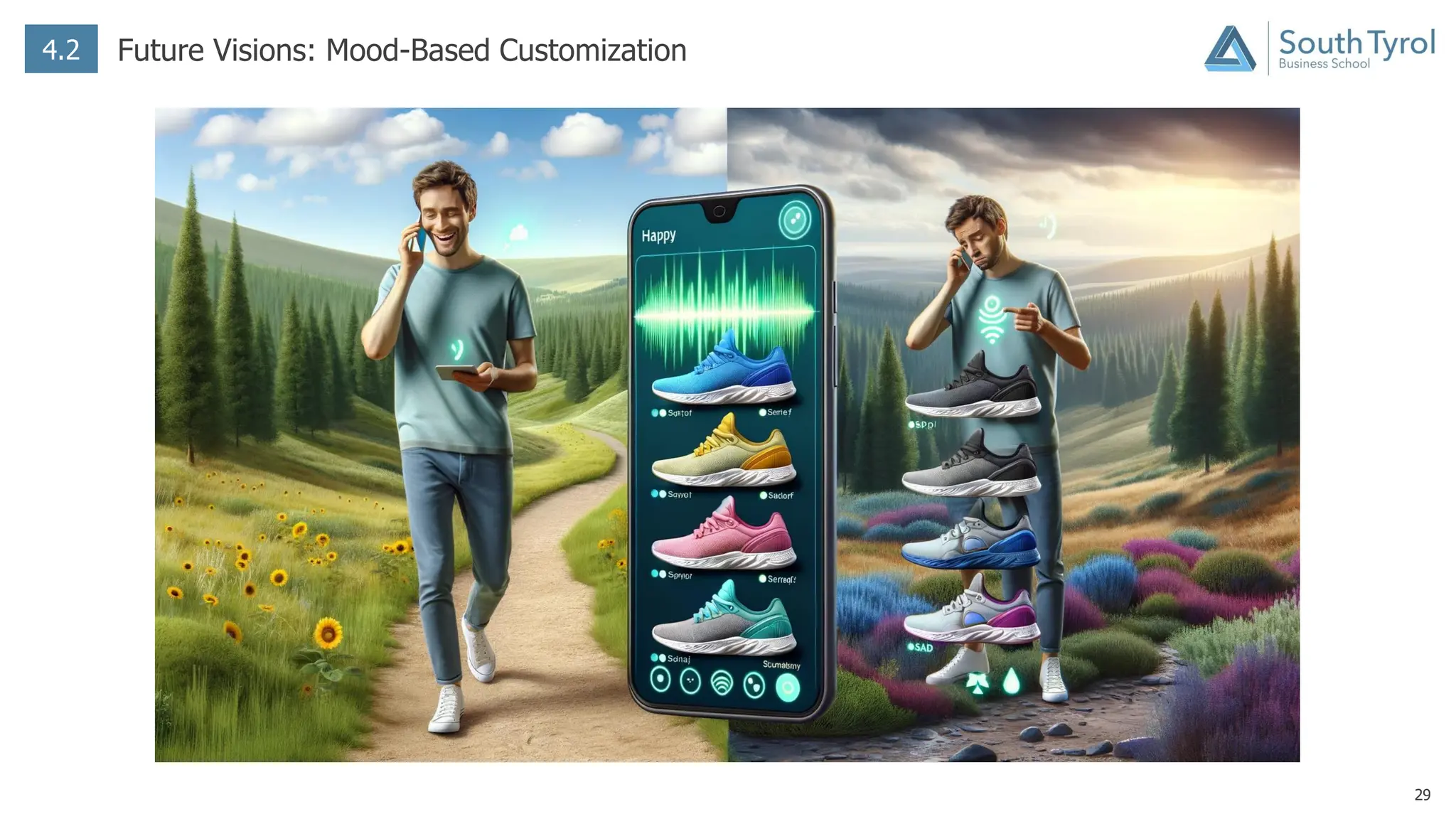
4 Future Visions: The Next Wave of Customization
A few examples of future technologies in MC include smart fitting rooms using augmented reality,
mood-based customization, and AI-driven platforms that design products based on social media
activities with limited user interaction.
28
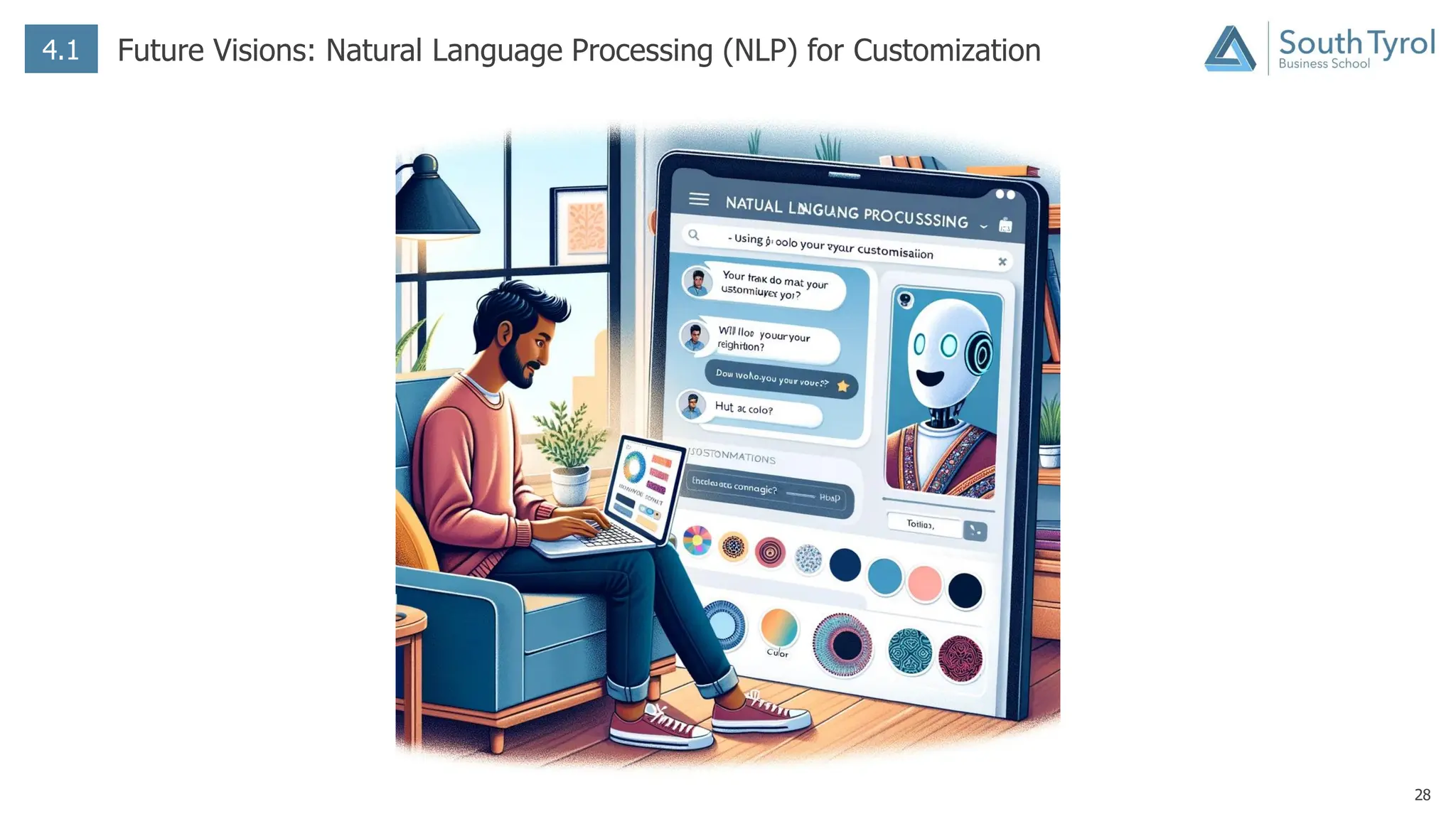
4.1 Future Visions: Natural Language Processing (NLP) for Customization
29
4.2 Future Visions: Mood-Based Customization
Contacts
Prof. Dr. Thomas Aichner currently serves as the Scientific Director of South
Tyrol Business School. Before taking on this position, he spent three years as
Assistant Professor at Alfaisal University in Riyadh, and two years as Associate
Professor at John Cabot University in Rome. He holds a joint PhD in
Management Engineering from the University of Padova and a Dr. rer. pol. in
Business Administration with a focus on Marketing from Berlin’s ESCP Business
School, with the special mention of Doctor Europaeus. His research is primarily
focused on country of origin, mass customization, digital management, and
artificial intelligence.
Prof. Dr. Thomas Aichner
Email thomas.aichner@business-school.bz
Web www.business-school.bz

SFSCON23 - Thomas Aichner - How IoT and AI are revolutionizing Mass Customization

  • 1.
    10.11.2023 | SouthTyrol Free Software Conference (SFSCON) How IoT and AI are Revolutionizing Mass Customization Prof. Dr. Thomas Aichner thomas.aichner@business-school.bz www.business-school.bz
  • 2.
    1. Traditional MassCustomization 2. AI: The New Frontier in Mass Customization 3. IoT: Connecting Devices for Personalized Experiences 4. Future Visions: The Next Wave of Customization
  • 3.
    3 1 Traditional MassCustomization Traditional Mass Customization (MC) enables consumers to tailor a product to their individual needs and preferences through an interactive online sales configurator. Upon visiting a website, the user is guided through a sequential process where he can choose from various options to customize aspects such as color, material, and features. As the users makes his selections, the product's appearance and sometimes its price are updated in real-time, allowing the customer to visualize the customizations. This process leads to a tailored product that reflects the customer’s unique choices, which he can then proceed to purchase through a checkout process.
  • 4.
    4 1.1 Example: NikeBy You (Formerly Nike ID) Customization Process
  • 5.
    5 1.1 Example: NikeBy You (Formerly Nike ID) Customization Process
  • 6.
    6 1.1 Example: NikeBy You (Formerly Nike ID) Customization Process
  • 7.
    7 1.1 Example: NikeBy You (Formerly Nike ID) Customization Process
  • 8.
    8 1.1 Example: NikeBy You (Formerly Nike ID) Customization Process
  • 9.
    9 1.1 Example: NikeBy You (Formerly Nike ID) Customization Process
  • 10.
    10 1.1 Example: NikeBy You (Formerly Nike ID) Customization Process
  • 11.
    11 1.1 Example: NikeBy You (Formerly Nike ID) Customization Process
  • 12.
    12 1.1 Example: NikeBy You (Formerly Nike ID) Customization Process
  • 13.
    13 1.1 Example: NikeBy You (Formerly Nike ID) Customization Process
  • 14.
    14 1.1 Example: NikeBy You (Formerly Nike ID) Customization Process
  • 15.
    15 1.1 Example: NikeBy You (Formerly Nike ID) Customization Process
  • 16.
    16 1.2 Example: NikeBy You (Formerly Nike ID) Checkout
  • 17.
    17 1.3 Customization Phases CustomizationPurchase Usage • Engaging but time- consuming • Willingness o engage in co-creation • Creative expression challenges • Paradox of choice • Transaction and anticipation • The customized product is produced and shipped to the customer’s home • The product is now in use, and no further customization occurs • Limited fun and engagement, except for: o Price of ownership o The “I designed it myself” effect • Changing needs and preferences
  • 18.
    18 1.3 Customization Phases CustomizationPurchase Usage • Engaging but time- consuming • Willingness o engage in co-creation • Creative expression challenges • Paradox of choice • Transaction and anticipation • The customized product is produced and shipped to the customer’s home • The product is now in use, and no further customization occurs • Limited fun and engagement, except for: o Price of ownership o The “I designed it myself” effect • Changing needs and preferences
  • 19.
    19 2 AI: TheNew Frontier in Mass Customization The integration of Artificial Intelligence (AI) into MC expands the traditional model significantly, allowing for a more intuitive and predictive approach to customer preferences. AI enables systems to learn from customer data, leading to dynamic product and customization offerings that are individual for each customer.
  • 20.
    20 2.1 AI: IndividualRecommendation Systems
  • 21.
  • 22.
    22 2.3 AI: AugmentedReality and Virtual Try-Ons
  • 23.
    23 3 IoT: ConnectingDevices for Personalized Experiences The Internet of Things (IoT) has the potential to transform the traditional post-purchase phase of MC by customizing the usage experience based on the individual's immediate context and needs.
  • 24.
  • 25.
  • 26.
    26 3.3 IoT: Lifestyleand Wellness Adaptations
  • 27.
    27 4 Future Visions:The Next Wave of Customization A few examples of future technologies in MC include smart fitting rooms using augmented reality, mood-based customization, and AI-driven platforms that design products based on social media activities with limited user interaction.
  • 28.
    28 4.1 Future Visions:Natural Language Processing (NLP) for Customization
  • 29.
    29 4.2 Future Visions:Mood-Based Customization
  • 30.
    Contacts Prof. Dr. ThomasAichner currently serves as the Scientific Director of South Tyrol Business School. Before taking on this position, he spent three years as Assistant Professor at Alfaisal University in Riyadh, and two years as Associate Professor at John Cabot University in Rome. He holds a joint PhD in Management Engineering from the University of Padova and a Dr. rer. pol. in Business Administration with a focus on Marketing from Berlin’s ESCP Business School, with the special mention of Doctor Europaeus. His research is primarily focused on country of origin, mass customization, digital management, and artificial intelligence. Prof. Dr. Thomas Aichner Email thomas.aichner@business-school.bz Web www.business-school.bz