NATURE-BASED SOLUTIONS:
REDUCING RISK FROM CLIMATE
CHANGE & BIODIVERSITY LOSS
Valerie Kapos
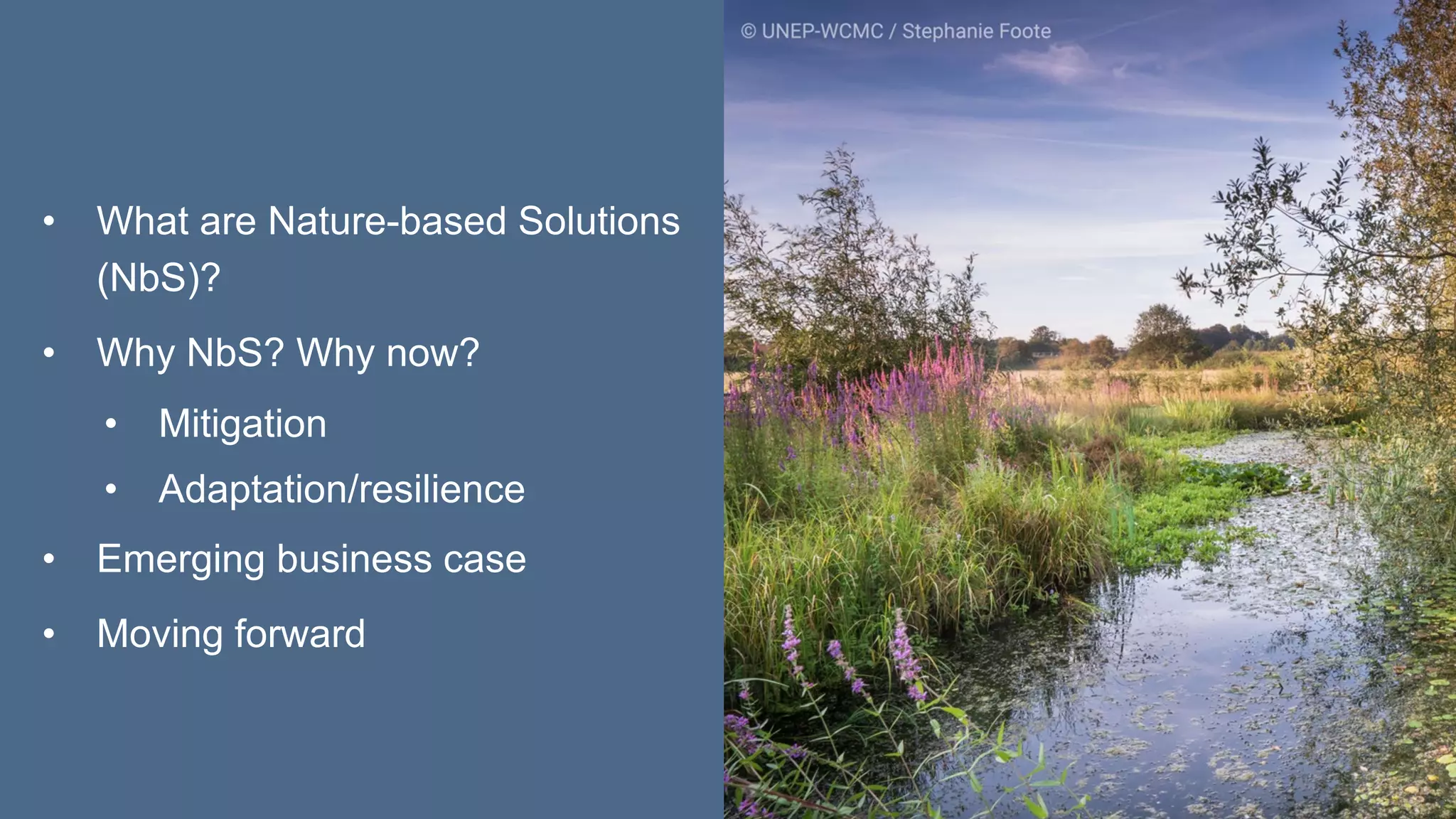
• What are Nature-based Solutions
(NbS)?
• Why NbS? Why now?
• Mitigation
• Adaptation/resilience
• Emerging business case
• Moving forward
“actions to protect, sustainably
manage, and restore natural or
modified ecosystems, that address
societal challenges effectively and
adaptively, simultaneously providing
human well-being and biodiversity
benefits” - IUCN
What are Nature-based
Solutions?
• Address a range of societal
challenges
• Valuable – and essential – for
both mitigation and adaptation
• Provide multiple benefits
• Biodiversity conservation
• Local livelihoods
• Can replace or complement
other approaches
Nature-based
Solutions
Nature-
based
Solutions
Green
infrastructure
Natural
infrastructure
Ecological
engineering
Ecosystem-
based
mitigation
Ecosystem-
based
adaptation
Global Risk Report 2020
UNFCCC CBD
Synergies between global climate and biodiversity policy agendas
• Biodiversity conservation
• Local livelihoods
• Food security
• Mental health
• Carbon sequestration
Co-benefits
(and trade-offs)
New tools help prioritise for
multiple benefits
Strategic choice of areas to be
managed for conservation, increasing
totals to 30% of land globally could
• safeguard >500 gigatons of
carbon.
• secure:
• 95% of the biodiversity
benefits, and
• nearly 80% of the carbon
stock
that could be obtained by prioritising
based on either value alone.
Mitigation
• Ecosystems already contribute
to resilience
• Their resilience is also critical
• Management & restoration can
increase resilience
• Communities & livelihoods
• Businesses
• Whole sectors & economies
NbS for Adaptation
Climate
Hazard
Storm
surge
Sea level
rise
Extreme
weather
events
Drought /
water
scarcity
Other
Flood risk
/ damage
Soil
erosion
• Mangrove restoration instead of/ in
addition to engineered sea
defences for protecting coastal
assets
• Restoring reefs to reduce the need
for breakwaters
• Forest restoration to reduce
siltation and dredging costs,
prolong equipment life
NbS for Adaptation
In increasing use across
• Climate hazards
• Types of NbS
• Sectors
NbS to support
infrastructure resilience
0
5
10
15
20
25
Other
Manufacturing
Water Supply and
Management
Automotive Industry
Hydroelectric Power
Agriculture
Tourism
Business
Case
Contribute to
many objectives
(co-benefits)
Mitigate and
Reduce Climate
Change Risk
External
commitments
and targets
(co-benefits)
Reduced Costs
(often)
Potential future
regulatory
requirements
Why NbS?
Moving Forward

Session 5 - Addressing climate and biodiversity challenges: Nature-based solutions for risk management

  • 1.
    NATURE-BASED SOLUTIONS: REDUCING RISKFROM CLIMATE CHANGE & BIODIVERSITY LOSS Valerie Kapos
  • 2.
    • What areNature-based Solutions (NbS)? • Why NbS? Why now? • Mitigation • Adaptation/resilience • Emerging business case • Moving forward
  • 3.
    “actions to protect,sustainably manage, and restore natural or modified ecosystems, that address societal challenges effectively and adaptively, simultaneously providing human well-being and biodiversity benefits” - IUCN What are Nature-based Solutions?
  • 4.
    • Address arange of societal challenges • Valuable – and essential – for both mitigation and adaptation • Provide multiple benefits • Biodiversity conservation • Local livelihoods • Can replace or complement other approaches Nature-based Solutions Nature- based Solutions Green infrastructure Natural infrastructure Ecological engineering Ecosystem- based mitigation Ecosystem- based adaptation
  • 5.
  • 6.
    UNFCCC CBD Synergies betweenglobal climate and biodiversity policy agendas
  • 7.
    • Biodiversity conservation •Local livelihoods • Food security • Mental health • Carbon sequestration Co-benefits (and trade-offs)
  • 8.
    New tools helpprioritise for multiple benefits Strategic choice of areas to be managed for conservation, increasing totals to 30% of land globally could • safeguard >500 gigatons of carbon. • secure: • 95% of the biodiversity benefits, and • nearly 80% of the carbon stock that could be obtained by prioritising based on either value alone. Mitigation
  • 9.
    • Ecosystems alreadycontribute to resilience • Their resilience is also critical • Management & restoration can increase resilience • Communities & livelihoods • Businesses • Whole sectors & economies NbS for Adaptation Climate Hazard Storm surge Sea level rise Extreme weather events Drought / water scarcity Other Flood risk / damage Soil erosion
  • 10.
    • Mangrove restorationinstead of/ in addition to engineered sea defences for protecting coastal assets • Restoring reefs to reduce the need for breakwaters • Forest restoration to reduce siltation and dredging costs, prolong equipment life NbS for Adaptation
  • 12.
    In increasing useacross • Climate hazards • Types of NbS • Sectors NbS to support infrastructure resilience 0 5 10 15 20 25 Other Manufacturing Water Supply and Management Automotive Industry Hydroelectric Power Agriculture Tourism
  • 13.
    Business Case Contribute to many objectives (co-benefits) Mitigateand Reduce Climate Change Risk External commitments and targets (co-benefits) Reduced Costs (often) Potential future regulatory requirements Why NbS?
  • 14.