SERVICESCAPE
&
PHYSICAL EVIDENCE
BY:
PROF. B. R. DEBATA
RIMS,ROURKELA
Dated on: 23.11.2011
TODAY’S AGENDA
• Explore the impact on customer perceptions of physical
evidence, particularly the servicescape
• Illustrate differences in types and roles of servicescapes and
their implications for strategy
• Explore how the servicescape affects employee and customer
behavior
SERVICESCAPE
1. the actual physical ENVIRONMENT where the service is
performed, delivered, and consumed.
2. Where the firm and customer interact.
3. Consider impact on customer response, particularly
perceptions, evaluation, assessment.
4. Situations, where customer experiences are important.
Example:
patient examination room in a doctor’s office; catering
service: white linen cloths, eating utensils, menus, kitchen
Physical Evidence
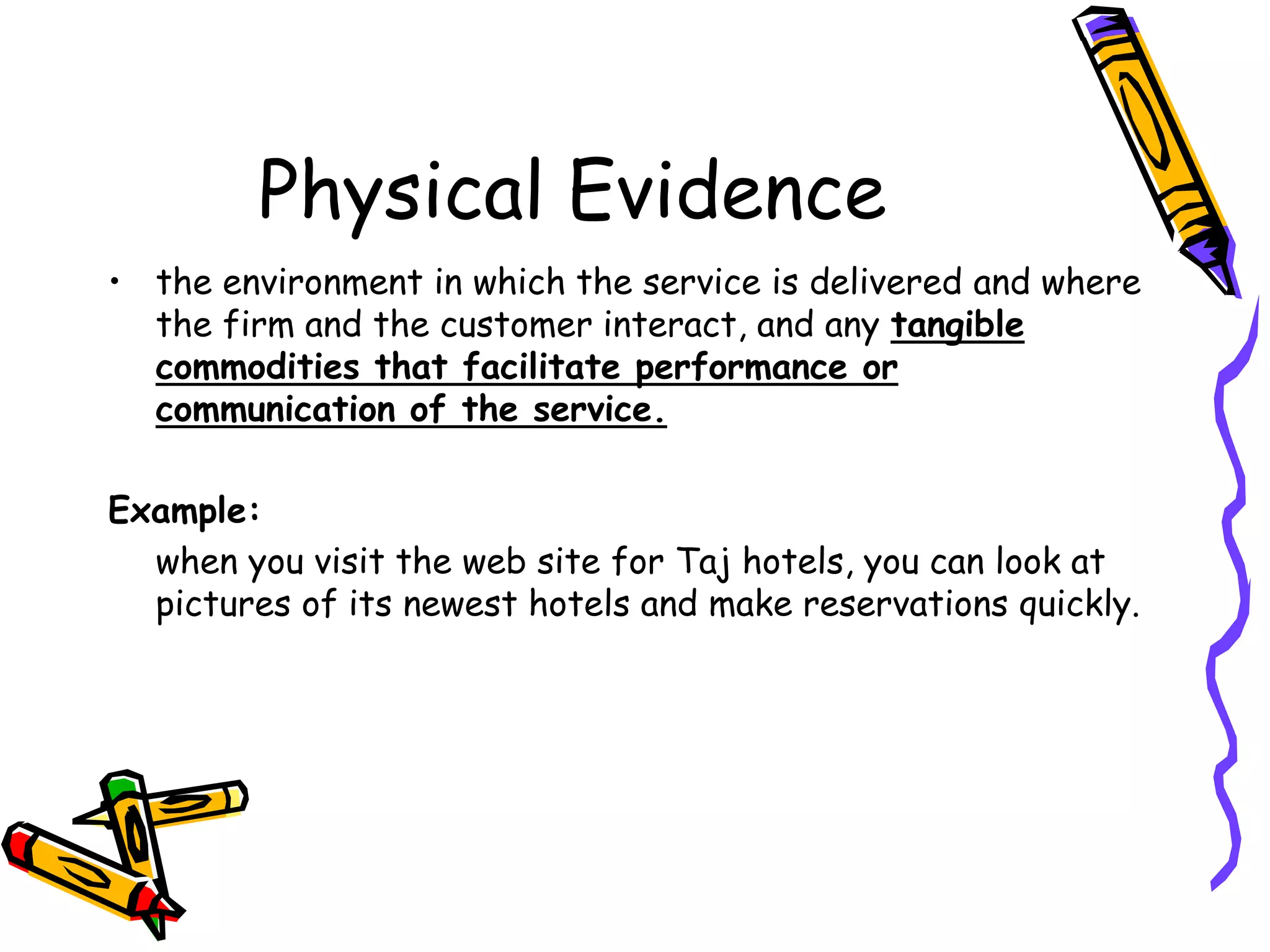
• the environment in which the service is delivered and where
the firm and the customer interact, and any tangible
commodities that facilitate performance or
communication of the service.
Example:
when you visit the web site for Taj hotels, you can look at
pictures of its newest hotels and make reservations quickly.
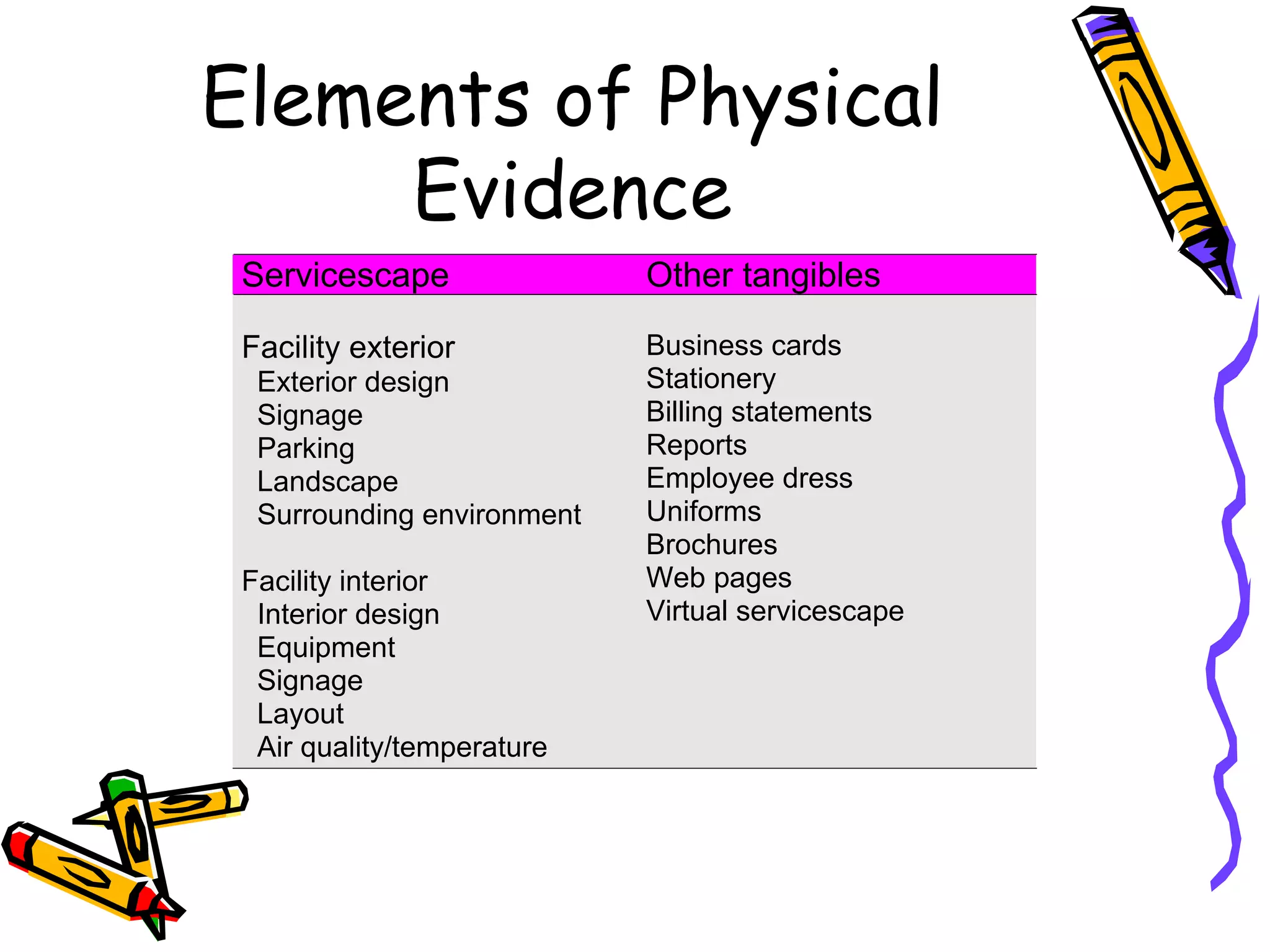
Elements of Physical
Evidence
Servicescape Other tangibles
Facility exterior
Exterior design
Signage
Parking
Landscape
Surrounding environment
Facility interior
Interior design
Equipment
Signage
Layout
Air quality/temperature
Business cards
Stationery
Billing statements
Reports
Employee dress
Uniforms
Brochures
Web pages
Virtual servicescape
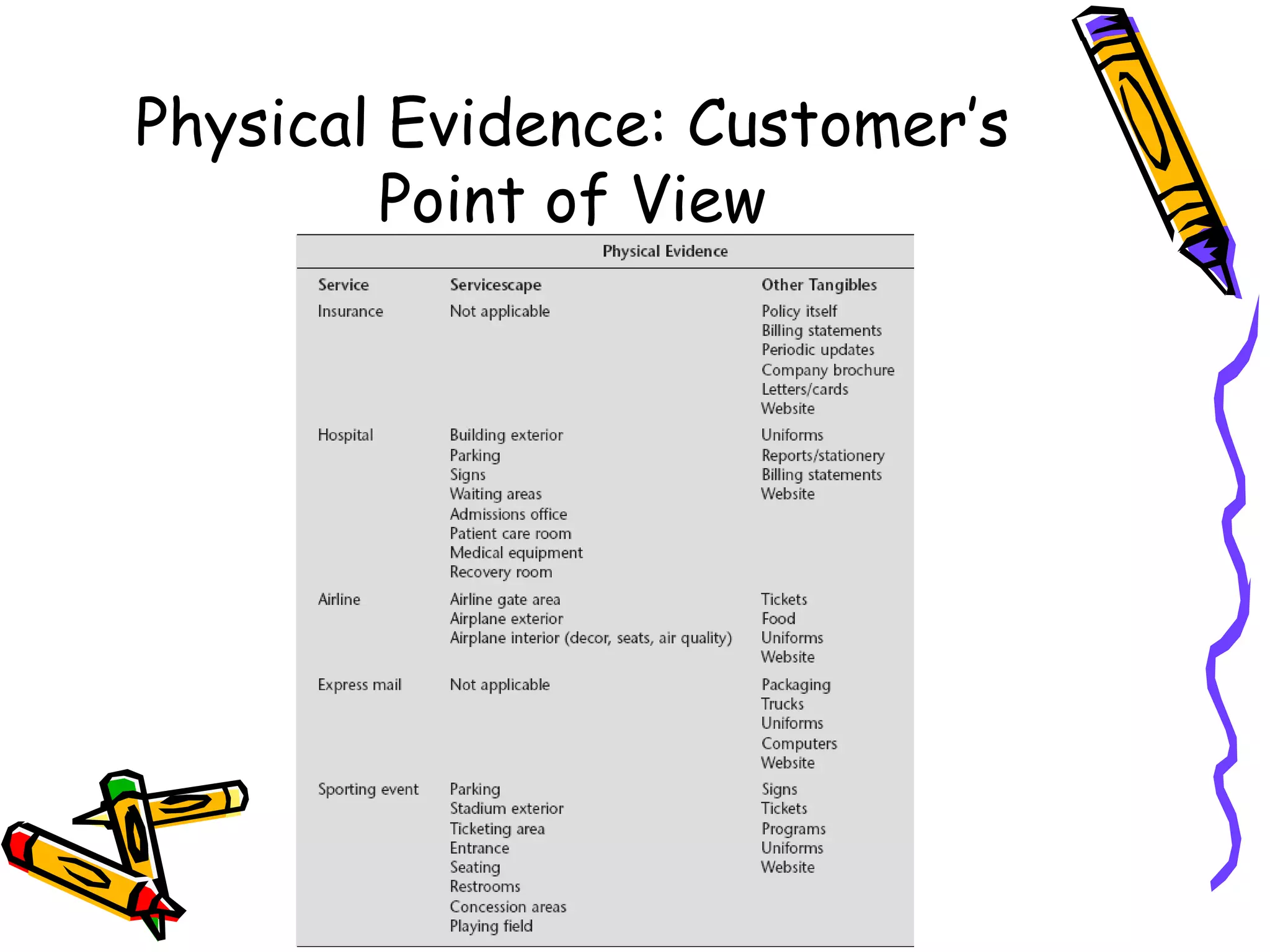
Physical Evidence: Customer’s
Point of View
Factors influencing the
design of the servicescape
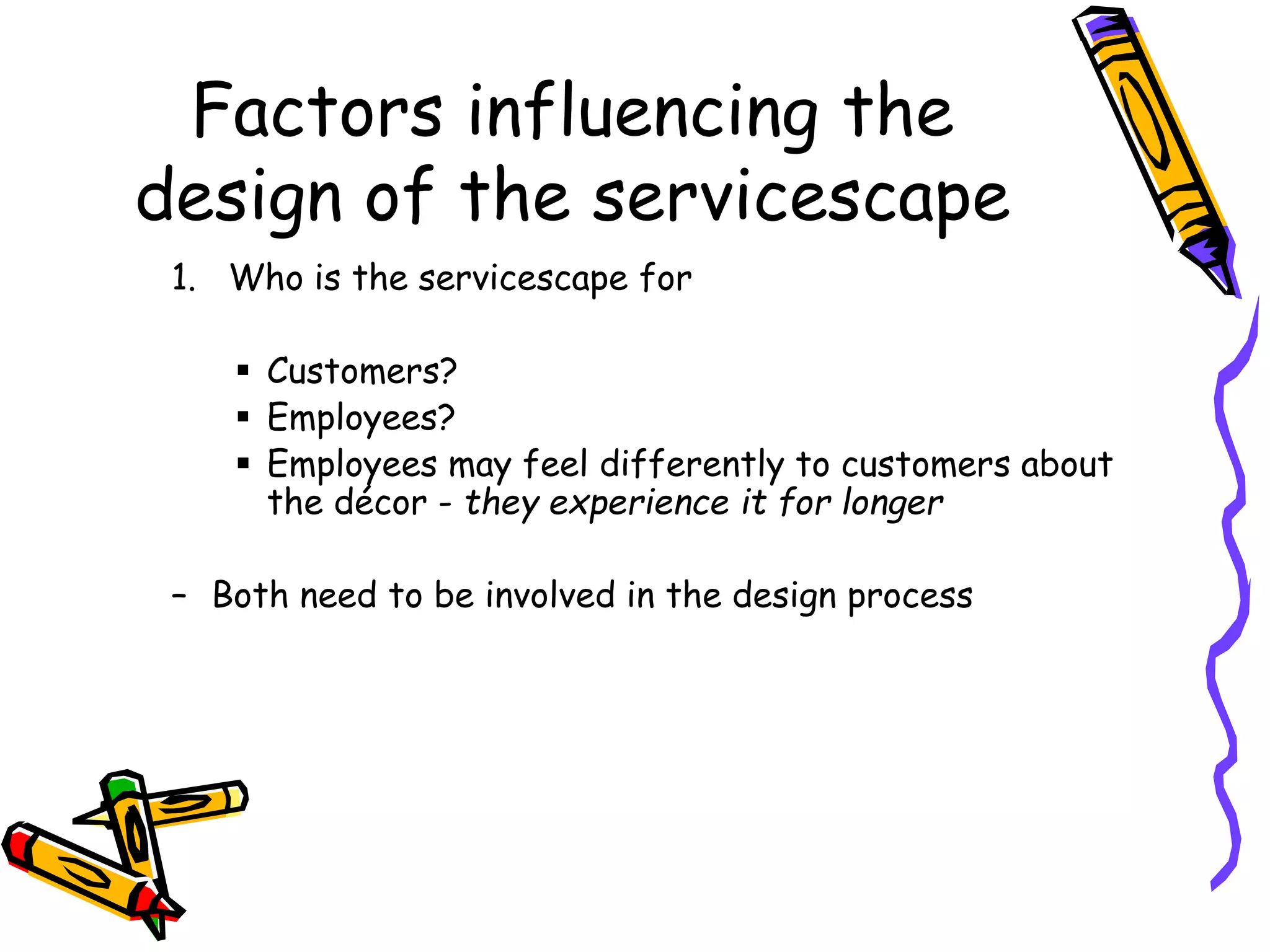
1. Who is the servicescape for
 Customers?
 Employees?
 Employees may feel differently to customers about
the décor - they experience it for longer
– Both need to be involved in the design process
Factors influencing the
design of the servicescape
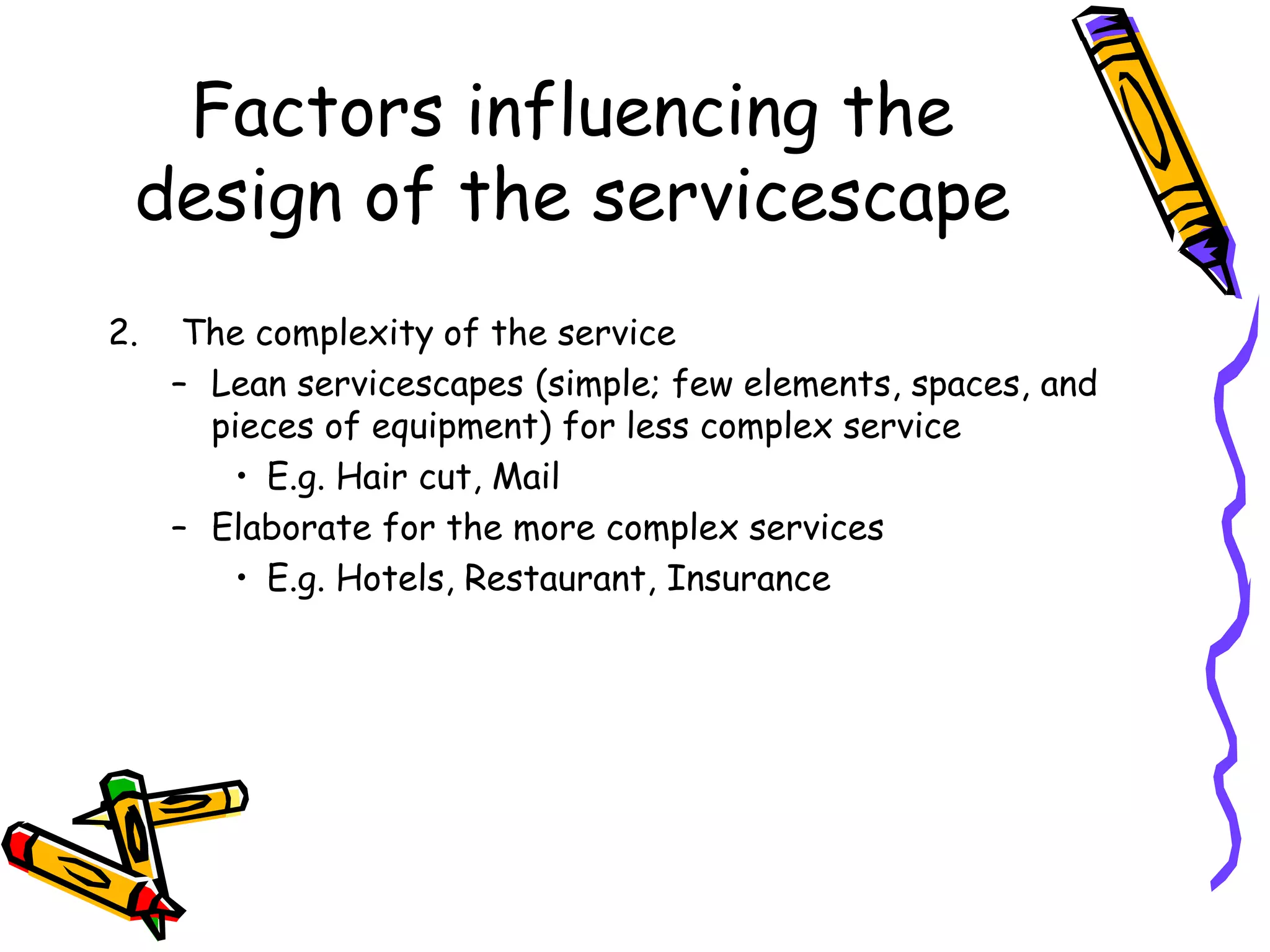
2. The complexity of the service
– Lean servicescapes (simple; few elements, spaces, and
pieces of equipment) for less complex service
• E.g. Hair cut, Mail
– Elaborate for the more complex services
• E.g. Hotels, Restaurant, Insurance
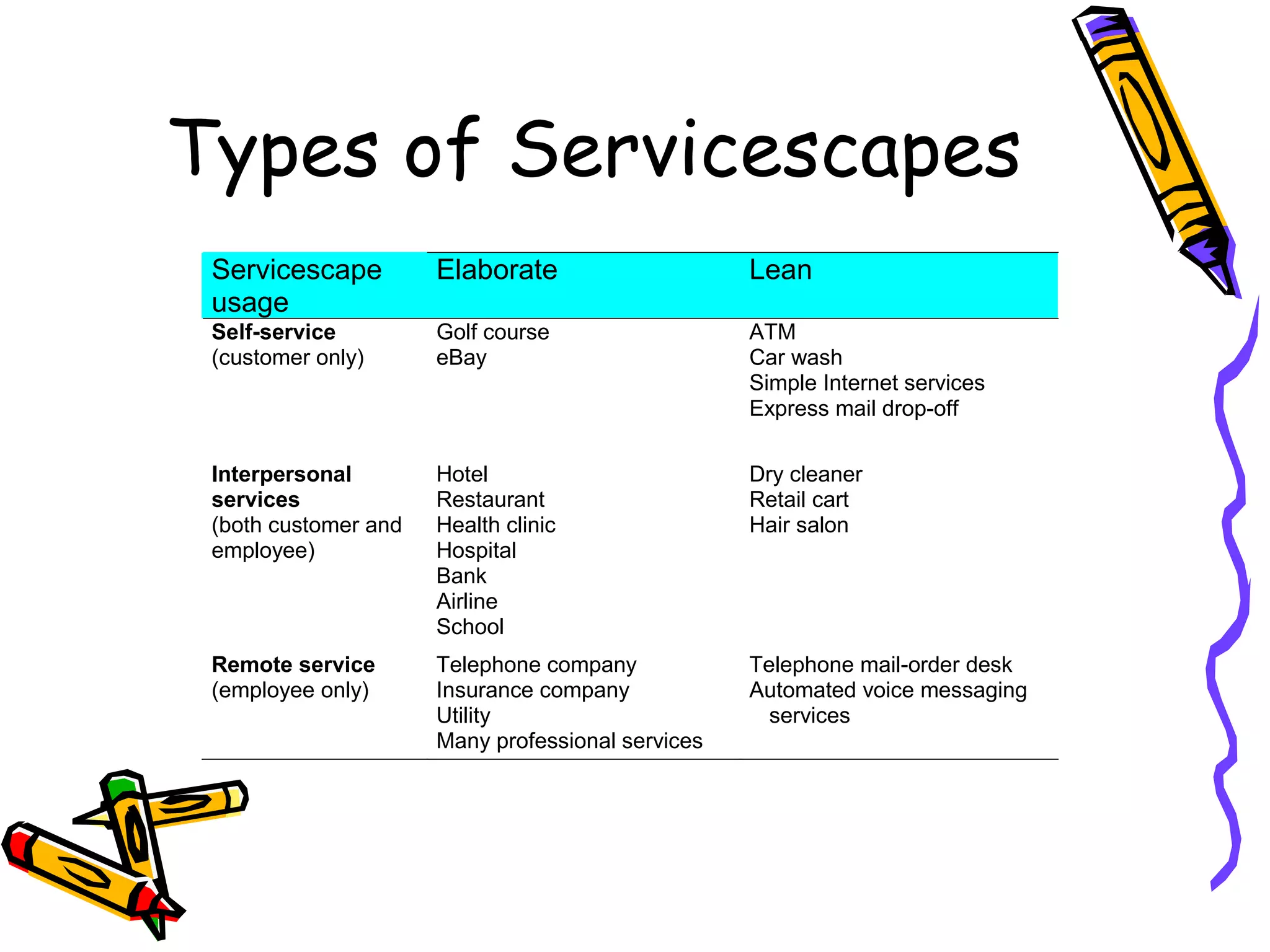
Types of Servicescapes
Servicescape
usage
Elaborate Lean
Self-service
(customer only)
Golf course
eBay
ATM
Car wash
Simple Internet services
Express mail drop-off
Interpersonal
services
(both customer and
employee)
Hotel
Restaurant
Health clinic
Hospital
Bank
Airline
School
Dry cleaner
Retail cart
Hair salon
Remote service
(employee only)
Telephone company
Insurance company
Utility
Many professional services
Telephone mail-order desk
Automated voice messaging
services
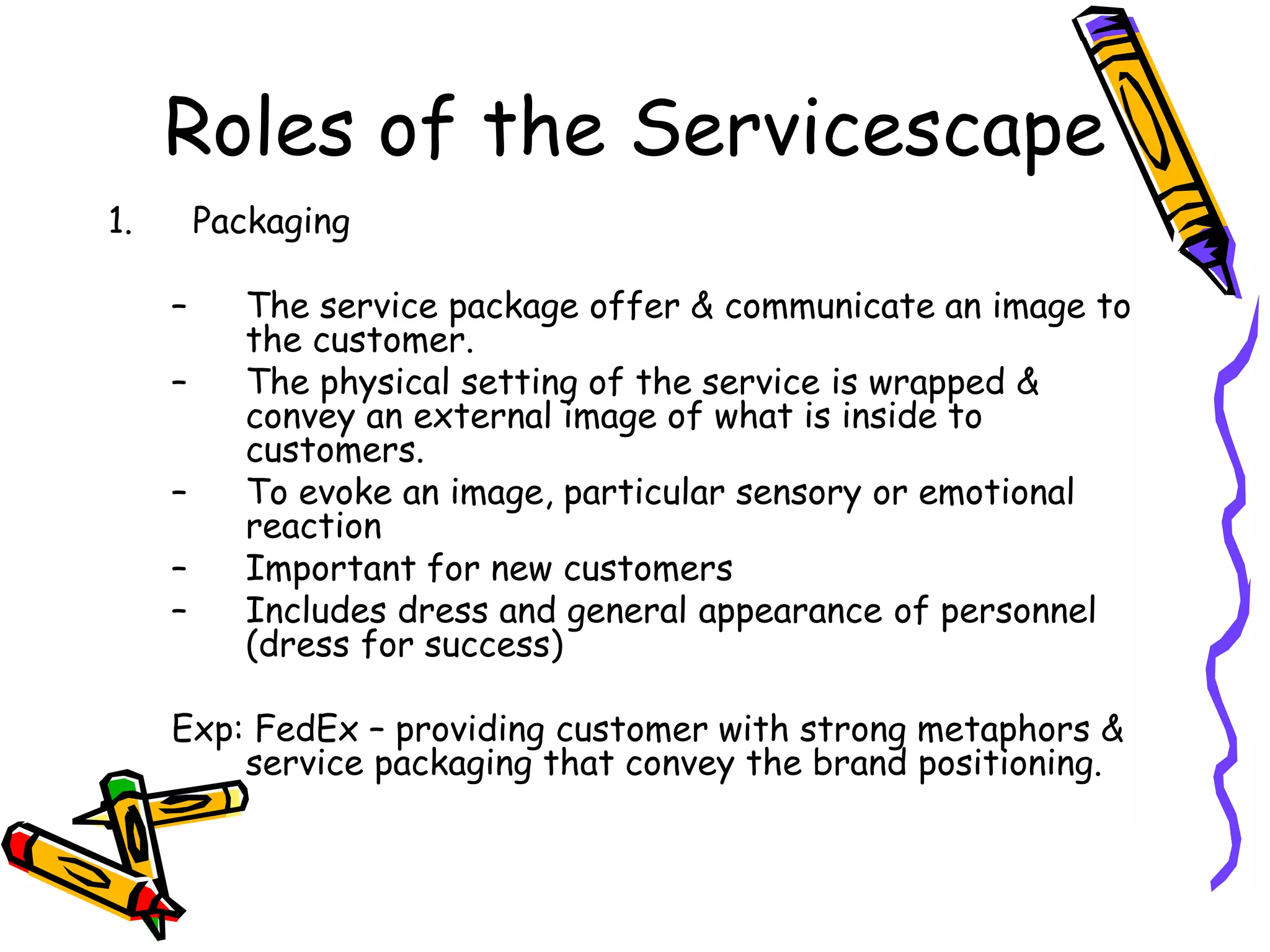
Roles of the Servicescape
1. Packaging
– The service package offer & communicate an image to
the customer.
– The physical setting of the service is wrapped &
convey an external image of what is inside to
customers.
– To evoke an image, particular sensory or emotional
reaction
– Important for new customers
– Includes dress and general appearance of personnel
(dress for success)
Exp: FedEx – providing customer with strong metaphors &
service packaging that convey the brand positioning.
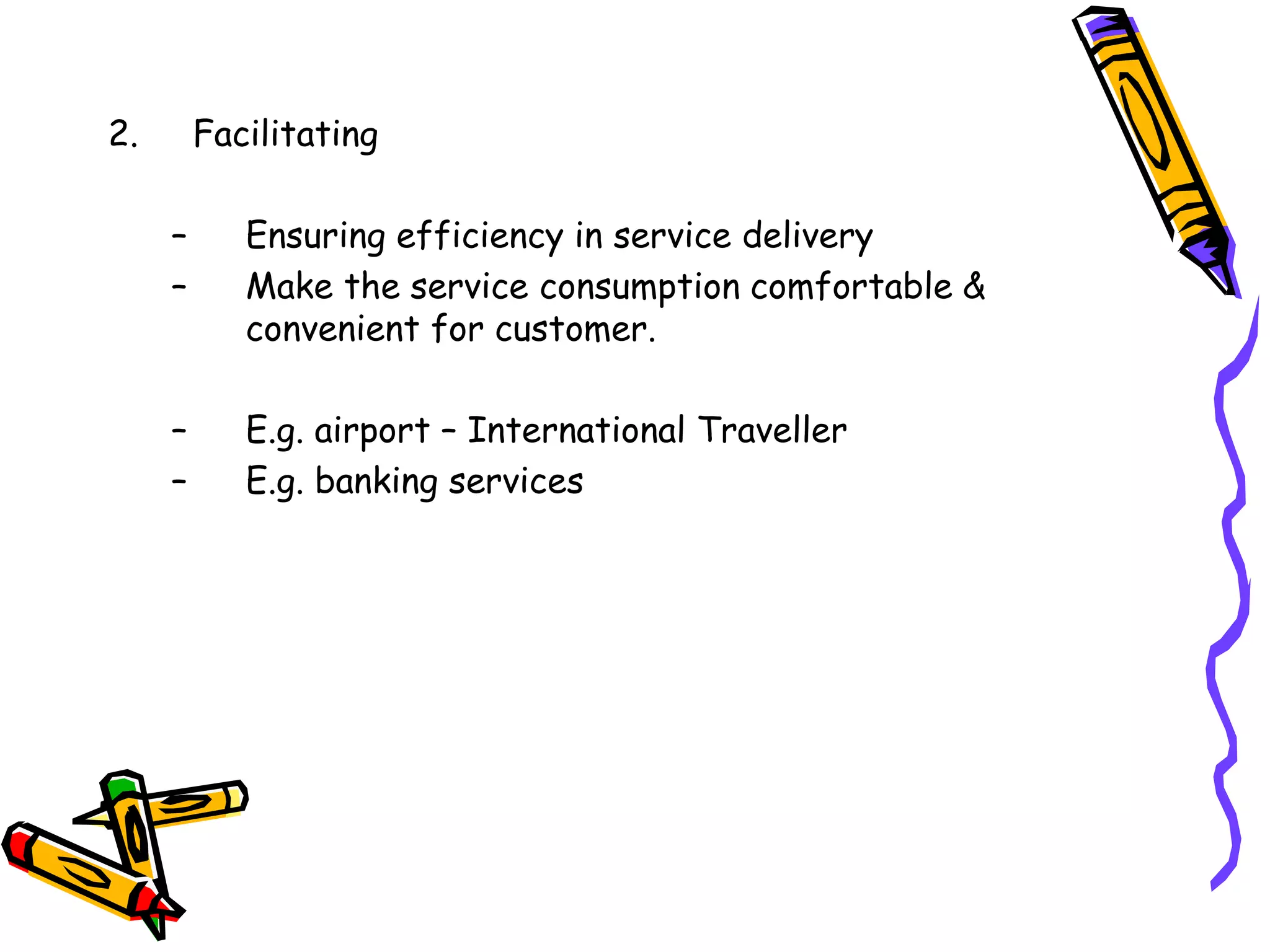
2. Facilitating
– Ensuring efficiency in service delivery
– Make the service consumption comfortable &
convenient for customer.
– E.g. airport – International Traveller
– E.g. banking services
3. Socialising
– Convey expected roles and behaviours of both the
employee and the customer
– Ease the customer/ employee relationship
– Provide balance between
– Ex: A new employee in an organization / Private bank
Vs. Public bank
4. Differentiating
– A segmentation device – the design of the physical
facility can differentiate a firm from its competitor.
– Ex: Shopping mall – signage, color, music.
– Ex: Washington Mutual Bank
Physical environment
• Ambient conditions (Explicit / implicit signals to
communicate firm’s image)
• Temperature
• Lighting
• Noise
• Music
• Smell
• Colour
– E.g. music affects perceptions of time
– Scent (strong impact on mood, affect & evaluate
responses)
• Spatial layout and functionality:
• Layout of machinery and equipment
• Furnishings
• Opportunities for privacy
• Sign & symbols
• Signage
• Style of décor
• Non-verbal communication
Internal responses
Cognitive (thinking / feeling)
• Beliefs, categorisation, symbolic meaning, and brand
knowledge (E.g. parking lot – less – no good meal)
– Affective (emotional – behavioural responses)
• Mood and attitude (arousing, sleeping, unpleasant)
– Physiological (affects the sensory organs)
• Pain, comfort (air quality, temperature)
Individual behaviours
• Approach behaviour:
– Affiliation
– Exploration
– Stay longer
– Commitment
• Avoidance behaviour:
– The opposite of these
Social / Individual
behaviours
• Between customer and employee and
• Between customer and customer
Individual Behavior:
• Attraction
• Spend money
• Return
• Stay / Explore
THANK YOU !

Servicescape final SIDDANNA M BALAPGOL

  • 1.
    SERVICESCAPE & PHYSICAL EVIDENCE BY: PROF. B.R. DEBATA RIMS,ROURKELA Dated on: 23.11.2011
  • 2.
    TODAY’S AGENDA • Explorethe impact on customer perceptions of physical evidence, particularly the servicescape • Illustrate differences in types and roles of servicescapes and their implications for strategy • Explore how the servicescape affects employee and customer behavior
  • 3.
  • 4.
    1. the actualphysical ENVIRONMENT where the service is performed, delivered, and consumed. 2. Where the firm and customer interact. 3. Consider impact on customer response, particularly perceptions, evaluation, assessment. 4. Situations, where customer experiences are important. Example: patient examination room in a doctor’s office; catering service: white linen cloths, eating utensils, menus, kitchen
  • 5.
    Physical Evidence • theenvironment in which the service is delivered and where the firm and the customer interact, and any tangible commodities that facilitate performance or communication of the service. Example: when you visit the web site for Taj hotels, you can look at pictures of its newest hotels and make reservations quickly.
  • 6.
    Elements of Physical Evidence ServicescapeOther tangibles Facility exterior Exterior design Signage Parking Landscape Surrounding environment Facility interior Interior design Equipment Signage Layout Air quality/temperature Business cards Stationery Billing statements Reports Employee dress Uniforms Brochures Web pages Virtual servicescape
  • 7.
  • 8.
    Factors influencing the designof the servicescape 1. Who is the servicescape for  Customers?  Employees?  Employees may feel differently to customers about the décor - they experience it for longer – Both need to be involved in the design process
  • 9.
    Factors influencing the designof the servicescape 2. The complexity of the service – Lean servicescapes (simple; few elements, spaces, and pieces of equipment) for less complex service • E.g. Hair cut, Mail – Elaborate for the more complex services • E.g. Hotels, Restaurant, Insurance
  • 10.
    Types of Servicescapes Servicescape usage ElaborateLean Self-service (customer only) Golf course eBay ATM Car wash Simple Internet services Express mail drop-off Interpersonal services (both customer and employee) Hotel Restaurant Health clinic Hospital Bank Airline School Dry cleaner Retail cart Hair salon Remote service (employee only) Telephone company Insurance company Utility Many professional services Telephone mail-order desk Automated voice messaging services
  • 11.
    Roles of theServicescape 1. Packaging – The service package offer & communicate an image to the customer. – The physical setting of the service is wrapped & convey an external image of what is inside to customers. – To evoke an image, particular sensory or emotional reaction – Important for new customers – Includes dress and general appearance of personnel (dress for success) Exp: FedEx – providing customer with strong metaphors & service packaging that convey the brand positioning.
  • 12.
    2. Facilitating – Ensuringefficiency in service delivery – Make the service consumption comfortable & convenient for customer. – E.g. airport – International Traveller – E.g. banking services
  • 13.
    3. Socialising – Conveyexpected roles and behaviours of both the employee and the customer – Ease the customer/ employee relationship – Provide balance between – Ex: A new employee in an organization / Private bank Vs. Public bank
  • 14.
    4. Differentiating – Asegmentation device – the design of the physical facility can differentiate a firm from its competitor. – Ex: Shopping mall – signage, color, music. – Ex: Washington Mutual Bank
  • 15.
    Physical environment • Ambientconditions (Explicit / implicit signals to communicate firm’s image) • Temperature • Lighting • Noise • Music • Smell • Colour – E.g. music affects perceptions of time – Scent (strong impact on mood, affect & evaluate responses)
  • 16.
    • Spatial layoutand functionality: • Layout of machinery and equipment • Furnishings • Opportunities for privacy • Sign & symbols • Signage • Style of décor • Non-verbal communication
  • 17.
    Internal responses Cognitive (thinking/ feeling) • Beliefs, categorisation, symbolic meaning, and brand knowledge (E.g. parking lot – less – no good meal) – Affective (emotional – behavioural responses) • Mood and attitude (arousing, sleeping, unpleasant) – Physiological (affects the sensory organs) • Pain, comfort (air quality, temperature)
  • 18.
    Individual behaviours • Approachbehaviour: – Affiliation – Exploration – Stay longer – Commitment • Avoidance behaviour: – The opposite of these
  • 19.
    Social / Individual behaviours •Between customer and employee and • Between customer and customer Individual Behavior: • Attraction • Spend money • Return • Stay / Explore
  • 20.