PHYSICAL EVIDENCE AND THE
SERVICESCAPE
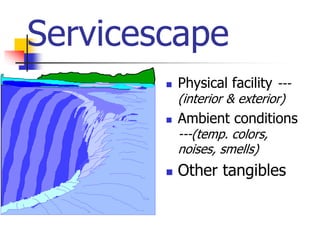
Servicescape
 Physical facility ---
(interior & exterior)
 Ambient conditions
---(temp. colors,
noises, smells)
 Other tangibles
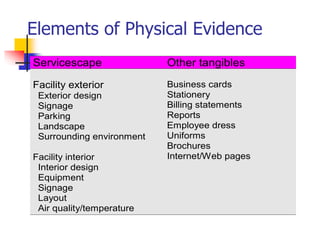
Elements of Physical Evidence
Servicescape Other tangibles
Facility exterior
Exterior design
Signage
Parking
Landscape
Surrounding environment
Facility interior
Interior design
Equipment
Signage
Layout
Air quality/temperature
Business cards
Stationery
Billing statements
Reports
Employee dress
Uniforms
Brochures
Internet/Web pages
Impact of Service Environment
 Purchase decision
 Expectations
 Service quality
evaluations
 Satisfaction
Examples of Physical Evidence from the
Customer’s Point of View
Service Physical evidence
Servicescape Other tangibles
Insurance Not applicable Policy itself
Billing statements
Periodic updates
Company brochure
Letters/cards
Hospital Building exterior
Parking
Signs
Waiting areas
Admissions office
Patient care room
Medical equipment
Recovery room
Uniforms
Reports/stationery
Billing statements
Airline Airline gate area
Airplane exterior
Airplane interior (décor, seats, air
quality)
Tickets
Food
Uniforms
Express mail Not applicable Packaging
Trucks
Uniforms
Computers
Sporting
event
Parking, Seating, Restrooms
Stadium exterior
Ticketing area, Concession Areas
Entrance, Playiing Field
Signs
Tickets
Program
Uniforms
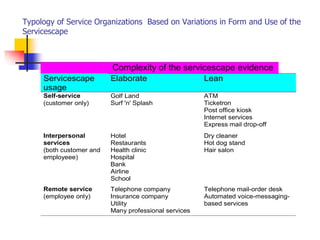
Typology of Service Organizations Based on Variations in Form and Use of the
Servicescape
Complexity of the servicescape evidence
Servicescape
usage
Elaborate Lean
Self-service
(customer only)
Golf Land
Surf 'n' Splash
ATM
Ticketron
Post office kiosk
Internet services
Express mail drop-off
Interpersonal
services
(both customer and
employeee)
Hotel
Restaurants
Health clinic
Hospital
Bank
Airline
School
Dry cleaner
Hot dog stand
Hair salon
Remote service
(employee only)
Telephone company
Insurance company
Utility
Many professional services
Telephone mail-order desk
Automated voice-messaging-
based services
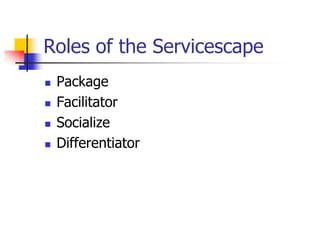
Roles of the Servicescape
 Package
 Facilitator
 Socialize
 Differentiator
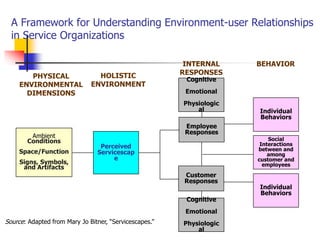
A Framework for Understanding Environment-user Relationships
in Service Organizations
Source: Adapted from Mary Jo Bitner, “Servicescapes.”
PHYSICAL
ENVIRONMENTAL
DIMENSIONS
HOLISTIC
ENVIRONMENT
INTERNAL
RESPONSES
BEHAVIOR
Ambient
Conditions
Space/Function
Signs, Symbols,
and Artifacts
Perceived
Servicescap
e
Cognitive
Emotional
Physiologic
al
Cognitive
Emotional
Physiologic
al
Employee
Responses
Customer
Responses
Individual
Behaviors
Social
Interactions
between and
among
customer and
employees
Individual
Behaviors
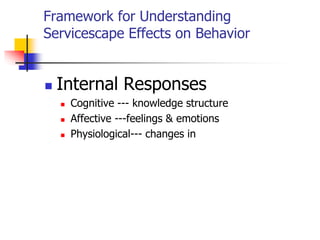
Framework for Understanding
Servicescape Effects on Behavior
 Internal Responses
 Cognitive --- knowledge structure
 Affective ---feelings & emotions
 Physiological--- changes in
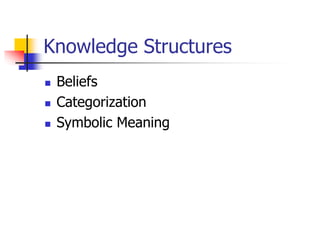
Knowledge Structures
 Beliefs
 Categorization
 Symbolic Meaning
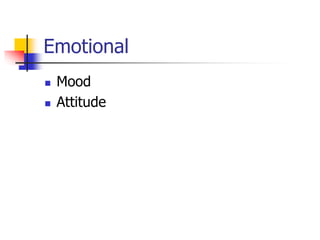
Emotional
 Mood
 Attitude
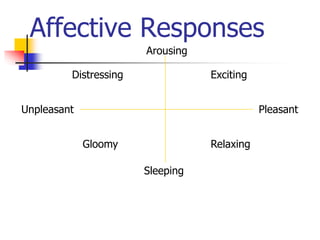
Affective Responses
Arousing
Sleeping
Pleasant
Unpleasant
Distressing
Gloomy Relaxing
Exciting
Physiological Responses
 Heart beat rate
 Pupil dilation
 Tears
 Perspiration
 Pain
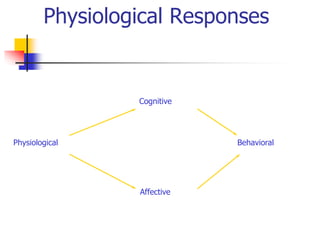
Physiological Responses
Cognitive
Physiological
Affective
Behavioral
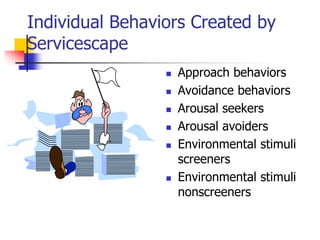
Individual Behaviors Created by
Servicescape
 Approach behaviors
 Avoidance behaviors
 Arousal seekers
 Arousal avoiders
 Environmental stimuli
screeners
 Environmental stimuli
nonscreeners
Social Interactions
 Between and among customers and
employees
Environmental Dimensions
 Ambient Conditions
 Spatial Layout and Functionality
 Signs, Symbols and Artifacts
Perceptions of Crowding
 Environmental cues
 Shopping motives
 Constraints
 Expectations of
crowding
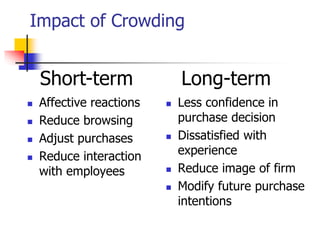
Impact of Crowding
 Affective reactions
 Reduce browsing
 Adjust purchases
 Reduce interaction
with employees
 Less confidence in
purchase decision
 Dissatisfied with
experience
 Reduce image of firm
 Modify future purchase
intentions
Short-term Long-term
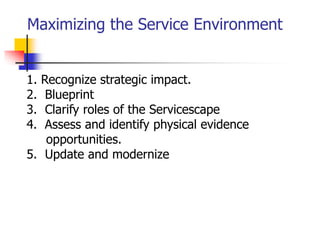
Maximizing the Service Environment
1. Recognize strategic impact.
2. Blueprint
3. Clarify roles of the Servicescape
4. Assess and identify physical evidence
opportunities.
5. Update and modernize
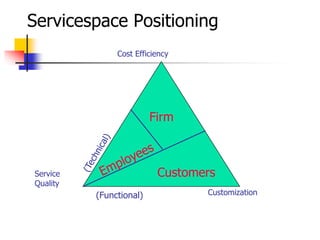
Servicespace Positioning
Cost Efficiency
Customization
Service
Quality
Firm
Customers
(Functional)
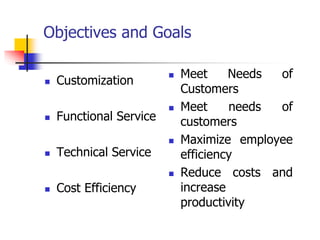
Objectives and Goals
 Customization
 Functional Service
 Technical Service
 Cost Efficiency
 Meet Needs of
Customers
 Meet needs of
customers
 Maximize employee
efficiency
 Reduce costs and
increase
productivity
Choosing the Location
 Operational Position
 Merchantability
 Traffic interception
 Cumulative competitive
attraction
 Competitive compatibility
 Accessibility
Physical Facility
• Exterior Appearance
• Interior Appearance
• Ambient Conditions
•Interpersonal Factors
•Employee Appearance
•Employee Behavior
Cost Efficiency: Maximize efficiency & productivity.
Customization: Focus on customers.
Technical SQ..: Maximize quality of technical
output.
Functional SQ..: Maximize quality of customer
interaction.
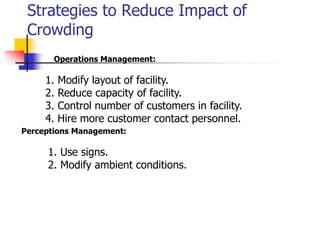
Strategies to Reduce Impact of
Crowding
Operations Management:
1. Modify layout of facility.
2. Reduce capacity of facility.
3. Control number of customers in facility.
4. Hire more customer contact personnel.
Perceptions Management:
1. Use signs.
2. Modify ambient conditions.

Physical Evidence and Service space.ppt

  • 1.
    PHYSICAL EVIDENCE ANDTHE SERVICESCAPE
  • 2.
    Servicescape  Physical facility--- (interior & exterior)  Ambient conditions ---(temp. colors, noises, smells)  Other tangibles
  • 3.
    Elements of PhysicalEvidence Servicescape Other tangibles Facility exterior Exterior design Signage Parking Landscape Surrounding environment Facility interior Interior design Equipment Signage Layout Air quality/temperature Business cards Stationery Billing statements Reports Employee dress Uniforms Brochures Internet/Web pages
  • 4.
    Impact of ServiceEnvironment  Purchase decision  Expectations  Service quality evaluations  Satisfaction
  • 5.
    Examples of PhysicalEvidence from the Customer’s Point of View Service Physical evidence Servicescape Other tangibles Insurance Not applicable Policy itself Billing statements Periodic updates Company brochure Letters/cards Hospital Building exterior Parking Signs Waiting areas Admissions office Patient care room Medical equipment Recovery room Uniforms Reports/stationery Billing statements Airline Airline gate area Airplane exterior Airplane interior (décor, seats, air quality) Tickets Food Uniforms Express mail Not applicable Packaging Trucks Uniforms Computers Sporting event Parking, Seating, Restrooms Stadium exterior Ticketing area, Concession Areas Entrance, Playiing Field Signs Tickets Program Uniforms
  • 6.
    Typology of ServiceOrganizations Based on Variations in Form and Use of the Servicescape Complexity of the servicescape evidence Servicescape usage Elaborate Lean Self-service (customer only) Golf Land Surf 'n' Splash ATM Ticketron Post office kiosk Internet services Express mail drop-off Interpersonal services (both customer and employeee) Hotel Restaurants Health clinic Hospital Bank Airline School Dry cleaner Hot dog stand Hair salon Remote service (employee only) Telephone company Insurance company Utility Many professional services Telephone mail-order desk Automated voice-messaging- based services
  • 7.
    Roles of theServicescape  Package  Facilitator  Socialize  Differentiator
  • 8.
    A Framework forUnderstanding Environment-user Relationships in Service Organizations Source: Adapted from Mary Jo Bitner, “Servicescapes.” PHYSICAL ENVIRONMENTAL DIMENSIONS HOLISTIC ENVIRONMENT INTERNAL RESPONSES BEHAVIOR Ambient Conditions Space/Function Signs, Symbols, and Artifacts Perceived Servicescap e Cognitive Emotional Physiologic al Cognitive Emotional Physiologic al Employee Responses Customer Responses Individual Behaviors Social Interactions between and among customer and employees Individual Behaviors
  • 9.
    Framework for Understanding ServicescapeEffects on Behavior  Internal Responses  Cognitive --- knowledge structure  Affective ---feelings & emotions  Physiological--- changes in
  • 10.
    Knowledge Structures  Beliefs Categorization  Symbolic Meaning
  • 11.
  • 12.
  • 13.
    Physiological Responses  Heartbeat rate  Pupil dilation  Tears  Perspiration  Pain
  • 14.
  • 15.
    Individual Behaviors Createdby Servicescape  Approach behaviors  Avoidance behaviors  Arousal seekers  Arousal avoiders  Environmental stimuli screeners  Environmental stimuli nonscreeners
  • 16.
    Social Interactions  Betweenand among customers and employees
  • 17.
    Environmental Dimensions  AmbientConditions  Spatial Layout and Functionality  Signs, Symbols and Artifacts
  • 18.
    Perceptions of Crowding Environmental cues  Shopping motives  Constraints  Expectations of crowding
  • 19.
    Impact of Crowding Affective reactions  Reduce browsing  Adjust purchases  Reduce interaction with employees  Less confidence in purchase decision  Dissatisfied with experience  Reduce image of firm  Modify future purchase intentions Short-term Long-term
  • 20.
    Maximizing the ServiceEnvironment 1. Recognize strategic impact. 2. Blueprint 3. Clarify roles of the Servicescape 4. Assess and identify physical evidence opportunities. 5. Update and modernize
  • 21.
  • 22.
    Objectives and Goals Customization  Functional Service  Technical Service  Cost Efficiency  Meet Needs of Customers  Meet needs of customers  Maximize employee efficiency  Reduce costs and increase productivity
  • 23.
    Choosing the Location Operational Position  Merchantability  Traffic interception  Cumulative competitive attraction  Competitive compatibility  Accessibility
  • 24.
    Physical Facility • ExteriorAppearance • Interior Appearance • Ambient Conditions •Interpersonal Factors •Employee Appearance •Employee Behavior Cost Efficiency: Maximize efficiency & productivity. Customization: Focus on customers. Technical SQ..: Maximize quality of technical output. Functional SQ..: Maximize quality of customer interaction.
  • 25.
    Strategies to ReduceImpact of Crowding Operations Management: 1. Modify layout of facility. 2. Reduce capacity of facility. 3. Control number of customers in facility. 4. Hire more customer contact personnel. Perceptions Management: 1. Use signs. 2. Modify ambient conditions.