SERVICE QUALITY
BY-
ANSHIKA MEHROTRA
MBA MARKETING SEMESTER 3RD
 Quality refers to totality of features & characteristics of a product or a service that bear on its ability to
satisfy needs.
 An assessment of how well a delivered service conforms to the client's expectations is defined as Service
Quality.
 Service business operators often assess the service quality provided to their customers in order to
o To improve their services
o To quickly identify problems, and
o To better assess client satisfaction.
 Lower costs
 Higher Price
 Higher Customer Loyalty
 Higher market share
 Loyal Internal Customer
 Higher Return on Investment
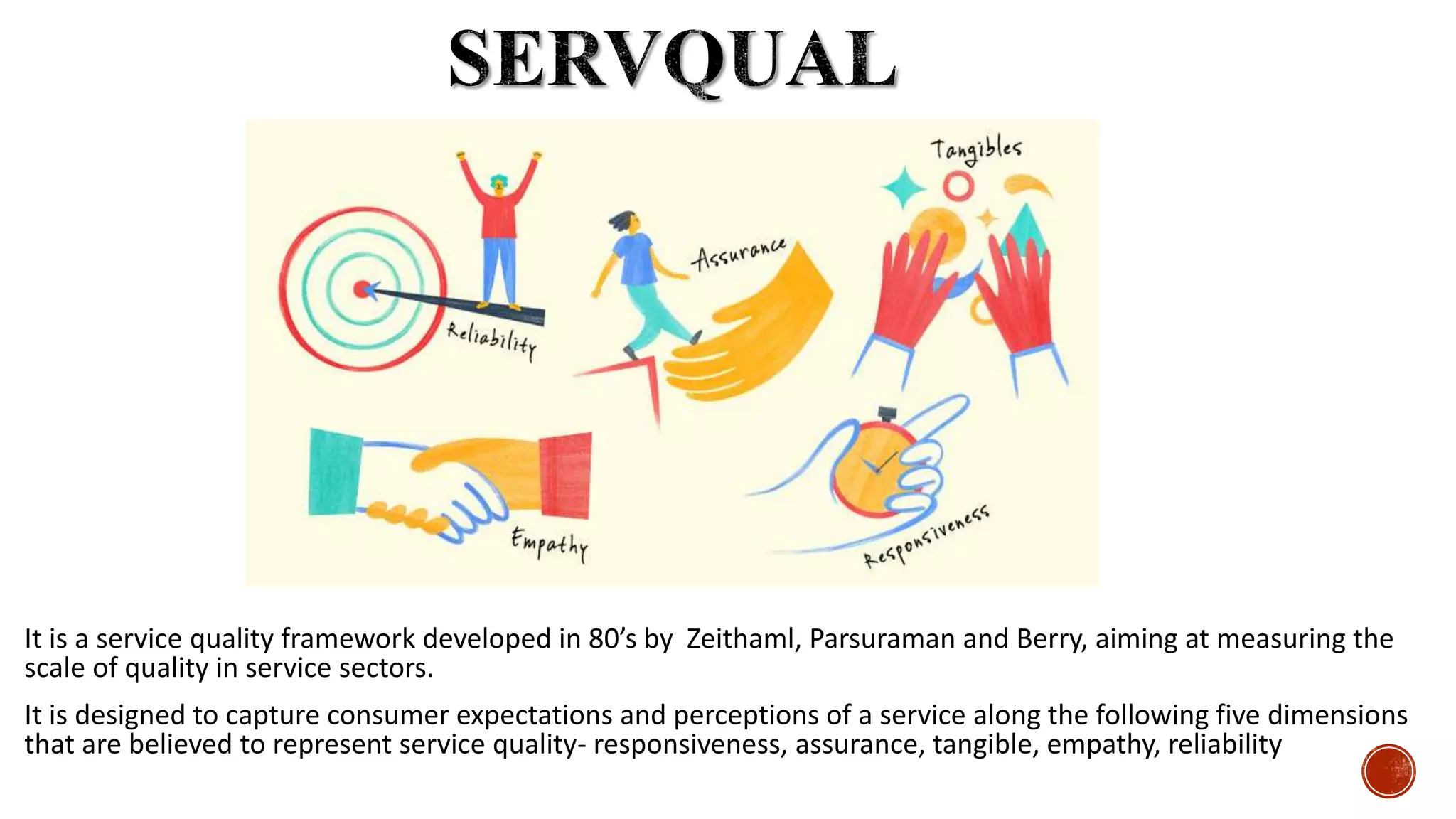
It is a service quality framework developed in 80’s by Zeithaml, Parsuraman and Berry, aiming at measuring the
scale of quality in service sectors.
It is designed to capture consumer expectations and perceptions of a service along the following five dimensions
that are believed to represent service quality- responsiveness, assurance, tangible, empathy, reliability
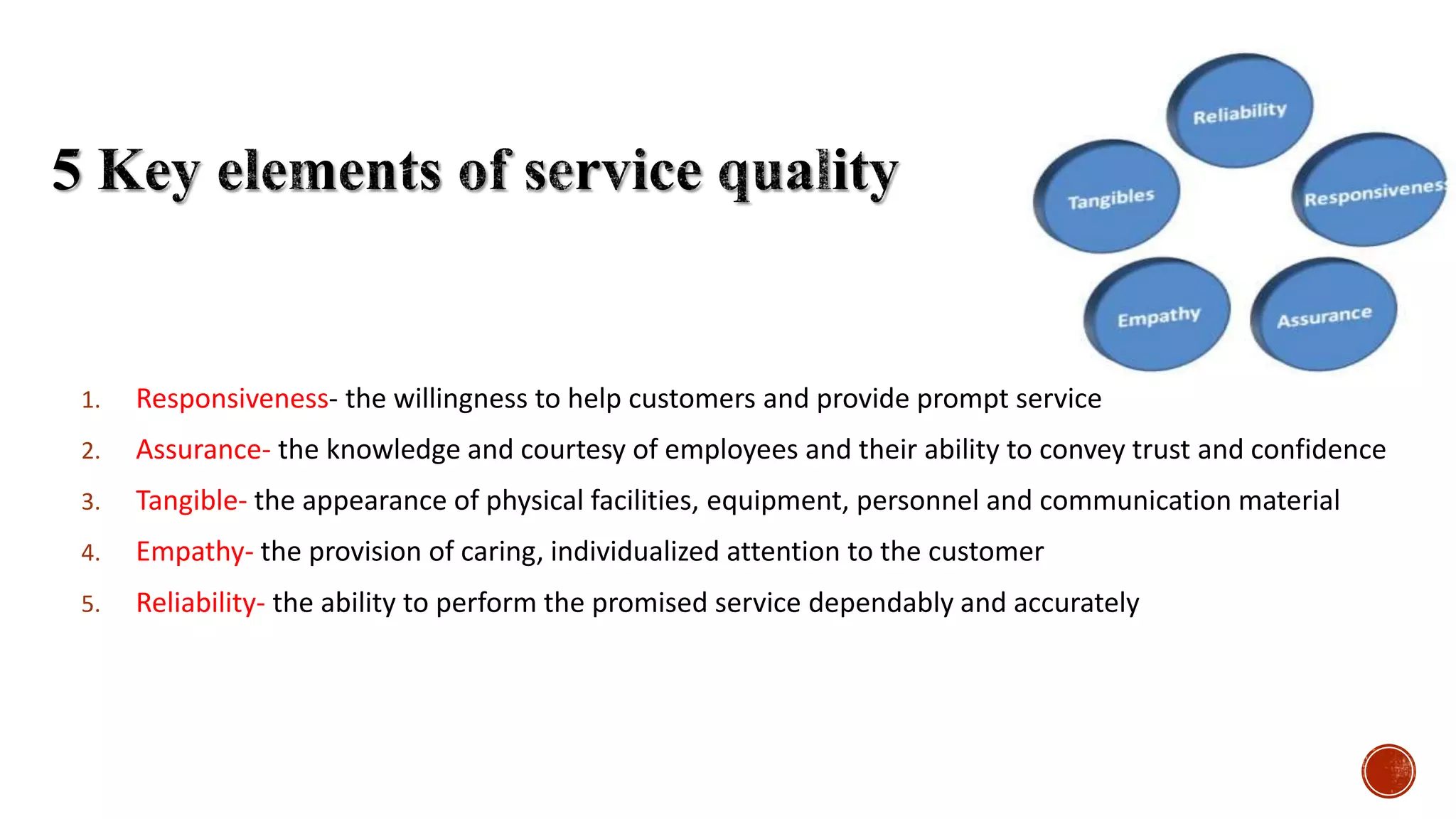
1. Responsiveness- the willingness to help customers and provide prompt service
2. Assurance- the knowledge and courtesy of employees and their ability to convey trust and confidence
3. Tangible- the appearance of physical facilities, equipment, personnel and communication material
4. Empathy- the provision of caring, individualized attention to the customer
5. Reliability- the ability to perform the promised service dependably and accurately
 Businesses use the SERVQUAL instrument (i.e. questionnaire) to measure potential service quality problems
and the model of service quality to help diagnose possible causes of the problem.
 The model of service quality is built on the expectancy-confirmation paradigm
 According to the paradigm consumers perceive quality in terms of their perceptions of how well a given
service delivery meets their expectations of that delivery.
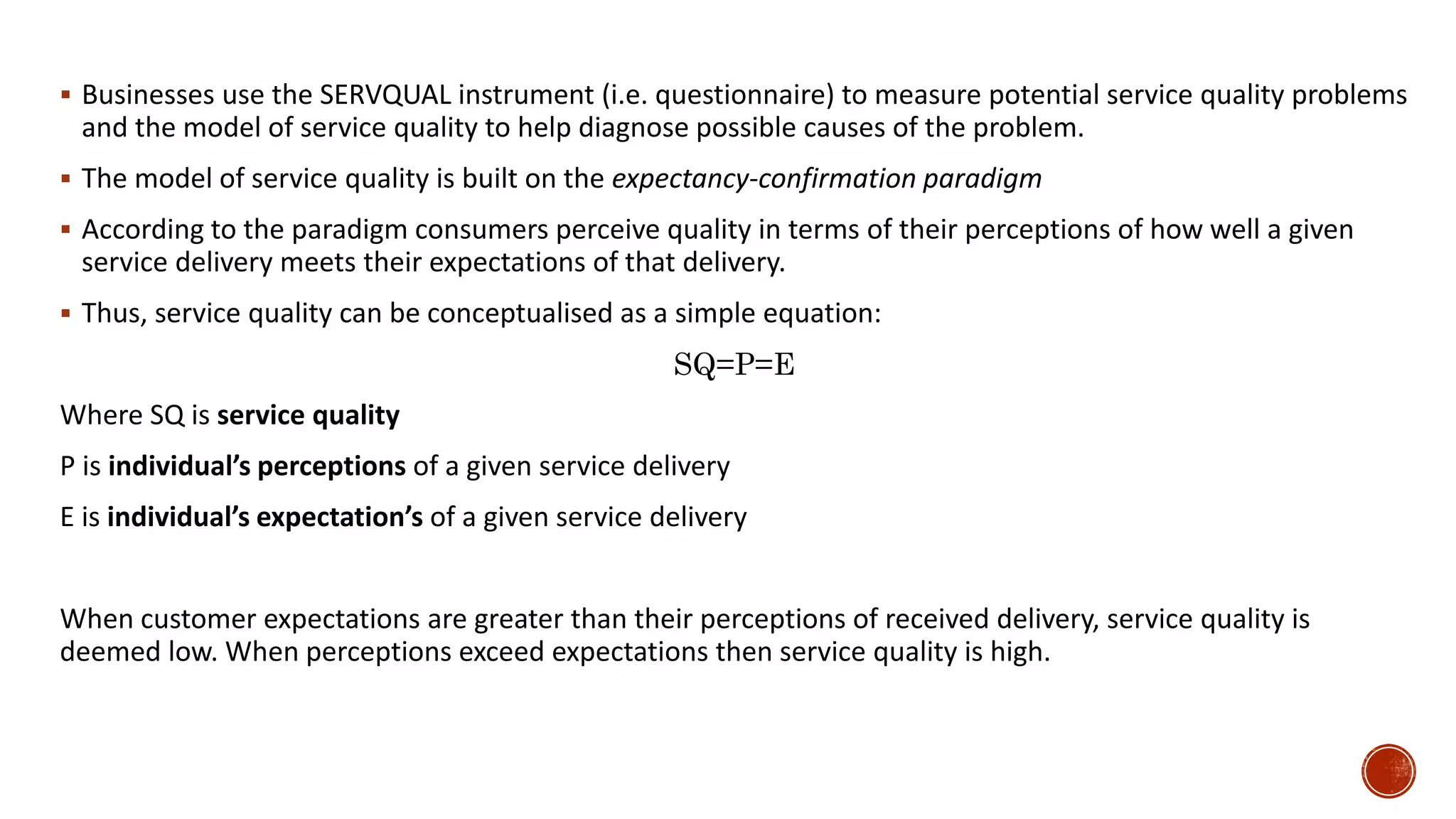
 Thus, service quality can be conceptualised as a simple equation:
SQ=P=E
Where SQ is service quality
P is individual’s perceptions of a given service delivery
E is individual’s expectation’s of a given service delivery
When customer expectations are greater than their perceptions of received delivery, service quality is
deemed low. When perceptions exceed expectations then service quality is high.
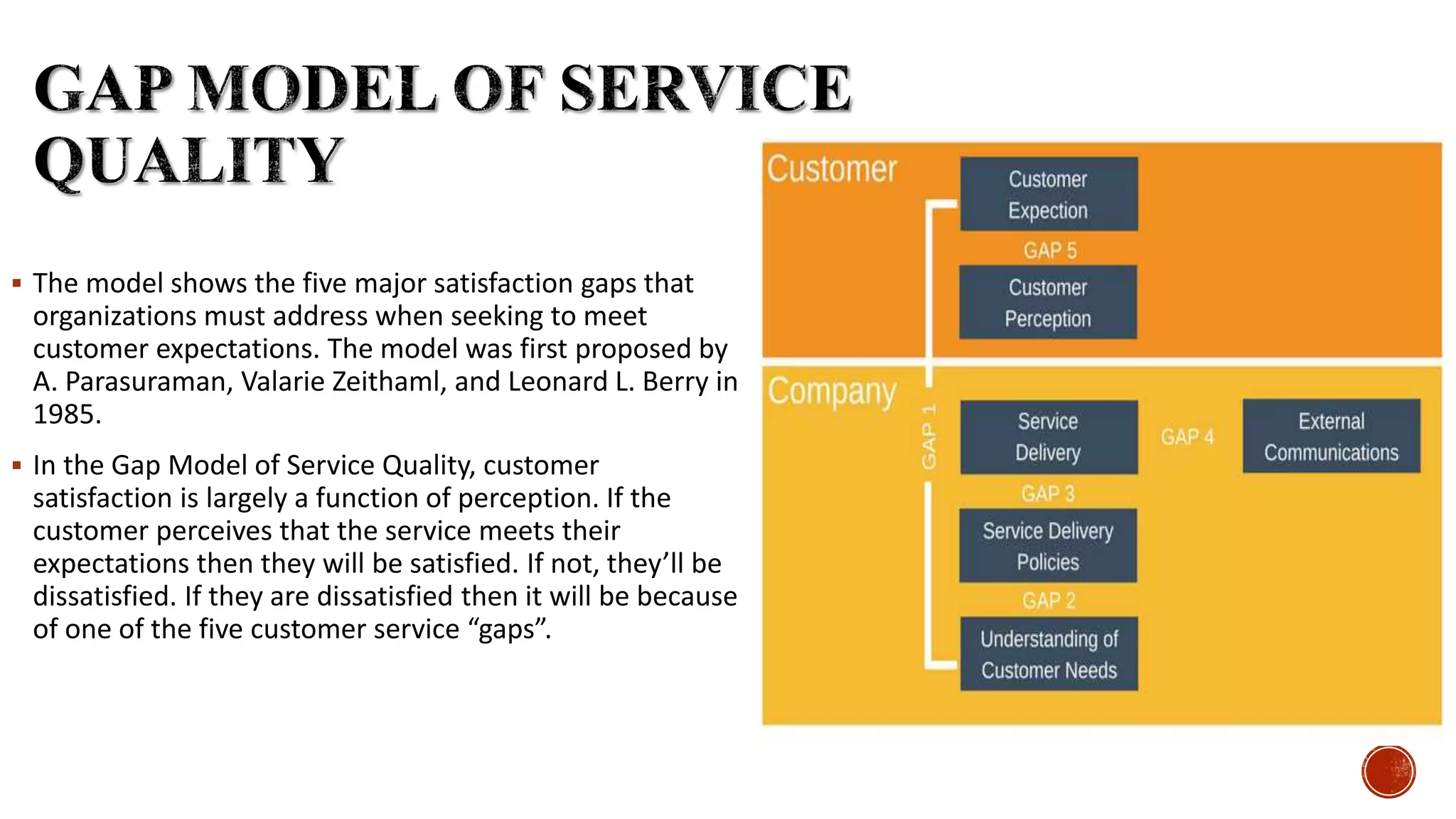
 The model shows the five major satisfaction gaps that
organizations must address when seeking to meet
customer expectations. The model was first proposed by
A. Parasuraman, Valarie Zeithaml, and Leonard L. Berry in
1985.
 In the Gap Model of Service Quality, customer
satisfaction is largely a function of perception. If the
customer perceives that the service meets their
expectations then they will be satisfied. If not, they’ll be
dissatisfied. If they are dissatisfied then it will be because
of one of the five customer service “gaps”.
 The knowledge gap is the difference between the customer’s expectations of the service & the company’s
provision of that service.
 Essentially the gap arises because the management does not know exactly what the customer’s expect. This
can occur as a result of insufficient research or communication failures.
Reason’s this gap arises-
 Lack of management and customer interaction.
 Lack of communication between service employees and management.
 Insufficient market research.
 Insufficient relationship focus.
 Failure to listen to customer complaints.
 The policy gap is the difference between management’s
understanding of the customer needs and the translation of that
understanding into service delivery policies and standards.
Reasons this gap arises-
 Lack of customer service standards.
 Poorly defined service levels.
 Failure to regularly update service level standards.
 This gap causes the customer to seek a better service else where.
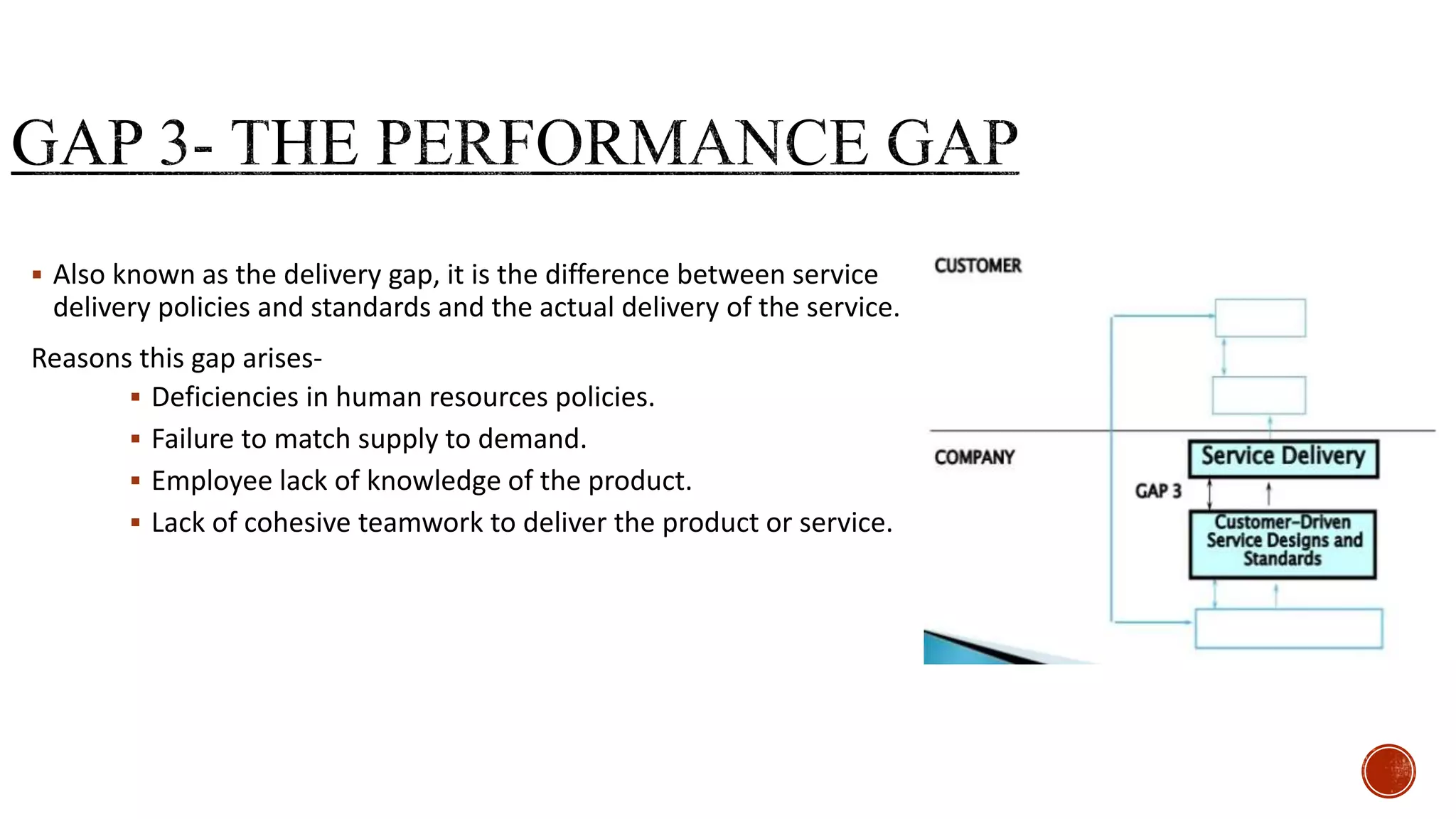
 Also known as the delivery gap, it is the difference between service
delivery policies and standards and the actual delivery of the service.
Reasons this gap arises-
 Deficiencies in human resources policies.
 Failure to match supply to demand.
 Employee lack of knowledge of the product.
 Lack of cohesive teamwork to deliver the product or service.
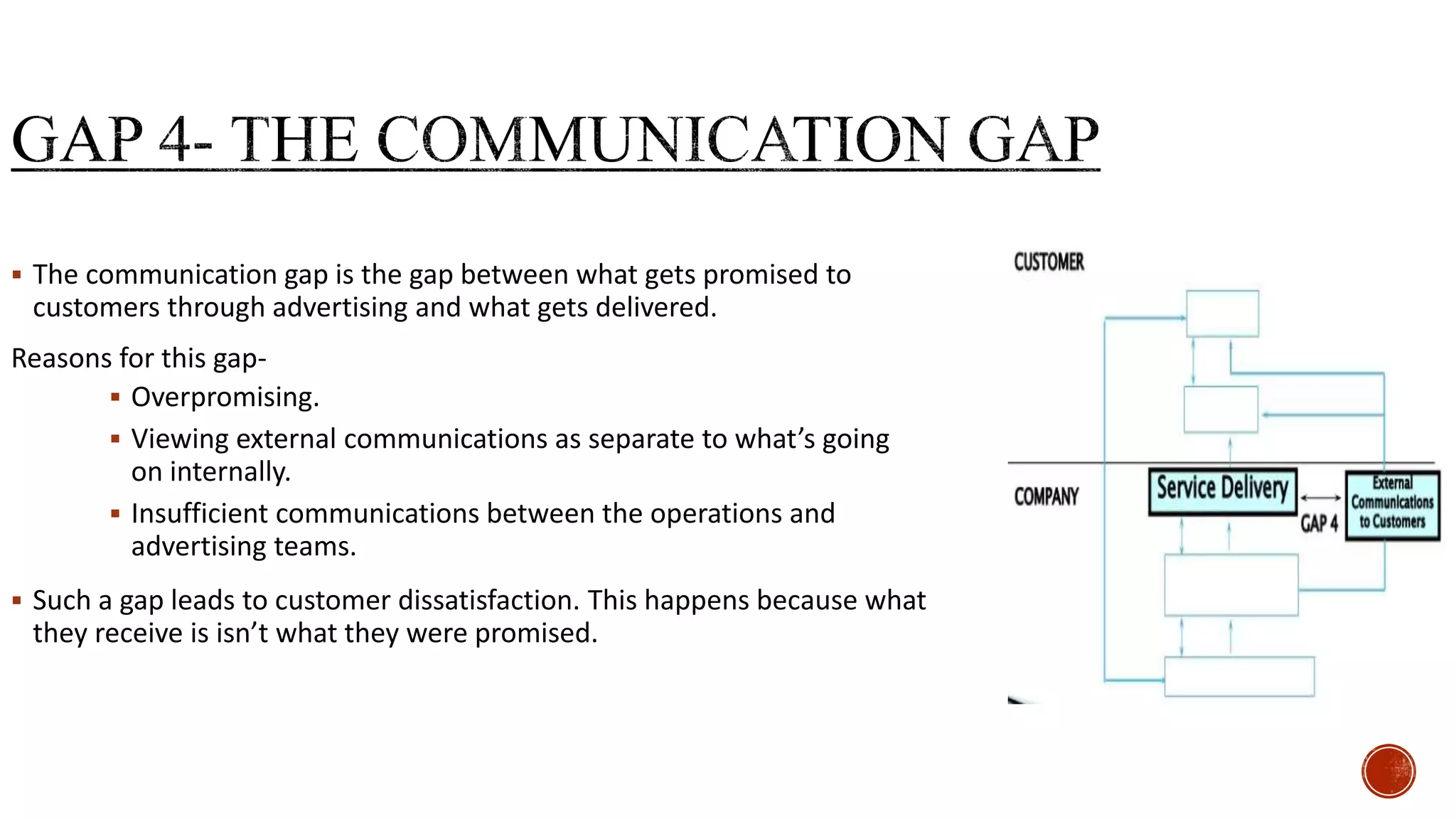
 The communication gap is the gap between what gets promised to
customers through advertising and what gets delivered.
Reasons for this gap-
 Overpromising.
 Viewing external communications as separate to what’s going
on internally.
 Insufficient communications between the operations and
advertising teams.
 Such a gap leads to customer dissatisfaction. This happens because what
they receive is isn’t what they were promised.
 The customer gap is the difference between customer expectations and customer
perceptions.
 Customer gap can happen because of one of the other four gaps
 This gap occurs because
 customers do not always understand what the service has done for them or
 they misinterpret the service quality.
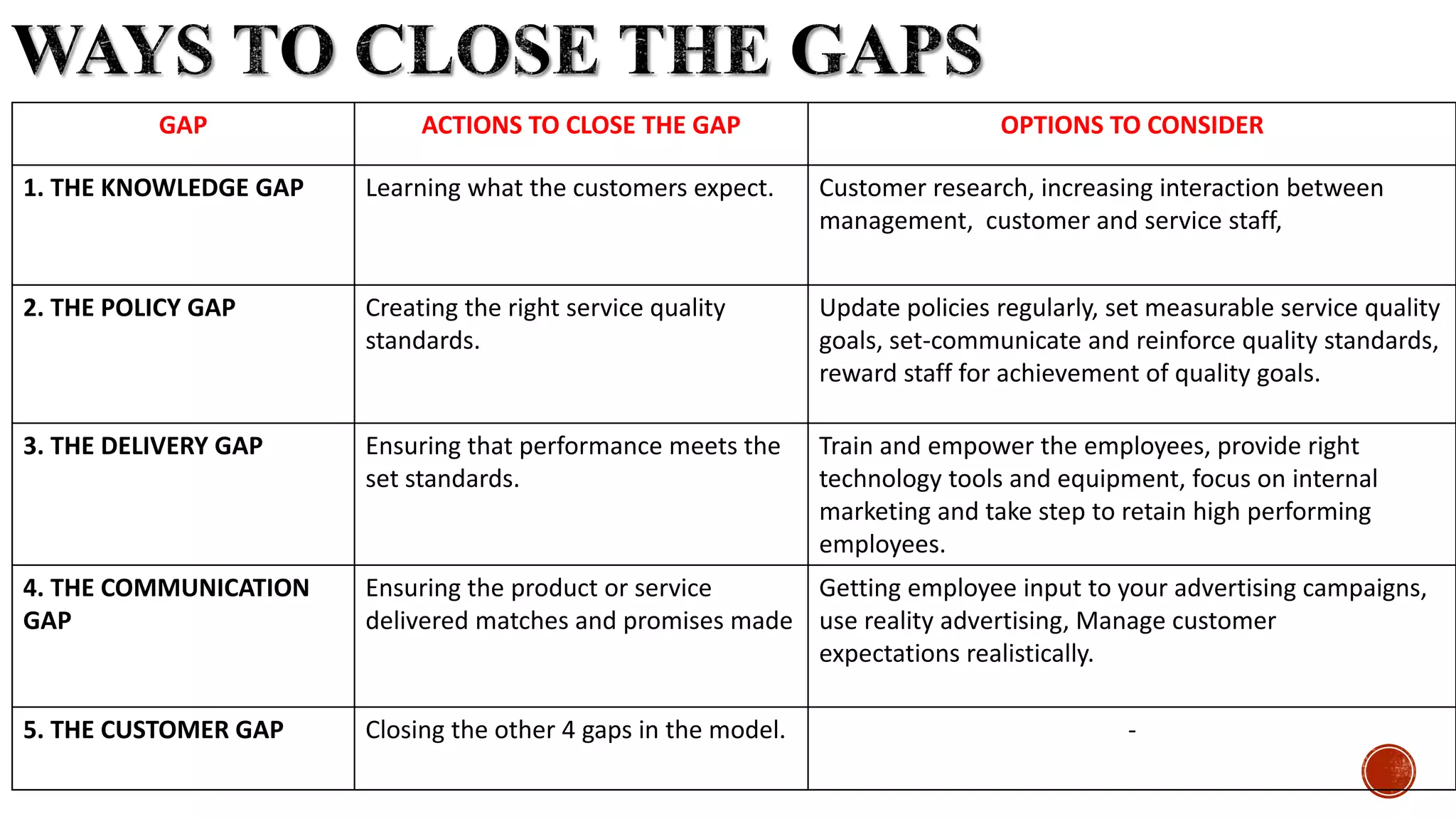
GAP ACTIONS TO CLOSE THE GAP OPTIONS TO CONSIDER
1. THE KNOWLEDGE GAP Learning what the customers expect. Customer research, increasing interaction between
management, customer and service staff,
2. THE POLICY GAP Creating the right service quality
standards.
Update policies regularly, set measurable service quality
goals, set-communicate and reinforce quality standards,
reward staff for achievement of quality goals.
3. THE DELIVERY GAP Ensuring that performance meets the
set standards.
Train and empower the employees, provide right
technology tools and equipment, focus on internal
marketing and take step to retain high performing
employees.
4. THE COMMUNICATION
GAP
Ensuring the product or service
delivered matches and promises made
Getting employee input to your advertising campaigns,
use reality advertising, Manage customer
expectations realistically.
5. THE CUSTOMER GAP Closing the other 4 gaps in the model. -
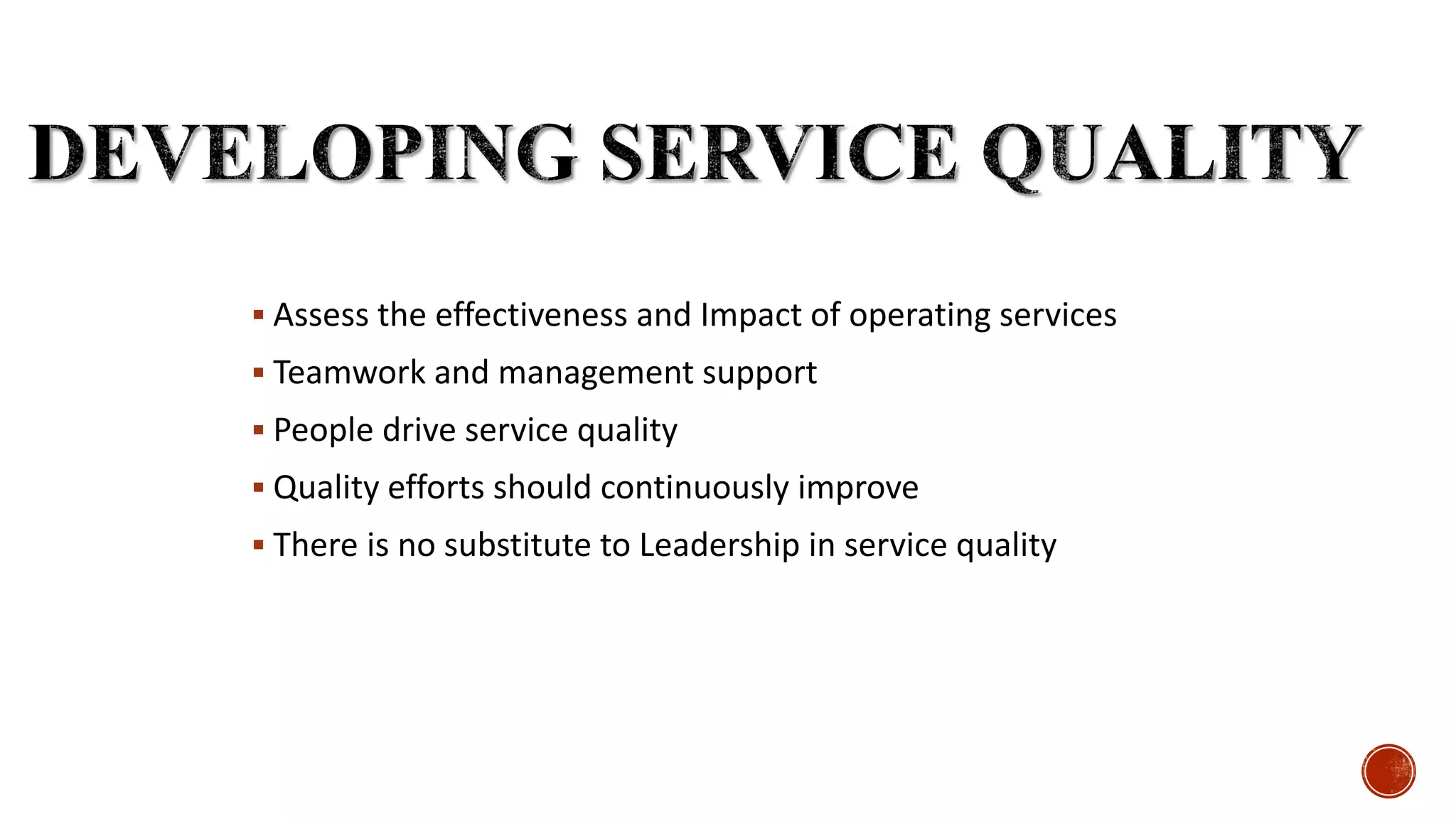
 Assess the effectiveness and Impact of operating services
 Teamwork and management support
 People drive service quality
 Quality efforts should continuously improve
 There is no substitute to Leadership in service quality
 Customer defined standards
 Benchmarking
 Identify customer perception
 Lost customer analysis
 Critical incident study
Service quality

Service quality

  • 1.
  • 2.
     Quality refersto totality of features & characteristics of a product or a service that bear on its ability to satisfy needs.  An assessment of how well a delivered service conforms to the client's expectations is defined as Service Quality.  Service business operators often assess the service quality provided to their customers in order to o To improve their services o To quickly identify problems, and o To better assess client satisfaction.
  • 3.
     Lower costs Higher Price  Higher Customer Loyalty  Higher market share  Loyal Internal Customer  Higher Return on Investment
  • 4.
    It is aservice quality framework developed in 80’s by Zeithaml, Parsuraman and Berry, aiming at measuring the scale of quality in service sectors. It is designed to capture consumer expectations and perceptions of a service along the following five dimensions that are believed to represent service quality- responsiveness, assurance, tangible, empathy, reliability
  • 5.
    1. Responsiveness- thewillingness to help customers and provide prompt service 2. Assurance- the knowledge and courtesy of employees and their ability to convey trust and confidence 3. Tangible- the appearance of physical facilities, equipment, personnel and communication material 4. Empathy- the provision of caring, individualized attention to the customer 5. Reliability- the ability to perform the promised service dependably and accurately
  • 6.
     Businesses usethe SERVQUAL instrument (i.e. questionnaire) to measure potential service quality problems and the model of service quality to help diagnose possible causes of the problem.  The model of service quality is built on the expectancy-confirmation paradigm  According to the paradigm consumers perceive quality in terms of their perceptions of how well a given service delivery meets their expectations of that delivery.  Thus, service quality can be conceptualised as a simple equation: SQ=P=E Where SQ is service quality P is individual’s perceptions of a given service delivery E is individual’s expectation’s of a given service delivery When customer expectations are greater than their perceptions of received delivery, service quality is deemed low. When perceptions exceed expectations then service quality is high.
  • 7.
     The modelshows the five major satisfaction gaps that organizations must address when seeking to meet customer expectations. The model was first proposed by A. Parasuraman, Valarie Zeithaml, and Leonard L. Berry in 1985.  In the Gap Model of Service Quality, customer satisfaction is largely a function of perception. If the customer perceives that the service meets their expectations then they will be satisfied. If not, they’ll be dissatisfied. If they are dissatisfied then it will be because of one of the five customer service “gaps”.
  • 8.
     The knowledgegap is the difference between the customer’s expectations of the service & the company’s provision of that service.  Essentially the gap arises because the management does not know exactly what the customer’s expect. This can occur as a result of insufficient research or communication failures. Reason’s this gap arises-  Lack of management and customer interaction.  Lack of communication between service employees and management.  Insufficient market research.  Insufficient relationship focus.  Failure to listen to customer complaints.
  • 9.
     The policygap is the difference between management’s understanding of the customer needs and the translation of that understanding into service delivery policies and standards. Reasons this gap arises-  Lack of customer service standards.  Poorly defined service levels.  Failure to regularly update service level standards.  This gap causes the customer to seek a better service else where.
  • 10.
     Also knownas the delivery gap, it is the difference between service delivery policies and standards and the actual delivery of the service. Reasons this gap arises-  Deficiencies in human resources policies.  Failure to match supply to demand.  Employee lack of knowledge of the product.  Lack of cohesive teamwork to deliver the product or service.
  • 11.
     The communicationgap is the gap between what gets promised to customers through advertising and what gets delivered. Reasons for this gap-  Overpromising.  Viewing external communications as separate to what’s going on internally.  Insufficient communications between the operations and advertising teams.  Such a gap leads to customer dissatisfaction. This happens because what they receive is isn’t what they were promised.
  • 12.
     The customergap is the difference between customer expectations and customer perceptions.  Customer gap can happen because of one of the other four gaps  This gap occurs because  customers do not always understand what the service has done for them or  they misinterpret the service quality.
  • 13.
    GAP ACTIONS TOCLOSE THE GAP OPTIONS TO CONSIDER 1. THE KNOWLEDGE GAP Learning what the customers expect. Customer research, increasing interaction between management, customer and service staff, 2. THE POLICY GAP Creating the right service quality standards. Update policies regularly, set measurable service quality goals, set-communicate and reinforce quality standards, reward staff for achievement of quality goals. 3. THE DELIVERY GAP Ensuring that performance meets the set standards. Train and empower the employees, provide right technology tools and equipment, focus on internal marketing and take step to retain high performing employees. 4. THE COMMUNICATION GAP Ensuring the product or service delivered matches and promises made Getting employee input to your advertising campaigns, use reality advertising, Manage customer expectations realistically. 5. THE CUSTOMER GAP Closing the other 4 gaps in the model. -
  • 14.
     Assess theeffectiveness and Impact of operating services  Teamwork and management support  People drive service quality  Quality efforts should continuously improve  There is no substitute to Leadership in service quality
  • 15.
     Customer definedstandards  Benchmarking  Identify customer perception  Lost customer analysis  Critical incident study

Editor's Notes

  • #9 E.g. : XYZ Events Ltd organised a wedding with the usual white and blue decorations, when the customer had expected something new and original.
  • #10 Example- If Amazon Prime Video were to suffer from this gap, then it could be that they offer all the right jokes but the streaming quality level isn’t enough.
  • #11 Example- Supply not matching the demand in restaurant.
  • #12 In the worst cases, such gaps may cause the customer to turn suppliers. Example- A company commercialising slimming products boasts that customers may lose up to 4-5 kgs/week. But they do not specify that a strict diet and regular exercise must accompany the treatment for it to have the desired effect.
  • #13 Example-