Download as PDF, PPTX

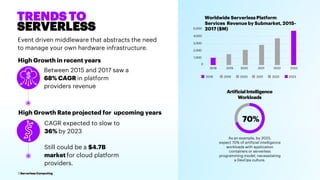
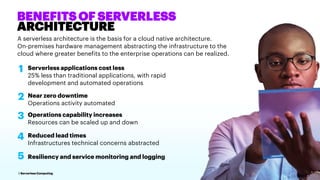
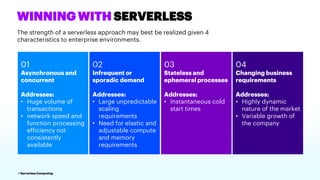
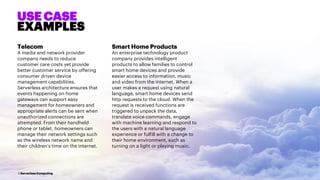
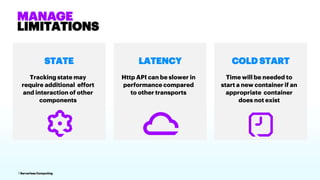
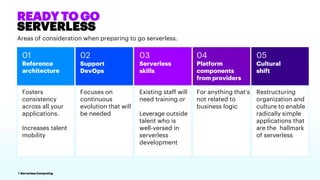

Serverless computing is emerging as a key component of hybrid computing strategies, experiencing significant growth and offering various benefits such as reduced costs and increased scalability. The trend indicates that by 2023, a substantial portion of artificial intelligence workloads will utilize serverless architectures, necessitating a cultural shift towards DevOps. Despite its advantages, serverless computing comes with limitations such as state tracking challenges and potential latency issues, requiring careful planning and skill development for successful implementation.


