SEROB KHACHATRYAN,
EXECUTIVE DIRECTOR, CHILDREN OF ARMENIA FUND
Schools as Agents of
Social Change
WHO WE ARE
• Children of Armenia Fund was founded in Armenia in 2003
by Dr. Garo Armen, a Diasporan Armenian from the US.
• COAF operates in 11 neighboring villages located in
Armenia.
COAF funds are raised through:
• Annual fundraising gala events in the US and Armenia
• Grants from international organizations
• Support from corporations and businesses.
OUR VISION AND BELIEF
• COAF’s vision is to create an exemplary holistic
model for rural development, which can be
replicated in other regions and communities
of Armenia
• COAF believes in holistic development rather
than fragmented development
• COAF considers human/social development as
the key for making a difference in rural
communities
OUR PROGRAMS
• Infrastructure renovation
• Health
• Education
• Child and Family Services
• Economic Development
WHY HEALTH AND EDUCATION
ARE IMPORTANT FOR COAF
In retrospect, the 20th century will be
remembered as an era when the global
community dared to see the well being of the
human race as an achievable goal, rather than
one marked by its political conflicts or
technological inventions.
Arnold Toynbee,
British Historian
OUR APPROACH
1. Schools as transmitters of innovative knowledge.
2. Children as resources for change.
3. Moving people. ED-MED as the most growing
industry in 21st century. ( Dan Pink, 2012).
“… to move people a large distance and for the long
term, we have to create the conditions where
they can move themselves.” Larry Ferlazzo, Social
Studies Teacher, Sacramento, USA
CHALLENGES
• Lack of water and poor sanitary-hygienic
conditions.
• Unhealthy lifestyles.
• Absence of doctors at schools.
• Academic focus of National school curriculum.
• Lack of school-family cooperation.
OUR STEPS
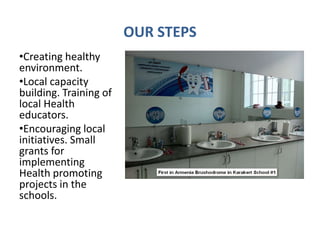
•Creating healthy
environment.
•Local capacity
building. Training of
local Health
educators.
•Encouraging local
initiatives. Small
grants for
implementing
Health promoting
projects in the
schools.
OUR STEPS
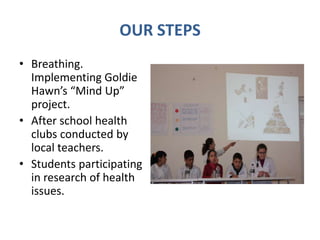
• Breathing.
Implementing Goldie
Hawn’s “Mind Up”
project.
• After school health
clubs conducted by
local teachers.
• Students participating
in research of health
issues.
OUR STEPS
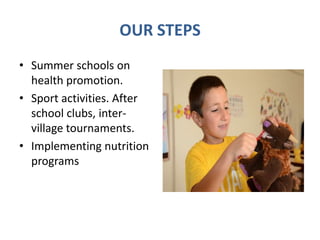
• Summer schools on
health promotion.
• Sport activities. After
school clubs, inter-
village tournaments.
• Implementing nutrition
programs
OUR STEPS
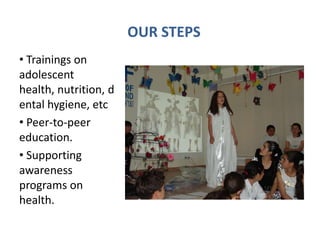
• Trainings on
adolescent
health, nutrition, d
ental hygiene, etc
• Peer-to-peer
education.
• Supporting
awareness
programs on
health.
OUR STEPS
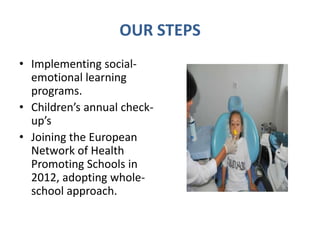
• Implementing social-
emotional learning
programs.
• Children’s annual check-
up’s
• Joining the European
Network of Health
Promoting Schools in
2012, adopting whole-
school approach.
Thank you.
www.coafkids.org

Serob webinar serobfinal

  • 1.
    SEROB KHACHATRYAN, EXECUTIVE DIRECTOR,CHILDREN OF ARMENIA FUND Schools as Agents of Social Change
  • 2.
    WHO WE ARE •Children of Armenia Fund was founded in Armenia in 2003 by Dr. Garo Armen, a Diasporan Armenian from the US. • COAF operates in 11 neighboring villages located in Armenia. COAF funds are raised through: • Annual fundraising gala events in the US and Armenia • Grants from international organizations • Support from corporations and businesses.
  • 3.
    OUR VISION ANDBELIEF • COAF’s vision is to create an exemplary holistic model for rural development, which can be replicated in other regions and communities of Armenia • COAF believes in holistic development rather than fragmented development • COAF considers human/social development as the key for making a difference in rural communities
  • 4.
    OUR PROGRAMS • Infrastructurerenovation • Health • Education • Child and Family Services • Economic Development
  • 5.
    WHY HEALTH ANDEDUCATION ARE IMPORTANT FOR COAF In retrospect, the 20th century will be remembered as an era when the global community dared to see the well being of the human race as an achievable goal, rather than one marked by its political conflicts or technological inventions. Arnold Toynbee, British Historian
  • 6.
    OUR APPROACH 1. Schoolsas transmitters of innovative knowledge. 2. Children as resources for change. 3. Moving people. ED-MED as the most growing industry in 21st century. ( Dan Pink, 2012). “… to move people a large distance and for the long term, we have to create the conditions where they can move themselves.” Larry Ferlazzo, Social Studies Teacher, Sacramento, USA
  • 7.
    CHALLENGES • Lack ofwater and poor sanitary-hygienic conditions. • Unhealthy lifestyles. • Absence of doctors at schools. • Academic focus of National school curriculum. • Lack of school-family cooperation.
  • 9.
    OUR STEPS •Creating healthy environment. •Localcapacity building. Training of local Health educators. •Encouraging local initiatives. Small grants for implementing Health promoting projects in the schools.
  • 10.
    OUR STEPS • Breathing. ImplementingGoldie Hawn’s “Mind Up” project. • After school health clubs conducted by local teachers. • Students participating in research of health issues.
  • 11.
    OUR STEPS • Summerschools on health promotion. • Sport activities. After school clubs, inter- village tournaments. • Implementing nutrition programs
  • 12.
    OUR STEPS • Trainingson adolescent health, nutrition, d ental hygiene, etc • Peer-to-peer education. • Supporting awareness programs on health.
  • 13.
    OUR STEPS • Implementingsocial- emotional learning programs. • Children’s annual check- up’s • Joining the European Network of Health Promoting Schools in 2012, adopting whole- school approach.
  • 14.

Editor's Notes

  • #9 One of the key points is promoting healthy schools concept for having a healthy physical, psychological and social environment, promoting health screenings (annual physical check-ups, vision screening, dental care etc) and also promoting health education. Currently due to psycho-social cluster-wide project we have psychologists and social workers conducting outreach services, and working together with the health staff as a team..