Close your eyes. 
Tuesday, October 22, 13
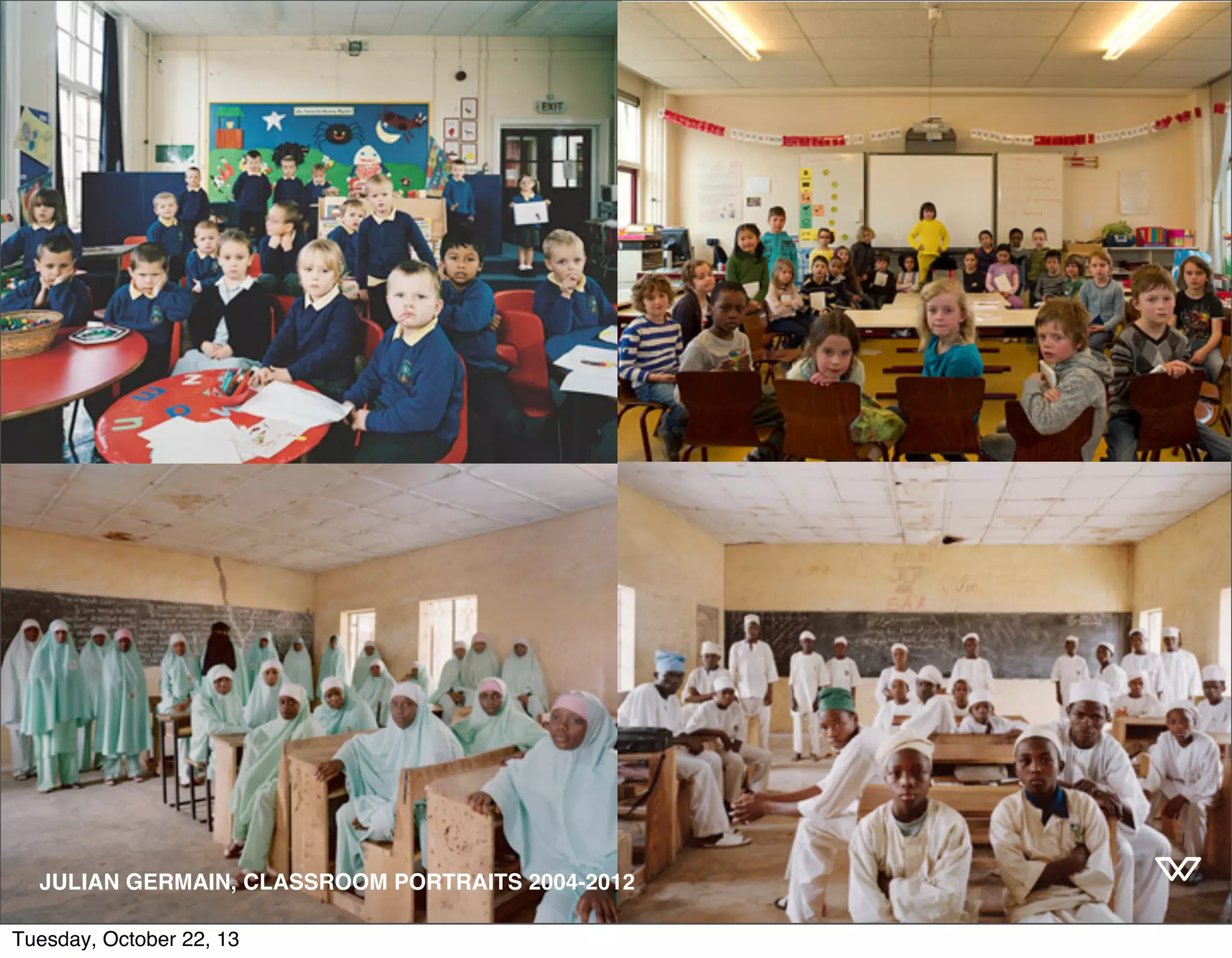
JULIAN GERMAIN, CLASSROOM PORTRAITS 2004-2012 
Tuesday, October 22, 13
Why is there a dichotomy 
between our 
environments and our 
experiences? 
Tuesday, October 22, 13
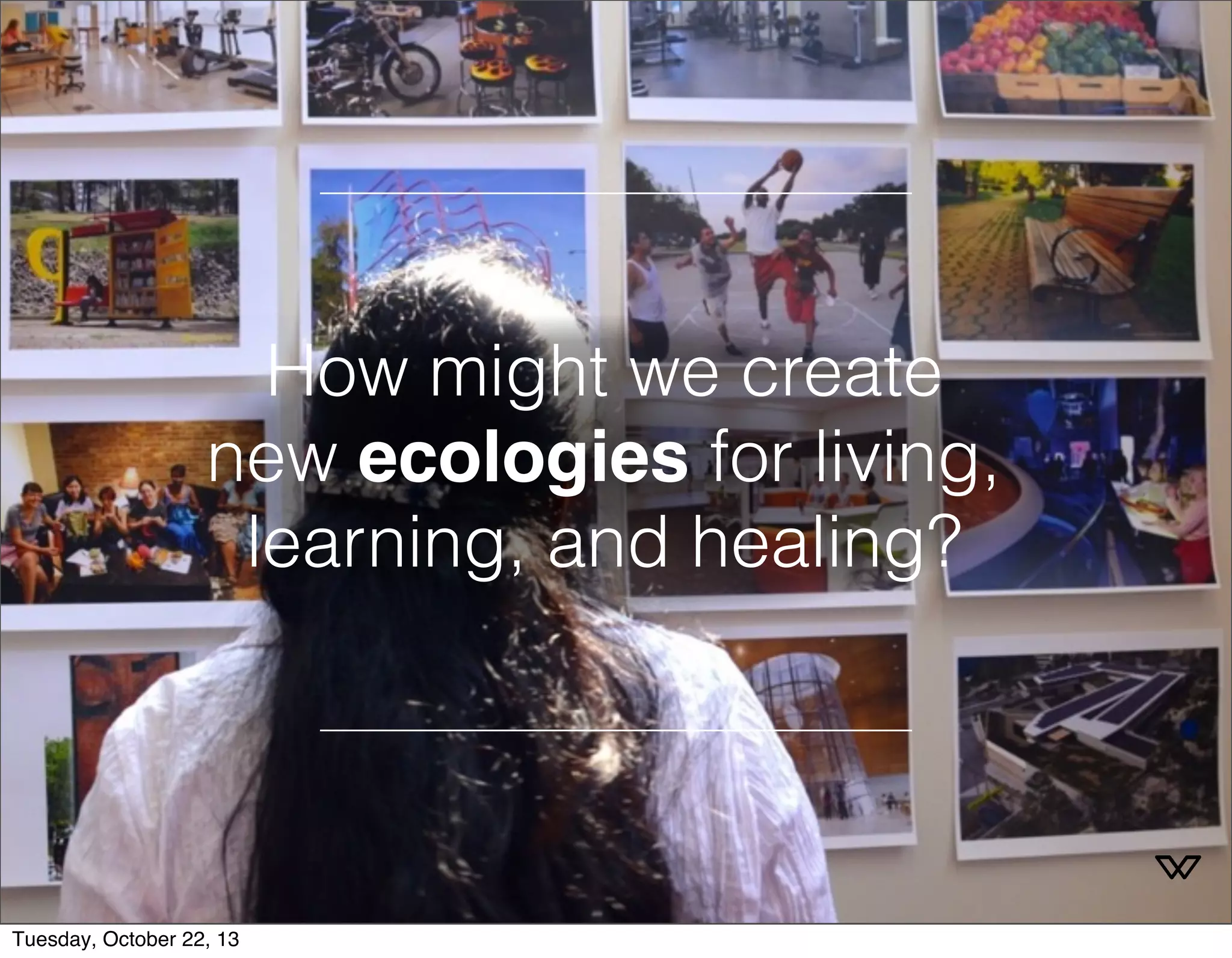
How might we create 
new ecologies for living, 
learning, and healing? 
Tuesday, October 22, 13
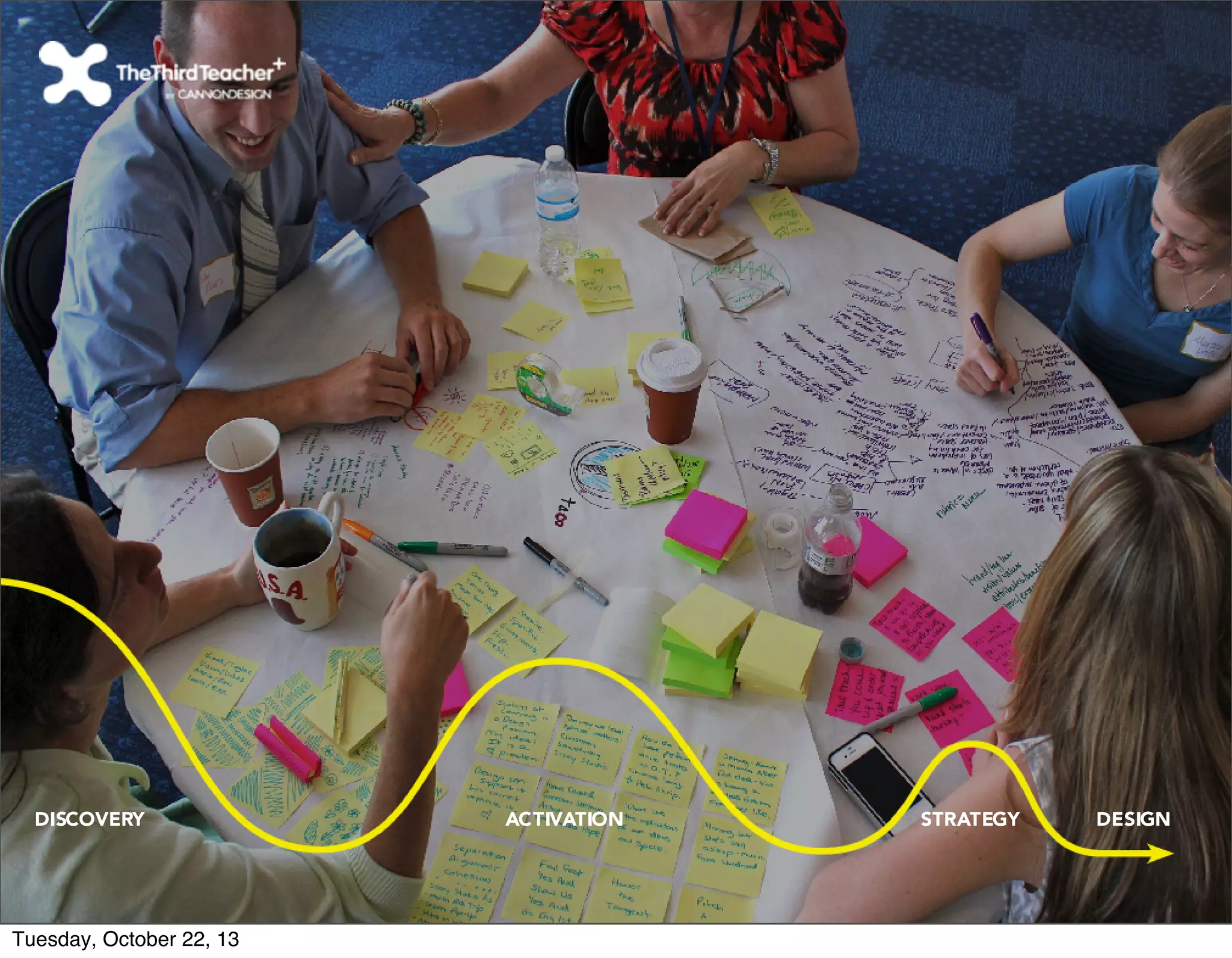
DISCOVERY ACTIVATION STRATEGY DESIGN 
Tuesday, October 22, 13
Develop deep empathy. 
Focus on feelings to understand the 
perspectives & stressors that impact 
a child’s world. 
Tuesday, October 22, 13
THE WELL CONFERENCE 
Vulnerable populations have 
decreased ability to articulate, 
control, & cope with stress. 
It is our responsibility to mitigate 
or eliminate environmental 
stresses by design. 
Stressors: 
cataclysmic events 
stressful life events 
daily stressors 
ambient stressors 
Tuesday, October 22, 13
"Research indicates that stress from a variety 
of sources — including crowded and chaotic 
home and classroom environments, for 
example, or problems with family or peers — 
impedes learning 
...working to reduce inappropriate 
environmental stresses facing young 
children would not only improve their overall 
well being, but also improve their ability to 
learn in school.” 
James A. Griffin, Ph.D., of the Child Development and Behavior Branch 
at the Eunice Kennedy Shriver National Institute of Child Health and Human Development (NICHD) 
Tuesday, October 22, 13
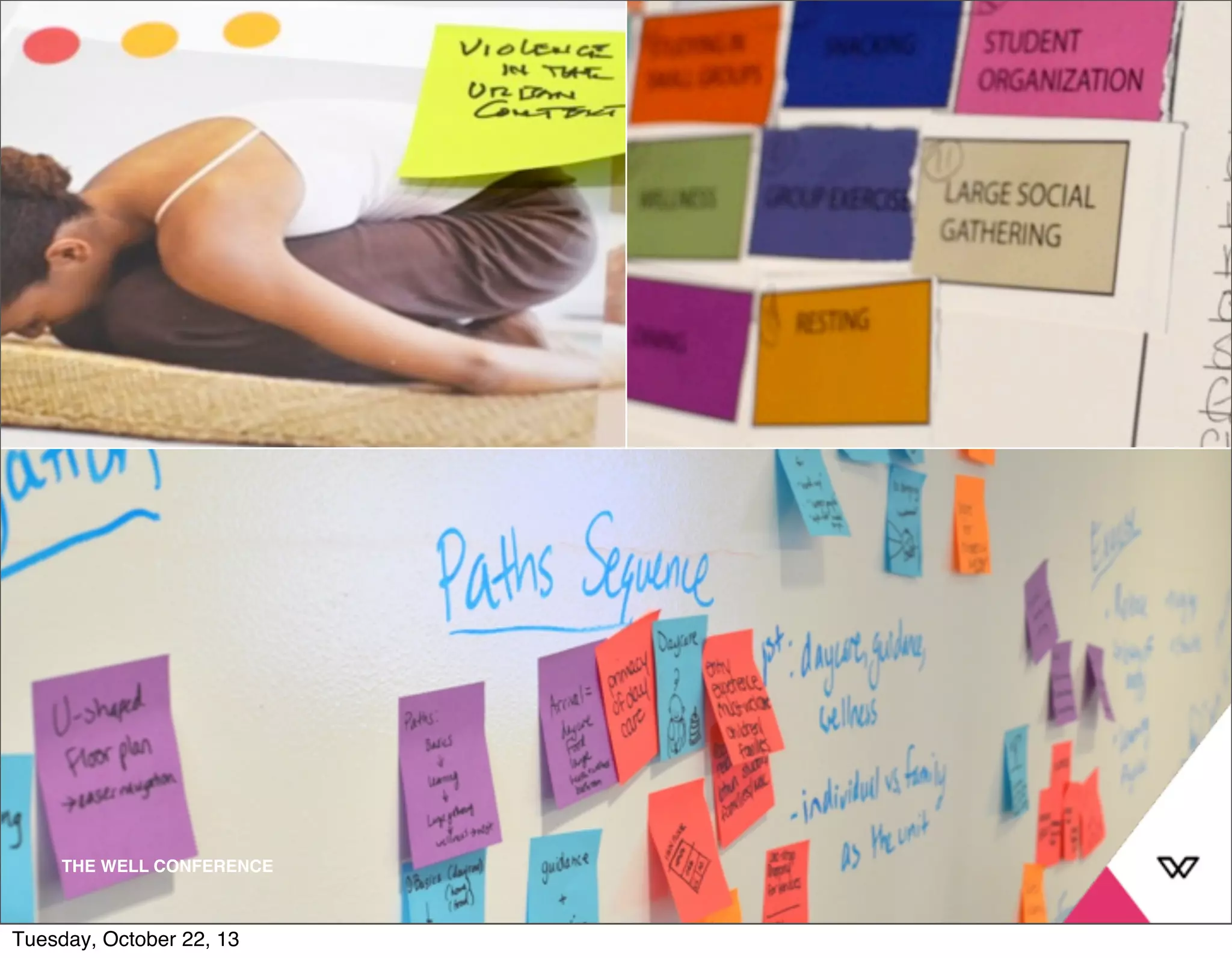
What factors affect a student’s 
life outside of school? 
Outside of the hospital? 
MALCOM X COLLEGE, CHICAGO 
Tuesday, October 22, 13
THE WELL CONFERENCE 
Tuesday, October 22, 13
Use new language. 
Shift your design from nouns to verbs 
and you can imagine new 
vocabularies of place. 
Tuesday, October 22, 13
“We’re going to have a baby.” 
“We’re going to have burping, 
messing, cooing, crawling 
discovering, spilling, learning, 
growing, crying, loving...” 
Tuesday, October 22, 13
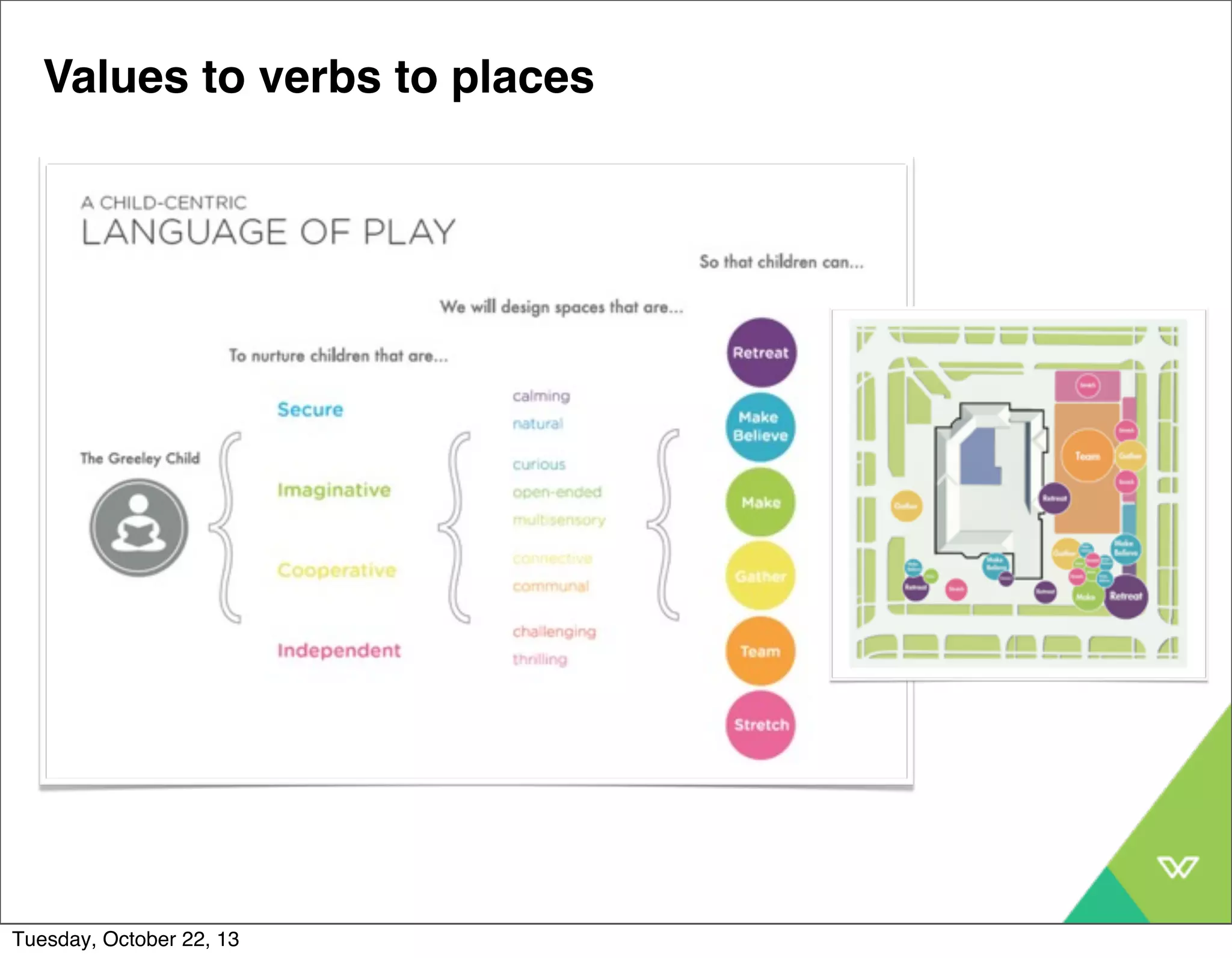
retreat 
make believe 
dig 
GREELEY SCHOOL, CHICAGOLAND 
gather 
socialize 
chase 
leap 
bound 
stretch 
climb 
Tuesday, October 22, 13
Values to verbs to places 
Tuesday, October 22, 13
Design the in-between. 
Create more seamless experiences by 
designing interstitial environments that 
cultivate connection & enhance culture. 
Tuesday, October 22, 13
We’re both pretty bad at corridors. 
healing? learning? 
Tuesday, October 22, 13
The connective tissue of our 
institutions is broken. 
We inadvertently thwart our goals of security, connection, & efficiency. 
47% 
the highest incidents of reported school bullying 
happened in hallways 
U.S. Department of Education’s National Center for Education Statistics 
20-30% 
of our schools are dedicated to circulation 
THE WELL CONFERENCE 
Tuesday, October 22, 13
storytelling 
transitioning 
connecting waiting 
CHIARAVALLE MONTESSORI, 
EVANSTON 
Tuesday, October 22, 13
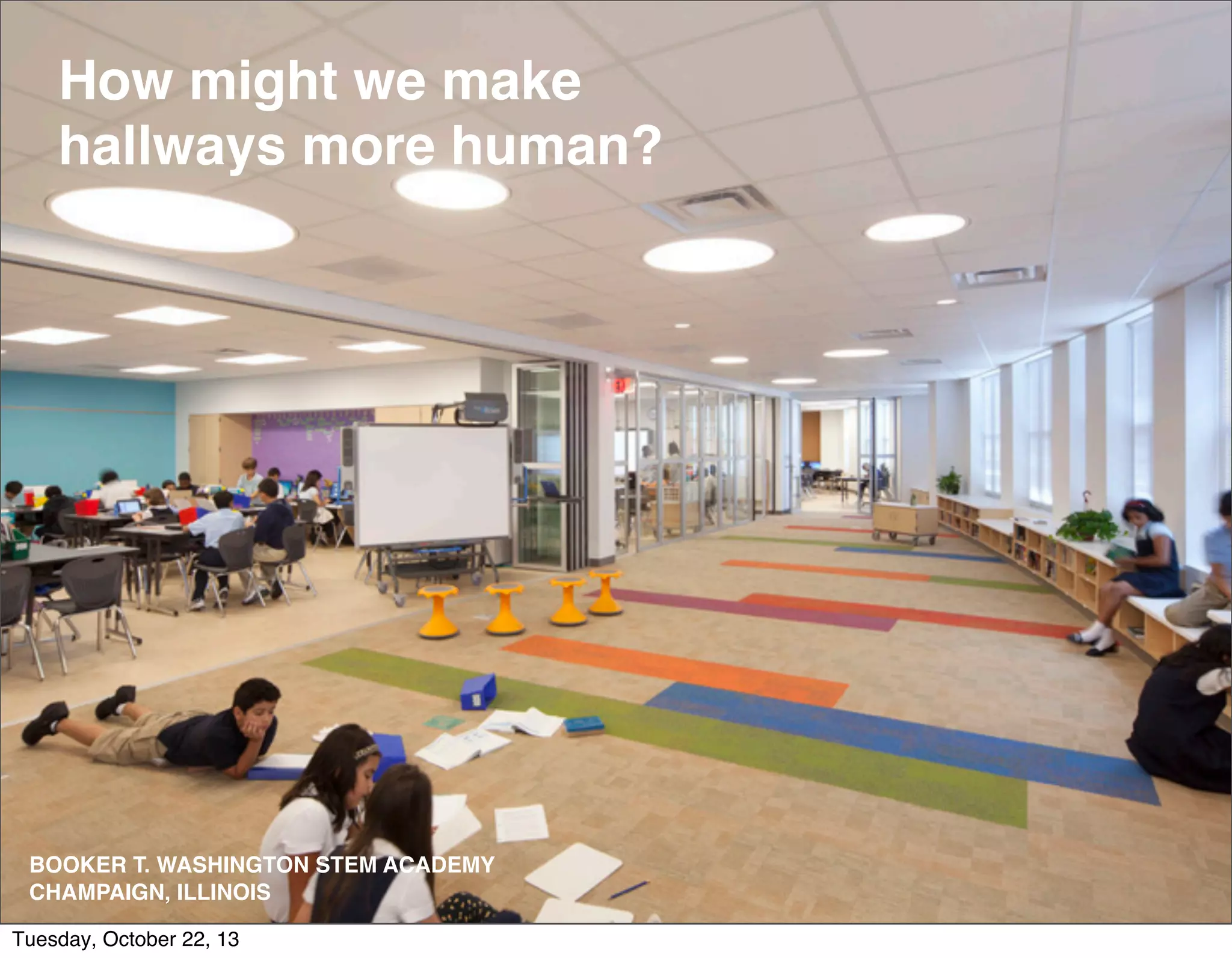
How might we make 
hallways more human? 
BOOKER T. WASHINGTON STEM ACADEMY 
CHAMPAIGN, ILLINOIS 
Tuesday, October 22, 13
Create safe spaces. 
Build ownership and a sense of 
personal space institutional & 
shared settings. 
Tuesday, October 22, 13
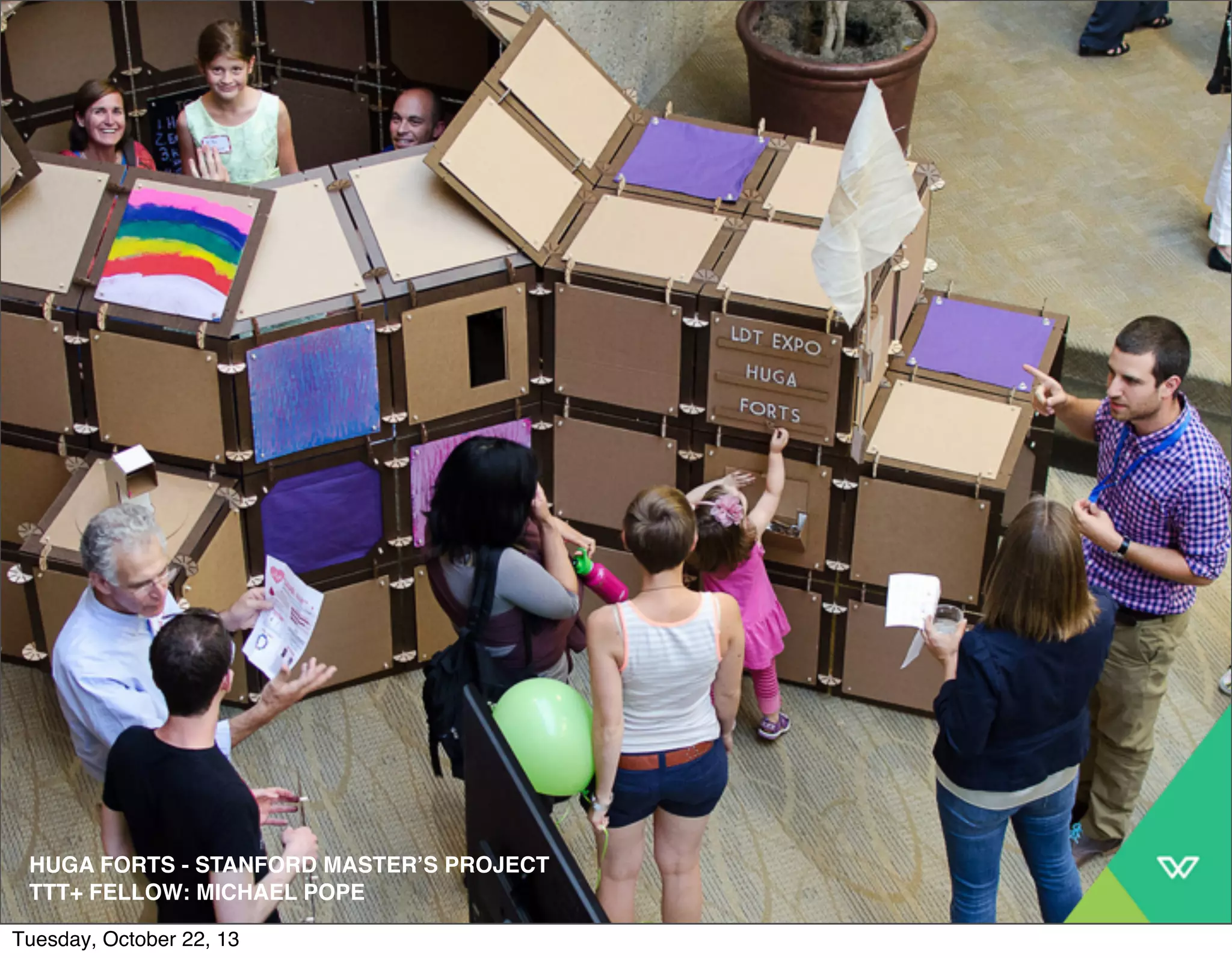
HUGA FORTS - STANFORD MASTER’S PROJECT 
TTT+ FELLOW: MICHAEL POPE 
Tuesday, October 22, 13
Children seek places for refuge 
& imagination. 
Fort building can be a formative childhood 
experience. 
By constructing and governing 
their own worlds, children gain an 
experience of control over their 
environment that few other activities 
afford. 
Tuesday, October 22, 13
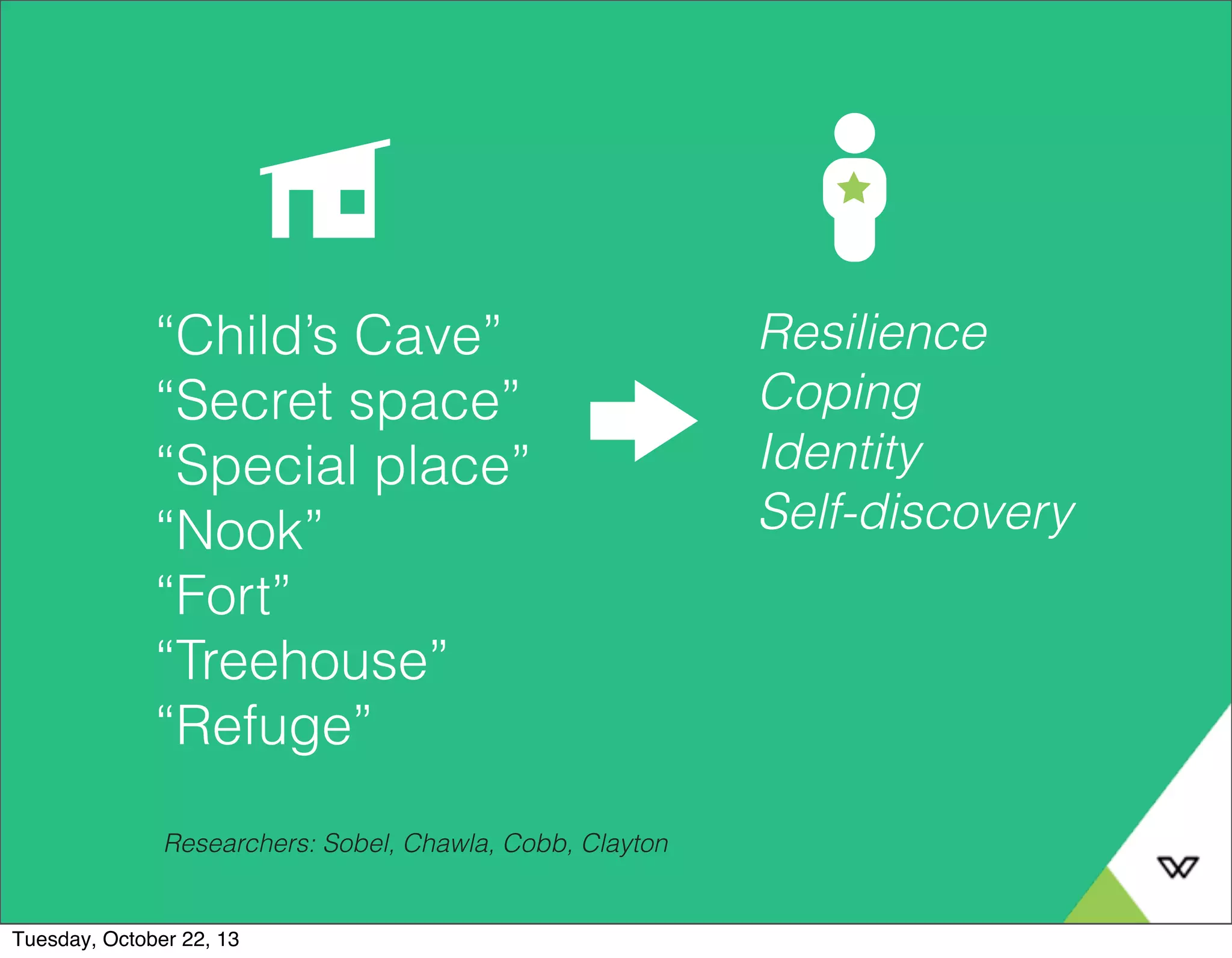
“Child’s Cave” 
“Secret space” 
“Special place” 
“Nook” 
“Fort” 
“Treehouse” 
“Refuge” 
Researchers: Sobel, Chawla, Cobb, Clayton 
Resilience 
Coping 
Identity 
Self-discovery 
Tuesday, October 22, 13
Empower children’s 
agency. 
Design in moments for children 
to understand, learn, & do. 
Tuesday, October 22, 13
JERRY THE BEAR 
DESIGN FOR AMERICA 
Tuesday, October 22, 13
Let’s work together to design a new 
ecology for children and families to 
learn & be well. 
learning wellness 
Tuesday, October 22, 13

New ecologies for learning + wellness

  • 1.
    Close your eyes. Tuesday, October 22, 13
  • 2.
    JULIAN GERMAIN, CLASSROOMPORTRAITS 2004-2012 Tuesday, October 22, 13
  • 3.
  • 4.
  • 5.
    Why is therea dichotomy between our environments and our experiences? Tuesday, October 22, 13
  • 6.
    How might wecreate new ecologies for living, learning, and healing? Tuesday, October 22, 13
  • 7.
  • 8.
    DISCOVERY ACTIVATION STRATEGYDESIGN Tuesday, October 22, 13
  • 9.
    Develop deep empathy. Focus on feelings to understand the perspectives & stressors that impact a child’s world. Tuesday, October 22, 13
  • 10.
    THE WELL CONFERENCE Vulnerable populations have decreased ability to articulate, control, & cope with stress. It is our responsibility to mitigate or eliminate environmental stresses by design. Stressors: cataclysmic events stressful life events daily stressors ambient stressors Tuesday, October 22, 13
  • 11.
    "Research indicates thatstress from a variety of sources — including crowded and chaotic home and classroom environments, for example, or problems with family or peers — impedes learning ...working to reduce inappropriate environmental stresses facing young children would not only improve their overall well being, but also improve their ability to learn in school.” James A. Griffin, Ph.D., of the Child Development and Behavior Branch at the Eunice Kennedy Shriver National Institute of Child Health and Human Development (NICHD) Tuesday, October 22, 13
  • 12.
    What factors affecta student’s life outside of school? Outside of the hospital? MALCOM X COLLEGE, CHICAGO Tuesday, October 22, 13
  • 13.
    THE WELL CONFERENCE Tuesday, October 22, 13
  • 14.
    Use new language. Shift your design from nouns to verbs and you can imagine new vocabularies of place. Tuesday, October 22, 13
  • 15.
    “We’re going tohave a baby.” “We’re going to have burping, messing, cooing, crawling discovering, spilling, learning, growing, crying, loving...” Tuesday, October 22, 13
  • 16.
    retreat make believe dig GREELEY SCHOOL, CHICAGOLAND gather socialize chase leap bound stretch climb Tuesday, October 22, 13
  • 17.
    Values to verbsto places Tuesday, October 22, 13
  • 18.
    Design the in-between. Create more seamless experiences by designing interstitial environments that cultivate connection & enhance culture. Tuesday, October 22, 13
  • 19.
    We’re both prettybad at corridors. healing? learning? Tuesday, October 22, 13
  • 20.
    The connective tissueof our institutions is broken. We inadvertently thwart our goals of security, connection, & efficiency. 47% the highest incidents of reported school bullying happened in hallways U.S. Department of Education’s National Center for Education Statistics 20-30% of our schools are dedicated to circulation THE WELL CONFERENCE Tuesday, October 22, 13
  • 21.
    storytelling transitioning connectingwaiting CHIARAVALLE MONTESSORI, EVANSTON Tuesday, October 22, 13
  • 22.
    How might wemake hallways more human? BOOKER T. WASHINGTON STEM ACADEMY CHAMPAIGN, ILLINOIS Tuesday, October 22, 13
  • 23.
    Create safe spaces. Build ownership and a sense of personal space institutional & shared settings. Tuesday, October 22, 13
  • 24.
    HUGA FORTS -STANFORD MASTER’S PROJECT TTT+ FELLOW: MICHAEL POPE Tuesday, October 22, 13
  • 25.
    Children seek placesfor refuge & imagination. Fort building can be a formative childhood experience. By constructing and governing their own worlds, children gain an experience of control over their environment that few other activities afford. Tuesday, October 22, 13
  • 26.
    “Child’s Cave” “Secretspace” “Special place” “Nook” “Fort” “Treehouse” “Refuge” Researchers: Sobel, Chawla, Cobb, Clayton Resilience Coping Identity Self-discovery Tuesday, October 22, 13
  • 27.
    Empower children’s agency. Design in moments for children to understand, learn, & do. Tuesday, October 22, 13
  • 28.
    JERRY THE BEAR DESIGN FOR AMERICA Tuesday, October 22, 13
  • 29.
    Let’s work togetherto design a new ecology for children and families to learn & be well. learning wellness Tuesday, October 22, 13