What is Technical SEO?
A Beginner’s Guide to Optimizing Your Website’s Backend
Introduction to Technical SEO
• What is Technical SEO?
• The process of optimizing a website's infrastructure to enhance its visibility
on search engines.
• Focuses on improving site speed, crawlability, and user experience.
• Importance: Ensures search engines can access, crawl, and index
your website efficiently.
Why Technical SEO Matters
• Key Points:
• Improves website rankings.
• Enhances user experience.
• Addresses potential technical issues that hinder search engines.
• Visuals: Chart showing increased traffic with optimized SEO.
Core Elements of Technical SEO
• Main Areas:
• Website Speed and Performance
• Mobile-Friendliness
• Secure Website (HTTPS)
• Crawlability and Indexability
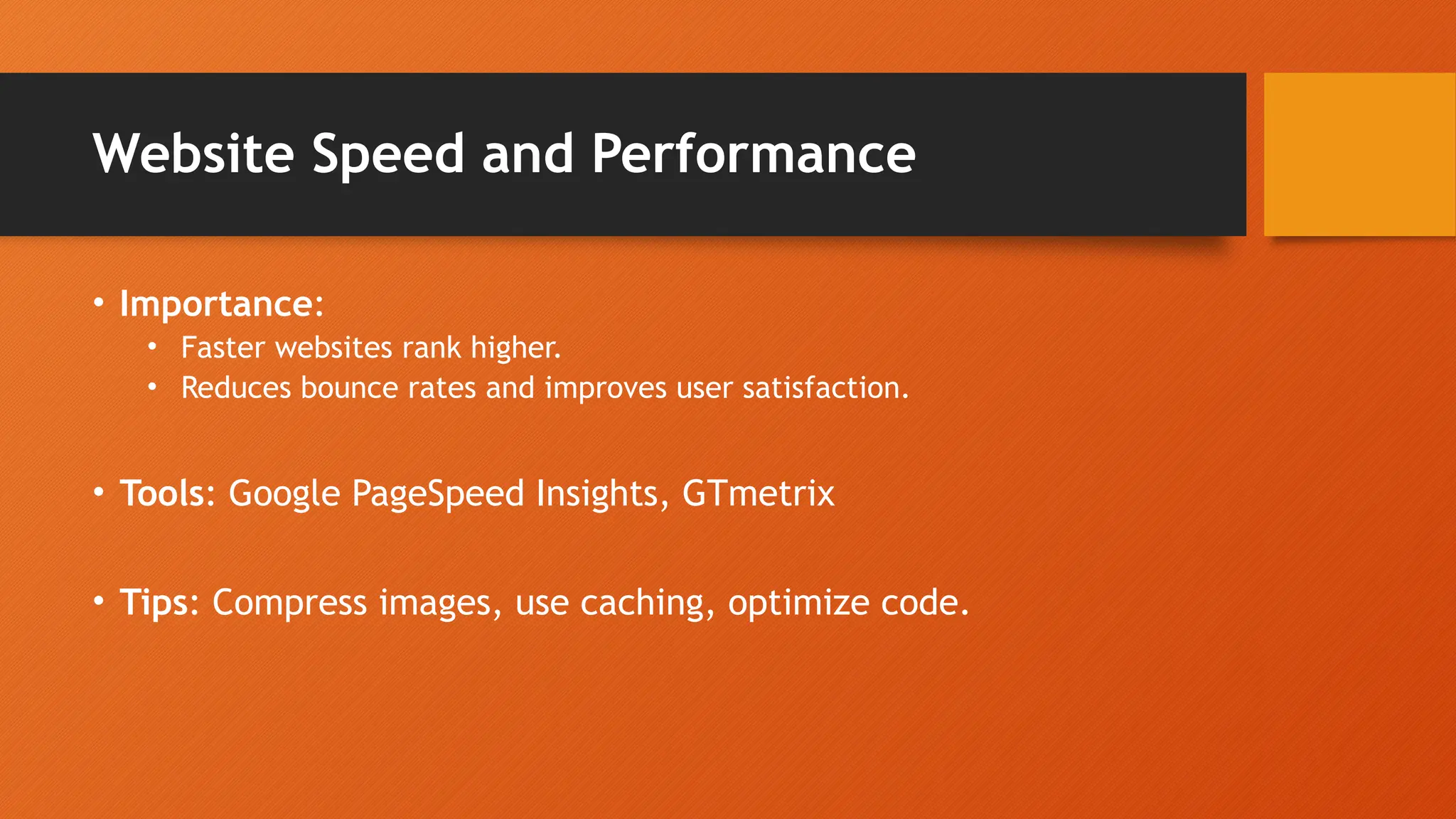
Website Speed and Performance
• Importance:
• Faster websites rank higher.
• Reduces bounce rates and improves user satisfaction.
• Tools: Google PageSpeed Insights, GTmetrix
• Tips: Compress images, use caching, optimize code.
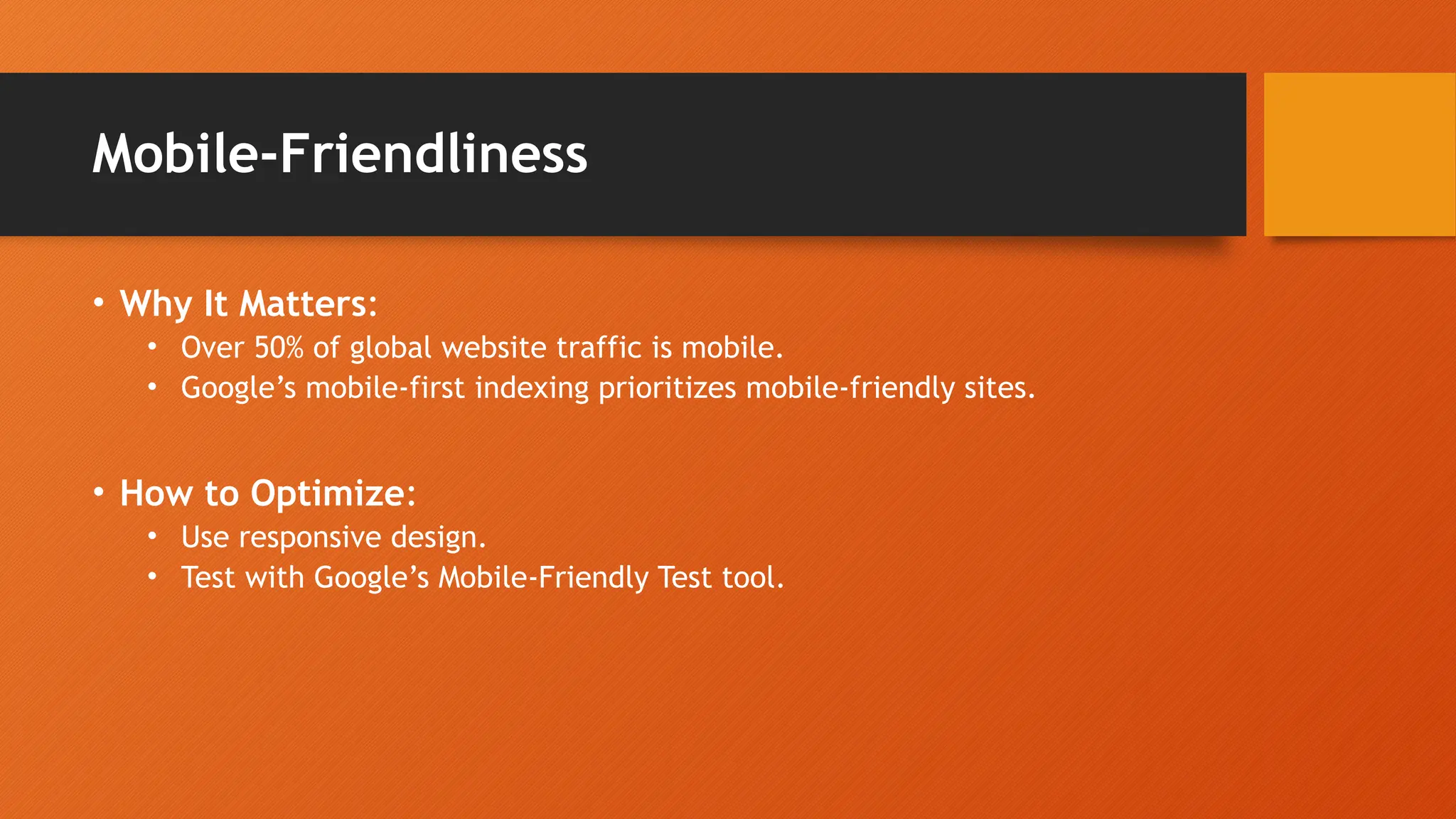
Mobile-Friendliness
• Why It Matters:
• Over 50% of global website traffic is mobile.
• Google’s mobile-first indexing prioritizes mobile-friendly sites.
• How to Optimize:
• Use responsive design.
• Test with Google’s Mobile-Friendly Test tool.
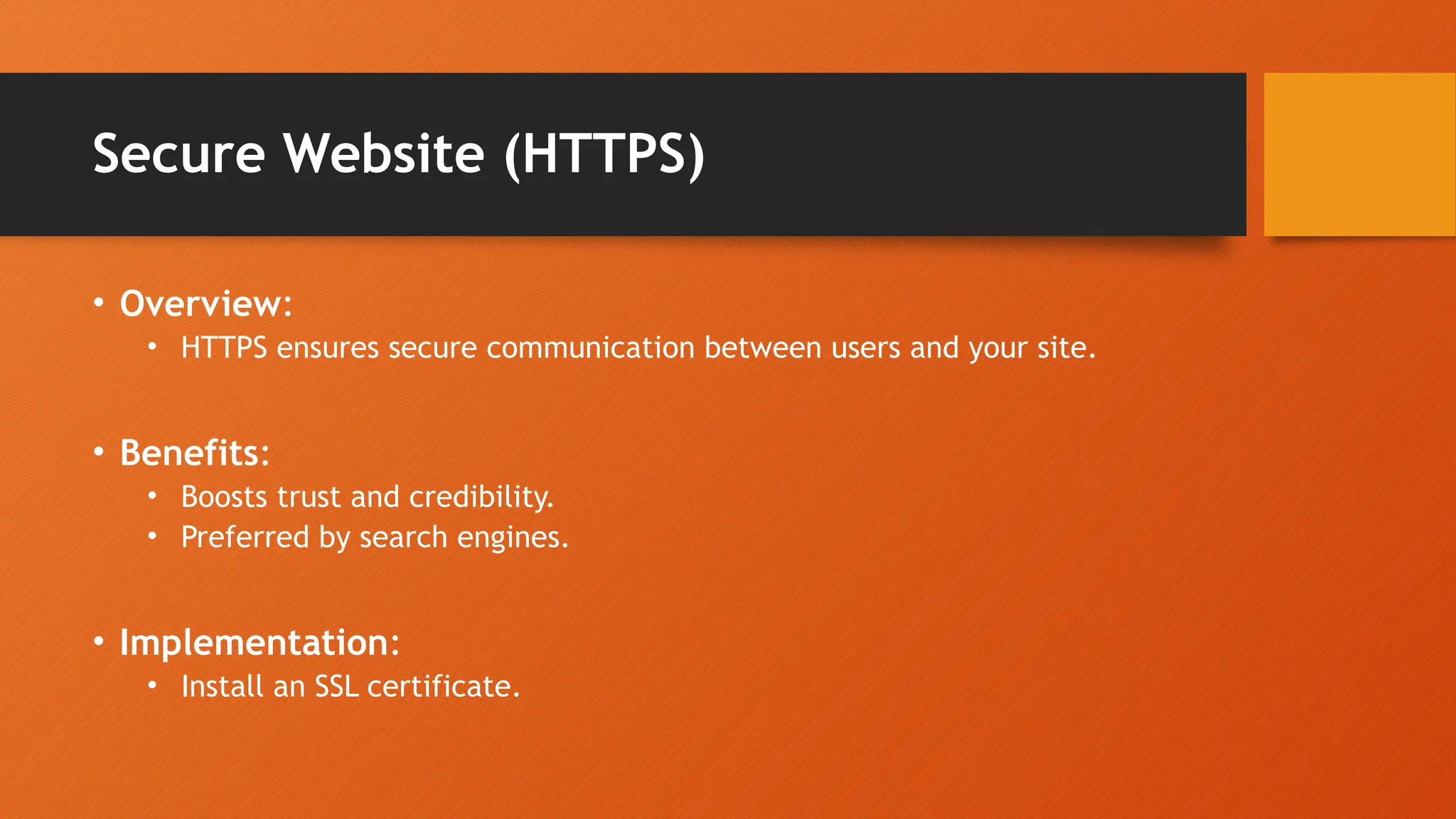
Secure Website (HTTPS)
• Overview:
• HTTPS ensures secure communication between users and your site.
• Benefits:
• Boosts trust and credibility.
• Preferred by search engines.
• Implementation:
• Install an SSL certificate.
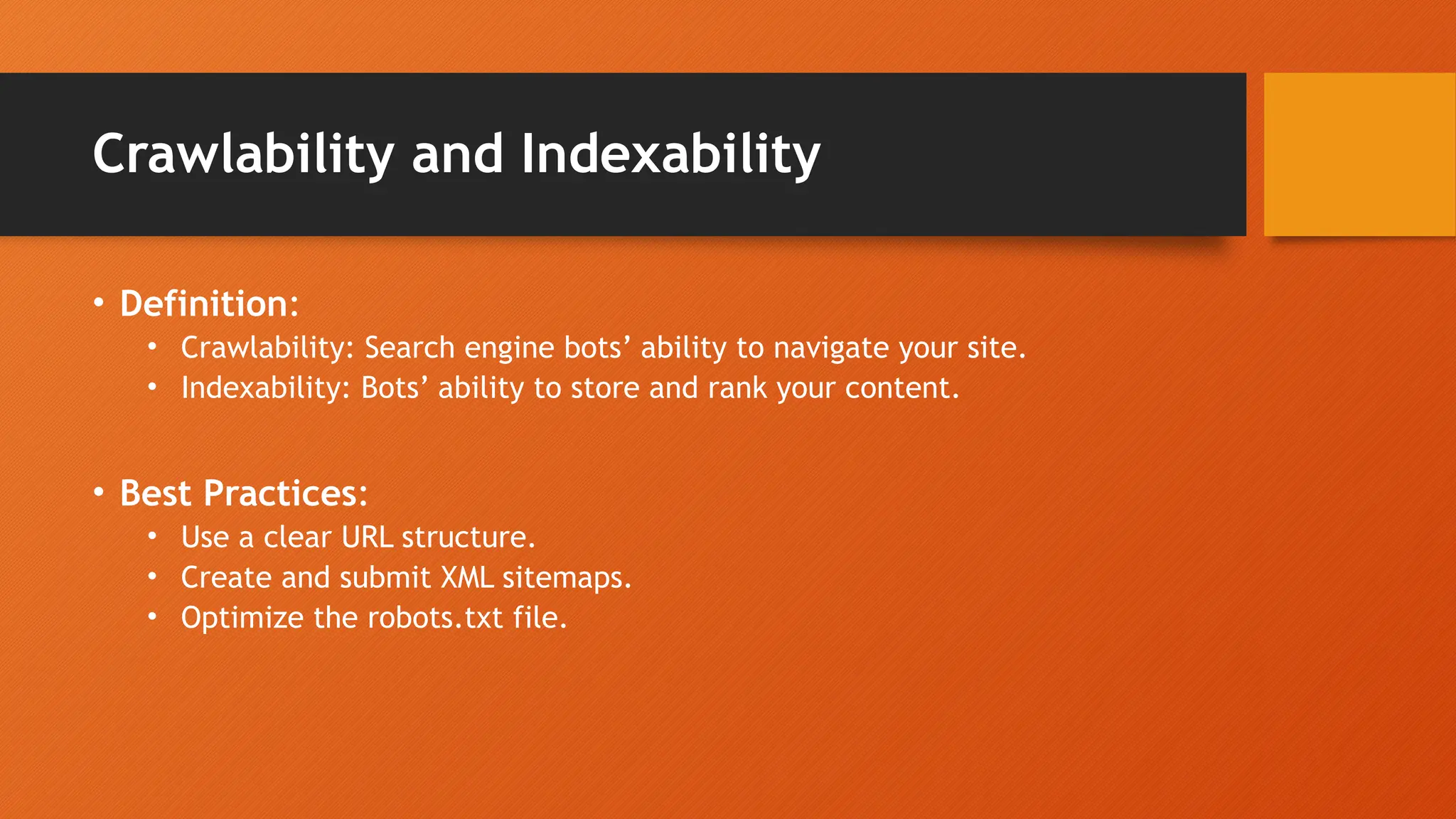
Crawlability and Indexability
• Definition:
• Crawlability: Search engine bots’ ability to navigate your site.
• Indexability: Bots’ ability to store and rank your content.
• Best Practices:
• Use a clear URL structure.
• Create and submit XML sitemaps.
• Optimize the robots.txt file.
Structured Data and Schema Markup
• What is Schema Markup?
• Code added to help search engines understand your content better.
• Benefits:
• Enhanced search result appearance with rich snippets.
• Increases click-through rates.
Conclusion and Next Steps
• Key Takeaways:
• Technical SEO is the foundation of a strong SEO strategy.
• Focus on speed, mobile optimization, security, and crawlability.
• Next Steps:
• Conduct a technical SEO audit.
• Regularly update and maintain your website.
• Call to Action: "Start optimizing your website today!"

What is Technical SEO? A Complete Guide for Beginners

  • 1.
    What is TechnicalSEO? A Beginner’s Guide to Optimizing Your Website’s Backend
  • 2.
    Introduction to TechnicalSEO • What is Technical SEO? • The process of optimizing a website's infrastructure to enhance its visibility on search engines. • Focuses on improving site speed, crawlability, and user experience. • Importance: Ensures search engines can access, crawl, and index your website efficiently.
  • 3.
    Why Technical SEOMatters • Key Points: • Improves website rankings. • Enhances user experience. • Addresses potential technical issues that hinder search engines. • Visuals: Chart showing increased traffic with optimized SEO.
  • 4.
    Core Elements ofTechnical SEO • Main Areas: • Website Speed and Performance • Mobile-Friendliness • Secure Website (HTTPS) • Crawlability and Indexability
  • 5.
    Website Speed andPerformance • Importance: • Faster websites rank higher. • Reduces bounce rates and improves user satisfaction. • Tools: Google PageSpeed Insights, GTmetrix • Tips: Compress images, use caching, optimize code.
  • 6.
    Mobile-Friendliness • Why ItMatters: • Over 50% of global website traffic is mobile. • Google’s mobile-first indexing prioritizes mobile-friendly sites. • How to Optimize: • Use responsive design. • Test with Google’s Mobile-Friendly Test tool.
  • 7.
    Secure Website (HTTPS) •Overview: • HTTPS ensures secure communication between users and your site. • Benefits: • Boosts trust and credibility. • Preferred by search engines. • Implementation: • Install an SSL certificate.
  • 8.
    Crawlability and Indexability •Definition: • Crawlability: Search engine bots’ ability to navigate your site. • Indexability: Bots’ ability to store and rank your content. • Best Practices: • Use a clear URL structure. • Create and submit XML sitemaps. • Optimize the robots.txt file.
  • 9.
    Structured Data andSchema Markup • What is Schema Markup? • Code added to help search engines understand your content better. • Benefits: • Enhanced search result appearance with rich snippets. • Increases click-through rates.
  • 10.
    Conclusion and NextSteps • Key Takeaways: • Technical SEO is the foundation of a strong SEO strategy. • Focus on speed, mobile optimization, security, and crawlability. • Next Steps: • Conduct a technical SEO audit. • Regularly update and maintain your website. • Call to Action: "Start optimizing your website today!"