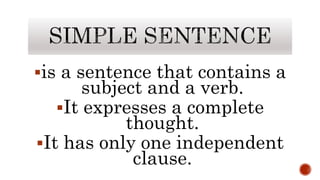
is a sentence that contains a
subject and a verb.
It expresses a complete
thought.
It has only one independent
clause.
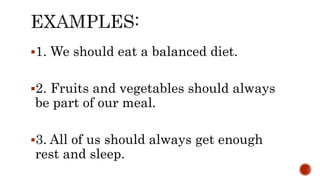
1. We should eat a balanced diet.
2. Fruits and vegetables should always
be part of our meal.
3. All of us should always get enough
rest and sleep.
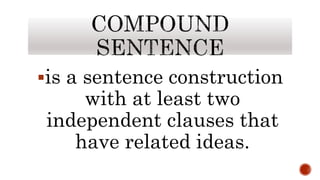
is a sentence construction
with at least two
independent clauses that
have related ideas.
The independent clauses can
be joined by a coordinating
conjunction and a comma is
placed before it. They can also
be joined by a semicolon [:].
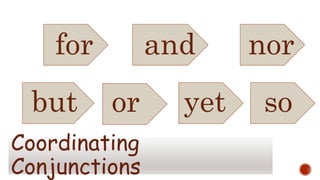
for and nor
but or yet so
Coordinating
Conjunctions
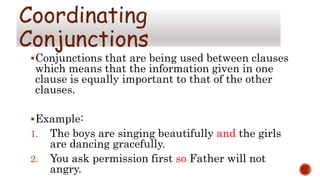
Conjunctions that are being used between clauses
which means that the information given in one
clause is equally important to that of the other
clauses.
Example:
1. The boys are singing beautifully and the girls
are dancing gracefully.
2. You ask permission first so Father will not
angry.
Coordinating
Conjunctions
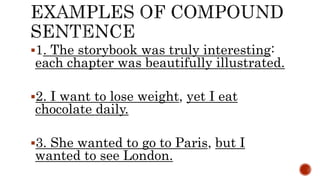
1. The storybook was truly interesting:
each chapter was beautifully illustrated.
2. I want to lose weight, yet I eat
chocolate daily.
3. She wanted to go to Paris, but I
wanted to see London.
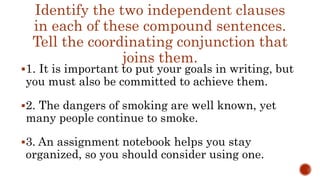
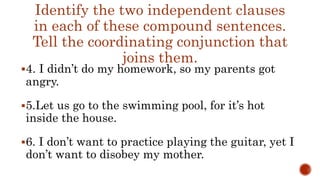
Identify the two independent clauses
in each of these compound sentences.
Tell the coordinating conjunction that
joins them.
1. It is important to put your goals in writing, but
you must also be committed to achieve them.
2. The dangers of smoking are well known, yet
many people continue to smoke.
3. An assignment notebook helps you stay
organized, so you should consider using one.
Identify the two independent clauses
in each of these compound sentences.
Tell the coordinating conjunction that
joins them.
4. I didn’t do my homework, so my parents got
angry.
5.Let us go to the swimming pool, for it’s hot
inside the house.
6. I don’t want to practice playing the guitar, yet I
don’t want to disobey my mother.
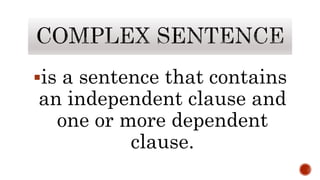
is a sentence that contains
an independent clause and
one or more dependent
clause.
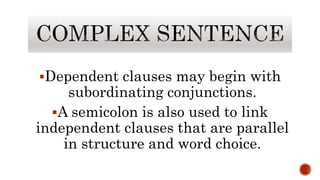
Dependent clauses may begin with
subordinating conjunctions.
A semicolon is also used to link
independent clauses that are parallel
in structure and word choice.
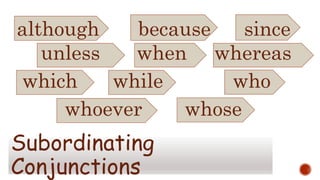
although because since
unless when whereas
which while who
whoever whose
Subordinating
Conjunctions
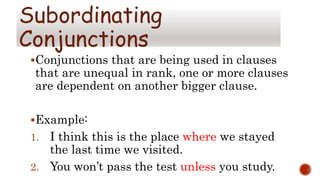
Conjunctions that are being used in clauses
that are unequal in rank, one or more clauses
are dependent on another bigger clause.
Example:
1. I think this is the place where we stayed
the last time we visited.
2. You won’t pass the test unless you study.
Subordinating
Conjunctions
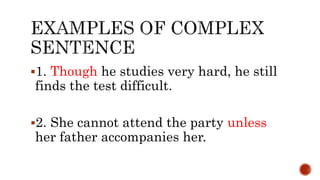
1. Though he studies very hard, he still
finds the test difficult.
2. She cannot attend the party unless
her father accompanies her.
has two or more
independent clauses and
one or more dependent
clauses.

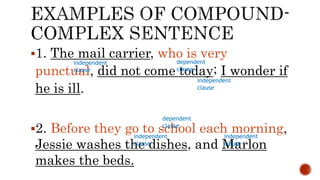
1. The mail carrier, who is very
punctual, did not come today; I wonder if
he is ill.
2. Before they go to school each morning,
Jessie washes the dishes, and Marlon
makes the beds.
independent
clause
independent
clause
dependent
clause
dependent
clause
independent
clause
independent
clause

Sentence+Structures.pptx

  • 2.
    is a sentencethat contains a subject and a verb. It expresses a complete thought. It has only one independent clause.
  • 3.
    1. We shouldeat a balanced diet. 2. Fruits and vegetables should always be part of our meal. 3. All of us should always get enough rest and sleep.
  • 5.
    is a sentenceconstruction with at least two independent clauses that have related ideas.
  • 6.
    The independent clausescan be joined by a coordinating conjunction and a comma is placed before it. They can also be joined by a semicolon [:].
  • 7.
    for and nor butor yet so Coordinating Conjunctions
  • 8.
    Conjunctions that arebeing used between clauses which means that the information given in one clause is equally important to that of the other clauses. Example: 1. The boys are singing beautifully and the girls are dancing gracefully. 2. You ask permission first so Father will not angry. Coordinating Conjunctions
  • 9.
    1. The storybookwas truly interesting: each chapter was beautifully illustrated. 2. I want to lose weight, yet I eat chocolate daily. 3. She wanted to go to Paris, but I wanted to see London.
  • 10.
    Identify the twoindependent clauses in each of these compound sentences. Tell the coordinating conjunction that joins them. 1. It is important to put your goals in writing, but you must also be committed to achieve them. 2. The dangers of smoking are well known, yet many people continue to smoke. 3. An assignment notebook helps you stay organized, so you should consider using one.
  • 11.
    Identify the twoindependent clauses in each of these compound sentences. Tell the coordinating conjunction that joins them. 4. I didn’t do my homework, so my parents got angry. 5.Let us go to the swimming pool, for it’s hot inside the house. 6. I don’t want to practice playing the guitar, yet I don’t want to disobey my mother.
  • 13.
    is a sentencethat contains an independent clause and one or more dependent clause.
  • 14.
    Dependent clauses maybegin with subordinating conjunctions. A semicolon is also used to link independent clauses that are parallel in structure and word choice.
  • 15.
    although because since unlesswhen whereas which while who whoever whose Subordinating Conjunctions
  • 16.
    Conjunctions that arebeing used in clauses that are unequal in rank, one or more clauses are dependent on another bigger clause. Example: 1. I think this is the place where we stayed the last time we visited. 2. You won’t pass the test unless you study. Subordinating Conjunctions
  • 17.
    1. Though hestudies very hard, he still finds the test difficult. 2. She cannot attend the party unless her father accompanies her.
  • 19.
    has two ormore independent clauses and one or more dependent clauses.
  • 20.
    1. The mailcarrier, who is very punctual, did not come today; I wonder if he is ill. 2. Before they go to school each morning, Jessie washes the dishes, and Marlon makes the beds. independent clause independent clause dependent clause dependent clause independent clause independent clause