Research Seminar Presentation
on
Synthesis of benzodiazepine derivatives via Multicomponent Reactions (MCRs)
Presented by
Darakshan
Roll No. 195CH09
Under the supervision of
Dr. Tasneem Parvin
Department of Chemistry
National Institute of Technology Patna
Patna-800005
1
A brief outline of Research seminar
Multicomponent Reactions (MCRs)
Multicomponent v/s multistep reaction
Advantages of MCRs
History of MCRs
 Synthesis of benzodiazepine via MCRs based on isocyanide and non
isocyanide reaction
Future work plan
Conclusion
References
2
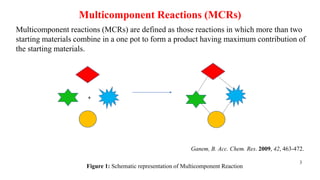
Multicomponent reactions (MCRs) are defined as those reactions in which more than two
starting materials combine in a one pot to form a product having maximum contribution of
the starting materials.
3
Figure 1: Schematic representation of Multicomponent Reaction
Multicomponent Reactions (MCRs)
Ganem, B. Acc. Chem. Res. 2009, 42, 463-472.
+
4
Multicomponent v/s multistep reactions
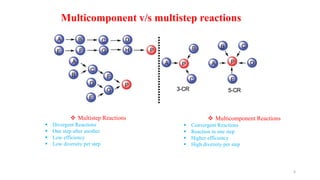
 Multistep Reactions
 Divergent Reactions
 One step after another
 Low efficiency
 Low diversity per step
 Multicomponent Reactions
 Convergent Reactions
 Reaction in one step
 Higher efficiency
 High diversity per step
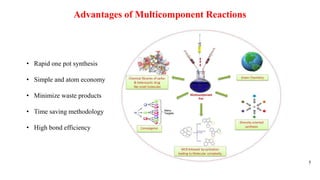
Advantages of Multicomponent Reactions
5
Figure 2
• Rapid one pot synthesis
• Simple and atom economy
• Minimize waste products
• Time saving methodology
• High bond efficiency
6
Biginelli
Reaction
Mannich
Reaction
Ivar Ugi
Reaction
Gewald
Reaction
Petasis
Reaction
Strecker
Reaction
Passerini
Reaction
Multicomponent
Reaction
Hantzch
Reaction
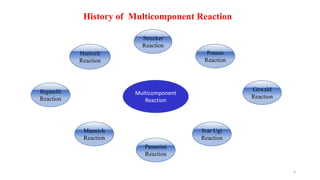
History of Multicomponent Reaction
7
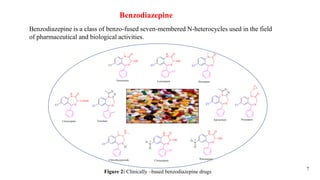
Figure 2: Clinically –based benzodiazepine drugs
Benzodiazepine is a class of benzo-fused seven-membered N-heterocycles used in the field
of pharmaceutical and biological activities.
Benzodiazepine
8
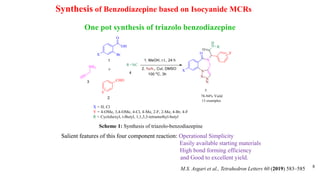
Synthesis of Benzodiazepine based on Isocyanide MCRs
Scheme 1: Synthesis of triazolo-benzodiazepine
Salient features of this four component reaction: Operational Simplicity
Easily available starting materials
High bond forming efficiency
and Good to excellent yield.
M.S. Asgari et al., Tetrahedron Letters 60 (2019) 583–585
One pot synthesis of triazolo benzodiazepine
9
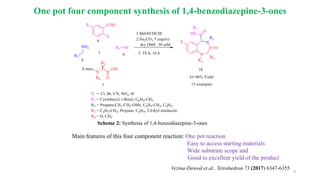
Scheme 2: Synthesis of 1,4-benzodiazepine-3-ones
Main features of this four component reaction: One pot reaction
Easy to access starting materials
Wide substrate scope and
Good to excellent yield of the product
Vezina-Dawod et al., Tetrahedron 73 (2017) 6347-6355
One pot four component synthesis of 1,4-benzodiazepine-3-ones
10
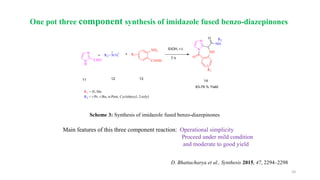
Scheme 3: Synthesis of imidazole fused benzo-diazepinones
Main features of this three component reaction: Operational simplicity
Proceed under mild condition
and moderate to good yield
D. Bhattacharya et al., Synthesis 2015, 47, 2294–2298
One pot three component synthesis of imidazole fused benzo-diazepinones
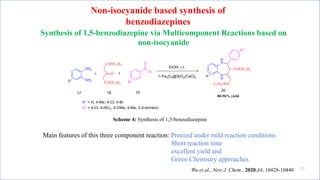
Synthesis of 1,5-benzodiazepine via Multicomponent Reactions based on
non-isocyanide
mm
Main features of this three component reaction: Proceed under mild reaction conditions
Short reaction time
excellent yield and
Green Chemistry approaches
Wu et al., New J. Chem., 2020,44, 10428-10440 11
Non-isocyanide based synthesis of
benzodiazepines
Scheme 4: Synthesis of 1,5-benzodiazepine
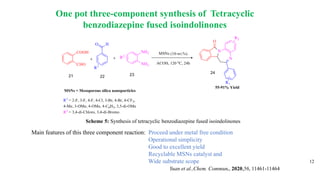
One pot three-component synthesis of Tetracyclic
benzodiazepine fused isoindolinones
12
Main features of this three component reaction: Proceed under metal free condition
Operational simplicity
Good to excellent yield
Recyclable MSNs catalyst and
Wide substrate scope
Yuan et al.,Chem. Commun., 2020,56, 11461-11464
Scheme 5: Synthesis of tetracyclic benzodiazepine fused isoindolinones
13
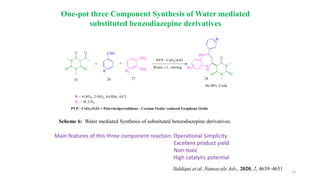
Scheme 6: Water mediated Synthesis of substituted benzodiazepine derivatives.
Main features of this three component reaction: Operational Simplicity
Excellent product yield
Non-toxic
High catalytic potential
Siddiqui et.al.,Nanoscale Adv., 2020, 2, 4639–4651
One-pot three Component Synthesis of Water mediated
substituted benzodiazepine derivatives
14
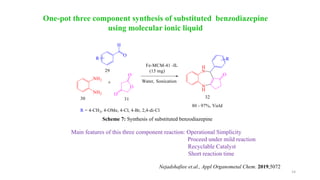
Scheme 7: Synthesis of substituted benzodiazepine
Main features of this three component reaction: Operational Simplicity
Proceed under mild reaction
Recyclable Catalyst
Short reaction time
One-pot three component synthesis of substituted benzodiazepine
using molecular ionic liquid
Nejadshafiee et.al., Appl Organometal Chem. 2019,5072
15
One pot three-component synthesis of Benzo[e][1,4]diazepin-
3-ones via Dual C−O Bond Cleavage
Main features of this three component reaction: Proceed under mild reaction condition
Broad substrate scope and
has potential applications in chemistry and medicines
Geng et al., Org. Lett. 2019, 21, 18, 7504–7508
Scheme 8: Synthesis of benzo[e][1,4]diazepin-3-ones
16
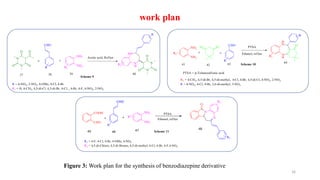
Figure 3: Work plan for the synthesis of benzodiazepine derivative
work plan
Conclusion
• Multicomponent reactions have emerged as efficient and powerful tool for organic synthesis.
• They provide rapid synthesis of complex molecules with high bond forming efficiency and offers
higher synthetic efficiency and atom economy over conventional two component reactions.
• They considerably reduce the reaction time and allow to assemble large libraries of complex
molecules in a short duration of time.
• Benzodiazepine exhibits a vital role in the field of both pharmaceutical and biological activities.
• They are commercially available for the treatment of panxiolytic, antianxiety, anticonvulsant,
antitumor and anti-depressive sedative.
17
18
References
1. (a) Ganem, B. Acc. Chem. Res. 2009, 42, 463-472. (b) Boukis, A. C.; Reiter, K.; Frölich, M.; Hofheinz, D.;
Meier, M. A. R. Nat. Commun. 2018, 9, 1439-1448
2. Khan, M. M.; Yousuf, R.; Khan, S.; Shafiullah RSC Adv. 2015, 5, 57883-57905.
3. Slobbe, P.; Ruijter, E.; Orru, R. V. A. Med. Chem. Commun. 2012, 3, 1189-1218.
4. (a) Frett, B.; Moccia, M.; Carlomagno, F.; Santoro, M.; Li, H. Eur. J. Med. Chem. 2014, 86, 714-723. (b)
Ruijter, E.; Orru, R. V. A. Drug. Discov. Today Technol. 2013, 10, e15-e20.
5. (a) Hall, D. G.; Rybak, T.; Verdelet, T. Acc. Chem. Res. 2016, 49, 2489-2500. (b) Touré, B. B.; Hall, D. G.
Chem. Rev. 2009, 109, 4439-4486.
6. Lamberth, C.; Jeanguenat, A.; Cederbaum, F.; De Mesmaeker, A.; Zeller, M.; Kempf, H. J.; Zeun, R.
Bioorg. Med. Chem. 2008, 16, 1531-1545.
7. (a) Kakuchi, R. Angew. Chem. Int. Ed. 2014, 53, 46-48. (b) Zhang, Z.; Tan, Z. B.; Hong, C. Y.; Wu, D. C.;
You, Y. Z. Polym. Chem. 2016, 7, 1468-1474.
19
8. Asgari, S.M; Soheilizad, M; Ranjbar, R.P; Larijani, B; Tetrahedron Letters 60 (2019) 583–585.
9. Dawod, V.S; Gerber, N; Liang , X; Biron, E; Tetrahedron 73 (2017) 6347-6355.
10. Bhattacharya, D; Mitra, S; Chattopadhyay, P; Synthesis 2015, 47, 2294–2298.
11. Tao Wu, H; Zhi Wang, L. New J. Chem., 2020,44, 10428-10440.
12. Yuana, S; Yueb, Y; Zhanga, Q.D; Zhanga, Y.J; Yua, B; Liu, M.H; Chem. Commun., 2020, 56, 11461- 11464.
13. Siddiqui, S; N. Siddiqui, Z; Nanoscale Adv., 2020, 2, 4639–4651.
14. Nejadshafiee, V; Naeimi, H; Reza, M; Appl Organometal Chem. 2019,5072.
13. Geng, X; Wang, C; Huang, C; Zhao, P; Zhou, Y; Org. Lett. 2019, 21, 18, 7504–7508.
References (Contd.)
Acknowledgement
• Dr. Tasneem Parvin, My Supervisor
• HoD Chemistry
• All DSC Members
• Department of Chemistry
• NIT Patna
20
Thank you
21

Seminar presentation on heterocyclic scaffold

  • 1.
    Research Seminar Presentation on Synthesisof benzodiazepine derivatives via Multicomponent Reactions (MCRs) Presented by Darakshan Roll No. 195CH09 Under the supervision of Dr. Tasneem Parvin Department of Chemistry National Institute of Technology Patna Patna-800005 1
  • 2.
    A brief outlineof Research seminar Multicomponent Reactions (MCRs) Multicomponent v/s multistep reaction Advantages of MCRs History of MCRs  Synthesis of benzodiazepine via MCRs based on isocyanide and non isocyanide reaction Future work plan Conclusion References 2
  • 3.
    Multicomponent reactions (MCRs)are defined as those reactions in which more than two starting materials combine in a one pot to form a product having maximum contribution of the starting materials. 3 Figure 1: Schematic representation of Multicomponent Reaction Multicomponent Reactions (MCRs) Ganem, B. Acc. Chem. Res. 2009, 42, 463-472. +
  • 4.
    4 Multicomponent v/s multistepreactions  Multistep Reactions  Divergent Reactions  One step after another  Low efficiency  Low diversity per step  Multicomponent Reactions  Convergent Reactions  Reaction in one step  Higher efficiency  High diversity per step
  • 5.
    Advantages of MulticomponentReactions 5 Figure 2 • Rapid one pot synthesis • Simple and atom economy • Minimize waste products • Time saving methodology • High bond efficiency
  • 6.
  • 7.
    7 Figure 2: Clinically–based benzodiazepine drugs Benzodiazepine is a class of benzo-fused seven-membered N-heterocycles used in the field of pharmaceutical and biological activities. Benzodiazepine
  • 8.
    8 Synthesis of Benzodiazepinebased on Isocyanide MCRs Scheme 1: Synthesis of triazolo-benzodiazepine Salient features of this four component reaction: Operational Simplicity Easily available starting materials High bond forming efficiency and Good to excellent yield. M.S. Asgari et al., Tetrahedron Letters 60 (2019) 583–585 One pot synthesis of triazolo benzodiazepine
  • 9.
    9 Scheme 2: Synthesisof 1,4-benzodiazepine-3-ones Main features of this four component reaction: One pot reaction Easy to access starting materials Wide substrate scope and Good to excellent yield of the product Vezina-Dawod et al., Tetrahedron 73 (2017) 6347-6355 One pot four component synthesis of 1,4-benzodiazepine-3-ones
  • 10.
    10 Scheme 3: Synthesisof imidazole fused benzo-diazepinones Main features of this three component reaction: Operational simplicity Proceed under mild condition and moderate to good yield D. Bhattacharya et al., Synthesis 2015, 47, 2294–2298 One pot three component synthesis of imidazole fused benzo-diazepinones
  • 11.
    Synthesis of 1,5-benzodiazepinevia Multicomponent Reactions based on non-isocyanide mm Main features of this three component reaction: Proceed under mild reaction conditions Short reaction time excellent yield and Green Chemistry approaches Wu et al., New J. Chem., 2020,44, 10428-10440 11 Non-isocyanide based synthesis of benzodiazepines Scheme 4: Synthesis of 1,5-benzodiazepine
  • 12.
    One pot three-componentsynthesis of Tetracyclic benzodiazepine fused isoindolinones 12 Main features of this three component reaction: Proceed under metal free condition Operational simplicity Good to excellent yield Recyclable MSNs catalyst and Wide substrate scope Yuan et al.,Chem. Commun., 2020,56, 11461-11464 Scheme 5: Synthesis of tetracyclic benzodiazepine fused isoindolinones
  • 13.
    13 Scheme 6: Watermediated Synthesis of substituted benzodiazepine derivatives. Main features of this three component reaction: Operational Simplicity Excellent product yield Non-toxic High catalytic potential Siddiqui et.al.,Nanoscale Adv., 2020, 2, 4639–4651 One-pot three Component Synthesis of Water mediated substituted benzodiazepine derivatives
  • 14.
    14 Scheme 7: Synthesisof substituted benzodiazepine Main features of this three component reaction: Operational Simplicity Proceed under mild reaction Recyclable Catalyst Short reaction time One-pot three component synthesis of substituted benzodiazepine using molecular ionic liquid Nejadshafiee et.al., Appl Organometal Chem. 2019,5072
  • 15.
    15 One pot three-componentsynthesis of Benzo[e][1,4]diazepin- 3-ones via Dual C−O Bond Cleavage Main features of this three component reaction: Proceed under mild reaction condition Broad substrate scope and has potential applications in chemistry and medicines Geng et al., Org. Lett. 2019, 21, 18, 7504–7508 Scheme 8: Synthesis of benzo[e][1,4]diazepin-3-ones
  • 16.
    16 Figure 3: Workplan for the synthesis of benzodiazepine derivative work plan
  • 17.
    Conclusion • Multicomponent reactionshave emerged as efficient and powerful tool for organic synthesis. • They provide rapid synthesis of complex molecules with high bond forming efficiency and offers higher synthetic efficiency and atom economy over conventional two component reactions. • They considerably reduce the reaction time and allow to assemble large libraries of complex molecules in a short duration of time. • Benzodiazepine exhibits a vital role in the field of both pharmaceutical and biological activities. • They are commercially available for the treatment of panxiolytic, antianxiety, anticonvulsant, antitumor and anti-depressive sedative. 17
  • 18.
    18 References 1. (a) Ganem,B. Acc. Chem. Res. 2009, 42, 463-472. (b) Boukis, A. C.; Reiter, K.; Frölich, M.; Hofheinz, D.; Meier, M. A. R. Nat. Commun. 2018, 9, 1439-1448 2. Khan, M. M.; Yousuf, R.; Khan, S.; Shafiullah RSC Adv. 2015, 5, 57883-57905. 3. Slobbe, P.; Ruijter, E.; Orru, R. V. A. Med. Chem. Commun. 2012, 3, 1189-1218. 4. (a) Frett, B.; Moccia, M.; Carlomagno, F.; Santoro, M.; Li, H. Eur. J. Med. Chem. 2014, 86, 714-723. (b) Ruijter, E.; Orru, R. V. A. Drug. Discov. Today Technol. 2013, 10, e15-e20. 5. (a) Hall, D. G.; Rybak, T.; Verdelet, T. Acc. Chem. Res. 2016, 49, 2489-2500. (b) Touré, B. B.; Hall, D. G. Chem. Rev. 2009, 109, 4439-4486. 6. Lamberth, C.; Jeanguenat, A.; Cederbaum, F.; De Mesmaeker, A.; Zeller, M.; Kempf, H. J.; Zeun, R. Bioorg. Med. Chem. 2008, 16, 1531-1545. 7. (a) Kakuchi, R. Angew. Chem. Int. Ed. 2014, 53, 46-48. (b) Zhang, Z.; Tan, Z. B.; Hong, C. Y.; Wu, D. C.; You, Y. Z. Polym. Chem. 2016, 7, 1468-1474.
  • 19.
    19 8. Asgari, S.M;Soheilizad, M; Ranjbar, R.P; Larijani, B; Tetrahedron Letters 60 (2019) 583–585. 9. Dawod, V.S; Gerber, N; Liang , X; Biron, E; Tetrahedron 73 (2017) 6347-6355. 10. Bhattacharya, D; Mitra, S; Chattopadhyay, P; Synthesis 2015, 47, 2294–2298. 11. Tao Wu, H; Zhi Wang, L. New J. Chem., 2020,44, 10428-10440. 12. Yuana, S; Yueb, Y; Zhanga, Q.D; Zhanga, Y.J; Yua, B; Liu, M.H; Chem. Commun., 2020, 56, 11461- 11464. 13. Siddiqui, S; N. Siddiqui, Z; Nanoscale Adv., 2020, 2, 4639–4651. 14. Nejadshafiee, V; Naeimi, H; Reza, M; Appl Organometal Chem. 2019,5072. 13. Geng, X; Wang, C; Huang, C; Zhao, P; Zhou, Y; Org. Lett. 2019, 21, 18, 7504–7508. References (Contd.)
  • 20.
    Acknowledgement • Dr. TasneemParvin, My Supervisor • HoD Chemistry • All DSC Members • Department of Chemistry • NIT Patna 20
  • 21.