A seminar on
Apretude-an alternative to daily pills for HIV prevention
Presented by-
Sritam Padhan
PG-1st semester
PG-21-ZOO-016
CONTENTS:
1-What dose HIV do to the immune system
2-HIV statistics
3-Treatement measures
4-FDA approval
5-Clinical data
6-Description
7-Drug development
8-mechanism of action and pharmacokinetics
9-Dosage
10-Conditions for use
11-Conclusion
WHAT DOES HIV DO TO THE IMMUNE SYSTEM?
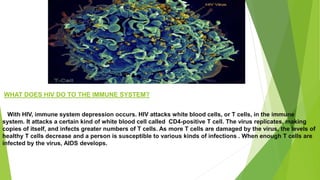
With HIV, immune system depression occurs. HIV attacks white blood cells, or T cells, in the immune
system. It attacks a certain kind of white blood cell called CD4-positive T cell. The virus replicates, making
copies of itself, and infects greater numbers of T cells. As more T cells are damaged by the virus, the levels of
healthy T cells decrease and a person is susceptible to various kinds of infections . When enough T cells are
infected by the virus, AIDS develops.
HIV STATISTICS:
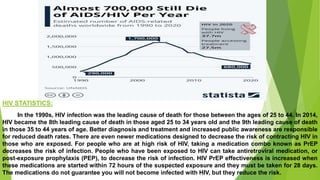
In the 1990s, HIV infection was the leading cause of death for those between the ages of 25 to 44. In 2014,
HIV became the 8th leading cause of death in those aged 25 to 34 years old and the 9th leading cause of death
in those 35 to 44 years of age. Better diagnosis and treatment and increased public awareness are responsible
for reduced death rates. There are even newer medications designed to decrease the risk of contracting HIV in
those who are exposed. For people who are at high risk of HIV, taking a medication combo known as PrEP
decreases the risk of infection. People who have been exposed to HIV can take antiretroviral medication, or
post-exposure prophylaxis (PEP), to decrease the risk of infection. HIV PrEP effectiveness is increased when
these medications are started within 72 hours of the suspected exposure and they must be taken for 28 days.
The medications do not guarantee you will not become infected with HIV, but they reduce the risk.
WHAT ARE HIV/AIDS TREATMENTS?
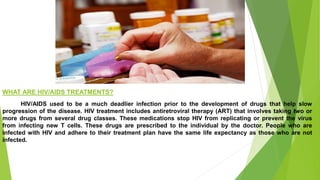
HIV/AIDS used to be a much deadlier infection prior to the development of drugs that help slow
progression of the disease. HIV treatment includes antiretroviral therapy (ART) that involves taking two or
more drugs from several drug classes. These medications stop HIV from replicating or prevent the virus
from infecting new T cells. These drugs are prescribed to the individual by the doctor. People who are
infected with HIV and adhere to their treatment plan have the same life expectancy as those who are not
infected.
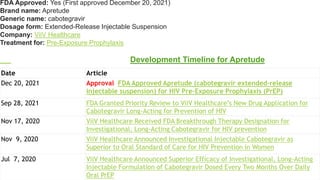
FDA Approved: Yes (First approved December 20, 2021)
Brand name: Apretude
Generic name: cabotegravir
Dosage form: Extended-Release Injectable Suspension
Company: ViiV Healthcare
Treatment for: Pre-Exposure Prophylaxis
Development Timeline for Apretude
Date Article
Dec 20, 2021 Approval FDA Approved Apretude (cabotegravir extended-release
injectable suspension) for HIV Pre-Exposure Prophylaxis (PrEP)
Sep 28, 2021 FDA Granted Priority Review to ViiV Healthcare’s New Drug Application for
Cabotegravir Long-Acting for Prevention of HIV
Nov 17, 2020 ViiV Healthcare Received FDA Breakthrough Therapy Designation for
Investigational, Long-Acting Cabotegravir for HIV prevention
Nov 9, 2020 ViiV Healthcare Announced Investigational Injectable Cabotegravir as
Superior to Oral Standard of Care for HIV Prevention in Women
Jul 7, 2020 ViiV Healthcare Announced Superior Efficacy of Investigational, Long-Acting
Injectable Formulation of Cabotegravir Dosed Every Two Months Over Daily
Oral PrEP
Clinical data
Trade names Vocabria, Apretude
Other names S/GSK1265744, GSK744
AHFS/Drugs.com Micromedex Detailed Consumer
Information
MedlinePlus a621010
License data •EU EMA: by INN
•US DailyMed: Cabotegravir
Pregnancy
category
•AU: B1
[1][2]
Routes of
administration
intramuscular
ATC code •J05AJ04 (WHO)
Legal status
Legal status •AU: S4 (Prescription only)
[1][2][3]
•CA: ℞-only
[4]
•US: ℞-only
[5][6][7]
•EU: Rx-only
[8]
Pharmacokinetic data
Protein binding >99%
Metabolism UGT1A1
Metabolites glucuronide
Elimination half-life tablets: 41 hours
injection: 5.6–11.5 weeks
Excretion 47% via faeces, 27% via urine
Identifiers
showIUPAC name
CAS Number •1051375-10-0
•as salt: 1051375-13-3
PubChem CID •54713659
•as salt: 46215800
DrugBank •DB11751
•as salt: DBSALT002064
ChemSpider •30829503
•as salt: 32702138
UNII •HMH0132Z1Q
•as salt: 3L12PT535M
KEGG •D10548
•as salt: D10549
ChEBI •CHEBI:172944
•as salt: CHEBI:172948
ChEMBL •ChEMBL2403238
•as salt: ChEMBL3137330
CompTox Dashboard (EPA) •DTXSID50146982
Chemical and physical data
Formula C19H17F2N3O5
Molar mass 405.358 g·mol
−1
3D model (JSmol) •Interactive image
•as salt:
DESCRIPTION
APRETUDE contains cabotegravir extended-release injectable suspension, an HIV INSTI.
The chemical name of cabotegravir is (3S,11aR)-N-[(2,4-difluorophenyl)methyl]-6-hydroxy-3Â-
methyl-5,7-dioxo-2,3,5,7,11,11a-hexahydro[1,3]oxazolo[3,2-a]pyrido[1,2-d]pyrazine-8Â-
carboxamide.The empirical formula is C19H17F2N3O5 and the molecular weight is 405.35g/mol.
Cabotegravir extended-release injectable suspension is a white to light pink free-flowing
suspension for intramuscular injection in a sterile single-dose vial. Each vial delivers 600 mg/3 mL
(200 mg/mL) of cabotegravir and mannitol (105 mg), polyethyleneglycol (PEG) 3350 (60 mg),
polysorbate 20 (60 mg), and Water for Injection.
Structural formula:
Apretude-
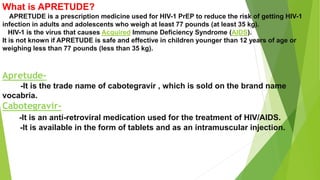
-It is the trade name of cabotegravir , which is sold on the brand name
vocabria.
Cabotegravir-
-It is an anti-retroviral medication used for the treatment of HIV/AIDS.
-It is available in the form of tablets and as an intramuscular injection.
What is APRETUDE?
APRETUDE is a prescription medicine used for HIV-1 PrEP to reduce the risk of getting HIV-1
infection in adults and adolescents who weigh at least 77 pounds (at least 35 kg).
HIV-1 is the virus that causes Acquired Immune Deficiency Syndrome (AIDS).
It is not known if APRETUDE is safe and effective in children younger than 12 years of age or
weighing less than 77 pounds (less than 35 kg).
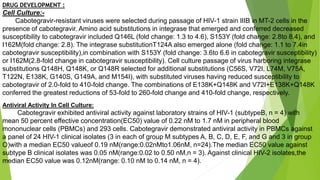
Cell Culture:-
Cabotegravir-resistant viruses were selected during passage of HIV-1 strain IIIB in MT-2 cells in the
presence of cabotegravir. Amino acid substitutions in integrase that emerged and conferred decreased
susceptibility to cabotegravir included Q146L (fold change: 1.3 to 4.6), S153Y (fold change: 2.8to 8.4), and
I162M(fold change: 2.8). The integrase substitutionT124A also emerged alone (fold change: 1.1 to 7.4in
cabotegravir susceptibility),in combination with S153Y (fold change: 3.6to 6.6 in cabotegravir susceptibility)
or I162M(2.8-fold change in cabotegravir susceptibility). Cell culture passage of virus harboring integrase
substitutions Q148H, Q148K, or Q148R selected for additional substitutions (C56S, V72I, L74M, V75A,
T122N, E138K, G140S, G149A, and M154I), with substituted viruses having reduced susceptibility to
cabotegravir of 2.0-fold to 410-fold change. The combinations of E138K+Q148K and V72I+E138K+Q148K
conferred the greatest reductions of 53-fold to 260-fold change and 410-fold change, respectively.
DRUG DEVELOPMENT :
Antiviral Activity In Cell Culture:
Cabotegravir exhibited antiviral activity against laboratory strains of HIV-1 (subtypeB, n = 4) with
mean 50 percent effective concentration(EC50) value of 0.22 nM to 1.7 nM in peripheral blood
mononuclear cells (PBMCs) and 293 cells. Cabotegravir demonstrated antiviral activity in PBMCs against
a panel of 24 HIV-1 clinical isolates (3 in each of group M subtypes A, B, C, D, E, F, and G and 3 in group
O)with a median EC50 valueof 0.19 nM(range:0.02nMto1.06nM, n=24).The median EC50 value against
subtype B clinical isolates was 0.05 nM(range:0.02 to 0.50 nM,n = 3). Against clinical HIV-2 isolates,the
median EC50 value was 0.12nM(range: 0.10 nM to 0.14 nM, n = 4).
Clinical Trials
There were 12 incident infections and 4 prevalent infections among subjects in the APRETUDE arm
of HPTN 083. Genotypic data were generated for viruses from 13 of these 16 subjects (4 subjects with
prevalent infections and 9 subjects with incident infections) and phenotypic data were generated for 3 of
these viruses. INSTI resistance-associated substitutions were detected in 5 viruses from subjects who
achieved target plasma concentrations of cabotegravir (≥0.65 mcg/mL [1.6μM]) and included R263K (2-fold
less susceptible to cabotegravir), E138A + Q148R (6-fold less susceptible to cabotegravir), E138K+Q148K,
G140A+Q148R (13-fold less susceptible to cabotegravir), and L74I+E138E/K+G140G/S+Q148R+E157Q.
There were 3 incident infections and 1 prevalent infection among subjects in the APRETUDE arm of
HPTN 084. All 3 incident infections occurred during periods with cabotegravir exposures below the target
concentration. No variants expressing INSTI resistance-associated substitutions were detected.
Clinical Trials In Adults For HIV-1 Pre-Exposure Prophylaxis
The safety and efficacy of APRETUDE to reduce the risk of acquiring HIV-1 infection were evaluated
in 2 randomized, double-blind, controlled, multinational trials, HPTN 083 in HIV-1 uninfected men and
transgender women who have sex with men and have evidence of high-risk behavior for HIV-1 infection
and HPTN 084 in HIV-1 uninfected cisgender women at risk of acquiring HIV-1.
In cell culture, cabotegravir was not antagonistic in combination with the non-nucleoside reverse
transcriptase inhibitor (NNRTI) rilpivirine, or the nucleoside reverse transcriptase inhibitors (NRTIs) FTC,
lamivudine (3TC).
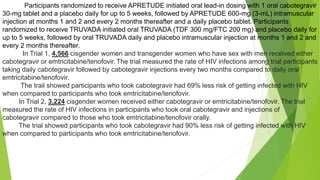
Participants randomized to receive APRETUDE initiated oral lead-in dosing with 1 oral cabotegravir
30-mg tablet and a placebo daily for up to 5 weeks, followed by APRETUDE 600-mg (3-mL) intramuscular
injection at months 1 and 2 and every 2 months thereafter and a daily placebo tablet. Participants
randomized to receive TRUVADA initiated oral TRUVADA (TDF 300 mg/FTC 200 mg) and placebo daily for
up to 5 weeks, followed by oral TRUVADA daily and placebo intramuscular injection at months 1 and 2 and
every 2 months thereafter.
In Trial 1, 4,566 cisgender women and transgender women who have sex with men received either
cabotegravir or emtricitabine/tenofovir. The trial measured the rate of HIV infections among trial participants
taking daily cabotegravir followed by cabotegravir injections every two months compared to daily oral
emtricitabine/tenofovir.
The trail showed participants who took cabotegravir had 69% less risk of getting infected with HIV
when compared to participants who took emtricitabine/tenofovir.
In Trial 2, 3,224 cisgender women received either cabotegravir or emtricitabine/tenofovir. The trial
measured the rate of HIV infections in participants who took oral cabotegravir and injections of
cabotegravir compared to those who took emtricitabine/tenofovir orally.
The trial showed participants who took cabotegravir had 90% less risk of getting infected with HIV
when compared to participants who took emtricitabine/tenofovir.
Mechanism of action-
Cabotegravir is an integrase strand transfer inhibitor . This means it blocks the
HIV's enzyme integrease by binding to the integrase active site , thereby preventing its
genome from being integrated into the human cells’ DNA .As this is a necessary step for
the virus to replicate , its further spread is hampered.
Pharmacokinetics-
When taken by mouth, cabotegravir reaches highest blood plasma levels after three
hours. Taking the drug together with food slightly increases its concentrations in the
blood, but this is not clinically relevant. After injecting into the muscle, cabotegravir is
slowly absorbed into the bloodstream, reaching its highest blood plasma levels after
about seven days. Over 99% of the substance are bound to plasma proteins. The drug is
inactivated in the body by glucuronidation , mainly by the enzyme UGT1A1, and to a
much lesser extent by UGT1A9.
Dosage of apretude-
-People initially receive 2 shots in the muscles of buttock,spaced 1
month apart and then they receive an injection every 2 months
thereafter,according to FDA.
-It reduces the risk of HIV infection more effectively then the daily pill
truvada.
-Patients have the option to take an oral formulation of cabotegravir ,
daily 4 weeks prior to starting the injection to see how will they tolerate the
drug.
-Patients should be tested for HIV and confirmed negative before taking
apretude injection and should be confirmed negative before taking each
injection,to avoid the risk of developing drug resistant HIV.
-APRETUDE is a long-acting medicine and may stay in individuals`
body for 12 months or longer after last injection.
Conditions for APRETUDE use :
•Already have HIV-1 infection. If the individual is HIV-1 positive, he/she will need to
take other medicines to treat HIV-1. APRETUDE is not approved for treatment of HIV-1.
•Do not know HIV-1 infection status. He/she may already be HIV-1 positive. He/she
need to take other medicines to treat HIV-1. APRETUDE can only help reduce his/her
risk of getting HIV-1 infection before he/she is infected.
•Individual is allergic to cabotegravir
•Taking any of the following medicines:
• carbamazepine
• oxcarbazepine
• phenobarbital
• phenytoin
• rifampin
• rifapentine
GET TESTED AND GET HELP
There is no cure for HIV till date, but there are effective treatments that can increase life expectancy. Early
diagnosis and treatment of the virus is important to achieve the best possible outcomes. Individual should
Get tested for HIV, especially if he/she is engaged in high-risk behavior. AIDS.gov provides a listing of
many government resources for those living with HIV, including locations for testing. The CDC provides
similar resources at gettested.cdc.gov or 800-CDC-INFO (800-232-4636).
seminar on apretude.pptx

seminar on apretude.pptx

  • 1.
    A seminar on Apretude-analternative to daily pills for HIV prevention Presented by- Sritam Padhan PG-1st semester PG-21-ZOO-016
  • 2.
    CONTENTS: 1-What dose HIVdo to the immune system 2-HIV statistics 3-Treatement measures 4-FDA approval 5-Clinical data 6-Description 7-Drug development 8-mechanism of action and pharmacokinetics 9-Dosage 10-Conditions for use 11-Conclusion
  • 3.
    WHAT DOES HIVDO TO THE IMMUNE SYSTEM? With HIV, immune system depression occurs. HIV attacks white blood cells, or T cells, in the immune system. It attacks a certain kind of white blood cell called CD4-positive T cell. The virus replicates, making copies of itself, and infects greater numbers of T cells. As more T cells are damaged by the virus, the levels of healthy T cells decrease and a person is susceptible to various kinds of infections . When enough T cells are infected by the virus, AIDS develops.
  • 4.
    HIV STATISTICS: In the1990s, HIV infection was the leading cause of death for those between the ages of 25 to 44. In 2014, HIV became the 8th leading cause of death in those aged 25 to 34 years old and the 9th leading cause of death in those 35 to 44 years of age. Better diagnosis and treatment and increased public awareness are responsible for reduced death rates. There are even newer medications designed to decrease the risk of contracting HIV in those who are exposed. For people who are at high risk of HIV, taking a medication combo known as PrEP decreases the risk of infection. People who have been exposed to HIV can take antiretroviral medication, or post-exposure prophylaxis (PEP), to decrease the risk of infection. HIV PrEP effectiveness is increased when these medications are started within 72 hours of the suspected exposure and they must be taken for 28 days. The medications do not guarantee you will not become infected with HIV, but they reduce the risk.
  • 5.
    WHAT ARE HIV/AIDSTREATMENTS? HIV/AIDS used to be a much deadlier infection prior to the development of drugs that help slow progression of the disease. HIV treatment includes antiretroviral therapy (ART) that involves taking two or more drugs from several drug classes. These medications stop HIV from replicating or prevent the virus from infecting new T cells. These drugs are prescribed to the individual by the doctor. People who are infected with HIV and adhere to their treatment plan have the same life expectancy as those who are not infected.
  • 6.
    FDA Approved: Yes(First approved December 20, 2021) Brand name: Apretude Generic name: cabotegravir Dosage form: Extended-Release Injectable Suspension Company: ViiV Healthcare Treatment for: Pre-Exposure Prophylaxis Development Timeline for Apretude Date Article Dec 20, 2021 Approval FDA Approved Apretude (cabotegravir extended-release injectable suspension) for HIV Pre-Exposure Prophylaxis (PrEP) Sep 28, 2021 FDA Granted Priority Review to ViiV Healthcare’s New Drug Application for Cabotegravir Long-Acting for Prevention of HIV Nov 17, 2020 ViiV Healthcare Received FDA Breakthrough Therapy Designation for Investigational, Long-Acting Cabotegravir for HIV prevention Nov 9, 2020 ViiV Healthcare Announced Investigational Injectable Cabotegravir as Superior to Oral Standard of Care for HIV Prevention in Women Jul 7, 2020 ViiV Healthcare Announced Superior Efficacy of Investigational, Long-Acting Injectable Formulation of Cabotegravir Dosed Every Two Months Over Daily Oral PrEP
  • 7.
    Clinical data Trade namesVocabria, Apretude Other names S/GSK1265744, GSK744 AHFS/Drugs.com Micromedex Detailed Consumer Information MedlinePlus a621010 License data •EU EMA: by INN •US DailyMed: Cabotegravir Pregnancy category •AU: B1 [1][2] Routes of administration intramuscular ATC code •J05AJ04 (WHO) Legal status Legal status •AU: S4 (Prescription only) [1][2][3] •CA: ℞-only [4] •US: ℞-only [5][6][7] •EU: Rx-only [8] Pharmacokinetic data Protein binding >99% Metabolism UGT1A1 Metabolites glucuronide Elimination half-life tablets: 41 hours injection: 5.6–11.5 weeks Excretion 47% via faeces, 27% via urine Identifiers showIUPAC name CAS Number •1051375-10-0 •as salt: 1051375-13-3 PubChem CID •54713659 •as salt: 46215800 DrugBank •DB11751 •as salt: DBSALT002064 ChemSpider •30829503 •as salt: 32702138 UNII •HMH0132Z1Q •as salt: 3L12PT535M KEGG •D10548 •as salt: D10549 ChEBI •CHEBI:172944 •as salt: CHEBI:172948 ChEMBL •ChEMBL2403238 •as salt: ChEMBL3137330 CompTox Dashboard (EPA) •DTXSID50146982 Chemical and physical data Formula C19H17F2N3O5 Molar mass 405.358 g·mol −1 3D model (JSmol) •Interactive image •as salt:
  • 8.
    DESCRIPTION APRETUDE contains cabotegravirextended-release injectable suspension, an HIV INSTI. The chemical name of cabotegravir is (3S,11aR)-N-[(2,4-difluorophenyl)methyl]-6-hydroxy-3Â- methyl-5,7-dioxo-2,3,5,7,11,11a-hexahydro[1,3]oxazolo[3,2-a]pyrido[1,2-d]pyrazine-8Â- carboxamide.The empirical formula is C19H17F2N3O5 and the molecular weight is 405.35g/mol. Cabotegravir extended-release injectable suspension is a white to light pink free-flowing suspension for intramuscular injection in a sterile single-dose vial. Each vial delivers 600 mg/3 mL (200 mg/mL) of cabotegravir and mannitol (105 mg), polyethyleneglycol (PEG) 3350 (60 mg), polysorbate 20 (60 mg), and Water for Injection. Structural formula:
  • 9.
    Apretude- -It is thetrade name of cabotegravir , which is sold on the brand name vocabria. Cabotegravir- -It is an anti-retroviral medication used for the treatment of HIV/AIDS. -It is available in the form of tablets and as an intramuscular injection. What is APRETUDE? APRETUDE is a prescription medicine used for HIV-1 PrEP to reduce the risk of getting HIV-1 infection in adults and adolescents who weigh at least 77 pounds (at least 35 kg). HIV-1 is the virus that causes Acquired Immune Deficiency Syndrome (AIDS). It is not known if APRETUDE is safe and effective in children younger than 12 years of age or weighing less than 77 pounds (less than 35 kg).
  • 10.
    Cell Culture:- Cabotegravir-resistant viruseswere selected during passage of HIV-1 strain IIIB in MT-2 cells in the presence of cabotegravir. Amino acid substitutions in integrase that emerged and conferred decreased susceptibility to cabotegravir included Q146L (fold change: 1.3 to 4.6), S153Y (fold change: 2.8to 8.4), and I162M(fold change: 2.8). The integrase substitutionT124A also emerged alone (fold change: 1.1 to 7.4in cabotegravir susceptibility),in combination with S153Y (fold change: 3.6to 6.6 in cabotegravir susceptibility) or I162M(2.8-fold change in cabotegravir susceptibility). Cell culture passage of virus harboring integrase substitutions Q148H, Q148K, or Q148R selected for additional substitutions (C56S, V72I, L74M, V75A, T122N, E138K, G140S, G149A, and M154I), with substituted viruses having reduced susceptibility to cabotegravir of 2.0-fold to 410-fold change. The combinations of E138K+Q148K and V72I+E138K+Q148K conferred the greatest reductions of 53-fold to 260-fold change and 410-fold change, respectively. DRUG DEVELOPMENT : Antiviral Activity In Cell Culture: Cabotegravir exhibited antiviral activity against laboratory strains of HIV-1 (subtypeB, n = 4) with mean 50 percent effective concentration(EC50) value of 0.22 nM to 1.7 nM in peripheral blood mononuclear cells (PBMCs) and 293 cells. Cabotegravir demonstrated antiviral activity in PBMCs against a panel of 24 HIV-1 clinical isolates (3 in each of group M subtypes A, B, C, D, E, F, and G and 3 in group O)with a median EC50 valueof 0.19 nM(range:0.02nMto1.06nM, n=24).The median EC50 value against subtype B clinical isolates was 0.05 nM(range:0.02 to 0.50 nM,n = 3). Against clinical HIV-2 isolates,the median EC50 value was 0.12nM(range: 0.10 nM to 0.14 nM, n = 4).
  • 11.
    Clinical Trials There were12 incident infections and 4 prevalent infections among subjects in the APRETUDE arm of HPTN 083. Genotypic data were generated for viruses from 13 of these 16 subjects (4 subjects with prevalent infections and 9 subjects with incident infections) and phenotypic data were generated for 3 of these viruses. INSTI resistance-associated substitutions were detected in 5 viruses from subjects who achieved target plasma concentrations of cabotegravir (≥0.65 mcg/mL [1.6μM]) and included R263K (2-fold less susceptible to cabotegravir), E138A + Q148R (6-fold less susceptible to cabotegravir), E138K+Q148K, G140A+Q148R (13-fold less susceptible to cabotegravir), and L74I+E138E/K+G140G/S+Q148R+E157Q. There were 3 incident infections and 1 prevalent infection among subjects in the APRETUDE arm of HPTN 084. All 3 incident infections occurred during periods with cabotegravir exposures below the target concentration. No variants expressing INSTI resistance-associated substitutions were detected. Clinical Trials In Adults For HIV-1 Pre-Exposure Prophylaxis The safety and efficacy of APRETUDE to reduce the risk of acquiring HIV-1 infection were evaluated in 2 randomized, double-blind, controlled, multinational trials, HPTN 083 in HIV-1 uninfected men and transgender women who have sex with men and have evidence of high-risk behavior for HIV-1 infection and HPTN 084 in HIV-1 uninfected cisgender women at risk of acquiring HIV-1. In cell culture, cabotegravir was not antagonistic in combination with the non-nucleoside reverse transcriptase inhibitor (NNRTI) rilpivirine, or the nucleoside reverse transcriptase inhibitors (NRTIs) FTC, lamivudine (3TC).
  • 12.
    Participants randomized toreceive APRETUDE initiated oral lead-in dosing with 1 oral cabotegravir 30-mg tablet and a placebo daily for up to 5 weeks, followed by APRETUDE 600-mg (3-mL) intramuscular injection at months 1 and 2 and every 2 months thereafter and a daily placebo tablet. Participants randomized to receive TRUVADA initiated oral TRUVADA (TDF 300 mg/FTC 200 mg) and placebo daily for up to 5 weeks, followed by oral TRUVADA daily and placebo intramuscular injection at months 1 and 2 and every 2 months thereafter. In Trial 1, 4,566 cisgender women and transgender women who have sex with men received either cabotegravir or emtricitabine/tenofovir. The trial measured the rate of HIV infections among trial participants taking daily cabotegravir followed by cabotegravir injections every two months compared to daily oral emtricitabine/tenofovir. The trail showed participants who took cabotegravir had 69% less risk of getting infected with HIV when compared to participants who took emtricitabine/tenofovir. In Trial 2, 3,224 cisgender women received either cabotegravir or emtricitabine/tenofovir. The trial measured the rate of HIV infections in participants who took oral cabotegravir and injections of cabotegravir compared to those who took emtricitabine/tenofovir orally. The trial showed participants who took cabotegravir had 90% less risk of getting infected with HIV when compared to participants who took emtricitabine/tenofovir.
  • 13.
    Mechanism of action- Cabotegraviris an integrase strand transfer inhibitor . This means it blocks the HIV's enzyme integrease by binding to the integrase active site , thereby preventing its genome from being integrated into the human cells’ DNA .As this is a necessary step for the virus to replicate , its further spread is hampered. Pharmacokinetics- When taken by mouth, cabotegravir reaches highest blood plasma levels after three hours. Taking the drug together with food slightly increases its concentrations in the blood, but this is not clinically relevant. After injecting into the muscle, cabotegravir is slowly absorbed into the bloodstream, reaching its highest blood plasma levels after about seven days. Over 99% of the substance are bound to plasma proteins. The drug is inactivated in the body by glucuronidation , mainly by the enzyme UGT1A1, and to a much lesser extent by UGT1A9.
  • 14.
    Dosage of apretude- -Peopleinitially receive 2 shots in the muscles of buttock,spaced 1 month apart and then they receive an injection every 2 months thereafter,according to FDA. -It reduces the risk of HIV infection more effectively then the daily pill truvada. -Patients have the option to take an oral formulation of cabotegravir , daily 4 weeks prior to starting the injection to see how will they tolerate the drug. -Patients should be tested for HIV and confirmed negative before taking apretude injection and should be confirmed negative before taking each injection,to avoid the risk of developing drug resistant HIV. -APRETUDE is a long-acting medicine and may stay in individuals` body for 12 months or longer after last injection.
  • 15.
    Conditions for APRETUDEuse : •Already have HIV-1 infection. If the individual is HIV-1 positive, he/she will need to take other medicines to treat HIV-1. APRETUDE is not approved for treatment of HIV-1. •Do not know HIV-1 infection status. He/she may already be HIV-1 positive. He/she need to take other medicines to treat HIV-1. APRETUDE can only help reduce his/her risk of getting HIV-1 infection before he/she is infected. •Individual is allergic to cabotegravir •Taking any of the following medicines: • carbamazepine • oxcarbazepine • phenobarbital • phenytoin • rifampin • rifapentine
  • 16.
    GET TESTED ANDGET HELP There is no cure for HIV till date, but there are effective treatments that can increase life expectancy. Early diagnosis and treatment of the virus is important to achieve the best possible outcomes. Individual should Get tested for HIV, especially if he/she is engaged in high-risk behavior. AIDS.gov provides a listing of many government resources for those living with HIV, including locations for testing. The CDC provides similar resources at gettested.cdc.gov or 800-CDC-INFO (800-232-4636).