 To provide equal educational
 opportunities for higher education through
 distance mode for a large segment of the
 population, including those in
 employment, women (including
 housewives) and adults who wish to
 upgrade their education or acquire
 knowledge in various fields of study.
Distance Learning is an instructional
delivery system that connects learner
with educational resources .
Synchronous Learning
        Instruction requires of the simultaneous
    participation of all students and instruction.
        Synchronous is done in “real time”.

      Asynchronous Learning
    Instruction does not require the simultaneous
participation of all students and instruction. Students
  do not need to be gathered together in the same
              location at the same time.
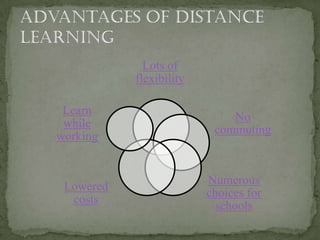
Lots of
           flexibility

 Learn
                             No
 while
                          commuting
working


                         Numerous
 Lowered
                         choices for
  costs
                           schools
With distance learning courses,
students can complete their course
work from just about anywhere,
provided there’s a computer and
internet connection.
Taking a course online can be one
way to cut down on costly gas or
public transportation.
if you live in a community with
few or no colleges distance
learning allows you to choose
from a wide variety of schools to
complete your education.
Prices for online courses are
generally cheaper than their on-
campus counterparts and you won’t
have to worry about commuting,
moving or getting meal plans on
campus, some additional benefits to
learning from home.
As distance learning can usually be
completed on your own schedule, it is
much easier to complete distance
learning courses while working than
more traditional educational
programs.
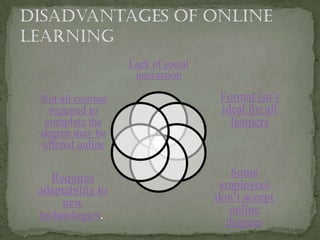
Lack of social
                   interaction

Not all courses                     Format isn’t
  required to                       ideal for all
 complete the                         learners
degree may be
offered online


   Requires                           Some
adaptability to                     employers
     new                           don’t accept
technologies.                         online
                                     degrees
If the classroom environment is
what you love most about learning
you may want to take a step back
and reconsider distance learning
If you know you have problems with
motivation, procrastination and
needs lots of individual attention
from an instructor you may want to
think long and hard before enrolling
in an online learning program.
While a majority of employers
will, there are some who still see a
stigma attached to distance
learning.
If you’ve never been one to love
working with technology you will
probably get a lot less out of an
online course than your more
tech-savvy counterparts.
Find out all the requirements of
your degree to see what may need
to be completed offline.
Benefits of Distance Education
Traditionally, the education students received
and the career choices available to them have
been limited by the educational opportunities
near their geographic location.
Attending a large university or small private
college in person does offer many benefits, not
the least of which is direct access to its
libraries, laboratories, and recreational
facilities. While all of these are great
incentives, they come with a price, and that
price is often not bundled into the tuition.
People seek out education for a variety of reasons. Most might
be looking to achieve a degree or certification, but some are
pursuing a hobby or interest and want to spend more time doing
something they love. Some students are looking to refresh their
knowledge base; others are trying to stay current with the
changing world of technology
At first glance, attending distance learning colleges might seem
to be a solitary endeavor, but it really doesn't have to be. One of
the benefits of distance learning is interactivity. Students are
likely to encounter their fellow students online often. It is easy to
stay connected with both students and instructors through email.
With very few exceptions, becoming a distance learning college
student will require the use of new technologies. The days of
pen-and-paper correspondence schools are coming to an end.
There are still a few mail-away programs conducted through the
postal service, but they are for the most part extinct, and often
you can find better instruction and more current material online.
Considering the nontraditional nature of distance learning
colleges, it's natural for there to be some skepticism about the
effectiveness of such programs. Students are so used to the
traditional face-to-face model of teaching that it seems
impossible, or at least unlikely, that distance learning can provide
the same experience.
Life's hectic pace makes many claims on a student's time. It can
be hard to balance the demands of a career, the needs of a family,
and the desire to pursue an education. Students might ideally like
to throw themselves full time into a degree program in a
traditional educational environment, but that might not always be
possible

Distance Learning

  • 2.
     To provideequal educational opportunities for higher education through distance mode for a large segment of the population, including those in employment, women (including housewives) and adults who wish to upgrade their education or acquire knowledge in various fields of study.
  • 3.
    Distance Learning isan instructional delivery system that connects learner with educational resources .
  • 4.
    Synchronous Learning Instruction requires of the simultaneous participation of all students and instruction. Synchronous is done in “real time”. Asynchronous Learning Instruction does not require the simultaneous participation of all students and instruction. Students do not need to be gathered together in the same location at the same time.
  • 5.
    Lots of flexibility Learn No while commuting working Numerous Lowered choices for costs schools
  • 6.
    With distance learningcourses, students can complete their course work from just about anywhere, provided there’s a computer and internet connection.
  • 7.
    Taking a courseonline can be one way to cut down on costly gas or public transportation.
  • 8.
    if you livein a community with few or no colleges distance learning allows you to choose from a wide variety of schools to complete your education.
  • 9.
    Prices for onlinecourses are generally cheaper than their on- campus counterparts and you won’t have to worry about commuting, moving or getting meal plans on campus, some additional benefits to learning from home.
  • 10.
    As distance learningcan usually be completed on your own schedule, it is much easier to complete distance learning courses while working than more traditional educational programs.
  • 11.
    Lack of social interaction Not all courses Format isn’t required to ideal for all complete the learners degree may be offered online Requires Some adaptability to employers new don’t accept technologies. online degrees
  • 12.
    If the classroomenvironment is what you love most about learning you may want to take a step back and reconsider distance learning
  • 13.
    If you knowyou have problems with motivation, procrastination and needs lots of individual attention from an instructor you may want to think long and hard before enrolling in an online learning program.
  • 14.
    While a majorityof employers will, there are some who still see a stigma attached to distance learning.
  • 15.
    If you’ve neverbeen one to love working with technology you will probably get a lot less out of an online course than your more tech-savvy counterparts.
  • 16.
    Find out allthe requirements of your degree to see what may need to be completed offline.
  • 28.
  • 29.
    Traditionally, the educationstudents received and the career choices available to them have been limited by the educational opportunities near their geographic location.
  • 30.
    Attending a largeuniversity or small private college in person does offer many benefits, not the least of which is direct access to its libraries, laboratories, and recreational facilities. While all of these are great incentives, they come with a price, and that price is often not bundled into the tuition.
  • 31.
    People seek outeducation for a variety of reasons. Most might be looking to achieve a degree or certification, but some are pursuing a hobby or interest and want to spend more time doing something they love. Some students are looking to refresh their knowledge base; others are trying to stay current with the changing world of technology
  • 32.
    At first glance,attending distance learning colleges might seem to be a solitary endeavor, but it really doesn't have to be. One of the benefits of distance learning is interactivity. Students are likely to encounter their fellow students online often. It is easy to stay connected with both students and instructors through email.
  • 33.
    With very fewexceptions, becoming a distance learning college student will require the use of new technologies. The days of pen-and-paper correspondence schools are coming to an end. There are still a few mail-away programs conducted through the postal service, but they are for the most part extinct, and often you can find better instruction and more current material online.
  • 34.
    Considering the nontraditionalnature of distance learning colleges, it's natural for there to be some skepticism about the effectiveness of such programs. Students are so used to the traditional face-to-face model of teaching that it seems impossible, or at least unlikely, that distance learning can provide the same experience.
  • 35.
    Life's hectic pacemakes many claims on a student's time. It can be hard to balance the demands of a career, the needs of a family, and the desire to pursue an education. Students might ideally like to throw themselves full time into a degree program in a traditional educational environment, but that might not always be possible